Wedding Day Nails That Feel Polished, Romantic, and Modern
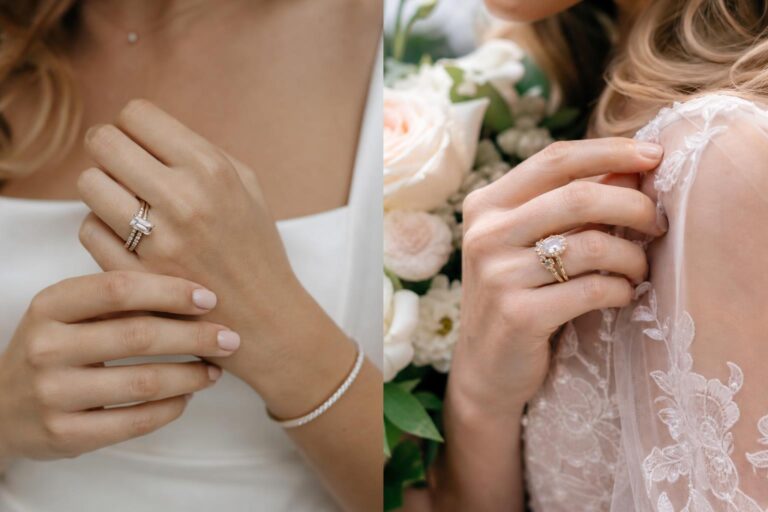
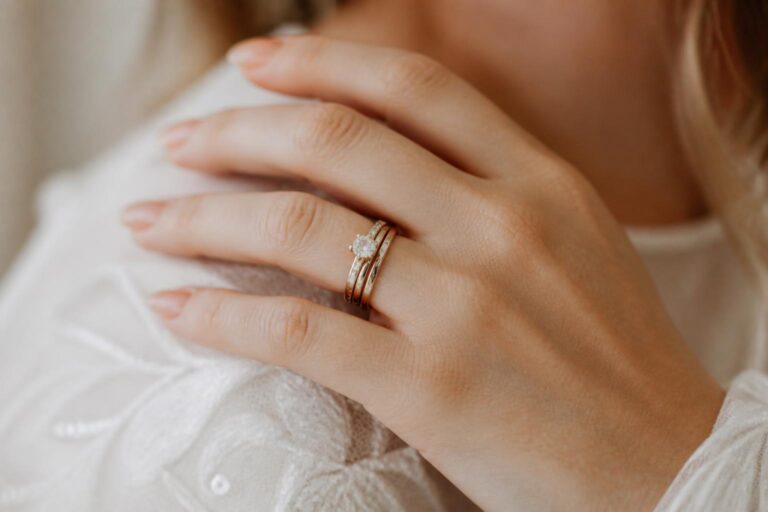
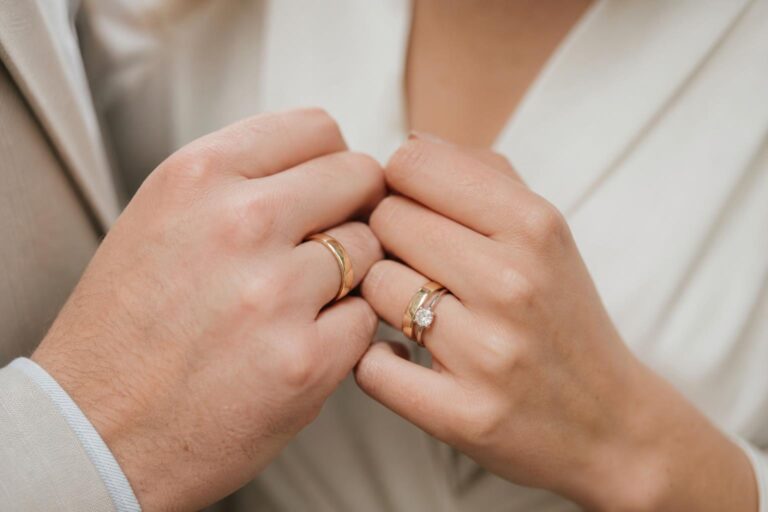
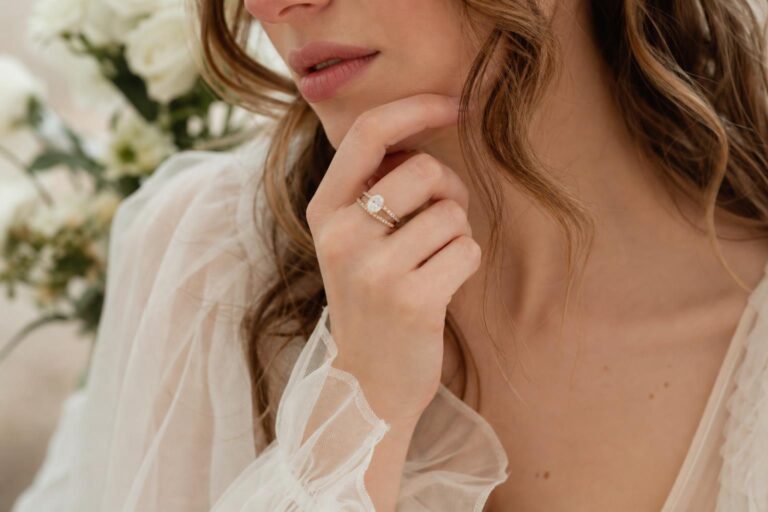
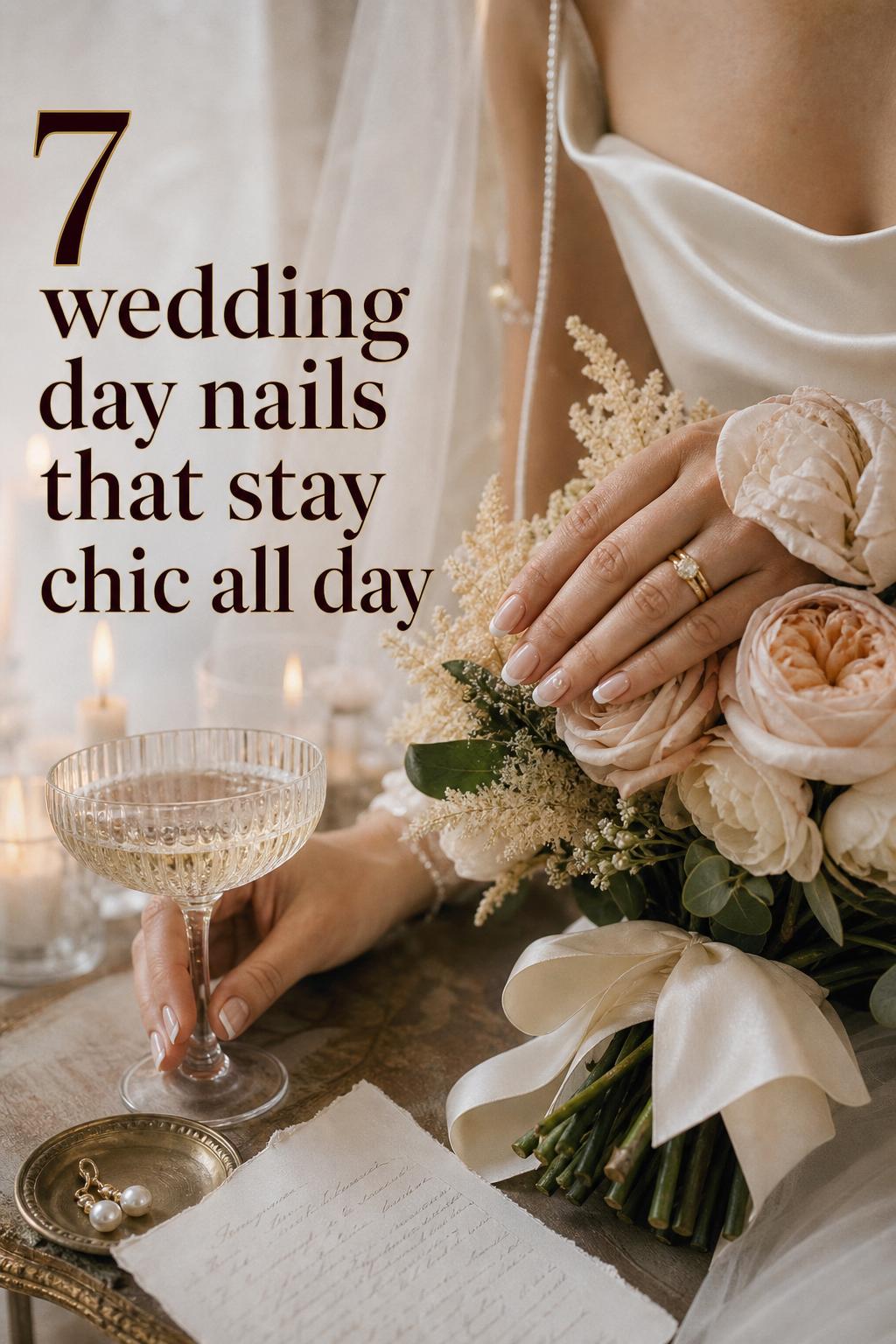
The morning of a wedding is full of close-up moments: fastening earrings, lifting a bouquet, signing a marriage license, and wrapping your hand around the person you are about to marry. In all of those scenes, wedding day nails do quiet but important work. They sit beside your engagement ring, reflect the texture of silk or satin, and help the entire bridal look feel considered rather than pieced together at the last minute. The strongest bridal manicures are not always the boldest ones. They are the ones that suit the dress, the jewelry, the lighting, and the way you want to feel when every detail is suddenly being photographed.
Bridal nail inspiration now stretches far beyond a simple nude polish. Vogue, Elle, Allure, Marie Claire, Bridal Guide, Glamour, The Zoe Report, and Who What Wear have all highlighted a wider bridal manicure conversation shaped by classic French variants, glazed donut finishes, pearls, chrome, pale pinks, champagne tones, and subtle crystal details. Celebrity nail artists such as Tom Bachik, Betina Goldstein, Steph Stone, Georgia Rae, and Ny Kuin Lyu have helped define the look of modern bridal nails, while brands like OPI and Chanel continue to show up in the visual language around refined, fashion-aware manicures. The challenge is not finding inspiration. It is choosing the version that works for your wedding, your schedule, your budget, and your photographs.
Why your nails matter more than many brides expect
A bridal manicure is one of the few beauty choices that appears in detail shots from the beginning of the day to the very end. Hands show up while you hold your veil, adjust a bracelet, cut the cake, carry florals, and place your hand on a satin gown. That is why nail shape, finish, and color deserve the same level of thought as lipstick or earrings. The best choice is usually the one that feels visually connected to the rest of the wedding aesthetic.
If your gown is sleek and minimalist, a micro French or glossy nude manicure often feels cleaner than a heavily embellished design. If your jewelry includes pearls or your bouquet has a romantic garden style, pearl cuffs, white florets, or tiny gemstone daisies can make sense in a way that looks intentional rather than decorative for the sake of it. This is where many brides make better decisions: not by asking what is trending in isolation, but by asking what their manicure should be doing within the full bridal look.
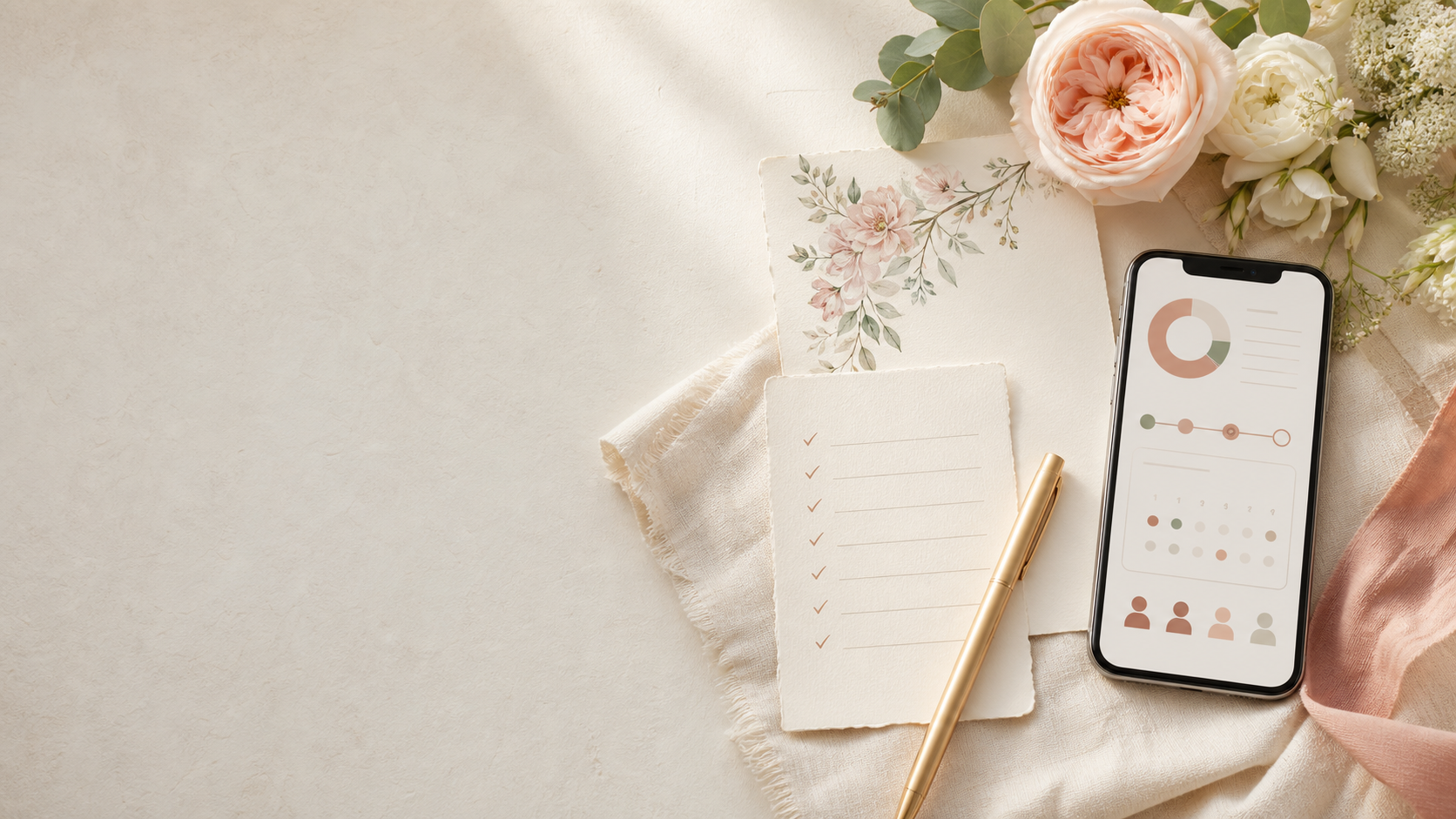
Turn wedding inspiration into a plan you can actually follow.
Zarellea brings your guest list, budget, vendors, and day-of details into one shared space — so no beautiful idea gets lost in the shuffle.
- Best for: brides who care about cohesive wedding photos, ring shots, and beauty details.
- Why it works: nails connect the visual story between gown fabric, bouquet tones, jewelry, and overall styling.
- How to make it work: bring a dress swatch photo, jewelry photo, and bouquet palette to your manicure appointment.
- Budget tip: if funds are limited, invest in shape and finish first; a beautifully done glossy neutral often looks more polished than inexpensive heavy nail art.
- Common mistake to avoid: choosing a trendy look that competes with delicate bridal accessories.
- Real-life styling tip: before locking in your manicure, take a phone photo of your hand holding something white and something metallic; this quickly shows whether the polish reads too yellow, too gray, or too stark.
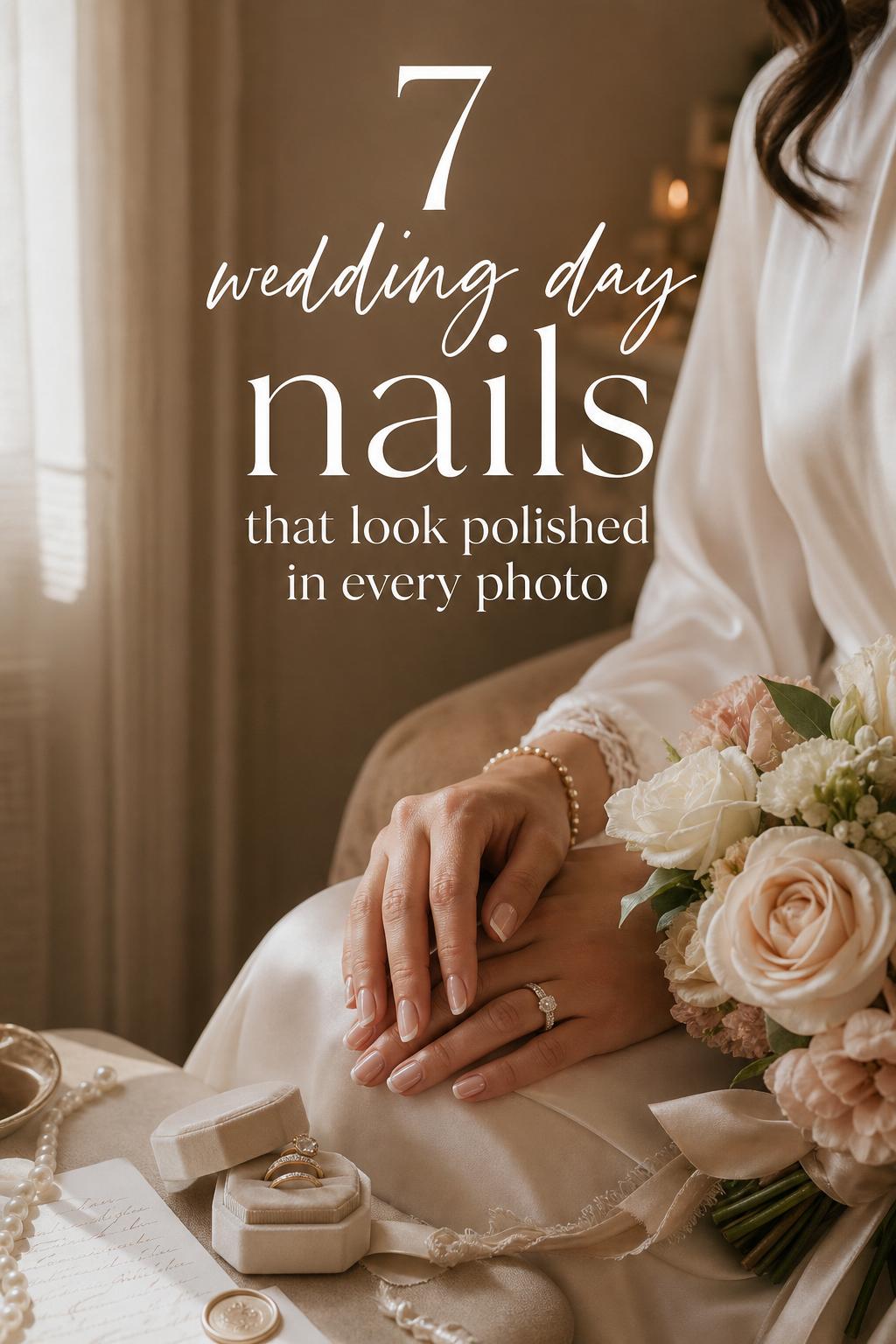
The bridal manicure mood for 2026
The current mood in bridal nails is polished, intentional, and softly expressive. Recent wedding nail trends lean toward nude, pale pink, ballet slipper tones, champagne nude, and sheer finishes, with added texture coming from chrome powder, pearlescent polish, tiny gems, and refined metallic details. Even when a manicure is more fashion-forward, it is usually still designed to remain photogenic and elegant from ceremony through reception.
That balance explains why so many of the most-discussed looks sit somewhere between timeless and directional. A classic French manicure is still relevant, but now it may become a double corner French, a chrome tip, a blizzard French, or a barely there line. A nude manicure may stay simple, or it may move into glazed donut territory with soft reflective sheen. The result is a bridal nail landscape where personal style matters more than strict rules.
Timeless neutrals that never fight the dress
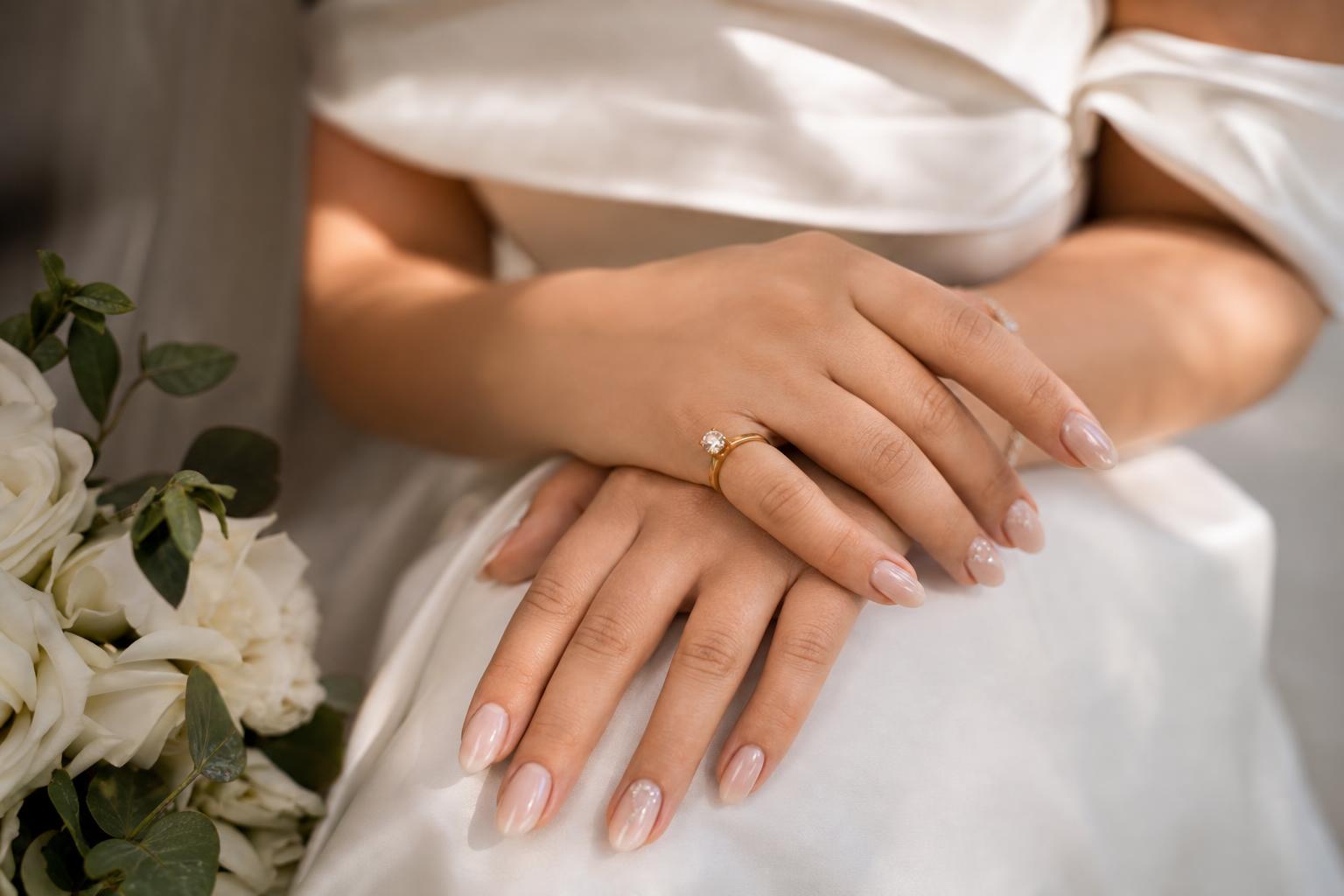
Nude, pale pink, glossed beige, and ballet slipper shades remain the safest and often smartest starting point for wedding day nails. They flatter most bridal styling directions and rarely distract from lace, satin, silk, or beading. If your wedding includes multiple wardrobe moments, from ceremony gown to reception look, neutrals are especially useful because they transition easily.
These shades are best for formal church weddings, black-tie evenings, intimate city weddings, and any bride who wants her manicure to look expensive without calling attention to itself. They also tend to photograph consistently under changing light, which matters if your day includes indoor getting-ready photos, bright outdoor portraits, and candlelit reception coverage.
- Best for: classic, minimalist, luxury, and mixed-style weddings.
- Why it works: neutral tones support the ring, bouquet, and gown instead of competing with them.
- How to make it work: choose an undertone that does not disappear against your skin; champagne nude and pale pink often feel softer than flat beige.
- Budget tip: skip elaborate art and ask for a high-gloss topcoat with precise cuticle work.
- Common mistake to avoid: choosing a nude that is too opaque or too dull, which can look heavy in close-ups.
- Real-life styling tip: if your dress is bright white, compare your polish beside the fabric; some creamy nudes suddenly look too yellow next to crisp bridal white.
Modern minimalism with micro French details
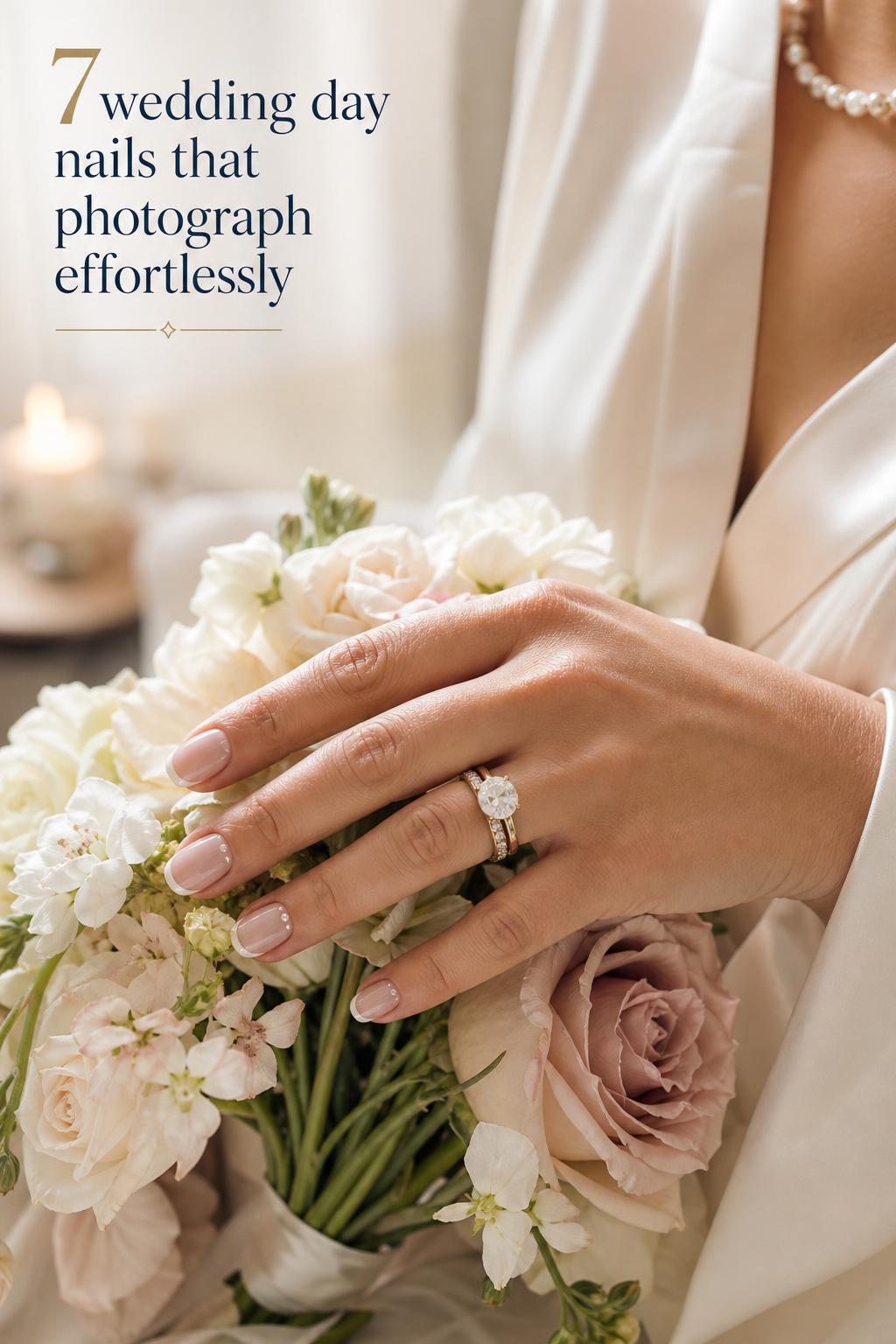
Minimalist bridal nails are gaining strength because they feel current without risking regret. A micro French, American manicure, double French, triangular touch, or subtly outlined tip gives structure to the nail while still reading clean. This kind of manicure suits brides who want detail, but not visual weight.
Modern minimalism works especially well for city weddings, contemporary venues, and brides wearing architectural gowns or sleek crepe silhouettes. It also pairs beautifully with strong jewelry because the manicure leaves visual space around rings and bracelets. If your engagement ring already has plenty of sparkle, this is often a more balanced direction than adding gems to every nail.
One of the reasons this category remains popular is its versatility across nail lengths. A short squoval shape can carry a micro French beautifully, while an almond shape can support a slightly more dramatic line or metallic edge. The line itself becomes the design.
Soft glam with pearls, cuffs, and tiny crystals
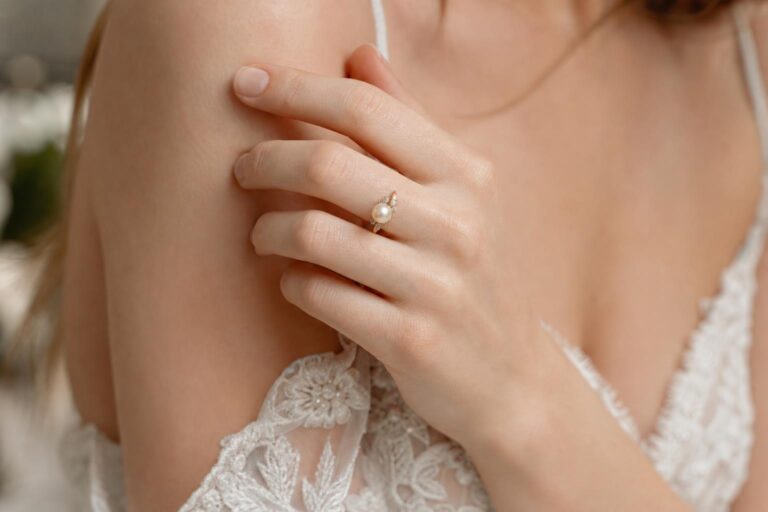
When brides want more romance without going fully dramatic, soft glam is often the answer. This includes allover pearls, pearl cuff details, white florets, crystal accents, tiny gemstones, and subtle embellishments concentrated on one or two nails rather than the entire set. Tom Bachik and Betina Goldstein are often associated with the polished, fashion-aware version of this look: decorative, but still refined.
Soft glam works best when the embellishment has a clear relationship to the rest of the wedding. Pearl accents make sense with pearl earrings, a classic veil, or satin and silk textures. Tiny crystals can echo jewelry or the shimmer in a beaded gown. The manicure feels strongest when it repeats an existing bridal detail instead of introducing a completely separate design language.
- Best for: romantic ballroom weddings, garden weddings, and brides wearing pearl accessories or embellished gowns.
- Why it works: it bridges beauty styling and bridal accessories, so the manicure feels integrated.
- How to make it work: keep embellishments low-profile and place them where they will not catch on fabric.
- Budget tip: choose one accent nail per hand instead of full embellishment across all ten nails.
- Common mistake to avoid: mixing too many decorative motifs at once, such as pearls, bows, stars, and crystals in the same set.
- Real-life styling tip: if your dress has delicate lace sleeves or a fine veil edge, test one embellished sample nail against the fabric before the final appointment.
Statement finishes that still photograph well
Brides who love a fashion-led manicure do not need to default to plain pink. Glazed donut nails, chrome wedding nails, pearlescent polish, naked shimmer, opalescent white, chrome ombré, cosmic silver, and even crushed disco ball effects are all part of the current bridal conversation. The key is proportion. Statement does not have to mean loud.
Georgia Rae and other trend-focused artists often point toward premium-looking finishes rather than heavy color. That distinction matters. A sheer chrome finish over a nude base can catch light beautifully in photos, while a dense metallic manicure may pull focus away from the face and gown. Brides interested in trends from New York Bridal Fashion Week often gravitate toward this polished, reflective category because it feels current but still bridal.
This look is best for evening receptions, modern venues, editorial bridal styling, and brides who want a little tension between classic and cool. If your wedding is heavily candlelit or includes flash photography at night, a reflective finish can read especially well.
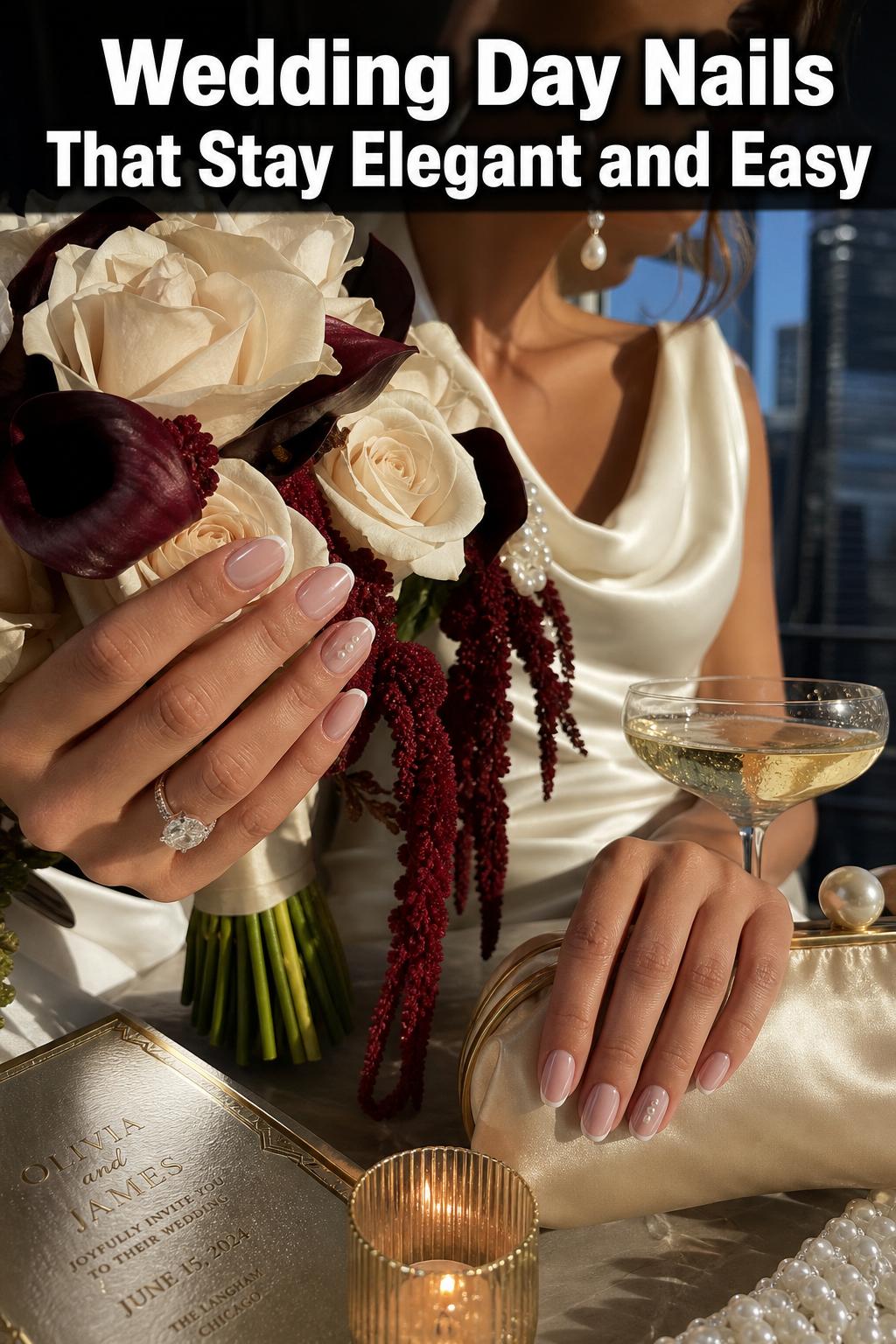
Choosing color by dress, bouquet, and jewelry
The easiest way to narrow wedding nail ideas is to stop treating nails as a separate beauty category and start matching them to the three bridal elements they sit beside most often: the dress, the flowers, and the jewelry. This approach usually creates clearer decisions than picking a manicure from a trend gallery alone.
If your dress is sleek satin or silk
Satin and silk gowns often reflect light cleanly, so they pair best with manicures that feel polished rather than overly textured. Glossy nude, perfect pink, ballet slipper, champagne nude, or a micro French usually make sense here. A pearlized finish can also work if it stays soft and not frosty. Because these fabrics already create shine and movement, the manicure should echo that refinement instead of competing with it.
For a modern reception look in satin, chrome tips or a whisper of glazed donut sheen can be enough to add dimension. Avoid piling on large embellishments if the gown itself is very fluid and minimal. It can start to look disconnected.
If your gown has lace, florals, or romantic texture
Textured gowns open the door to slightly more decorative wedding day nails. White florets, gemstone daisies, soft pearls, and delicate crystal placements can echo the language of lace and embroidery. In this case, the manicure can participate in the romance of the look instead of staying completely invisible.
Garden weddings and spring celebrations often suit this category well, particularly when the bouquet includes soft whites, blush tones, or floral movement. Still, edit carefully. If the gown, bouquet, veil, and hair accessories are all intricate, nails should repeat just one motif, not every motif.
If your jewelry is the star
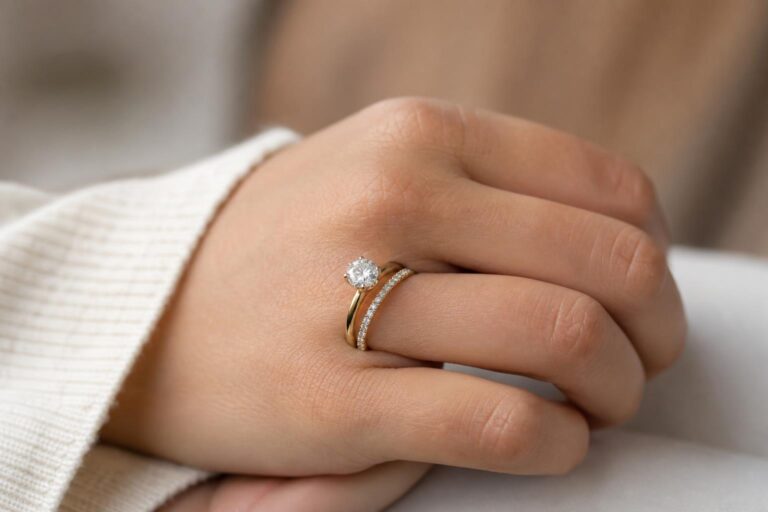
An engagement ring, bracelet stack, or statement earrings can influence your manicure more than brides sometimes expect. If your ring has strong sparkle, neutral polish or a minimalist French usually allows it to remain the focal point. If your jewelry includes pearls, then pearl cuff nails or allover pearl accents can create a satisfying visual connection. If your accessories feel sleek and metallic, chrome tips or micro metallic accents may look more coherent than floral art.
- Best for: brides deciding between several manicure ideas and needing a practical filter.
- Why it works: your nails appear beside these items constantly in photos and in real life.
- How to make it work: choose one leading reference point: fabric, florals, or jewelry.
- Budget tip: if you cannot do a trial, use saved photos of your ring and dress during the consultation so your nail tech can guide color and finish.
- Common mistake to avoid: trying to match every wedding element exactly, which often leads to overdesigned nails.
- Real-life styling tip: bouquet stems can visually darken the hand in photos, so if your flowers are deep-toned, a slightly brighter nude or pink may keep the manicure from looking flat.
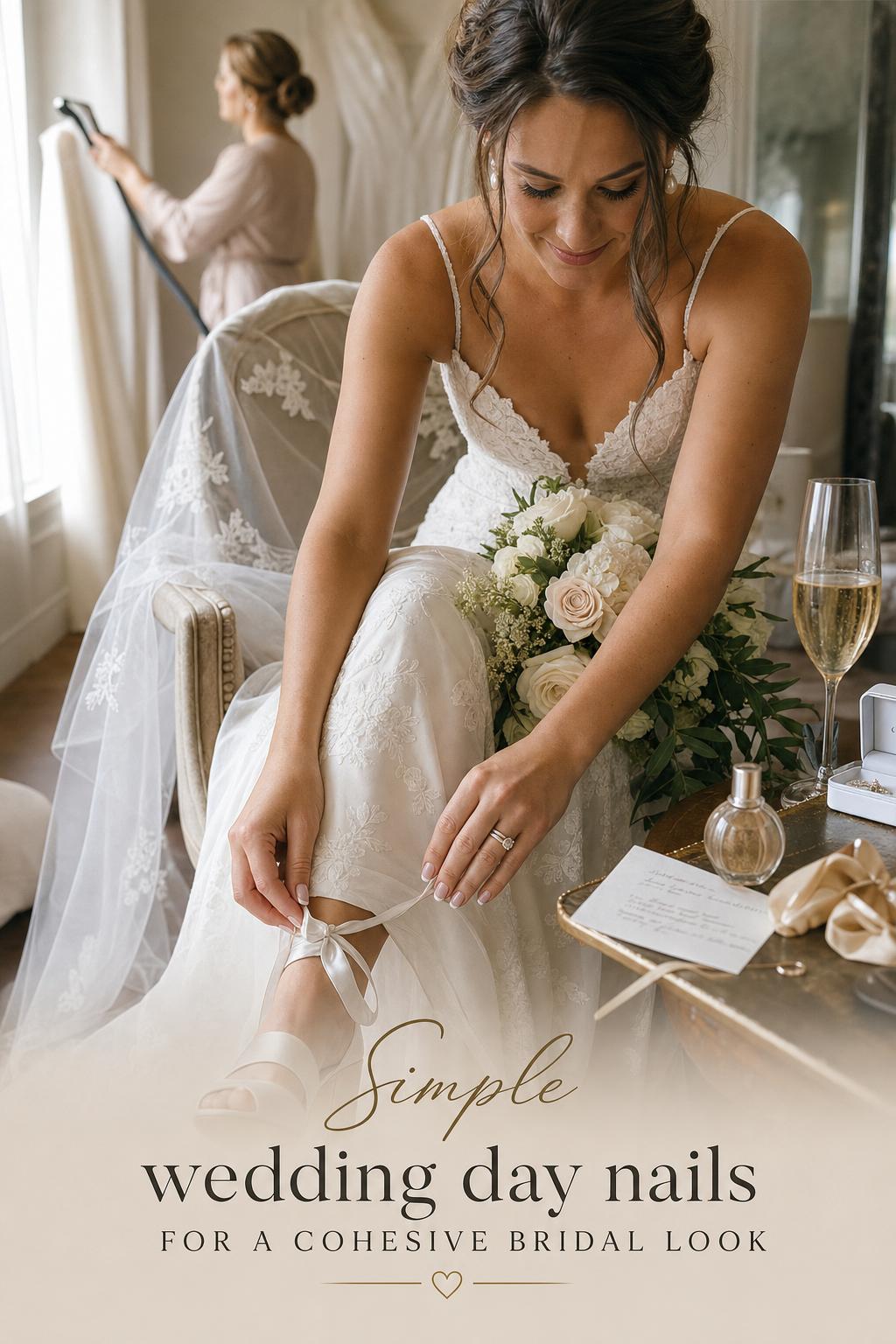
Expert voices shaping bridal nails right now
Bridal nails are increasingly influenced by celebrity and editorial nail artists, but their value for real brides is not only inspiration. These artists help define what makes a manicure feel elevated. Tom Bachik is frequently tied to polished, bridal-ready glamour and has a natural place in the wedding manicure conversation through Jennifer Lopez references. Betina Goldstein is often associated with nuanced detail and restrained embellishment. Steph Stone appears in trend-led bridal references, while Georgia Rae has become a notable voice in bridal nail predictions, especially around the 2026 palette of pale pinks, neutrals, premium finishes, and shape decisions. Ny Kuin Lyu brings practical relevance through bridal-adjacent real-client work and muted, wearable tones.
Brands also help brides understand visual direction. OPI appears in color conversations around nudes, pinks, and bridal shade references. Chanel functions more as a style signal in bridal manicure coverage, often tied to refined beauty and subtle adornment. Shade names such as Ballet Slippers, Kyoto Pearl, and Champagne Nude matter because they communicate mood quickly: soft pink, pearly luminosity, and warm neutral elegance.
What matters most is not choosing a celebrity-inspired manicure word for word. It is understanding the principle behind it. Bachik-style soft glamour may work if your gown and jewelry support it. A Georgia Rae-inspired neutral with a premium finish may be the right move if your wedding style is clean, current, and fashion aware. The translation is what makes inspiration useful.
The practical timeline brides wish they planned earlier
The manicure itself may happen near the wedding, but the decision should start earlier. One of the most useful ways to reduce stress is to treat bridal nails like part of the beauty timeline rather than a last-minute errand. This is especially important if you want nail art, a trial manicure, or a shape change.
8 to 12 weeks out: settle on shape and general mood
At this stage, choose the broad direction: timeless neutral, modern minimalism, soft glam, or statement finish. Decide whether you want almond, squoval, or another shape that suits your daily comfort and wedding style. If you are growing your natural nails or changing length, this gives you time to adjust rather than making a sudden switch right before the ceremony.
This is also the best time to collect reference images that actually resemble your hand preferences. Save ideas by category, not just by beauty. For example, create one small set for satin dresses, one for pearl jewelry, or one for garden florals. That makes your consultation more precise.
4 to 6 weeks out: book a trial manicure
A trial manicure is especially useful if you are considering chrome, glazed donut finishes, pearl accents, or any neutral shade that could shift under different lighting. A color that looks elegant in salon lighting may read too cool, too chalky, or too sheer in daylight and flash photography. A trial also helps you test whether embellishments catch on clothing or whether a certain shape feels impractical.
Best for brides with destination weddings, multiple events, or detailed photography coverage, the trial helps prevent avoidable beauty stress. If budget is tight, ask for a shortened version of the look on one or two nails rather than a full set, especially when testing finish and color.
1 to 2 days before: final appointment and wear check
The final manicure should usually happen close enough to the wedding that the finish still looks fresh, but not so late that any issue becomes impossible to correct. This is the time to confirm shine, check cuticle neatness, and make sure the manicure feels comfortable with your dress, accessories, and schedule. The research also points to practical notes around UV exposure risks and cure duration, so this is a good moment to ask your nail tech about the timing and finishing process if you are wearing gel or a chrome-based look.
On the day: protect the manicure during real wedding movement
Nails are most vulnerable during setup, dressing, bouquet handling, and opening packaging. If possible, avoid using your freshly manicured hands for last-minute décor assembly or pinning paper goods. Keep your touch-up plan simple and realistic. A glossy topcoat, a careful final hand wash before photos, and attention to how you hold flowers and champagne often matter more than bringing a full repair kit.
- Best for: brides managing a busy wedding week or working with several beauty appointments.
- Why it works: spacing decisions reduces rushed choices and helps the manicure wear better through the event.
- How to make it work: schedule the nail appointment after major errands, packing, and décor prep when possible.
- Budget tip: if you can only afford one appointment, invest in one strong final manicure and skip unnecessary trend testing.
- Common mistake to avoid: trying a completely unfamiliar nail shape right before the wedding.
- Real-life styling tip: ask your photographer to include one early ring shot before the ceremony begins, while the manicure and cuticle area are at their freshest.
Wedding nail ideas that suit different wedding styles
Rather than sorting inspiration by trend alone, it can help to match your manicure to the emotional tone of the celebration. A wedding in a candlelit city venue may ask for something very different from a breezy garden ceremony or a formal ballroom evening.
For a romantic garden wedding
Soft pink, pearlized neutrals, white florets, tiny gemstone daisies, and delicate shimmer fit naturally into a floral setting. This style works best when flowers are already a major part of the wedding design, because the manicure then feels like an extension of the bouquet rather than an unrelated beauty trend. Keep the base shade sheer and the art light so the design still looks graceful up close.
A practical note for outdoor light: high noon sun can flatten some pale colors, so ask for a finish with enough gloss or pearlescence to keep the nails visible in photos without looking icy.
For a modern city celebration
Micro French lines, double corner French, glossy nude, chrome tips, and naturally chic neutrals work beautifully for city weddings. These designs hold their own against architectural venues, clean tailoring, and sleek reception styling. They are especially effective if your dress is minimalist and your jewelry is sculptural or metallic.
This is also one of the easiest directions to adapt across budgets. The visual impact comes from precision and finish rather than labor-heavy nail art, so you can often get a very polished result without extensive embellishment.
For a classic formal wedding
American manicure, ballet slipper pink, glossy nude, opalescent white, and a refined French remain strong options for traditional weddings. These manicures usually age well in photos and do not risk looking too tied to one micro-trend. If your event includes a church ceremony, family formality, or heirloom jewelry, this route often feels especially appropriate.
For depth, consider one controlled enhancement: a pearl cuff, a tiny crystal at the base, or a faint chrome veil over the top. The manicure stays classic, but not flat.
For a fashion-forward evening reception
Champagne mani finishes, glazed donut nails, cosmic silver touches, or crushed disco ball accents can make sense for brides whose wedding style leans editorial. This is where a statement finish can feel exciting without becoming costume-like. The trick is to keep the base bridal. A pale nude or soft pink beneath the shine usually keeps the look anchored.
- Best for: brides choosing nails based on venue and overall mood rather than trend alone.
- Why it works: matching the manicure to the setting makes the entire bridal look feel more intentional.
- How to make it work: describe your venue to your nail tech using words like garden, city, formal, or candlelit.
- Budget tip: let one finish do the work; a pearl glaze or chrome top layer is often less expensive than detailed hand art.
- Common mistake to avoid: copying a dramatic manicure from a magazine without considering whether it suits the venue.
- Real-life styling tip: if your reception lighting is warm and dim, test whether icy silver tones still read elegant against your skin and gown.
Where trends can go wrong on a real wedding day
Some of the most beautiful wedding nail ideas online are photographed in controlled settings, not during a full day of dressing, hugging, bouquet handling, dining, and dancing. That does not make them unrealistic, but it does mean practical editing matters. Brides often run into trouble when they choose a manicure based only on a close-up beauty image without considering movement, fabric contact, or how the look reads from arm’s length.
Large gemstones, chain loop details, and highly raised adornments may suit an editorial shoot better than a long wedding day unless they are used sparingly. Very pale opaque shades can also become risky if they contrast too sharply with skin tone or flash white in photos. Even a highly desirable trend like glazed donut nails needs the right base shade; too much frost can shift the effect from luminous to cold.
Another common issue is overcoordinating. Brides sometimes try to include bows, stars, pearls, chrome, florals, and glitter all in one manicure because each element appeared beautiful separately. But wedding styling usually improves when one motif leads and the rest stay quiet. A manicure should support the bride, not become a separate costume piece.
Thoughtful choices for comfort, sensitivity, and conscious planning
Not every bride wants the same product experience, and that is a useful part of the manicure conversation. One practical gap in many bridal nail discussions is the need for eco-friendly or nontoxic product preferences and sensitivity awareness. If that matters to you, raise it during booking rather than at the final appointment. The earlier you mention it, the easier it is for your nail tech to recommend suitable options within your preferred bridal look.
This matters most for brides with known product sensitivities, those planning a packed wedding week, or those who simply want a more considered beauty routine. A wedding manicure should feel good to wear, not just good to photograph. If a bride knows she is sensitive to certain processes or strong finishes, a glossy nude or simple French may be the most reassuring route, especially when time for correction is limited.
There is also room for cultural and regional flexibility in bridal nails. Not every bride wants the same length, shape, or level of detail, and local wedding habits or family expectations may influence the final choice. The most successful manicure is not the one that wins the trend conversation. It is the one that feels right in the room where you are getting married.
A simple decision framework for choosing your final manicure
If you are overwhelmed by options, use a three-part filter. First, ask what role you want the nails to play: disappear elegantly, echo a bridal detail, or make a subtle statement. Second, ask what your wedding environment needs: outdoor brightness, city polish, formal tradition, or evening glow. Third, ask what your real comfort level is with shape, maintenance, and decoration. Usually, the right manicure sits where those three answers overlap.
- If you want the safest timeless choice, choose glossy nude, pale pink, or ballet slipper with careful shaping.
- If you want modern but understated, choose a micro French, double French, or chrome tip over a neutral base.
- If you want romance with detail, choose pearl cuffs, white florets, or tiny crystals on a sheer pink or nude base.
- If you want a fashion-led finish, choose glazed donut, pearlescent polish, or soft chrome over champagne nude or a pale neutral.
This framework helps brides avoid overthinking while still making a nuanced choice. It also gives your nail tech a clearer brief than simply saying you want something bridal.
Final thoughts on creating wedding day nails that feel like you
The most memorable bridal beauty choices rarely happen because a bride picked the loudest trend. They happen because every detail feels aligned: the ring against the polish, the bouquet against the hand, the gown against the light, and the bride feeling comfortable every time someone reaches for a close-up photo. Whether you are drawn to classic nude, a pearl cuff, a glazed donut finish, or a sharp little micro French, the goal is the same. Your manicure should feel like part of your wedding story, not an afterthought and not a distraction.
Choose the version that supports your dress, your venue, your timing, and your own sense of style. If it looks right in your hand, beside your jewelry, and under the conditions of your actual day, it is the right bridal manicure for you.
FAQ
How long do wedding nails last?
Wear time depends on the manicure type, your daily habits, and how close to the wedding you book the final appointment, but bridal nails generally hold best when the shape, finish, and timing are planned in advance. Simpler glossy neutrals, French variants, and well-secured soft embellishments tend to be easier to maintain through a full wedding day than heavily raised decorative looks.
What nail color is best for wedding photos?
Nude, pale pink, ballet slipper, champagne nude, and refined sheer shades are usually the most reliable because they photograph well across different lighting conditions and do not compete with the ring or bouquet. If you want extra dimension, a soft glazed donut or pearly finish often adds light without overpowering the hand.
Should I choose gel, acrylic, or press-ons for my wedding?
The best choice is the one that matches your comfort level, timeline, and desired finish. Brides who want durability and a polished final look often prefer a professionally done manicure close to the wedding, while press-ons can work if applied carefully and tested ahead of time. What matters most is not choosing something unfamiliar at the last minute.
When should I get my wedding manicure done?
A practical approach is to decide on color family and shape several weeks ahead, do a trial if you are considering special finishes or embellishments, and schedule the final manicure one to two days before the wedding. That timing usually helps the nails look fresh while still allowing space to correct any issues.
Are chrome wedding nails too trendy for a bridal look?
Not necessarily. Chrome wedding nails can look very bridal when the effect is layered over a soft nude, pale pink, or champagne base and kept refined. The key is choosing a finish that catches light gently rather than a dense metallic effect that dominates the whole look.
How do I choose between a French manicure and a nude manicure?
A French manicure gives the nail more visible structure, while a nude manicure usually feels softer and quieter. If your wedding style is classic or modern minimalist, either can work well. Brides who want cleaner definition often prefer a micro French or American manicure, while brides who want the nails to blend seamlessly with the hand often prefer a glossy nude or pale pink.
Do pearls and crystals work for all wedding styles?
Pearls and crystals work best when they connect to something else in the bridal look, such as pearl jewelry, beaded fabric, or romantic floral styling. They are most successful when used with restraint. On very sleek or minimalist bridal looks, one small accent often feels more cohesive than full embellishment.
What is the biggest mistake brides make with wedding day nails?
One of the most common mistakes is choosing a manicure only because it looks striking in an inspiration photo, without checking whether it suits the dress, jewelry, venue, and real movement of the day. Bridal nails usually look strongest when one idea leads and the rest of the details stay edited.
Can short nails still look bridal?
Yes, absolutely. Short nails can look especially polished in bridal photos when the shape is clean and the finish is intentional. Glossy nudes, pale pinks, micro French tips, pearlized sheers, and subtle chrome details often look elegant on shorter lengths and can be easier to wear comfortably throughout the wedding.