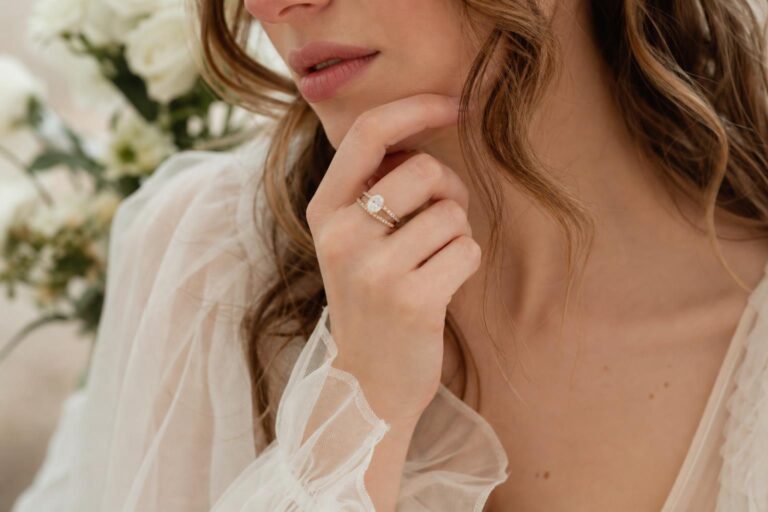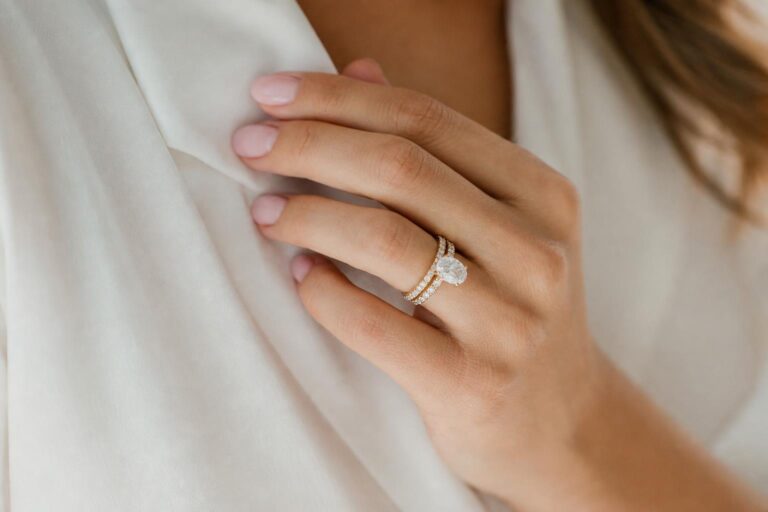
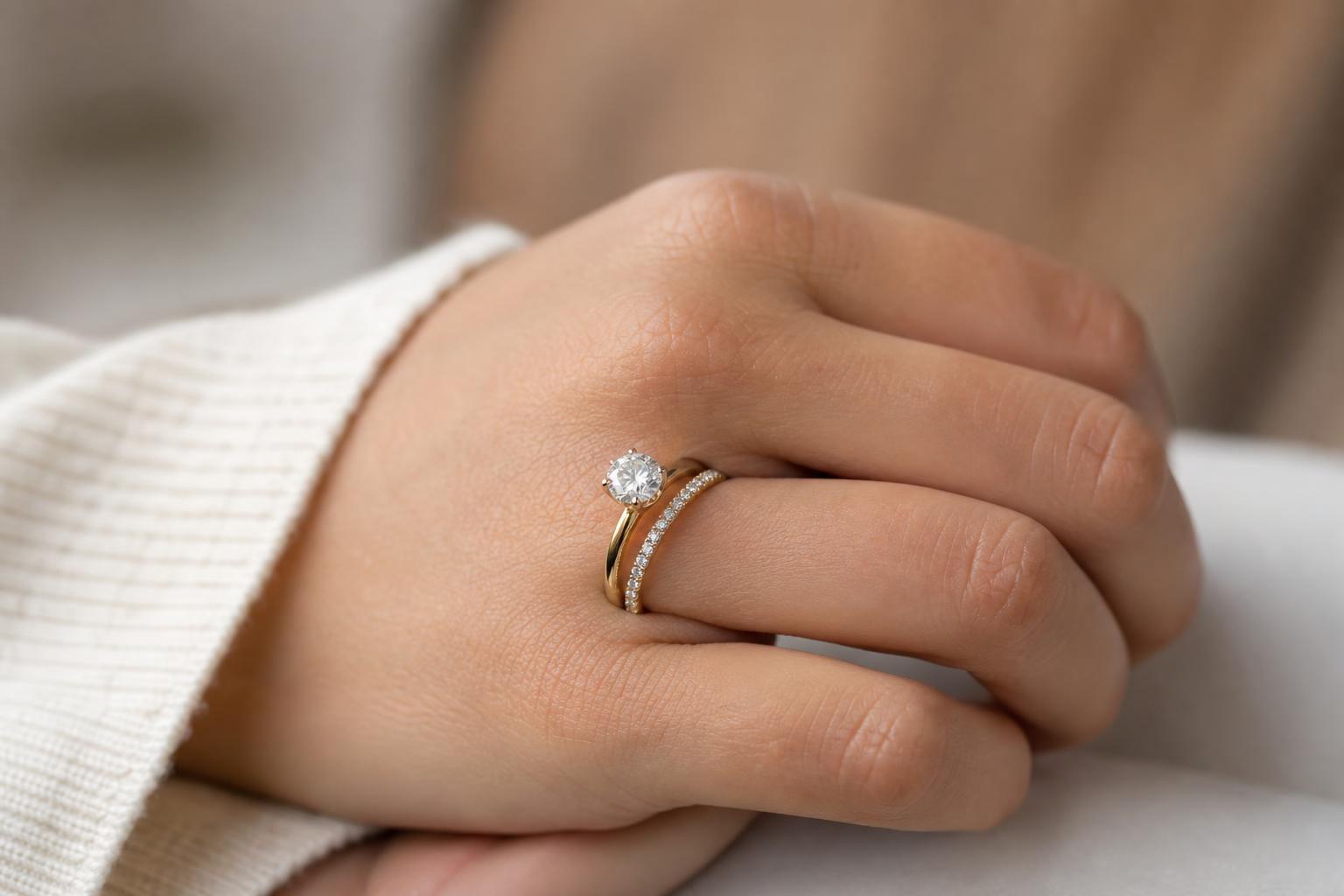
Wedding Ring Sets That Feel Timeless and Personal
Choosing wedding ring sets sounds simple until the real-life details begin to collide. A ring may look beautiful on its own, yet feel awkward once a wedding band sits beside it. A matching set may seem practical, but then questions about metal, diamond type, comfort, budget, and long-term wear quickly turn an emotional purchase into a stressful one. What should feel symbolic can suddenly feel highly technical.
This is where many couples get stuck. They want a ring set that feels cohesive in photos, comfortable every day, and aligned with their values, whether that means luxury craftsmanship, affordability, customization, or ethically sourced materials. The challenge is not only finding a beautiful engagement ring and wedding band, but finding a pair that works together in silhouette, fit, and lifestyle.
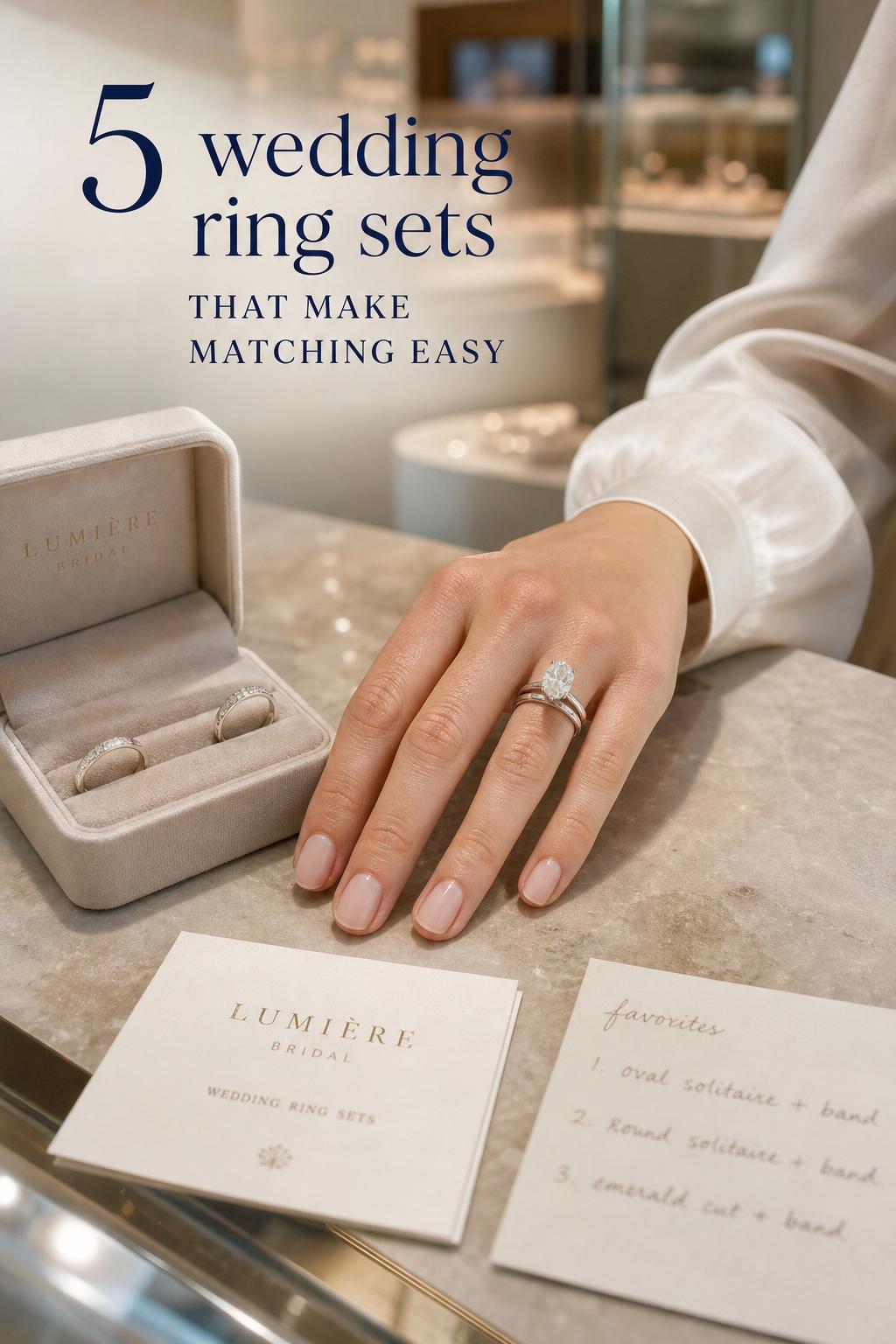
This guide is designed to solve that problem with calm, practical clarity. Instead of treating wedding ring sets as a simple shopping category, it looks at how coordinated bridal sets actually function in real life: how they sit on the finger, how they wear over time, how they fit different budgets, and how to choose a style that still feels right long after the wedding day.
Why this wedding challenge happens
The pressure around wedding ring sets comes from trying to satisfy several goals at once. Couples want a ring set that feels emotionally meaningful, photographs well, matches personal style, and holds up to daily wear. But the ring that feels most romantic in a product photo may not provide the best flush-fit pairing, and the most affordable set may not offer the exact silhouette or customization needed for a truly seamless look.
Turn wedding inspiration into a plan you can actually follow.
Zarellea brings your guest list, budget, vendors, and day-of details into one shared space — so no beautiful idea gets lost in the shuffle.
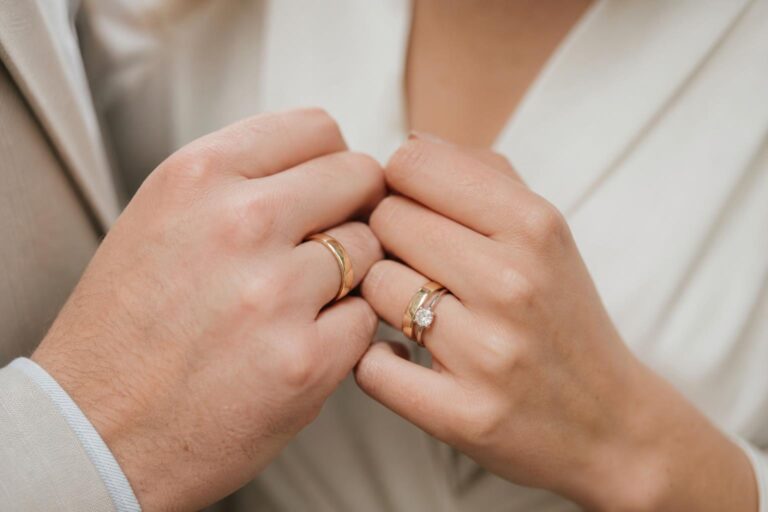
Visual cohesion is often the first issue. An engagement ring and wedding band can both be attractive on their own, yet look mismatched together if the profiles, widths, or settings do not align. This is why so many leading jewelers emphasize matching engagement rings and wedding bands rather than treating them as separate purchases. A coordinated set is not only about appearance; it also affects comfort, stackability, and whether the rings sit naturally side by side.
Practical concerns add another layer. Metal choice affects durability and overall look. Diamond decisions involve natural diamonds, lab-grown diamonds, and in some collections moissanite or other gemstones. Budget expectations vary widely too, from value-focused shopping at retailers such as Costco and JCPenney to luxury brand storytelling and silhouette guidance from Tiffany & Co. At the same time, brands such as Brilliant Earth bring ethical sourcing and sustainability into the decision, while Barkev’s focuses on interlocking bridal ring sets and Jewlr or Angara highlight made-to-order customization.
The result is a very modern wedding dilemma: couples are not simply buying rings, they are choosing a system of style, comfort, symbolism, and practical wear. Once that is understood, the decision becomes much easier to organize.
The styling principles that make wedding ring sets work
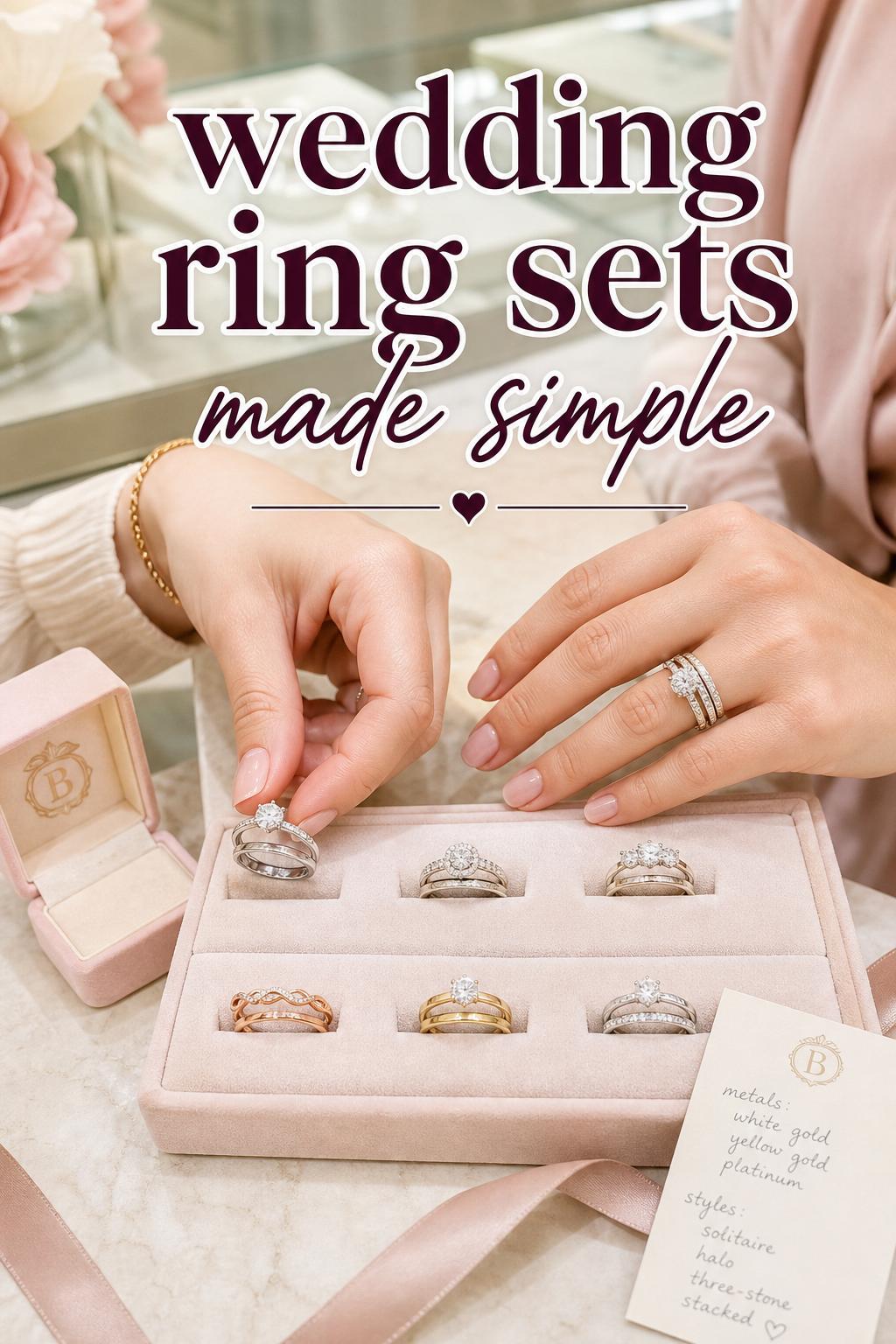
The most successful wedding ring sets follow a few quiet principles. They do not rely on excess detail. Instead, they create harmony between two pieces that will be worn together constantly. Whether the overall look is classic solitaire, halo, three-stone, vintage-inspired, minimalist, or interlocking, the set should feel intentional from every angle.
Start with the relationship between the rings
The engagement ring and wedding band should be considered as a pair first and individual pieces second. This is the logic behind bridal sets, engagement ring sets, and wedding band sets across brands such as Fascinating Diamonds, Shane Co., Angara, and Brilliant Earth. A coordinated pairing reduces the risk of awkward gaps, clashing profiles, or one ring visually overpowering the other.
Let material consistency create calm
Metal consistency is one of the simplest ways to make a set feel refined. White gold wedding band sets from Tiffany & Co. show how a single metal can unify the entire look. Gold, whether 14k or 18k, and platinum all bring a different visual weight. Keeping the metal aligned across both rings often creates a more elegant result than introducing too many competing elements.
Choose details that support daily life
A ring set is not just for the ceremony, portraits, and celebration. It becomes part of everyday movement. Comfort fit, ring width, stackability, and flush-fit design matter because discomfort can turn even a beautiful purchase into a frustrating one. This is especially true for couples drawn to intricate settings or wider bands. Style should still feel wearable after a full day, not just flattering in a close-up image.
Balance aspiration with realism
Luxury heritage, ethical sourcing, customization, and value all matter, but not every priority will carry the same weight for every couple. Some will care most about designer identity and enduring style. Others will prioritize lab-grown diamonds, recycled metals, or made-to-order flexibility. A good decision usually comes from ranking those priorities honestly instead of trying to optimize everything at once.
The core components of a ring set
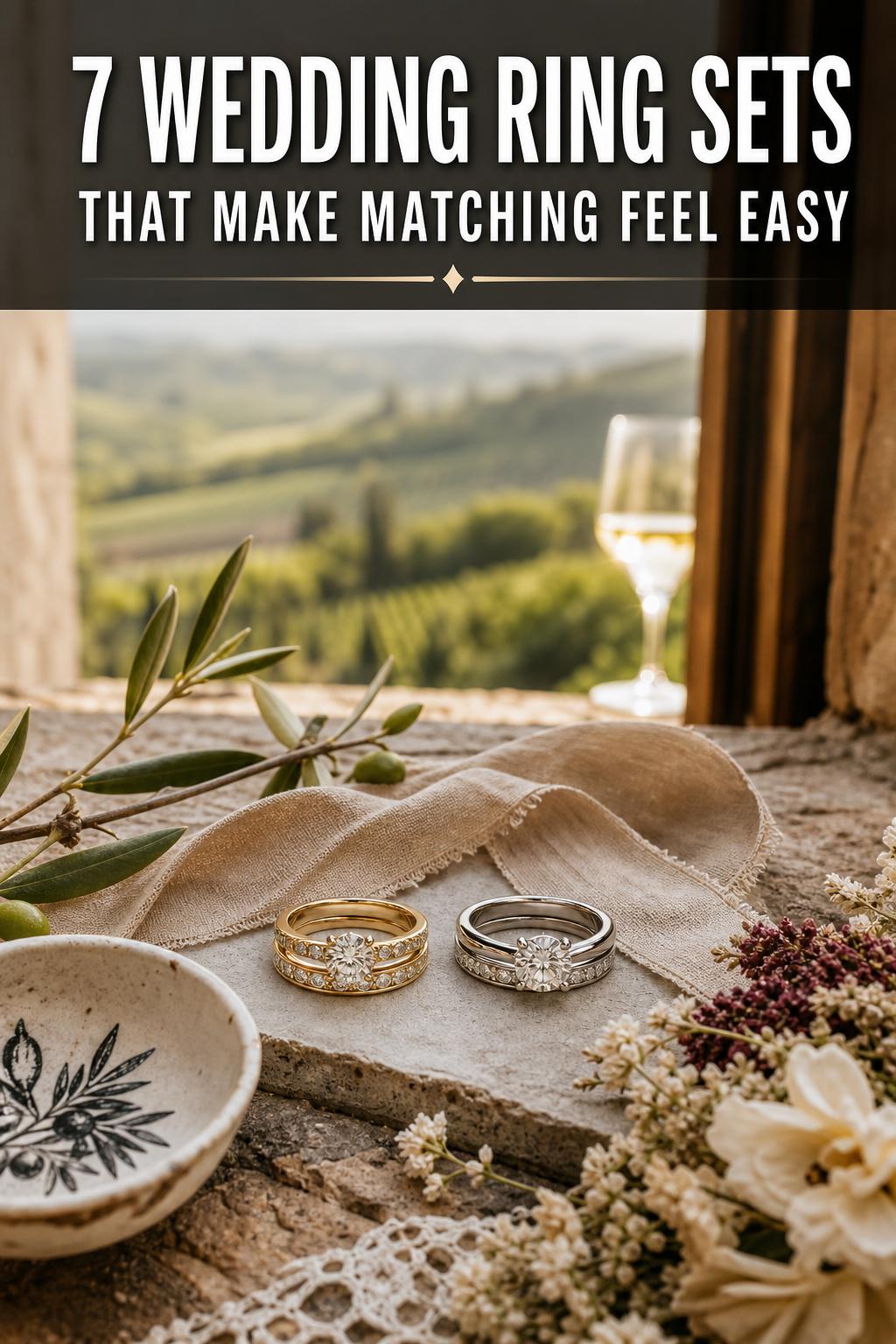
Before comparing styles, it helps to define what a wedding ring set actually includes. In most cases, the core is straightforward: an engagement ring paired with a wedding band designed to complement it. Some sets are strictly matching. Others are interchangeable, allowing more flexibility in styling and future additions.
Engagement ring
This is usually the visual focal point of the set. It may feature a solitaire, halo setting, three-stone design, or another silhouette. The engagement ring establishes the centerline of the look, including the stone shape, overall profile, and level of detail. Because it sets the tone, every decision about the wedding band should respond to this piece rather than compete with it.
Wedding band
The wedding band may appear simpler, but it is often what determines whether a set feels polished. A well-matched band can soften a dramatic engagement ring, add structure to a minimalist one, or create a near-seamless line in interlocking designs. The strongest bands are not chosen only for sparkle or ornament; they are chosen for proportion and fit.
Matching versus interchangeable sets
Matching sets are intentionally designed to work together in shape, profile, and finish. They are ideal for couples who want clarity and consistency. Interchangeable sets offer more freedom, but require more attention to visual balance. If you love flexibility, this route can work beautifully. If you want certainty, a coordinated bridal set often reduces second-guessing.
Wedding solution: fix the mismatch problem before you fall in love with the wrong ring
One of the most common frustrations happens when an engagement ring is chosen first, then the wedding band is added later without enough attention to fit. This can leave a visible gap, uneven heights, or a combination that feels disconnected. What looked romantic in isolation no longer feels complete when worn as a set.
The practical solution is to evaluate wedding ring sets as paired silhouettes from the start. Focus on matching engagement ring and wedding band sets, style-matched sets, or interlocking bridal ring sets if a seamless fit matters to you. Brands such as Shane Co. and Barkev’s center this idea clearly, while Fascinating Diamonds, Angara, and Jewlr emphasize coordinated pairings and customization. Even if you prefer a more flexible set, compare the ring profiles side by side before making a final decision.
When the relationship between the two rings is handled early, the whole set looks calmer and more deliberate. The hand photographs better, the stack feels more comfortable, and the symbolism reads more clearly because the rings appear to belong together. That visual unity often matters more than choosing the most ornate option.
Materials, metals, and stones without the overwhelm
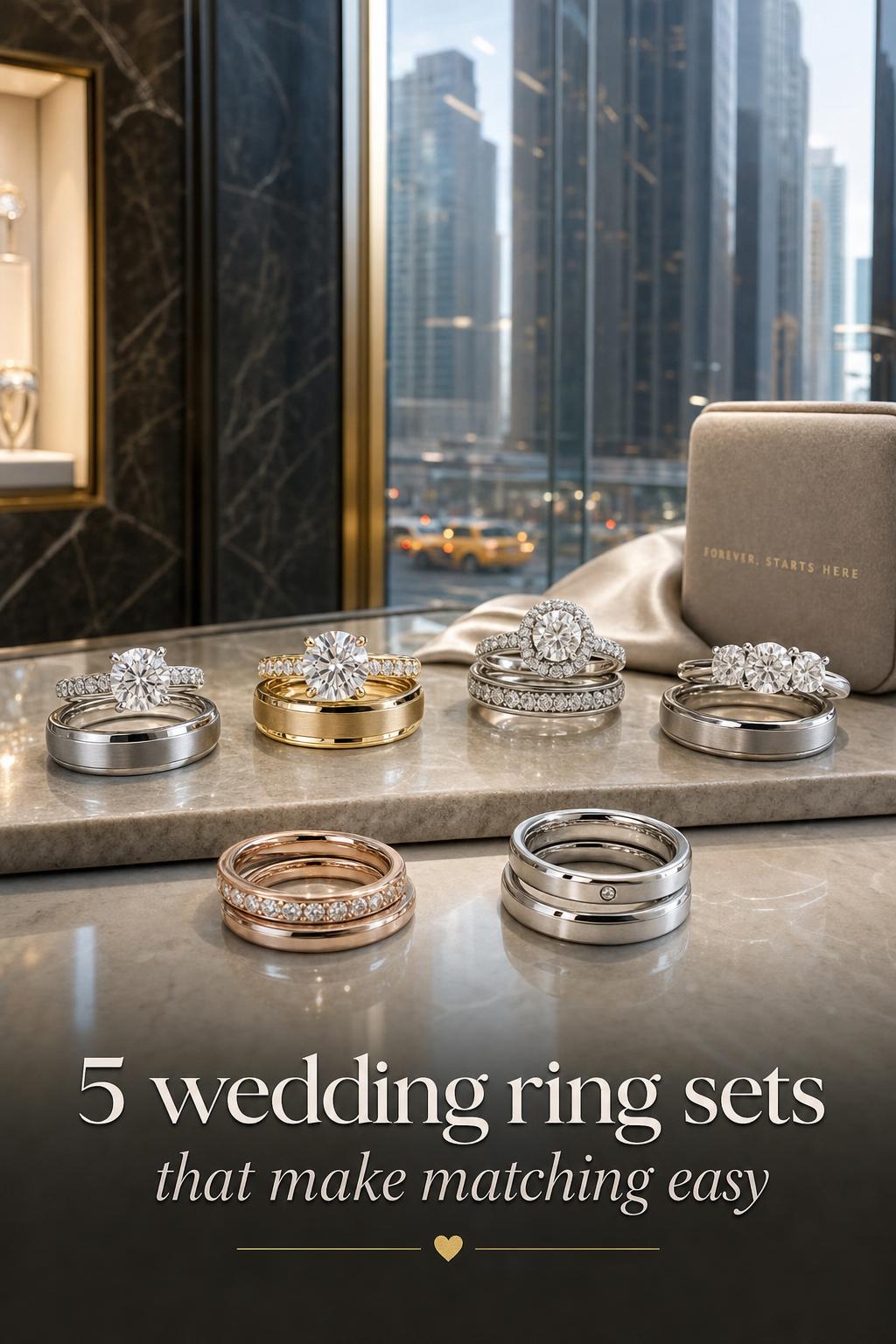
Material choice affects more than price. It shapes the mood of the set, the way light reflects across the rings, and how the pair feels over time. Across the leading ring set collections, a few material decisions appear again and again because they solve both visual and practical concerns.
Gold and platinum: where the look begins
Gold and platinum remain central to most wedding ring sets. 14k gold, 18k gold, and platinum appear repeatedly because they offer recognizable options for both mainstream and luxury buyers. White gold creates a clean, polished look and is especially associated with coordinated band sets, while yellow and two-tone options can create warmth and stronger contrast. Platinum often appeals to couples who want a substantial, enduring feel.
The decision is partly aesthetic and partly practical. If your style leans minimal, a single metal throughout the set usually feels timeless. If you want a little more character without complicating the design, two-tone wedding ring sets can add dimension while still feeling cohesive.
Natural diamonds, lab-grown diamonds, and moissanite
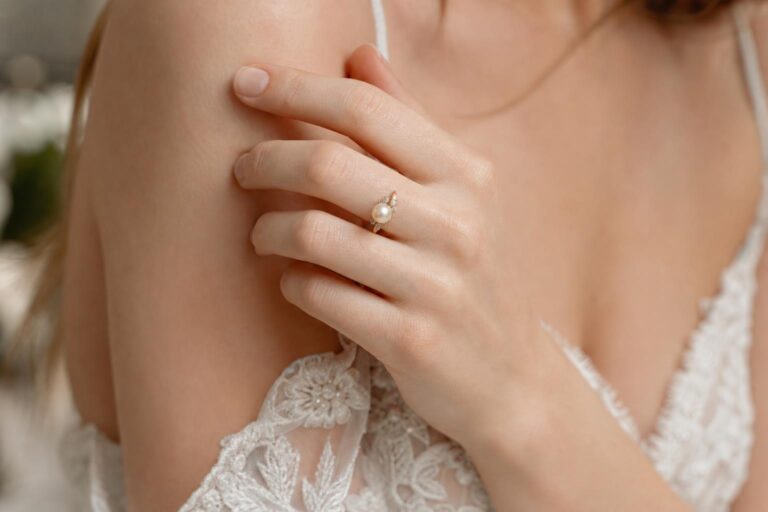
Stone choice often carries the most emotional weight. Natural diamonds remain a classic choice across many collections, while lab-grown diamonds are increasingly prominent in categories from Fascinating Diamonds to Brilliant Earth. For some couples, this is primarily a price and value decision. For others, it connects to sustainability, ethical sourcing, or a preference for modern buying options.
Moissanite-focused ring sets, such as those highlighted by Lane Woods, create a separate path for couples who want alternative stones and affordable luxury. The important thing is not choosing the stone type that feels most discussed, but the one that best aligns with your priorities for budget, look, and meaning.
What couples usually overlook
Many couples compare center stones carefully but spend less time comparing how stone type affects the overall balance of the set. A dramatic center stone may call for a quieter band. A more understated center can carry a little more detail in the wedding band. The set should feel visually resolved as a whole, not just centered around one standout feature.
Wedding solution: choose a style that still feels right after the wedding day
Trendy ring details can be tempting, especially when halo sets, vintage-inspired profiles, or dramatic three-stone arrangements photograph beautifully. The problem comes when a style feels exciting in the moment but does not fit the wearer’s long-term taste or daily routine. Rings are different from many wedding purchases because they remain visible long after the event is over.
The practical solution is to separate short-term excitement from long-term compatibility. Classic solitaires, halo wedding sets, three-stone sets, and interlocking designs all have their place, but each creates a different rhythm on the hand. Minimalist couples may prefer cleaner band profiles and lower visual noise. Those who love vintage-inspired romance may feel more at home with extra detailing, as long as the wedding band supports rather than crowds the engagement ring.
When style and lifestyle are aligned, the rings feel more personal and less performative. That creates a quieter kind of luxury: the confidence that your set fits your life as naturally as it fits your finger. This is often what makes a ring set feel truly timeless, regardless of whether it came from Tiffany & Co., Angara, Brilliant Earth, Jewlr, or a value-focused retailer.
Popular directions for wedding ring sets in 2026
Current ring set shopping shows a clear preference for coordinated aesthetics, meaningful material choices, and practical customization. Rather than one dominant look, the strongest styles are those that make pairing easier and daily wear more considered.
- classic solitaire engagement rings paired with streamlined wedding bands
- halo sets that create a more decorative, high-visibility look
- three-stone sets that add structure and symbolic depth to the center design
- interlocking bridal ring sets for a flush, connected feel
- modern minimalist combinations with clean profiles and restrained detail
- vintage-inspired sets that rely on texture, silhouette, and coordinated shaping
The common thread is not excess. It is alignment. The best-looking sets tend to show a clear relationship between the center ring and the band, whether through shape, height, metal, or decorative language. That is why style matching remains such a strong theme across the market.
Wedding solution: match the ring set to your budget without losing elegance
Budget stress often pushes couples into one of two extremes: spending too much on a single standout ring and compromising on the band later, or choosing a low-cost set that does not feel emotionally satisfying. Neither problem is really about money alone. It is usually about not knowing where value lives within the set.
The practical solution is to think in tiers rather than absolutes. Value-focused shoppers may feel comfortable exploring broad-assortment retailers such as Costco or JCPenney, where price range and promotions matter. Couples seeking customization may look toward Angara or Jewlr. Luxury buyers may be drawn to heritage, craftsmanship, and silhouette guidance at Tiffany & Co. Brilliant Earth adds ethical sourcing and sustainability to the value conversation, while Lane Woods highlights affordable luxury through moissanite-focused options.
Budget decisions feel less painful when they are intentional. A thoughtful set in the right category nearly always looks better than a more expensive one chosen in confusion. Elegance comes from proportion, consistency, and fit far more than from chasing the highest possible spend.
Budget-conscious alternatives that still feel elevated
- prioritize a well-matched band over extra decorative complexity
- consider lab-grown diamonds if value and contemporary sourcing matter to you
- explore moissanite ring sets if alternative stones fit your priorities
- choose a simpler style in a preferred metal rather than a busier style that feels less cohesive
- look at made-to-order options when fit and personalization are more important than brand prestige
What photographs best in a ring set
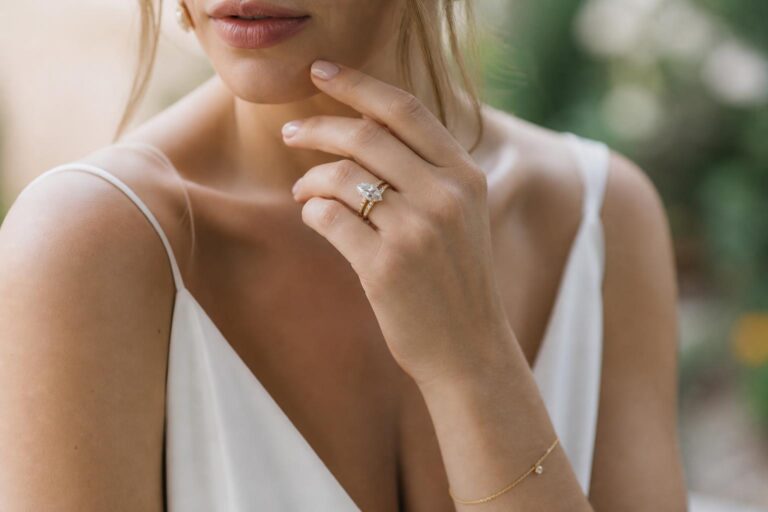
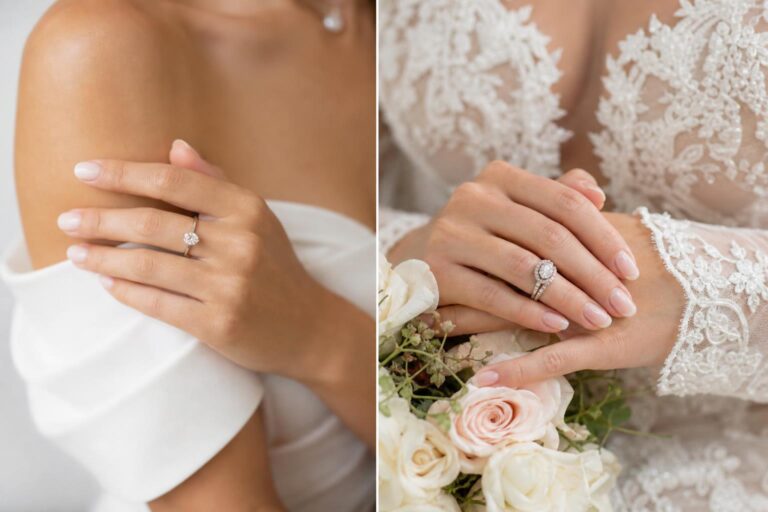
Close-up wedding photography is unforgiving in the best possible way. It captures meaning, texture, and craftsmanship, but it also reveals when a set feels visually unresolved. Rings that sit unevenly, clash in profile, or feel overworked can look more chaotic in images than they do in person.
Sets usually photograph best when the engagement ring and wedding band share a clear visual conversation. Matching metals create continuity. Coordinated heights keep the profile elegant. Distinct but related details, such as a halo paired with a band that echoes rather than duplicates the design, read beautifully on camera. This is another reason flush-fit and style-matched sets are so useful: they simplify what the lens sees.
If your wedding aesthetic is romantic and refined, do not underestimate the power of simplicity here. A cohesive ring stack often photographs more luxuriously than a highly embellished pairing that competes with itself.
Wedding solution: build comfort into the set from the beginning
A ring set can look extraordinary and still become difficult to wear if comfort is treated as an afterthought. This often happens when couples focus only on the face-up view of the rings and ignore width, profile, or how the band presses against the engagement ring throughout the day. The result can be irritation, awkward stacking, or a set that gets worn less than expected.
The practical solution is to evaluate finger size, ring width, and comfort fit at the same time as style. Active lifestyles often benefit from cleaner silhouettes and less complicated stackability. Formal or fashion-forward preferences may leave more room for decorative detail, but even then, the rings should still feel balanced. Angara and other customization-focused brands often support this kind of decision-making well because they treat fit as part of the design conversation rather than an afterthought.
Comfort creates confidence. When a ring set feels natural on the hand, the wearer stops adjusting it and simply enjoys it. That ease changes the emotional experience of the jewelry. Instead of feeling precious in a stressful way, it becomes part of everyday life with grace.
Brand perspectives: how different jewelers solve different problems
Wedding ring sets are not presented the same way across the market, and that is useful to understand. Different brands solve different shopper problems, which can help narrow your search much faster.
- Fascinating Diamonds emphasizes wedding ring sets with filtering by stone, metal, price, and style, making it useful for couples comparing natural diamonds and lab-grown diamonds.
- Costco frames ring sets through value, broad assortment, and membership-based shopping.
- Angara leans into bridal ring sets, customization, matching silhouettes, and comfort fit.
- Tiffany & Co. approaches wedding band sets through white gold options, silhouette coordination, craftsmanship, and luxury heritage linked with New York.
- Shane Co. focuses on style-matched wedding sets and pairing guidance, supported by U.S. showroom presence.
- Barkev’s is especially relevant for couples who want interlocking bridal ring sets and a seamless connection between ring components.
- Jewlr speaks to made-to-order bridal sets, including 2-piece and 3-piece customization.
- JCPenney offers a broad, promotion-friendly bridal set catalog for mainstream shoppers.
- Lane Woods highlights ring sets with moissanite and affordable luxury positioning.
- Brilliant Earth combines engagement ring sets with education on lab-grown diamonds, natural diamonds, ethical sourcing, recycled metals, and sustainability.
Seeing these differences clearly can reduce decision fatigue. You do not need to browse every style from every retailer. You need to start with the jeweler whose strengths match your actual priorities.
Wedding solution: handle ethical sourcing and modern values without confusion
For many couples, the emotional meaning of a ring set now includes how it was sourced and made. The challenge is that ethical terms can feel abstract during a highly visual shopping process. A set may be beautiful, but if questions about conflict-free diamonds, recycled metals, or traceability remain unresolved, the purchase can feel incomplete.
The practical solution is to treat ethical sourcing as one of your primary filters rather than a footnote. Brilliant Earth is closely associated with conflict-free diamonds, recycled metals, fair-trade practices, and sustainability-focused education. Broader industry references such as the Kimberley Process, the Responsible Jewellery Council, and Fairmined can also help frame what responsible sourcing means within the ring conversation. Not every couple will prioritize these issues equally, but if they matter to you, they should shape the shortlist early.
This approach brings emotional clarity. A ring set is deeply personal, and feeling at peace with the origin story matters just as much as the final silhouette for many buyers. When values and aesthetics align, the purchase tends to feel more settled and more meaningful.
Customization, made-to-order design, and when it is worth it
Customization becomes especially helpful when a couple wants a precise fit, a particular stone type, or a style that standard collections do not resolve well. This is where made-to-order capabilities can shift the entire experience from compromise to confidence.
Brands such as Jewlr and Angara are especially relevant here because customization is part of the shopping logic. Fascinating Diamonds also supports filtering and pairing options that move in the same direction. In practical terms, customization can help with matching silhouettes, selecting metals, narrowing stone preferences, and building a set that feels intentionally coordinated rather than assembled from separate categories.
How to keep customization realistic
Customization works best when the goal is clear. If you want every detail to be unique, the process can become overwhelming. If you know the exact issue you are solving, such as improving flush fit, choosing a preferred metal, or selecting a lab-grown diamond instead of a natural diamond, then made-to-order design becomes highly practical rather than unnecessarily complicated.
Common mistakes that make choosing wedding ring sets harder
Most ring regret is not caused by poor taste. It comes from rushed comparisons, unclear priorities, or focusing on one part of the set while ignoring the whole. That is reassuring, because it means the process can be improved with better structure rather than endless searching.
- choosing an engagement ring without considering the future wedding band
- focusing only on center stone impact and ignoring profile compatibility
- mixing too many visual ideas, such as a dramatic ring with an equally busy band
- treating metal choice as a minor detail instead of a unifying design decision
- assuming all matching sets feel comfortable without checking width and fit
- waiting too long to think about ethical sourcing, resizing, or insurance considerations
- shopping by trend pressure rather than everyday lifestyle
The good news is that these are fixable mistakes. A calmer process usually leads to a stronger result, and couples rarely need more options. They need a clearer way to evaluate the options already in front of them.
The simplest way to make the set feel luxurious
Luxury in wedding ring sets is not only about brand name or price point. It often comes from restraint, consistency, and finish. A well-resolved silhouette in white gold or platinum, a carefully paired halo and band, or an interlocking set that sits perfectly together can all feel more refined than a busier combination with more visual elements.
This is why so many top collections focus on pairing guidance instead of relying only on assortment. Whether the set comes from Tiffany & Co. in New York, a showroom-driven U.S. retailer such as Shane Co., an ethically positioned brand such as Brilliant Earth, or a customization-focused jeweler such as Angara or Jewlr, the set feels elevated when every element supports the same visual intention.
Care, resizing, and insurance considerations that deserve attention early
Resizing, maintenance, and insurance often enter the conversation later than they should, even though they directly affect long-term satisfaction. Wedding ring sets are paired items, which means changes to one ring can influence the visual and physical relationship with the other. That is why these practical details belong in the buying decision, not only after the purchase.
From a planning standpoint, it helps to ask early whether both rings can be resized, how the set is intended to sit together, and how the pair will be protected over time. This is especially relevant for coordinated bridal sets, interlocking designs, and made-to-order pieces, where precision fit is part of the value. Insurance considerations also matter because a ring set functions as a pair, not just a single item.
Tips for long-term peace of mind
- ask about resizing before finalizing the set
- consider how the engagement ring and band will wear together daily
- keep care and maintenance expectations in mind if the design is highly detailed
- evaluate insurance as part of the total purchase decision, not an afterthought
How to choose the right wedding ring set for your life, not just your wishlist
The best final test is surprisingly simple: does the set make sense for your style, your comfort, your budget, and your values at the same time? Not perfectly, but honestly. A ring set should feel like a natural extension of your life, whether that means a classic white gold pairing, a luxury brand silhouette, a lab-grown diamond bridal set, a moissanite option, or a custom interlocking design.
If you are uncertain, narrow the decision by asking four questions. Do I want a closely matched set or more flexibility? Which matters more to me: heritage, value, customization, or sourcing? What metal and stone choices support that priority? And will this set still feel right when the wedding day is over and ordinary life begins again? Those questions tend to reveal the right answer more clearly than endless browsing.
Thoughtful choices nearly always feel more beautiful than pressured ones. A ring set does not need to do everything. It needs to tell your story with clarity, comfort, and confidence.
FAQ
What is included in a wedding ring set?
A wedding ring set usually includes an engagement ring and a wedding band designed to be worn together. Some bridal sets are strictly matching, while others are more interchangeable, but the goal is the same: a coordinated look in fit, profile, and overall style.
Are bridal sets and wedding ring sets the same thing?
They are often used in very similar ways. Bridal sets, wedding sets, engagement ring sets, and wedding band sets all refer to coordinated ring pairings, though some brands may use one term more often than another depending on how their collections are organized.
How do I choose between natural diamonds and lab-grown diamonds?
The choice usually comes down to your priorities around budget, sourcing, and personal preference. Many couples compare natural diamonds and lab-grown diamonds when shopping for wedding ring sets because both are widely available, especially from brands that emphasize material choice and education.
What metal is best for wedding ring sets?
Gold and platinum are the most common choices across leading collections, with 14k gold, 18k gold, white gold, and platinum appearing frequently. The best option depends on the look you want, how substantial you want the rings to feel, and whether consistency across both pieces matters most to you.
Are interlocking wedding ring sets worth considering?
Yes, especially if you want the engagement ring and wedding band to sit together in a very seamless way. Interlocking bridal ring sets can reduce gaps and create a flush, unified look, which is why they appeal to couples who care about both comfort and visual cohesion.
Can both rings in a set be resized?
Resizing depends on the specific design, so it is important to ask before purchasing. This matters even more with coordinated wedding ring sets, because changing one ring can affect how the pair fits and looks together.
What is the average cost of a wedding ring set?
Cost varies widely depending on the brand, materials, stone type, and level of customization. Value-focused retailers such as Costco and JCPenney serve a different price range than luxury names such as Tiffany & Co., while brands like Angara, Jewlr, Brilliant Earth, and Lane Woods offer different combinations of customization, sourcing, and stone options.
How do I know if a wedding band will match my engagement ring?
Look at the full relationship between the rings, not just whether they are attractive separately. Profile, height, width, metal, and style all matter. Matching engagement ring and wedding band sets make this easier because the coordination has already been considered in the design.
Which brands are known for different strengths in wedding ring sets?
Different brands serve different needs. Tiffany & Co. is associated with luxury craftsmanship and coordinated silhouettes, Brilliant Earth with ethical sourcing and sustainability, Angara and Jewlr with customization, Barkev’s with interlocking designs, Lane Woods with moissanite options, and Costco or JCPenney with broader value-focused assortment.
Should I buy a matching set or choose the rings separately?
If you want simplicity, strong visual cohesion, and fewer fit surprises, a matching set is often the easier choice. If you want more flexibility and enjoy building a look piece by piece, choosing the rings separately can work well, but it requires more attention to proportion, silhouette, and comfort.