Western Wedding Dresses: One Skirt, Two Tops
If you keep saving western wedding dresses for their skirts, try shopping for a separate skirt and top. I’d start with a skirt that looks finished at the waist, then try it with a formal bridal bodice and a western snap-front shirt. A second top is worth buying if you’re excited to wear it with that exact skirt and it can sit comfortably at the same waistband.
In a listing photo, a top can meet the skirt exactly where you want it to. At the fitting, you might see the top ride up when you reach forward, or find you can see the shirt’s hem through the skirt. Sort out where the two garments meet before choosing details such as piping or snaps.
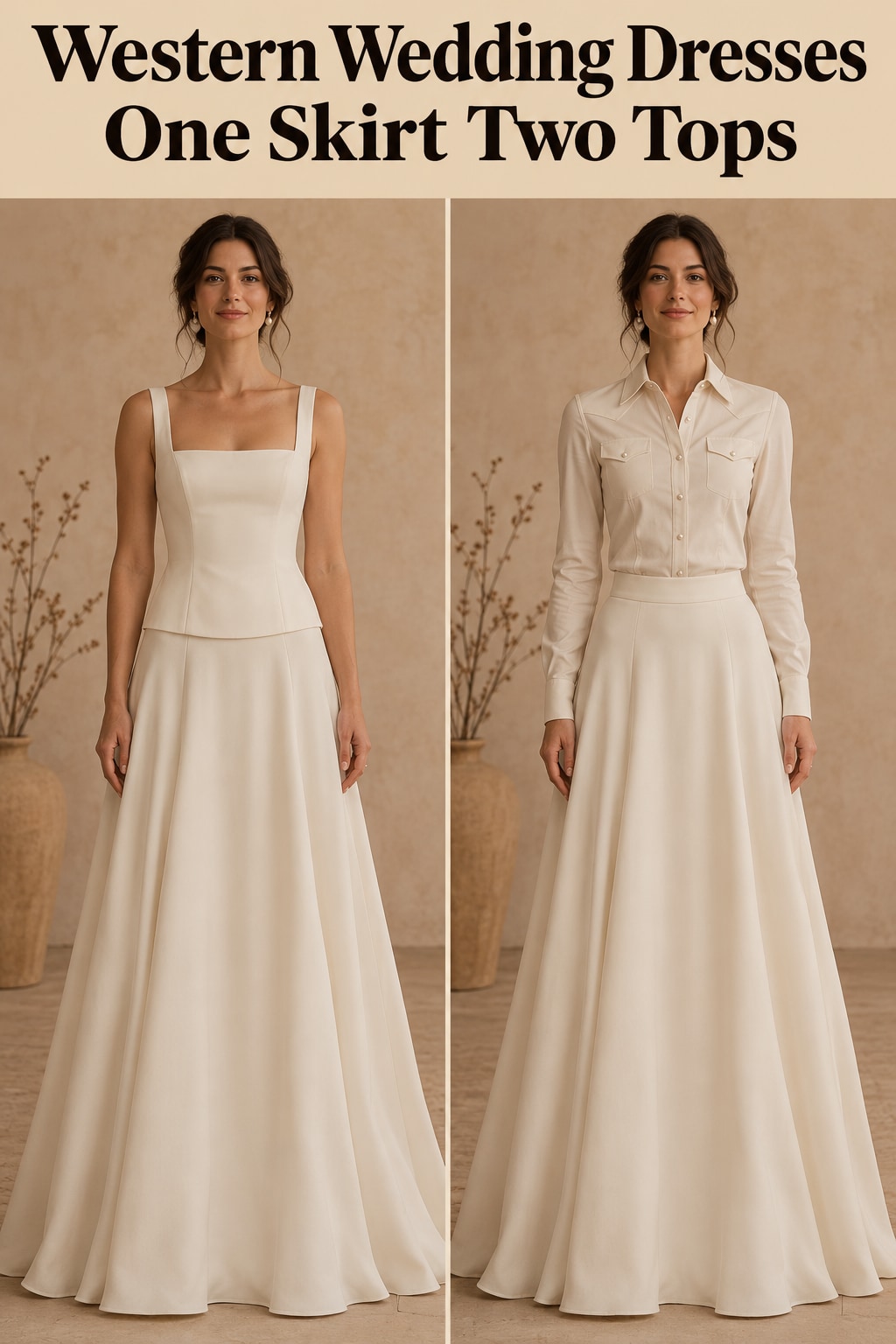
Build around the skirt
Choose a waistband you can see
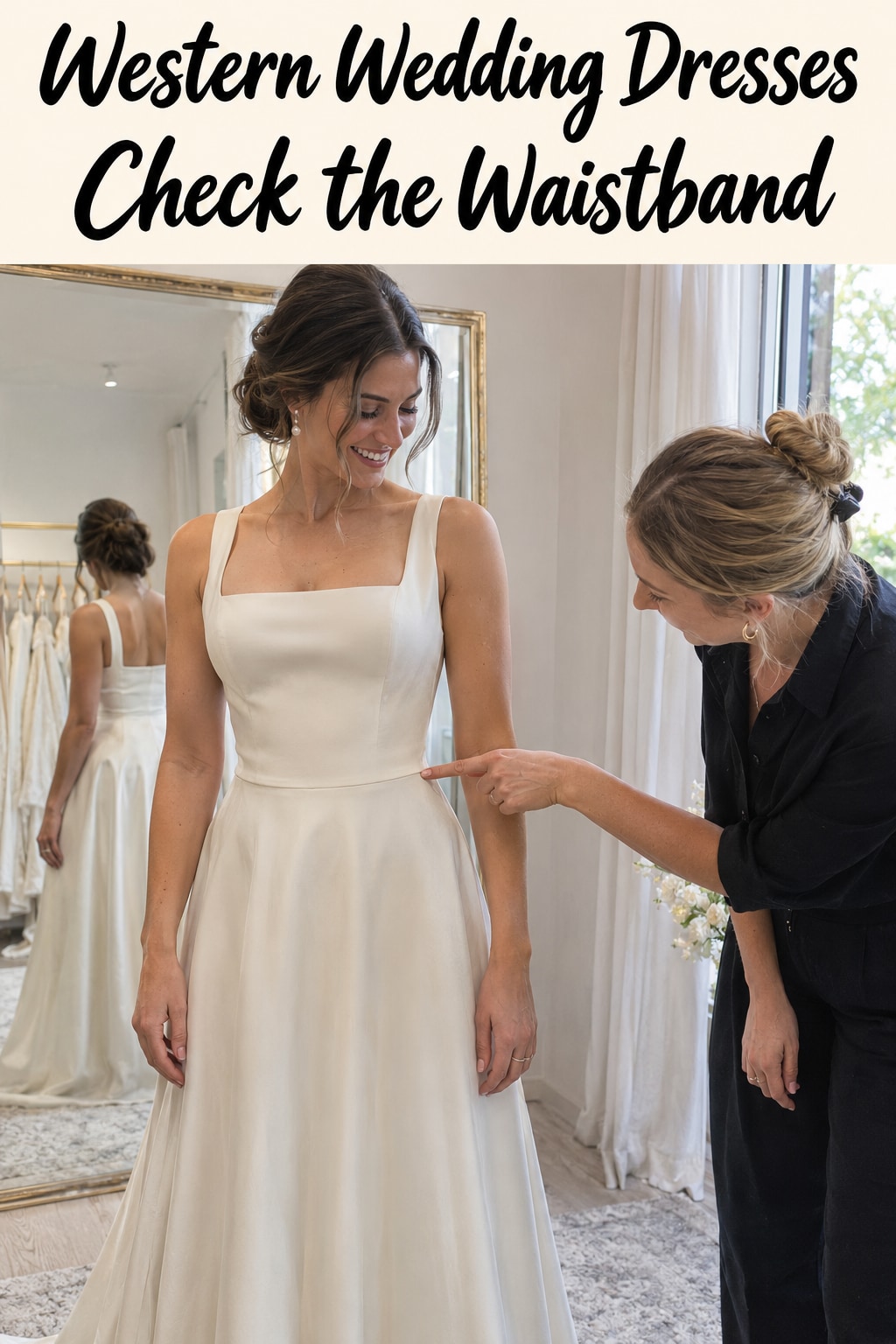
Start the appointment in a plain top that lets you see the waistband all the way around. A floor-length skirt with a flat band is one starting point. A skirt with a broad shaped waist can be a good choice if you want the line between the two garments to show. Close the skirt and ask the fitter to point out the seam that sits at your waist. Use that seam as your reference when you try different top lengths.
Look at the zipper and the inside of the band. A skirt that fastens independently can stay put while you try on another top. If a sample skirt stays up because a stylist is clipping it to a corset, ask to see how the two pieces fasten in your size. Have the shop show you the skirt’s own closure. If you would wear a topper with snaps that connect it to the skirt, find out what you will see at the waist when those snaps are empty.
Turn wedding inspiration into a plan you can actually follow.
Zarellea brings your guest list, budget, vendors, and day-of details into one shared space — so no beautiful idea gets lost in the shuffle.
The skirt needs enough space at the waist for the type of shirt you’ll wear with it. A broad waistband may look smooth under a thin top and feel tighter with a shirt tucked inside. I would bring a simple, thin shirt to the first appointment if the western one is still on order. When you sit down, compare the band with the shirt tucked and untucked. If you have to loosen the skirt to make room for the tuck, show your fitter before you count on that pairing.
Pick the amount of overlap you want
A cropped bodice can end at the upper edge of a skirt or extend a little over it. If you want continuous coverage at the waist, hold a small mirror at your side when you sit. The two pieces can meet in front and separate at the back. Ask whether the bodice can be ordered or altered to cover the amount of waist you want in both positions. If you like a strip of skin showing, see whether the gap stays roughly where you want it across the front and around the sides.
Check a longer fitted top in the same chair. Its lowest point may sit neatly over the skirt when you put it on, then rise once you’re seated. A peplum, which flares below the top’s waist seam, gives you a different outline from a straight hem. When you try one, look at the length of the top from the back. A flare that repeats the start of the skirt may make a pleasing second line, or it may hide an angled waistband you paid for. Try the peplum and skirt together before you alter either piece.
Choose where the Western detail sits
A yoke is a shaped part of the garment across the shoulders or upper back. A Western shirt with a contoured yoke and a line of snaps gives the look a clear point of reference above the waistband. Rockmount’s white Western shirt shows a front and back yoke with white snaps and shaping at the waist. Look at this kind of construction if you like the shoulder line and want to avoid extra fabric at your hip. You can keep the same idea with contrast piping or eyelet if you want that detail to show in a close portrait.
If the Western detail is in the skirt, such as a row of small embroidered motifs along the hem, give it room in both looks. For a skirt whose texture is already busy, I would try a top in a quieter weave and then compare it with the shirt. Hold each top against the skirt at the height you would wear it. You can see whether the detail at the shoulders draws attention away from the embroidery.
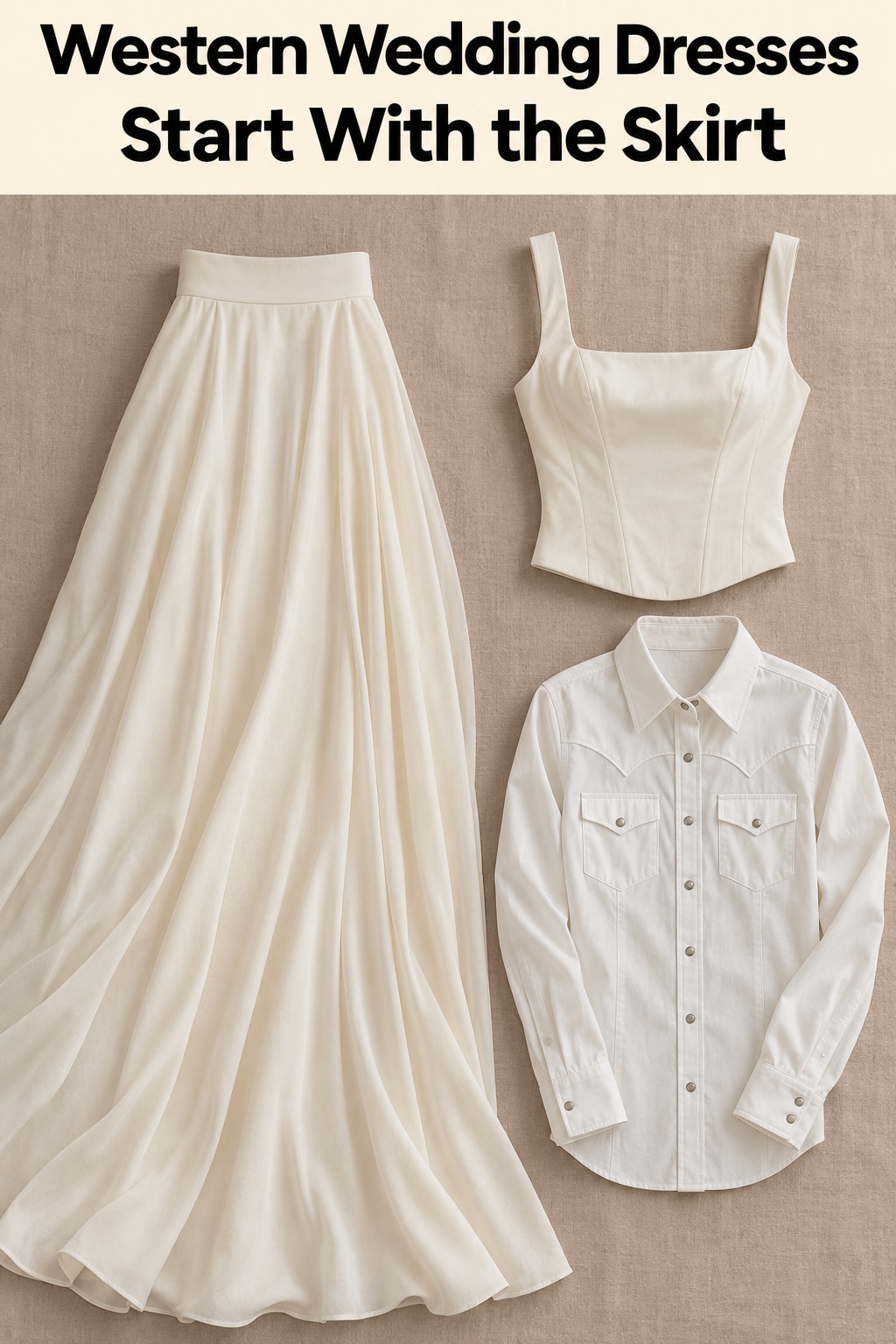
Combine the same pieces into two looks
A fitted bodice for the ceremony
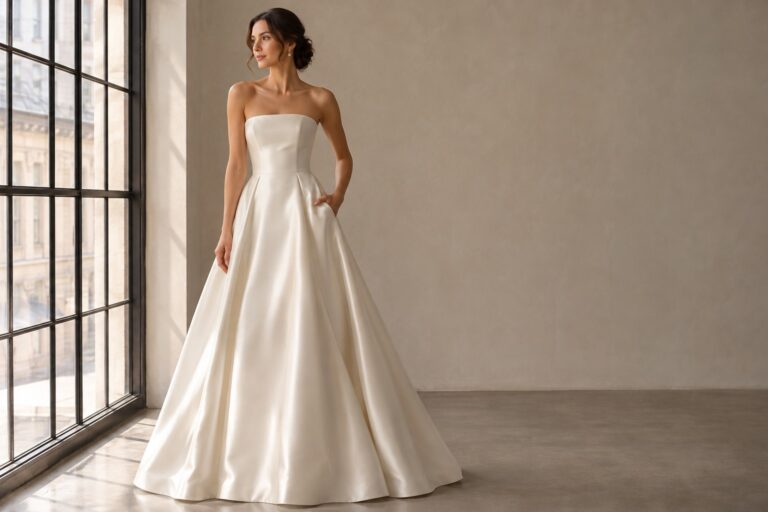
Try an ivory skirt with a flat waistband and an ivory square-neck bodice that overlaps it. For a continuous line at the waist, choose a band that sits flat under the bottom of the bodice. If a curved lower edge on the bodice leaves a little point in front, check that the skirt zipper and hook sit somewhere away from that point. Step back from the mirror to see which edge your eye follows first.
Start with the bra or support you already intend to wear. A structured top may have enough support for you by itself. Another may feel best with a smooth strapless bra beneath it. Check the back height while the skirt is closed, and make sure you can wear the support you tested if the top is altered. If the bodice closes with a long zipper, try taking it off once with the skirt fastened. You may discover that a zip pull is hard for you to reach, or that the skirt can stay on while someone unfastens the top.
A snap-front shirt for the reception
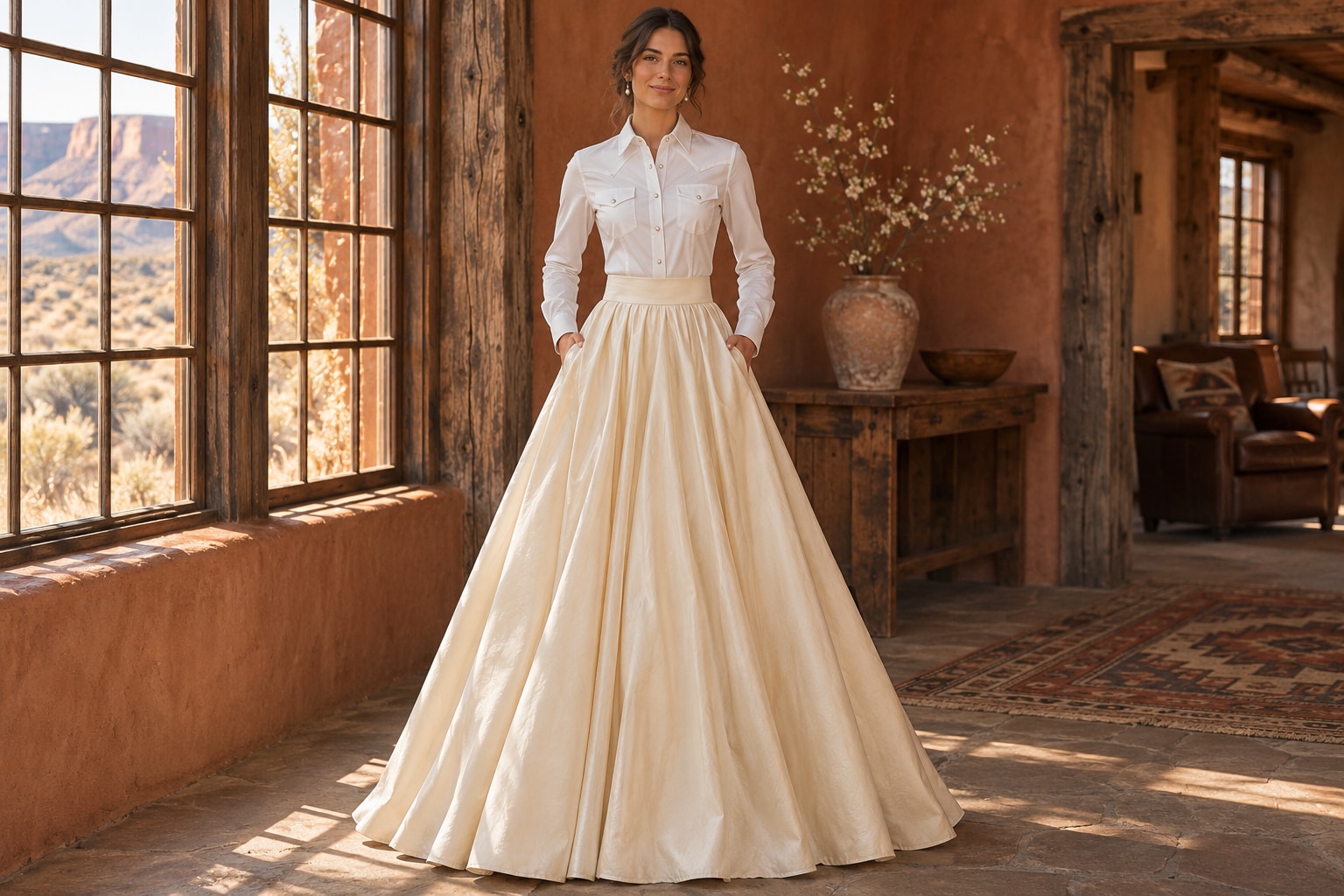
Now put a fitted Western shirt on with the same skirt. A white shirt with pearl-style snaps can look crisp against an ivory skirt if you give the two shades a little room to differ. The first thing I’d check is the tuck. Smooth the shirt down by the side seams and look at the skirt from the side. A shirt with extra fabric below the waist can make a ridge that shows through a thin skirt. Press on the waistband where the shirt moves under it. If you can feel the shirt fold there, ask whether a shorter hem or a different shirt shape would suit the pairing.
Stand in the shirt after you sit down. Look at whether the center snaps still run straight and whether the tuck lifts on one side. You can try a closer-fitting shirt or a light dressy bodysuit if you like a neat waist. If you want an untucked shirt, try a short one with a finished straight hem. It needs to end somewhere that looks deliberate over the skirt. Take a close photo of the join. You may find that the fitted ceremony top looks almost like part of a dress and the shirt looks like a separate garment, which is exactly the amount of change you want.
If you start with a skirt that has a high, shaped waist
Put the short top over the band to see what happens to the shape. On a wide angled band, a top that covers only the upper part may leave a narrow strip of the band in the middle and more fabric at the sides. If that line bothers you, try a tucked or close-fitting top that leaves the full band visible. A light lace blouse with a lining is an option when you want some texture in the ceremony look and still want people to see the top of the skirt. Check where the lining ends. If it stops well above the waistband, the hem of the blouse can look different under backlight.
For the second look, set the shoulder detail higher and keep the tuck light. One way is a white snap-front shirt with piping across the yoke. Open the cuffs if you want to roll the sleeves, then see whether the cuff folds stay even after you bend your arms. If the shirt tail comes out whenever you reach forward, go back to the fitting room with a shorter top. I would keep whichever shirt lets the shaped waistband remain visible when you walk away from the mirror.
Pieces to try together
Check the waistband with both tops
Check overlap at the waist
Try it tucked and untucked
See where the lace ends
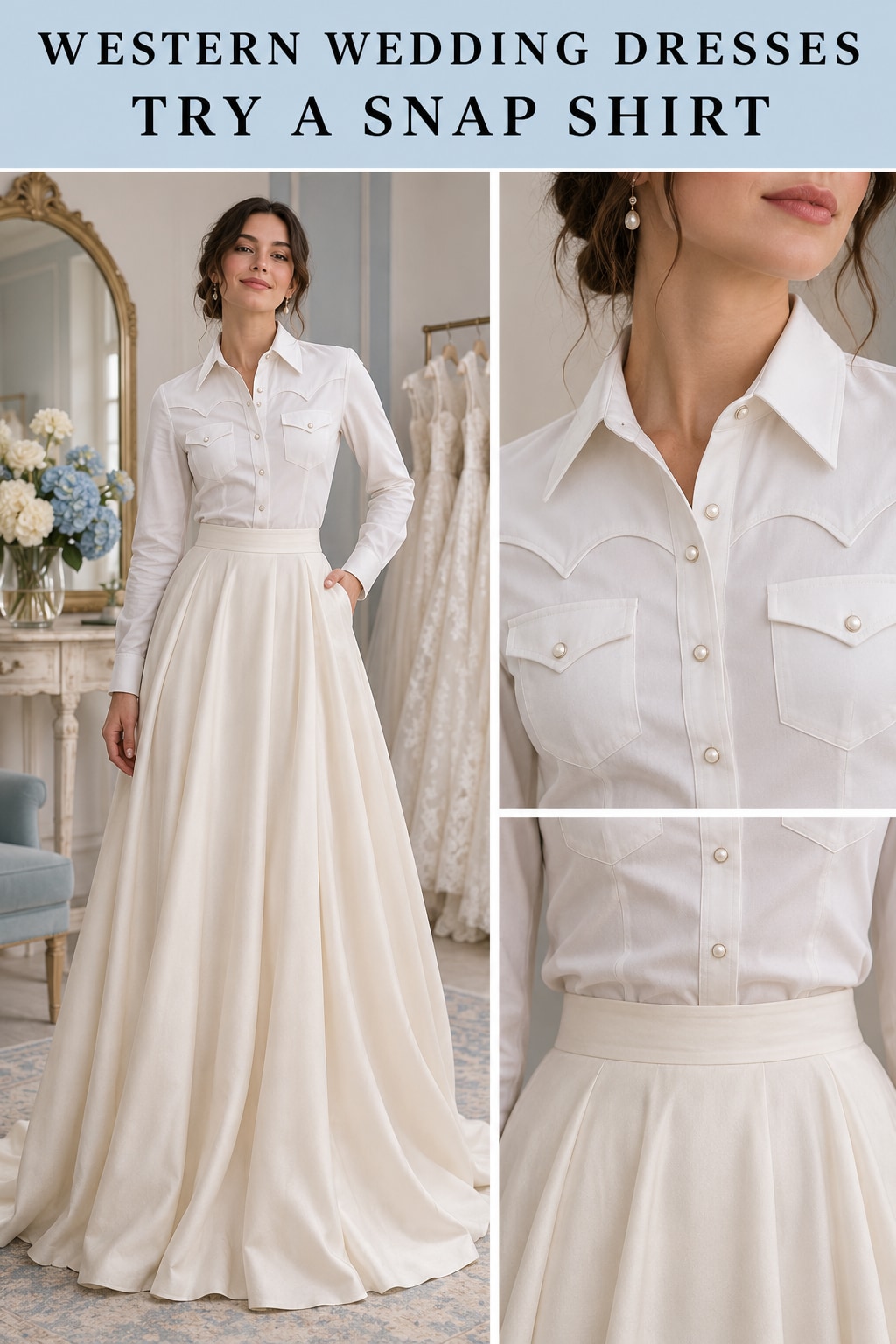
Spend where the pieces meet
Fit the skirt before you buy the second top
The skirt is the piece carrying both looks, so give it the first fitting and most of your attention at the waist. Ask the shop how much the band can be adjusted without shifting a front design or making the closure sit crookedly. If you’re choosing your own size in each piece, write down the size and actual waistband position of the skirt you tried. Sellers may give you garment measurements, body measurements, or both. Ask which they are sending before you compare a waist measurement from one shop with another.
Check the buying page for what comes in the order. The BHLDN bridal separates collection lists individually sold skirts and tops alongside sets. If you want to mix brands, see whether you can try the pieces together while the return windows overlap. Ordering a second top after seeing the real skirt can save decisions about lining and hem length. If a seller only shows the pieces on hangers, ask for the length of the top and the distance from the skirt’s band to the hip. Compare those measurements with where you want the clothes to meet on your body.
Give the fitter both combinations at once
If you plan to shorten the shirt, pin the amount you think you want and try it tucked and untucked. Pay attention to where the hem hides or shows the band at the sides. An alteration that makes a tuck look smooth may leave too little length to keep the shirt inside the skirt when you sit. Ask the fitter to pin the front and back before any cutting. At the same appointment, inspect the ceremony top with the band at its final height. Fit the lower edge of the bodice once you know where the altered skirt will sit.
Think about what you would wear if you could only have one top. For some brides that’s the Western shirt from the beginning, especially if the snaps and yoke are the parts they are most looking forward to seeing. If that’s you, a well-fitted shirt and the skirt you love may already be enough. If the ceremony calls for a more formal top in your eyes, give that bodice first claim on the fit. Either way, pay for the adjustments both looks need before buying a decorative buckle or another accessory for the waistband.
Adapt the pieces for a warm day or cold evening
Try the skirt with the lining and underlayers you intend to wear. If you’re wearing the Western shirt indoors at dinner, judge how it feels in that setting. Try sitting in the ceremony top in the room where you’ll wait, or in a similar temperature if you can, before deciding whether it feels comfortable. For a warm reception, try a short-sleeved Western shirt that still has the yoke or snap line you like. A detail at the shoulders may be visible in floor-length pictures even if the skirt is the most prominent piece.
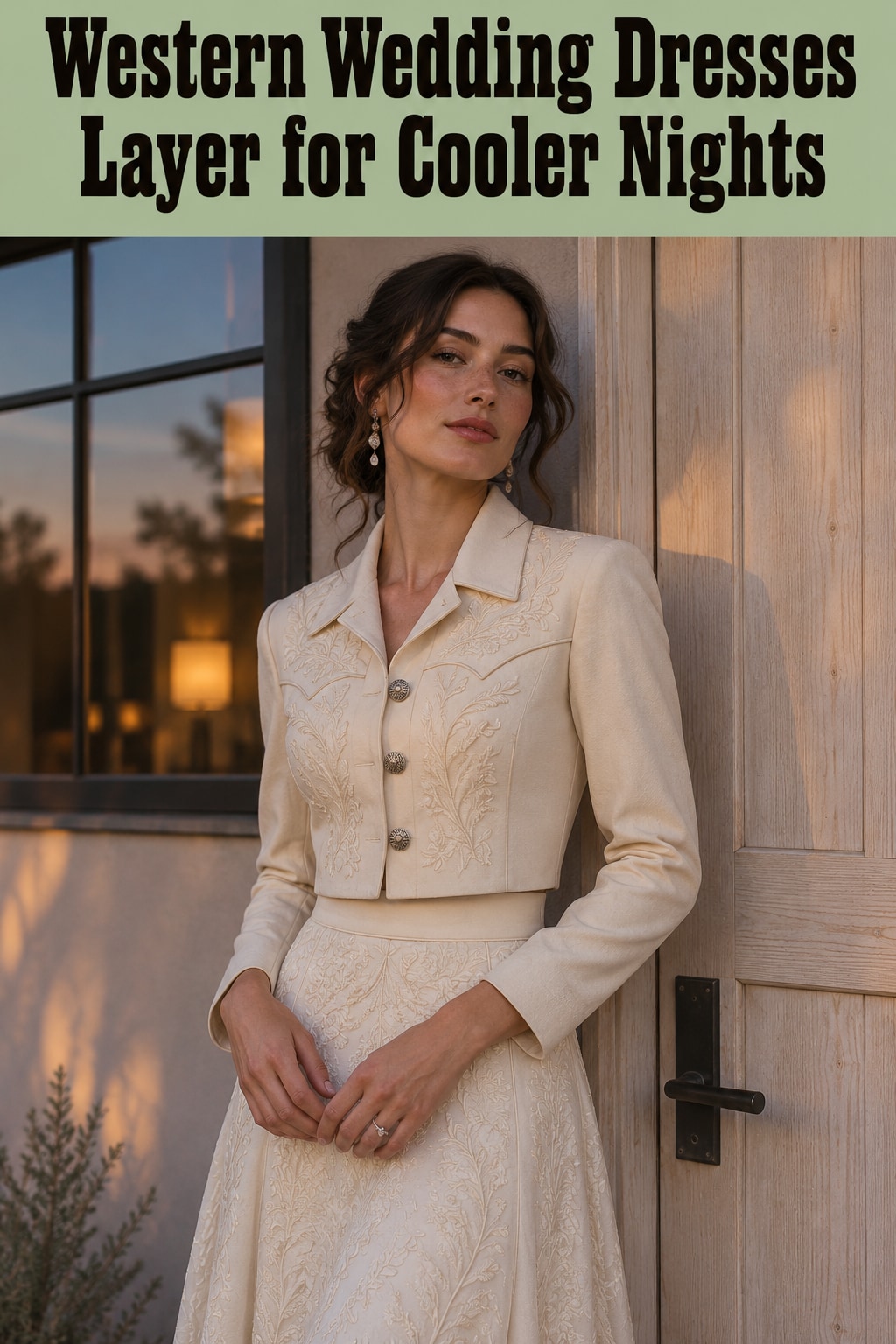
For a cool evening, start with the longer-sleeved option. A Western shirt in a firmer cloth may be easier to wear untucked over the skirt if you have tried it that way. If you need a layer above the two pieces, button it and sit down before you decide. A cropped jacket that ends at the band may be enough to keep the waist visible. A longer coat can cover the band when you go outside. Take the coat off in the fitting room and check that its hem hasn’t pulled at the back of the shirt.
If the date is between seasons, be realistic about which part of the outfit you would like to repeat in your wardrobe. It might be the shirt you are happy wearing with your own jeans later. It might be a skirt you want to wear to another formal occasion. Think about that possibility while you compare versions, then make sure both pieces work for the wedding before buying based on where you might wear them next.
Editor’s take
I’d take a plain shirt to the first fitting and choose the skirt with that tucked in and a formal top over the waistband. If the skirt’s fit depends on one top holding it up, I’d buy it as a single outfit only if I loved that exact pairing. I would also stop at one top if I preferred the finished look with the Western shirt from the start. The first thing I’d ask the fitter to show me is the band on its own, with the skirt closed and sitting where it will on the day. From there, I can decide which detail I want visible at shoulder height and how much of the waist I want to see. These are editorial judgments drawn from published garment examples and construction details.
Sources and methodology
Designer and retailer examples informed the options for separate tops, skirts and Western shirt details. The pairings are styling suggestions. Try the actual pieces together, especially if the skirt and top come from different makers.
FAQ
Can two-piece western wedding dresses look formal?
Yes. Try an independent skirt with a finished waistband and a bodice that meets or overlaps it the way you want. A gown-length skirt and fitted bodice can give you the line of a single dress. You can also show the band on purpose if you like the proportions of a clearly separate top.
Can I wear the same skirt with tops from two makers?
You can if the pieces work together in person. Check which sizes you need, how the two closures line up and where the top ends when you’re seated. Bring both tops to alterations if you plan to change where the skirt sits.
Can I tuck a Western shirt into a bridal skirt?
Try it before you commit to the shirt. A smooth tuck can work beneath a skirt that has room at the band. Look for ridges from shirt fabric at the sides and check whether the tuck stays put when you sit and stand.
What if I want a cropped top without a gap?
Try a bodice long enough to overlap the skirt band at the front and back in the positions you plan to wear it. Ask the fitter to check the side while you sit. A longer top over the same band can be more straightforward if you want continuous coverage.
What if I want the Western detail in my first look?
Wear the Western shirt for the ceremony, or choose a separate bridal top with a shaped shoulder seam or narrow piping. Try it next to the skirt to see whether the shoulder detail shows clearly enough for you. If that top works through dinner, you can wear it all day.
What should I bring when the skirt is being altered?
Bring both tops and the support pieces you plan to wear with each. If one top will be tucked, let the fitter measure and pin the skirt with that fabric under the band. Ask to see how the fitted ceremony top overlaps the new waist before committing to either adjustment.