
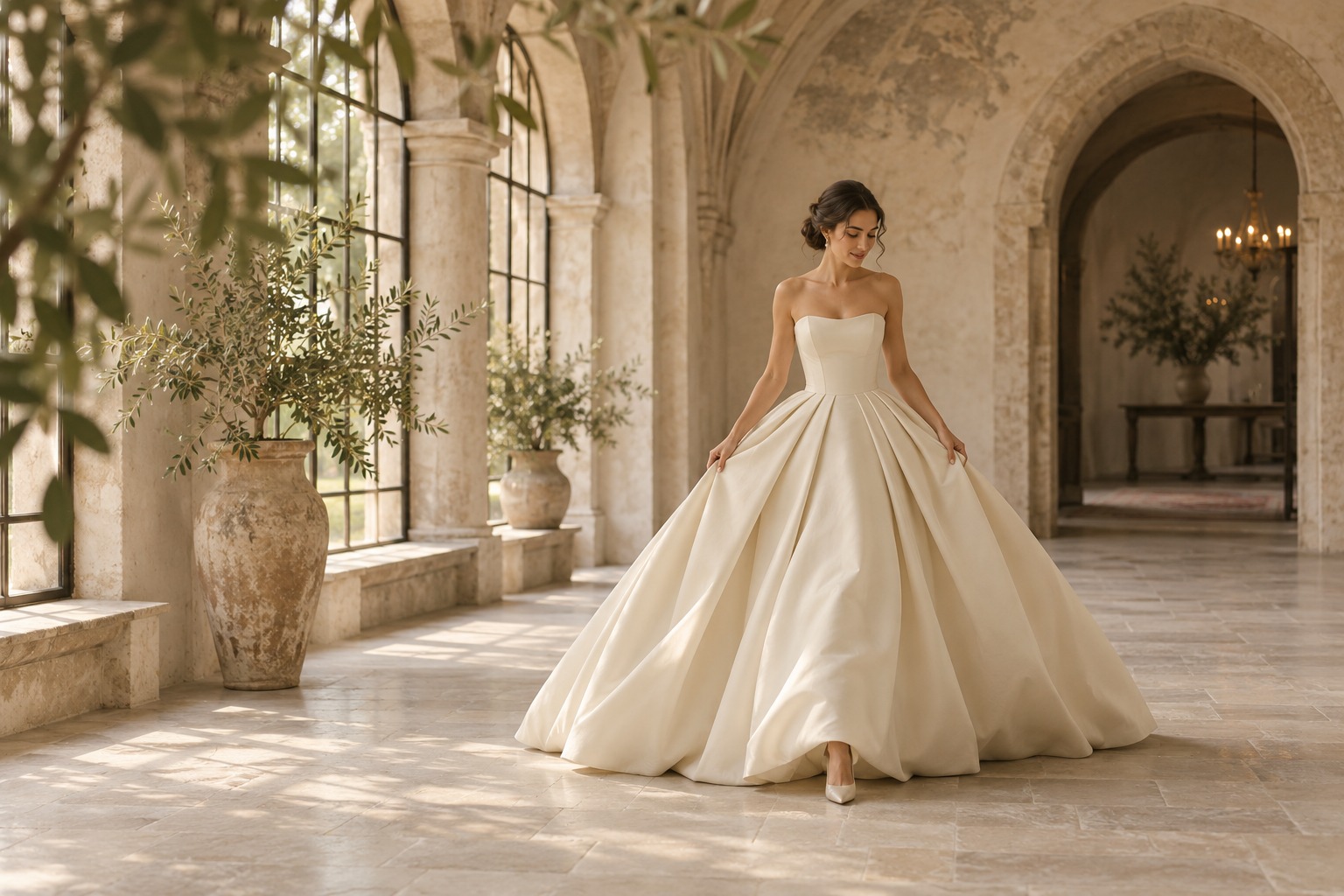
Big Wedding Dresses: Choose the Right Skirt Volume
When you’re trying on big wedding dresses, decide how long you want to spend in the full skirt. I’d try a ball gown first if the wide shape is what you want from the aisle to the last dance. If you picture it mainly in the entrance and portraits, try a detachable overskirt. Leave room on the fitting-room rail for a full A-line. Its skirt may give you the sweep you liked in the photo while taking up less space beside you.
Tell the consultant how you want the skirt to look when the doors open and where you suspect the dress might get in your way. A broad, smooth skirt and a booth at dinner give you a specific pair of things to try at the same appointment.
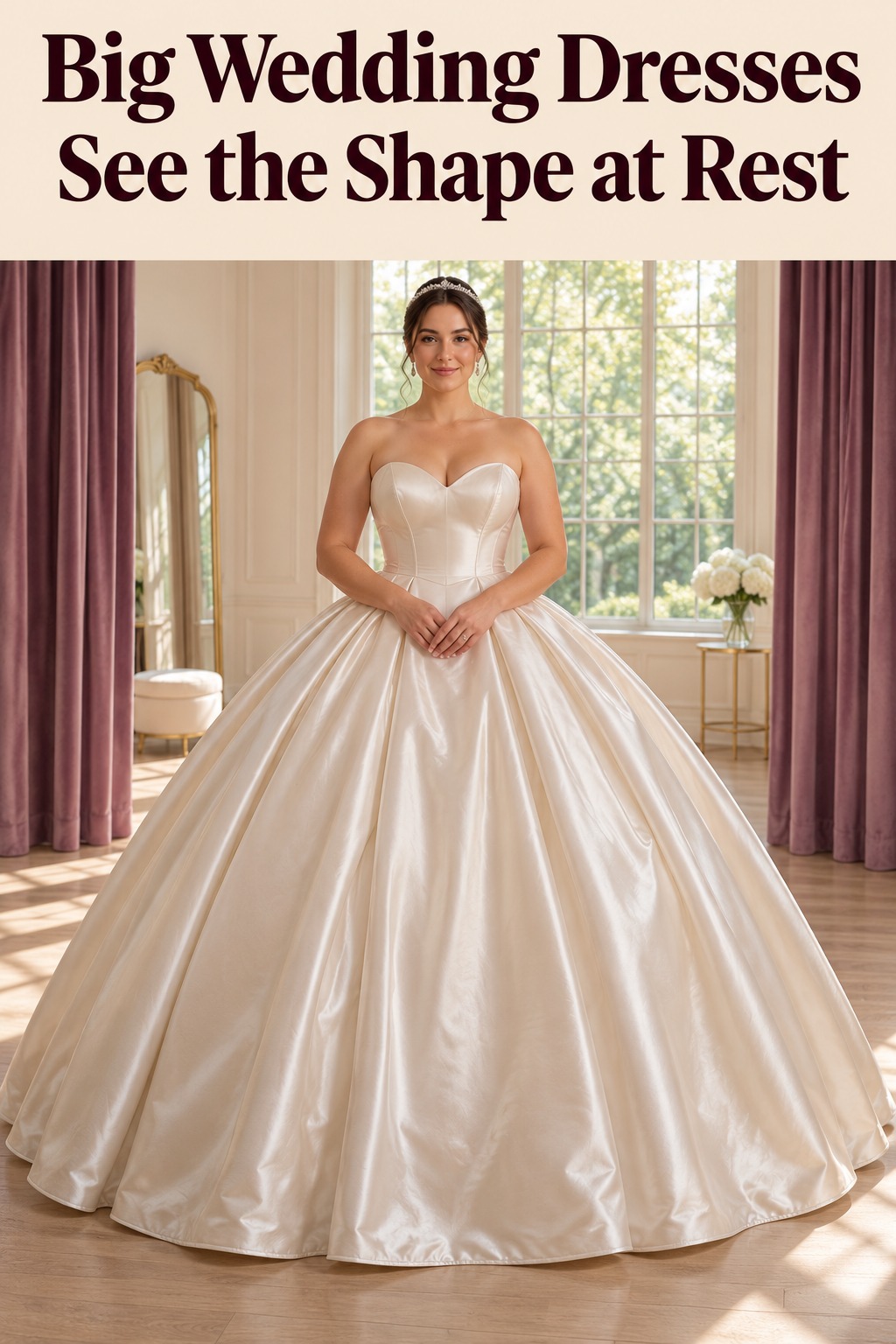
Decide where you want the dress to look big
Use a front photo and a side view
A skirt can look enormous because it projects to either side, because its train fills the space behind the bride, or because moving layers fan out for a photograph. Look first at where the hem sits in a straight-on photo with the model standing still. Then find a side view. If you mostly notice the fabric lying behind her, ask to try a dress with a stronger train and a skirt you already find manageable. If the part you saved is the rounded shape beside both hips, ask for fullness you can see even with the train held up.
A staircase photo can be misleading as a shopping reference. A spread train covers several treads, while the front of the gown may be close to the legs. Save that image if you love the formal portrait, and get a second reference showing how wide you want to be from the front. A short video is helpful if you fell for ruffled layers in motion. Pause when the wearer stops moving. See if you still like where the layers fall once the wearer stops moving.
Turn wedding inspiration into a plan you can actually follow.
Zarellea brings your guest list, budget, vendors, and day-of details into one shared space — so no beautiful idea gets lost in the shuffle.
Find the part of the skirt you want to notice first
Volume at the waist has a different effect from fullness lower down. Hold two photos against each other at the height of the waist seam. On one dress, fabric may fan out immediately from gathers or pleats. On the other, you can trace a longer diagonal down the side before the hem projects much. Bring both photographs if you are drawn to the width but unsure where it should start. Moving the point where the skirt opens can change how long the bodice looks without asking you to give up the skirt you want.
If your search results are mainly about plus sizing, ask the salon about available sample measurements and use “full ball gown” or “full A-line” to describe shape. Ask which of the available samples you can walk and sit in. If the shop will clip a sample onto you, find out how much movement the clips allow.
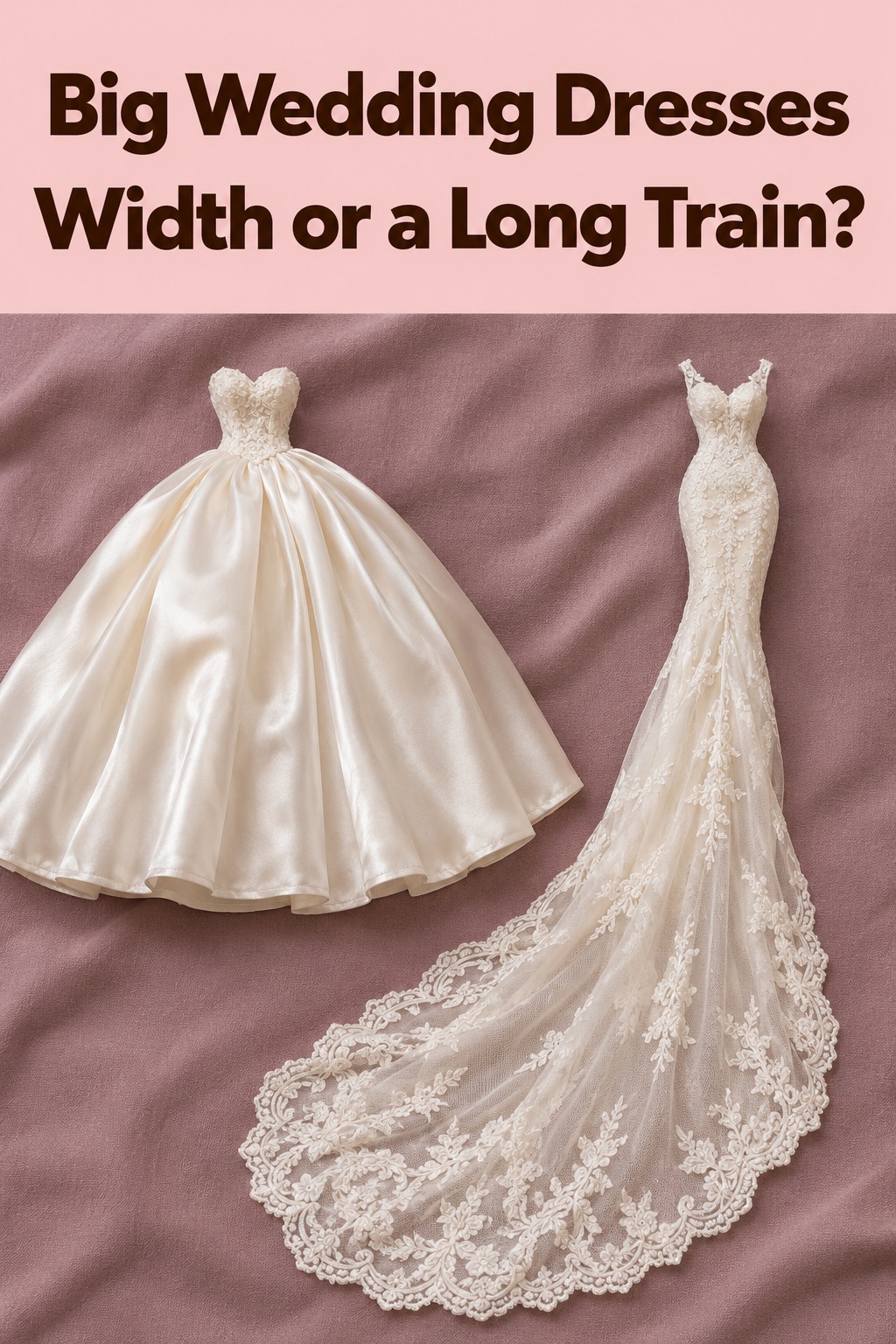
Compare built-in volume, a full A-line, and an overskirt
A ball gown keeps the shape throughout the day
Kleinfeld Bridal’s ball gown collection describes the silhouette as a fitted bodice with a voluminous skirt. Ask the consultant to show you where the fullness comes from on the specific sample. A broad outline might come from how the outer fabric is cut and gathered or from layers underneath it. If you love the rounded lower skirt, ask which layers were on the sample while you wore it. Take a photo of the salon petticoat too, so you can identify it if you want the same shape at your next fitting.
Try a smooth skirt with deep pleats and a skirt with visible tiers if both are available. Take one slow turn in each. Deep pleats give your eye long lines to follow. Tiers can make the edges and movement more visible. Decide whether you’d miss the shape or the surface detail if you switched dresses. If you love the way the folds run uninterrupted from waist to floor, a heavily textured skirt may be the wrong substitute even if it measures just as wide.
A full A-line gives you a gradual flare
Ask for an A-line with an obvious flare toward the floor. The gentle slope may be enough if you’re planning a straight walk toward your partner and most views will be head-on. If your gown will be seen mostly from close range around the tables, try turning beside a seated companion. Some dresses that seem modest from the front take up plenty of room at floor level.
If you’re deciding between a full A-line and a ball gown, compare two samples with similar necklines and train lengths when possible. It’s easier to concentrate on the width when both samples have a similar amount of fabric trailing behind. If one sample needs a clamp at the back, ask where the waist will sit on the ordered size. You can still learn how the skirt moves, but a clamped sample may give you a different impression of how the top and skirt meet.
A detachable overskirt gives you two shapes to approve
Walk and sit in the base gown first, then ask the consultant to show you where the overskirt fastens. Check both versions in the mirror from behind. A dramatic layer can be worth choosing if you like the ceremony silhouette and are happy with the exposed waist of the base gown afterward. Ask for a picture of the back with the layer in place and another with it removed. Look at the closure from the distance of a guest standing next to you.
An overskirt with a broad front can do a different job from one that frames the sides and leaves the center open. If the skirt is open in front, check how wide the gown looks as you walk and whether you like seeing the base hem between the panels. Try turning so you can see what the two layers do together. If the rear extension was the entire attraction, ask whether a detachable train would give you the photograph you want with a simpler change. New York City Bride’s ball gown guide shows detachable trains among its variations and describes ring support on some full skirts.
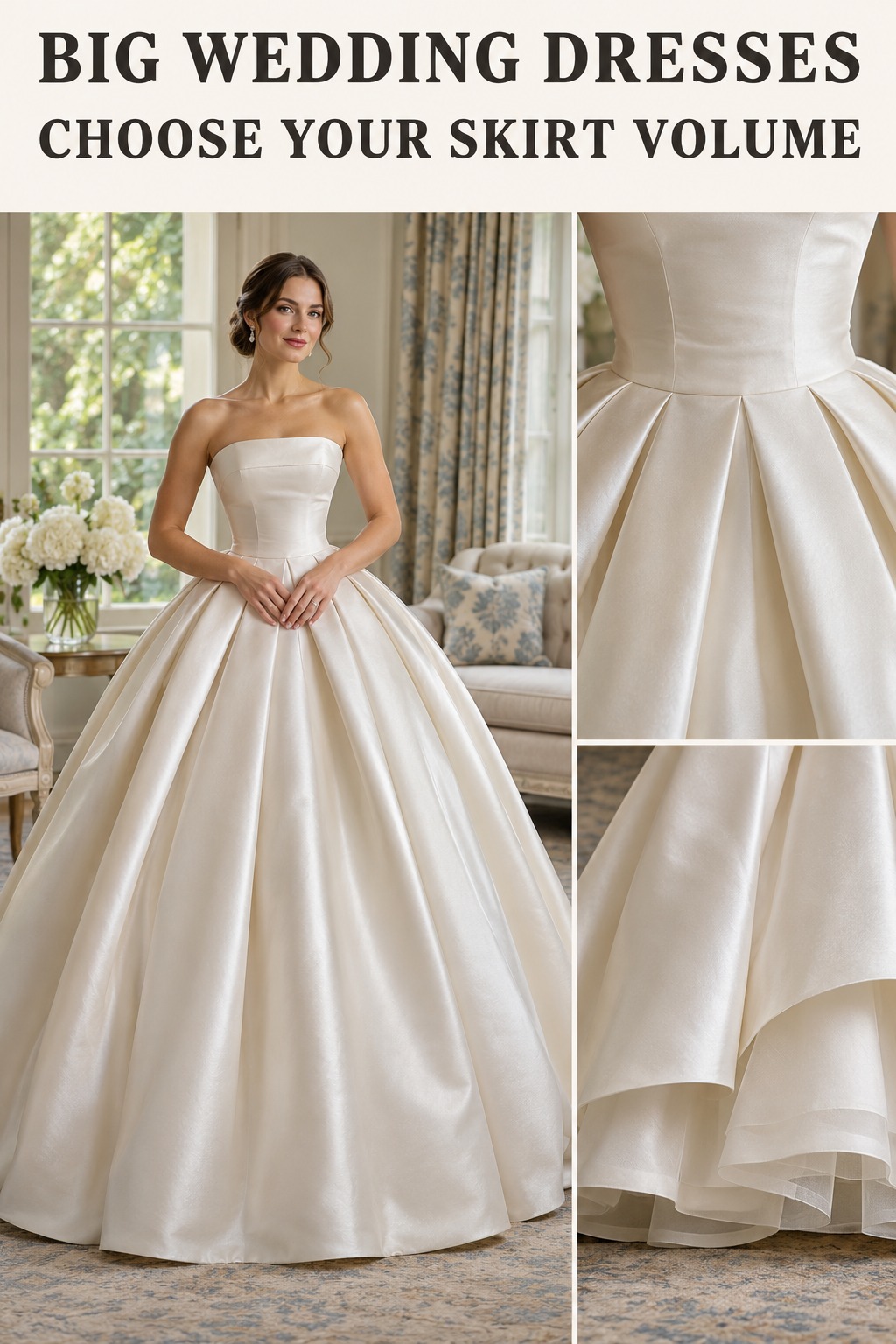
Match the skirt to the tightest part of your day
An aisle you can walk through can still be hard to turn in
Imagine a room with a generous center aisle and a sharp corner at the end of the row. Ask for the usable width at that corner with chairs in place. At your fitting, use visual markers on either side of a similar gap and try the full turn with your bouquet hand occupied. Take the turn at the pace you’d naturally use. If the side of the skirt catches, see whether the consultant can show you a construction that folds toward you with a light touch. An A-line with a soft lower edge may suit you if you prefer to keep your hands free.
For a seated ceremony, check what happens beside someone else at bench height. A skirt that piles comfortably on your lap may also spread onto your partner’s space. Ask whether you can sit at the end of the bench with room on one side. If the seating can move and the skirt you love works there, keeping the ball gown could be a better choice than sacrificing the shape you want to solve a layout problem.
Try a short change between portraits and dinner
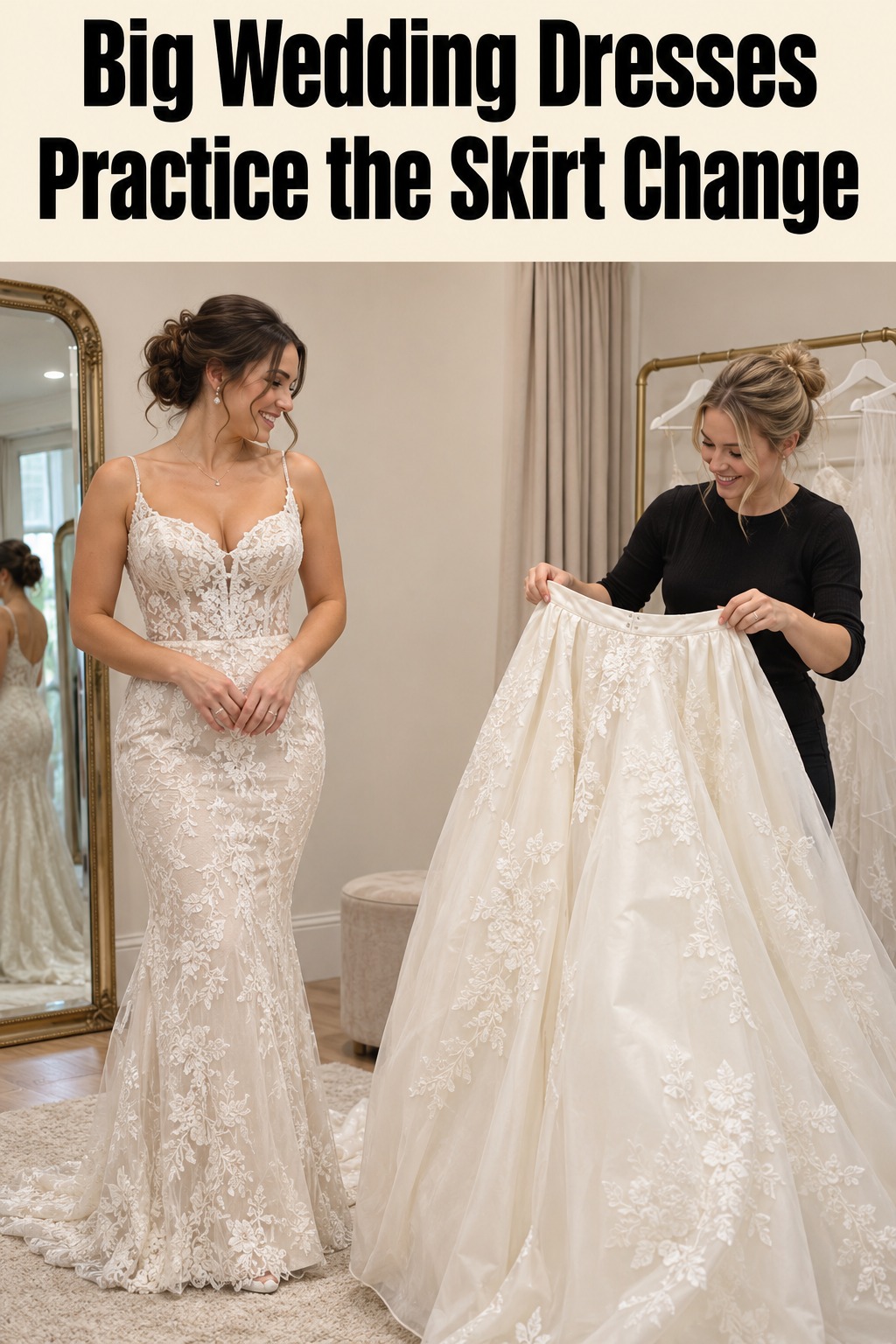
Suppose you want an overskirt for the ceremony and outdoor portraits, with a narrower dress for a first dance as soon as dinner doors open. Before ordering, ask the venue for a room near the reception where you and a helper can take the overskirt off. A garment rack in that room gives the helper somewhere to leave it while you head to dinner.
Have the person who will help try the actual fastenings at a fitting. Keep the base dress on while they start and practice what happens when the layer is freed. If the layer needs support while two hands undo its closure, plan for a second helper or a suitable surface within reach. If you can’t arrange that break, compare a bustle on a full A-line with a ball gown that already works in the room. Walk again afterward. A bustle can gather the train while leaving the main width of the skirt as it was.
Take the outdoor path into account
Picture a ceremony on grass with a gravel stretch between the car and the aisle. Stand in the shoes you expect to wear and see what happens when you lift the front hem just enough to find your next step. Try the lift while holding something in your other hand. If you have to keep gathering more fabric to move forward, ask about a clear path or a handoff for the bouquet. If the venue has a paved route to the lawn, find out where you can switch to it without adding a long walk in the dress.
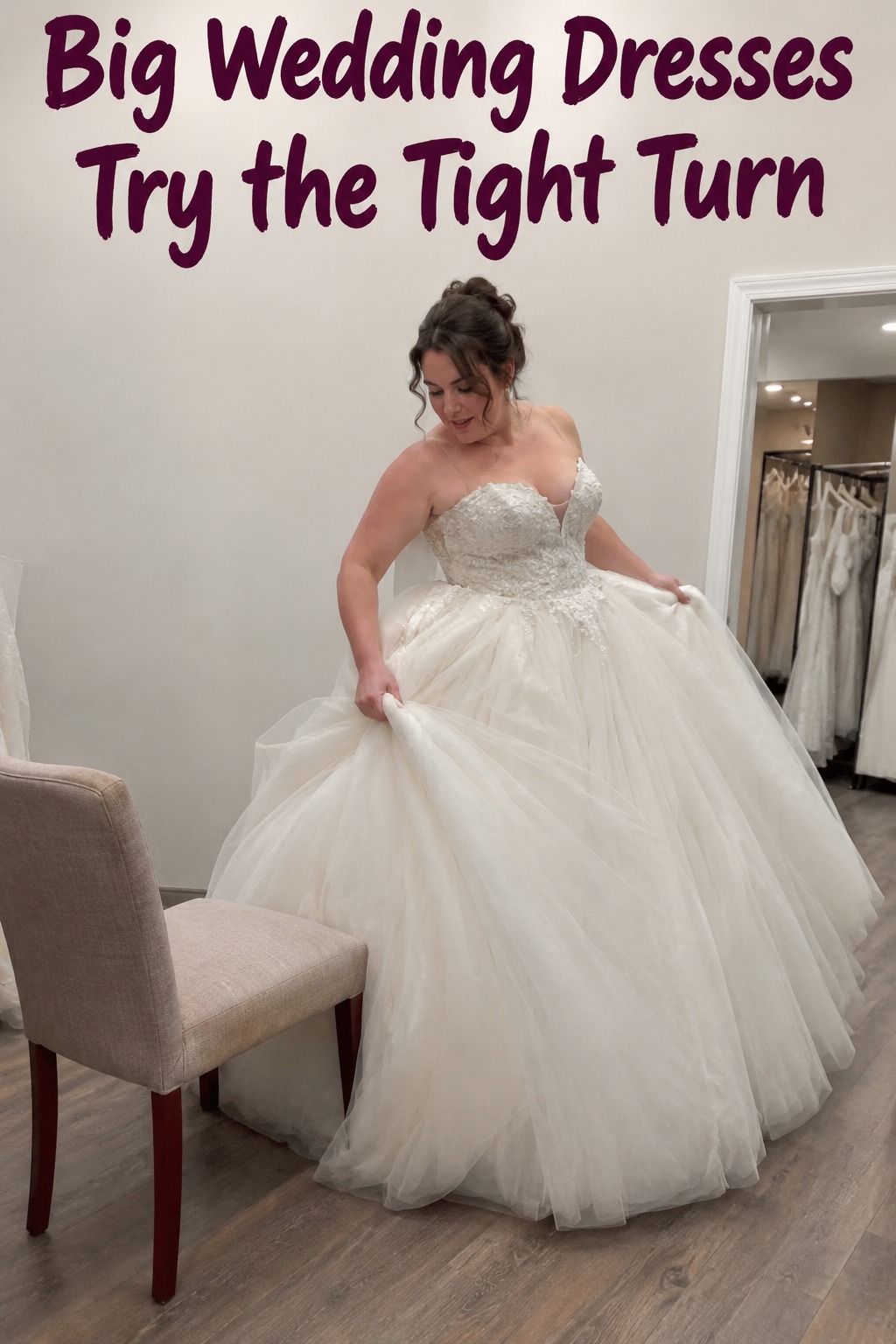
Make the fitting settle the choice
Use the same moves in your two finalists
Take a front and side photo at rest and have someone film a short walk and turn, if the salon allows it. Sit in a chair with a back. If your reception uses armchairs, ask whether the salon has one so you can see where the skirt goes when the arms are in the way. Reach across as if passing something to a guest and see whether the neckline stays where you want it. Stand up on your own and check where the hem settles before you take your next step.
If the shop allows it, step onto a low platform or stair holding the part of the skirt the consultant shows you. This is particularly useful if a friend will help with the train at the venue. What you gather and what they pick up should be clear before anybody starts walking. When accessible routes, an elevator or a seated transfer are part of your day, ask to reproduce that specific movement as closely as the salon can. Where the skirt settles during that movement can decide whether you need a narrower hem or a different arrangement at the venue.
Write down what has to come with the gown
Ask for the fitting notes to identify the shoes or heel height, the underskirt you wore, and any detachable pieces that are part of the look. If your fitter approves a separate petticoat, bring the exact one before the hem is set. A gown that stands farther out with added support may sit differently at the bottom. A fabric-only petticoat and a hoop are worth checking separately if you have both options. Pay attention to where the front bends when you sit and whether you can pull the skirt inward in the places your venue requires.
Decide how the dress and loose pieces will reach the venue. Ask whether the salon’s garment bag has room for the folded skirt and the train. Ask the salon whether to hang or carry your specific gown. Use a separate garment bag for the overskirt if your fitter recommends it. For a bustle, record a short clip showing your helper each fastening in order and where to check the hem when they’re finished. If two people are helping, share the same clip so they can work from the same instructions.
Editor’s take
I would order the broadest dress I still enjoy wearing at the hardest part of my day. I’d happily keep a ball gown for a roomy dinner or a dance floor with space to turn, especially if the shape from the front is what made me want a full skirt. I’d choose a removable layer when the ceremony outline matters most and the base gown already looks finished to me. That second choice depends on having a quiet place and a helper who knows the fastenings. Before the appointment, ask the venue for a photo of the tightest turn with chairs in place. It gives the consultant something concrete to help you test.
Sources and methodology
The construction descriptions draw on bridal salon collections and their explanations of skirt shape and support. The fitting exercises and venue examples are editorial recommendations based on that research. The venue examples are hypothetical.
FAQ
What are big wedding dresses called?
A ball gown is the usual term for a fitted bodice with a very full skirt. Bridal shops may also use “princess” or “puffy.” Ask for a full A-line if you prefer a more gradual flare, or a detachable overskirt if you want to remove some of the width later. Tell the consultant whether your references show a wide skirt from the front or a long train behind it.
How do I make a wedding dress skirt look fuller?
Ask your fitter to compare the dress with and without an approved petticoat or hoop before buying one. Look at whether the support pushes the skirt out where you want it and whether the lining covers it smoothly. Check the hem again with the shoes you’ll wear. The same support can look different under two dresses with different layers.
Can I bustle a wedding dress with a very wide skirt?
Ask your alterations specialist to inspect the actual dress and design a bustle for its train if the construction allows it. Try the dress again once the back is fastened, because the sides may still extend just as far. Use the reception path during the second trial so you know whether the bustle solves the part that was catching.
How can I find a full gown in my size?
Call with your measurements and ask which full-skirted samples you can try. Give the consultant the skirt shape and neckline you want separately. Ask how the sample will be held for a fitting and how the ordered size will sit around your waist. That helps you judge which details you can assess from the sample.
Is a detachable train the same as a detachable overskirt?
A detachable train adds fabric mainly behind you. An overskirt may add fabric across the hips, sides or front as well as behind you, depending on its cut. Take a photo from the front with each piece attached and removed. Choose the piece that changes the part of the silhouette you want to change.
How should I get a large wedding gown into a car?
Ask the salon how to bag and support the dress during travel. If you plan to ride in it, practice getting in and out of the actual car or one with a comparable door and seat. Have your helper watch the hem and train at the sill and check that loose fabric is inside before the door closes. Allow time to arrange the skirt before you leave and again when you arrive.