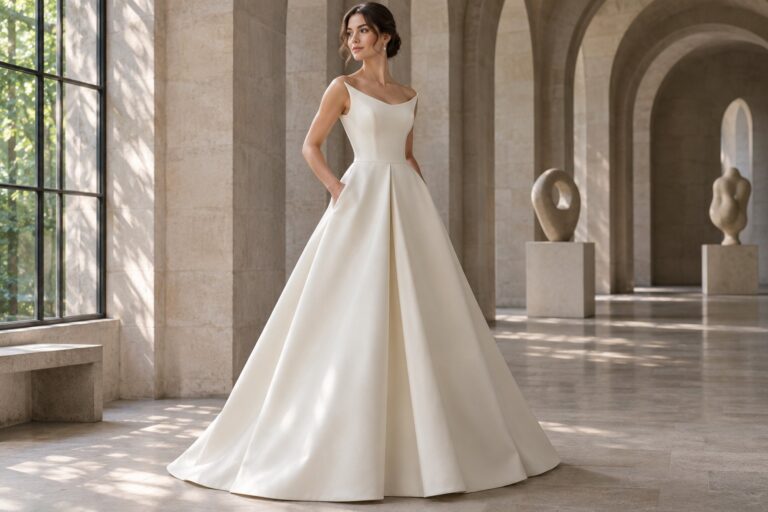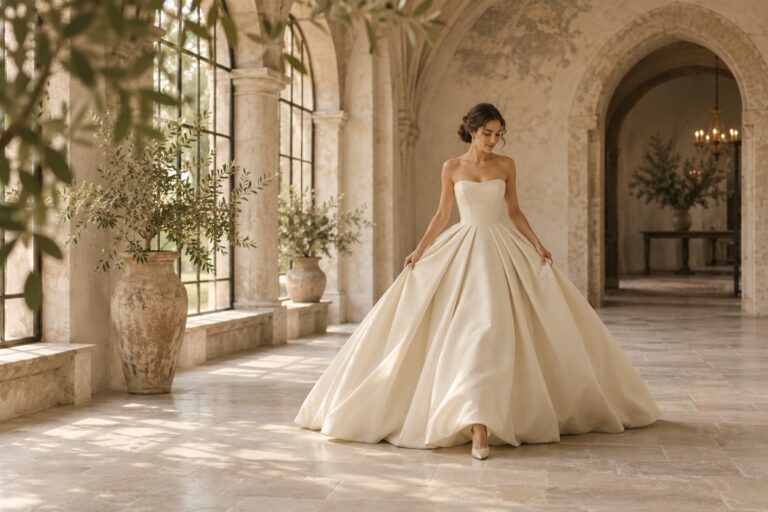
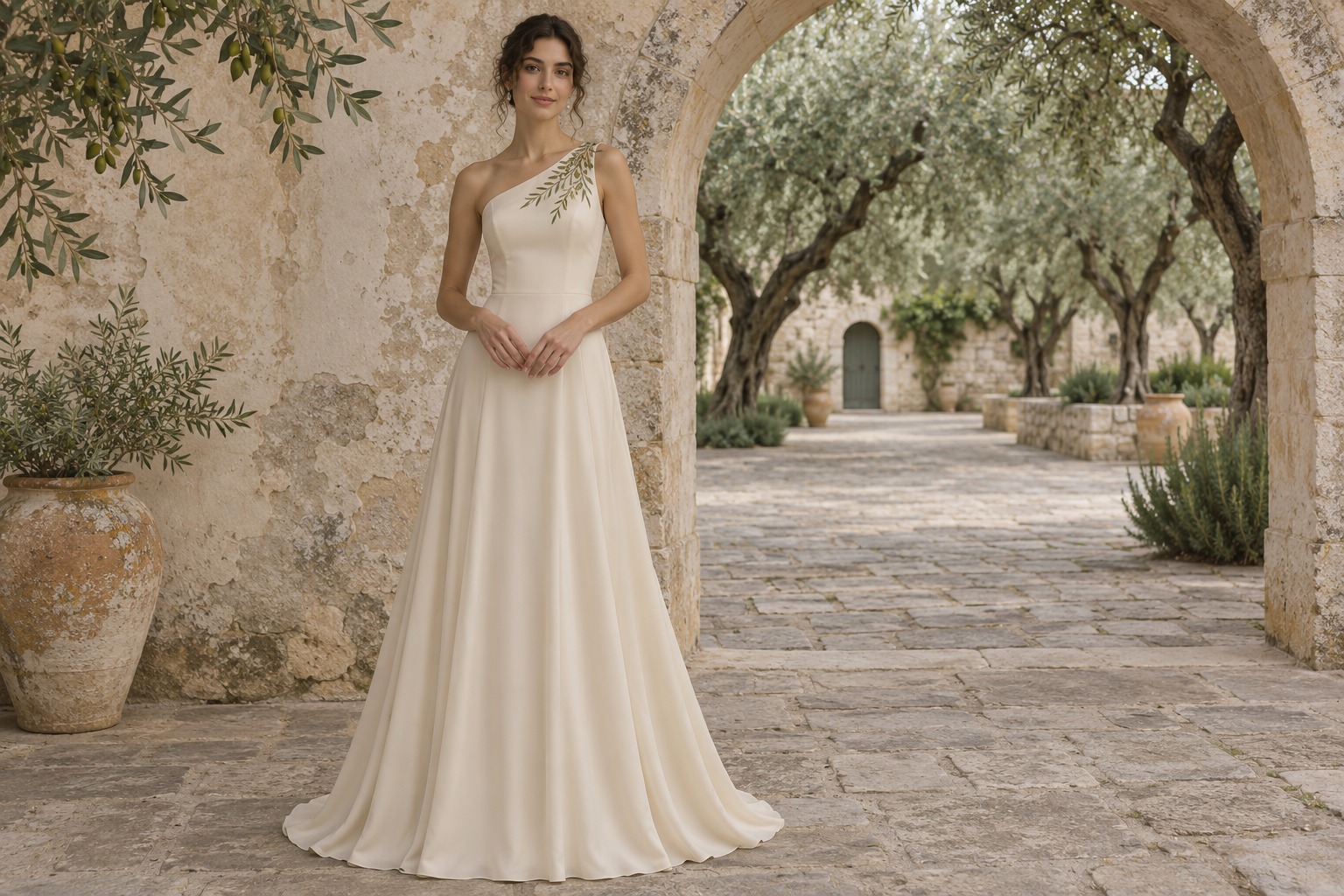
Earthy Wedding Dresses: Color, Texture, and Light
The ceremony chairs are set on pale gravel, with an olive hedge behind the last row. In the fitting room, a mushroom-colored wedding dress looked quietly dramatic. Here, in the shade, the skirt and the path are almost the same color. One person sees the whole silhouette from the front row. A guest farther back mostly sees the vine embroidery at the shoulder.
I’d choose one part of the outfit to hold its own in that courtyard. Maybe it’s the warm fabric, or maybe it’s the raised pattern at the neckline. A color at the bouquet stems can do it too, particularly if you’d like to stay with ivory for the gown. Take the fabric samples somewhere with the same kind of light before you settle on any of those options.
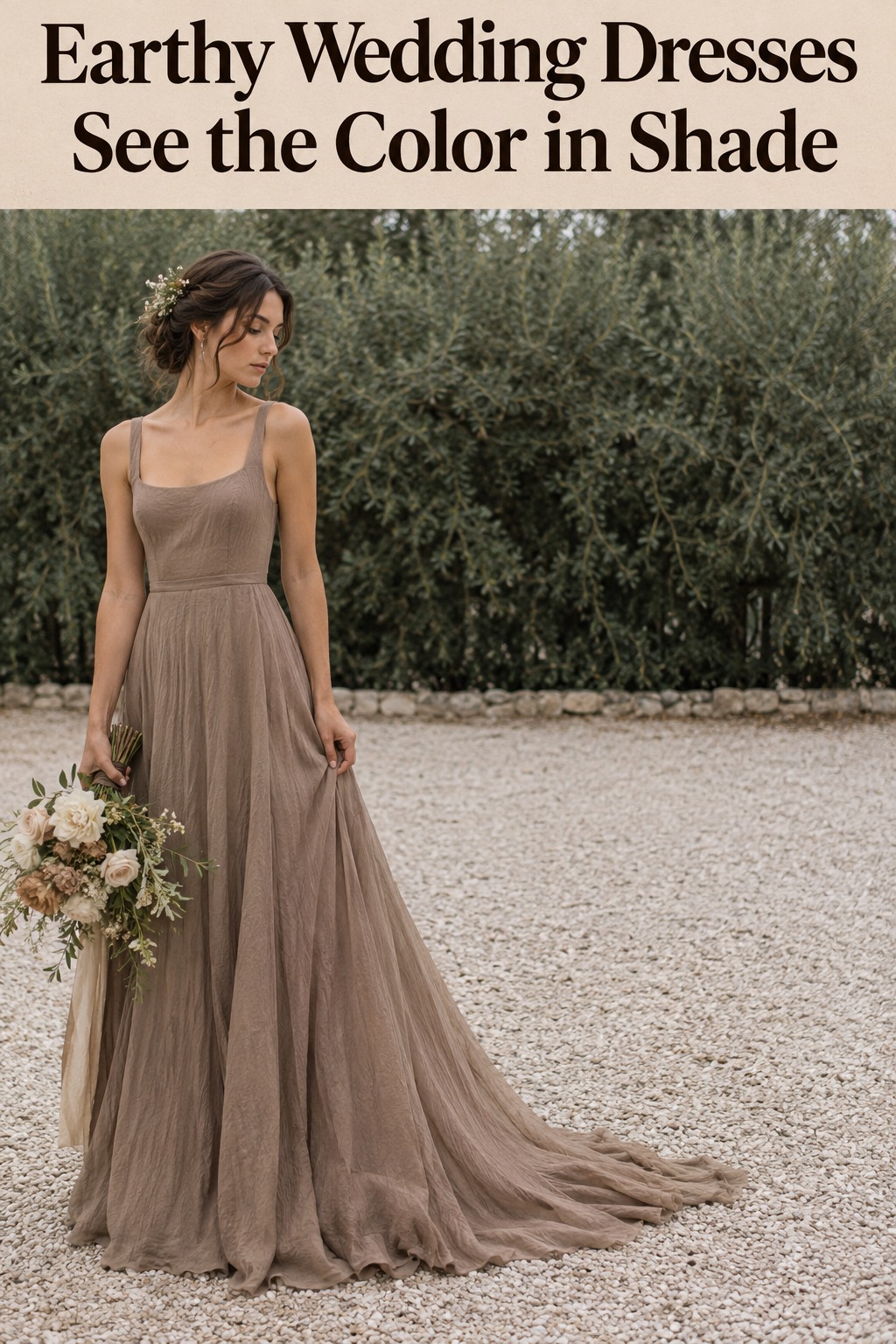
The dress at the edge of the courtyard
Start with the background behind you
Find the actual spot where you’ll exchange vows and look directly behind it. A pale wall in the sun gives a different impression from a weathered doorway in its own shade. Ask the venue for an ordinary phone picture taken from about where the guests will sit. If you can go back at a similar time of day, stand where you’ll be and ask a friend to look from the aisle. Get the wall or greenery that will sit immediately behind your shoulders into the frame.
Turn wedding inspiration into a plan you can actually follow.
Zarellea brings your guest list, budget, vendors, and day-of details into one shared space — so no beautiful idea gets lost in the shuffle.
An earthy gown can go very quiet next to a surface in a similar tone. That may be exactly what you want in a close portrait. If you want the outline to be clear from farther away, give it a light or dark edge. In a courtyard with gray-beige stone, I’d try soft ivory next to a mushroom shade so I can see the size of that difference. At a wooded site with a dark backdrop, I’d leave the strongest olive color in a detail if I still want the full silhouette to read. I could go darker if there is an open, light-colored clearing behind the ceremony spot.
Decide how much of the color belongs on the dress
An earthy look can start with warm ivory. Oat, sand, a muted clay pink, or a pale olive-gray can move the whole dress further into color. A deeper lining under ivory lace can change the effect again, especially when the pattern has enough open space for the lining to show. By the time you add a bouquet, the dress may already be doing everything you liked about the reference pictures.
Look through the gown photos you’ve saved and mentally set the flowers aside. If the gown sends you back to the image, write down the shade or the surface that caught your eye. If the part you remember is a copper ribbon, a cluster of dusty pink flowers, or the color of the garden, make that part of your brief. You can bring the ribbon or flower color to the fitting and keep more than one dress shade in play.
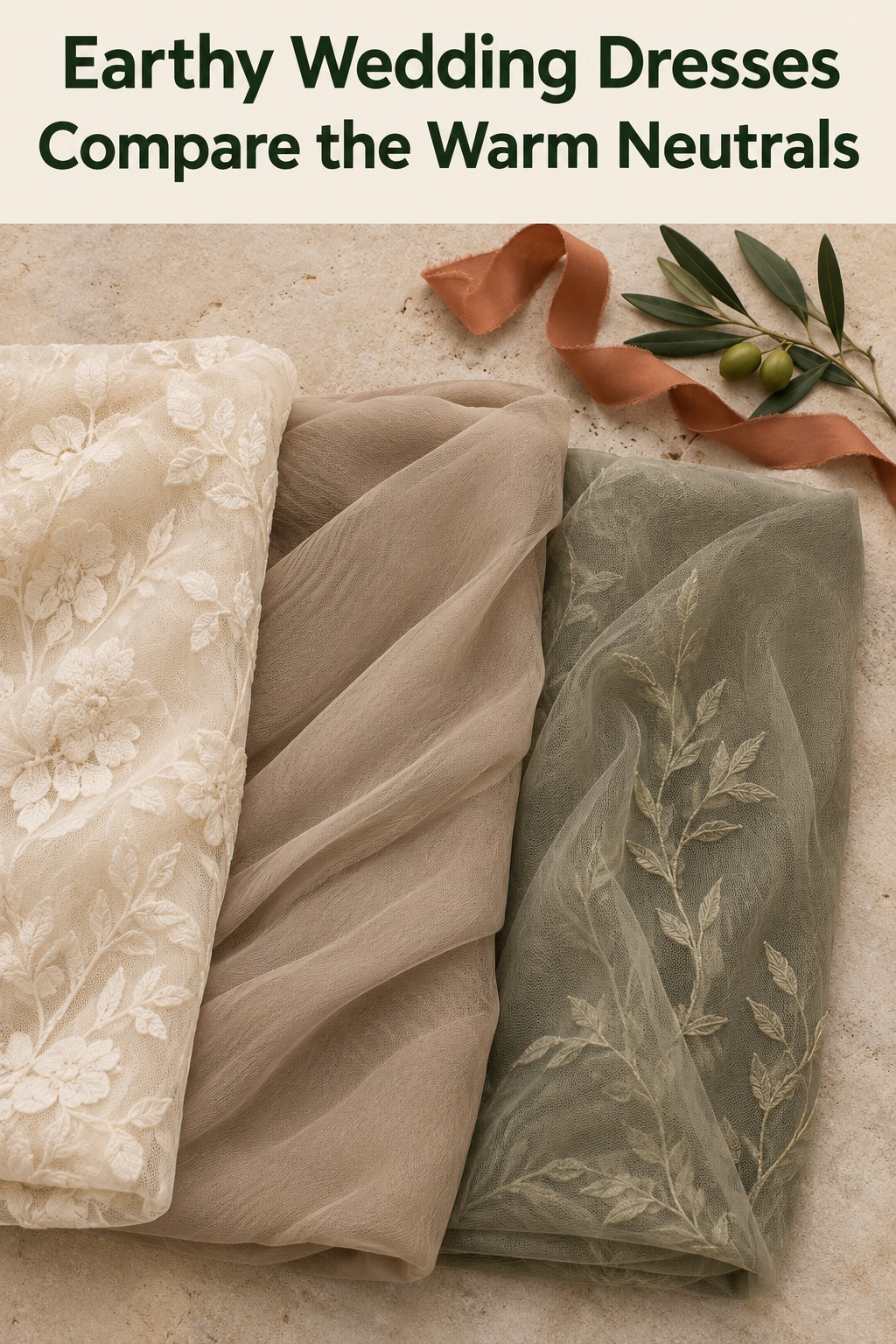
Choose the color and texture you want people to see
See a color sample with all its layers
Ask the shop to lay the actual shade against your skin near your neckline, then put it beside a fabric sample in the shade of the veil you’re considering. Warm ivory, champagne, and sand can mean quite different things on different swatch cards. With an embroidered gown, ask to see the lace and lining together in the combination you would order. If you’re looking at a sheer area of the sample and a lined area of the final gown, the amount of color you see may change.
Check the samples together in light near a window and under the indoor light where you’ll get dressed, if you can do that. Take one photo without a filter, with both candidates in the same frame. That gives you a direct comparison even when a phone changes how both swatches look. Save a note of the shop’s actual color names so you know which lining and outer fabric belong to each picture. On a follow-up visit, ask to see the same combination on a larger part of the dress if the small sample left you unsure.
Walk back until the detail starts to disappear
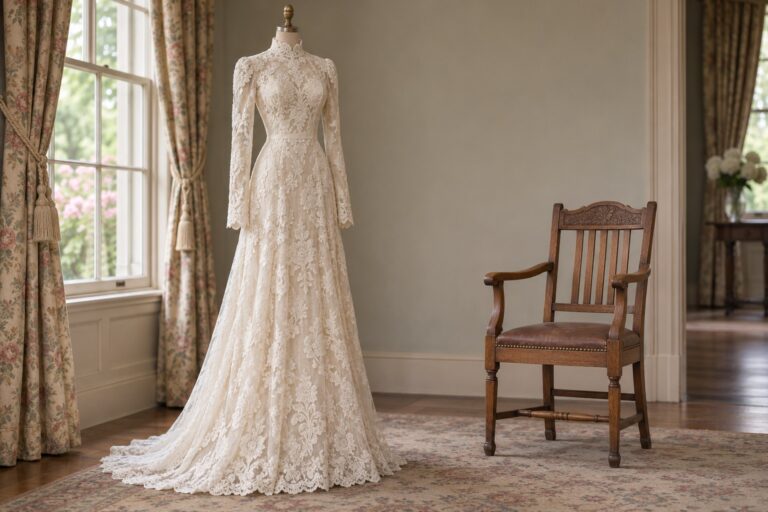
At arm’s length, an ivory gown with small leaf embroidery may read as a botanical dress. From across the room, you might first notice its color and neckline. Try that distance at an appointment with whoever came to help. Ask which part of the dress they saw first. Turn just enough for the light to catch the shoulder and ask if they see the motif then. You can use that feedback to decide whether you want a bigger motif or a quieter near view.
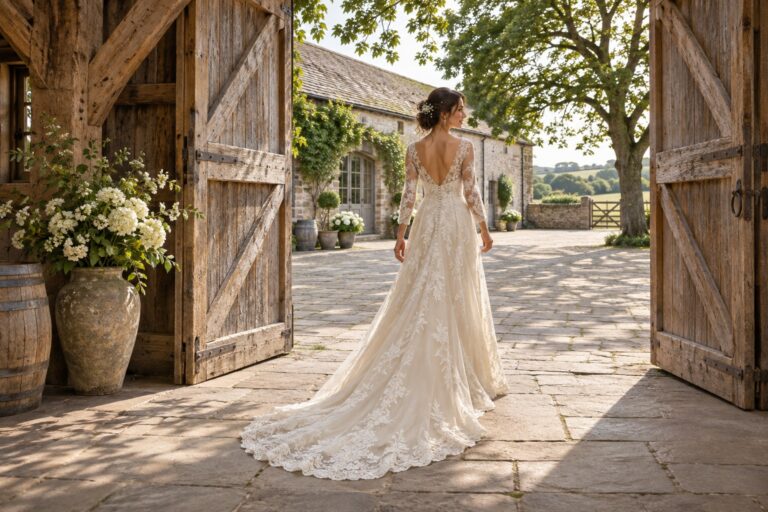
Madi Lane’s boho bridal collection uses botanical features such as leaf and vine motifs, embroidery, and floral lace. As a shopping reference, those words are useful when you pair them with a location on the dress. Ask to see vines at the shoulder or just around the hem. A single patch of embroidery can be enough if the rest of the skirt already has a visible surface. Where the motif sits also affects what you’ll see when you carry your flowers or stand beside your partner.
Look at the surface with your bouquet in mind
In a fitting room, I’d set a plain piece of fabric beside a richly embroidered one in a similar color. A dry-looking surface can keep the long lines of a dress clear. A textured lace gives your eye something to find even in a simple silhouette. A floral pattern in a second color may need more space if you want to see individual leaves and stems. Hold a bouquet sample at the height you expect to carry it and look for the pattern above it.
A collection such as Allure Bridals’ boho gowns can help you spot these choices. Its descriptions show how a clean crepe gown can be paired with a sheer cape and how a lace detail can sit on a detachable sleeve. You can ask a shop to show the same balance without requesting a whole outfit from one collection. If you already love the dress from the shoulders down, see what it looks like with a simpler veil or no veil during the appointment. You can decide on the extra layer once you know what the dress does on its own.
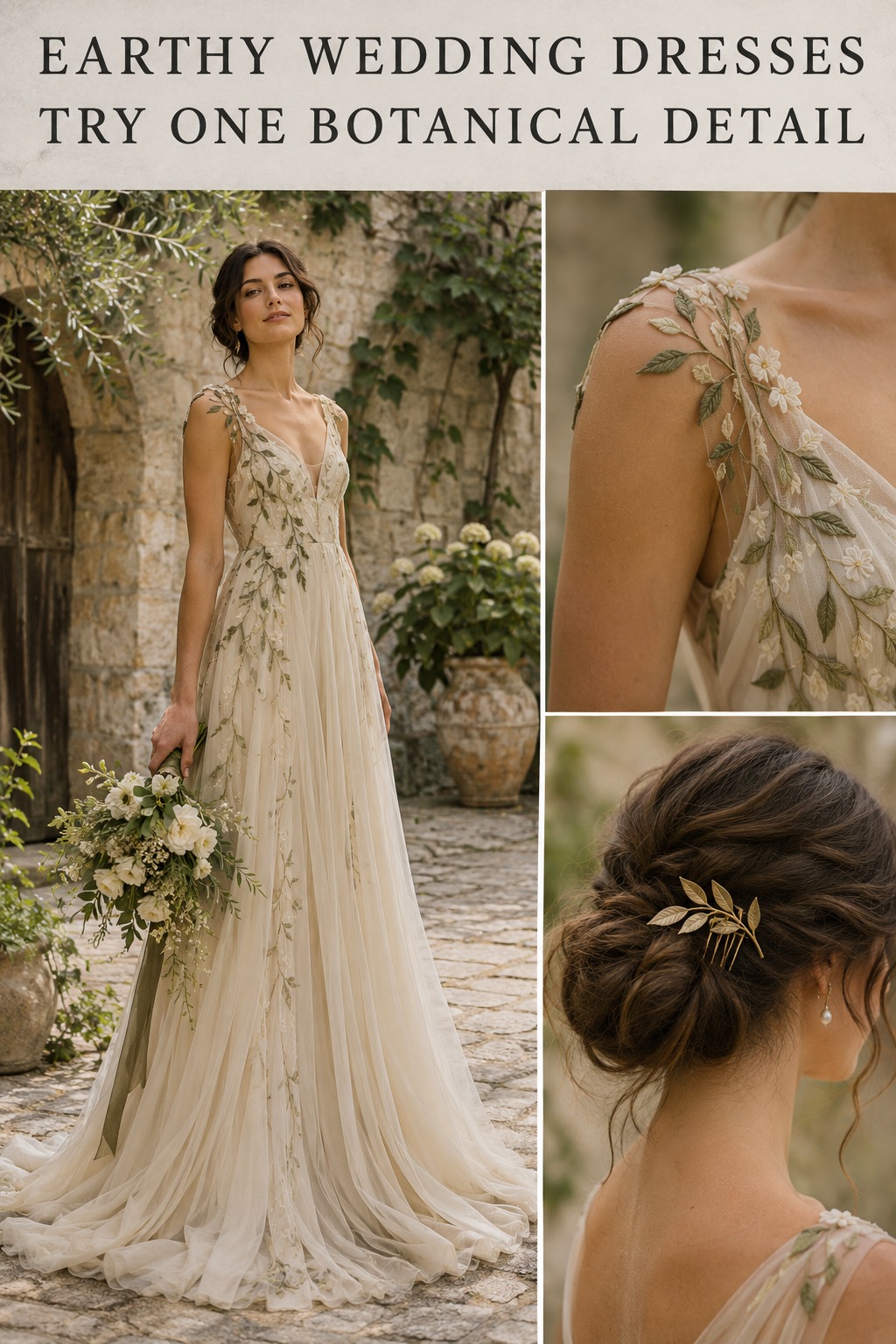
Three earthy looks with different starting points
A warm ivory dress with small botanical details
Picture an ivory dress with an easy skirt and embroidered vines that curve over the shoulders. This direction makes sense if you want the first thing people see to be fabric and shape, then more detail as they come close. A small gold leaf hair comb can repeat the shape in the embroidery if your hair is pinned back and the neckline is open. Try it off center and turn toward the window so the comb’s shape is easy to see. If the shoulders have a bold motif or the dress has a high collar, try the comb farther back to give the front some room.
For footwear, I’d try tan block-heel sandals when the ceremony route is firm and a short hem or opening gives the shoes a chance to show. Match them to what you’ll wear underneath before making alteration decisions. If there are soft patches or gaps between stones, ask the venue about the route and see whether your heel feels steady on a comparable surface. A flat in the same color can keep that small warm accent if you prefer a shoe with more surface touching the ground.
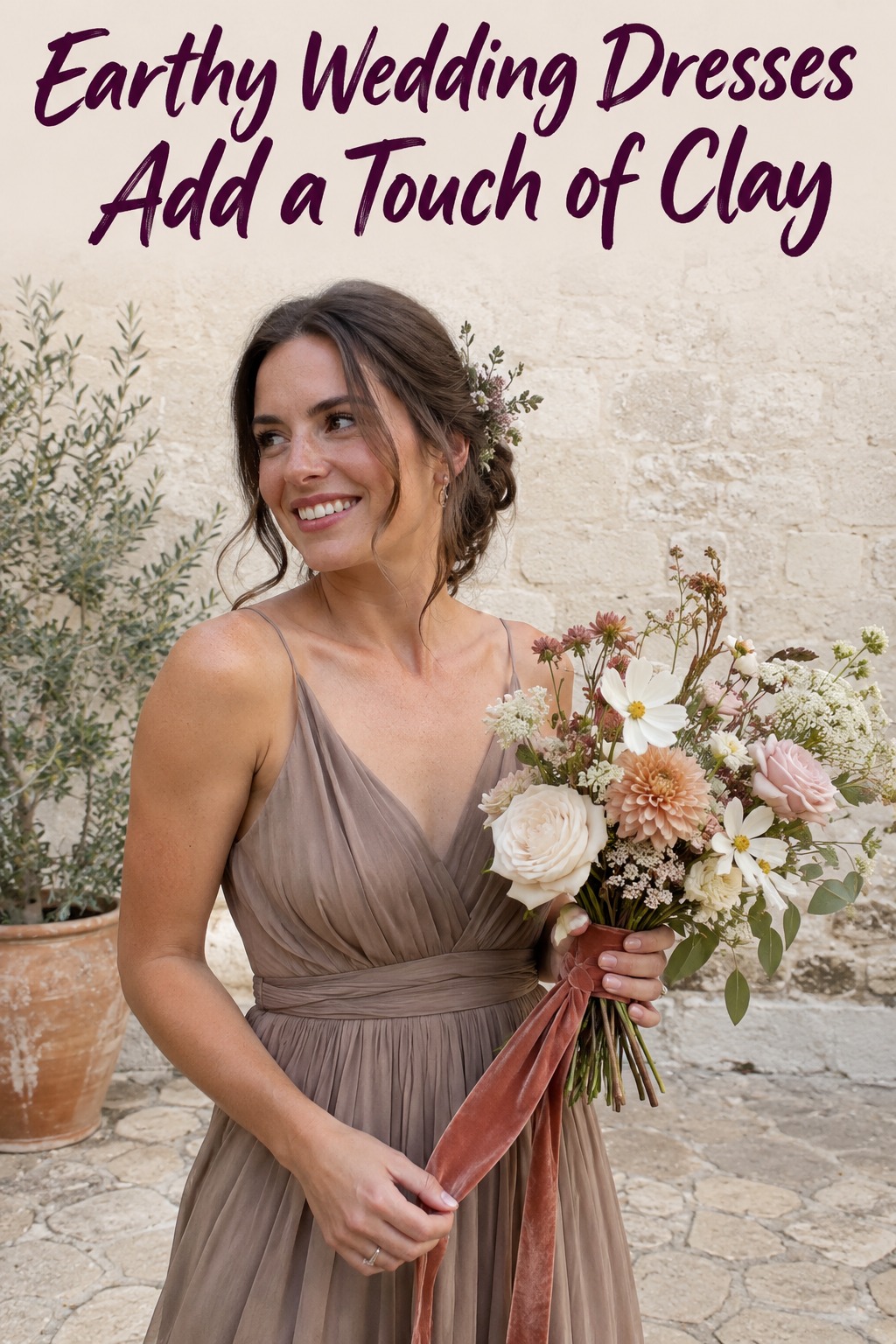
A mushroom gown with clay near the flowers
A taupe gown can hold its own in a simple cut when the shade looks right beside your skin. Imagine a sleeveless dress with a softly gathered waist, worn against pale stone. I would pair it with flowers that leave some of the dress visible, especially if the fabric has a weave you can pick out. A muted terracotta ribbon at the bouquet stems adds a warmer note without making the whole outfit orange. Ask the florist to bring the ribbon beside the fabric when you review the flowers. Try a shorter tie when the ribbons reach a seam or accessory you want to see.
Give the florist a photo showing the color at the height you’d actually carry the bouquet. Lower the stems to where they’ll sit in your hands before your friend takes the picture. If the sample is nearly the same shade as the dress, add contrast in the bouquet with a lighter flower or a dark stem. If the dress is already more rose than brown in daylight, I would keep most of the other elements neutral and let that shift show.
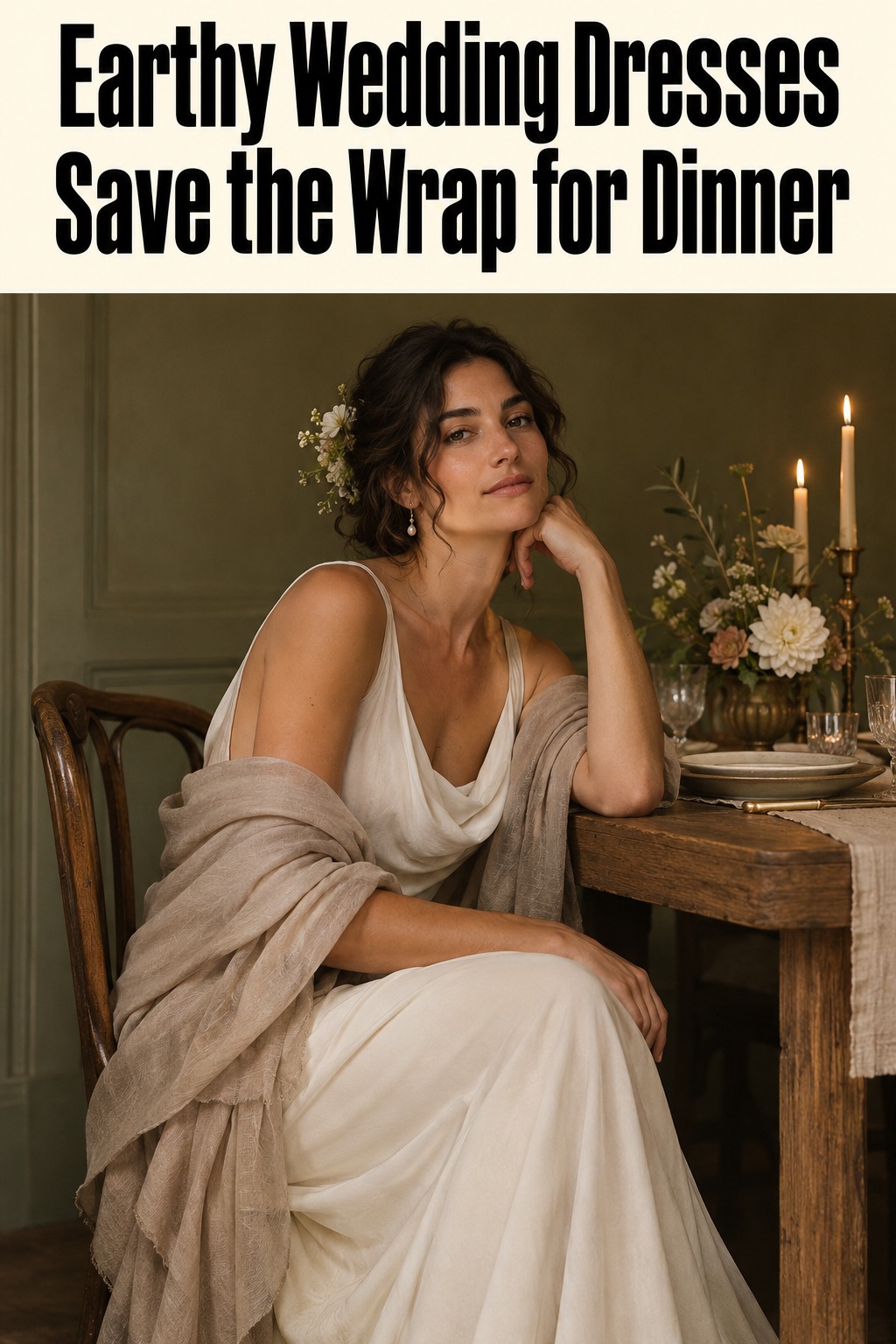
A plain dress with a darker layer added later
You might want a pale dress for the ceremony and something a little warmer in color at dinner. An ivory column with some movement at the hem leaves space for a light taupe wrap from the shoulders down. Try it folded to a width you can hold comfortably during a conversation. If you use an open shawl, see whether it hides a back detail you want in entrance photos. You may want it waiting at the table instead of in the ceremony outfit. I would make this choice around when I need the layer and what part of the dress I want visible then.
If you’re trying a darker wrap, check the color where it crosses your chest, with the fabric overlapping as you’d really wear it. Snap a side photo too. A pale dress and a soft brown shoulder line might be all the color you need for an evening portrait. If the wrap is there mainly because the room cools down, wear it long enough to know how it stays put when you stand or reach. Choose a drape you can manage with the fastening, if any, that you already planned.
Four tools for refining the look
Tie a soft clay color into the bouquet
Bring in a warm neutral after the ceremony
Check a plain ivory layer over the fabric
Keep the camera in the same place
Take the look from the fitting room to the wedding
Make one comparison beside the ceremony light
Bring the selected swatch or a removable sample near a place similar to the ceremony spot. Photograph it beside a relevant color such as the stone behind the aisle, and again in a tighter shot with a bouquet sample. If you can only use the shop, find a plain background with similar lightness and decide what you want to learn from that comparison. You’re looking for whether the edge of the dress is easy to see and whether the accent changes what people look at first.
Once you’ve seen those images, ask your photographer if the colors fit the way they’ll handle the space. If the site has changing shade, ask where a full-length portrait is likely to happen. You can have one dramatic portrait with a dark hedge and still walk into an entirely different backdrop for the ceremony. If you love the dress in one place and feel it fades in another, choose which scene matters more to you and look for a small change around it.
Let a single accent stay on the final list
At the last fitting, try the dress with the shoes and whichever detail you chose near the face. Take a photograph from where a guest might see you and another close enough to show the fabric. Try holding something at bouquet height. If the thing you want to notice first is hard to see, move the accent by a few inches before replacing it. A side comb, a shorter ribbon or a wrap saved for dinner may solve the problem without sending you back to shop for a full new set.
Give your florist a picture of the fabric with the chosen ribbon, or send the hairstylist a side picture of where you want the comb. Write down when you’ll put on any extra layer. If the leaf lace is the part you want in the album, tell the photographer before the veil goes on or the bouquet covers it.
Editor’s take
I’d choose the dress and its lining in daylight before buying another piece for the outfit. An ivory gown with texture would be my starting point if I liked the idea of earthy colors but wanted to see a clear outline in a dim setting. I’d consider a mushroom or olive-gray dress when I could see the actual fabric against a similar background and still pick out the silhouette. Ask the venue for one picture from the guests’ side of the aisle, then take it to your fitting. Give yourself room to care most about how the gown looks close up if that is where you’ll enjoy it. The color that suits the two of you in your portraits can be worth choosing even when the aisle view is subtle.
Sources and methodology
Bridal collections informed the examples of embroidery placement, lace and sheer layers. The courtyard and the three looks are hypothetical. The recommendations about color, placement and fitting are editorial judgments based on the research.
FAQ
What makes a wedding dress look earthy?
A muted color, a dry or softly textured surface, or a botanical detail can create that effect. Choose which of those should be visible first. A warm ivory dress can fit the look when the surface or a thoughtful accessory carries the natural reference.
Do earthy wedding dresses have to be boho?
You can use an earthy palette on a simple gown with clean lines. If you want the style to feel looser or more decorative, look at how the fabric moves and where embroidery or lace sits. Decide what you like in the actual gown before relying on the collection’s label.
How do I decide between champagne, oat and taupe?
Ask to see the exact fabrics and lining in the light where you’ll take portraits if you can. Color names are useful when talking to the salon about its samples. Put your choices in the same photo and judge them alongside the background and anything you plan to wear near your face.
Can I use terracotta if I want to wear ivory?
Yes. Try a muted terracotta ribbon at the bouquet stems alongside the ivory swatch. Check it with the flowers and keep the rest of the colors simple if you want the ribbon to stay visible. Use a small sample first if you’re unsure how warm it will look.
Should the veil match the gown exactly?
Start by looking at them together on your body. A close match may help the edge of the veil sit more quietly, while a slightly different shade can help it show up in a portrait. Check the color of the veil over both the gown and your hair, especially if it covers an embroidered shoulder.
What if my dress blends into the outdoor setting?
Take one photo with the backdrop you actually expect and see which part disappears. Try a brighter flower, a collar detail or a different portrait spot. If you want the silhouette to show at the ceremony, compare a lighter or darker dress swatch before you order.