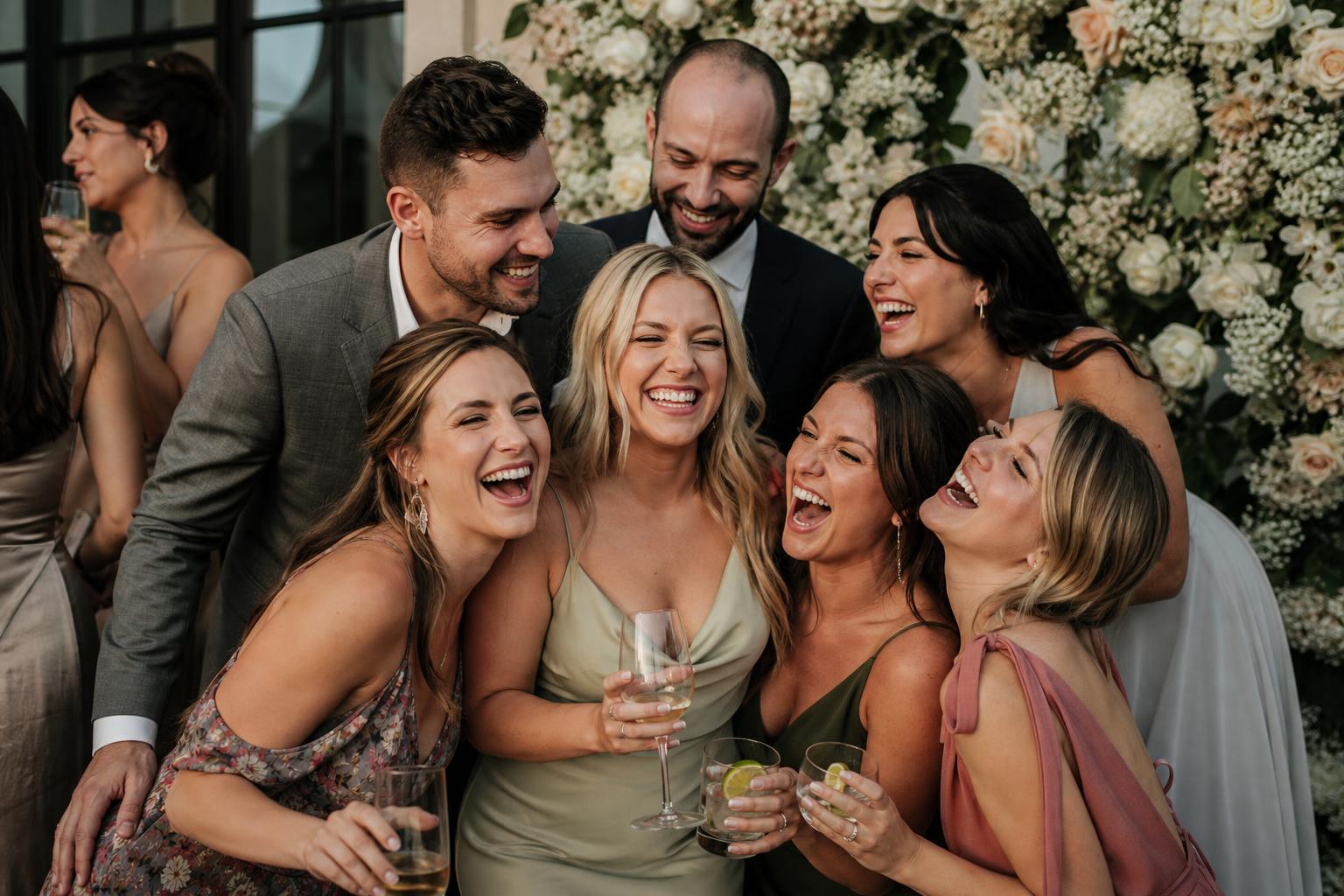
Wedding Guest Photo Ideas for a Romantic, Modern Album
The most memorable wedding albums rarely belong to the photographer alone. Some of the sweetest frames come from a friend catching the couple laughing during cocktail hour, a cousin snapping the dance floor just as the music shifts, or a table of guests gathering for a quick portrait in front of a backdrop that feels beautifully in step with the day. That is why wedding guest photo ideas matter so much in modern celebrations: they bring movement, personality, and a second layer of storytelling that feels intimate rather than staged.
The aesthetic of guest-driven wedding photography is a blend of candid warmth and intentional styling. It lives somewhere between editorial polish and real-life joy, with prompts, props, lighting, and timing all helping guests capture images that look cohesive with the rest of the wedding. For couples planning a garden reception, a glam evening, a beach sunset party, or a romantic indoor celebration, the goal is not simply to get more pictures. It is to shape a visual atmosphere where guests naturally create photos that feel worthy of the gallery.
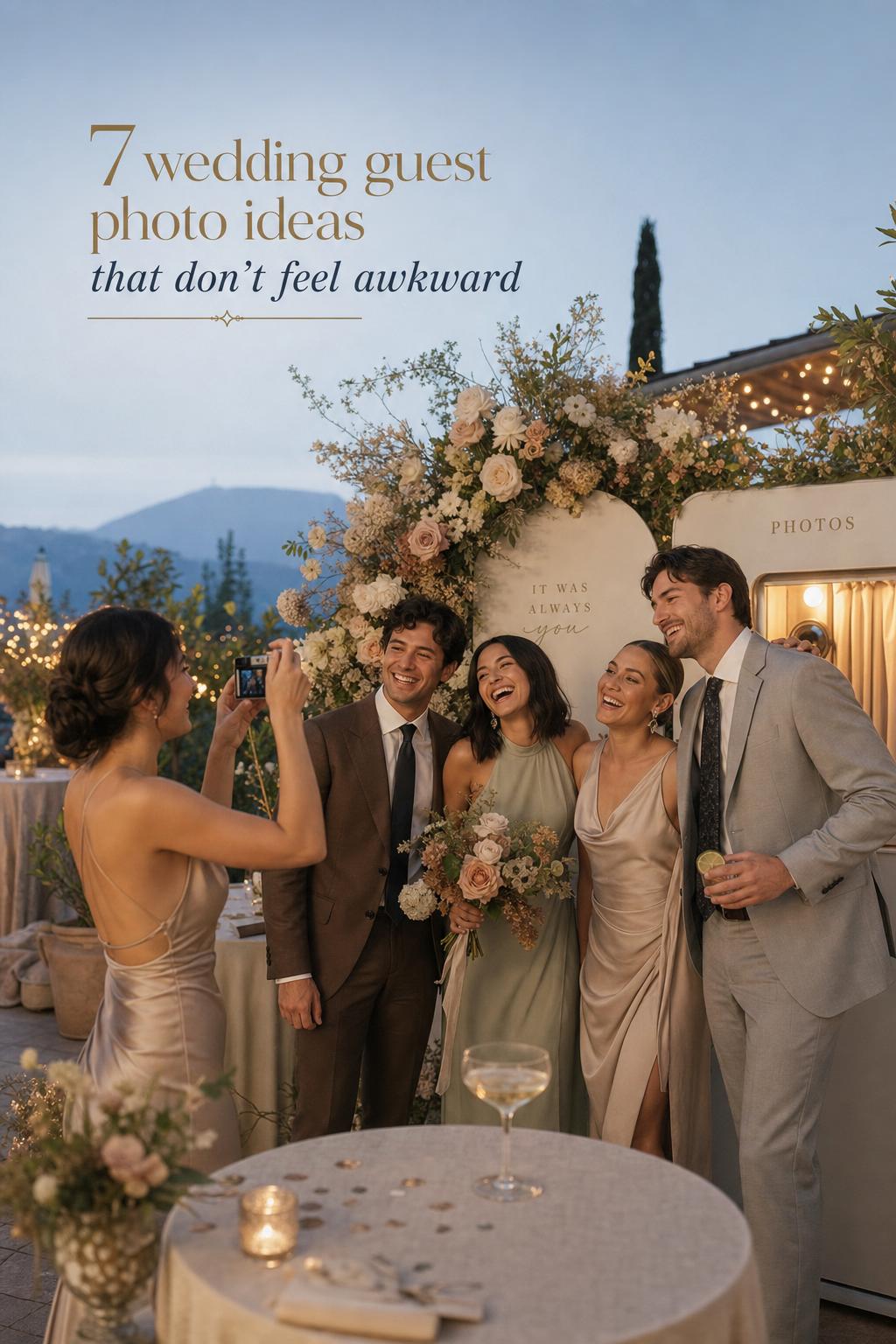
This guide explores wedding guest photo ideas as a complete visual system: what makes the look work, how to guide guests without making it feel forced, when to encourage certain shots, and how tools like photo booths, backdrops, QR code galleries, and thoughtful prompts can turn scattered snapshots into a loved collection of wedding memories.
What defines this wedding guest photo aesthetic?
The visual identity of strong guest photography is built on three qualities: ease, cohesion, and participation. Ease means guests understand what to capture without needing professional direction. Cohesion means the photos still feel aligned with the wedding’s style, whether that is romantic, minimalist, garden-inspired, industrial, or glam-night. Participation means the setup invites people in, instead of making photography feel like a separate activity off to the side.
Turn wedding inspiration into a plan you can actually follow.
Zarellea brings your guest list, budget, vendors, and day-of details into one shared space — so no beautiful idea gets lost in the shuffle.
Color and atmosphere matter more than people often expect. A soft garden wedding tends to photograph best with floral backdrops, gentle signage, and natural-looking candid prompts, while a sleek evening reception benefits from more graphic contrast, dramatic lighting, and a defined photo booth moment. Fabrics and materials also shape the result. Reusable backdrops, textured linens, signs, flower crowns, confetti, and even detail-focused prompts around shoes or bouquets influence how polished guest photos look once they are all collected together.
Silhouette matters here too, though in a wedding-photo sense rather than a fashion-only sense. The strongest guest photos usually have a clear visual shape: two people leaning in mid-laugh, a wide group shot under the arch, a framed portrait at the reception entrance, or a close detail image of hands, florals, and tablescape textures. The mood should communicate celebration, warmth, and a sense that guests are part of the wedding story, not separate from it.
- Best visual ingredients: backdrops, props, signage, lighting, and clear prompts
- Most useful shot types: candid moments, group shots, family photos, detail shots, and quick posed portraits
- Helpful tools: photo booth setups, open backdrops, gallery links, and QR code collection systems
- Best overall mood: romantic, natural, guest-friendly, and consistent with the wedding style
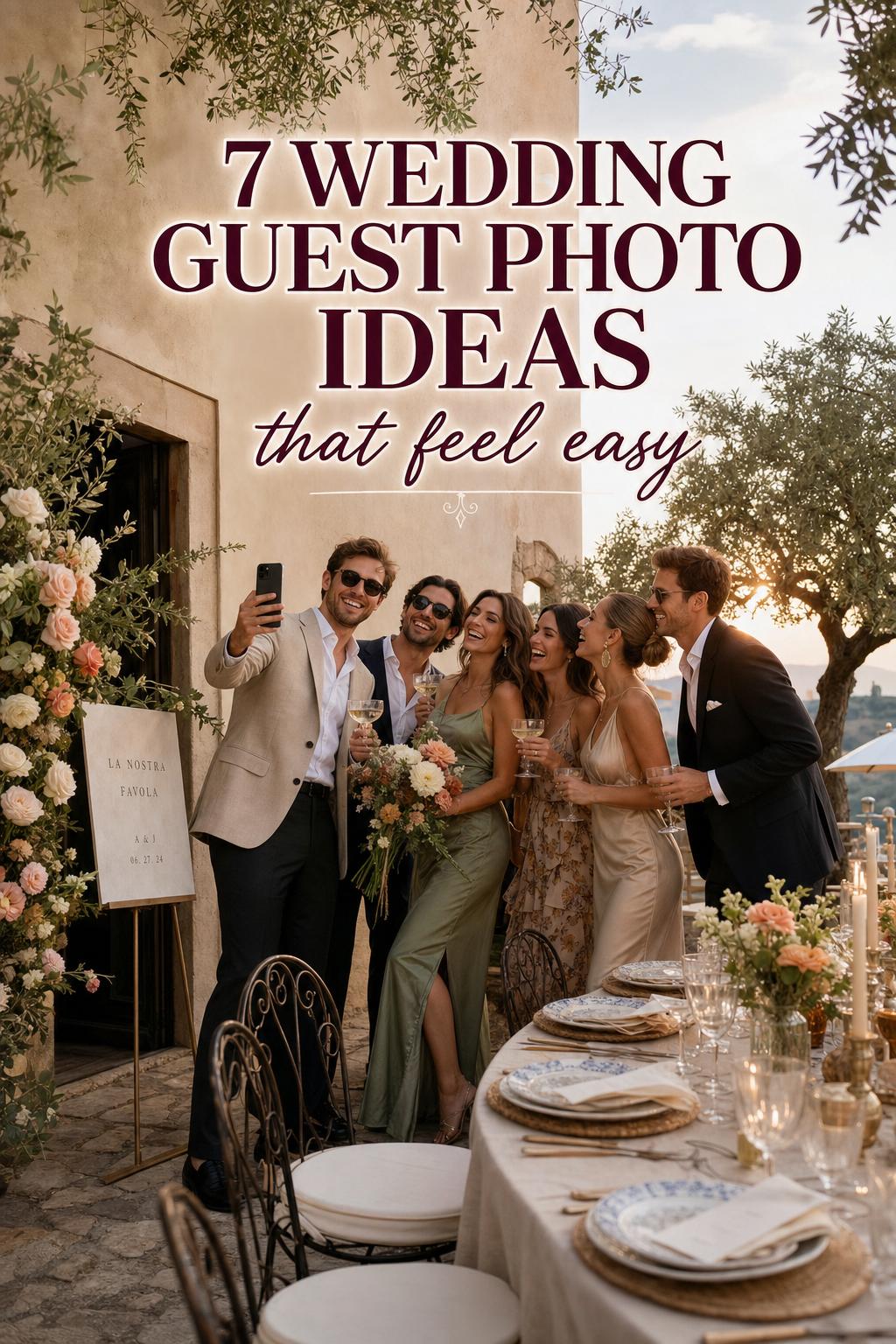
Why guest-driven photos feel so valuable on a wedding day
Professional wedding photography and guest photography do different things, and that contrast is part of the beauty. Editorial wedding coverage captures the planned arc of the day, while guests often notice the side moments: grandparents chatting during welcome drinks, friends fixing each other’s corsages, a spontaneous hug after the ceremony, or the way the dance floor actually felt from inside the crowd. Publications like The Knot and Zola often emphasize must-have wedding photos and shot lists, but guest participation expands that list into something more lived-in and personal.
There is also a practical reason guest photos matter. Not every meaningful interaction makes it onto a formal timeline. A professional photographer may be focused on portraits, family formals, or reception highlights, while guests naturally capture angles and reactions happening in between. Nikon’s educational approach to guest photography, including expert perspective tied to photographer Abby Liga in Florida, reinforces a simple truth: wedding guests can create unique photos when they understand composition, timing, and where to look.
The key is balance. Too much structure and the photos feel stiff. Too little guidance and the gallery becomes random, repetitive, or disconnected from the wedding aesthetic. The strongest approach lets guests feel playful while gently directing them toward moments, locations, and prompts that support the visual story of the day.
The difference between candid warmth and accidental clutter
Candid does not have to mean careless. A well-placed backdrop, flattering light, a small sign with prompts, or a QR code by the bar can subtly shape guest behavior. That is what makes guest-driven photography feel more elevated: the spontaneity stays intact, but the environment does enough of the work to make the photos look intentional.
A visual playbook for wedding guest photo ideas
Rather than relying on one long, generic prompt list, it helps to think of guest photos as different style moods within the same wedding world. Each type of photo should support the day’s atmosphere, work for the venue, and feel easy for guests to interpret quickly. The ideas below are designed to create variation without losing cohesion.
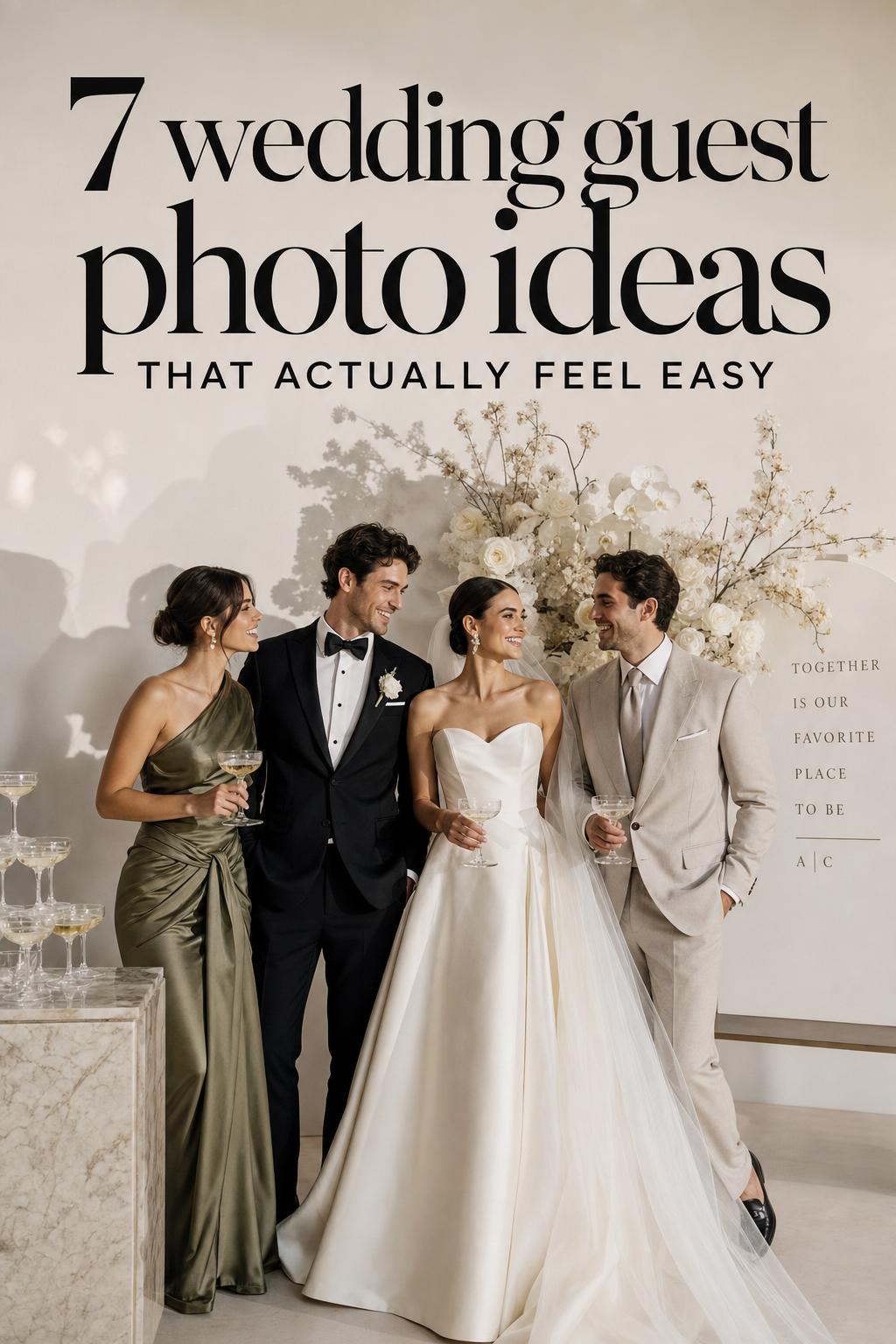
Look: soft candid storytelling
This mood feels airy, intimate, and emotionally natural. The visual impression is less about direct camera awareness and more about movement: guests laughing, hugging, adjusting outfits, walking toward cocktail hour, or reacting during speeches. The shape of these images is loose and alive, which makes them especially beautiful in garden venues, outdoor receptions, and romantic daytime weddings.
Soft candid storytelling works best with natural light, open spaces, and minimal intervention. Floral corners, ceremony aisles after the vows, welcome drink tables, and lounge seating become ideal settings. Props should stay subtle here. A bouquet, a glass in hand, a textured linen table, or a backdrop with soft detail is often enough. This is where prompts such as “two people laughing,” “a quiet hug,” or “friends walking together” shine.
Why it works: the prompt gives just enough direction without forcing a pose. If guests overthink these moments, the magic disappears, so keep signage simple and visual. This approach is especially good for couples who want wedding guest photo ideas that feel bride-friendly and in tune with a more elegant aesthetic.
Look: polished group portraits with an editorial edge
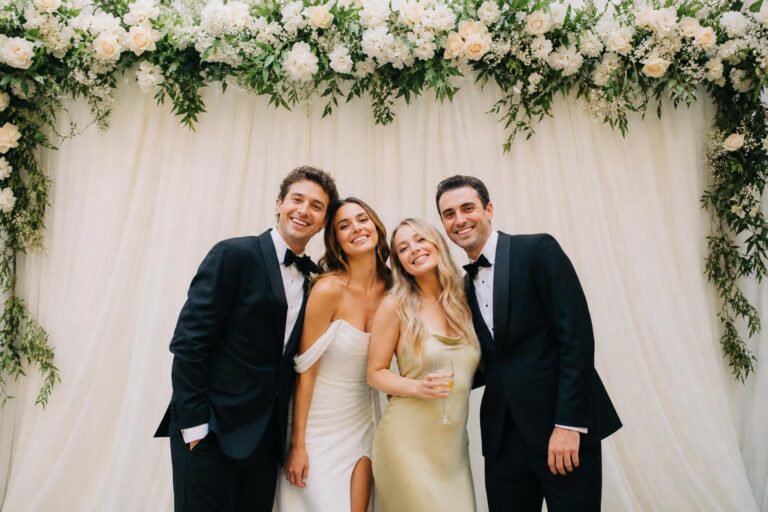
Some weddings need a more structured visual rhythm, especially if the reception design is formal or the couple loves a cleaner, magazine-like gallery. Group portraits create that sense of order. The mood is celebratory but composed, with a stronger silhouette and more visual balance than a casual crowd snapshot.
An open backdrop works particularly well here. Compared with a fully enclosed photo booth, it gives larger groups enough room while still anchoring the composition. Backdrop materials can be simple, romantic, or more graphic depending on the event style, but the important detail is clear space, flattering lighting, and enough distance for guests to step back and frame themselves well. Signs, flower crowns, and a few selective props can support the image without making it look novelty-heavy.
How to recreate the look: place the backdrop near a high-traffic but not chaotic area, such as just beyond cocktail hour or beside the reception entrance. Avoid overcrowding the setup with too many prop options, which can make photos look busy and inconsistent.
Look: the photo booth as a glam focal point
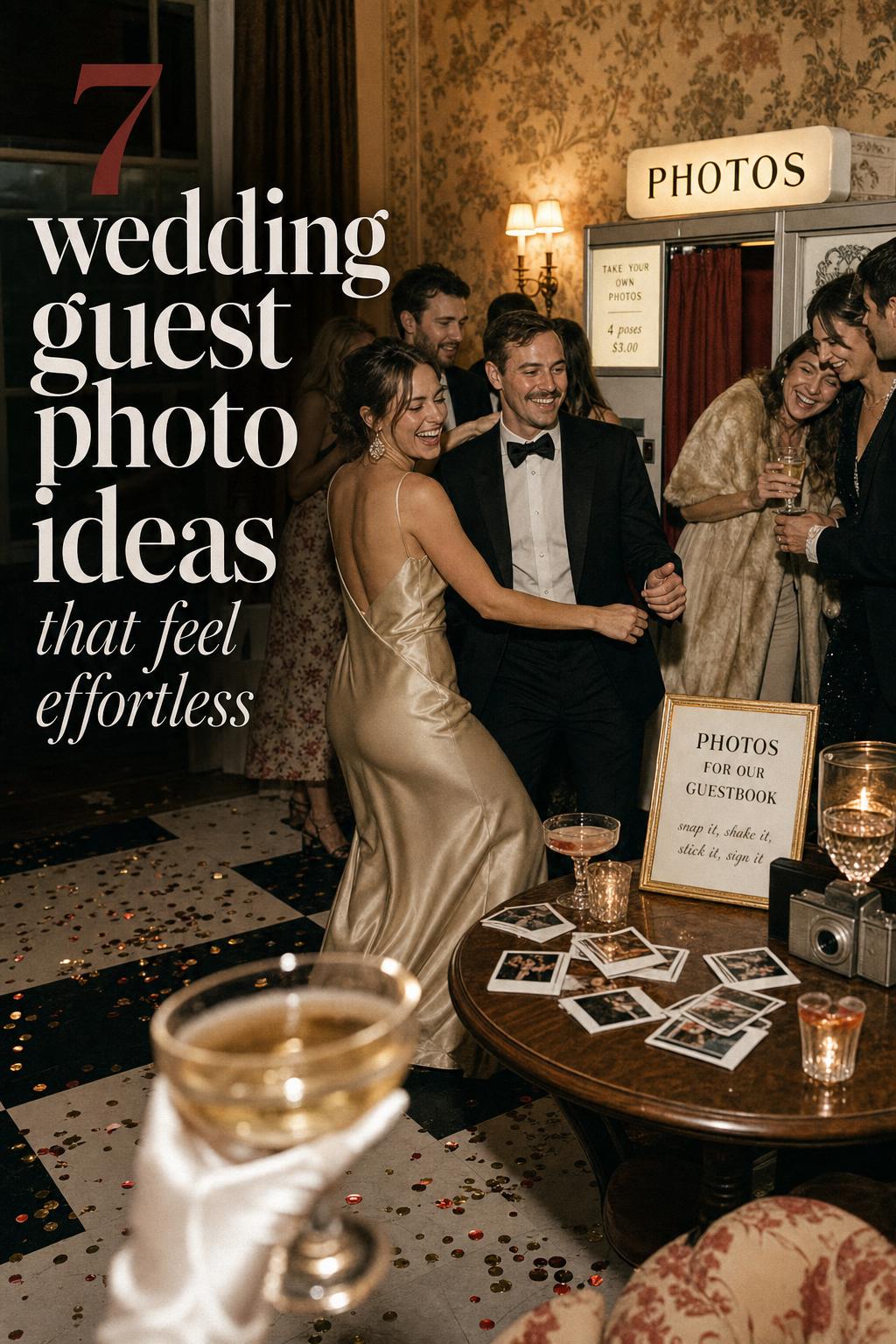
When the wedding shifts into evening energy, the photo booth can become part of the atmosphere rather than a side attraction. The mood here is playful, high-spirited, and slightly theatrical, which works beautifully for glam-night receptions, city venues, and celebrations where dancing is a central part of the experience.
Photo booth ideas are often strongest when the booth has its own visual identity. Good lighting, a backdrop with real depth, and a small collection of props are more important than novelty overload. Confetti, signs, and accessories can add texture, but the most flattering images still depend on spacing, light, and a clean frame. Wedding Snap and Chic Ceremony both center this idea of creative but controlled guest photography: fun should never come at the cost of the couple’s style.
Best for: evening receptions, after-dinner transitions, and weddings where guests want an easy activity. What to avoid: placing the booth in a dark corner or too close to the dance floor speakers, where people feel rushed and photos lose definition.
Look: family and kin moments that belong in the main gallery
Not every guest photo needs to feel trendy. Some of the most enduring images are the quiet family groupings that happen just outside the formal portrait schedule. The mood is grounded, affectionate, and slightly more timeless than playful. These pictures often become the ones couples revisit most.
A family-focused guest photo area benefits from comfort and clarity. Good light, a neutral or softly textured backdrop, and a prompt that encourages multi-generational photos can turn a simple corner into a meaningful part of the wedding. These moments connect naturally to broader wedding photo lists often associated with Zola-style planning: they fill the space between formal family photos and spontaneous candids.
The styling insight here is emotional as much as visual. Keep props minimal and let the relationships carry the image. If the setup feels too gimmicky, older relatives may skip it, and the gallery loses an important layer of family storytelling.
Look: detail-driven guest shots with a romantic point of view
Some of the most charming wedding guest photo ideas are not portraits at all. They are detail images with atmosphere: shoes under a table, hands holding drinks, the bouquet near the place cards, confetti on the floor after the ceremony, or a close shot of a sign guests have been interacting with all evening. These photos create texture in the final gallery.
This visual direction works especially well when the wedding design has strong decorative elements. The fabrics, florals, paper goods, and table styling all become part of the image language. Guests do not need advanced photography skills to contribute here, but they do benefit from simple guidance. Prompts such as “capture one pretty detail from your table” or “photograph the bouquet from your seat” help shape better results.
Why it works: detail shots break up a gallery of faces and add context. They also support the storytelling that couples often love in editorial wedding coverage. If your design includes reusable backdrops, thoughtful signage, or distinct styling moments, encourage guests to notice them.
How to build prompts that guests will actually use
The best prompts feel short, visual, and easy to understand at a glance. Guests should not need a long instruction card to participate. A successful prompt directs attention toward a moment, an emotion, or a composition. That is why “two people laughing” works better than a broad request to “take candid photos.” It gives shape to the image without scripting every detail.
Prompt design also depends on the wedding theme. A garden party can invite softer, romantic images, while a beach sunset wedding naturally lends itself to wider silhouettes and movement. A glam reception may call for stronger contrast and more posed group energy. What matters is that the prompts support the atmosphere the couple wants, rather than competing with it.
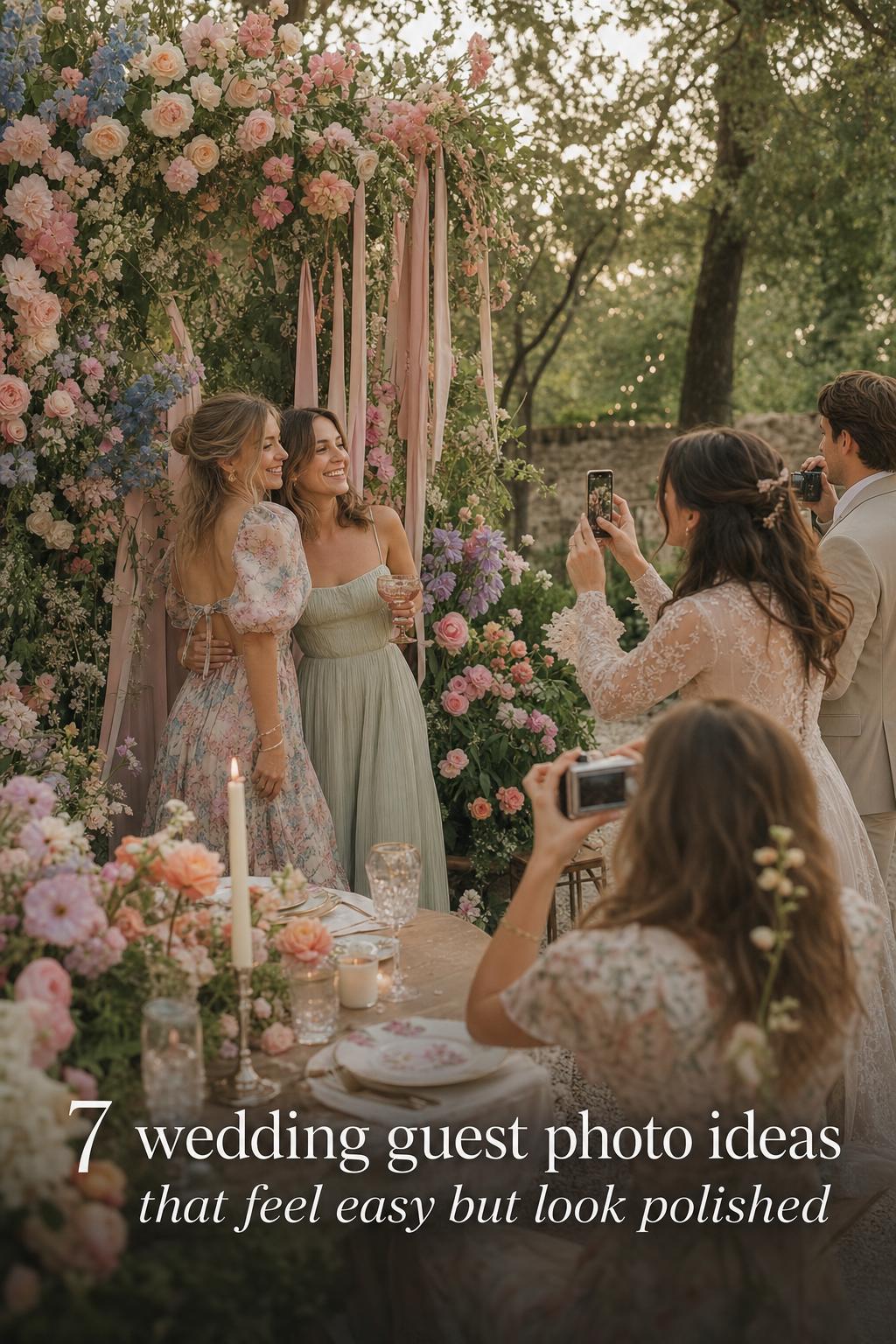
Quick prompts for elegant guest participation
- Two people laughing
- A hero shot with the bouquet
- Your table together before dinner
- A candid moment during cocktail hour
- A family photo you want the couple to keep forever
- A dance floor moment after the first big song
- A pretty detail from the reception
- A friend group portrait in front of the backdrop
Themed prompts that match the setting
For a garden-romance wedding, prompts can lean into softness: florals, pathways, seated conversations, and natural light. For a beach sunset celebration, guests can be guided toward horizon lines, movement, and warm-hour portraits. For a rustic-chic or industrial space, the architectural background itself can help guests create stronger images. This is where visual archetypes become useful: the prompt should speak the language of the venue.
Tip: if guests are likely to use their phones quickly between events, keep prompt cards no longer than a few words each. The more immediate the idea feels, the more likely it is to be used.
Accessibility-friendly prompts
Inclusive guest photography feels more thoughtful and more successful. Accessibility-friendly prompts can support guests with mobility or sensory needs by making participation easier and more comfortable. This can include placing prompts at visible heights, using clear signage, and offering a setup that does not require guests to stand for long or move across difficult terrain. The research around accessibility, including braille signage as a consideration, points to a useful principle: beautiful guest photography should feel welcoming, not physically demanding.
Why this matters: when the setup is inclusive, the gallery becomes fuller and more representative of the people who made the day special. It also reduces the chance that guest photos skew only toward one age group or social cluster.
Backdrops, lighting, and setup choices that shape the entire gallery
Even the best prompts cannot compensate for a poor setup. When couples wonder why some guest photos look polished and others feel flat, the answer is often environmental rather than creative. Light, spacing, and backdrop quality influence nearly every image guests take.
Photo booth or open backdrop?
A photo booth creates a defined activity. It works well for receptions with high energy, clear entertainment zones, and guests who enjoy a playful focal point. An open backdrop feels more integrated into the wedding environment and usually photographs larger groups better. It also tends to suit couples who want guest photos to feel elegant rather than novelty-driven.
The trade-off is simple. A booth encourages participation through structure, while an open backdrop supports a more editorial look. If the wedding is intimate, design-led, or stylistically restrained, an open backdrop may feel more natural. If the event is lively and social, the booth can help sustain momentum.
Lighting essentials guests can actually use
Good guest photos depend on visibility and direction. Soft, flattering light near cocktail hour often produces the easiest candid images, while reception spaces need enough illumination around photo areas to avoid muddy shadows. Couples do not need a complicated photography setup, but they do need to avoid dark corners and uneven light if they want guests to contribute usable images.
Nikon’s guest-focused photography guidance is useful here in spirit: better composition starts with better conditions. If the light is too harsh, faces wash out. If it is too dim, movement blurs. The most guest-friendly setup gives people enough room to pause and enough light to be seen clearly.
Backdrop materials and sustainability
Reusable backdrops are one of the smartest visual investments because they improve photos while supporting a more sustainable planning approach. Fabrics, panels, and props that can be used again often look more refined than disposable novelty décor, and they help the photo area feel intentional rather than temporary. This matters for the overall aesthetic: if the backdrop looks cheap, every image in front of it inherits that feeling.
How to make it look more elevated: keep the backdrop palette aligned with the wedding style, choose a material with some texture or structure, and let one visual feature lead. Too many competing elements can weaken the scene and make guest photos harder to frame.
The guest photo timeline that keeps the day feeling natural
Timing affects guest photography just as much as design. A beautiful setup placed at the wrong moment often goes unused, while a simple prompt introduced at the right time can produce dozens of meaningful images. Thinking through the wedding photo timeline helps guest participation feel seamless instead of disruptive.
Arrival and welcome drinks
This is one of the easiest windows for relaxed portraits and setting shots. Guests are fresh, outfits are intact, and the atmosphere still feels calm. A welcome sign with a gallery link or QR code can be introduced here, along with one or two light prompts. This is also a natural time for venue-wide images, ceremony details, and small-group photos.
Ceremony transition and cocktail hour
After the ceremony, emotions are high and candid images come easily. This is an ideal period for laughing portraits, family mini-groups, and broader storytelling moments. If there is an open backdrop or a floral area near the cocktail space, guest participation tends to feel effortless because people are already circulating.
Dinner, speeches, and detail moments
During dinner, prompts can shift toward quieter images: tablescapes, glasses raised for toasts, hands, florals, and family interactions. This is not always the best time to expect heavy participation in a dedicated photo booth, but it is excellent for atmospheric photos that enrich the gallery.
After-dance energy and send-off
Once the dancing begins, the mood changes. This is where fun, movement, and more playful photo booth ideas become valuable. If the couple wants an energetic guest gallery, the late reception is when to encourage dance floor shots, group bursts of laughter, signs, and spontaneous portraits. Collection reminders can be repeated toward the end of the night so photos are not forgotten on personal phones.
From scattered snapshots to a gallery people will love
One of the biggest differences between average and excellent wedding guest photo ideas is not the photos themselves. It is the collection system. Without a clear workflow, lovely images stay buried on guests’ phones and never become part of the wedding story. A simple, visible, guest-friendly process makes a major difference.
QR code and gallery link flow
Formalized guest photo collection workflows are still underused, which makes them especially helpful. A QR code sign near welcome drinks, the guest book area, the photo backdrop, or the bar can guide guests directly to a shared gallery. The research around Google Photos QR systems, app ecosystems such as Joy and Piccy, and AI-assisted curation points to a modern approach: make the upload process almost effortless.
The visual lesson is simple. A beautiful prompt card is useful, but if guests do not know where the images should go, the system breaks down. Signs should be easy to spot, aligned with the wedding design, and repeated in a few key locations rather than hidden in one corner.
Curating the final gallery
Guest-contributed images become much more powerful when they are lightly curated after the wedding. Wedding Photo Swap approaches this idea through collaboration and sharing, and that principle holds up: guests contribute, the couple or curator organizes, and the final gallery feels intentional. AI-assisted curation can help sort images, but even a simple review process by moment, backdrop, or shot type creates a more emotional gallery.
Best practice: blend guest photos with professional images by mood and timeline rather than separating them completely. That allows the candid, guest-driven frames to support the larger wedding story instead of feeling like an unrelated album.
Style notes for different wedding atmospheres
The best wedding guest photo ideas always reflect the wedding’s visual world. A prompt that feels perfect at a coastal sunset celebration may look out of place in a black-tie city reception. Small adjustments in backdrop, timing, and tone keep guest photography consistent with the day.
Garden-romance weddings
Lean into natural light, floral framing, and candid prompts. Open backdrops feel softer here than enclosed booths, and guests usually respond well to prompts focused on laughter, walking, and small-group interactions. Detail shots of bouquets, linens, and tablescapes also perform beautifully in this setting.
Glam-night receptions
Use stronger lighting, a more defined photo area, and structured group prompts. This is where a dedicated photo booth can become part of the entertainment. Keep props selective and polished so the look stays elevated rather than gimmicky.
Beach sunset celebrations
Prompts should encourage movement, wide framing, and horizon-aware composition. Early evening timing matters here because the atmosphere changes quickly. Guests often capture the best images when the instructions are simple and the location does the visual work.
Rustic-chic or industrial venues
Architectural texture becomes part of the aesthetic. Open backdrops, signage, and detail prompts can work especially well, since the surroundings already provide visual structure. Guests do not need many props when the venue itself offers contrast and character.
Common styling mistakes that weaken guest photography
The most common issue is trying to do too much at once. Couples sometimes mix a playful prop table, a highly formal backdrop, unclear signage, poor lighting, and no upload system, then wonder why participation is uneven. Guest photography works best when the visual language is consistent and the ask is simple.
- Avoid overcrowded props that distract from faces and outfits.
- Avoid backdrops that clash with the wedding palette or feel overly disposable.
- Avoid placing photo areas where guests are rushed, squeezed, or poorly lit.
- Avoid overly long prompt lists that guests will not read.
- Avoid collecting photos informally if you actually want a usable gallery later.
Another mistake is ignoring etiquette. Chic Ceremony’s bride-friendly framing gets at something important: guest photography should support the couple’s preferences, not compete with them. If the wedding has a strong aesthetic or privacy expectations, the photo ideas need to respect that from the start.
Practical tips for making guest photos look more intentional
A few thoughtful choices can make guest photos feel dramatically more polished without making the experience more complicated. The aim is not to turn every guest into a professional photographer. It is to shape the environment so ordinary snapshots come out looking better.
Tip: repeat one visual cue throughout the wedding. If guests see the same color story, signage style, or backdrop language in several places, their photos naturally start to feel connected. This is especially helpful when images are later gathered into one gallery.
Tip: give guests one main action per area. Near the welcome drinks, ask for arrival portraits. Near the backdrop, ask for one group shot. Near dinner, ask for a detail photo or family moment. Simplicity increases participation and keeps the gallery varied.
Tip: integrate professional and guest workflows rather than treating them as opposites. Couples can borrow the shot-list mindset associated with Zola and the pose inspiration associated with The Knot, then soften it into more approachable guest prompts. That bridge between planning and spontaneity is often where the most successful galleries come from.
Etiquette, consent, and privacy in a U.S. wedding context
Wedding guest photo ideas should always sit alongside clear expectations. In U.S. weddings, privacy preferences vary widely. Some couples want wide sharing and lively social posting, while others prefer photos to stay in a private gallery. Either approach can work, but guests need guidance.
Consent matters most when images are being shared beyond the wedding itself. A simple sign, gallery caption, or couple note can clarify whether photos are intended for private collection, social posting, or both. This protects the atmosphere of the day and reduces awkwardness later, especially for guests who are more private or less comfortable being featured online.
There is also an etiquette layer around timing and behavior. Guests should never interfere with formal portraits or block professional coverage during key moments. The strongest guest photo systems do not compete with the photographer. They create additional opportunities before, between, and after the major scheduled events.
Building your guest-photo system without making it feel forced
The most elegant wedding guest photo ideas do not feel like a task. They feel like a natural extension of the celebration. That usually means combining just a few strong elements: one memorable backdrop or booth, a short set of prompts, an easy QR code upload path, and a timeline that introduces these moments when guests are most relaxed.
A good system also leaves room for different personalities. Some guests love posed group portraits. Others are more likely to contribute candid floor-level moments, family interactions, or a close-up of something beautiful on the table. The gallery becomes richer when it welcomes all of those instincts while still giving them a visual framework.
The easiest way to make guest photography feel personal is to start with the wedding mood rather than the gadget or trend. Once the prompts, backdrop, lighting, and sharing workflow all support the same atmosphere, even simple phone photos can feel romantic, cohesive, and deeply worth keeping.
FAQ
What are the best wedding guest photo ideas for a romantic wedding?
The best ideas for a romantic wedding usually focus on candid laughter, soft family moments, floral backdrops, small-group portraits, and detail shots of bouquets, tablescapes, and ceremony décor. These ideas work well because they support a gentle, emotional atmosphere instead of pulling guests into overly novelty-based photos.
Should I choose a photo booth or an open backdrop for guest photos?
A photo booth is often better for lively evening receptions and guests who enjoy a defined activity, while an open backdrop usually feels more elegant and works better for larger groups and a cleaner editorial look. The right choice depends on your wedding style, available space, and whether you want the photo area to feel playful or seamlessly integrated into the décor.
How do I get guests to actually upload their wedding photos?
The easiest way is to use a clear QR code or gallery link system and place it in multiple visible spots, such as the welcome area, bar, guest book table, and photo backdrop. Guests are much more likely to participate when the upload process feels immediate and simple rather than something they need to remember later.
What kind of prompts work best for wedding guests?
Short, visual prompts work best, such as “two people laughing,” “your table before dinner,” “a family photo,” or “one beautiful detail from the reception.” Prompts should be quick to read and easy to imagine, because guests respond better to specific image ideas than broad instructions.
Are guest photos a good replacement for professional wedding photography?
Guest photos are best seen as a complement rather than a replacement. Professional photography covers the major portraits, planned moments, and overall visual narrative, while guests often capture spontaneous reactions, side conversations, and perspectives from inside the celebration that formal coverage may miss.
When should guests take the most photos during the wedding day?
Welcome drinks, cocktail hour, and the early part of the reception are often the most productive times because guests are relaxed and the atmosphere is visually rich. After dancing begins, the style of photos usually shifts toward movement and group energy, which can also be wonderful if your setup includes enough lighting.
How can I make wedding guest photos feel more cohesive with my wedding style?
Use a consistent backdrop, thoughtful signage, a limited prop selection, and prompts that match your venue and overall wedding mood. A garden wedding, a glam-night reception, and a beach sunset celebration all call for different visual directions, so the guest photo plan should reflect that rather than relying on one generic setup.
What should I avoid when planning guest photo ideas?
Avoid cluttered props, poorly lit photo areas, long instruction cards, and collection systems that are too informal to use easily. It is also wise to avoid any setup that conflicts with the couple’s preferences or distracts from formal photography during important moments like the ceremony or key portraits.
How do I handle privacy and consent for guest wedding photos?
Set expectations clearly with simple signage or a short note explaining whether photos are for a private gallery, social sharing, or both. This helps guests understand the couple’s comfort level and creates a more respectful, trusted experience for everyone involved.