Romantic Photo Booth Couple Pictures for Wedding Day Style
The most memorable wedding images are often the ones that feel slightly unplanned: a laugh between vows and dinner, a quick kiss under a floral backdrop, a playful prop lifted at exactly the right moment. That is why photo booth couple pictures have become such a lasting part of modern celebrations. They sit somewhere between portrait and party memory, blending styling, atmosphere, and genuine emotion in a way few wedding details can.
Couples often compare booth styles because the differences are subtle at first glance. An open-air photo booth, a more enclosed setup, a glam photo booth, or a classic wedding photobooth may all promise romantic images, yet they create very different moods. The same is true of backdrop choices, lighting, props, and deliverables. Understanding those differences helps couples choose a setup that fits not only their venue, but also the feeling they want their guests to remember.
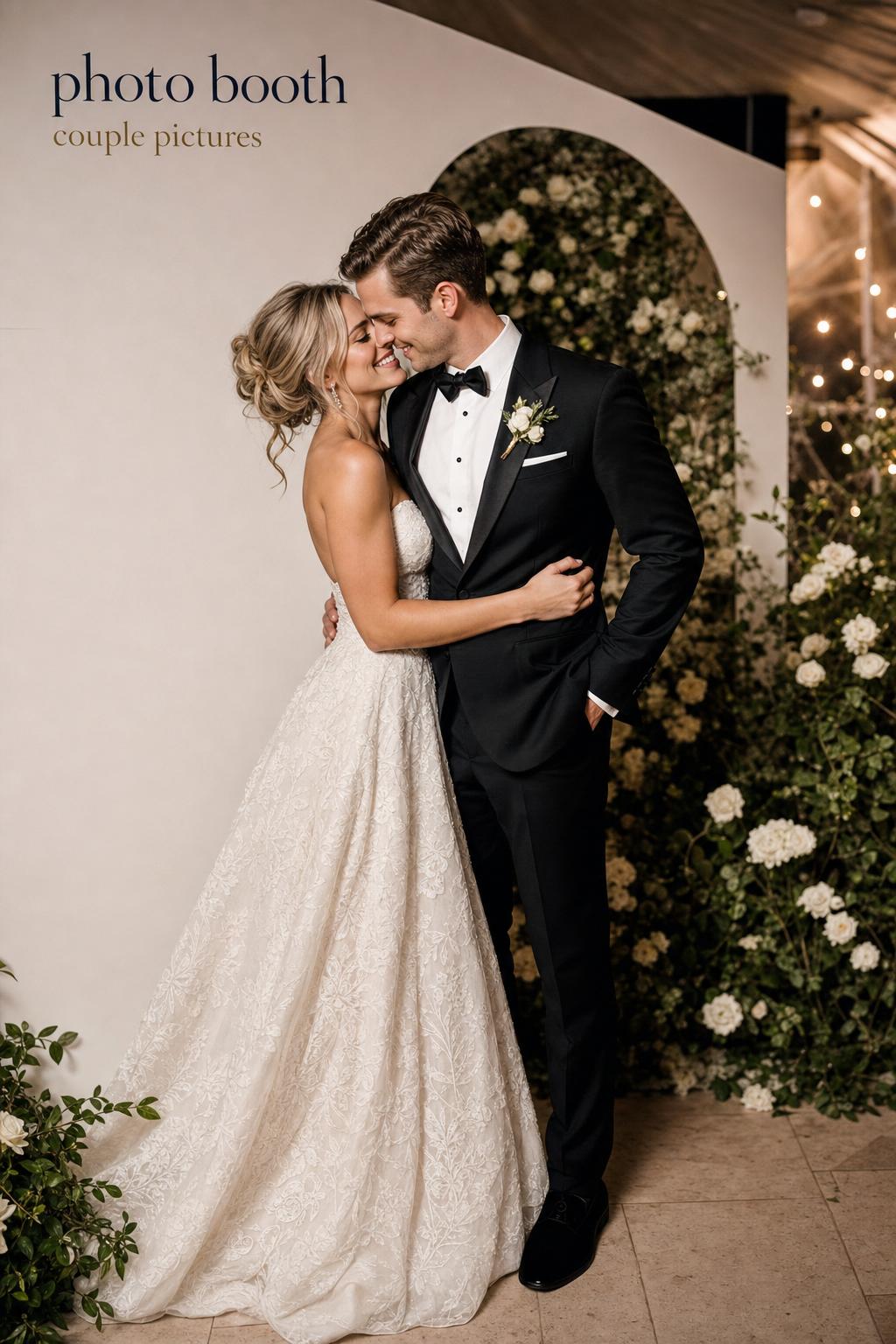
This comparison breaks down the main approaches to couple-focused booth photography, from booth format to visual styling. Along the way, it also looks at wedding photo booth poses for couples, backdrop decisions, privacy considerations, and the practical details that shape a smoother experience on the day itself.
The two main directions couples compare first
Most decisions begin with a simple question: should the booth feel cinematic and open, or intimate and tucked away? Across wedding and event galleries, this comparison appears again and again because it affects nearly everything else, including pose freedom, guest flow, lighting control, and the final look of the images.
Turn wedding inspiration into a plan you can actually follow.
Zarellea brings your guest list, budget, vendors, and day-of details into one shared space — so no beautiful idea gets lost in the shuffle.
Style overview: open-air photo booth
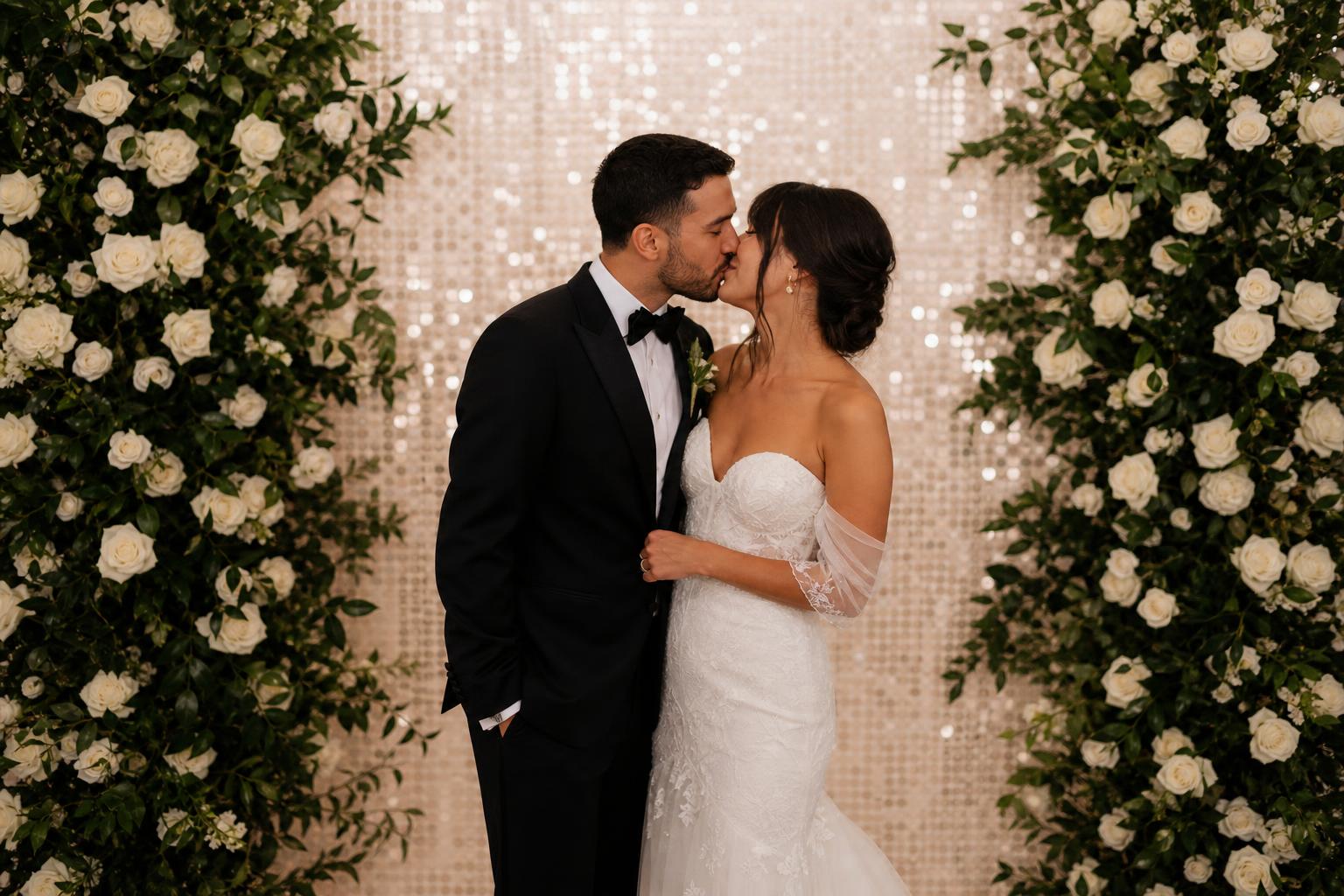
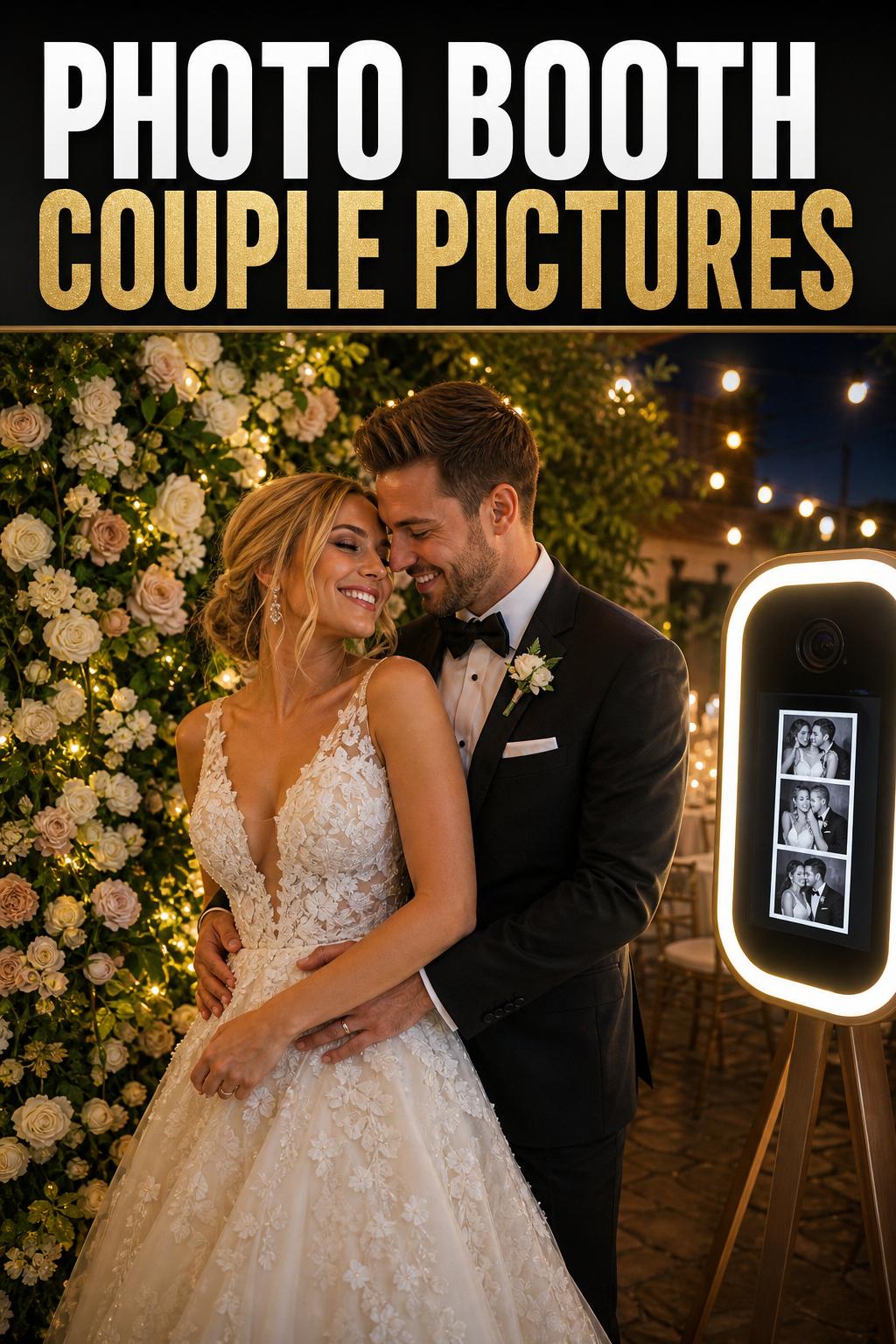
An open-air photo booth typically feels more flexible and social. It usually allows more room for a couple to move naturally, whether they want a close embrace, a full-length romantic pose, or a playful group-to-couple transition. This style pairs especially well with statement backdrops such as floral walls, greenery, glitter finishes, or branded event designs. The mood is often polished yet lively, making it a strong fit for weddings where the booth is part of the visual design of the reception.
Style overview: enclosed photo booth
An enclosed booth creates a more private atmosphere. The visual language is usually tighter, more intimate, and slightly more nostalgic. Couples who feel camera-shy sometimes prefer this format because it softens the sense of being watched. Poses tend to be closer, expressions can feel more candid, and the resulting images often have a charming, classic booth-strip energy. The trade-off is less space for dramatic movement and fewer opportunities to showcase large decorative backdrops.
Backdrop-led romance versus booth-led intimacy
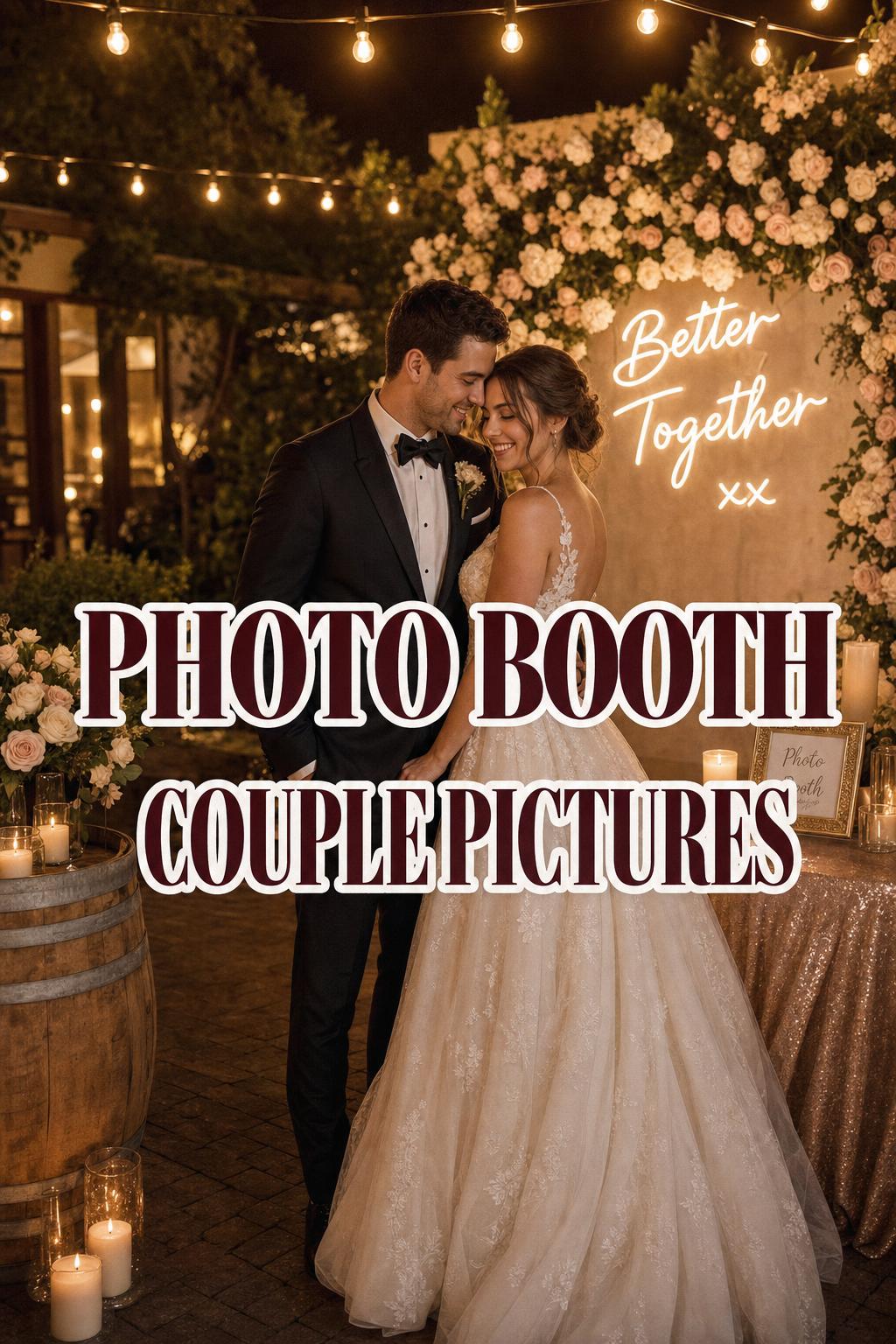
Another useful comparison is whether the visual emphasis should fall on the environment or on the pair themselves. Some wedding photo booth setups are designed around the backdrop and event styling, while others let the couple’s chemistry become the clear focal point.
Style overview: backdrop-driven wedding photobooth
This approach is ideal for couples who want the booth to feel integrated into the wedding design. Floral backdrops, twinkling lights, greenery walls, glitter textures, black-and-white styling zones, and glam aesthetics all create a strong decorative identity. In these setups, couple portrait ideas in photo booth sessions often use body position, hand placement, and spacing to complement the setting. A winery wedding, for example, may favor timeless black-and-white portraits, while a romantic reception may lean into soft florals and elegant lighting.
Style overview: couple-driven booth styling
In a couple-driven setup, the booth is kept visually cleaner so the attention stays on expression and interaction. Props may be used lightly or not at all. Backgrounds are often simple, and the booth becomes less of a decorative installation and more of a portrait space. This style suits couples who want their images to feel emotional, candid, and less themed, even within a festive reception.
What separates these styles in real wedding use
Although both approaches can produce beautiful photo booth couple pictures, they serve different wedding priorities. The clearest distinctions appear in structure, tone, and how the booth functions within the celebration.
- Silhouette and movement: open-air layouts allow wider poses, standing portraits, and more variation; enclosed booths encourage closeness and tighter framing.
- Visual storytelling: backdrop-heavy setups connect the booth to the wedding theme; simpler booths highlight emotion over décor.
- Level of formality: glam and black-and-white styles tend to feel more elevated; playful prop-based booths feel lighter and more spontaneous.
- Guest interaction: open formats often attract larger participation and easier group transitions; enclosed formats feel more personal and private.
- Venue presence: some booths become part of the room design, while others function more quietly as an activity tucked into the reception flow.
For many couples, the best choice depends less on trend and more on the rhythm of the event. A high-energy reception with strong décor details often benefits from an open-air photobooth. A more intimate wedding, or one where the couple wants quieter portraits, may feel better served by an enclosed approach.
How the visual language changes from one booth style to another
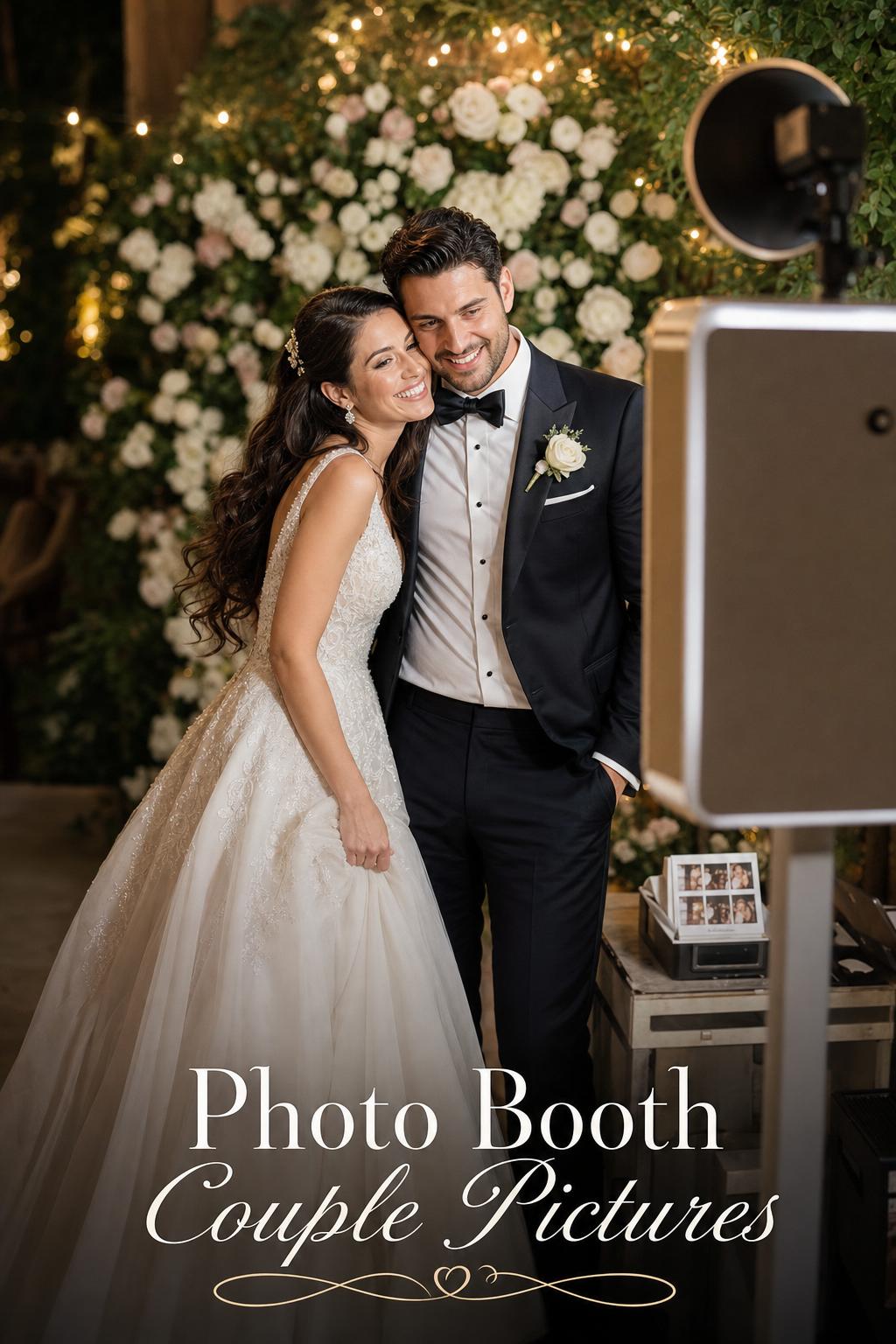
The visual difference between booth styles becomes most obvious once guests begin using them. Even before a print is handed over or a digital gallery is shared, the styling logic changes how the images read.
Layering and proportions
Open-air booths usually accommodate more of the outfit, which makes proportions matter. A sweeping dress, a sharp suit line, or coordinated wedding attire can become part of the portrait. This is particularly useful when couples want the pictures to echo the elegance of their formal look. In enclosed booths, framing is often tighter, so posture, facial expression, and upper-body closeness carry more of the image.
Accessories and props
Props are one of the most visible dividing lines in booth aesthetics. In playful wedding entertainment settings, signs, novelty glasses, and themed pieces encourage energy and laughter. In more romantic photo booth ideas for weddings, props tend to be restrained so they do not interrupt the emotional tone. The choice is not simply about fun versus formality. It is about whether the couple wants the booth to feel like an extension of the dance floor or a small portrait studio inside the reception.
Footing, stance, and balance
In a larger setup, couples can shift weight, turn slightly, or interact with the backdrop in a more composed way. In smaller booths, the balance comes from closeness: foreheads touching, shoulders angled inward, or a quiet smile held just before the shutter. Both can be flattering. They simply communicate romance differently.
Comparing backdrop aesthetics for couple portraits
Among all style decisions, backdrops often shape the personality of the booth most strongly. A couple may not remember every table detail years later, but they will notice whether their booth pictures feel soft, dramatic, playful, timeless, or modern.
Floral and greenery backdrops
Floral backdrops are naturally romantic and fit wedding celebrations especially well. They soften couple portraits and work beautifully when the event already leans garden, elegant, or classically romantic. Greenery backgrounds create a similar effect with a slightly fresher, more understated mood. Both styles are common in wedding-focused galleries and pair well with open-air booth setups where the backdrop remains fully visible.
Glitter, glam, and polished finishes
Glitter or glam surfaces create a more editorial effect. They suit receptions with a luxury mood, evening lighting, or a more fashion-forward visual direction. In these settings, couple poses often become more composed and direct, because the backdrop itself already carries sparkle and drama. This works particularly well for black-and-white styling, where contrast and shine feel intentional rather than busy.
Twinkling lights and warm-event atmosphere
Twinkling light backdrops introduce warmth and softness. The booth feels more atmospheric, and the resulting photos can suggest a celebration still unfolding around the couple. This style is especially effective when the wedding reception uses ambient light as part of its design. The images feel festive without needing many props.
Minimal backdrops for timeless focus
A simpler backdrop often produces the most timeless result. Without a heavily themed setting, the emotional content of the image becomes central. For couples who want their wedding photo booth poses for couples to age gracefully over time, minimal styling can be a smart decision. It also leaves more room for the photographer or booth operator to focus on lighting and flattering composition.
Pose style comparison: playful, candid, and romantic
Not every booth style invites the same kind of movement. Some encourage laughter and prop-based spontaneity, while others favor a quiet, portrait-like rhythm. Choosing the right pose style matters because it affects whether the booth feels aligned with the rest of the wedding photography.
Playful poses
Playful poses are ideal for receptions centered on guest energy and interaction. These include exaggerated expressions, quick kisses, leaning into the frame, or using props for comic timing. This style tends to work best in open-air layouts where movement is easier and guests can step in and out fluidly. It is often the most social version of a photobooth couple shot.
Candid poses
Candid booth pictures usually look best when couples are given simple prompts rather than rigid direction. Standing close, laughing at a private comment, or glancing at each other instead of the camera produces a softer result. These poses suit both enclosed and open-air booths, but they are especially effective when the setup feels less crowded and the lighting is flattering without being harsh.
Romantic poses
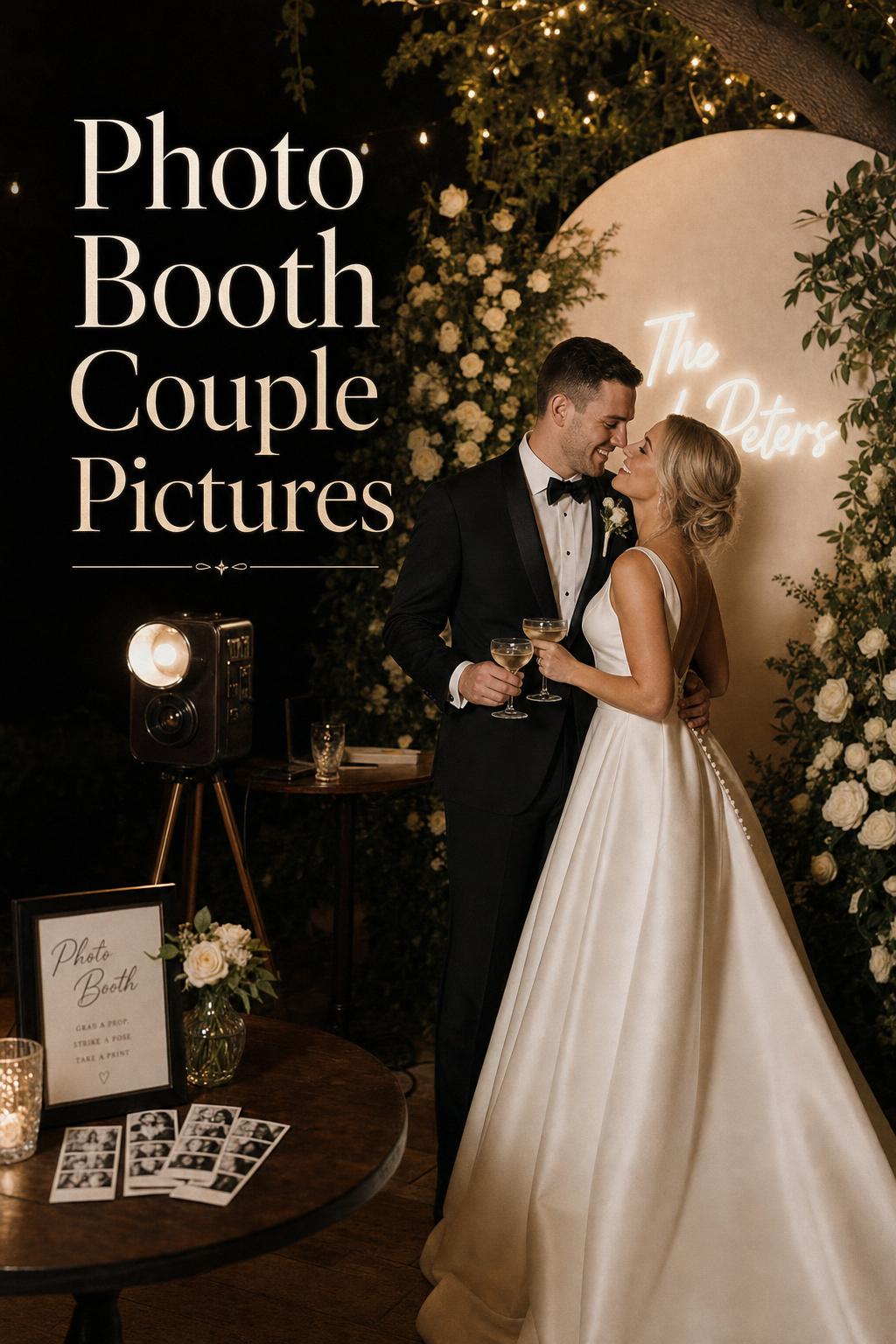
Romantic booth portraits rely on stillness more than speed. A forehead touch, a gentle hand at the waist, a shoulder lean, or a composed embrace often creates the strongest image. In many galleries, these are the couple shots that feel closest to keepsake portraits rather than party snapshots. They pair especially well with floral backdrops, black-and-white styling, or soft reception lighting.
A closer look at real gallery styles from wedding photo booth providers
Looking across wedding and event galleries reveals how regional providers interpret the same idea differently. The subject remains the same—couples in a booth setting—but the aesthetic shifts according to branding, venue style, and location.
Auré Photobooth presents couple imagery through a service-led gallery approach, where backdrops, props, branding, and wedding styling all support the final look. Lights Camera Fun Photo Booth connects its gallery to Chicago and often shows couples in real event settings, which adds a local, lived-in sense of occasion. On Que Photo Booth ties open-air booth imagery to Winnipeg weddings and social celebrations, often emphasizing floral backdrops and venue styling.
Starry Night Photo Booth, with its Orange County reference and twinkling-light atmosphere, leans into festive visual warmth. S&D Booths brings in a different tone with wedding moments, black-and-white portraits, and winery context, suggesting a more timeless and venue-conscious direction. Lalalove Memories, associated with Arizona, highlights romantic poses and glam backdrop aesthetics. Together, these examples show that the booth is never just a machine. It is a visual extension of the event’s identity.
Stock imagery versus real wedding galleries: what each style comparison tells you
Couples often browse both real event galleries and stock platforms when gathering ideas. Each serves a different purpose, and comparing them can sharpen decision-making.
What stock galleries do well
Platforms such as Pexels, Shutterstock, and iStock offer a broad visual range. They make it easy to compare poses, framing, props, and general booth mood because there are so many versions of the same concept. For early inspiration, this can be useful. Couples can quickly identify whether they prefer a clean portrait look, a celebratory party style, or a backdrop-heavy aesthetic.
Where real wedding galleries are more helpful
Real event galleries are better for practical planning. They show what booths actually look like in venues, how lighting behaves during receptions, how guests use props, and how couple portraits fit into the larger celebration. They also reveal whether a provider’s style remains consistent across weddings rather than only in idealized stock scenarios.
For decision support, the strongest approach is to use stock imagery for broad inspiration and service galleries for realistic comparison.
Where booth placement changes the style of the pictures
The same booth can produce very different results depending on where it is placed. This is one of the most overlooked styling decisions in wedding planning, yet it has a direct impact on image quality, guest flow, and how often couples actually return for portraits throughout the evening.
- Near reflective surfaces, images may feel brighter but can also pick up distracting highlights.
- In a well-balanced area of the reception, the booth becomes easy to access without interrupting conversation or dinner service.
- Placed too close to crowded pathways, the booth may lose the intimate feeling couples often want for romantic portraits.
- Set against a venue feature, such as a styled wall or elegant reception corner, the booth can feel integrated rather than separate.
Venue fit matters just as much as booth format. A winery setting may call for timeless restraint, while a socially energetic ballroom may benefit from a more visible and playful installation.
Tips for matching booth style to your wedding atmosphere
The best wedding photobooth is the one that supports the emotional tone of the day rather than competing with it. A beautiful booth can still feel slightly wrong if its style clashes with the venue or the couple’s priorities.
Tip: choose the booth format after choosing the mood
If the goal is energy, visibility, and guest interaction, an open-air photo booth usually makes more sense. If the goal is intimacy, nostalgia, or a more private portrait moment, an enclosed setup may feel more natural.
Tip: let the backdrop support the wedding theme, not replace it
Backdrops work best when they echo the celebration’s tone. Floral, greenery, glam, or black-and-white styling should feel like a continuation of the event rather than a separate design language.
Tip: decide early how playful you want the images to feel
Props change the emotional read of the photos immediately. A prop-heavy booth can be joyful and social, but it may not deliver the more romantic couple portrait ideas in photo booth sessions that some pairs expect. Couples who want both often create a few quieter moments for themselves before the guest rush begins.
Outfit logic in the booth: how styling appears on camera
Even though the booth is a small part of the wedding day, clothing still interacts with its visual style. This matters most in open-air setups, where more of the outfit appears and the portrait reads almost like a mini editorial frame from the reception.
Example comparison: a polished romantic interpretation
In a glam or black-and-white booth, a couple usually looks strongest when posture is composed and movement is reduced. The styling logic is refinement. The booth supports the elegance of the attire, the backdrop contributes atmosphere, and the final image feels almost formal.
Example comparison: a playful reception-floor interpretation
In a prop-forward open-air booth, the same couple might loosen posture, laugh more openly, and allow the image to feel slightly less polished. The styling logic is celebration. The picture becomes a record of mood and personality rather than a quiet portrait.
Neither approach is better. They simply answer different emotional needs. One becomes a keepsake portrait, the other becomes a lively memory of the room.
The modern comparison: classic booth memories versus digital-first deliverables
Wedding couples are no longer deciding only between aesthetic styles. They are also comparing how the images are delivered and shared after the event. This practical layer affects guest experience just as much as the visual design.
Classic deliverables include printed strips, portrait prints, and guest memory books. These options feel tangible and sentimental, especially when guests leave a copy behind with a written note. Digital-first options include gallery links, QR code galleries, and other digital keepsakes that make sharing easier after the reception. Some modern setups also point toward social media integration and faster posting flows.
The comparison here is simple: printed memories feel intimate and immediate, while digital delivery extends the life of the images beyond the night itself. Many couples choose both because each supports a different kind of remembrance.
Privacy, rights, and comfort are part of style too
It is easy to think of booth decisions as purely aesthetic, but comfort and trust shape the experience just as much as lighting or backdrop choice. Rights, consent, and photo use expectations deserve a clear place in wedding planning conversations, especially when couple portraits may later appear in galleries or promotional materials.
Couples should understand what is included in the deliverables, whether a digital gallery will be shared through a QR code or other system, how prints are handled, and what consent process applies if images may be used publicly. This matters for all weddings, and it becomes even more important when the event includes a strong emphasis on personal storytelling or a preference for privacy.
Inclusive representation matters here as well. Diverse couples, including LGBTQ+ couples and multi-race or culturally varied wedding celebrations, should feel that the booth experience reflects them respectfully and naturally. A provider’s gallery can often reveal whether their visual approach already welcomes that diversity in a meaningful way.
An insight couples often miss: the booth should follow the timeline, not fight it
One of the strongest practical choices is planning when couple portraits in the booth are most likely to succeed. If the couple waits until the room is crowded and the energy is high, they may get lively images but not the quieter keepsake portraits they had imagined. If they step in earlier, before the full rush, they often get a wider range of results.
This is especially helpful in open-air setups with styled backdrops. A few calm minutes early in the reception can produce the most composed, romantic photo booth couple pictures of the night. Later on, the same booth can shift naturally into a more playful guest experience without losing the couple’s own signature portraits.
When each booth style works best
Choosing between styles becomes easier when the decision is tied to real wedding situations rather than abstract preference.
- For highly designed receptions: open-air booths with floral, greenery, glitter, or glam backdrops often feel most cohesive.
- For intimate weddings: enclosed booths or visually restrained setups create more privacy and softness.
- For lively guest participation: a visible open-air setup supports easier movement and stronger social energy.
- For timeless couple portraits: minimal backdrops, black-and-white styling, and reduced props often create the most enduring images.
- For mixed priorities: choose a booth that can deliver both prints and digital gallery access, allowing keepsake value and easy sharing to coexist.
Looking ahead: the style shift shaping future booth experiences
While many weddings still favor classic prints and romantic backdrops, the direction of booth experiences is expanding. AI-enhanced retouching, AR overlays, social media integration, kiosk software, and other interactive tools point toward a more layered future. These features do not replace good styling. They simply add new ways to shape the experience before and after the shutter clicks.
The most thoughtful use of these tools is still grounded in the same essentials: flattering lighting, a clear visual mood, respectful privacy practices, and a setup that suits the event. Technology can improve speed and convenience, but it works best when the emotional core of the booth remains intact.
Bringing the styles together for a wedding that feels personal
The clearest distinction in booth styling is this: some wedding photo booth experiences are built around atmosphere and event design, while others are built around closeness and candid emotion. Open-air setups, bold backdrops, and guest-facing layouts create one kind of memory. Enclosed formats, simpler backgrounds, and quieter posing create another.
Most couples do not need to choose only one idea. A romantic wedding often benefits from a thoughtful blend: a beautiful backdrop that reflects the celebration, a few composed portraits early in the evening, playful prop-filled images later on, and deliverables that include both prints and digital keepsakes. The best booth style is the one that feels true to the couple and natural within the larger story of the day.
FAQ
What is the best booth format for romantic couple pictures?
For romantic portraits, the best format depends on the mood you want. An enclosed booth often feels more private and intimate, while an open-air photo booth gives you more space for elegant posing and allows a beautiful backdrop to become part of the image.
Are open-air photo booths better than enclosed booths for weddings?
Open-air booths are often better for guest flow, larger poses, and backdrop styling, especially at weddings with strong décor. Enclosed booths can be better for couples who want a quieter, more candid experience or who prefer a nostalgic booth-strip feeling.
What are the best photo booth backdrops for couples?
Floral, greenery, twinkling-light, glam, glitter, and simple minimal backdrops all work well, but each creates a different effect. Floral and greenery styles feel romantic, glam and glitter feel more polished, and minimal backgrounds keep the focus on expression and timeless portrait quality.
How can couples get better wedding photo booth poses?
Couples usually get the best results by keeping poses simple and connected. A soft embrace, forehead touch, shoulder lean, or candid laugh often looks stronger than a complicated pose, especially when the booth lighting and backdrop are already doing part of the visual work.
Should couples use props in their photo booth pictures?
Props work well when the goal is playful, social energy, but they are not always ideal for more romantic portraits. Many couples get the best balance by taking a few prop-free pictures first and then using props later once the mood becomes more relaxed and celebratory.
Where should a wedding photo booth be placed for the best couple shots?
The booth should be placed where guests can reach it easily without constant crowding, and where venue lighting or surrounding reflections will not distract from the portraits. A setting that feels connected to the reception but not directly in the busiest traffic path often produces the strongest results.
Do couples usually get prints, digital galleries, or both?
Many couples prefer both. Prints feel immediate and sentimental, especially for guestbooks and keepsakes, while digital galleries and QR code access make sharing easier after the event and help extend the life of the images beyond the wedding night.
What should couples ask about photo rights and privacy?
Couples should ask how images will be delivered, whether photos may appear in public galleries or promotional materials, and what consent process is used. Clear expectations around rights, privacy, and image use help avoid confusion and make the experience more comfortable for everyone involved.
Are real provider galleries more useful than stock photo inspiration?
Both are useful in different ways. Stock platforms such as Pexels, Shutterstock, and iStock are helpful for broad inspiration, while real galleries from providers like Auré Photobooth, Lights Camera Fun Photo Booth, On Que Photo Booth, Starry Night Photo Booth, S&D Booths, and Lalalove Memories are better for seeing how booth styles perform at actual weddings and venues.