Rustic Wedding Cake Ideas for a Softly Romantic Reception
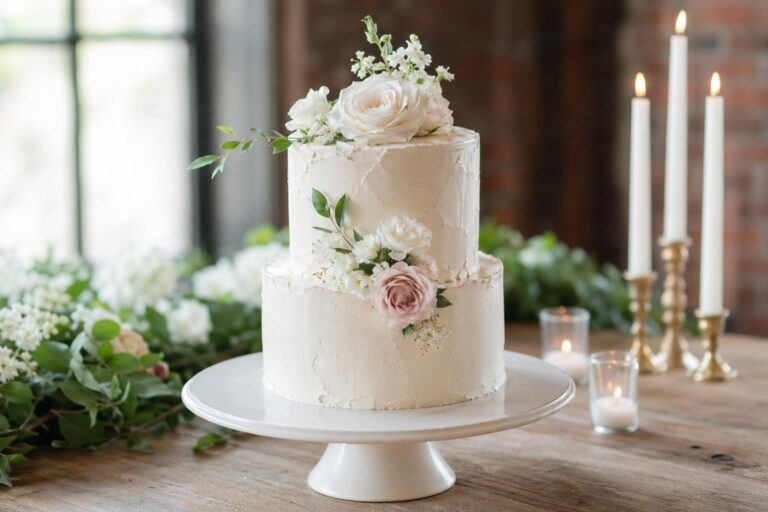
There is a particular kind of romance to a rustic wedding cake: soft buttercream catching the afternoon light in a barn, fresh berries resting against exposed layers, a floral cascade echoing the blooms on the tables, or bark-inspired details that feel as though they belong in a woodland celebration. Among the many rustic wedding cake ideas couples save and compare, the real challenge is rarely finding inspiration. It is understanding which rustic style actually fits the wedding mood, venue, season, and level of formality they want to create.
Rustic wedding cakes are often discussed as though they are one single look, but they are not. A semi-naked cake, a floral buttercream design, a fresh fruit-topped cake, and a wood-textured finish all belong to the rustic family while creating very different impressions. Some feel airy and organic, some read more polished and timeless, and some lean distinctly barn, farmhouse, or woodland. This comparison-style guide breaks down those differences so you can choose a cake that feels cohesive with the rest of your day rather than simply attractive on its own.
Below, you will find a practical style-by-style analysis of the most enduring rustic wedding cakes, how they compare visually, where they work best, what decorations support them, and how to think about season, budget, serving, and display. The goal is not only to help you admire beautiful cakes, but to help you recognize which rustic direction feels right for your own celebration.
The rustic cake mood: why this wedding style lasts
Rustic wedding cakes continue to resonate because they balance elegance with warmth. They do not depend on a heavily formal finish to feel special. Instead, they use texture, natural decoration, and an intentionally relaxed presentation to create beauty that feels welcoming. That is why they suit so many wedding settings, from a countryside reception to a refined farmhouse dinner or a candlelit woodland evening.
Turn wedding inspiration into a plan you can actually follow.
Zarellea brings your guest list, budget, vendors, and day-of details into one shared space — so no beautiful idea gets lost in the shuffle.
Part of their staying power also comes from flexibility. Rustic can mean country chic, woodsy, nature-inspired, barn-centered, or even slightly bohemian depending on the details. A cake with rough buttercream swoops and seasonal flowers tells a different story from one with fresh fruit and visible layers, even when both are unmistakably rustic. For couples, that range makes rustic wedding cakes easier to personalize than a single fixed trend.
Style overview: the semi-naked cake
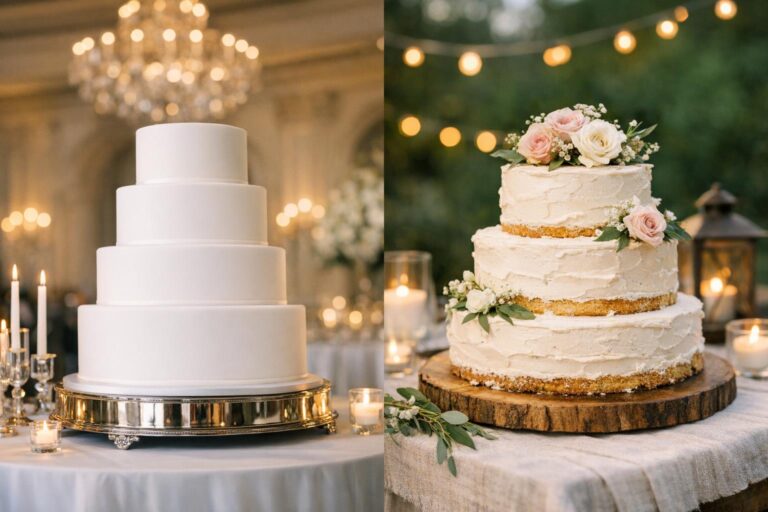
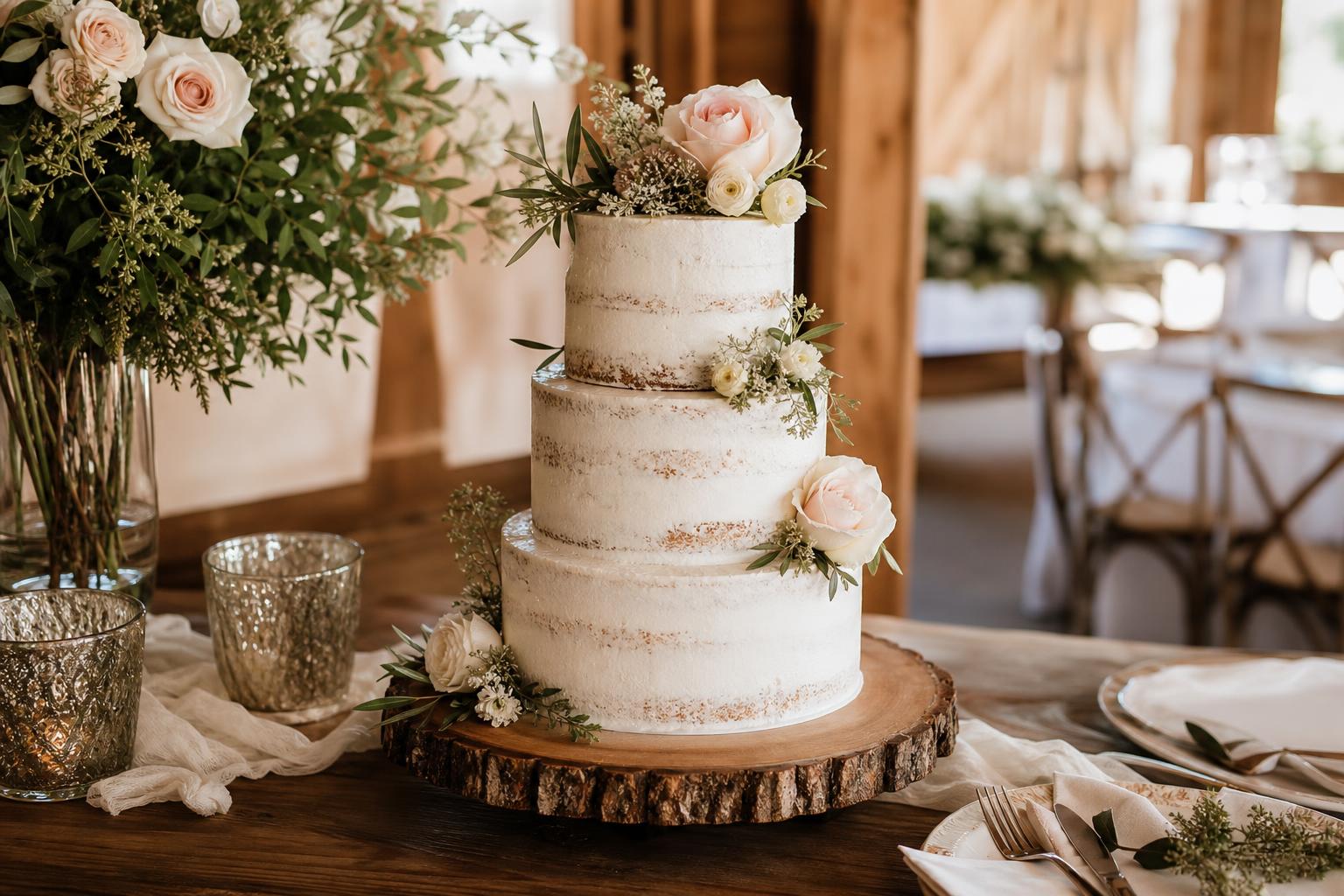
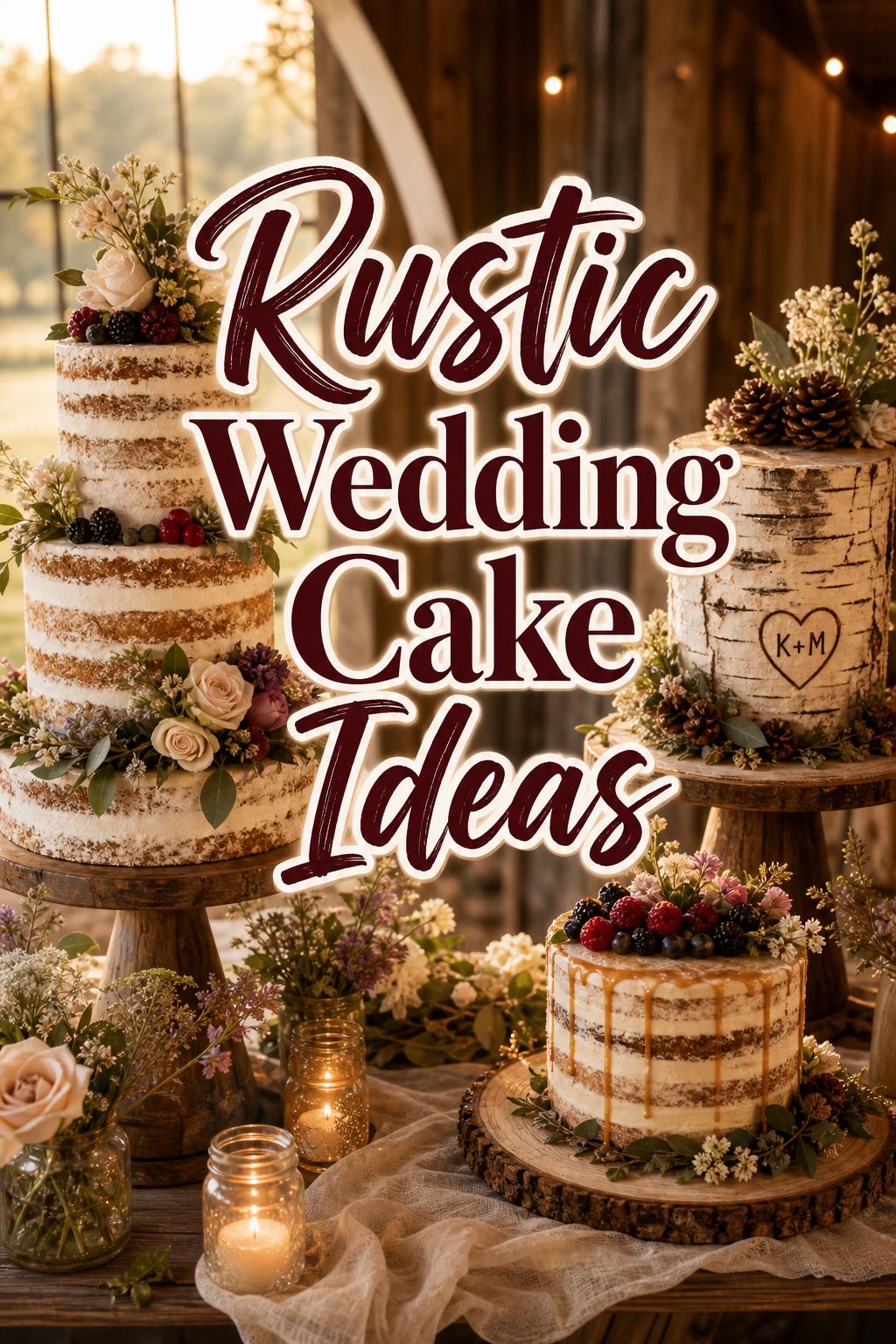
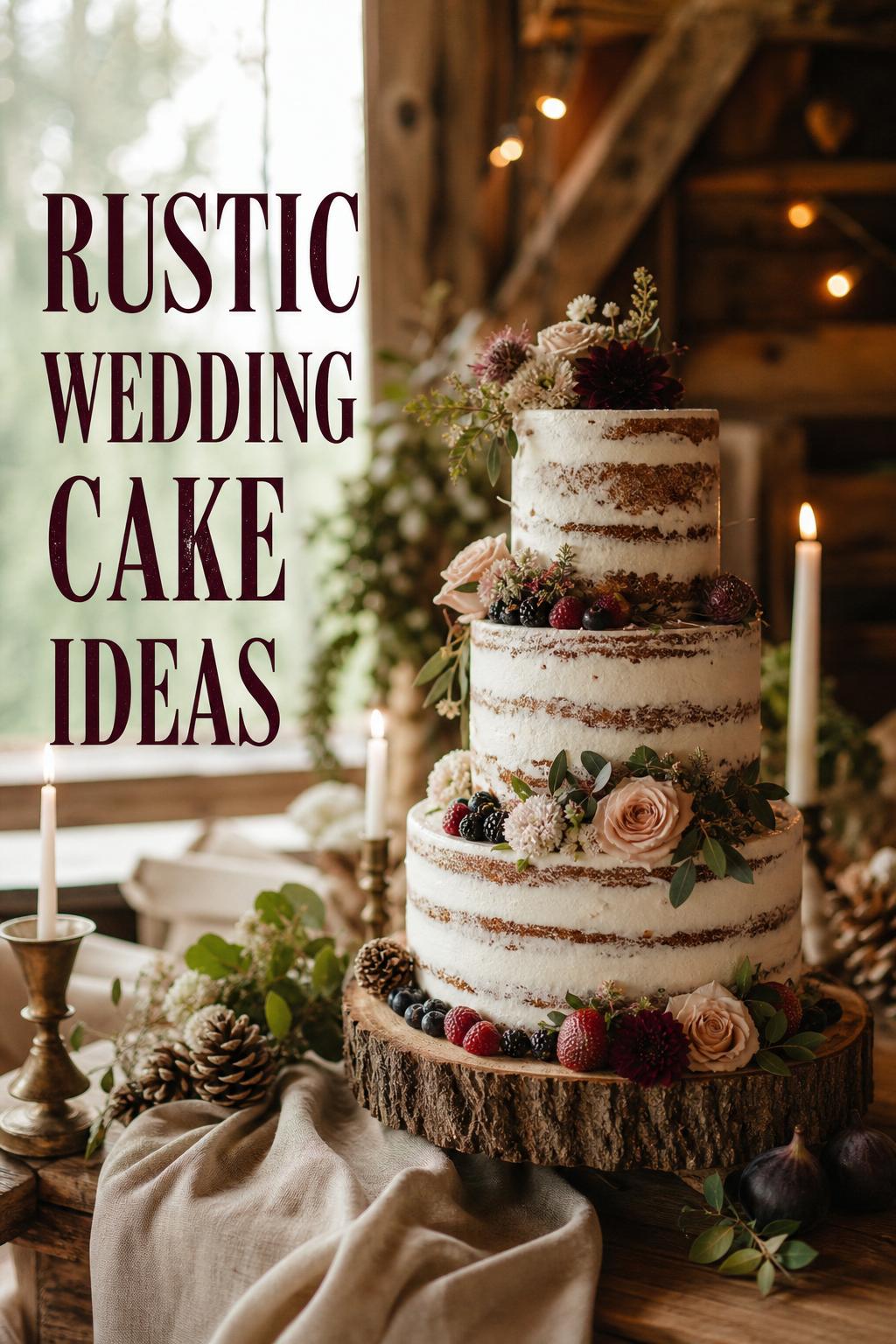
The semi-naked wedding cake is one of the most recognizable rustic wedding cake ideas because it reveals the cake layers beneath a thin veil of frosting. It feels light, natural, and intimate. Rather than aiming for a perfectly concealed surface, it celebrates the structure of the cake itself, which gives it an honest, handcrafted quality that fits beautifully with barn weddings and relaxed outdoor receptions.
Visually, the semi-naked cake tends to rely on contrast: pale buttercream against warm cake layers, then softened by florals, greenery, or fruit. Its color palette is usually neutral at the base, which makes it especially adaptable to seasonal palettes. Spring greens and florals look airy on it, summer berries feel fresh, autumn elements add depth, and winter neutrals keep it understated and elegant.
Its overall mood is approachable rather than formal. That does not mean it is casual in a careless way. Instead, it creates the impression that beauty came from restraint. For couples who want their wedding cake to feel romantic but not overly polished, this is often the rustic style that speaks first.
Style overview: the floral cascade rustic cake
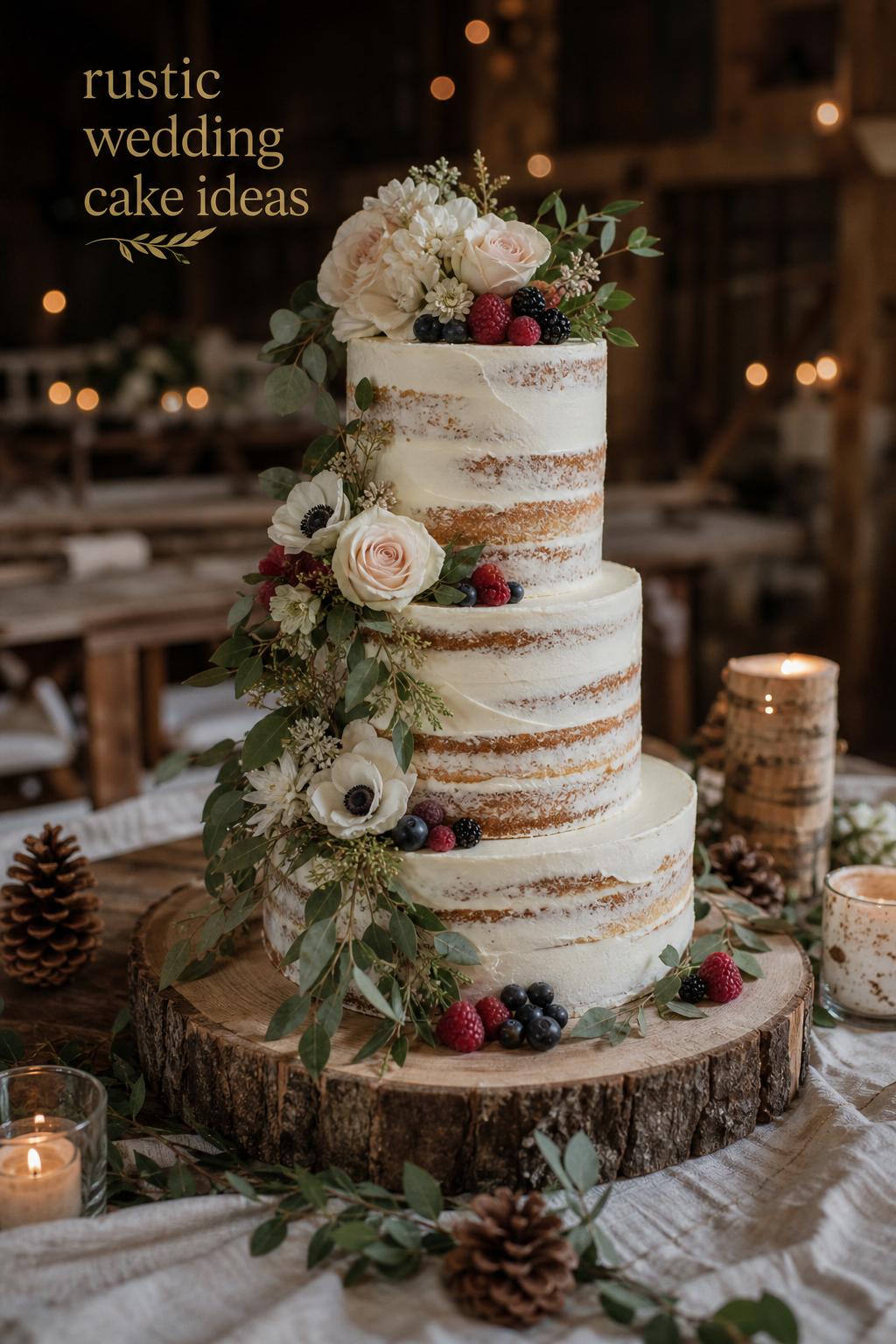
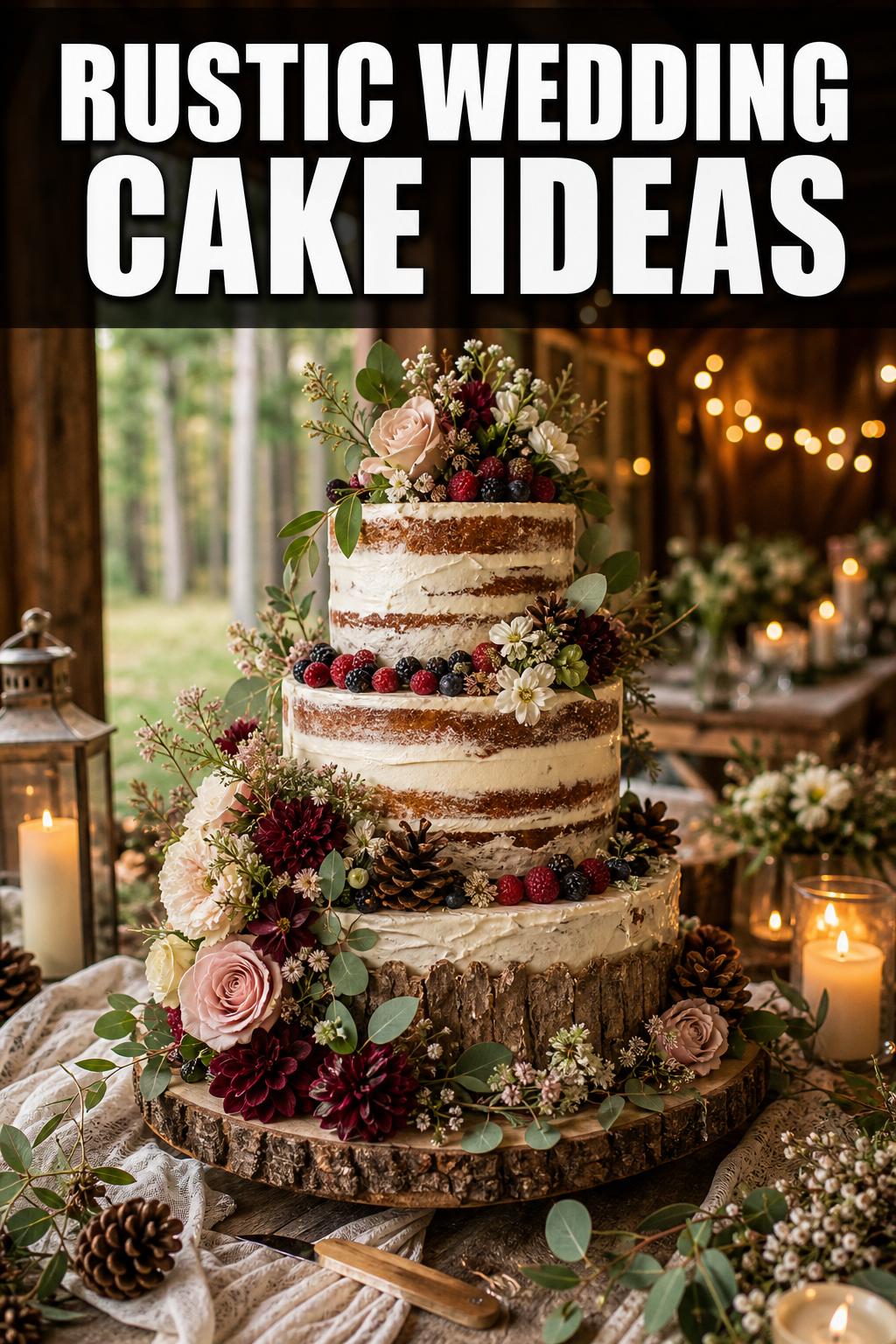
The floral cake places blooms at the center of the design. In rustic styling, this usually means seasonal flowers, edible flowers, or floral arrangements that feel garden-inspired rather than tightly structured. Where the semi-naked cake emphasizes the layers, the floral cascade rustic cake emphasizes movement and softness, often leading the eye from one tier to another.
This style can be built on a naked cake, a semi-naked cake, or a fully buttercream-finished cake, which makes it one of the most versatile rustic approaches. The defining feature is not the frosting coverage but the way flowers shape the look. The result can feel romantic, timeless, nature-inspired, or slightly more elevated depending on whether the florals are sparse and wild or abundant and dramatic.
Compared with other rustic wedding cakes, floral designs often feel more decorative and event-focused. They connect the cake directly to bouquets, ceremony flowers, and reception centerpieces, which is why they are so often chosen when couples want visual cohesion across the wedding day.
Style overview: the fresh fruit-topped rustic cake
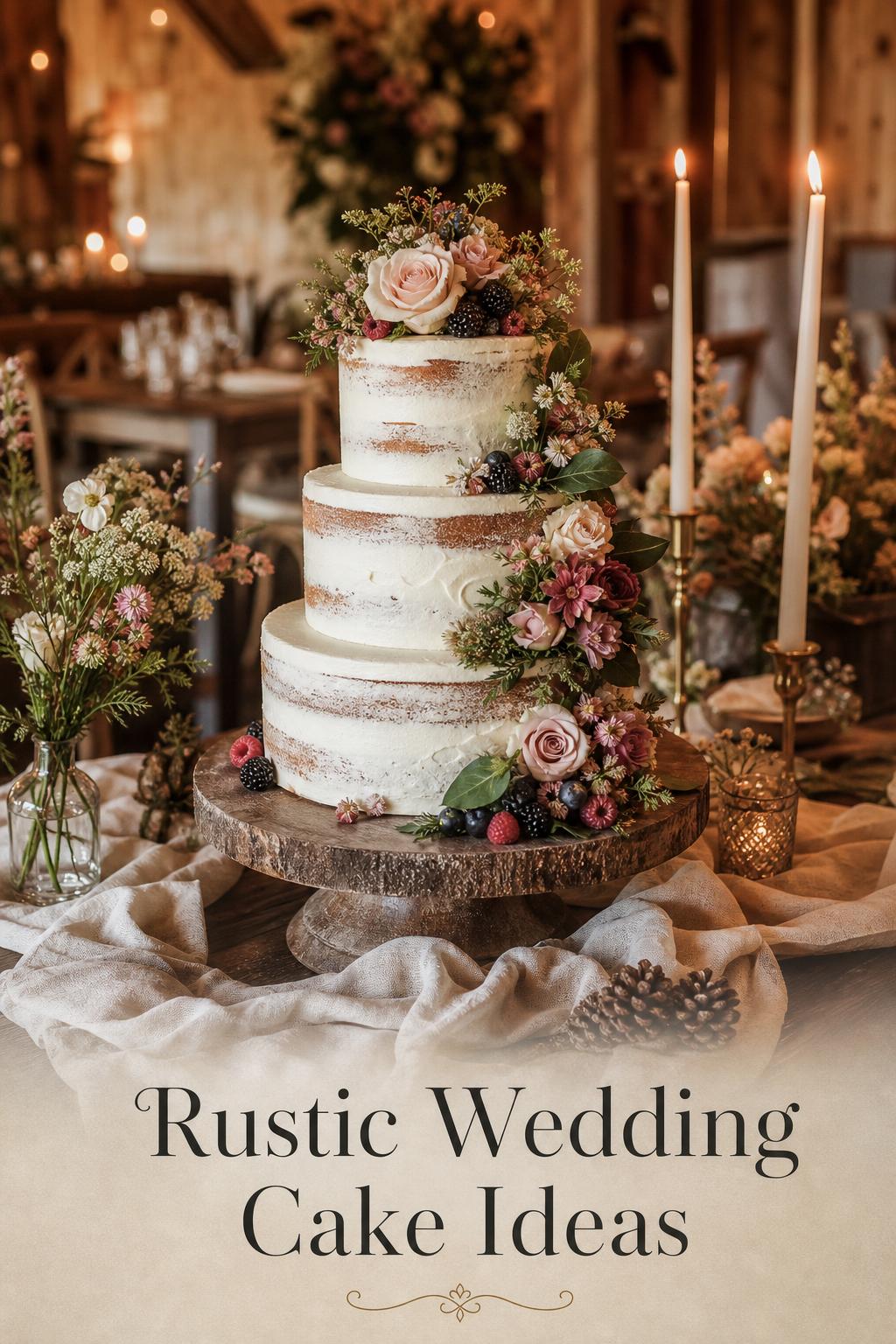
A fresh fruit-topped cake offers a different rustic language altogether. Instead of relying primarily on flowers or heavy detail, it uses seasonal fruit as both decoration and mood. Berries are especially common in rustic styling because they bring color, texture, and a sense of abundance without requiring a highly formal finish.
In aesthetic terms, this style often feels grounded, harvest-inspired, and naturally inviting. It can lean summer with bright berries, or autumn with richer fruit accents. Because fruit decoration visually suggests flavor, this design often creates a stronger connection between how the cake looks and how guests imagine it will taste.
Among rustic wedding cake ideas, fruit-topped designs can feel less traditional than floral cakes and less ethereal than semi-naked florals. They often work best for couples who want a cake that feels organic and celebratory but not overly styled. In the right setting, especially a farm, countryside, or barn wedding, fruit can make the entire dessert display feel alive and seasonal.
Style overview: textured buttercream, ruffles, and unfinished edges
Textured buttercream cakes express rustic charm through finish rather than topping. This category includes rough buttercream, rustic ruffles, swoops, soft palette-knife textures, and intentionally unfinished edges. Instead of the smooth precision associated with more formal cake styles, these designs create movement through frosting itself.
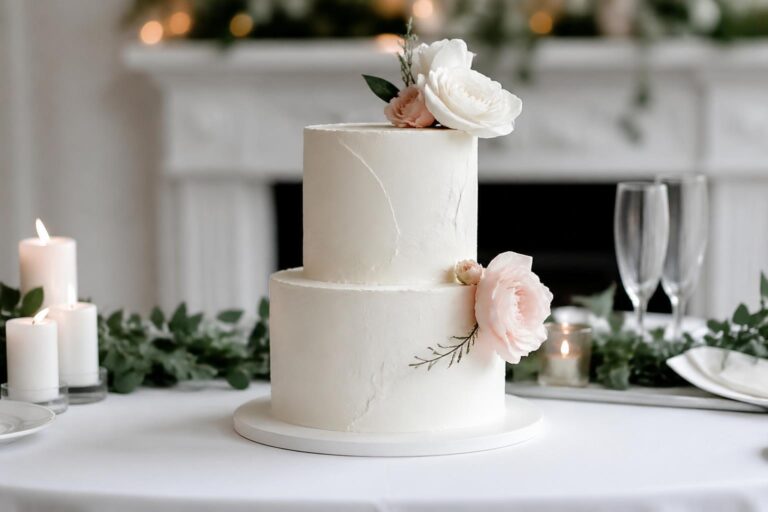
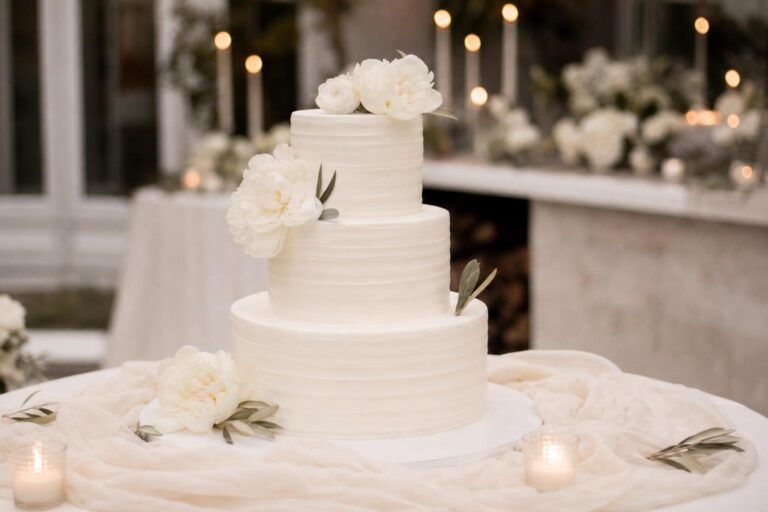
The appeal here is tactile. Even before guests are close enough to see small decorations, they register depth and softness. Textured buttercream can read farmhouse, country chic, or timeless depending on the exact finish and color. White or ivory textures feel classic; richer tones can reinforce seasonal direction when paired with berries, greenery, or florals.
This is also one of the most useful rustic directions for couples who love the theme but do not want exposed layers. It gives the wedding cake a rustic identity while preserving a more complete and substantial appearance than a naked cake rustic style.
Style overview: wood-inspired and bark-textured cakes
Wood-inspired cakes move rustic design further into woodland and barn territory. These cakes may feature bark-like textures, birch tree references, natural-looking finishes, or be styled on wood stands and natural boards to reinforce the effect. Of all the rustic cake directions, this one tends to feel the most tied to setting.
When done softly, wood texture adds a quiet natural note. When emphasized more strongly, it becomes a defining visual statement. This makes it ideal for couples whose venue itself is part of the aesthetic story, such as a reclaimed barn, a forest-edge ceremony, or a reception built around wood textures and natural materials.
The mood here is more atmospheric than floral-forward. It often pairs well with branches, evergreen elements, pinecones, pressed greens, or hand-carved wooden toppers. Compared with a floral cascade cake, a wood-inspired cake feels more rooted in landscape than in garden romance.
Where the styles overlap and why they are often confused
These styles are frequently grouped together because they share a core design philosophy: natural texture, visible softness, and decoration that feels drawn from the season or setting. A single cake may combine several of them at once. A semi-naked cake can also feature a floral cascade. A textured buttercream cake can be fruit-topped. A bark-inspired design may still include edible flowers or greenery.
That overlap is exactly what makes choosing difficult. Couples may save images under the same mental label of rustic wedding cake ideas without noticing that one image feels airy and romantic while another feels woodland and grounded. The easiest way to separate them is to ask what element is doing the most visual work: the visible layers, the flowers, the fruit, the buttercream texture, or the wood-inspired finish.
The clearest differences between rustic wedding cake styles
Structure and surface
The semi-naked cake is defined by partial frosting coverage and exposed layers. Textured buttercream cakes keep the structure covered but create interest with surface movement. Floral cascade cakes can use either base, while wood-inspired cakes often focus on a more deliberate finish. Fruit-topped cakes usually sit somewhere in the middle, with the decoration carrying much of the style.
Level of formality
Semi-naked cakes generally feel the most relaxed and intimate. Floral cakes can move up in formality depending on bloom quantity and arrangement. Textured buttercream often feels balanced, rustic but still polished enough for a more classic reception. Wood-inspired designs usually feel thematic and atmospheric rather than formal, especially in woodland or barn settings.
Color expression
If color is important to the wedding vision, floral and fruit-topped cakes tend to show it most naturally. Semi-naked cakes often rely on decoration to introduce palette. Textured buttercream can either remain neutral or subtly echo the season. Bark and wood-style cakes usually emphasize earthy tones, greens, and natural contrast rather than bright color.
Styling philosophy
Some rustic cakes feel “decorated by nature,” while others feel “crafted in a rustic spirit.” A fruit-topped cake and a floral cake borrow directly from natural materials. Textured buttercream is more about technique creating softness. Semi-naked cakes celebrate restraint. Wood-inspired cakes build atmosphere by echoing the venue and surrounding landscape.
Best venue alignment
Barn wedding cake designs often look strongest in semi-naked, textured buttercream, or wood-inspired styles. Farmhouse settings suit buttercream textures and floral cakes beautifully. Woodland weddings naturally support bark textures, branches, greens, and pinecones. If the celebration leans more countryside and open-air than wooded, fresh fruit and florals often feel more harmonious.
How each style reads in real life on the cake table
On Pinterest boards and inspiration galleries, the differences can seem subtle. At a real wedding, they become much more noticeable because the cake is viewed in relationship to tablescapes, lighting, and venue materials. A semi-naked cake on a simple stand can almost disappear into a delicate spring setting in the best possible way, looking effortless and integrated. The same cake in a dark timber barn may need stronger florals or a wood stand to hold visual presence.
A floral cascade cake tends to attract attention first because the eye follows the flowers. It works particularly well when the wedding has a floral design story already in place. A fruit-topped cake feels more abundant than dramatic. Guests often respond to it as warm and inviting rather than luxurious. Textured buttercream catches candlelight and photographs beautifully because the surface creates dimension even without heavy adornment. Bark-like finishes, meanwhile, become part décor object and part dessert, especially when displayed with natural boards or live-edge styling.
This is why display matters. Rustic cakes are not isolated objects. Their style is completed by cake stands, surrounding florals, nearby candles, wood textures, and the venue background. A cake that felt perfect in a close-up image may feel too plain or too busy depending on where it is actually placed.
Seasonal rustic wedding cake ideas compared
Spring greens and florals
Spring is often where the semi-naked cake and floral cake overlap most beautifully. Thin frosting, edible flowers, and soft seasonal blooms create an airy effect that suits garden-adjacent barn weddings and open, light-filled farmhouse spaces. Textured buttercream also works well in spring when the finish stays soft rather than heavy.
Summer berries and fresh contrast
Summer berries make fruit-topped cakes especially compelling. In comparison, a floral cake still feels romantic, but fruit brings a fresher, more edible-looking personality to the dessert table. Semi-naked cakes also shine in summer because the visible layers and minimal frosting fit the season’s lighter mood.
Autumn harvest richness
Autumn often favors textured buttercream, fresh fruit, pinecones, branches, and woodland elements. Compared with spring rustic styles, the look becomes fuller and more grounded. A semi-naked cake can still work, but it usually benefits from deeper decoration so it does not feel too spare against richer seasonal décor.
Winter neutrals and evergreen mood
Winter rustic wedding cakes often look strongest when the palette is restrained. Textured buttercream, evergreen details, pressed greens, and subtle wood tones can create a calm, romantic effect. Floral cascade cakes can still work, but winter rustic tends to favor quieter contrast over lush abundance. A bark-inspired design may feel particularly beautiful in this season because it mirrors the natural world without needing much color.
Outfit-style comparisons, but for cakes: choosing the right look for the same wedding mood
For an intimate barn reception
A semi-naked cake approaches this mood with softness and ease. It feels handmade in spirit and suits long farm tables, simple florals, and warm wood interiors. A textured buttercream cake interprets the same reception in a slightly more refined way, offering rustic charm without exposing the layers. If the barn is especially dramatic with dark beams and reclaimed details, a bark-textured finish can deepen the atmosphere further.
For a romantic countryside wedding
A floral cascade cake is often the most natural fit here because countryside styling tends to welcome softness, movement, and seasonal flowers. A fresh fruit-topped cake expresses the same countryside mood differently. Instead of reading floral-romantic, it feels abundant and harvest-inspired. Both are rustic, but one is more poetic while the other feels more grounded and edible.
For a woodland ceremony and evening reception
A floral cake can certainly work in the woods, but a wood-inspired or bark-textured cake usually aligns more directly with the setting. Add branches, evergreen elements, or pinecones, and the design begins to echo the landscape itself. If you want the woodland mood without a stronger thematic finish, textured buttercream with pressed greens creates a gentler interpretation.
For a rustic wedding that still feels timeless
Textured buttercream is often the most balanced choice. It delivers rustic edges and softness without tying the cake too strongly to one moment or trend. A floral cascade can also feel timeless if the flowers are seasonal and restrained rather than overly dramatic. By contrast, heavily bark-inspired finishes or strongly fruit-led decoration can feel more specific, which may be exactly right for some weddings and less right for others.
What stylists often notice couples overlook
The most common mistake is choosing a rustic cake based only on a close-up inspiration image. Rustic styling depends heavily on context. A naked cake rustic design that feels dreamy in daylight may look under-scaled in a large reception room. A floral cascade may compete with already lush centerpieces. A bark-textured cake may feel too literal if the venue itself is only lightly rustic.
Another overlooked point is how decoration affects the mood of the whole cake. The same semi-naked base can feel bohemian with loose greenery, romantic with floral clusters, woodland with branches and pinecones, or country chic with berries and a wooden topper. The base style matters, but the finishing details often determine the final identity.
Serving and scale also deserve more attention than they usually get during the inspiration phase. A rustic cake should still function well once it leaves the display table. Couples planning a larger guest count may want to discuss how a design scales across tiers, especially when texture or exposed layers are part of the appeal. Smaller weddings often have more freedom to choose a visually delicate cake because the design does not need to carry the same physical presence.
Tips for matching cake style to venue
- Choose semi-naked or textured buttercream styles when the venue already has strong wood character and you want the cake to complement rather than compete.
- Use floral cascade designs when the wedding flowers are a major part of the visual story and you want continuity from ceremony to reception.
- Consider bark-inspired finishes, branches, pressed greens, or pinecones when the wedding leans clearly woodland rather than simply rustic.
- Lean toward fresh fruit toppings when the atmosphere is seasonal, countryside, or harvest-inspired, especially in summer and autumn.
- Ask how the cake will be displayed, because wood stands, natural boards, and surrounding greenery can strengthen the rustic effect as much as the cake itself.
Decoration elements that change the personality of rustic wedding cakes
Decoration is where many rustic wedding cake ideas either become cohesive or start to feel mixed. Edible flowers bring softness and romance. Seasonal flowers can tie the cake directly to bouquets and centerpieces. Fresh fruit introduces color and flavor cues. Pinecones, branches, and evergreen elements shift the look toward woodland. Wood stands and natural boards reinforce rustic styling even when the cake itself is relatively simple.
Toppers deserve special attention because they can either complete the story or interrupt it. Wooden toppers, hand-carved motifs, and understated natural materials usually support the rustic theme best. More delicate cakes, especially semi-naked and floral styles, often look strongest with restrained toppers so the design remains balanced.
There is also a practical side to decoration choices. Heavy embellishment can pull a cake away from the effortless quality many couples want from rustic styling. Sometimes a few well-placed blooms, berries, or textured buttercream ruffles create more impact than trying to combine every rustic motif at once.
Budget, sourcing, and the reality of design decisions
While rustic cakes can appear simpler than highly formal designs, simpler-looking does not always mean effortless. A semi-naked finish must still look intentional. Textured buttercream needs movement without messiness. Floral placement requires judgment. Fruit decoration has to feel abundant but controlled. That is why design conversations should focus not only on inspiration images but also on priorities: visible layers, seasonal flowers, fruit toppings, bark texture, or an overall barn wedding aesthetic.
Couples planning in the U.S. often benefit from thinking regionally when booking. Venue blogs, wedding portals, and cake-focused studios frequently frame rustic cake inspiration around barn venues, farmhouse celebrations, and local seasonal styling, so the most useful conversations tend to be specific. Rather than asking for a generic rustic wedding cake, it helps to describe the setting and season clearly: a summer berry-forward farmhouse reception, a woodland autumn wedding with pinecones and greens, or a romantic spring semi-naked cake with edible flowers.
Timing matters too. Rustic cakes often rely on fresh decorative elements and venue coordination. That makes early planning especially valuable when the design includes seasonal flowers, berries, greenery, or a display concept involving wood stands and natural boards.
A note on sustainability and dietary-friendly rustic designs
Some couples want their wedding cake to reflect not only their aesthetic but also their values. Rustic styling naturally lends itself to conversations about local sourcing, seasonal elements, and minimal-waste decoration because the look already favors natural materials over heavy ornamentation. Choosing seasonal flowers, fruit, or greenery can support a more grounded approach while still feeling beautiful.
Dietary-friendly options also deserve a place in the planning conversation. Gluten-free, dairy-free, vegan, or other adapted cakes can still be styled in rustic ways, particularly through textured buttercream-style finishes, floral details, fruit toppings, and natural presentation. The key is to discuss design and service together so the final cake feels cohesive rather than treated as an afterthought.
Which rustic cake style works best for different wedding types?
For smaller, intimate weddings
Semi-naked cakes and floral cakes often feel especially moving at smaller celebrations because their detail can be appreciated up close. They create intimacy rather than spectacle and suit candlelit dinners, private barn receptions, or relaxed farmhouse gatherings beautifully.
For larger guest counts
Textured buttercream styles often scale most comfortably for larger weddings. They keep visual interest across tiers and usually maintain a strong presence from a distance. Floral cascades also scale well if flowers are part of the broader design scheme. Naked and semi-naked styles can still work, but they usually need thoughtful decoration and display planning so they do not feel visually slight.
For highly venue-led weddings
If the venue is central to the aesthetic, such as a dramatic barn or woodland property, wood-inspired finishes, bark textures, greens, branches, and natural stands often make the cake feel fully integrated into the setting. These are the weddings where the cake can become part of the environment rather than simply a dessert centerpiece.
For couples who want rustic without looking overly themed
Choose textured buttercream or a restrained floral cake. These styles capture rustic softness and natural beauty without leaning too heavily into obvious motifs. They are often the safest choices when couples want timeless rustic elegance rather than a stronger country or woodland statement.
Editor’s comparison: the easiest way to decide
- Choose a semi-naked cake if you want rustic to feel airy, intimate, and naturally understated.
- Choose a floral cascade cake if flowers are central to your wedding vision and you want the cake to feel romantic and connected to the décor.
- Choose a fresh fruit-topped cake if you want a seasonal, welcoming, countryside mood with strong visual links to flavor.
- Choose textured buttercream if you want a timeless rustic finish that feels polished enough for many types of venues.
- Choose bark or wood-inspired finishes if your wedding leans clearly barn, woodland, or nature-centered and you want the cake to echo the setting.
Final thoughts on creating a cake that feels like your wedding
The most beautiful rustic wedding cakes do more than match a trend board. They support the atmosphere of the day: the warmth of a barn, the softness of seasonal flowers, the abundance of summer berries, the quiet romance of a woodland evening, or the grounded elegance of textured buttercream under candlelight. Rustic wedding cake ideas are most useful when they help you identify feeling, not just decoration.
If you are deciding between styles, look past the broad rustic label and pay attention to what moves you most. Visible layers suggest intimacy. Florals create romance. Fruit adds seasonality. Buttercream texture brings timeless softness. Bark and wood details root the cake in the landscape. Once you know which of those ideas feels most like your celebration, the rest of the design becomes much easier to shape.
A rustic cake can be simple, detailed, romantic, woodsy, country chic, or quietly refined. The right choice is the one that looks as though it belongs in your wedding story from the first slice to the final photograph.
FAQ
What is the difference between a naked cake and a semi-naked wedding cake?
A semi-naked wedding cake has a thin layer of frosting that partially covers the cake while still allowing the layers beneath to show through, whereas a naked cake has little to no outer frosting at all. For rustic wedding cakes, the semi-naked version often feels slightly softer and more finished, which is why many couples prefer it for barn and farmhouse weddings.
Which rustic wedding cake style works best for a barn wedding?
For a barn wedding, semi-naked cakes, textured buttercream designs, and wood-inspired finishes are usually the most natural choices because they echo the warmth and materials of the setting. Floral and fruit-topped cakes can also work beautifully, especially when their decorations reflect the season and the overall décor.
Are floral rustic wedding cakes always the most romantic option?
Floral cakes are often the most obviously romantic because they connect directly to bouquets and reception flowers, but they are not the only romantic option. A semi-naked cake with soft buttercream and a few carefully placed blooms can feel just as emotional, while textured buttercream can create a quieter, timeless kind of romance.
Can fresh fruit decorations still feel elegant on a wedding cake?
Yes, fresh fruit can feel very elegant when it is used intentionally and fits the season and venue. In rustic wedding cake ideas, berries and other fruit accents often create a refined countryside or harvest-inspired look rather than a casual one, especially when paired with balanced buttercream textures and a thoughtful display.
How do I match my cake to a woodland wedding aesthetic?
Woodland weddings usually pair well with bark-like textures, wood-inspired finishes, pressed greens, evergreen details, branches, and sometimes pinecones. If you want a softer interpretation, textured buttercream with natural greenery can capture the woodland mood without making the cake feel overly themed.
What rustic cake style is best for a large guest count?
Textured buttercream and floral cascade designs often scale best for larger weddings because they maintain visual impact across multiple tiers. Semi-naked cakes can still work for bigger celebrations, but they usually need careful decoration and display planning so they do not feel too delicate in a large room.
Can a gluten-free or dairy-free cake still have a rustic design?
Yes, dietary-friendly cakes can still be designed in a rustic style. Textured finishes, floral details, fruit toppings, greenery, and natural presentation all translate well to gluten-free, dairy-free, or vegan options, so the design can still feel fully integrated with the rest of the wedding aesthetic.
What cake decorations make a rustic design feel too busy?
Rustic cakes tend to look strongest when one visual idea leads the design, so combining too many motifs at once can make the cake feel crowded. For example, heavy florals, fruit, bark texture, pinecones, and a bold topper together may compete rather than complement one another, which is why a more restrained approach often feels more polished.
How early should couples plan a rustic wedding cake with seasonal elements?
It is wise to plan early when the design depends on seasonal flowers, berries, greens, or a specific barn or woodland presentation. Rustic cakes often look simple, but the most cohesive versions rely on coordination between the cake design, venue styling, and seasonal decorations.