Small But Intentional: Wedding Cake 2 Tier Style Guide
Wedding cake 2 tier: the small centerpiece that photographs like a statement
The most memorable receptions aren’t always the biggest ones. Sometimes the room is intimate, the music feels closer, the candlelight is softer—and the dessert table needs a focal point that looks intentional rather than oversized. That’s where a wedding cake 2 tier shines: a refined, modern centerpiece that can still feel dramatic when the styling is thoughtful.
Think of a two-layer wedding cake the way you’d think of a perfectly tailored bridal look: clean lines, flattering proportions, and just enough detail to make it unmistakably yours. Two tiers give you a distinct silhouette (a true “wedding cake two tiers” moment) without forcing a large, towering structure that may not suit smaller guest counts or a minimalist aesthetic.
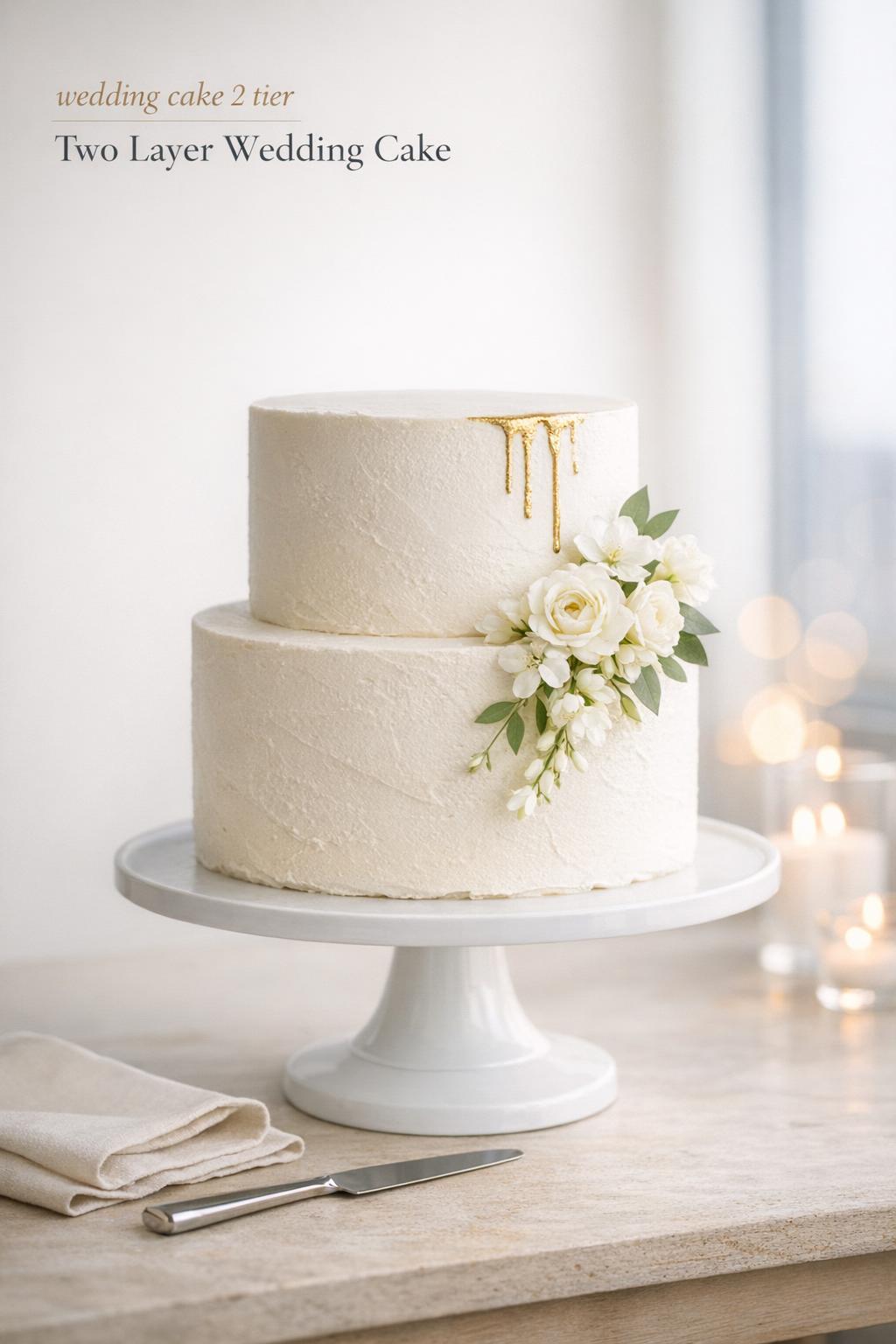
And because two tiers are a canvas, not a constraint, the mood can swing from contemporary minimalist to rustic romance, from moody colors to bohemian neutrals, from delicate sugar flowers to bold drip icing. The secret is treating the cake like part of the visual outfit of the day—paired with florals, venue styling, and even the stand—so it reads cohesive in every photo and every slice served.
The “two-tier outfit” mindset: building a cohesive cake look from silhouette to finishing details
If you’ve ever tried on wedding attire, you know the difference between “pretty” and “perfect for you” comes down to proportion and styling. A wedding cake 2 layers works the same way: the tier shape creates the silhouette, the finish creates the texture, and the décor becomes the accessories. This is why the most captivating two tier wedding cake ideas don’t just add decorations—they build a full aesthetic identity.
Turn wedding inspiration into a plan you can actually follow.
Zarellea brings your guest list, budget, vendors, and day-of details into one shared space — so no beautiful idea gets lost in the shuffle.
Across popular two-tier inspiration, you’ll see recurring style motifs: drip icing, flower clusters, gold leaf, contemporary minimalist finishes, orange accents, 3D flowers, moody colors, cascading appliqués, mirror glaze, bohemian neutrals, marbled patterns, greenery vines, dramatic pops of red, fresh fruits, whimsical brushstrokes, textured buttercream, pink stripes, and woven details. Each one reads like a different “look,” even with the same two-tier structure.
Before you pick a design, decide what you want the cake to feel like in the room: crisp and modern, soft and garden-inspired, rustic and warm, or high-contrast and editorial. Once the mood is clear, every detail—from floral placement to metallic accents—starts to make sense.
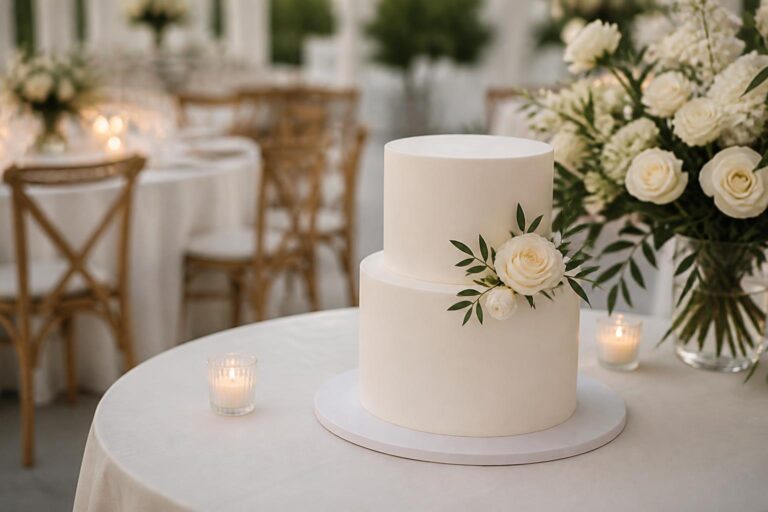
Look: minimalist white with subtle texture (the modern clean-line romance)
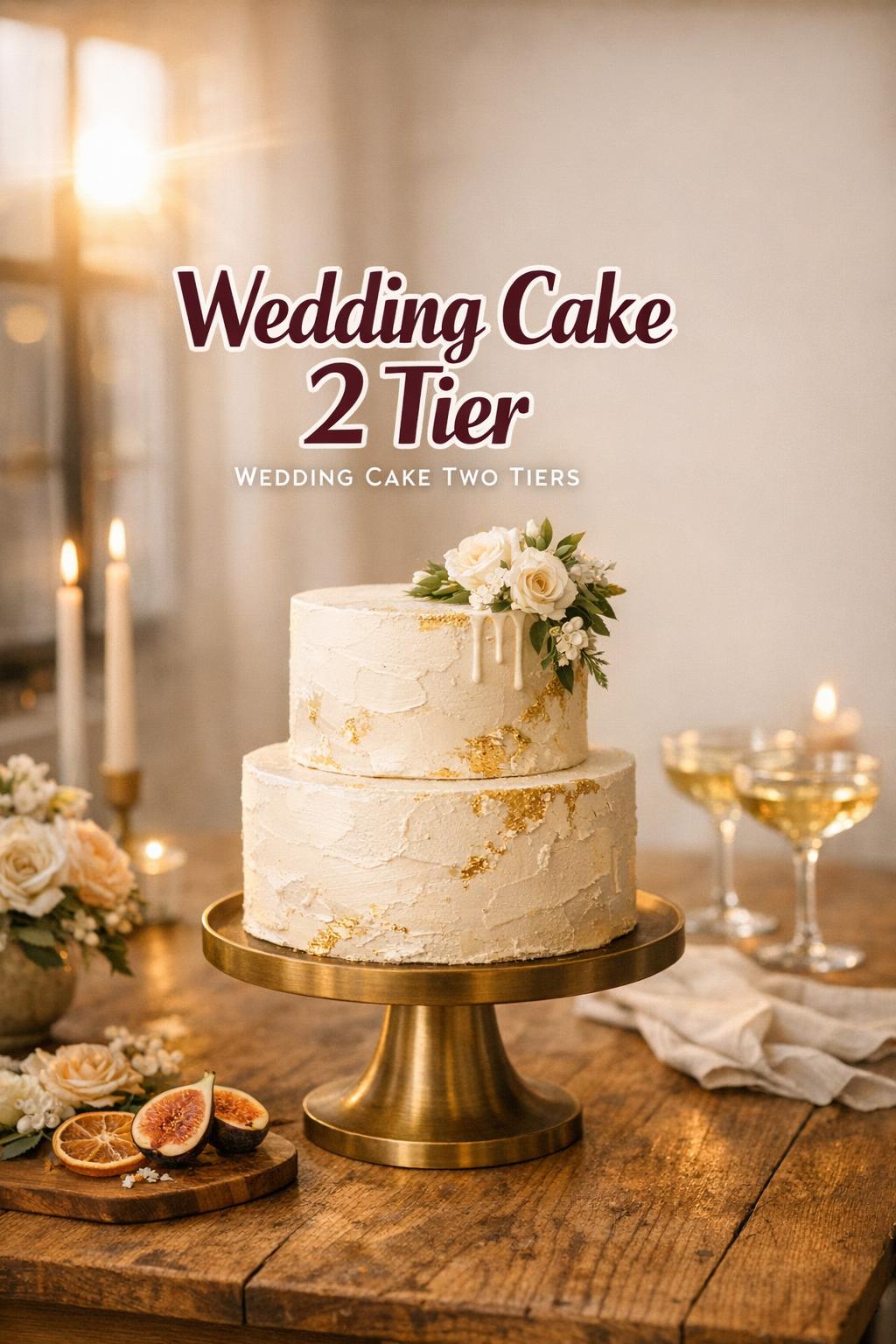
This look is for couples who want the cake to feel quietly expensive without needing a lot of ornament. The silhouette stays classic and balanced, and the romance comes from finish: a smooth white surface, gentle movement in the frosting, and a sense of calm that pairs beautifully with modern venues and understated décor.
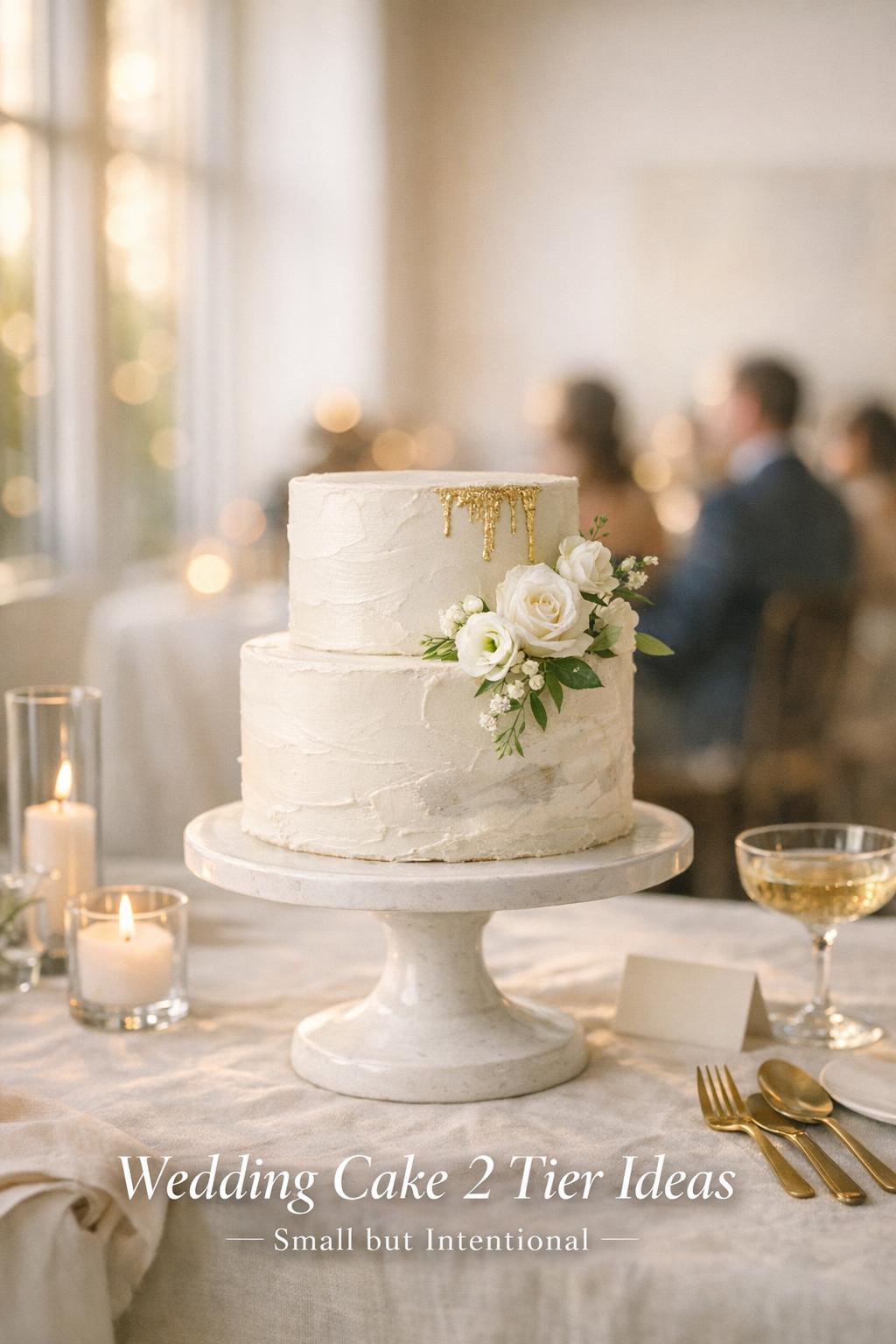
Lean into textured buttercream rather than heavy decoration. The texture becomes the “fabric”—like satin with a soft sheen—especially when the tiers are finished in smooth white with subtle dimension. It pairs naturally with a contemporary minimalist direction, and it also looks beautiful beside simple candle clusters and a clean dessert table line.
- Key garments (cake styling): minimalist white finish, textured buttercream
- Accessories (decor): restrained details, minimal topper, optional tone-on-tone patterning
- Best setting: modern receptions, gallery-like venues, intimate ceremonies
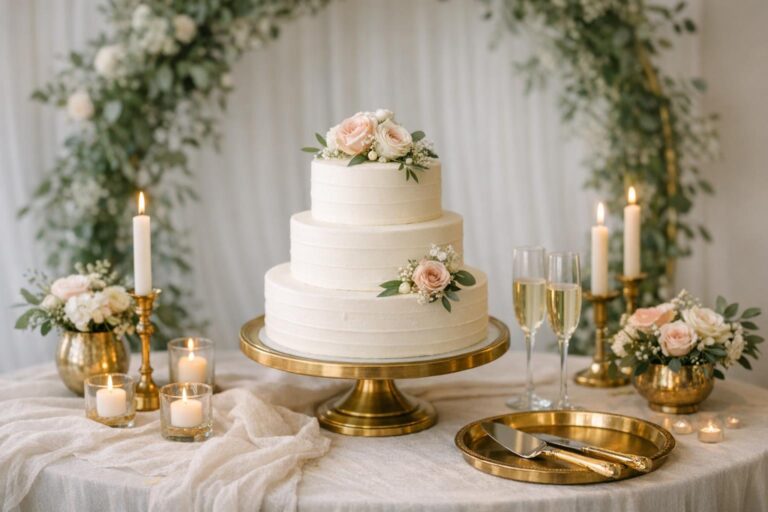
Styling insight: when the cake is intentionally minimal, the stand matters more. A pedestal-like presentation keeps the two tiers from feeling “small,” and the texture ensures it still photographs as a centerpiece.
Look: drip icing and metallic accents (glam detail with a playful edge)
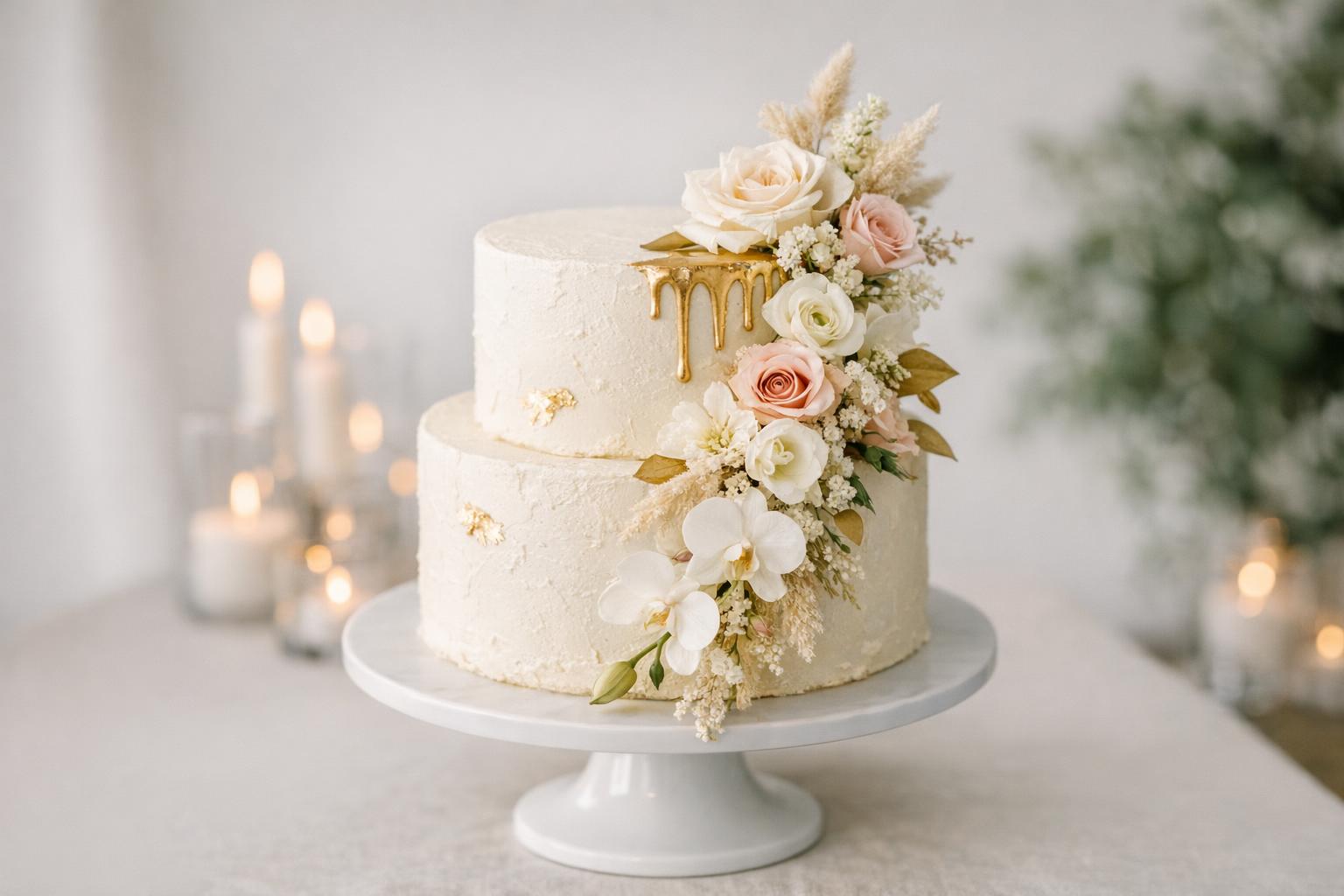
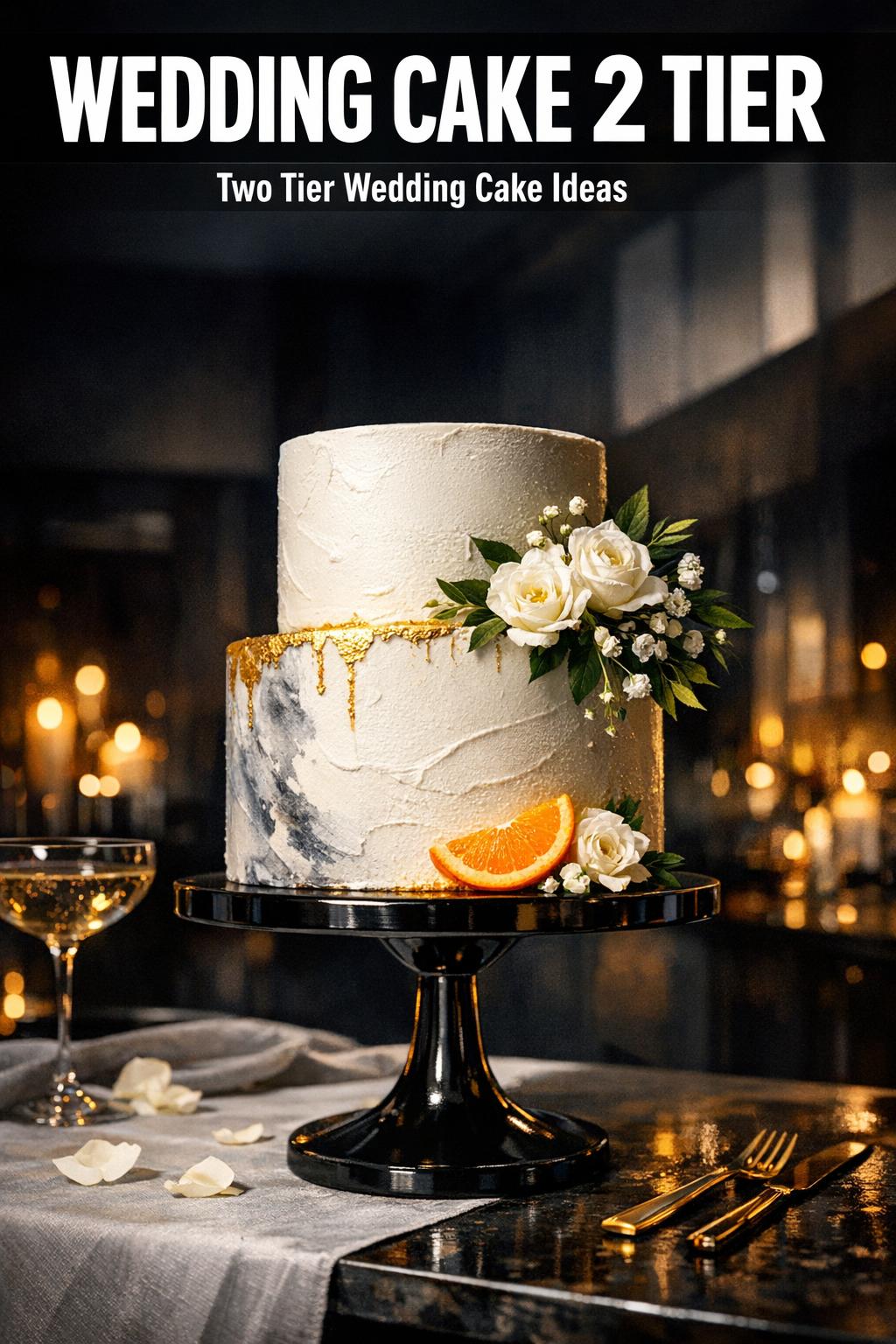
Drip icing brings movement, and metallic accents add light-catching drama—an easy combination when you want a two-tier cake to feel celebratory, not restrained. The overall vibe is energetic and modern, perfect for couples who love a bit of sparkle without committing to an ultra-formal aesthetic.
This is where edible metallic leaf—often imagined as gold leaf—acts like jewelry for the cake. Pair it with drip icing for a deliberate “high-low” contrast: glossy drips, luminous metallic flecks, and a clean base that doesn’t compete. If your reception lighting is warm (think sunset tones or golden uplighting), metallic accents tend to glow in photos and add dimension to a wedding cake two tiers silhouette.
- Key garments (cake styling): drip icing, metallic leaf accents
- Color direction: crisp whites, warm metallics, optional bold accent tones
- Best setting: evening receptions, modern ballrooms, candlelit spaces
Styling insight: drip and metallic can go from chic to busy quickly. Keep one element dominant—either the drip or the metallic—so the final look still feels curated.
Look: 2 tiered wedding cake with flowers (floral cascade, sugar flowers, and garden storytelling)
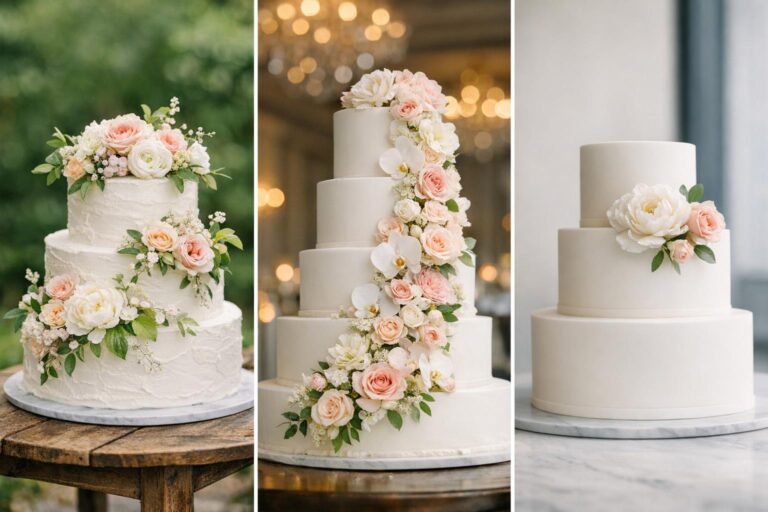
If your wedding day is built around blooms—bridal bouquet, ceremony arrangements, and a reception space that feels like a garden—then a 2 tiered wedding cake with flowers becomes the most romantic extension of that story. The silhouette is classic, but the mood is lush and alive: a cascade that draws the eye from the top tier down to the base like a bouquet in motion.
Florals can appear as a cluster, a gentle drape, or a full cascade. Many couples love the longevity and polish of sugar flowers; others prefer the freshness of real blooms to echo the bouquet. Either way, the placement matters: floral designs look intentional when they follow the curve of the tiers, not when they feel “stuck on.” This look also adapts across aesthetics—from bohemian neutrals with softer color palettes to bolder, dramatic pops of red or moody colors.
- Key garments (cake styling): flower clusters or cascades, sugar flowers or fresh florals
- Supporting details: greenery vines, soft buttercream textures, optional metallic touches
- Best setting: garden venues, outdoor ceremonies, romantic indoor receptions
Styling insight: think of the cake flowers as part of your full floral plan. When the cake’s tones echo your bouquet—even loosely—the dessert table feels like it belongs to the same visual world as the ceremony.
Look: marbled pattern and mirror glaze (modern art, but still wedding-worthy)
This interpretation feels like a contemporary art piece: polished, intentional, and striking from across the room. A marbled pattern reads sophisticated and graphic, while mirror glaze brings a reflective finish that instantly elevates a wedding cake 2 tier into something editorial—especially when the reception design leans modern.
Marbling can be subtle and airy or bold and high-contrast. Add edible metallics if you want the luxe effect to feel more bridal, or keep it clean for a gallery-like simplicity. Mirror glaze is naturally attention-grabbing, so the silhouette works best when the overall decoration is restrained—allow the surface to do the talking.
Styling insight: because glossy finishes draw the eye, keep the surrounding décor calm—simple linens, clean cake stand lines, and minimal extra signage—so the cake remains the focal point.
Look: moody colors and dramatic pops (high-contrast romance for evening receptions)
Moody palettes turn a two-tier cake into a statement even without extra height. The vibe is cinematic: deeper tones, richer shadows, and a sense of sophistication that feels especially at home at nighttime celebrations. When done well, this is romance with an edge—still elegant, but never sweet in a predictable way.
Design details can include dramatic pops of red, darker floral accents, or layered textures that make the tiers feel dimensional. This look also pairs well with cascading appliqués for a couture feel—like lacework on a gown—bringing movement without relying on large floral arrangements.
- Key garments (cake styling): moody colors, high-contrast accents, optional cascading appliqués
- Texture options: textured buttercream, sleek smooth finishes
- Best setting: evening receptions, modern venues, candlelit celebration spaces
Styling insight: moody designs are most flattering when photographed against a lighter dessert table backdrop. If everything is dark—table, linens, cake—details can disappear in photos.
Look: bohemian neutrals and woven details (soft, sun-warmed, effortlessly styled)
Bohemian neutrals feel relaxed and soulful, like a wedding weekend that unfolds slowly—ceremony, golden-hour photos, and a reception that feels intimate rather than staged. In two tiers, the cake can read airy and modern while still feeling warm and textural.
Details like woven textures, subtle striping, and gentle neutral palettes keep the cake from feeling plain while maintaining that “unforced” boho vibe. This look also works beautifully with dried floral energy in the room (even if your cake leans more minimal), and it can be paired with greenery vines for a natural finish.
Styling insight: bohemian neutrals are all about texture. Even if you keep colors quiet, incorporate one strong tactile element—woven details, textured buttercream, or soft brushstrokes—so the cake doesn’t flatten in photographs.
Look: fresh fruits and orange accents (a joyful, seasonal-looking dessert table)
This style feels bright, welcoming, and a little bit European in spirit—perfect when you want your dessert table to look abundant and natural. With two tiers, fruit becomes the accessory that adds color and dimension without requiring complex sculpted décor.
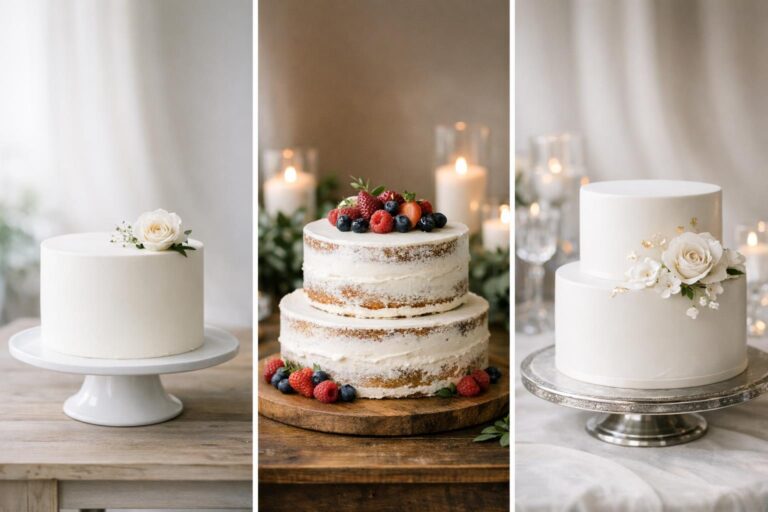
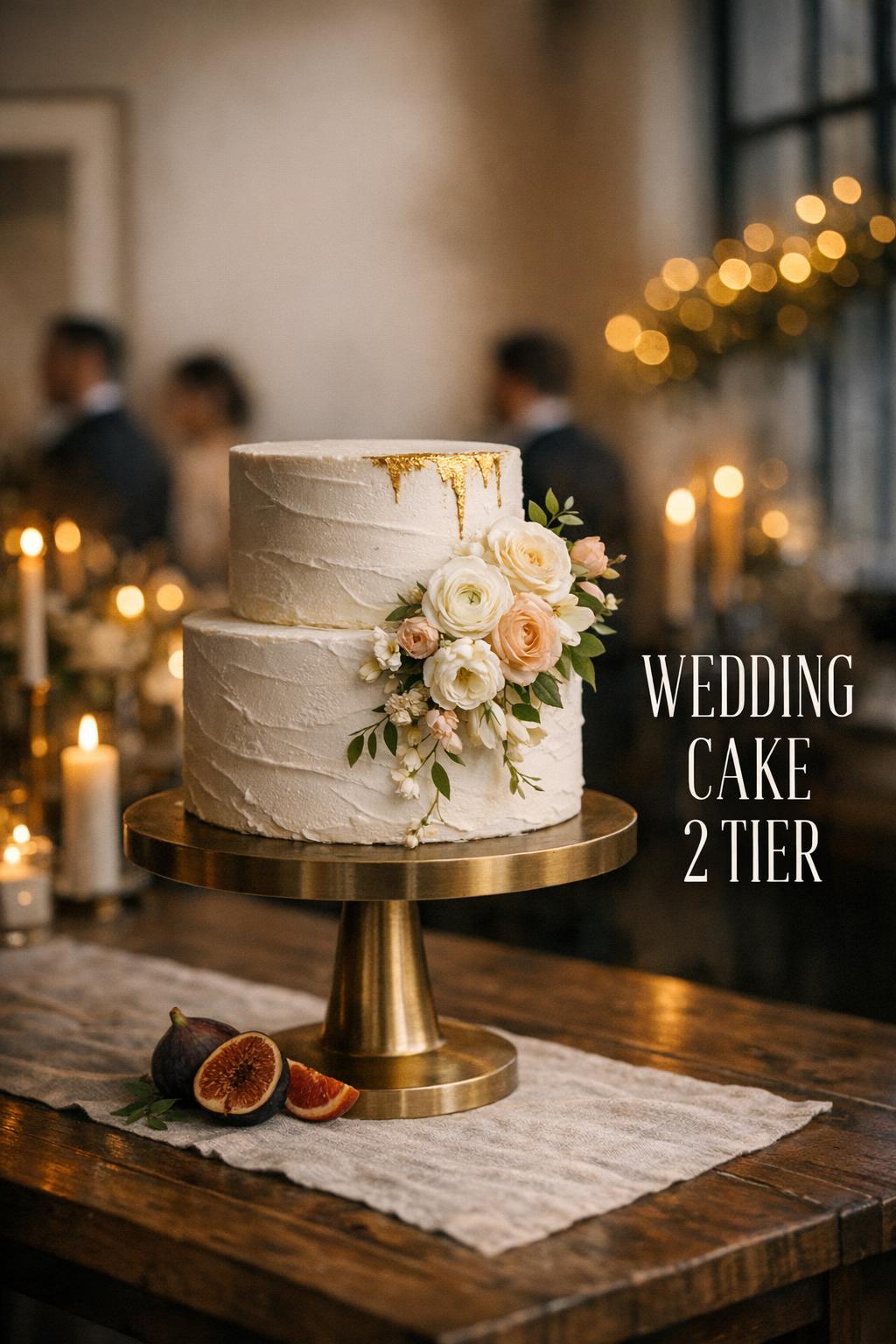
Fresh fruits can be styled as a cluster at the base, a delicate crown at the top tier, or small accents that echo your palette. Orange accents are especially eye-catching: they read like sunshine and play beautifully with softer neutrals. The overall mood is uncomplicated but intentional—like a reception that prioritizes warmth and hospitality.
- Key garments (cake styling): fresh fruits, orange accents, simple base finish
- Best setting: daytime receptions, outdoor celebrations, brunch or early evening vibes
- Overall effect: bright color without heavy decoration
Styling insight: fruit can look either styled or accidental. Keep placement purposeful—balanced clusters, clean spacing—and let the tier edges remain visible so the cake still reads structured and wedding-ready.
Look: whimsical brushstrokes, stripes, and playful pattern (a modern, artistic signature)
Some couples want tradition, but with personality—a cake that feels like a love letter to creativity. Brushstroke effects and pink stripes create a playful, fashion-forward mood while keeping the classic wedding cake two tiers silhouette. It’s less “formal ballroom” and more “stylish celebration.”
Whimsical brushstrokes can be soft and painterly or bold and graphic, depending on how vivid your palette is. Stripes—especially pink stripes—bring structure and charm, like a subtle nod to vintage ribbon details without leaning too nostalgic. This is also a great option when you want color without committing to a full moody palette or heavy floral cascade.
Styling insight: artistic designs look best when the rest of the cake décor is edited. Skip competing toppers or too many additional textures so the pattern remains the hero.
Look: rustic romance (warm textures, relaxed finish, and the comfort of “real”)
A rustic two-tier cake brings that cozy, welcoming energy—like a venue with wood tones, soft lights, and laughter that carries through dinner. The silhouette stays classic, but the finish feels intentionally imperfect in the most beautiful way.
For couples drawn to a rustic wedding aesthetic, a dedicated product-style approach can be appealing: a 2 tier rustic cake that highlights flavor options, serving choices, and customization notes such as floral finishing, sizing, and delivery details. This is the kind of cake that feels grounded—less about pristine shine, more about warmth and texture.
Styling insight: rustic doesn’t mean unfinished. The difference is control: intentional texture, a cohesive palette, and décor choices that look curated rather than accidental.
Look: cultural artistry and detailed pattern (stenciled, beaded, mehndi-inspired)
Some of the most striking two tier wedding cake ideas are built on pattern rather than florals—designs that feel intricate, meaningful, and celebratory. Stenciled motifs, beaded textures, and mehndi-inspired detailing can make a wedding cake 2 layers feel ceremonial and deeply personal, even with a compact silhouette.
This look is especially powerful when you want the cake to reflect artistry seen elsewhere in the celebration: a patterned invitation suite, embroidered attire, or decorative elements in the room. Even a restrained palette can feel rich when the surface design is detailed and precise.
Styling insight: intricate pattern reads best when the tiers are cleanly finished and the color palette is controlled. Too many competing colors can dilute the beauty of the detail.
A destination-specific moment: making two tiers feel “enough” in U.S. venues (from city chic to coastal calm)
In the U.S., couples plan weddings across dramatically different spaces—modern city lofts, romantic garden venues, and breezy seaside settings. Two tiers can work in all of them, but the styling should answer the venue’s visual volume. A larger ballroom often benefits from bolder surface impact (mirror glaze, metallic leaf, dramatic florals), while a smaller room can feel overwhelmed by overly ornate décor.
If you’re picturing a minimalist city reception—say the sleek energy often associated with New York or Los Angeles—lean into contemporary minimalist finishes, marbling, or geometric styling. If your vision feels more like coastal calm, keep the palette lighter and consider greenery vines, fresh fruits, or subtle texture that won’t fight natural light. For a warm, celebratory feel that could fit everything from Dallas to Atlanta, drip icing with metallic accents can photograph beautifully without requiring a towering cake.
The most practical question is also the most emotional: when you look at your dessert table in your mind, do you want the cake to whisper or to sparkle? Two tiers can do both—your stand choice, décor intensity, and palette are what decide the volume.
Planning toolkit: sizing, servings, and why two tiers can be a smart budget balance
Two tiers are often chosen for the sweet spot they offer: presence without excess. Many inspiration resources connect tier count to guest count and budget considerations, which is why couples often gravitate to a wedding cake two tiers approach for smaller weddings, intimate receptions, or events where the dessert table includes other sweets.
When you’re deciding on a two-layer wedding cake, planning becomes easier if you treat the cake as part of service flow, not only décor. Ask early: are you serving cake to every guest, or is it ceremonial with other desserts? Do you want multiple flavors (one per tier) or a single cohesive flavor profile? Those decisions affect how you size the tiers and how the cake feels in the room.
- Decide the cake’s role: full dessert service vs. ceremonial centerpiece with additional sweets
- Choose your “visual hero”: flowers, texture, metallic accents, or a bold finish like mirror glaze
- Plan your photo moment: where the cake will sit, how it will be lit, and what backdrop it will have
Tip: if you’re worried a wedding cake 2 tier will feel too petite, solve it with styling rather than height. A well-chosen stand and a composed dessert table scene (candles, florals, and negative space) can make two tiers feel intentionally elevated.
“Accessories” that change everything: stands, spacing, and the dessert table backdrop
Two tiers are incredibly sensitive to presentation. In photos, the cake doesn’t exist alone—it’s framed by the stand, the linens, the florals, and the surrounding negative space. That’s why even minimalist designs can look luxurious when the styling is thoughtful, and why ornate designs can look cluttered if the table is crowded.
Take the same wedding cake 2 layers and place it on a pedestal stand versus a flat plate: the silhouette changes instantly. If you’ve chosen a contemporary minimalist cake, keep the lines clean and give it breathing room. If you’ve chosen a floral cascade, let the flowers drape naturally without being crushed against other décor elements.
Tip: build a “photo frame” around the cake. Ensure the backdrop isn’t visually noisy—avoid placing it directly in front of busy signage or a cluttered bar. The simplest change in placement can make the cake feel twice as intentional.
Real-world pathways: choosing between a bakery cake, a rustic product style, or a display cake
Not every couple needs the same solution, and that’s okay. In the real world, two-tier shopping often falls into three routes: a bakery-created wedding cake, a rustic product-style option with clear flavor and serving choices, or a display-only cake for styling and photo moments.
If you want a rustic aesthetic with a straightforward ordering approach, a dedicated “2 tier rustic cake” product listing style—like the one offered by Seatown Sweets—can be comforting because it anchors the decision in customization notes, flavors, and sizing. If your priority is dietary needs, a specialized bakery product page can offer clarity: Pamela Wasabi Bakery presents a bouquet wedding cake, 2-tier that’s vegan and gluten-free, with variant options and ingredient-focused positioning. And for couples planning a styled shoot, a ceremony display, or a décor-first moment, Just Dough It offers a two tier wedding cake display item within the fake foods/prop realism space, tied to an identified location in Broken Arrow, OK.
Styling insight: these routes aren’t mutually exclusive. Some couples use a display cake for the visual moment and serve sheet cake behind the scenes; others choose a dietary-friendly two-tier cake so the ceremonial cutting reflects their values and needs. The best choice is the one that matches your priorities—photos, flavor, service, or dietary comfort—without stress.
Dietary and accessibility considerations: keeping the romance, honoring the guest list
Modern weddings often include dietary needs, and two tiers can make that feel easier, not harder. A wedding cake two tiers format naturally supports the idea of separate tiers with different attributes—especially when you’re balancing preferences within the couple or family. Some couples also prefer to choose a bakery that explicitly offers vegan and gluten-free options, like the bouquet wedding cake, 2-tier from Pamela Wasabi Bakery, so there’s less ambiguity in the planning conversation.
Tip: when you’re considering a vegan wedding cake or gluten-free wedding cake option, treat the ingredient and variant details as part of your confidence checklist. The more clearly the product or bakery communicates options, the easier it is to plan a smooth cake-cutting and serving moment without last-minute uncertainty.
And remember: accessibility is also emotional. Guests feel cared for when the dessert experience includes them. With two tiers, it’s possible to keep the visual design cohesive while still choosing an option that supports dietary constraints.
How to curate your own two-tier design “wardrobe” (without getting overwhelmed)
Scrolling endless galleries can make every cake look beautiful—and then suddenly none feel right. The simplest way to narrow your choices is to curate like a stylist: choose a base, choose one statement detail, then choose one supporting accent. This keeps your wedding cake 2 tier design from drifting into “everything at once.”
- Base (silhouette + finish): minimalist white, textured buttercream, sleek smooth finish, or a glossy mirror glaze
- Statement detail: floral cascade, drip icing, marbled pattern, or bold color blocking
- Supporting accent: gold leaf, greenery vines, fresh fruits, stripes, brushstrokes, or appliqué-like detailing
Tip: if you’re choosing between two strong statements—say, heavy florals and a loud marble—pick the one that best matches your overall wedding mood. Then let the other become a subtle nod (a hint of marbling under a floral cluster, or a few metallic touches on a mostly floral cake) so the final look stays elegant.
Common styling mistakes with wedding cake 2 layers (and the simple fixes)
Two-tier cakes are forgiving, but they do expose styling decisions. The most common issue is scale: a beautiful cake can look underwhelming if it’s lost on a large table or placed too low. The fix is almost always presentation—raise it with a stand, reduce surrounding clutter, and give it a clean backdrop.
Another frequent misstep is mixing too many motifs. Drip icing, bold stripes, metallic leaf, heavy florals, and marbling can all be gorgeous, but together they can read chaotic. The fix is restraint: choose one hero style, then keep the rest as quiet supports. Even in maximalist weddings, the most stylish tables have a clear visual hierarchy.
Finally, couples sometimes pick a design that doesn’t match the venue’s vibe. A mirror glaze cake can feel out of place in a rustic setting unless it’s balanced with warm décor; a rustic textured finish can feel too casual in a sleek modern space unless the palette is elevated. The fix is alignment: let the venue and floral plan inform the cake’s “outfit,” not fight it.
Where each aesthetic works best: matching cake style to venue mood and moment
If your ceremony is outdoors and the day feels airy, a floral cascade, fresh fruit accents, or bohemian neutrals often feel naturally integrated. For modern indoor venues, minimalist white textures, marbling, geometric styling cues, and mirror glaze can look intentional and architectural. For evening receptions with dramatic lighting, moody colors, metallic accents, and bold pops of red can create a stunning focal point in photos—especially during the cake-cutting moment when attention shifts to the dessert table.
This is also why many couples love two tier wedding cake ideas presented as galleries: you can see how each style lives in a scene. As you gather inspiration, pay attention not only to the cake but to the surrounding atmosphere—flowers, linens, color palette, and lighting—because that’s what you’ll be recreating on your own day.
Tip: if your wedding includes multiple visual chapters (ceremony in daylight, reception at night), choose a design that transitions well. Metallic leaf, subtle texture, and well-placed florals often photograph beautifully in both bright and low light.
FAQ
How do I choose the right wedding cake 2 tier style for my wedding theme?
Start by choosing the mood you want the cake to project—minimalist, rustic, garden-romantic, modern-glam, or moody—and then commit to one primary design motif such as florals, drip icing, marbling, metallic leaf, or textured buttercream; the rest of the details should support that hero choice so the cake feels cohesive with your venue and décor.
Are two-tier wedding cakes a good fit for smaller weddings?
Yes, two tiers are often highlighted as appealing for smaller weddings because they provide a true centerpiece look while keeping the scale and planning more manageable, especially if you’re also offering other desserts or building a curated dessert table.
What design details make a wedding cake two tiers look more “luxury” in photos?
Finishes and accents do the heavy lifting: textured buttercream, clean contemporary minimalist styling, marbled patterns, mirror glaze, and edible metallic leaf (like gold leaf) can all elevate the look, especially when the cake is placed on a pedestal-style stand with an uncluttered, well-lit backdrop.
What’s the difference between a bakery cake and a two-tier wedding cake display?
A bakery cake is made to be served and is typically ordered with flavor and serving choices in mind, while a two-tier wedding cake display is a décor-focused option designed for visual realism in photo moments or staged settings; Just Dough It, for example, offers a two tier wedding cake display product and identifies a location in Broken Arrow, OK.
Can a wedding cake 2 layers accommodate dietary needs like vegan or gluten-free?
Yes, dietary-friendly two-tier options are available through specialized bakeries; Pamela Wasabi Bakery offers a bouquet wedding cake, 2-tier positioned as vegan and gluten-free with variant options, which can make it easier to plan a cake moment that aligns with dietary needs without sacrificing visual style.
How can I make a 2 tiered wedding cake with flowers look intentional rather than over-decorated?
Choose a clear floral placement strategy—cluster, partial drape, or full cascade—and keep the base finish clean so the flowers remain the focal point; when floral tones echo your bouquet or overall palette, the cake looks integrated into the wedding design instead of feeling like an add-on.
Is textured buttercream better than a smooth finish for a two-layer wedding cake?
Neither is universally better, but they communicate different moods: textured buttercream adds depth and softness that suits minimalist white, rustic, and bohemian neutrals, while smooth finishes amplify bold techniques like mirror glaze, marbling, stripes, and clean contemporary minimalist styling.
What are the most popular two tier wedding cake ideas couples ask for right now?
Commonly requested directions include drip icing, flower clusters and floral cascades, edible metallic leaf accents, contemporary minimalist white designs, marbled patterns, mirror glaze finishes, greenery vines, moody colors with dramatic pops of red, fresh fruit styling, whimsical brushstrokes, textured buttercream, pink stripes, and woven details.