Sage Green Wedding Cake Ideas for a Modern-Romantic Day
Sage green wedding cake: the modern romantic statement that photographs like a dream
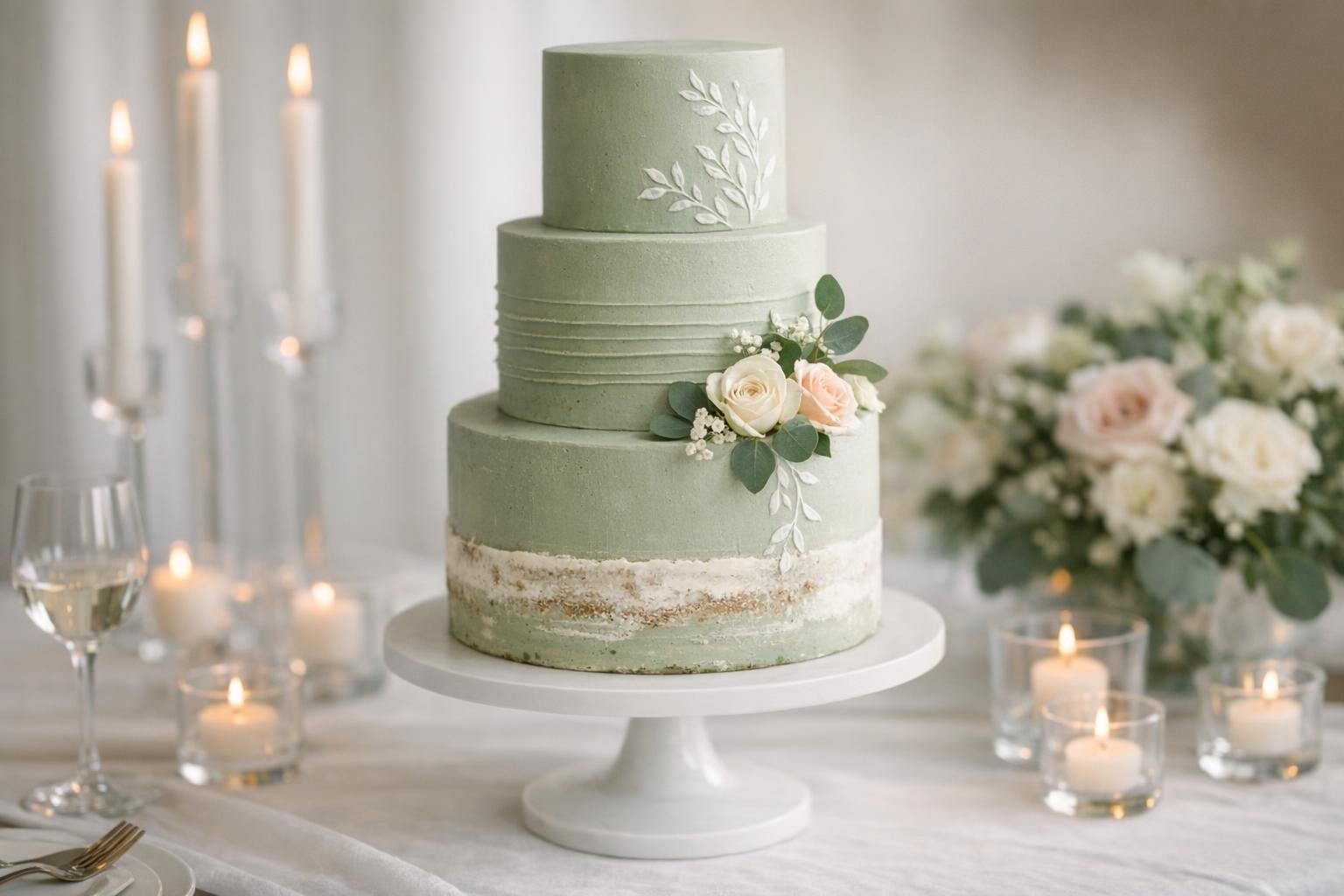
The moment you see a sage green wedding cake in a reception space—against white linens, candlelight, and a sweep of florals—it reads like calm confidence. It’s soft, botanical, and quietly fashion-forward, with the same effortless grace as a perfectly tailored outfit in a muted palette. Sage doesn’t shout; it glows.
This aesthetic shows up everywhere a couple wants romance without excess: garden ceremonies, airy indoor venues, intimate receptions, and modern celebrations that lean minimalist but still want texture and emotion. Sage green holds its own under warm lighting, and it pairs naturally with greenery like eucalyptus, creamy whites and ivories, blush roses, and even gold accents when you want a touch of glamour.
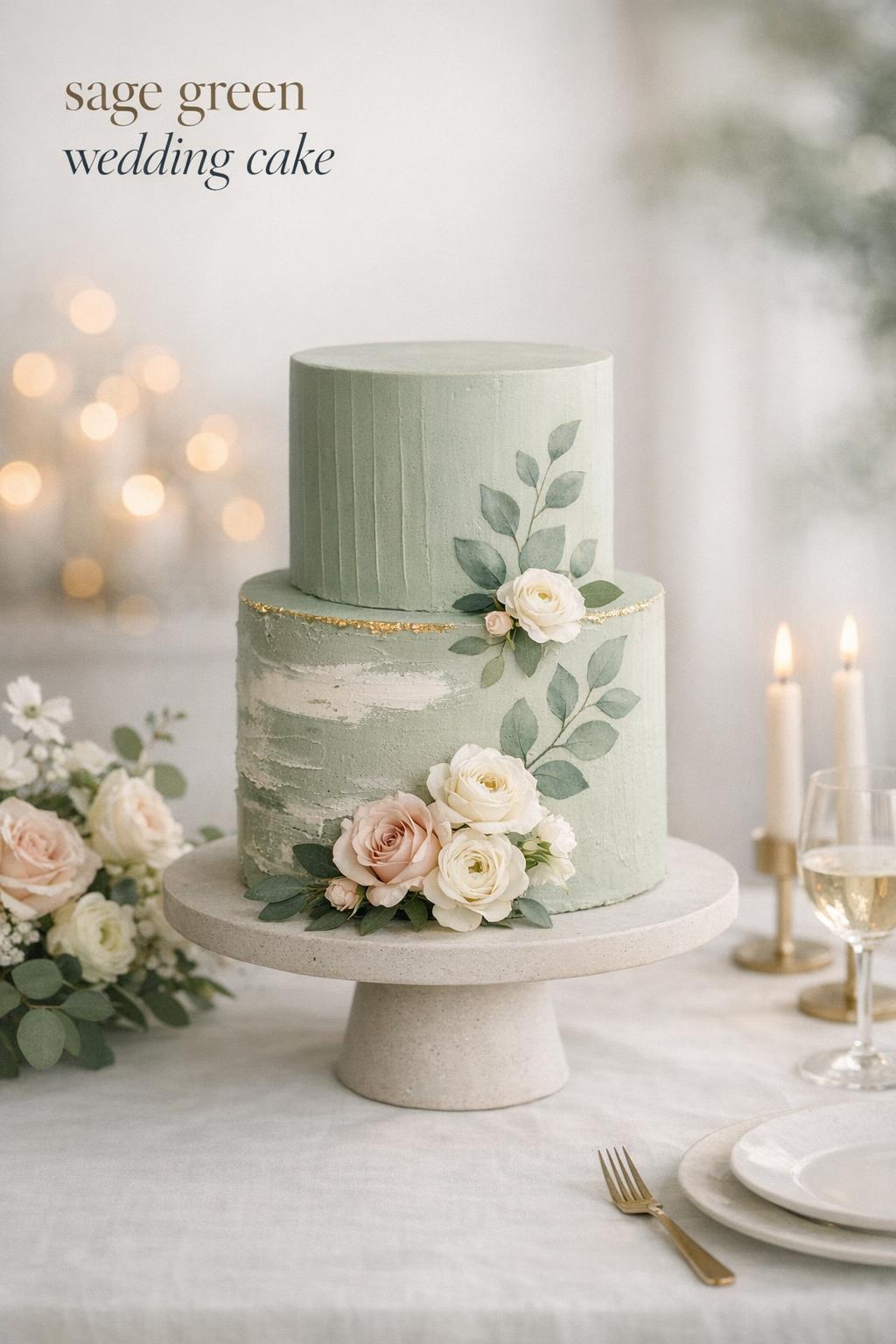
Most people start their search for “sage green wedding cake” for the visuals—but they stay for the planning clarity. Once you decide on the vibe (naked, semi-naked, smooth, or painted), the rest becomes a styling story: tiers, textures, florals, toppers, and practical decisions like lead time and transportation. This guide curates the look like a wedding stylist would—so your cake feels like part of the whole day, not just dessert.
Why sage green belongs in wedding cake styling (and why it’s so wearable for your decor)
Sage green is a color-palette decision that behaves like a neutral while still feeling special. In a room full of white, ivory, and soft floral tones, it adds gentle contrast and a botanical mood—perfect for couples drawn to romantic, garden-inspired weddings or a natural, modern aesthetic. That versatility is exactly why you’ll see sage used across wedding cakes green themes, from minimal designs to lush floral compositions.
Turn wedding inspiration into a plan you can actually follow.
Zarellea brings your guest list, budget, vendors, and day-of details into one shared space — so no beautiful idea gets lost in the shuffle.
What makes it especially appealing for wedding cake designs sage green is how it supports both texture and detail. On a smooth finish, sage looks editorial and clean. On a semi-naked or naked cake, it feels organic and hand-finished—almost like the color is part of the crumb and cream itself. Add white or ivory florals and it becomes timeless; add gold accents and it becomes intentionally luxe.
Think of sage as the “base layer” in a wedding outfit: it sets the tone, and everything else—flowers, tiering, toppers, and even your tablescape—either softens it, brightens it, or sharpens it into something more modern.
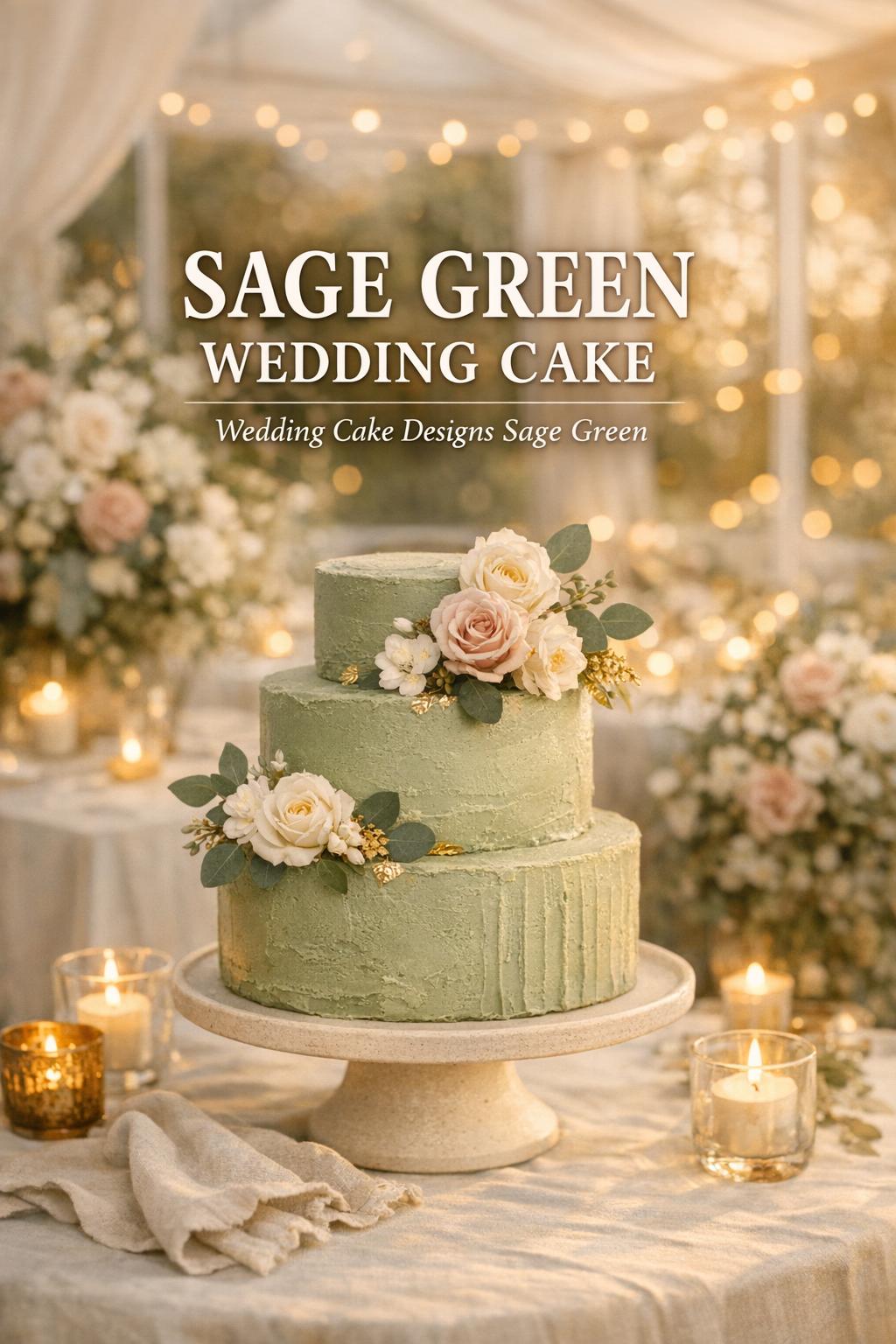
Look: garden-poetry naked cake with blush roses and airy movement
This look is for the couple whose wedding feels like a slow walk through a garden path—quiet, romantic, and slightly undone in the most intentional way. The silhouette is light: tiers that feel less “built” and more “stacked,” with the cake’s natural texture visible beneath a whisper of sage green frosting.
Start with a naked or lightly frosted finish (often described as “naked” in inspiration galleries). Let sage green appear as a soft wash rather than a heavy coating, then place blush roses alongside ivory or white blooms for contrast. Add sprigs of greenery to connect the cake to your wedding florals—this is where eucalyptus shines, because it reads instantly botanical without needing extra ornament.
- Key garments (cake styling equivalents): naked finish, soft sage green frosting, blush roses, ivory/white florals
- Footwear: minimal cake stand in white or neutral tones to keep the mood light
- Accessories: subtle greenery accents like eucalyptus for a fresh, garden feel
Why it works: the naked texture is the “linen dress” of green wedding cakes—natural, breathable visually, and forgiving in photos. It suits spring and summer celebrations especially well, and it aligns effortlessly with a romantic, garden aesthetic without feeling over-designed.
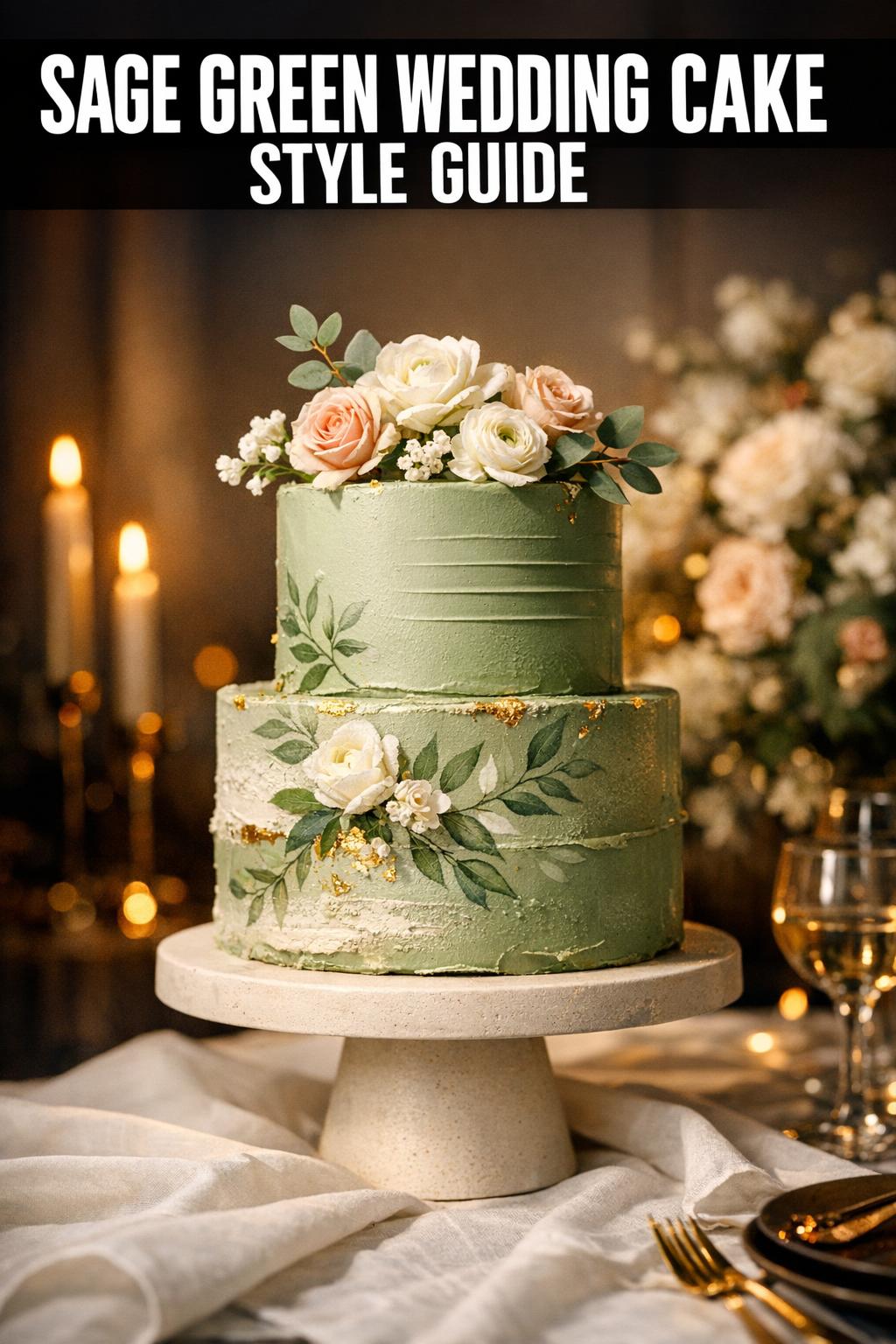
Look: semi-naked sage green with eucalyptus—romantic, grounded, and quietly modern
If you love the organic feel but want a bit more polish, the semi-naked look is your sweet spot. The silhouette still feels soft, but the frosting coverage is more deliberate—like a tailored blazer layered over something airy. You’ll see more even color, but still with hints of texture and movement.
A semi-naked sage green cake wedding style is especially beautiful with eucalyptus tucked between tiers or arranged in a gentle cascade. The cool-toned greenery reinforces the sage palette and makes the whole composition feel cohesive. Add white or ivory florals for brightness—this prevents the green from reading too heavy, especially under warm reception lights.
Why it works: eucalyptus and sage green speak the same visual language, so you don’t need a lot of extra decor to make the cake feel “styled.” It’s one of those wedding cake ideas elegant sage green couples return to because it feels timeless, natural, and editorial all at once.
Style tip: keep the greenery intentional, not crowded
The most elevated semi-naked cakes use greenery like jewelry—placed with purpose. Ask your baker to leave negative space so the sage green frosting and the tier shape still read clearly. A few defined clusters of eucalyptus often look more luxurious than a fully covered cake.
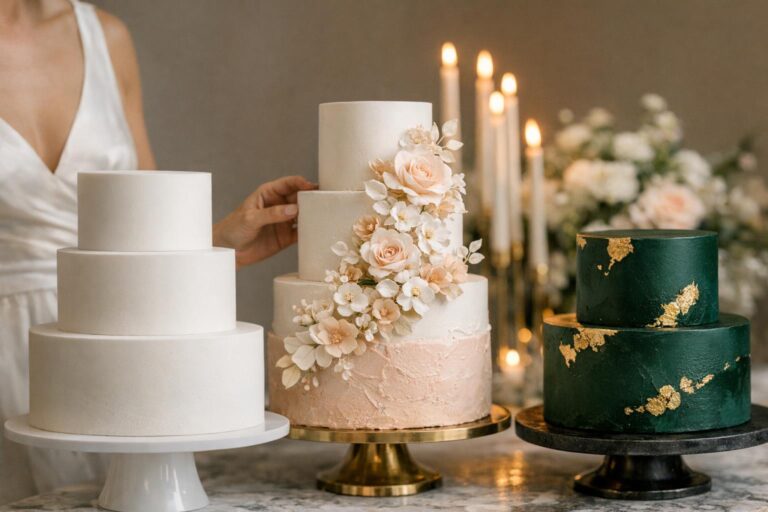
Look: smooth sage green with gold accents—luxe without losing softness
This is the evening-reception version of the sage trend: sleek, luminous, and structured. The silhouette is clean and confident—smooth tiers (often associated with fondant or a very refined buttercream finish) that feel architectural. Sage becomes less “garden path” and more “gallery opening,” especially when gold accents are introduced.
Gold can show up as delicate edging, minimal flecks, or a more pronounced accent moment—always balanced against white or ivory florals so the look stays romantic rather than harsh. When couples search for wedding cakes green that feel formal, this is often what they mean: green used as an elegant base, with metallics adding ceremony-level polish.
- Key garments: smooth finish, sage green base tone, gold accents, white/ivory florals
- Footwear: a clean, modern cake stand or simple pedestal to keep lines crisp
- Accessories: restrained floral placements, or a single statement cluster
Why it works: the contrast between soft sage and reflective gold creates dimension in photos. It also ties beautifully into reception details like gold flatware or warm candlelight, making the cake feel like part of the whole styling story rather than a separate element.
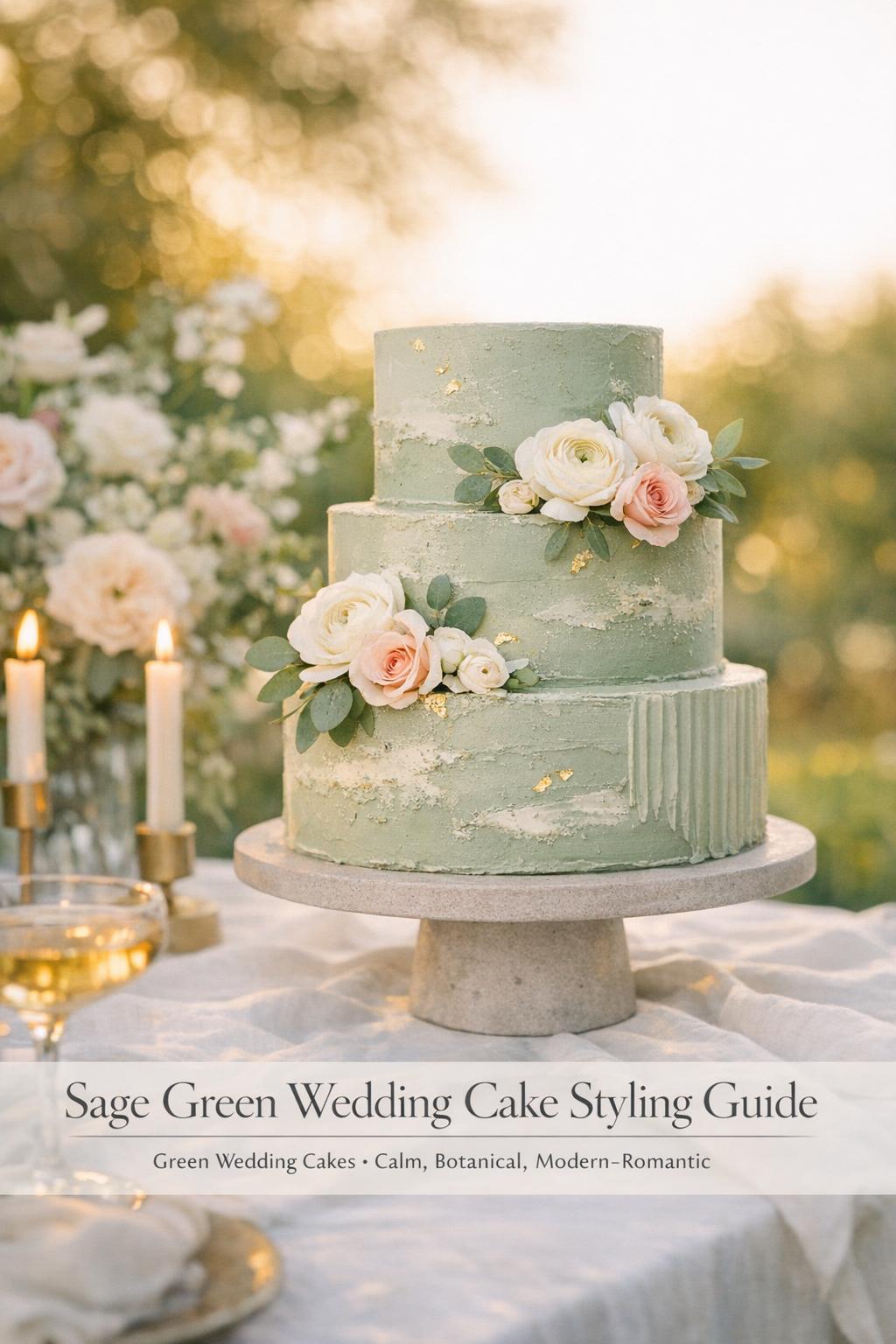
Look: painted sage green with botanical motifs—artful, personal, and fashion-forward
Painted sage green cakes feel like wearable art—less about perfect symmetry, more about expressive detail. The silhouette can be classic (two-tier or three-tier), but the surface becomes the statement. This look suits couples who want their cake to feel like a visual centerpiece that guests linger over.
Botanical motifs can be subtle, like a soft wash of sage with delicate leaf-like accents, or more illustrative with hand-painted greenery. Keep the palette grounded with whites and ivories, then introduce florals sparingly so the artwork remains the focus. This is also a beautiful bridge for couples mixing romantic wedding florals with a minimalist venue—your cake brings the “garden” into the room.
Why it works: painted finishes add movement and depth without requiring heavy decor. It’s one of the most distinctive interpretations of wedding cake designs sage green because it looks custom even when the tier shape is traditional.
Color pairings that make sage green feel intentional (not accidental)
One of the easiest ways to elevate a sage green wedding cake is to treat color pairing like outfit styling: you’re not just choosing “pretty colors,” you’re balancing light and depth, softness and contrast. Across inspiration galleries, the most repeated pairings are sage with white or ivory, plus accents like blush roses, eucalyptus, and gold.
Sage green and white is the cleanest pairing—fresh, modern, and instantly readable in photos. Sage green with ivory feels warmer and more romantic, especially in candlelit rooms. Add blush roses when you want a gentle, garden softness; add gold accents when you want to shift the mood toward luxe and formal.
- Sage green + white: crisp, modern, ideal for a clean reception aesthetic
- Sage green + ivory: warmer, romantic, especially flattering with soft lighting
- Sage green + blush roses: garden-inspired, tender, and classic
- Sage green + eucalyptus: botanical and cohesive with greenery-forward florals
- Sage green + gold accents: elevated, glamorous, perfect for evening receptions
Sage green + floral pairings by season (spring and summer favorites)
Spring and summer celebrations often lean into florals and fresh greenery, which is exactly where sage shines. In spring, the palette can feel especially romantic with blush roses and ivory blooms; in summer, eucalyptus and white florals keep the look crisp and breathable. The key is consistency—if your bouquet and tablescape already use greenery, letting the cake echo that through eucalyptus or botanical accents makes the entire wedding feel styled with purpose.
Choosing your texture: naked, semi-naked, smooth, or painted (and what each one signals)
Texture is the fit-and-flare of cake design: it changes everything about the mood. Two sage green cakes can use the same palette and florals, yet feel completely different depending on whether the finish is naked, semi-naked, smooth, or painted.
Naked and semi-naked textures feel organic and romantic, often associated with garden weddings and softer styling. Smooth finishes feel refined and modern, especially when paired with gold accents or minimalist floral placement. Painted finishes are expressive and artistic, leaning into botanical motifs that feel custom and editorial.
How to recreate the look without overcommitting
If you’re torn between styles, choose one “anchor decision” and keep the rest flexible. For example, commit to a sage green frosting tone first, then decide whether you want a naked or smooth finish based on your venue vibe. A minimalist venue often supports a painted or smooth cake; a garden venue naturally suits semi-naked textures and eucalyptus.
Texture techniques and achieving sage green frosting (practical guidance that matters)
Couples often fall in love with a photo of a sage green cake—then discover that getting the color “just right” is where the real craft begins. Sage isn’t a single shade; it can lean gray, olive, or softly muted depending on lighting and surrounding colors like ivory and gold. That’s why it helps to think in terms of consistency rather than perfection: your goal is a stable, cohesive sage tone that complements your florals and décor.
Your finish choice affects how the color reads. Buttercream tends to look soft and romantic; fondant can look smoother and more uniform; ganache can create a sleek base for a refined style direction. Each option changes the visual texture, which changes how sage appears in photos. When planning wedding cake ideas elegant sage green, it’s wise to decide on texture first, then finalize your exact shade of green.
Frosting options (buttercream, fondant, ganache) and coloring considerations
Buttercream is often chosen for its soft, romantic feel and works beautifully for naked and semi-naked looks. Fondant supports a smooth, structured silhouette and makes gold accents and clean lines feel especially crisp. Ganache can create a refined, polished finish that pairs well with minimalist styling. No matter which you choose, discuss how the sage tone will be tested—asking for a small color sample can prevent surprises when the cake is placed under venue lighting.
Tips: botanical decorations should be beautiful and thoughtfully handled
Edible greenery and botanical styling are part of what makes green wedding cakes feel so romantic, but they should be approached with care. When your design includes eucalyptus or other greenery, confirm exactly how it will be used as decoration and how it will be placed on the cake. Your baker should be able to talk you through the decoration plan so the final look is both intentional and comfortable for guests.
Tier styling like a wedding outfit: proportions, pauses, and a clean silhouette
Tiers are your silhouette. A two-tier cake can feel modern, intimate, and editorial—perfect for smaller receptions where the cake is still a focal point. A three-tier cake reads more traditional and ceremonial, especially when finished in smooth sage or accented with gold. If you love that classic three-tier presence, you’ll also see practical sizing references in product-style inspiration—like a 6-inch, 8-inch, and 10-inch round tier set—because those proportions create a balanced visual staircase.
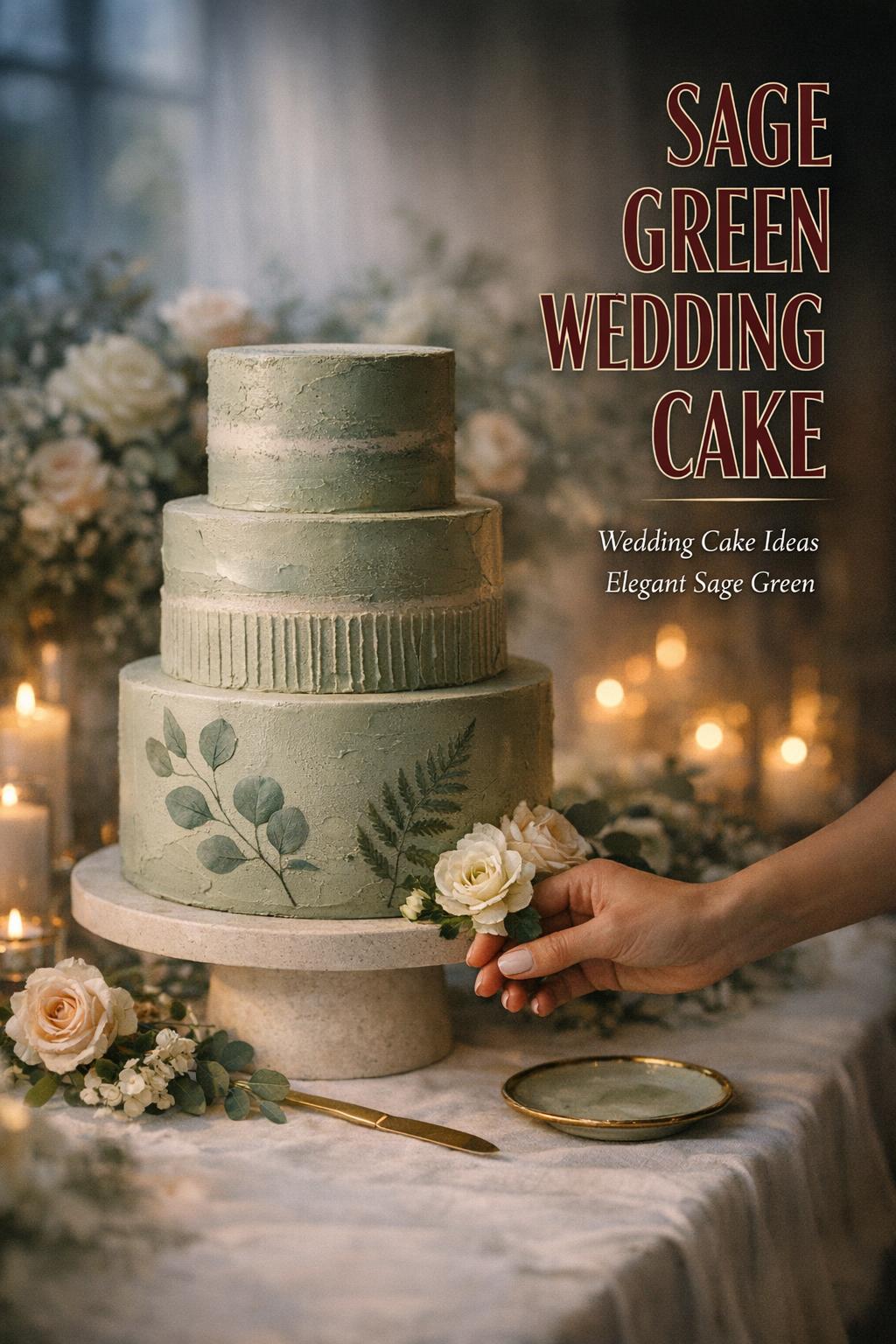
Details like ridged textures can add dimension without additional color. A ridged three-tier cake with sage green details feels sculptural, especially in a clean venue where shadows and light define the lines. This kind of structure is ideal when you want the cake to look elevated even with minimal florals.
Look: ridged three-tier with sage green details—structured romance with subtle drama
This look is for couples who want an elegant silhouette with tactile texture—like a beautifully pleated dress that catches the light as you move. The ridges give the cake depth, and the sage appears as detailing rather than an all-over wash, which can feel especially refined if your overall palette includes white or ivory.
If you’re browsing product-style inspiration, you may see designs presented with specific tier sizes (commonly 6-inch, 8-inch, and 10-inch round tiers) and a clear emphasis on customization. That’s a helpful mindset even if you’re not buying from a catalog: ask your baker how the ridged texture will be executed and where the sage green details will sit so the design looks intentional from every angle.
Why it works: ridges create a built-in “accessory,” so you can keep florals minimal and still get a statement. It’s a sophisticated answer to wedding cakes green styling when you want formality without heaviness.
Decorating details that elevate sage: florals, foliage, toppers, and metallic touches
Once you’ve chosen your base style, the decorating details decide the final mood. Florals and foliage (especially eucalyptus and roses) are the most common way to soften sage green and make it feel romantic. Gold accents are the easiest way to make sage look more formal. And toppers—often found through marketplaces like Etsy—can personalize the look without forcing you into a more complex cake design.
If you’re using toppers or decorative pieces, it helps to treat them like jewelry: one strong choice is better than several competing pieces. A botanical topper can echo your greenery theme; a simple topper can keep a minimalist cake feeling modern. Etsy-style options often include botanical motifs like leaves or wreath shapes, which pair naturally with a sage palette and the broader “botanical wedding cake” concept.
- Florals: blush roses, white or ivory blooms for contrast against sage
- Foliage: eucalyptus to reinforce a botanical theme
- Metallics: gold accents for a luxe finish
- Toppers: sage green wedding cake toppers or botanical motifs for personalization
A real-wedding mindset: how sage green and white reads in photos and in the room
Gallery-style real wedding moments show something inspiration boards sometimes miss: sage green doesn’t live in isolation. It lives next to your linens, florals, and venue lighting. A sage green and white wedding cake, in particular, is a reliable choice because it stays crisp in photography while still feeling soft and romantic in person.
When you’re deciding between ivory and white, think about the room. White feels clean and bright; ivory feels warm and candlelit. If your décor leans romantic and you’re using lots of greenery, ivory can blend beautifully. If your styling is modern and minimal, white makes sage feel sharper and more contemporary.
Where you’ll see this aesthetic across the U.S.: venue mood, regional light, and styling energy
Even within the same color palette, sage green can feel different depending on your setting. A West Coast-inspired vibe often leans airy and minimalist—smooth sage, restrained florals, clean silhouettes. A Northeast garden celebration may lean more romantic—semi-naked texture, eucalyptus, blush roses, and soft layering. And in big-city venues—think New York, Los Angeles, Chicago, or San Francisco—sage frequently appears with modern structure and intentional accents like gold, because the venue architecture often supports a cleaner, more editorial style.
This isn’t about strict rules; it’s about matching energy. If your venue is already visually busy, a minimalist sage cake can feel like relief. If your venue is simple and bright, a more botanical design can bring warmth and dimension.
Common styling mistakes with sage green wedding cakes (and how to avoid them)
Sage is forgiving, but a few missteps can make it feel less intentional. The most common issue is mixing too many undertones—pairing a cool sage with warm ivory and then adding gold accents without a plan can sometimes create a slightly “off” look. Another frequent mistake is over-decorating: when greenery, florals, gold, and toppers all compete, the cake loses its silhouette and the sage becomes background noise.
A practical way to avoid this is to choose one statement element and keep the rest supportive. If you want gold accents, keep florals minimal. If you want abundant eucalyptus and blush roses, keep metallics subtle or skip them. And if you’re going for a painted botanical finish, treat the artwork as the star and use simple white or ivory florals as a frame.
How to choose a baker for a sage green cake wedding (questions that protect your vision)
Because sage green is all about nuance—texture, tone, and how it photographs—choosing the right baker is as important as choosing the design itself. Your goal is someone who can talk clearly about finish styles (naked, semi-naked, smooth, painted), understands how florals and greenery will be integrated, and can guide you through the practical realities like lead time and delivery.
- Which finish do you recommend for my venue: naked, semi-naked, smooth, or painted?
- How will we confirm the sage green frosting tone before the wedding?
- How do you handle floral accents like blush roses and greenery like eucalyptus on the cake?
- Can you incorporate gold accents in a way that stays elegant and not overpowering?
- What are your lead times, delivery constraints, and transportation requirements?
If you’re sourcing elements separately—like toppers from Etsy or a specific three-tier silhouette you love from an e-commerce-style listing—ask your baker how those pieces will integrate. Customization is often possible, but it works best when your baker can plan placement and proportions from the start.
Practical considerations: lead times, refrigeration, and transportation (so the beauty makes it to the cake table)
The most stunning wedding cake designs sage green still need to survive the real world: warm afternoons, tight delivery windows, and venue logistics. Ask early about lead times—especially if your cake includes detailed finishes like painted botanical motifs, ridged textures, or gold accents that require careful application. These details often take more time than a simple smooth finish.
Transportation planning matters just as much as design. Confirm whether the cake will be delivered and assembled on-site, and ask what the baker needs from the venue (access time, refrigeration options, a stable cake table). If your venue has challenging access—long walks, stairs, tight elevators—share that upfront so the plan supports the design you love.
Tips: plan for lighting, because sage changes character in different rooms
Sage green can read softer or deeper depending on lighting. Warm candlelight can make it feel more muted and romantic; bright daylight can make it feel fresher and more modern. If possible, bring a small palette reference (photos of sage green and white cakes you love, plus your floral inspiration) so your baker can aim for a tone that complements your specific venue mood.
Key pieces that make the sage green cake aesthetic feel cohesive
In fashion terms, these are your wardrobe staples—the elements that make the entire look feel curated even if you keep the design simple. When couples search for wedding cake ideas elegant sage green, they often respond to cohesion more than complexity: sage paired with white or ivory, a consistent floral story, and one elevated accent like eucalyptus or gold.
- Sage green base tone (as frosting, painted wash, or subtle detailing)
- White or ivory as a balancing neutral
- Floral accents that repeat your wedding florals (blush roses, white blooms)
- Greenery that reads botanical (eucalyptus is a common favorite)
- One “polish factor” (gold accents, ridged texture, or a clean minimalist finish)
When you build around these pieces, even a simple two-tier cake can feel as intentional as a three-tier statement—because the aesthetic reads clearly and consistently from ceremony to reception.
A quick glossary of the sage green wedding cake style language
Wedding inspiration often uses shorthand. Knowing these terms helps you communicate with your baker and make decisions faster—especially when you’re saving images from galleries or comparing designs across blogs, real-wedding features, and product pages.
- Naked cake: minimal frosting that lets the cake layers show through
- Semi-naked cake: more frosting coverage than naked, but still textured and slightly sheer
- Smooth finish: clean, even surface (often associated with fondant or refined buttercream)
- Painted finish: hand-painted or washed color effects, often with botanical motifs
- Gold accents: metallic detailing used to add a luxe note
- Tier structure: the number and sizing of tiers (including common three-tier proportions)
These aren’t just labels—they’re design directions. When you know what you’re asking for, you can align the cake with your venue, your florals, and the mood you want guests to feel when they first see it.
FAQ
How do I choose the right shade for a sage green wedding cake?
Choose your shade based on your neutrals and lighting: sage paired with white reads crisp and modern, while sage paired with ivory feels warmer and more romantic. Because sage can shift under different venue lighting, it helps to align the tone with your florals (like eucalyptus, blush roses, and white blooms) so everything feels cohesive in photos and in the room.
What cake finish works best for wedding cake designs sage green: naked, semi-naked, smooth, or painted?
Naked and semi-naked finishes feel organic and garden-romantic, especially with eucalyptus and soft florals. Smooth finishes feel more formal and modern, particularly with gold accents and minimal floral placement. Painted finishes feel artistic and custom, ideal when you want botanical motifs to be the centerpiece.
Does sage green pair better with white or ivory on a cake?
White gives you higher contrast and a cleaner, fresher look, which is why sage green and white cakes photograph so clearly. Ivory creates a softer, warmer mood that can feel especially romantic under candlelight. The best choice depends on whether your overall styling leans modern-minimal (white) or warm-romantic (ivory).
What florals and greenery look most natural on green wedding cakes?
Eucalyptus is a favorite because it reinforces the botanical mood of sage without overpowering the design, and it pairs easily with white or ivory blooms. Blush roses add a romantic softness and help the green feel bridal rather than earthy. Keeping placements intentional—rather than crowding every tier—usually looks the most elevated.
How can I make a sage green cake wedding look more elegant for a formal reception?
Choose a smooth finish and incorporate gold accents in a restrained way, then keep florals minimal and bright (white or ivory) so the silhouette stays clean. This approach adds ceremony-level polish while keeping sage’s softness, which is why it’s a core direction for wedding cake ideas elegant sage green.
Are three-tier sage cakes the only option for a statement look?
No—two-tier cakes can look just as editorial when the texture and styling are strong, especially with a smooth or painted finish and intentional floral placement. Three-tier cakes do deliver a classic ceremonial silhouette, and structured details like ridges or sage green detailing can make the tiers feel especially elevated without needing heavy decoration.
Can I use a topper from Etsy on a sage green wedding cake?
Yes, and toppers can be a simple way to personalize the cake without complicating the design. Botanical motifs like leaves or wreath-inspired shapes tend to pair naturally with sage palettes. Share the topper details with your baker early so they can plan placement and ensure the proportions work with your tier structure and florals.
What should I ask my baker to avoid disappointment with sage green frosting?
Ask how the sage tone will be confirmed before the wedding and how the chosen finish (buttercream, fondant, or ganache) will affect how the color reads. Also discuss how venue lighting may influence the final look and how floral accents, eucalyptus, and any gold accents will be balanced so the design stays cohesive.
What practical considerations matter most for transporting a sage green wedding cake?
Confirm lead times, delivery constraints, and whether the cake will be assembled on-site, especially for designs with painted finishes, ridges, or gold accents. Make sure your venue can support the setup plan with appropriate access time and a stable cake table, and discuss refrigeration needs early so the cake arrives looking as refined as it did in your inspiration photos.