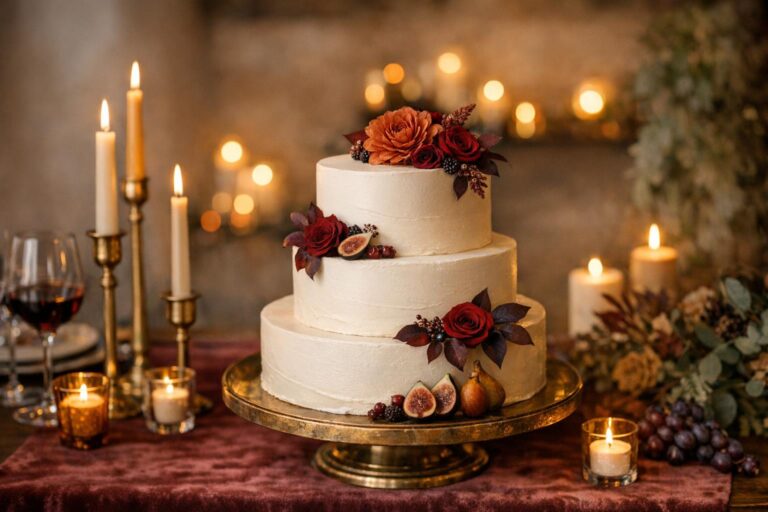
Wedding Cake Designs Simple—Made Modern with Quiet Details
Simple wedding cake designs, without the “plain” feeling
The quiet moment after your ceremony—the one where you finally exhale, hear the clink of glasses, and see your reception glow—often arrives with a surprisingly emotional detail: the wedding cake. And if you’re drawn to wedding cake designs simple enough to feel effortless, you’ve probably also felt the anxiety that comes with that choice. Simple can read as refined and modern. Or, in the wrong execution, it can read as unfinished.
This guide is written for couples who want a cake design for wedding celebrations that feels clean, romantic, and intentional—without over-decoration. You’ll get a clear way to decide what “simple” should mean for your day, plus multiple modern wedding cake ideas you can actually brief to a bakery. We’ll talk about the finishes that do the heavy lifting (like textured buttercream), how floral accents change the mood, when a simple tier cake creates more impact than extra décor, and the practical planning details—pricing signals, timelines, delivery, refrigeration, and transport—that make the difference between dreamy and stressful.
Understanding the styling challenge: why “simple” is harder than it looks
A simple wedding cake is essentially a styling choice—minimalism applied to a centerpiece. The challenge is that minimal decoration removes the “distractions,” so every detail becomes more visible: the smoothness (or texture) of buttercream, the sharpness of the silhouette, the balance of tiers, and the restraint of the palette. If any one element feels off, the overall impression can shift from minimalist to merely basic.
Real-world wedding conditions make this trickier than scrolling a gallery. Cakes live through warm ceremony spaces, long photo windows, bustling vendor load-ins, and bright reception lighting that highlights texture. Floral accents can wilt if they aren’t chosen and placed with care. A naked cake finish can look romantic and natural—or it can look dry if it sits too long. And couples often discover late in the process that “simple” can still require precision, which affects both bakery collaboration and budget expectations.
Turn wedding inspiration into a plan you can actually follow.
Zarellea brings your guest list, budget, vendors, and day-of details into one shared space — so no beautiful idea gets lost in the shuffle.
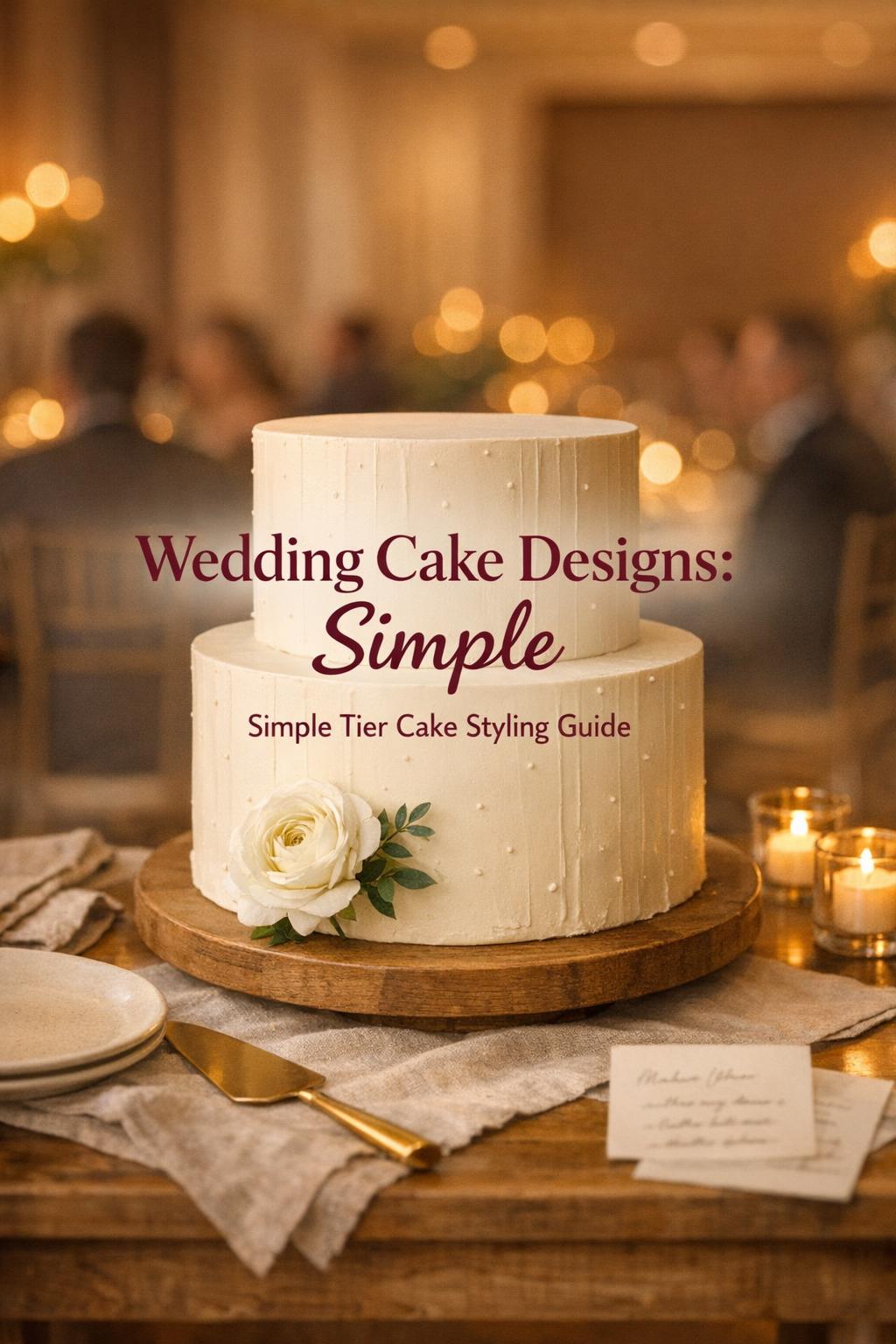
Key dressing principles (for your cake): the style logic that keeps simple looking elevated
Think like a wedding stylist for a moment: when you wear a minimalist outfit, you rely on proportion, texture, and fit. The same logic applies to cake designs for wedding celebrations. When you choose minimal decoration, you need one or two strong design drivers—never five small ones fighting each other.
Principle 1: Choose one hero detail—texture, flowers, or height
Most simple designs succeed because they commit to a single hero element. Textured buttercream can be the statement. Fresh flowers can be the statement. Tiering and height can be the statement. When you try to combine all three at equal volume, the cake stops feeling “simple” and starts feeling undecided.
Principle 2: Let color restraint do the calming work
Color restraint shows up across the most-loved simple wedding cake ideas: classic white, cream, and soft neutrals (ivory, blush, taupe), plus monochrome and white-on-white looks. Restrained palettes create a modern, composed mood and allow a finish like buttercream texture or a single bloom to stand out.
Principle 3: Use silhouette like architecture
In a simple tier cake, proportion becomes design. Clean lines, even tier spacing, and a confident silhouette read as intentional—especially in modern/minimal wedding styling. Height can create drama without extra decoration, but it must feel stable and balanced in photos from across the room.
Principle 4: Keep the “detail distance” in mind
Some details are only visible up close—like Swiss dots, delicate ruffles, or subtle vertical lines in buttercream. Others read from far away—like a tall tiered cake, a monochrome palette, or a strong floral placement. Your cake needs at least one element that reads at reception distance, especially if the room is large or lighting is dim.
Core archetypes that make wedding cake designs simple feel intentional
Below are the foundational design archetypes that appear repeatedly in simple wedding cake inspiration. Treat them like style “outfit formulas.” Pick the formula that matches your venue and the emotion you want—modern, garden-romantic, beachy, barn-warm, or quietly classic.
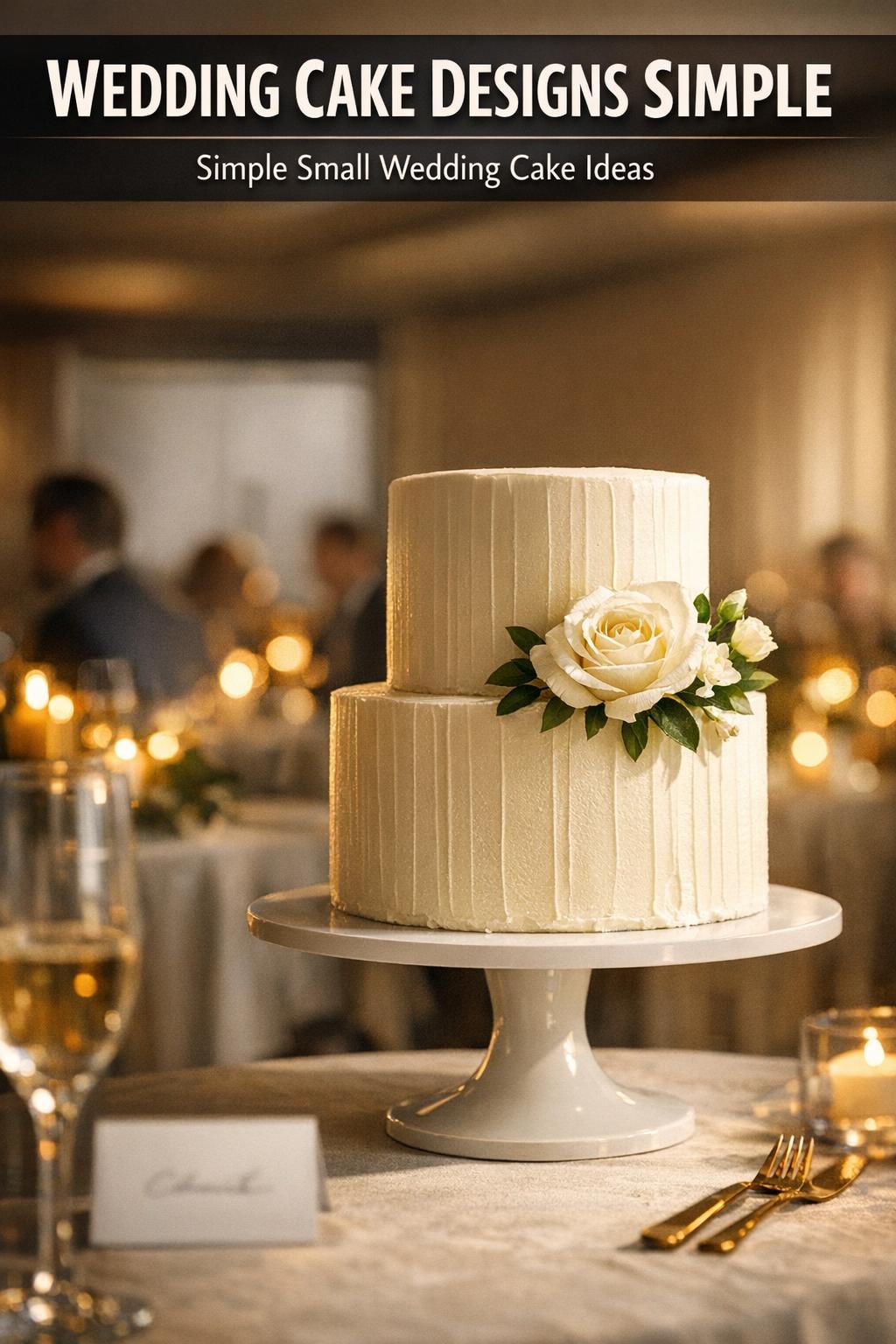
Monochrome and white-on-white: the modern classic
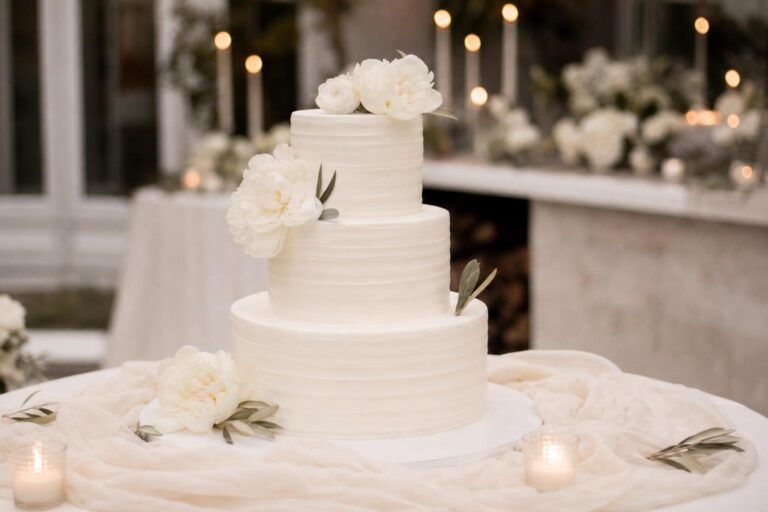
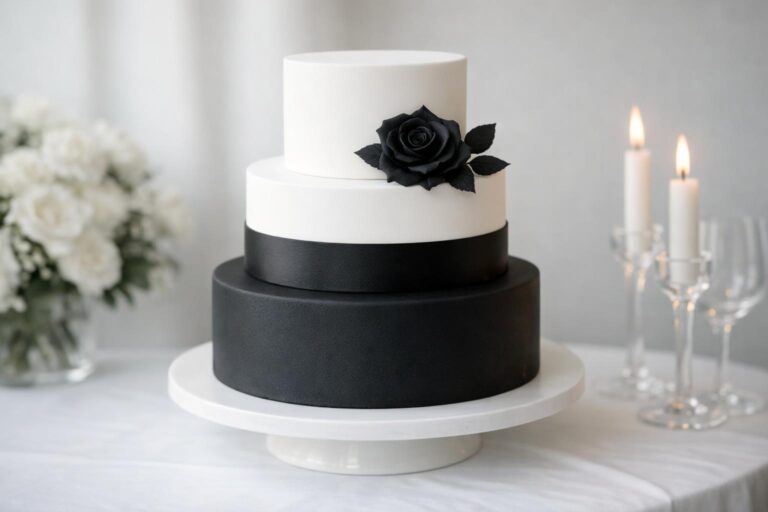
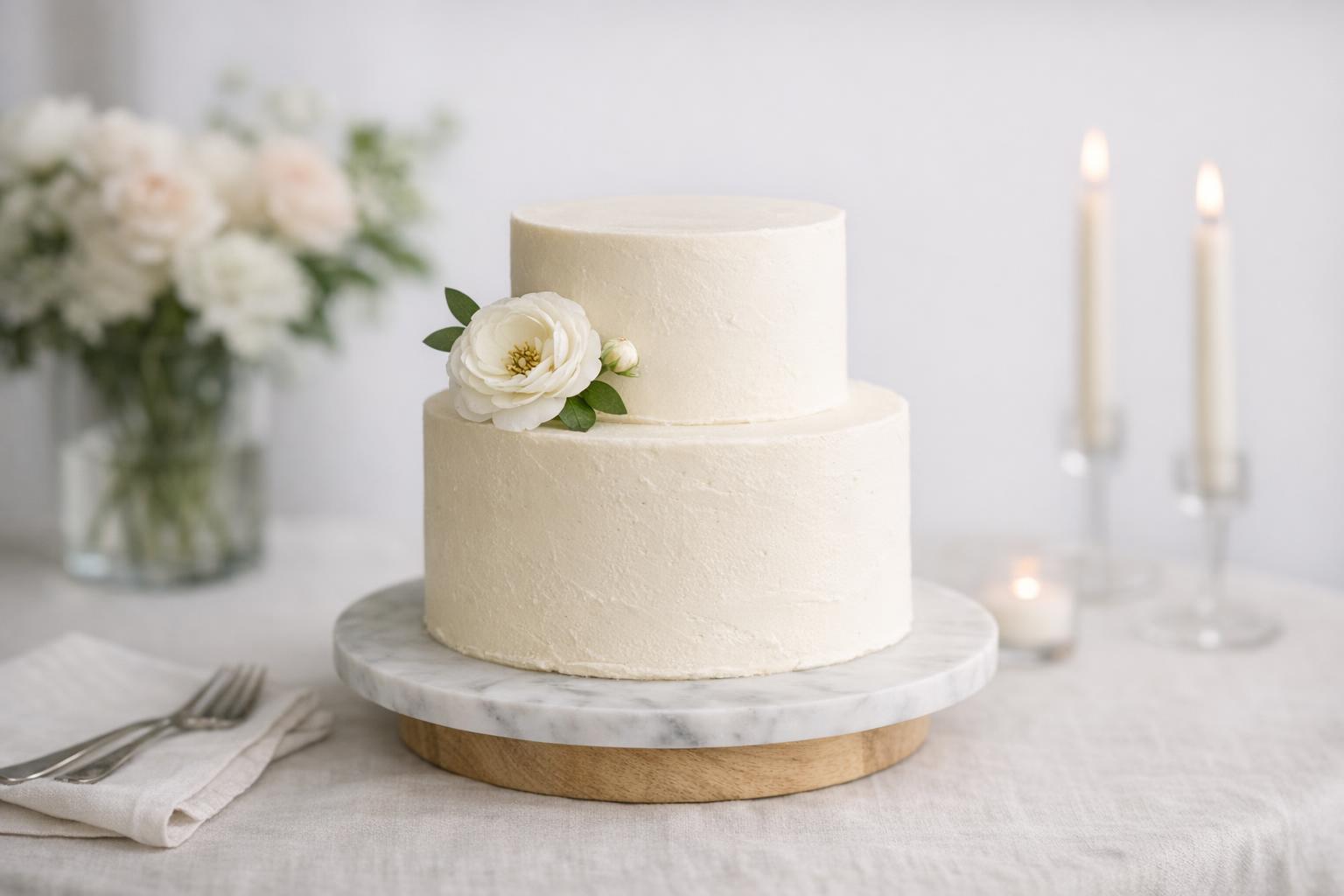
A monochrome cake—especially white-on-white—leans into minimalism and elegance at the same time. The magic is that “white” doesn’t have to be flat; it can be a study in finish. A smooth tiered cake with subtle buttercream texture reads crisp and editorial, while a soft, slightly textured white cake feels romantic and lived-in.
This is one of the easiest cake designs for wedding décor that already has a strong visual identity: modern venues with clean lines, ceremonies with a monochrome palette, or receptions where florals and candlelight carry the room. The cake won’t compete—it will anchor.
- Best for: modern/minimal aesthetics, formal ceremonies, venues with a clean look
- Style lever: texture (smooth vs lightly textured buttercream) more than added décor
- Common accent: a restrained floral touch or a single bloom placement
Textured buttercream: the simplest way to add depth
Textured buttercream finishes are the backbone of many modern wedding cake ideas because they add dimension without clutter. You can keep everything else minimal—palette, topper, tier count—and still have a cake that feels designed.
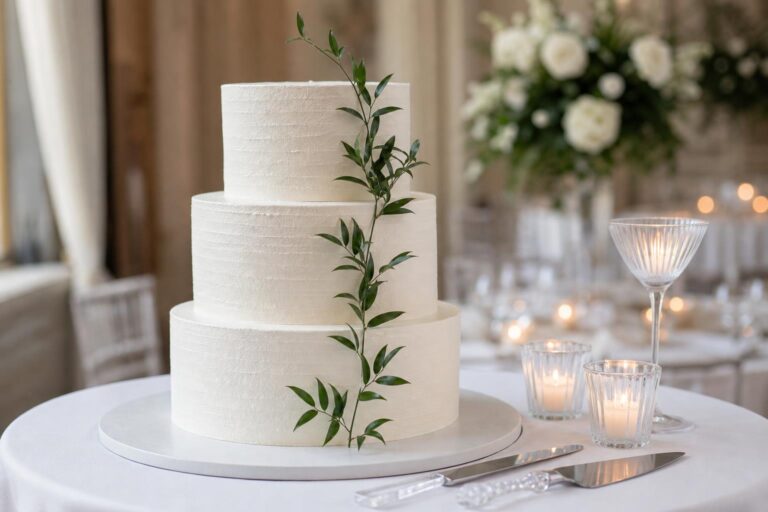
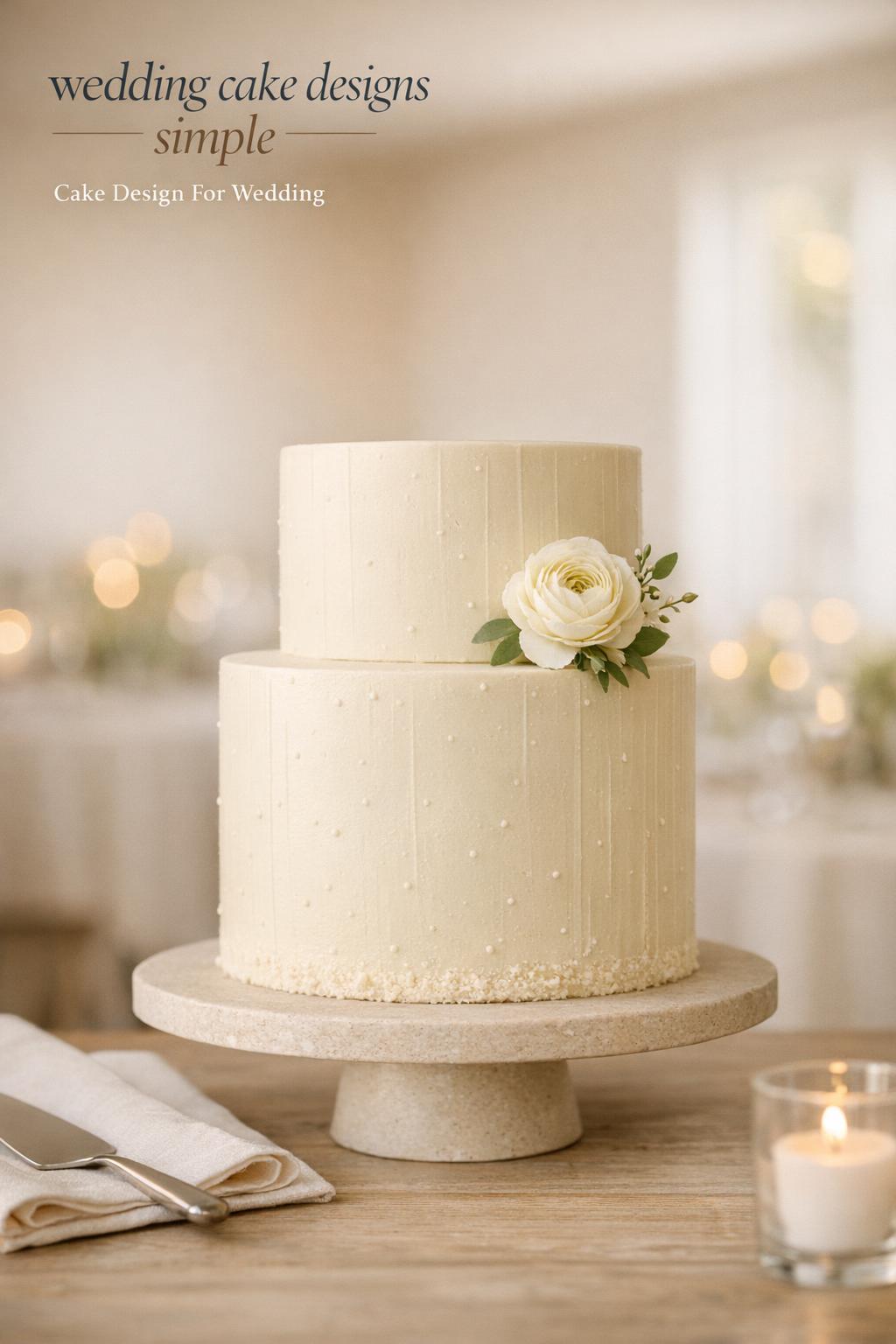
The most referenced texture families in simple inspiration include ruffles, petal-like textures, vertical lines, and other subtle patterns. Even a small decision—like vertical texture on a single-tier cake—can transform the look from “basic” to “intentional.”
- Ruffles: romantic movement without extra color
- Vertical lines: modern, tall, and architectural—great for height emphasis
- Petal textures: soft and elegant, especially in white-on-white
- Swiss dots: delicate detail that rewards close-up photos
Practical note: texture is forgiving in real wedding conditions. A perfectly smooth finish is beautiful, but it can show marks under bright lighting or during transport. Texture can hide tiny imperfections, which is one reason it remains a go-to for couples seeking simple designs that still look polished.
Naked and semi-naked cakes: romantic, natural, and timing-sensitive
Naked cakes and semi-naked cakes are a beloved route for couples who want a relaxed, natural look—especially with delicate floral accents. Visible cake layers create an honest, unfussy mood that pairs well with garden weddings, beachfront celebrations, and warm barn settings.
But this archetype has a trade-off: because the finish is intentionally minimal, freshness and timing matter. In a long reception timeline, a naked finish may require more careful coordination so it still looks romantic when it’s time to cut.
- Naked cake: most minimal frosting; strongest “natural” vibe
- Semi-naked cake: more coverage, still shows layers; often reads more polished
- Best styling partner: fresh flowers placed with restraint, not scattered
Floral accents with restraint: the easiest way to personalize a simple cake
Fresh flowers are one of the most consistent supporting entities in simple wedding cake inspiration. They can instantly connect your cake to your bouquet, ceremony arrangements, or overall floral palette. The key is restraint: one cluster, one cascade, or a few placed blooms can elevate the cake without turning it into a full floral installation.
This approach also helps couples who want wedding cake designs simple but not stark. A clean white cake with a strategic floral accent feels romantic and celebration-ready—especially in spring greenery themes or winter white moments.
Tiering and height: a “simple” statement that reads from across the room
If your venue is spacious or your reception design is intentionally minimal, height can become the statement. A simple tier cake with clean lines feels dramatic without needing heavy decoration. This is also a helpful strategy when you want a minimalist look but still need the cake to feel like a focal point.
Height works beautifully with monochrome palettes and textured buttercream. Even a restrained design looks more ceremonial when it has presence—especially when you imagine the photo moment: you and your partner standing beside it, the room glowing behind you, the cake quietly “holding” the scene.
Palette planning: how to choose colors that keep “simple” from feeling flat
Simple cakes often succeed because their palettes are calm. That doesn’t mean you’re limited to one shade; it means your choices are curated. Think in families: whites and creams, soft neutrals, and minimal accents that feel intentional rather than busy.
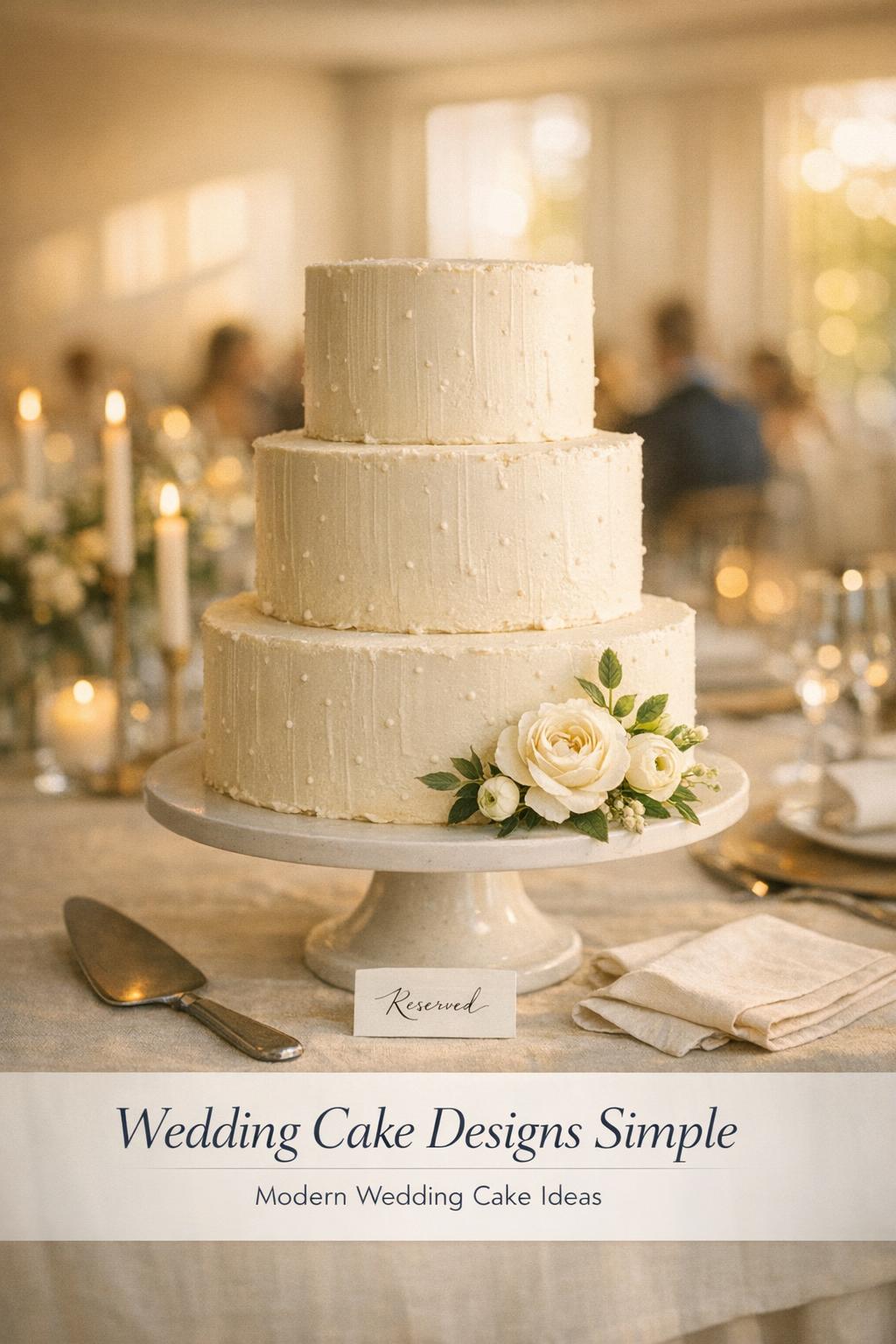
Classic white and cream (the timeless base)
White and cream work across nearly every wedding style—from modern to romantic—because they act like a neutral wardrobe staple. They also photograph beautifully with both natural light and warm reception lighting. If your décor includes multiple textures (linens, candles, greenery), a classic white cake becomes a calming anchor.
Soft neutrals: ivory, blush, taupe (quietly personal)
Soft neutrals offer a gentle way to add personality while staying within the “wedding cake designs simple” aesthetic. These tones feel especially cohesive when your wedding styling leans romantic or when your venue includes warm materials that already create atmosphere.
Minimal accents: metallic touches or a single bloom
Minimal accents are best used like jewelry: a small detail that finishes the look. A single bloom on a monochrome cake can feel editorial. A subtle accent can also tie into your broader palette without turning the cake into a color story all by itself.
Outfit solutions (but for cake): design “looks” you can confidently brief to a bakery
Below are practical, style-driven “solutions” that function like outfit formulas: clear pieces, clear logic, and clear reasons they work. You can use these as modern wedding cake ideas for your tasting meeting or as a starting point for a mood board.
Outfit solution: the clean monochrome tier with subtle texture
This is the little white dress of cake design for wedding celebrations: timeless, flattering, and adaptable. Choose a white-on-white tiered cake, then decide whether the “fabric” is smooth buttercream or a soft texture (like gentle vertical lines). The lack of color is the point; it allows the form to feel confident and modern.
Why it works: it complements almost any ceremony aesthetic without competing, and it looks composed in wide reception photos. It’s also easy to keep cohesive with a monochrome palette across linens and florals.
Outfit solution: textured buttercream with ruffles for romantic movement
If your wedding mood is romantic but you still want restraint, ruffled buttercream gives you softness without adding extra décor. Keep the palette classic (white, cream, or soft ivory), and let the ruffles carry the emotional tone—like a gown with movement that feels alive when you walk.
Why it works: texture reads as “designed” even when you skip toppers and bold colors. It also photographs beautifully up close, which matters when cake-cutting photos become part of your story.
Outfit solution: the semi-naked cake with a restrained floral cluster
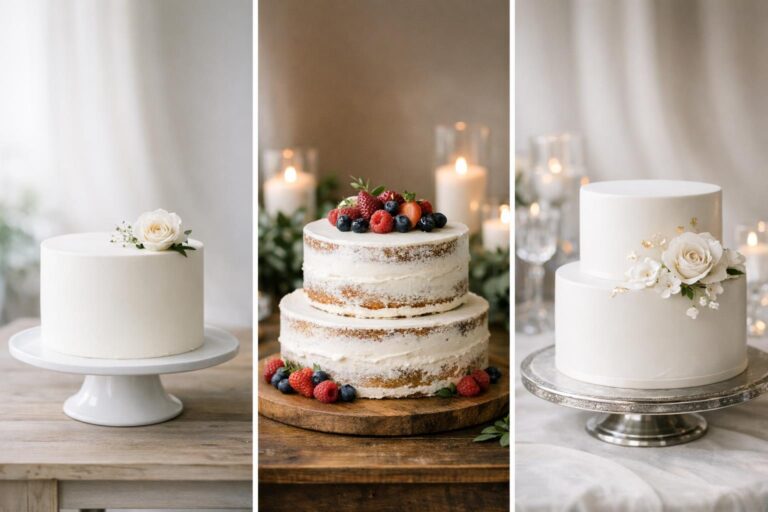
This look is for couples who want natural elegance. Choose a semi-naked finish (visible layers, but enough frosting to feel intentional), then add a small, strategic cluster of fresh flowers—placed to mirror your bouquet rather than invent a new floral language.
Why it works: it bridges rustic and modern. It feels intimate for smaller ceremonies yet still special for a full reception. The “restraint” piece is crucial: one cluster reads curated; scattered blooms can look accidental.
Outfit solution: the simple small wedding cake idea that still feels ceremonial
For intimate celebrations, simple small wedding cake ideas often land best when the cake still has one intentional detail: a clean silhouette, a gentle buttercream texture, or a single floral accent. You don’t need multiple tiers to feel like a wedding; you need a sense of finish.
Why it works: it honors the scale of the event. A small cake can look chic and modern rather than “downsized,” especially when the palette is restrained and the finish is thoughtful.
Outfit solution: the cupcake cake variation for a relaxed, budget-aware plan
If your priority is simplicity in serving and setup, a cupcake cake variation can fit the “simple” brief while staying guest-friendly. The styling trick is to keep the design language consistent: choose a classic palette and a minimal finishing style so it still reads like a wedding decision, not an afterthought.
Why it works: it supports practical flow at the reception and can align with budget-friendly options without sacrificing the overall aesthetic. It’s especially helpful when your timeline is tight and you want easy service.
Outfit solution: height-forward minimalism for modern venues
When your space is sleek—clean lines, modern styling, minimal décor—height becomes the “accessory.” Choose a taller tiered cake with minimal decoration and let the silhouette speak. A touch of texture (even subtle vertical lines) ensures it doesn’t disappear under bright lights.
Why it works: height creates presence from across the room, which is essential when the rest of the décor is intentionally restrained. It also pairs beautifully with monochrome and white-on-white palettes.
DIY-friendly vs vendor-assisted: how to get the look without risking the day
Many couples love DIY-friendly options in the planning phase, especially when looking at simple designs that appear achievable. The truth is nuanced: some “simple” elements are forgiving, and some require professional steadiness. The best plan is deciding what you want to control and what you want to delegate.
DIY texture techniques: where simplicity can be hands-on
If you’re tempted to participate in the design, focus on a controlled, repeatable finish rather than intricate details. Buttercream textures—like consistent vertical lines or a deliberately soft, textured look—can be easier to maintain than an ultra-smooth finish that shows every mark.
Think of it like styling your own wedding-day look: you can choose the silhouette and accessories, but you still want the tailoring and timing handled responsibly. If DIY adds stress near the ceremony, it may steal the calm you’re trying to create with minimalism.
Working with your bakery: the questions that protect a “simple” vision
Because simple cakes rely on finish quality, bakery collaboration matters. A clear brief helps your baker execute the look you want—especially for textured buttercream, monochrome palettes, naked and semi-naked finishes, and tiered height statements.
- Ask how the chosen finish holds up during delivery and under reception lighting.
- Confirm the exact texture style (ruffles, vertical lines, petal texture, Swiss dots) and how prominent it will look from a distance.
- Discuss floral accents: placement style (cluster vs cascade), how “restrained” will be interpreted, and timing for fresh flowers.
- Clarify tiering and height goals: what silhouette you want, and how minimal decoration will be balanced by proportion.
- Talk logistics early: refrigeration needs, transport strategy, and setup responsibilities.
A venue-first way to choose simple wedding cake ideas (so the cake looks like it belongs)
One of the most reliable ways to avoid regret is choosing your cake based on where it will live. A cake doesn’t exist in isolation; it shares the frame with your venue style, ceremony décor, florals, and lighting. When the cake echoes the room, it feels cinematic—not just pretty.
Modern/minimal venues: clean lines, monochrome palettes, and height
In modern spaces, the best cake designs for wedding celebrations often look architectural: a monochrome palette, a smooth or subtly textured buttercream finish, and tiering that emphasizes height. Keep florals restrained—think a single bloom moment rather than a full cascade.
Garden weddings: fresh flowers as the bridge between cake and ceremony
Garden styling naturally supports floral accents. A classic white or cream cake with fresh flowers placed strategically can feel perfectly “simple” while still romantic. Textured buttercream—especially petal textures or gentle ruffles—fits this mood without needing bold colors.
Beachfront celebrations: light finishes and semi-naked softness
For a beachfront wedding, simple often means relaxed. Semi-naked finishes and soft neutral palettes can feel right in the setting, especially when the rest of the décor is airy. Because environment and timing can affect the look, planning delivery and setup becomes part of the aesthetic decision.
Barn or rustic warmth: texture-forward buttercream and natural restraint
In barn settings, texture is your friend. A textured buttercream finish—vertical lines, ruffles, or a soft, rustic texture—keeps the cake cohesive with the venue’s warmth. Florals can be minimal but meaningful, placed to echo the wedding’s natural palette without overpowering the cake.
Practical considerations that keep simple cakes stress-free
The most beautiful simple wedding cake can still become a planning headache if logistics are ignored. This is where experience matters: minimal designs are often less forgiving if they arrive damaged, melt under warm conditions, or aren’t staged properly.
Pricing signals: why “simple” can still have a range
Simple designs are often chosen with budget considerations in mind, but pricing can vary based on what makes the cake “simple.” A minimal design with an intricate buttercream texture may require skill and time. Fresh floral accents add coordination considerations. Tiering and height can increase complexity even without extra décor. When you talk budget-friendly options with a bakery, align on what you’re simplifying: decoration, color work, size, or overall structure.
Delivery, refrigeration, and transport: the unglamorous details that protect the look
Simple cakes depend on pristine presentation. Ask early about delivery boundaries, refrigeration requirements, and who is responsible for setup. If you’re choosing naked or semi-naked finishes, timing becomes part of the design decision because the finish can change appearance as the event progresses. For tiered cakes, confirm how stability and height are handled during transport and placement.
Planning timeline: keep “simple” from becoming last-minute
Even when your vision is minimalist, your bakery still needs lead time to execute textures, coordinate floral placement plans, and organize delivery. Couples often underestimate this because the design looks straightforward. Treat the cake as a key styling element—like attire and florals—and bring it into your planning rhythm rather than leaving it as a final checkbox.
Tips from a stylist’s perspective: small choices that make a simple cake look expensive
When couples ask how to make wedding cake designs simple feel elevated, the answer is rarely “add more.” It’s usually “make one decision more intentional.” The tips below are subtle, but they change the impression immediately.
- Choose a finish you love in photos: smooth for crisp modernity, texture for romance and dimension.
- Use a restrained floral story: one cluster or a single bloom reads curated; scattered flowers can look accidental.
- Match the cake’s mood to your ceremony aesthetics: monochrome for modern, soft neutrals for romantic warmth.
- Let height do the work in a minimal room: a simple tier cake can feel dramatic without extra decoration.
- If you want “simple but special,” prioritize texture (ruffles, vertical lines, petal textures, Swiss dots) over additional color.
Tip you can apply instantly: describe your cake in one sentence that includes only two design drivers. For example, “white-on-white with subtle vertical buttercream texture” or “semi-naked with a restrained fresh floral cluster.” If your sentence gets longer, the design may no longer be truly simple.
Common mistakes that make simple wedding cake designs fall flat
Most disappointments happen when couples try to keep things minimal but don’t give the cake a clear identity. These are the issues that show up again and again when simplicity isn’t planned thoughtfully.
- Choosing “plain” instead of “minimal”: skipping texture, height, and florals entirely can look unfinished rather than modern.
- Mixing too many subtle details: multiple small accents can make the cake feel busy without adding impact.
- Not considering venue scale: a small cake can look lost in a large room unless silhouette and staging are intentional.
- Forgetting logistics: delivery, refrigeration, and transport can affect texture and finish—especially for naked and semi-naked cakes.
- Letting florals overwhelm the design: “floral accents with restraint” is the difference between elegant and cluttered.
If you recognize one of these in your current plan, the fix is usually simple: pick your hero detail again, reduce competing accents, and bring the venue back into the decision.
Pulling it all together: a calm, modern decision framework
When you’re surrounded by galleries and idea lists, it’s easy to think your cake needs to be a work of art to be memorable. But weddings rarely feel memorable because of complexity—they feel memorable because everything belongs together. Simple wedding cake ideas work best when they match your ceremony aesthetics, echo your palette, and respect the realities of a long, beautiful day.
Choose one hero element—textured buttercream, floral accents, or height via tiering. Keep your palette restrained (classic white, cream, or soft neutrals). Then let your bakery execute the finish with the same care you’d give to tailoring a gown or styling a suit. That’s how cake design for wedding moments becomes effortless, not accidental.
FAQ
What makes a wedding cake “simple” in modern wedding styling?
A simple wedding cake is defined by restraint: a limited color palette (often monochrome or white-on-white), minimal decoration, and one clear design driver such as buttercream texture, a small floral accent, or a clean tiered silhouette that uses height as the statement.
How do I keep wedding cake designs simple without them looking plain?
Give the cake one intentional focal point—like textured buttercream (ruffles, vertical lines, petal textures, or Swiss dots), a restrained fresh flower placement, or a taller tiered silhouette—then keep everything else quiet so the design reads as curated rather than unfinished.
Are textured buttercream cakes considered minimalist?
Yes, textured buttercream is one of the most minimalist-friendly approaches because it adds depth and elegance without extra décor; it relies on finish and technique rather than multiple colors or heavy decoration, which aligns closely with simple and modern aesthetics.
When is a naked cake or semi-naked cake a good idea for a wedding?
Naked and semi-naked cakes work best when you want a natural, romantic feel and you can coordinate timing and presentation so the finish still looks fresh at cake-cutting; they pair especially well with delicate floral accents and a restrained overall design.
How can I use fresh flowers on a simple wedding cake without making it look busy?
Choose a single placement style—like one cluster or a controlled cascade—and keep the rest of the cake minimal; restrained floral accents look intentional, tie into your bouquet or ceremony flowers, and elevate a classic white or cream base without overwhelming it.
Is a simple tier cake better than a single-tier cake for a minimalist look?
A simple tier cake can be more impactful in a minimalist room because height and silhouette read from across the reception, but a single-tier cake can still look ceremonial when it has a thoughtful finish—such as subtle buttercream texture or a restrained floral accent—especially for smaller celebrations.
How do I choose a simple cake design that matches my venue style?
Start with the venue’s aesthetic and scale: modern spaces tend to suit monochrome palettes, clean lines, and height; garden settings naturally support restrained fresh flowers and soft textures; rustic or barn venues often look cohesive with texture-forward buttercream and warm neutral tones.
What practical questions should I ask my bakery for a minimalist cake?
Ask how the chosen finish holds up during delivery and under lighting, confirm the exact texture style and its visibility from a distance, clarify floral placement and timing for fresh flowers, discuss tiering/height goals for the silhouette, and align on logistics like refrigeration, transport, and setup responsibilities.
Do simple wedding cakes always cost less than elaborate designs?
Not always, because “simple” can still require high precision: detailed buttercream textures, fresh floral coordination, and tiered height can add complexity even without heavy decoration, so it helps to align with your bakery on what elements are being simplified and which are priority details.