Plus Size Wedding Dresses: A Bridal Fitting Checklist
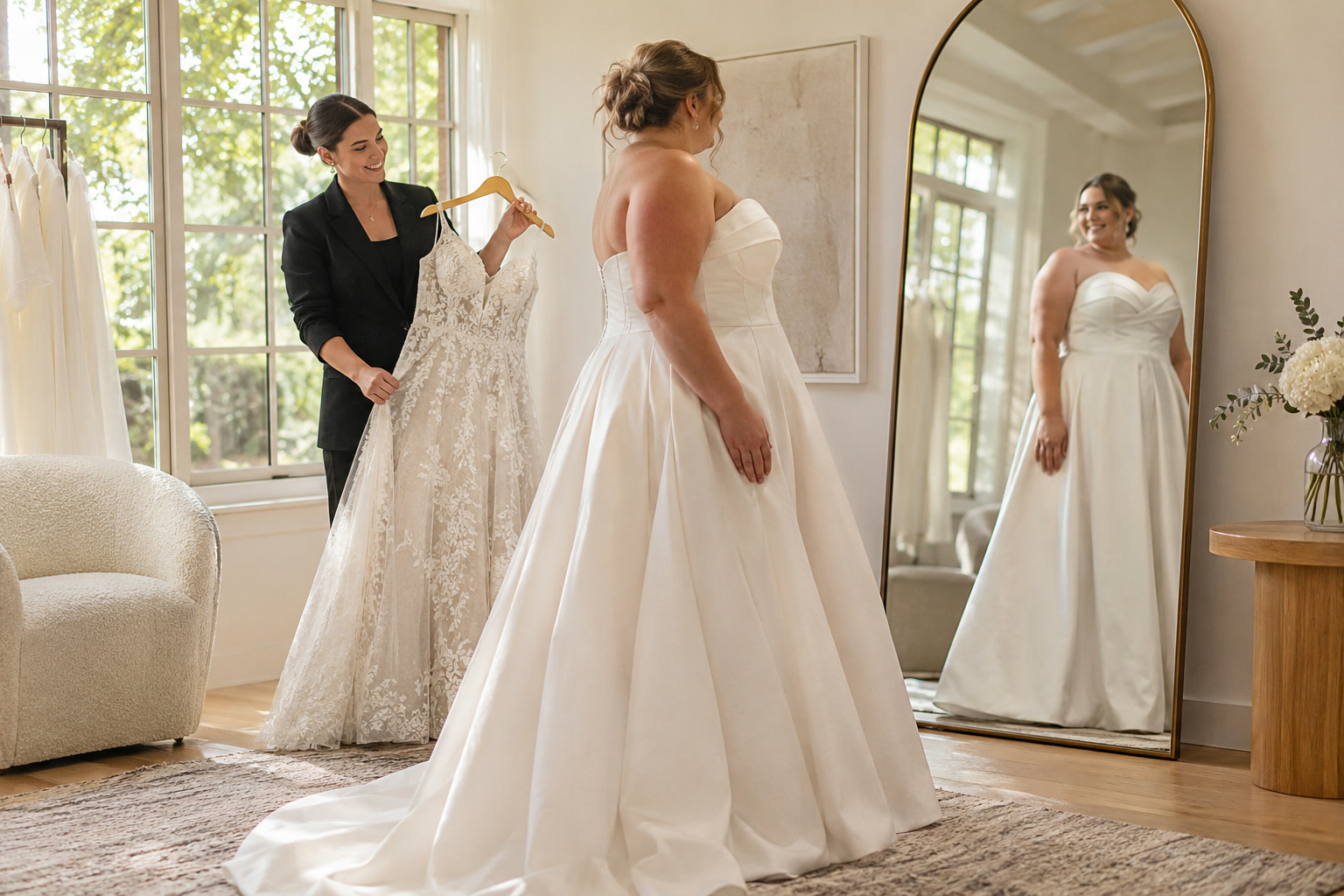
Before you book a bridal appointment, ask what you’ll be able to put on and fasten. A website may list plus size wedding dresses in the size you need while the store has a different sample on its rack. If you’re spending an afternoon traveling to a salon, I’d choose one that can reserve two wearable options over one that simply points to a larger catalog. With the back fastened, you can let go of the bodice and see where it settles.
Start with a few measurements and one question about fit. If you want sleeves, decide how far you need to reach in them. If support is your priority, try a soft lace dress and a structured bodice. Carry that question from the first call to the actual try-on, even if the fitting happens in your living room.
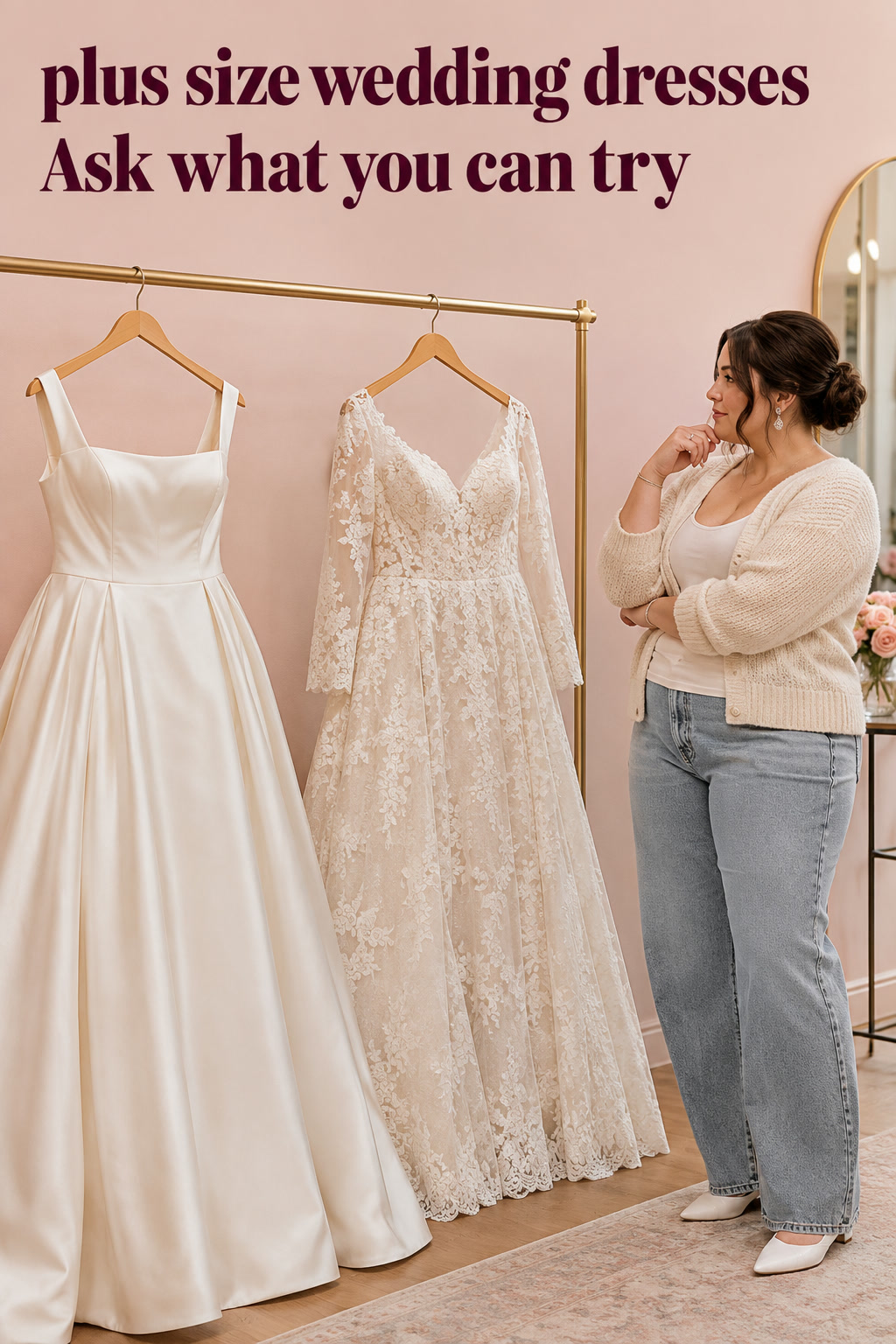
Get the measurements and the sample sizes
Write down what the designer’s chart asks for
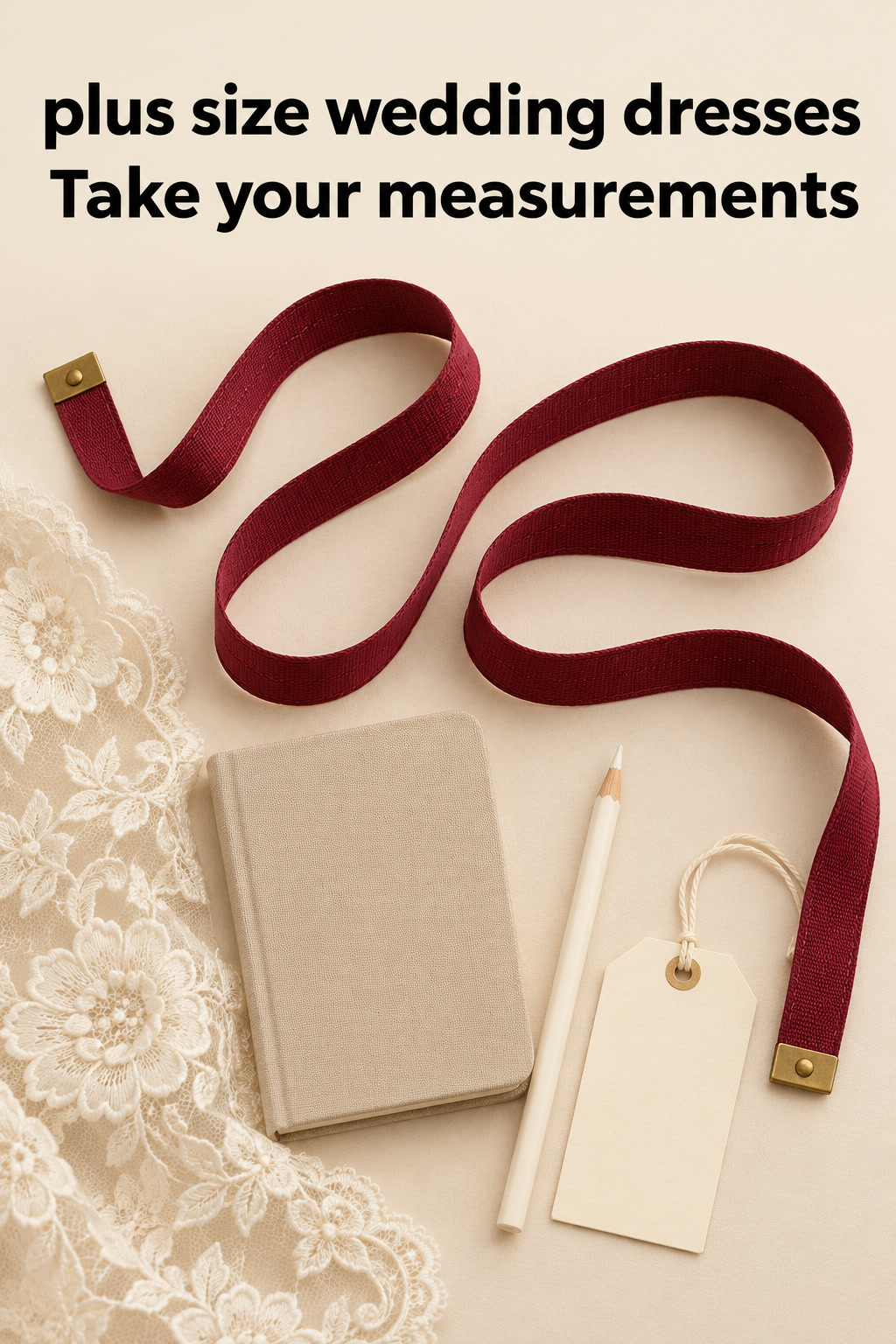
Take your measurements in the kind of underwear you expect to wear while trying on dresses. Follow the maker’s instructions for where to place the tape. Keep a soft measuring tape level and let it rest against you without pulling it tight. A trusted person can help check that the tape stays level across your back. Record the date and write down the numbers as measured. If the chart separates bust, waist and hip, give each its own line so you can compare the entries later. The size in your usual jeans can stay in the notes as a point of reference.
Save a screenshot of the chart and the name or style number beside it. Keep the size label exactly as written, including letters. A number with a W and an X-size range are different chart entries. If a shop recommends a size over the phone, ask what chart and measurements it used so you can talk about the same gown when you arrive. If the label at the next store is different, use its chart and start the comparison again. Bring the original measurements so the next shop can use them with its own chart.
Turn wedding inspiration into a plan you can actually follow.
Zarellea brings your guest list, budget, vendors, and day-of details into one shared space — so no beautiful idea gets lost in the shuffle.
Ask the salon for two dresses you can actually try
Maggie Sottero’s plus-size collection recommends calling a retailer in advance to ask about samples in your size. Try a question the shop can answer from its own rail. “Could you tell me the label sizes on two samples I can put on and fasten for my appointment? I’d like to try one with sleeves and one without.” If you want a specific style, offer the style number and ask if it will be in the building that day. A reply of “We can get it” is a cue to ask whether they mean they can order the dress for you or arrange for it to be there as a sample.
A designer’s order range is a separate piece of information. Madi Lane describes its dresses as made to order in US sizes 2 through 28. Ask the local shop which of those dresses it has on the rail and in what sizes. If it has only one sample you can wear, ask which construction it can show you. I would still go if that sample let me check something specific, such as whether I could move my arms easily in a fitted sleeve.
Pack for the comparison you want to make
Bring a bra you can comfortably wear during a fitting if you plan to use one with the gown. If you’re deciding whether the bodice can work without a separate bra, ask the stylist how to try it both ways at the same appointment. Bring a steady shoe close to the height you expect for the wedding so you can see where the hem falls. Add any accessory with a real bearing on fit, such as a wrap you already own that needs room over the sleeves. Keep a page for each sample and a separate page for the order. You may try one size and order another, so two headings are easier to read when the stylist calls later.
Use the same checks on each sample
Check the closure before you judge the bodice
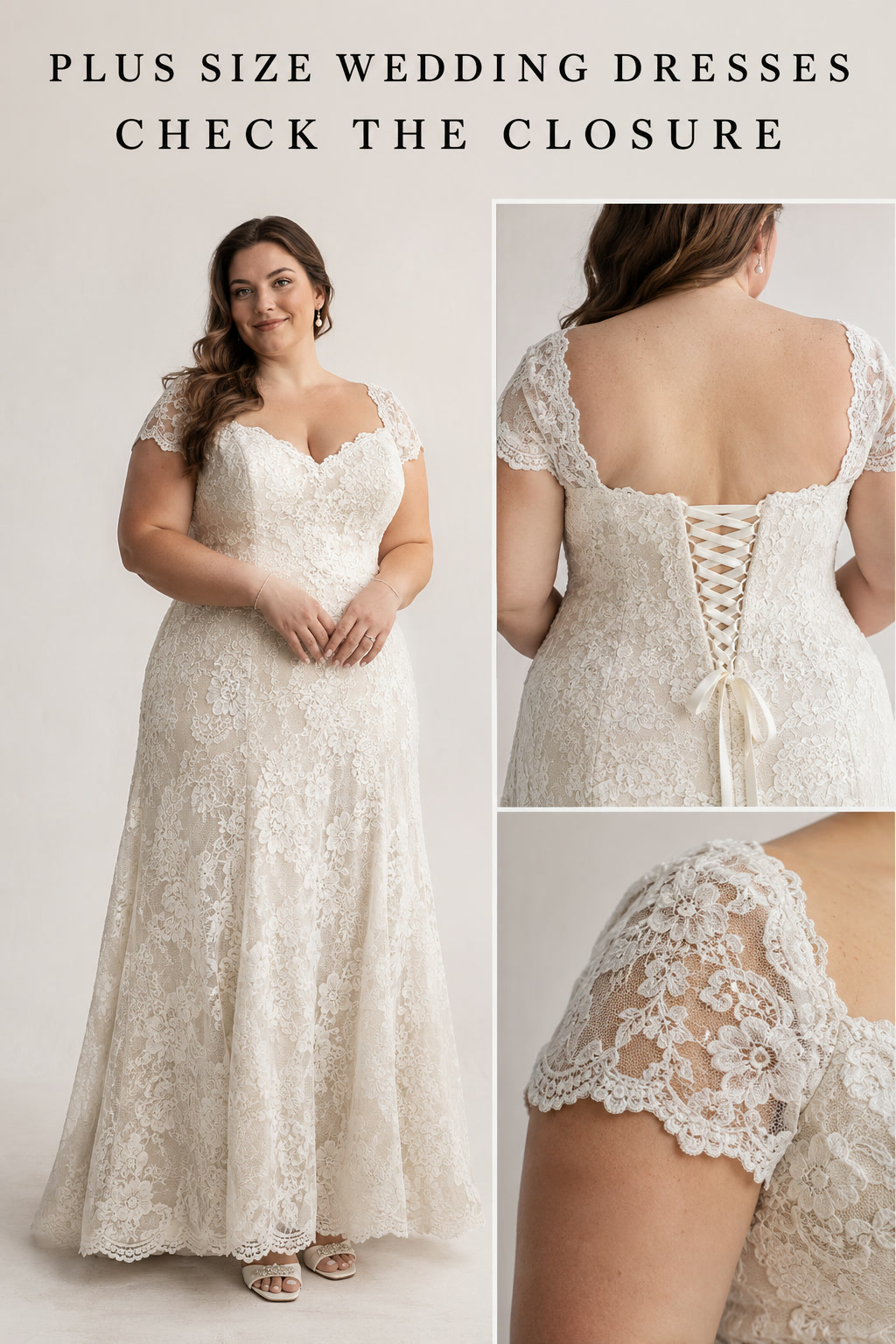
Ask the stylist to tell you which area is supported by clips, a temporary panel or their hands. If a zip is several inches from closing and the stylist pinches the shoulder straps, you can still see whether you like the neckline. You have yet to feel that bodice through the ribs and chest with the back closed. Write “neckline only” beside that dress if that’s all you could assess. Use a sample that can fasten to judge whether you can relax your shoulders while the dress stays in place. If you’re trying a lace-up back, ask the stylist to show you the lacing gap the maker intends and adjust it evenly before you draw conclusions about the fit.
Look at the front after the stylist lets go. Wait through a few regular breaths. If you have to grip the bodice to feel secure, describe where it slips and ask whether another size or a different kind of support would make a better test. For a dress with firm structure, pay attention to pressure at the edge where it ends. For a soft lace dress with stretch, notice whether the neckline returns to its place when you lower your arms.
Test the one motion that shows the fit problem
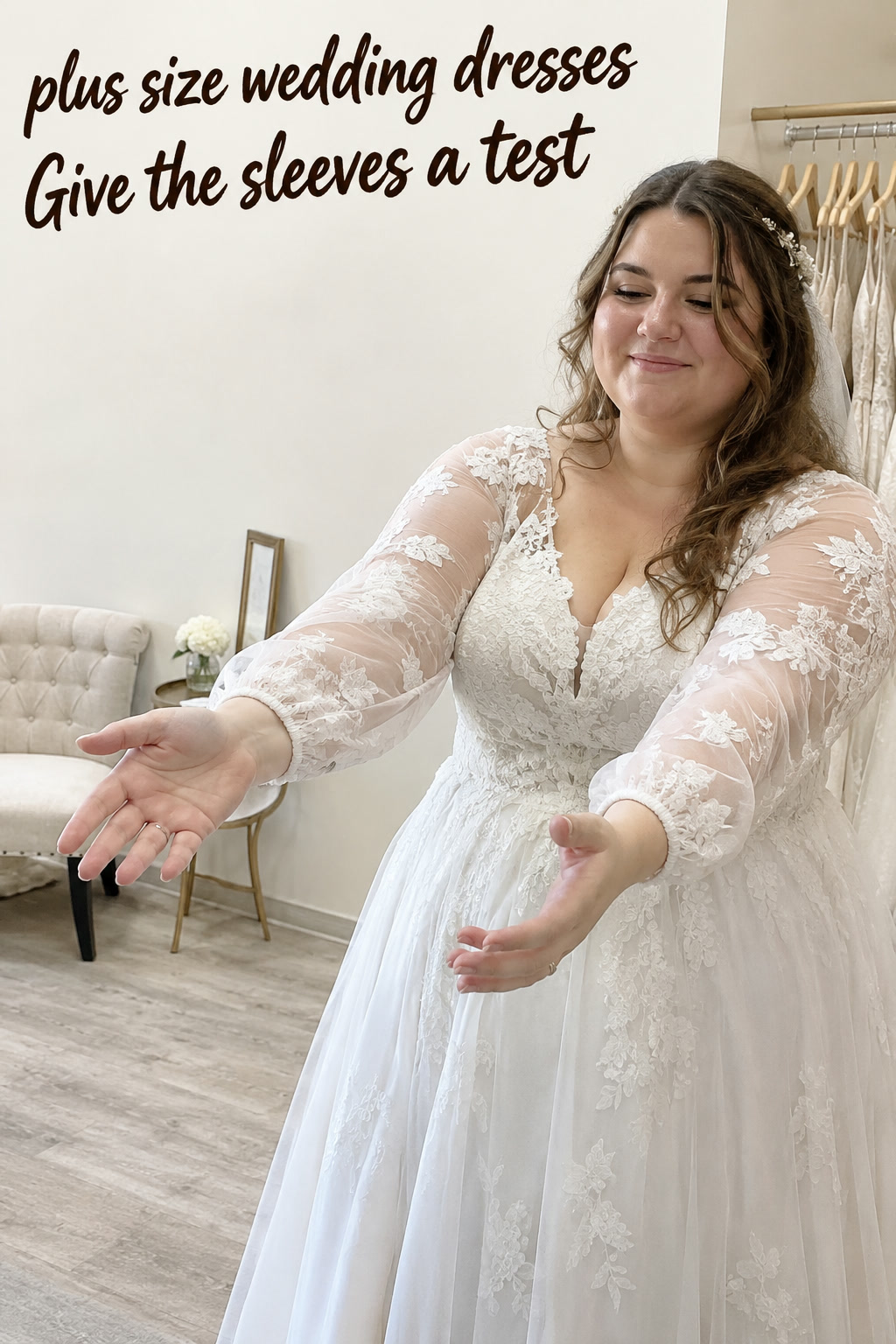
Reach forward at chest height if the dress has sleeves. Notice whether the fabric limits your upper arm or whether the whole gown lifts when you reach. Sit all the way back in a chair if a waist seam is the concern, and see where the seam meets you when you settle. If you’re deciding between a narrow skirt and one with more room, take a few ordinary steps while the stylist keeps the train clear. Use the same motion in each sample. If a clipped or open dress is the only version available, note the check as unfinished before trying the next one.
Ask a companion to watch the part you can’t see. They can look for the zipper moving, a sleeve pulling along the back or a strap sliding toward the edge of your shoulder. Give them a question they can answer in one sentence. “Did the back edge move when I reached?” gives you something to write down. Save a photo if the store allows it and label it with the style and what was clipped. You may remember the picture for its neckline three weeks later and forget how much the clips changed it.
Work through three fitting decisions
The dress you want is there in a sample that won’t close
Suppose you like a chiffon A-line with sleeves, but the salon only has a sample that doesn’t close at the back. Ask to try a dress with a similar shoulder and sleeve in a wearable size so you can tell whether that kind of arm coverage suits you. Then go back to the original sample long enough to look at its particular lace or skirt. Note what each dress actually answered. Write down how far you could reach in the second dress and what you liked about the fall of the chiffon in the first.
If the shop offers a loaner or a dealer event with other sizes, ask for the style and sample size it expects. Treat the second visit as worthwhile only if the sample can resolve an open question. If you’re ready to try a different dress instead, keep the specific thing that worked in the wearable sample. A sheer sleeve that lets you reach easily gives another stylist a better starting point than the general request “something with sleeves.”
Your measurements point to different rows of the chart
Suppose your waist and bust line up with one row, while your hips match another. Ask the shop to read the chart with the shape of the specific skirt in mind. An A-line that releases away from the hips and a fitted skirt bring different questions to the order. The stylist may need to check how much room the actual gown has at the hip. If a structured bodice is the difficult area, ask where the shop expects to take it in and where it’s counting on there being enough fabric. A lace-up back can be worth comparing if you want an adjustable closure, but still check the maker’s intended fit through the bust and waist.
I would ask for the size recommendation and the proposed alteration in the same conversation. If the proposed order relies on changing a seam covered with lace or beads, ask whether the alterations team can check that detail before you pay. Ask whether the alteration would require removing and replacing any of the trim. If nobody has seen the seam or can say who will assess it, keep that part open in your notes.
You have to get your answer at home
If you’re shopping remotely, pick a dress with return terms you can meet and make time for a trial as soon as it arrives. A stretch lace gown can be worth trying when you want to feel how the dress moves while sitting. A more structured dress gives you another kind of fit to compare if you have time and can return either one under its own terms. Read the policy for that style, size and order type, including whether tags must stay on. Write down the day the seller must receive the dress or the day you need to hand it to the carrier, whichever their terms specify.
Try the dress on before planning any permanent work. Ask a person you trust to check the closure and tell you when the fabric starts to pull, or take a short video from the side if you are alone. If you need advice from an alterations shop, ask when it can see you before committing to the order. Give yourself room to return the gown if the answer comes too late. If the alterations shop can only see you after the return deadline, keep looking for a dress you can assess in time.
Dresses and tools for a fitting
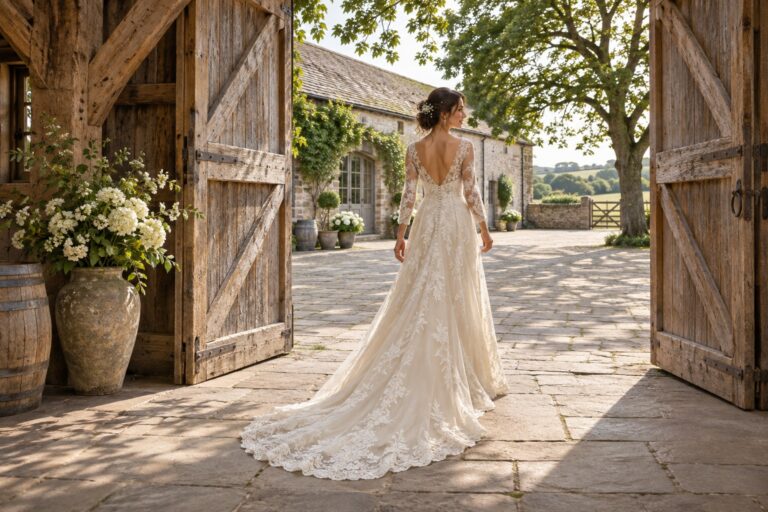
Check the arm in motion
Check where support ends
Check hip room and lacing
Write down the actual measurements
Get the order and the fitting plan in writing
Check the details that identify the garment
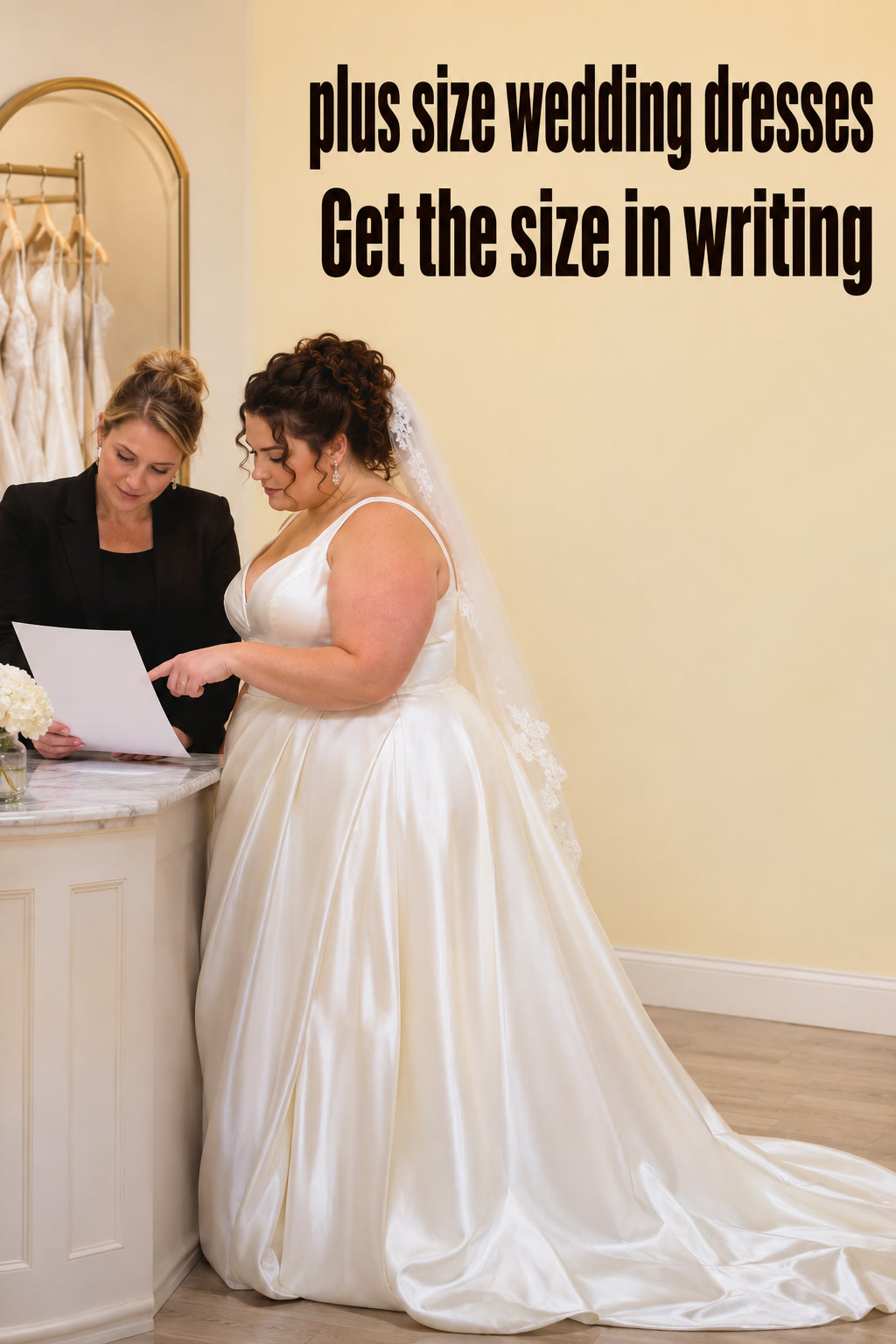
Ask for the maker, style number, color, order size and measurement chart on the order or in an email. Compare those against your notes while you’re still with the stylist. If you tried a dress with a different lining or straps, ask what the ordered dress will include. Save any written decision on custom sizing or a change to the standard design. For example, if someone said the sleeves would be ordered separately, get the sleeve reference and expected delivery with the gown order. If the sleeves arrive separately, book your fitting for a date when you expect to have them and the gown.
Ask when the dress is expected to arrive and what date the alterations shop can actually offer. If an alteration is central to the choice, record the estimate, the person who has confirmed the work and anything that still depends on seeing the ordered dress. The amount due to order and the projected alteration cost are useful as separate entries. If you’re deciding between an in-stock dress and a special order, compare when you could start tailoring each one, including any time you need to bring the dress to a different shop.
Leave the fitting with a decision you can explain
Give each finalist a short note in plain language. “Closed without pulling at the ribs. Need the taller shoe to check the front hem.” “Loved the sleeve. Sample was open at the back, so the bodice is untested.” Decide whether the unchecked point affects your ability to wear the gown. If it does, book a follow-up around that one point or choose a dress you could check today. If it’s a separate detail you can decide later, ask what can wait until the first alterations visit.
Editor’s take
I’d spend the first appointment in a shop that can put an appropriate sample on a hanger with my name on it. A store that can offer a second dress with a different kind of support is even more useful when I’m deciding what I like. I’d make an exception for a visit whose purpose is simply to see the work of one designer, provided I had time for another appointment to check the fit. Call one store with the name of a dress you like and ask what you can try that day. The recommendation comes from reading manufacturer and retailer information about orders and samples. Use the examples as checks you can run during your own fitting.
Sources and methodology
The linked manufacturers describe sample inquiries and made-to-order sizes. The fitting scenarios are hypothetical. Ask the salon or seller to confirm the style’s size chart, what it has available and which changes it can make to the actual dress.
FAQ
What is the difference between a sample size and an order size?
The sample size is printed on the dress the shop has for try-ons. The order size is the size the seller will request from the maker after checking the measurements and the gown’s chart. Write both down with the style number. A sample with clips may give you a view of the cut while leaving some questions about the order fit unanswered.
What should I do when I’m between bridal sizes?
Ask someone to show you the two chart rows and explain which parts of the dress are fitted. Ask where the stylist expects adjustments and how that would affect the features you’d like to keep. Get input on important changes before you accept an order based on them.
Can I judge a dress when the sample can’t zip?
You can look at the fabric, skirt outline and some design details. Write down where the sample is open or clipped and wait for a wearable version before deciding how the neckline and bodice feel when they have to support themselves. A similar gown in a more representative sample can be a starting point while you look for the exact style.
Do I have to bring shapewear or a special bra?
Bring undergarments you actually want to wear if you already have them. Ask ahead if you want to try the gown using its own support. A fitting is a chance to find out what the dress and your preferred undergarments feel like together before you buy anything else.
What can I ask for if the salon has very few samples in my size?
Request two details that could change your decision, such as sleeve reach and the feel of a supportive bodice. Ask what it can show you for either and whether it can source a specific loaner sample for another date. If nobody can identify a sample that gives you something to test, try a different salon or a retailer with a home trial you can complete on time.
Should I make a purchase based on my street size?
Use the chart for the exact dress and check that the returns or alterations plan fits your schedule. Compare the measurements printed next to the size on both charts before assuming the labels mean the same thing. If the seller recommends a different label, ask how it translates the measurements and which parts of the garment they expect to adjust.