White Wedding Dresses: How to Choose Your Shade
Choose the white of your wedding dress before you buy the white pieces that will sit next to it. Ask for a swatch of the exact shade you want to order. I’d use it first on whichever piece will sit against the gown in portraits, often the edge of the veil. You can be much more relaxed about a white shoe that only appears when you take a step.
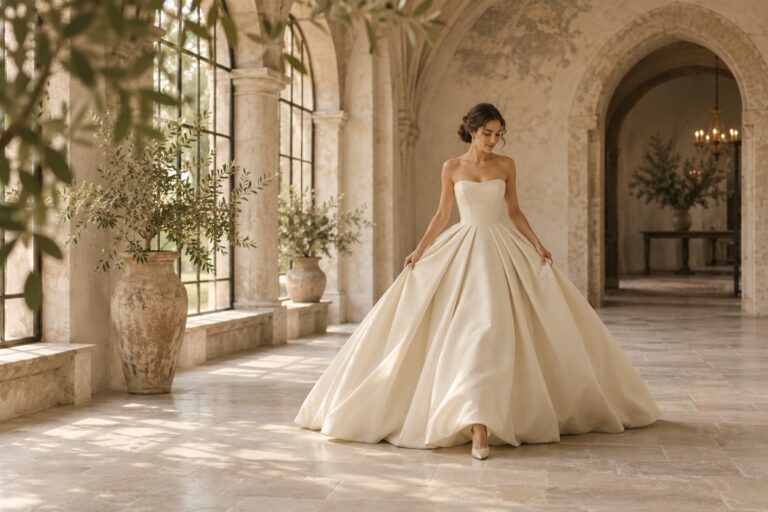
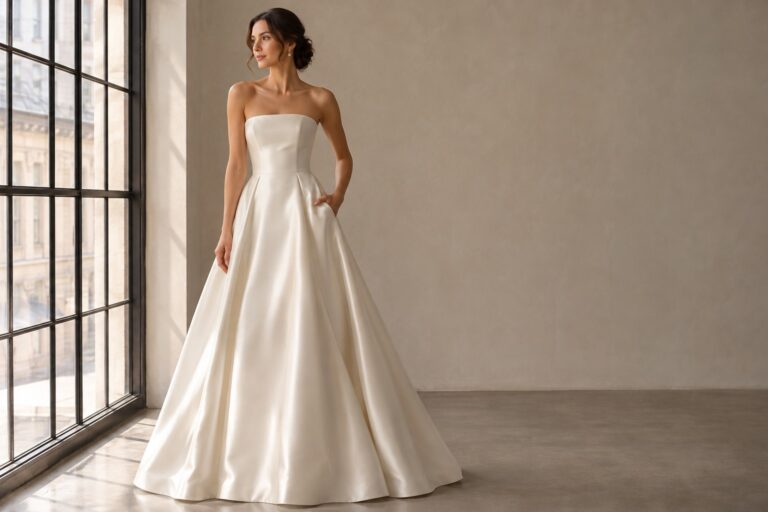
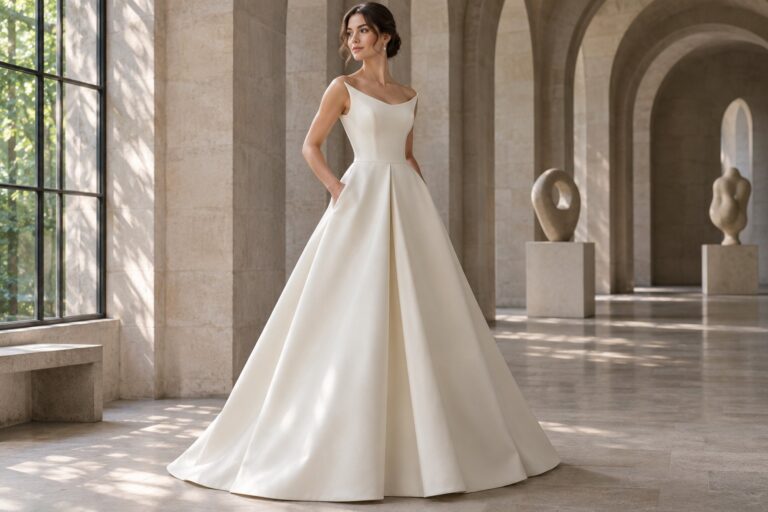
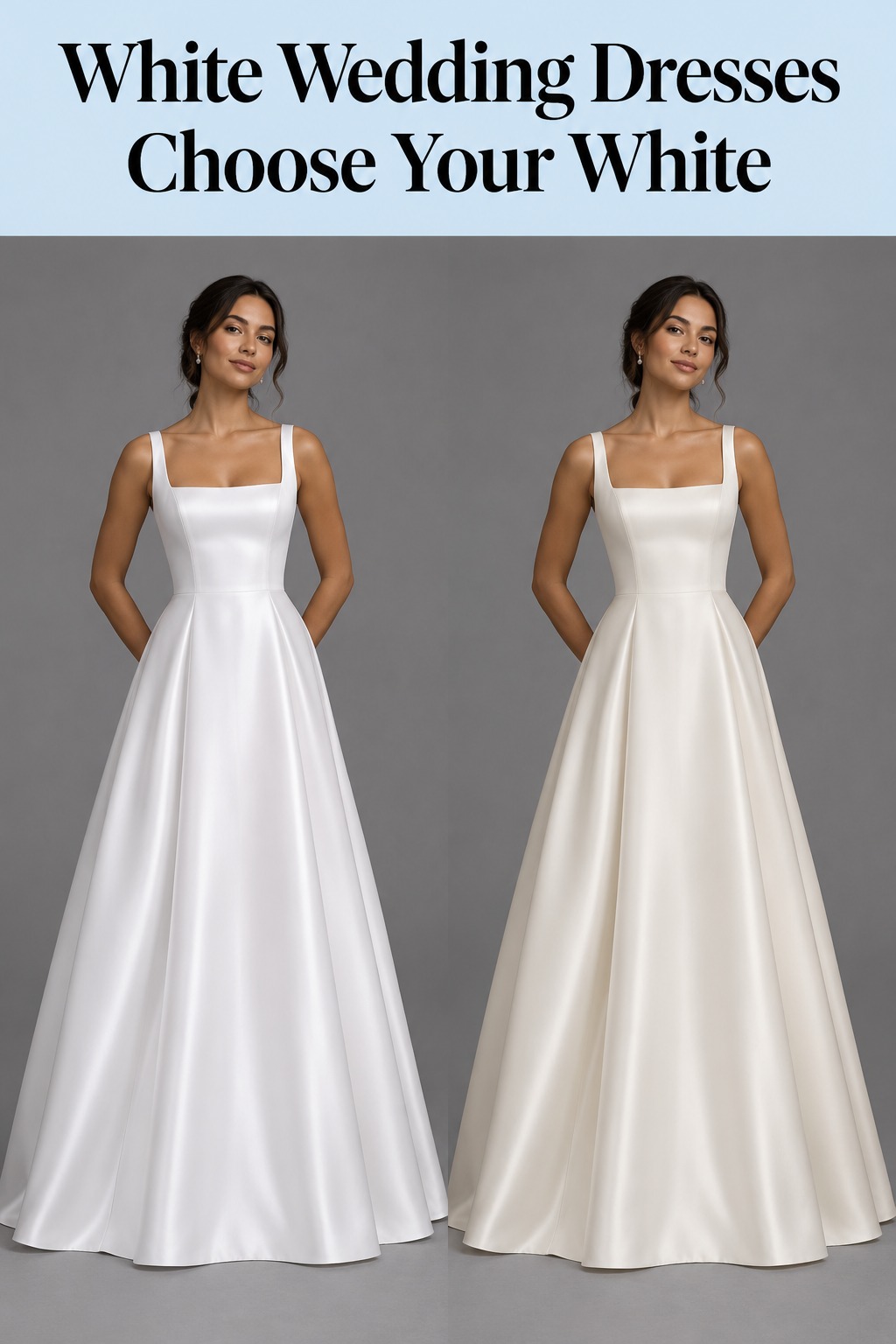
Some white wedding dresses look crisp and cool. Others look white from the aisle and show a little cream up close. Try both before you settle on a color, especially if you are bringing an heirloom veil or sash into the outfit.
Why the color on the tag can surprise you
Start with the shade you can see
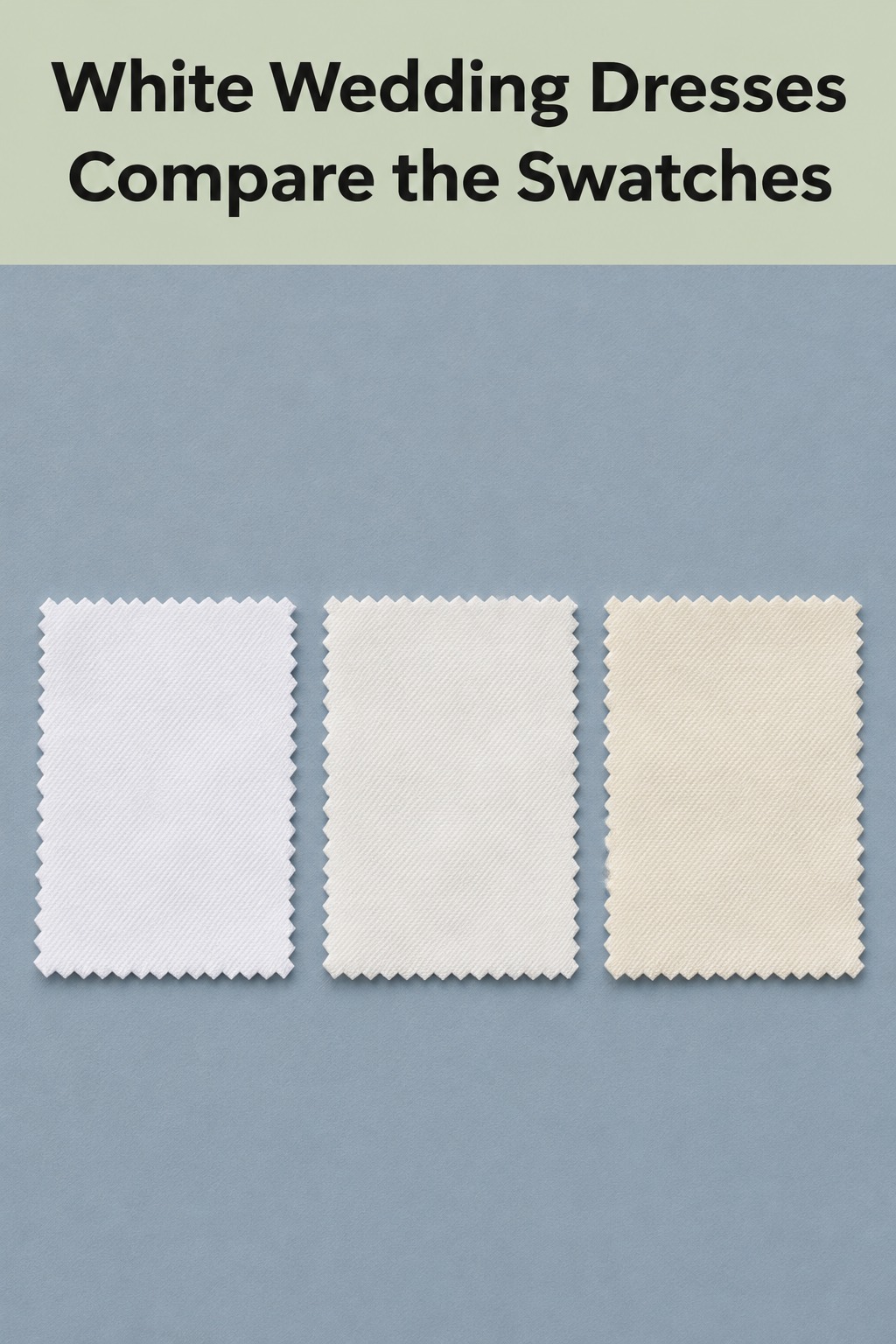
Tiffany’s Bridal Boutique’s shade guide describes bright white as having a cooler appearance in full light and ivory as carrying a warmer, creamy tint. At the salon, start with a bright sample and an ivory one. Add a softer white if you want something between the two. Hold the samples together for a moment, then look at each by itself. A piece that appears almost creamy in the comparison may look clean and white when you set the brighter swatch aside.
Treat names like soft white, diamond white, and off-white as a way to find samples. Before assuming two pieces match, ask the shop to show you the actual color from each maker. If the store has only one version of a gown on the rail, check the sample tag. Ask the stylist whether the color next to the online photo is the shade you’re wearing or another option you would need to order.
Turn wedding inspiration into a plan you can actually follow.
Zarellea brings your guest list, budget, vendors, and day-of details into one shared space — so no beautiful idea gets lost in the shuffle.
I would take two swatches into the fitting room at first. You can usually say which has more warmth when they are next to each other. If both look good against your skin and you like the shape of the sample gown, check which one you can see in that exact design. You can hand that swatch back to the stylist when you ask for alternatives.
Ask which fabric the color name describes
A vendor may describe the whole dress by its finished color, even when individual fabrics look different. Maggie Sottero’s guide to wedding dress colorways shows how the designer combines several layers, including linings and lace, to create the overall shade. If you like an ivory lace pattern that looks almost white over a richer base, point to both layers when you describe what you want. Ask how each part changes in the alternate colorway. The same pattern may look more subdued when its base is close in color.
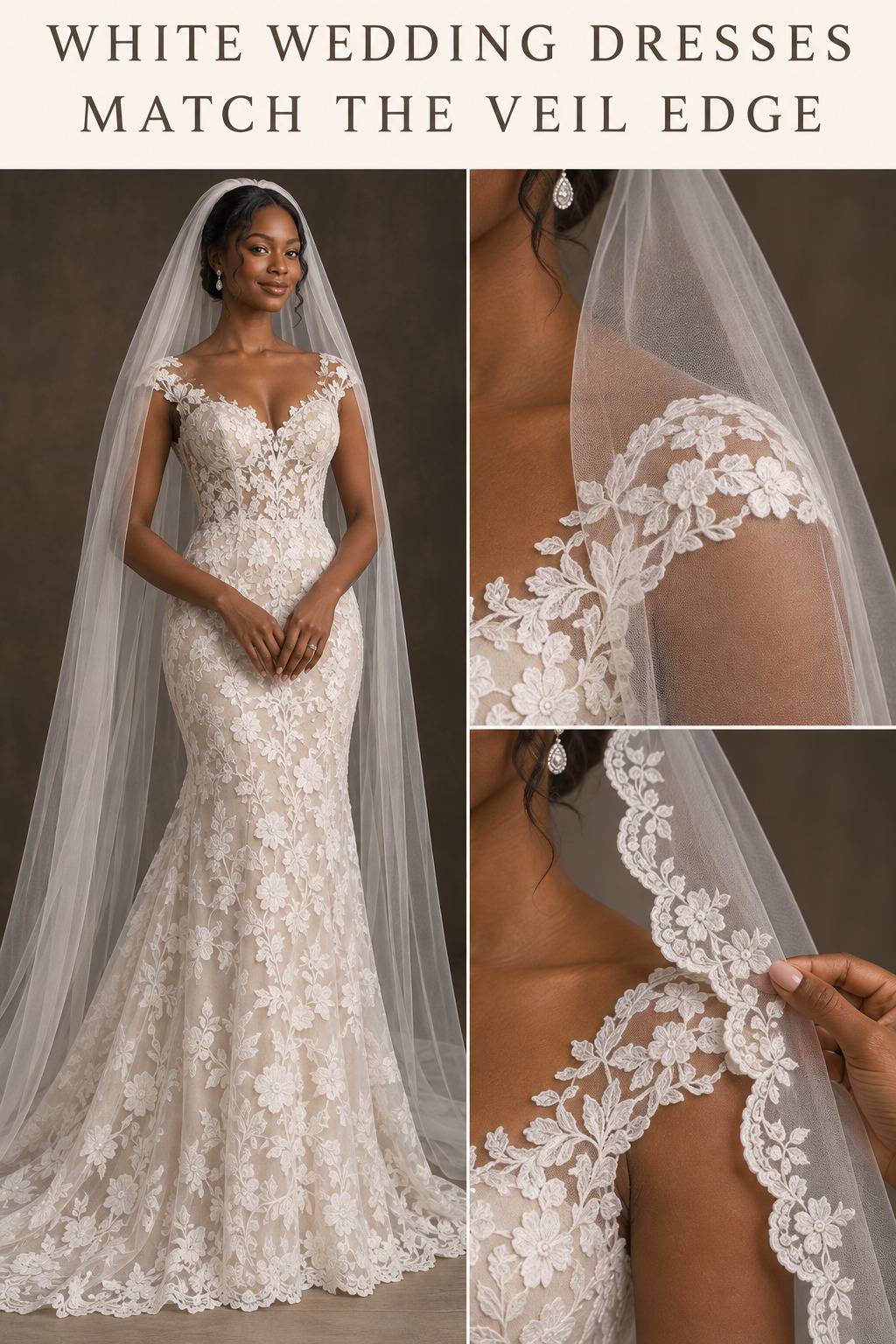
Ask to see an assembled swatch if the designer has one. If you can only get separate pieces, have the stylist hold them in order so you can see which color will be closest to the outside. Compare the area that will touch your accessory. The open lace at a shoulder may show more of the material underneath than the closely worked lace border on the skirt. A good match at the waist can still leave you with a visibly different edge on the veil when it falls over the shoulder.
If you like the way satin changes as it curves, hold the sample at a slight angle and then flatten it again. A highlight on a fold can look brighter than the flat area beside it. Move the two samples together before you decide there is a mismatch. A tint that stays visible after the highlight moves is worth a closer look.
Which parts of the outfit need a close match
Start with the veil edge beside the bodice
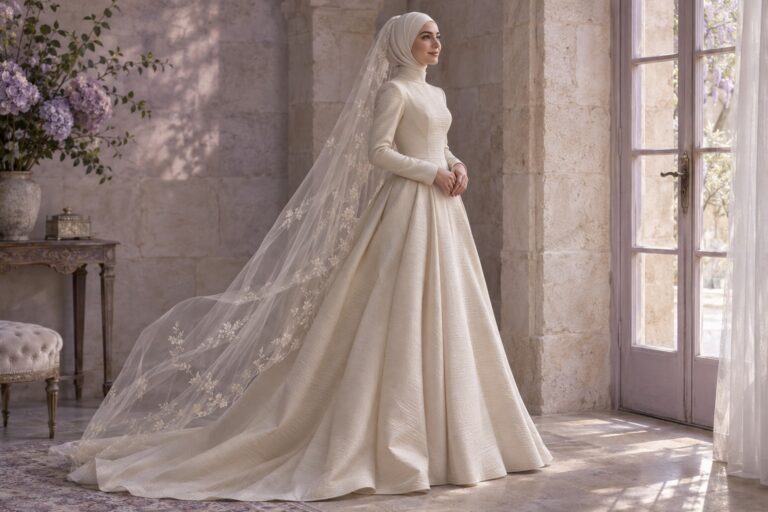
Place a plain cut-edge tulle veil over your shoulder and see where it crosses the dress. Hold it as it will actually hang, so you’re looking through the number of layers you’ll wear. Then step back to see if you notice the edge. Two veils can seem equally pale when you look at their combs, yet one may have a bright border that draws a clear line across a warmer bodice. If the design has lace, satin binding, or embroidery, compare the trim itself with the dress.
Pin your hair up for the veil try-on if that’s how you plan to wear it. A veil worn below a bun might land farther back than the same veil placed on the crown, which changes how much of it touches the neckline from the front. If you borrowed a family veil and love its color, try it in the position you want to wear it before ordering a dress. Ask your stylist to bring two light shades to the mirror while the veil is in place. Keep the dress that looks like it belongs with that particular veil.
Give a solid white shirt and broad ribbon their own check
If your partner plans to wear a white formal shirt, lay its collar near the upper edge of your gown. A crisp white cotton dress shirt can bring out the warmth in an ivory dress when the two of you stand close. Decide whether you like that effect. You can keep a bright shirt if the difference looks deliberate as part of the full outfit. If you would rather see a smaller difference, lay a soft white shirt or fabric sample in the same position and compare the collars.
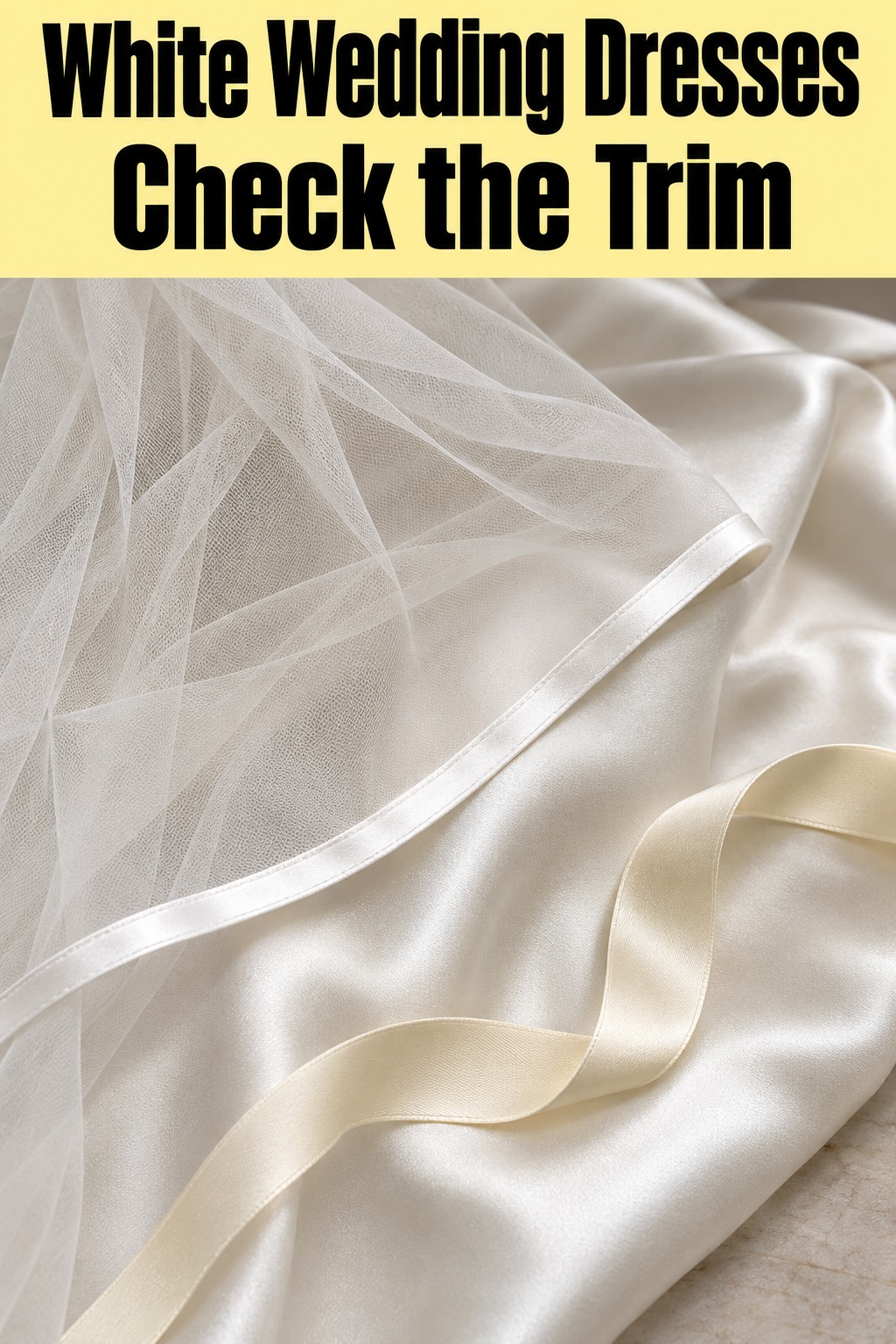
A wide satin ribbon can make a stronger color impression than the small amount of pale thread in a bouquet wrap. If you’re adding a bridal sash, hold it across the front of the gown and turn slightly to see the satin at an angle. For a bouquet ribbon, ask the florist to leave a sample long enough to hang against the skirt. Tape a note to the swatch bag with the dress name and label. That gives the florist the actual ivory to work from.
Shoes can wait until you know how much of them you’ll see. A white pump under a floor-length dress might appear for a step or two. A flash of brighter white may look intentional if the satin or leather has a finish you like. With a midi dress, the shoe and the hem can be in view together throughout the ceremony. Compare them at ankle height with the shoe on, since that is where the difference will show.
How to choose and order your shade
Bring a useful sample to the appointment
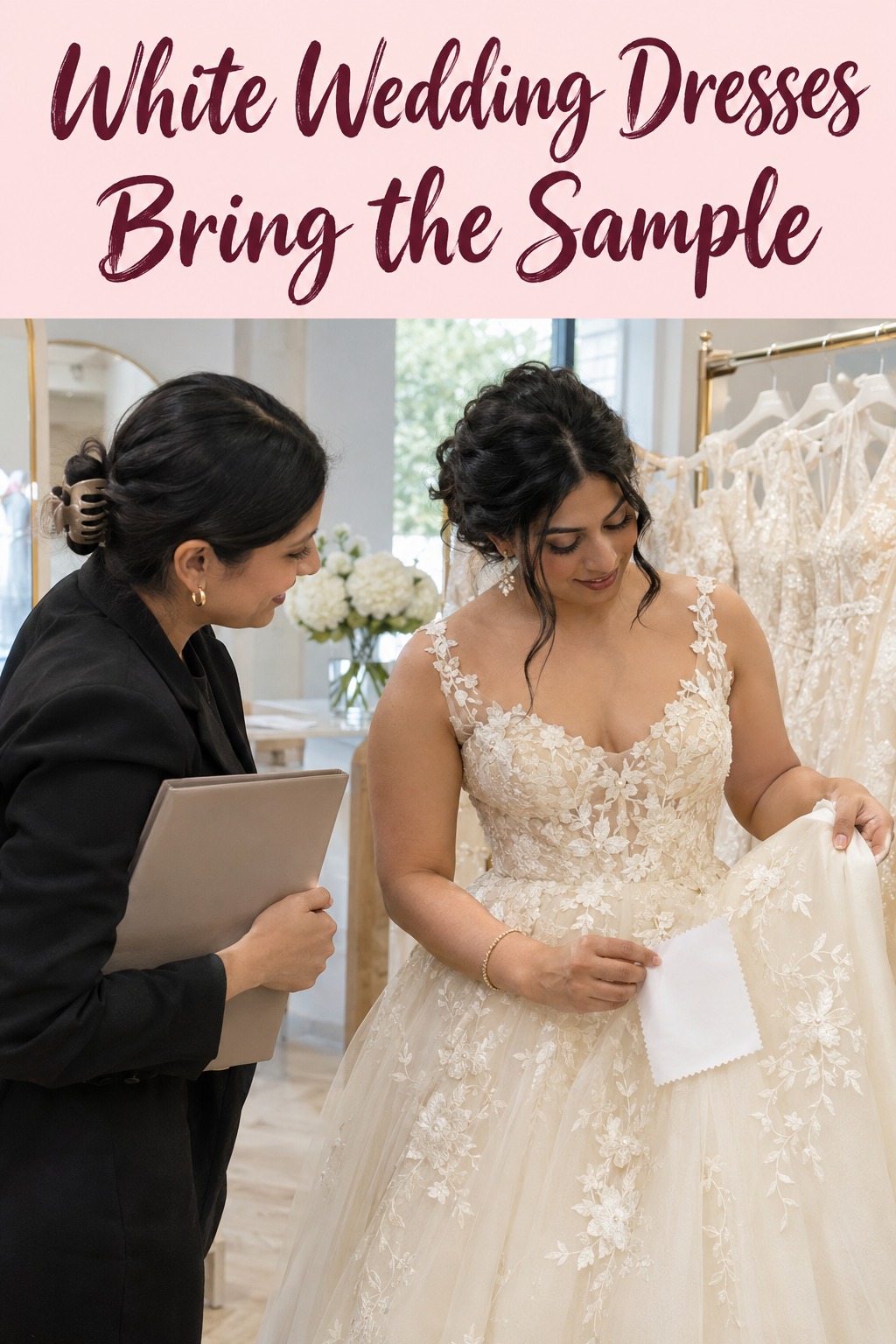
If you already own a white or ivory piece you want to wear, put it in a clean bag and take it with you. A swatch from its maker is easier to handle if it includes the part that faces outward. For a veil with embroidery, bring the veil or ask for a piece with the actual trim, because plain tulle alone will show only part of the color. If the family piece is fragile or hard to transport, ask the salon if you can take comparable swatches home.
Bring the actual reference into view before you narrow your search by shade. Tell the stylist where it will sit and whether it must stay. Then ask for two dresses that are close to the color you want. If the garments are very different in shape or texture, ask for connected samples from the same design or fabric line so you can compare the whites separately from the silhouettes.
Build a reference you can use again
With the stylist’s permission, take one photo of both swatches next to each other and a second image with the swatch next to the accessory. Use the same light and keep the pieces in one frame. If the dress looks creamier in one photo than another, check what else changed before deciding the sample is inconsistent. A window, an overhead salon light, or a bright reflection off a satin sleeve can change how the combination looks. Write down which swatch you preferred while you’re still there.
Keep one physical piece with your order paperwork. If the shop offers only one, ask before cutting or dividing it. You can take the labeled sample to the next appointment and compare it with the accessory in person. I would prioritize sharing that swatch with the dressmaker and veil seller. A florist who is wrapping a bouquet in colored ribbon may only need a description of whether the white of the dress looks cool or warm next to their material.
Make the exact option part of the order
Ask the salon to write down the dress name or style number and the designer’s full color description. If there is a separate lining or overlay choice, include that as well. Read the order beside the sample tag before paying a deposit. If you are ordering a different shade from the showroom sample, have the stylist spell out the difference. “The sample is A, your order will be B” is a simple statement you can refer to when you pick up the gown.
Online, check the name in the color menu against the item description. Ask for the selected color and a photo in which that exact option sits next to a second shade, with both pieces labeled. If the retailer cannot send a sample, ask what its return policy allows before committing. A short white dress for a civil ceremony can be easier to assess at home if you can try the actual color with your shoes and return it under the seller’s terms. Keep the packaging and check the policy before trying any changes.
Pieces to compare with your dress
Check the exact white option
See how plain tulle sits
Hold the collar near the bodice
Compare the ribbon against the skirt
Common white-on-white mistakes and what to change
You bought the veil before the dress
Lay the veil across the dress and start by asking which part looks different. A bright thread on the border may show up while the rest of the tulle looks fine over the gown. If you can change the veil, bring your reference swatch and ask to compare a plain cut edge and a border in a softer shade. If you plan to keep it, try placing it so the trim falls farther from the most visible part of the bodice. Take a full-length look before deciding if the difference still bothers you.
When the veil has sentimental value, you can let its age or texture show. Try holding it beside a single repeated color, such as ivory ribbon on the bouquet, and see if the composition feels connected. Only make that change if the ribbon still looks good where it will sit against the gown. Once you like where the veil falls, check whether you even need to change the ribbon.
Your delivered dress seems different from the sample
Check the order and the tag before assuming the shade changed. Look for the lining option if the gown has one, and place your saved swatch against the relevant area. Compare them in even light and take a photo that includes both pieces. Then contact the seller with the style number, the color on the order, and the label on the received piece. If the names differ, ask them to confirm what was shipped before authorizing alterations or removing tags.
If the labels agree but you are bothered by the pairing with an accessory, ask to see the sample again or ask which combination of layers it had. A swatch from a different part of the dress or a second photo made under different lights may be hard to compare. Check the actual dress beside the planned shirt, veil or sash. When only one item looks off and can still be exchanged, start with that item.
Editor’s take
I would pick the dress shade first, keep a labeled sample, and spend the closest comparison on the veil or trim right next to the bodice. That’s the place where a small difference is easiest to see, especially when a solid edge crosses the gown in a portrait. I’d reverse the order for a family veil you already know you want to wear. Take that piece to your first appointment and ask to see it over two whites in the same silhouette, or over two sets of swatches. I based this approach on how designers and salons describe and show their color options. If you can do just one thing before ordering, get the sample shade and the exact shade you’re ordering written down together.
Sources and methodology
The boutique shade guide informed the color vocabulary, and the designer’s colorway guide explains how layers produce a finished shade. I used retailer and salon catalogs to see where labels and sample options differ. The outfit combinations are examples for comparison.
FAQ
Is soft white the same shade from every bridal brand?
Use soft white as a request to see a sample. If two makers use the same phrase, compare their swatches directly before ordering. Ask for the exact name or code of the shade shown, especially when the sample on the rail is offered in several colors.
How should I compare a satin veil trim with a matte dress?
Look at the trim straight on and at an angle while it sits against the dress. If the shine makes it briefly brighter, look again in a full-length mirror. If it reads as a separate color from several angles, decide whether you want the border to stand out. A cut-edge tulle veil is an option if you prefer a softer transition.
Can my partner wear a bright white shirt with an ivory gown?
Yes. Try the collar beside the top of the dress and view the pairing at the distance you’ll stand from each other. If you like the clean line of the shirt, keep it. If the contrast makes the gown appear yellower than you want, try a softer white in the same shirt style.
Do I have to match the white of my short reception dress to my gown?
Compare them mainly if you plan to reuse a veil or other white accessory. Put that piece against each dress and see if you like both pairings. If you’re changing the accessories, you can choose the second dress in the shade you prefer for that outfit.
Which photos should I request if I cannot see a sample?
Request two color options side by side in one unfiltered frame, with labels that match the order form. If you are comparing lace dresses, ask whether the photo shows the outer fabric over the selected lining. A close picture of the trim near the bodice is useful when you need to compare it with a veil.
How should I label a fabric sample for someone else?
Write the designer’s shade name, style number and part of the dress represented on the envelope. Add the separate lining or overlay choice if it affects the visible color. Tell the person which accessory will touch that part of the dress so they can compare the right edges.