Save the Date Dress Ideas for Your Favorite Pose
If you’re weighing save the date dress ideas, picture the pose you want to keep. The ivory A-line that looks crisp when you stand might bunch around the waist on a low bench. A dark satin slip might look beautiful under one light and throw a bright streak across your chest under another. I’d choose the dress that holds its shape in your favorite pose and feels easy enough to wear while you’re talking to your partner.
You can make the decision with two dresses you already own and a few phone photos. Start by trying both dresses with the same shoes. Keep the camera in one place so you can see what changes with the dress.
Choose the dress for the picture you want
Start with the pose the dress needs to handle
If you picture the two of you seated side by side, try the dress on a chair about as low as the one in the photo. Let your knees land where they naturally would. Look at where the skirt ends, whether the waist presses in, and whether leaning toward your partner pulls the neckline away from your chest. Try the same pose with your hands resting on your lap. If both hands go straight to the hem, try the other dress before changing the pose.
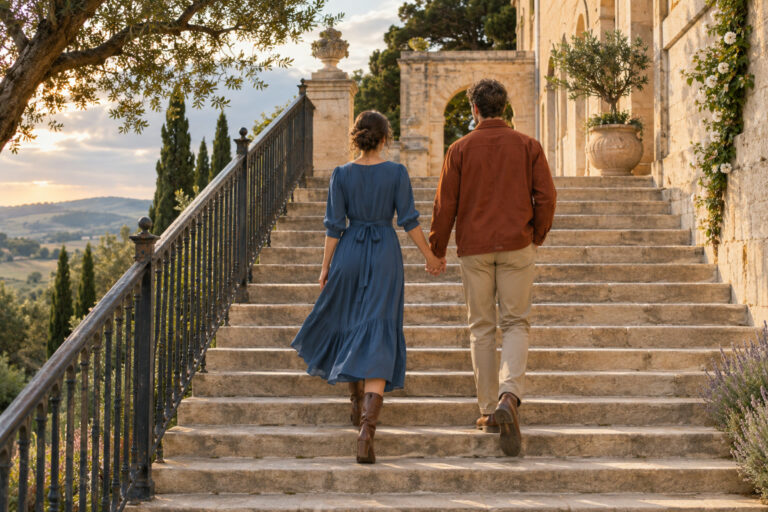
For a walking portrait, wear the shoes you plan to wear and take a few normal steps. A full skirt needs room to swing without getting caught between your legs. A straight dress can be comfortable if the fabric gives or the cut allows the stride you want. On stairs, check the step up and the turn back toward the camera. I would give up a little hem length before spending the session lifting a skirt I wanted to see in motion.
Turn wedding inspiration into a plan you can actually follow.
Zarellea brings your guest list, budget, vendors, and day-of details into one shared space — so no beautiful idea gets lost in the shuffle.
Decide how much dress will be in the frame
A chest-up portrait might show little more of the dress than its collar and sleeves. If you love a dress for its hem embroidery, ask for one head-to-toe frame where the embroidery can be seen. When the announcement will use one smaller portrait, spend more time choosing what appears near your face. If the skirt will be outside the crop, compare the two necklines first.
Also decide how close you want to stand to your partner. A large sleeve changes when your shoulders touch. You may love the room it gives you in a solo portrait but have to adjust the way you lean in together. Try that position wearing both outfits at home. If you already have a good pair of shoes, keep them in the test so neither dress gets the benefit of a different posture.
Compare the cuts side by side
A-line midi or straight midi
An A-line midi gives the skirt more width below the waist. Check where the skirt starts to flare and whether it falls back into place when you sit. A dress with a little structure can stay clear of your shoes when you walk, which is helpful if you want a full-length picture from the front. A very full skirt can take up both seats on a small bench. Sit next to your partner once and see how much of their outfit is still visible.
A straight midi takes up less room in a side-by-side portrait. Check the back vent or slit if the skirt feels narrow going up a step, and see where any slit lands when you sit. Between two dresses you like equally, I’d take the one you can walk in without shortening your steps for the camera. A short standing session could make a fitted, less flexible dress entirely workable.
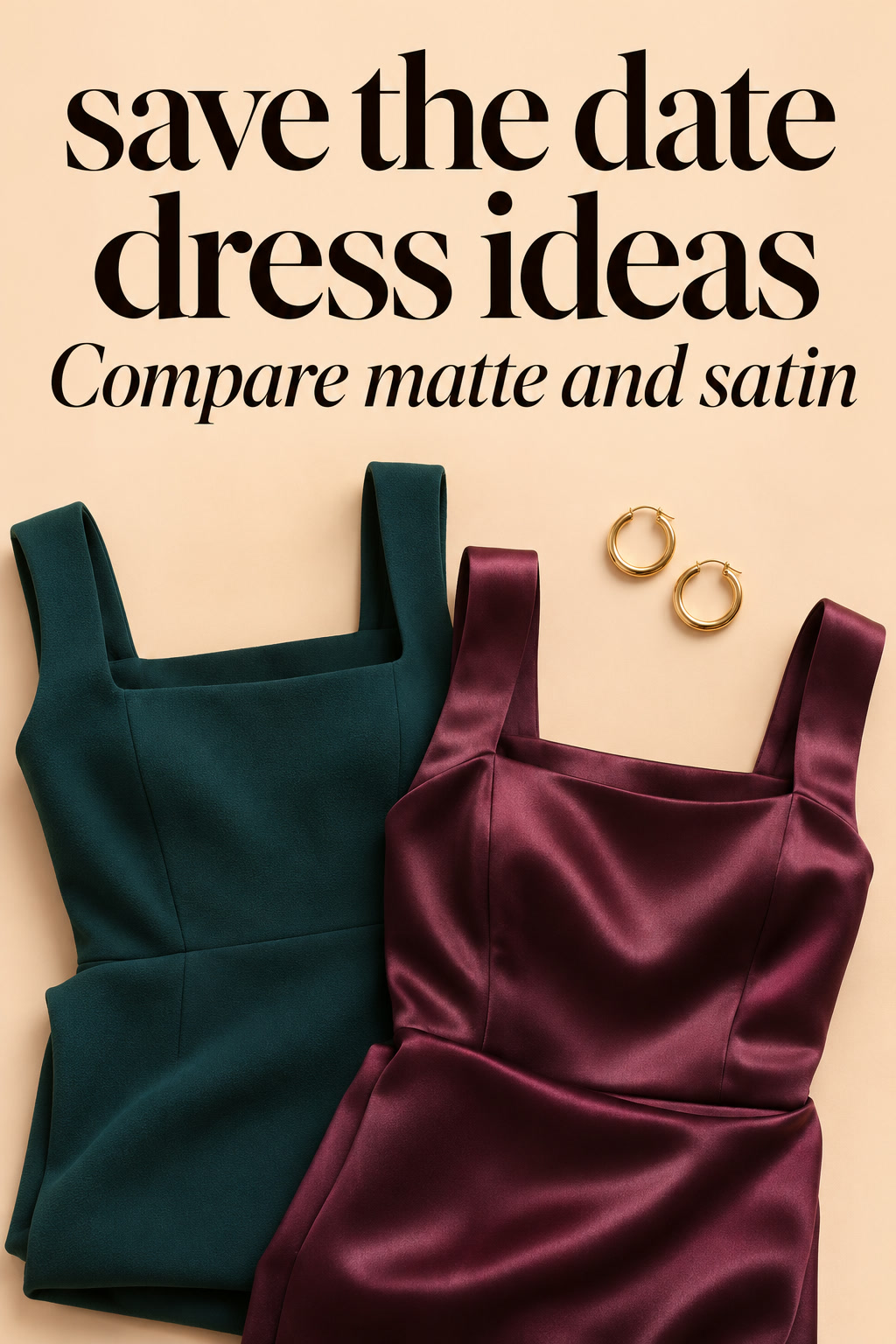
Matte dress or satin slip
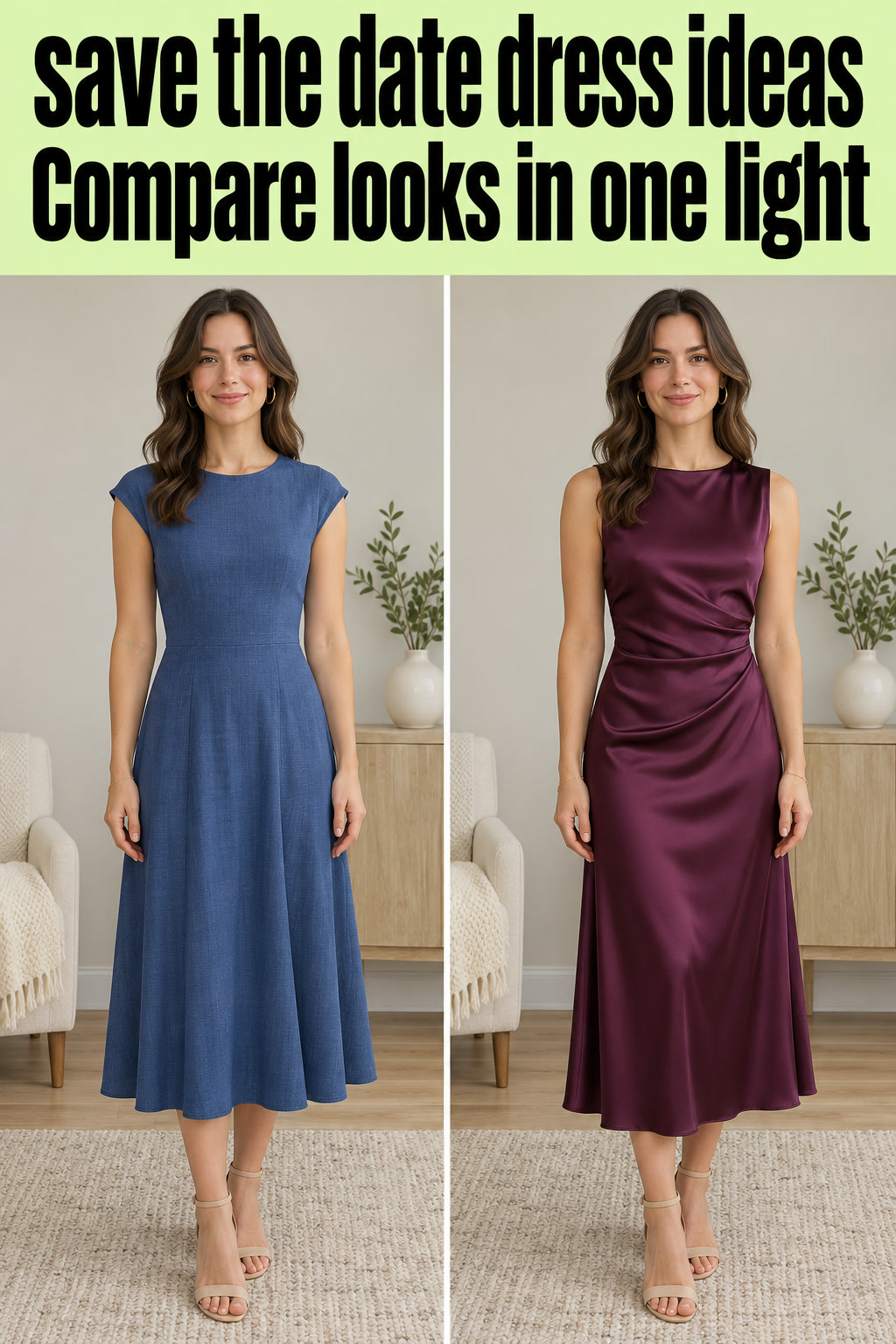
A matte crepe or woven dress is an easy starting point for a frame where the face and neckline do most of the work. A satin slip is a good choice if you want the highlights along the fabric to be part of the picture. Compare the two under the kind of light you’ll use. Turn slightly with the slip on and look at the shoulder and waist in each frame. If a reflection keeps landing in the middle of the dress, ask the photographer whether you can use a different angle or place. The same spot may look quite different when the light comes from the side.
Test the lining and straps with the actual undergarments. A thin dress can show the edge of a slip when the light comes from behind. The Lee Photo + Video engagement session guide recommends checking visible bra straps ahead of time. An intentional strap can be part of the outfit. If you want it hidden and the dress needs constant adjustment, take the neckline seriously when choosing between the two.
Ivory or a color you already love
Ivory is an easy choice if you like the bridal association and there is enough difference between the dress and the setting to make out its shape. Hold it up next to the palest part of the background you expect. If the dress has tone-on-tone stitching, ask yourself whether you want that detail visible in the picture or whether you only need the whole silhouette to read. A muted green, rust, or warm blue could suit the same level of formality and give you a clearer outline against pale stone.
For a close photo with both of you in it, photograph your favorite color next to the shirt or jacket your partner plans to wear. If your dress is a deep shade and their outfit is also dark, look at where the two shoulders meet. A lighter shirt under an open jacket may give the outlines room to read.
One solid color or a print
Try the print at two distances. Take one full-length photo, then view it as a small thumbnail. You can also take a closer picture where the pattern frames your face. In the Sew Mama Sew guide to save-the-date outfits, stylist Kristin Link points out how much fine pattern detail can disappear at card size. If you’re happy with how the dress reads when the print blurs, keep it in the running. If the only part you love is a cluster of flowers the crop leaves out, take another look at the solid dress.
Which dress fits your session?
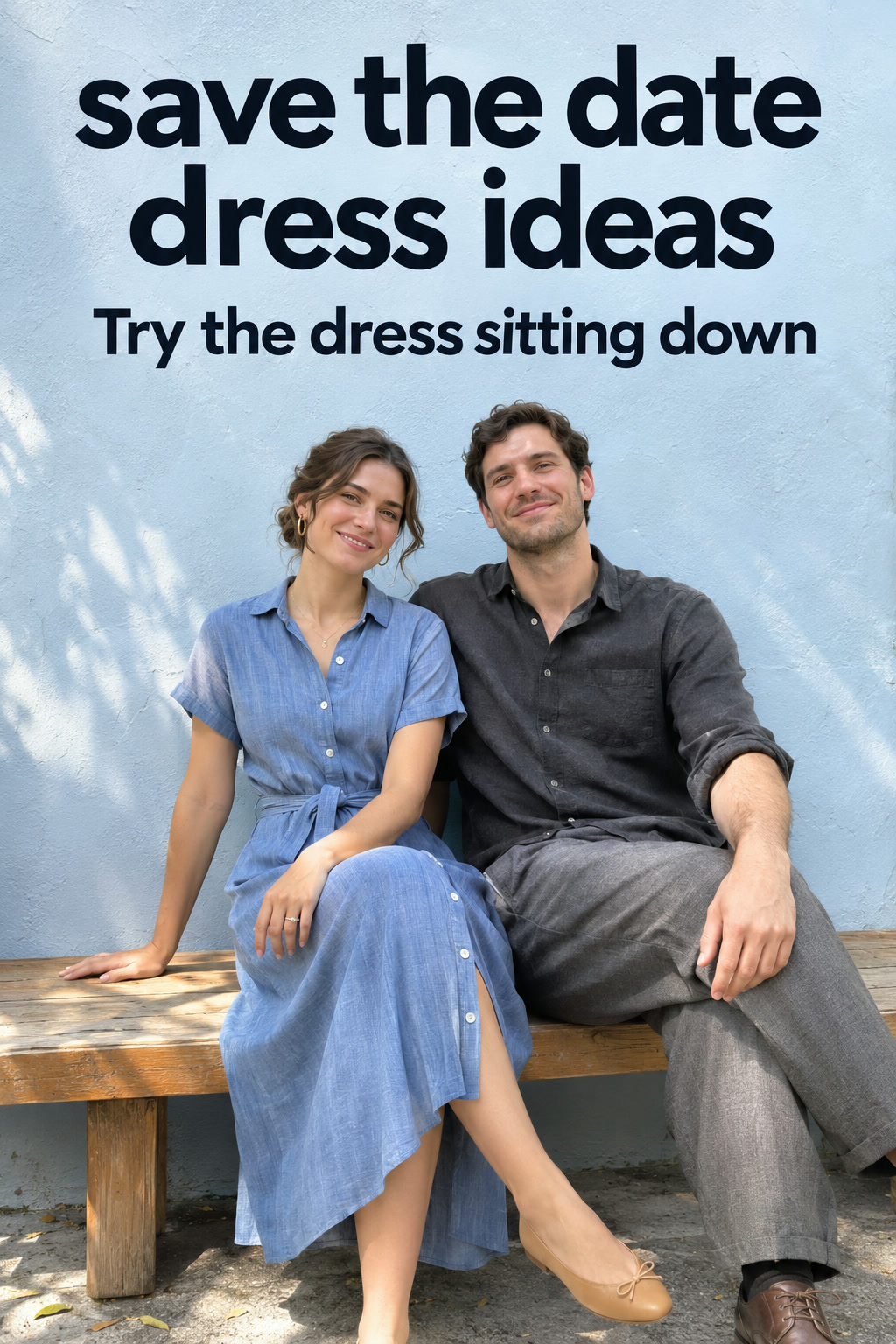
On a low bench, try a belted shirt dress
For a relaxed, seated portrait, try a soft blue shirt dress with a fabric belt and a skirt that covers your knees when you sit. The collar gives the close crop a visible detail, and a flat shoe you already walk in fits the informal setting. Try the button front while leaning toward your partner. If the buttons gape, choose a different cut or leave time to see what a tailor can adjust. A little dress tape can steady a neckline that already fits. It is a poor solution for buttons under regular strain.
A straight shirt dress with a belt may feel more comfortable standing than cinched on a low seat. Test the belt at the position you would actually wear it. If both versions feel fussy, swap to a collarless A-line with a plain front and give your partner a shirt with a clear collar instead. Together you still have one crisp detail near your faces.
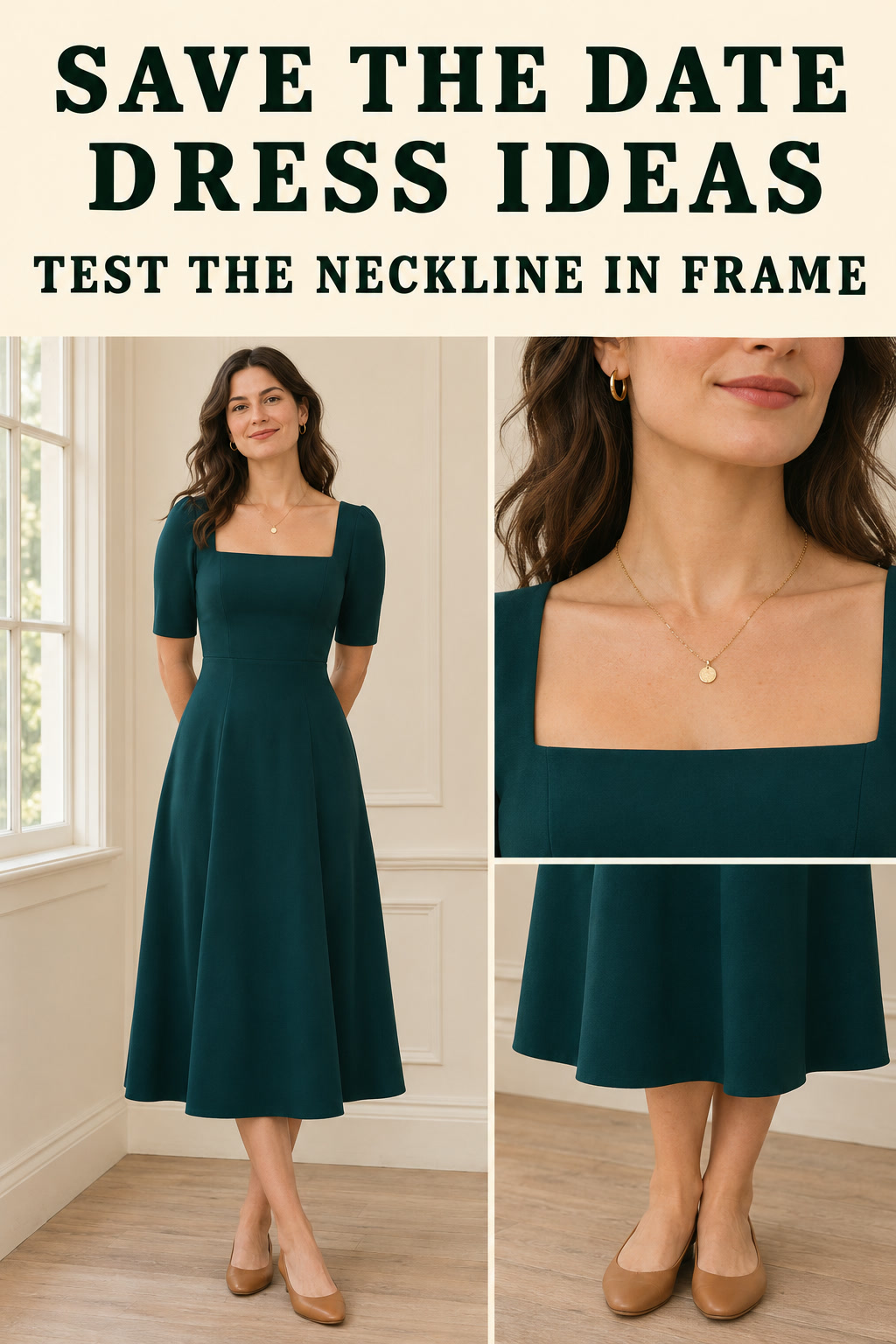
Against a pale interior, try a deep teal crepe midi
A matte teal dress with a square neckline gives you a strong shape against white walls and pale upholstery. For a close portrait, I’d start with small gold hoops and check how much blank space there is around the neckline. Try the earrings with your hair where you usually wear it. Their shape can disappear in a shadow even if they look substantial in your hand.
To compare a square neck with a round one, use the same two poses. Take a frame with both shoulders visible and another with one shoulder turned in. Look for the neckline that holds its shape without needing a shoulder pulled back. If the teal is almost black in the actual room, move near a window and repeat the photo. You may decide that a brighter shade gives enough definition without any other styling changes.
On an open promenade, try a skirt with some weight
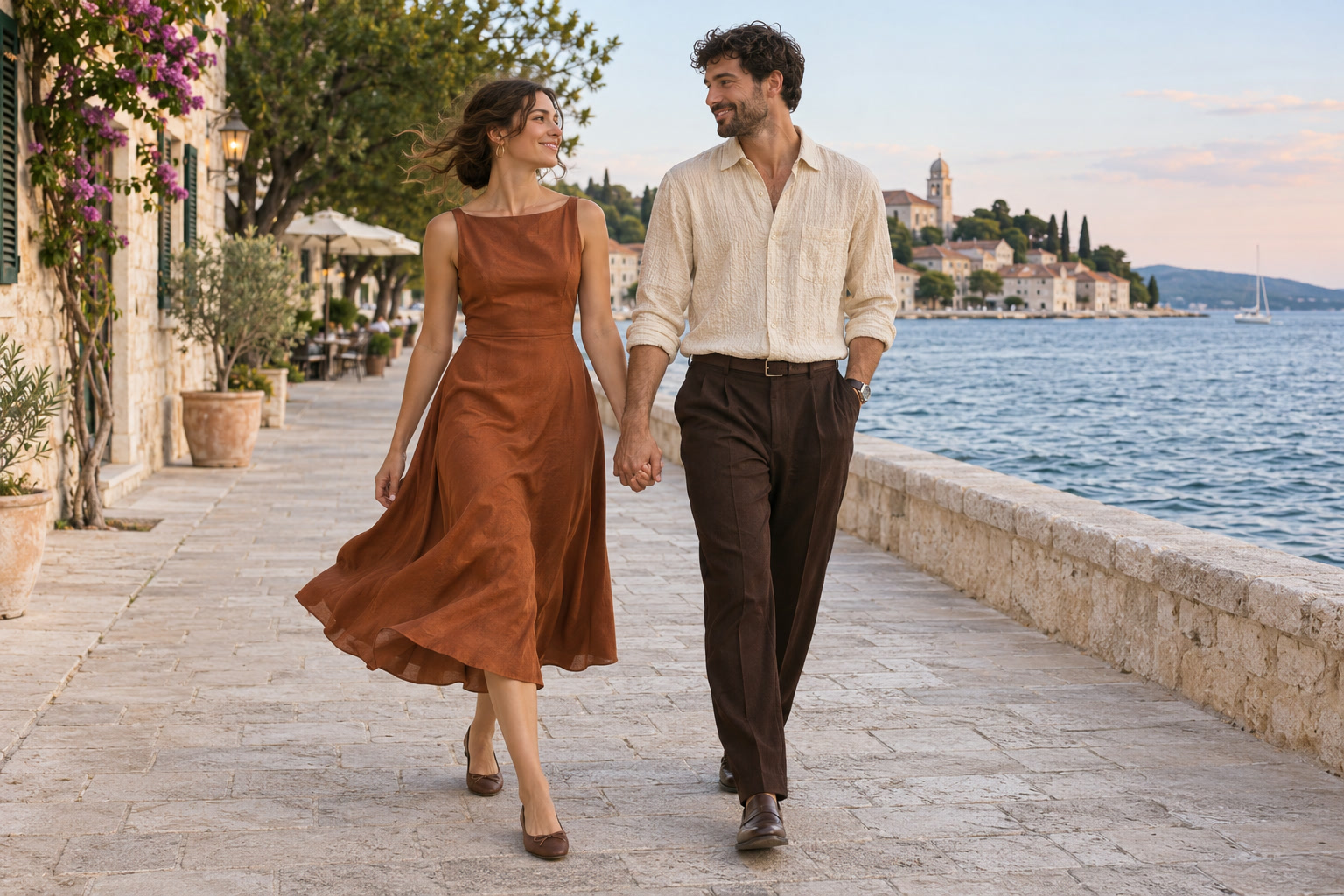
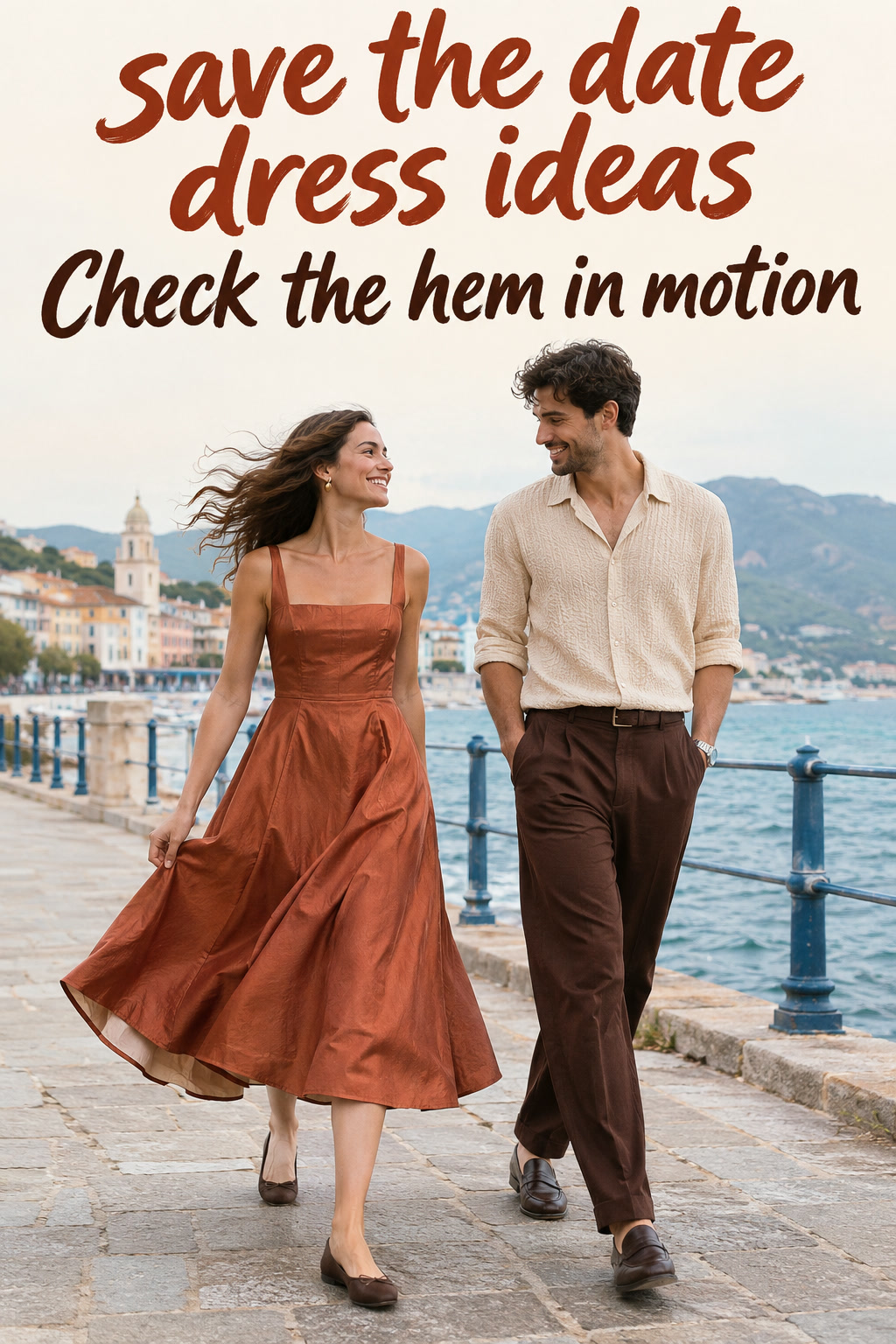
For a windy path, try a copper A-line midi with a lined skirt. Walk with your partner long enough to see where the fabric goes. If you like a looser chiffon version for the way it lifts, see what happens when you turn the other way. If you have to watch the skirt on every step, use the one with a steadier hem. For a long walk to the spot, bring a pair of flats you trust, even if you plan to use dressier shoes in the last few pictures.
A mid-calf hem and a longer skirt can look similar when you’re standing still. The difference shows up when you’re moving, sitting against a low wall or crossing a grate. Bring the longer dress if you want a standing portrait with its whole line visible and have a sheltered place to take it. For a moving picture on the same day, the shorter dress may give you more chances to get the expression you want.
For a still evening portrait, try the slip you can sit in
An aubergine satin slip with wide straps can work for an evening session in a quiet lobby. Test it under both the overhead fixture and a softer side light. If there’s a bench, sit for a minute before taking another photo. You want to know whether the fabric catches, creases sharply, or draws a straight line across your lap before you pick that as the main pose. When the fabric is light enough to show a waistband, try a simple half slip only if it fits without creating a new edge.
If you plan to bring two dresses, take the still portrait in the one that needs more control. Wear the roomier dress for the frames where you have to move. Carry the slip in a garment bag if you’re changing on arrival. A small garment steamer can help with travel creases if the care label allows steaming and you have a place to use it.
Pieces for the photo you want
Try a square neck in a tight crop
Let satin catch the side light
Bring the long dress on a hanger
Clean up small fibers in the frame
Compare both finalists in the same light
Take photos from one camera position
Set a phone where a person would stand to take a waist-up portrait. Mark a spot to stand and keep the phone there while you change dresses. Take one picture from the front and one turned toward your partner. For the seated picture, use the same chair and don’t rearrange the light. Compare the photos at the same size. If you enlarge one, enlarge its counterpart too.
Try both outfits beside a background close to what you expect. Your hallway wall may be enough for an indoor comparison. Outdoors, stand where the light is similar on both dresses. If the session will use flash, send the two options to the photographer and ask which one they would like to see under their setup. Your phone will show how the dresses compare in that room. Leave the final call on flash to the photographer.
Fix the one problem that survives the test
A dress getting caught under a shoe needs a different hem, a shoe change, or another dress. A fastening that feels tight when you sit deserves time with a tailor or a roomier cut. Those changes are worth dealing with early because you’ll have to wear the dress through the whole session. A small strand of lint on a dark piece is a job for a lint roller.
If both dresses pass, pick the one you would wear straight out of the session to have a drink or go for a walk together. The photo can feel a little more dressed up than an ordinary day while the clothing still feels familiar. Keep the second look if it would give you a different kind of picture you actually want, such as a relaxed seated portrait after a more formal standing frame.
Editor’s take
I would start with a matte midi you can sit in and wear it with shoes you already trust. It covers the widest range of pictures in a short session, from a tighter portrait to a full-length frame where you take a few steps together. I would choose the satin slip if the portrait is mostly still and the way the fabric catches the light is part of what you love. My recommendation comes from comparing the outfit advice with the photographer’s guidance. Before you shop, set two choices side by side in phone photos taken under the same light. Pick the dress that stays comfortable in the pose you want on the card.
Sources and methodology
The photography guide informed the checks for visible straps and the idea of sharing wardrobe options before a session. The styling guide informed the advice on print detail and viewing distance. The four dress examples and the side-by-side test are editorial suggestions that you can adapt to your location and intended portrait.
FAQ
Do I need to wear white for save the date photos?
No dress color is required for the portrait. If you like white, check the lining in the light you expect and see whether the dress is distinct from the backdrop. A color you wear often can be a natural choice, especially if your setting is pale and you’d like a stronger outline.
Is a mini, midi, or maxi better for save the date pictures?
I would try a midi first if the plan includes sitting and walking. Test a mini on the actual type of chair and check a maxi against your shoes when you step up. In a tight portrait the length may matter much less than the neckline and the way you sit.
Which neckline photographs best in a close portrait?
Start with a neckline you can lean and turn in without touching it. A square neck or open collar has a visible shape, while a plain round neck keeps the area around a pendant or your face simple. Test the same pose with both options and see what stays in place.
Should I change dresses during the session?
Change if you want two clearly different pictures and have enough time and privacy. A still satin portrait and a walk in a roomier dress might justify it. If the second dress looks almost the same at the size you will use, spend those minutes getting another expression or angle in the first one.
Can I wear flats in a formal-looking photo?
Yes. Try a flat with a shape that fits the dress and check where the hem lands. If you meant to wear heels for part of the shoot, photograph the dress with both shoes before you decide. Raising the heel may change how the dress hangs at the ankle.
Is borrowing a dress for the shoot a good idea?
Borrow it if you can try it with your real shoes and undergarments before the day. Check that you can sit comfortably and avoid temporary alterations or adhesives the owner hasn’t approved. A familiar dress from your own closet can serve as a backup if the borrowed one needs more attention than you expected.