Wedding Menu Ideas: Four Complete Reception Plans
A wedding menu can look wonderful on paper and still feel awkward during the event. Passed appetizers may vanish before the couple finishes photographs. A beautiful dinner station can create a line that interrupts conversation. Dessert may arrive when guests are already leaving. Good food matters, but the sequence and the way it is served matter just as much.
These wedding menu ideas begin with the experience you want guests to have: something satisfying while they mingle, a dinner that fits the room and schedule, and a clear finish. You will find four complete menu directions, each with a different service style. Use them as a brief for your caterer, not as a fixed recipe list. The right dishes depend on the venue, kitchen, season, guest needs, and the people preparing them.
What is changing in wedding menu planning
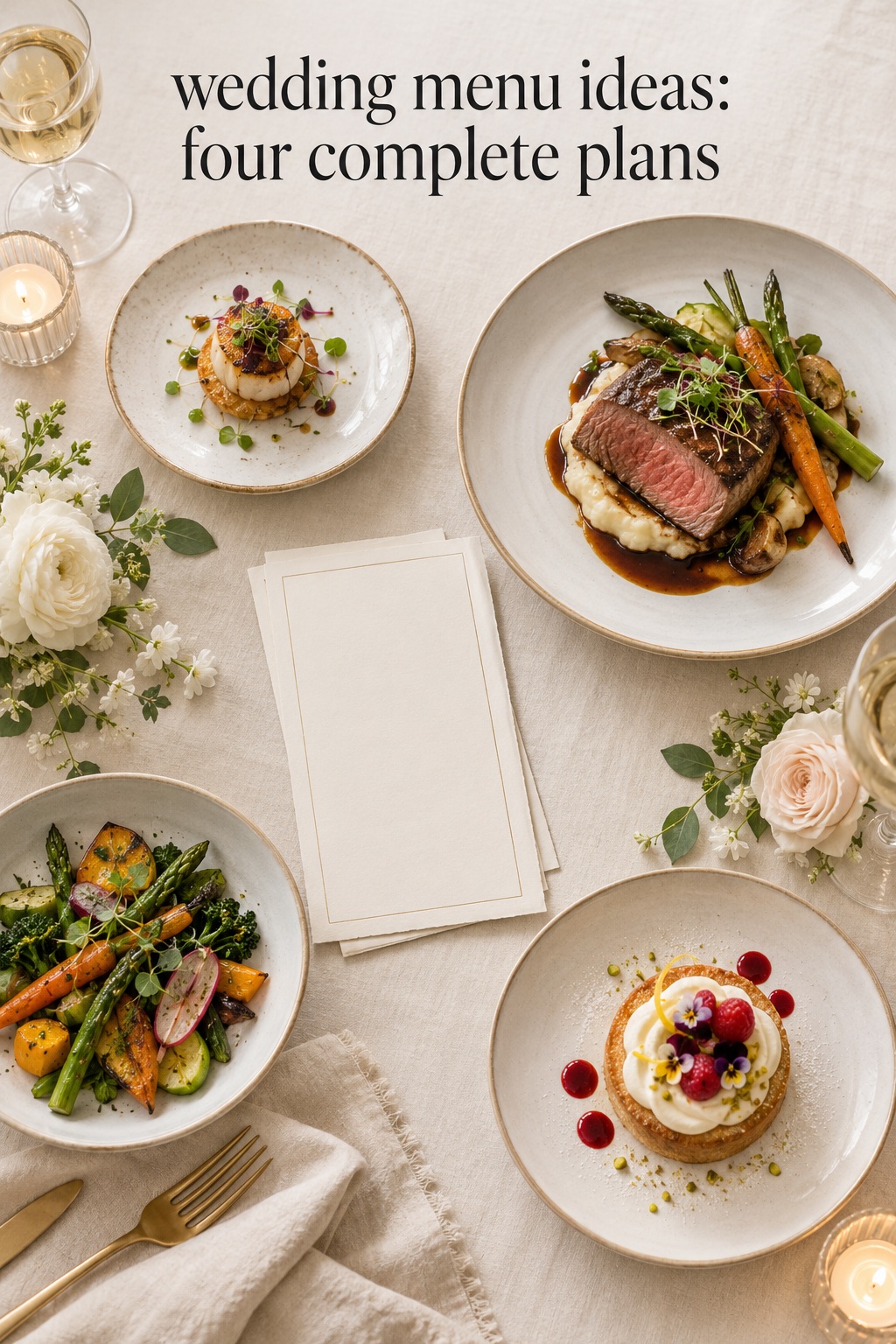
Recent wedding food coverage points toward more personalized choices, flexible service formats, substantial plant-based options, and dessert moments beyond a single cake cutting. The Knot’s expert-sourced wedding food report describes menus that reflect a couple’s story alongside interactive stations and family-style dining. That is useful inspiration, but it is not evidence that every wedding needs a station, a culinary theme, or a late-night snack. The practical change is that couples have more room to design the meal around how their celebration actually works.
Personalization can be modest. A soup from a family gathering, a favorite shared appetizer, or a dessert from a place you love can carry meaning without turning every course into a biography. Guests do not need a long explanation to enjoy a well-made dish. If a detail does have a story, put one short line on the menu or let it come up naturally in conversation. The meal should still make sense to someone who knows nothing about its origin.
Turn wedding inspiration into a plan you can actually follow.
Zarellea brings your guest list, budget, vendors, and day-of details into one shared space — so no beautiful idea gets lost in the shuffle.
Choice also matters differently from novelty. A second entrée is useful only if guests can select it clearly and receive it reliably. A food station is engaging only if the room can handle its queue and the caterer has the staff and equipment to maintain it. A vegetarian main is welcoming when it is a complete, appealing meal, not merely the meat entrée with the protein removed. Design choices should improve the dinner experience rather than collect trend labels.
Think of the menu as three linked chapters. Cocktail hour bridges the ceremony and dinner. Dinner is the main meal and sets the reception’s pace. Dessert or a later bite closes the experience. The food in each chapter should suit what guests are doing. A delicate fork-and-knife dish belongs at a seat; a handheld bite belongs where people are standing and talking. Once that basic logic is clear, choosing flavors becomes much easier.
Why the service format changes the menu
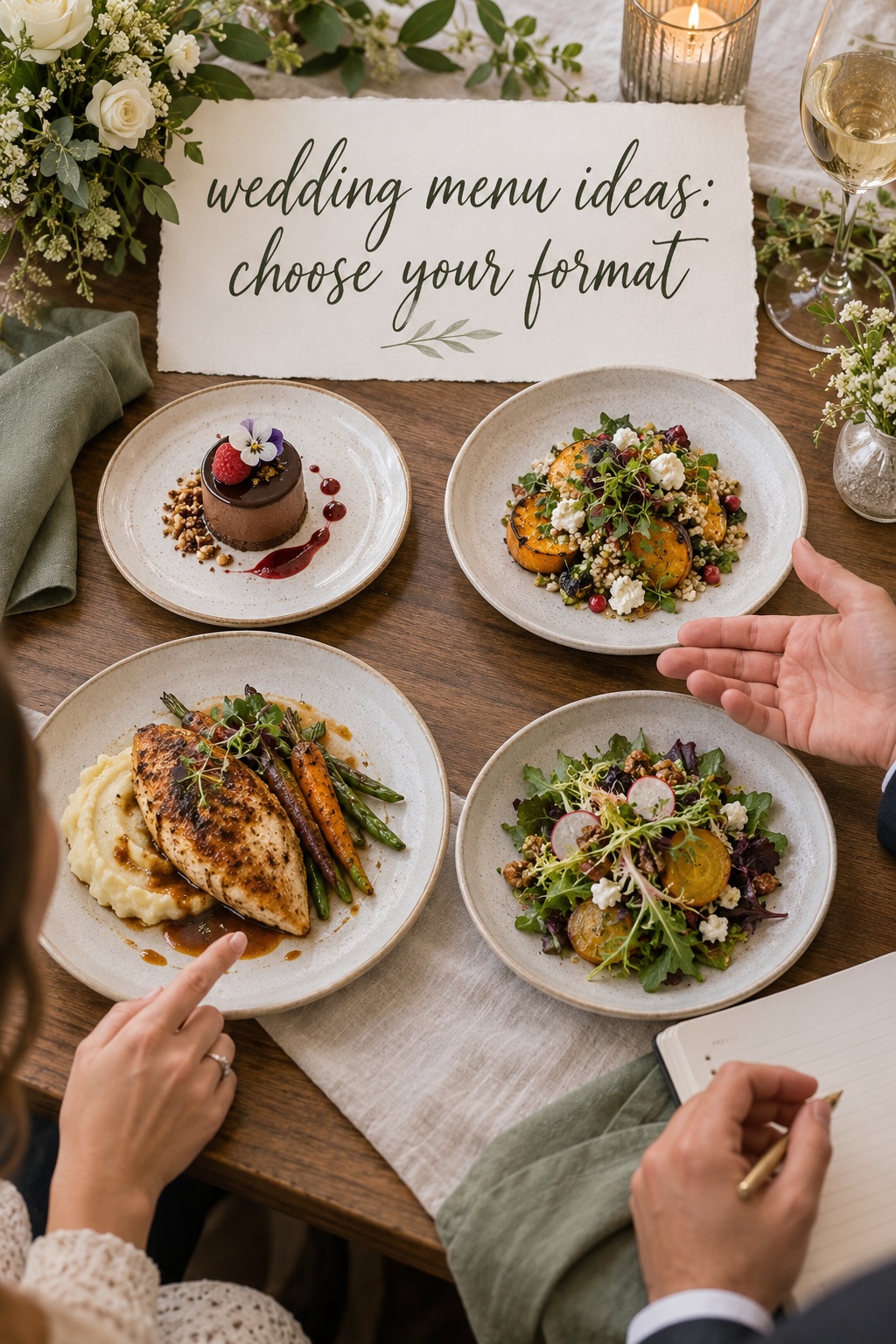
Before choosing exact dishes, decide whether dinner will be plated, served family-style, offered as a buffet, or spread across stations. The same roasted vegetables, fish, salad, and bread produce a different evening in each format. Service affects guest movement, table space, staffing, pacing, and how a dish arrives. Ask a caterer what formats they execute well in your venue, then build the menu within that reality.
Plated dinner keeps the room seated
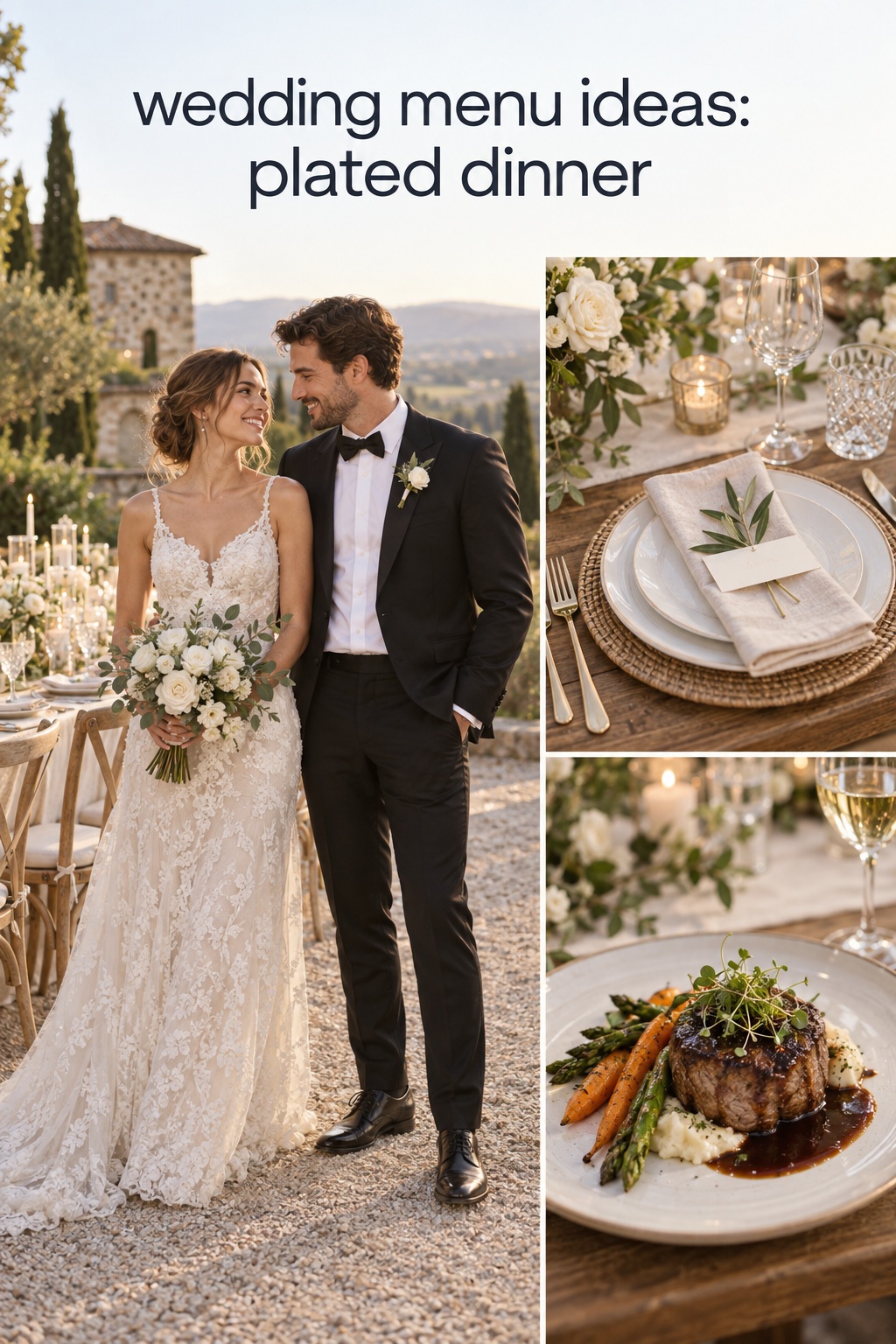
Plated service suits a reception with speeches or a clear dinner program because guests remain at their tables while courses arrive. It can be an excellent frame for a carefully composed entrée, especially when the kitchen and service team can deliver it at the intended pace. Its planning work happens early: entrée choices, guest counts, place markers, and any dietary meals must be communicated accurately to the caterer.
Use the cocktail hour to offer variety without making dinner overly complicated. If guests choose between two main courses, keep the starter and dessert shared where practical. Ask when final meal selections are due, how changes are handled, and how servers identify the correct plates. A dish you love is a poor choice if the venue kitchen cannot execute it for the guest count in the time available.
Family-style dinner makes the table part of service
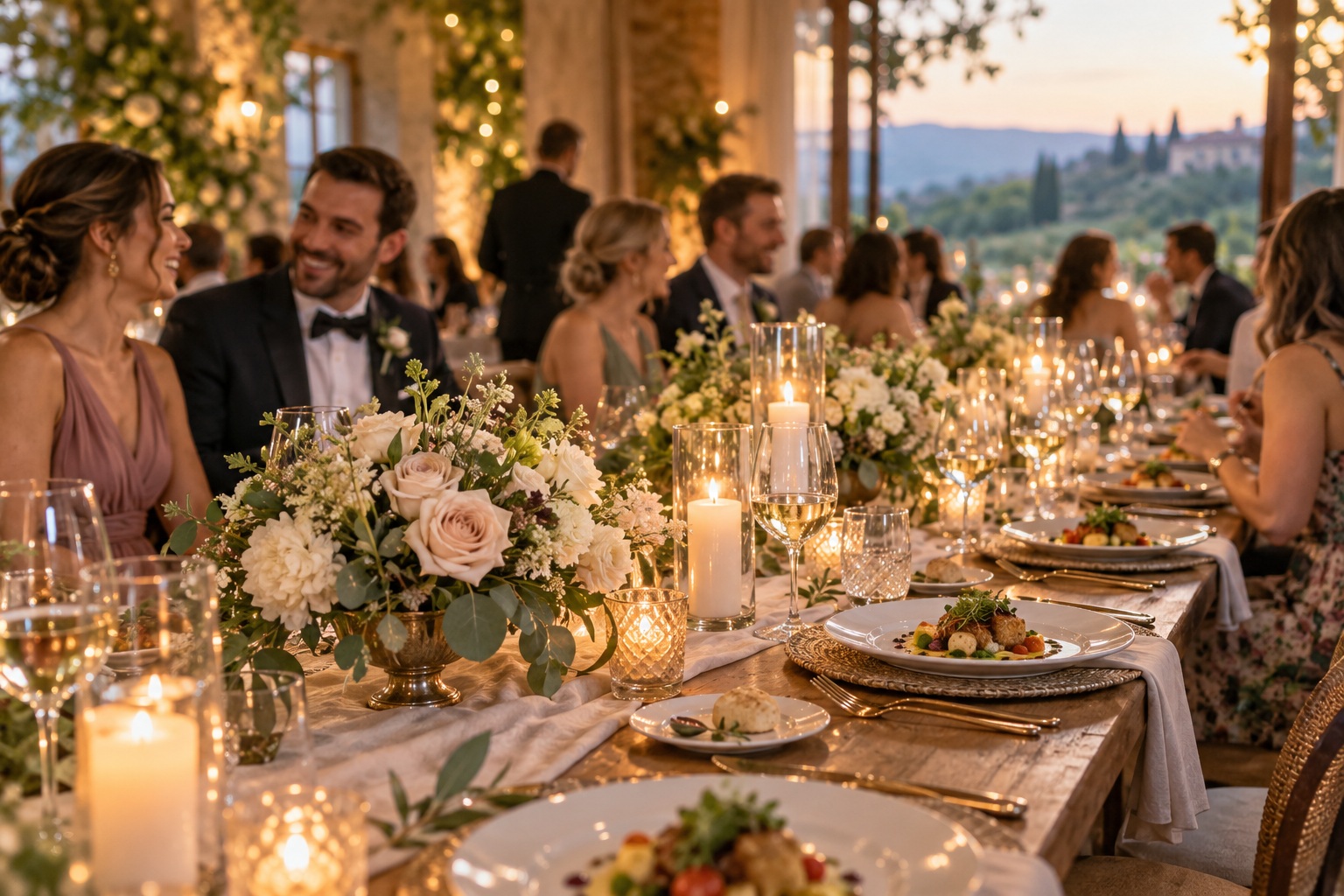
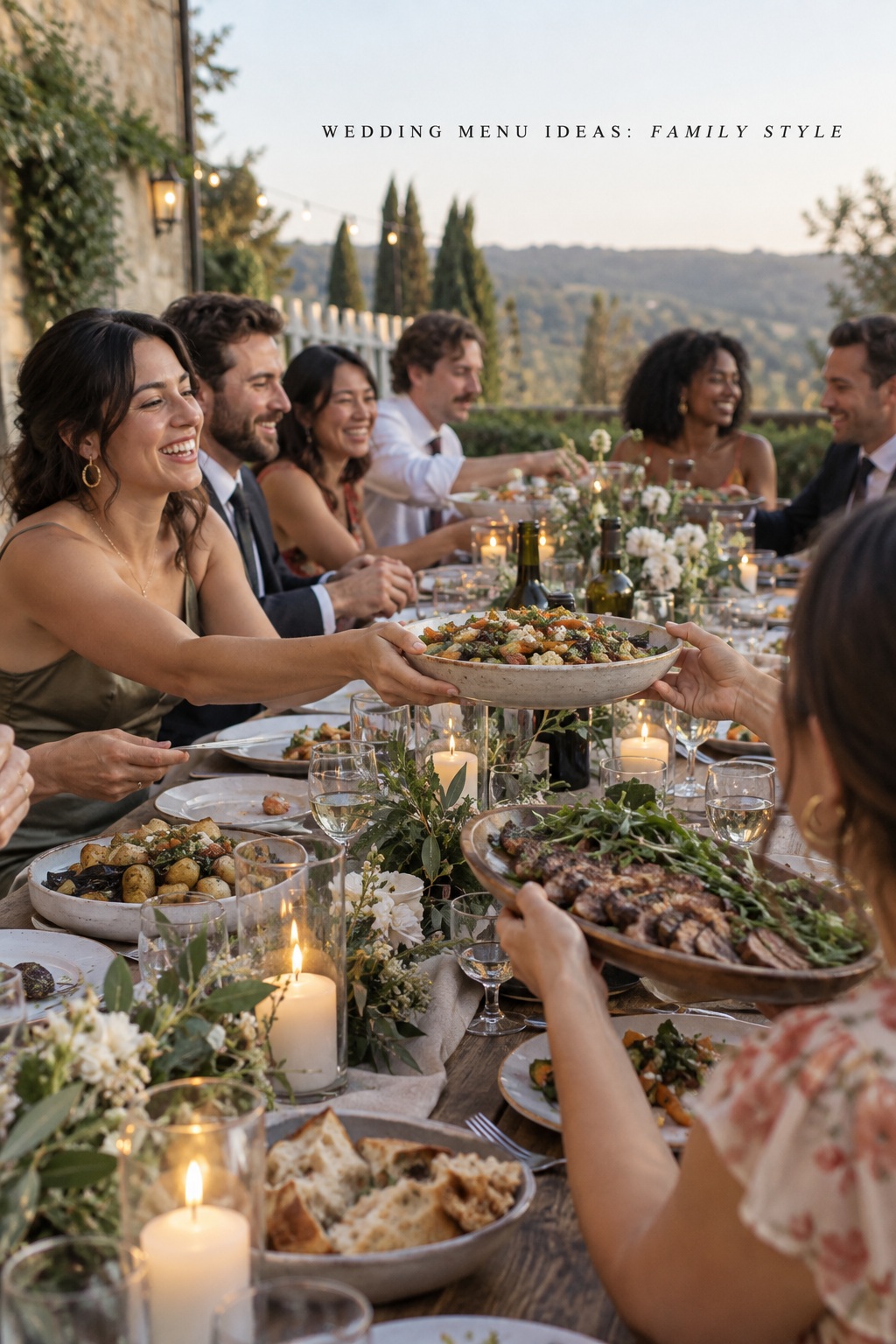
Family-style service puts platters on each table for guests to pass and share. It can make the meal conversational, but it also requires room for platters, serving utensils, water, glasses, and any tabletop decoration. The Knot’s caterer-informed explanation of family-style dinner shows why this is a service decision, not just a menu label. Before committing, look at a fully set table, not an empty rental diagram.
Choose dishes that are easy to pass and serve at a table. Ask how platters will be refreshed and how guests with specific dietary needs receive food without relying on a shared platter that may not work for them. A family-style meal does not have to mean every dish is shared. A plated starter or a separate prepared meal for a guest can coexist with shared mains and sides if the caterer plans it.
Buffet and stations change guest movement
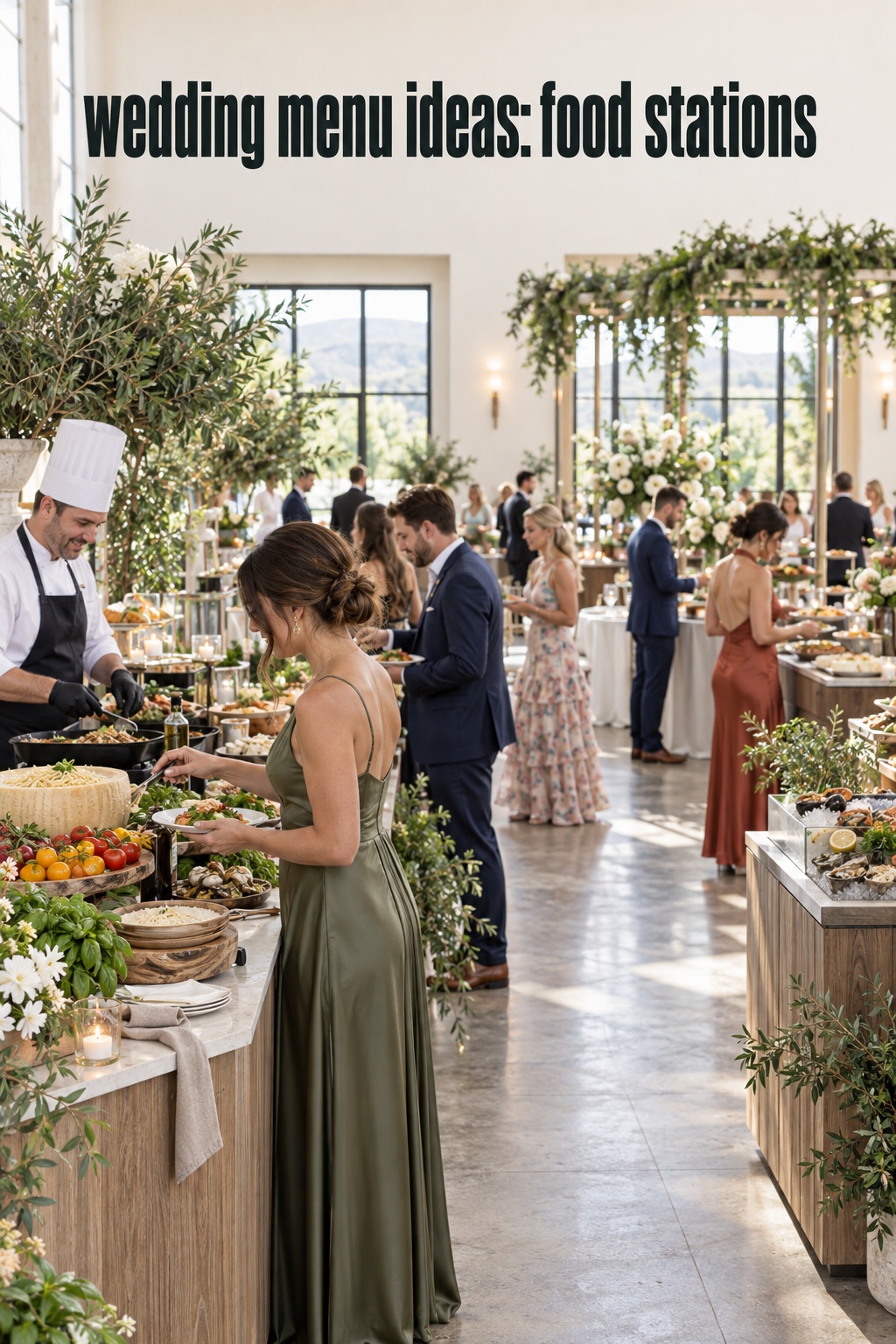
A buffet lets guests choose among dishes from one service area. Stations separate food into several areas, sometimes with a cook or server finishing items. Either can feel relaxed or polished depending on the menu and service. The important question is how guests reach the food, how long they wait, where they put plates and drinks, and whether every station has enough capacity for the guest count.
Draw the lines on the floor plan before approving the concept. A beautiful station can become an obstacle beside the bar or the entrance. Ask the caterer whether tables will be invited in groups, how they replenish dishes, and who helps guests identify dietary options. If several stations are planned, make sure each is substantive enough that guests can assemble a satisfying dinner without repeatedly crossing the room.
None of these formats is inherently more personal or more elegant. Choose one that fits the venue, the guest list, and the kind of evening you want. You can also combine formats, such as passed bites during cocktail hour and a plated dinner, or a seated starter followed by family-style mains. A hybrid works when its transitions are clear to guests and manageable for the service team.
Four full wedding menu ideas that work as a day
These sample menus show how food, timing, and service can support one another. They are editorial examples for discussion with a caterer. Ingredients and preparation should be adjusted to the kitchen, season, budget, and confirmed guest requirements. The point is to choose a coherent direction, not to copy every dish.
1. The calm, seated dinner
For a reception with a formal entrance, speeches, and a seated meal, begin cocktail hour with two or three easy-to-eat passed bites. One could be a savory vegetable tartlet, another a small seafood or poultry bite if that suits your guests, and a third a fresh option with a different texture. Give guests enough food to enjoy mingling without making the main dinner redundant. Drinks and a water station should be easy to find in the same area.
At dinner, serve a salad or seasonal vegetable starter, then a choice of two mains that the caterer can execute with equal care. For example, a roasted fish with a bright herb sauce and a substantial grain-and-vegetable plate might share the same thoughtfully prepared side vegetables. Do not assume the vegetable plate automatically covers all dietary needs; confirm ingredients and guest requirements separately. Finish with one plated dessert or cake service that reaches seated guests without asking them to interrupt speeches or leave the room.
This menu works because each chapter has a clear role. Cocktail hour offers variety, dinner delivers a composed meal, and dessert closes the seated portion. The risk is a long gap between appetizers and dinner. Ask for the actual timeline from ceremony end to first plate and confirm that service can begin when planned. The most beautiful entrée cannot rescue a dinner that starts far later than guests expect.
2. The shared-table dinner
For couples who want a convivial meal, offer a short cocktail hour with small, portable bites, then invite guests to tables already set for sharing. Start with bread and a bright salad. Follow with two main platters that suit the table’s size and the caterer’s delivery plan, perhaps a roasted protein and a hearty vegetable centerpiece. Add one or two sides that can be passed without awkward serving. Keep table decoration low and leave generous clear space for food.
Dessert can stay in the shared spirit. Serve cake slices to tables, or bring small dessert platters if the venue and caterer can manage them. A plated dessert is also fine; it can create a tidy finish after the more relaxed main course. What matters is that guests know when the meal is complete and that dietary meals have a clear, respectful service plan.
The strength of this menu is its table energy. Its weak point can be logistics: platters arrive unevenly, guests at a large table cannot reach food, or the tabletop has no room. Ask for a sample table diagram showing platters, glasses, centerpieces, and serving utensils. If the table is crowded on paper, it will not improve when everyone sits down. Scale back decor or change the service before you finalize dishes.
3. The flexible stations reception
For a reception built around movement and conversation, make cocktail hour straightforward rather than adding a second complex food experience. Passed bites and a small display can give guests a beginning while the dinner stations are prepared. At dinner, offer a limited number of substantial stations with distinct roles. One might serve a composed vegetable-forward plate, another a grilled or roasted main with sides, and a third a dish connected to the couple’s background or favorite food. Each should have a visible menu and enough staff to keep service moving.
Set up tables where guests can actually eat. Stations should not imply that everyone wants to balance a full dinner while standing. Provide seating and clear places for used plates. Consider what happens if a guest cannot comfortably wait in a line or reach a station. Ask the caterer how they can serve that guest or stage food without turning the situation into a public exception.
For dessert, keep the journey simple: one cake or dessert station near the flow of the evening, rather than another collection of tiny lines. A late snack is optional. It may be welcome if dancing continues for hours after dinner, but it should not appear merely because it is fashionable. Add it only after checking timing, staffing, quantity, and the catering agreement.
4. The relaxed buffet with a clear center
For a laid-back celebration, begin with one or two cocktail bites that guests can manage without utensils. At dinner, offer a buffet anchored by one clear main idea, such as a generous roast with vegetables and grains, or a Mediterranean-inspired spread with proteins, legumes, salads, and bread. Avoid building a buffet from many unrelated favorites. A coherent flavor direction helps the meal feel like a menu rather than a collection of trays.
Make the choices legible. Use short, accurate labels and ask the caterer how ingredients and dietary needs will be communicated. A guest should be able to see where a satisfying meat-free meal can be assembled, if one is offered, without guessing which dishes contain hidden ingredients. If a particular guest requires a separately prepared meal, plan that directly with the caterer rather than trusting a shared buffet to solve it.
Finish with cake, a plated sweet, or one dessert display. The buffet’s success depends on line management and food replenishment, so ask how tables are released and whether dishes will remain available to guests at the end of the line. A relaxed atmosphere still benefits from precise service planning. Put the most important questions into the contract discussion, not into a day-of improvisation.
How to make the menu personal without making it complicated
The strongest personal idea often appears once, in a place where it fits naturally. If you met over late-night noodles, you might serve a small noodle-inspired bite at cocktail hour or choose a late snack if the event truly runs late. If your families share a holiday dish, ask whether the caterer can interpret it as a side or starter. If a region matters to your story, a particular ingredient or dessert may make the connection without asking every course to follow one theme.
Bring the caterer a short brief: what the food should feel like, the one or two dishes or flavors that matter to you, your service preference, and the nonnegotiable guest needs. Then ask what they can prepare well for your guest count and venue. A caterer may suggest a dish that preserves the spirit of your idea while being more reliable to serve. That is a useful collaboration, not a compromise of personality.
Resist turning the menu into a tour of every favorite restaurant. Dishes that are delightful separately can make a confusing sequence together, especially when their temperature, spice, richness, and service needs clash. Choose a throughline such as bright herbs, warm comfort food, seasonal produce, or a family recipe. Let other courses provide contrast while still belonging to the same meal.
Do a simple balance check. If cocktail hour is rich and fried, dinner might welcome something lighter and fresher. If dinner is abundant and shared, dessert can be modest. If dinner is a short plated menu, a more playful dessert may provide the celebration’s surprise. These are editorial choices rather than rules. The caterer’s tasting should confirm whether the actual dishes work together.
The choices that outlast a food trend
Begin with the venue and caterer agreement. Check who may provide food, what equipment and kitchen access exist, whether outside desserts or late-night vendors are allowed, and when final counts are due. Do this before falling in love with a dish that requires a preparation setup the venue cannot support. If a menu idea depends on a particular station or cooking method, ask the caterer to show how it would work in that exact room.
Collect dietary information in a way your caterer can use. Ask guests the question early enough to act on the answers, then pass the details through the caterer’s preferred process. A label reading “vegetarian” is not a substitute for checking ingredients or a guest’s specific need. Ask how the team will identify and serve any meals that require separate handling. Keep the answer private and practical, centered on the guest rather than on making the menu appear comprehensive.
Review the timing as carefully as the dishes. Write down when guests first receive food, when dinner begins, when dessert arrives, and whether a late bite has a real audience. Ask how a delay in photographs, speeches, or room turnover would affect service. Some foods tolerate waiting better than others, and the caterer should guide you on that point. A workable menu is one that still feels good when the day moves a little differently from the schedule.
Finally, ask what the menu will look like to guests. They should know what is available, where to go, and whether a choice was made in advance. Menus and signs can be simple. Accurate information is more valuable than decorative wording that hides the dish. If the service format changes from cocktail hour to dinner, have someone announce or guide the transition clearly. The best wedding menu ideas are the ones your team can serve well and your guests can enjoy without instruction.
Sources and methodology
This article reviewed ten US-English pages covering wedding food trends, full menu structures, service formats, appetizers, dietary options, and late-night food. The two linked sources support the current menu observations and the definition of family-style service. The four sample menus are editorial planning examples for discussion with a venue and caterer, not tested recipes or universal price guidance.
FAQ
How many courses should a wedding dinner have?
There is no required number. Choose enough food for the event’s timing and service style, then ask the caterer how the courses will be paced. A substantial main with a clear starter and dessert can feel complete, while a station reception may deliver the meal through several smaller choices.
Is a buffet less formal than a plated dinner?
The format changes guest movement, but formality also comes from the food, room, table settings, and service. A well-run buffet can feel polished. A plated dinner can feel relaxed. Pick the format that fits your venue and the evening you want.
Can a wedding menu include both family-style and plated courses?
Yes, if the caterer can execute the transitions. A plated starter followed by shared main platters is one option. Check table space, service timing, and how guests with specific dietary needs will receive their meals.
What should we serve during cocktail hour?
Choose bites that are easy to eat while standing and enough variety for guests to find something suitable. Consider the gap before dinner. Your caterer can advise on quantities and service style for the actual timeline and guest count.
Does every wedding need a late-night snack?
No. It can be useful when guests will keep dancing long after dinner, but it adds another service moment and cost. Decide after the reception schedule is clear and confirm timing and staffing with the caterer.
How do we plan for vegetarian guests and other dietary needs?
Ask for guest needs early, share them with the caterer, and agree on complete suitable meals and a reliable service method. Do not assume a shared side dish or buffet label solves every requirement. Confirm details for the individual guests involved.
How do we make a wedding menu feel personal?
Choose one meaningful dish, ingredient, or flavor and place it where it works naturally in the meal. A short menu note can explain the connection if you want. The rest of the food can focus on being coherent and enjoyable rather than repeating a theme in every course.