Bridesmaid Hairstyles for Long Hair: Choose Your Shape
Long hair gives you room to choose: keep it flowing, gather part of it back, shape it into a ponytail or braid, or pin it into an updo. That range can make the decision feel harder, especially when you want to complement the wedding party and still recognize yourself in the mirror. Start with how you want your hair to move and feel, then use the wedding look as a guide. This approach helps you choose a style that works with your hair, dress, and day rather than picking a photo that only looks good from one angle.
The direction in recent wedding hair coverage favors a cohesive group look with room for individual texture and comfort. That is a useful starting point for bridesmaids with long hair: agree on a mood or shared detail, then adapt the silhouette to each person. The ideas below compare the main options and explain what to discuss with a stylist before the wedding.
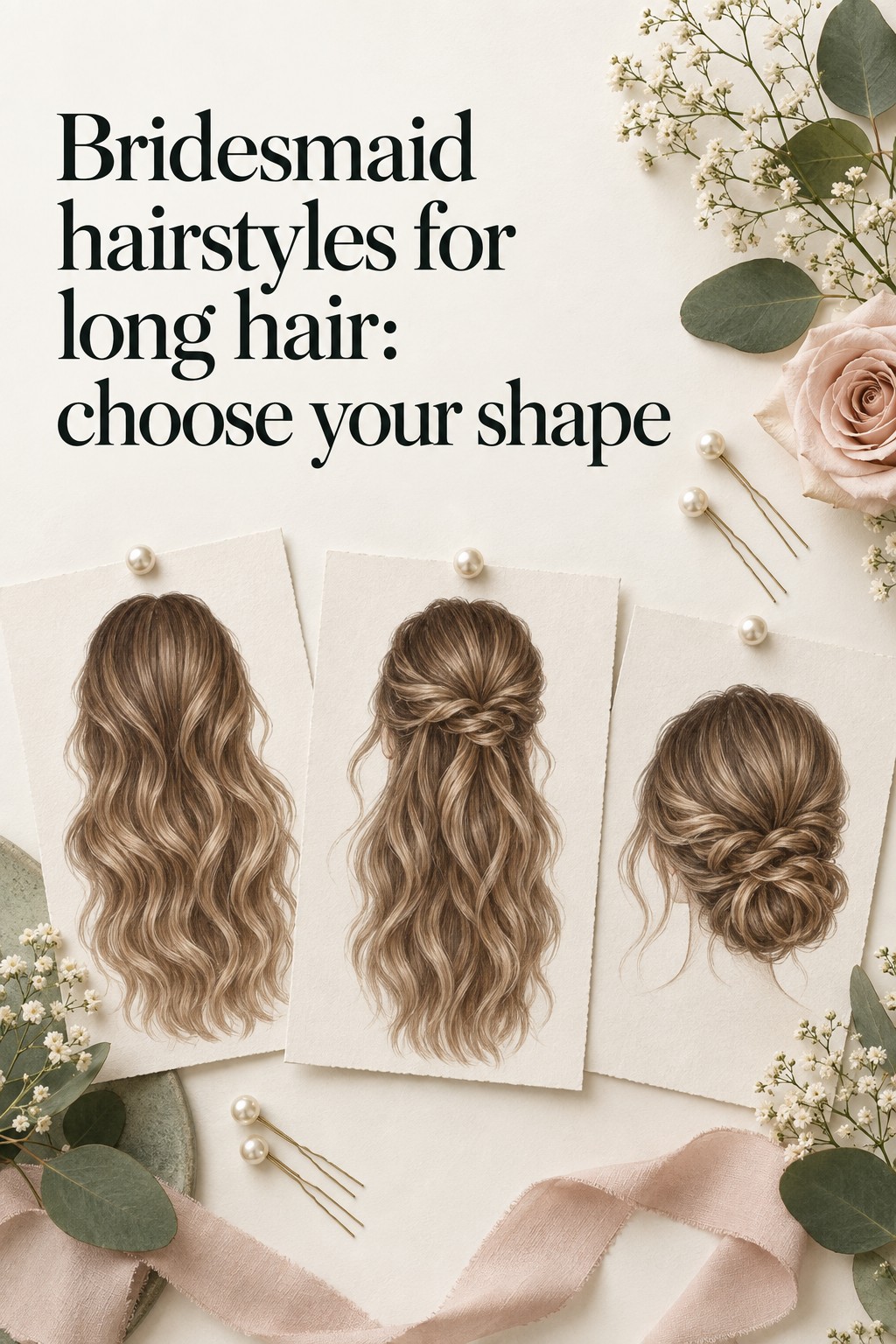
Long hair is an advantage only when the style matches how you wear it
Length creates possibilities, but it also changes how a style feels. A long, fully-down look shows movement and length in portraits, yet it may need more attention around the face or shoulders. An updo can feel lighter around the neck and keep the ends contained, but it hides most of the length. Half-up styles and ponytails sit between those choices. Neither category is automatically more formal or more comfortable. The best fit depends on the shape you enjoy wearing and how much adjustment you are willing to do during the day.
Before saving hairstyle photos, pick one priority from each of these three pairs: visible length or hair off the neck; soft movement or a defined shape; face-framing pieces or a clear face. You can want some of both, but naming your first choice keeps the search focused. If you love your length and want it visible, start with loose waves or a half-up style. If you usually gather your hair when you are busy, look first at braids, ponytails, or pinned styles. A familiar shape often feels more natural than a dramatic change made only for the wedding.
Turn wedding inspiration into a plan you can actually follow.
Zarellea brings your guest list, budget, vendors, and day-of details into one shared space — so no beautiful idea gets lost in the shuffle.
Think about the full schedule, not just the ceremony portrait. You may sit for photos, hug guests, walk outdoors, wear a shawl, and dance. A style that looks striking when still may behave differently when you turn your head or move your arms. During a trial, wear a similar neckline and try the motions you expect on the day. The Knot’s long-hair guide also points readers toward considering texture, season, neckline, and personal comfort when narrowing options. Those factors are more helpful than choosing a style because it appears on every inspiration board.
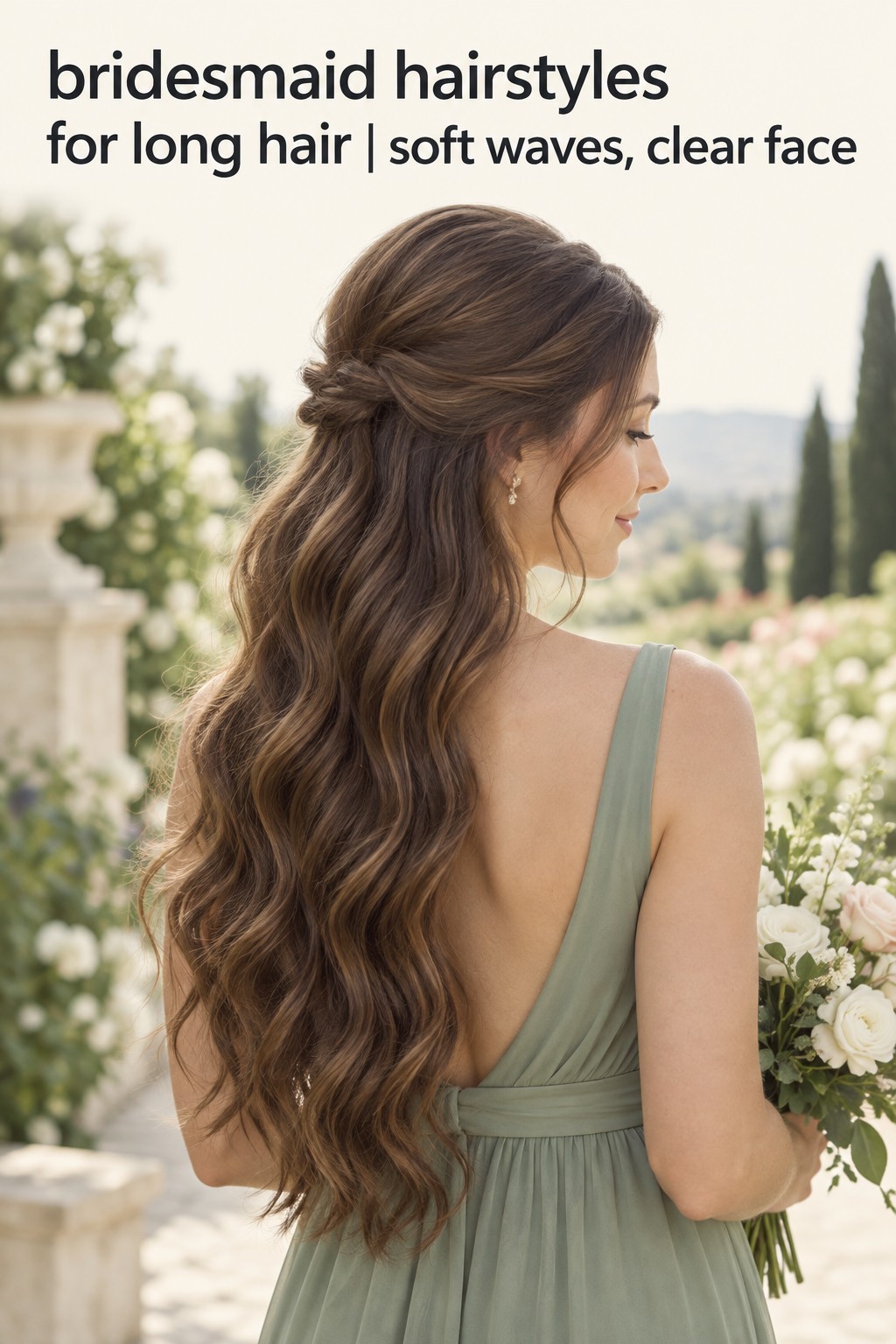
How the main long-hair silhouettes compare
Each silhouette gives long hair a different job. Use this comparison to identify two options for a trial instead of trying to settle on one perfect reference right away.
Hair worn down: visible length and soft movement
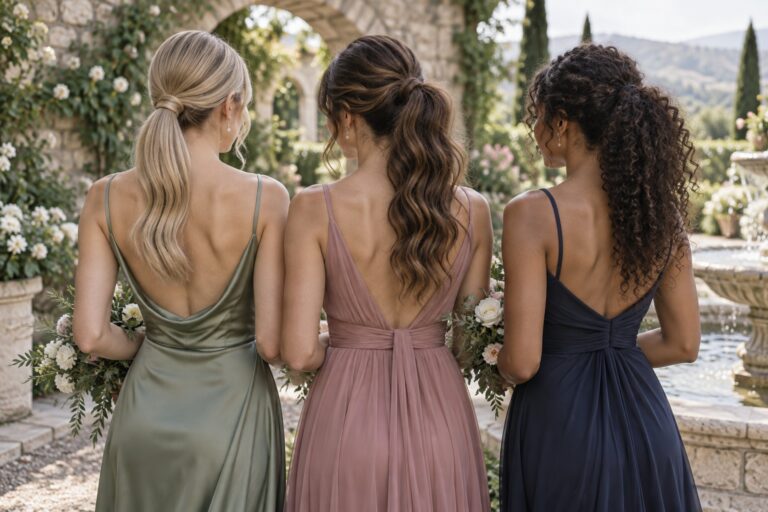
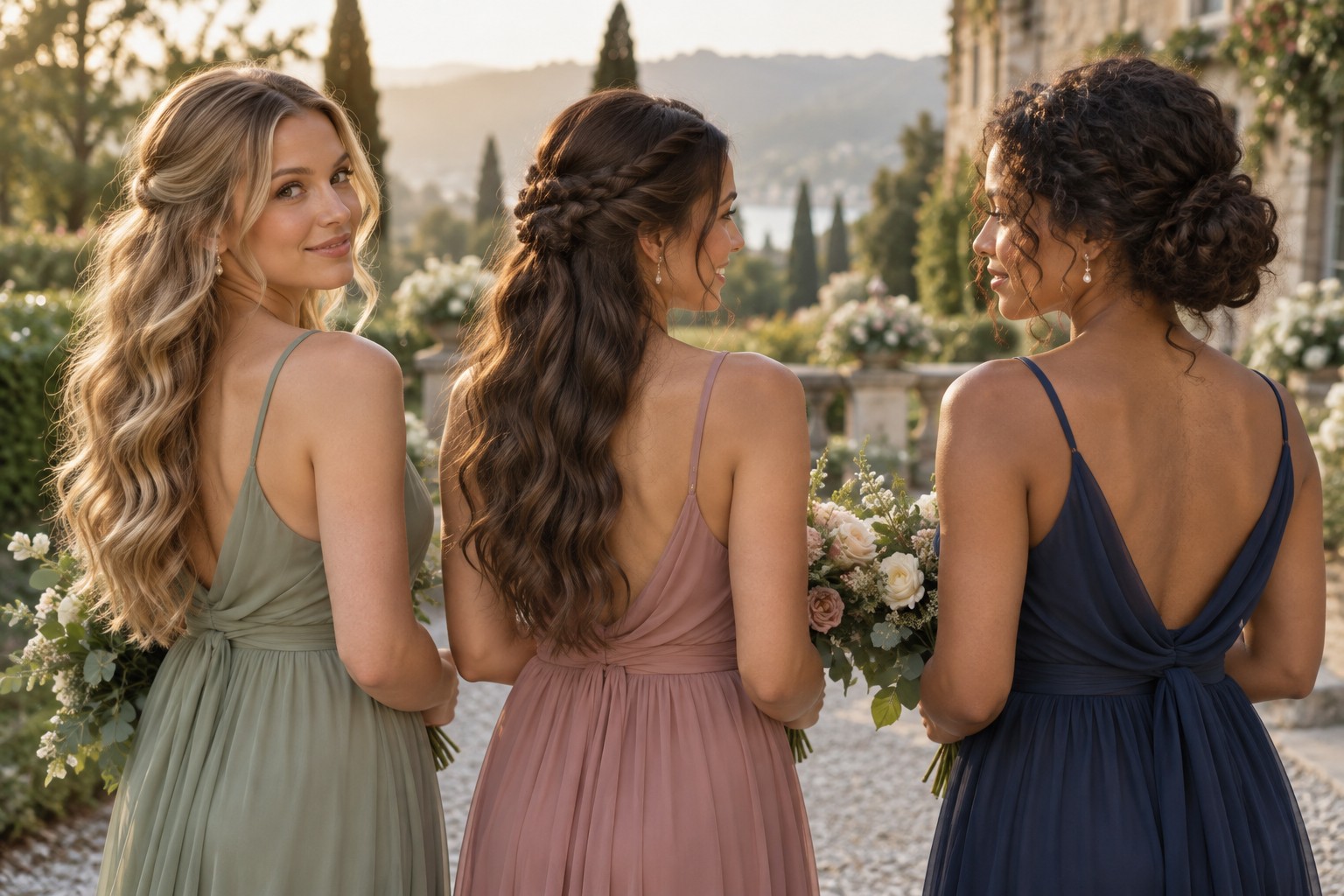
Loose waves, brushed curls, or a sleek finish make the length the focal point. Hair worn down works especially well when you like seeing your hair around your shoulders and the dress has a simple, open neckline. Ask for a finish that resembles your everyday texture rather than a completely unfamiliar curl pattern. A front section pinned discreetly can keep hair away from the face while leaving the back loose. If you expect wind or want your shoulders clear, bring that up before choosing this option.
Half-up: a clear face with length left loose
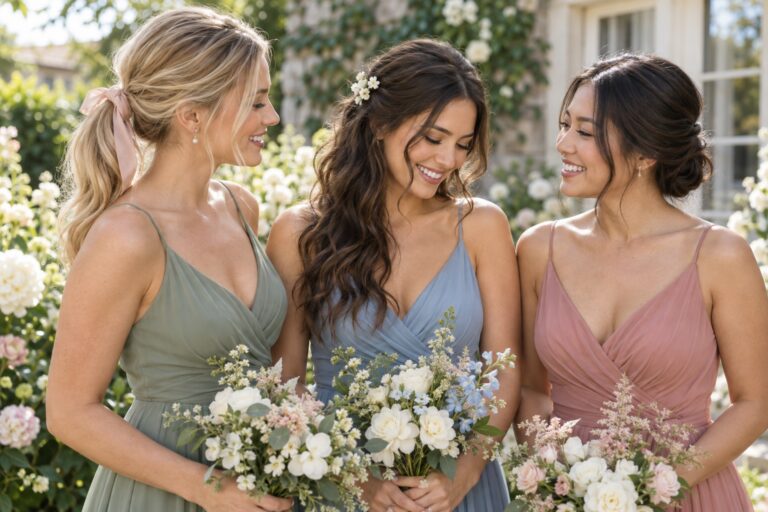
A half-up shape gathers the crown or temples while leaving the lower lengths visible. It can be smooth, softly twisted, braided, or secured with a small accessory. This option is useful when you want an open face but do not want a full updo. The amount gathered matters: a narrow section leaves more hair loose, while a broader section can create a stronger shape at the back. Tell the stylist whether you want the result to read as mostly down or more securely gathered.
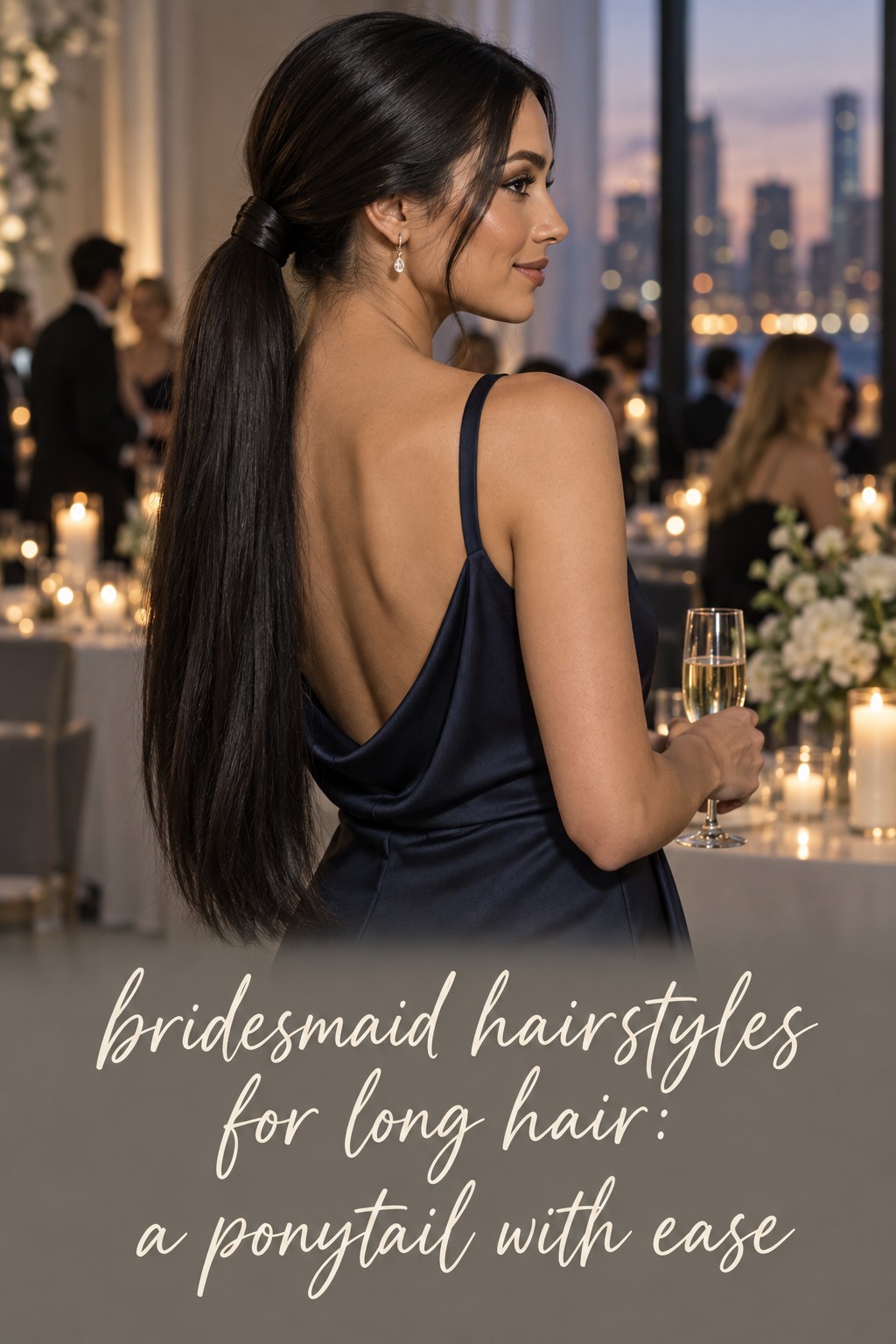
Ponytail: a deliberate line with less loose hair
A low, mid-height, or high ponytail can show length while keeping the hair gathered. The placement changes the mood: a low ponytail can feel quiet and polished, while a higher base creates lift and makes the tail more visible from the front. A wrapped base, braid, or soft wave can add detail without making the shape complicated. For a long ponytail, consider how it will sit against the dress and whether it will swing into your face or get caught beneath a jacket or shawl.
Braid: texture that controls the ends
A side braid, low braid, crown braid, or braid woven into a half-up style gives long hair a visible pattern and keeps much of it together. A braid can look relaxed or formal depending on its placement, width, finish, and accessory. It is worth discussing the weight of a long braid, especially if you do not often wear your hair gathered. A looser, softer braid has a different feel from a compact braid secured close to the head. Ask to test the placement and tension during the trial.
Updo: contained length and a clear neckline
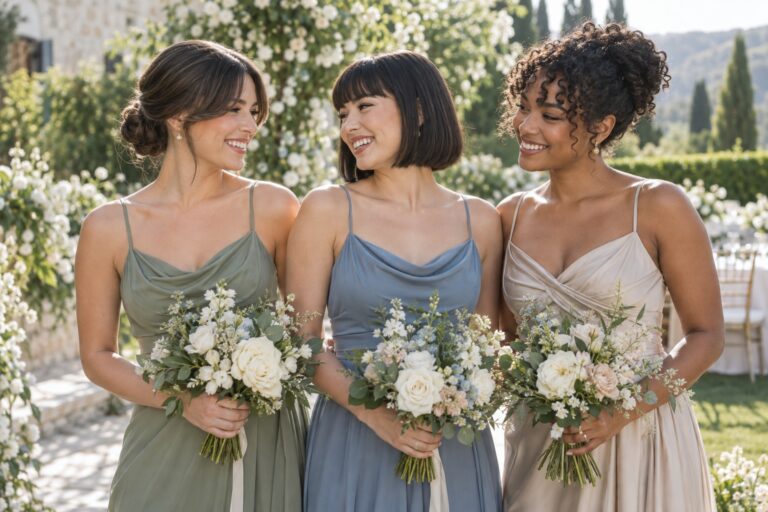
A bun, chignon, or braided updo tucks the ends away and can show off a detailed back or higher neckline. Long hair gives a stylist more material to shape, but that does not mean every updo has to be large or elaborate. A compact low bun can feel simple; a textured chignon or braided crown adds more visible detail. If your hair is heavy, ask how the stylist plans to anchor it and where the pins will sit. A comfortable updo should feel secure without creating a sore spot or constant pulling.
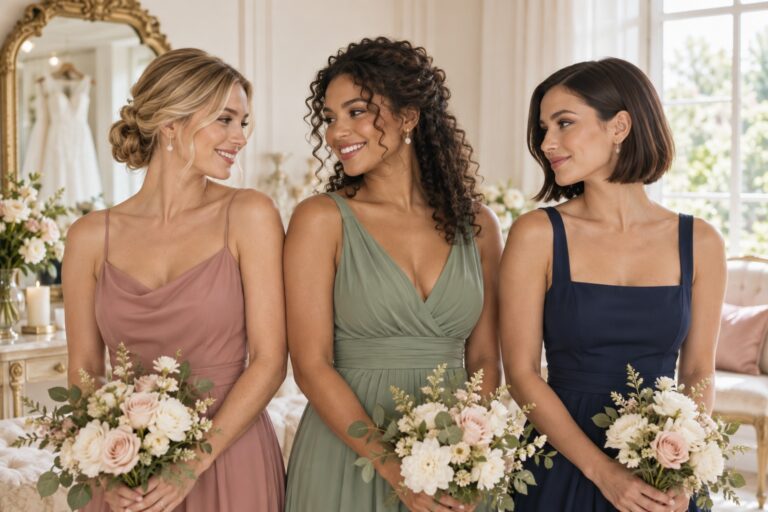
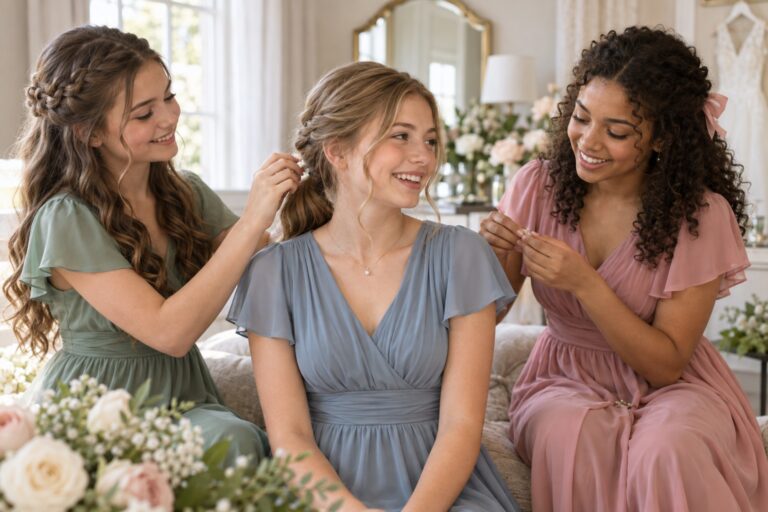
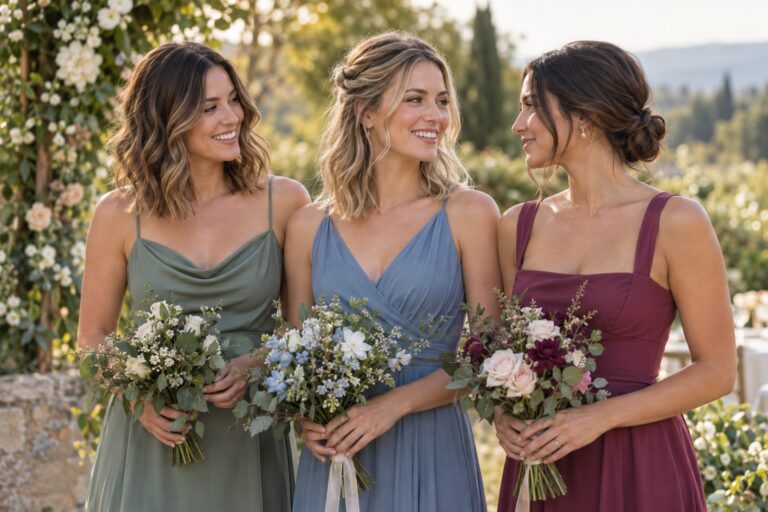
These are starting points, not fixed rules. A half-up style can feel secure, a ponytail can feel romantic, and a braid can be understated. Recent bridesmaid hairstyle coverage from Vogue similarly presents a range of textures and shapes while emphasizing that the wedding party does not need identical hair. For a cohesive result, it is often enough to share one element, such as a soft finish, a side part, or a small accessory, and let the silhouette suit the person wearing it.
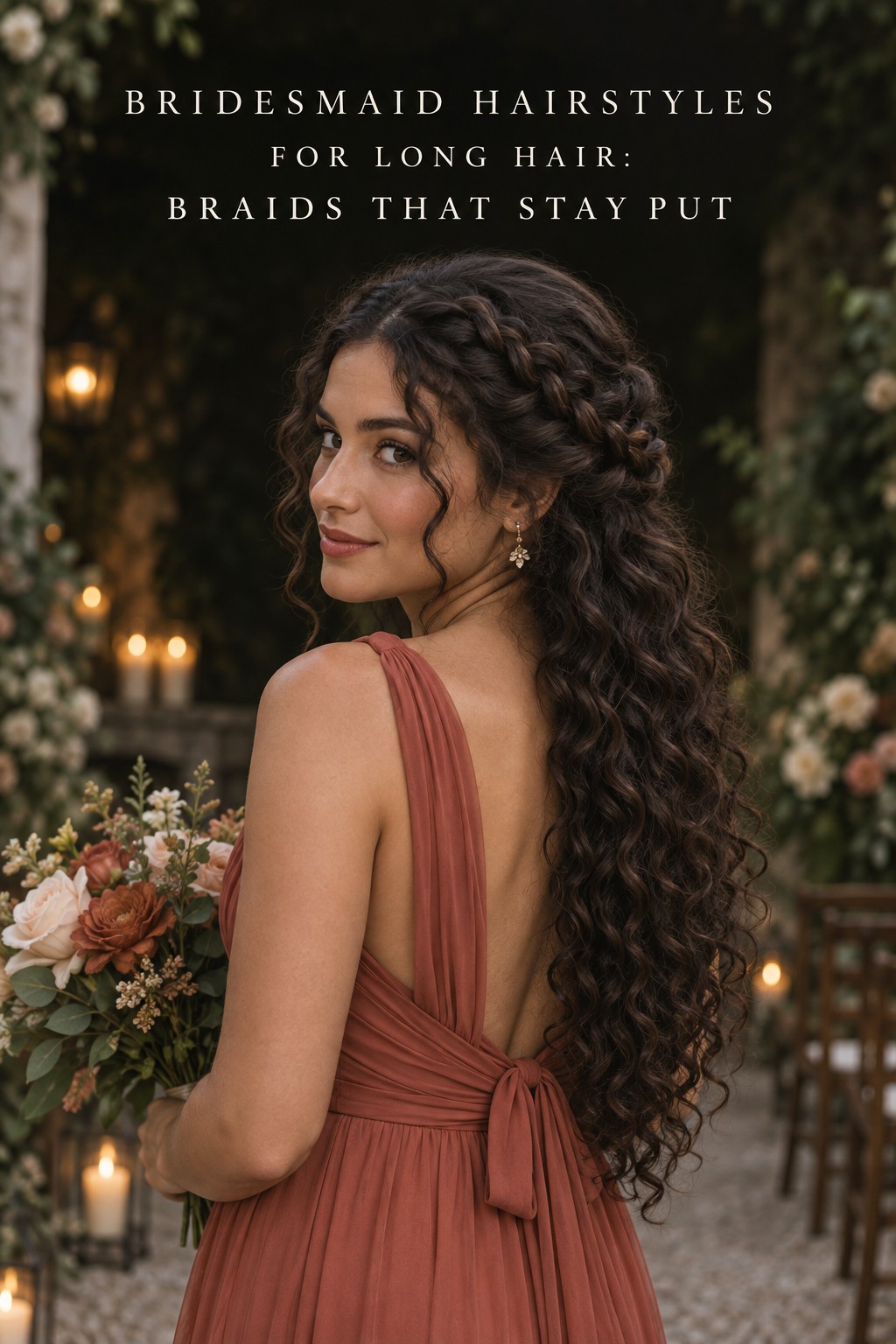
Read the direction through your texture and the dress
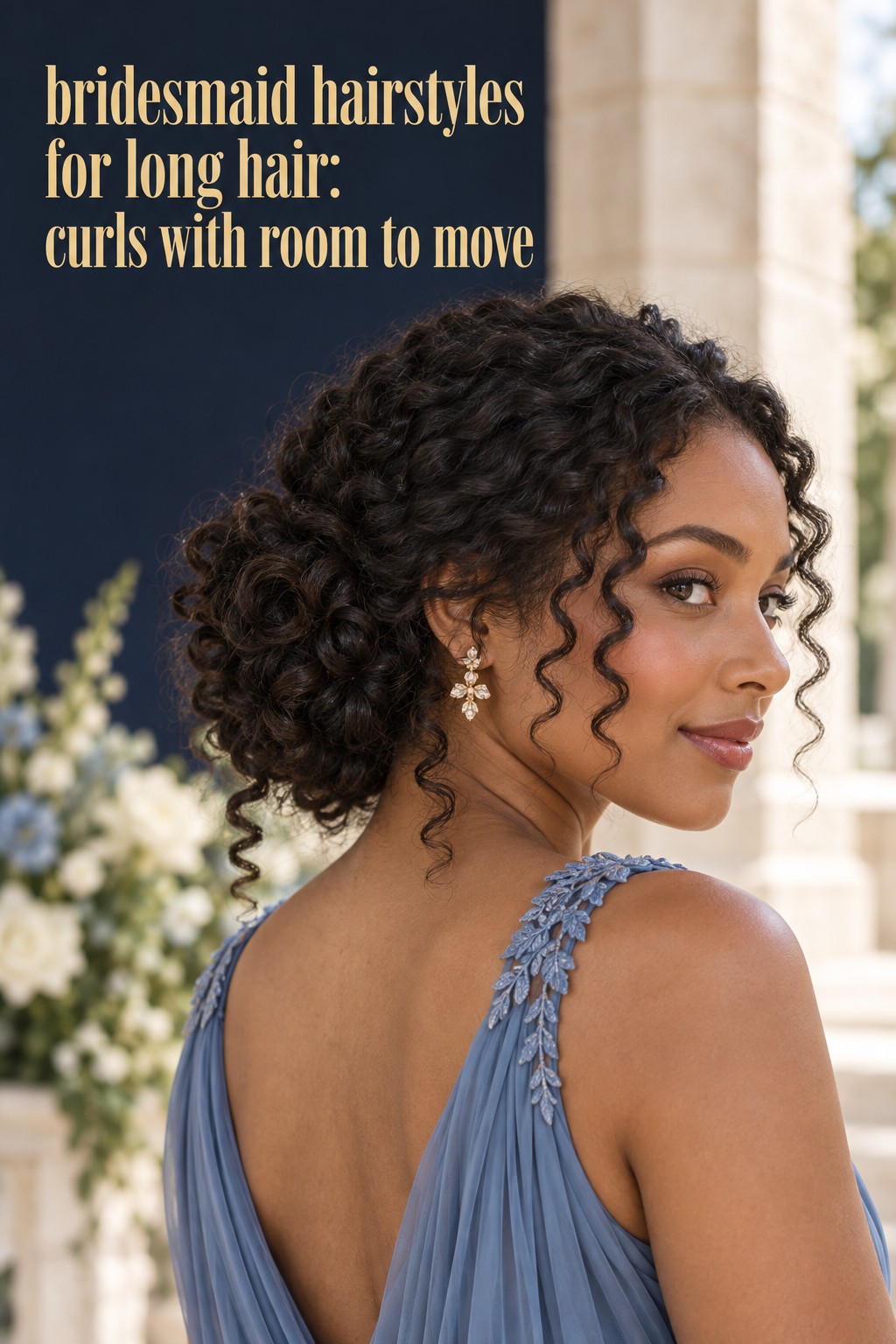
A reference photo works best when it shows hair with a similar texture, density, and length to yours. The same bun or wave can look different on fine, thick, straight, wavy, or curly hair. This does not rule out a look; it helps you ask what adaptation will make it achievable. If your hair is fine, you might discuss a smaller shape or ways to create structure without promising more volume than your hair naturally supports. If your hair is thick or very long, ask whether the style will be sectioned and pinned in a way that feels balanced.
For curls and coils, choose references that show a similar curl pattern and finish. Decide whether you want your natural texture to lead, be stretched into a softer shape, or be gathered into a defined updo. Bring photos of your hair as you usually wear it, along with the wedding reference, so the stylist can compare the actual starting point with the desired silhouette. For straight hair, ask how the chosen shape will stay in place without turning the trial into a completely different texture. The stylist can suggest a version that works with your natural movement.
Use the dress as a frame, not a command. A high or embellished neckline may look clearer with hair gathered away from it. An open back can be shown with an updo, side-swept hair, or a ponytail placed to one side. A strapless or off-the-shoulder dress can pair with either loose lengths or a soft updo. Notice where straps, earrings, collars, or back details sit, then choose a shape that does not compete with those elements. The bride’s overall vision matters too, but it can be expressed through a finish or detail rather than a copy-and-paste hairstyle.
If the group wants to look coordinated, agree on the parts that need to match and leave the rest open. For example, everyone might choose a polished finish and a pearl detail, while one person wears a bun, another a braid, and another a half-up style. Share the dress color, ceremony setting, and accessory plan with the stylist. This gives them context without asking every head of hair to behave in exactly the same way. It also leaves room for each bridesmaid to feel comfortable and like herself.
What the current direction means for a bridesmaid
One clear direction in recent wedding-party advice is coordinated individuality: a shared mood with room for different hair types and personal preferences. That idea is practical for a group with long hair because length can look very different from person to person. One bridesmaid may have fine, straight hair that falls flat when curled; another may have dense curls that naturally create volume. Choosing one exact style for both could make the morning more difficult without improving the photographs.
Instead, choose a visual thread. It might be an overall level of polish, soft movement, a consistent part, a restrained accessory, or a palette that works with the dresses. The silhouettes can vary within that direction. The bride can make the request specific enough to guide the group, such as “hair away from the face with a soft finish,” while leaving each person to decide between a ponytail, braid, or updo. This can also reduce the pressure to wear a style that does not suit your routine or texture.
Let the wedding setting influence the finish, not dictate it. A garden ceremony may suit a softer braid or loose wave; a formal evening event may call for a cleaner outline or a more defined accessory. Those are possibilities, not rules. Your comfort, the dress, and your hair’s natural behavior still count. Recent stylist advice collected by Who What Wear likewise recommends considering texture, length, venue, season, and personal preference together instead of requiring an identical look.
Keep accessories proportional to the hairstyle. A small pin can finish a braid or half-up section; a comb may sit more securely in a bun. If you have a specific accessory already, bring it to the trial so the stylist can see its size, weight, and attachment. Avoid adding multiple competing details just to make a style feel wedding-ready. One clear accent can be easier to place and easier to keep comfortable than several pieces distributed through the hair.
Make the look wearable from portraits to the dance floor
Use your trial to test the choices that a photo cannot answer. Bring two or three reference images, ideally showing the front, side, and back of the shape. Mark what you like in each one: the height, the face-framing pieces, the texture, or the way the length falls. A single photo may combine a hair texture, extension, accessory, and lighting effect that do not match your own situation. Explaining the features you like gives the stylist room to create a realistic version.
Describe your non-negotiables plainly. You might want your ears visible for earrings, dislike hair touching your neck, need the front kept out of your eyes, or prefer not to have tight tension at the crown. Mention whether you will wear a veil, headpiece, or other accessory, even if it will be removed before the reception. These details change where a stylist can place pins and how the style can be built. It is easier to plan for them during the trial than to redesign the look while everyone is getting ready.
Then try a movement check. Turn your head, look down, lift your arms, put on a jacket or wrap if you will wear one, and sit back against a chair. If the wedding includes outdoor portraits, consider how the front pieces might behave in a breeze. If you plan to dance, move enough to see whether the style shifts or feels heavy. Tell the stylist if something pinches, slips, or pulls. Those sensations are useful feedback, not a reason to simply tolerate the style.
Agree on a simple alternate plan. If the curls loosen, can the front be pinned back? If a long ponytail feels too heavy, can it be lowered or braided? If an accessory does not stay in place, can the look work without it? You do not need a full second hairstyle, just one adjustment that preserves the overall direction. Ask what, if anything, you should bring for small touch-ups, and where a helper could reach the pins or accessory. Keep the plan specific to the style rather than packing a large collection of products you may never use.
Finally, confirm the morning logistics. Ask how long your appointment is expected to take, whether the stylist wants your hair washed and dried, and whether you should arrive with it detangled or in its natural state. Advice about wash timing can vary by hair, product, and stylist, so follow the person who will actually style it. Share that answer with the group if several bridesmaids are using the same team. A clear schedule helps each person arrive ready and leaves time for adjustments.
FAQ
What are the most flattering bridesmaid hairstyles for long hair?
There is no single flattering option for everyone. Loose waves, half-up styles, ponytails, braids, and updos can all work. Choose based on your texture, the neckline, how you want your hair to move, and which styles already feel comfortable to wear.
Should bridesmaids with long hair wear it up or down?
Wear it down if showing the length and movement is your priority and you are comfortable managing loose hair. Choose an updo if you want the neckline clear or prefer the ends contained. A half-up style or ponytail offers a middle ground. Test your preferred option with the dress before the wedding.
Can bridesmaids have different hairstyles and still look coordinated?
Yes. A shared finish, part, accessory, or general mood can connect the group while each person chooses a suitable shape. Agree on the element that matters to the bride, then let the stylist adapt it for each person’s hair and comfort.
How should I choose a long-hair style for my dress neckline?
Notice whether the neckline or back has details you want to show. Hair gathered up or to one side can reveal those features; loose hair can soften an open neckline. Treat the dress as one factor, then balance it with your texture and personal preference.
What should I bring to a bridesmaid hair trial?
Bring a few clear reference photos, a picture or description of your dress, and any accessory you plan to wear. Point out the details you like in each reference and mention anything you dislike, such as tight tension or hair touching your neck. Ask to test movement and comfort.
How can I keep a long bridesmaid hairstyle comfortable all day?
Choose a silhouette that suits how much hair you like gathered, and ask the stylist to check the weight and pin placement. During the trial, move your head and arms, sit down, and test any wrap or accessory. Speak up about pulling or pressure so the style can be adjusted before the event.
Do long bridesmaid hairstyles need accessories?
No. An accessory can add a shared detail, but a well-shaped braid, ponytail, or updo can feel finished on its own. If you use a pin, comb, or clip, bring it to the trial and check that it stays secure without adding uncomfortable weight.