Short Bridal Dresses: The 2026 Style Guide
Short bridal dresses are having a bigger moment because modern brides are asking a more useful question than whether a gown is traditional: does this outfit suit the way I want to celebrate? A shorter hem can look polished at city hall, feel practical on a beach, and become the most joyful part of a reception wardrobe. It can also be the complete ceremony look, with no apology and no floor-length backup required.
The current shift is not simply about wearing a mini. It is about choosing proportion, fabric, and styling with intention. A carefully cut tea-length dress can feel as formal as a gown, while a sculptural mini with a veil can look more editorial than casual. Here is what is changing in short bridal style, why the change matters, and how to make the idea work for your venue, body, schedule, and budget.
What is changing in short bridal style
For years, a short wedding dress was usually presented as a practical second look. The bride wore a floor-length gown for the ceremony, then changed into a lighter dress for dancing. That option is still excellent, especially when the ceremony has a formal dress code, but it no longer describes the entire category. Short bridal dresses now appear in courthouse ceremonies, restaurant weddings, destination celebrations, civil ceremonies, and fashion-led church weddings.
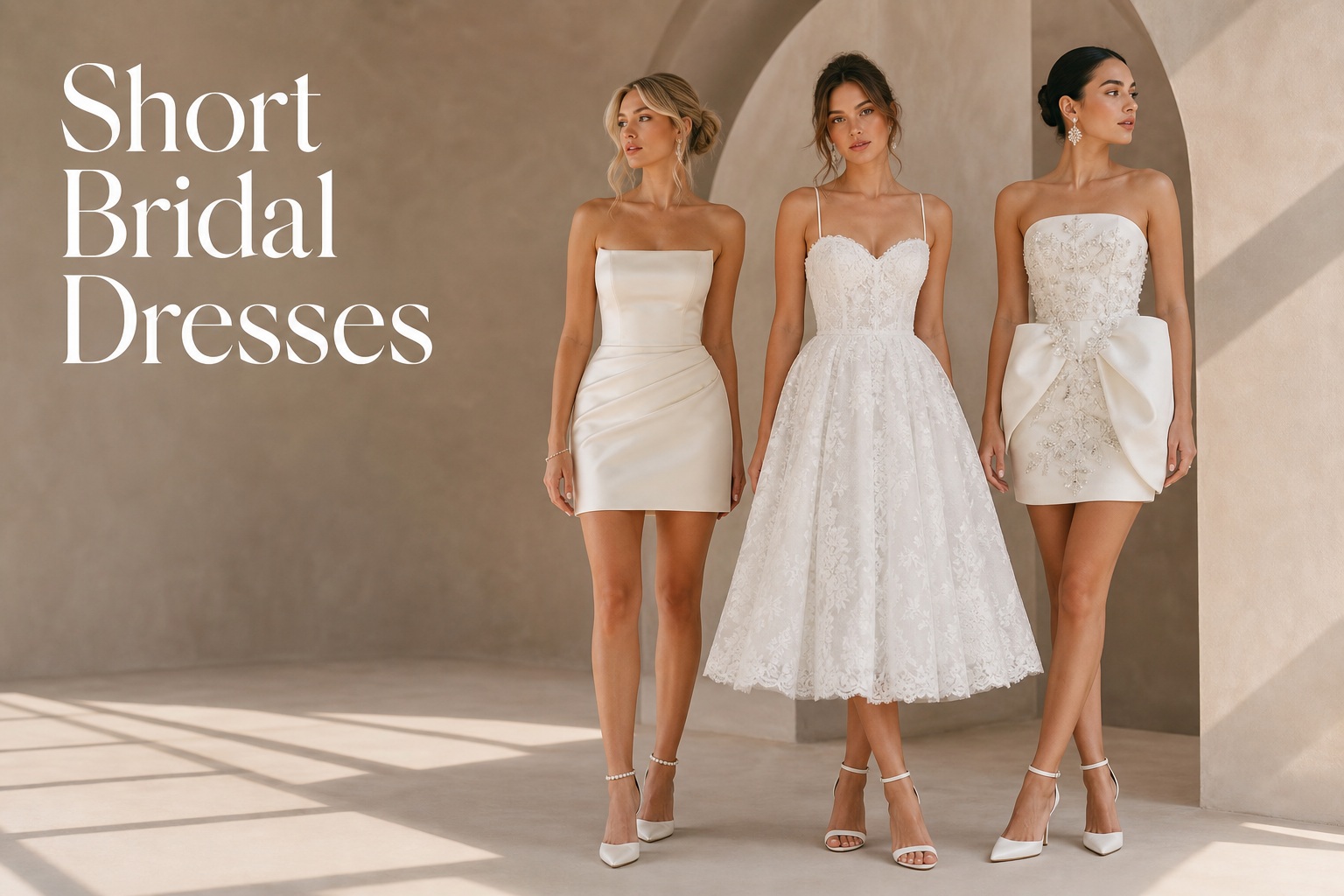
The language around the look has expanded too. Mini usually means a hem above or close to the knee. Knee-length sits around the knee and can feel balanced and easy to move in. Tea length falls below the knee and often stops above the ankle, giving you a vintage reference without requiring a full skirt. Midi is a broader fashion term that can describe several lengths, so always check the actual measurement before ordering.
Turn wedding inspiration into a plan you can actually follow.
Zarellea brings your guest list, budget, vendors, and day-of details into one shared space — so no beautiful idea gets lost in the shuffle.
Another change is the way bridal detail is being used. A short dress can carry lace, beading, feathers, fringe, bows, a detachable train, a dramatic sleeve, or a structured corset. Because there is less fabric, each detail has more visual impact. A simple white mini can feel luxurious in mikado or satin, while a soft crepe sheath can look deliberately modern with a long veil and architectural earrings.
Retail collections also show that short bridal style is becoming more flexible. Designers and US retailers offer simple dresses, plus-size options, convertible pieces, two-piece looks, and ready-to-wear styles alongside traditional bridal gowns. That gives brides more ways to shop, but it also makes discernment important. A white party dress is not automatically a bridal dress. The difference often comes from construction, finish, proportion, and the accessories chosen around it.
Why the shorter hem matters
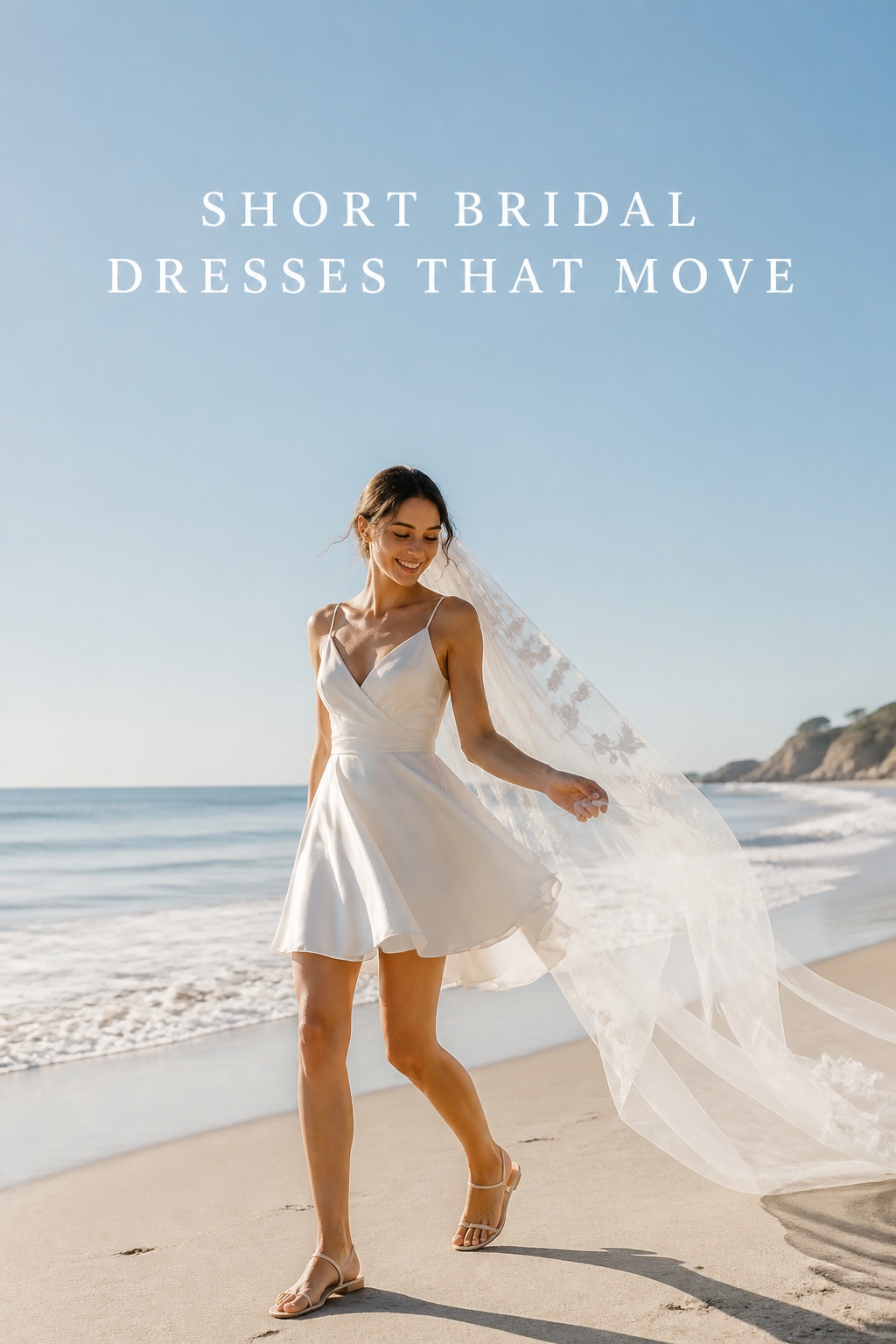
The most obvious benefit is movement. You can walk on uneven ground, climb courthouse steps, sit at a restaurant, dance without lifting a skirt, and move between indoor and outdoor spaces without managing a train. That freedom is especially valuable when the wedding is built around mingling rather than a formal procession. It changes how you stand in photographs because you are less likely to hold your dress or worry about where the hem is.
A shorter dress also makes your shoes part of the bridal design. This is not a small detail. A pair of satin pumps, embellished slingbacks, crystal sandals, ballet flats, or white boots can set the mood of the outfit more clearly because guests can see them. Choose footwear that supports the setting and the amount of walking. A beautiful shoe that hurts after ten minutes will show in your posture and take attention away from the dress.
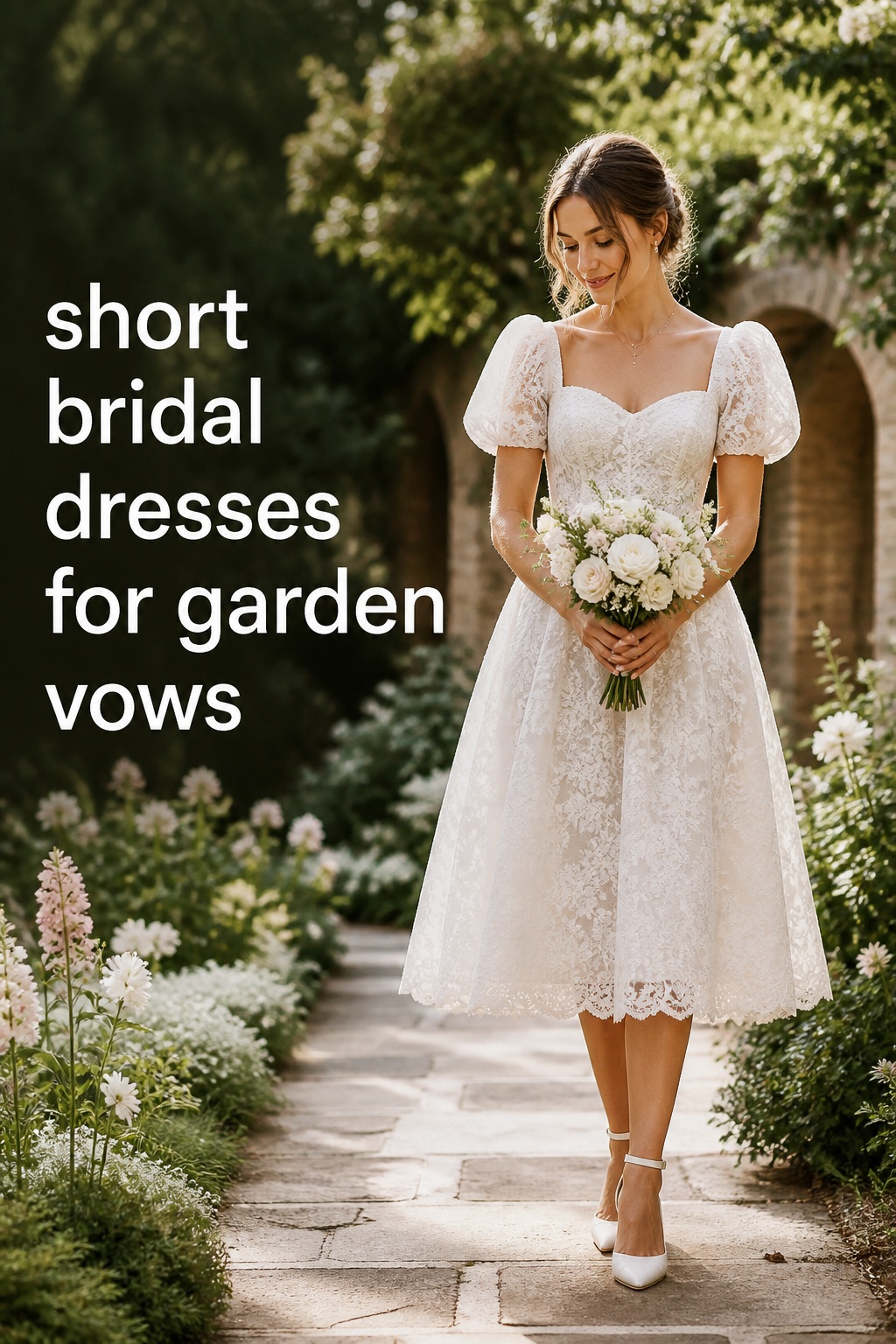
Venue is another reason the trend matters. At a city hall ceremony, a clean sheath or tailored mini can echo the architecture. At a garden wedding, a fuller skirt, floral texture, or puff sleeve can feel connected to the surroundings. On a beach, a lightweight dress avoids sand and heat around the hem. At a winter celebration, velvet, satin, long sleeves, crystal, or a short dress with a matching coat can create the same visual richness as a heavier gown.
There is also a financial and practical argument. A short bridal dress may cost less than a made-to-order gown, although fabric and workmanship still matter. It can be worn again for anniversaries, a rehearsal dinner, a honeymoon evening, or another formal event. If you are investing in a second look, a dress with a strong silhouette and excellent construction can deliver more use than a highly specialized gown that only works for one hour.
- Choose a short dress when movement is central to the celebration.
- Use the visible shoe as part of the outfit, not as an afterthought.
- Let the venue guide fabric weight, sleeve coverage, and hem practicality.
- Consider repeat wear when comparing the cost of a mini with a traditional gown.
- Remember that comfort supports better posture, better photographs, and a better day.
Usable interpretations for every bridal setting
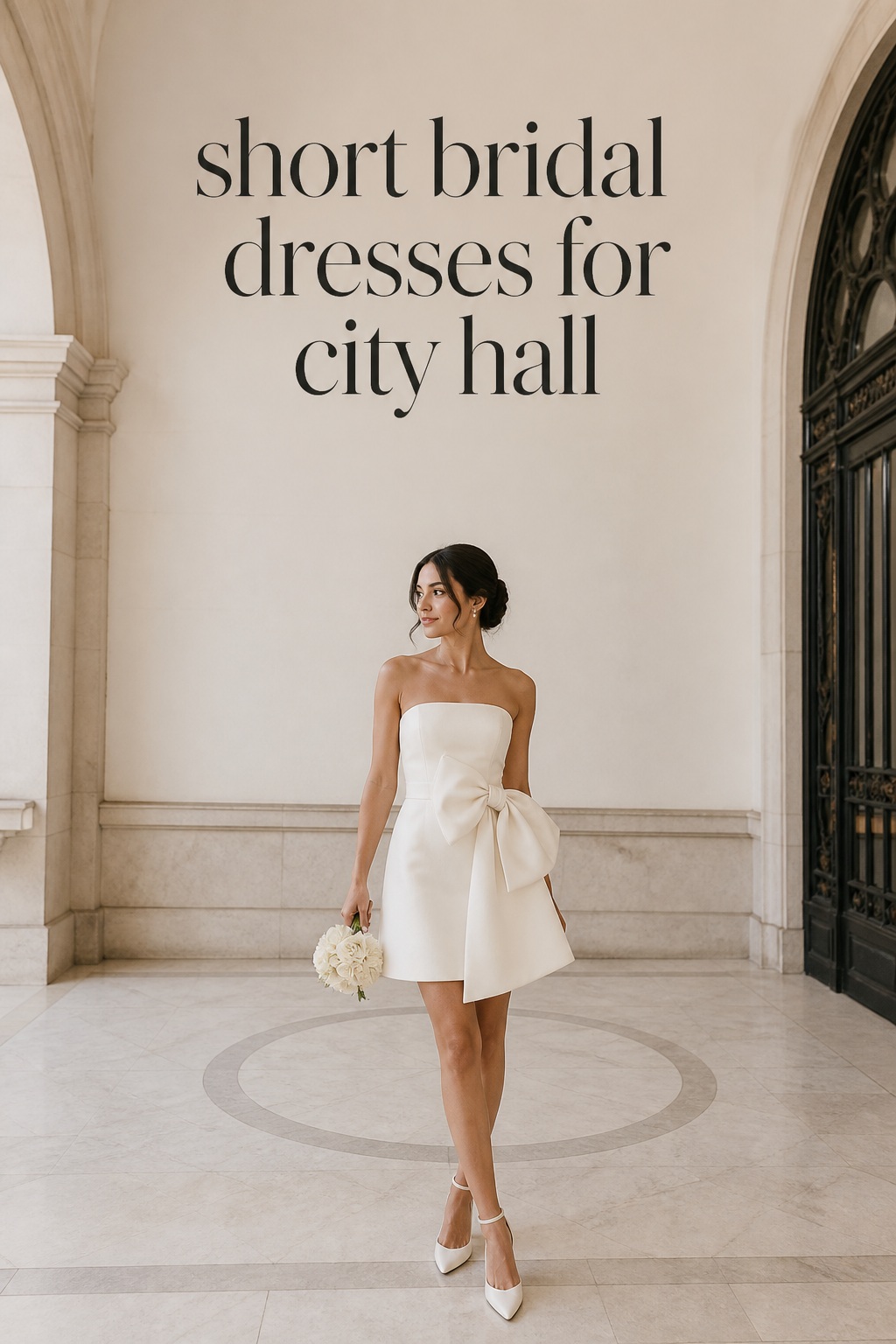
For a courthouse or city hall ceremony, start with clarity. A short sheath in crepe, satin, or a substantial stretch fabric looks intentional without competing with the setting. A square neckline, bateau neckline, or sculpted strapless bodice can provide structure. Add a fingertip veil, a small bouquet, and pointed shoes if you want classic polish. If the building has a strong architectural character, a clean silhouette often photographs better than a dress with many small decorative details.
For a garden wedding, softness can come from volume or texture rather than length. Try a tea-length A-line, a mini with a gathered skirt, floral lace, or a sleeve with shape. A bow, pearl headband, or fingertip veil can make the outfit feel romantic while keeping the hem modern. Be careful with very delicate shoes if the ceremony takes place on grass. A low block heel or embellished flat may be more useful than a narrow stiletto.
For a beach or destination wedding, prioritize fabrics that breathe and travel well. Lightweight crepe, silk blends, chiffon, cotton lace, and uncomplicated satin can be strong choices. Avoid a hem that is so close to the ground that it will drag through sand or pick up debris. A short dress with a clean back, low sandals, and a veil that moves in the wind can look striking without feeling overworked. Pack the dress carefully and arrange a steam or pressing plan before the ceremony.
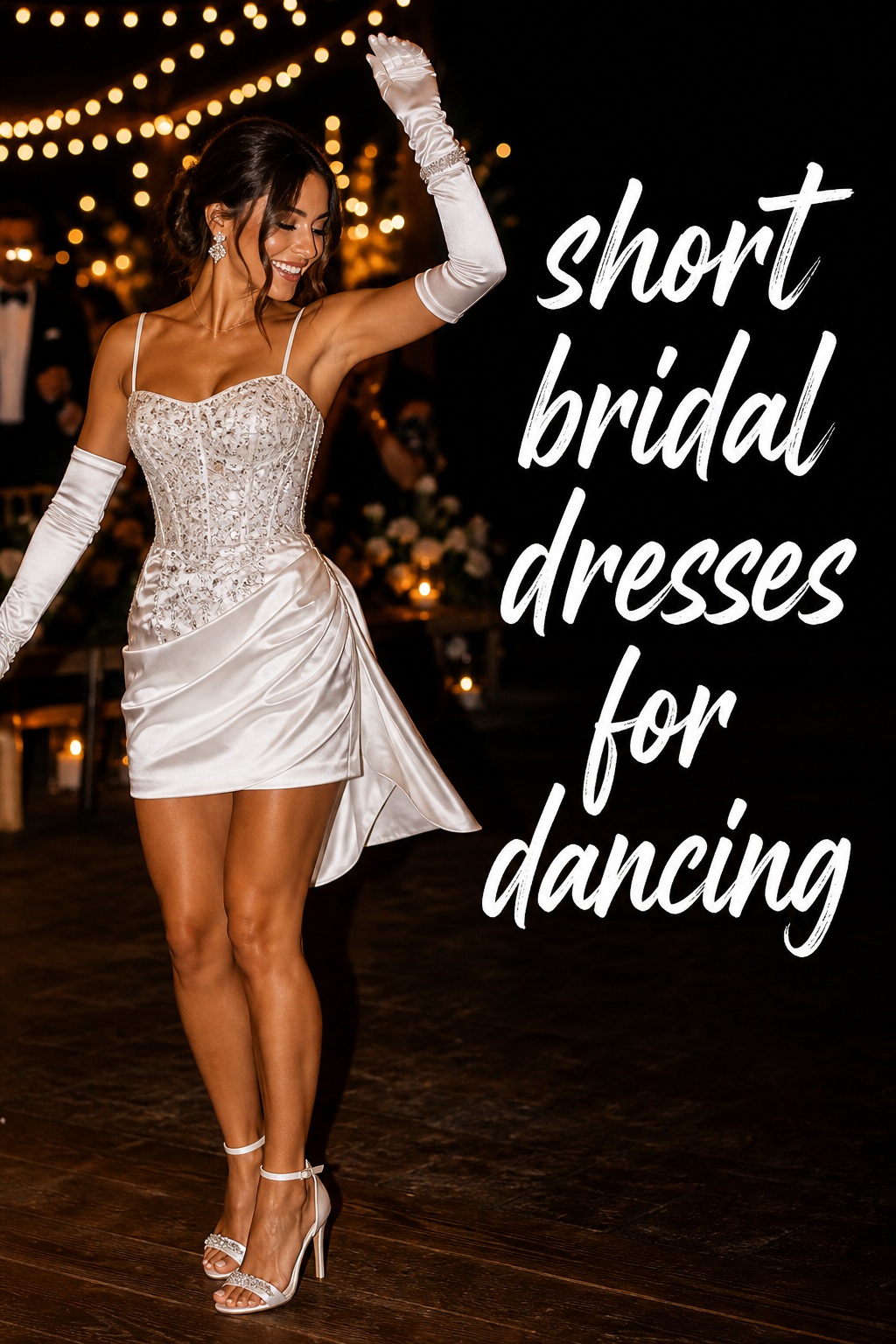
For a formal ballroom or black-tie reception, use richness to replace length. A short satin dress with a sculptural bodice, crystal embroidery, a dramatic bow, or a detachable train can hold its own beside tuxedos and floor-length gowns. Long gloves, statement earrings, metallic shoes, and a polished updo increase formality. Here, the finish matters more than the hem. A casual cotton mini will read differently from a fully lined mikado design, even if both stop at the same point.
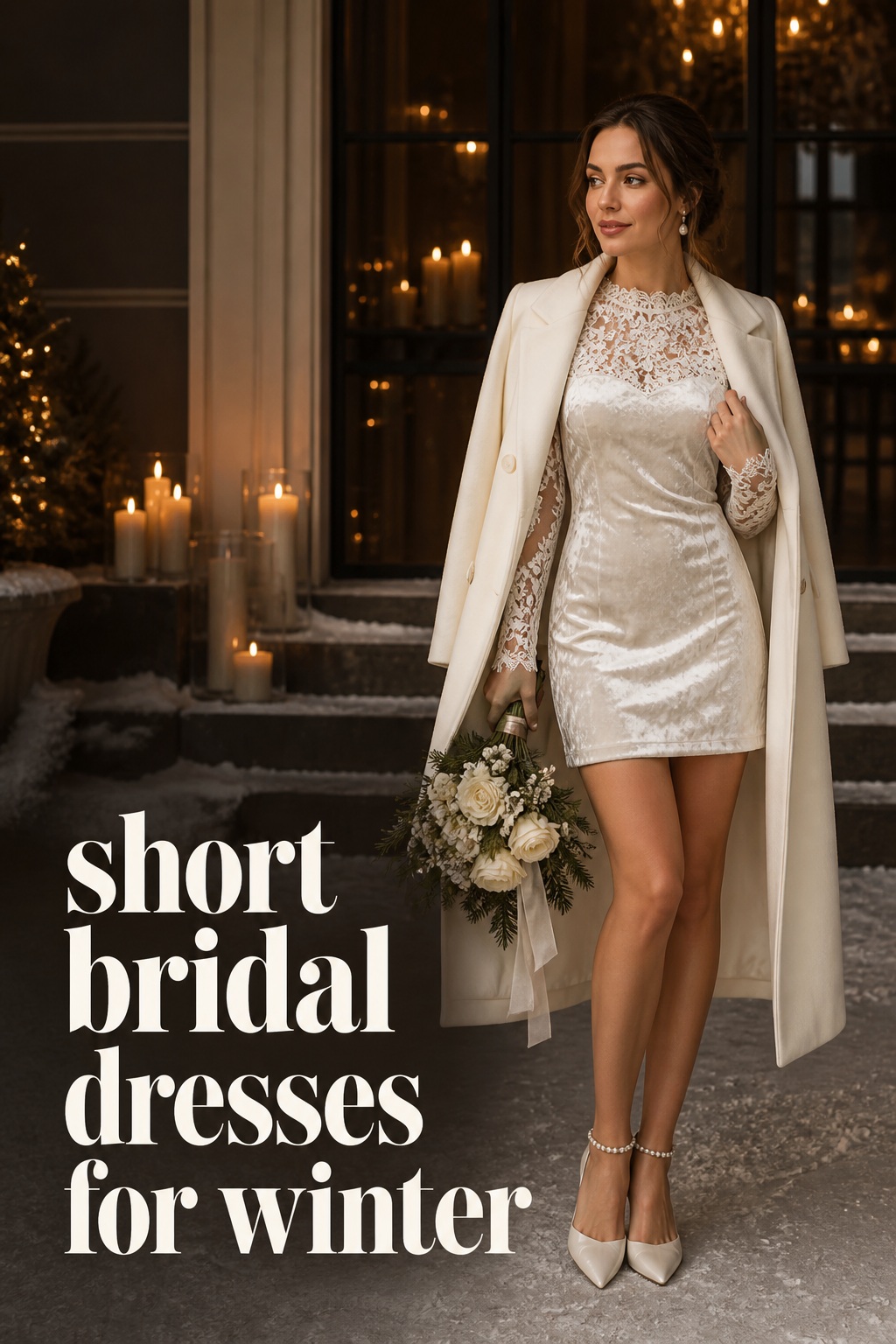
For a winter wedding, consider sleeves, texture, and layering. Long lace sleeves, a velvet pump, a satin shoe, opaque tights, or a tailored bridal coat can make a mini feel seasonally grounded. Crystal or pearl details catch candlelight, while a high neckline can balance a shorter skirt. Do not choose a fabric only because it looks beautiful in a product photograph. Check whether it creases, clings, or becomes uncomfortable under a coat, especially if you will spend time outdoors.
For a second look, make the change feel like a progression rather than a completely unrelated outfit. You might keep the same earrings and change the veil, or keep the ceremony bouquet and switch to a statement shoe. A detachable overskirt can reveal a mini without requiring a full change. A long-sleeved ceremony dress can become a sleeveless reception look if the layers are designed to come off cleanly. The strongest second looks preserve one recognizable bridal thread.
Lasting choices beyond the trend
The word trend can make a short dress sound temporary, but the most successful versions are based on lasting decisions. Begin with the length you feel comfortable wearing while sitting, walking, hugging, and dancing. A hem that looks perfect while standing may feel too short when you sit down. Try the dress with the exact undergarments and shoes you plan to wear, then film a few ordinary movements. This reveals more than a mirror pose.
Proportion deserves equal attention. A defined waist can help an A-line or fuller skirt feel elegant. A straight sheath creates a long, clean line. A high neckline can balance a short hem, while a deep neckline can make the same length feel more dramatic. None of these rules are universal. They are tools for understanding the relationship between the dress, your frame, and the visual point you want to emphasize.
Think about the outfit from every angle. The back may be visible during the ceremony, the side profile may dominate candid photographs, and the front needs to work with the bouquet. Check the placement of buttons, bows, seams, and closures. If the dress has a train, overskirt, or cape, ask how it attaches and whether someone can help you remove it without disturbing your hair or makeup.
Alterations are not optional just because a dress is short. The hem should be finished cleanly, the bodice should stay in place without constant adjustment, and the straps should support the dress through a full day. Ask your seamstress to test the hem with your wedding shoes. A small change in length can affect the balance of the entire design, particularly with a tea-length skirt or a strong horizontal detail.
Build the accessories around the mood you actually want. A veil creates immediate bridal clarity. Gloves add a fashion-forward or vintage note. A bow can soften a sleek dress, while a sculptural earring can sharpen a romantic one. If the dress already has fringe, heavy beading, or a large sleeve, keep the remaining accessories edited. The aim is not to prove that the look is bridal through every item. It is to make the intention easy to understand.
Finally, separate a lasting purchase from a viral styling signal. A detachable bow may be easy to add later, but the right fabric, fit, lining, and construction are harder to fix. Save screenshots of details you love, then translate them into priorities. You may discover that what attracted you was not a particular hem but the movement of fringe, the shine of satin, the contrast of gloves, or the confidence of a visible shoe.
Short bridal dresses work best when they express a clear point of view. The bride may want to move freely, show off a favorite pair of shoes, honor a city ceremony, avoid a heavy skirt in warm weather, or simply choose the silhouette that feels most like herself. That is enough reason. With a thoughtful length, a well-fitted foundation, and a few deliberate accessories, a shorter look can be every bit as memorable as a traditional gown.
FAQ
Can I wear a short bridal dress for the ceremony?
Yes. A short bridal dress can be a complete ceremony look for a courthouse, civil, garden, beach, restaurant, or formal wedding. Choose fabric and accessories that match the ceremony’s formality, and make the decision feel intentional through fit, finishing, and styling.
What is the difference between a mini and a tea-length wedding dress?
A mini usually ends above or close to the knee. A tea-length dress falls below the knee and above the ankle. The right option depends on your comfort, proportions, venue, footwear, and how much movement you want.
Are short bridal dresses appropriate for a formal wedding?
They can be. Satin, mikado, crepe, velvet, crystal, structured tailoring, long gloves, a veil, and formal shoes can give a short dress enough presence for an elegant celebration. Focus on quality and finish rather than length alone.
Which shoes work best with short bridal dresses?
Pointed pumps, embellished sandals, slingbacks, ballet flats, block heels, and bridal boots can all work. Match the shoe to the venue and walking demands, then test the complete outfit so the hem and shoe create balanced proportions.
Can a short bridal dress flatter a petite bride?
Yes. A clean waistline, a well-placed hem, and shoes that reveal the foot can create a streamlined effect. Tea length can look especially elegant with a heel, while a mini can show more leg. Use the actual garment measurements rather than relying on the product name.
Can I make a short bridal dress feel more traditional?
Add a veil, a small bouquet, pearls, lace, satin, classic pumps, or a bridal topper. A longer veil can create contrast with a mini, while a fingertip veil can keep a tea-length dress soft and timeless.
Should I choose short bridal dresses as a second look?
A second look is useful when you want a lighter outfit for dancing, a different silhouette for the reception, or a piece you can wear again. Plan the change early and choose at least one connecting element, such as the same jewelry, color, fabric, or bridal accessory.
A useful way to compare lengths is to stop thinking in labels and start thinking in moments. Stand in the dress and imagine the entrance, the ceremony reading, group photographs, dinner, and the last dance. A mini may feel perfect for a lively reception but less comfortable if you want a conservative ceremony. A knee-length hem may offer the same ease with a little more coverage. Tea length often gives the strongest vintage signal, especially with a fuller skirt, but it can also look contemporary when the fabric and neckline are clean.
Make a short list of the visual words you want guests to remember: sleek, romantic, playful, sculptural, vintage, or relaxed. Then test every design against those words. A simple satin mini with a long veil can be sleek and formal. A lace tea-length dress with a pearl headband can be vintage and romantic. A feathered or fringed dress may be playful and dynamic. This process prevents you from buying a dress simply because the hem is different.
Photography is part of the decision too. Ask to see the dress in movement and from several distances. A short hem leaves more open space around the legs, so the relationship between the dress and the floor becomes visible. That can be wonderful in a clean city hall image or a dance-floor photograph. If you prefer a softer outline, look for texture, a fuller skirt, a veil, or a detachable layer that gives the photographer another shape to capture.
Underlayers deserve a quiet but important check. Some short designs are sheer under bright light, while others need a specific bra, bodysuit, slip, or shapewear to keep the line smooth. Try the exact pieces before your final fitting. If you plan to wear tights, test them with the shoe and hem. If you prefer bare legs, consider whether the dress has a lining that stays in place when you sit. Small practical details can make the difference between feeling relaxed and constantly monitoring your outfit.
Shopping timelines can be more flexible for ready-to-wear short bridal dresses, but do not assume every option is immediately available. Check the delivery date, return policy, size chart, lining, fabric content, and whether the listed length changes by size. If you are between sizes, a local seamstress can often refine a good fit, but she cannot always change the proportions of a bodice or add enough length to a very short skirt. Order early enough to allow for a second choice.
For brides who want more coverage, a short dress does not have to mean strapless or above the knee. Long sleeves, a high back, a mock neck, a removable cape, or a tea-length skirt can create a graceful balance. For brides who want a stronger fashion statement, a visible corset line, asymmetric neckline, oversized bow, or contrast glove can make the outfit feel intentional. The category is broad enough to support modest, minimal, romantic, playful, and dramatic interpretations.
Color can be part of the interpretation as well. Ivory, soft white, champagne, blush, and very pale blue can all look bridal when the silhouette and styling support the moment. If you choose a non-white short dress, consider adding a veil, a white bouquet, bridal shoes, or pearl jewelry to create a clear connection to the ceremony. If you prefer a traditional white or ivory dress, an unexpected shoe or colored accessory can provide personality without changing the main impression.
Before you commit, do a final three-part review. First, confirm that you can move, sit, use the restroom, and dance without assistance. Second, confirm that the dress works with your venue, weather, and planned photography. Third, confirm that the styling reflects you rather than a trend photograph. If all three answers are yes, the shorter hem is doing its job. It is giving you a bridal look that feels present, useful, and memorable.
Additional practical notes
Are short bridal dresses less formal than long gowns?
Not automatically. Formality comes from fabric, construction, finish, accessories, and the setting. A lined satin mini with a veil and formal shoes can look more elevated than an informal floor-length dress.
How should I test the hem before the wedding?
Wear the dress with your wedding shoes and planned underlayers. Sit, walk stairs, bend slightly, hug someone, and dance. Record how the hem behaves, then take the video to your seamstress if the length or lining needs adjustment.
What fabrics make a short bridal dress look expensive?
Mikado, satin, crepe, silk blends, quality lace, and velvet can all look refined. The finish, lining, seam work, and fit matter as much as the fiber. Choose a fabric that holds the intended silhouette and suits the weather.
Can I wear a veil with a mini wedding dress?
Yes. A veil creates a deliberate contrast with a shorter hem. A fingertip veil feels balanced with many lengths, while a longer veil can make a simple mini feel especially editorial and ceremonial.
What should I bring to a short dress fitting?
Bring the shoes, bra, shapewear, slip, tights, and accessories you expect to wear. Also bring a phone so you can review movement from the front, side, and back instead of judging only a still mirror image.
Can short bridal dresses work for plus-size brides?
Absolutely. Look for brands with inclusive sizing, custom measurements, supportive construction, and a clear size chart. Choose the neckline, waist, sleeve, and hem that make you feel comfortable and expressive rather than following a rule about what a body should wear.
How can I avoid looking like I am wearing a party dress?
Prioritize bridal-level construction, then add one or two unmistakable bridal elements such as a veil, bouquet, pearl jewelry, satin shoes, lace, or a ceremony-appropriate fabric. Keep the styling edited so the outfit looks intentional.