Spring Flowers For Wedding That Feel Elegant and Modern
There is a moment in wedding planning when flowers stop feeling like a checklist item and start feeling like the thread that ties the whole day together. The bouquet in your hands, the arrangement at the ceremony, the florals that greet guests at the reception, even the texture and color of a single bloom can shape the mood of the celebration. Choosing flowers for wedding styling is not only about what looks good in a photo. It is about seasonality, venue, dress coordination, budget, and the story you want each part of the day to tell.
Across wedding planning platforms and editorial brands such as The Knot, Martha Stewart, HGTV, The Perfect Wedding, Paperlust, Bespoke Bride, Lacy Bird, and Kop Flowers, a few themes appear again and again: bouquet shapes matter, seasonal flowers matter, florist guidance matters, and trends only work when they fit the real setting of the wedding. This guide brings those ideas together in a practical way so you can make decisions with confidence, whether you are planning a garden ceremony, a classic ballroom reception, or a smaller wedding with a tighter floral budget.
Start with the floral story, not the shopping list
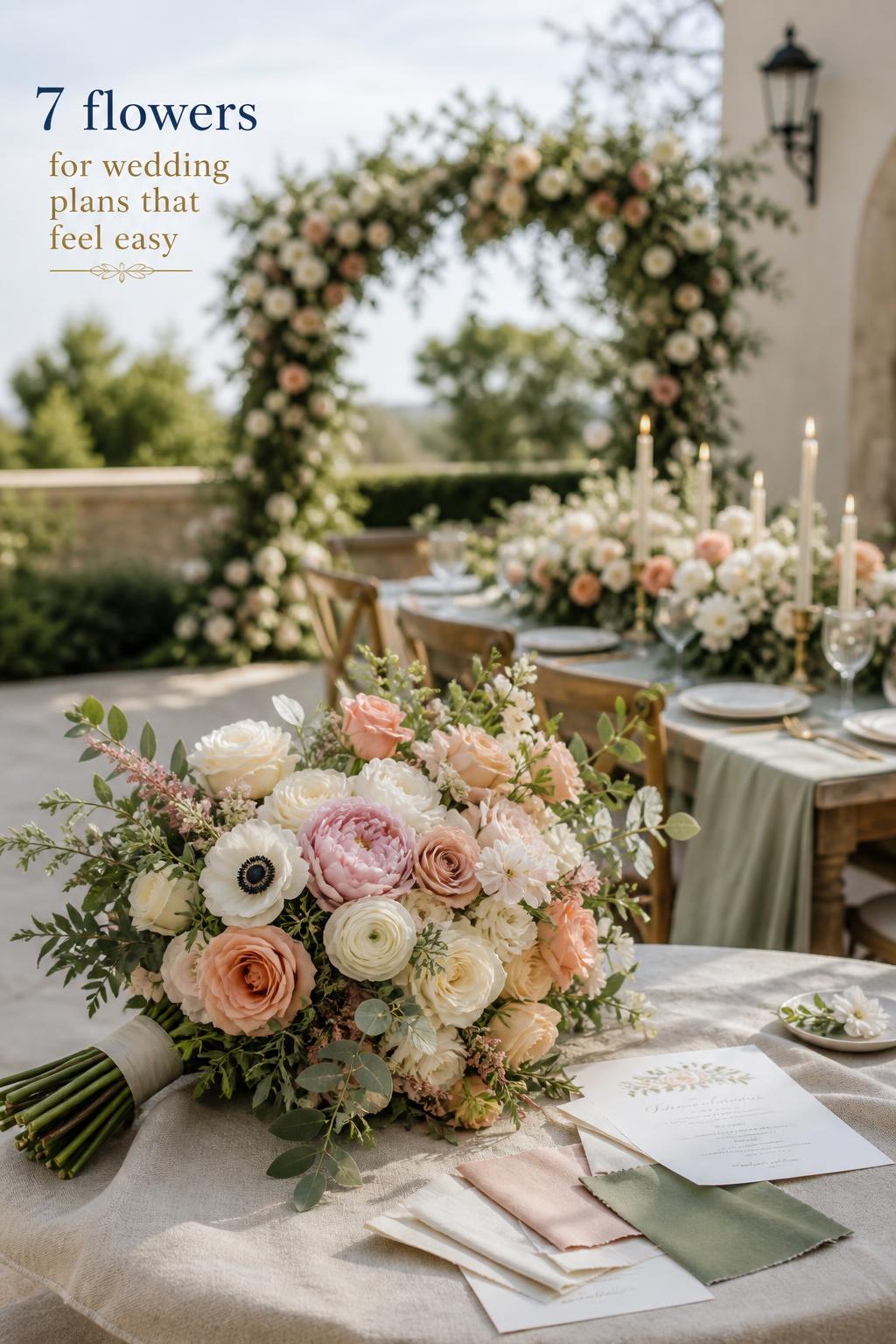
Before comparing roses to peonies or deciding between a round bouquet and a cascading one, it helps to think about floral storytelling. In wedding planning, that simply means making your flowers feel connected across the day. The bridal bouquet, ceremony florals, reception arrangements, and larger installations should feel as if they belong to the same event, not as if they were chosen from unrelated inspiration boards.
Best for: couples who want the wedding to feel cohesive from the aisle to the final dance, especially if the venue includes both ceremony and reception spaces.
Turn wedding inspiration into a plan you can actually follow.
Zarellea brings your guest list, budget, vendors, and day-of details into one shared space — so no beautiful idea gets lost in the shuffle.
Why it works: when colors, textures, and flower types echo each other, the wedding feels more intentional. Guests may not describe it as “storytelling,” but they notice when the design feels calm and connected rather than busy and scattered.
How to make it work: choose a small core group of floral decisions first. That usually means your main color palette, one or two signature flower types, and an overall style direction such as classic, garden-inspired, minimal, textured, or massed. Then ask how those choices will appear in the bouquet, the ceremony backdrop or arch, and the reception tables.
Budget tip: put more of your budget into the floral moments that appear in the most photographs or anchor the room visually, such as the bridal bouquet, ceremony backdrop, or one key reception installation. Simpler supporting arrangements can still look polished when they repeat the same palette and greenery.
Common mistake to avoid: choosing bouquet flowers first and building everything else around a single image without considering the venue, season, or scale of the event.
Real-life styling tip: before your florist creates a proposal, send photos of your dress fabric, venue interior, and ceremony setting together rather than separately. A bouquet that looks right against satin may feel too heavy against airy fabrics, and reception florals that suit a modern room may feel out of place in a garden setting.
Popular flower directions couples return to again and again
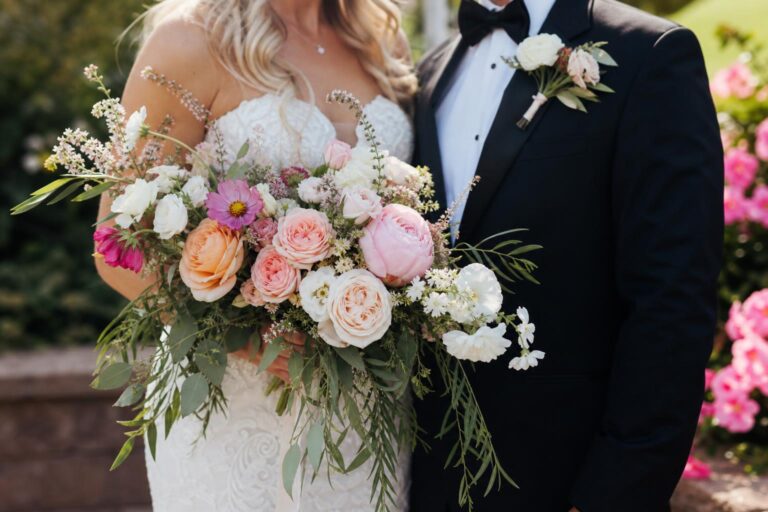
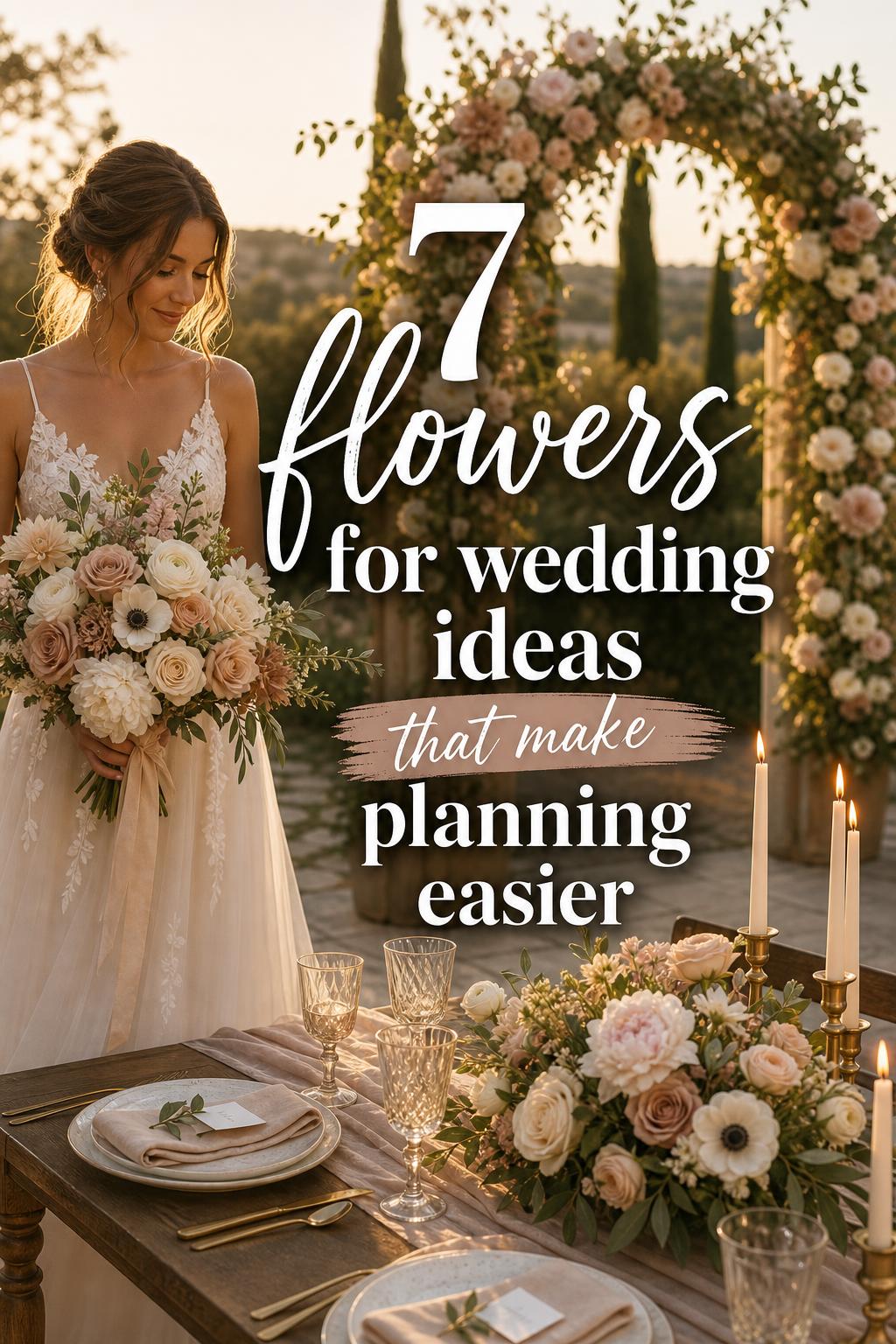
Editorial wedding coverage often highlights the same core floral categories because they are versatile and easy to adapt: roses, peonies, ranunculus, dahlias, anemones, and protea appear frequently in seasonal and trend-based conversations. These flowers are not interchangeable, though. Each brings a different level of formality, texture, and visual weight.
Roses for flexibility and broad styling range
Roses appear in classic lists of top wedding flowers for a reason. They can move across many wedding styles, from traditional to modern to massed arrangements. They also work well in bouquets, centerpieces, and larger installations such as arches and floral curtains.
Best for: classic weddings, formal receptions, couples who want one flower type to carry through several parts of the day.
How to make it work: pair roses with a defined color palette so they do not feel generic. If the design direction is modern, use them in tighter dome or massed arrangements. If the wedding leans romantic or garden-inspired, combine them with softer textures.
Peonies and ranunculus for spring softness
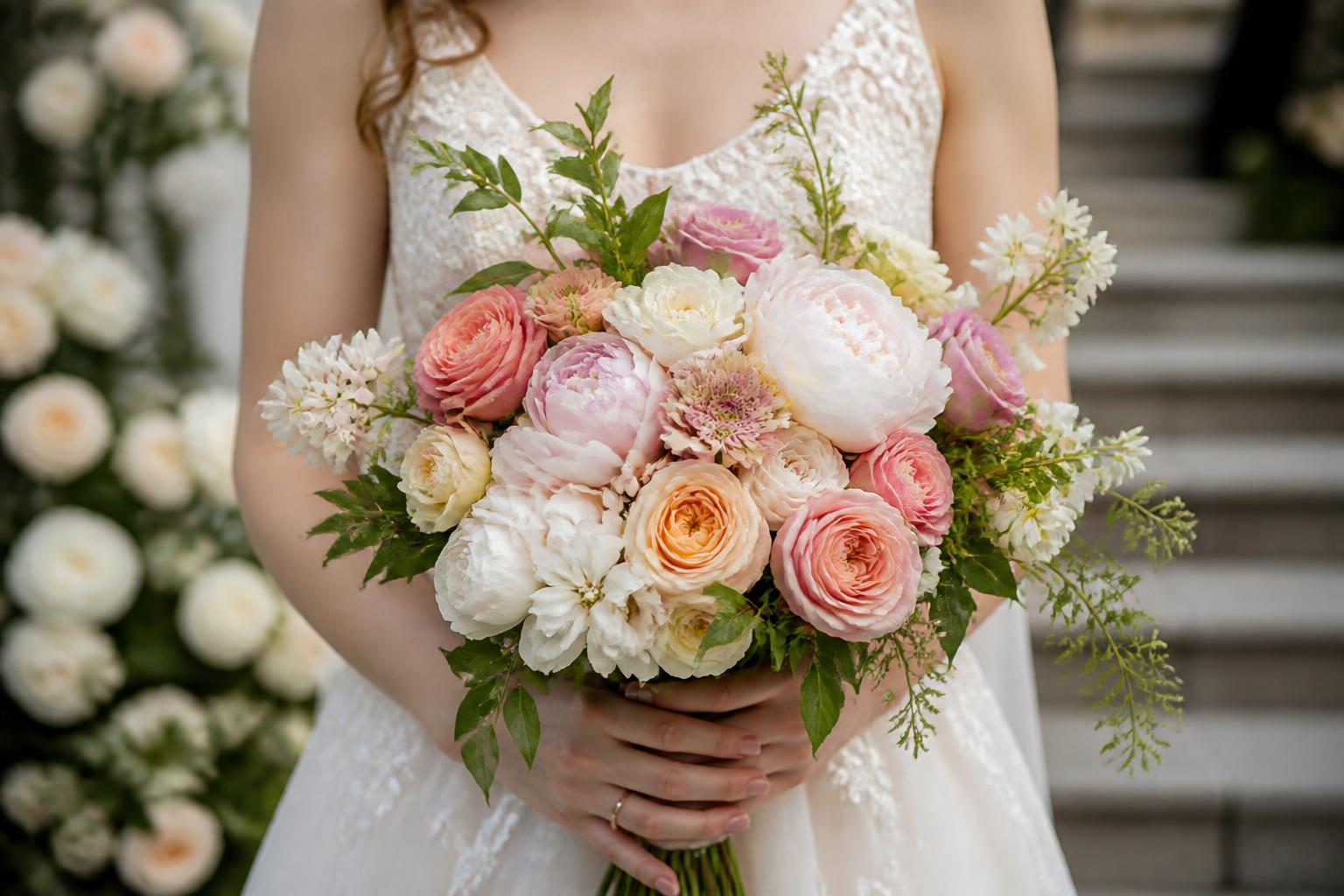
Peonies and ranunculus are repeatedly tied to spring wedding flowers and bouquet inspiration. They suit designs that feel layered, airy, and slightly more delicate in texture than heavier floral massing.
Best for: spring weddings, softer bridal styling, bouquets that need visual movement without looking untidy.
Common mistake to avoid: selecting them for the look alone and not discussing seasonality with your florist. Seasonal flowers are most effective when the timing of the wedding supports the design vision.
Dahlias for summer and early fall richness
Dahlias are often linked to summer wedding flowers and later-season color stories. Their structure gives a bouquet more depth, which is useful when the venue or dress styling calls for something stronger than a very soft, airy arrangement.
Best for: outdoor receptions, fuller bouquet shapes, weddings that need stronger texture or more visual presence.
Anemones and protea for contrast and trend-forward styling
Anemones and protea are mentioned more often in design-forward or trend-sensitive floral conversations. They can help a bouquet feel more editorial, especially when couples want texture, contrast, or a less traditional silhouette.
Best for: modern weddings, bold styling, bouquets where one statement bloom creates identity.
Why it works: when a bouquet includes a recognizably distinctive flower, it reads as more personalized. That is one reason designer commentary often connects personalization with current flower trends.
Seasonality shapes better flower decisions
Many couples begin with color, but florists often begin with season. That is practical, not limiting. Seasonal wedding flowers tend to support a more natural-looking design direction, and they make substitutions easier if one bloom is unavailable in the scale or style you need.
Spring weddings
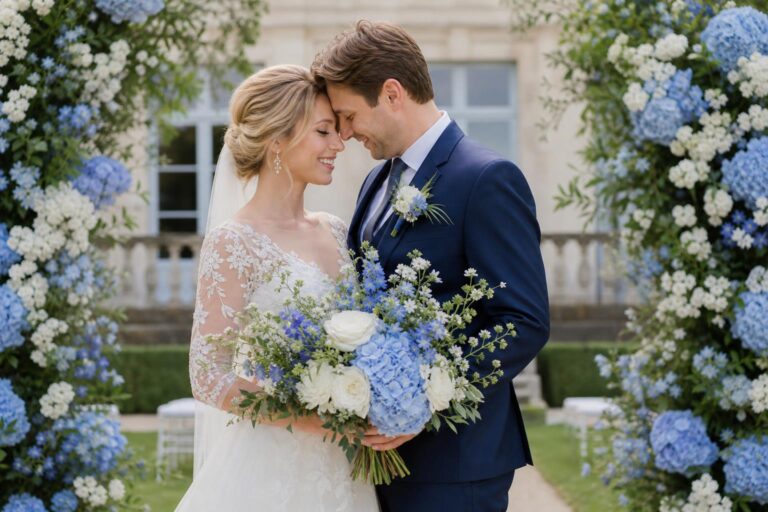
Spring floral conversations often center around peonies and ranunculus. This is a strong season for bouquets that feel light, layered, and softly textured. A round bouquet can feel especially polished in spring, while a hand-tied arrangement gives a slightly looser garden look.
Best for: garden weddings, daytime ceremonies, soft color palettes, romantic bridal styling.
Budget tip: if your ceremony and reception happen in one venue, reuse spring ceremony arrangements near the sweetheart table or cake display instead of ordering separate decorative pieces for every area.
Summer weddings
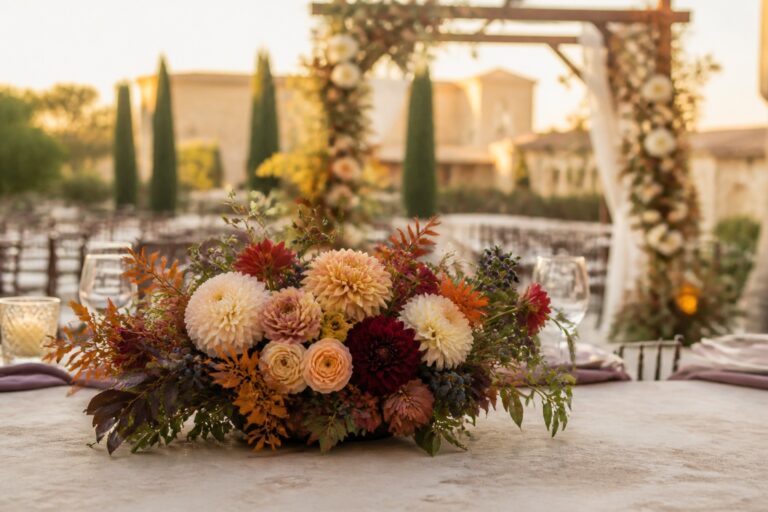
Summer often supports roses and dahlias in wedding inspiration, and it suits bouquets with slightly stronger color or larger-scale florals. Outdoor weddings in particular benefit from arrangements that can hold their own visually against bright natural light and open space.
Best for: tented receptions, outdoor ceremonies, larger weddings, colorful floral palettes.
Real-life styling tip: if your ceremony is outdoors in strong afternoon sun, ask your florist to design a bouquet with shape and texture that still reads clearly in bright light. Extremely pale flowers can disappear visually in photos if there is not enough contrast.
Fall and winter weddings
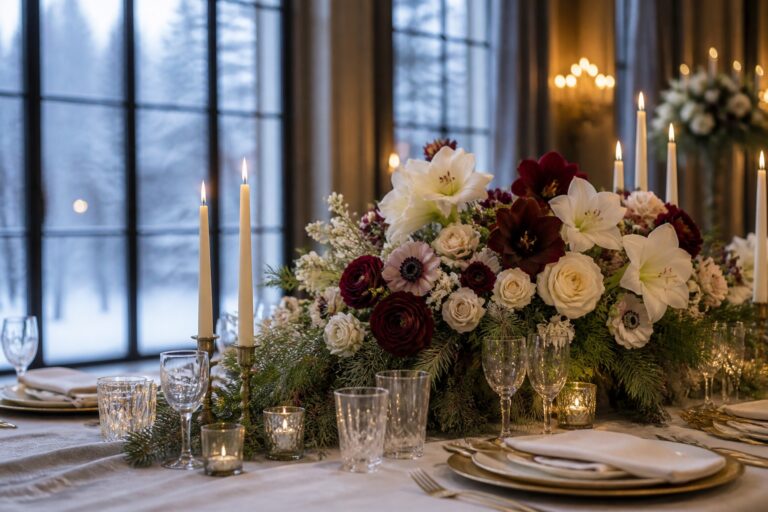
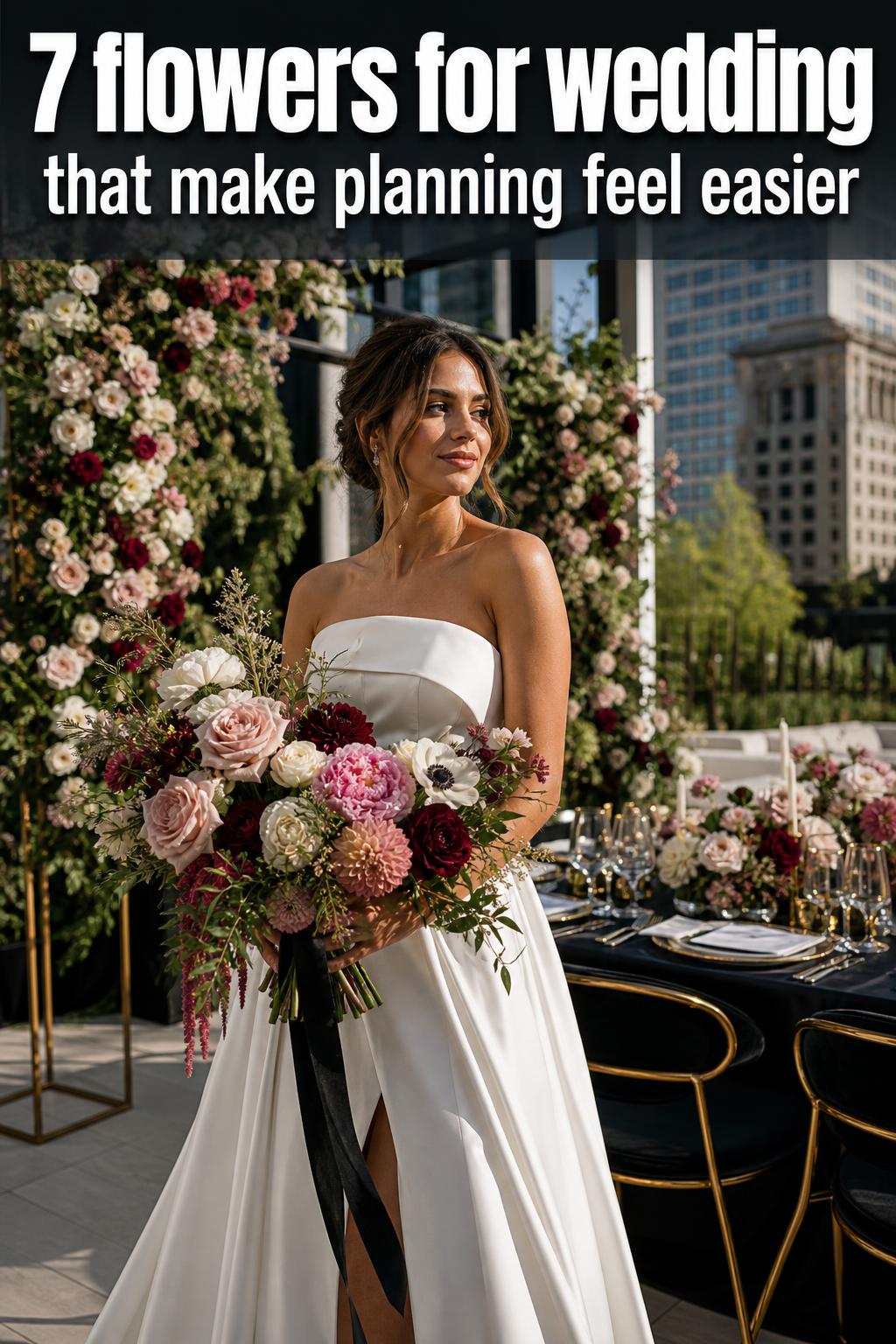
Fall and winter floral inspiration often leans into anemones, protea, stronger textures, and richer contrast. This is where bouquet structure becomes especially important. A dome, teardrop, or cascading shape can create a more dramatic silhouette against formal attire and darker seasonal surroundings.
Best for: evening weddings, formal venues, trend-forward florals, richer palettes and bolder contrast.
Common mistake to avoid: using the same airy bouquet style you loved for a spring garden wedding image without adjusting it for a winter ballroom or darker indoor venue.
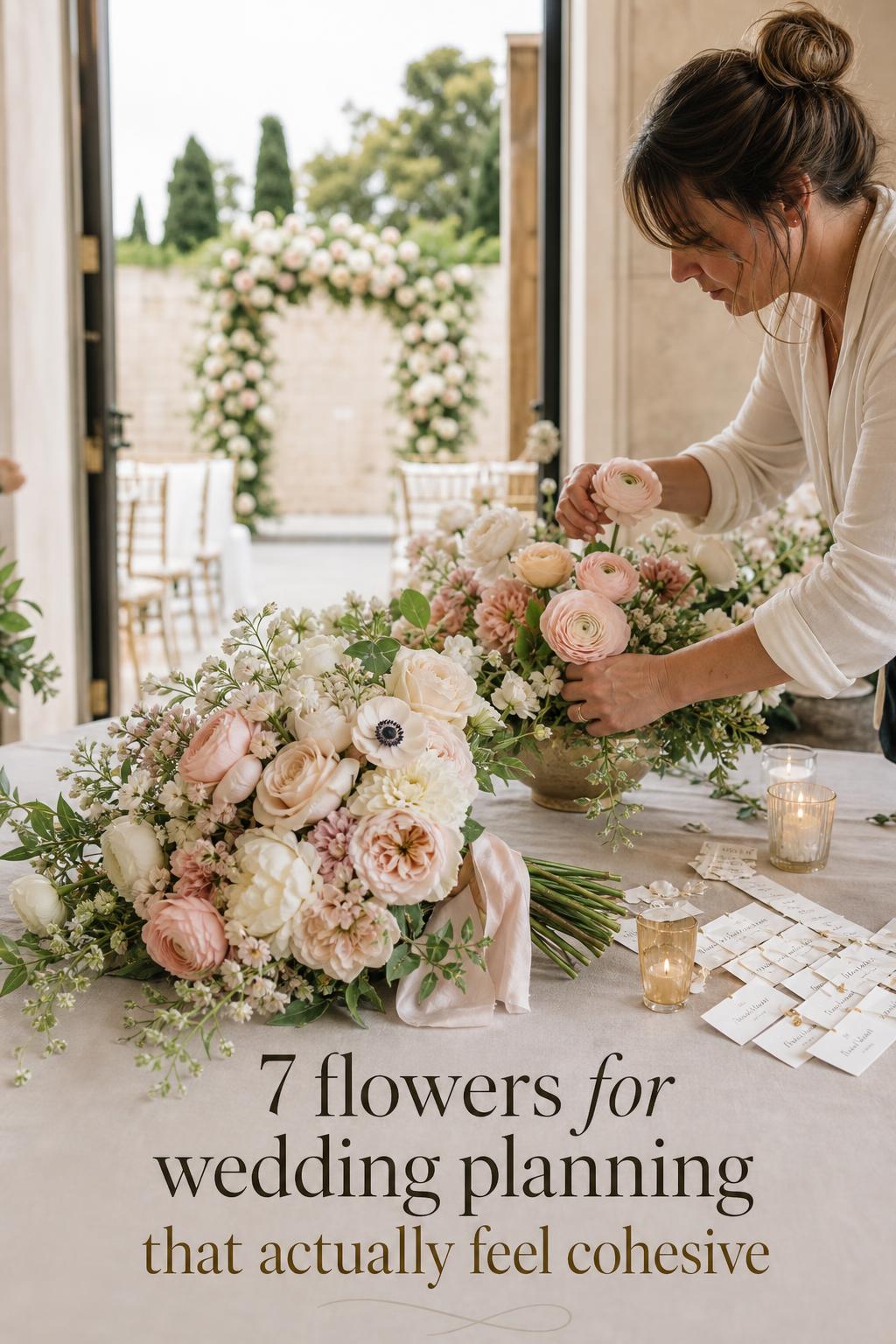
Bouquet shapes change the whole look
One of the most useful planning insights from bouquet-focused wedding content is that shape matters as much as flower type. Round, cascading, dome, nosegay, and hand-tied bouquets communicate different moods, and they photograph differently with different dresses and body positions.
- Round bouquet: structured, balanced, and easy to coordinate with classic wedding attire.
- Cascading bouquet: more dramatic and directional, often chosen for formal or romantic styling.
- Dome bouquet: fuller and more sculpted, especially effective with roses.
- Nosegay: compact and traditional, good for a neat, understated look.
- Hand-tied bouquet: looser and more natural, often suited to garden or less formal weddings.
Round bouquets for timeless balance
Round bouquets appear repeatedly because they are dependable. They create symmetry in photographs and do not compete with an intricate neckline or detailed dress bodice.
Best for: classic bridal gowns, traditional ceremonies, couples who want a refined look without too much trend influence.
Budget tip: if you want your bouquet to feel fuller without increasing the number of flower varieties, keep the palette tight and focus on one dominant bloom style.
Cascading bouquets for movement and formality
A cascading bouquet brings movement into the silhouette. It draws the eye downward and can feel especially fitting in grand venues or more formal wedding styling.
Best for: dramatic gowns, long aisles, formal ceremonies, statement wedding portraits.
Common mistake to avoid: choosing a cascading bouquet for a smaller space or a very detailed dress without checking scale. If the cascade is too long or dense, it can overwhelm the proportions of the outfit.
Dome and rose-dome bouquets for a polished statement
Kop Flowers highlights rose-dome styling, and that focus reflects a broader bouquet truth: dome shapes feel polished, intentional, and visually strong. They suit massed floral design, where one flower type or one dominant shape creates impact.
Best for: modern weddings, city venues, couples who want a sculpted bouquet with clear structure.
Why it works: the bouquet feels deliberate in photos and does not rely on too many competing textures to make an impression.
Hand-tied bouquets for a more natural finish
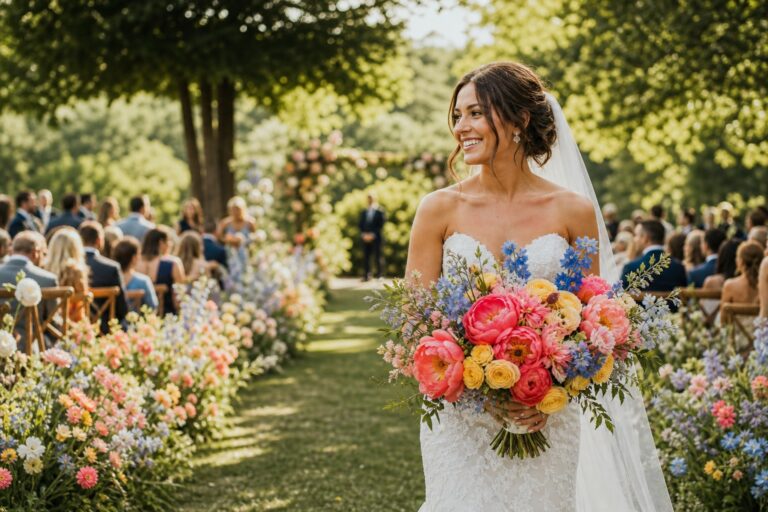
Hand-tied bouquets, including spiral-method styles discussed by Lacy Bird, tend to feel more relaxed. They still require planning, especially in stem placement and ribbon finishing, but the result is less formal than a tight round or dome arrangement.
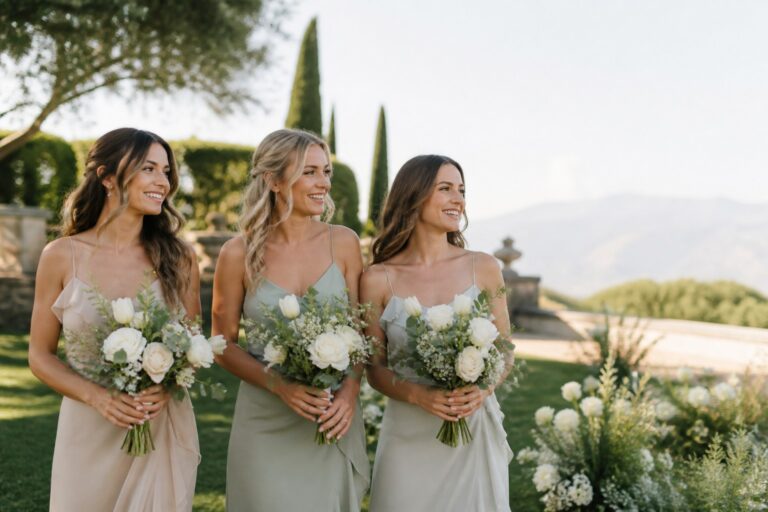
Best for: outdoor ceremonies, garden venues, intimate weddings, couples considering partial DIY flowers.
Real-life styling tip: when holding a hand-tied bouquet, keep the stems angled slightly downward rather than tight against the waist. It allows the shape to read more naturally in photos.
How trends actually translate into a real wedding
Wedding flower trends are useful when they help clarify your preferences, not when they push you into a look that does not fit the venue or the wedding timeline. Recent editorial coverage from The Knot and Martha Stewart repeatedly points to personalization, textured florals, massed arrangements, and sustainability as major directions. Each one can work beautifully, but each has a practical side.
Personalization
Personalization usually means the bouquet or arrangements feel specific to the couple rather than copied from a broad trend board. That may come through color choices, one distinctive flower type, or a clear style direction.
Best for: couples who care more about a cohesive identity than following one-season trend language.
How to make it work: instead of asking your florist for “something unique,” point to what should feel personal. That could be a compact nosegay rather than a large bouquet, a preference for stronger texture, or a ceremony arch that echoes the shape of the venue.
Textured florals
Texture is one of the most important ideas in recent wedding flower design. It refers to how varied the blooms and foliage feel visually: smooth petals against more sculptural flowers, soft florals against stronger shapes, or airy stems mixed with denser forms.
Why it works: texture helps bouquets and arrangements read clearly in photographs, especially when the color palette is restrained.
Common mistake to avoid: confusing texture with clutter. A bouquet can feel layered without including every flower style you like.
Massed arrangements
Massed florals use repetition to create impact. Rather than mixing many flower types evenly, this approach often lets one bloom or shape dominate. The result can feel clean, modern, and expensive-looking even when the palette is simple.
Best for: modern receptions, formal spaces, couples who want strong visual moments such as one floral installation, altar piece, or sculpted bouquet.
Budget tip: massing works best when used selectively. Invest in one area, such as the ceremony backdrop, instead of trying to repeat the same high-density floral treatment across every table.
Sustainability and thoughtful sourcing
Sustainability appears in some trend coverage as a growing priority. In practical terms, it often means choosing seasonally appropriate flowers, working with local floristry where possible, and avoiding unnecessary floral waste.
Best for: couples planning a more intentional event, especially when the wedding design is already leaning into seasonality and venue cohesion.
Real-life styling tip: ask your florist early whether ceremony pieces can be repurposed at the reception. Reuse is one of the simplest ways to support a more thoughtful floral plan without changing the overall look.
Floral installations that reshape the room
Some of the most memorable wedding flowers are not in the bouquet at all. The Knot highlights floral installations such as curtains, arches, and backdrops because they create a focal point the moment guests arrive. These pieces can define a ceremony space, soften a plain wall, or create a visual transition between parts of the event.
Arches and ceremony backdrops
An arch or floral backdrop works best when the ceremony area needs architectural definition. Outdoor weddings often benefit from this most, especially when the setting is wide open and there is no built-in visual frame around the couple.
Best for: outdoor ceremonies, minimalist venues, spaces where the altar area needs more presence.
Common mistake to avoid: designing an elaborate backdrop without checking what is already behind it. If the venue has a beautiful view or strong architectural detail, the florals should support it rather than block it completely.
Floral curtains and immersive installations
Floral curtains and larger suspended installations feel more editorial and immersive. They can be used behind a sweetheart table, at a ceremony entrance, or in a photo-focused area of the reception.
Why it works: guests instantly understand where the design emphasis is. It creates one high-impact zone instead of spreading the floral budget thinly across the whole event.
Budget tip: if a full floral curtain is beyond budget, use a more focused backdrop and echo the same flowers in smaller arrangements nearby. Visual repetition creates continuity without requiring the same scale everywhere.
Matching flowers to dress, venue, and wedding style
The Perfect Wedding and other bouquet-focused sources regularly connect flower choice to dress coordination. This is one of the most practical parts of floral planning, because a bouquet is always seen in direct relationship to the bride’s dress, body line, and movement.
With classic and formal dresses
Structured gowns usually pair well with round, dome, or neatly gathered bouquets. These shapes support the formality of the dress instead of interrupting it.
Best for: traditional ceremonies, ballroom venues, formal evening weddings.
With softer or more fluid bridal styling
If the dress has lighter movement or a more relaxed silhouette, a hand-tied bouquet or a slightly looser shape often feels more balanced. That keeps the bouquet from looking too rigid against the rest of the bridal look.
Best for: garden weddings, daytime celebrations, less structured bridal styling.
With modern venues
Modern venues often benefit from strong floral editing. Massed arrangements, sculpted bouquet shapes, and tighter palettes can feel more appropriate than highly mixed rustic florals.
Real-life styling tip: if the venue already has bold architecture, keep bouquet colors and textures disciplined. Let the flowers sharpen the setting rather than compete with it.
With romantic garden-inspired venues
Garden-inspired spaces naturally support softer seasonal flowers, hand-tied bouquets, and arrangements with visible movement. This is where peonies, ranunculus, and layered textures often feel most at home.
Common mistake to avoid: making garden florals too loose. Even relaxed wedding flowers still need structure, especially for walking, holding, and photography.
Working with a florist versus taking the DIY route
Not every part of a wedding flower plan needs the same level of professional involvement. Some couples work with a florist for every element. Others hire a florist for personal flowers and one key installation, then simplify reception florals or handle a small DIY component. What matters is knowing where skill and timing really count.
When professional floral design is the better choice
Professional florist support is especially valuable for large weddings, installation work, complex bouquets, and designs that rely on strong shape control such as cascading bouquets, dome styles, or suspended florals. It is also the safer route when the schedule is tight or the venue requires coordinated setup.
Best for: larger guest counts, formal venues, floral arches, curtain installations, couples who want a trend-driven or highly polished design.
When DIY can work well
DIY flowers are more realistic when the designs are small in scale and repetition-based. Lacy Bird’s bouquet how-to content, including the spiral method and ribbon finish, reflects that simple hand-tied bouquets can be approachable if expectations are clear and the design stays contained.
Best for: intimate weddings, rehearsal events, simple bridesmaid bouquets, couples who want a natural hand-tied look rather than a tightly sculpted arrangement.
Common mistake to avoid: underestimating timing. Even simple bouquet work becomes stressful if it is left to the final hours before the ceremony.
Budget tip: if you are trying to reduce spending, ask a florist to create the bridal bouquet and ceremony focal flowers professionally, then keep reception florals minimal and repeated in simpler forms.
Budget decisions that still preserve style
Many wedding flower articles mention budget, but the most useful way to think about it is through allocation rather than strict reduction. Not every floral element has equal value. A bouquet appears in close-up photos. A ceremony backdrop frames the vows. A floral installation can define the whole room. Other pieces can be simpler if those main moments are handled well.
- Invest first in the bridal bouquet, because it appears in many photos and must work with the dress.
- Choose one major floral focal point for ceremony or reception rather than several medium-impact areas.
- Reuse ceremony flowers at the reception whenever logistics allow.
- Keep the palette and flower selection edited so the event feels intentional even with fewer stems.
- Use seasonality to guide substitutions instead of forcing a flower type into every part of the wedding.
Why it works: couples often regret trying to spread the floral budget evenly. Concentrated impact usually feels more luxurious than diluted abundance.
Real-life styling tip: ask your florist to show you where a premium bloom matters most. Sometimes using peonies only in the bridal bouquet and switching supporting arrangements to other seasonal flowers preserves the look while keeping the plan realistic.
A few location and sourcing considerations couples often overlook
Several competitor gaps point to an important planning truth: floral choices do not happen in isolation from region, venue logistics, and local sourcing. Even when the overall wedding inspiration is national in tone, conversations about California, New York, the Midwest, West Coast markets, Florida, Los Angeles, and Phoenix suggest that local floristry context matters in practice.
Best for: couples planning from out of town, working in major U.S. markets, or choosing flowers based on inspiration images from a different climate or season.
How to make it work: bring your inspiration to a florist, but stay open to seasonal substitution and sourcing adjustments. A florist who knows local conditions can help translate a look rather than copy it literally.
Common mistake to avoid: assuming a bouquet image from one region or season can be reproduced exactly in another without any changes.
Tip: if you are choosing between several floral ideas, ask which one is most compatible with your venue setup and timeline, not only which one photographs best on social media. Delivery, placement, and room turnover all affect what is realistic.
Designer insight matters more than trend chasing
One reason top wedding flower content repeatedly quotes floral designers is simple: trends become useful only when translated by someone who understands scale, proportion, and event flow. Martha Stewart references designers and industry insiders, including voices connected to Poppy Flowers. The Knot includes florist perspectives and brand references such as Ida Mayes Floral Design House. Those features highlight a valuable planning lesson for couples: the right florist does not just arrange flowers. They help edit decisions.
Why it works: couples often bring multiple competing inspirations to floral planning. A florist can identify the common thread, whether that is texture, color restraint, stronger massing, or a bouquet shape that suits the dress and venue together.
Best for: couples who feel torn between classic and trend-forward looks, or anyone planning flowers across several spaces.
Real-life styling tip: in your florist consultation, ask what should stay consistent across the bouquet, ceremony, and reception, and where variation is actually helpful. That question often leads to a much more polished result than asking only for more flowers or more color.
Putting it all together on the wedding day
The most successful wedding flower plans are not always the biggest or most expensive. They are the ones that understand context. A compact nosegay can feel exactly right in an intimate ceremony. A rose-dome bouquet can look striking in a city venue. A textured spring hand-tied bouquet can make sense in a garden setting. A floral curtain can transform one plain reception wall into the design centerpiece of the evening.
As you decide, keep returning to a few grounding questions: what season is the wedding in, what shape suits the dress, where do flowers need to work hardest, and what type of atmosphere should guests feel as they move from ceremony to reception? Those answers usually lead to better choices than chasing the broadest trend list.
Wedding flowers should support the emotion of the day while also respecting the real conditions around it: budget, timing, venue, light, and movement. When those practical pieces are handled well, the florals stop feeling like separate décor items and start feeling like part of the memory itself.
FAQ
How do I choose the best flowers for wedding planning without feeling overwhelmed?
Start with three decisions first: your wedding season, your overall style direction, and the bouquet shape you are drawn to. Once those are clear, it becomes much easier to narrow flower types, color palette, and ceremony or reception arrangements without collecting too many disconnected ideas.
Which bouquet shape is the most versatile for a wedding?
A round bouquet is usually the most versatile because it suits many dress styles, works in both formal and classic weddings, and photographs neatly. If you want something softer, a hand-tied bouquet is also flexible, especially for garden-inspired or outdoor weddings.
Do wedding flower trends matter if I want a timeless look?
Yes, but mostly as guidance rather than rules. Trends such as personalization, texture, and massed arrangements can help you understand what you like, but a timeless result usually comes from choosing a bouquet shape, palette, and flower mix that suit your venue, season, and dress.
What flowers are most often associated with spring weddings?
Peonies and ranunculus are frequently associated with spring wedding flowers. They are often used in bouquets that feel soft, layered, and romantic, especially for garden weddings and lighter daytime ceremonies.
Should I do DIY wedding flowers or hire a florist?
DIY can work well for simple hand-tied bouquets or smaller arrangements, especially for intimate weddings, but a florist is usually the better choice for larger weddings, floral installations, and bouquet shapes that require more structure, such as cascading or dome styles.
How can I make wedding flowers look expensive without ordering too much?
Focus your floral budget on one or two high-impact areas such as the bridal bouquet and ceremony backdrop, then keep the rest of the flowers more edited and consistent. Repetition, a tight palette, and one strong floral focal point usually create a more elevated result than spreading flowers evenly across every space.
What is the biggest mistake couples make with wedding flowers?
The most common mistake is choosing flowers from inspiration images without thinking about season, venue, and scale. A bouquet or installation can look wonderful in one setting and feel impractical or visually out of place in another if those details are ignored.
How do I match my bouquet to my wedding dress?
Structured dresses often pair best with round, dome, or neatly gathered bouquets, while softer or more fluid dresses usually work better with hand-tied or slightly looser shapes. The goal is to make the bouquet support the dress silhouette rather than compete with it.
Are floral installations worth it for a wedding?
They are worth it when they solve a design problem or create a clear focal point, such as framing an outdoor ceremony or transforming a plain reception wall. Installations such as arches, backdrops, and floral curtains are most effective when used strategically instead of adding flowers everywhere in smaller amounts.