Romantic Girlfriend Proposal Ideas for an Intimate Yes
The proposal itself often becomes one of the most remembered parts of an engagement story. That is why the best girlfriend proposal ideas are rarely the loudest or most expensive ones. They are the ideas that feel aligned with her personality, your relationship history, and the setting where the moment unfolds. A candlelit room at home, a meaningful restaurant table, a scenic outdoor overlook, a personalized video message, or even a carefully planned scavenger hunt can all work beautifully when the concept fits the couple rather than forcing the couple to fit the concept.
Thoughtful planning matters just as much as romance. A proposal should feel personal, but it also needs a practical foundation: timing, budget, ring logistics, privacy level, photography or film capture, weather backup, and a clear sense of whether your girlfriend prefers an intimate moment or a public reveal. This guide brings together creative engagement ideas, classic proposal formats, media-driven options, keepsake concepts, and a realistic planning workflow so you can choose a proposal that feels memorable for the right reasons.
Start with her personality, not the performance
Before choosing between romantic proposal ideas, adventurous surprises, or a restaurant proposal, pause and ask a more useful question: what kind of moment would make her feel seen? Many proposal plans go wrong because the proposer focuses on spectacle first. A stronger approach is to match the idea to her comfort level, communication style, and the atmosphere she naturally enjoys. In practice, that means a low-key girlfriend may prefer an intimate home proposal with a handwritten speech, while an expressive, sentimental partner may love a route filled with shared memories, video messages, and keepsakes.
This is also where personalization becomes more than a buzzword. Personalization means connecting the proposal format to your actual relationship. A favorite room, a meaningful location, a poem that references your story, or a filmed message that includes moments from your life together all create emotional continuity. Instead of presenting a generic surprise, you are building a moment that logically belongs to the two of you.
Turn wedding inspiration into a plan you can actually follow.
Zarellea brings your guest list, budget, vendors, and day-of details into one shared space — so no beautiful idea gets lost in the shuffle.
How to choose the right style archetype
- Romantic and private: best suited to candlelit home proposals, room transformations, handwritten letters, and keepsake boxes.
- Sentimental and expressive: works well with poem-based proposals, personalized video messages, and meaningful locations tied to your history.
- Adventure-driven: better for surprise weekend getaways, scenic outdoor settings, or more daring ideas such as a skydive proposal, if that reflects her comfort level.
- Social and celebratory: more compatible with restaurant proposals or a reveal that leads into a gathering after the question.
- Low-key but thoughtful: ideal for intimate spaces, calm dialogue, and a proposal speech that feels sincere rather than rehearsed.
Best for: every type of couple, because this step should happen before any venue or vendor is booked. Why it works: it reduces the risk of choosing an idea that looks impressive in theory but feels uncomfortable in real life. Budget tip: getting the style right usually saves money, because you stop spending on unnecessary extras. Common mistake to avoid: copying a trend without asking whether she would actually enjoy being proposed to that way. Real-life styling tip: if she consistently chooses quieter date settings over crowded ones, treat that as useful planning information rather than a detail to override.
At-home proposals that feel intimate, not improvised
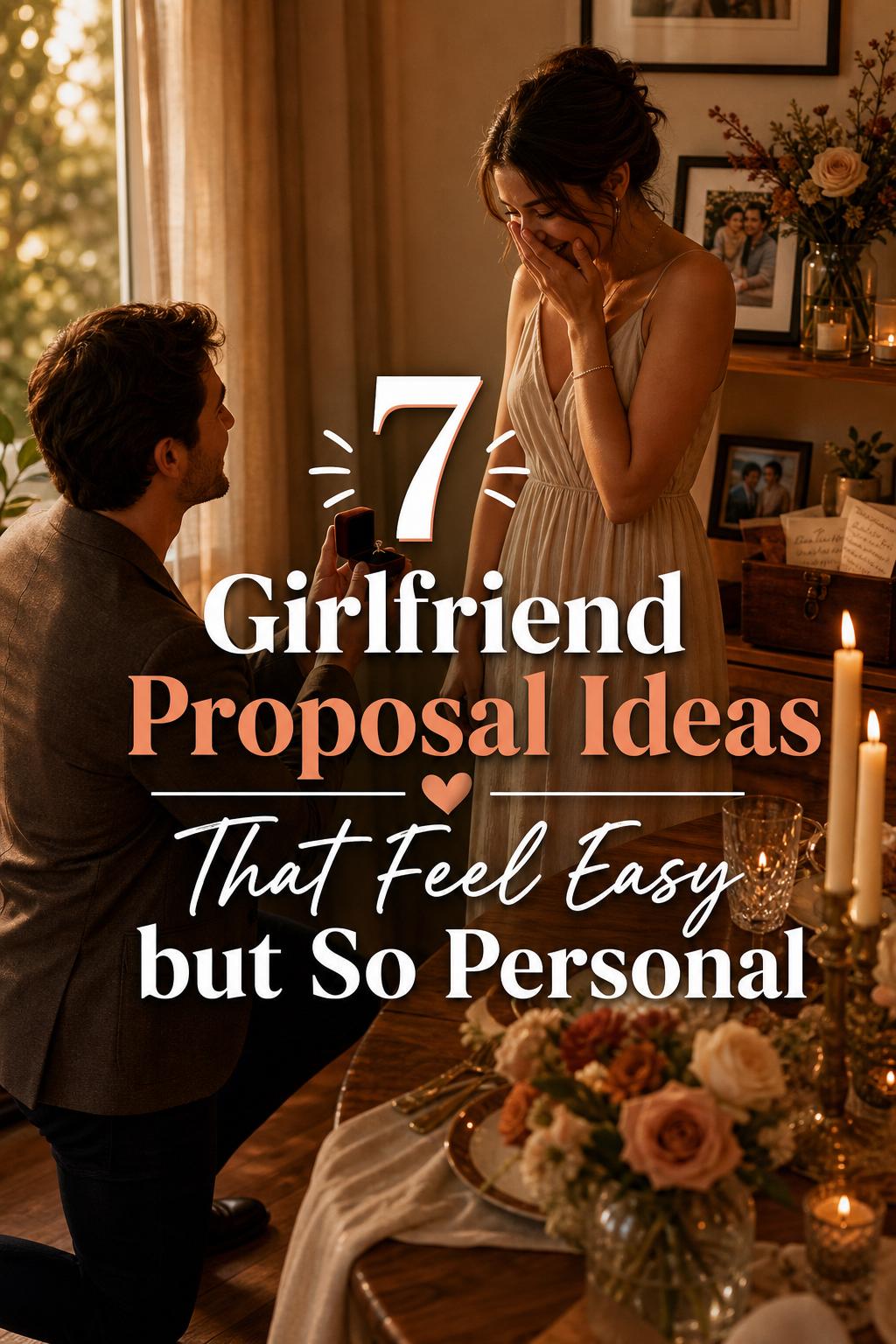
Some of the strongest proposal ideas for girlfriend happen at home, especially when home already carries emotional meaning in the relationship. A room transformation can feel deeply romantic because it allows you to control lighting, timing, music, decor, and privacy. It also creates a setting where your girlfriend can respond naturally without the pressure of an audience. The key is to make the space feel intentionally designed, not casually decorated an hour beforehand.
Candlelit room transformation
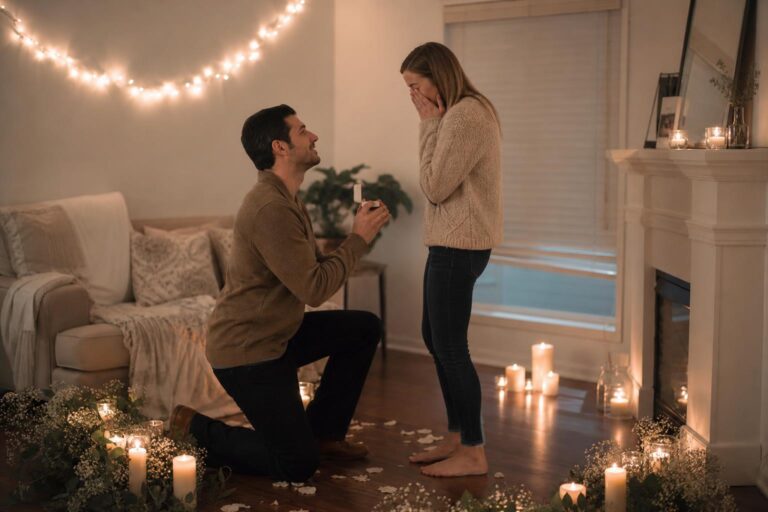
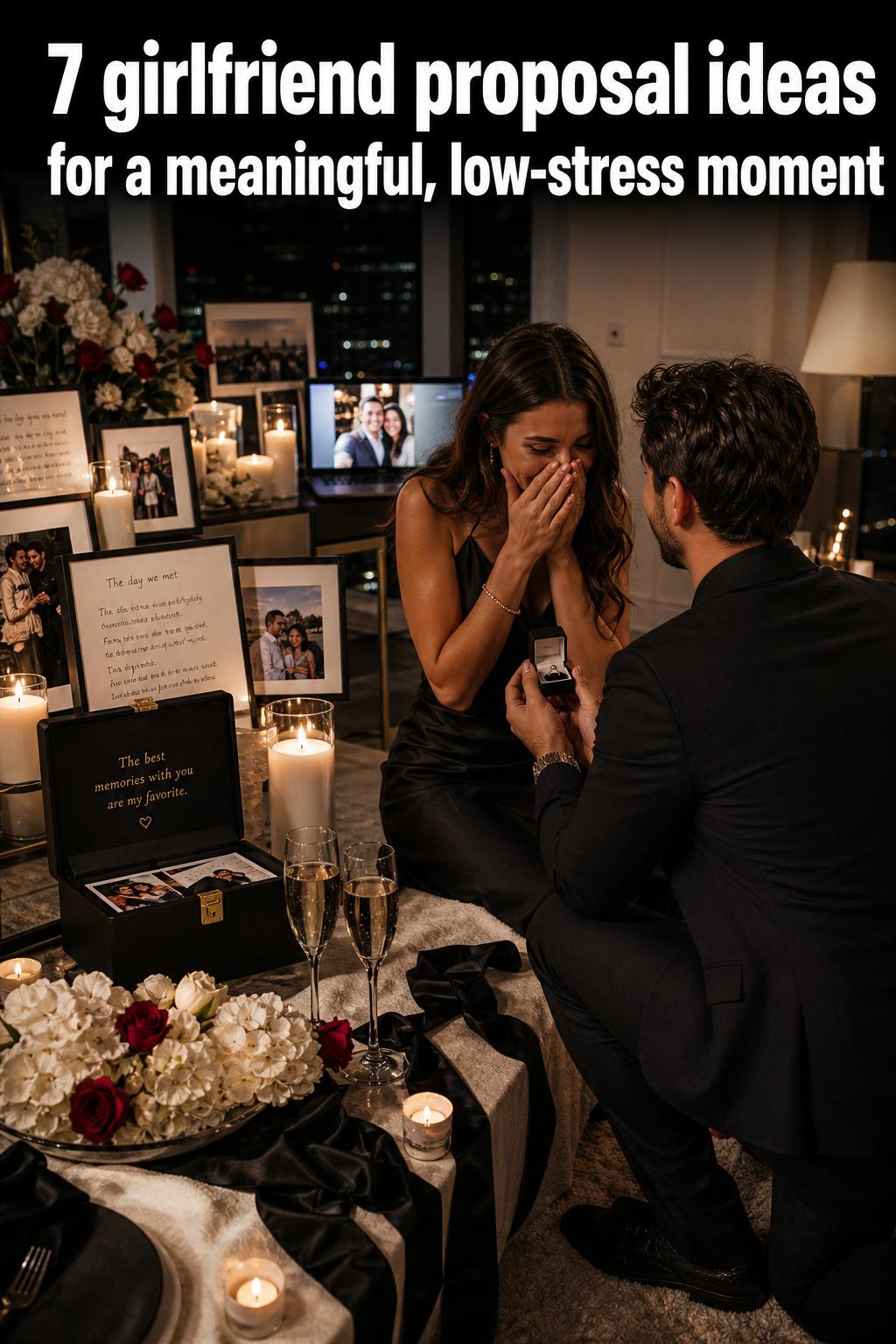
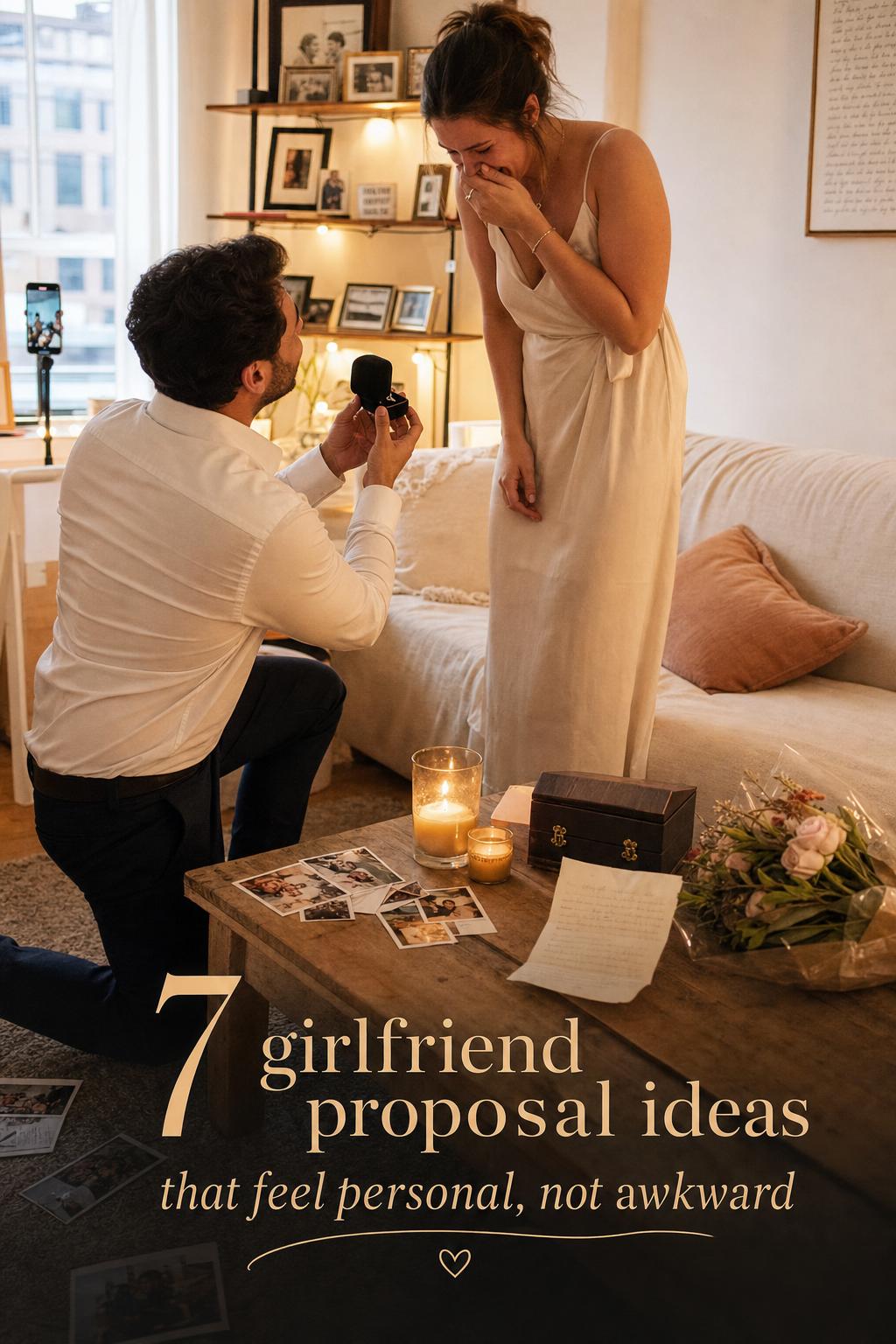
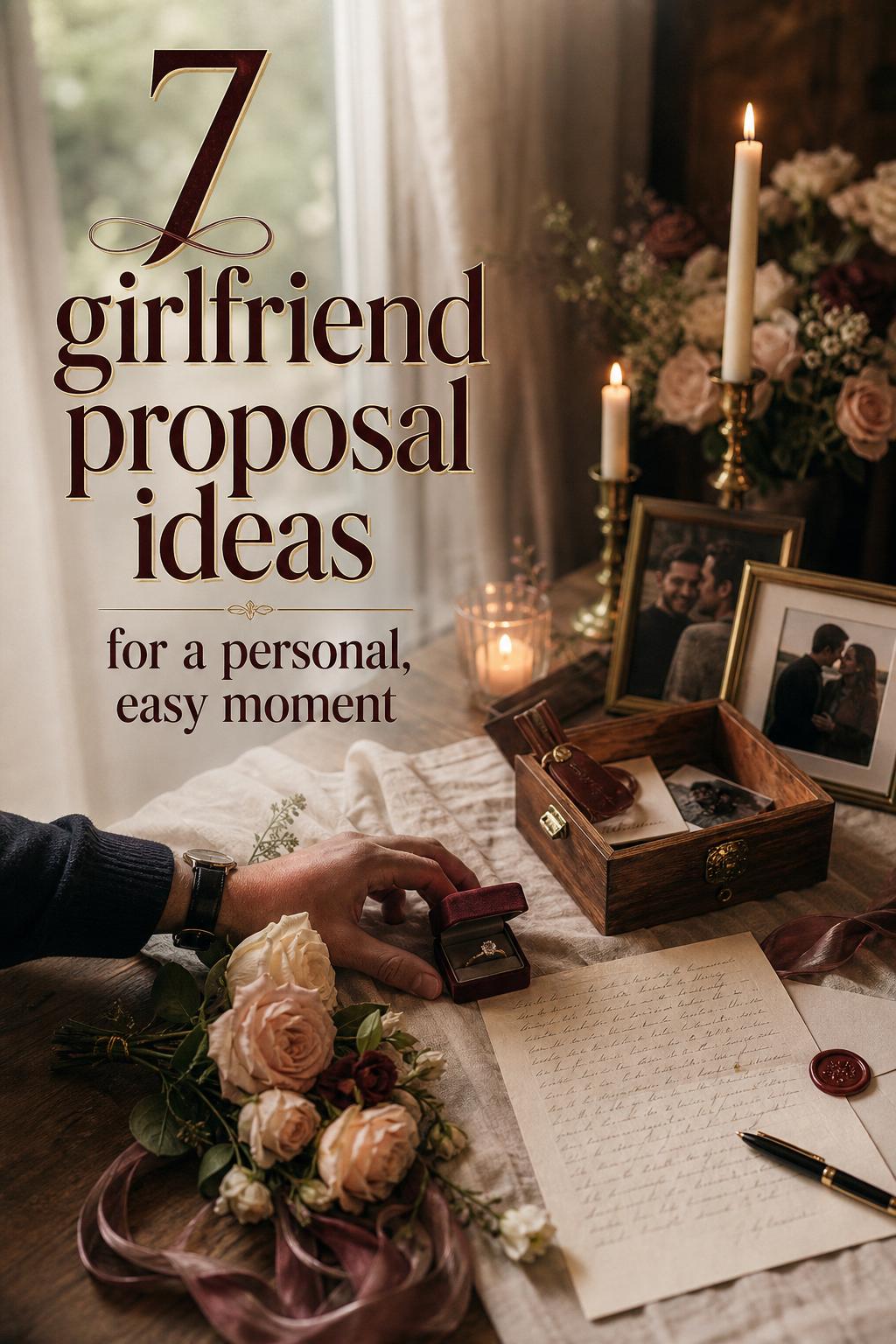
A room transformation is one of the most adaptable girlfriend proposal ideas because it can be scaled up or down depending on budget. You might use candles, framed photos, simple decor, and a path leading to the proposal spot. If you want the room to tell a story, arrange printed memories in order, or place short notes around the space so she moves through the relationship before reaching the final question. This works especially well in a living room, bedroom, or dining area where you can manage ambiance and lighting.
Best for: private couples, winter proposals, apartment or home settings, and smaller budgets. Why it works: it photographs well, gives you full control over the atmosphere, and keeps the focus on the conversation. How to make it work: choose one visual direction instead of mixing too many decor styles; soft lighting, a clear focal area, and uncluttered surfaces matter more than volume. Budget tip: invest in a few impactful decor pieces rather than filling the entire room. Common mistake to avoid: creating a setup so elaborate that it feels staged rather than personal. Real-life styling tip: test the lighting at the exact time of day you plan to propose, because overhead light can flatten the mood and make photos look harsh.
The memory route through your home
If you want a home proposal to feel more interactive, create a small route from room to room using photos, notes, and keepsakes. This idea borrows from the emotional logic of a scavenger hunt without requiring a full citywide setup. Each stop can represent a stage of your relationship, ending with the ring and your proposal speech. It gives the moment a natural build, which helps if you want to guide her into the proposal rather than surprising her in a single instant.
Best for: sentimental couples, long-term relationships, and proposers who want storytelling built into the moment. Why it works: it turns the home into a narrative setting and makes the proposal feel earned rather than sudden. How to make it work: keep each stop short so the emotional pacing stays strong, and place the final proposal point in the best-lit, least cluttered area. Budget tip: printed photos and handwritten notes often create more impact than expensive decor. Common mistake to avoid: making the route so long that it becomes confusing or dilutes the emotion. Real-life styling tip: leave enough open floor space between stations so the movement feels calm and intentional instead of cramped.
Meaningful locations carry emotional weight
A meaningful location proposal succeeds because the setting already has a story. That story may come from a first date, a routine walk, a favorite scenic spot, or a place connected to a major relationship milestone. Meaningful locations are especially effective when your girlfriend values memory, continuity, and symbolism. They also give your proposal speech a natural framework, because you can speak about why the location matters before you ask the question.
Return to the place that started it all
A return-to-origin proposal works best when the place still feels recognizable and emotionally intact. That could be the restaurant where you first met, the park where you had your first serious conversation, or a date-night route that has become part of your relationship rhythm. If the original place is too crowded or no longer practical, choose a nearby setting that still preserves the meaning. The power of this idea is not exact geography. It is emotional association.
Best for: couples with a clear shared history tied to one place, anniversary weekends, and sentimental partners. Why it works: the setting gives your words structure and makes the proposal feel rooted in your actual story. How to make it work: revisit the location in advance, check privacy levels, and think about where you will stand, kneel, and place any photographer or videographer. Budget tip: a meaningful place often needs less decor because the emotional context is doing the work. Common mistake to avoid: choosing a place that matters to you more than it matters to her. Real-life styling tip: if the location is outdoors, visit at the same hour on a similar day to understand foot traffic, light direction, and noise.
Scenic outdoor proposal
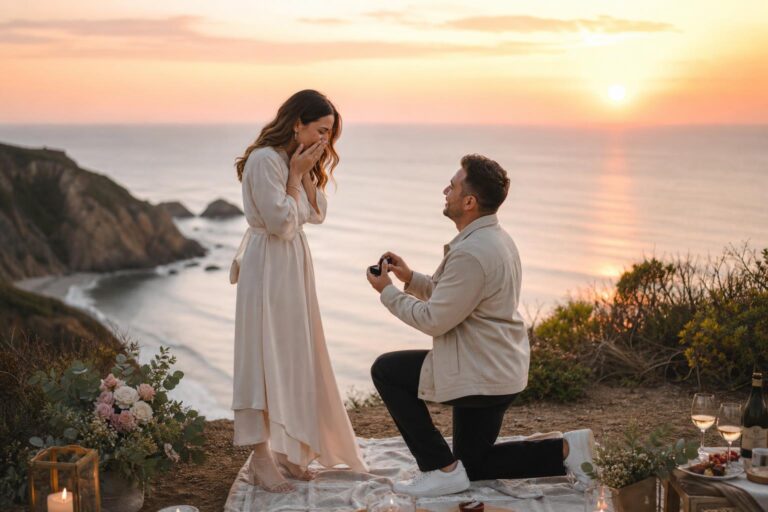
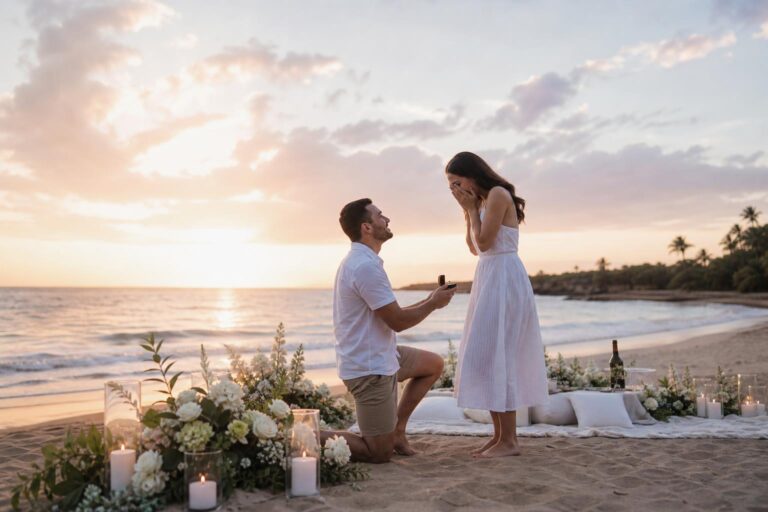
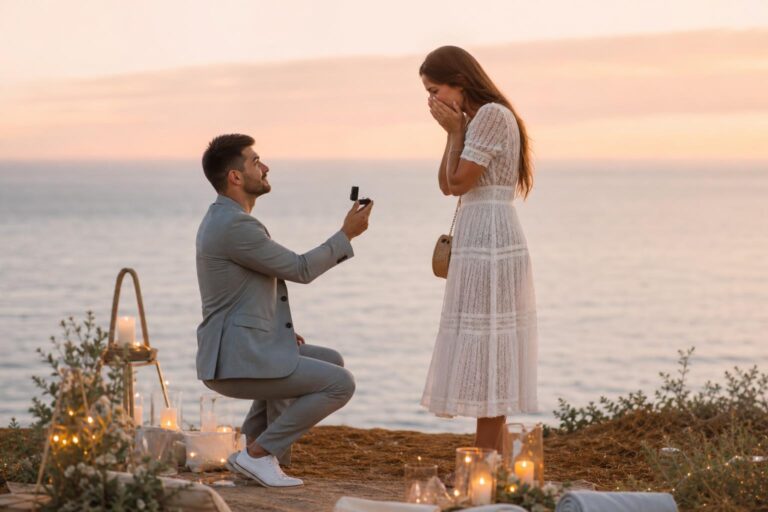
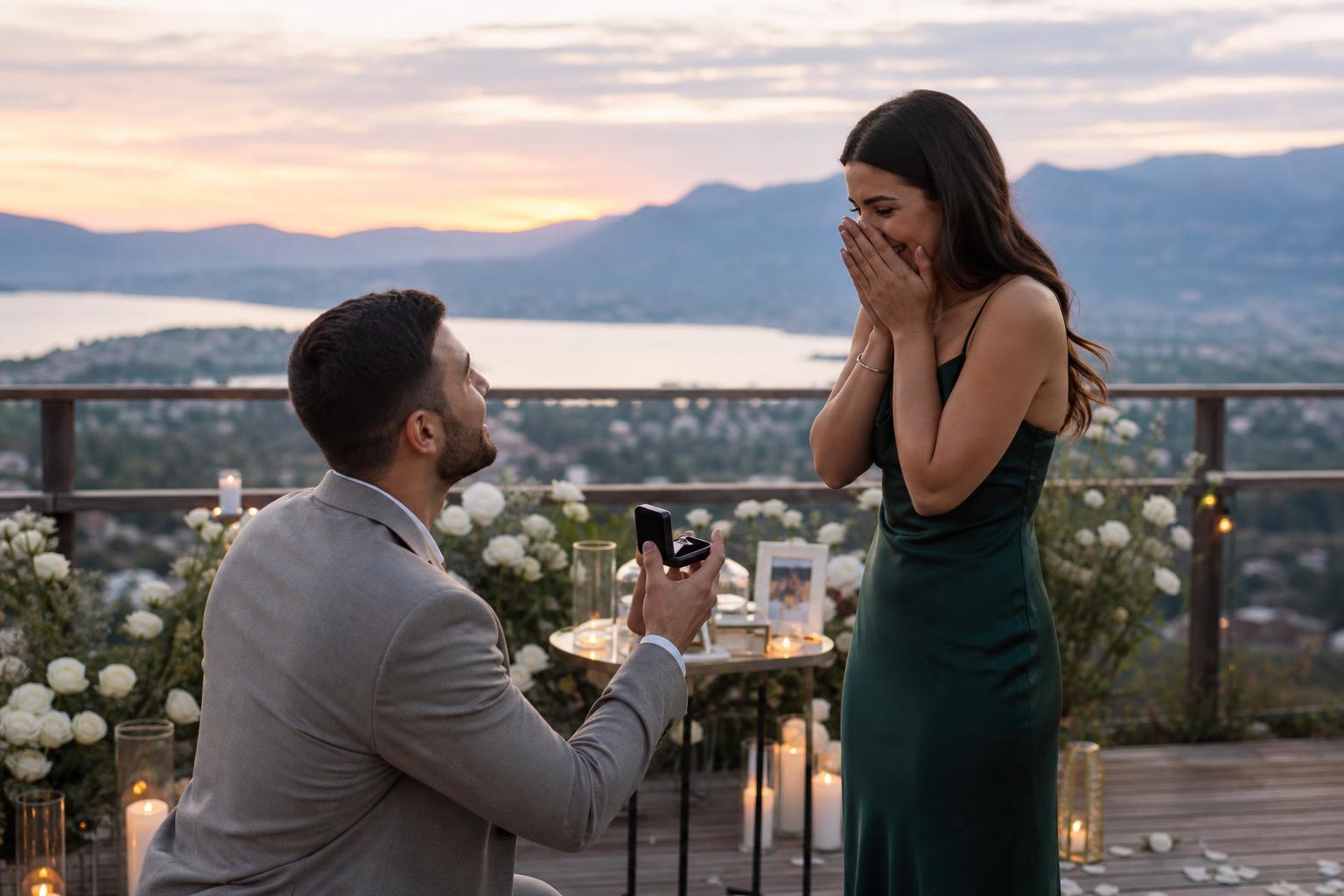
Outdoor settings remain popular because they naturally support romance, photography, and a sense of occasion. Scenic overlooks, waterfronts, gardens, or a quiet path during a walk can all become strong proposal settings. The best outdoor proposal ideas are not chosen only for beauty. They are chosen for accessibility, weather reliability, and how easily you can create a calm moment there. A dramatic view means little if you are rushed by crowds or dealing with strong wind while trying to speak.
Best for: couples who enjoy nature, spring through fall, and partners who feel more relaxed outdoors than in formal venues. Why it works: scenic spaces create visual impact without requiring much styling, and they often produce memorable photo and film capture. How to make it work: choose a spot with stable footing, a backup weather plan, and enough privacy for an emotional conversation. Budget tip: put your money toward a photographer or videographer if the landscape already provides the visual setting. Common mistake to avoid: selecting a beautiful location that is difficult to reach in formal clothes or with the ring hidden on your person. Real-life styling tip: always consider wind, because it affects hair, sound quality, and whether you can comfortably open a ring box without fumbling.
Restaurant proposals can feel elegant with the right timing
A restaurant proposal is classic for a reason. It combines atmosphere, service, and a built-in celebration afterward. Yet it only works well when handled with care. The most successful restaurant proposals feel seamless rather than theatrical. Instead of turning the evening into a public stunt, use the restaurant as a polished setting that supports the moment. This may mean proposing before dessert at a quieter table, arranging a semi-private area, or asking staff to help with pacing rather than making them central to the reveal.
Dinner surprise with a refined twist
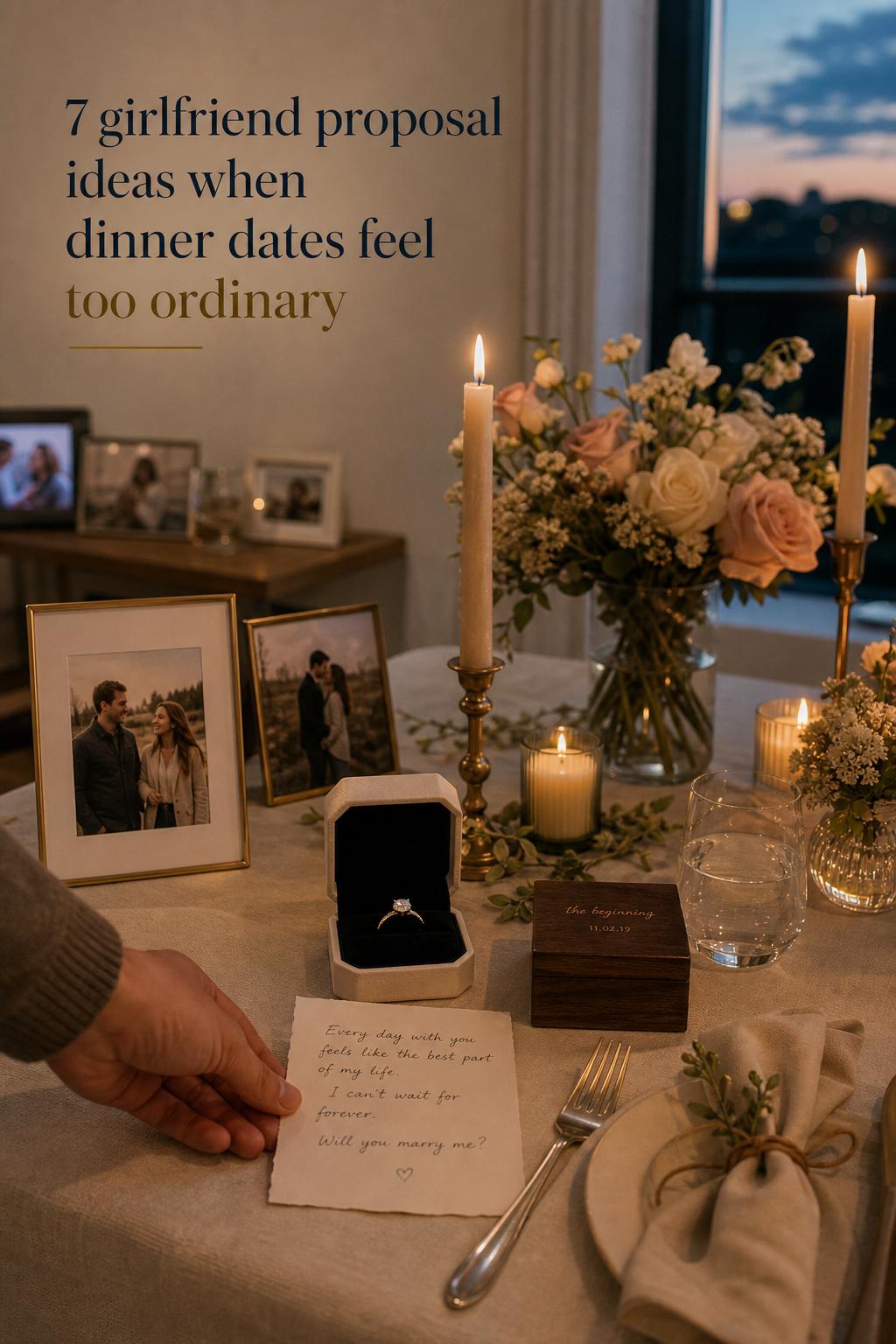
To elevate a dinner proposal, build one personal element into the evening. That could be a short note presented before the ring, a meaningful route taken on the way there, or a simple keepsake waiting at the table after she says yes. This helps the proposal feel like your story, not just a booking. If you plan to involve restaurant staff, keep their role practical: timing the course, guiding you to the best table, or helping protect privacy.
Best for: city couples, anniversary dinners, and partners who enjoy dressed-up date nights. Why it works: restaurants provide ambiance, reduce setup stress, and lead naturally into a celebratory meal. How to make it work: visit in advance, request a quiet table, and avoid proposing at the most crowded service moment if privacy matters. Budget tip: choose a meaningful restaurant rather than the most expensive one, and spend strategically on timing and table placement. Common mistake to avoid: hiding the ring in food or drink, which creates unnecessary risk and often distracts from the moment. Real-life styling tip: ask where the restaurant’s best light falls after sunset, because flattering table lighting affects both the mood and any photos captured discreetly.
Scavenger hunt proposals create structure and surprise
A scavenger hunt proposal can be playful, romantic, or deeply sentimental depending on how you design it. The best version is not the longest one. It is the one with a clear emotional arc. Each clue should move her through a memory, a location, or a message that reveals something meaningful, ending at the proposal spot. This format works especially well if your relationship has several memorable places attached to it, or if your girlfriend enjoys interactive experiences.
Build a meaningful route instead of a complicated game
Keep the clues easy to follow and emotionally relevant. A route that begins at home, passes through a favorite coffee stop or walk, and ends at a scenic location or restaurant often feels smoother than a citywide maze. You want anticipation, not frustration. If friends, family, or vendors are involved, they should support transitions and timing quietly behind the scenes rather than making the proposal feel overproduced.
- Best for: sentimental and expressive partners, urban or suburban areas with several shared locations, and couples who enjoy experiential dates.
- Why it works: it creates momentum and gives each location a purpose within the story.
- How to make it work: cap the number of stops, write clues in your natural voice, and ensure the final location is calm enough for a real conversation.
- Budget tip: focus on a few meaningful stops rather than paying for transport, decor, or extras at every location.
- Common mistake to avoid: making the clues too vague, which can create stress right before the proposal moment.
- Real-life styling tip: tell any photographer exactly which stop is the emotional turning point, so they are in position before the final reveal rather than reacting late.
Media-based proposals feel modern when the story leads
Video messages and digital storytelling appear across many modern engagement ideas because they allow you to preserve your words and frame the proposal through memory. A personalized video message can include clips, photos, voiceover, or messages from people who matter to your relationship. A surprise film screening or interactive digital reveal can work well too, but only when the technology supports the emotion rather than replacing it.
Personalized video message
This option is especially strong for partners who value communication and memory. The video can be shown at home during a room transformation, in a private venue, or as part of a proposal route. It gives you time to say things clearly that may be harder to express in the moment. If you work with a videographer or creator, keep the tone aligned with your relationship. Overediting can make a sincere message feel less personal.
Best for: sentimental partners, long-distance history, couples with lots of shared photos and clips, and private settings. Why it works: it creates a keepsake and strengthens the emotional buildup before the ring appears. How to make it work: keep the video focused, with a beginning, middle, and clear transition into the live proposal. Budget tip: a short, well-edited message often works better than a long production. Common mistake to avoid: making the video so long that the energy dips before the actual question. Real-life styling tip: test volume, screen brightness, and playback in the exact room so there is no technical interruption at the key moment.
Surprise screening or digital reveal
A surprise screening can feel memorable when it is still intimate. That might mean a projected film at home, a small private room, or a controlled setting where the reveal remains centered on the two of you. More interactive ideas, including an AR-style reveal, can work for tech-forward couples, but they should remain easy to follow. If the reveal becomes too clever, the emotional clarity gets lost. She should never feel like she is solving a tech puzzle instead of experiencing a proposal.
Best for: film lovers, tech-oriented couples, and proposers who want a modern format with strong keepsake value. Why it works: it combines surprise with storytelling and can bridge the gap between a private and shareable moment. How to make it work: keep the reveal intuitive, use reliable equipment, and move quickly from screen to ring. Budget tip: renting or borrowing simple camera gear or projection support may be more sensible than investing in complex production. Common mistake to avoid: relying on unstable technology with no backup. Real-life styling tip: if a projector is involved, reduce competing ambient light so the image stays clear and the room still feels warm.
Keepsakes, poems, and letters turn the moment into something lasting
Not every proposal needs a dramatic setting to feel unforgettable. In many relationships, the emotional center comes from language and memory. A keepsake box, poem-based proposal, or handwritten letter can carry a level of intimacy that bigger concepts sometimes miss. These ideas work particularly well for private proposals, home settings, and meaningful locations where the words themselves become the highlight.
The keepsake box concept
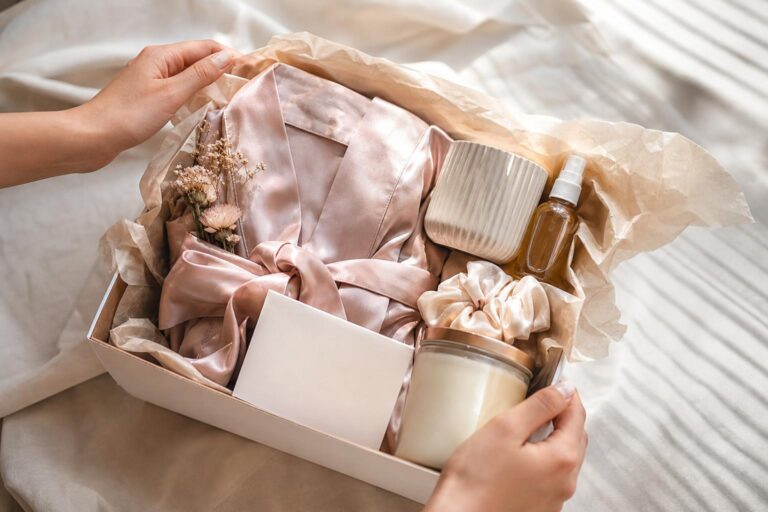
A keepsake box proposal gathers small items that represent your relationship and leads toward the ring. The box may include photos, notes, ticket stubs, printed messages, or a final letter that ends with the proposal. This format gives your girlfriend something tactile to revisit after the engagement. It also slows the moment in a good way, letting emotion build through discovery instead of relying on one instant of surprise.
Best for: sentimental couples, private proposals, and proposals tied to anniversaries or long shared histories. Why it works: it creates a physical narrative and doubles as a keepsake after the engagement. How to make it work: select a few meaningful items instead of overfilling the box, and make sure the final transition to the ring feels obvious. Budget tip: use existing relationship mementos and invest only in presentation if needed. Common mistake to avoid: adding too many items without emotional hierarchy, which can make the story feel scattered. Real-life styling tip: place the ring in a separate, clearly visible position within the final layer so there is no awkward searching at the most important moment.
Poem-based proposal and handwritten speech
A poem proposal works best when it sounds like you, not like a borrowed performance. It does not need to be elaborate. A short original poem, a letter with a poetic rhythm, or a concise speech built around your relationship story can all feel deeply personal. What matters is emotional honesty and clear delivery. If you know nerves may affect you, writing the speech in advance and practicing it a few times is not unromantic. It is respectful preparation.
Best for: expressive couples, meaningful locations, quiet dinners, and private home proposals. Why it works: language creates direct emotional connection and can make a simple setting feel memorable. How to make it work: keep the speech focused on shared meaning, present-tense commitment, and the actual question. Budget tip: this is one of the most cost-effective proposal styles because the emotional value comes from thought, not spending. Common mistake to avoid: making the speech too long or too abstract before clearly asking the question. Real-life styling tip: print or write your final words on quality paper even if you plan to speak from memory, because it gives you a graceful backup if nerves take over.
Adventure proposals need strong logistics, not just bold ideas
Adventure-based girlfriend proposal ideas can become incredible stories, but they require the most honest planning. A skydive proposal, a surprise weekend getaway, or another thrill-based experience should only be chosen if your girlfriend genuinely enjoys that type of activity. Adventure should support the relationship dynamic, not test it. Safety, vendor coordination, and ring handling matter more here than in almost any other proposal style.
Skydiving or high-adrenaline proposal
A skydiving proposal is a very specific fit. It may be unforgettable for an adrenaline-loving couple, but it can feel overwhelming for someone who values calm emotional processing. If you pursue this route, work closely with the activity provider and think carefully about when the actual question should happen. Often the most practical choice is to build the adventure as the lead-up, then ask the question safely once you are back on the ground and can both fully experience the moment.
Best for: experienced adventure-seeking couples and partners who actively enjoy high-energy experiences. Why it works: it creates a major shared story and can feel highly personal for the right couple. How to make it work: coordinate with the operator, protect the ring, and decide in advance whether the question happens during or after the activity. Budget tip: if the activity itself is the investment, keep decor and extras minimal. Common mistake to avoid: assuming a dramatic activity automatically creates a better emotional moment. Real-life styling tip: confirm ring storage and retrieval procedures before the day, because improvising with valuable jewelry during an adrenaline event is not worth the risk.
Surprise weekend getaway
A getaway proposal blends adventure and comfort more easily than a single extreme event. It can include scenic outdoor settings, a restaurant celebration, a quiet room setup, or a meaningful speech during a walk. Because the trip gives you time, you can shape the pacing around weather, nerves, and the mood of the day. The main caution is not to over-script every hour. The proposal should still have room to breathe.
Best for: couples who enjoy travel, milestone weekends, and partners who like anticipation without a crowded audience. Why it works: it creates a contained experience with multiple setting options if one plan shifts. How to make it work: decide whether the proposal should happen early in the trip so you can enjoy the rest of the getaway engaged. Budget tip: a short, meaningful trip often works better than a longer itinerary packed with logistics. Common mistake to avoid: choosing a schedule so busy that there is no calm window for the proposal itself. Real-life styling tip: if you are using a scenic location at the destination, scout it first or arrive early enough to assess light, privacy, and timing.
Classic proposal formats still work when you modernize the details
Classic proposal ideas continue to rank high in popularity because they are easy to understand emotionally. A scenic walk, a dinner, a meaningful room, a quiet speech, and a ring remain powerful building blocks. What changes is how you tailor them. The modern difference is often not a radical concept, but a smarter fit between setting, timing, and storytelling. A classic proposal becomes memorable when it feels specific to your relationship rather than lifted from a generic image of romance.
- Add one personal layer to a classic format, such as a letter, a memory route, or a video message.
- Choose privacy level intentionally instead of by accident.
- Think about photo and film capture early, not as an afterthought.
- Use decor to support the moment, not overwhelm it.
- Make the ring presentation easy and calm rather than overly hidden or theatrical.
This balanced approach is often the safest path for proposers who want something romantic, polished, and emotionally grounded. It also adapts well across budgets, venues, and seasons, which is one reason classic scenes remain so durable in engagement planning.
A practical 6-week proposal planning workflow
Even the most heartfelt proposal benefits from a timeline. Planning reduces mistakes, protects the ring, helps with vendor coordination, and gives you enough space to refine the idea. A six-week structure is often realistic for proposals that involve decor, media, photography, or a location with reservations.
Weeks 1 and 2: define the concept
Choose the proposal style, level of privacy, and setting type first. Decide whether this will be at home, outdoors, at a restaurant, on a getaway, or through a media-based format. This is also the stage to think about the ring, your speech, and whether you need any planners, photographers, or videographers. If the idea does not fit her personality at this stage, change course early.
Weeks 3 and 4: secure the moving parts
Book or confirm any venue, route, reservation, photographer, videographer, or planning support. If your concept includes a video message, room decor, keepsake box, or clues for a scavenger hunt, start creating them now. Test anything involving camera gear, projection, or music playback. For outdoor plans, identify a weather backup. For restaurants, confirm table placement and timing. For adventure activities, ask direct safety and logistics questions.
Weeks 5 and 6: rehearse the experience
Walk through the proposal mentally and, where possible, physically. Practice your words out loud. Make sure the ring is secure and accessible. Confirm arrival times, vendor contacts, and any contingency planning. If there are friends or staff helping behind the scenes, simplify their instructions. The final week should be about calming the plan, not adding last-minute complexity.
- Best for: any proposal involving more than one location, any vendor participation, or any kind of media or decor setup.
- Why it works: a timeline prevents rushed decisions and reduces technical or logistical mistakes.
- Budget tip: planning ahead helps you prioritize essentials and avoid expensive last-minute fixes.
- Common mistake to avoid: spending too much time on visuals and not enough on timing, speech, and flow.
- Real-life styling tip: keep a single written checklist with addresses, contact names, timing cues, and backup steps so you are not searching through messages on the day.
When to bring in photographers, videographers, or planners
Many proposals become easier with professional support, especially when timing, media capture, or decor are involved. Photographers and videographers are particularly useful for outdoor scenic moments, city locations, room transformations, and media-based reveals. Planners can help if your proposal includes multiple stops, vendor coordination, or a setup that must happen without your girlfriend noticing. The right support should protect the experience, not dominate it.
Be selective about what kind of help you actually need. A simple at-home proposal may only require discreet photo capture. A scavenger hunt or surprise weekend proposal may benefit from more active coordination. If you use professionals, share the emotional structure of the plan with them, not just the schedule. They need to know which pause matters, where the actual question happens, and whether the mood should feel hidden, cinematic, or documentary.
Best for: proposals with logistics, decor setup, travel, or meaningful photo and film priorities. Why it works: outside support lets you focus on your girlfriend instead of juggling every detail in real time. Budget tip: if you cannot hire full planning support, reserve your budget for the vendor role that will matter most afterward, often photography or video. Common mistake to avoid: involving too many people, which can make a personal moment feel managed. Real-life styling tip: ask your photographer where you should stand relative to light and background before the proposal begins, because that small adjustment improves both comfort and images.
Lessons from real proposal storytelling
Real proposal anecdotes tend to share one trait: the strongest moments are emotionally coherent. A story like Peter and Lara’s resonates not because of a generic grand gesture, but because the moment feels like an extension of the couple. That same principle applies whether the proposal happens through a room transformation, a personalized video message, a restaurant dinner, or a scenic outdoor stop. A good proposal idea creates alignment between person, place, pacing, and words.
That is also why personalization outperforms novelty on its own. A well-chosen home setting can carry more emotional force than a skydiving plan if your girlfriend prefers intimacy. A meaningful location may work better than an expensive venue if memory matters more to her than display. The story you are building should sound believable when she retells it later. That is often the clearest test of whether the idea fits.
Proposal mistakes that quietly weaken the moment
Most proposal mistakes are not dramatic. They are subtle planning mismatches that make the moment feel awkward, rushed, or less personal than it could have been. Knowing what to avoid can be just as helpful as collecting creative engagement ideas.
- Choosing a public setting without considering whether she likes public attention.
- Overcomplicating the idea with too many stops, props, or technical elements.
- Ignoring weather, lighting, noise, or privacy at the chosen location.
- Putting all the effort into decor while neglecting the proposal speech.
- Hiding the ring in a risky or distracting way.
- Creating a surprise that feels disconnected from the relationship.
- Leaving no backup plan for timing changes or equipment issues.
A reliable proposal plan usually feels simpler than people expect. It has a clear setting, a calm transition into the question, words that sound sincere, and enough logistical preparation that the emotion can take center stage.
Choosing the idea that will still feel right years later
The most memorable girlfriend proposal ideas are not defined by how inventive they sound on paper. They are defined by whether they fit the relationship and create a moment your girlfriend can fully enjoy. A personalized video, a keepsake box, a poem, a restaurant dinner, a scenic walk, a room filled with candles, or a meaningful scavenger hunt can all become the right answer if they reflect who she is and how the two of you love each other.
As you plan, keep coming back to the same grounding question: will this feel like us? That question helps you choose between private and public, simple and elaborate, classic and adventurous. It also protects the proposal from becoming a performance. The most lasting engagement stories usually begin there, in a setting and a sentence that feel unmistakably personal.
FAQ
How do I choose between private and public girlfriend proposal ideas?
Base the choice on your girlfriend’s comfort level, not on what seems impressive. If she values intimacy, an at-home setup, meaningful location, or quiet scenic moment will likely feel more natural. If she enjoys celebration and attention, a restaurant proposal or a reveal that leads into a gathering may suit her better. The best choice is the one that allows her to experience the moment without pressure.
What are the best girlfriend proposal ideas for a smaller budget?
Lower-cost ideas often work beautifully when they focus on memory and personalization. A room transformation with candles and photos, a handwritten letter, a keepsake box, a meaningful walk, or a poem-based proposal can all feel deeply intentional without requiring a large spend. Put your effort into the setting, your words, and the flow of the moment rather than adding unnecessary extras.
Is a video proposal message too much, or can it feel personal?
A personalized video message can feel very personal when it is concise and rooted in your real story. It works best as emotional buildup before the live proposal, not as a replacement for the actual question. Keep the video focused, test the technology in advance, and move smoothly from the screen to the ring so the proposal still feels immediate and sincere.
How far in advance should I plan a proposal?
For a simple proposal, a few weeks may be enough, but a six-week timeline is often more comfortable if you are coordinating a restaurant, a scenic location, decor, a photographer, a videographer, or travel. More planning time allows you to refine the idea, prepare your speech, secure the ring, and create a weather or logistics backup without rushing.
What should I say when I propose to my girlfriend?
Focus on three things: what she means to you, why this moment matters, and the question itself. Whether you speak from memory, use a letter, or write a short poem, keep the message clear and personal. The strongest proposal speech usually sounds like your natural voice and includes enough emotional detail to feel specific without becoming so long that the momentum fades.
Do restaurant proposals still work, or do they feel too traditional?
Restaurant proposals still work well when the setting matches your relationship and the plan is handled thoughtfully. They feel strongest when you choose a meaningful restaurant, request the right table, and add one personal detail such as a note or a planned route before dinner. The goal is not to force a public spectacle, but to let the restaurant provide atmosphere and support.
How do I make an outdoor proposal less risky?
Scout the location in advance, check the weather, think about privacy, and choose a spot with stable footing and manageable noise. Plan for wind, timing, and light, especially if you are using a photographer or videographer. Outdoor proposals work best when the setting is beautiful but still practical enough for you to speak clearly and move through the moment calmly.
Are adventurous proposal ideas like skydiving a good choice?
They can be, but only for the right couple. A skydiving or other high-adrenaline proposal should match your girlfriend’s personality and comfort with intense experiences. In many cases, it is smarter to use the adventure as the lead-up and ask the actual question afterward, when you can both focus on the engagement rather than the logistics or intensity of the activity.
Should I hire a photographer or videographer for the proposal?
If preserving the moment matters to you, professional capture can be very worthwhile, especially for scenic outdoor proposals, room transformations, and media-based setups. The decision depends on budget and complexity. If you choose only one support service, many couples find that a photographer or videographer provides lasting value because the images or film become part of the engagement story afterward.