Simple Wedding Flowers for a Calm, Modern Celebration
There is a particular kind of calm that simple wedding flowers bring to a celebration. A hand-tied bouquet with just a few blooms, a line of greenery down a reception table, or a low arrangement in soft white and green can make a wedding feel thoughtful rather than overworked. For many couples in the U.S., that balance is exactly the goal: elegant florals that support the mood of the day, respect the budget, and still look polished in person and in photos. The most successful simple wedding flowers are not random or sparse. They are edited with intention, built around a clear palette, and chosen to suit the venue, season, and level of DIY involvement.
Across today’s bridal inspiration landscape, from The Knot to Bouqs, Bespoke-Bride, and CL Weddings, the ideas that rise to the top have a few things in common: minimalism, bouquet and centerpiece versatility, budget awareness, and practical planning. That means the best approach is not to chase the biggest floral moment. It is to decide where flowers matter most, where greenery can do the heavy lifting, and when a florist is worth hiring versus when a simple DIY plan is realistic.
This guide walks through individual floral ideas you can actually use, with decision support for different wedding styles, venues, seasons, and budgets. Whether you are planning a modern city celebration, a small garden ceremony, or a relaxed reception with understated décor, these ideas are designed to help you build a cohesive wedding flower plan that feels romantic, practical, and personal.
What “simple” really means in wedding florals
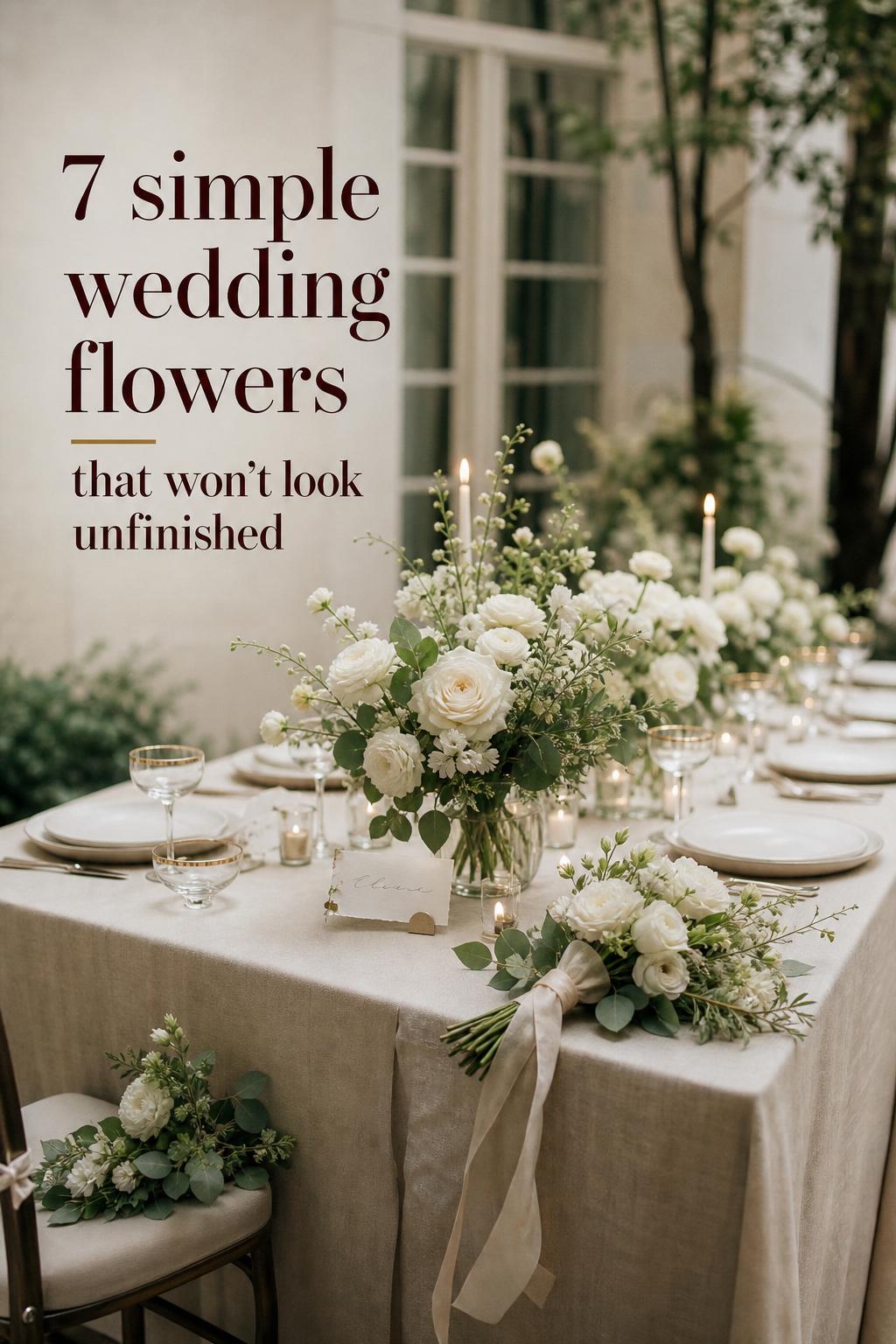
Simple does not mean unfinished. In wedding flowers, it usually means reducing the number of competing elements so shape, texture, and color can stand out more clearly. A minimalist bouquet might use one main flower and light greenery. A simple centerpiece may rely on low-profile vessels, repeated stems, or a greenery-forward runner instead of a dense arrangement. The look is often anchored in neutral tones, greens, and whites, though monochrome palettes can work just as well when the styling is disciplined.
Turn wedding inspiration into a plan you can actually follow.
Zarellea brings your guest list, budget, vendors, and day-of details into one shared space — so no beautiful idea gets lost in the shuffle.
This approach works especially well for couples who want a wedding that feels modern, relaxed, or quietly romantic. It also suits many budgets because simpler designs can be easier to scale. That said, minimal florals require editing. If too many flower varieties, ribbon styles, or vase shapes are introduced, the result can lose the clean effect that makes simplicity feel elevated.
A useful planning test is this: if you remove one floral element, does the design become clearer or weaker? If it becomes clearer, you may be closer to the right level of simplicity. If it becomes weaker, that item may be carrying important visual structure.
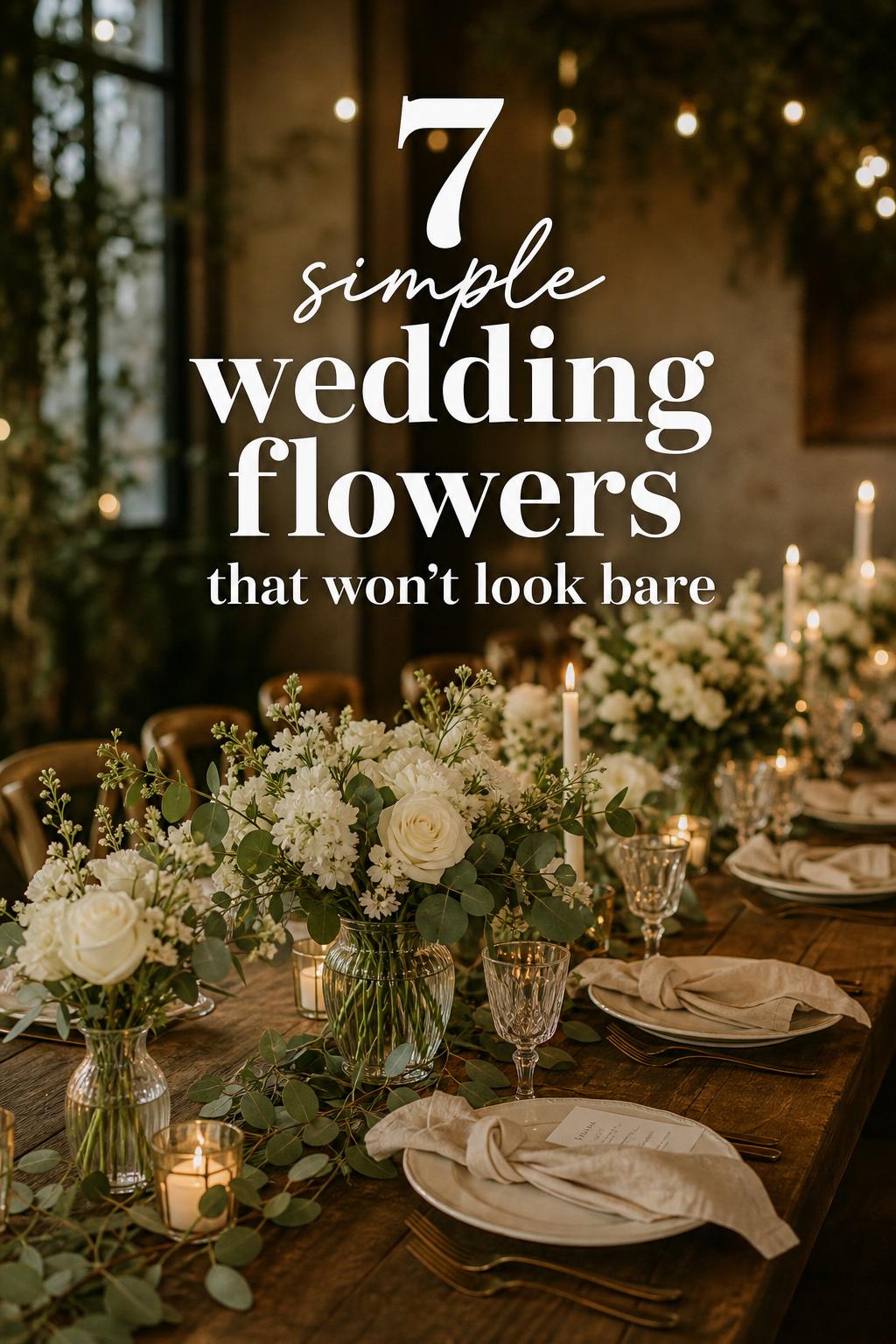
Bouquet ideas that feel effortless but still wedding-ready
The classic hand-tied bouquet
A classic hand-tied bouquet is one of the strongest choices for couples drawn to simple wedding flowers. The shape is soft and natural, and the design usually relies on a single focal bloom or two complementary flowers with light greenery. Roses and peonies are often used in this style, with wrapping kept clean so the stems remain part of the look rather than something to hide.
Best for: intimate weddings, modern minimalist weddings, courthouse ceremonies, and couples who want their bouquet to look elegant without appearing overly formal.
Why it works: the hand-tied shape photographs well from multiple angles and feels natural in the hand. It also suits many dress silhouettes because it does not usually overwhelm the body or compete with detailed gowns.
How to make it work: keep the palette limited. Whites, greens, and soft neutrals are the easiest way to create a clean look, especially if the venue already has visual character. Use one main floral variety, then let greenery add shape. If you are working with a florist, ask for a bouquet that feels airy rather than tightly packed. If you are doing it yourself, focus on stem balance and wrapping rather than trying to add more bloom types.
Budget tip: put your floral spend into the bridal bouquet first, then simplify attendant bouquets with smaller versions in the same palette.
Common mistake to avoid: adding too many “accent” flowers. Once a bouquet has several focal blooms, extra filler can make it look busy rather than refined.
Real-life styling tip: before finalizing bouquet size, hold a sample shape in front of your dress during a fitting or styling session. A bouquet that looks balanced on a table can look much larger in proportion to the body.
Monochrome bouquets in white, cream, or a single muted tone
Monochrome bouquets are often the quiet stars of minimalist weddings. Instead of using multiple colors, the interest comes from subtle variation in texture and shape. This can be especially effective with whites and creams, or with a single muted tone softened by green foliage or seed heads.
Best for: formal indoor ceremonies, modern venues, and weddings where the dress, architecture, or tablescape already provides visual detail.
Why it works: a limited palette immediately creates cohesion. It also gives photographers a cleaner frame, which can make the entire wedding look more intentional in albums and detail shots.
How to make it work: focus on texture. If the flowers and ribbon are all one tone, you need contrast through petal shape, greenery structure, or wrap finish. This is where a florist can be especially helpful, but a DIY version can still succeed if you keep the forms distinct.
Budget tip: if your chosen flower type in a monochrome palette stretches the budget, reduce bouquet size rather than adding unrelated lower-cost flowers just to fill space.
Common mistake to avoid: choosing too many near-match tones that clash under different lighting. A bouquet that seems soft indoors can read uneven outdoors.
Real-life styling tip: test your bouquet palette against your ceremony and reception linens. White flowers can look very different beside ivory fabric, gray stone, or warm wood.
Greenery-forward bouquets with minimal blooms
Greenery-forward designs have become a defining part of simple wedding flowers because they create movement and shape without demanding a large number of blooms. Eucalyptus, ruscus, and ferns are the greenery names most closely linked to this approach, and they can frame a small cluster of roses or peonies beautifully.
Best for: outdoor weddings, rustic-minimal celebrations, modern romantic styling, and couples who want a fresh look with lighter floral coverage.
Why it works: greenery gives volume and texture. That means you can use fewer flowers while still creating a bouquet that feels complete from a distance.
How to make it work: choose one greenery family as the dominant texture so the bouquet feels cohesive. Then add blooms sparingly and place them where the eye naturally lands. This style also pairs well with simple bridesmaid bouquets because smaller bunches of greens can echo the bridal design without feeling repetitive.
Budget tip: use the same greenery across bouquets, ceremony décor, and centerpieces to get more design value from one material choice.
Common mistake to avoid: mixing too many greenery textures in one bouquet. Without a clear structure, the result can look random rather than intentional.
Real-life styling tip: greenery-heavy bouquets can read larger in photos than expected. Ask for a side-profile view of a mock-up if your florist is building one.
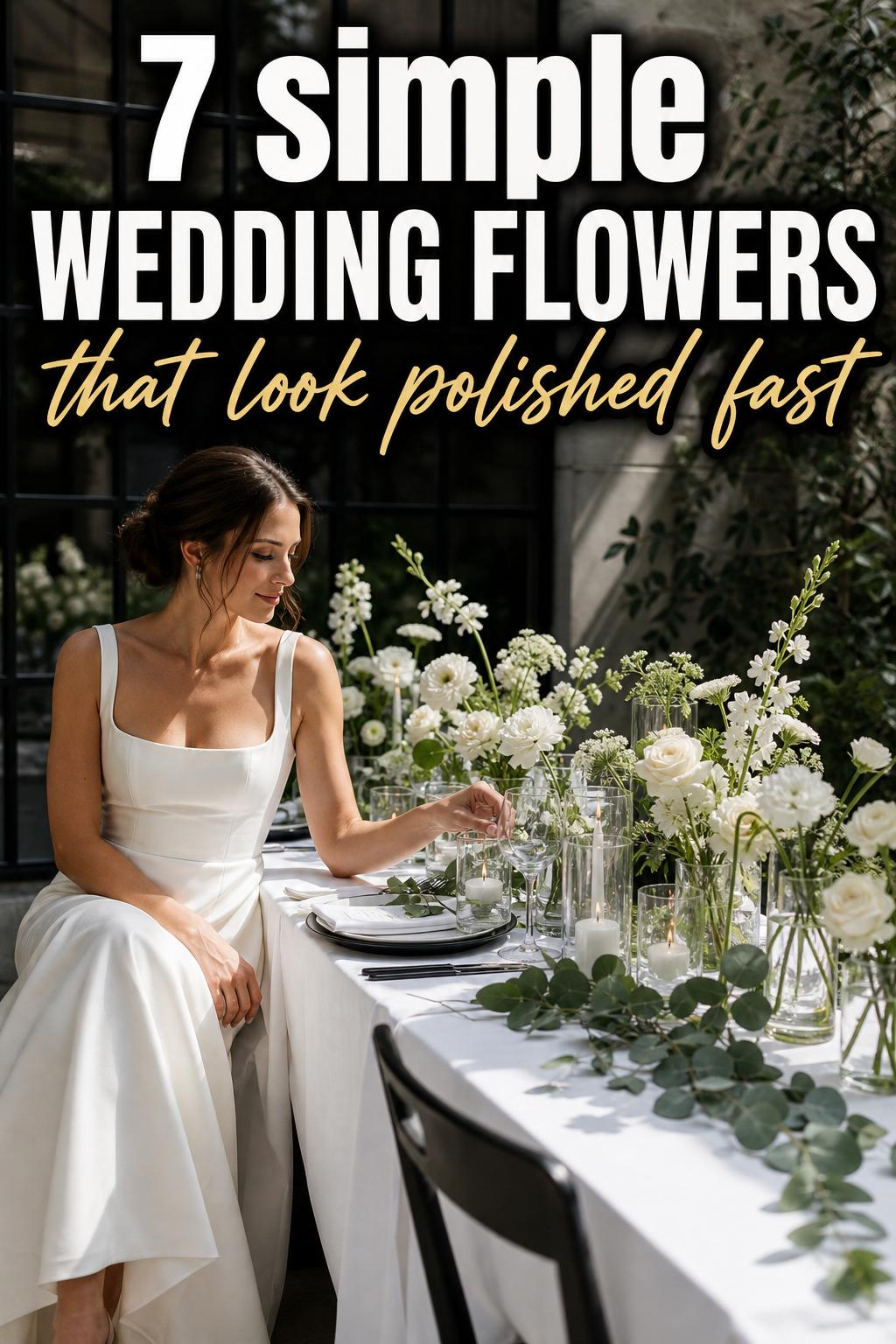
Bridesmaid bouquets that support, not compete
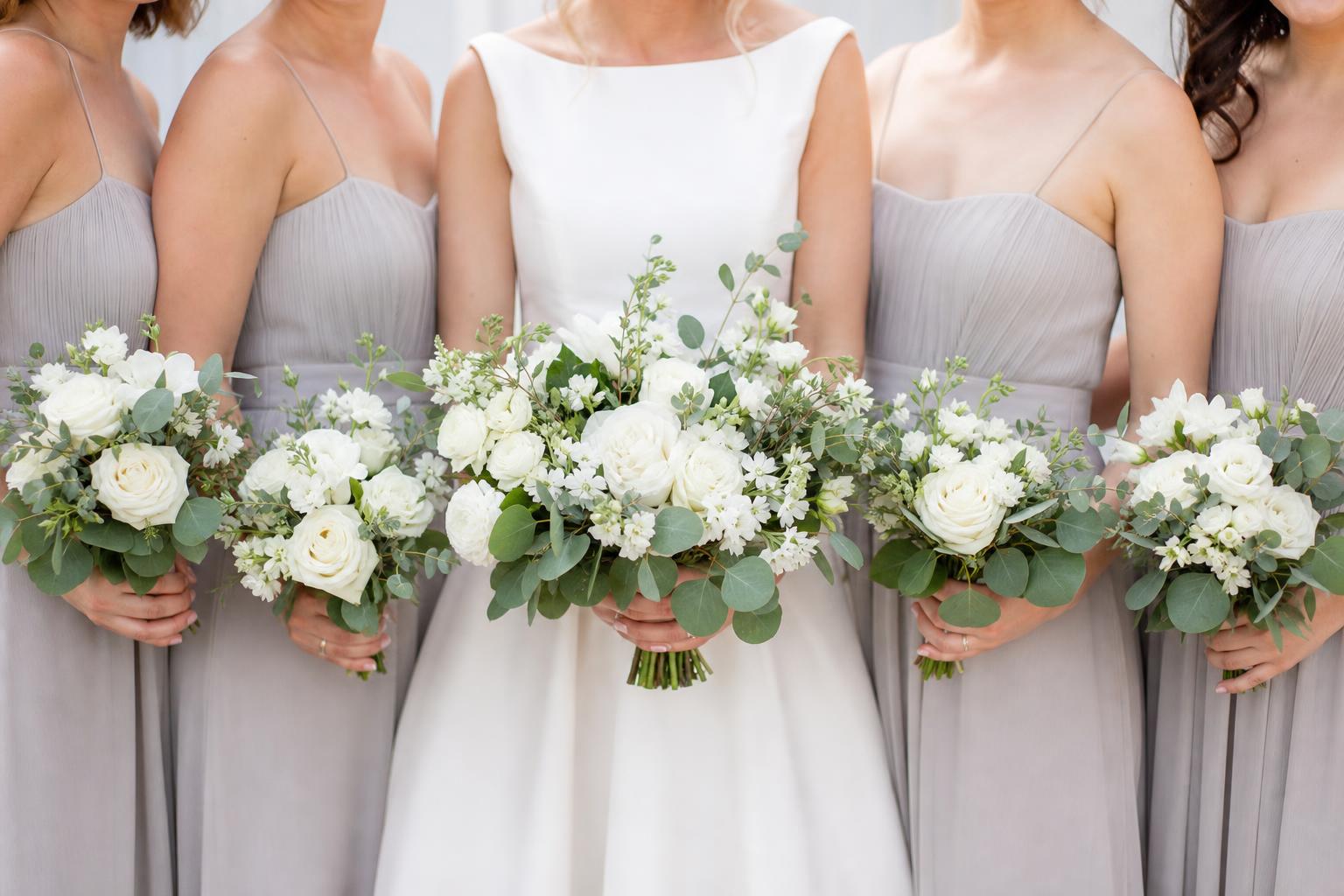
Simple wedding flowers work best when the full floral plan feels connected, and that includes bridesmaid bouquets. The Knot’s bouquet coverage reinforces a key idea that many couples overlook: attendants’ flowers should coordinate with the overall wedding palette and bouquet style, not become a separate floral statement.
For a simple wedding, bridesmaid bouquets often look strongest in smaller hand-tied shapes, mini bouquets, or restrained classic forms. A cascading shape can still fit a simple wedding if the styling is very controlled, but in most minimalist settings, classic and mini proportions are easier to manage. Keep the flowers aligned with the bridal bouquet, but reduce either the size, the bloom count, or the variety so the bride’s flowers remain the focal point.
- Best for: weddings where visual cohesion matters more than floral variety.
- Why it works: matching structure across bouquets helps the ceremony party look polished in photos.
- Budget tip: simplify bridesmaid bouquets first before cutting from the bridal bouquet or main reception flowers.
- Mistake to avoid: choosing attendants’ bouquets in a separate palette that interrupts the floral story.
A practical planner’s trick is to line up all bouquets together before the wedding day and check them as a group rather than individually. A bridesmaid bouquet may look lovely on its own but still feel too large or too colorful once placed beside the bridal bouquet.
Centerpieces that keep the room open and elegant
Low-profile centerpieces for conversation-friendly tables
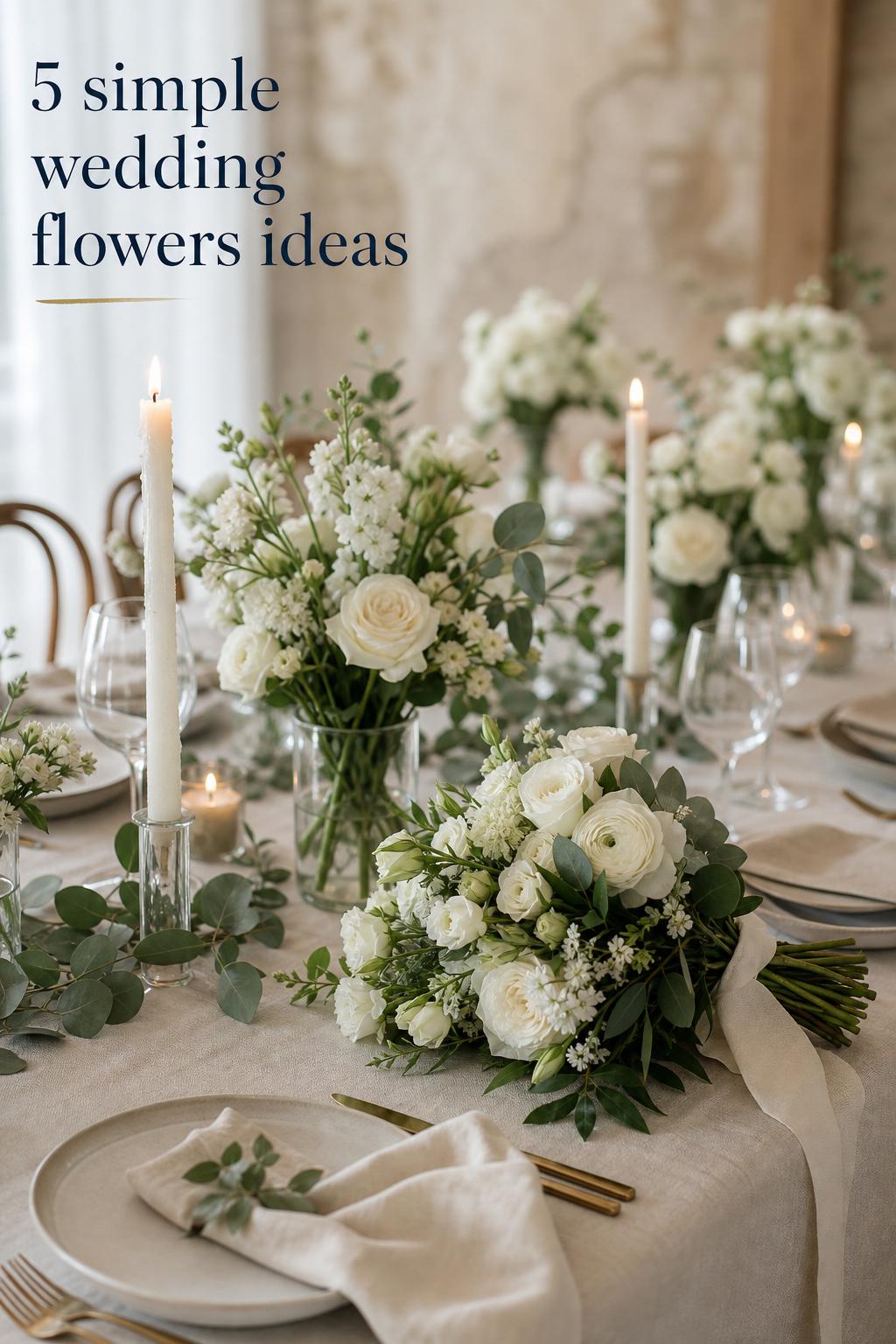
Simple wedding centerpieces are among the most searched floral ideas for good reason. They affect the guest experience directly. Low-profile arrangements are especially practical because they keep sightlines open, feel less intrusive during dinner, and can still look refined with careful styling. A small arrangement in a vase, jar, or other clean vessel often suits the mood of a minimalist reception better than an oversized build.
Best for: intimate receptions, long banquet tables, smaller venues, and couples who want décor that feels welcoming rather than staged.
Why it works: guests can talk across the table, serving staff can move more easily, and the floral design supports the meal rather than obstructing it.
How to make it work: use repeated vessels and a restrained palette. Greens and whites are especially effective because they look clean across multiple tables. If you want variety, vary the flower placement slightly but keep the container consistent.
Budget tip: smaller centerpieces often create more overall impact when repeated consistently than a few large statement designs spread too thinly around the room.
Common mistake to avoid: choosing containers that are decorative but unstable or visually heavy. A simple arrangement can lose its elegance if the vessel dominates.
Real-life styling tip: always test centerpiece height from a seated position, not just standing. A design that seems low enough during setup can still block conversation once glasses and candles are added.
Greenery-driven tablescapes with garlands and runners
Greenery garlands and runners are one of the clearest ways to create simple wedding flowers with visual continuity. Instead of arranging multiple dense centerpieces, you can run greenery down the center of a table and punctuate it with single stems, a few focal flowers, or repeated small vases. This gives the table movement without making it feel crowded.
Best for: farm tables, long communal seating, garden receptions, and couples who want a “less is more” floral look.
Why it works: the eye reads one continuous design, which makes the room feel cohesive. It also lets you scale the floral look across a large reception space without building a full arrangement for every table.
How to make it work: keep the runner shape loose and natural, then repeat one bloom or color note at intervals. This is where greenery-forward styling does a lot of the work. If your venue already has strong textures like wood tables or stone walls, resist adding too many flower colors.
Budget tip: use greenery as the base and invest in fewer focal flowers placed where guests and photographers will notice them most, such as the head table and entry tables.
Common mistake to avoid: making the garland too thick. Once a runner becomes bulky, it can eat up table space and lose the airy feeling that makes this style attractive.
Real-life styling tip: leave practical gaps in the greenery for water glasses, shared dishes, or candles. Tablescapes need room to function during a real meal.
Inexpensive centerpieces built from seasonal blooms
Budget-conscious couples often assume simple means sparse, but inexpensive wedding flower ideas can still look full when they rely on what is easier to source in season. The strongest low-cost centerpieces usually combine seasonal flowers, bulk buying, and repetition rather than trying to imitate a luxury arrangement on a tight budget.
Best for: couples planning simple wedding flowers on a budget, DIY receptions, and celebrations where consistency matters more than floral variety.
Why it works: when flowers are seasonally aligned and bought in bulk, the design process becomes more straightforward and the arrangements tend to feel more natural.
How to make it work: choose one focal bloom and one greenery, then repeat that formula across all tables. Use matching vases or jars and keep arrangement shapes similar. If you work with a florist, ask where a simple floral formula can create maximum effect with minimum complexity.
Budget tip: save larger floral moments for the ceremony entrance, head table, or bridal bouquet, and let guest-table centerpieces stay intentionally modest.
Common mistake to avoid: trying to make every table a feature table. That usually spreads the budget too thin and weakens the overall room design.
Real-life styling tip: if your venue lighting is dim, simple centerpieces often look stronger when paired with candles or reflective glass because the low floral mass needs some visual support after sunset.
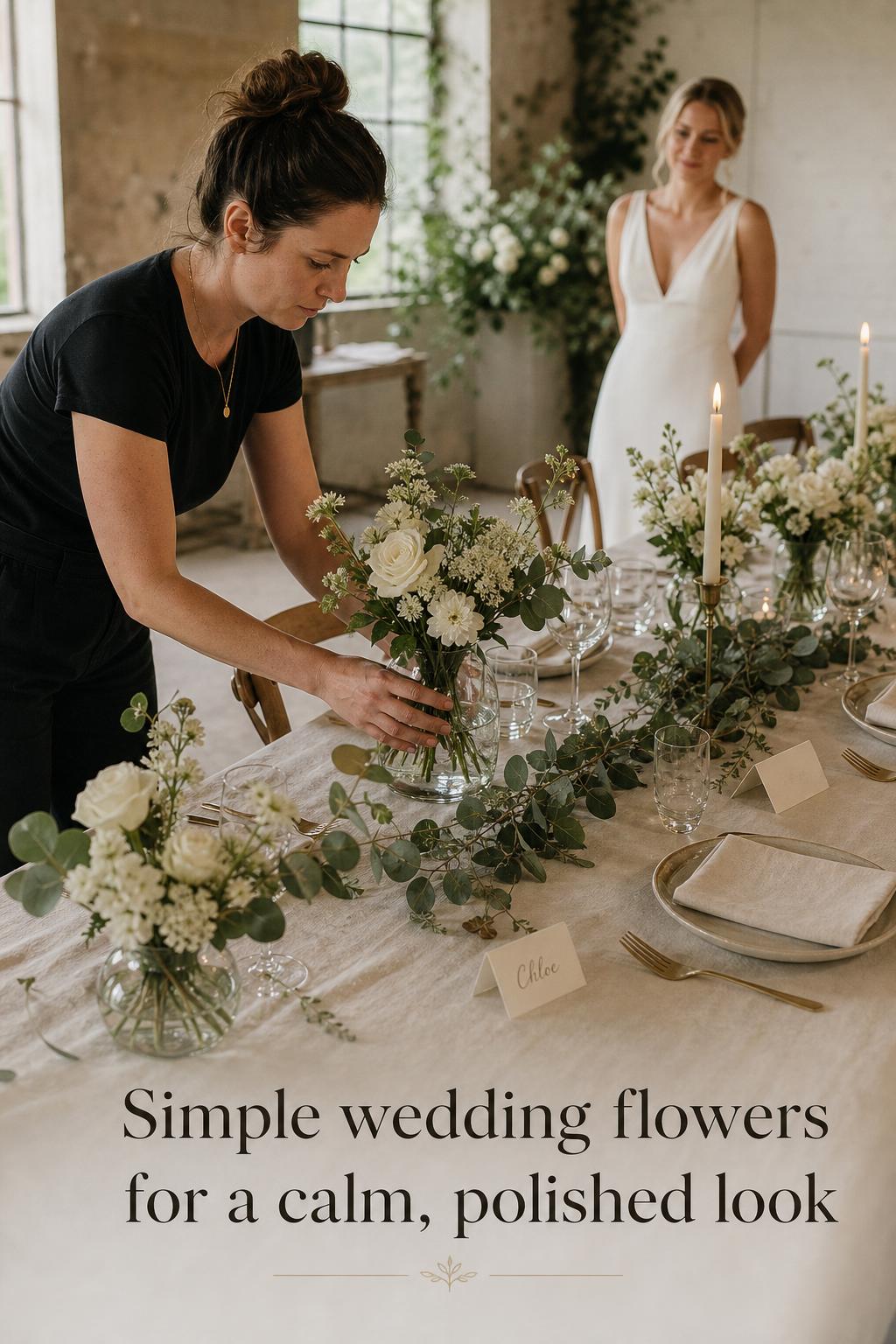
Where simple flowers fit best in a wedding day
One of the smartest ways to plan simple wedding flowers is to think in terms of placement, not just flower types. Not every area of a wedding needs the same floral intensity. In fact, a minimalist flower plan usually feels strongest when couples choose a few zones to emphasize and keep the rest restrained.
- The bridal bouquet is often worth prioritizing because it appears in portraits, ceremony images, and detail photographs.
- The ceremony entrance or altar area benefits from intentional floral placement because it frames the moment guests watch most closely.
- The head table or sweetheart table often gives better design return than trying to make every guest table equally floral.
- Greenery arches, garlands, and repeated centerpieces can connect ceremony and reception styling without requiring entirely separate designs.
This placement strategy matters because flowers are experienced differently throughout the day. A bouquet is seen close-up. A ceremony install is seen from a distance. A centerpiece is viewed while guests are eating and talking. Once you plan with those realities in mind, it becomes easier to decide where simplicity will feel sophisticated and where a little extra structure is necessary.
The real trade-off: diy wedding flowers or a florist?
Simple wedding flowers are one of the few floral categories where DIY can be realistic, but only under the right conditions. The attraction is obvious: hand-tied bouquets, greenery runners, and low centerpieces may look manageable, especially compared with large installations. But the deciding factor is not only design complexity. It is time, labor, storage, transport, and who will set everything up on the wedding day.
When diy makes practical sense
DIY works best for smaller weddings, limited floral counts, and couples using designs with straightforward structure. A simple bouquet, mini bridesmaid bouquets, and greenery-heavy centerpieces are more realistic than highly detailed builds. This is also where Bouqs-style short-form floral inspiration can be useful in spirit: uncomplicated concepts are usually easier to execute consistently.
Best for: small guest counts, flexible schedules, and couples with reliable setup help.
How to make it work: create a timeline for prep, assembly, and delivery. Keep the recipe simple and avoid too many arrangement types. If there are bouquets, centerpieces, and ceremony flowers, try to repeat materials across all of them.
Common mistake to avoid: underestimating day-of labor. Even simple florals need trimming, arranging, transporting, and placement.
Real-life styling tip: assign one non-couple person to oversee floral placement on the wedding day. Without a designated lead, simple décor can still end up scattered or unfinished.
When hiring a florist is the better decision
A florist is often worth the investment when your flower plan includes multiple locations, a tighter timeline, or a ceremony-to-reception flip. A florist can also help protect the clean look of minimalism. Simple flowers sound easy, but they leave less room to hide proportion issues, weak color choices, or inconsistent mechanics.
Best for: larger weddings, venue transitions, formal receptions, and couples who want a polished result with less logistical pressure.
How to make it work: bring a concise design brief. Describe your preferred bouquet shape, color palette, and whether you want greenery-forward, monochrome, or seasonal flowers. The clearer the brief, the easier it is for a florist to interpret “simple” correctly.
Budget tip: hire a florist for the personal flowers and one or two key installations, then keep the rest of the reception floral plan intentionally minimal.
Common mistake to avoid: using vague language like “nothing too much” without examples. Minimal design still needs specificity.
Seasonality and sourcing across the U.S.
Seasonality is one of the most practical lenses for planning simple wedding flowers. The more your floral choices align with what is easier to source, the more likely your arrangements will feel natural, cohesive, and cost-conscious. Research around top bouquet and budget pages also points to a gap many couples would benefit from filling early: connecting wedding flower ideas with U.S. sourcing reality, including wholesalers, farm partners, and regional supply differences.
In spring and summer, couples often lean toward lighter, softer bouquet styles and fresh greenery. In fall and winter, structure, texture, and foliage can take on a stronger role when bloom availability shifts. Even if you are not building a detailed month-by-month floral chart, it helps to make seasonality part of the conversation from the start rather than choosing a look in isolation and trying to source it later.
This is also where geography matters. A wedding on the West Coast, in the Northeast, in the Midwest, or in the South may have different sourcing convenience and floral rhythm. If you are buying in bulk or exploring wholesale markets, ask what is most practical for your date and region instead of beginning with a fixed list. Simplicity often comes from using what is readily available well, not from forcing a specific floral recipe.
For couples considering wholesale markets or local flower farms, simple designs are often the easiest to adapt. A greenery-forward bouquet or a repeated centerpiece formula can absorb slight variation in stems more gracefully than a tightly specified luxury arrangement. That flexibility supports both budget planning and local sourcing.
Wedding styles that pair naturally with simple florals
Simple wedding flowers are versatile, but they do not read the same way in every setting. The floral plan should support the wedding style rather than exist as a separate visual story. That connection is one of the biggest differences between flowers that feel intentional and flowers that merely feel reduced.
Modern minimalist weddings
For a modern wedding, simple florals usually work best in monochrome or neutral palettes with clean bouquet shapes and restrained centerpieces. Low vases, repeated stems, and greenery used with discipline tend to look stronger than mixed rustic textures. The architecture often carries the atmosphere, so flowers should refine the room rather than compete with it.
Romantic garden weddings
In a garden setting, simple florals can feel softer and looser. Hand-tied bouquets, greenery runners, and small clustered arrangements often fit naturally. Because outdoor venues already offer visual richness, there is usually no need to over-layer flowers. A few thoughtful placements can be enough.
Rustic-minimal celebrations
This style works well with greenery-forward bouquets, simple jars or vases, and understated ceremony décor. The key is not to let rustic become cluttered. If the venue already includes wood, exposed beams, or natural surroundings, the floral plan should stay edited.
A practical way to choose is to ask what your venue is already giving you for free. If the room or landscape is dramatic, simple flowers should act as framing. If the venue is plain, flowers may need a bit more structure to carry the atmosphere.
A few floral decisions that save money without making the wedding feel bare
Budget-friendly wedding florals are less about cutting randomly and more about spending deliberately. Many couples can keep the look elevated by protecting a few high-visibility areas and simplifying everything else with purpose.
- Reuse ceremony flowers at the reception, especially arrangements placed at the aisle entrance or altar.
- Choose one strong floral moment, such as the bridal bouquet or head table, instead of spreading the budget evenly across every location.
- Use greenery and repeated design formulas to create continuity.
- Keep the color palette narrow so fewer materials still look cohesive.
- Buy in bulk only if you have a real plan for storage, transport, and setup.
Bespoke-Bride’s budget and bouquet style themes point toward an important planning truth: floral savings should not come from making every arrangement smaller in a way that looks accidental. They should come from making some elements intentionally simpler. Guests rarely count stems. They notice whether the floral choices feel coherent with the wedding as a whole.
Common mistakes that can weaken a simple flower plan
Minimal wedding flowers may be visually quiet, but they require clarity. Because the design is reduced, small planning mistakes are more visible. A few issues appear again and again when couples try to simplify without editing carefully.
- Using too many colors in the name of making the arrangements feel “interesting.”
- Choosing bouquet styles, bridesmaid flowers, and centerpieces that do not relate to each other.
- Ignoring the venue’s existing style and adding flowers that fight the space.
- Planning DIY florals without accounting for setup labor and timing.
- Using centerpieces that are attractive in photos but inconvenient for guests during dinner.
- Forgetting that simple flowers still need structure, especially in larger rooms.
If you are unsure whether your flower plan is clear enough, try describing it in one sentence. For example: “white and green hand-tied bouquets, greenery runners, and low centerpieces in matching glass vessels.” If that sentence feels easy to picture, you likely have a coherent direction. If it takes several qualifiers to explain, the design may still need editing.
Practical tips for a simple floral plan that feels polished
Simple flowers become memorable when they are handled with discipline. The ideas themselves may be quiet, but the execution should be organized. A wedding planner, florist, or experienced stylist would usually focus on these details first.
- Start with bouquet shape before choosing every flower variety.
- Build the palette around the venue, not only around inspiration images.
- Repeat greenery, vessels, and wrap styles to connect the whole day.
- Keep guest comfort in mind when planning centerpiece height and table width.
- Prioritize the floral moments that will be seen closest and photographed most often.
- Use mood boards or a concise floral brief if you are hiring a florist so “simple” is interpreted clearly.
One more useful perspective: simple does not have to mean identical. You can vary bouquet size, centerpiece composition, or flower placement slightly as long as the palette, shape language, and overall mood stay consistent. That gives the wedding a lived-in elegance rather than a rigidly matched look.
Bringing it all together with confidence
The most compelling simple wedding flowers are the ones that feel fully considered. They support the dress, the venue, the table layout, and the rhythm of the day. A bouquet with roses and greenery, a monochrome palette, a line of eucalyptus across the tables, or a small centerpiece repeated beautifully can do far more than an oversized arrangement chosen without context. Simplicity works when it is tied to real decisions: where flowers matter most, what your season and location can support, and how much labor you truly want to manage.
If your wedding vision leans romantic, modern, relaxed, or quietly elegant, simple florals can carry that mood with surprising strength. The goal is not to do less for its own sake. It is to choose carefully enough that every flower, every vessel, and every placement feels right for the wedding day you are creating.
FAQ
What are simple wedding flowers?
Simple wedding flowers are floral designs built around a restrained palette, fewer flower varieties, and cleaner shapes. They often include hand-tied bouquets, greenery-forward arrangements, monochrome palettes, and low centerpieces that feel edited rather than overly full.
Are simple wedding flowers cheaper?
They can be more budget-friendly, especially when the design uses seasonal flowers, greenery, repeated arrangement formulas, and fewer large statement pieces. The savings are strongest when simplicity is planned intentionally, not when flowers are reduced randomly across every part of the wedding.
Which bouquet style works best for a minimalist wedding?
A classic hand-tied bouquet is usually the most versatile choice for a minimalist wedding because it feels natural, photographs well, and suits many dress styles. Monochrome bouquets and greenery-forward bouquets also work well when the palette and shape are kept controlled.
How can I make simple centerpieces look elegant?
Use repetition, consistent vessels, and a limited palette. Low-profile arrangements in greens, whites, or neutrals often look more polished than mixed designs with too many colors or container styles. Good spacing and practical table layout also make a big difference.
Is DIY realistic for simple wedding flowers?
DIY is realistic for smaller weddings and straightforward designs such as hand-tied bouquets, mini attendants’ bouquets, and greenery runners. It becomes much harder when the wedding has multiple floral locations, complicated setup timing, or a large guest count.
What colors work best for simple wedding flowers?
Neutral tones, greens, and whites are among the most reliable choices because they create cohesion and fit many venues and wedding styles. A single muted tone can also work well in a monochrome bouquet if the texture and shape are strong enough to carry the design.
How do I coordinate bridesmaid bouquets with the bridal bouquet?
Keep the same general palette and bouquet style, then reduce the size, bloom count, or complexity for bridesmaids. That approach keeps the wedding party cohesive while making sure the bridal bouquet still feels like the focal piece.
Should I use more greenery if I want to save money?
Greenery can be a smart way to create volume and continuity, especially in bouquets, runners, and centerpieces, but it should still be used with intention. Too many mixed greenery textures can make arrangements feel messy instead of refined, so it helps to choose one dominant greenery style.
How does seasonality affect simple wedding flowers in the U.S.?
Seasonality affects what is easier to source, how natural the arrangements feel, and how practical bulk buying may be. Couples usually get the best results by choosing a simple floral direction first, then refining the exact flowers based on the season and their U.S. region.
What is the biggest mistake couples make with simple wedding flowers?
The biggest mistake is confusing simple with unplanned. Minimal florals still need a clear palette, consistent shapes, and a strategy for where flowers will have the most impact. Without that structure, the wedding can end up feeling underdesigned rather than intentionally elegant.