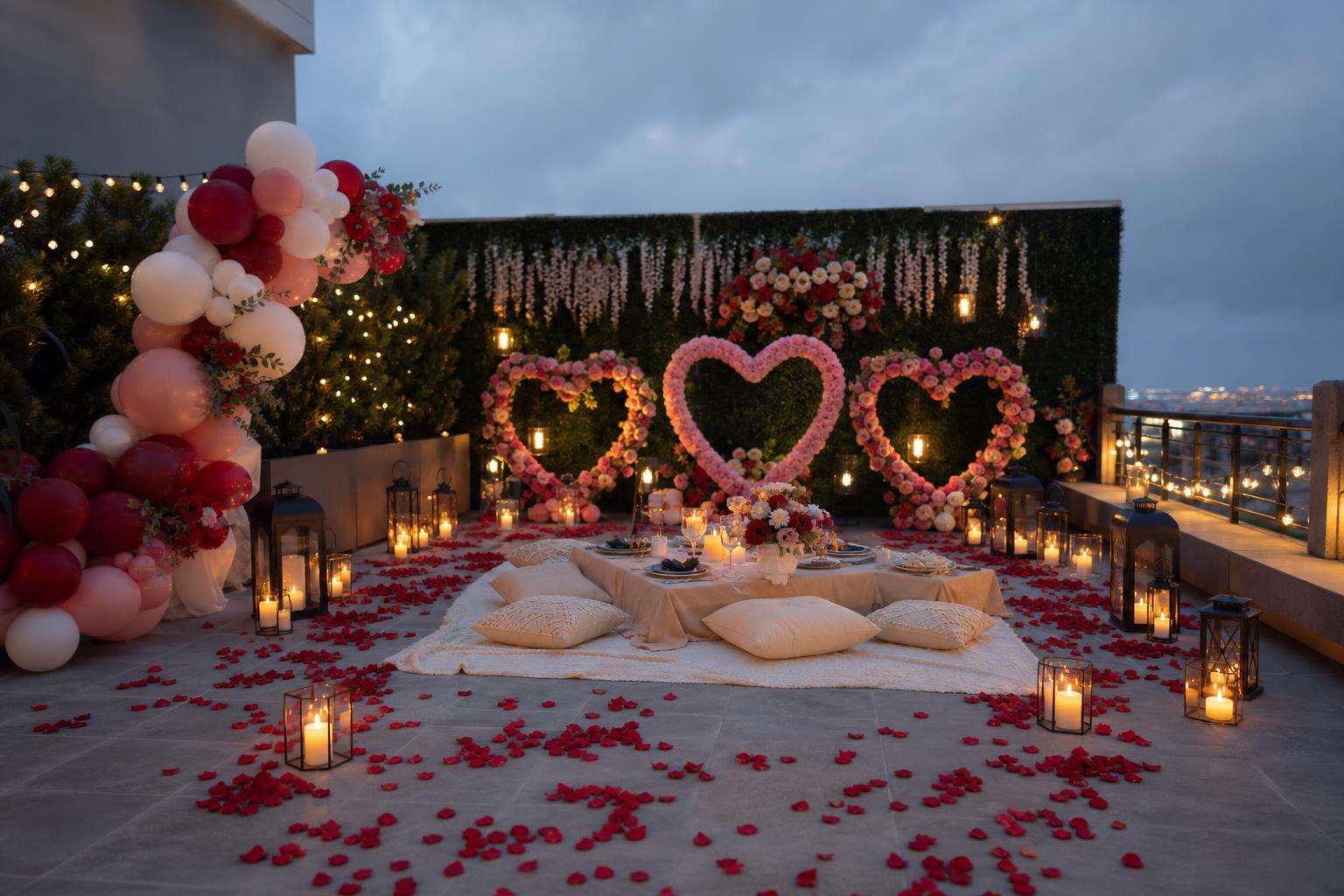
Spring Proposal Decorations Outdoor with a Romantic Edge
Some proposal settings ask for almost no explanation. A quiet beach at sunset, a candlelit backyard, a rooftop with city lights in the distance—each one already carries emotion before a single decoration is placed. That is why proposal decorations outdoor are rarely just about objects. They are about choosing an atmosphere: soft and private, dramatic and cinematic, playful and surprising, or polished and editorial.
Couples are often drawn to the same core elements—LED letters, lanterns, rose petals, string lights, banners, candles, backdrops, and blankets—but the final effect can feel completely different depending on how those pieces are styled. A beach proposal with a canopy and seashell ring holder tells a different visual story than a backyard setup built around a picnic blanket, chalk signs, and a hammock. Both can be romantic. Only one may feel like you.
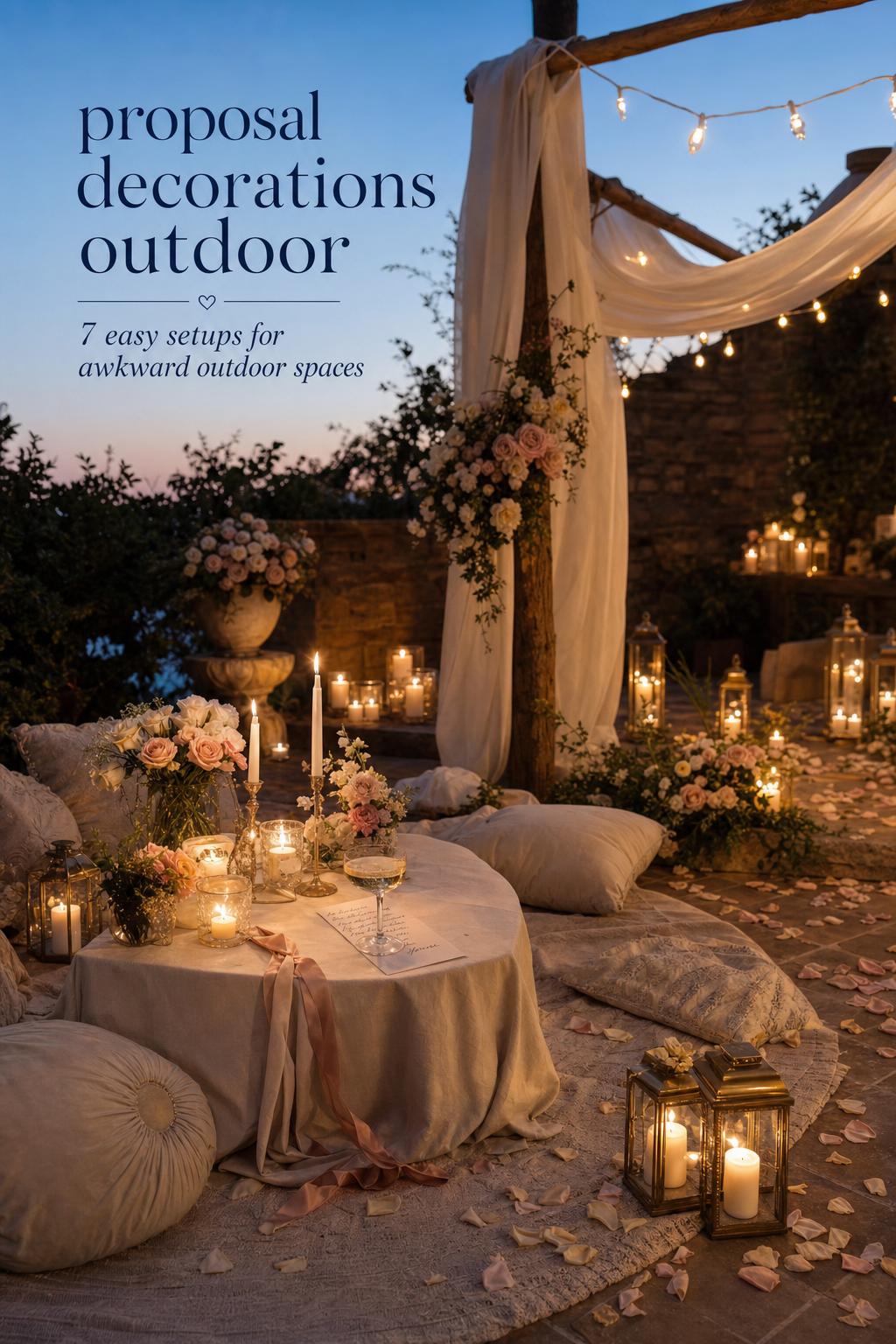
This guide breaks outdoor proposal decoration styles down in a way that is both visual and practical. You will see how different settings behave, how lighting and signage shape the mood, what tends to photograph best, where budgets usually stretch, and how to choose a setup that feels emotionally right as well as visually cohesive.
The two outdoor proposal directions couples choose most often
Most outdoor proposals fall into two broad style directions, even when they use many of the same decor pieces. The first is the intimate romantic setup: softer, warmer, and more private, often built around candles, petals, blankets, lanterns, and personal messaging. The second is the statement backdrop setup: more structured and visually bold, often centered on marry me LED letters, banners, backdrops, balloon elements, or a dramatic focal point designed for a big reveal.
Turn wedding inspiration into a plan you can actually follow.
Zarellea brings your guest list, budget, vendors, and day-of details into one shared space — so no beautiful idea gets lost in the shuffle.
These styles are easy to confuse because both can include “Will you marry me?” messaging, lighting, and floral touches. The difference is in how they create emotion. One builds closeness through texture and glow. The other builds impact through scale and visual clarity.
Style overview: intimate romantic outdoor proposal
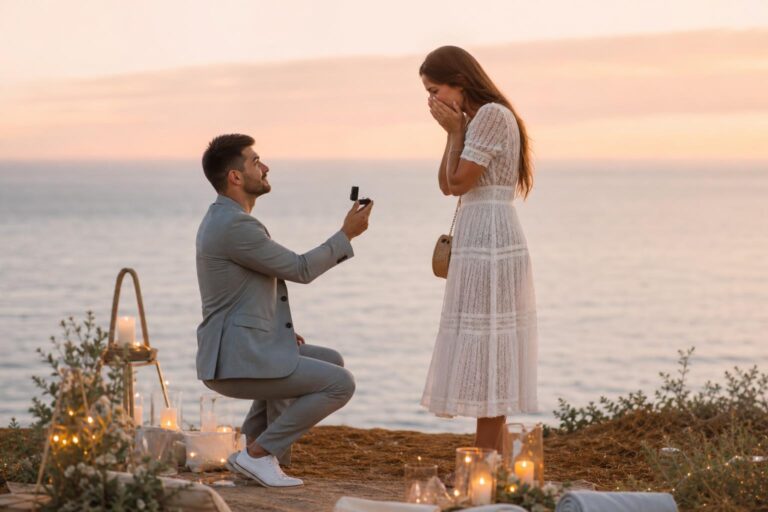
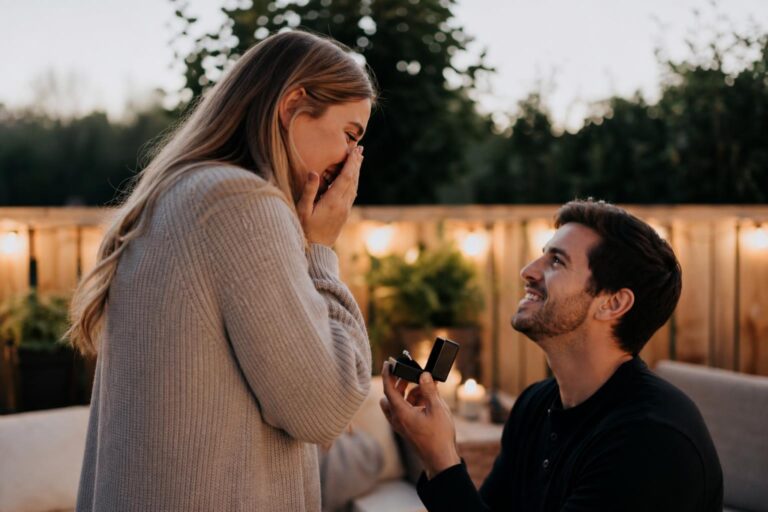
This style is built around tenderness. It often feels most at home in a backyard, garden, beach corner, or quiet terrace where the setting already offers privacy. The decor is less about announcing the moment from far away and more about drawing two people into a carefully created scene.
Typical elements include rose petals, tealights or candles, lanterns, string lights, picnic blankets, hammocks, and a light-touch sign or banner. Sometimes there is a canopy overhead or a simple backdrop behind the proposal spot, but the mood stays soft rather than theatrical. The visual language is layered, cozy, and emotionally close.
In real life, this style works especially well when the guest experience is not the priority because there may be no guests at all. It is ideal for a surprise proposal where one partner should feel guided into a beautiful environment rather than presented with a large public display. Photography in this setting tends to capture warm pools of light, movement in blankets or petals, and a sense of privacy that translates beautifully in close-up images.
What defines this look
- Lighting that feels ambient rather than oversized, such as lanterns, string lights, and candles
- Ground-level romance through petals, blankets, and picnic styling
- A quieter interpretation of “Will you marry me?” messaging, often through chalk signs or a simple banner
- Comfort-focused details like hammocks, cushions, or a picnic setup
- Natural integration with backyard, garden, or beach surroundings
Style overview: statement backdrop outdoor proposal
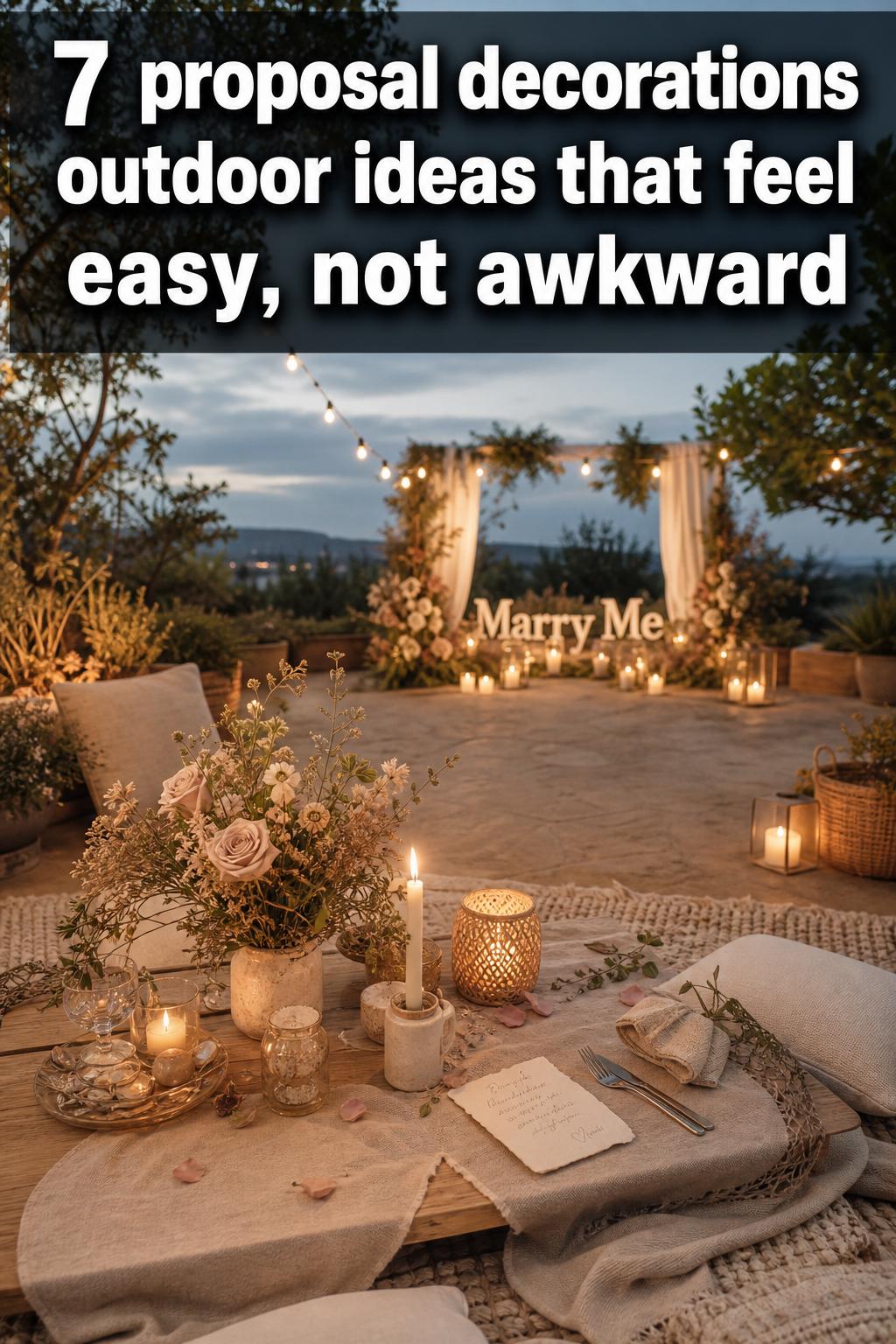
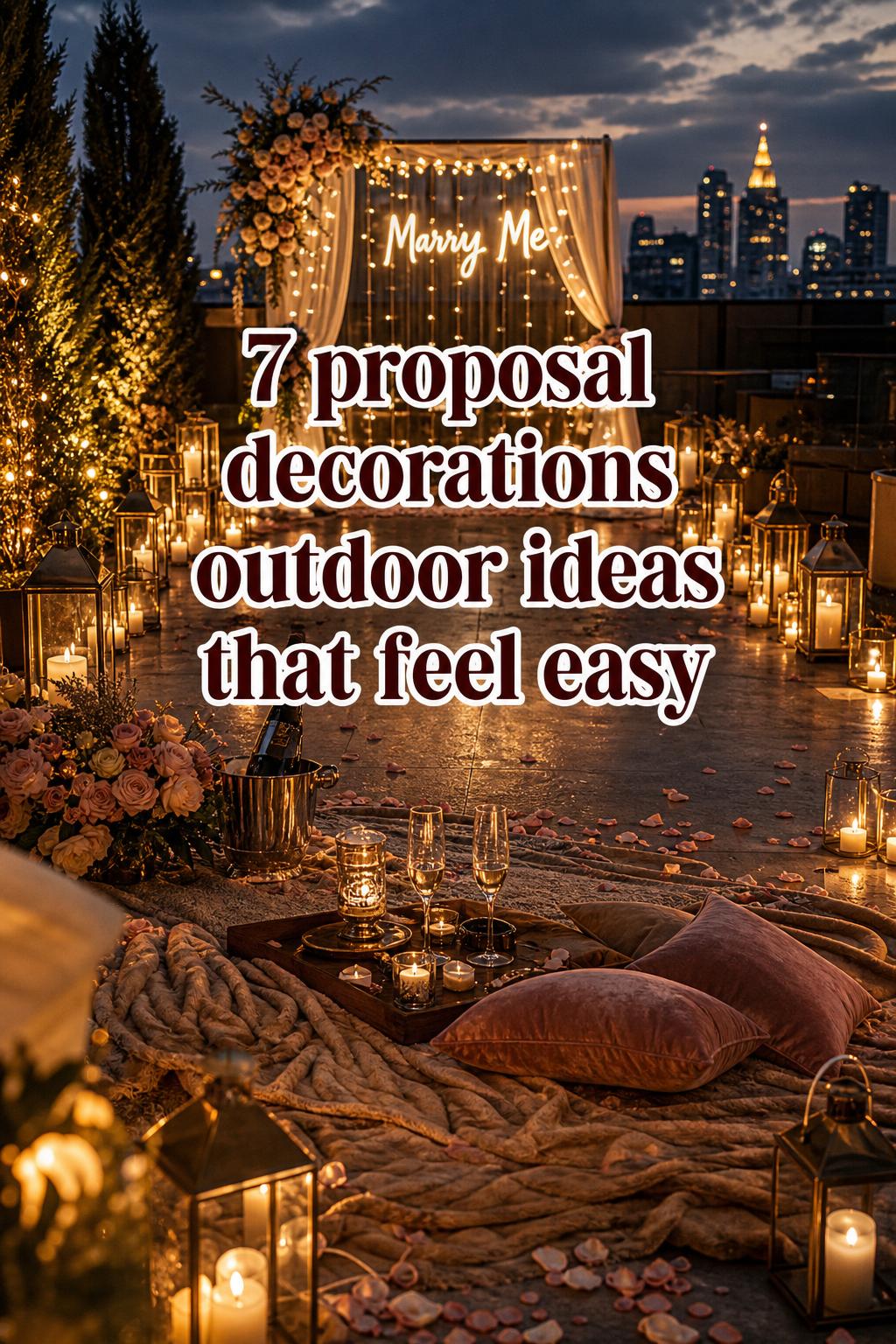
This style is more visually assertive. It is designed around a focal point that instantly reads as a proposal moment in person and in photos. Think marry me LED letters glowing at dusk, a defined backdrop, balloon arches, a banner with clear messaging, or a styled canopy framing the exact spot where the proposal will happen.
It suits couples who want the environment to make a strong impression immediately. Rooftop proposals, public outdoor spaces, terraces, and larger backyard layouts often lend themselves well to this approach because there is enough room for the setup to breathe. The style can still be romantic, but it tends to feel more curated and more reveal-driven.
In practice, this aesthetic relies heavily on visual balance. Large LED letters, backdrops, and signage can look stunning when the scale fits the venue. In a small or cluttered location, though, the same pieces can feel crowded. Photography here tends to emphasize wide shots, symmetrical framing, and the dramatic moment of arrival.
What defines this look
- A strong central focal point such as LED letters, a backdrop, or a large banner
- Decor that is meant to be seen from a distance and to create instant recognition
- Structured styling with more emphasis on scale than softness
- Optional balloon elements, arches, or framed photo moments
- A polished reveal that works well for proposals with a photographer capturing a wide-angle approach
The emotional difference between these styles
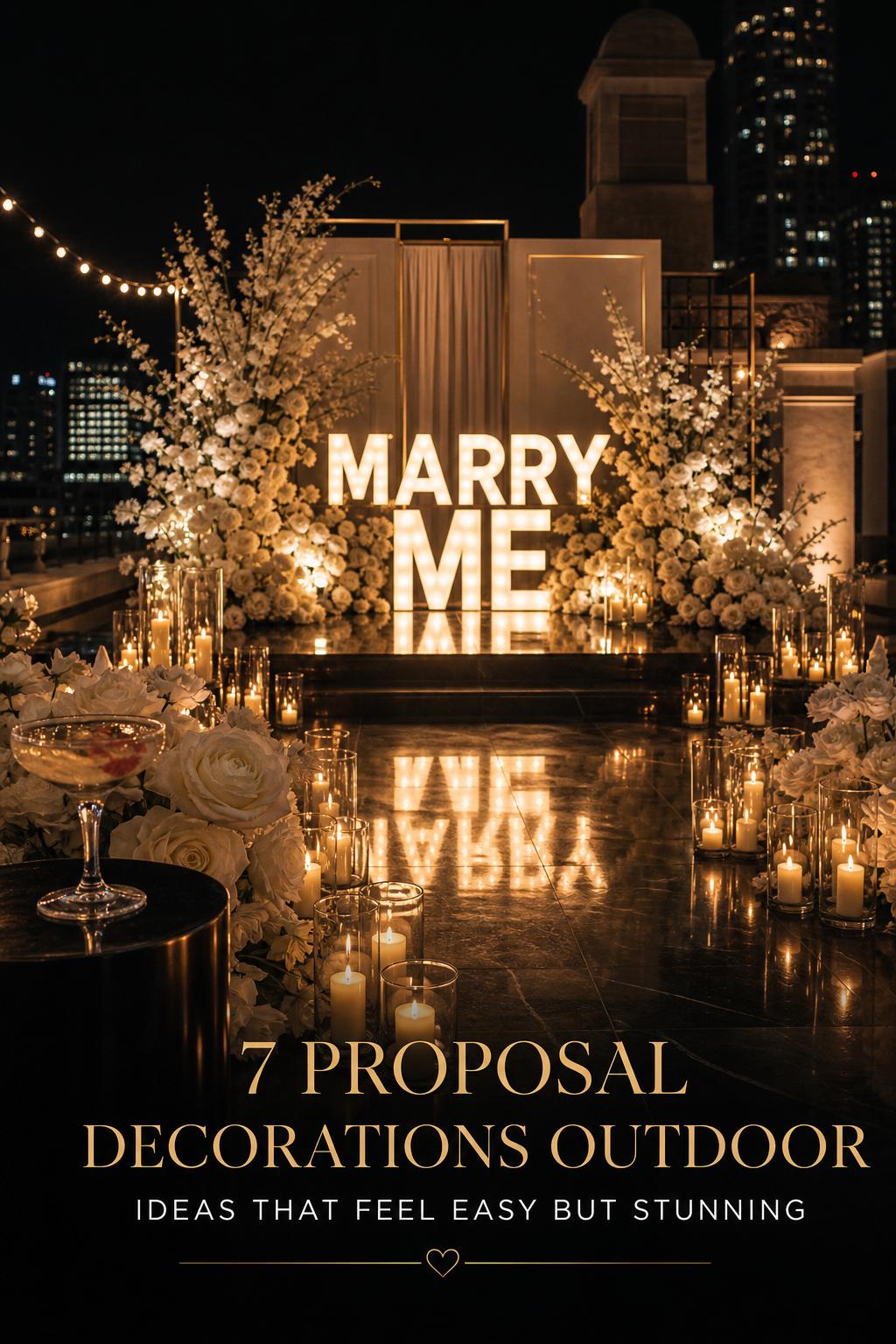
The intimate romantic proposal feels like stepping into a private love letter. Guests, if there are any, fade into the background. The decorations support the emotional weight of the moment without competing with it. A candle path, a blanket by the shore, lanterns in a garden, or petals leading to a simple sign can make the experience feel deeply personal and almost suspended in time.
The statement backdrop proposal feels more cinematic. There is a sense of occasion the second the setup comes into view. This can be incredibly moving for couples who dream about a dramatic reveal or want the photographs to capture the full environment as part of the memory. It often carries more excitement and visual anticipation.
Neither style is more romantic by default. The real distinction is how romance is expressed. One whispers. The other announces. One invites the couple inward. The other frames them in a larger scene.
How outdoor settings change the decor style completely
The same lanterns, petals, or banners can look elegant in one setting and misplaced in another. That is why the location should lead the styling decision, not the other way around. Backyard, beach, and rooftop proposals each behave differently and naturally favor different decoration approaches.
Backyard and garden proposals
A backyard or garden proposal naturally supports intimate romantic styling because it already feels private and familiar. String lights can define the space without overwhelming it, and blankets, petals, candles, and LED pillars work well because the environment often feels softer and more domestic. A backdrop can still work here, but it usually looks best when scaled modestly.
This setting is also practical. It allows more setup control, easier timing, and greater comfort for a surprise proposal. Camera angles can be planned more carefully, and items sourced from Amazon, Etsy, Wayfair, or Zazzle can often be assembled in advance without the pressure of a public location.
Beach and waterfront proposals
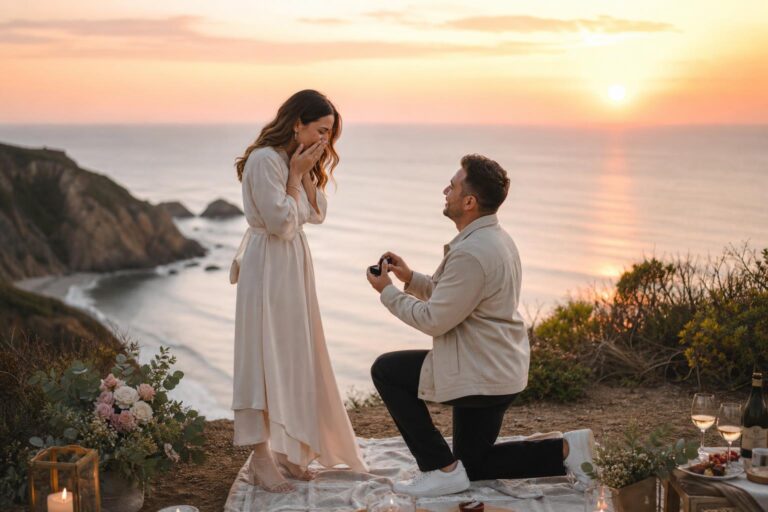
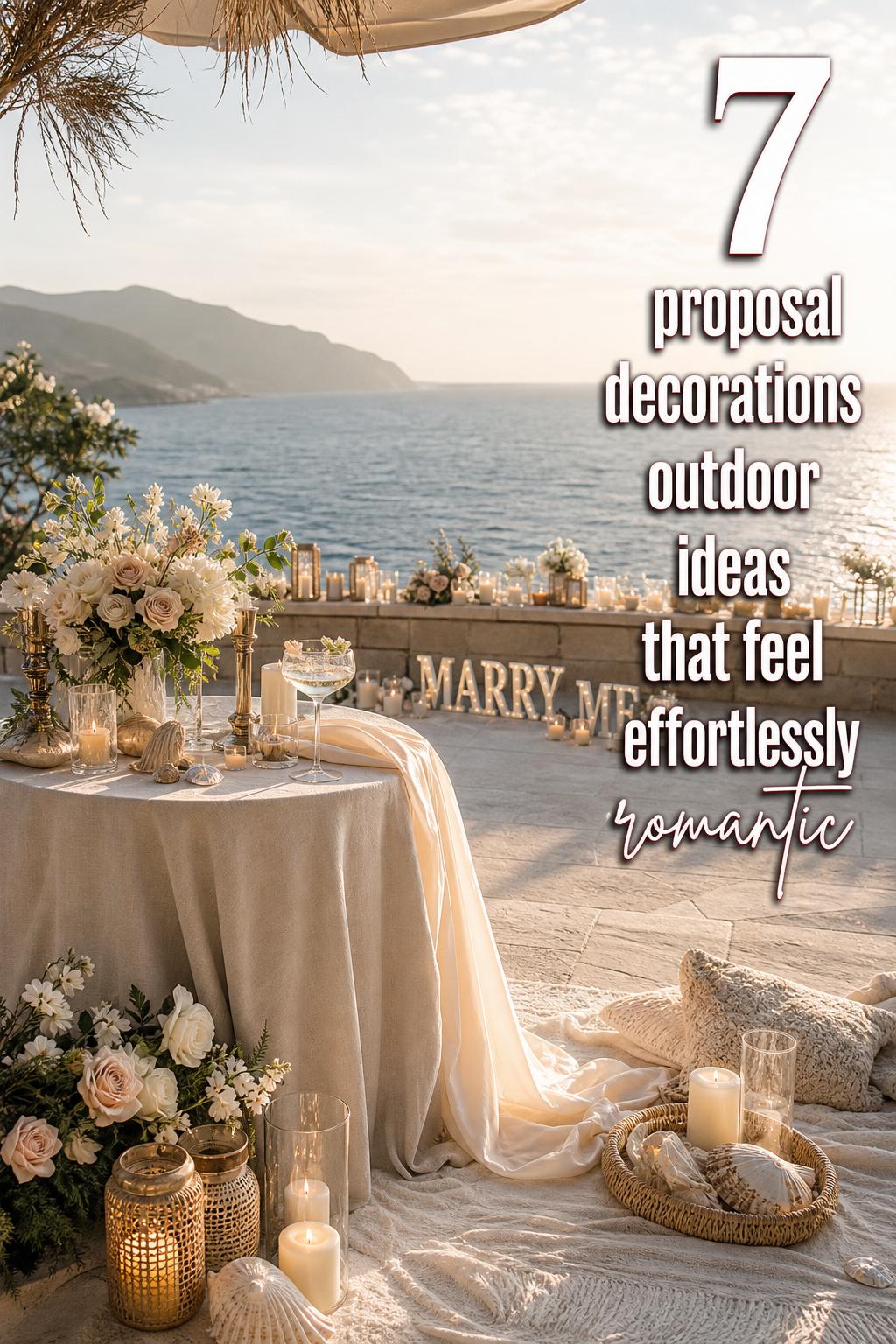
A beach proposal has a naturally cinematic quality, so the decor should work with that openness rather than fight it. Canopies, picnic blankets, lanterns, petals, and beach-specific details such as a sand mold or seashell ring holder fit beautifully because they belong to the shoreline story. A simple “Will you marry me?” sign can be more effective here than a crowded arrangement of too many objects.
Beach styling is often at its best when it feels airy. The more exposed the setting, the more important proportion becomes. A bold backdrop or balloon-heavy look may read well in photos, but only if the shoreline has enough visual space and the materials can handle wind. This is one of the clearest examples of where outdoor practicality and aesthetic vision have to agree.
Rooftop, terrace, and public outdoor proposals
Rooftops and public outdoor venues usually lean toward the statement backdrop style. Skyline views, terrace edges, and open urban spaces naturally support LED letters, banners, and defined proposal backdrops because the surrounding environment is already bold. These settings can make a simple setup feel editorial and polished.
At the same time, public spaces require more planning logic. Permit considerations, venue restrictions, and setup timing matter much more here than in a backyard. This is also where local photographers, decor rental services, and proposal planners become part of the visual success of the moment, not just logistical support.
Lighting is the true style divider
If one decor category defines outdoor proposals more than any other, it is lighting. Across backyard proposal ideas, beach proposal decorations, and rooftop proposal concepts, lighting controls the tone, readability, and photography mood of the entire setup.
Soft lighting: lanterns, candles, and string lights
Lanterns, candles, tealights, and string lights create a romantic atmosphere that feels immersive rather than performative. They are especially effective in gardens, backyards, and small beach setups because they build emotional warmth close to the ground and around the couple. This lighting style also flatters movement: walking a petal path, sitting on a blanket, or arriving at a surprise picnic scene.
Bold lighting: marry me LED letters and illuminated focal points
LED letters do something very different. They create immediate visual identity. Instead of blending into the environment, they define it. That is why they work so well for statement proposals, especially when the space is large enough to support their scale. They are practical too: they remain readable in low light and instantly tell the story in photographs.
The trade-off is that they become the dominant visual voice. If the rest of the styling is too delicate, the design can feel disconnected. LED letters work best when supported by a backdrop, balanced spacing, or a venue that can carry their impact.
Signage and messaging: subtle romance versus direct visual storytelling
“Will you marry me?” messaging is one of the strongest recurring motifs in outdoor proposal design, but how it appears changes the mood significantly. Chalk signs and hand-finished banners feel personal, informal, and emotionally close. They belong naturally in picnic setups, surprise home proposals, and garden scenes where the charm is in the details.
Large banners, illuminated signs, and high-contrast backdrop messaging are more direct. They tell the story immediately and suit proposals built around a reveal. There is no guessing about the purpose of the setup, which can be part of the excitement. This clarity is especially effective when a proposal photographer is capturing the approach and reaction in sequence.
The important question is not just whether to include signage, but how loudly you want the setup to speak before the proposal actually happens.
Decor density and visual balance
One of the most common style mistakes in outdoor proposal decor is adding every romantic element at once. Balloons, petals, LED letters, candles, banners, lanterns, canopies, chalk signs, and backdrops can each be beautiful. Together, without hierarchy, they can create visual noise.
The intimate romantic style usually benefits from restraint in scale but richness in texture. A blanket, lanterns, candles, and a petal path may be enough. The statement backdrop style usually benefits from one or two dominant features and supporting details that do not compete. For example, marry me LED letters paired with lanterns and a simple backdrop often feel more polished than adding balloons, multiple signs, and scattered props on top.
What often goes wrong
- The decor is larger than the location and crowds the proposal space
- Too many decor categories compete for attention at the same time
- The styling does not match the venue, such as overly structured elements in a delicate natural setting
- The sign or banner is clear, but the surrounding decor has no visual cohesion
- Comfort is ignored, especially in picnic or beach setups where the couple is meant to linger
Budget logic: which style is usually easier to execute
Outdoor proposal styling often moves between inspiration and shopping intent very quickly, which is why budgeting should start with style direction. The intimate romantic setup can be more flexible because it often uses smaller pieces: lanterns, petals, candles, blankets, and signs. These items are easy to source through Amazon, Etsy, Wayfair, or Zazzle, and they do not always require a large-scale install.
The statement backdrop setup tends to concentrate spending into fewer, larger pieces. LED letters, a full backdrop, balloon structures, or a rental-based outdoor proposal decoration kit create a bigger visual moment, but they also usually demand delivery, setup coordination, and more exact site planning. That does not automatically make them excessive; it simply means the budget is tied to impact and execution.
Florals also influence cost logic, even in proposals. A few rose petals can shape the mood affordably, while a heavily styled backdrop with multiple layers of decor can push the look toward a more produced event. Couples often underestimate setup time more than product cost, especially outdoors.
Tips for making the budget feel smarter
- Choose one hero element, such as LED letters or a picnic scene, and let the rest support it
- Use lighting to create atmosphere instead of trying to fill the entire space with decor
- Buy smaller styling pieces from familiar retailers and consider rentals for oversized focal points
- Match the decor scale to the venue so you are not paying for impact the space cannot show well
- Plan the photo angle early so you only style what will truly matter on camera
Visual style breakdown in real proposal moments
An outdoor proposal is not one still image. It is a sequence: arrival, recognition, the walk toward the setup, the proposal itself, the immediate reaction, and the first few minutes afterward. Good decoration supports all of those moments.
Arrival and first impression
The intimate romantic style reveals itself gradually. A lantern path, a hint of string lights, or petals leading toward a blanket creates curiosity and a slow emotional build. The statement backdrop style creates recognition immediately. The setup is visible, legible, and designed to land in one dramatic moment.
The proposal spot itself
In a softer setup, the actual kneeling moment may happen inside a cocoon of candles, petals, or lanterns, with the decor surrounding rather than towering over the couple. In a statement setup, the couple is often framed against a backdrop or LED letters, which creates stronger wide images and a more event-like visual memory.
The afterglow
This part is often overlooked. If the proposal is followed by photos, champagne, or simply sitting together, comfort matters. A picnic blanket, hammock, or canopy gives the couple somewhere to stay in the moment. This is where intimate setups often feel more natural. Statement setups can still support this, but only if a softer secondary area is built into the plan.
Example comparison: ceremony-style reveal versus picnic-style reveal
A ceremony-style reveal borrows the visual logic of a wedding backdrop. The focus is frontal and composed: LED letters, a sign, a banner, or a clean proposal backdrop create a clear stage. This works beautifully for a rooftop, terrace, or open public venue where the setting already feels elevated.
A picnic-style reveal is more immersive. The proposal is discovered in layers—a blanket, lanterns, petals, perhaps a basket, low lighting, and a quieter sign. It does not ask the couple to stand in front of the scene so much as step into it. That is why it feels especially suited to beaches, gardens, and private yards.
The emotional choice is simple: do you want the moment to feel framed, or do you want it to feel inhabited?
Example comparison: beach proposal decorations versus backyard proposal ideas
Beach proposal decorations are often best when they respect the openness of the shoreline. A canopy, blanket, lanterns, rose petals, a seashell ring holder, and a restrained sign usually feel more elegant than trying to replicate an indoor event outdoors. The beach already gives you atmosphere. Decor should shape it, not crowd it.
Backyard proposal ideas can support more layering because the environment is more controlled. String lights overhead, LED pillars, a backdrop, candles, and a petal path can all coexist more easily. There is also more opportunity to hide a surprise proposal setup until the exact moment of reveal.
In other words, the beach favors editing. The backyard rewards layering.
Example comparison: balloon styling versus candle-and-petal styling
Balloon styling, including heart shapes, arches, and proposal balloon arrangements, creates a more playful and visibly designed look. It leans toward celebration and graphic shape. This can be ideal when the proposal is meant to feel upbeat, modern, or highly stylized around a backdrop.
Candle-and-petal styling creates an older, softer romantic language. It feels quieter and more emotionally layered because it relies on glow, movement, and texture instead of outline and volume. This direction is especially forgiving in natural settings, where the decor needs to complement changing light and landscape rather than dominate it.
Neither is wrong. Balloons read as designed. Candles and petals read as felt.
Venue pairing notes that matter more than couples expect
The most successful outdoor proposals usually look inevitable in their setting, as though the decor belongs there. That is why venue compatibility matters as much as the decoration style itself.
- A beach pairs naturally with canopies, blankets, shoreline props, lanterns, and airy signage
- A backyard or garden welcomes string lights, candles, petals, hammocks, picnic setups, and modest backdrops
- A rooftop or terrace supports LED letters, banners, defined backdrops, and polished photo moments
- A public outdoor venue often needs decor that is clear and quickly readable, especially if setup time is limited
When the venue and decor style disagree, the proposal can feel visually split. A highly structured statement install may look disconnected on a quiet organic shoreline, while an overly delicate picnic setup can disappear in a large urban rooftop environment.
Weather, materials, and the reality of outdoor planning
Outdoor proposal styling only feels luxurious when it still works under real conditions. Weatherproofing is not the most romantic part of planning, but it is one of the most important. Wind, heat, humidity, and sudden rain all affect how balloons, candles, signs, petals, and lightweight fabrics behave.
This is where practical choices strengthen the aesthetic rather than limit it. On a beach, low and weighted decor often makes more sense than tall unstable pieces. In a backyard, lighting placement matters because dusk changes quickly. In public spaces, setup speed and secure placement can be more important than adding another decorative layer.
Tips for weather-aware styling
- Choose decor that can handle the setting instead of forcing a concept that belongs indoors
- Use lighting as a backup mood-maker if weather affects larger design plans
- Keep signage readable even if wind or low light changes the scene
- Plan a second version of the setup if the proposal depends on a public or exposed venue
- Think about comfort after the proposal, not just during the reveal
What makes an outdoor proposal feel expensive
It is rarely the number of items. It is the cohesion. Outdoor proposals feel elevated when the decor has a clear visual hierarchy, when lighting is intentional, and when each piece supports the same emotional tone. A simple setup with lanterns, petals, and a beautiful blanket can feel more luxurious than a cluttered install with multiple competing focal points.
Scale is another factor. A single backdrop or set of LED letters that properly fits the venue will almost always feel more polished than oversized decor squeezed into the wrong space. Texture also matters. Blankets, canopies, lantern finishes, and clean signage can quietly raise the overall look without needing excess.
Most of all, expensive-looking proposal decor feels intentional. The moment appears designed, not assembled.
Photography mood: which style ages better in photos
Photography priorities should influence the style choice from the start. Intimate romantic setups tend to produce emotionally timeless close-ups. Lantern glow, petal movement, hands, facial expressions, and the natural environment carry much of the story. These images often age well because they emphasize feeling over spectacle.
Statement backdrop setups create stronger environmental photographs. The full design becomes part of the memory, especially when there is a skyline, shoreline, or clearly framed proposal area behind the couple. These images can be striking and highly shareable, though they depend more on clean composition and venue fit.
If your priority is remembering exactly how the entire scene looked, choose a more structured reveal. If your priority is reliving how the moment felt, softer atmospheric styling often wins.
When to choose each style
Choose the intimate romantic style if you want
- A private or surprise proposal with emotional closeness at the center
- A backyard, garden, terrace, or beach setup that feels natural and immersive
- Decor that supports the moment without dominating it
- Flexible sourcing through Etsy, Amazon, Wayfair, or Zazzle for smaller elements
- A softer photography mood with warm light and personal detail
Choose the statement backdrop style if you want
- A dramatic reveal with immediate visual impact
- Marry me LED letters, a backdrop, or strong signage to define the scene
- A rooftop, large backyard, terrace, or public venue with room for scale
- Wide photographs that show the full environment clearly
- A proposal that feels more curated and event-like
For many couples, the best choice is less about trend and more about personality. If quiet intimacy is what makes a moment memorable, a soft setup will likely feel right. If seeing the full scene unfold is part of the dream, a more structured design may suit you better.
Can you combine these styles successfully?
Yes, but one style should still lead. The most successful blended outdoor proposals usually pair a statement focal point with intimate supporting details. For example, LED letters can anchor the scene while lanterns, petals, and a blanket soften it. A canopy can create structure while candles and a picnic setup bring warmth underneath.
The risk comes when both styles compete equally. A large backdrop, balloon arch, multiple signs, heavy petal use, lantern clusters, and a picnic scene can quickly feel undecided rather than layered. Cohesion comes from selecting a primary visual language first, then borrowing lightly from the other.
If you want a proposal that feels both cinematic and personal, let the statement piece establish the moment and let the softer decor make it livable.
A practical planning flow for outdoor proposal decor
Before ordering decor or building a mood board, it helps to plan in the same order that the moment will actually unfold. This keeps the styling emotionally coherent and prevents overspending on pieces that do not improve the experience.
- Start with the setting: backyard, garden, beach, waterfront, rooftop, terrace, or public outdoor venue
- Choose the emotional direction: intimate romantic or statement backdrop
- Select one focal element: LED letters, a canopy, a picnic setup, a backdrop, or clear signage
- Add lighting based on mood and visibility: lanterns, string lights, candles, or illuminated letters
- Layer in supporting decor: petals, blankets, banners, chalk signs, seashell ring holder, or balloons
- Plan how the couple arrives, where the proposal happens, and where they stay afterward
- Confirm weather backup, permits if needed, and who is handling setup and photography
This approach creates a proposal that feels visually complete because it has been planned as an experience, not just decorated as a scene.
Final style perspective
The core difference between outdoor proposal decoration styles is not whether you choose lanterns or LED letters, petals or balloons, beach or backyard. It is whether you want the moment to feel quietly enveloping or instantly dramatic. Both can be beautiful. Both can be deeply romantic. What matters is that the decor, setting, lighting, and message all speak the same emotional language.
An intimate setup creates closeness through softness, texture, and glow. A statement setup creates memory through scale, clarity, and visual framing. Some couples will know immediately which atmosphere feels like them. Others may find their answer in a thoughtful blend, where one focal point carries the scene and quieter details hold the emotion.
The most memorable proposal is never the one with the most decor. It is the one where every detail—from the sign to the lighting to the setting itself—makes the moment feel unmistakably personal.
FAQ
What are the most popular outdoor proposal decorations?
The most popular outdoor proposal decorations include marry me LED letters, lanterns, string lights, candles or tealights, rose petals, blankets, banners, chalk signs, canopies, and simple backdrops. Beach proposals may also include a seashell ring holder or sand-themed props, while backyard setups often use picnic styling or LED pillars.
Which is better for an outdoor proposal: LED letters or candles?
It depends on the atmosphere you want. LED letters are better for a bold, clearly defined proposal moment and work especially well in larger spaces or low light. Candles create a softer, more intimate mood and usually feel more natural in backyards, gardens, and smaller beach setups.
How do I decorate for a beach proposal without overdoing it?
Beach proposal decorations usually look best when they stay airy and edited. A canopy, blanket, lanterns, petals, and a simple sign are often enough because the shoreline already provides visual drama. The goal is to shape the setting gently rather than fill it with too many competing pieces.
Are backyard proposal ideas easier to plan than public outdoor proposals?
In many cases, yes. Backyard proposal ideas offer more privacy, greater setup control, and fewer restrictions, which makes surprise timing and photography easier to manage. Public outdoor spaces can be beautiful, but they often require more attention to permits, timing, access, and how quickly the decor can be installed.
What should I buy and what should I rent for outdoor proposal decor?
Smaller styling pieces such as signs, banners, petals, blankets, and some lighting are often easy to buy through retailers like Amazon, Etsy, Wayfair, or Zazzle. Larger focal elements such as oversized LED letters, backdrops, or full decor kits are often better suited to rental or professional setup, especially if the proposal takes place in a public or large-format venue.
How can I make outdoor proposal decorations look more expensive?
The most polished setups usually rely on cohesion rather than quantity. Choose one strong focal point, use lighting intentionally, keep the color and texture story consistent, and make sure the decor scale suits the location. A clean, balanced setup with lanterns, petals, and a well-placed sign often feels more elevated than a crowded arrangement with too many features.
What if the weather changes on the day of the proposal?
Weather backup matters for any outdoor proposal. Choose materials and decor that suit the setting, keep lighting as a flexible mood-maker, and have a second version of the setup in mind if the location is exposed. Beach and rooftop proposals especially benefit from a simplified backup plan because wind and changing light can affect decor quickly.
Do I need a permit for an outdoor proposal setup?
If the proposal takes place in a public outdoor space, rooftop venue, or regulated location, permit or venue restrictions may apply, especially for larger setups with backdrops, signs, or extensive decor. Private properties such as a backyard generally offer more flexibility, which is one reason they are often easier to plan.
What decor photographs best during a surprise proposal?
For surprise proposals, decor that creates a clear path and a defined focal area tends to photograph best. Lanterns, petals, signs, and lighting help capture the arrival and recognition moment, while a backdrop or LED letters can strengthen wide shots. The best results usually come from a setup that looks beautiful from both a distance and up close.
Can I mix romantic picnic decor with a statement proposal backdrop?
Yes, and it can work beautifully when one direction leads. A statement piece such as LED letters or a simple backdrop can define the proposal moment, while softer details like blankets, lanterns, and petals make the space feel personal afterward. The key is avoiding too many competing focal points so the setup still feels intentional.