Cute Proposal Ideas for an Intimate, Stylish Yes
Some proposal ideas are sweet because they are small, private, and full of personal memory. Others feel cute because they are playful, visual, and impossible not to smile at. That is why so many couples get pulled between different directions when they start searching for cute proposal ideas: one version leans soft and intimate, while another turns the moment into a charming little event with signs, photos, family, pets, or a favorite place woven in.
Both approaches can be beautiful, but they create very different atmospheres. A breakfast-in-bed proposal in a quiet apartment does not feel the same as a park proposal with a custom sign, a photographer waiting nearby, and friends joining after the yes. The emotional tone, the visual story, and even the way the moment photographs can shift dramatically depending on the style you choose.
This guide breaks those styles down in a way that is useful for real planning. You will see how cute proposals can feel romantic, playful, classic, budget-friendly, or non-traditional; how each style behaves in real settings like homes, parks, beaches, and rooftops; and how to choose the version that feels most natural for your relationship.
Two leading directions: intimate cute vs playful cute
Most cute proposal ideas fall into two broad aesthetics. The first is intimate cute: warm, personal, often at home or in a meaningful private setting, and built around sincerity rather than spectacle. The second is playful cute: still romantic, but more outwardly expressive, often using signs, scavenger hunts, custom details, themed messages, or a public setting that adds a little excitement.
Turn wedding inspiration into a plan you can actually follow.
Zarellea brings your guest list, budget, vendors, and day-of details into one shared space — so no beautiful idea gets lost in the shuffle.
These two directions are often mixed together online because both use soft gestures, sentiment, and visual charm. But in practice, they ask for different planning choices. Intimate cute depends on comfort, timing, and emotional ease. Playful cute depends more on choreography, setting, and sometimes other people such as photographers, florists, or close friends.
Understanding the difference helps prevent a proposal from feeling visually scattered. A highly private partner may not enjoy a sign-heavy public moment, even if the details are adorable. In the same way, a couple who loves photos, travel, and shared experiences may want more than a simple living-room setup. Cute is not one look. It is a feeling, and the right style has to support that feeling rather than fight it.
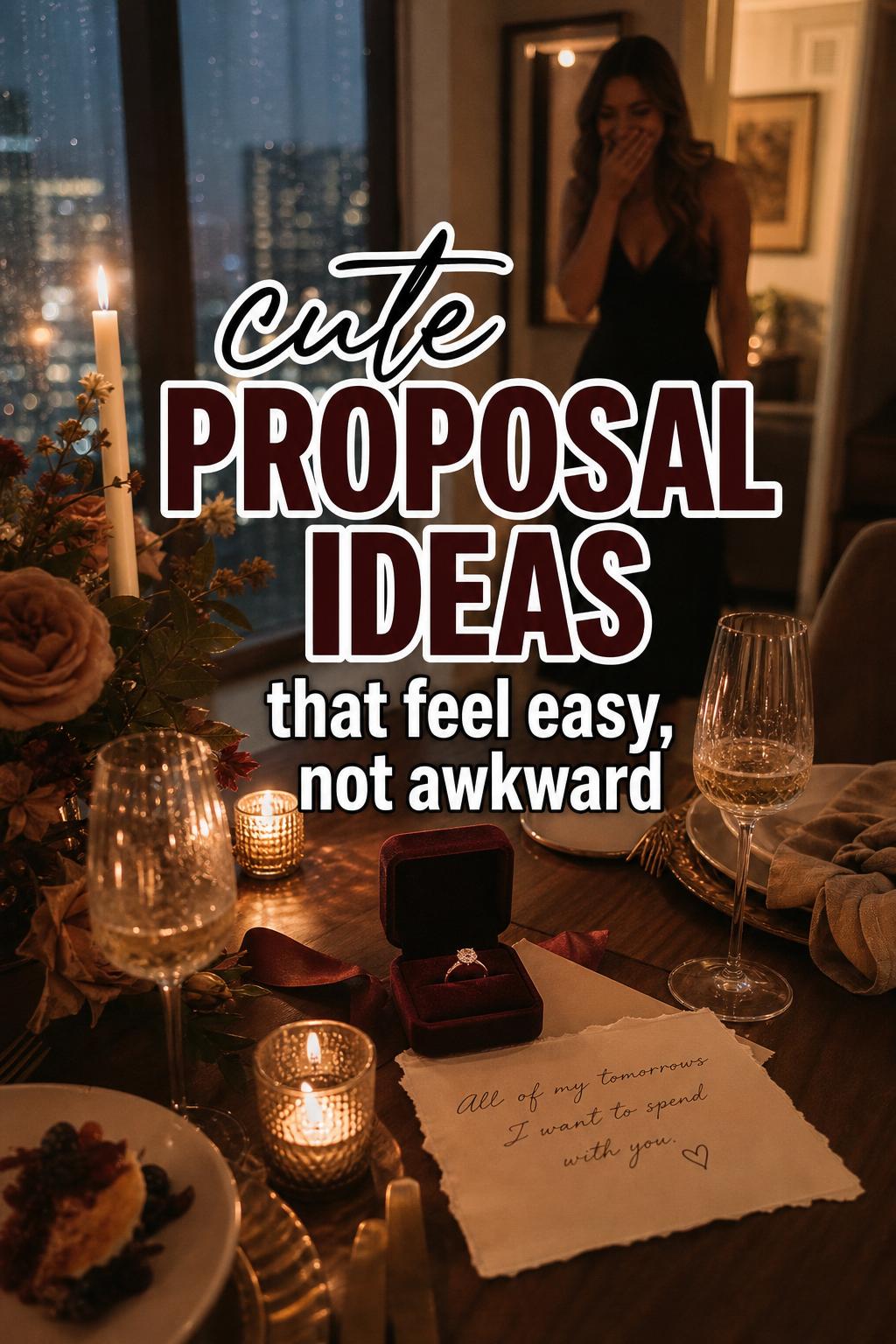
Style overview: intimate cute proposals
Intimate cute proposals are centered on closeness. They often happen at home, in a hotel room, or in a quiet familiar place where the relationship already feels lived-in. This style is common in at-home proposal ideas and simple proposal ideas because it lets the moment breathe. There is less performance and more emotional focus.
Visually, this style tends to rely on soft details rather than many details. Think breakfast in bed, a candlelit path through the living room, handwritten notes, a wake-up surprise, a favorite dessert, or a ring reveal at the end of a shared ritual. The setting may be modest, but the emotional atmosphere is layered. The cuteness comes from tenderness, familiarity, and the sense that the proposal belongs specifically to your relationship.
Common venues for this style include apartments, kitchens, bedrooms, private patios, and occasionally small local spaces that feel personal rather than public. It works especially well for couples who value privacy, who may be budget-conscious, or who want the proposal to feel grounded rather than theatrical.
The color palette is usually softer and less formal because home environments already carry their own visual texture. Florals, if used, tend to act as accents rather than the whole visual story. A local florist can help elevate the room, but the proposal does not depend on elaborate decor to succeed. The same goes for photography. Many couples in this style hire a photographer quietly for a home shoot, while others simply focus on the moment itself and keep the visual layer secondary.
Emotionally, intimate cute proposals feel sincere, calm, and deeply personal. In photos, they often read as timeless because the attention stays on body language, expressions, and the relationship dynamic rather than the scale of the setup. Brands like The Knot and Marriage.com frequently lean into this kind of warmth in their simple and at-home inspiration, and it is easy to see why: the format is practical, heartfelt, and forgiving.
Style overview: playful cute proposals
Playful cute proposals still value romance, but they express it with more personality on the surface. This is where signs, chalk messages, scavenger hunts, paper rings, custom wine labels, postcards, edible props, and themed references shine. The mood is lighter and often more visually designed, even when the budget is modest.
This style often appears in public or semi-public settings: parks, beaches, rooftops, city corners, school or campus-inspired settings, and landmark locations. It can also work at home, but when it does, the home usually becomes a stage for a reveal rather than remaining a purely lived-in background. A room may be transformed with signs, notes, desserts, keepsakes, or a sequence of clues leading from one space to another.
Color tends to be more visible here because the proposal often includes props, decor, or signage. Florals may be playful rather than formal. A custom sign from a local printing shop, a hand-lettered poster, or a simple chalk sidewalk message can become part of the visual identity. Brands and services such as Canva-style sign templates, local artists, Blue Nile-inspired ring presentation, or Flytographer-style photo capture make sense in this category because the visuals play a larger role.
The overall personality is joyful, expressive, and sometimes a little witty. Parade’s pun-heavy homecoming-style ideas show why this category resonates so strongly with “cute”: the proposal feels memorable because it has a voice. It says something about your humor, your shared references, and the way you communicate affection.
In photographs, playful cute proposals usually look more event-like. The decor, sign, setting, or theme becomes part of the storytelling. That can be wonderful for couples who love keepsakes, social sharing, or a more built-out visual memory. But it also means every design choice matters more, because when the setup is visible, cohesion matters.
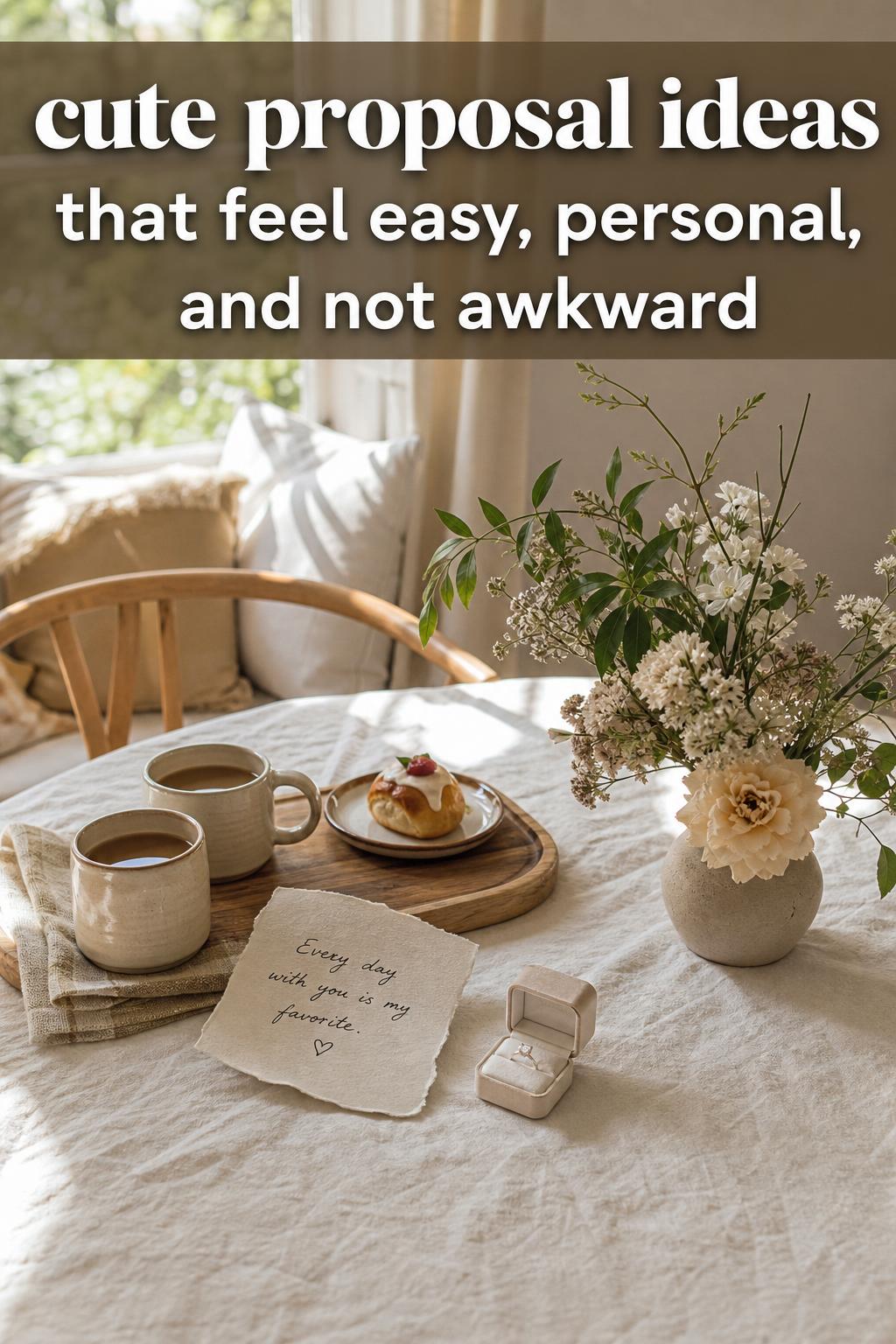
The emotional difference between these proposal styles
The emotional core of intimate cute is safety. It feels like a memory already in progress, something unfolding naturally inside the relationship. Guests, if there are any, usually come after the proposal rather than during it. The atmosphere is private, soft, and less likely to overwhelm someone who values quiet emotion.
Playful cute creates a different response. It brings in delight, anticipation, and a sense of occasion. There may be a reveal, a trail of clues, a pet with a note, a custom label on a favorite bottle, or a first-date recreation in a meaningful place. The partner is not only being asked a life-changing question; they are also being invited into a designed experience.
Guests experience these styles differently too. In an intimate proposal, the story often feels almost cinematic in hindsight, especially if a photographer captures just a few honest frames. In a playful proposal, guests or family may feel more integrated into the celebration because the structure naturally allows for a bigger after-moment. One is inward. The other opens outward more easily.
Neither style is more meaningful than the other. The right choice depends on what kind of emotional truth fits your relationship. Cute should not mean childish or overly decorated. At its best, it means affectionate, memorable, and recognizably yours.
What cute proposals look like in real life
At-home charm that feels effortless
At-home proposals are often underestimated because they sound simple on paper. In reality, they can feel the most intimate and emotionally rich. A breakfast in bed proposal, a dessert reveal in the kitchen, or a candlelit trail leading into the living room works because home is already connected to routine and comfort. The proposal transforms a normal space into a memory without making it feel unfamiliar.
This style is especially effective for couples who are budget-conscious or who want a proposal that is hard to overcomplicate. The visual success depends less on spending and more on editing. A few meaningful details usually work better than trying to recreate a full event at home.
Outdoor sweetness with room to breathe
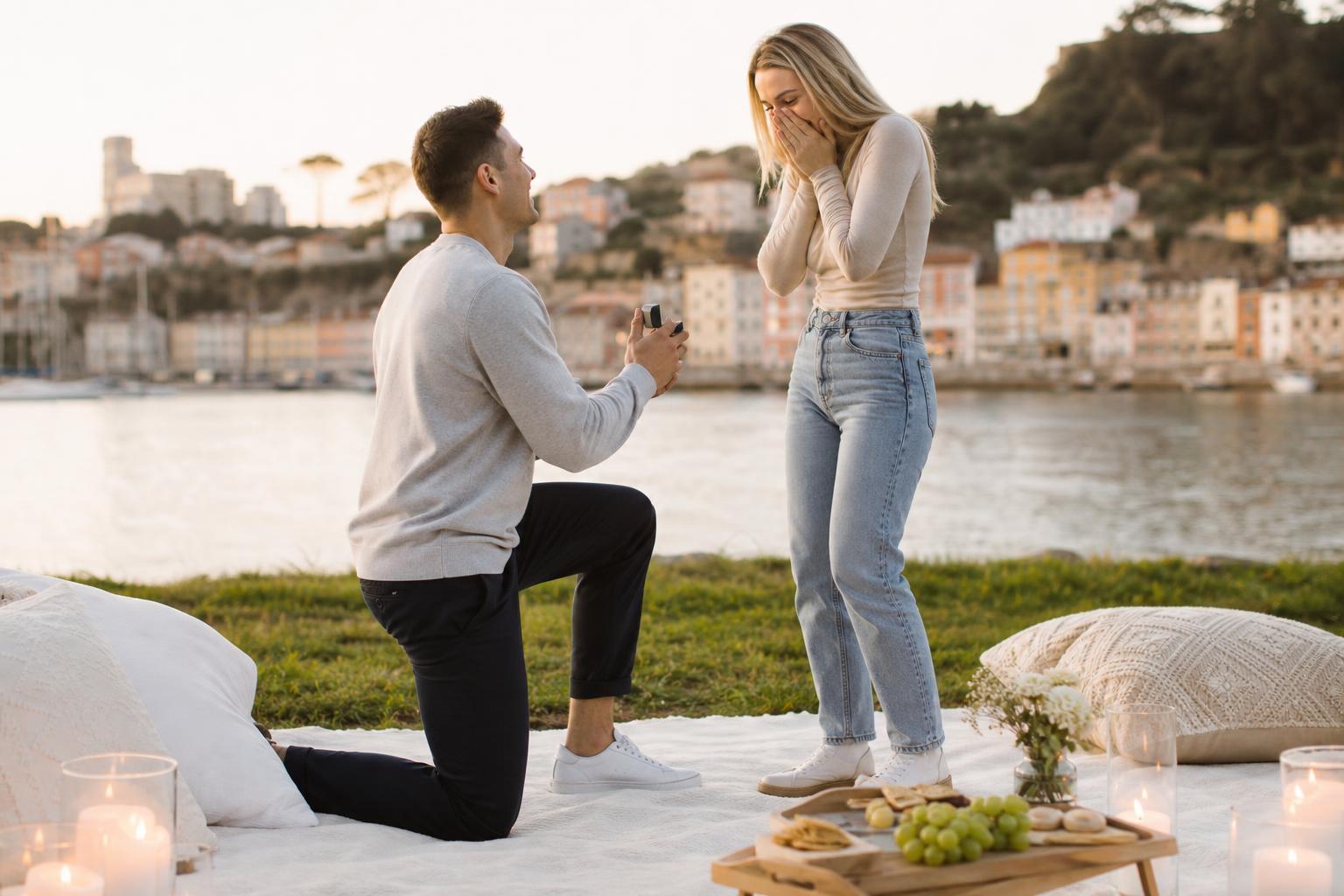
Park proposal ideas and beach proposal ideas create a softer form of public romance. Locations such as Central Park, Golden Gate Park, Santa Monica Beach, or other local landmarks give the proposal visual scale without forcing formality. Nature can do much of the design work for you, which is why outdoor proposals often feel both romantic and relatively relaxed.
Outdoor proposals also pair naturally with photographers and videographers because the setting already offers light, movement, and context. That said, they come with practical considerations. Public visibility, timing, and local venue rules matter. If you want signs, decor, or a photo setup in a park, permit-related questions may affect the plan. Cute should still be considerate and realistic.
Message-led proposals with a playful voice
Some of the most memorable cute proposal ideas are built around words. A chalk message, a sign reveal, a string of love notes, a scavenger hunt, or a custom wine label gives the proposal a script and a sense of personality. These ideas often work because they turn communication into design. The partner does not just hear the question; they experience the buildup.
This style works best when the language feels authentic to the couple. If you naturally share jokes, favorite TV or film references, or small written rituals, then a message-led proposal can feel very natural. If not, it can feel performative. The sweet spot is always the intersection of charm and truth.
Individual cute proposal ideas by style and setting
Rather than treating all proposals as one category, it helps to match the idea to the atmosphere you want. These concepts span at-home, outdoor, romantic, playful, affordable, and classic directions, while still staying within the overall feeling of cute.
- Recreate your first date at home or at the original location, then propose at the point that mattered most.
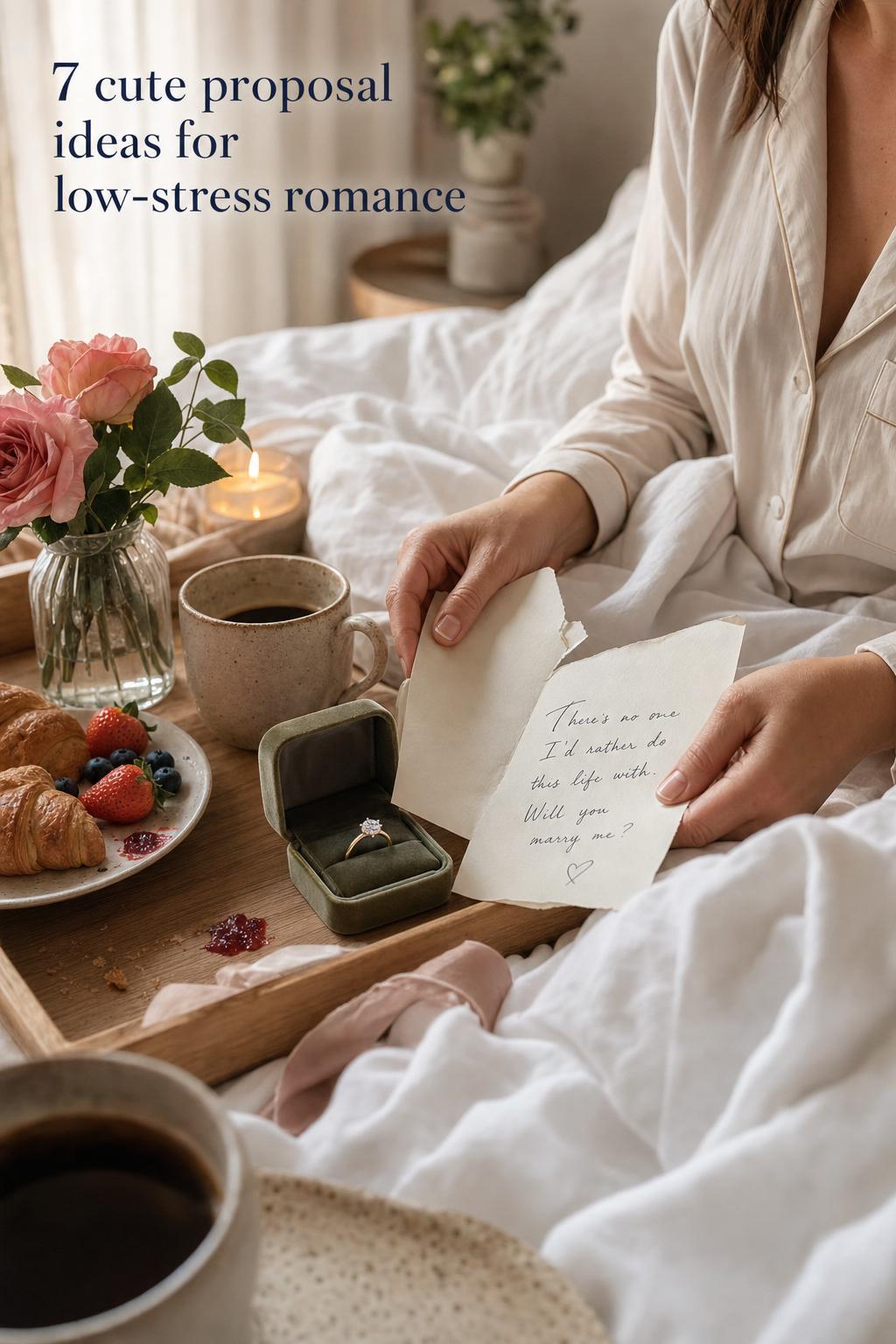
- Set up breakfast in bed with the ring reveal at the end of the tray or tucked beside a handwritten note.
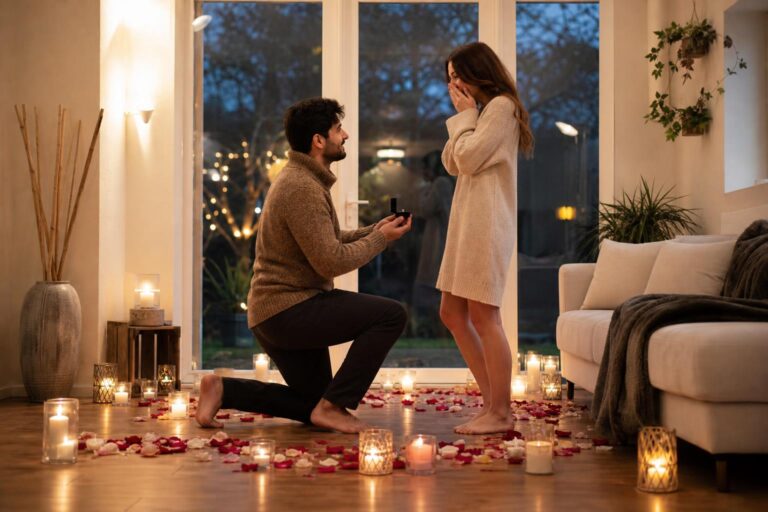
- Create a candlelit path through your home leading to a simple proposal in the living room.
- Use paper rings as a playful lead-up before presenting the real engagement ring.
- Plan a dessert-based reveal, especially if sweets are part of your relationship rituals.
- Design a custom wine label for a bottle you open together during a quiet night in.
- Write a series of love notes for a mini scavenger hunt around the home.
- Stage a wake-up proposal for a gentle, private surprise first thing in the morning.
- Bring your pet into the moment with a safe, simple prop or note.
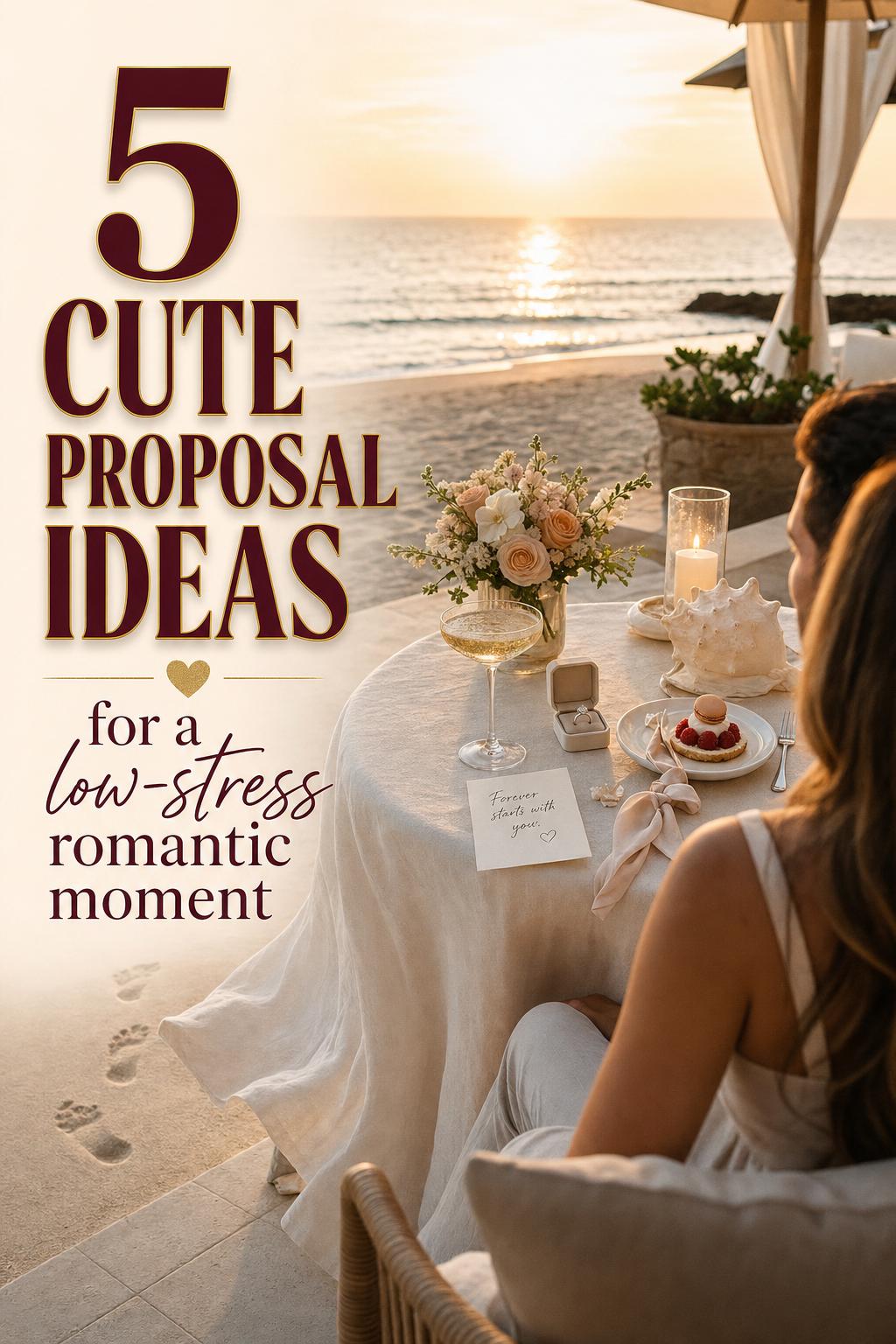
- Propose during a beach walk at sunset for a visual style that feels classic but still soft.
- Choose a local park and keep the setup minimal, letting the landscape and timing do the work.
- Use a chalk sidewalk message in a place that means something to both of you.
- Create a sign-based reveal with a local artist or printing shop if you want a more visual moment.
- Plan a rooftop proposal for a playful but elevated city atmosphere.
- Use fireworks or a holiday setting only if your partner enjoys a more outwardly celebratory moment.
- Build the proposal around a storybook ending or romance-inspired narrative if that reflects your relationship.
- Use a Disney or park-inspired reference when shared character memories genuinely matter to both of you.
- Include close friends or family after the yes, rather than before, if you want cuteness without pressure.
- Book a photographer quietly for an at-home or park session so the moment is documented without becoming too public.
- Pair the proposal with a small keepsake, such as a printed note, custom label, or photo plan for afterward.
Where these styles differ most
Setting and venue behavior
Intimate cute proposals work best in spaces that already hold emotional weight: your home, a familiar kitchen, a bedroom, or a quiet room during travel. Playful cute proposals need a setting that can support a visual concept. A park, beach, rooftop, or first-date location gives props and messaging room to make sense. If the venue fights the style, the proposal can feel visually confusing. A heavily designed sign setup in a cramped apartment can feel forced, while a very sparse proposal in a dramatic destination location may miss the opportunity the setting offers.
Decor density and styling philosophy
Intimate proposals benefit from restraint. One floral touch, one favorite dessert, one tray, one path of candles, one handwritten letter. The styling feels expensive when it is cohesive. Playful proposals can carry more layers, but those layers need a clear organizing idea. If you combine signs, themed references, sweets, flowers, and photos without a central story, the proposal starts to look busy rather than cute.
Photography mood
Private home proposals photograph with closeness and emotional immediacy. The mood is quiet, often timeless, and centered on expression. Outdoor and message-driven proposals photograph with more scene-setting detail. A photographer or service like Flytographer becomes more significant because the frame has more visual elements to organize: signage, skyline, beach horizon, park pathways, ring reveal, and reaction shots.
Formality and guest experience
Intimate cute proposals are usually less formal and easier to keep emotionally protected. Playful proposals may feel more like a mini event, especially if friends, family, or a videographer are involved. Neither is automatically better. But one asks your partner to stay in a private emotional space, while the other asks them to share the moment more visibly.
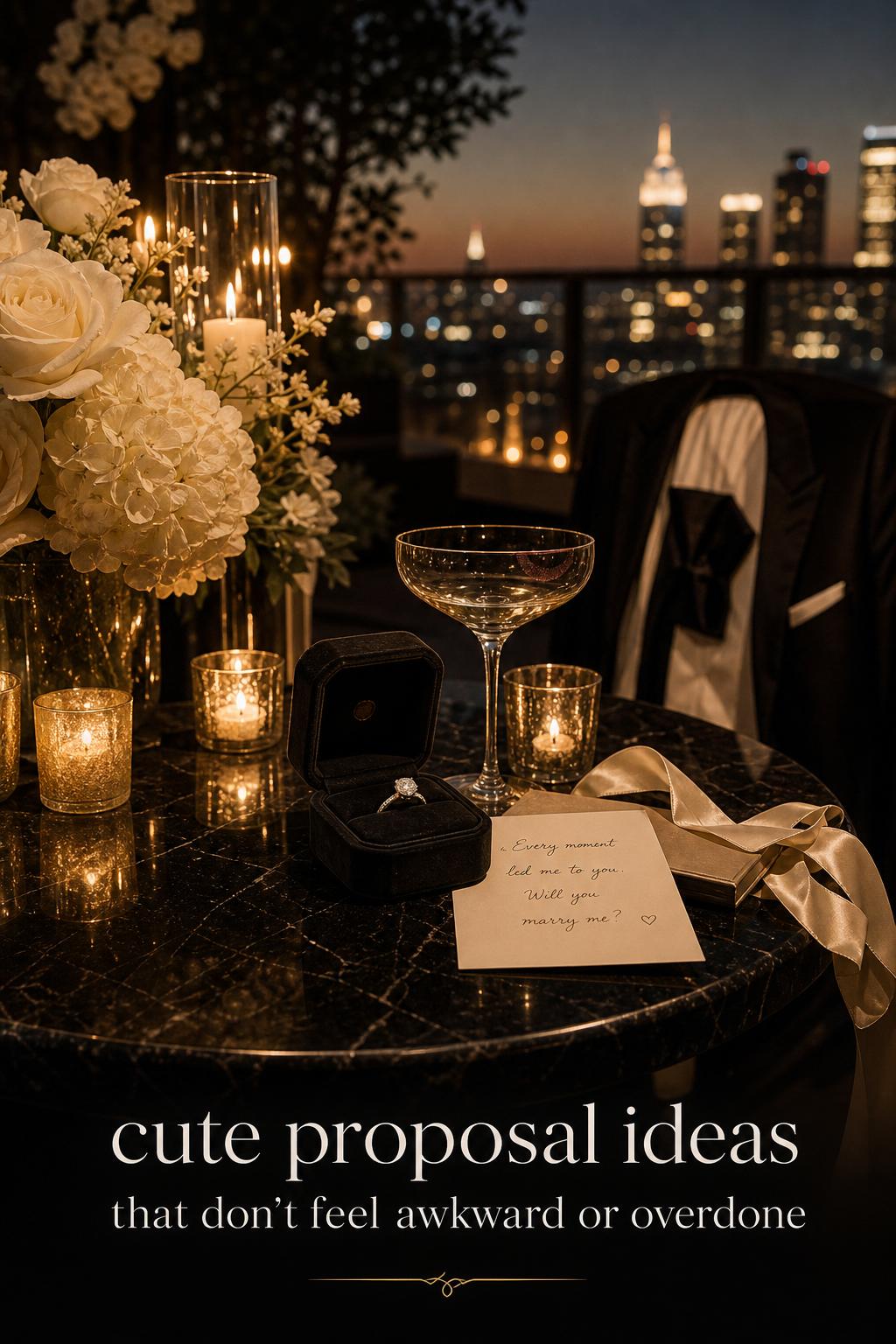
Wedding style logic applied to proposal planning
The most successful proposal ideas work like good wedding styling: they align mood, setting, and practical execution. Once those three pieces support each other, even a simple idea can feel polished and memorable.
Which style is easier on a smaller budget?
Intimate cute generally wins here. At-home proposal ideas, simple dessert reveals, notes, breakfast in bed, and low-key park moments tend to cost less because they rely more on emotional specificity than rented atmosphere. Affordable proposal ideas are often strongest when they stay personal instead of trying to mimic a luxury setup on a smaller budget.
Which style works best outdoors?
Playful cute often shines outdoors because beaches, parks, and landmarks naturally support visual storytelling. A public proposal does require more awareness of privacy, comfort, and logistics, though. Wind, crowds, and timing can change the experience quickly. Outdoors is beautiful, but it asks for more flexibility than home.
Which style is more forgiving visually?
Private proposals are usually more forgiving because the frame is tighter and the emotional content carries more of the impact. Once you move into signs, large props, or scenic public settings, every element becomes more visible. That does not mean avoiding creative ideas; it simply means choosing fewer, stronger details.
What ages better in photos?
Classic and intimate proposals often feel especially timeless because they rely on expressions, location meaning, and a clean ring reveal. Trend-led props or highly specific references can still be wonderful, but they date the moment more clearly. For some couples, that is part of the charm. For others, a more classic visual approach supported by a small playful twist may be the better balance.
The three-step planning framework for a cute proposal
Whether the proposal is private, public, classic, or quirky, a simple planning framework helps keep it emotionally clear.
- Story and setting: Start with the relationship milestone, mood, or place that matters. This could be your first date, a favorite park, your kitchen ritual, a beach trip, or a holiday tradition like Valentine’s Day.
- Moment capture: Decide whether you want a photographer, videographer, or no visible documentation at all. If photos matter, the setting and timing should support that choice.
- After-moment plan: Think about what happens right after the yes. A private dinner at home, family waiting nearby, a beach walk, dessert, or an at-home celebration can complete the experience beautifully.
This framework matters because many proposals focus only on the question itself. In reality, the feeling before and after the question shapes the memory just as much. A proposal can be visually lovely and still feel abrupt if there is no transition into it or no soft landing after it.
Visual style breakdown by proposal element
Ring presentation
Classic cute proposals keep the ring presentation simple and emotionally direct. A Blue Nile-inspired ring-focused moment works well when the reveal itself is meant to feel iconic. More playful versions might use paper rings, a pet collar, a dessert reveal, or a custom-labeled bottle as the lead-in. The practical difference is clarity. If you build too many steps around the ring, the emotional peak can get delayed. A playful setup still needs a clean moment of seriousness.
Florals and decor
Florals in an intimate proposal should support the room rather than overtake it. Florals in a park or beach proposal should support the landscape rather than compete with it. What often makes a cute proposal feel expensive is not abundance but visual agreement. A local florist, a few candles, and one clear palette will usually feel better than many mismatched decorative pieces.
Signs, notes, and stationery behavior
Signs and message-based details act almost like stationery for the proposal itself. They set tone quickly. A handwritten note feels intimate. A polished sign feels event-like. A chalk message feels playful and temporary. A custom wine label feels like a keepsake. Choosing among them is less about trend and more about the kind of voice you want the proposal to have.
Food and dessert cues
Desserts, cookies, breakfast foods, and shared meals appear often in cute and affordable proposal ideas because they connect naturally to ritual. They make the moment feel familiar and affectionate. They also work well for couples who do not want a highly staged setup. The strongest versions are simple and allergy-aware, with the food acting as a soft cue rather than a complicated gimmick.
Example comparison: ceremony-like intimacy vs event-like reveal
An intimate cute proposal behaves almost like a private vow. The environment is secondary, the pace is quiet, and the emotion arrives with very little distraction. You can imagine the room soft with candlelight, a handwritten note on the bed, breakfast nearby, and the proposal happening in a pause that feels entirely your own.
A playful cute proposal behaves more like a miniature celebration. There may be an entrance into the moment, a surprise element, a sign, a park scene, or a first-date recreation with hidden photography. It still ends in intimacy, but it gets there through delight and structure. One style asks for emotional stillness; the other creates joy through movement.
Example comparison: bridal-fashion energy and overall styling mood
Even though proposals are not weddings, they still have style behavior. Intimate proposals pair well with relaxed, everyday elegance because the mood depends on authenticity. A partner in comfortable morning clothes during a wake-up proposal or a soft date-night look at home can actually make the photos feel more emotionally honest.
Playful proposals often benefit from slightly more visual readiness, especially in public locations or during a planned photo moment. A beach walk, rooftop dinner, or park outing with a photographer hidden nearby naturally carries a more polished appearance. This is not about formality. It is about whether the proposal setting is asking to be documented as a styled scene.
Example comparison: destination and landmark versions
A destination-style cute proposal can be either intimate or playful, but the setting changes the balance. On a beach or during travel, the environment already feels elevated. That means the proposal often needs less decor than couples expect. A quiet walk and ring reveal may feel complete because the scenery is already doing the visual work.
Landmark and city proposals, by contrast, often work best when paired with planning support. A local photographer, a nearby florist, or a concise sign setup can help the moment feel intentional rather than improvised. If you are considering a museum, rooftop, city park, or special venue, practical access and permit considerations can affect whether the proposal feels smooth or stressful.
Example comparison: intimate wedding energy vs public celebration energy
Couples who know they are drawn to intimate weddings often prefer intimate proposals too. They usually care more about privacy, emotional clarity, and a setting that feels personally grounded. Their version of cute is more likely to be breakfast in bed, a quiet home reveal, or a meaningful place with very few onlookers.
Couples who love guest experience, visual storytelling, and celebratory atmosphere may gravitate toward a proposal that already feels like the beginning of the party. Their version of cute might involve a sign, a pet, family nearby, a custom bottle, or a beautifully timed public location with photography built in. The important thing is consistency between personality and execution.
What often goes wrong with cute proposals
- Trying to make a private partner comfortable in a public setup because the visuals seem more exciting.
- Adding too many unrelated elements, such as signs, desserts, florals, and themes, without one clear story.
- Choosing a venue that looks beautiful online but does not support privacy, timing, or practical access.
- Focusing so heavily on the surprise that the after-moment feels forgotten or rushed.
- Letting the prop become more important than the proposal itself.
- Planning outdoor decor without considering wind, crowds, or potential venue constraints.
- Using a themed message or pop-culture reference that does not actually reflect the relationship.
The strongest proposals are rarely the busiest ones. They are the ones where every detail points in the same emotional direction.
What makes a cute proposal feel expensive, even on a budget
Budget-friendly proposal ideas can still feel polished when the styling is disciplined. A clean setup, a good location, intentional timing, and one or two personal details often create a more refined result than a large collection of inexpensive decorative pieces.
- Use one visual focal point, such as the ring reveal, breakfast tray, sign, or candlelit path.
- Let the location contribute naturally, whether that is a beach, a park, or your own home.
- Choose keepsakes with meaning, such as a custom label or handwritten notes, instead of generic props.
- If using photography, schedule for soft, flattering light and keep the scene uncluttered.
- Match the proposal tone to the relationship rather than copying a more lavish setup.
This is where affordable proposal ideas and classic proposal ideas often overlap. Simplicity, when it is thoughtful, can feel more luxurious than effort that is visually scattered.
Style personality match: which cute proposal direction suits you best?
If your relationship is built around quiet rituals, home comfort, and meaningful small moments, intimate cute will probably feel truer. If your relationship is playful, expressive, or full of shared references, a more message-led or public-facing proposal may feel more natural. Neither style requires a big budget. Both require self-awareness.
A useful test is to ask what memory you want your partner to replay later. Do you want them to remember the softness of the room and the feeling of being known? Or the delight of realizing a whole scene had been created just for them? That answer usually reveals the right proposal style faster than any trend list can.
When to choose each style
Choose intimate cute when
- Your partner values privacy and emotional calm.
- You want an at-home proposal idea or a simple local setting.
- Your budget is limited and you want impact without visual pressure.
- You prefer timeless photos over heavily themed images.
- The relationship is defined by rituals, comfort, and sincerity.
Choose playful cute when
- Your partner enjoys surprise, visible affection, or shareable moments.
- You love signs, clues, keepsakes, or themed storytelling.
- You want a park, beach, rooftop, or landmark setting.
- You plan to involve a photographer, videographer, pet, friends, or family.
- Your relationship naturally includes humor, pop-culture references, or creative gestures.
Classic proposal ideas can sit inside either category. A ring-forward moment on a beach can be playful or intimate depending on the setup. A first-date recreation can be quiet or event-like. The style is not just the idea itself. It is how the idea is interpreted.
Can you combine these styles?
Yes, and in many cases the most balanced proposals do exactly that. A couple might have a very private proposal at home or in a park, followed by a playful after-moment with photos, dessert, friends, or a custom keepsake. This often works better than trying to force both moods into the same exact second.
The key is to keep one style dominant. If the proposal itself is intimate, let the reveal stay emotionally clean and save the extra elements for afterward. If the proposal is playful and scenic, make sure there is still a clear, grounded moment where everything quiets down and the question lands sincerely. Cohesion matters more than quantity.
Planning tips that make cute proposals feel thoughtful, not generic
Tip: build around one relationship milestone
The strongest cute proposals usually anchor themselves to one shared memory: the first date, a favorite breakfast ritual, a beloved park, a dessert habit, a holiday tradition, or a specific kind of note-writing. One memory creates emotional focus. Too many memories can blur the message.
Tip: decide early whether photos are central or secondary
If photography is central, the setting, timing, and visual design should support it. Outdoor proposals, rooftops, and sign-based ideas especially benefit from this clarity. If photos are secondary, an at-home or low-key proposal can feel freer and more emotionally natural.
Tip: think carefully about public visibility
Public does not always mean high-pressure, but it can. A beach or park can be soft and romantic, while a crowded landmark can feel intense. Comfort, privacy, and consent-related sensitivity matter. A proposal should feel loving, not cornering.
Tip: plan the after-moment with as much care as the proposal itself
Whether that means dessert at home, a bottle with a custom label, a quiet dinner, or loved ones waiting nearby, the proposal memory often settles during the hour afterward. A thoughtful transition helps the whole experience feel complete.
Three real-life style scenarios
A quiet apartment proposal with breakfast and notes
Imagine a couple whose relationship is built on slow mornings and small routines. One partner prepares breakfast in bed, leaves a few handwritten notes from the kitchen to the bedroom, and proposes in the soft privacy of home. The style here is intimate cute. It is affordable, highly personal, easy to personalize, and likely to age beautifully in photos if a photographer is quietly included.
A park proposal with a sign and hidden photographer
Another couple loves weekend walks and city scenery. A local park becomes the setting, a sign is placed where the path opens up, and a photographer captures the reaction from a distance. This is playful cute with a classic backbone. The sign gives the moment personality, but the park keeps it romantic rather than overly staged.
A first-date recreation with a keepsake twist
A third couple returns to the restaurant, beach, or neighborhood corner where they first met, then ends the evening with a custom wine label or another small keepsake tied to the memory. This style sits beautifully between intimate and playful. It tells a story, but the story is rooted in something real rather than invented only for the proposal.
Vendors and tools that support the right atmosphere
Some proposals need very little outside help. Others benefit from a few trusted partners. The Knot and Zola often frame proposals within a wider planning ecosystem for good reason: once you move beyond a spontaneous home moment, support can improve both the visual result and the emotional ease of the day.
- Photographers or services like Flytographer for discreet proposal coverage.
- Local florists for a restrained but polished decor layer.
- Local printing shops or artists for signs, postcards, or chalk-style message planning.
- Ring retailers such as Blue Nile for couples who want the ring reveal to be a central visual moment.
- Venue or park contacts when access, timing, or setup questions may affect the plan.
The point is not to make the proposal feel commercial. It is to use help where help meaningfully protects the experience.
FAQ
What are the best cute proposal ideas at home?
The strongest at-home ideas are usually simple and personal, such as breakfast in bed, a candlelit path, a dessert reveal, a wake-up proposal, or a trail of handwritten notes. Home proposals work best when they build on routines and shared rituals rather than trying to imitate a large event.
How can I make a proposal feel cute without spending a lot?
Focus on one meaningful idea and execute it cleanly. Affordable proposal ideas often feel most special when they use a familiar setting, a personal note, a favorite food, or a memory like your first date instead of a large amount of decor. Restraint usually looks better than overfilling the moment with props.
Are public proposals a good idea?
Public proposals can be romantic and playful, especially in parks, beaches, or scenic local venues, but they should match your partner’s comfort level. The best public proposals still protect emotional ease by choosing the right level of visibility, avoiding unnecessary pressure, and planning for privacy where possible.
Should I hire a photographer for a cute proposal?
If photos matter deeply to you, hiring a photographer can be worthwhile, particularly for outdoor, sign-based, or destination-style proposals where the setting is part of the story. For highly private at-home proposals, it depends on whether documentation adds to the intimacy or distracts from it.
What makes a proposal feel romantic instead of overly staged?
A proposal feels romantic when the details support the relationship rather than compete with it. One clear idea, a meaningful setting, and a sincere ring moment usually create stronger emotion than a complicated setup with too many unrelated decorative elements.
Can pets be part of cute proposal ideas?
Yes, pets can add warmth and personality, especially in at-home or outdoor proposals, but their role should stay simple and safe. A small note or light prop often works better than anything elaborate, since the proposal should still feel calm and manageable in the moment.
How do I choose between a simple proposal and a more creative one?
Start with your partner’s personality and the way your relationship naturally expresses affection. If your connection is grounded in quiet rituals and privacy, simple proposal ideas may feel more authentic. If you share humor, themed references, or love planned experiences, a more creative proposal can feel just as sincere.
What should happen right after the proposal?
The hour after the proposal matters more than many people expect. A thoughtful after-plan, such as a quiet meal, dessert, photos, a beach walk, or loved ones joining later, helps the moment settle emotionally and makes the whole experience feel complete rather than abrupt.
Do I need a sign or custom prop for a cute proposal?
No, a sign or prop is optional. They work best for couples who enjoy a playful, visual style or want a keepsake from the moment. If your relationship is more private or understated, handwritten notes, a favorite location, or a simple ring reveal may feel far more natural.