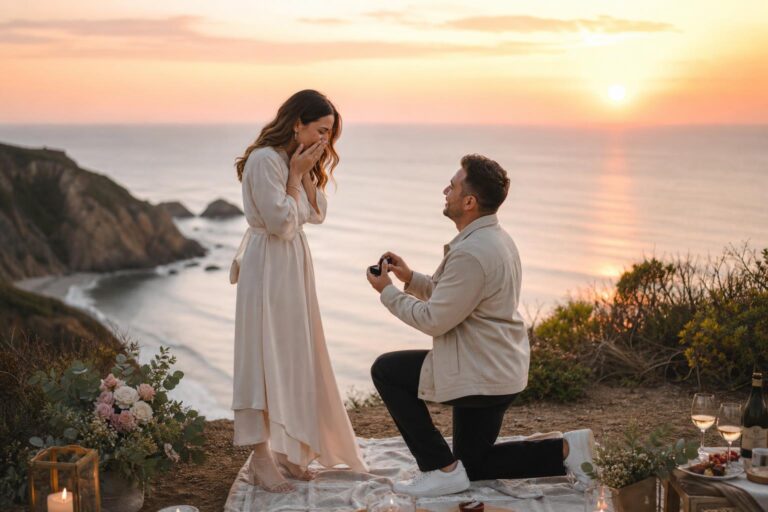
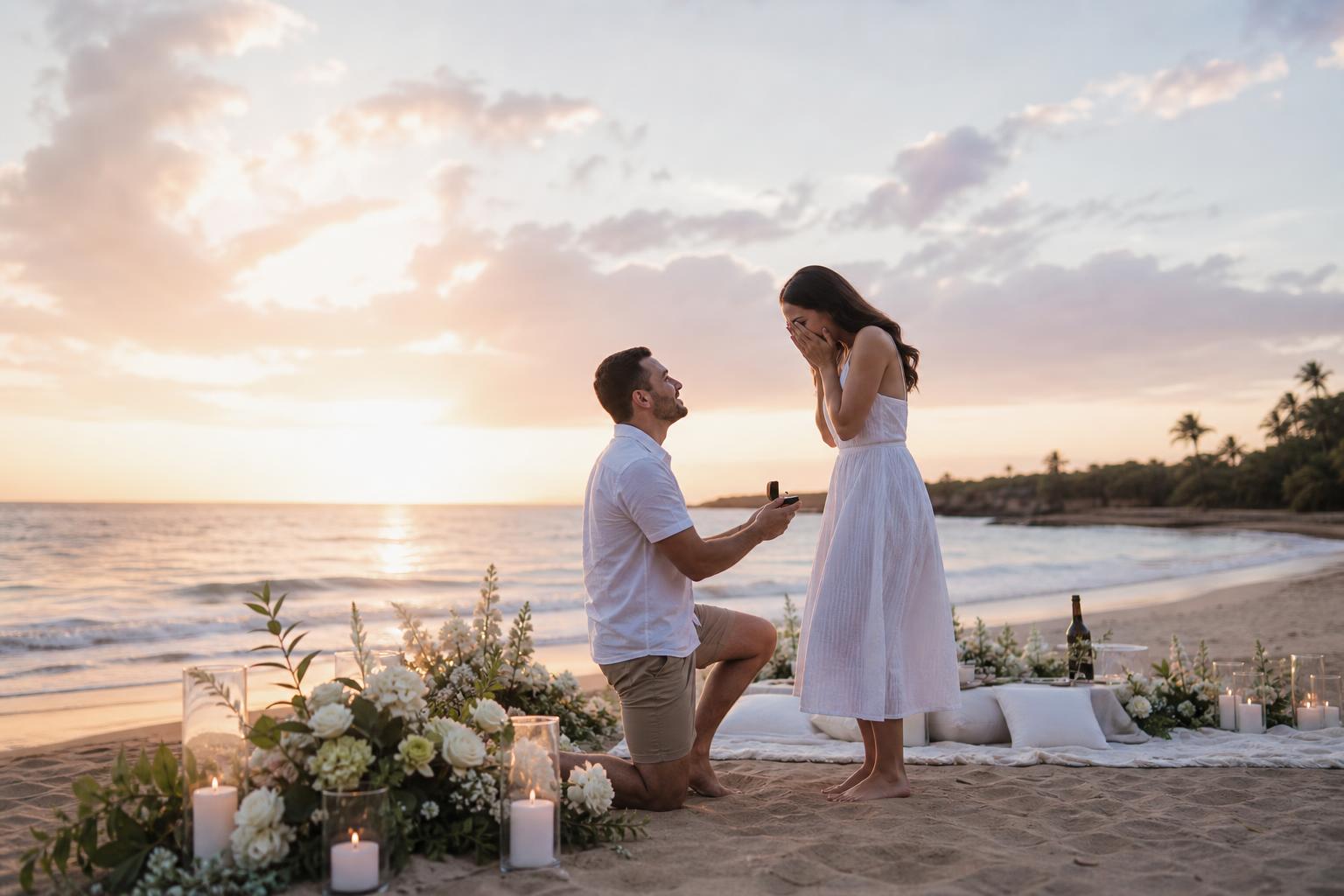
Beach Proposal Ideas for a Chic, Coastal-Luxury Moment
The shoreline has a way of slowing everything down. Waves soften the noise, the horizon widens the moment, and even a simple walk in bare feet can feel deeply memorable. That is why beach proposal ideas continue to resonate with couples who want romance with atmosphere, but also a setting that feels personal rather than overly staged. A beach proposal can be quiet and intimate, grand and styled, or somewhere in between. The key is not only choosing a beautiful view, but planning the timing, photography, decor, privacy level, and logistics so the moment feels effortless when it matters most.
Whether you are imagining a sunset setup on Miami Beach, a private dinner near the water, a message in a bottle inspired by BeachBride, or a destination scene reminiscent of Seven Mile Beach in Jamaica or Grace Bay Beach in Turks and Caicos, the strongest proposals balance beauty with practical decision-making. This guide brings those pieces together so you can choose an idea that fits your relationship, budget, style, and the realities of an outdoor oceanfront setting.
What makes a beach proposal work so well
A beach proposal succeeds because the setting already carries emotional weight. The sound of waves, open sky, and shifting light do a lot of the visual work for you, which means even a restrained setup can feel meaningful. Publications such as Vogue, The Knot, and Zola consistently treat the beach as more than a backdrop. They frame it as part of the experience itself: a place where timing, styling, and photography all connect.
That said, a beach is not automatically easy. Wind can affect candles, dresses, hair, and sound. Sand can complicate furniture and ring handling. Public access can reduce privacy. Tide timing can change the entire usable footprint of the setup. A strong plan accounts for these details early so the proposal stays romantic instead of stressful.
Turn wedding inspiration into a plan you can actually follow.
Zarellea brings your guest list, budget, vendors, and day-of details into one shared space — so no beautiful idea gets lost in the shuffle.
Private or public: the first decision to make
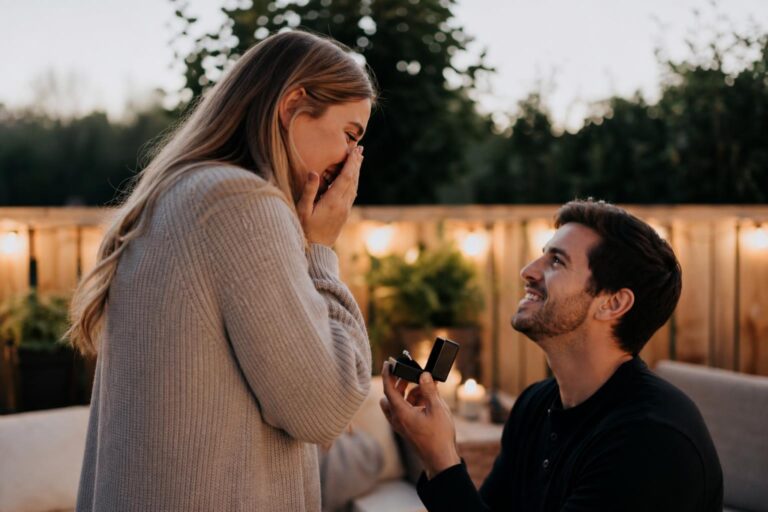
Before choosing any specific idea, decide how visible you want the moment to be. A private beach proposal usually works best for couples who value quiet emotion, want space for a real conversation, or feel uncomfortable with an audience. A public proposal can work well for outgoing couples who enjoy energy, surprise, and a lively setting, especially in well-known beach destinations.
Why it works: this decision shapes everything else, including decor scale, photographer placement, timing, and whether you need vendor coordination. A private dinner on the beach feels very different from a casual sunset stroll that leads to the question in front of nearby beachgoers.
- Best for: intimate couples, destination trips, and proposals where meaningful words matter as much as the surprise.
- How to make it work: choose a quieter stretch of shoreline, avoid peak hours, and coordinate arrival timing carefully.
- Budget tip: if full privatization is not realistic, aim for early sunrise or an off-peak weekday instead of paying for a large styled setup.
- Common mistake to avoid: assuming a scenic beach will also be empty. Beauty and privacy are not always the same.
- Real-life styling tip: if a photographer is hiding nearby, give them a clear landmark such as a lifeguard stand, dune path, or pier edge so they know exactly where the proposal will happen.
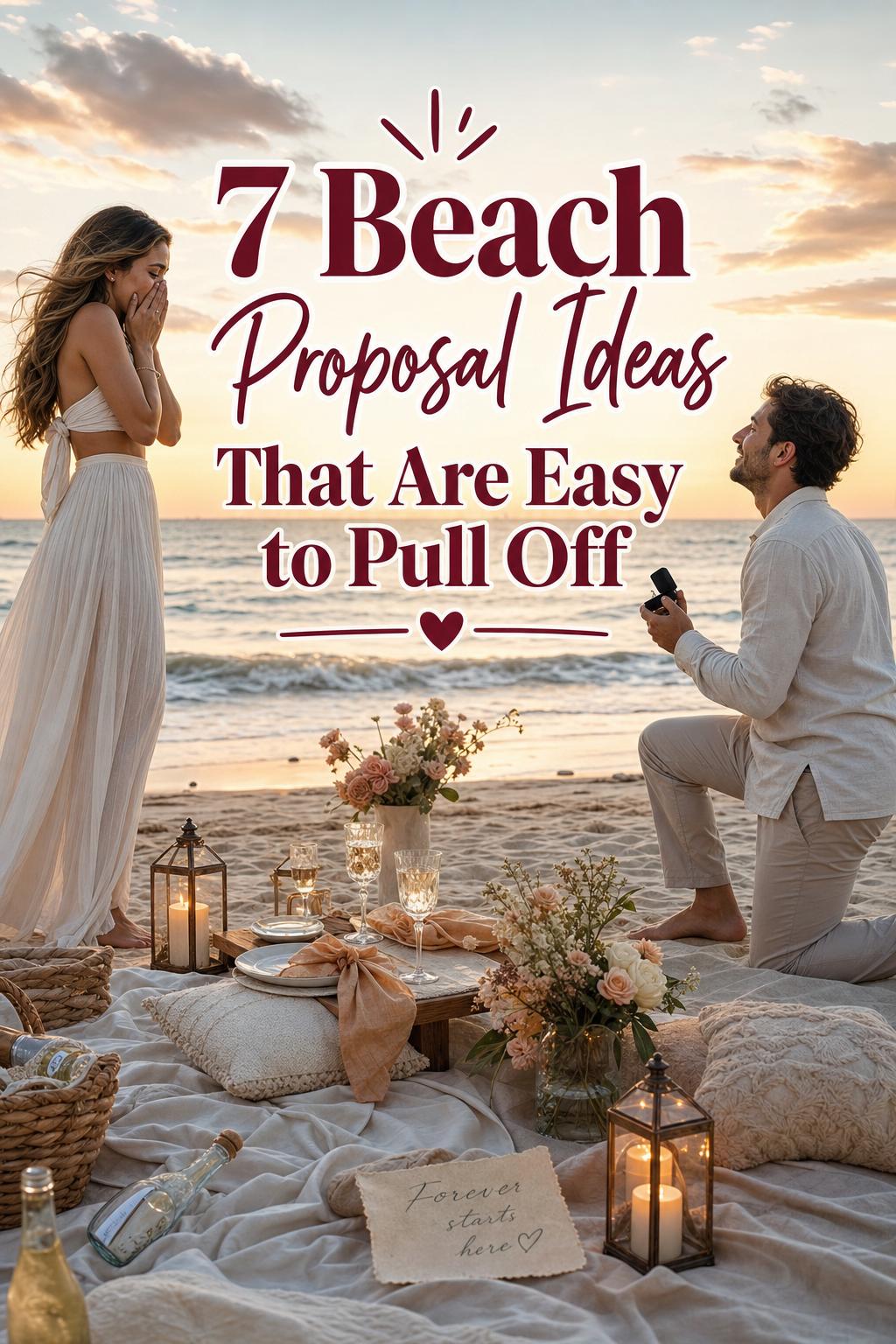
Timing is the element couples underestimate most
Many of the best beach proposal ideas are less about the prop or script and more about light. Sunset and sunrise appear repeatedly for good reason. Golden hour flatters skin tones, softens the horizon, and gives photographers the easiest conditions for emotional, natural-looking images. Vogue especially emphasizes timing as part of the aesthetic experience, not just a scheduling detail.
Sunset proposals
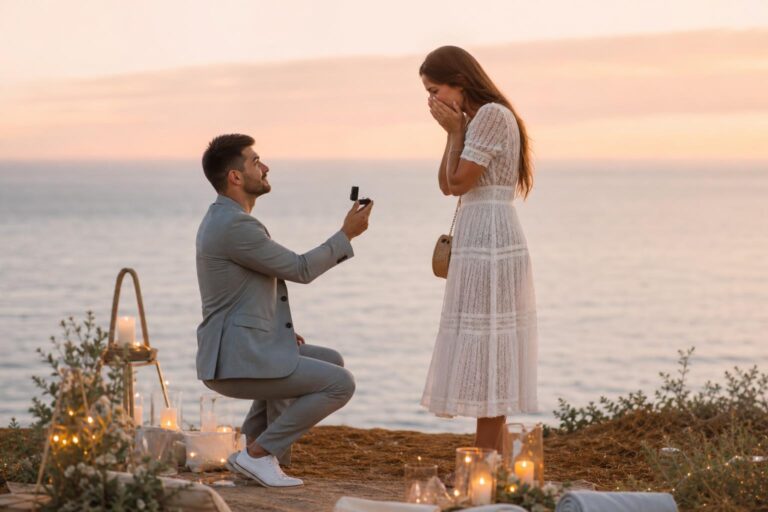
Sunset is ideal if you want warmth, drama, and a natural transition into celebration afterward. It works especially well when your plan includes dinner, champagne, or a styled seating area. The fading light can also make decor such as lanterns, florals, or a low private dinner setup feel more integrated with the environment.
Best for: couples who want photographs with color in the sky and an easy bridge into an evening celebration. Why it works: guests or vendors can prepare in daylight, and the proposal can flow directly into a meal, photos, or family reveal. Common mistake to avoid: starting too late. If the proposal begins after the best light has passed, your photos may feel rushed and your setting may darken before portraits are complete.
Sunrise proposals
Sunrise has a quieter mood and often solves the privacy problem. Beaches that are crowded at sunset can feel almost empty in the early morning. The light is gentle, the air may be calmer, and the atmosphere feels more private without requiring a large budget.
Best for: low-key couples, minimalist proposals, and anyone choosing a popular public beach. Budget tip: sunrise often reduces the need for elaborate styling because the setting itself does more of the work. Real-life styling tip: if you choose sunrise, have everything laid out the night before, including ring placement, route, outfit, and photo coordination, because early-hour confusion is one of the easiest ways to lose the calm mood.
Tides, wind, and weather contingency
Practical planning matters most on the beach because conditions can change fast. Tide charts help you avoid setting up too close to the waterline. Wind affects candles, signs, hair, and lightweight florals. Weather contingency planning is not pessimistic; it is part of making the proposal feel secure. Several top wedding-focused sources connect strong execution with backup planning, and that is especially true here.
- Best for: every beach proposal, especially styled setups with furniture or decor.
- How to make it work: review tide timing, choose weighted decor, and have a weather backup plan that still feels intentional.
- Budget tip: spend on practical stabilizing items or vendor support before spending on excess decor.
- Common mistake to avoid: treating the beach like a blank event space instead of an active outdoor environment.
- Real-life styling tip: if your setup includes a pathway, angle it away from direct wind so petals, letters, or fabric are less likely to shift before arrival.
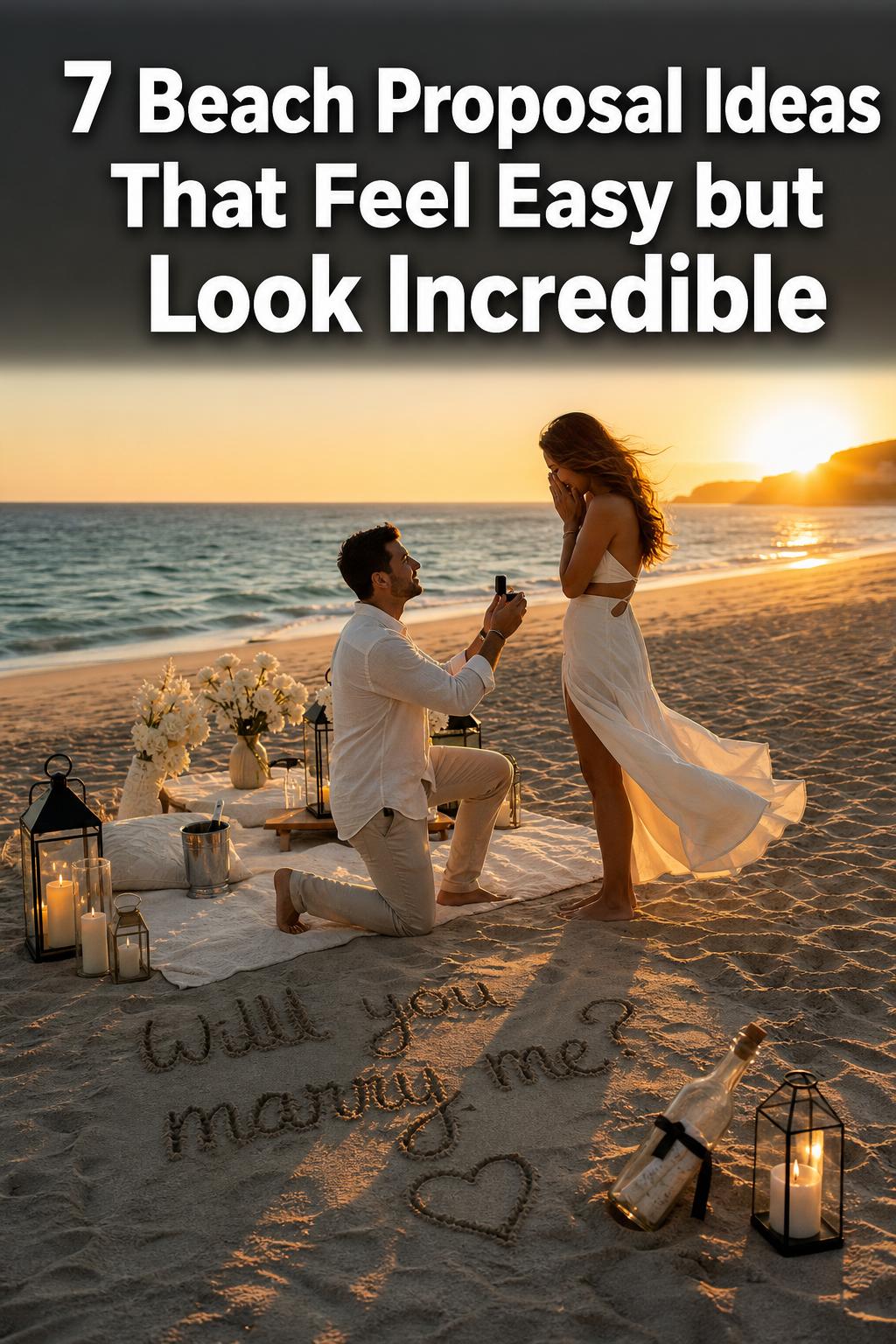
Beach proposal ideas that feel romantic and realistic
The strongest ideas are the ones that fit the couple and the setting at the same time. A concept may look beautiful online but feel awkward if it does not suit your comfort level, budget, or location. Below are beach proposal ideas that reflect the most common high-performing themes across wedding and proposal publications, while also helping you think through when each one makes sense in real life.
Written in the sand, with a smarter setup
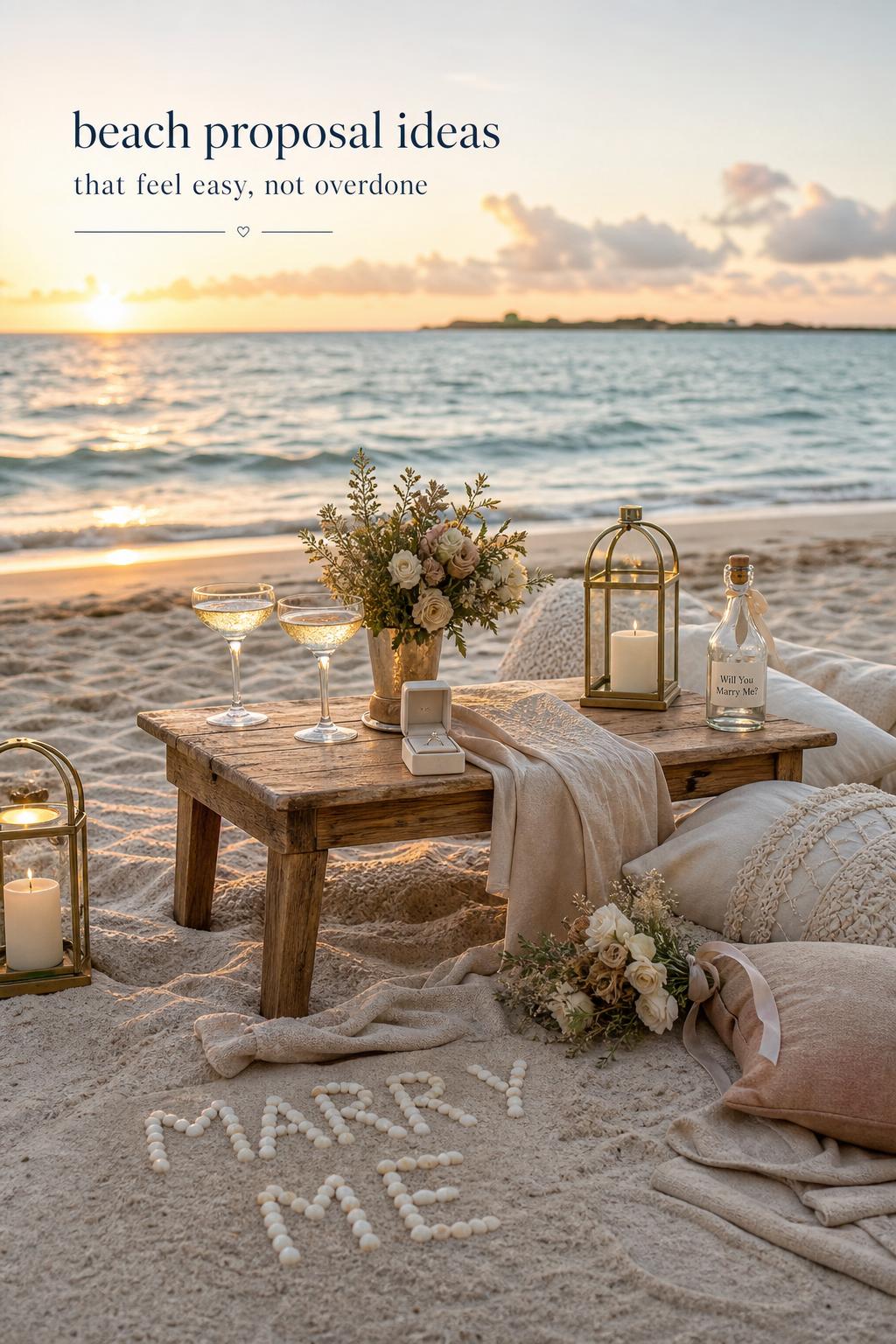
Written in the sand is one of the most recognizable beach proposal ideas, and Beaches highlights it as a classic for good reason. It is simple, direct, and instantly tied to the location. But the polished version usually works better than a casual attempt near the water. The wording should be placed above the tide line, drawn clearly, and positioned so the proposal happens with the message in view for photos.
Best for: couples who want an iconic beach moment without heavy decor. Why it works: it is location-specific, easy to understand, and can be photographed from multiple angles. Budget tip: keep the message short and invest instead in photography, because the image of the reveal matters more than making the lettering elaborate. Common mistake to avoid: placing the message where footprints, wind, or waves will distort it before you arrive.
Real-life styling tip: walk the route first so your partner does not accidentally approach from the wrong side and miss the full effect of the words in the sand.
Message in a bottle with a story-led reveal
A message in a bottle proposal, a concept explored by BeachBride, works best when the couple already enjoys sentimental details, travel memories, or a playful sense of storytelling. The bottle becomes more than a prop when it leads naturally into the proposal speech, perhaps through a note that references your relationship or a memory tied to the ocean.
Best for: romantic storytellers, destination trips, and couples who want a proposal idea that feels less expected than a standard walk-and-kneel moment. Why it works: it builds narrative tension and creates a clear photographable sequence. How to make it work: choose a bottle style that is visible in photos, use legible paper, and rehearse how the note will be found. Common mistake to avoid: making the note too long, which can feel performative or slow down the moment.
Budget tip: the bottle itself does not need to be expensive. The impact comes from the wording and the reveal. Real-life styling tip: if wind is strong, secure the paper with a ribbon or tie so it does not blow away during the read.
Sunset picnic proposal
A beach picnic proposal sits comfortably between casual and styled. It feels welcoming, gives you a reason to linger, and creates a natural next step after the question. This is one of the most practical choices for couples who want a proposal that looks thoughtful without becoming too formal.
- Best for: couples who want a relaxed atmosphere, mid-range budgets, and a blend of candid and posed photography.
- Why it works: it creates structure, helps the moment feel intentional, and photographs well from wide and close angles.
- How to make it work: use low-profile pieces that handle wind well, keep the color palette cohesive, and choose food that can tolerate outdoor conditions.
- Budget tip: focus on one visual anchor such as a blanket and cushions or a floral cluster, rather than many small details.
- Common mistake to avoid: overpacking the setup with fragile items that look good in concept but become impractical on sand.
- Real-life styling tip: use textures that read well in photos, such as woven layers, structured linens, or a few grounded lanterns, instead of relying on lightweight loose fabric.
Private dinner on the beach
Private dinner proposals appear often because they create a full experience rather than a single moment. This idea works especially well for destination settings, resort stays, and couples who want privacy with a more elevated atmosphere. Beaches, The Knot, and service-based planners all point toward this style as a high-impact option.
Best for: milestone trips, luxury-leaning couples, and proposals where the celebration matters as much as the surprise. Why it works: the proposal flows directly into a meal and gives both people time to absorb the emotion. How to make it work: think through seating, food timing, wind direction, and whether you want the question asked before or after being seated. Common mistake to avoid: placing the setup too close to the shoreline, where sound, spray, or rising tides can disrupt dinner.
Budget tip: if a full catered dinner is out of reach, a styled dessert-and-champagne table can create a similar emotional effect. Real-life styling tip: ask for lower decor rather than tall pieces so the ocean remains visible from seated height and the couple can still talk comfortably across the table.
Sand art or sculpted proposal details
For couples who want something more original than a written message, sand art offers a stronger visual statement. This can include shaped designs, framed areas in the sand, or more artistic lettering. Sources like Its Lit PCB suggest moving beyond the standard phrase to a setup with more creativity and visual intention.
Best for: creative couples, styled photo sessions, and proposals with vendor support. Why it works: it looks thoughtful, feels custom, and gives photographers stronger composition lines. Common mistake to avoid: choosing a complicated design without enough setup time or protection from foot traffic. Budget tip: if custom sand work is not possible, simplify the concept and let florals or lanterns define the space instead.
Resort or package-based proposal setup
For travelers or couples planning in an unfamiliar location, proposal packages can reduce stress. Brand and service pages centered on Miami beach proposals, Proposal Day Packages, TMM Event, and destination-minded planning all point to one practical truth: a local vendor ecosystem can solve a great deal of uncertainty.
Best for: destination proposals, busy schedules, and couples who want vendor coordination handled professionally. Why it works: packages often bundle decor, photography, timing advice, and setup logistics. How to make it work: ask exactly what is included, what happens in bad weather, and whether local beach rules affect setup scale. Common mistake to avoid: assuming all packages offer privacy, photography, and permitting help by default.
Budget tip: compare package tiers by services, not just visuals. A simpler design with good coordination can be more valuable than elaborate decor without contingency support. Real-life styling tip: ask your planner or package provider for a phone video of the actual setup area in similar lighting, not just promotional photos.

Decor that supports the setting instead of competing with it
Beach proposal decor works best when it respects the landscape. The ocean already gives you movement, texture, and scale, so the job of decor is not to overwhelm the scene. It is to define the proposal space, guide attention, and support the emotional tone. The Knot, Zola, and several niche planners consistently connect strong decor with clear intention rather than sheer quantity.
Minimalist coastal styling
A minimalist approach relies on fewer pieces with cleaner placement: a defined blanket area, subtle florals, one sign or message point, and perhaps a small keepsake table. This works especially well on beaches with strong natural color, wide skies, or dramatic coastlines.
Best for: modern couples, smaller budgets, and beaches with naturally striking scenery. Why it works: it photographs cleanly and reduces the chance that the setup feels cluttered in wind. Common mistake to avoid: choosing decor that is too small to read on a broad shoreline. Real-life styling tip: on a large beach, scale matters more than quantity, so one slightly larger statement piece often reads better than many tiny accents.
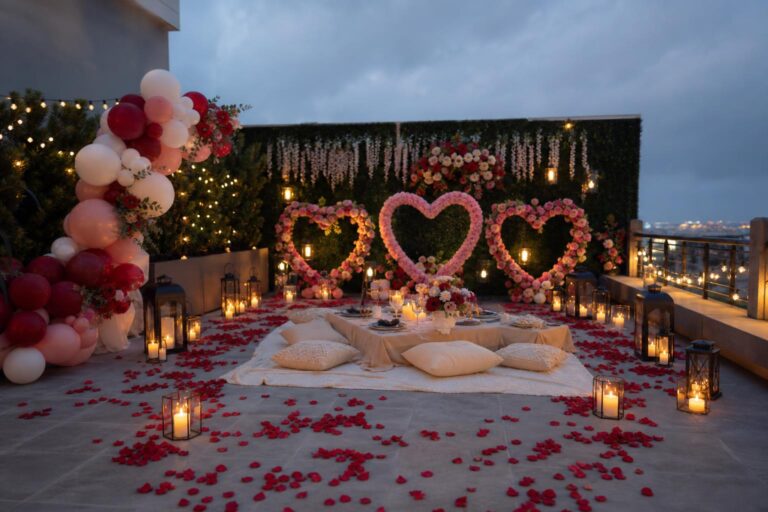
Luxe styling with florals, lanterns, and a private cabana feel
For a more elevated look, couples often lean into layered florals, lantern groupings, a styled aisle, or a cabana-like lounge zone. This suits destination resorts and curated package experiences, especially in places associated with luxury travel such as Miami Beach, Grace Bay Beach, or resort-focused Caribbean settings.
Best for: higher budgets, proposal photography with a strong editorial feel, and celebratory trips. Why it works: the setup transforms the beach into a clearly defined event space. How to make it work: keep the palette cohesive and prioritize weighted, outdoor-appropriate materials. Budget tip: create one focal zone for the proposal itself and keep the rest of the styling restrained. Common mistake to avoid: bringing in too many unrelated decor ideas, which can make the setup feel less romantic and more commercial.
Real-life styling tip: if your decor includes lanterns, place them in grouped clusters rather than evenly spaced rows so the arrangement looks more natural in photos and withstands shifting sand better.
Sustainable and low-waste choices
Eco-aware planning is still underused in this category, but it is a practical and thoughtful direction. Reusable decor, fewer disposable props, and simplified floral use can make a beach proposal feel more considered. This is especially important in public shoreline settings where cleanup, windblown materials, and environmental respect matter.
- Best for: couples who prefer understated styling and want less waste.
- Why it works: a cleaner setup is easier to manage outdoors and often looks more refined.
- How to make it work: prioritize reusable lanterns, durable signage, and decor that can be packed out easily.
- Budget tip: rent or reuse core items instead of buying single-use pieces.
- Common mistake to avoid: using lightweight decorative pieces that can scatter across the beach.
- Real-life styling tip: assign one person, even on a small proposal, to check the site after photos so nothing is left behind in the sand.
The words matter too: shaping the proposal story
Many people spend more time choosing the setup than the speech, yet the emotional core of the proposal is still the story you tell. Vogue references sample scripts and personal touches because a beach proposal is not only visual. It is also verbal and deeply relational. The strongest speeches are clear, grounded, and personal rather than overly long.
How to build a proposal speech that feels natural
A simple structure usually works best: begin with a memory or truth about your relationship, move into what this person means to you now, and end with the promise behind the question. This structure feels sincere and helps you stay focused if nerves take over. If you are using a story-driven theme such as a message in a bottle, let the script support the concept rather than repeating it too heavily.
Best for: every proposal style, especially private beach settings where your words will be fully heard. Why it works: a clear structure keeps the moment emotional without feeling rehearsed. Common mistake to avoid: trying to memorize too much. Real-life styling tip: keep a short written note in your pocket even if you do not plan to read it; many people feel more grounded simply knowing it is there.
Storyboards from arrival to the ring moment
Thinking in scenes can make the proposal smoother. Imagine the path from arrival, to first visual reveal, to the conversation, to the ring, to the immediate celebration after. This is especially useful if a photographer or videographer is involved, or if the setup includes multiple areas such as a path in the sand and a dinner table beyond it.
Best for: proposals with decor, photography, or vendor coordination. Why it works: it reduces confusion and makes the event feel seamless. Budget tip: even on a simple proposal, write down the sequence so you do not spend money fixing avoidable planning mistakes. Common mistake to avoid: focusing only on the kneeling moment and forgetting what happens in the ten minutes before and after.
Photography, videography, and keepsakes that hold up over time
Photography appears across nearly every major source because the beach is highly visual but also technically demanding. Light changes quickly, wind can create movement in every frame, and the openness of the setting makes composition more important. Whether you work with a photographer through a package provider, a resort connection, or independently, the beach proposal needs a clear shot plan.
What to ask a photographer before booking
Ask how they prefer to hide in a public setting, whether they have experience with beach lighting, and what happens if weather shifts. This is one reason wedding-focused brands like Zola and Vogue emphasize photography early in the planning process. It is not just about taking pictures; it is about timing and concealment.
- How will you position yourself without being obvious?
- What time do you recommend for the cleanest light?
- How much time should we reserve for portraits afterward?
- What is the plan if wind or weather changes?
- Can you capture both candid reaction shots and a few composed portraits?
Real-life styling tip: send your photographer a photo of the exact outfits in advance so they can anticipate how fabric, color, and movement will read against sand and sky.
Videography, drone use, and memorable extras
Some couples want motion footage, spoken audio, or a drone perspective. These can be striking, especially on broad coastlines or with large styled setups. But they also introduce more logistics, more visibility, and potentially more regulatory considerations. If your concept depends on discretion, a highly visible video setup may undercut the surprise.
Best for: larger proposals, package-based setups, and couples who value replaying the moment. Why it works: video captures pacing and emotion that still images cannot. Common mistake to avoid: adding drone footage without checking whether it fits the privacy and setup conditions of your beach location. Budget tip: if you must choose, prioritize a photographer over multiple media add-ons unless video is especially important to you.
Keepsakes after the proposal
The best keepsakes extend the feeling of the proposal rather than duplicate clutter. Printed albums, framed images, or a saved note from a bottle concept can carry meaning long after the day itself. Jewelry-centered brands such as HS Foster Jewelry naturally connect the ring to the memory, but the visual record matters too.
Best for: couples who value tangible memories and want to revisit the day beyond social media images. Real-life styling tip: if you include a written note, ask the photographer to capture it separately in good light before it gets folded, handled, or windswept.
Budget, vendors, and the practical roadmap behind the romance
A beach proposal can be simple or highly produced, but the budget usually comes down to a few repeating categories: photography, decor, proposal packages or planning services, dining, and possible permits or location-related requirements. Niche service pages and wedding publications both suggest the same lesson: you do not need to spend heavily in every category. You need to spend intentionally in the categories that shape the experience most for your plan.
Where to invest first
If your setting is naturally scenic, your highest-value investment is often photography and timing. If your chosen beach is less visually dramatic or more crowded, decor and coordination may matter more. If you are planning from out of town, local vendor help may be worth more than additional props.
- Invest in photography when memories and images are a top priority.
- Invest in timing if you want the beach itself to do most of the visual work.
- Invest in coordination if you are planning in Miami, a resort area, or another destination setting.
- Invest in a private dinner setup if the post-proposal experience is central to your vision.
Common mistake to avoid: spending on many decorative details before confirming the location, privacy level, and light conditions. Real-life styling tip: build the budget around the emotional core of the proposal, then add visual extras only after the basics are secure.
Permits, regulations, and safety considerations
Permits and local rules are often overlooked in beach proposal planning, yet they become more important as the setup becomes more visible. Public beaches may have rules around event structures, amplified sound, commercial photography, drones, or vendor activity. Safety considerations matter as well, including changing weather, wind, and how close your setup sits to the tide line.
Best for careful planning: any proposal that includes furniture, multiple vendors, drone use, or a clearly staged installation. Why it works: checking local rules early protects the proposal from last-minute disruption. Common mistake to avoid: assuming a small event does not count as an event if it includes vendors or commercial photography. Budget tip: a simpler design can sometimes reduce administrative complexity as well as cost.
Location moodboards: choosing the beach identity that fits your relationship
Different beaches suggest different proposal styles. The location is not only a backdrop; it influences privacy, timing, decor, and even wardrobe. Some of the most visible examples across the landscape of beach proposal content lean into distinct destination identities rather than treating all coastlines the same.
Miami Beach: energetic, polished, and package-friendly
Miami Beach appears repeatedly in proposal-focused service content because it supports a wide range of experiences, from simple sunrise moments to luxury setups with professional coordination. Proposal Day Packages and TMM Event both reflect a local culture where styled proposals, vendor networks, and visually driven celebrations are part of the landscape.
Best for: couples who want a polished proposal, easy access to vendors, or a celebratory city-meets-coast feel. Why it works: local services can simplify setup, timing, photography, and post-proposal dining plans. Common mistake to avoid: underestimating how public and active Miami beaches can be, especially around prime sunset hours. Real-life styling tip: in a busier beach city, choose a concept with a clearly defined focal area so the proposal still feels intimate within a lively environment.
Seven Mile Beach in Jamaica: destination warmth with classic romance
Seven Mile Beach, highlighted by Beaches, suits couples who want a destination proposal with a relaxed but elevated tone. This kind of location pairs especially well with resort-supported planning, a sunset dinner, or a styled surprise that feels integrated into a larger vacation.
Best for: travel proposals and couples already celebrating a milestone trip. Why it works: the destination itself adds meaning and memory value. Budget tip: let the location carry the visual impact rather than trying to import too much decor. Common mistake to avoid: over-scheduling the day so the proposal feels rushed within the travel itinerary.
Grace Bay Beach in Turks and Caicos: quiet luxury and clean visuals
Grace Bay Beach offers a different mood: refined, open, and naturally elegant. It aligns well with minimalist styling, polished photography, and couples who prefer luxury that feels calm rather than dramatic.
Best for: refined couples, low-clutter aesthetics, and proposals where the environment is meant to feel serene. Why it works: clean lines and open water often pair beautifully with restrained decor. Real-life styling tip: on visually pristine beaches, simplify your palette and let the water and sky remain the strongest color story.
Florida Gulf Coast, California coastline, and broader U.S. inspiration
Beyond destination and Miami-focused examples, U.S. beach styles vary widely. A Florida beach proposal may lean warm, soft, and sunset-centered. A California coastline can feel more dramatic and editorial, with stronger landscape contrast. The practical point is that your idea should fit the beach type. A private dinner setup may feel natural on one coast and awkward on another if terrain, access, or wind conditions differ.
Best for: couples planning closer to home or comparing destination versus domestic options. Common mistake to avoid: copying an idea from one region without adapting it to local conditions. Budget tip: local planning can free up funds for photography or a better dining experience after the proposal.
What experienced planners pay attention to before proposal day
The difference between an idea that looks nice online and a proposal that feels smooth in person usually comes down to details handled quietly in advance. That includes route planning, privacy checks, footwear, outfit practicality, and what happens immediately after the question has been asked. These are not glamorous details, but they shape the emotional comfort of the moment.
A short planning lens for better decisions
- Choose an idea that fits your partner’s comfort with attention.
- Think about how the ring will be carried and accessed in sand.
- Decide whether the proposal should lead into dinner, photos, or family calls.
- Confirm whether attire suits walking on sand and wind exposure.
- Leave time in the schedule so the proposal does not feel wedged between activities.
Why it works: practical ease creates emotional space. Common mistake to avoid: spending all your energy on the reveal and none on the overall experience. Real-life styling tip: if one partner tends to dress casually for beach outings, create a believable reason for slightly elevated attire so the photographs feel special without raising suspicion too early.
A quick-start checklist for beach proposal planning
- Choose the privacy level: fully private, semi-private, or public.
- Select the timing: sunrise, sunset, or another low-traffic window.
- Pick the proposal format: stroll, picnic, private dinner, message in a bottle, sand writing, or package setup.
- Confirm the exact beach area and access route.
- Review tide, wind, and weather conditions.
- Book photography or videography if wanted.
- Clarify decor scale and what can realistically work on sand.
- Check local rules, permits, or vendor restrictions if the setup is substantial.
- Prepare the speech or note.
- Plan the immediate celebration after the proposal.
- Coordinate backup options in case conditions shift.
- Keep cleanup and site respect part of the plan.
This checklist is especially useful because beach proposals feel spontaneous in the final moment, but they rarely feel calm unless these decisions are settled early. The most romantic version is usually the one where the couple can stay fully present because the practical questions have already been handled.

FAQ
What are the most popular beach proposal ideas?
The most popular beach proposal ideas include written in the sand, a sunset picnic, a private dinner on the beach, a message in a bottle reveal, and styled setups with florals or lanterns. These ideas stay popular because they combine a clear romantic concept with strong photo opportunities and can be adapted to different budgets.
Is sunrise or sunset better for a beach proposal?
Sunset is often better for couples who want dramatic light and a natural transition into dinner or celebration, while sunrise is usually better for privacy, a quieter atmosphere, and simpler planning on busy public beaches. The best choice depends on how much privacy you want, how crowded the beach becomes, and whether your plan includes a styled setup afterward.
Do you need a permit to propose on the beach?
You may not need a permit for a very simple proposal, but larger setups can raise permit or regulation issues, especially if they involve decor installations, commercial photography, drones, furniture, or multiple vendors. It is wise to check local beach rules in advance rather than assume a public setting allows any type of event setup.
How do you make a beach proposal feel private on a public beach?
You can make a public beach proposal feel more private by choosing sunrise or an off-peak weekday, selecting a quieter access point, keeping the setup focused in one defined area, and coordinating the route so the moment happens away from the busiest foot traffic. Privacy often comes more from timing and placement than from decor.
What should you avoid when planning a beach proposal?
The most common mistakes are ignoring tide and wind conditions, choosing decor that cannot handle outdoor movement, assuming a scenic beach will be empty, and planning only the question without thinking through arrival, photography, or what happens afterward. A beautiful idea works best when the practical details support it.
Are proposal packages worth it for a beach proposal?
Proposal packages can be very worthwhile when you are planning in a destination such as Miami Beach, Jamaica, or Turks and Caicos, or when you want professional help with decor, timing, photography, and setup logistics. They are especially useful for couples who value convenience, though it is important to confirm exactly what is included and how bad weather is handled.
How much decor do you really need for a beach proposal?
Most beach proposals need less decor than couples expect because the shoreline already provides visual impact. A few intentional pieces, such as a defined seating area, subtle florals, or a message focal point, usually work better than many small accents that can look cluttered or become difficult to manage in wind and sand.
Should you hire a photographer for a beach proposal?
Hiring a photographer is often one of the best investments for a beach proposal because light changes quickly and the setting can be challenging to capture well without experience. A photographer who understands beach timing, concealment, and post-proposal portraits can preserve the moment while keeping the surprise intact.
What beach proposal idea works best on a smaller budget?
A sunrise or sunset stroll with simple sand writing or a small picnic setup often works best on a smaller budget. These ideas rely more on timing, location, and emotional intention than on expensive styling, which means you can focus your spending on photography or one meaningful detail rather than a large production.
A beach proposal becomes unforgettable when it reflects the couple as clearly as it reflects the setting. The ocean does not need to be overdesigned to feel significant. Often, the most lasting version is the one where timing is thoughtful, the story feels true, and every practical decision quietly supports the emotion of the moment.