Classic or Romantic? Choosing A Dream Wedding Ring
Some couples picture a dream wedding ring as a quiet classic: a clean solitaire, a slim band, a glow that never feels dated. Others imagine something more expressive—a pavé band, a hidden halo, a leaf motif, or a ring with the kind of personality seen in pieces like Bulgari’s Divas’ Dream. Both visions are romantic. Both can be deeply personal. Yet they create very different wedding atmospheres, not only on the hand, but across the entire visual language of a celebration.
This is why the idea of a dream wedding ring is often more layered than people expect. The ring can lean timeless or trend-forward, minimalist or ornate, custom or ready-made, natural diamond or lab-grown diamond, luxury-led or budget-conscious. Those choices shape more than jewelry. They influence bridal styling, photography mood, venue harmony, guest perception, and how cohesive the wedding feels as a whole.
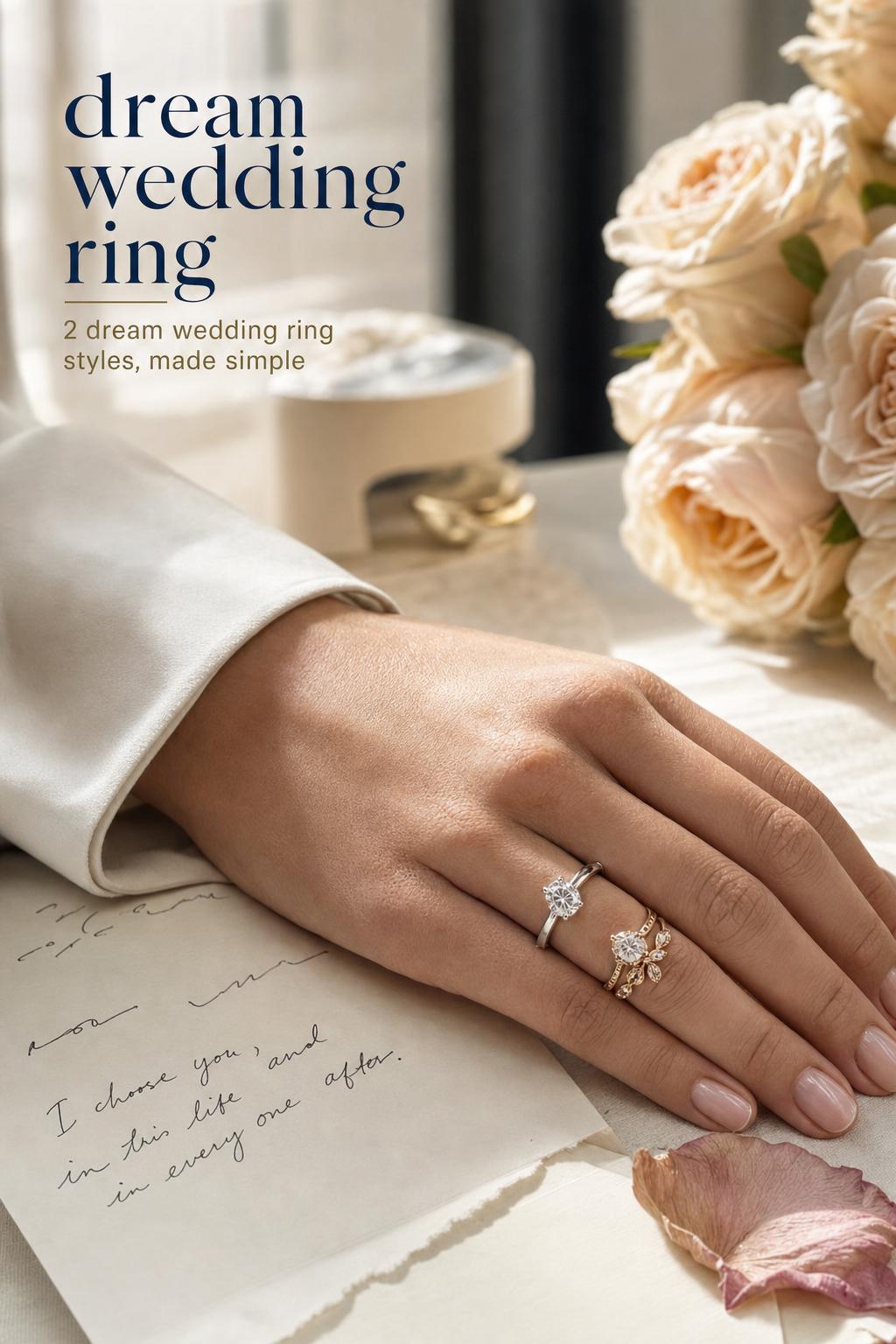
The guide below breaks down the two most common directions couples move toward when searching for a dream wedding ring: classic editorial elegance and expressive romantic detail. Understanding the emotional and visual difference between these styles makes it much easier to choose a ring that feels right not just in a box or showroom, but in your real wedding story.
Style overview: classic editorial dream wedding ring
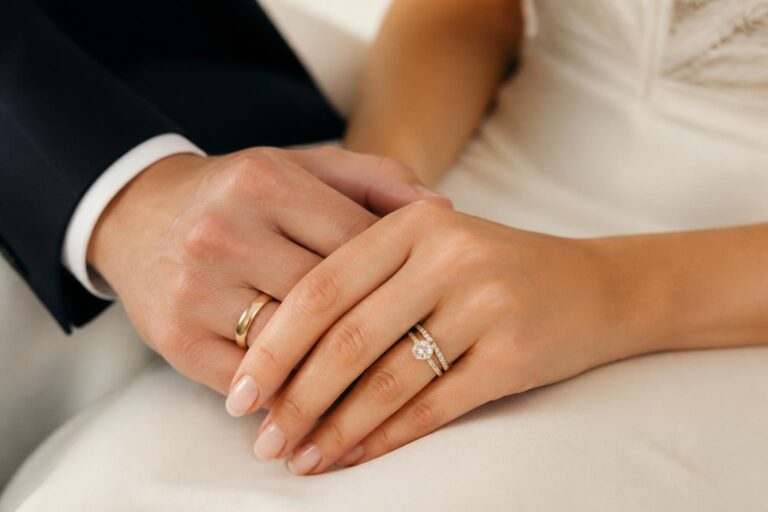
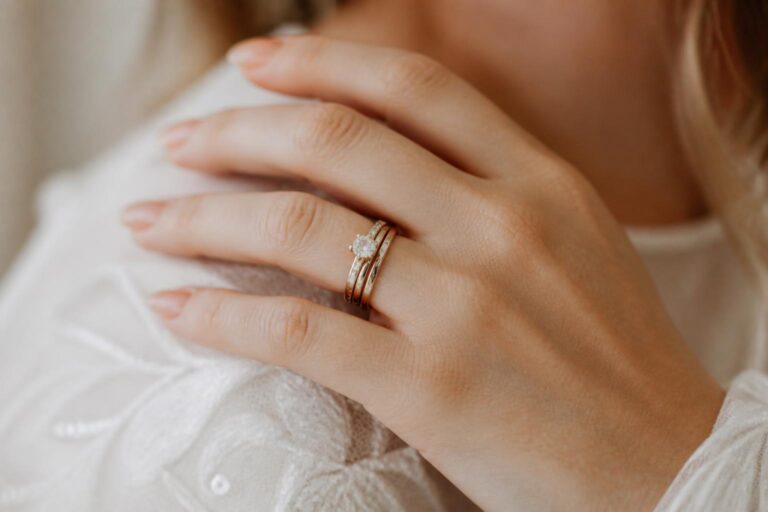
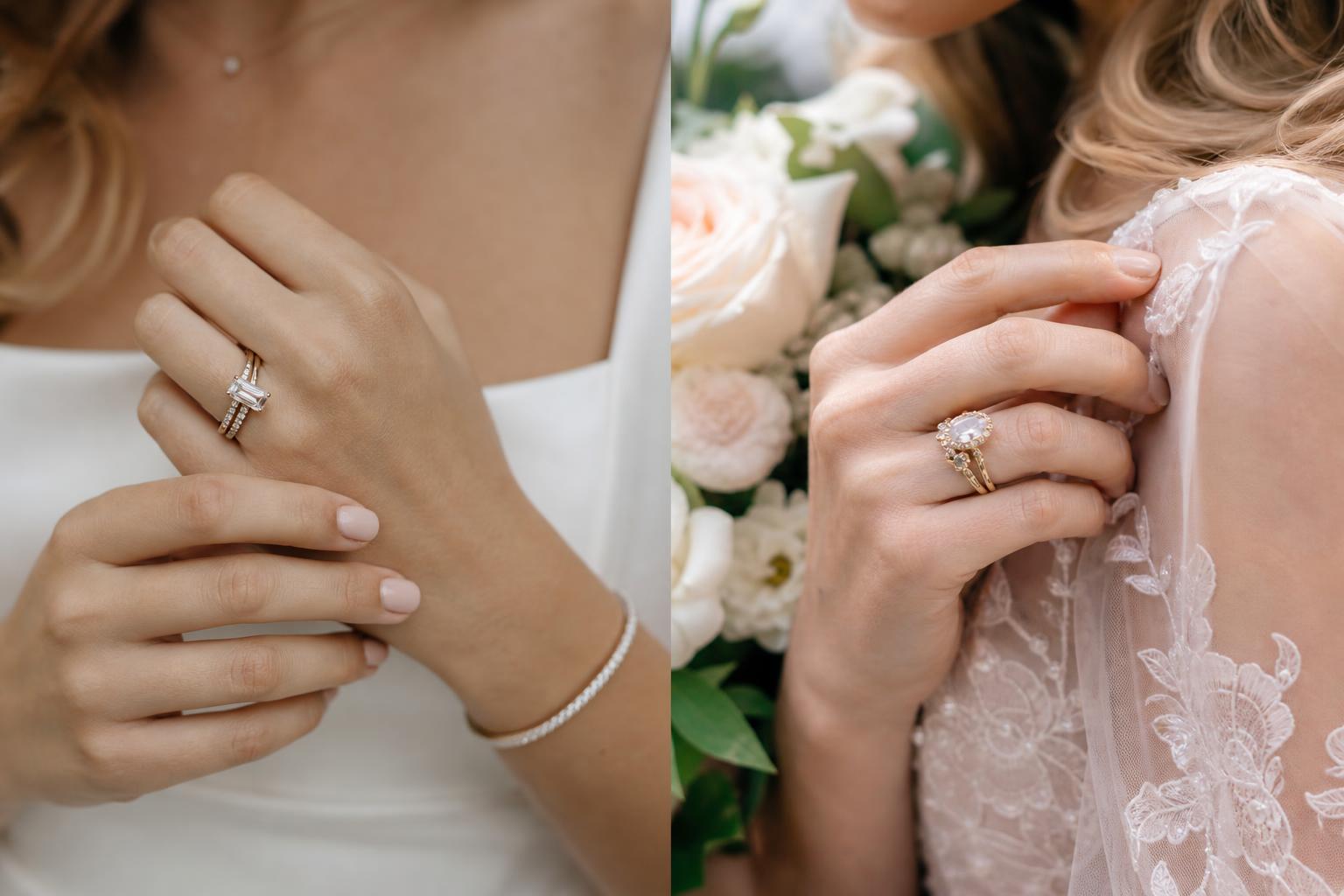
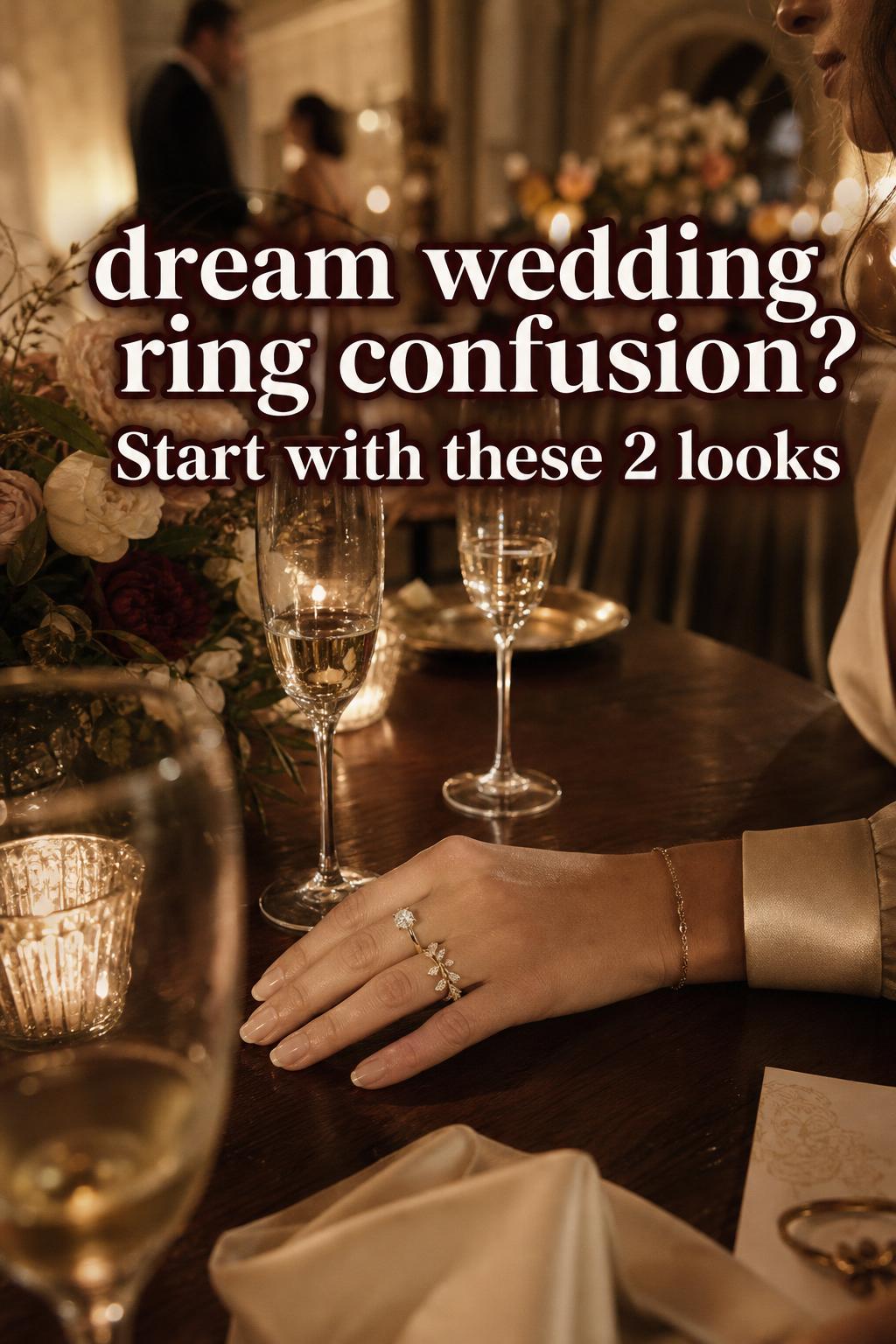
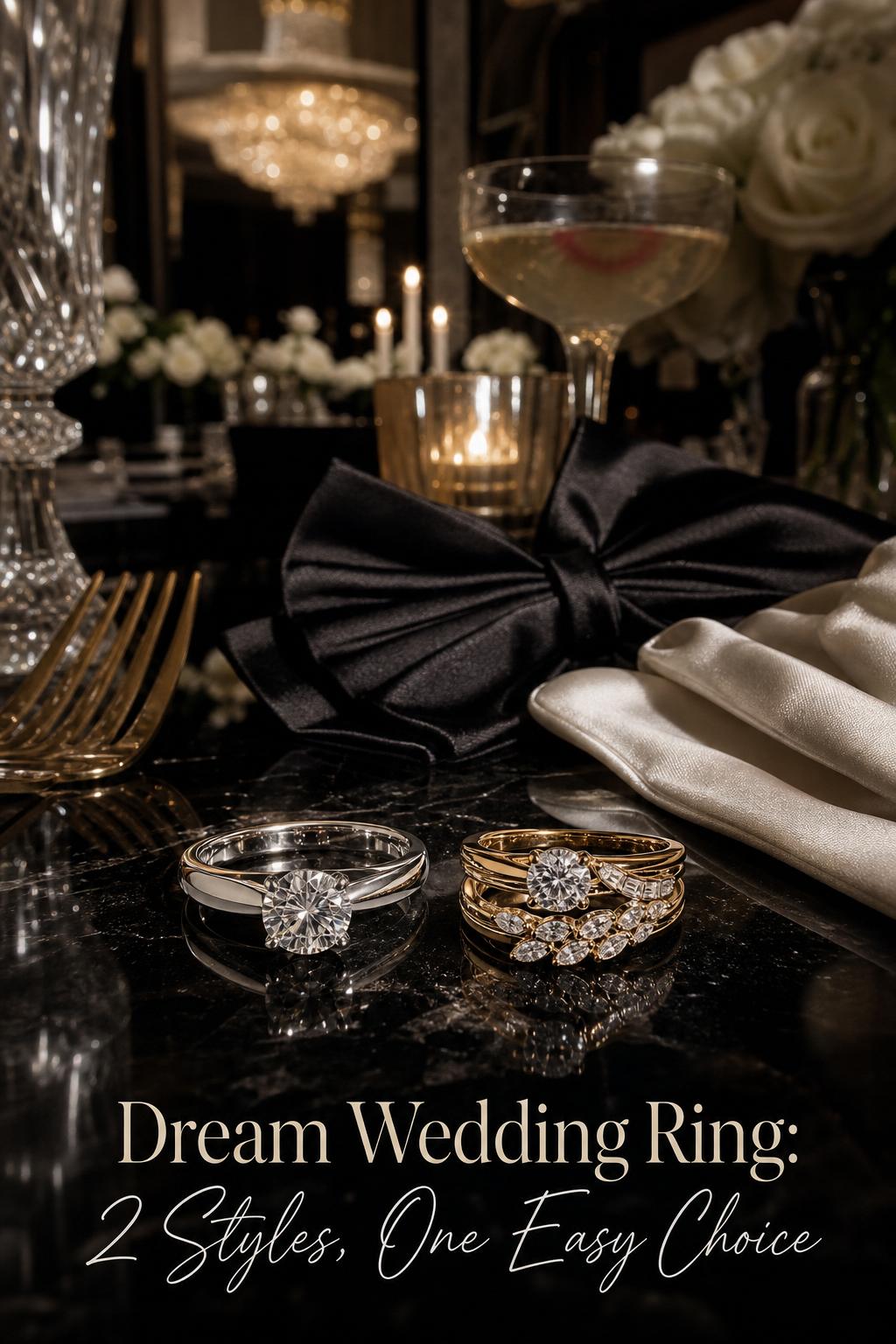
The classic editorial dream wedding ring is built on restraint. Think solitaire lines, refined pavé accents, balanced proportions, and metal choices that feel polished rather than decorative. In this direction, the ring does not compete for attention. It anchors the bridal look with confidence and clarity.
Turn wedding inspiration into a plan you can actually follow.
Zarellea brings your guest list, budget, vendors, and day-of details into one shared space — so no beautiful idea gets lost in the shuffle.
Emotionally, this style feels calm, intentional, and timeless. It suits couples who want their wedding to feel elegant without excess, and who respond to visual order more than ornament. A classic ring often works beautifully with clean bridal silhouettes, structured ceremony spaces, and a reception design where every detail is carefully edited.
In real weddings, this style often pairs naturally with white gold, yellow gold, rose gold, or platinum in smoother finishes rather than heavily textured surfaces. Diamond-forward designs such as solitaire and pavé classics fit here especially well. DreamStone’s product and guide ecosystem reflects this language clearly, with education around shapes, settings, metals, and a design-your-own process that supports a polished, highly considered ring.
Venue-wise, this ring style feels at home in city spaces, luxury hotel settings, and formal indoor ceremonies where lighting is controlled and details photograph with precision. The mood is often modern, but not cold. It is romantic in a composed, enduring way.
What defines this look
- Clean silhouettes such as solitaire and refined diamond bands
- Controlled use of pavé rather than heavy embellishment
- Metals that feel smooth, polished, and quietly luxurious
- A photography mood that favors crisp elegance and clarity
- A wedding personality that feels formal, balanced, and lasting
Style overview: expressive romantic dream wedding ring
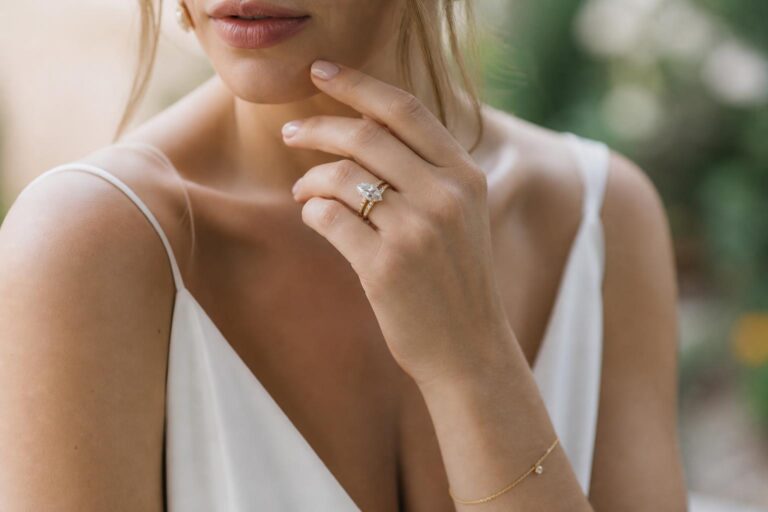
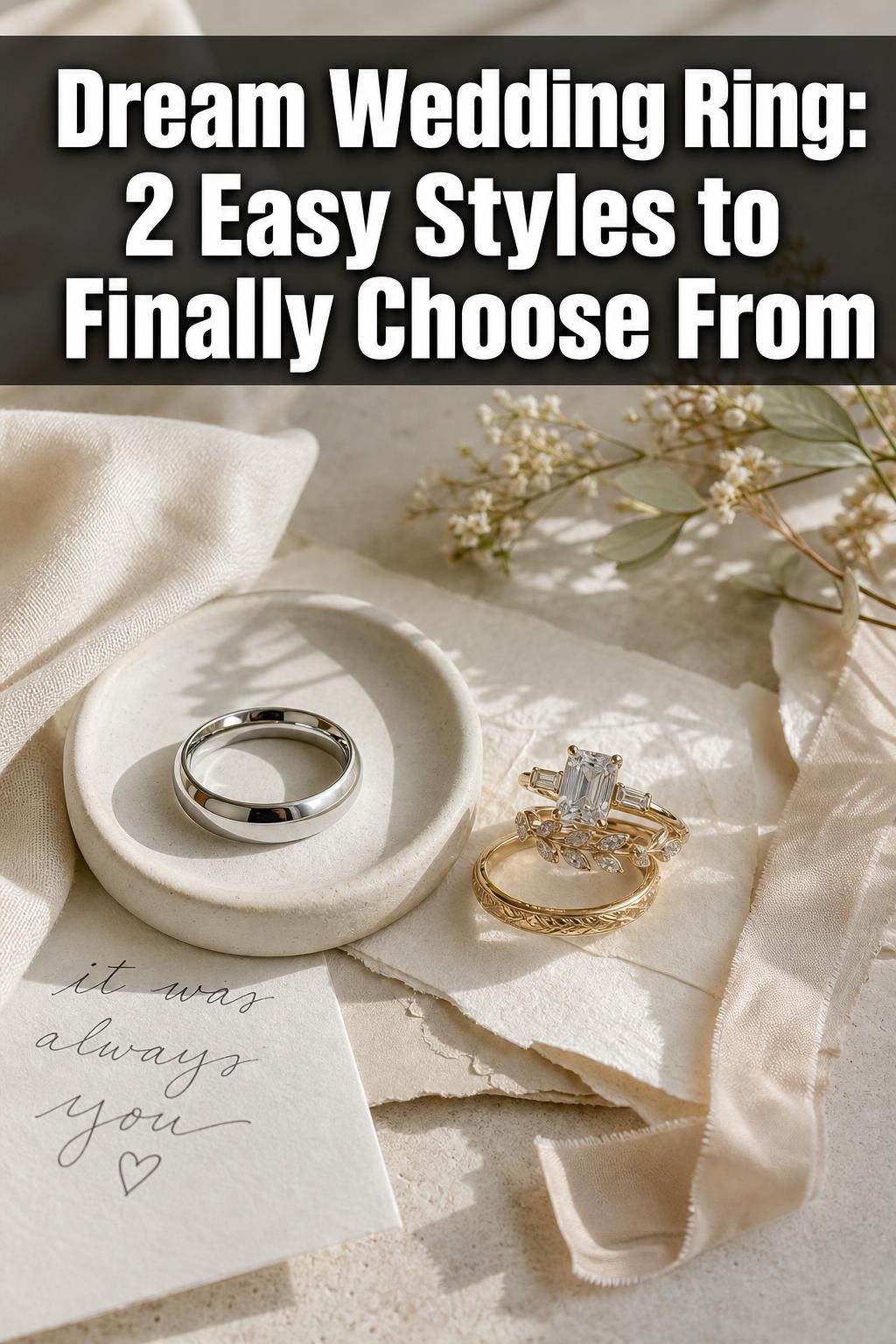
The expressive romantic dream wedding ring tells a more decorative story. This is where hidden halos, curved bands, engraved symbols, textured finishes, multi-stone ideas, baguette accents, and nature-inspired details begin to matter. It is less about understatement and more about emotional texture.
This style often attracts couples who want the ring to feel memorable in a more visible way. The romance here is layered rather than quiet. A leaf-inspired band like Shane Co.’s dream natural diamond leaf wedding band in 14k yellow gold, or a diamond wedding ring with round and baguette stones, creates a softer, more detailed visual impression. Bulgari’s Divas’ Dream ring also belongs in this emotional world, where inspiration, craftsmanship, and motif shape the personality of the piece.
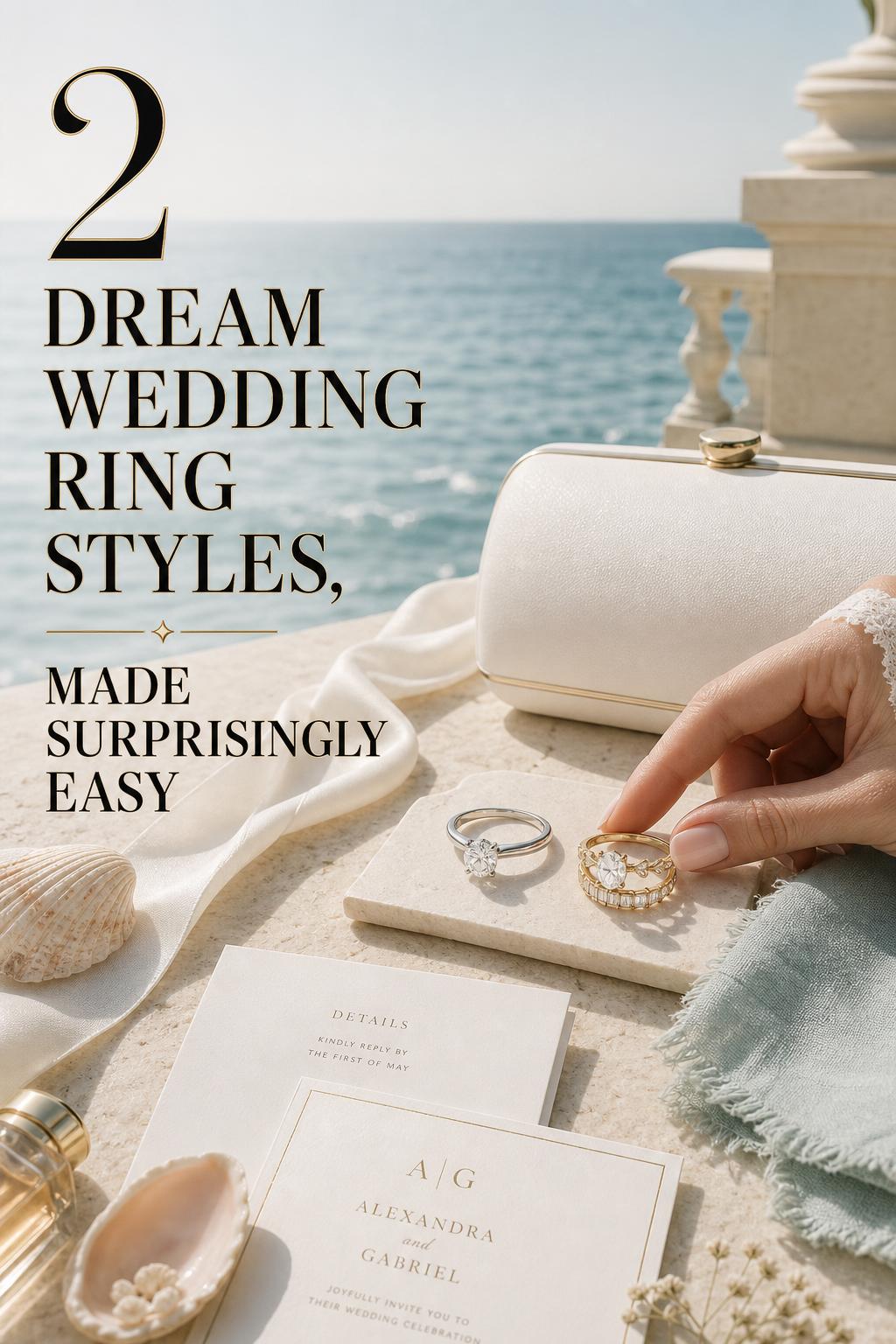
In a wedding setting, expressive romantic rings often work especially well with floral abundance, candlelight, textured fabrics, and ceremonies that lean atmospheric rather than architectural. They feel natural in garden-inspired weddings, destination celebrations, or receptions where visual richness is part of the mood.
This direction can still be timeless, but it is timeless through artistry and storytelling rather than simplicity alone. It tends to feel more personal immediately, especially for couples drawn to engraving, curved bands, leaf motifs, pavé surfaces, or vintage revival styling.
What defines this look
- Design motifs such as leaves, halos, baguette accents, and curved bands
- Greater emphasis on personalization and engraving
- Textured finishes or decorative details that catch light differently
- A softer, moodier photography result with more visual layering
- A wedding personality that feels romantic, expressive, and emotionally detailed
The emotional difference between these styles
A classic editorial ring creates a sense of certainty. Guests may not always describe it in technical terms, but they feel its discipline. It supports a wedding atmosphere where every element appears intentional, from the cut of the dress to the spacing of the tablescape. In photos, it tends to read clearly and confidently, especially in close-ups of the hand, invitation styling, and ceremony portraits.
An expressive romantic ring creates a different response. It invites lingering attention. It feels more intimate, more storied, and often a little softer around the edges. Rather than disappearing into the whole look, it becomes part of the emotional texture of the day. In photography, details such as pavé, engraving, hidden halos, and mixed shapes create a richer surface and a more atmospheric result.
Neither mood is better. The real question is whether you want your ring to whisper elegance or speak in detail. That distinction matters because a mismatch can create visual tension. A highly decorative ring can feel disconnected in a wedding built entirely around severe minimalism. A very simple ring can feel too quiet if the rest of the wedding language is lush, symbolic, and richly styled.
Where couples often get confused
The confusion usually starts because many dream wedding ring searches blend inspiration with shopping intent. A couple may love the word “dream” but not realize whether they are responding to craftsmanship, scale, symbolism, price, or trend. They may save images of classic solitaire rings, then also love a curved wedding band, a hidden halo, or a rose gold ring with engraved detail. Individually, each can be beautiful. Together, they do not always form one clear aesthetic.
Another common point of overlap is that both styles can include diamonds, premium metals, and customization. Reve Diamonds, DreamStone, and other retailers position diamond wedding bands through education and design choice, which means the difference is not simply “luxury versus non-luxury.” It is a matter of visual behavior. How much detail does the ring carry? How much does it ask to be noticed? How does it sit beside the engagement ring and the wedding itself?
That is why emotional clarity is useful before product selection. The dream ring is not only the ring that looks impressive alone. It is the ring that aligns with the atmosphere you want to live in and remember.
Key differences that change the whole wedding look
Silhouette and structure
Classic editorial rings depend on proportion. Their power comes from line, spacing, and balance. Solitaires and slim pavé bands feel clean because there is little visual interruption. Expressive romantic rings use structure differently. Curved bands, multi-stone layouts, or baguette combinations create movement. They can feel more sculptural and more obviously styled.
Floral relationship
A restrained ring generally pairs best with floral styling that is deliberate rather than abundant. It does not need heavy competition. A more decorative ring can comfortably sit within fuller florals, nature-inspired arrangements, or a reception where texture appears in multiple places. This is especially true for motifs like leaf bands or vintage revival details.
Color palette behavior
White gold and platinum often reinforce a cooler, sharper, more editorial mood. Yellow gold and rose gold can support either style, but in expressive romantic rings they often feel warmer and more emotive, especially when paired with engraving or natural motifs. Mixed-metal looks add contrast and can push the ring toward a more trend-aware identity.
Venue compatibility
Minimal and classic rings tend to thrive in polished interiors, luxury spaces, and ceremonies with architectural strength. Decorative romantic rings are more forgiving across gardens, outdoor ceremonies, and layered reception spaces because they naturally hold their own against visual richness.
Formality and guest perception
A classic ring usually signals refined formality. An expressive ring can still be formal, but it often feels more personal and artistic. Guests may read the first as polished and timeless, and the second as romantic and deeply individual.
Wedding style logic: which direction is easier to execute well?
From a planning perspective, classic editorial rings are often easier to integrate across different wedding designs because they create fewer visual demands. A simple solitaire or pavé band can move between a city ceremony, a ballroom reception, and a smaller intimate wedding without feeling out of place. It adapts well.
Expressive romantic rings can be stunning, but they ask for more cohesion around them. If you choose a ring with a strong motif, curved contour, hidden halo, or visible engraving, the rest of the wedding benefits from some echo of that softness or symbolism. Otherwise the ring can feel isolated from the event’s design language.
Budget also behaves differently across these directions. Ben Garelick’s budget-focused perspective matters here: a dream wedding band does not have to mean the most elaborate option. In many cases, a simpler ring can look more expensive because its visual discipline reads as confidence. More decorative styles may require greater investment in craftsmanship or supporting design choices to look fully intentional rather than busy.
Tips for realistic decision-making
- If your wedding design is still undecided, a classic ring is usually the safer anchor.
- If your wedding already has a strong romantic or vintage revival direction, a more expressive ring can deepen the atmosphere beautifully.
- If budget flexibility is limited, consider whether detail is most important in the ring itself or in the overall wedding styling.
- If you want daily wear longevity in many settings, cleaner designs tend to transition more easily.
Comparing the styles through center stone choices
The center stone decision changes the emotional tone of a dream wedding ring more than many couples expect. Natural diamonds and lab-grown diamonds appear across the market, and educational pages from brands like DreamStone and Reve Diamonds show how often this choice sits at the heart of ring planning. The question is not only what the stone is, but how its presence supports the ring’s style.
In classic editorial rings, the center stone usually acts as the focal point. The 4Cs—carat, color, clarity, and cut—matter here because the eye is drawn directly to the diamond. There is less decorative distraction, so the stone and setting have to carry the visual weight with precision.
In expressive romantic rings, the center stone may still be important, but it often shares attention with surrounding details. Hidden halos, side stones, baguettes, pavé, or motif-driven band design create a more layered read. That can be especially appealing for couples who want artistry rather than a single-point emphasis.
Alternative stones such as moissanite or colored gems fit most naturally into the expressive category when the goal is distinctiveness. They can also work in minimalist settings, but they generally introduce a stronger design statement. For couples exploring ethical diamonds or a sustainability-minded route, lab-grown diamonds often align well with both categories, though the final look depends more on setting and composition than on origin alone.
Metals, finishes, and the feeling of the ring on the day
Metal choice is one of the clearest ways to steer a ring toward one style or the other. White gold and platinum tend to sharpen the look, making classic designs feel especially crisp. Yellow gold often adds warmth and softness, which can enhance either timeless simplicity or romantic ornament depending on the setting. Rose gold introduces an unmistakably soft emotional note that many couples associate with dream-ring romance.
Finish matters too. Smooth metal surfaces support editorial clarity. Textured finishes and milgrain-style detail shift the ring into a more tactile, storied direction. Krikawa’s trend-oriented approach, including curved bands, engraving, and textured surfaces, speaks directly to this idea: finish is not a minor extra. It changes the personality of the piece.
Comfort also deserves attention. The most photogenic ring is not automatically the most enjoyable ring to wear all day, every day. A dream wedding ring should feel emotionally right, visually harmonious, and physically easy enough to become part of real life after the wedding ends.
The design journey: custom dream ring versus ready-made beauty
Some couples know immediately that they want a custom dream wedding ring. Others fall in love with a ready-made design and simply personalize a few details such as metal choice or engraving. Both paths can work beautifully, but they support different planning experiences.
Custom design usually suits couples who have a strong visual identity in mind. They may want a ring that bridges categories: perhaps the polish of a classic solitaire with a hidden halo, or a nature-inspired band shaped to sit against an engagement ring. This process often begins with a design brief, mood boards, and motif decisions, then moves into CAD/CAM development, wax models, and fit or size testing. That sequence matters because it turns inspiration into proportion.
Ready-made rings work well when clarity matters more than reinvention. A known product such as DreamStone’s round and baguette diamond wedding ring in 14kt white gold, Shane Co.’s leaf band, or an iconic luxury piece like Bulgari Divas’ Dream offers a distinct visual identity from the start. The benefit is confidence and speed. The limitation is that you adapt yourself to the design more than designing from zero.
What often goes wrong in the custom process
The most common issue is trying to combine too many admired details without one dominant direction. A solitaire-inspired shape, plus a leaf motif, plus mixed metals, plus engraving, plus vintage styling can begin to feel unresolved. Strong custom rings usually have one core identity and one or two supporting details, not five competing ideas.
Budget reality: what makes a ring feel luxurious versus merely expensive
A dream wedding ring is not defined by price alone. Luxury can come from restraint, from craftsmanship, from symbolism, or from the confidence of a design that knows exactly what it is. That is why budget-conscious shopping and aspirational shopping sometimes lead to the same style answer.
Budget planning usually becomes easier when couples think in tiers rather than absolutes. A simpler ring in a strong metal with a balanced silhouette may feel more elevated than a highly decorated ring where every feature is competing for attention. By contrast, if personalization is the heart of the dream, then engraving, motif work, or a more distinctive setting may be worth prioritizing over scale.
Financing, warranties, returns, and aftercare also matter more than many couples assume. Retailers such as DreamStone and Shane Co. bring these considerations into the shopping experience because the emotional purchase becomes much more comfortable when practical support is visible. Insurance and appraisal also belong in the budget conversation, especially when the ring is intended as both a sentimental and long-term piece.
What makes the style feel expensive
- Strong proportion rather than unnecessary detail
- Metal and stone choices that suit the design instead of overpowering it
- A clear relationship between the engagement ring and wedding band
- Cohesion with the wedding’s overall visual language
- Good lighting and photography that reveal craftsmanship clearly
Ethical sourcing, certifications, and buying with confidence
For many couples, the dream wedding ring is also about peace of mind. That means asking not only how the ring looks, but what supports the purchase behind the scenes. Natural versus lab-grown diamonds often become part of this conversation, along with traceability, brand transparency, and recognized documentation.
Certifications such as GIA and IGI help give structure to diamond evaluation. They are especially useful when comparing stones across styles, because emotional preference can otherwise make objective comparison difficult. In the broader sourcing conversation, conflict-free language and references to the Kimberley Process matter because they help couples feel more secure about provenance.
Practically, this section is where romantic vision meets trust. A ring may be called a dream, but the buying experience should still feel grounded, documented, and clear.
Shopping paths: showroom romance versus virtual convenience
How you shop for a ring often shapes how certain styles feel. In-person appointments make it easier to understand proportion, sparkle behavior, and comfort. This is especially helpful when comparing a classic ring with an expressive one, because details that look subtle online may feel dramatic in person. DreamStone’s showroom locations in New York City, Melville on Long Island, and Florida reflect the value of that tactile experience, as do showroom-based approaches used by other retailers.
Virtual appointments, online sizing tools, and tech-assisted design support are increasingly important for couples who want flexibility. The research around AI-assisted style matching, AR try-ons, and a “ring whisperer” style of guidance points to a shopping future that is more interactive and more personalized than a simple product page. For custom shoppers, digital visualization through CAD/CAM and model review can be especially reassuring.
The best path depends on what you need clarity on. If your uncertainty is emotional and style-driven, seeing rings on the hand tends to help. If your uncertainty is logistical, virtual support can be more efficient. Many couples do best with a hybrid approach.
Visual style breakdown across the wedding day
Bridal fashion direction
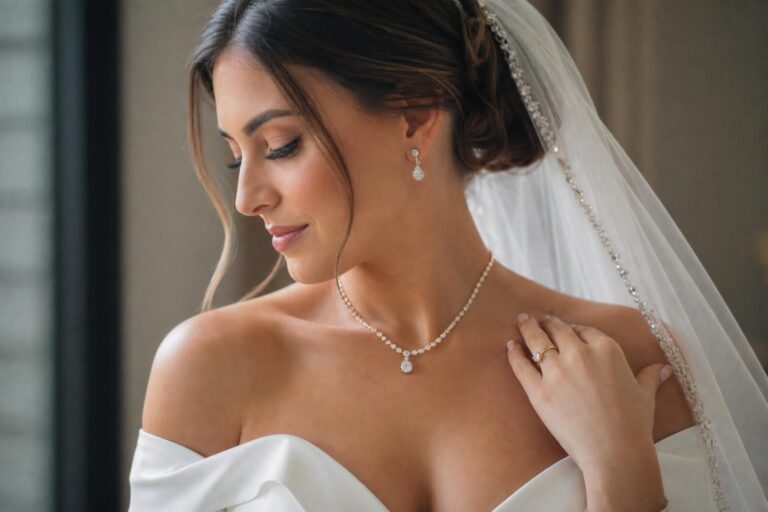
A classic editorial ring looks strongest beside streamlined bridal fashion. Clean necklines, refined tailoring, and dresses with composure rather than volume allow the ring’s simplicity to feel elevated. An expressive romantic ring works beautifully with softer silhouettes, movement, lace-like texture, or styling that welcomes ornament and story.
Ceremony styling
Classic rings suit ceremony spaces where architecture, symmetry, and negative space matter. Expressive romantic rings feel especially natural in ceremonies framed by florals, soft pathways, or visual layering. The key is not whether flowers are present, but whether the environment echoes the ring’s design language.
Reception tablescape
A minimal ring often belongs with a more edited tablescape: measured candle placement, disciplined color use, and details that allow breathing room. A more decorative ring can support richer table density, softer tonal layering, and tactile materials that create warmth. If the wedding band has engraving, milgrain, or motif work, repeating that sense of detail in stationery or table styling can make the whole wedding feel more connected.
Photography mood
Classic rings photograph with precision. Their appeal is often immediate in sharp close-ups and editorial compositions. Expressive romantic rings photograph through atmosphere. They reward softness, movement, and detailed framing. This does not mean one photographs better than the other; it means they ask for different visual storytelling.
Example comparison: ceremony styling
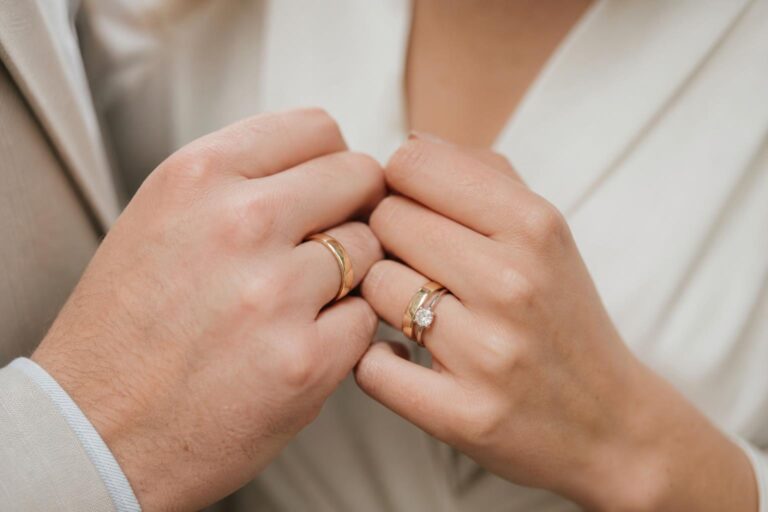
Imagine a city ceremony with polished interiors, controlled light, and a bride carrying a restrained bouquet. A classic editorial dream wedding ring feels fully integrated here. The close-up exchange of rings becomes a moment of quiet refinement, and the jewelry supports the architecture without competing with it.
Now imagine a ceremony framed by layered flowers, softer movement, and an atmosphere built around romance. An expressive ring with pavé, a hidden halo, curved contour, or leaf motif instantly feels more at home. The emotional tone is gentler and more textured, and the ring contributes to that softness rather than cutting through it.
Practical difference: the first setup depends heavily on balance and restraint, so any mismatch becomes obvious. The second is more forgiving visually, but cohesion still matters. Too many unrelated details can tip romantic styling into confusion.
Example comparison: bridal fashion direction
With a sleek gown and disciplined styling, a classic band or solitaire-adjacent pairing often feels strongest. The ring becomes a point of precision, especially when paired with white gold or platinum. This is the kind of wedding look that ages very well in photos because it does not rely on novelty to feel complete.
With a more romantic dress, movement in the fabric, or details that feel emotionally layered, an expressive ring often creates better harmony. A rose gold setting, engraved detail, or a nature-inspired band can make the bridal look feel personal rather than purely formal. In this version, the ring does not simply accessorize the dress. It deepens the wedding personality.
Example comparison: reception atmosphere
At the reception, classic ring styling supports elegance through consistency. Clean candles, thoughtful spacing, and a color palette with discipline help the jewelry feel intentional. Guests experience the wedding as refined and composed.
In a more expressive romantic reception, the ring can mirror softness already present in the room. Think warmer metal tones, denser floral expression, and details that feel collected rather than edited away. The guest experience becomes more atmospheric and emotionally layered.
The planning lesson is simple: rings do not exist outside the environment. A dream ring looks most convincing when the room seems to understand it.
Example comparison: destination or intimate wedding interpretation
For a destination or smaller-scale wedding, classic rings bring ease. Their adaptability matters when travel, weather, and reduced setup time make overcomplication less appealing. A simple diamond wedding band or solitaire-led look translates cleanly across different locations and still feels special.
Expressive romantic rings can be exceptional in intimate settings too, especially where personalization matters more than scale. A custom contour band, engraving, or motif-inspired design can become part of the narrative of a smaller wedding, where guests notice meaningful detail more easily. The difference is that this style benefits from confidence in the visual story. It should feel chosen, not assembled from too many separate inspirations.
Style personality match
Choose the classic editorial direction if you are drawn to order, lasting simplicity, and a wedding that feels elegant in a composed way. This style tends to suit couples who appreciate clarity, who want the ring to work across many contexts, and who care about a look that remains strong long after the trend cycle changes.
Choose the expressive romantic direction if your wedding vision is rooted in feeling, symbolism, and detail. This style suits couples who want the ring to have visible character, who enjoy personalization, and who see the jewelry as part of a larger visual story built on softness, motif, or artistry.
Yeah Weddings and Bailey’s Fine Jewelry both speak to this inspiration-driven side of shopping: the dream is often not one fixed design, but the recognition of a style that feels emotionally true. The decision becomes easier when you stop asking which ring is most impressive and start asking which ring makes the wedding feel more like you.
Can you combine these styles successfully?
Yes, but one style should remain dominant. Some of the most compelling dream wedding rings combine a classic foundation with one expressive detail. A clean band with hidden halo influence, a simple silhouette with engraving, or a refined setting with subtle baguette accents can feel deeply personal without losing clarity.
Where visual conflict usually happens is when the ring tries to be both minimal and richly ornamental at the same intensity. If the overall wedding is sleek and disciplined, keep decorative elements small and intentional. If the wedding is romantic and layered, let the ring participate in that softness without forcing every possible detail into one design.
The secret to blending is hierarchy. Decide what the ring is first, then let secondary details support that identity.
What often goes wrong and how to avoid it
- Choosing a ring before understanding the mood of the wedding, which can lead to visual mismatch later.
- Mixing unrelated motifs such as leaf detail, severe minimalism, heavy pavé, and vintage styling without one clear point of view.
- Underestimating how much metal color affects the overall feeling of the bridal look.
- Focusing only on inspiration images and ignoring comfort, daily wear, warranties, or return support.
- Assuming a more expensive ring automatically looks more luxurious than a better-proportioned simpler one.
Tips for a more cohesive result
Start by choosing three words for the wedding atmosphere before choosing the ring: for example, timeless, polished, and quiet, or romantic, expressive, and warm. Then evaluate ring styles against those words. This approach often brings more clarity than comparing dozens of product pages without an emotional filter.
If possible, compare the ring with your engagement ring, bridal fashion direction, and likely lighting conditions. A dream wedding ring should make sense not only under store lights or in a product image, but in daylight, candlelight, portraits, and real movement.
What ages best in photos
Classic rings usually age more quietly and predictably in photographs because they are built on line and proportion rather than trend emphasis. They often feel just as relevant years later because they never depended on novelty to carry the look.
Expressive romantic rings can also age beautifully, especially when the detail is rooted in personal meaning rather than a passing trend. Engraving, a leaf motif, or a carefully chosen curved band may remain emotionally resonant long after the wedding because they reflect the couple’s story more than a moment in the market.
The best aging factor is coherence. When ring, styling, and atmosphere belong together, photos tend to feel lasting regardless of whether the ring is minimalist or ornate.
When to choose each style
If your priorities include versatility, formal elegance, and a wedding aesthetic that feels controlled and enduring, the classic editorial dream wedding ring is often the stronger choice. It works especially well for city weddings, structured indoor venues, polished receptions, and couples who want a ring that moves easily into everyday life.
If your priorities include personalization, softness, visible romance, and a wedding atmosphere built around texture and emotional detail, the expressive romantic direction may suit you better. It tends to thrive in floral-forward weddings, intimate settings, outdoor ceremonies, and celebrations where atmosphere matters as much as formality.
For couples still uncertain, try this final lens: if your wedding vision is about refinement, go simpler. If your wedding vision is about storytelling, go more detailed. Both can absolutely become your dream ring. The right one is simply the one that makes the rest of your wedding feel more complete.
FAQ
What is a dream wedding ring?
A dream wedding ring is the ring that best matches your personal style, emotional vision, and practical needs. For some couples that means a timeless solitaire or pavé band, while for others it means a more expressive design with engraving, curved structure, leaf motifs, or a hidden halo.
How do I choose between a classic and a more detailed dream wedding ring?
Look at the overall mood of your wedding and your daily style. If you want a polished, formal, and highly adaptable look, a classic ring usually fits best. If you want more personality, symbolism, and romantic texture, a more detailed design may feel more authentic.
Are natural diamonds or lab-grown diamonds better for a dream ring?
Neither is automatically better for every couple. Natural and lab-grown diamonds both appear across dream ring shopping, and the best choice depends on your values, budget, and how you want to balance appearance with sourcing preferences. The final style of the ring usually depends more on setting and design than on diamond origin alone.
How important are the 4Cs when choosing a dream wedding ring?
The 4Cs—carat, color, clarity, and cut—are especially important when the center stone is the main visual focus, as in cleaner classic designs. In more decorative rings, they still matter, but the overall design and surrounding details may share more of the visual impact.
Should I choose a custom ring or a ready-made ring?
Choose custom if you have a clear vision and want to shape details such as motif, contour, or engraving. Choose ready-made if you want confidence, speed, and a defined aesthetic from the start. Both can become a dream wedding ring if the design aligns with your wedding style and long-term taste.
How long does a custom dream wedding ring usually take?
A custom process typically includes concept development, CAD/CAM work, model review, and sizing or fit adjustments, so it usually takes longer than buying a ready-made ring. The exact timeline depends on the jeweler and design complexity, which is why couples should begin early if customization is important.
What certifications should I look for when buying a diamond ring?
Recognized documentation from organizations such as GIA or IGI can help you compare diamonds more confidently. These certifications are useful because they add structure and clarity to stone evaluation, especially when you are comparing multiple options across styles and price levels.
Can a dream wedding ring still be budget-friendly?
Yes. A dream wedding ring does not have to be the most elaborate or expensive option. Many budget-conscious couples find that a simpler, well-proportioned design feels more elevated and more wearable than a more decorated ring that stretches the budget without improving overall harmony.
Is it possible to blend timeless and romantic ring styles?
Yes, and the best blended rings usually start with a classic base and add one expressive element. A clean silhouette with subtle engraving, a hidden halo, or a gentle contour can feel personal and romantic without losing the clarity that makes timeless designs so enduring.
Does seeing rings in person really make a difference?
It often does, especially when you are deciding between a cleaner and a more decorative style. In-person appointments can reveal comfort, proportion, and sparkle behavior more clearly than images alone, while virtual consultations can still be very helpful for design guidance, comparison, and convenience.