The Modern Groom Photo Edit for a Timeless Wedding
There is a quiet, often overlooked chapter of the wedding day that deserves as much care as any aisle moment or sunset embrace: the groom photo. Before the ceremony begins, while cufflinks are fastened, jackets are straightened, and the room hums with anticipation, some of the most personal images of the day begin to unfold. Thoughtful groom portraits do more than document an outfit. They capture character, relationships, atmosphere, and the emotional rhythm of the wedding story.
The strongest groom photos usually blend three elements seen again and again in wedding photography inspiration: meaningful getting ready shots, well-chosen portrait styles, and emotionally timed moments like the first look or candid interactions with groomsmen. Whether a couple is planning a modern city celebration in New York or Los Angeles, a classic venue wedding in Chicago or Dallas, or a culturally rich event with distinct traditions, the most memorable images feel intentional without becoming stiff. The goal is not simply to pose the groom, but to reveal his presence within the larger wedding day.
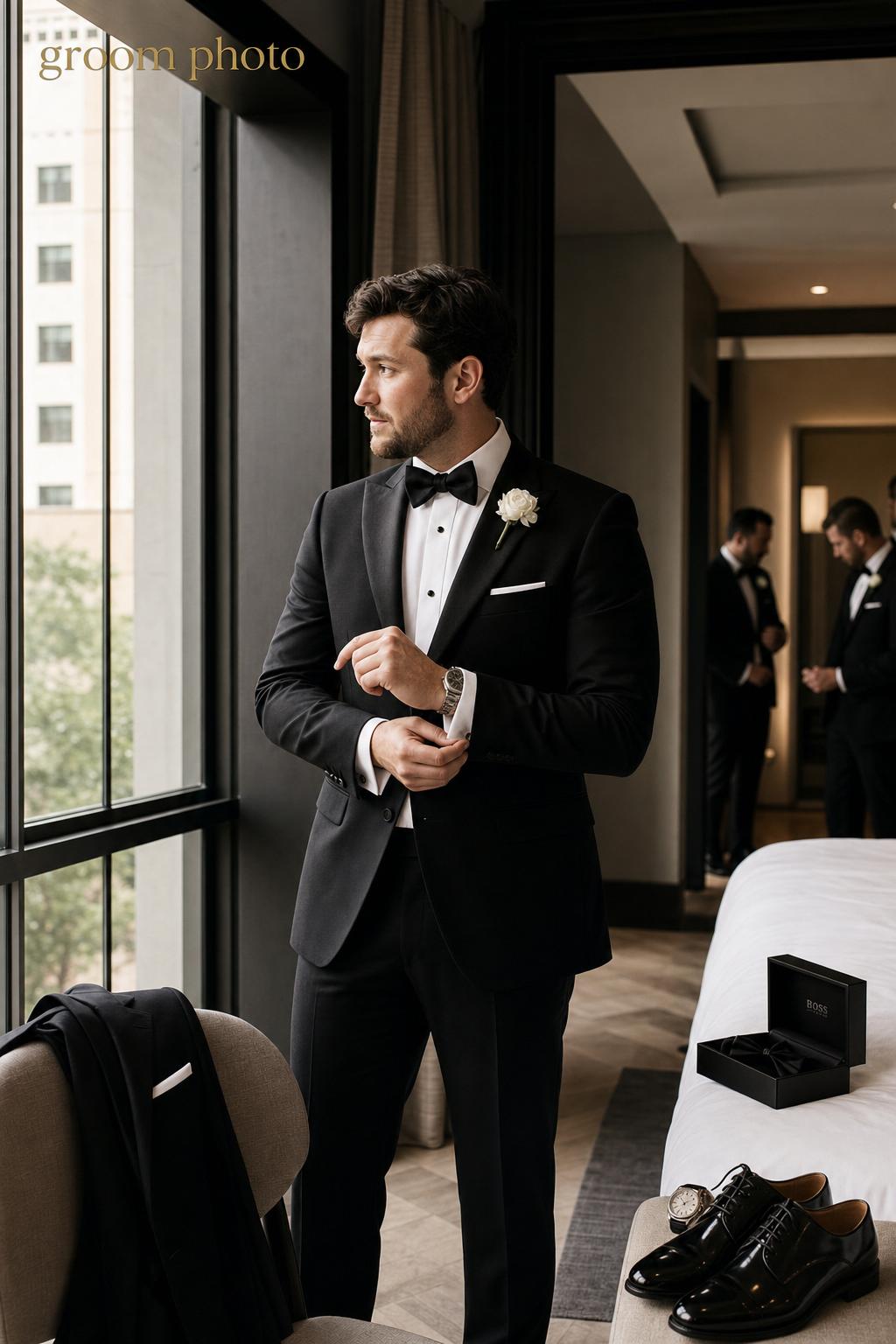
The emotional role of groom photos in a wedding story
For many couples, wedding photography coverage has historically centered more heavily on the bride. That makes dedicated groom photo planning especially valuable. A strong series of groom portraits adds balance to the gallery and helps the full day feel complete. It also gives the photographer a chance to document details that matter to the groom specifically: the fit of a tuxedo or suit, the boutonnière, cufflinks, quiet moments before the ceremony, and the dynamic with the best man or groomsmen.
These images matter because they create emotional contrast. A groom standing alone by a window in natural light tells a different story than a lively group portrait filled with laughter. A first-look reaction carries a different weight than a composed classic portrait. Together, these scenes create the visual pacing couples often love most when they revisit their album later.
Turn wedding inspiration into a plan you can actually follow.
Zarellea brings your guest list, budget, vendors, and day-of details into one shared space — so no beautiful idea gets lost in the shuffle.
Magazine-style wedding resources such as The Knot, WeddingWire, Brides, and Martha Stewart Weddings consistently lean into this balance of elegance and storytelling. Their most compelling groom-focused ideas rarely stop at one type of image. Instead, they move through prep, portraits, group shots, and ceremony-adjacent moments to create a fuller narrative.
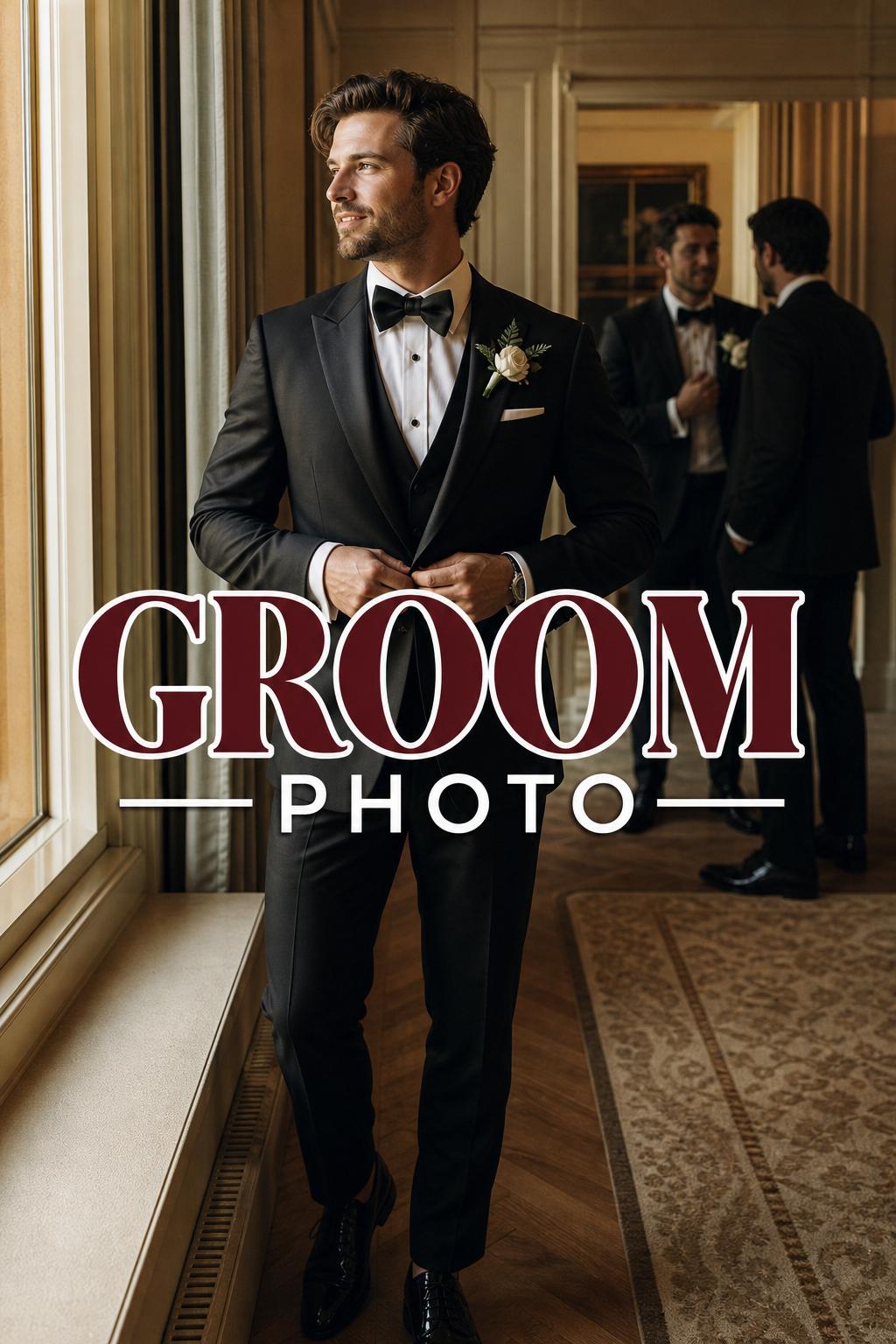
Where the best groom photo ideas begin: the getting ready room
The getting ready portion of the day is often the foundation of a memorable groom gallery. It offers texture, movement, and a natural sequence of moments that do not need to be forced. This is where wedding photography shifts from simple documentation into storytelling. Instead of waiting until the ceremony, couples can treat the groom prep space as the first set of the day.
Good groom getting ready shots usually work best when the room supports the mood. A clean prep area, a venue suite with natural light, or an architectural interior can instantly improve the final portraits. This does not mean the space has to be grand. It simply needs enough order and light that the groom remains the focus. A crowded room with bags, food containers, and harsh overhead lighting can flatten what should feel polished and intentional.
Classic prep moments that never feel dated
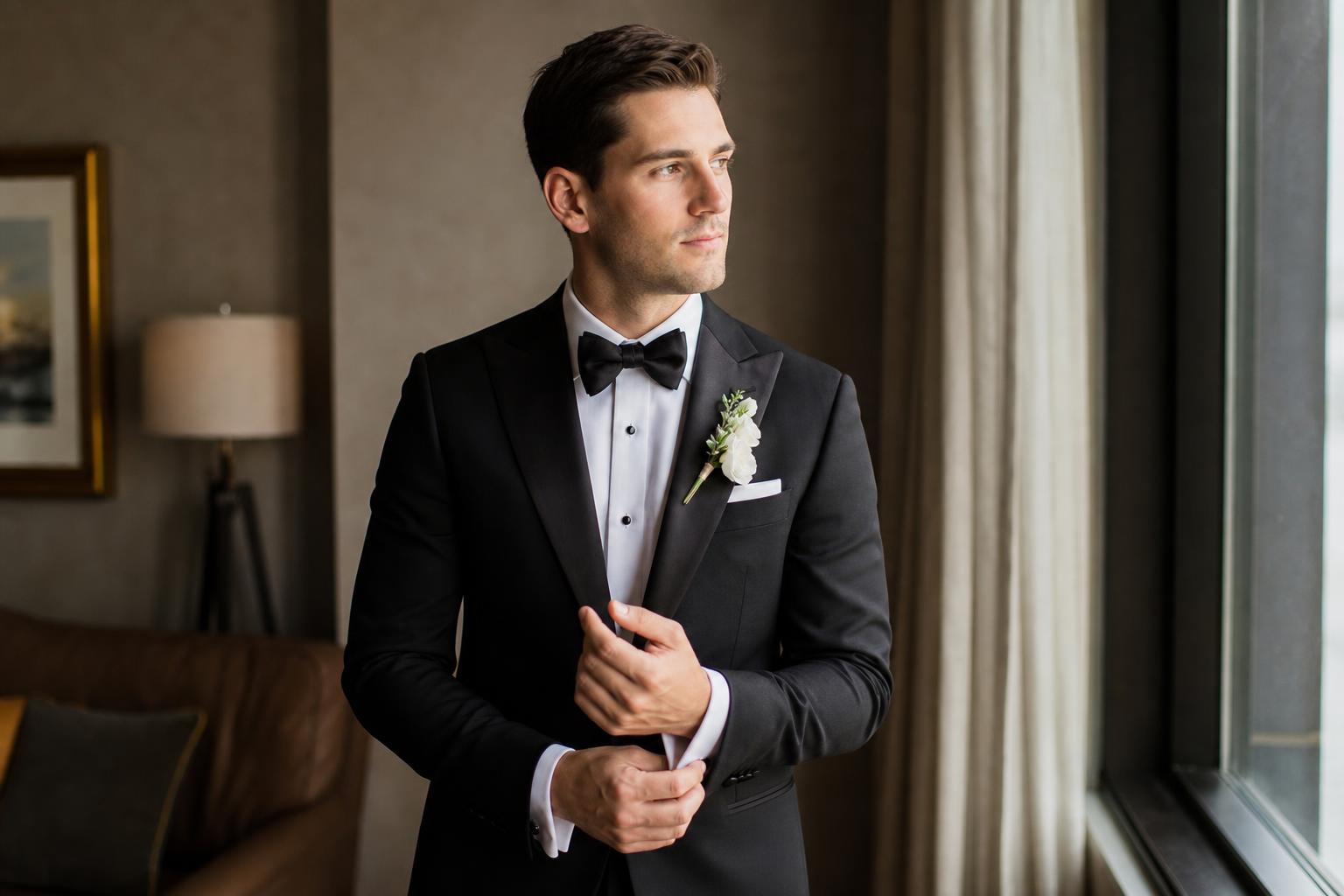
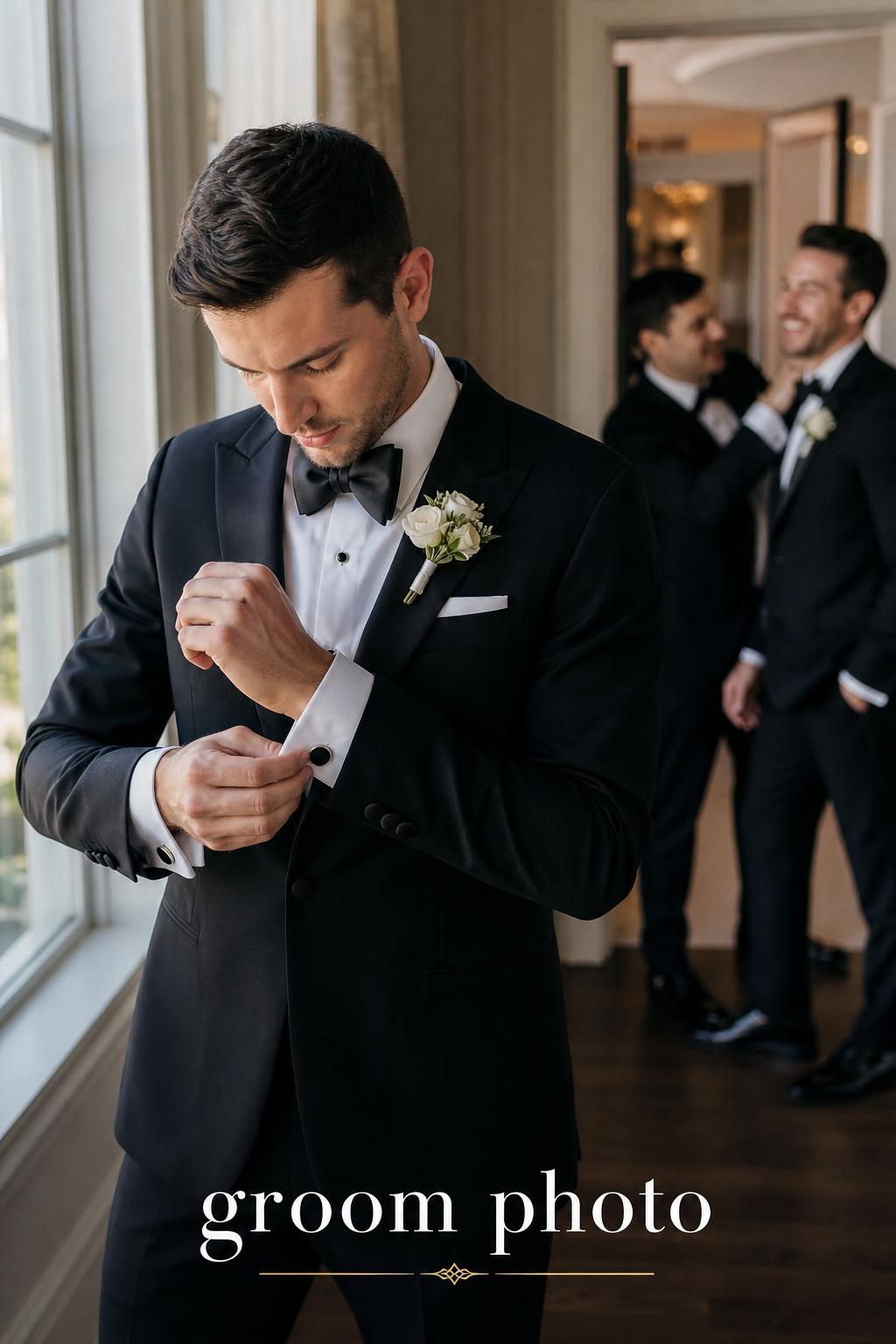
Some of the most dependable groom prep photos are also the simplest. A jacket being put on, tie or bow tie adjustments, fastening cufflinks, pinning the boutonnière, and a portrait near a window remain timeless because they show action without looking overly staged. These moments are easy to recreate if needed, but they still feel authentic when photographed well.
- The groom adjusting his jacket or lapels
- A close portrait while fastening cufflinks
- The boutonnière being pinned into place
- A mirror reflection shot during final wardrobe touches
- A seated portrait before leaving for the ceremony
- A quiet candid moment with a drink, note, or breath before the day begins
These ideas work because they combine detail and emotion. They also give the wedding photographer a chance to capture both portraiture and storytelling in the same short window of time. If the schedule is tight, these are usually the first moments worth protecting on the timeline.
Modern groom prep with groomsmen energy
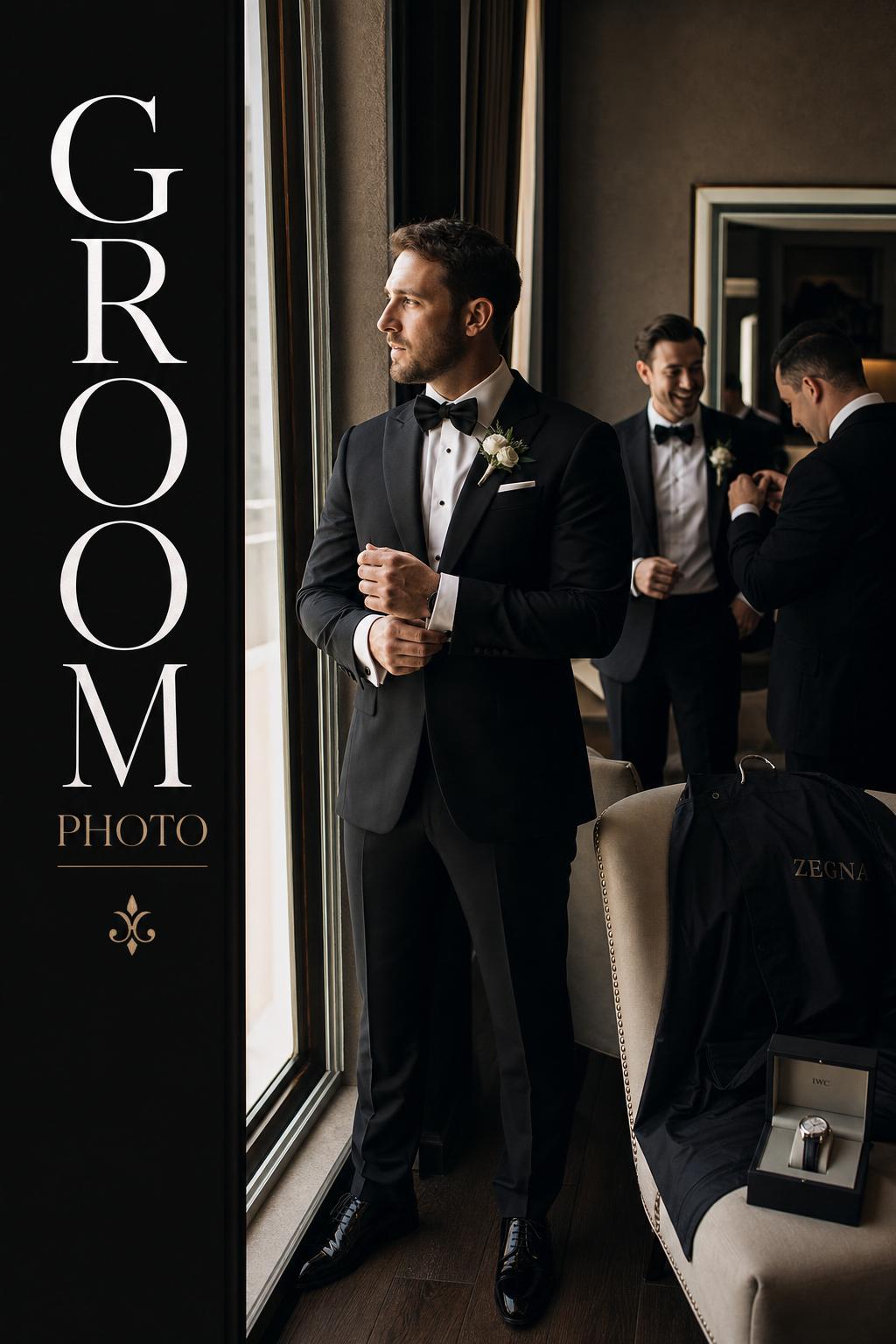
While classic solo portraits have elegance, modern groom photo collections often feel strongest when they include interaction. Groomsmen bring movement and personality into the frame, especially during prep. The best man helping with a jacket, a group toast, shared laughter, or a hallway walk can turn a standard gallery into something far more alive.
This is where coordination matters. If the groomsmen attire feels cohesive, the images immediately look more polished. Fashion-focused wedding retailers like Kennedy Blue often highlight how coordinated styling improves group portraits. Matching levels of formality, consistent color direction, and clean boutonnière placement all help create visual unity without making the group look overly uniform.
In practical terms, group energy should be guided just enough. Completely unstructured shots can become chaotic, but over-directed posing can feel flat. A photographer usually gets the best result by giving a loose prompt, then allowing natural reactions to happen inside it.
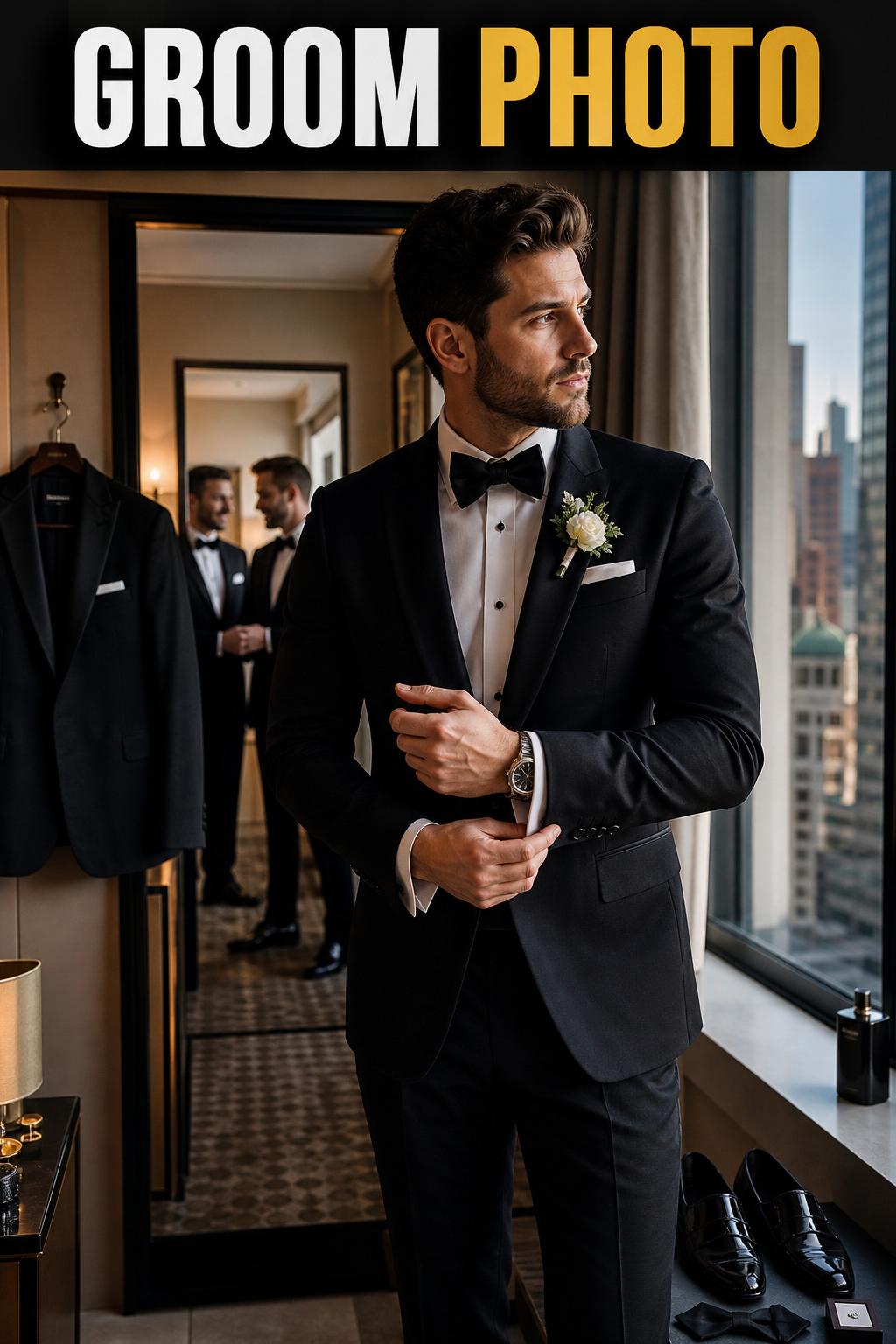
Portrait styles that shape the mood of a groom photo
Not all groom portraits should look the same. One of the clearest ways to elevate the gallery is to choose a portrait style that fits the wedding atmosphere, the venue, and the groom’s personality. Some weddings call for a refined editorial look. Others feel better with softer candid images. Many of the strongest galleries include both.
Timeless portraits for classic weddings
Classic groom portraits tend to rely on calm posture, clean backgrounds, and strong light. They work beautifully for formal weddings, black-tie settings, and traditional venues. A tuxedo or sharply tailored suit photographs especially well in this style because the lines of the clothing become part of the composition.
For this approach, less is often more. A doorway, an elegant hallway, the exterior of a venue, or a simple window-lit room can be enough. Martha Stewart Weddings often leans into this polished portrait tradition by emphasizing lighting, posing, and a more refined visual language. The resulting images feel collected, intentional, and easy to place anywhere in an album without dating the look.
Candid portraits for relaxed and emotional weddings
Candid groom portraits are less about direct eye contact and more about mood. Looking out a window, walking through the venue, laughing with the wedding party, or reacting during the first look creates images with softness and immediacy. Brides and WeddingWire often frame these moments as part of a broader emotional story rather than isolated poses, and that distinction matters.
This style is particularly effective when the couple wants their wedding photography to feel less formal and more lived-in. It can also help a groom who says he is uncomfortable in front of the camera. Instead of asking him to hold a rigid pose, the photographer can build movement into the portrait session. That usually produces more natural expressions and better body language.
Editorial and lifestyle-inspired imagery
Stock platforms such as Getty Images, Unsplash, and Pexels often showcase groom photos through mood, setting, and aesthetic styling. While these galleries are not instructional in the same way magazine articles are, they reveal a pattern couples can use: clean compositions, lifestyle energy, and a strong sense of atmosphere. This can be especially inspiring for modern weddings where the couple wants a visually curated look without losing emotional warmth.
An editorial-leaning groom photo may use architectural backdrops, controlled posture, or strong wardrobe emphasis, while a lifestyle version may use looser movement and environmental context. The best choice depends on whether the wedding vision feels more formal and directional or more intimate and spontaneous.
Light, location, and the look of the final image
Even the most confident groom will photograph differently depending on light and setting. This is one of the most important practical decisions in wedding photography, yet it is often underestimated during planning. A good location does not have to be complex. It simply needs to support the mood and make the groom stand out.
Natural light remains one of the most flattering options for groom portraits, especially during prep or near the end of the day. Window light softens facial features and gives texture to a suit or tuxedo without making the image feel harsh. Golden hour can also create romantic warmth for outdoor portraits, particularly if the couple wants a softer, more atmospheric feel. On the other hand, some classic indoor portraits benefit from more controlled lighting, especially in darker venues.
The research around top-performing wedding content also points to growing interest in gear and lighting considerations. Couples do not need to understand every technical detail, but it helps to know why the photographer may suggest one location over another. Clean natural light, enough space for movement, and a background that does not distract usually matter more than elaborate styling.
City settings and venue personality
Location shapes a groom photo in subtle but important ways. A New York venue may lend itself to structured architectural portraits, while Los Angeles settings may feel more open and lifestyle-driven. Chicago can support both classic urban formality and modern venue portraits, and Dallas often works beautifully for weddings that balance polish with warmth. These city signals help couples decide what kind of portrait style feels natural rather than forced.
Venue character matters just as much. An elegant interior, a quiet courtyard, a stairwell, or a prep suite with enough space can all become strong backdrops. What matters is consistency with the wedding’s visual language. A modern groom portrait in a cluttered space can feel disconnected. A simple location chosen with care often produces the stronger image.
The first look as a defining groom photo moment
Few parts of the wedding day carry the emotional power of a first look. For many couples, this is the moment when groom photo ideas become less about styling and more about feeling. The anticipation before the turn, the reaction itself, and the quiet pause afterward create some of the most meaningful images in the full gallery.
What makes first look photos especially powerful is their built-in narrative. There is a beginning, a reveal, and an emotional response. That sequence gives the photographer far more to work with than a single posed portrait. The Knot and Brides both place strong emphasis on first-look moments because they naturally combine intimacy, storytelling, and portraiture.
How to make first look photos feel genuine
The most successful first look images usually come from thoughtful pacing rather than heavy direction. The couple should have enough privacy to focus on one another, but enough structure that the photographer can anticipate the reaction. A beautiful location helps, but the emotional setup matters more. If the timeline is rushed or the area is crowded, the moment can feel fragmented.
- Choose a location with visual privacy and clean light
- Build extra minutes into the timeline so the moment does not feel rushed
- Let the photographer guide positioning, then step back emotionally
- Allow room for movement after the reveal rather than freezing immediately into a pose
- Follow the first look with a few relaxed couple portraits while the emotion is still fresh
For grooms who are less comfortable with portraits, the first look can actually make the next series of images easier. Once the emotional tension breaks, posture softens, expressions become more natural, and the couple often settles into a more genuine rhythm together.
When style details deserve their own frame
One of the most effective ways to improve groom portraits is to treat style details as part of the wedding story rather than as isolated accessories. Brides and other wedding lifestyle platforms regularly connect attire choices to the final look of the image, and that approach is useful for planning. A groom’s outfit does not just influence fashion; it influences the tone of the photographs.
A classic tuxedo often supports more formal, timeless portraits. A suit may feel slightly softer or more modern depending on the cut and styling. Smaller elements such as cufflinks, tie patterns, lapel details, and boutonnières can also create visual interest in close shots. These details are especially worth documenting if they connect to the wedding palette or the broader design of the day.
That said, detail photos work best when they serve the larger story. Too many isolated accessory shots can feel detached if they are not followed by portraits showing the full look in motion. A buttoned jacket, a hand adjusting a cuff, or the boutonnière being pinned is often more compelling than a detached flat lay because it shows the detail in context.
Group portraits with groomsmen that still feel stylish
Group portraits can quickly become either the most joyful or the most awkward part of the groom’s photo coverage. The difference usually comes down to rhythm, styling, and restraint. Groomsmen photos do not need complicated concepts to feel iconic. They need enough coordination to look polished and enough movement to feel alive.
Kennedy Blue’s blog-style wedding content points toward a common truth: coordinated fashion makes group portraits easier to compose. Similar attire levels, balanced spacing, and simple prompts create stronger images than random posing. A hallway walk, a toast, or a loosely arranged standing portrait often feels more natural than forcing every person into the same gesture.
Ideas that work especially well for groomsmen photos
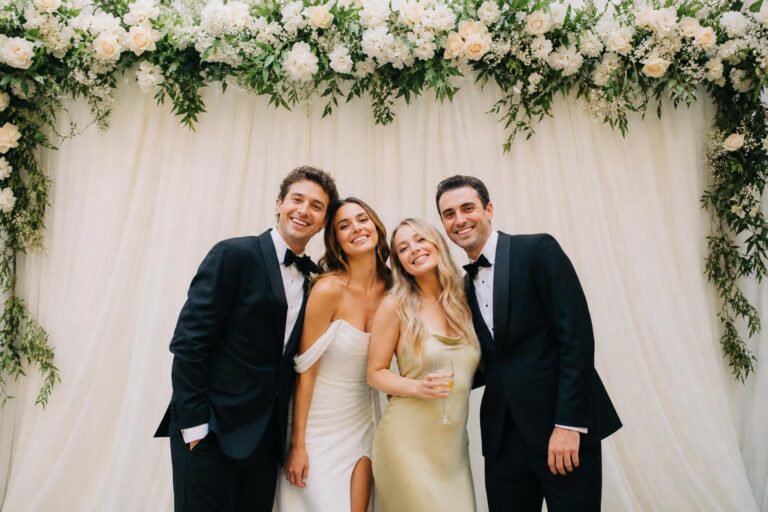
- A straight-on portrait with the groom centered and groomsmen relaxed around him
- A walking shot outdoors or through a venue corridor
- A candid moment while jackets are adjusted or ties are straightened
- A celebratory toast before the ceremony
- A portrait on venue steps or in an architectural doorway
- A mixed candid-and-posed sequence so the gallery includes both energy and structure
The best man can also have a more defined role in this part of the gallery. A quiet shot helping the groom prepare often adds warmth and gives the album more emotional dimension than group humor alone.
Cultural wedding moments that expand the groom photo story
One of the clearest opportunities in groom photography is giving proper attention to cultural traditions. Wedding coverage becomes richer when it reflects the full shape of the celebration rather than defaulting to a single standard portrait formula. Some weddings include events and customs that naturally create powerful groom-focused imagery and deserve planning space in the timeline.
For example, Indian wedding celebrations may include moments such as the sangeet or baraat that bring movement, family energy, and ceremony-specific atmosphere into the groom’s gallery. Jewish wedding traditions may also shape which portraits feel most meaningful and when they should happen. These settings often call for a slightly different photographic approach because the emotional center may come from ritual, procession, or community interaction rather than a quiet prep room alone.
For couples planning culturally specific events, the key is to identify which groom moments carry the most significance and communicate that clearly to the photographer. This helps protect time for portraits that feel personally meaningful rather than visually generic.
What often goes wrong with groom portraits
Strong wedding photos are rarely the result of luck alone. Most disappointing groom images can be traced to a few avoidable issues. Knowing these early helps couples make better decisions and helps photographers protect the quality of the gallery.
- Not setting aside enough time for groom getting ready shots
- Using a cluttered prep room with poor light
- Focusing only on solo portraits and skipping emotional interactions
- Overposing the groom until the images lose personality
- Ignoring group coordination for groomsmen attire
- Saving all meaningful portraits for after the ceremony when energy may be lower
Another common issue is imbalance. Some couples plan dozens of bride-focused images but only a handful for the groom. That can leave the final album feeling incomplete. Even a short, well-designed groom portrait plan can make the coverage feel far more intentional.
Practical tips for couples and photographers planning a better groom photo session
Good planning creates ease in front of the camera. The groom does not need to become a model, and the session does not need to be long. What matters is choosing moments, locations, and portrait styles that fit the pace and feeling of the day.
Tips for a smoother wedding morning
Start by protecting the prep environment. Ask the wedding party to keep bags, food, and casual clothing out of the main photo area. Have the full outfit ready before the photographer arrives, including shoes, jacket, boutonnière, and cufflinks. If there is a note from the bride or a meaningful gift exchange, that can be incorporated naturally into the photo story.
It also helps to think in sequences rather than isolated shots. Instead of requesting only one portrait at the end, plan for a progression: detail moments, dressing, solo portraits, interactions with groomsmen, then movement toward the ceremony or first look. This sequence produces a more complete gallery with very little extra time.
Tips for natural posing
Most grooms photograph best with small tasks or prompts instead of rigid posing. Looking down while adjusting a cuff, walking slowly with groomsmen, leaning slightly in a doorway, or turning toward the first-look location can all create better results than simply standing still and smiling. This approach is especially useful for anyone who feels self-conscious in portraits.
There is also value in variety. A gallery that includes one classic portrait, one candid reaction, one groomsmen image, and one emotionally driven couple moment will feel stronger than a long series of nearly identical solo poses.
Tips for balancing aesthetics and reality
Every wedding has constraints. Some prep spaces are small, some schedules are compressed, and some venues have limited light. In those cases, the best solution is not trying to copy every image style at once. It is choosing the two or three most important groom photo priorities and doing them well. A brief window-lit portrait and a thoughtful first look may matter more than trying to force a large editorial series into a rushed morning.
Building a complete groom gallery from prep to final portraits
The most satisfying wedding galleries usually feel cohesive from beginning to end. For groom coverage, that means thinking beyond one isolated portrait block. A complete set of images often includes preparation, solo portraits, wedding party interactions, first-look or pre-ceremony emotion, and a few quieter couple portraits later in the day.
Color, mood, and editing style also shape how these images live together. While many wedding resources do not fully explore post-processing, couples often notice the effect immediately in the final gallery. Softer color grading can make candid moments feel romantic, while cleaner contrast can support more formal portraiture. What matters most is consistency. The images should feel like parts of the same wedding story, not disconnected visual experiments.
This is also where venue and location choices continue to matter. A quiet portrait at the ceremony venue before guests arrive, followed by a warm outdoor image later in the day, can create beautiful variation without breaking the visual flow. The groom photo story becomes strongest when each setting adds something different but still feels connected.
A thoughtful vision for city weddings and style-forward celebrations
Couples planning weddings in major U.S. cities often benefit from treating location as part of the portrait identity. In New York, the architectural mood of the venue or surrounding streets can support more structured groom portraits. In Los Angeles, the imagery may lean more lifestyle-driven, airy, and relaxed. Chicago can support a balance of classic and contemporary, while Dallas often suits polished portraits with warmth and movement. These differences do not require entirely different wedding plans, but they can help guide the visual tone.
For style-forward celebrations, the key is restraint. One editorial portrait, one classic image, and one candid sequence often feel more elevated than an overly ambitious collection of trends. Couples who want a more curated look can also prioritize attire details, venue character, and a strong first-look location without turning the wedding day into a production.
Choosing the groom photo ideas that fit your wedding best
The right groom portraits depend on the wedding itself. A black-tie celebration may call for timeless solo images, clean group portraits, and a composed first look. A more relaxed event may benefit from candid prep coverage, movement with groomsmen, and softer, documentary-style portraits. A culturally specific celebration may center the most meaningful imagery around tradition-rich events rather than conventional posed moments.
The decision becomes easier when couples ask a few grounded questions. Is the wedding formal or relaxed? Is the venue architectural, outdoors, or intimate? Does the groom prefer direct posing or natural movement? Are groomsmen photos important? Is the first look a priority? When these answers are clear, the photo plan becomes much more natural.
The most memorable groom photo is rarely the one that tries to do everything. It is the one that feels fully in step with the wedding day: the clothes, the people, the venue, the timing, and the emotion all working together in a way that feels true to the couple.
FAQ
What is the best time for groom photos on the wedding day?
The best time is usually during the getting ready period and again around the first look or pre-ceremony portrait window. This allows for a mix of detail shots, solo portraits, and emotional images before the timeline becomes more crowded.
How should the groom pose for natural-looking portraits?
Natural-looking groom portraits usually come from small actions rather than rigid poses, such as adjusting cufflinks, putting on a jacket, walking with groomsmen, or reacting during a first look. Gentle prompts tend to create more relaxed expressions and better body language.
Are groom getting ready shots really necessary?
Yes, if you want the wedding gallery to feel complete and balanced. Groom getting ready shots add personality, document important details like attire and boutonnières, and create a stronger story leading into the ceremony.
What should be included in a groom photo shot list?
A useful shot list often includes outfit details, cufflinks, boutonnière placement, jacket or tie adjustments, solo portraits, interactions with the best man and groomsmen, venue-based portraits, and first look photos if the couple is planning one.
Do groom photos work better in natural light or indoors?
Natural light is often the most flattering option, especially near windows or outdoors, because it creates soft, polished portraits. Indoor images can work beautifully as well, particularly in elegant venues or carefully chosen prep spaces with controlled lighting.
How many groom portraits should be taken with groomsmen?
A balanced approach works best, with a few composed group portraits and a few candid or movement-based images. This gives the gallery both polish and personality without allowing group shots to overwhelm the groom’s solo coverage.
What makes first look groom photos so special?
First look photos are special because they capture a real sequence of anticipation, reaction, and emotion. They often become some of the most meaningful groom images because they show the groom in a genuine, emotionally expressive moment.
Can groom photos reflect cultural wedding traditions?
Absolutely. Weddings with traditions such as a sangeet, baraat, or Jewish ceremony customs can create especially meaningful groom portraits when those moments are planned intentionally and given space in the timeline.
What if the groom does not like being photographed?
A groom who feels uncomfortable in front of the camera usually does best with candid direction, simple prompts, and short portrait sessions in good light. Starting with getting ready shots or first-look moments can also ease the pressure and produce more genuine images.