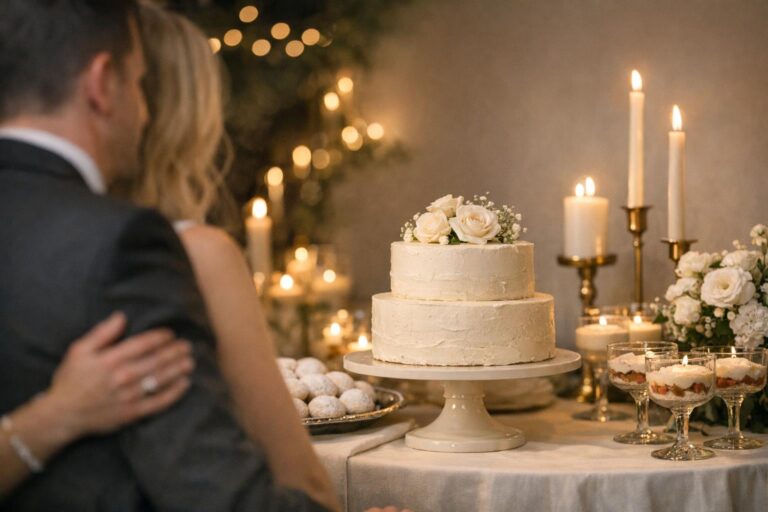
Why Vintage Wedding Cake Styles Feel So Romantic Now
Some wedding details do more than decorate a reception table; they tell guests exactly what kind of love story they are stepping into. A vintage wedding cake has that power. With lace piping, pearl accents, sugar flowers, Art Deco lines, cameo details, and era-inspired color palettes, it can feel as meaningful as the gown, the music, or the venue itself. For couples planning a romantic celebration in the United States, vintage wedding cakes continue to stand out because they bridge nostalgia and elegance in a way that still feels personal.
The most memorable designs are not simply “old-fashioned.” They are carefully chosen expressions of a mood: Victorian softness, Roaring Twenties glamour, Regency grace, 1950s polka dot charm, bohemian ’60s ease, or bold 1970s color. Whether you are building a full vintage-inspired wedding or just want one showstopping dessert moment, the right cake style can anchor the entire aesthetic and give your baker a clear creative direction.
What makes a cake feel truly vintage
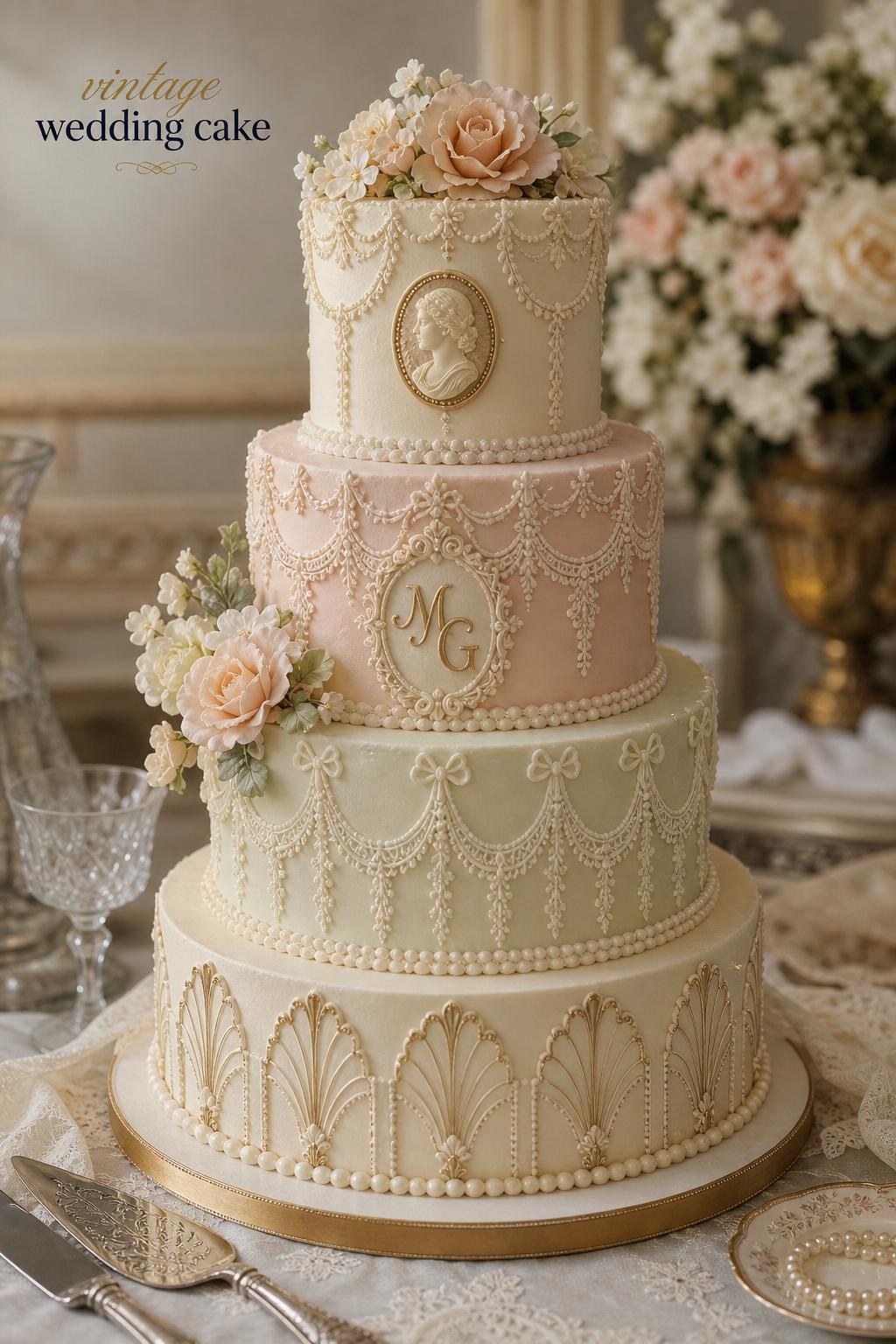
A vintage-inspired wedding cake usually draws from recognizable design eras rather than from one generic look. That is why the most successful cakes feel specific. They may echo Victorian elegance with royal icing, lace motifs, and ivory palettes, or lean into Art Deco wedding cake styling with geometric patterns, metallic accents, and black-and-gold drama. Other versions feel lighter and sweeter, using blush buttercream, pearl borders, floral details, monograms, or retro toppers to create a nostalgic tone without becoming overly formal.
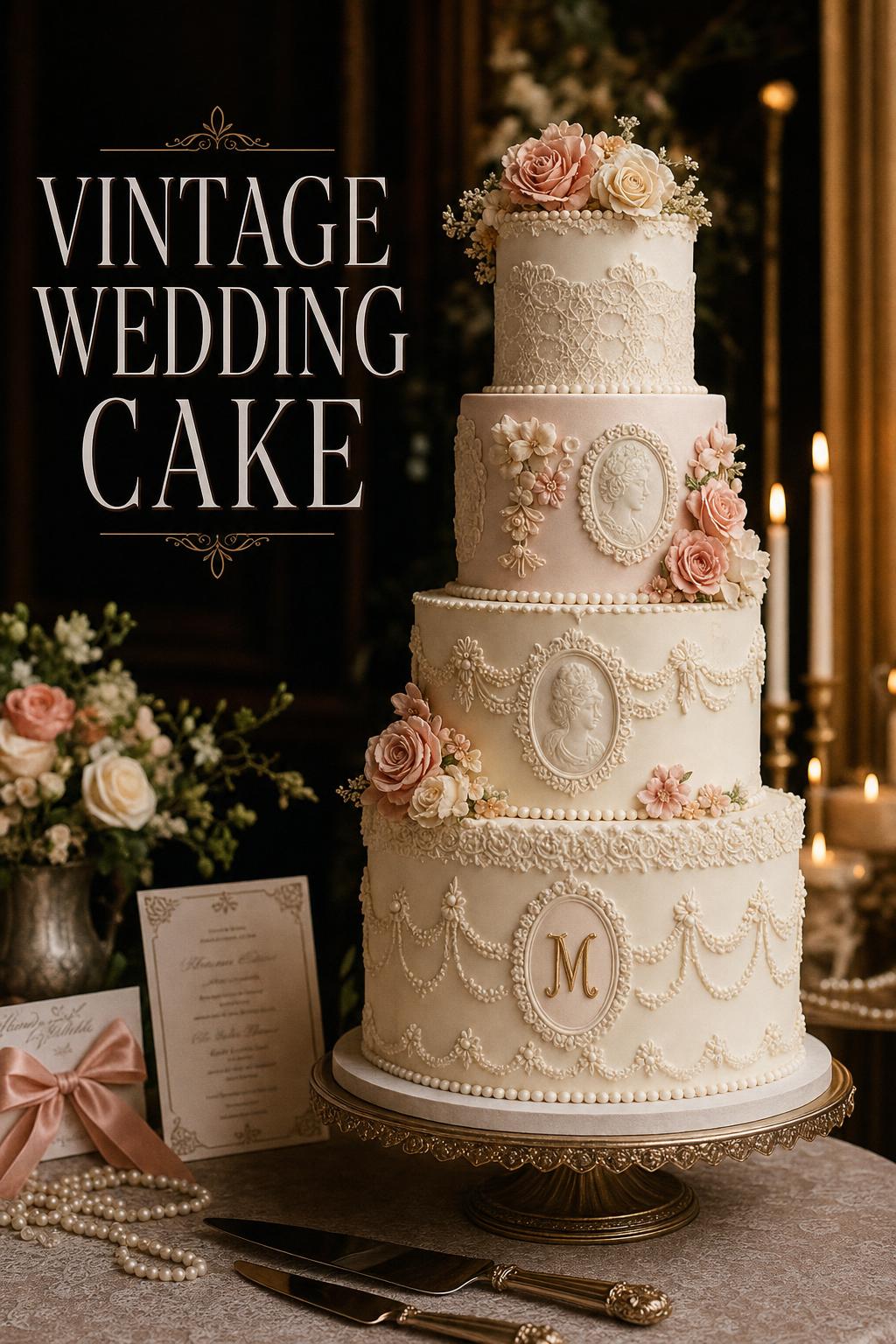
Texture matters just as much as color. Historic cake techniques such as Lambeth piping and refined royal icing work beautifully for couples who want ornate detail and a ceremonial, heirloom quality. Sugar flowers soften the structure and add romance, while cameos, monograms, and cake toppers help connect the cake to the rest of the wedding story. In practical terms, “vintage” is often a blend of one period reference, one decorative technique, and one emotional mood.
Turn wedding inspiration into a plan you can actually follow.
Zarellea brings your guest list, budget, vendors, and day-of details into one shared space — so no beautiful idea gets lost in the shuffle.
This is also where modern weddings shape the final result. Many couples want the nostalgia of a retro wedding cake but still need it to photograph well beside contemporary florals, bridal fashion, and reception styling. A baker can often keep the vintage foundation while editing the palette or silhouette so the cake feels timeless instead of costume-like. That balance is one of the most important decisions in the planning process.
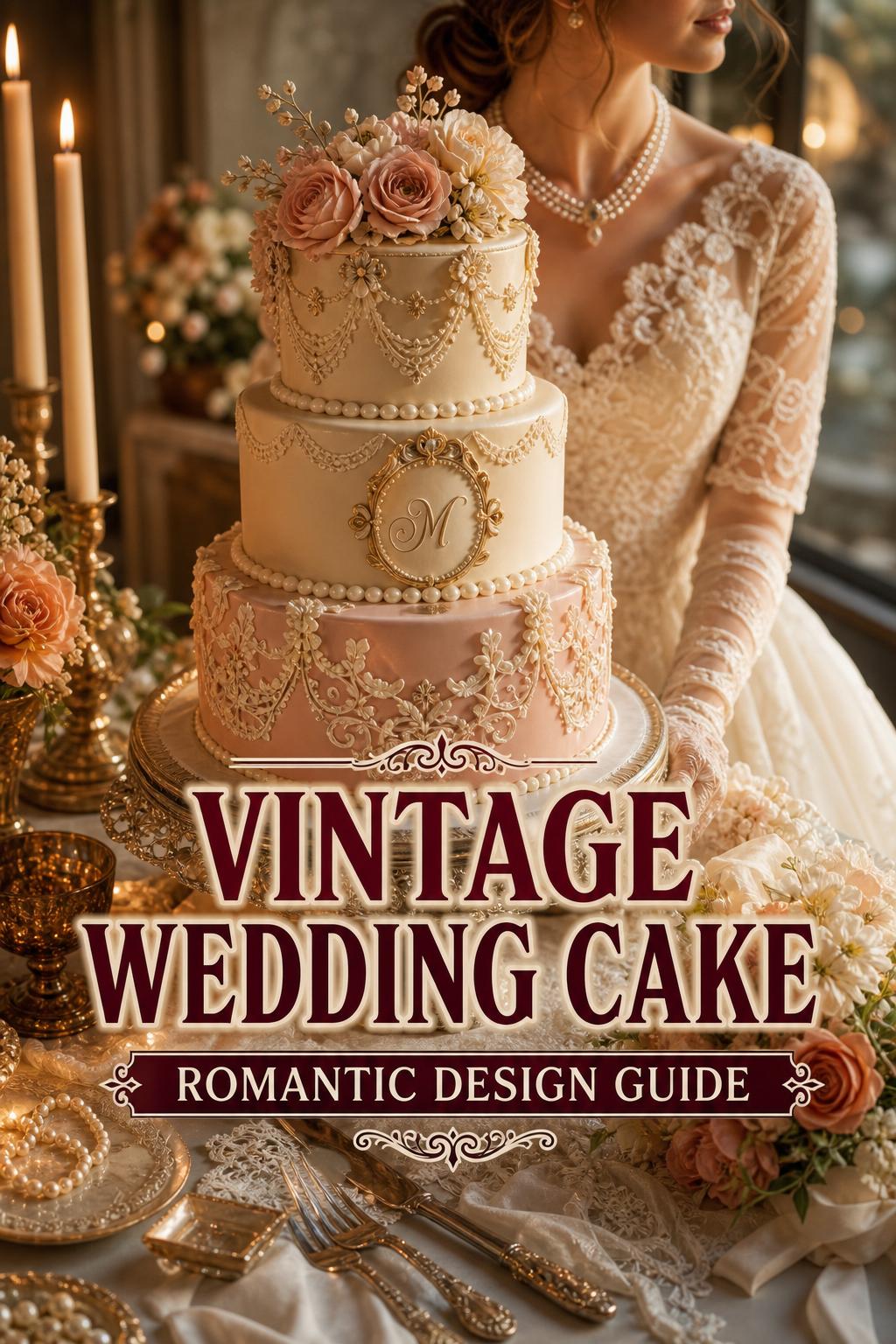
Choosing your era before choosing your cake details
One reason couples get overwhelmed is that “vintage wedding cakes” can mean many different things. Before discussing tiers, flavors, or toppers, it helps to decide which era speaks most clearly to your wedding atmosphere. The design language of a Gatsby glamour reception is not the same as a rustic 1940s-inspired celebration, and neither one overlaps perfectly with a Rococo or Regency mood.
Think first about your venue and emotional tone. A formal ballroom may invite Golden Age Hollywood glamour or a 1920s wedding cake with metallic lines and geometric symmetry. A garden celebration may call for floral elegance, lace-inspired masterpieces, or an Edwardian-inspired design with sugar flowers and soft ivory. A playful celebration can support a 1950s polka dot wedding cake or even an orange and pink 1970s palette with confident retro energy.
For couples creating a mood board, it can help to pull from three connected sources: bridal fashion, tablescape details, and cake decoration. Lace on a gown naturally pairs with lace piping. Pearl jewelry can be mirrored in pearl embellishments. Wedgwood blue or other regency-style blue accents can appear in both stationery and cake design. The strongest vintage cake designs rarely stand alone; they feel woven into the wedding.
The romantic softness of lace and pearls
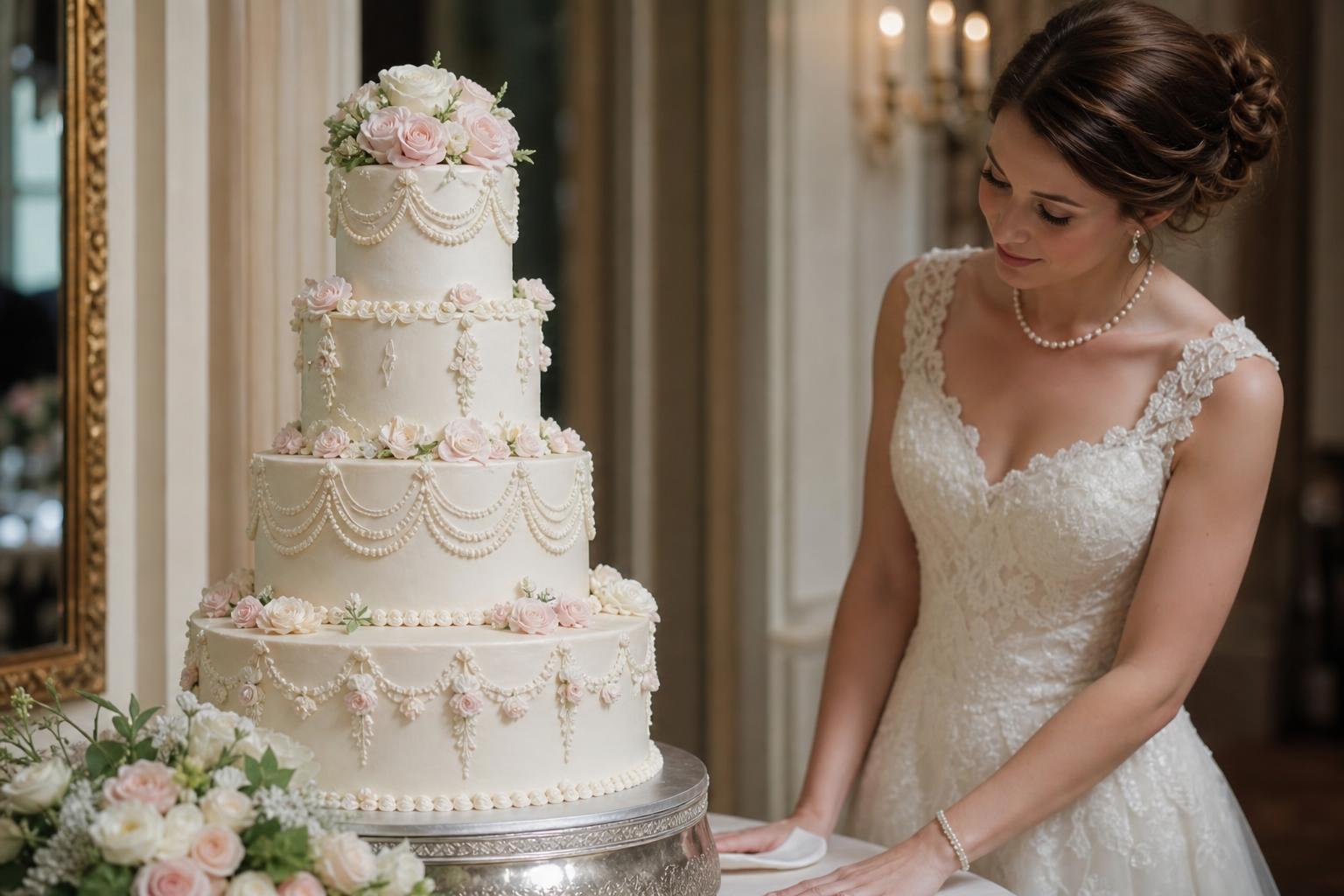
If your wedding vision centers on tenderness, refinement, and a sense of old-world romance, lace and pearls are often the most natural starting point. This style appears again and again in vintage cake inspiration because it translates beautifully from bridal fashion to dessert design. Lace piping can mimic gown appliqué, while pearl accents create a sense of ceremonial polish without becoming too heavy.
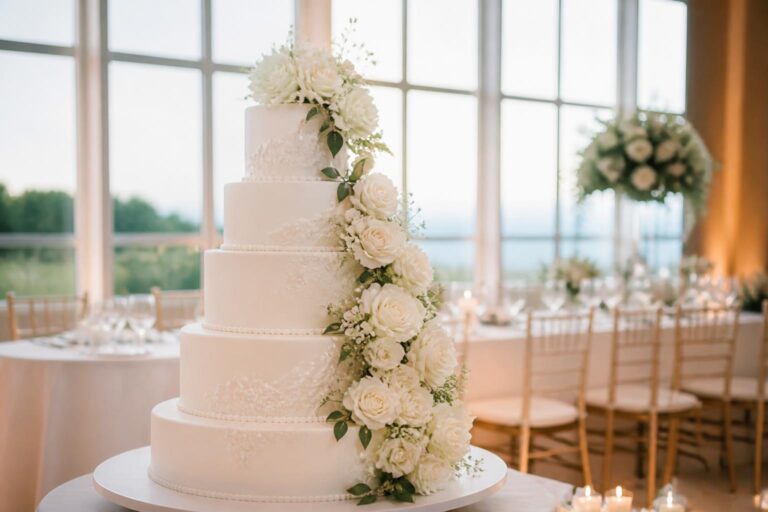
Victorian wedding cake styling is especially suited to this approach. Ivory, champagne, and blush tones create a soft foundation, while delicate scrollwork, lace motifs, and sugar flowers keep the cake feeling layered and intentional. In a formal indoor setting, this look can feel stately and classic. In a garden venue, the same elements can become airy and romantic, especially when paired with floral elegance rather than dense ornamentation.
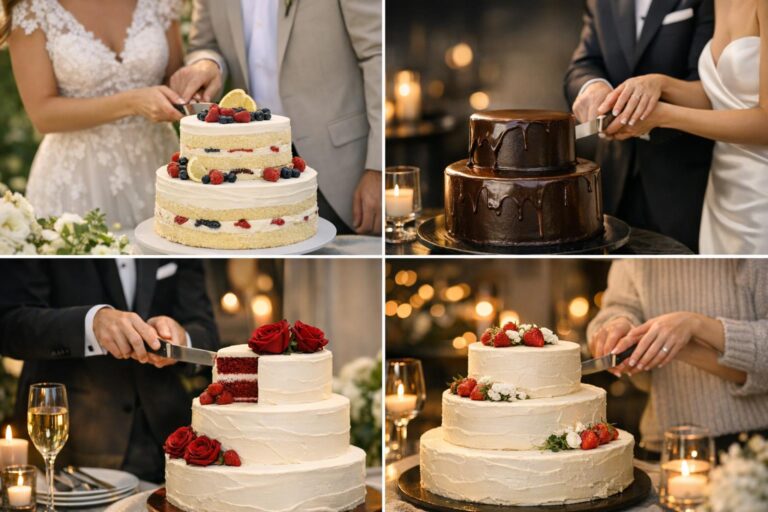
Couples often love this archetype because it photographs beautifully in close-up. The details that seem subtle in person, such as lace texture or tiny pearls, become deeply expressive in cake-cutting images. That visual payoff is one reason wedding media brands like The Knot continue to feature lace-and-pearl vintage designs so prominently. The look reads instantly as bridal, timeless, and emotionally rich.
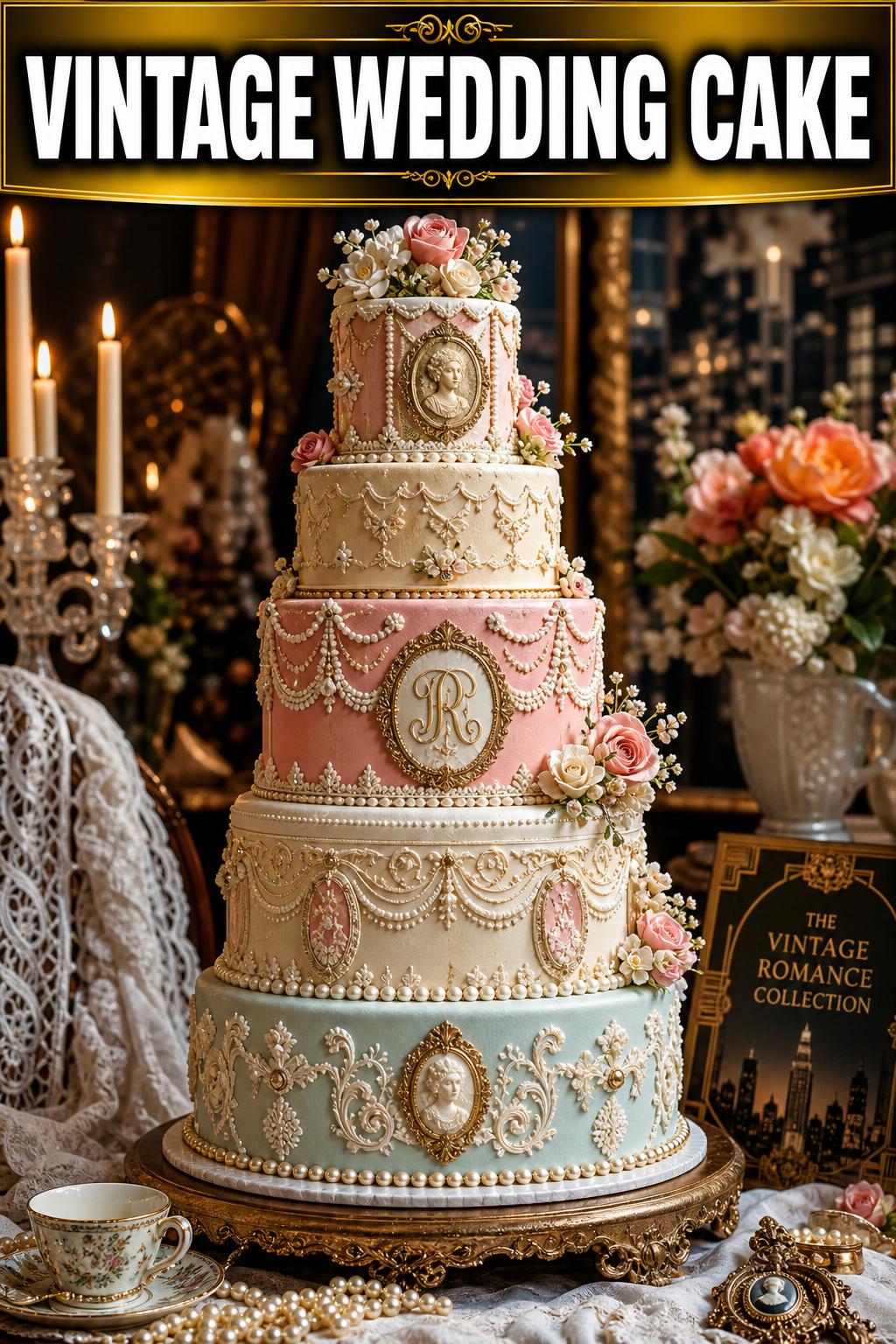
Tips for making lace and pearl details feel elevated
- Keep the palette restrained with ivory, blush, champagne, or pale yellow so the detail work remains the star.
- Repeat one motif from your gown or veil, such as lace patterning or pearl placement, to create cohesion.
- Use sugar flowers sparingly if the piping is highly detailed, so the cake does not feel visually crowded.
- Consider a monogram or subtle topper if you want personalization without interrupting the softness of the design.
Art Deco glamour for a dramatic reception moment
For couples drawn to black-tie energy, mirrored candlelight, or a jazz-age mood, an Art Deco wedding cake offers a more architectural path into vintage design. This style is usually defined by geometry, metallic accents, and a strong sense of structure. Instead of lace softness, the beauty comes from rhythm and contrast: repeating lines, symmetrical tiers, bold paneling, and gold details that catch the light.
Roaring Twenties glamour and Gatsby glamour overlap here, but they are not identical in feeling. Some cakes lean sleek and geometric, with white-and-gold or black-and-gold palettes and clean Deco references. Others feel more theatrical, using feathers, jewel-like details, or glamorous toppers to echo a flapper-inspired or Hollywood-inspired wedding setting. Both approaches work well when the reception has evening formality and strong styling around the cake table.
Art Deco designs can be especially effective for couples who want a vintage look without florals dominating the cake. Geometric tiling, metallic trims, and monograms create a polished statement that feels tailored rather than sweet. This style also pairs naturally with venues that already have dramatic interiors, formal lighting, or a clear city-glam atmosphere.
When Art Deco is the right choice
Choose this direction if your wedding feels more cocktail-hour glamour than garden romance. It works particularly well for evening events, elegant urban venues, and celebrations where the cake is meant to feel like a centerpiece rather than a soft decorative accent. If your flowers, stationery, and attire already feature clean lines or metallic notes, an Art Deco cake will likely feel more harmonious than a floral-heavy Victorian design.
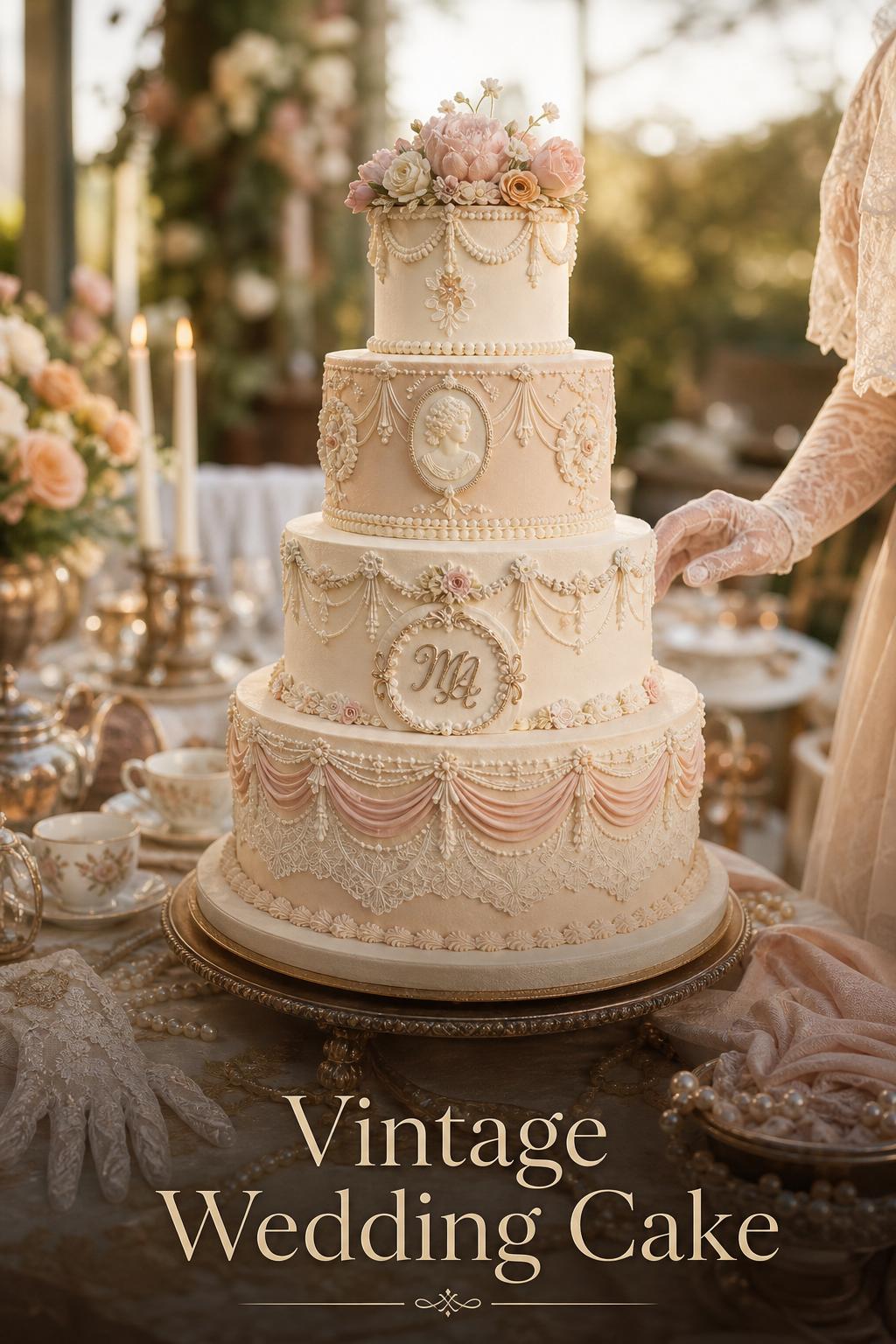
Victorian and Edwardian elegance for timeless romance
Victorian and Edwardian cake styles often appeal to couples who want a vintage-inspired wedding cake that feels deeply bridal rather than overtly retro. These eras share an appreciation for ornate craftsmanship, but the mood can vary. Victorian elegance tends to be richer and more decorative, while Edwardian romance often feels refined, graceful, and slightly lighter in hand.
In both cases, royal icing, sugar flowers, and careful piping create the impression of heirloom craftsmanship. White and ivory remain the most natural base shades, although blush or champagne can soften the mood for a warmer reception palette. Cameos are especially effective here because they tie classical imagery to wedding tradition in a way that feels intimate rather than trendy.
These cakes are ideal for couples who want the dessert to echo lace linens, vintage china patterns, or floral garden styling. They also pair beautifully with monograms and traditional cake stands, creating a dessert display that feels curated rather than assembled. If your wedding vision includes a sense of old-world ceremony, this family of styles is hard to surpass.
A practical note on ornate piping
The more intricate the piping, the more important baker collaboration becomes. Bring clear inspiration images and identify which details matter most to you: scalloped borders, lace scrolls, Lambeth piping, sugar flowers, pearls, or cameo framing. Couples often assume they need every detail shown in inspiration galleries, but a baker can help edit the design so it remains beautiful, realistic, and visually balanced on the day.
Regency blue, cameos, and tea-party romance
Some vintage cake styles feel less grand and more poetic. Regency-inspired beauty and whimsical tea party aesthetics are perfect examples. They tend to favor soft structure, classical references, blue accents, and decorative details that feel literary and romantic rather than formal and theatrical. This is a lovely direction for intimate weddings, elegant daytime receptions, or celebrations with a fine-art sensibility.
Wedgwood-like blue tones, cameo details, delicate piping, and floral motifs help define the look. The result can feel polished without becoming severe. A couple planning a garden wedding or an afternoon reception might choose this style to create a sense of gentle nostalgia, especially if the rest of the décor includes vintage linens, delicate florals, and subtle china-inspired patterning.
Bohemian tea party and Regency influences can also blend well. A cake might include blue accents and classical motifs while still feeling loose, airy, and slightly whimsical. That flexibility is useful for couples who want history and softness without committing to one strict period interpretation.
Playful mid-century and 1950s-inspired charm
Not every vintage wedding cake needs to be formal. Some of the most charming designs come from mid-century references, especially 1950s polka dot styling and pastel-forward palettes. These cakes bring a cheerful, celebratory personality to the reception and work especially well when the couple wants a nostalgic look that feels lighthearted.
Polka dots, soft pink tiers, pale yellow finishes, and compact silhouettes can all nod to this era. A single-tier vintage cake can work beautifully for a smaller celebration, especially when paired with carefully chosen cake stands or dessert table details. The appeal here is often in the balance between sweetness and polish. Rather than aiming for grandeur, the cake becomes a joyful style statement that still feels curated.
This approach can also suit couples who want a retro wedding cake without heavy ornamentation. If your wedding fashion, invitations, or décor have a playful mid-century spirit, these designs can feel more authentic than a highly piped Victorian cake. The mood is less stately and more bright, affectionate, and memorable.
Tips for keeping a playful cake sophisticated
- Use one statement motif, such as polka dots or a pastel tier color, instead of layering too many retro references at once.
- Choose a restrained palette so the cake feels intentional rather than novelty-driven.
- Balance playful pattern with clean tier shapes or minimal florals.
- If you use a topper, let it reflect the tone of the celebration without overwhelming the design.
Bohemian ’60s ease and rustic vintage charm
For couples planning a more relaxed celebration, vintage can lean earthy rather than ornate. Rustic romance and bohemian ’60s vibes offer a softer path that still honors nostalgia. These cakes often rely on buttercream textures, natural-looking finishes, floral movement, and a less formal sense of structure. The effect is warm, approachable, and especially fitting for outdoor weddings or receptions with a handmade, storybook feel.
Rustic 1940s charm and 1960s-inspired bohemian styling do not look identical, but they share an emphasis on texture and mood over rigid decoration. Buttercream can play a major role here, whether in softer swirls, ruffled finishes, or less formal floral placement. This makes the cake feel connected to a relaxed dinner-party atmosphere rather than a grand ballroom presentation.
These designs can also be ideal when the reception already includes a lot of visual texture through wood, linens, or natural florals. In those settings, an ultra-ornate cake may feel out of place, while a rustic vintage approach supports the overall harmony of the day. The key is to keep the nostalgia visible through color, floral choices, or era cues rather than through excessive decoration.
Bold color stories from the 1970s and beyond
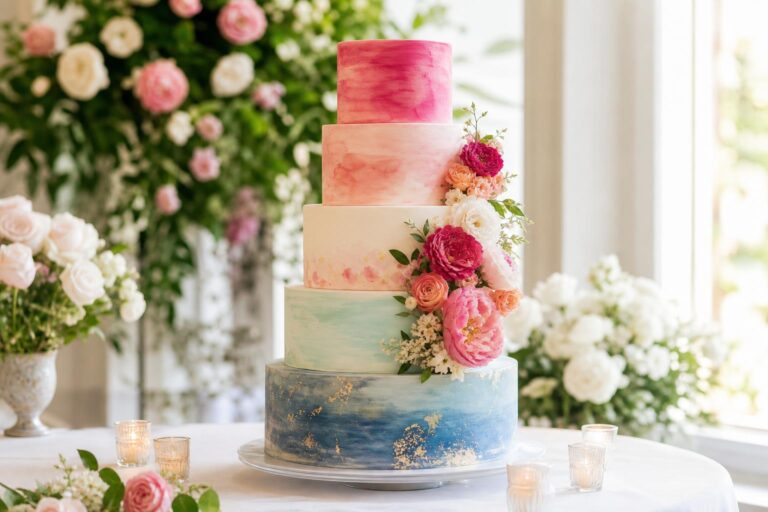
Vintage does not always mean muted. One of the most striking directions in current inspiration is the return of orange and pink 1970s wedding cake styling. This palette feels expressive, warm, and unmistakably retro. It is a strong choice for couples who want their cake to energize the room and reflect a confident personality.
In this family of designs, color becomes the main storytelling device. The cake may still include classic piping or floral decoration, but the emotional impact comes from the bold era reference. Similar logic applies to later nostalgic looks such as buttercream roses from the ’90s or “with love from the ’80s” styling. These references work best when they feel deliberate and integrated into the celebration rather than random.
If you love this direction, it helps to repeat the palette elsewhere in the wedding so the cake does not feel isolated. A retro color story can appear in florals, bridesmaid styling, signage, or reception linens. That repetition gives the cake a sense of belonging and helps it read as part of a complete design narrative.
Hollywood glamour, Rococo splendor, and statement luxury
Some receptions call for a cake that feels unapologetically dramatic. Golden Age Hollywood glamour, Rococo splendor, and related luxe vintage styles embrace excess in the most polished way. Think metallic accents, ornate gold scrolls, feathers, jewel-like details, and silhouettes that feel made for candlelit ballrooms and formal entrances.
These cakes are less about restraint and more about controlled richness. A Hollywood glamour cake may use sleek metallic touches and dramatic contrast, while a Rococo-inspired cake may lean into scrollwork and ornamentation. Both can be breathtaking, but they require careful editing. If the venue, florals, and fashion are quiet, a highly embellished cake may feel disconnected. When the rest of the wedding shares that same luxurious language, the effect can be unforgettable.
Flapper-inspired feather fantasy and Gatsby references can also sit comfortably in this category, especially for evening events. The cake becomes part of the atmosphere of glamour rather than simply a dessert. In that context, the cake table itself deserves attention through styling, lighting, and placement.
Decorative elements that define the vintage look
Even when couples choose different eras, certain decorative elements appear again and again because they communicate vintage style clearly. Knowing these building blocks can make it much easier to brief a baker and narrow your preferences. The goal is not to use every element, but to choose the combination that best suits your wedding tone.
- Lace piping: ideal for bridal softness, especially in Victorian, Edwardian, and lace-inspired wedding themes.
- Pearl embellishments: a classic bridge between jewelry, gowns, and cake design.
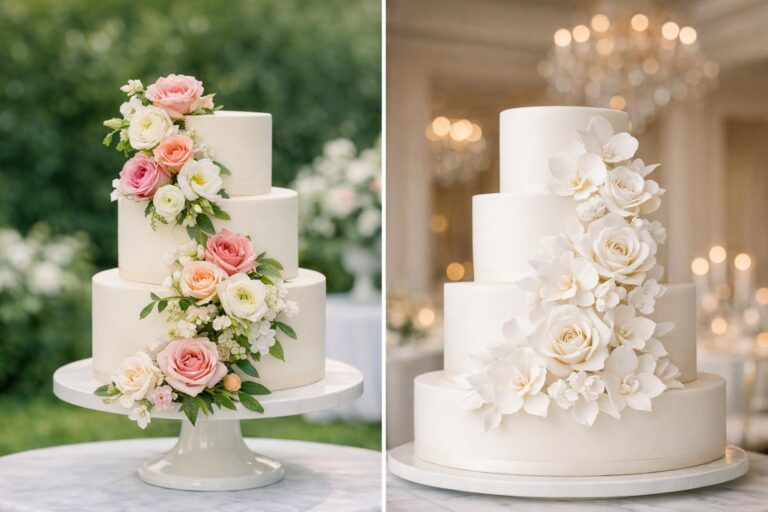
- Sugar flowers: romantic and versatile across floral elegance, Edwardian romance, and garden-inspired settings.
- Royal icing: useful for refined detail and period-inspired craftsmanship.
- Lambeth piping: a historic technique that adds structure, ornate borders, and ceremonial drama.
- Metallic accents: especially effective in Art Deco, Gatsby, Hollywood glamour, and Rococo styles.
- Cameos: beautiful for Regency, Victorian, or classical interpretations.
- Monograms and toppers: personal touches that can make the cake feel distinctly tied to the couple.
These details also help bridge eras. For example, pearls can soften an Art Deco cake, and metallic accents can modernize a Victorian silhouette. That flexibility matters when couples have slightly different style instincts and want a design that feels shared rather than one-sided.
The cake table can complete the vintage story
A vintage wedding cake rarely reaches its full potential in isolation. The surrounding display often determines whether the cake feels like a meaningful design feature or just a beautiful object in the room. Vintage cake stands, trays, linens, and coordinated dessert table styling can strengthen the era reference without requiring extra detail on the cake itself.
This is especially useful for couples who prefer a more restrained cake but still want a rich vintage atmosphere. A classic ivory cake with subtle pearls can feel much more period-inspired when presented with lace textiles, china-pattern influences, or curated props that match the reception aesthetic. In contrast, if the cake is already highly decorative, a quieter table setup may be the wiser choice.
The best displays feel intentional from every angle, including photographs. If your planner, stylist, or baker is helping with setup, ask how the cake table will connect visually to the rest of the room. This is a small planning conversation that can make a major difference in the final result.
Working with your baker from inspiration to execution
Couples often save vintage cake images from media brands like The Knot, inspiration sites like Yeah Weddings, and galleries such as Confetti & Roses because the visual references are so strong. The challenge comes in translating those images into one coherent design. A baker needs more than a folder of beautiful photos; they need to understand which era, techniques, and emotional mood matter most to you.
Start by identifying your non-negotiables. Maybe you love lace and pearls but do not want a fully Victorian cake. Maybe you want a 1920s wedding cake silhouette with a softer blush palette. Maybe the key element is a cameo topper, sugar flowers, or a single-tier design for an intimate event. Once your priorities are clear, it becomes much easier for your baker to build a cake that feels personal instead of copied.
It is also wise to discuss what may not work. Intricate piping, metallic detailing, and highly specific motifs can require more lead time and a steadier design hand. If your wedding already includes many detailed décor elements, a simpler cake may actually feel more luxurious because it gives the eye a place to rest. Expertise often shows up not in adding more, but in choosing the right amount.
Questions worth asking your baker
- Which era references are strongest in the design I’m imagining?
- Can you recreate lace piping, royal icing detail, or Lambeth piping in a way that suits my venue and scale?
- Would sugar flowers, pearls, cameos, or metallic accents read best in person and in photos?
- Should we choose a single-tier cake, a three-tier cake, or another silhouette for the reception setting?
- How can we make the cake feel vintage-inspired without making it overly busy?
Common styling missteps couples can avoid
Vintage cake design becomes most successful when it is edited with confidence. One common misstep is combining too many eras at once. A cake with Victorian lace, Art Deco geometry, bohemian florals, and 1970s color blocking may contain individually beautiful ideas, but together they can create confusion. Choosing one primary era and one supporting accent usually leads to a clearer, more elegant result.
Another issue is forgetting scale. A highly detailed cake can feel magnificent in a close-up image but look visually heavy in a small venue or at a daytime garden reception. On the other hand, a minimalist single-tier cake may disappear in a grand ballroom unless the styling around it is strong. Context matters as much as inspiration.
Finally, couples sometimes focus on the cake alone without considering how it connects to attire, florals, and table décor. The most romantic wedding design moments happen when these choices echo one another. Even a small detail, like repeating pearl accents from a veil onto the cake, can make the entire wedding feel more thoughtful and emotionally complete.
A few vintage wedding cake directions for different celebrations
Every couple defines vintage differently, so it helps to picture the cake in a real wedding context rather than in isolation. A formal evening reception may call for one kind of drama, while a small daytime ceremony may benefit from gentleness and restraint. The following pairings can help clarify which direction suits your celebration best.
- Garden romance: Victorian or Edwardian styling with lace piping, sugar flowers, and ivory or blush tones.
- Black-tie city wedding: Art Deco, Gatsby glamour, or Hollywood glamour with metallic accents and geometric structure.
- Afternoon tea-inspired reception: Regency blue, cameo details, floral motifs, and a softer silhouette.
- Relaxed outdoor celebration: rustic vintage charm or bohemian ’60s textures with buttercream finishes and organic florals.
- Playful nostalgic party: 1950s polka dots, pastel tiers, or 1970s orange and pink color stories.
These pairings are helpful not because they are rigid rules, but because they give couples a realistic starting point. Once the direction is clear, personal details can shape the final cake in a way that feels authentic.
Final thoughts on creating a cake with memory and meaning
The most beautiful vintage wedding cake is not necessarily the tallest, the most ornate, or the most photographed. It is the one that feels believable within your wedding story. Maybe that means delicate lace and pearls under soft garden light. Maybe it means a striking Art Deco design in a glamorous evening room. Maybe it means a small single-tier cake with polka dots and a playful nod to another era that makes both of you smile.
Vintage style is powerful because it carries emotion. It suggests memory, ritual, romance, and a sense of occasion. When you choose an era, a technique, and a mood that truly fit your celebration, your cake becomes more than décor. It becomes one of the details guests remember long after the last slice is served.
FAQ
What is considered a vintage wedding cake?
A vintage wedding cake is a design inspired by past eras or historic decorating styles, such as Victorian elegance, Roaring Twenties glamour, Regency motifs, 1950s polka dots, or 1970s color palettes. Common details include lace piping, pearls, sugar flowers, royal icing, metallic accents, cameos, and monograms.
How do I choose the right vintage era for my wedding cake?
Start with the mood of your wedding and the style of your venue. A ballroom often suits Art Deco, Gatsby, Hollywood glamour, or Rococo influences, while a garden setting may work better with Victorian, Edwardian, or floral lace-inspired designs. If your wedding feels playful or relaxed, mid-century, bohemian ’60s, or 1970s-inspired ideas may fit more naturally.
What details make a lace and pearl cake feel elegant instead of overdone?
Keep the palette soft and restrained, usually in ivory, blush, champagne, or pale yellow, and focus on a few well-executed details rather than too many layers of decoration. Repeating one bridal motif, such as lace from the gown or pearl jewelry, helps the cake feel refined and connected to the wedding instead of overly embellished.
Is an Art Deco wedding cake still considered vintage?
Yes, Art Deco is one of the clearest vintage cake directions because it draws from 1920s and Gatsby-era design language. Geometric patterns, metallic accents, strong symmetry, and dramatic palettes make it especially popular for formal receptions and evening weddings with a glamorous atmosphere.
What is Lambeth piping, and why is it mentioned with vintage cakes?
Lambeth piping is a historic cake decorating technique known for ornate borders, layered piping, and a highly ceremonial look. It matters in vintage cake design because it brings visible craftsmanship and period character, especially for couples who want a more elaborate or traditionally decorated cake.
Can a single-tier cake still look vintage and special?
Absolutely. A single-tier vintage cake can be deeply charming when the design details are intentional, such as cameo accents, lace piping, pearls, pastel color, or a beautiful cake stand. This option works especially well for intimate weddings or couples who want a smaller cake with strong personality.
How do I work with my baker to create a vintage-inspired wedding cake?
Bring inspiration images, but also explain which elements matter most to you, such as era, piping style, pearls, sugar flowers, metallic accents, or color palette. A baker can usually guide you better when they understand the feeling you want, not just the images you saved. Clear priorities help them create a cake that feels personal and realistic for your wedding.
Which vintage cake styles work best for garden weddings?
Victorian, Edwardian, Regency-inspired, and floral elegance styles tend to work beautifully for garden weddings because they favor soft palettes, sugar flowers, delicate piping, and a romantic atmosphere. These styles feel natural outdoors and pair well with lace linens, vintage décor, and gentle color stories.
Can I mix vintage influences from different eras?
You can, but the mix usually works best when one era leads and another appears as a subtle accent. For example, a primarily Victorian cake might include a modernized metallic touch, or an Art Deco cake might be softened with pearl details. Too many strong period references at once can make the design feel visually confused.