Rustic Wedding Cake Styles for Every Venue and Mood
Picture a reception in a mountain lodge, a vineyard at sunset, or a backyard celebration with wood tables, soft candlelight, and overflowing greenery. In settings like these, the rustic wedding cake often becomes more than dessert. It acts as a visual bridge between the venue, the flowers, the table styling, and the overall emotional tone of the day. Yet many couples use the same phrase to describe very different cake looks, from a semi-naked buttercream finish to a birch-bark design or a floral-heavy woodland cake.
That overlap is exactly why rustic cakes are so often discussed together and so frequently confused. A buttercream wedding cake with olive garland feels different from a wood texture wedding cake on a log stand, even though both belong comfortably within the rustic family. This comparison-style guide breaks down the main rustic approaches, shows where they overlap, and helps you decide which version fits your wedding vision, venue, and practical needs.
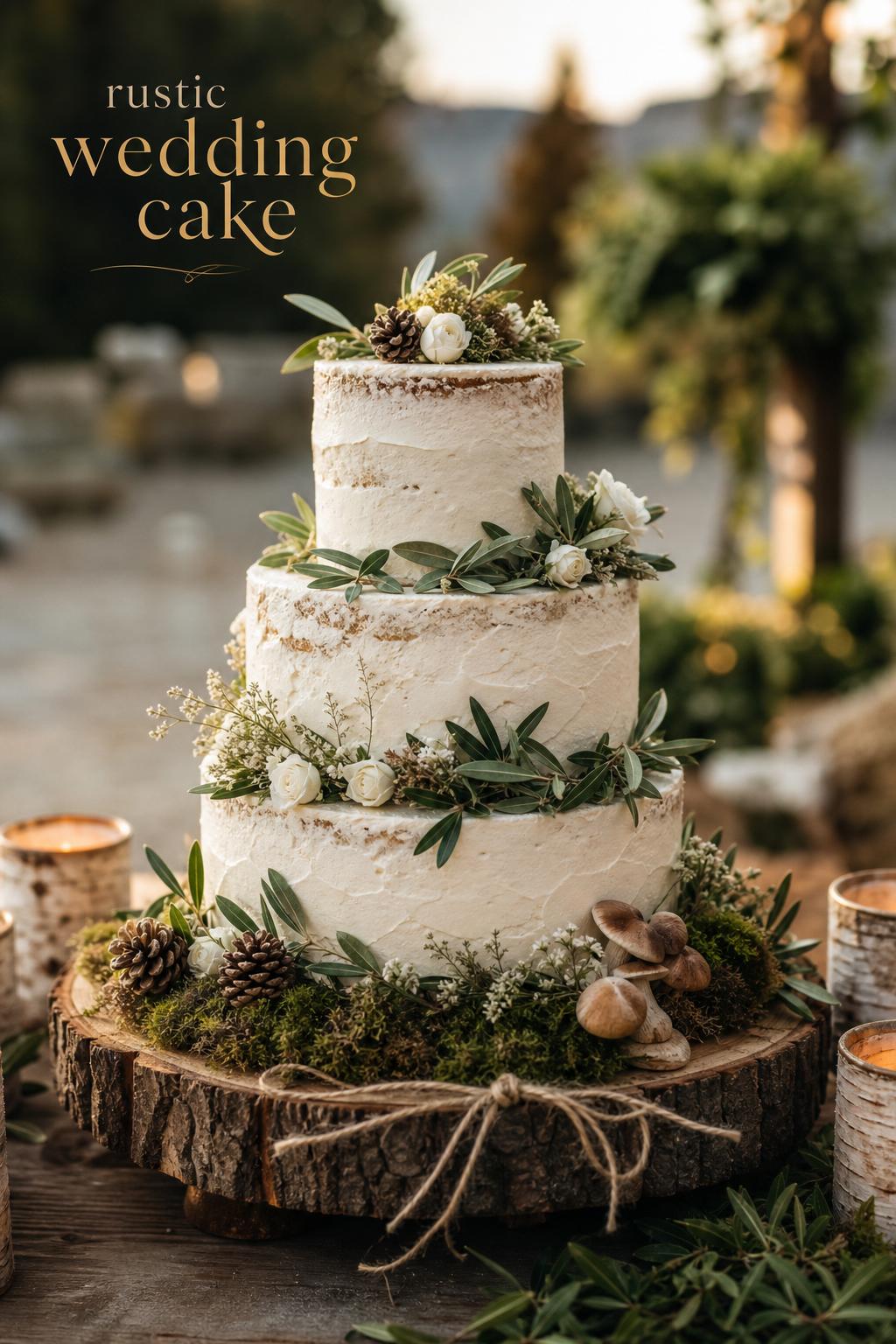
Along the way, you will see how common elements such as greenery, bark-inspired detailing, fresh flowers, wooden toppers, twine accents, tree-stump stands, and even edible mushrooms or pinecones create distinct moods. Whether you are planning a barn reception, a woodland ceremony, a winery dinner, or a mountain celebration at a place like Devil’s Thumb Ranch, Brooklyn Winery, Calistoga Ranch, or Grand Ely Lodge, choosing the right rustic wedding cake comes down to understanding style logic rather than following a single trend.
The rustic wedding cake family at a glance
A rustic wedding cake is best understood as a category rather than one fixed design. Its core identity comes from natural texture, an organic mood, and visual ties to outdoor or warmly styled venues. Across many real weddings, the most recurring rustic details are buttercream finishes, semi-naked styling, greenery, floral accents, wood or bark effects, and presentation pieces like log cake stands or wood toppers.
Turn wedding inspiration into a plan you can actually follow.
Zarellea brings your guest list, budget, vendors, and day-of details into one shared space — so no beautiful idea gets lost in the shuffle.
Within that family, three major style directions appear again and again: the soft and understated semi-naked cake, the sculptural wood-grain or birch-inspired cake, and the floral-led rustic cake. All three can work beautifully, but they create different impressions. One feels airy and effortless, one feels rooted and textural, and one feels romantic and abundant.
Style overview: semi-naked and naked cakes
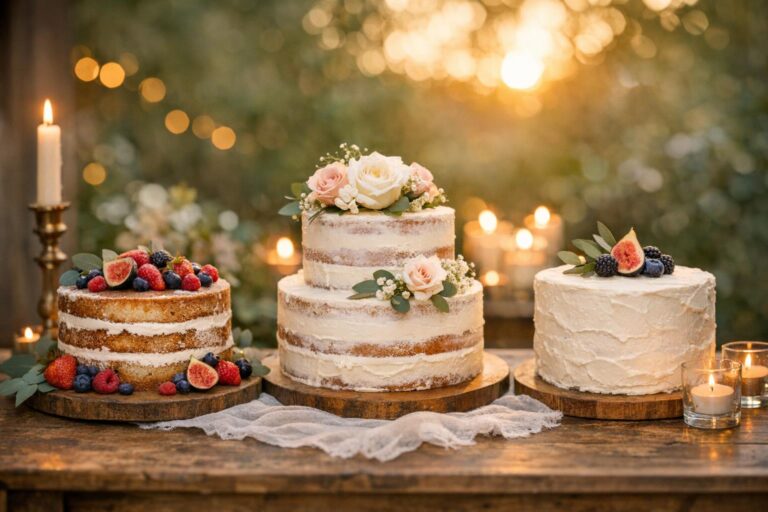
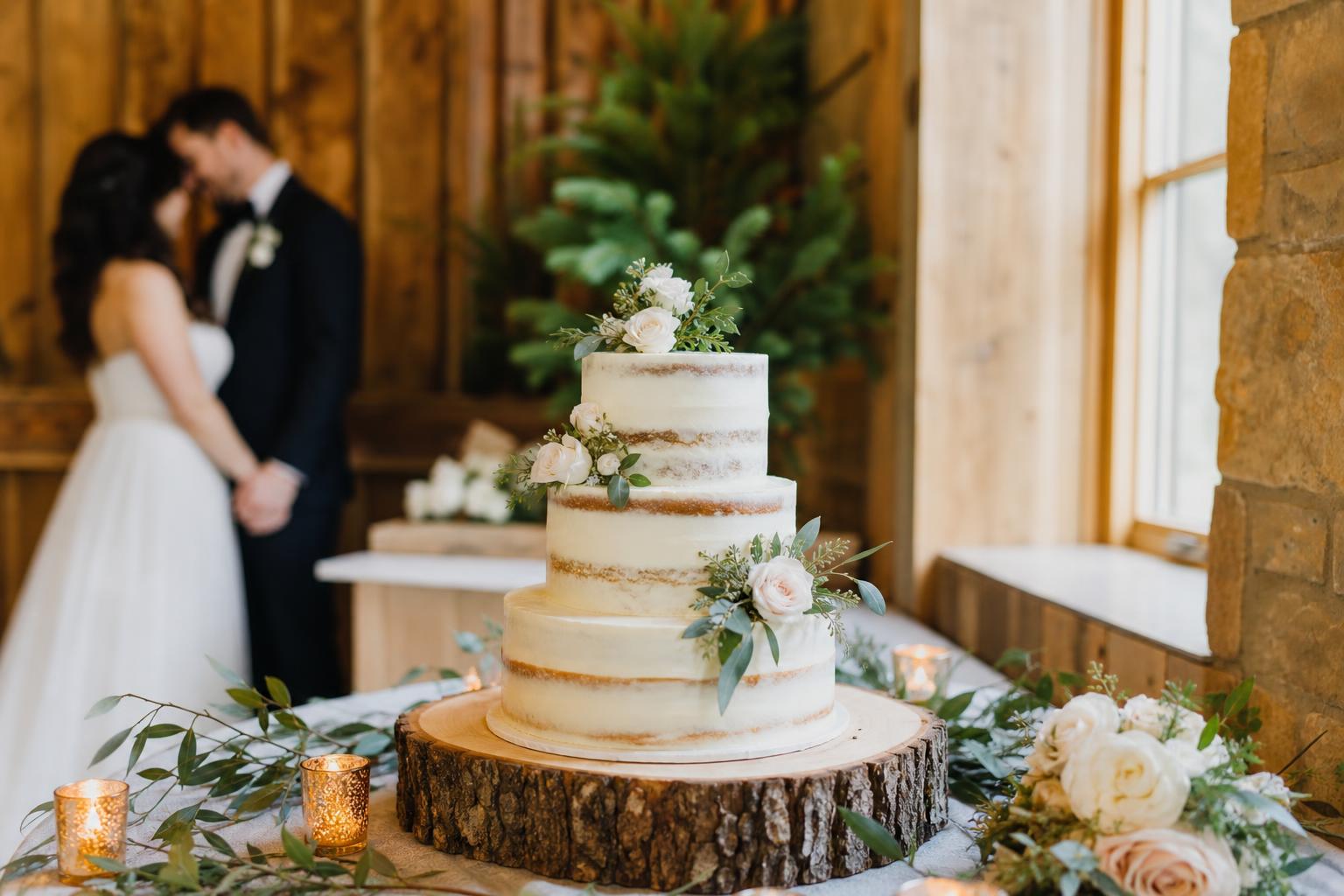
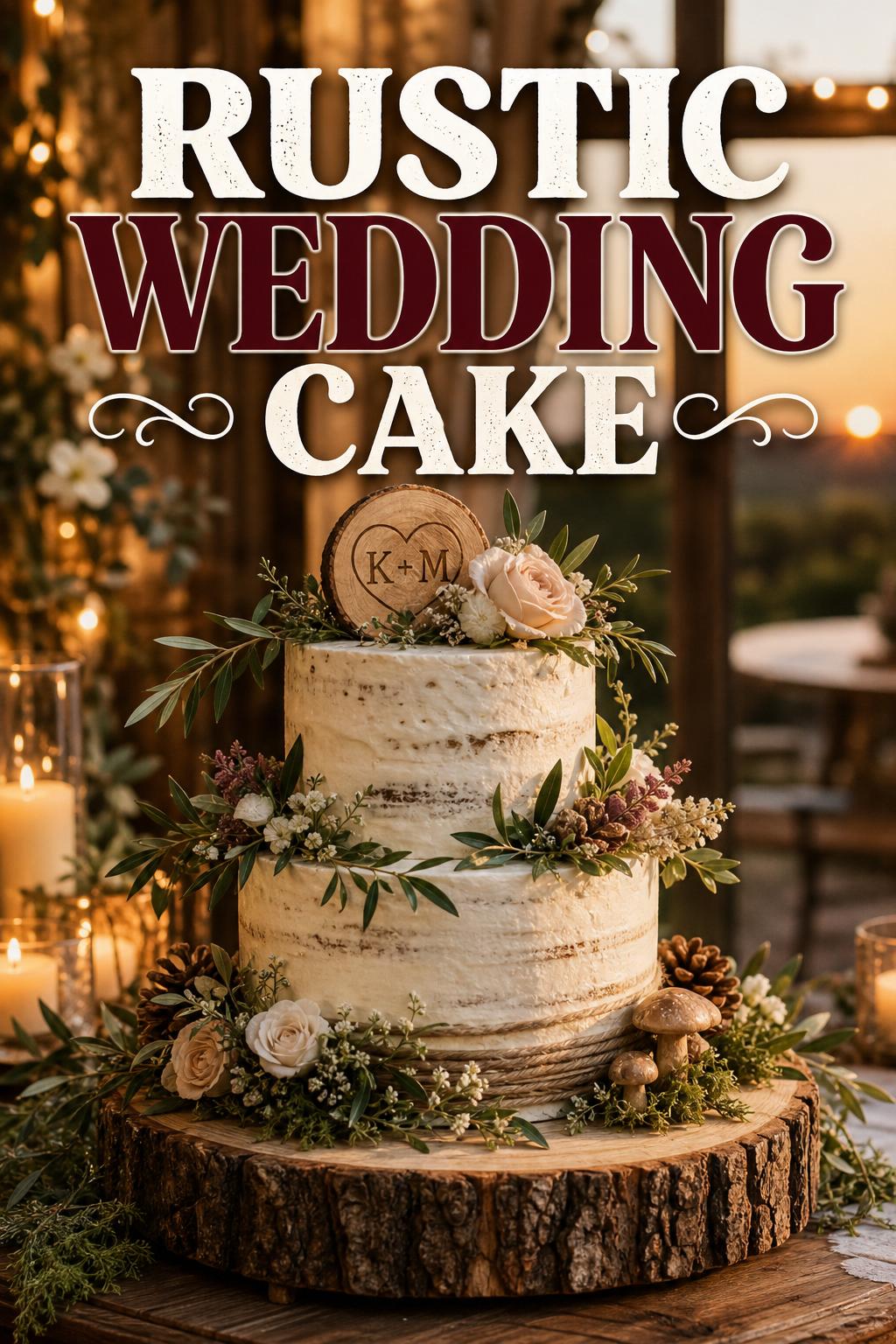
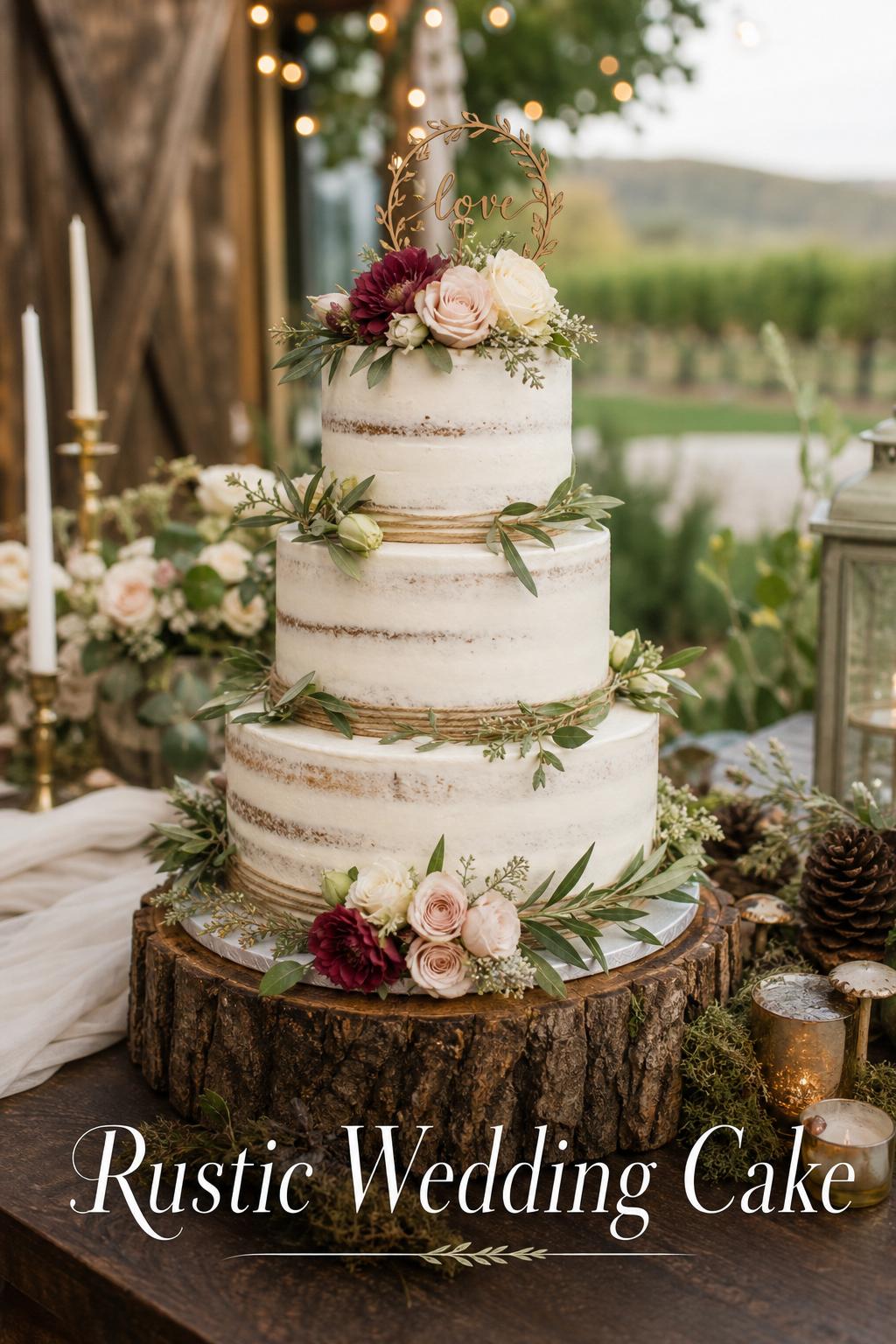
The semi-naked rustic cake is defined by minimal frosting that allows some of the cake layers to show through. Its silhouette is often simple and tiered, while the texture comes from exposed layers and softly spread buttercream rather than highly polished surfaces. The palette tends to stay close to ivory, cream, and natural green, especially when decorated with eucalyptus-style greenery, olive garland, or seasonal florals.
The mood is relaxed, intimate, and modern-rustic. This is the version of rustic that often appears at mountain weddings and outdoor receptions where the cake does not need to compete with the scenery. At Devil’s Thumb Ranch in Tabernash, Colorado, rustic buttercream and semi-naked textures fit naturally into the mountain setting because they echo the easy, unfussy beauty of the venue.
Style overview: wood-grain and bark-inspired cakes
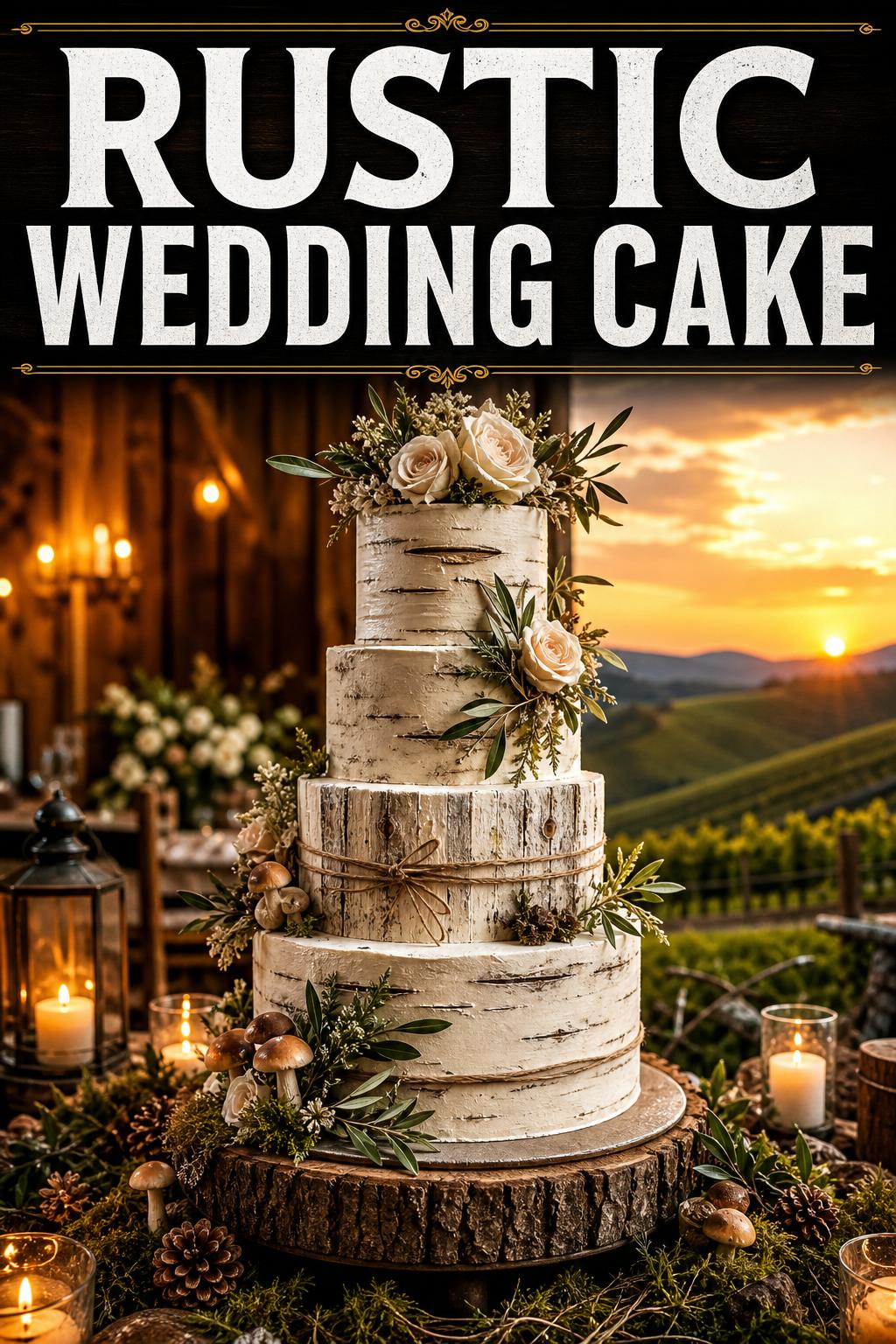
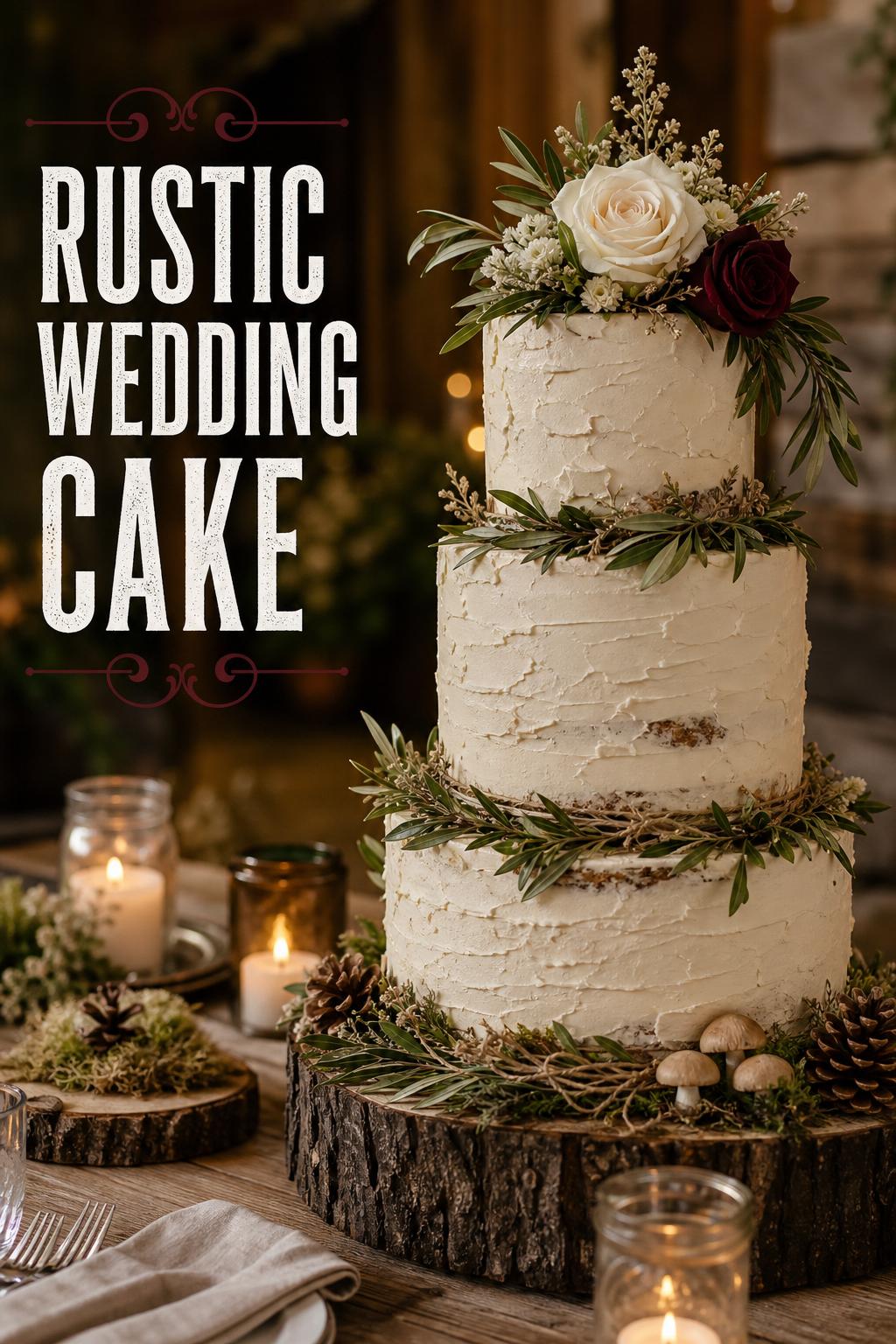
Wood-grain and bark-inspired cakes lean more visibly into the theme. Instead of exposing the layers, they use buttercream or fondant to create tree-bark textures, woodgrain lines, or birch-inspired finishes. These cakes often feel more decorative and motif-driven. Their silhouettes are still tiered, but the surface becomes the focal point.
Color palettes here are usually grounded in ivory, soft brown, bark tones, and forest greens. The overall aesthetic mood is woodland, lodge-like, and connected to nature in a more literal way. A birch-inspired rustic wedding cake, especially when paired with burlap, moss, dried flowers, or a log cake stand, creates a stronger visual narrative than a simple semi-naked design.
Style overview: floral-heavy rustic cakes
Floral-heavy rustic cakes keep the natural mood of the style but express it through decoration rather than exposed layers or bark textures. These cakes usually feature buttercream as a base, then build romance with greenery, fresh flowers, or edible florals. The texture may be smooth, textured, or slightly imperfect, but the flowers carry much of the visual weight.
This style often suits vineyard and winery settings. At Calistoga Ranch in California, a romantic, rustic cake with ivory buttercream and green olive garland feels refined while still fitting the rustic setting. The effect is softer than a bark-texture cake and more finished than a fully naked design, which makes it a favorite for couples who want rustic warmth without an overt woodland theme.
Where these rustic styles overlap
Although these cake styles look different, they share the same underlying visual language. Each favors natural materials or nature-inspired decoration. Each works best when the cake feels connected to the venue instead of isolated from it. And each benefits from presentation details such as wooden stands, simple toppers, or greenery that extend the wedding atmosphere.
- Buttercream is a recurring foundation across rustic styles because it creates texture easily and supports a softer, more organic finish.
- Greenery appears across nearly every version, whether as olive garland, fresh vines, woodland foliage, or light floral accents.
- Wood-related motifs are common, either directly in bark and woodgrain textures or indirectly through toppers, stands, and venue styling.
- Rustic cakes often feel most successful in barn, vineyard, winery, lodge, woodland, mountain, and backyard settings where natural detail already defines the event.
That shared DNA is why a rustic buttercream wedding cake, a birch bark cake, and a floral rustic cake can all sit comfortably in the same inspiration gallery. The distinction lies less in whether they are rustic and more in how they interpret rustic.
The key differences that shape the final look
Silhouette and surface structure
The semi-naked approach emphasizes the cake’s internal structure by letting layers remain visible. It feels airy, handmade, and slightly undone in an intentional way. Wood-grain and bark-inspired cakes do the opposite. They conceal the layers and use the outer surface as a canvas for texture. Floral-heavy cakes usually sit between those extremes, keeping the tiers clean enough to support flowers while allowing buttercream texture to remain visible.
If your reception design already includes heavy wood elements, bark detailing on the cake may feel cohesive. If your venue itself provides that texture, such as a lodge or mountain ranch, a simpler buttercream finish may create better balance.
Color palette and mood
Semi-naked cakes usually stay light and neutral, relying on cream-colored buttercream, visible sponge, and touches of green. This creates a gentle, unfussy mood. Wood texture wedding cake designs often introduce stronger tonal contrast through bark lines, birch patterning, and deeper natural shades, which creates a more dramatic woodland effect. Floral-led cakes expand the palette through flowers and foliage, but they still feel rustic when the colors remain grounded in nature rather than polished formality.
That difference matters emotionally. A couple planning an intimate backyard wedding in Philadelphia might prefer a softer cake with buttercream and natural accents like marzipan acorns or meringue mushrooms. A couple planning a forest-inspired celebration in Ely, Minnesota, may want the stronger statement of a birch motif with moss and a log stand.
Formality level
Not all rustic cakes feel equally formal. Semi-naked cakes often read as the most relaxed and approachable. Floral-heavy buttercream cakes can feel more romantic and elevated, especially in vineyard or winery settings. Wood-textured cakes often appear more styled and theatrical because the finish is intentionally referential. They are still rustic, but they carry a stronger design concept.
This is why a rustic chic wedding at Brooklyn Winery can comfortably feature a textured buttercream cake with greenery and a simple topper, while a full woodland wedding in Sioux Falls might lean into birch bark effects, pinecones, and wooden display pieces. The first reads as refined rustic chic. The second reads as immersive woodland styling.
Styling philosophy
Each style also reveals a different planning philosophy. Semi-naked and buttercream-led cakes tend to prioritize ease, softness, and seasonal flexibility. Bark-inspired cakes prioritize motif and visual storytelling. Floral-heavy cakes prioritize romance and coordination with the floral plan. None is inherently better; the right one depends on what you want the cake to communicate in the room.
Buttercream vs fondant in rustic cake design
For many couples, the most practical comparison is not only style against style but material against material. Buttercream and fondant can both support a rustic wedding cake, but they create different textures and solve different design needs.
Why buttercream dominates rustic looks
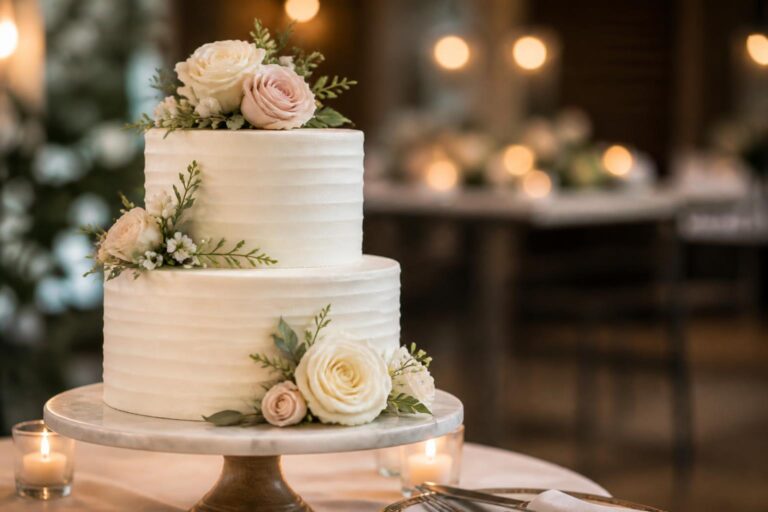
Buttercream is the natural home of rustic style because it can be textured, softened, scraped, swirled, or left intentionally imperfect. It works especially well for semi-naked cakes, textured buttercream finishes, and floral-led cakes. Rustic vanilla buttercream designs with fresh flowers and wood toppers, like those seen at Devil’s Thumb Ranch, show how easily buttercream supports a mountain or lodge setting.
Buttercream also lends itself to rustic chic weddings because it feels approachable rather than rigid. At Brooklyn Winery in New York, a rustic three-tier gluten-free wedding cake with textured buttercream and greenery reflects that balance: still celebratory and polished, but not overly formal.
When fondant makes sense
Fondant becomes more useful when the design depends on a specific surface effect, especially mountain fondant details, bark-inspired patterning, or pronounced wood-grain work. If the rustic concept relies on making the cake resemble tree bark or carved wood, fondant can create a more controlled visual result.
That said, a highly smooth fondant finish can drift away from rustic if it feels too sleek. Rustic fondant tends to work best when it still references nature through wood textures, bark lines, or organic detailing rather than aiming for a pristine, formal finish.
The trade-off couples often overlook
The real decision is often about visual softness versus motif precision. Buttercream gives you movement and warmth. Fondant gives you definition and design control. If your venue already has strong rustic features, a softer buttercream cake may be enough. If your overall décor is simpler and you want the cake to carry the woodland or wood-texture theme, fondant detailing may be worth it.
Visual style breakdown in real wedding settings
Rustic cakes rarely exist in isolation. They are photographed on stands, placed under warm reception lighting, surrounded by flowers, linens, glassware, and wood tones. Looking at how each style behaves in a real setting can make the choice much clearer.
At a mountain venue
In a place like Devil’s Thumb Ranch in Colorado, natural scenery already provides texture, so a semi-naked or rustic buttercream cake often looks most harmonious. A wooden topper, fresh flowers, and jasmine vine can connect the cake to the landscape without making it feel overly themed. Here, visual restraint usually feels stronger than heavy decoration.
At a winery or vineyard
At Brooklyn Winery or Calistoga Ranch, the rustic mood tends to become more romantic and polished. A textured buttercream cake with olive garland, ivory frosting, or a simple monogram topper feels aligned with the setting. Floral-heavy rustic cakes also work beautifully here because they echo the surrounding greenery without shifting fully into woodland styling.
At a woodland or forest-inspired wedding
In woodland settings such as a summer wedding in Sioux Falls or an outdoor celebration near Grand Ely Lodge in Ely, Minnesota, bark-inspired and birch-inspired cakes often feel especially convincing. Pinecones, mushrooms, moss, burlap, and log stands create a layered natural story. This is where a birch bark cake can feel immersive rather than decorative.
At a backyard celebration
Backyard weddings often benefit from playful rustic details that feel personal rather than staged. A buttercream cake on a tree-stump stand with marzipan leaves, acorns, or meringue mushrooms can feel thoughtful and intimate. Because backyard receptions often have a more relaxed flow, cakes with handcrafted-looking decoration usually feel more at home than highly formal finishes.
Decor details that change the style category
Sometimes the cake base is not what defines the style. Often, it is the finishing details. A simple buttercream cake can shift from mountain rustic to woodland rustic or rustic chic depending on the décor layered onto it.
- Greenery: gives almost any cake a natural rustic identity, especially in semi-naked and floral-heavy designs.
- Olive garland: creates a vineyard-appropriate version of rustic that feels refined and romantic.
- Wooden toppers: add warmth without overpowering the cake.
- Log cake stands and tree-stump bases: make even a simple cake feel more grounded in a rustic venue.
- Twine detail: introduces a subtle country note and works best when the rest of the cake is restrained.
- Pinecones, mushrooms, acorns, leaves, and moss: push the design toward woodland storytelling.
- Fresh flowers or edible florals: soften bark and wood motifs and keep the overall effect romantic.
A useful rule is to let one element lead. If the cake already has birch bark texture, the topper and florals should stay relatively simple. If the cake is a plain buttercream canvas, then flowers, greenery, or a log stand can carry more personality.
Outfit-style comparisons for the cake table: how one wedding vision changes the design
Comparing rustic cake styles becomes easier when you imagine them solving the same wedding brief in different ways. Much like bridal styling, the question is not only what looks beautiful, but what creates the right atmosphere for the moment.
Example comparison: a cozy mountain reception
The semi-naked interpretation would likely use exposed layers, soft buttercream, greenery, and a wooden topper. It would feel airy and natural, allowing the scenery and venue architecture to remain central. The bark-inspired interpretation of that same reception would introduce woodgrain or birch effects and a stronger forest reference. That version works if the couple wants the cake to participate more visibly in the décor story.
Example comparison: a winery dinner with candlelight
A floral-heavy rustic cake fits this setting with ivory buttercream and green olive garland, much like the romantic rustic look associated with Calistoga Ranch. A semi-naked cake could still work, but it would feel more casual. The floral version offers more softness and better echoes the polished warmth of a winery celebration, while still preserving the relaxed spirit of rustic décor.
Example comparison: a woodland ceremony with natural textures
Here, a birch-inspired cake with bark texture, pinecones, and a log stand often looks more coherent than a very minimal design. The same event could use a buttercream cake with greenery, but it may feel visually quieter than the setting. If the room already includes moss, wood, burlap, and forest motifs, a stronger bark-texture cake usually feels like the more complete interpretation.
A venue-first way to choose your rustic wedding cake
One of the most reliable planning methods is to choose the cake by venue type rather than by trend name. Rustic is a broad label, but venues are specific. The strongest cake decisions usually come from reading the room honestly.
Barns, lodges, and ranches
These settings often have visible wood, stone, and structural texture already. A rustic buttercream wedding cake or semi-naked cake usually feels balanced here. Wood toppers, fresh flowers, and greenery are often enough. Overly literal bark details can work, but only if the rest of the décor is equally immersive.
Vineyards and wineries
Rustic chic tends to perform best in these venues. Textured buttercream, olive garland, ivory tones, and restrained florals feel elegant without becoming formal in a ballroom sense. Brooklyn Winery and Calistoga Ranch are good examples of how rustic can stay soft, romantic, and curated rather than rugged.
Forest and lakeside venues
This is where bark, birch, pinecones, and log stands feel most natural. At Grand Ely Lodge in Minnesota or in a woodland-inspired celebration, the cake can carry more story. Moss, dried flowers, and a birch motif reinforce the setting instead of competing with it.
Backyard and eco-friendly celebrations
These weddings often benefit from charming details that feel personal and slightly whimsical. A buttercream cake with marzipan acorns, meringue mushrooms, or a tree-stump stand can feel intimate and memorable. In this context, the best rustic cake is often the one that feels handmade in spirit, even when professionally produced.
Dietary-friendly rustic cakes: where style and practicality meet
Dietary needs do not have to push rustic style aside. One of the clearest examples within this category is the rustic three-tier gluten-free wedding cake associated with Brooklyn Winery, which also noted vegan options and textured buttercream. That pairing matters because it shows rustic design can remain visually cohesive even when dietary accommodations are part of the brief.
For planning purposes, this means dietary choices should be discussed as design choices too. If you need gluten-free, vegan, dairy-free, or similar accommodations, keep the conversation focused on finish, texture, and decoration from the beginning. Rustic style is often especially adaptable because buttercream texture, greenery, toppers, and wood-inspired presentation can carry the visual identity even when the internal recipe changes.
Tip: ask the baker to describe the finish, not just the flavor
When couples discuss dietary requirements, the conversation can become overly flavor-focused. In a rustic cake, finish matters just as much. Ask whether the desired design is best expressed as textured buttercream, semi-naked styling, or a bark-inspired surface. That keeps the cake aligned with the wedding aesthetic rather than feeling like a separate practical compromise.
Common mistakes couples make with rustic cake styling
Rustic seems easy because it is associated with natural beauty, but it still benefits from editing. The most successful rustic cakes look intentional rather than overloaded.
- Combining too many motifs at once, such as bark texture, heavy florals, twine, pinecones, and a large topper on the same design.
- Choosing a cake style that duplicates the venue too literally instead of complementing it.
- Using a highly polished finish that reads more formal than rustic.
- Forgetting how the stand changes the look; a simple cake on a log stand can become fully rustic very quickly.
- Focusing only on inspiration photos without considering transport, serving, or display conditions.
A rustic wedding cake should feel connected, not crowded. If the room already carries the theme through wood tables, greenery, and candles, the cake can be quieter. If the overall décor is simpler, the cake can take on more character through bark texture, mushrooms, or a statement stand.
Serving, transport, and stability: the practical side of rustic style
The romantic image matters, but cake logistics shape how well that image survives the wedding day. Rustic styles vary in how forgiving they are. Semi-naked cakes are beautiful, but because the exposed layers are central to the look, they need careful handling so the finish still appears intentional. A three-tier rustic cake also requires realistic planning around serving and stable presentation, especially if the design uses soft buttercream.
Wood-inspired cakes can be visually sturdy because the textural surface hides small imperfections more easily, but they still need a stable base and thoughtful display. Cakes placed on tree-stump stands or log platforms should be displayed securely, particularly at outdoor receptions or venues with uneven ground. This is one reason venue integration matters so much in rustic design: the cake has to feel organic, but it still needs a reliable setup.
Tip: match complexity to the journey
If the cake has to travel to a mountain venue, backyard site, or outdoor woodland location, a textured buttercream cake with simple greenery may be a wiser choice than a highly delicate floral arrangement or an intricate fully exposed naked cake. Rustic looks best when it still looks calm by the time it reaches the cake table.
How to choose between rustic chic, woodland rustic, and simple buttercream rustic
These three directions are often grouped together, but they are not interchangeable. A rustic chic cake is usually the most polished of the group. It favors textured buttercream, greenery, subtle toppers, and elegant venue coordination, making it ideal for wineries and refined barn settings. A woodland rustic cake is more thematic, using birch bark, pinecones, moss, bark textures, and forest details to build a strong visual identity. A simple buttercream rustic cake is the most flexible and often the most timeless, relying on texture, flowers, and display styling rather than a specific motif.
If you are torn between them, ask yourself a practical question: do you want guests to describe the cake as romantic, woodsy, or effortlessly natural? That answer usually points to the right category faster than browsing more photos.
When each rustic cake style works best
Choose a semi-naked or simple buttercream rustic cake when
- Your venue already has strong natural character, such as a ranch, mountain lodge, or wooded outdoor site.
- You want the cake to feel relaxed, airy, and contemporary.
- You prefer greenery, fresh flowers, and a soft finish over decorative motifs.
- You want a style that can shift easily between backyard, barn, and mountain settings.
Choose a bark-texture or birch-inspired cake when
- Your wedding design has a clear woodland or forest theme.
- You plan to use details like moss, pinecones, burlap, log stands, or dried flowers.
- You want the cake to contribute actively to the décor narrative.
- You are drawn to strong visual texture and motif-driven styling.
Choose a floral-heavy rustic cake when
- Your wedding is at a vineyard, winery, or romantic outdoor venue.
- You want rustic warmth without leaning fully country or woodland.
- Your floral design is central to the wedding look and you want the cake to echo it.
- You prefer a balance of elegance and natural texture.
Planning notes for couples who want the cake to feel personal
The most memorable rustic wedding cake usually includes one detail that ties directly to the couple’s day rather than borrowing every element from a trend. That personal note might be an E and J topper at Brooklyn Winery, a tree-stump stand for a backyard celebration, a birch motif that reflects a forest venue, or olive garland that mirrors the tablescape at a winery reception.
Personalizing a rustic cake does not mean adding more. Often it means choosing one design cue that belongs specifically to your venue or atmosphere, then letting the rest of the cake stay simple. Rustic style is at its strongest when it feels rooted in place. A mountain cake should feel like the mountains. A vineyard cake should feel softened by vines and candlelight. A woodland cake should feel like part of the forest floor, but still worthy of a wedding moment.
Tip: let the display finish the story
Couples sometimes search for a more elaborate cake when what they really need is a better presentation plan. A modest buttercream cake can look far more distinctive on a wooden stand with thoughtful greenery than a more complicated design displayed without context. In rustic styling, the stand, the floral placement, and the surrounding décor often matter as much as the frosting itself.
Bringing rustic elements together without losing elegance
The core distinction between rustic cake styles is not whether they use natural elements, but how directly they interpret them. Semi-naked cakes suggest nature through softness and simplicity. Bark-inspired cakes imitate it through texture and motif. Floral-heavy cakes frame it through greenery and blooms. Once you understand that difference, choosing the right cake becomes much less overwhelming.
If you love more than one direction, you do not have to choose rigidly. Many of the most appealing rustic cakes combine elements from multiple approaches: a textured buttercream base with olive garland, a birch-inspired tier softened by fresh flowers, or a semi-naked cake elevated by a log stand and wood topper. The most beautiful result is usually the one that reflects your venue, your atmosphere, and the feeling you want guests to carry with them long after the last slice is served.
FAQ
What is considered a rustic wedding cake?
A rustic wedding cake is a cake style defined by natural texture, organic decoration, and close visual ties to venues such as barns, vineyards, wineries, lodges, mountain sites, and woodland settings. Common versions include semi-naked cakes, textured buttercream cakes, birch-inspired cakes, wood-grain finishes, and designs decorated with greenery, flowers, wood toppers, or log stands.
What is the difference between a semi-naked cake and a rustic buttercream cake?
A semi-naked cake intentionally shows some of the cake layers through a thin layer of frosting, while a rustic buttercream cake usually has fuller coverage with visible texture such as swirls, scraping, or soft peaks. Both can feel rustic, but the semi-naked style reads lighter and more undone, while textured buttercream often feels a bit more finished.
Are wood-grain and birch bark cakes still considered rustic?
Yes, wood-grain and birch bark cakes are classic rustic options because they use nature-inspired textures that suit woodland, lodge, lakeside, and forest-themed weddings. They tend to be more motif-driven than a simple buttercream cake, so they are best for couples who want the cake to make a stronger visual statement.
Do rustic cakes work for winery or vineyard weddings?
They do, especially when the rustic direction is softer and more romantic. Textured buttercream, ivory tones, greenery, olive garland, and restrained floral accents fit winery and vineyard settings particularly well because they preserve rustic warmth while still feeling polished enough for candlelit receptions and refined tablescapes.
Can a rustic wedding cake be gluten-free or vegan?
Yes, rustic cakes can be adapted for dietary needs, including gluten-free and vegan options. The key is to discuss the finish and styling as part of the same conversation, since textured buttercream, greenery, toppers, and rustic presentation details can preserve the overall look even when the recipe changes.
How many servings are typical in a three-tier rustic wedding cake?
A three-tier rustic wedding cake is commonly associated with serving planning, but the exact number depends on the cake’s size and tier proportions. Because serving count is a practical concern for many couples, it is best to confirm portions directly with the baker while also discussing whether the desired rustic finish, such as semi-naked or textured buttercream, affects the final structure or display.
Do rustic cakes travel well?
They can travel well, but some finishes are more forgiving than others. Textured buttercream and bark-inspired surfaces tend to hide minor imperfections better than very delicate exposed-layer designs, so they are often easier choices for mountain venues, outdoor receptions, and locations that require more transport time.
What decorations make a cake look more rustic?
Greenery, fresh flowers, edible florals, wood toppers, twine detail, log cake stands, tree-stump bases, pinecones, moss, mushrooms, acorns, and bark or wood-grain texture all contribute to a rustic look. The most effective rustic cakes usually use a few of these details thoughtfully rather than combining all of them at once.
How do I choose the right rustic cake for my venue?
Start with the setting rather than the trend name. Mountain lodges and ranches often suit semi-naked or textured buttercream cakes, wineries and vineyards often suit greenery-led rustic chic designs, and forest or lakeside venues often suit birch-inspired or bark-texture cakes. The goal is to make the cake feel connected to the atmosphere already present in the space.