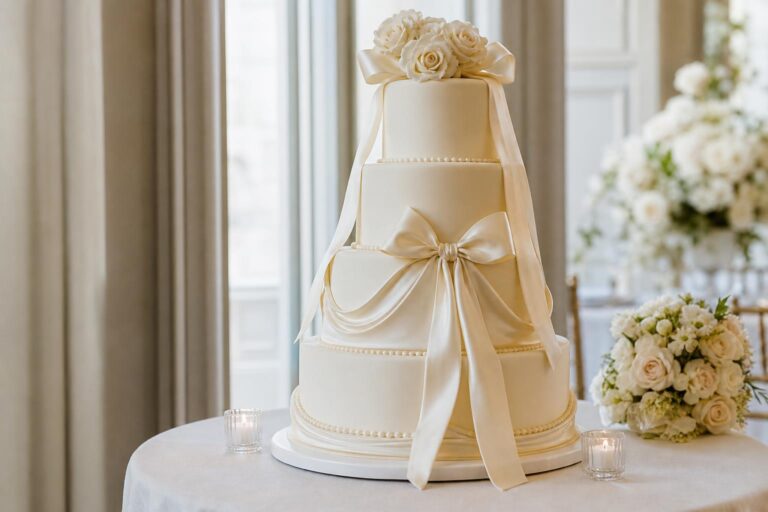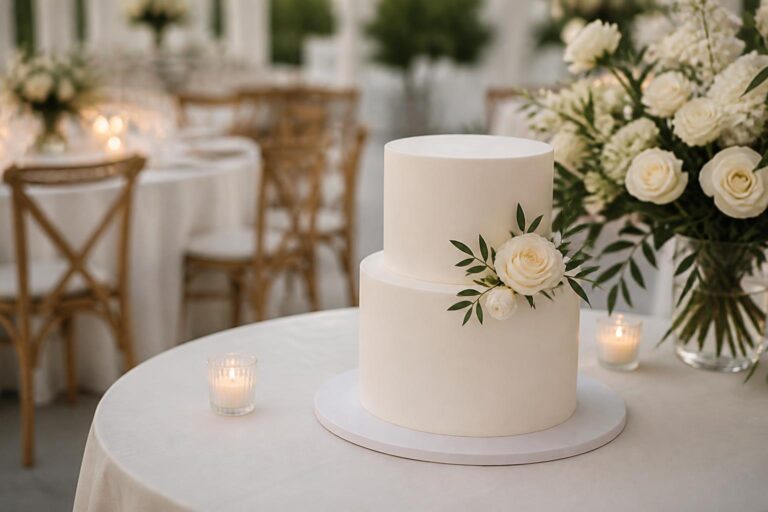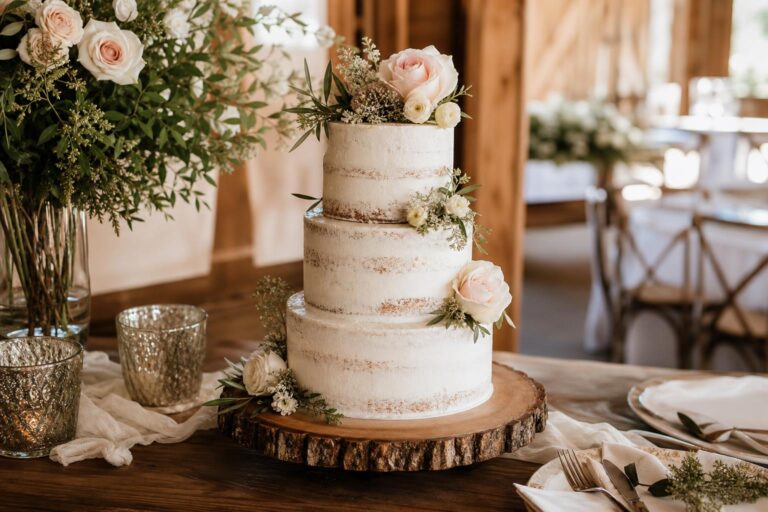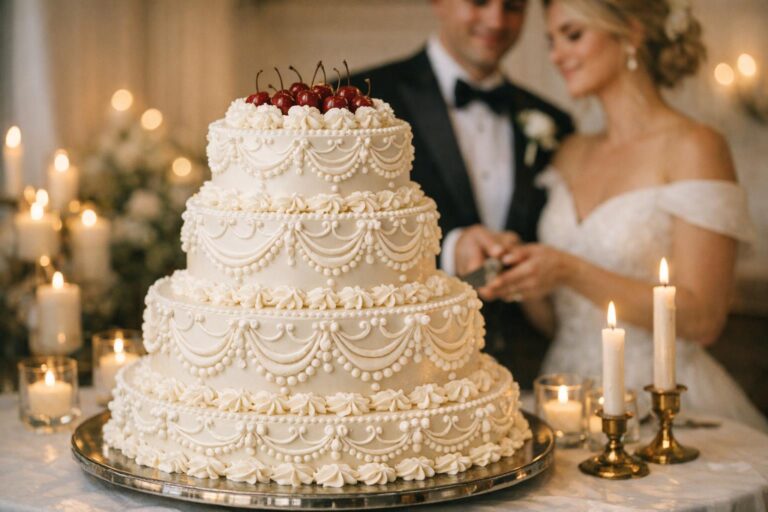
Why Pearl Wedding Cake Designs Feel Timeless and Modern
A pearl wedding cake often seems simple at first glance: soft ivory tiers, delicate shine, a few graceful details. But couples quickly discover that this style is harder to get right than many other wedding cake looks. Too many pearls can feel heavy or overly formal, too few can disappear in photos, and the wrong finish can make an elegant design look more like a decoration experiment than a refined wedding centerpiece.
That is exactly why this guide matters. A pearl cake wedding design works best when every decision feels connected: the pearl size, the cake finish, the color palette, the presence or absence of florals, the venue mood, and even the question of whether the pearls are edible or purely decorative. Whether you are planning a small pearl wedding cake for an intimate celebration or a more dramatic pearl themed wedding cake with cascading details, the goal is the same: a cake that looks timeless, photographs beautifully, and feels true to your wedding vision.
Below, you will find a practical and romantic guide to choosing, styling, and customizing a pearl wedding cake with confidence. The ideas draw from the styles seen across wedding editorials, bakery product pages, vendor galleries, and marketplace listings, including designs associated with The Knot, Confetti & Roses, Cedars Cakes in Catonsville, Maryland, Signature Sweets by Amanda, Dough & Cream, Sieve & Stone, Cupcakery NYC, JOANN, Wilton Patisserie, and Pearls Cakery in Mantua, Ohio.
Why this cake style can be surprisingly difficult to design
Pearls on wedding cake designs sit in a delicate middle ground between minimalism and luxury. That is part of their charm, but it is also what makes them challenging. A smooth white or ivory cake can look stunning with a restrained pearl motif, yet the same cake can feel flat if the pearls are not placed with intention. On the other hand, a heavily pearl-encrusted cake may deliver glamour, but it needs balance to avoid overwhelming the tiers.
Turn wedding inspiration into a plan you can actually follow.
Zarellea brings your guest list, budget, vendors, and day-of details into one shared space — so no beautiful idea gets lost in the shuffle.
Another common challenge is that pearl detailing has to work with more than the cake alone. Couples often want the cake to echo the rest of the day: bridal pearls, classic wedding decor, romantic florals, or gold-accented tablescapes. Editorial wedding inspiration often connects the pearl motif not just to dessert, but to the larger atmosphere of the celebration. That means the cake should feel integrated, not isolated.
Practicality matters too. The finish of the cake, the transport conditions, the venue setup, and the distinction between edible pearls and non-edible decorations all influence what is realistic. The most successful pearl cake wedding designs are not chosen only because they look beautiful in a still image. They are chosen because they still look beautiful when delivered, displayed, and cut in a real wedding setting.
The foundation: what defines a pearl wedding cake
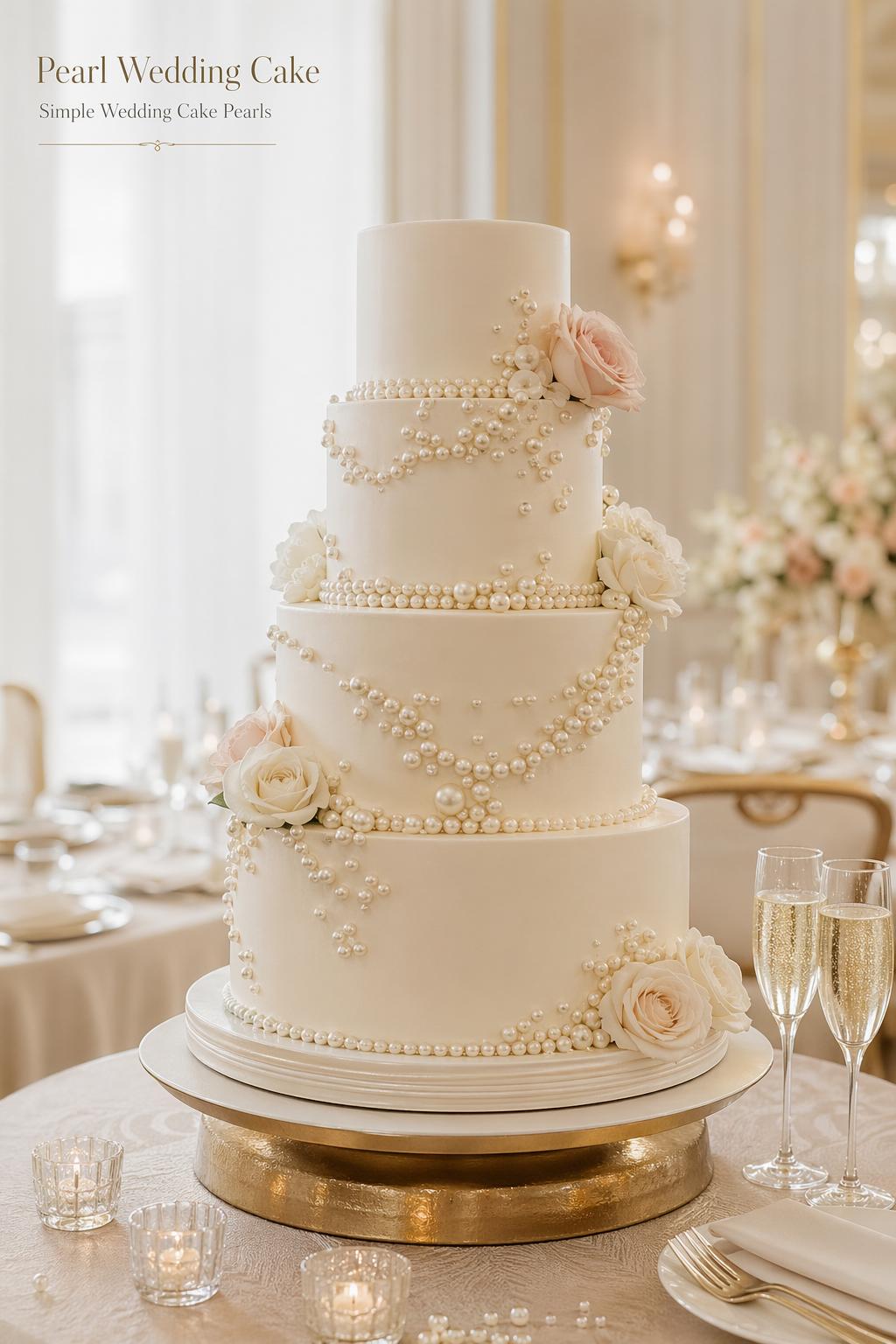
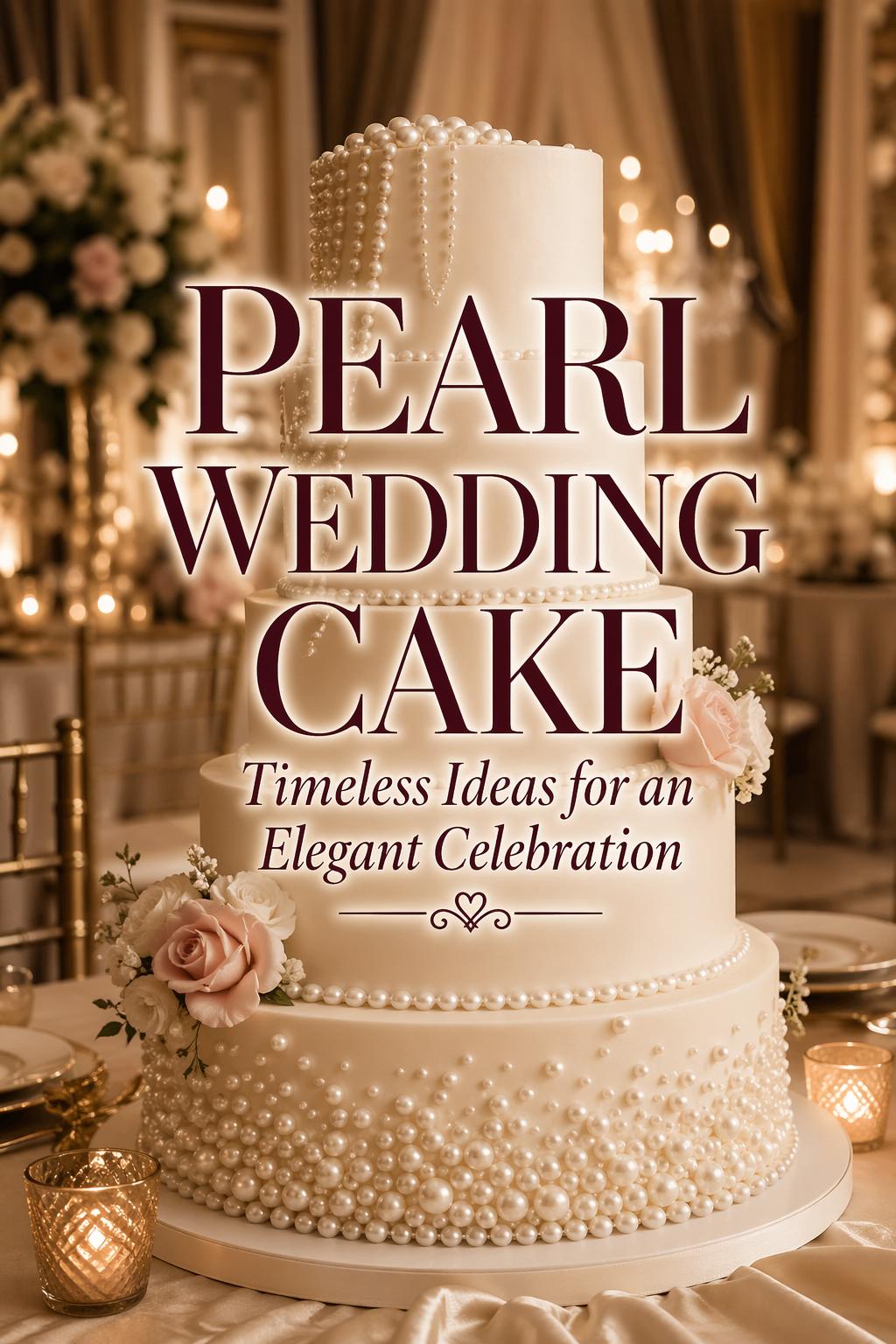
At its core, a pearl wedding cake uses pearl detailing as a central design language rather than an afterthought. That detailing may appear as edible pearls clustered across tiers, a soft cascade from top to base, a strand-like wrap around each layer, or a more sculptural pearl motif paired with textured buttercream, metallic sheen, or floral accents.
The style can be interpreted in different ways. Some cakes are very clean and restrained, relying on simple wedding cake pearls to create a quiet sense of elegance. Others embrace a fuller decorative approach, using pearl clusters or pearl-encrusted surfaces to create a luxury statement. The unifying thread is that pearls are not random embellishment; they are the visual story of the cake.
Pearl vs. pearl-inspired details
One of the first decisions to make is whether the pearls are edible or decorative. Edible pearls, including sugar pearls and similar food-grade options, are the most direct choice when the design will be integrated into the cake surface itself. Decorative pearl-inspired elements may still be used as part of the presentation, but they should be clearly distinguished from what is safe to eat. This distinction matters for appearance, planning, and trust, especially when discussing your design with a bakery.
For many couples, that conversation is where the design becomes much easier. Once you know whether your pearl details are intended for eating, display, or a mix of both, it becomes simpler to decide on density, placement, and finish.
The styling logic behind a successful pearl themed wedding cake
A strong pearl themed wedding cake follows a few clear design principles. These are less about strict rules and more about understanding how visual balance works in a wedding setting. When couples struggle with this style, it is usually because one of these principles has been overlooked.
- Match the pearl scale to the tier scale. Larger tiers can carry more dramatic pearl placement, while a small pearl wedding cake usually looks best with finer, more restrained detailing.
- Choose one lead finish. Smooth fondant, textured buttercream, or a lustrous sheen can all work, but combining too many finishes at once can make the design feel busy.
- Let the color palette support the pearls. Ivory, cream, champagne, blush, and gold accents tend to enhance the pearl effect rather than compete with it.
- Use negative space intentionally. Empty areas on a cake are not unfinished; they allow pearl clusters and cascades to feel elegant and dimensional.
- Coordinate with the wedding mood. A classic ballroom celebration may suit a fuller pearl-encrusted look, while a minimalist ceremony may call for simple wedding cake pearls placed with restraint.
These principles are especially helpful because pearl cakes are often judged from a distance first and in close-up second. Guests see the silhouette across the room, then the detail as they approach. A beautiful design succeeds at both distances.
Choosing the right pearl style for your wedding atmosphere
Not every pearl wedding cake creates the same feeling. Some are soft and bridal, some read modern and minimalist, and some lean strongly into luxury. Deciding which atmosphere you want before speaking with a bakery can save time and reduce design confusion.
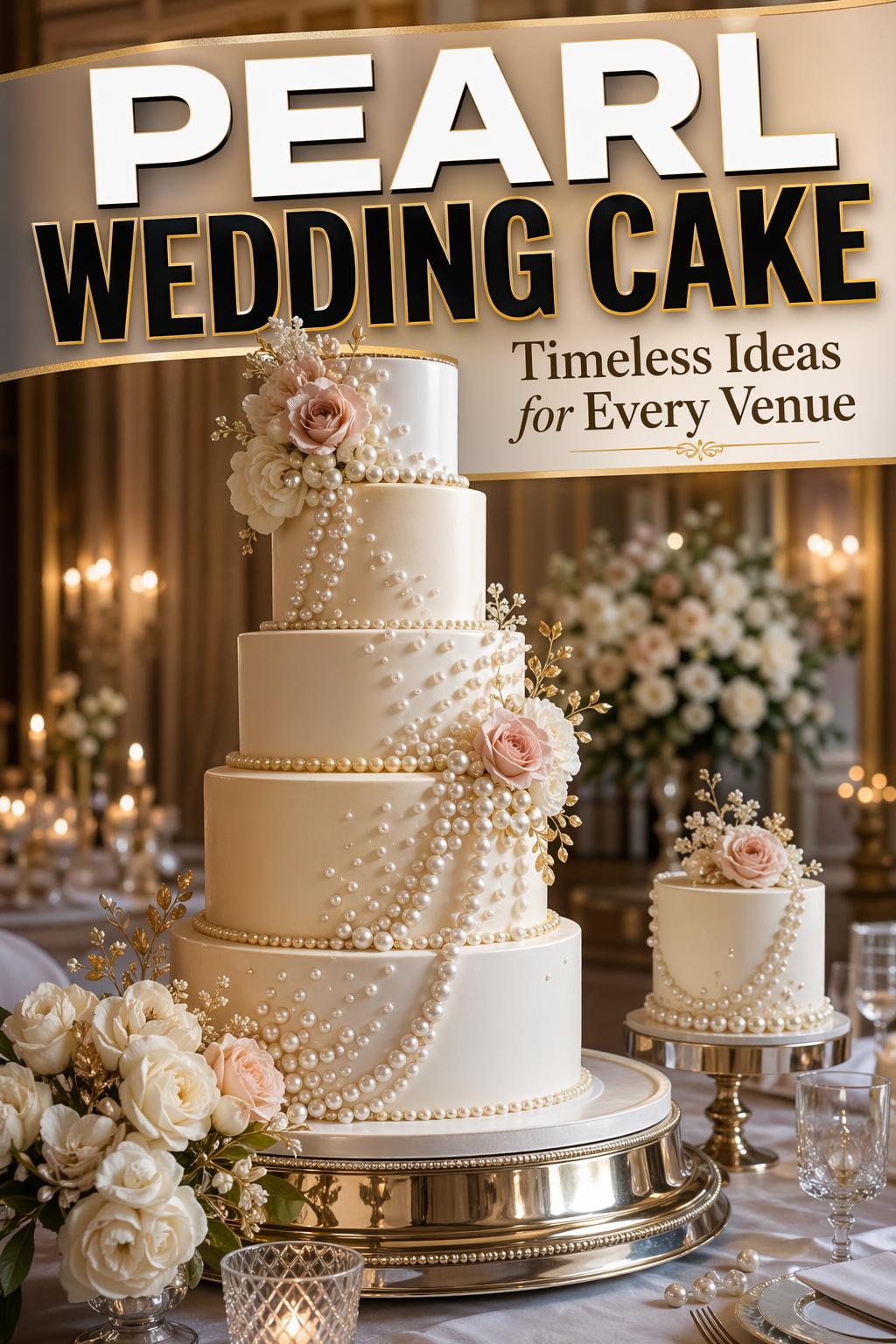
Cascading pearls for movement and romance
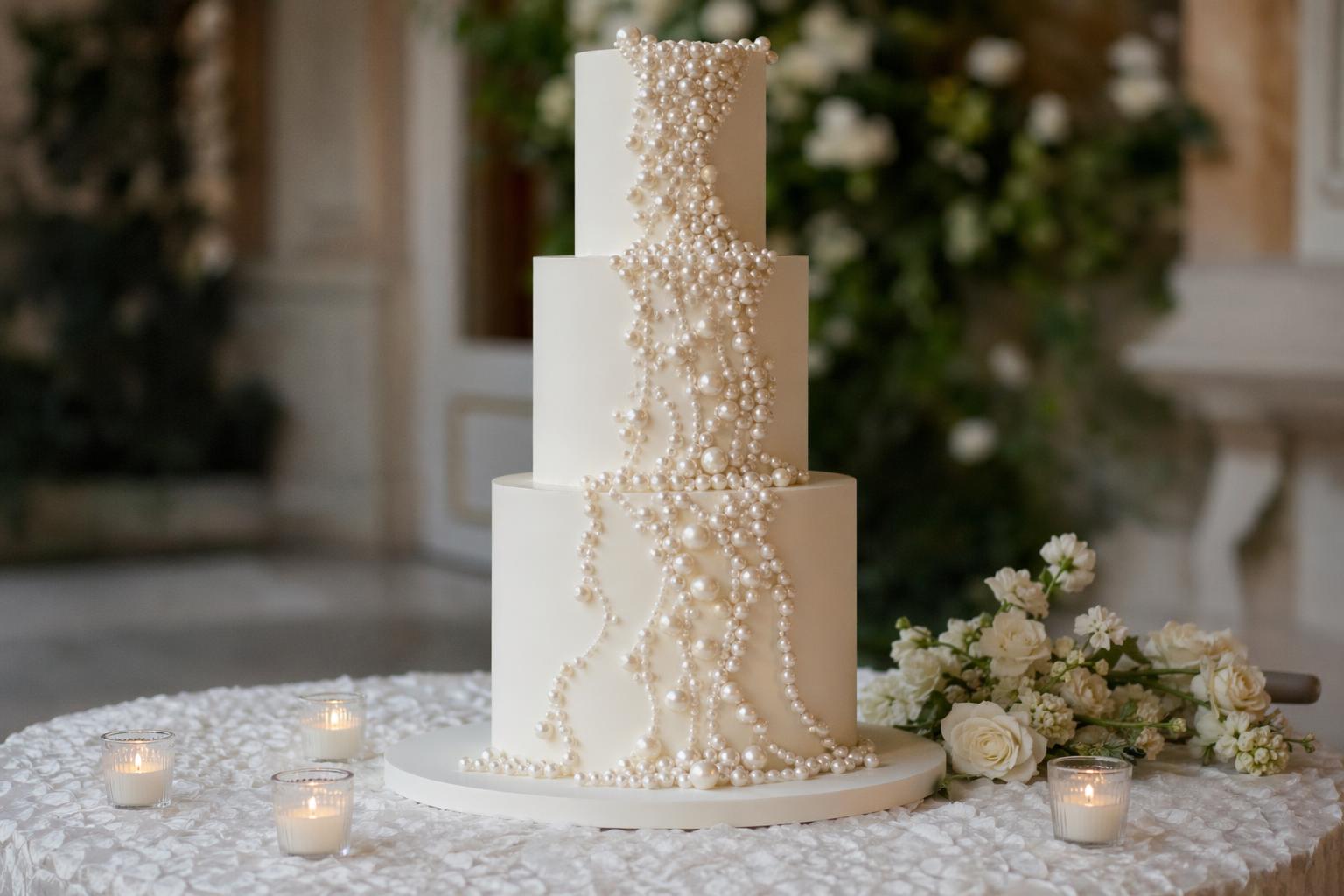
A cascading pearl arrangement is one of the most graceful interpretations of the trend. Instead of covering the cake evenly, pearls flow from one point and travel downward in a soft line or scattered trail. Signature Sweets by Amanda uses this idea in a way that feels minimalist but still memorable, proving that movement can become the decoration.
This style works especially well for couples who want elegance without a topper. The cascade naturally draws the eye upward and downward, giving the tiers visual rhythm. It is a strong option for formal weddings, romantic receptions, and any celebration where the cake should feel polished but not rigid.
Strand-wrapped pearls for classic structure
When you want the cake to feel traditional and orderly, pearl strands or pearl-like wraps around each tier create a sense of structure. This approach often suits a classic wedding decor concept because it echoes the neat, symmetrical styling seen throughout elegant receptions. It is also one of the easier directions to pair with fresh florals or gold accents.
For couples worried that a pearl cake might feel too trendy, strand styling is often the safer choice. It gives the cake a timeless silhouette and is less likely to overpower the rest of the dessert table.
Pearl clusters for a soft luxury finish
Pearl clusters create a more organic and romantic effect. Rather than placing pearls in formal rows, the decorator groups them in concentrated areas, often around edges, corners, or one side of the cake. This method can look especially beautiful on textured buttercream, where the contrast between matte texture and glossy pearl detailing adds depth.
Cedars Cakes shows how this can feel elevated when combined with white tiers, pearl detailing, and select gold accents. The design reads luxurious, but because the pearls are arranged in focused areas, the cake still feels edited rather than overloaded.
Full pearl-encrusted styling for statement weddings
A more dramatic pearl-encrusted wedding cake is best reserved for couples who genuinely want the cake to act as a visual focal point. Cupcakery NYC’s pearl wedding cakes designs lean into this gallery-style impact, where the pearl surface itself becomes part of the spectacle. This direction suits glamorous receptions and grander visual concepts.
It is important, however, to be honest about your wedding scale. A heavily detailed cake can be spectacular in a large formal setting, but in a smaller room it may dominate the space more than intended. For an intimate celebration, a small pearl wedding cake with strategic clusters may create a more balanced result.
Simple wedding cake pearls: when less truly looks better
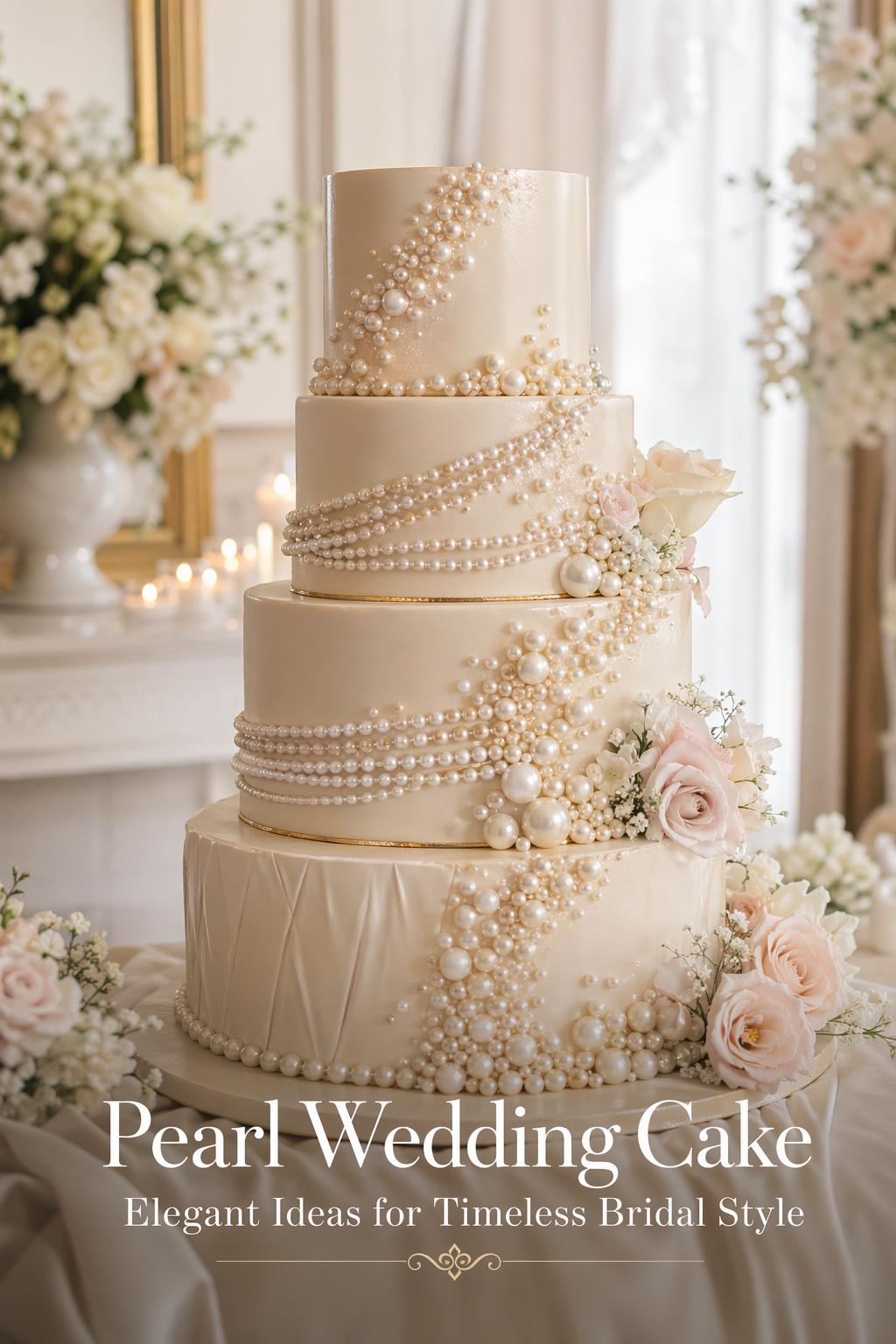
There is a reason simpler pearl designs continue to appeal to modern couples. A cake does not need hundreds of pearls to feel special. In fact, one of the most sophisticated ways to use pearls on wedding cake designs is to keep the base very clean and allow a small amount of pearl detailing to do all the work.
This is especially effective when the wedding vision leans minimalist, romantic, or quietly luxurious. Sieve & Stone’s white pearl celebration cake reflects this mood well: a refined look where the pearl motif supports the design rather than overtakes it. A simple arrangement also tends to photograph beautifully because the eye can immediately understand the shape and intention of the cake.
If your ceremony or reception has a softer visual language, simple wedding cake pearls may be the better answer than a dense pattern. A pearl detail along the edge of a tier, a small cascade, or a concentrated cluster near fresh florals can feel more expensive and more thoughtful than trying to fill every surface.
Color pairings that make pearl details shine
Color is one of the easiest ways to guide the emotional tone of a pearl wedding cake. Across vendor pages and editorials, certain palettes appear again and again because they naturally support the softness and light-reflecting quality of pearl detailing.
- Ivory and cream: these are among the most natural choices for a pearl cake wedding because they feel bridal, timeless, and calm. Project Phoebe’s two-tier ivory pearl wedding cake direction shows how effective this can be.
- White with gold accents: ideal for couples who want a luxury impression without abandoning classic formality. Cedars Cakes uses this combination in a way that feels polished and upscale.
- Champagne and blush: a softer romantic direction that allows the pearl motif to feel warm rather than stark.
- Mother-of-pearl or metallic pearl-inspired tones: best for couples who want a slightly more fashion-forward interpretation while still staying inside the pearl family.
The main consideration is visual harmony. Pearls tend to look best when the surrounding palette supports their softness. If the colors around them are too sharp or too disconnected, the pearl detailing can lose the gentle elegance that makes the style so appealing in the first place.
Texture, sheen, and finish: the details that change the entire mood
Many couples focus first on pearl placement, but finish is just as important. A pearl motif behaves differently depending on whether the cake surface is smooth, textured, matte, or lustrous. This is one of the most practical design decisions you can make because it affects how the pearls are perceived.
Textured buttercream can add softness and dimension, making clustered pearls feel more romantic and organic. Smooth finishes often create a cleaner, more formal result, especially for strand-wrapped or symmetrical pearl designs. Lustre dust or metallic pearl sheen can add glamour, but it should be used carefully so the cake still feels wedding-appropriate rather than overly theatrical.
JOANN’s cube pearl wedding cake and Wilton Patisserie’s pearl wedding cake product direction both point toward the decorative side of technique, reminding couples that pearl styling is not just about what is placed on the cake, but how the entire surface supports those details. If you are working with a bakery, asking to compare finishes before finalizing the design can make a major difference.
How size changes the design: from a small pearl wedding cake to a multi-tier centerpiece
Scale determines nearly everything in pearl cake styling. What looks refined on a two-tier cake may feel sparse on a tall multi-tier design, and what feels luxurious on a grand cake can seem excessive on a smaller one. The best pearl wedding cake ideas always consider proportion first.
For a small pearl wedding cake
Smaller cakes usually benefit from restraint. A compact silhouette leaves less room for visual complexity, so simple wedding cake pearls, a single cascade, or one carefully placed cluster often works best. This approach preserves elegance and avoids making the cake feel crowded. A small cake can still feel luxurious if the details are precise and the finish is clean.
For a two-tier ivory or cream design
Two-tier cakes sit in a particularly flexible design range. They can carry enough pearl detail to feel special, but they still benefit from a light hand. The ivory and cream direction seen in shop listings like Project Phoebe’s feels especially suitable here, because the soft palette gives the pearls room to stand out without becoming too formal.
For a larger wedding centerpiece
More tiers allow for more storytelling. This is where cascades can travel farther, strand wraps can repeat rhythmically, and clusters can be distributed across different levels of the cake. Larger designs also have more room for supporting elements like fresh florals or gold accents. The important thing is consistency. Repeating one pearl logic across the tiers usually feels more elegant than trying multiple pearl styles at once.
Real-world inspiration from bakeries, galleries, and vendor profiles
Looking at how different brands interpret the pearl motif can help couples identify what they truly want. Each bakery or platform tends to highlight a slightly different side of the pearl wedding cake story, and those differences are useful during planning.
- Cedars Cakes, Catonsville, Maryland: elegant white cake styling with pearl detailing, textured finishes, gold accents, and floral possibilities. A good reference for couples leaning luxury.
- Signature Sweets by Amanda: pearl cascade styling with a minimalist spirit and an emphasis on edible pearls as a core design element.
- Dough & Cream: product-focused pearl wedding cake inspiration centered on the motif itself.
- Sieve & Stone: a white pearl celebration cake aesthetic that feels edited, modern, and quietly refined.
- Cupcakery NYC: pearl wedding cakes designs presented in a more visual gallery mode, helpful for couples drawn to a stronger statement look.
- Pearls Cakery, Mantua, Ohio: a vendor profile context that reminds couples how important local artistry and booking logistics can be.
- The Knot and Confetti & Roses: broader editorial inspiration that connects pearl cakes to the wider wedding atmosphere and décor story.
Comparing these styles can clarify whether you prefer a bakery-led luxury approach, an inspiration-gallery mood, or a more classic local-vendor relationship. That choice affects not only the final cake design, but also how custom the ordering process is likely to be.
How to choose between a DIY-inspired idea and a custom bakery order
Pearl cake styling often looks deceptively straightforward, which is why some couples initially consider a DIY route or a semi-custom solution. Tutorials and craft-linked resources such as JOANN can be useful for understanding technique and visual placement. But for a wedding cake, the right decision depends on risk tolerance, event scale, and how precise the final look needs to be.
A custom bakery order is usually the better path when pearl placement must be highly refined, when the cake includes multiple tiers, or when edible and decorative components need to be clearly managed. Professional bakeries can also help weigh trade-offs between a smooth finish and textured buttercream, or between a minimalist arrangement and a fuller pearl motif.
A DIY-inspired approach may make more sense for a smaller celebration cake or a straightforward pearl concept, but even then, clarity around food-grade materials and transport matters. Pearls that look lovely in planning can shift in real life if the finish is delicate or if the cake must travel. For many couples, the easiest way to reduce stress is to use DIY references for inspiration and leave execution to a bakery.
Sourcing the right baker without losing your design vision
Once you know the general look you want, the next challenge is communicating it well. A pearl wedding cake can be interpreted in many ways, so vague phrases like “elegant but simple” are rarely enough on their own. Bakers need visual and practical direction.
- Describe the pearl placement clearly: cascade, cluster, strand wrap, scattered pearls, or pearl-encrusted finish.
- Specify the base color: white, ivory, cream, champagne, or blush-toned.
- Mention the finish you prefer: smooth, textured buttercream, or a soft sheen.
- State whether the pearls should be edible, decorative, or visually pearl-inspired.
- Clarify if you want added elements such as gold accents, floral accents, or a topper-free design.
- Share your event scale so the baker can recommend a suitable density of pearl detailing.
This is where vendor pages become useful beyond simple browsing. A bakery like Cedars Cakes may signal strength in luxury finishes and embellishment, while Signature Sweets by Amanda may be a better reference if you love cascading edible pearls and cleaner composition. Local vendor marketplaces like The Knot’s profile for Pearls Cakery in Mantua, Ohio can also help couples think practically about booking, portfolio review, and regional service.
Planning by venue mood and wedding scale
A pearl wedding cake should never feel disconnected from its room. One of the most effective planning habits is to evaluate the cake in relation to the venue mood rather than in isolation. A cake that feels ideal online may look very different once imagined in your actual setting.
For a grand reception, a pearl-encrusted design or a taller cake with pronounced cascading pearls can carry the space beautifully. In a more intimate celebration, a small pearl wedding cake in ivory or cream with a modest cluster may feel more in tune with the evening. If the reception includes classic décor and pearl-themed details elsewhere, a restrained cake can still feel fully connected because the motif is already present throughout the event.
There is also a regional planning layer to consider. Some vendors emphasize their local service areas, such as Cedars Cakes in Catonsville or Pearls Cakery in Mantua. That matters when you are balancing dream design against real delivery logistics. The best cake is not simply the most beautiful image; it is the design that your chosen vendor can execute reliably within your wedding context.
Tips for making pearls on wedding cake designs feel intentional
Beautiful pearl cakes rarely happen by accident. They look serene because someone made a series of smart, disciplined design choices. If you want your cake to feel elevated rather than overworked, these practical tips can help.
- Anchor the pearls to one visual path, such as one side of the cake or the edge of each tier, instead of scattering them everywhere.
- Use gold accents sparingly so they highlight the pearl motif rather than compete with it.
- Pair fuller pearl placement with a simpler cake silhouette to maintain balance.
- For minimalist weddings, choose fewer pearls but increase placement precision.
- If fresh florals are included, let them support the pearls rather than cover them.
- Review the design both close-up and from a distance before final approval.
One especially useful mindset is to think of pearls as punctuation. They should guide the eye, create emphasis, and shape mood. When treated that way, even a simple pearl cake wedding design can feel deeply considered.
Where couples often go wrong
The most common mistake is assuming that more pearls automatically means more elegance. In reality, elegance usually comes from placement, proportion, and finish. A heavily decorated cake can be beautiful, but only if the pearl density matches the scale and atmosphere of the wedding.
Another issue is failing to distinguish edible pearls from non-edible decorative elements early in the process. That can create confusion in design planning and practical concerns on the wedding day. A third mistake is mixing too many visual ideas: pearls, metallic sheen, florals, toppers, texture, and multiple colors all at once. Because pearls already have a strong identity, they do not need a crowded supporting cast.
Finally, some couples choose a cake image they love without considering whether their baker’s style aligns with it. Product galleries, editorial roundups, and vendor profiles are all useful, but they serve different purposes. The more clearly you understand what each source is showing you, the better your final decision will be.
Bringing the whole wedding vision together
The most memorable pearl wedding cake is not just a pretty dessert. It is part of a cohesive wedding story. The pearl motif may echo accessories, color choices, table details, or the broader sense of timeless elegance that runs through the day. That is why pearl cake styling feels so emotionally resonant for many couples. It can be classic, romantic, modern, or luxurious without losing its bridal softness.
If you are unsure where to begin, start with atmosphere rather than decoration. Ask yourself whether you want a quiet ivory cake with simple wedding cake pearls, a romantic cascade of edible pearls, or a pearl themed wedding cake that truly commands the room. Once that emotional direction is clear, the practical choices become much easier.
And if you are weighing several references at once, trust the version that feels most like your celebration rather than the most dramatic image on a screen. A pearl wedding cake is at its best when it reflects the mood of the couple and the setting around it. That is what makes it timeless.
FAQ
What is a pearl wedding cake?
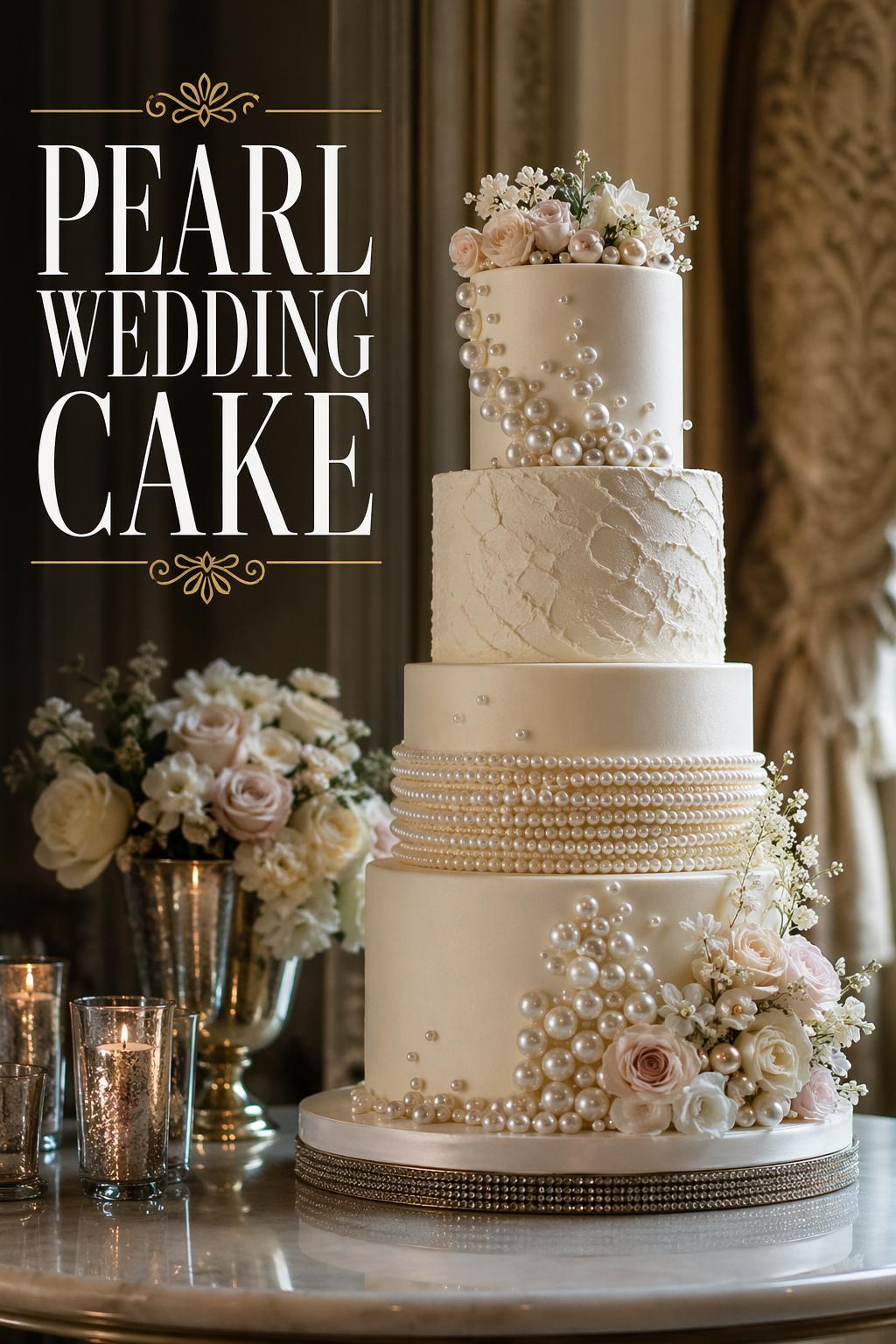
A pearl wedding cake is a wedding cake that uses pearl detailing as a main design feature, often through edible pearls, pearl clusters, cascading pearl arrangements, strand-like wraps, or pearl-inspired decorative accents on white, ivory, or cream tiers.
Are the pearls on a wedding cake always edible?
No, not always. Some cakes use edible pearls such as sugar pearls, while others may include non-edible decorative elements for display. It is important to confirm this with your bakery so the design is both beautiful and clearly understood for serving.
How do I choose between a simple pearl cake and a more dramatic pearl-encrusted design?
The best choice depends on your wedding atmosphere, venue scale, and personal style. Simple wedding cake pearls usually suit minimalist, romantic, or intimate celebrations, while fuller pearl-encrusted designs tend to work better as statement pieces in larger or more formal settings.
What colors work best for a pearl cake wedding design?
White, ivory, cream, champagne, blush, and carefully used gold accents are among the strongest options because they support the softness and elegance of the pearl motif without competing with it.
Can a small pearl wedding cake still look luxurious?
Yes. A small pearl wedding cake can look very refined when the finish is clean and the pearl placement is intentional. Smaller cakes often benefit from restrained clusters, a delicate cascade, or simple pearl accents instead of dense decoration.
Should a pearl themed wedding cake include florals or a topper?
It can, but it does not have to. Many pearl designs look especially elegant without a topper because the pearl motif itself provides enough visual focus. Florals can work well too, especially when they support rather than hide the pearl detailing.
What should I ask a bakery when ordering pearls on wedding cake designs?
Ask about whether the pearls are edible, what finish will be used, how the pearls will be placed, whether gold or floral accents are possible, and how the cake will be customized for your event size and delivery conditions.
Where can I find inspiration for pearl wedding cake ideas?
You can find inspiration through wedding editorials and vendor galleries, including styles associated with The Knot, Confetti & Roses, Cedars Cakes, Signature Sweets by Amanda, Dough & Cream, Sieve & Stone, Cupcakery NYC, and marketplace profiles such as Pearls Cakery in Mantua, Ohio.
Is a pearl wedding cake better suited to classic weddings or modern weddings?
It can suit both. A classic version may use ivory tones, strand styling, and restrained elegance, while a more modern version may rely on minimalist placement, a clean silhouette, or a bolder pearl-encrusted visual statement.