Wedding Cake Alternatives That Still Steal the Reception Moment
Wedding cake alternatives that still feel like a “wedding moment”
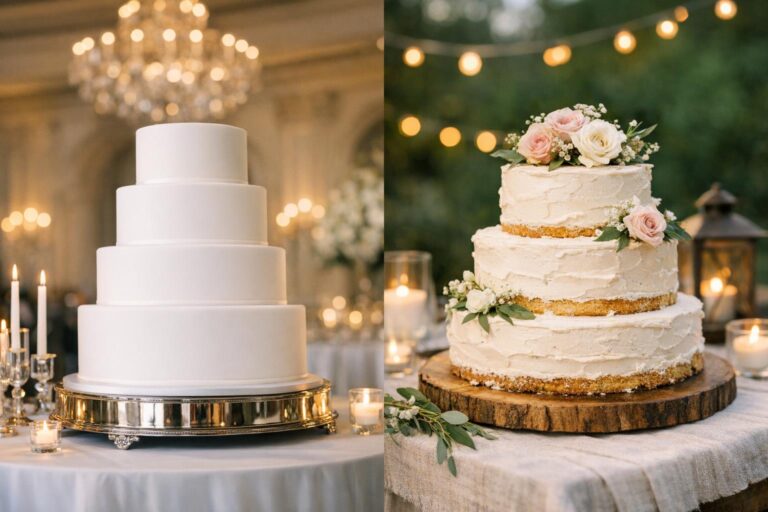
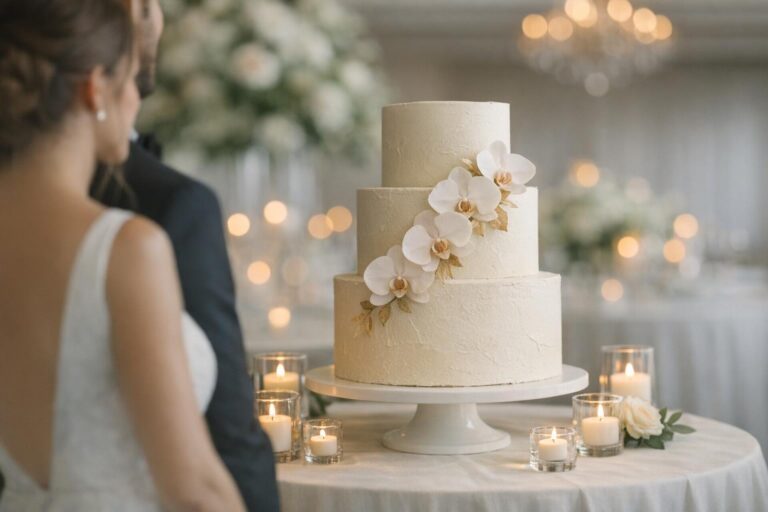
The wedding dessert is one of those tiny, high-pressure details that carries a surprising amount of emotional weight. It’s not just something sweet at the end of dinner—it’s a photo, a pause in the party, and a shared moment where guests lean in and celebrate you. But if you’re planning a not cake wedding dessert, you’ve probably felt the tension: how do you skip the traditional tiered cake without losing that classic “centerpiece” feeling?
This is exactly why wedding cake alternatives have become such a confident choice for modern couples. The best options don’t simply replace cake—they solve practical issues (budget, dietary needs, serving logistics) while creating an experience that looks intentional in photos and feels generous for guests. Whether you’re dreaming of minimalist elegance, a lively dessert table, or a cultural nod that feels personal, there are ideas other than wedding cake that still deliver the moment.
Below, you’ll find a problem-solving guide that approaches alternative wedding cakes the way a wedding stylist and planner would: by matching dessert formats to your venue, guest experience, décor, and service style. You’ll also get realistic decision help for portion planning, budgeting, and dietary considerations—so your no cake wedding ideas don’t become a last-minute stress point.
Understanding the “dessert centerpiece” challenge
The challenge with wedding cake alternatives isn’t taste—most guests are delighted by variety. The real difficulty is structure. A traditional cake automatically answers questions: What do we photograph? When do we serve dessert? How do we portion it? What happens if someone needs gluten-free or vegan options? When you choose ideas other than wedding cake, you’re designing a mini “dessert strategy” for the night.
Turn wedding inspiration into a plan you can actually follow.
Zarellea brings your guest list, budget, vendors, and day-of details into one shared space — so no beautiful idea gets lost in the shuffle.
Comfort and practicality matter, too. Weddings are long, and the reception has multiple emotional beats: cocktail hour, dinner, speeches, dancing. A dessert format has to hold up through the flow of the evening and match your service style—plated, a dessert station, or a grab-and-go setup. And because so many couples prioritize photography, the dessert needs to look good from multiple angles, in real lighting, without a lot of fuss.
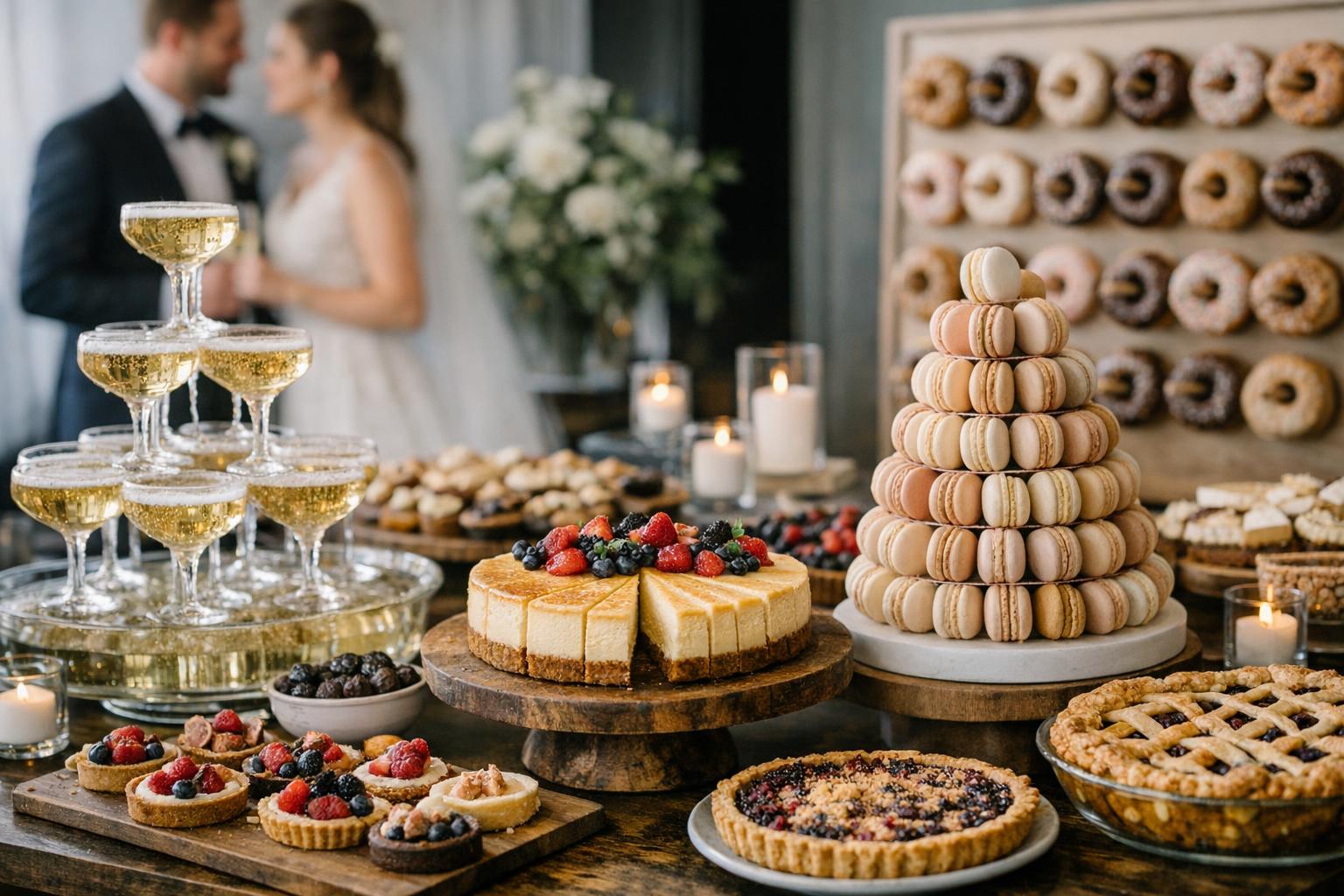
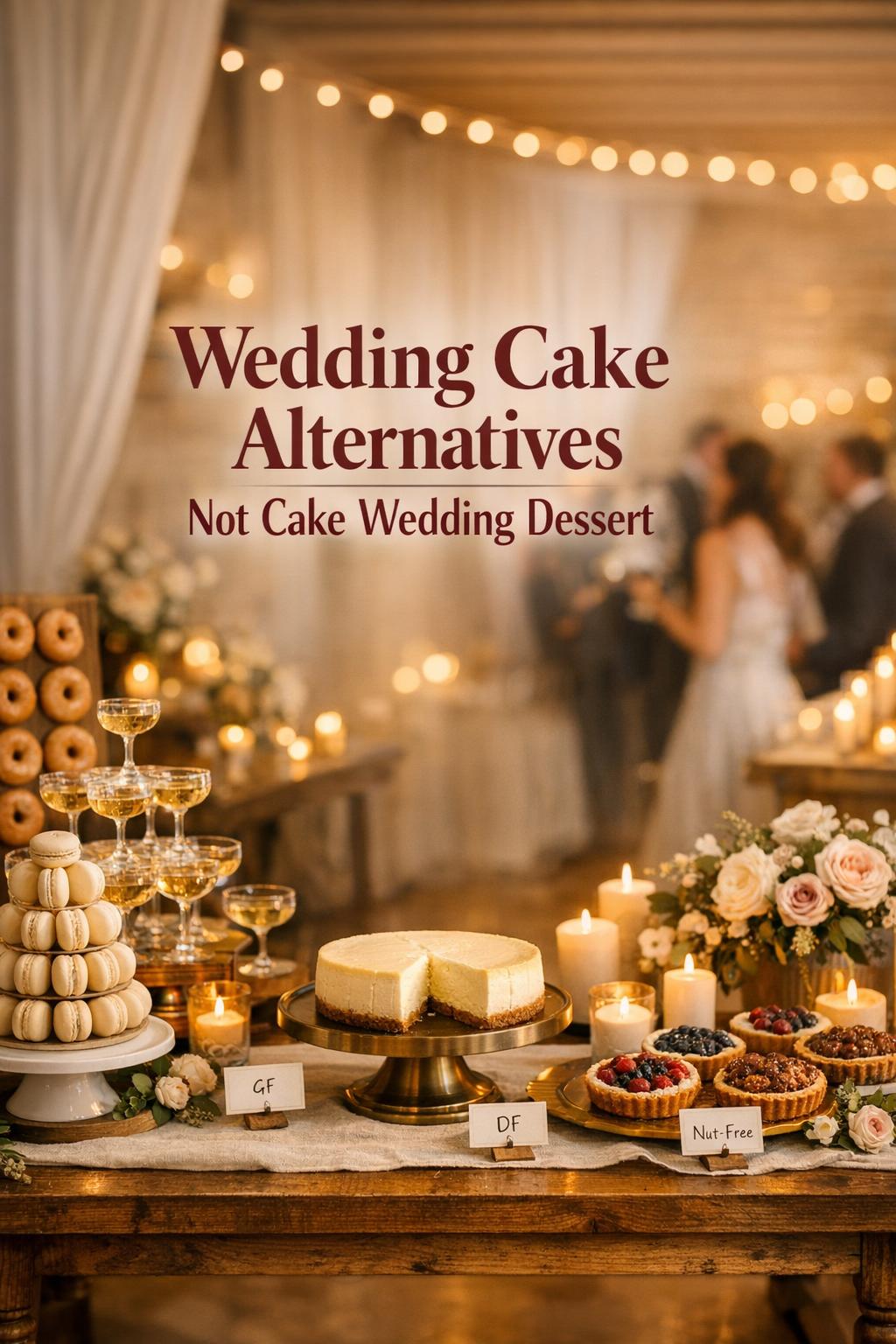
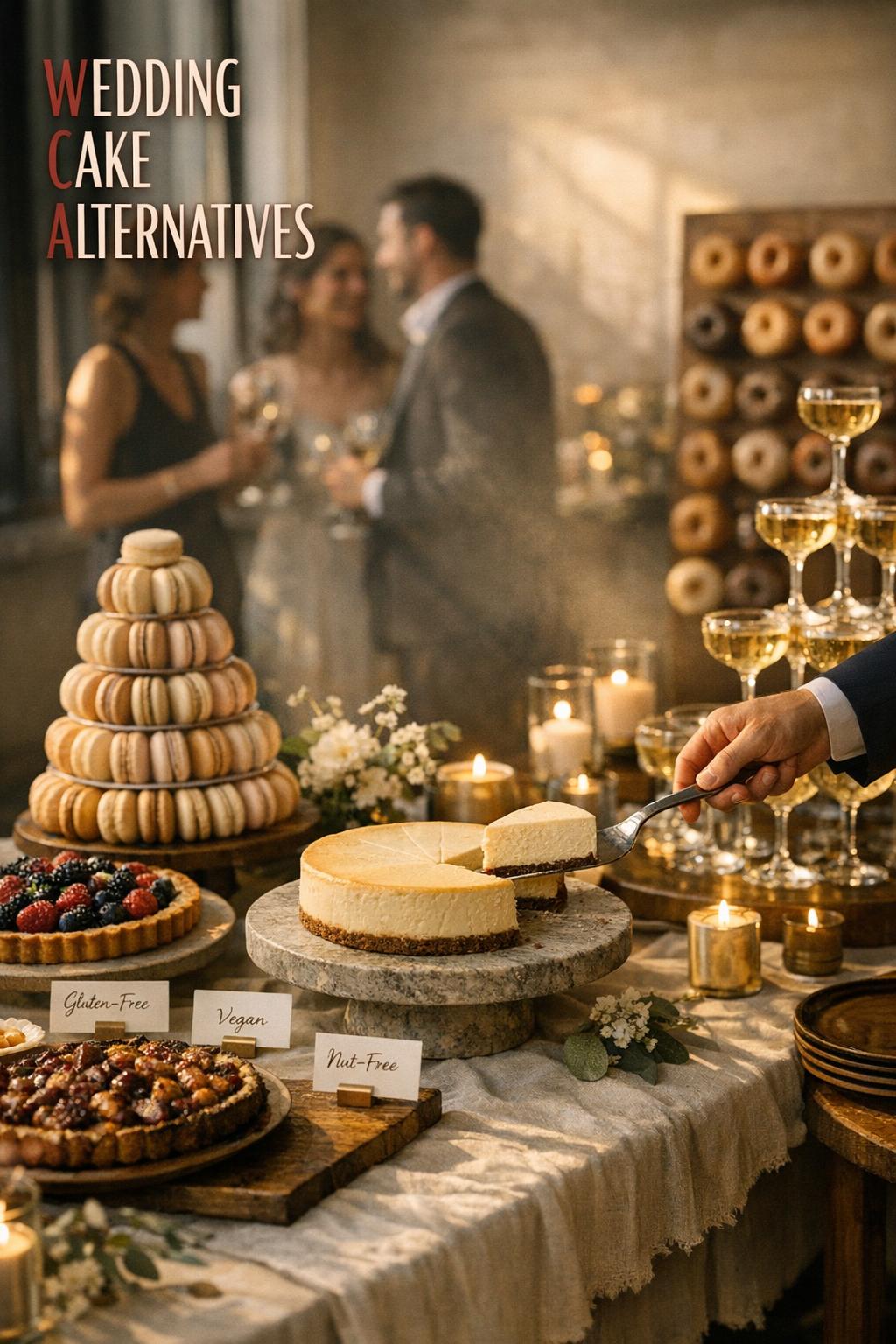
That’s why so many top alternatives lean into either a bold display (like donut walls and donut towers), a curated abundance (dessert boards and grazing tables), or a structured showpiece (dessert towers, pie bars, and macarons arranged like edible décor). Each option solves the centerpiece problem in a slightly different way.
Key “style principles” for choosing alternative wedding cakes
Think of your wedding dessert the way you’d think of styling a full look: it needs a focal point, supportive details, and a plan for comfort. When couples feel unsure about a not cake wedding dessert, it’s usually because one of these principles hasn’t been decided yet.
- Anchor + accents: Choose one hero display (donut wall, champagne tower, dessert tower, grazing table) and then add smaller supporting sweets (cookies, mini pastries, macarons). This keeps the visual story clear.
- Match the format to the venue: Some venues shine with dessert stations and interactive stations; others work better with grab-and-go treats that don’t require guests to queue.
- Plan for photos on purpose: If you want a “moment,” pick something that naturally gathers guests—like a champagne tower or dessert table—then place it in good light where your photographer can capture it.
- Give guests choice without chaos: Variety is part of the appeal, but it needs signage and a layout that prevents bottlenecks.
- Be honest about budget: Many wedding cake alternatives can look chic and expensive without being the most expensive line item—especially when the display itself doubles as décor.
- Include dietary needs early: Vegan, gluten-free, or nut-free options feel seamless when they’re designed into the menu, not added as an afterthought.
Once you have these foundations, you can choose from the most popular (and most practical) ideas other than wedding cake and tailor them to your theme, season, and guest experience.
Dessert boards and grazing tables: the romantic “abundance” look
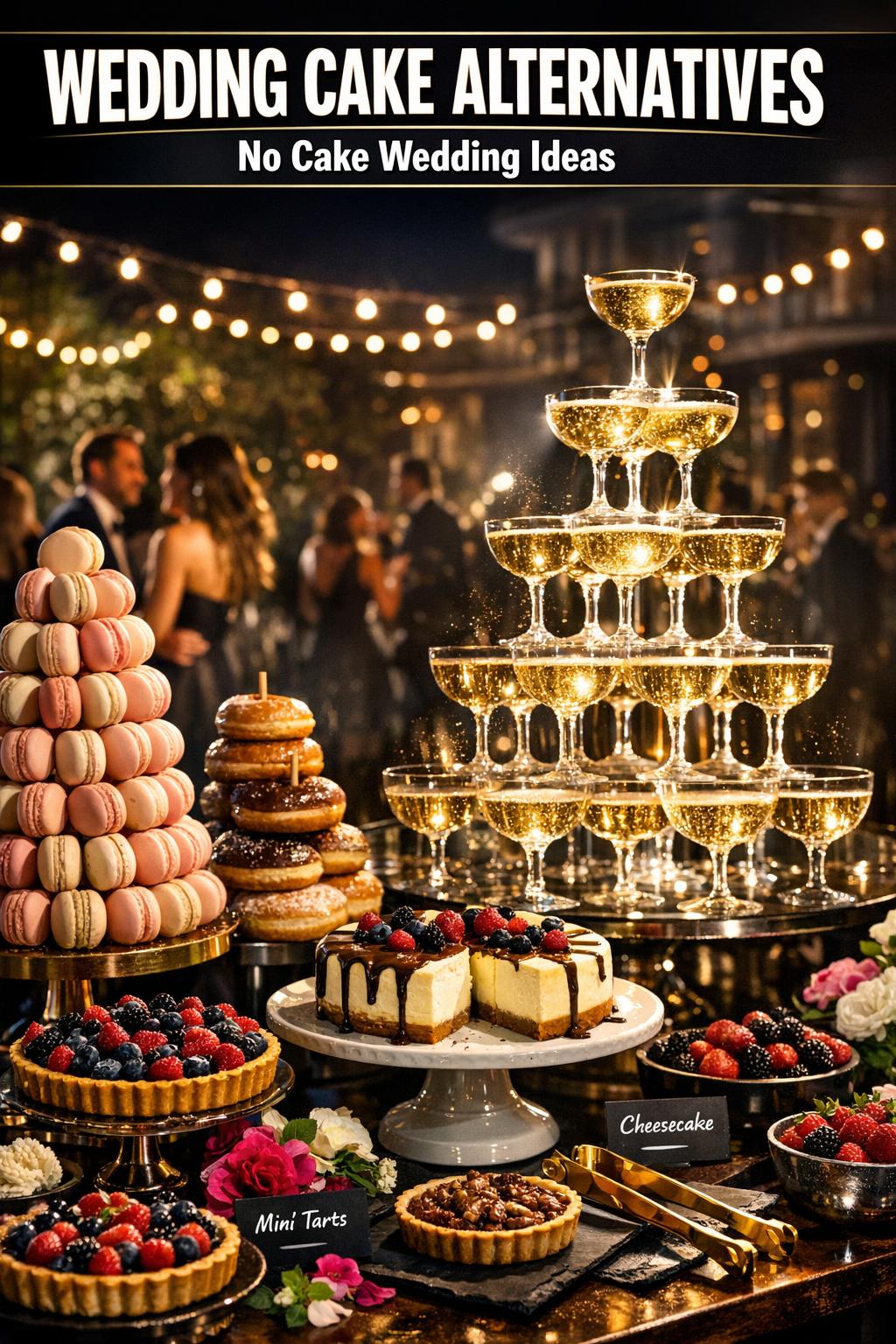
Dessert boards and grazing tables are one of the most flexible wedding cake alternatives because they’re both food and atmosphere. They create a styled, abundant scene—something guests can approach casually—while still feeling curated enough to be photographed like a centerpiece. They also solve a common reception problem: different guests want different levels of sweetness, and a dessert board can offer variety without feeling like you’re doing “too much.”
What makes dessert boards work as a not cake wedding dessert
A dessert board is essentially a styled spread of treats (often including mini pastries, cookies, chocolates, fruit-forward bites, and delicate options like macarons) arranged with visual intention. A grazing table is the larger, reception-scale version: a dessert table that guests can browse. Both are naturally aligned with the “edible décor” concept that shows up across modern wedding trends.
The styling logic is simple: a traditional cake is a single statement piece, while a dessert board is a layered composition. If your wedding aesthetic leans minimalist or modern, keep the layout clean and symmetrical. If you’re going romantic or boho, lean into abundance, varied textures, and a more organic flow across the table.
Presentation ideas that photograph beautifully
To keep dessert boards from reading like “a buffet,” treat the surface like a curated display. Vary heights (without clutter), group similar shapes together, and repeat colors to connect the dessert to your décor. This is also where wedding photography considerations matter: place the spread where the room’s best light falls, and give your photographer a clean backdrop—especially if your venue is busy or visually loud.
- Use a central cluster as the “hero” moment (for example, a macaron display or a mini pastry tower), then build outward with supporting sweets.
- Repeat a few signature flavors or color cues so the table feels intentional, not random.
- Create a clear guest path: plates first, then the desserts, then napkins—so the experience flows and lines don’t tangle.
If you’ve been searching for no cake wedding ideas that still feel generous and elevated, this format is often the most forgiving—and the most adaptable to different budgets.
Donut walls and donut towers: playful, modern, and guest-friendly
Donuts are a core favorite across wedding cake alternatives because they’re instantly recognizable, easy to serve, and naturally fun. But the styling decision that elevates donuts from casual to wedding-worthy is the structure: donut walls and donut towers create a vertical focal point that reads like a statement piece, similar to the way a tiered cake would.
How to make a donut wall feel like “alternative wedding cakes,” not an afterthought
A donut wall works best when it’s integrated into your reception design. If your theme is modern or minimalist, choose a clean display and keep the donut assortment visually cohesive. If your vibe is more lively, mix flavors and toppings for a playful effect—but still keep the arrangement neat, so it photographs well.
Because donuts are a grab-and-go treat, they also support the guest experience: people can dance, mingle, and snack without needing a formal dessert course. That makes them especially strong for couples who want a not cake wedding dessert that doesn’t interrupt the party’s rhythm.
Flavor assortments and “pairing” logic
When you’re planning a donut wall wedding dessert, variety is the selling point—but too much variety can look visually chaotic. The best approach is to offer a few crowd-pleasing flavors and then a smaller set of “signature” choices that feel like you. Many couples also style donuts alongside coffee pairing moments, turning dessert into a mini ritual: guests pick a donut, grab coffee, and return to the dance floor.
- Choose a “core” set of flavors for broad appeal, then add one or two bolder options for personality.
- Keep toppings consistent with your décor palette if photos are a priority.
- Decide whether you want the wall as the hero moment, or whether it supports a larger dessert table.
From a planning standpoint, donut walls are also easy to understand for guests, which reduces the chance of confusion or uneven serving—an underrated advantage when you’re choosing ideas other than wedding cake.
Pies, tarts, and the cheesecake wedding cake moment
If you love the comfort of tradition but don’t want the standard tiered cake, pies and tarts are the most “classic-feeling” wedding cake alternatives. They’re familiar, satisfying, and easy to style in a way that fits anything from vintage romance to relaxed garden celebrations. And if you want something that still feels like a showpiece, a cheesecake wedding cake (or a cheesecake-style centerpiece) offers the structure and gravitas guests expect—without following the exact cake script.
Pie bars and seasonal pies: a warm, welcoming reception energy
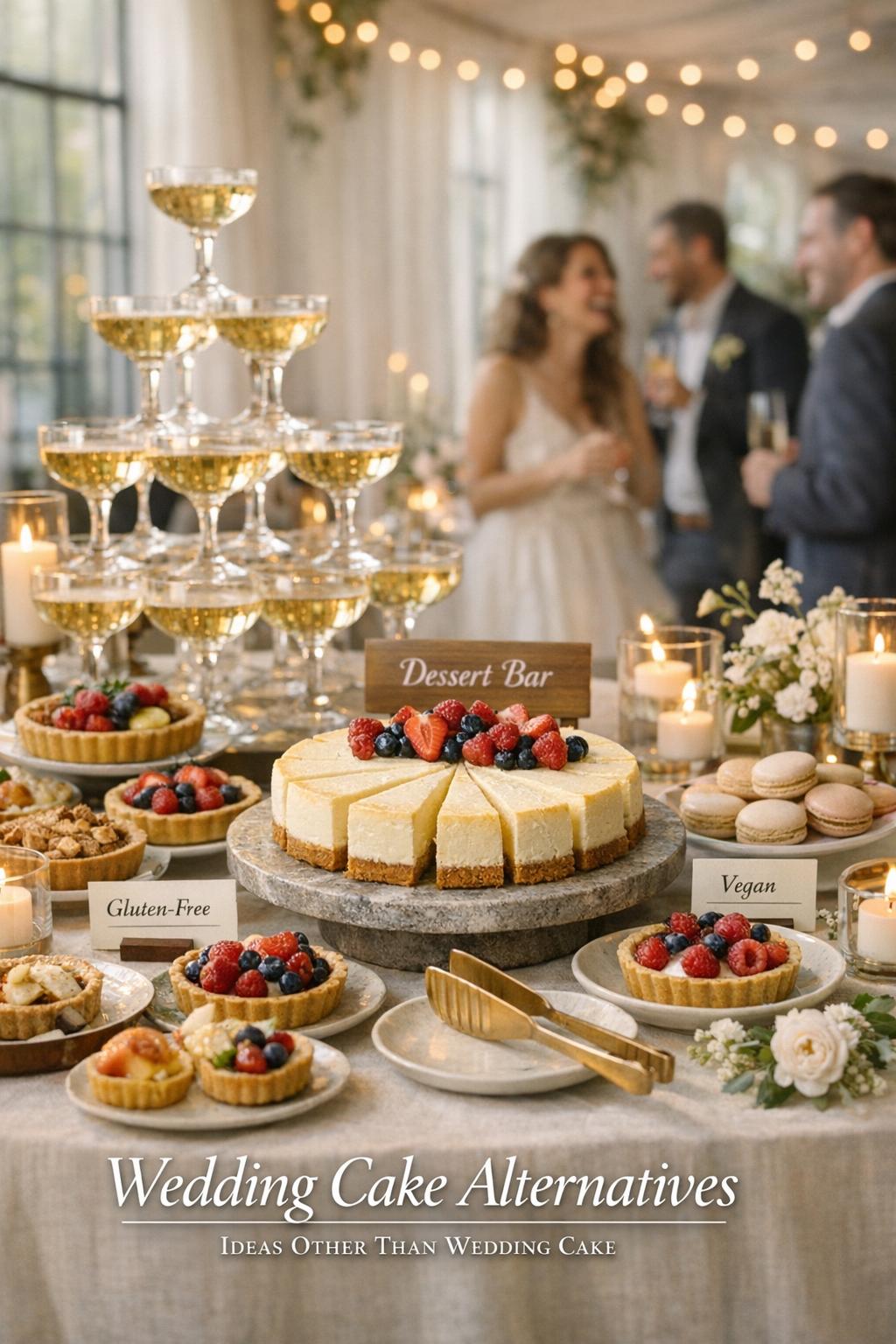
Pie bars are repeatedly highlighted as a clever alternative because they blend variety with simplicity: guests can choose their favorite, and you can reflect the season through fruit-forward options. In a fall or late-summer setting, seasonal pies can feel deeply romantic—like the dessert version of candlelight and slow music. In spring and summer, tarts can bring a lighter, more delicate look while still offering a satisfying finish.
From a styling perspective, pies and tarts also work beautifully with rustic, vintage, or cozy-luxury décor. The “display” can be minimal—clean stands, clear labels—or it can be abundant, with a full dessert table that feels like a celebration of togetherness.
Cheesecakes as alternative wedding cakes: when you want structure without tradition
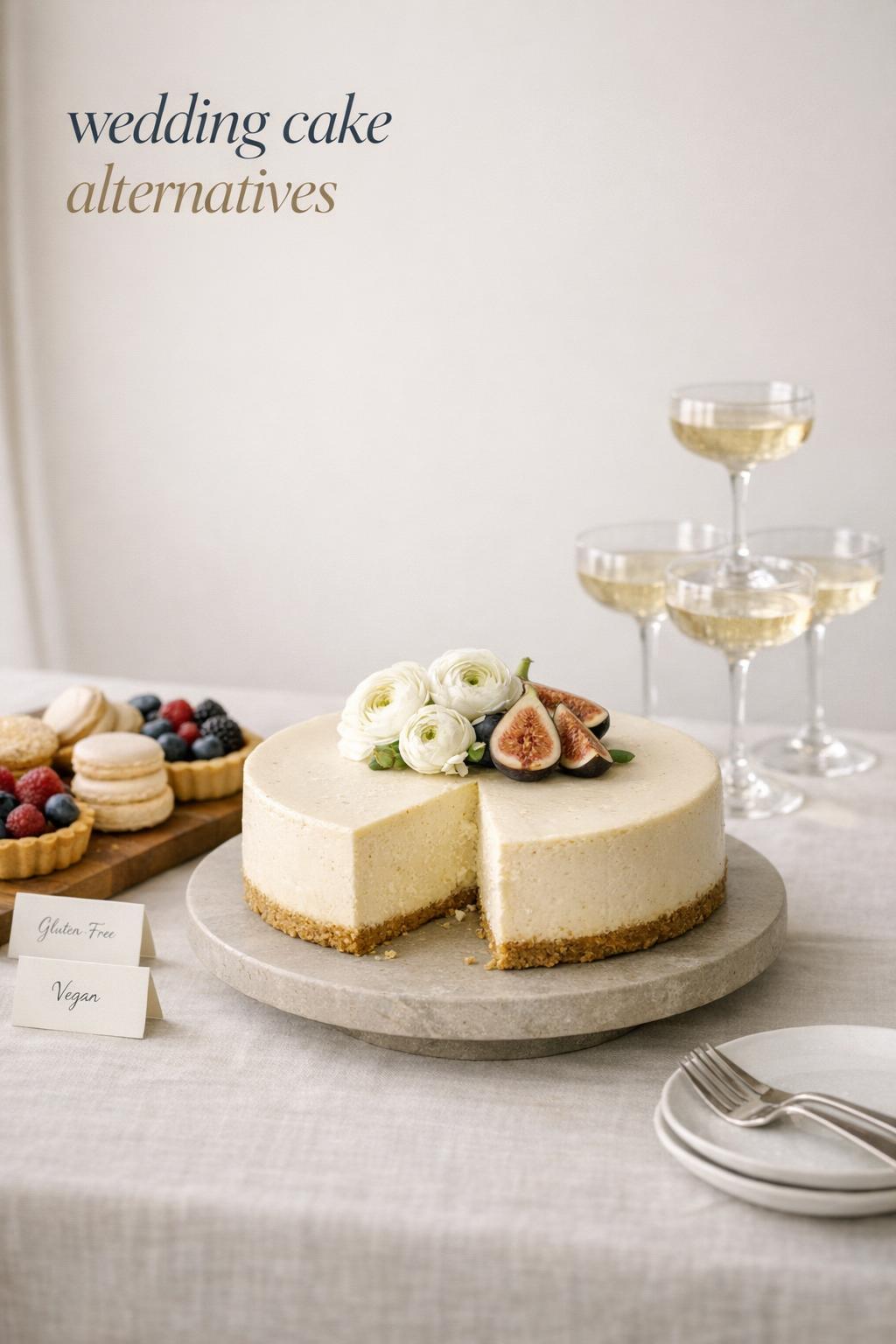
Cheesecake and cheesecakes show up as a core alternative because they bridge the gap between cake expectations and dessert variety. A cheesecake wedding cake approach can be styled as a centerpiece and served like a formal dessert, which helps if you still want a “cutting” moment for photos—even if the vibe is not cake wedding dessert overall.
In the U.S., cheesecake is also tied to recognizable regional identity—think of the way guests associate it with city energy and classic celebration—so it often feels instantly special without needing extra explanation. If you’re hosting in New York or simply love that polished, downtown reception feel, this option naturally complements a sleek, modern aesthetic.
One practical note: pies, tarts, and cheesecake alternatives can be more “portion predictable” than scattered bite-sized sweets, which makes budgeting and serving plans feel calmer—especially if you’re working closely with a caterer.
Macarons, cookies, and mini pastries: the photogenic, mix-and-match strategy
Macarons, cookies, and mini pastries shine when you want a dessert moment that feels airy, modern, and visually refined. They’re also one of the easiest ways to create a dessert table that looks “designed”—because the shapes are consistent and the colors can be coordinated with your wedding palette. This is the style-forward side of wedding cake alternatives: it’s less about one big centerpiece, and more about a curated collection that invites guests to sample.
Macaron towers and dessert towers: a showpiece that replaces the tiered cake silhouette
If you want to echo the iconic tiered-cake shape, dessert towers are the most direct translation. A macaron tower, in particular, reads as elegant and intentional. It photographs cleanly, fits minimalist design, and still offers the “wow” factor when guests first walk into the reception space.
This is a strong option for couples who want alternative wedding cakes that still provide a focal point—and it pairs easily with supporting desserts like cookies and mini pastries so every guest can choose something they genuinely enjoy.
Cookies and mini pastries for variety (without losing control)
Cookies—especially when styled as part of a dessert table—bring comfort and approachability. Mini pastries add texture and a “patisserie” feel. Together, they solve a real guest-experience problem: not everyone wants a heavy dessert after a long dinner and dancing. Bite-sized options let guests take a little something without committing to a full slice.
- Use one “hero” tower (macarons or assorted mini pastries) and one “comfort” category (cookies) to balance elegance and familiarity.
- Keep the table from feeling cluttered by repeating a few shapes and colors.
- Build in a simple labeling system so guests can choose quickly, especially if you’re including dietary-specific options.
This mix-and-match approach is one of the most reliable no cake wedding ideas because it scales easily and can feel either intimate or grand depending on your display.
Champagne towers and interactive stations: when the “dessert moment” is an experience
Some couples don’t want dessert to be a quiet endnote—they want it to be a scene. Champagne towers appear as a standout option because they create a dramatic, celebratory photo-op that replaces the traditional cake-cutting energy. Rather than gathering around a knife and plates, guests gather around a sparkling moment that feels instantly festive.
This idea is also supported by real professional insight: in New York, LeighAnne Tucci, a senior catering manager associated with Conrad New York Downtown, is quoted in wedding coverage that validates non-traditional dessert formats and guest-facing experiences. That kind of expert framing matters because it reassures couples that their not cake wedding dessert isn’t a compromise—it’s a deliberate, hosted choice.
How to blend a champagne tower with wedding cake alternatives
A champagne tower doesn’t replace dessert on its own; it replaces the ritual. The best pairing is to create a nearby dessert table or dessert boards so the drink moment flows naturally into sweets. If you’re considering interactive stations, keep the same principle: one visual “moment,” plus a clear path to serving.
Interactive stations can be especially effective for couples who want to prioritize guest experience. The key is to avoid long waits by keeping the station streamlined and by placing it where guests naturally circulate—near the dance floor entrance, or along the route between dinner and dancing.
Themed and cultural dessert samplings: a personal story guests can taste
Cultural sweets are an especially meaningful direction for wedding cake alternatives because they turn dessert into storytelling. Instead of choosing a format purely because it’s trending, you can choose sweets that reflect family roots, shared memories, or the way you celebrate at home. This is where “non-traditional” becomes emotionally grounded—your guests aren’t just seeing a new idea; they’re being welcomed into something personal.
The most elegant approach is a themed dessert sampling: a curated mix of cultural sweets arranged like a gallery. This format fits beautifully into a dessert board or grazing table, and it can be styled to match anything from romantic garden weddings to modern minimalist receptions.
Fusion without confusion: how to keep the dessert table cohesive
When you blend cultural sweets with macarons, mini pastries, or pies, the risk is that the table looks random. The solution is to unify the display with a consistent visual rhythm: grouped categories, repeated serving pieces, and a clear “story” told through labels. If you’re working with an event planner, this is the moment to ask for a layout that supports both guest curiosity and fast serving.
For couples who feel pressure to choose a single dessert, this is a gentle reminder: your wedding is allowed to be layered. Themed samplings are often the most emotionally resonant ideas other than wedding cake, because they honor both tradition and individuality.
Budgeting, sizing, and logistics: making no cake wedding ideas feel effortless
Even the most beautiful dessert table can feel stressful if the logistics aren’t planned. A practical dessert strategy comes down to portion planning, service style, and whether your dessert display also functions as décor (which can be a budget-smart win). Many couples are drawn to wedding cake alternatives that “look expensive (but aren’t)” because the visual impact comes from presentation and variety, not necessarily a single high-cost item.
Service style decisions: plated vs. dessert stations vs. grab-and-go treats
Plated dessert feels formal and controlled, but it can reduce variety. Dessert stations (dessert tables, pie bars, donut walls, grazing tables) increase choice and energy, but they need smart layout to prevent lines. Grab-and-go treats—donuts, cookies, mini pastries—are the most flexible for dancing-heavy receptions, but they require more attention to presentation so the display still feels wedding-worthy.
Talk through the reception timeline with your caterer. If speeches are scheduled right after dinner, a dessert station may work best when it opens later—so guests don’t abandon the moment. If your reception has a more fluid structure, an all-night dessert table can feel generous and relaxed.
Tips for portion planning without overcomplicating it
Portion planning is one place where couples can accidentally overspend, especially when choosing ideas other than wedding cake that include lots of individual items. The best approach is to commit to a few core categories and let those do the heavy lifting, rather than offering a little bit of everything.
- Pick one hero format (dessert tower, donut wall, pie bar, grazing table) so guests immediately understand “this is the dessert.”
- Add one or two supporting formats for variety (macarons, cookies, mini pastries).
- Keep the serving flow simple with clear signage and a layout that starts with plates/napkins and ends with the sweets.
If you’re working with a vendor who specializes in dessert boards or dessert tables, ask them how they typically pace replenishment—this is often the difference between a table that looks dreamy all night and one that looks picked over too early.
Dietary, allergy, and accessibility considerations (so every guest feels cared for)
Dietary needs are one of the most common motivations behind wedding cake alternatives. But inclusivity isn’t only about having a vegan or gluten-free option somewhere on the table—it’s about making those guests feel like they’re part of the celebration, not a footnote. When your dessert strategy is variety-based (dessert tables, grazing tables, pie bars), you have a natural opportunity to include multiple dietary categories without making the menu feel fragmented.
Vegan, gluten-free, and nut-free options: design them into the display
If you’re offering vegan, gluten-free, or nut-free sweets, integrate them thoughtfully: give them a defined space on the dessert table, label them clearly, and avoid placing them where crumbs or shared utensils will compromise them. This is one of those details guests truly remember—not because it’s flashy, but because it feels considerate and calm.
Many couples also find that bite-sized formats—cookies, mini pastries, macarons—make dietary inclusion easier. You can provide variety without needing an entirely separate “alternative dessert” for a small group of guests.
Accessibility and guest comfort: the overlooked planning win
A dessert station should be easy to approach and easy to navigate. Keep pathways clear, avoid placing key desserts too high or too low, and ensure the table isn’t cramped into a corner where guests feel awkward lingering. These small layout choices improve the guest experience and keep your dessert display looking composed in photos.
How to choose your dessert strategy: a simple decision workflow
If you’re feeling torn between donut walls, pie bars, dessert boards, a cheesecake wedding cake, or a full dessert table, the decision becomes much easier when you start with your wedding “vibe” and service realities. The goal is to choose wedding cake alternatives that match your atmosphere, not fight it.
Use this workflow like a stylist would: start with the setting, then build the statement, then add supporting pieces.
- Step 1: Define the reception mood. Minimalist and modern often pairs beautifully with macarons, dessert towers, and a clean dessert table. Romantic and abundant naturally suits grazing tables and dessert boards.
- Step 2: Choose your “moment.” Decide what replaces the cake-cutting photo: a champagne tower, a macaron tower, a donut wall reveal, or a styled dessert board centerpiece.
- Step 3: Match the format to venue flow. If guests will move a lot (dancing-focused), choose grab-and-go treats like donuts and cookies. If guests will linger seated, a plated moment or structured pie bar can feel smoother.
- Step 4: Build in guest demographics. If you have a wide range of preferences, variety matters—dessert boards, mini pastries, and cookies are a safe mix.
- Step 5: Confirm dietary needs early. Make vegan/gluten-free/nut-free options part of the base plan, with clear labeling and separation.
This approach keeps no cake wedding ideas from turning into a scattered collection of sweets. Instead, your dessert reads like a designed part of the wedding—just like your florals, lighting, and tablescape.
Real-life reception scenarios: choosing what actually works on the day
It helps to picture your dessert choice at the exact moment it will be used. That’s where couples often realize which wedding cake alternatives truly fit their celebration.
The “downtown evening” reception with a photo-forward crowd
If you’re leaning into sleek style—think modern décor and a city energy that feels at home in New York—consider a champagne tower as the ritual moment, with a structured dessert table nearby. A cheesecake wedding cake can be the anchor if you still want something sliceable, while macarons and mini pastries add variety without cluttering the look.
The “garden romance” reception where guests linger and talk
This is where dessert boards and grazing tables feel natural: guests can wander, sample, and settle back into conversation. Add seasonal pies or a pie bar for comfort and nostalgia, and use cookies as the friendly, familiar option that appeals to almost everyone.
The dance-heavy celebration where dessert should never slow the party
Donut walls and donut towers are ideal here because they keep dessert simple and quick. Pair them with a small dessert station of cookies or mini pastries so guests have options. In this scenario, your goal isn’t a formal dessert course—it’s a steady, easy-to-enjoy sweet moment that supports the party’s momentum.
Additional tips for making wedding cake alternatives look intentional
The difference between “we didn’t do cake” and “we chose a not cake wedding dessert on purpose” is usually in the finishing touches. These tips focus on the details guests notice subconsciously—and the details photographers love.
- Create a focal point: Even on a wide dessert table, give the eye somewhere to land (a macaron tower, donut wall, or a central dessert board cluster).
- Think in textures: Pair smooth (cheesecake) with crisp (cookies) and delicate (macarons) so the display feels layered.
- Use clear labeling: Labels improve flow and help with dietary needs, especially on grazing tables and pie bars.
- Keep the table refreshed: A dessert spread looks most beautiful when it’s maintained. Coordinate with your caterer on replenishment timing.
- Plan a “moment” time: If you want photos, schedule the champagne tower pour or the first visit to the dessert table like you would schedule a cake cut.
Budget-wise, this is also where many couples win: a chic display can do double duty as décor, especially when you choose wedding cake alternatives that are naturally photogenic.
Common mistakes couples make with no cake wedding ideas (and how to avoid them)
Most dessert regrets aren’t about the sweets themselves—they’re about how the choice played out during the reception. A few avoidable mistakes come up again and again when couples plan ideas other than wedding cake.
Mistake: Offering too many desserts without a clear anchor
Variety is wonderful, but if everything is “equal,” the dessert table can feel visually messy and guests may not know where to start. Fix it by choosing one hero format (donut wall, pie bar, dessert tower, grazing table) and letting everything else support it.
Mistake: Forgetting the guest-flow and creating a line
Dessert stations are meant to feel joyful, not stressful. When plates and napkins aren’t placed first, or when the station is tucked into a tight area, lines build quickly. Fix it with a simple layout and enough space for guests to approach and exit smoothly.
Mistake: Treating dietary needs as a “special request” instead of part of hospitality
If vegan or gluten-free guests have to ask repeatedly, the experience can feel isolating. Fix it by labeling clearly and placing dietary-friendly sweets where they look just as celebratory as everything else.
Mistake: Not planning a photo moment
If you care about photography, you need a ritual: a champagne tower pour, a first visit to the dessert table, or a slice of a cheesecake wedding cake centerpiece. Fix it by building a small moment into the timeline so the dessert gets its spotlight.
Pulling it all together: a dessert choice that feels like you
The most memorable wedding cake alternatives aren’t memorable because they’re unusual—they’re memorable because they fit. A donut wall feels perfect when the reception is playful and modern. Dessert boards and grazing tables glow in romantic, abundant settings. Pie bars and seasonal pies feel welcoming and classic. Macaron towers and dessert towers deliver minimalist elegance. Cheesecake alternatives offer structure for couples who still want a centerpiece. And champagne towers turn the dessert beat into a celebration all its own.
If you remember one planning truth, let it be this: your dessert isn’t just what you serve—it’s how you host. When you choose alternative wedding cakes with a clear anchor, thoughtful flow, and care for guest experience, you’ll create a sweet moment that feels effortless, beautiful, and unmistakably yours.
FAQ
What are the most popular wedding cake alternatives right now?
Some of the most popular wedding cake alternatives include donut walls and donut towers, pie bars and seasonal pies, macarons (often as a macaron tower), dessert boards and grazing tables, cheesecakes, and dessert towers that mimic the structure of a traditional cake while offering more variety.
How do I make a not cake wedding dessert still feel like a centerpiece?
Choose one hero display—like a donut wall, dessert tower, macaron tower, grazing table, or champagne tower—and design the rest of the sweets to support it, then place it where guests naturally gather and where your photographer has clean sightlines and flattering light.
Are dessert boards and grazing tables practical for a wedding reception?
Yes, dessert boards and grazing tables are practical because they offer variety and flexible serving, but they work best when the layout is planned for guest flow, with plates and napkins positioned first, clear labeling, and a replenishment plan so the display stays photo-ready.
What’s the difference between a donut wall and a donut tower for a wedding?
A donut wall is a vertical display that doubles as décor and creates a backdrop-like focal point, while a donut tower is typically a stacked centerpiece that echoes the shape of a tiered cake; both are guest-friendly grab-and-go options, so the best choice depends on your space and the visual moment you want.
Is a cheesecake wedding cake a good compromise if my family expects cake?
A cheesecake wedding cake can be a strong compromise because it still feels structured and sliceable like a traditional cake, creates an easy photo moment, and can be paired with supporting desserts like cookies, macarons, or mini pastries for guests who want variety.
How can I offer vegan or gluten-free options with alternative wedding cakes?
The easiest approach is to design dietary options into the dessert plan from the start by allocating a clearly labeled section of the dessert table or grazing table for vegan or gluten-free sweets, keeping them separated to avoid cross-contact and making them look just as celebratory as the main display.
How do I prevent lines and chaos at a dessert table or interactive station?
Keep the station streamlined by creating a clear start-to-finish layout (plates and napkins first, then desserts), placing it in an area with room to circulate, and limiting the number of formats so guests can choose quickly without crowding.
Can a champagne tower replace the cake-cutting moment?
A champagne tower can replace the ritual and photo-op of a cake cut, but it’s best used alongside a dessert table or dessert boards so guests still have a clear dessert experience immediately after the celebratory pour.
What are the smartest ideas other than wedding cake for couples on a budget?
Budget-smart ideas other than wedding cake often include donut walls, pie bars, dessert boards, and dessert tables built around cookies and mini pastries, because the display can double as décor and the variety-based approach lets you control costs by choosing a few strong categories rather than an oversized assortment.