
Dark Romantic Wedding Decor: Color, Texture and Usable Evening Light
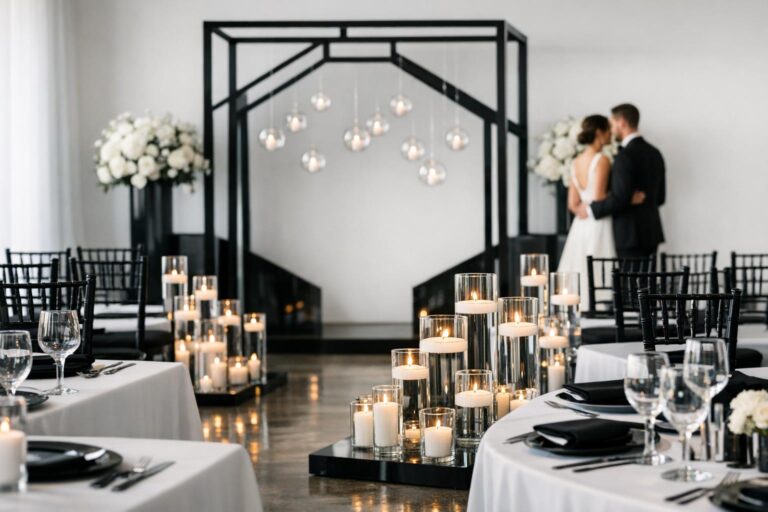
Dark romantic wedding decor can use black linen, burgundy flowers, velvet and metallic details without leaving the reception hard to navigate. Choose the dark surfaces you want, then plan the light needed for people, signs and service. The atmosphere should be assessed with the room set up, not from an isolated candlelit centerpiece.

Start with the evening walkthrough
Ask to see the venue lighting at the time and settings expected for dinner. Check the entrance, tables, stairs, bar and route to restrooms. Mark areas that need practical illumination before choosing decorative fixtures.
Next, look at the main ceremony or couple’s area. Test faces against the proposed backdrop with the photographer and lighting supplier. A brighter background or more candles does not automatically give the desired result. Agree who operates the lighting and any changes during speeches, service or dancing.
Keep the dark look in the surfaces and palette you choose. Do not deliberately underlight a route to make the room seem moodier.
Turn wedding inspiration into a plan you can actually follow.
Zarellea brings your guest list, budget, vendors, and day-of details into one shared space — so no beautiful idea gets lost in the shuffle.

Compare a few deep color combinations
Black with crimson or burgundy
Try black linen or vessels with red flowers, then check whether the separate elements remain visible under reception lighting. A lighter plate, a quieter napkin or a different vessel finish can provide separation. You do not need black in every layer of the setting.
Emerald with plum
Compare a deep green textile with plum flowers or a smaller paper detail. A selected metallic finish can provide another visual accent. Use actual samples together; a named palette does not establish how the flowers and fabric will look in the room.
The emerald decor guide compares full linens with smaller green accents if you want the green to lead.
Deep tones with a lighter neutral
A champagne or ivory element can soften a dark table while keeping the overall direction. Try a lighter napkin against a dark linen, or a lighter floral detail within burgundy arrangements. Adjust one item at a time so the reason for the change stays clear.
Use texture where guests will see it
Velvet, lace, matte vessels, glass and metallic flatware offer different surfaces. Compare a full setting before combining all of them. A textured linen may need fewer additional layers than a plain one.
For a gothic, baroque or more playful interpretation, choose the shapes and paper details you personally want. These style labels overlap; they do not dictate how severe, soft or ornate your wedding has to be. One expressive backdrop or motif can be enough.

Plan candles around the real arrangement
Get the venue’s candle rules before ordering. Ask the florist and venue to approve the holders, flowers and textiles together. The U.S. Fire Administration recommends considering battery candles and keeping real flames separated from materials that can burn. Do not fill gaps between flowers and lace with flames simply to increase the glow.
Compare approved candle-style options on the mockup and assign who handles them during the event. If the venue restricts flames, decide the alternative before the rental order. Decorative candlelight should sit alongside sufficient room lighting.
Fit flowers and tableware to the meal
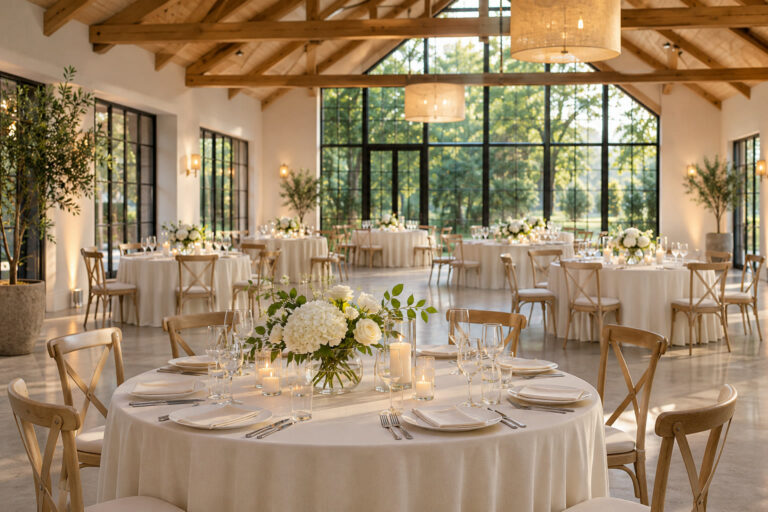
Put the plates, glasses, menus and serving pieces on the actual table first. Compare a compact floral arrangement with a more spread-out design, checking the view across the table from a seated position. Keep the design that leaves the setting usable.
Dark flowers may need a lighter neighboring element or a different vessel to remain distinct. Ask the florist to show the expected shape and colors with the linen. A taller arrangement is not automatically a better choice for an evening reception.
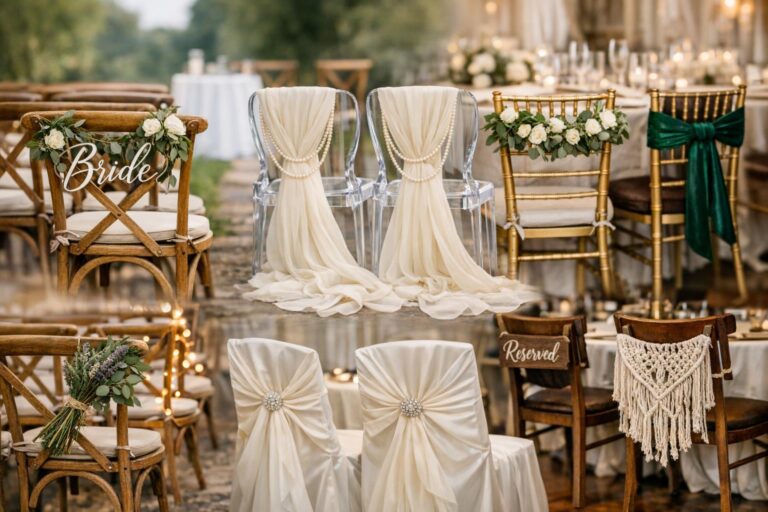
A velvet tie or another small chair detail can repeat the textile without decorating all the seating. Test it on the chair and keep it clear of guest movement and the route behind the table.

Choose the ceremony statement with the venue
A dark frame, floral arch or fabric backdrop can focus the ceremony. Check its location from the guest seats and the aisle, including the people and activities it needs to accommodate. Confirm supports, approved fixing points, installation and removal with the supplier.
In a barn, keep the existing wood and structural character where you like it; in a ballroom, compare the design with the fixed lighting and wall finishes. Outdoor plans also need an agreed alternative for unsuitable conditions. A strong silhouette does not resolve weather or installation requirements.
Budget for the installed design
Separate flowers, textiles, tableware, lighting and structures in the quote. Include delivery, installation and collection. Compare a few high-priority choices before ordering additional signs, lounge details or decorative vignettes.
DIY can suit prepared paper details or small textile accents. Time one complete example and plan quantities and packing. Leave changes to the lighting or supporting structures within the relevant supplier’s agreed work.

Check the finished room as a guest
Read a menu, find a table number, walk the routes and sit at a table. Check the ceremony or stage area with the actual lights on. Give the setup team reference photographs and an item list with responsibilities for removal.
How do we keep the decor from looking flat?
Compare adjacent surfaces and shapes in the room. A different plate, vessel or fabric can separate elements without adding a new decorative category. Test the result under event lighting.
Can this work without real candles?
Yes. Work with the venue and lighting supplier on permitted decorative options and sufficient room illumination. Choose the dark palette and textures independently of whether flames are allowed.
What should we cut if the quote is too high?
Keep the practical lighting and usable table layout. Compare the value of additional backdrop coverage, extra floral locations or upgraded textiles against the parts of the design you care about most.