
Simple Elegant Wedding Decor: Tables, Lighting and Focal Points
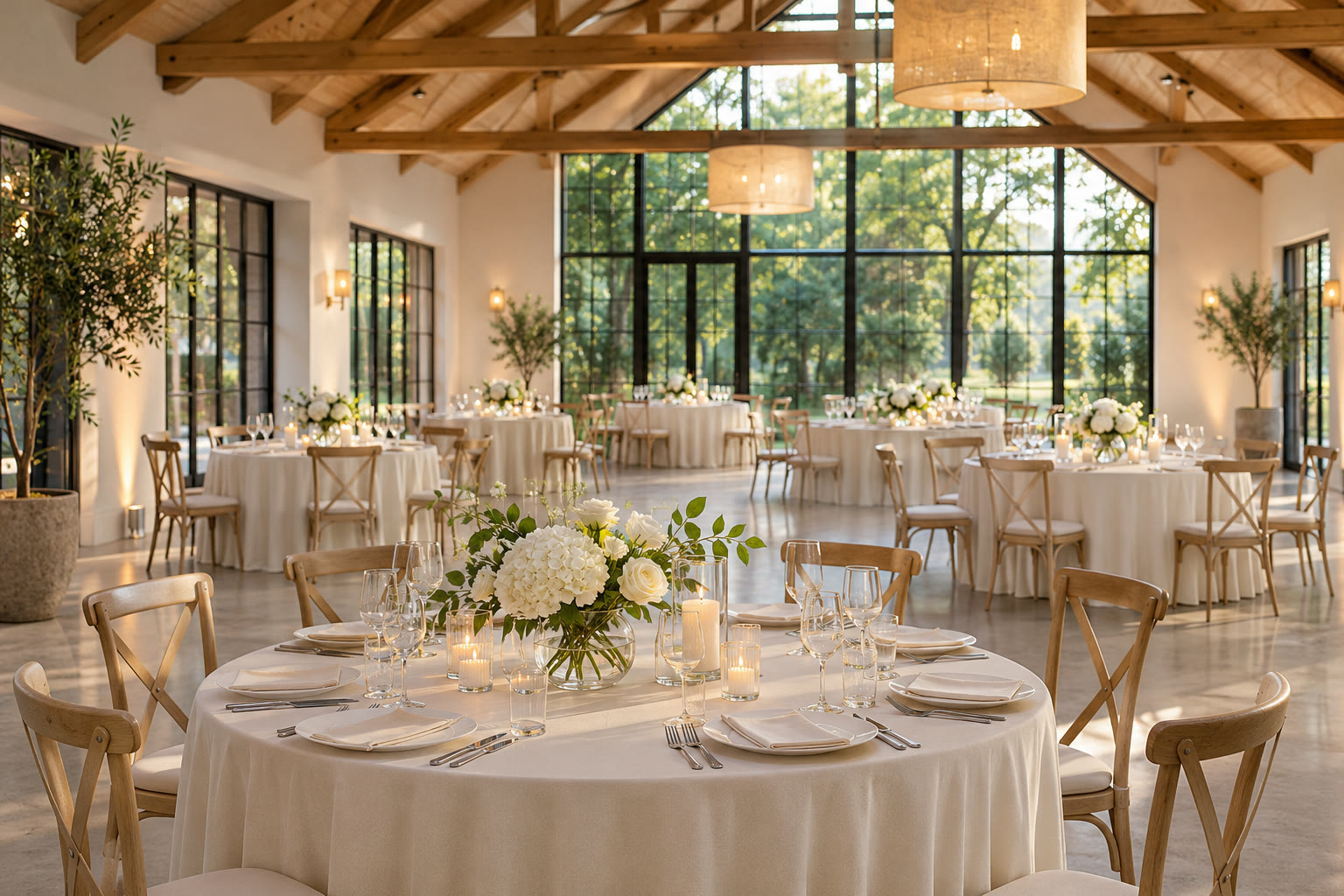
Simple elegant wedding decor starts with the room you have: its light, architecture, table layout and the places guests will use most. Choose a few materials and repeat them, then leave room for dining and conversation. A clear setup plan will do more for the finished look than adding another decorative category.
Understanding the Core of Simple Elegance
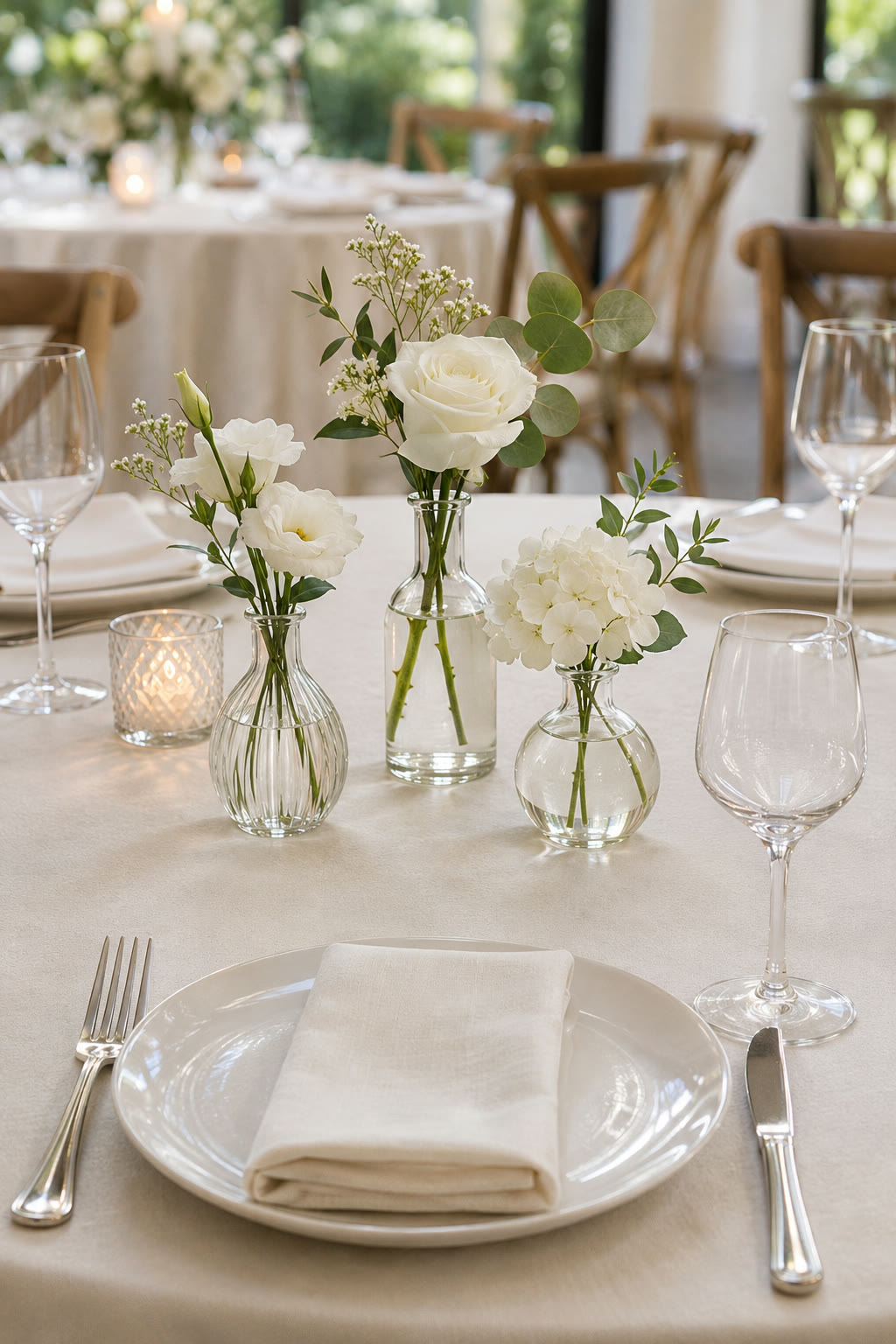
Choose the surfaces and sightlines you want to emphasize. A neutral palette, repeated vessels and consistent linens can connect the space, but the test is practical: guests need to see one another, use the place settings and move comfortably.
Define “simple” and “elegant” for different venues
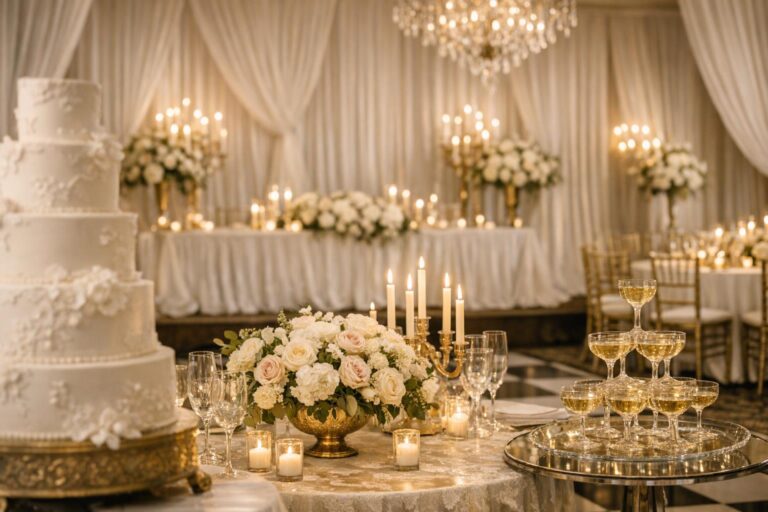
Your venue’s scale and architecture should lead the design. A ballroom often calls for a few larger focal points and deliberate lighting to define the room. A barn or rustic venue benefits from softening elements like linen, glass, and candlelight to balance heavier materials. An outdoor garden or open-air setting often needs structure, arches, frames, or defined “moments”, so decor doesn’t disappear into the landscape.
Before choosing decor items, identify what the venue already provides for free: natural light, landscaping, statement walls, tall ceilings, strong wood textures, or built-in ambiance. Simple elegant decor is most successful when it complements what’s already there instead of competing with it.
Turn wedding inspiration into a plan you can actually follow.
Zarellea brings your guest list, budget, vendors, and day-of details into one shared space — so no beautiful idea gets lost in the shuffle.
Color palettes that read as elegant and effortless
Minimal color is one of the fastest ways to make wedding decor feel more refined. Neutral palettes, think whites, creams, soft taupes, and gentle greens, create a clean foundation and keep attention on texture, candlelight, and floral shapes. If you want an accent, choose one muted tone and repeat it sparingly across the day (for example, in napkins, stationery, or a single floral ingredient).
- Soft neutral: white + ivory + greenery
- Natural and warm: beige + wood tones + glass + greenery
- Modern minimal: monochrome whites with subtle contrast from black or dark metal accents
- Understated romantic: neutrals with one delicate accent tone repeated in small ways
When in doubt, limit yourself to two neutrals plus greenery. The more controlled the palette, the more “effortless” the result will look, especially in reception photos with lots of tables in view.
Coordinate materials and textures
Luxury often reads as texture and light rather than price. Linen (or linen-like textiles), clear glass, candlelight, and greenery can look elevated in almost any venue. Wood details can feel warm and intentional when paired with clean whites and soft lighting. The key is repeating materials consistently so the room feels designed, not collected.
- Linen and soft textiles: table linens, napkins, simple draping
- Glass: hurricanes, vases, votives, lanterns
- Candlelight: layered heights for depth and glow
- Greenery: runners, garlands, minimal centerpieces
- Wood accents: subtle, especially for natural reception decor
Choose one “hero” texture (like linen) and one “hero” reflective element (like glass). This pairing is a reliable foundation for understated chic wedding decor in both daytime and evening receptions.
Core Decor Elements (With Ready-to-Use Ideas)
Most simple elegant wedding decor can be built from four pillars: tablescapes, focal points, lighting, and florals/greenery. When those are cohesive, you don’t need extra clutter to make the room feel special.
Tables with room for guests
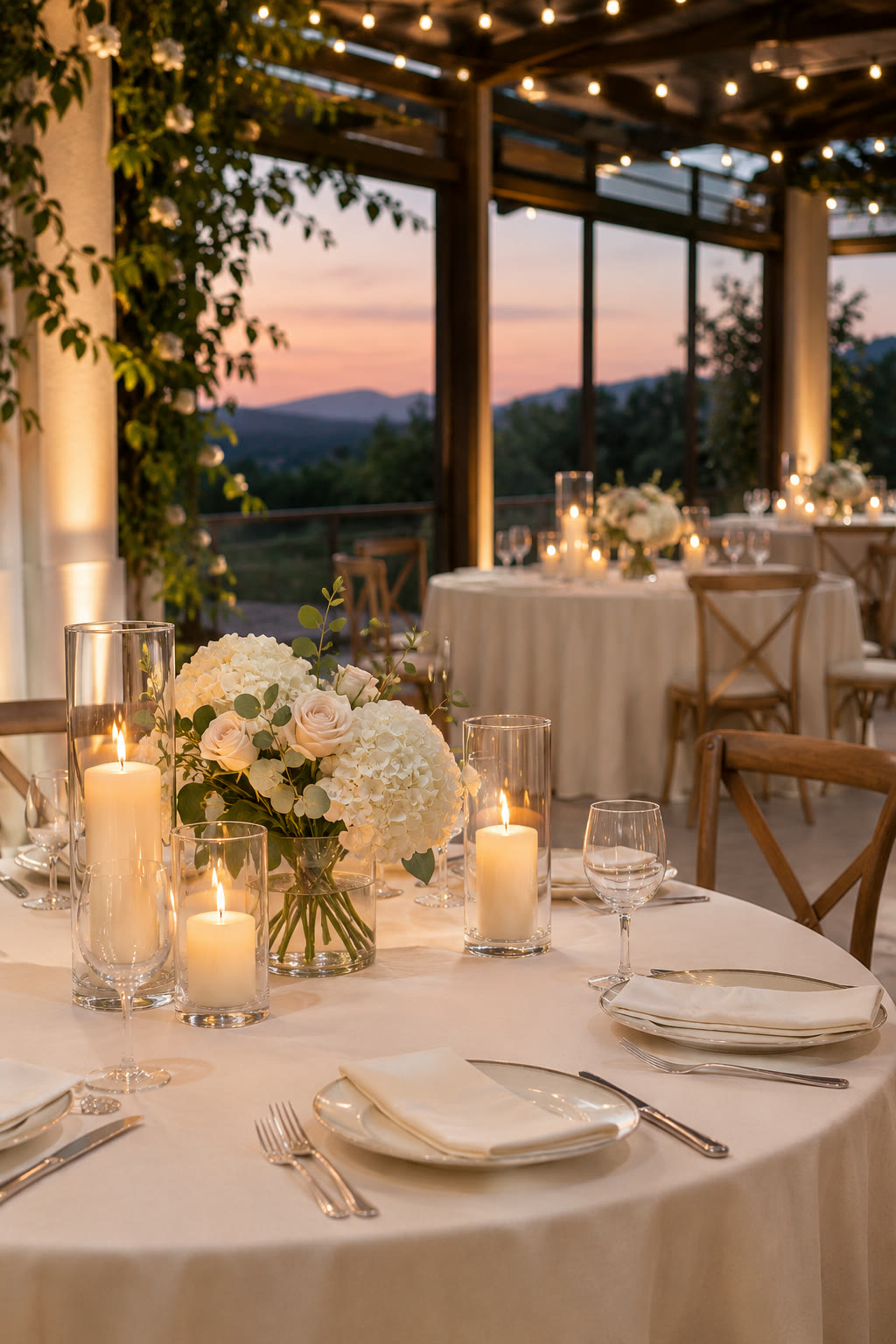
Mock up one complete place setting with the centerpiece, glassware and serving items. Check the view from a seated position and the space available for food service. Use that test to choose the centerpiece scale, rather than assuming a particular height works for every table.
- Greenery runner + votives: a simple greenery line down the center paired with small glass candles for a clean, romantic look
- Bud vases in clusters: several small glass vases grouped at the center; keep stems consistent for a polished feel
- Lantern centerpiece with simple greenery: one lantern per table (or one per two tables) with a small greenery base for an easy, timeless anchor
- Minimal white arrangement: a low arrangement that stays below eye level to keep conversation easy
- All-glass look: clear vases and hurricanes with candlelight, relying on reflection for elegance
Check how the room looks at the actual reception time before adding more tabletop pieces. If the light is insufficient, discuss the lighting plan with the venue rather than trying to solve the problem with decorative candles alone.
Backdrops and focal points
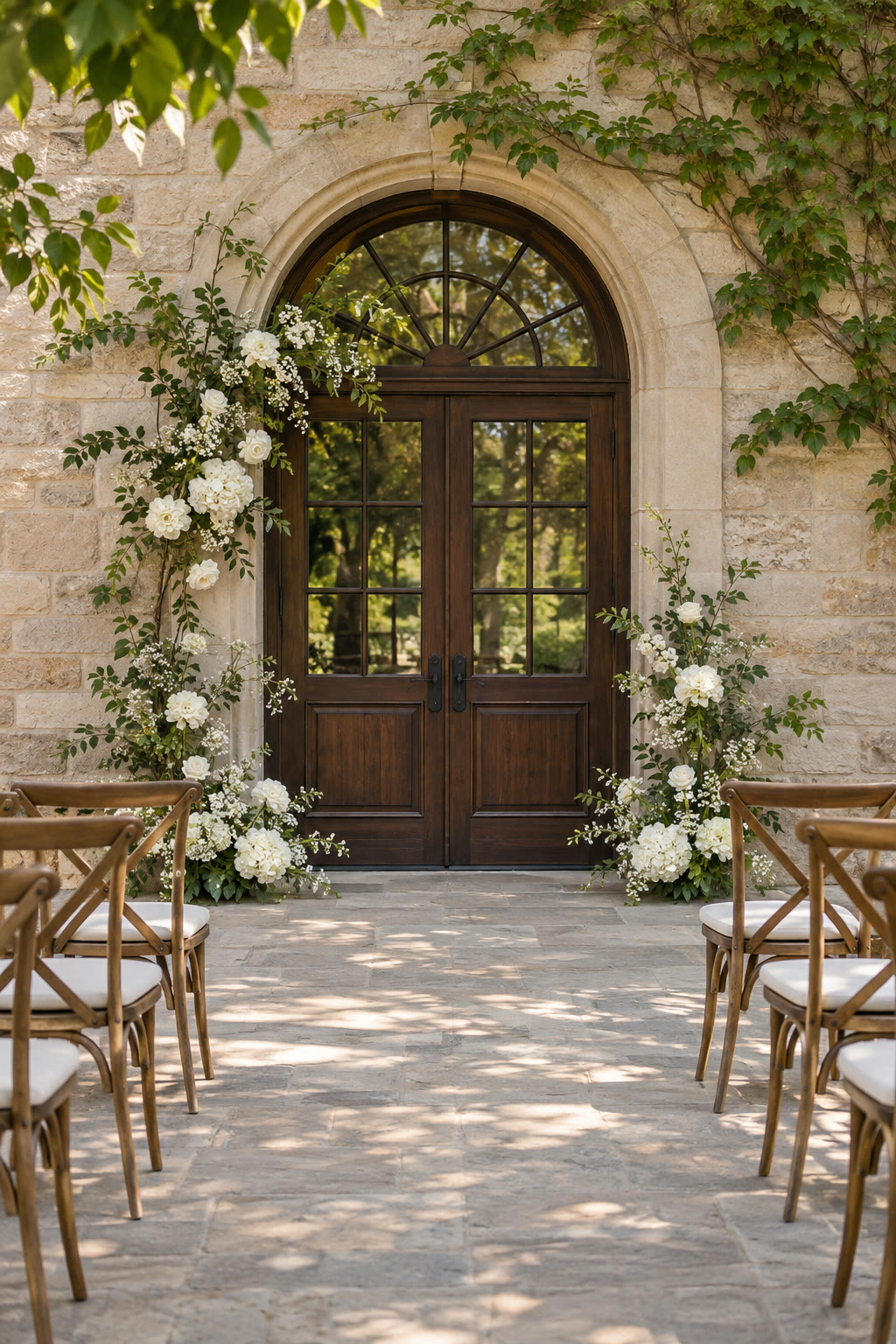
Simple decor still needs a few places where the eye can land. A focal point might be a ceremony arch, a small greenery frame behind the couple, or draped fabric that creates softness and height. These elements work especially well as photo backdrops and help define the layout without adding dozens of extra items.
- Greenery-framed ceremony arch: a clean structure with greenery placed asymmetrically or in one focused cluster
- Draped fabric backdrop: soft, neutral drape behind a sweetheart or head table for instant elegance
- Minimal “statement” wall: a simple arrangement of greenery and candles near an important moment (welcome, escort cards, or head table)
- Natural focal point: highlight an existing architectural feature and add only lighting and subtle greenery
Choose one main focal point and one supporting focal point. More than that can dilute the “simple” effect and make the space feel busy.
Lighting that defines mood
Agree with the venue on room lighting, permitted candle use and how the space changes after dark. Battery candles are an option when flame is not permitted. Decorative glow should complement the lighting people need to walk, dine and read signs.
- Candlelight layers: mix votives, hurricanes, and a few taller candles for depth
- String lights for softness: especially effective in outdoor receptions or venues that need overhead warmth
- Exposed bulb/Edison-style lighting: works well with modern minimalist decor and clean lines
- Lanterns as light + decor: a single piece that provides structure and ambiance on tables or along aisles
Use lighting to create “zones” (dining, head table, backdrop areas). Even when decor is minimal, zones help the space feel complete and guide guests through the evening.
Florals that complement, not overpower
Minimalist floral design relies on restraint: fewer varieties, simpler shapes, and greenery that provides volume without feeling heavy. Some couples prefer mostly greenery or a clean white look to keep the overall style simple and elegant. A small number of statement blooms can feel intentional when everything else stays clean.
If you want a “wow” floral moment, put it where it matters most, ceremony framing, head table styling, or a key backdrop, then keep guest tables more streamlined with greenery and candles.
Seasonal and Venue-Driven Variations
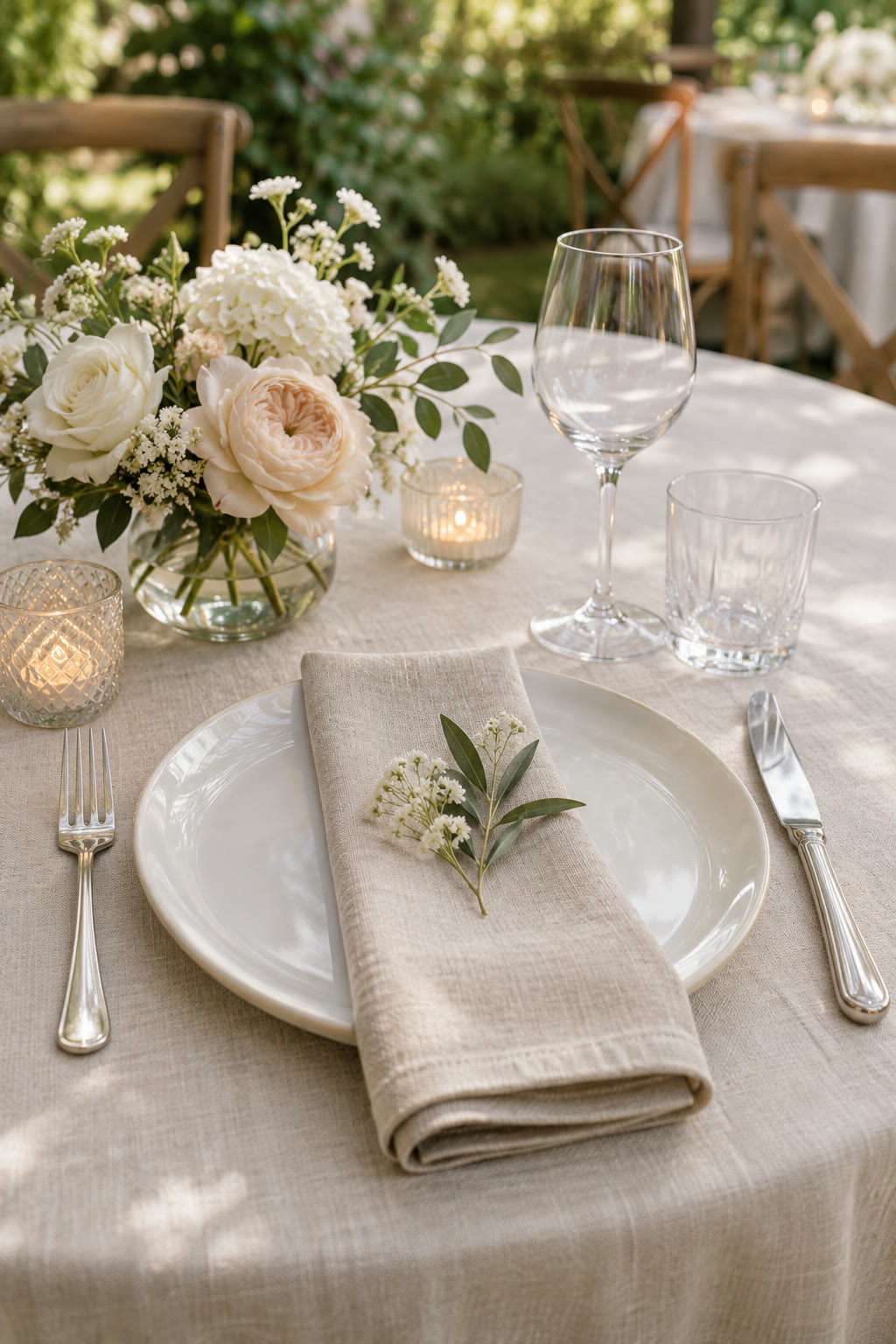
Simple elegant decor isn’t one look, it’s a method. You can keep the same core ingredients (neutrals, greenery, candlelight, clean lines) and adjust the weight of textures, lighting, and materials depending on season and venue style.
Spring and summer: airy, natural elegance
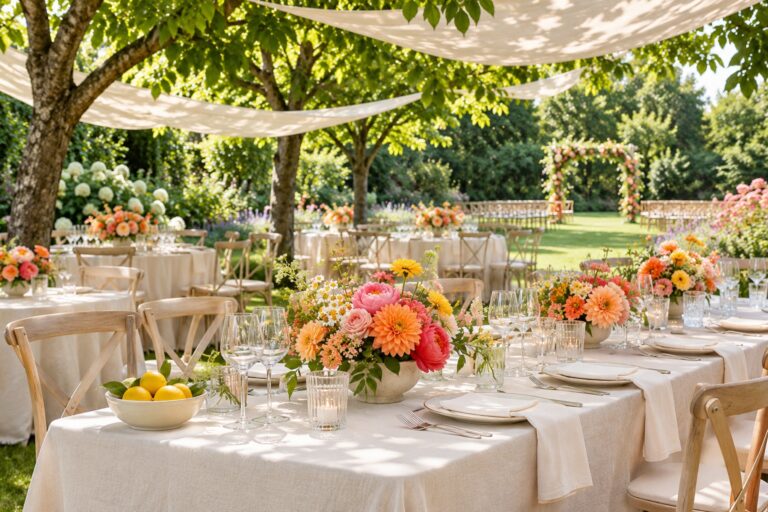
In brighter seasons, the venue often brings natural light and an open feel. Simple elegant wedding decor can lean light and breathable: airy tablescapes, subtle greenery, and minimal backdrops that don’t fight the landscape. Keep lines clean and let the setting do some of the work.
- Fabric choices: light, neutral linens for a clean foundation
- Centerpieces: lower profiles with greenery and small glass candles
- Backdrops: minimal arches or frames that create structure without heavy draping
- Lighting: focus on warm candlelight as daylight fades to maintain intimacy
For outdoor garden settings, emphasize structure (an arch, a defined head table, or a clear dining layout). Minimal decor can disappear outdoors if you don’t give it a frame.
Fall and winter: warm, luxe minimalism
Cooler seasons invite richer ambiance. You can still keep decor minimal while making it feel luxe by leaning into candlelight, layered textures, and subtle metallic or warm-toned accents. The look stays simple, but the room feels more intimate and dimensional.
- Lighting plan: more candle groupings and deliberate warm overhead lighting
- Texture: linens and layered materials to prevent neutrals from feeling flat
- Focal points: draped fabric and candle-heavy styling to create warmth in photos
- Greenery: keep it clean and structured so the design remains refined
In darker months, your lighting becomes a primary decor element. If you want a simple look, let lighting be the detail, rather than adding extra signage, props, or additional decor categories.
Ballroom vs. barn vs. outdoor garden: how to adapt without starting over
You don’t need a completely different decor plan for each venue type; you need the same plan scaled appropriately. Ballrooms typically require stronger focal points and lighting to avoid a “floating” look. Barns benefit from softened edges: linen, candlelight, and glass to balance rustic texture. Outdoor settings often need defined moments so the design reads clearly and doesn’t feel scattered.
Pick a core “kit” you can use anywhere: a greenery-and-candle table formula, one arch or frame concept, and one signage style. Then adjust scale, larger for ballrooms, softer for barns, more structured for outdoor spaces.
Budgeting and Sourcing for Simple Elegance
Affordable elegant wedding décor is often the result of smart prioritization. When you focus spending on a few elements that guests and photos notice most, lighting, tablescape cohesion, and one or two focal points, you can keep the overall design simple without it feeling sparse.
Where to invest for the biggest visual impact
Simple decor succeeds when the foundational pieces look intentional. Prioritize the elements that affect the entire room at once, lighting and table styling, then choose one focal moment that anchors the aesthetic.
- Lighting: candle layers, string lights, and consistent warm glow
- Tablescape foundation: linens, consistent glassware choices, and a repeatable centerpiece formula
- One focal point: an arch, a draped backdrop, or a head table moment that frames photos
- Greenery strategy: runners/garlands placed where they create structure
If you’re unsure whether something is worth it, ask: “Will this be seen across the room or repeated across many tables?” Repetition is what makes minimalist decor feel designed.
Rentals vs. purchases: what to rent for a high-end feel
Compare delivered rental and purchase totals, including setup, collection, cleaning and any damage terms. Renting can provide matching pieces in quantity, while buying may suit items you will use again. Neither route is automatically cheaper.
- Rent: lanterns, candle holders/hurricanes, larger backdrop structures, and coordinated tabletop pieces
- Consider purchasing: small signage materials or a limited number of reusable items if they support your cohesive design
- Skip ownership clutter: if you won’t reuse it, renting often keeps your planning simpler
Whether renting or buying, aim for consistency. A small number of coordinated items can look more elegant than a larger number of mismatched pieces.
A simple budget-tier approach (without overcomplicating the plan)
Itemize the design you intend to install. Record quantities, who supplies them, delivery and setup costs, and collection responsibilities. Simplify a category only after checking what it contributes to the whole room.
If you need to cut back, simplify categories before you simplify quality. Fewer decor types (tables + one backdrop + lighting) often look more elegant than many smaller “extras” spread thin.
Practical How-To: Quick-Win Decor Projects
Quick-win projects work best when they support your overall style guide: clean typography, neutral tones, and consistent materials. These ideas are designed to feel elevated while keeping the process simple.
DIY signage that feels luxe (without looking crafty)
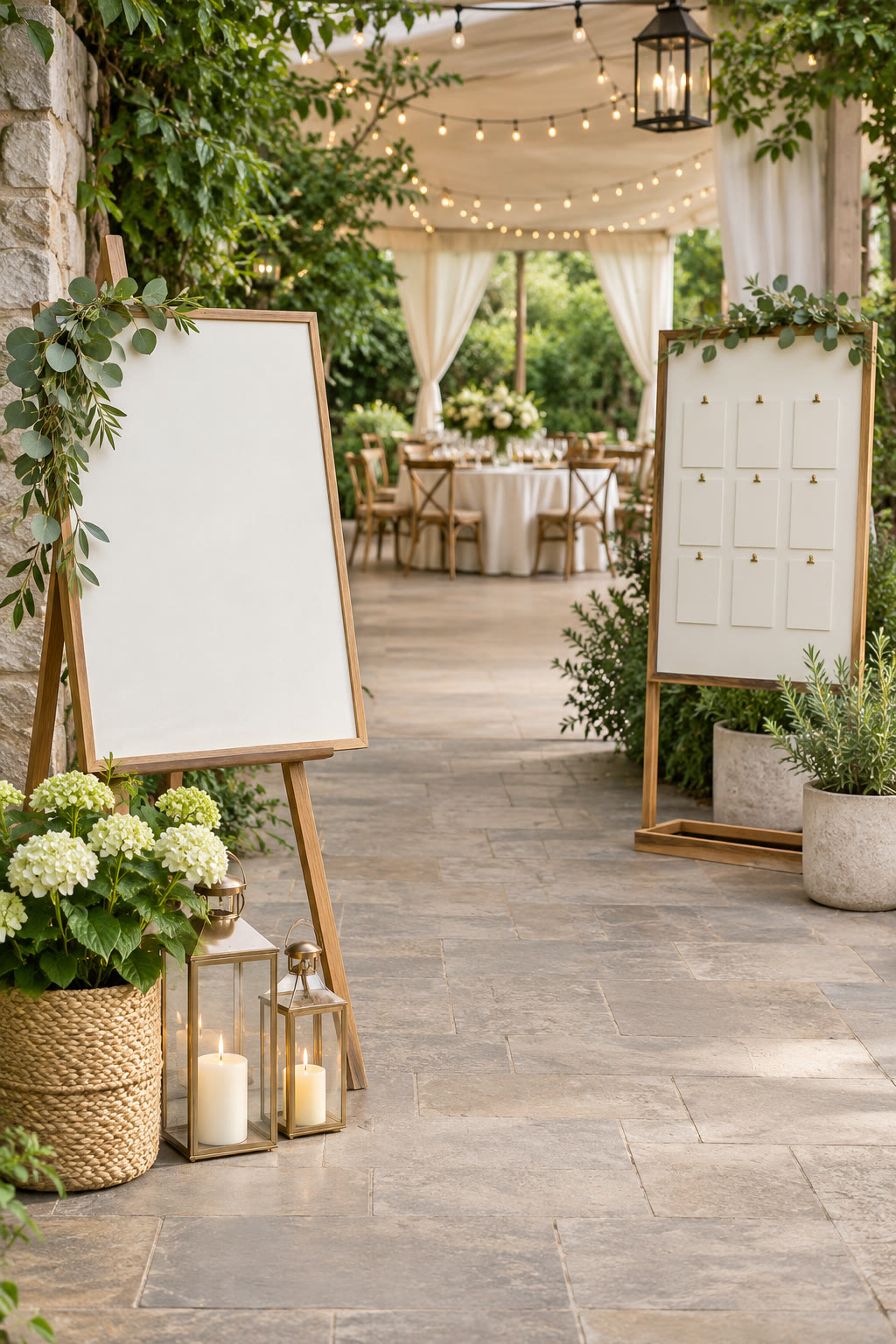
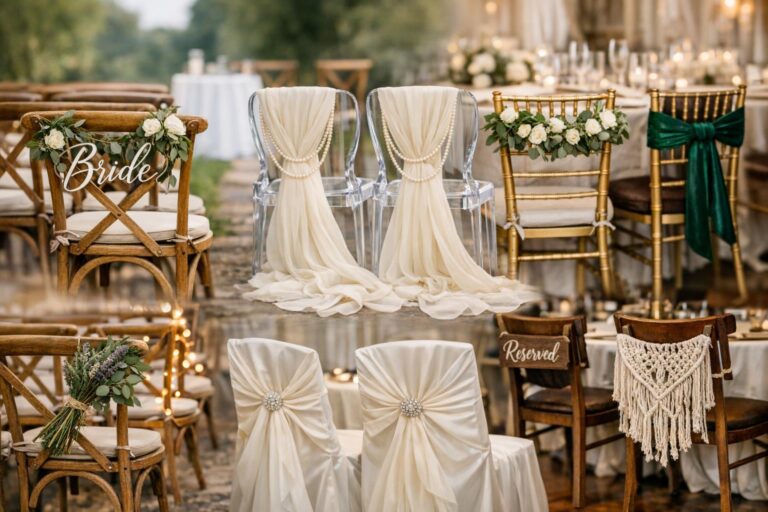
Elegant signage is usually minimal: fewer words, more whitespace, and a consistent type style across every sign. Keep the presentation clean, and let the sign’s placement do the work, near an entry, at the ceremony, or at a key transition point.
- Keep wording short: one message per sign so it reads instantly
- Repeat one style: the same typography and tone across welcome, seating, and small directional signs
- Use a simple frame: clean edges and neutral color help signage blend into a simple elegant decor scheme
- Add a small greenery accent: a subtle touch that ties signage into your greenery-and-candles design
If your signage starts to feel busy, remove words before adding decoration. Minimal signage tends to look more expensive and aligns naturally with understated chic wedding decor.
Build a cohesive look across ceremony, cocktail hour, and reception
Cohesion is what makes “simple” read as “elegant.” When guests move from one space to another, repeating elements, greenery shape, candlelight style, and palette, creates continuity without needing new decor categories in every area.
- Choose one unifying motif: greenery + glass + warm candlelight is a reliable foundation
- Repeat the same greenery style: one type of runner/garland approach throughout
- Keep table styling consistent: similar centerpiece height and candle groupings at every table
- Use one focal moment: one arch/backdrop concept that can appear in ceremony photos and again at the reception
Walk your guest “flow” on paper. Identify the first thing guests see, the most photographed moment, and the place they spend the most time (usually dinner tables). Put your strongest decor decisions in those locations and keep the rest supportive.
Choose a repeatable centerpiece arrangement
If you want a streamlined setup, use a repeatable centerpiece formula rather than creating a different design for every table. A consistent look is a hallmark of minimalist wedding reception decor, and it’s often easier to execute on the day.
- Option 1: one greenery runner + three to five glass votives grouped at intervals
- Option 2: one lantern + a simple greenery base + two small votives
- Option 3: a cluster of small bud vases + a few votives for glow
Judge centerpiece height from a seated position with the actual table and chairs. Low arrangements can keep the center open; a tall design needs adequate clearance. Leave usable space for the meal and the service plan.
A setup sheet that makes the design usable
For each area, list the item, quantity, supplier, position, setup person and collection person. Include what the venue already provides, and confirm whether anything can move from the ceremony to the reception without disrupting guests.
For an outdoor version, use the garden wedding decor planning guide to check pathways, changing light and the weather alternative before copying an indoor arrangement.
FAQ
How do I keep decor simple but elegant?
Limit your palette to neutrals with greenery, repeat a few materials (linen, glass, candlelight), and focus on one or two focal points rather than decorating every surface; restraint, consistency, and warm lighting are what make “simple” feel intentionally elegant.
What are budget-friendly luxury decor ideas?
Repeat a small number of vessels, linens or arrangements and compare the complete installed cost. Greenery, glass and candles can support the look, but quantities, labor and hire terms determine whether a plan is affordable.
What are the easiest centerpiece ideas for a minimalist wedding reception decor style?
Choose one repeatable option such as a greenery runner with clustered votives, a lantern centerpiece with simple greenery, or small bud vases paired with candlelight; the easiest minimalist centerpieces are low-profile, consistent, and rely on glow and clean lines.
How do I create an elegant tablescape without cluttering the table?
Keep centerpieces low, use a single clean centerpiece line (like a runner) or one anchored piece (like a lantern), and add candlelight in small glass holders; leave intentional negative space so place settings feel curated and guests can comfortably dine and talk.
What lighting ideas work best for elegant weddings?
Start with sufficient venue lighting for dining, movement and signs, then add the atmosphere you want with approved decorative lights or candles. Confirm permitted fixtures and flame rules with the venue.
How can I make a head table look simple and elegant?
Use a clean greenery line or garland, add candlelight in coordinated glass, and consider a minimal backdrop like draped fabric or a greenery frame; keeping the palette restrained and repeating the same materials as guest tables creates a polished, cohesive look.
Should I rent or buy wedding decor for a simple elegant look?
Renting is often the simplest way to achieve a coordinated, high-end feel for items like lanterns, hurricanes, and larger focal structures, while buying can make sense for a few small pieces like signage materials; whichever route you choose, consistency matters more than quantity.
How do I keep my decor cohesive across ceremony and reception?
Pick one unifying motif, often greenery, glass, and warm candlelight, then repeat it in the ceremony focal point, reception tables, and a key photo/backdrop area; using the same palette and repeating a few signature items creates continuity without adding extra complexity.


One Comment