
Spanish-Inspired Wedding Decor: Courtyard, Ceramics and Table Ideas
Spanish-inspired wedding decor starts with a reference you can name: a place, family connection, piece of ceramic work or venue detail you admire. Use that reference to choose materials and colors. A courtyard, terracotta tones and candles can form a styling direction, but those choices alone do not represent every Spanish wedding or establish a cultural tradition.

Define the reference before ordering details
Collect a few images that show what you actually want to repeat: a shape, a color combination, patterned ceramics or a particular textile. Include a photograph of the venue so the florist and rental company can see the setting.
If the reference has personal or family meaning, discuss which details matter and how you want to use them. Keep broader Mediterranean, regional Spanish and other influences accurately described rather than presenting them as interchangeable traditions.
For ceramics, ask where a piece is made and how the seller describes it. Mexico’s Secretariat of Culture documents Talavera-related craft communities in both Spain and Mexico. A patterned object or the word Talavera alone does not tell you the origin of a particular rental or purchased piece.
Turn wedding inspiration into a plan you can actually follow.
Zarellea brings your guest list, budget, vendors, and day-of details into one shared space — so no beautiful idea gets lost in the shuffle.

Build a courtyard palette from actual samples
Try terracotta or another earthy tone with ivory linen and a chosen floral accent. Blush can make a quieter comparison; burgundy provides a deeper alternative. These are styling suggestions rather than rules about Spanish celebrations.
If patterned ceramics are the main detail, pick a few colors from the actual piece for the paper or napkins. Keep the surrounding items simpler while you compare the table. If you prefer plain vessels, use textile or flowers for the color variation.
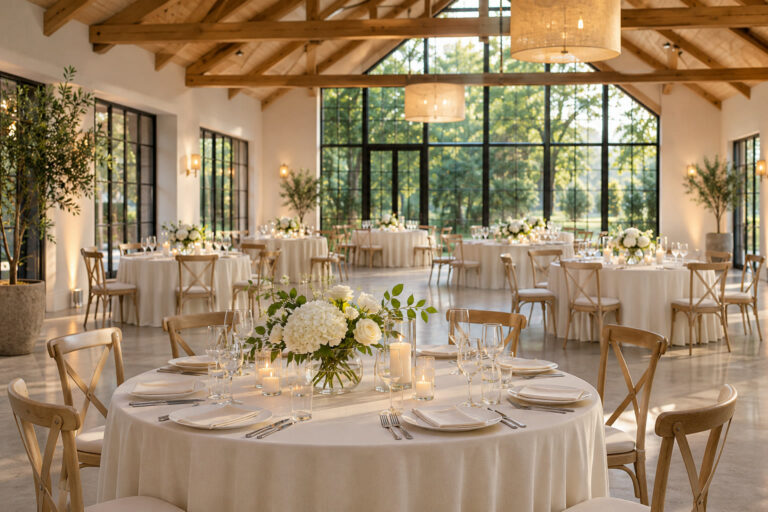
A ballroom may suit smaller repeated references more than an attempt to build an entire courtyard indoors. In a garden or existing courtyard, decide which architectural view you want to keep visible before ordering additional structures.
Frame the ceremony around the site
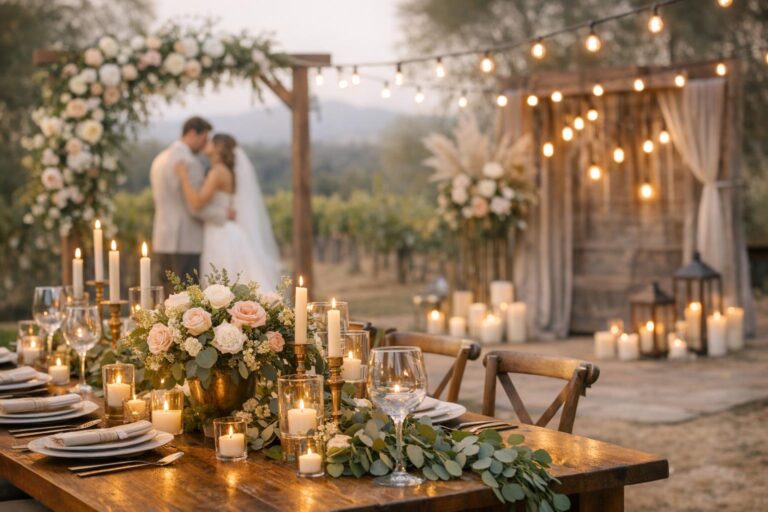
Choose the view from the guest seats first. An existing archway or wall may provide the setting; a simpler space may suit paired arrangements or a frame with fabric. Compare height, width and the people who need to use the area.
Confirm supports and attachments with the venue and installer. Keep aisle markers and seating details out of the walking route. A few repeated flowers or clear reserved-seat signs may do the job without a fully decorated row of chairs.
If ceremony arrangements will move later, record the pieces, destination, responsible person and available time. Keep the plan specific to those arrangements instead of assuming all installations can be repurposed.

Give the table a usable amount of detail
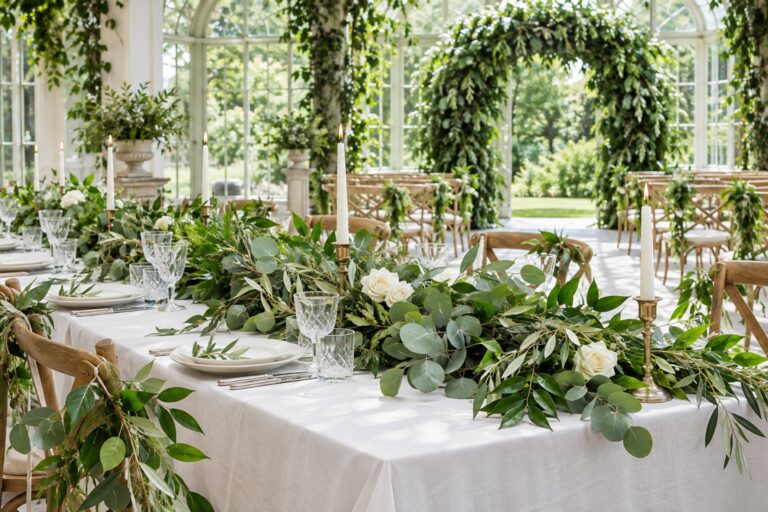
Start with the actual plates, glasses, napkins and serving dishes. Add the proposed ceramic vessel or table detail and the floral arrangement, then sit down to check the space and the view across the table.
A patterned object can be a focused detail without appearing at every place. If you want to use a ceramic piece for food or drink, ask the supplier to confirm that it is suitable for that use. Decorative vessels and rented dinnerware should not be treated as the same product category without checking.
Repeat a few chosen colors in menus or place cards. Print a sample at final size and make sure names and table information remain readable. For a more restrained table foundation, compare the classic linen and stationery choices.

Place the bar, entry and photo area around guest flow
Use a welcome sign where arrivals can pause without blocking the route. Position the seating display with room for people to read it. A patterned accent or a small arrangement can connect these areas with the table design.
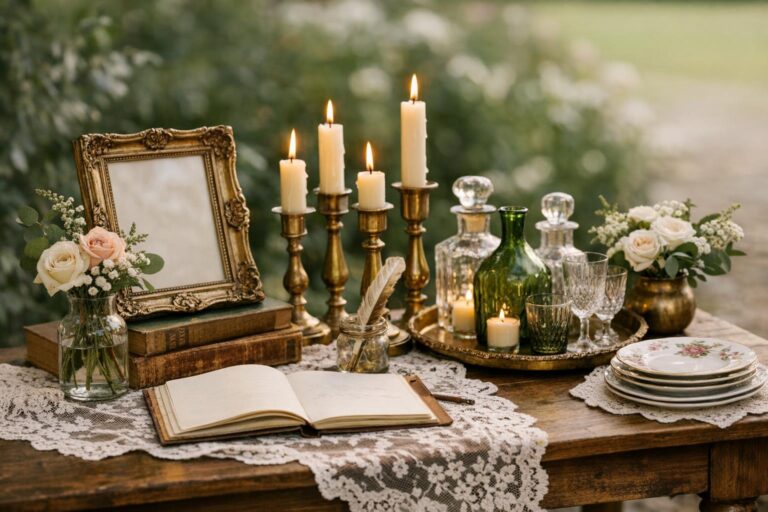
Keep the bar’s working surface clear and agree decorative placement with catering. Place fragile pieces away from busy edges. A separate guest-book or photo corner should have an available footprint, rather than being added after the main furniture is ordered.
For a home or backyard setting, check the household and supplier routes before deciding where those displays go.
Plan evening visibility with the venue
View the route and tables under the lights expected during the reception. Check the signs, service areas and steps as well as the backdrop. Decorative fixtures can emphasize the materials, but the guest route still needs practical illumination.
Confirm candle permissions and the proposed placement with the venue and florist. Have the lighting supplier approve supports and power for installed fixtures. Show the table and ceremony references to the photographer instead of assuming that warm lighting guarantees the photographs you want.

Brief suppliers with a short, specific plan
Name the visual reference and include the approved color and material samples. List where the main details appear: ceremony, dining tables, welcome display and any other agreed area. Distinguish a personal styling choice from a claimed tradition or a statement about an object’s origin.
Request a complete quote with quantities, installation, delivery and collection. Ask what can be hired, which substitutions require approval and who handles fragile pieces. Repeating a floral direction can make the brief clearer, but it does not automatically establish a lower cost.
Before setup, pack smaller details by area and provide reference photographs. At the final check, read the signs, walk the route and inspect the table with the meal setting in place.
Do we need a themed prop in every area?
No. A few accurate, personally meaningful references can connect the design. Leave the venue’s existing features visible where they support the setting.
How can we use patterned ceramics without a crowded table?
Start with one vessel or selected accent in the mockup. Keep enough room for the meal and let textiles or paper repeat a color instead of adding more objects.
Can we combine family influences?
Yes. Describe each contribution clearly and choose the details with the people whose traditions or memories matter to the event. The design does not need to be presented as one uniform national style.