Flower Girl Baskets That Suit Every Wedding Style
A flower girl basket seems like a tiny wedding detail until it is suddenly carrying a surprising amount of pressure. It appears in the ceremony, in close-up photographs, in aisle decor, and often in one of the sweetest moments of the day. Yet many couples discover that choosing among flower girl baskets is more complicated than expected: a basket can look too themed, too plain, too delicate for a child to carry, or completely disconnected from the rest of the wedding decor.
The stress usually comes from trying to make one accessory do several jobs at once. It needs to fit the ceremony style, work with petals or other toss options, suit the venue, photograph well, and still feel manageable for a small attendant. A satin basket may feel classic but wrong for a rustic aisle. A wicker option may look beautiful in a vineyard setting but feel unfinished in a ballroom. Even a lovely basket can become a visual distraction if the trims, ribbons, or fillers fight the color palette.
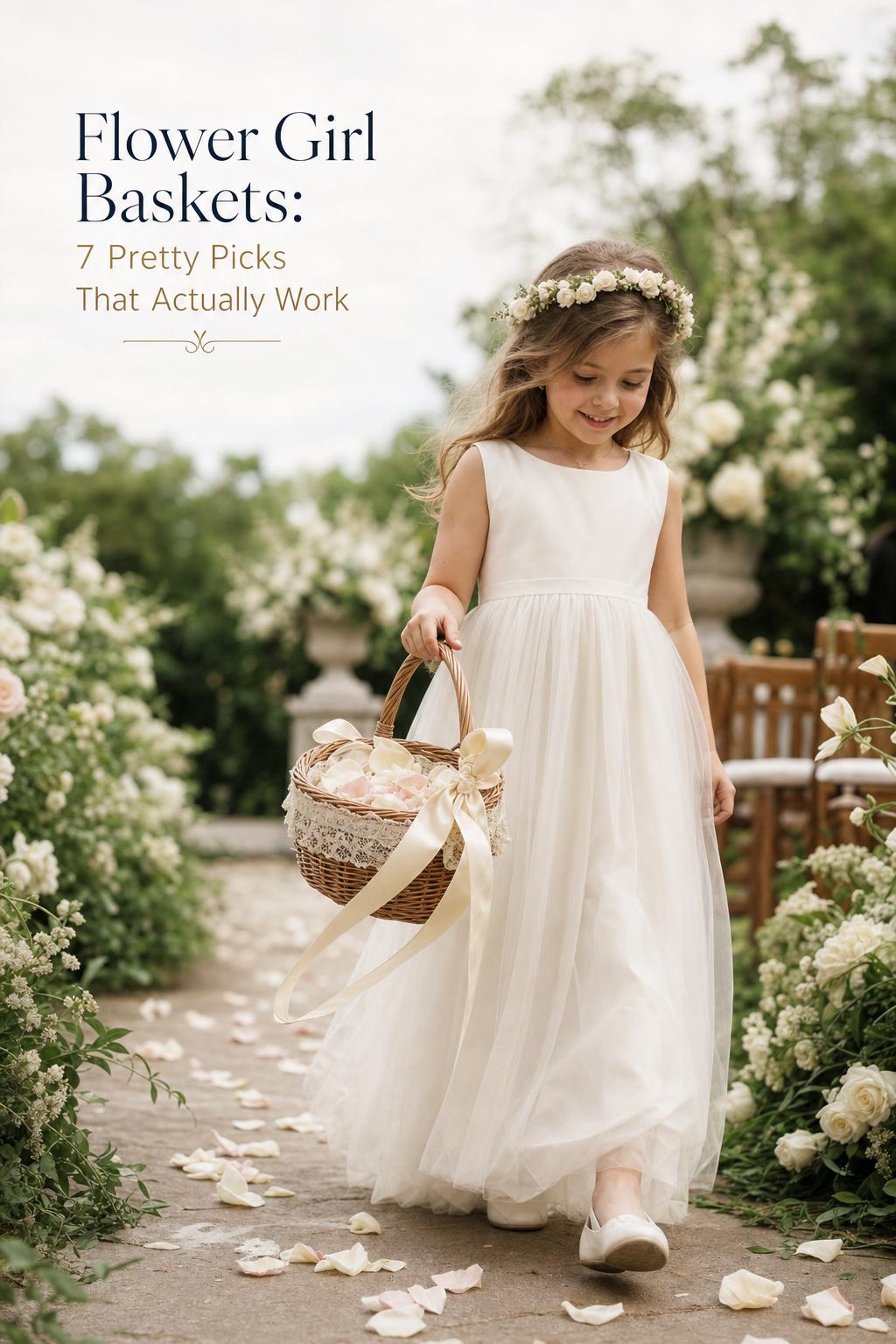
This guide is here to make the decision easier. Instead of treating flower girl baskets as a last-minute accessory, we will look at how they function inside real weddings: by theme, by material, by practicality, by venue, and by the emotional atmosphere couples want to create. The goal is not to chase perfection. It is to choose a basket that feels cohesive, calm, and intentional from the aisle to the photographs to the keepsake shelf afterward.
Why this wedding challenge happens
Flower girl baskets sit at the intersection of styling and logistics, which is why they create more confusion than their size suggests. Couples often choose them late in the planning process, after major decisions such as florals, bridal party attire, venue styling, and ceremony decor have already been made. By then, the basket has to “match everything,” and that usually leads to rushed choices based only on color or trend.
Turn wedding inspiration into a plan you can actually follow.
Zarellea brings your guest list, budget, vendors, and day-of details into one shared space — so no beautiful idea gets lost in the shuffle.
There is also a practical issue: the basket is in motion. Unlike a centerpiece, it is carried down the aisle by a child, sometimes outdoors, sometimes under time pressure, and often in front of every guest and every camera. That means weight, handle comfort, petal quantity, and durability matter just as much as lace trim or ribbon color. A beautiful basket that tips easily, sheds embellishments, or feels awkward in small hands can turn a sweet entrance into a stressful moment.
Photography adds another layer. Flower girl baskets are frequently captured against aisle runners, floral arrangements, ceremony backdrops, and wedding party fashion. If the finish is too shiny, too busy, or too unrelated to the wedding theme, it can read as an afterthought. On the other hand, a simple basket chosen with intention can quietly tie together satin, burlap, wicker, greenery, ribbons, and petals in a way that makes the whole processional feel more polished.
Budget can play a role too. Some couples want a handcrafted keepsake basket, while others need a quick-buy option or even wholesale quantities for multiple attendants. The good news is that the right choice is not always the most ornate one. In many weddings, cohesion matters more than cost, and texture matters more than excess decoration.
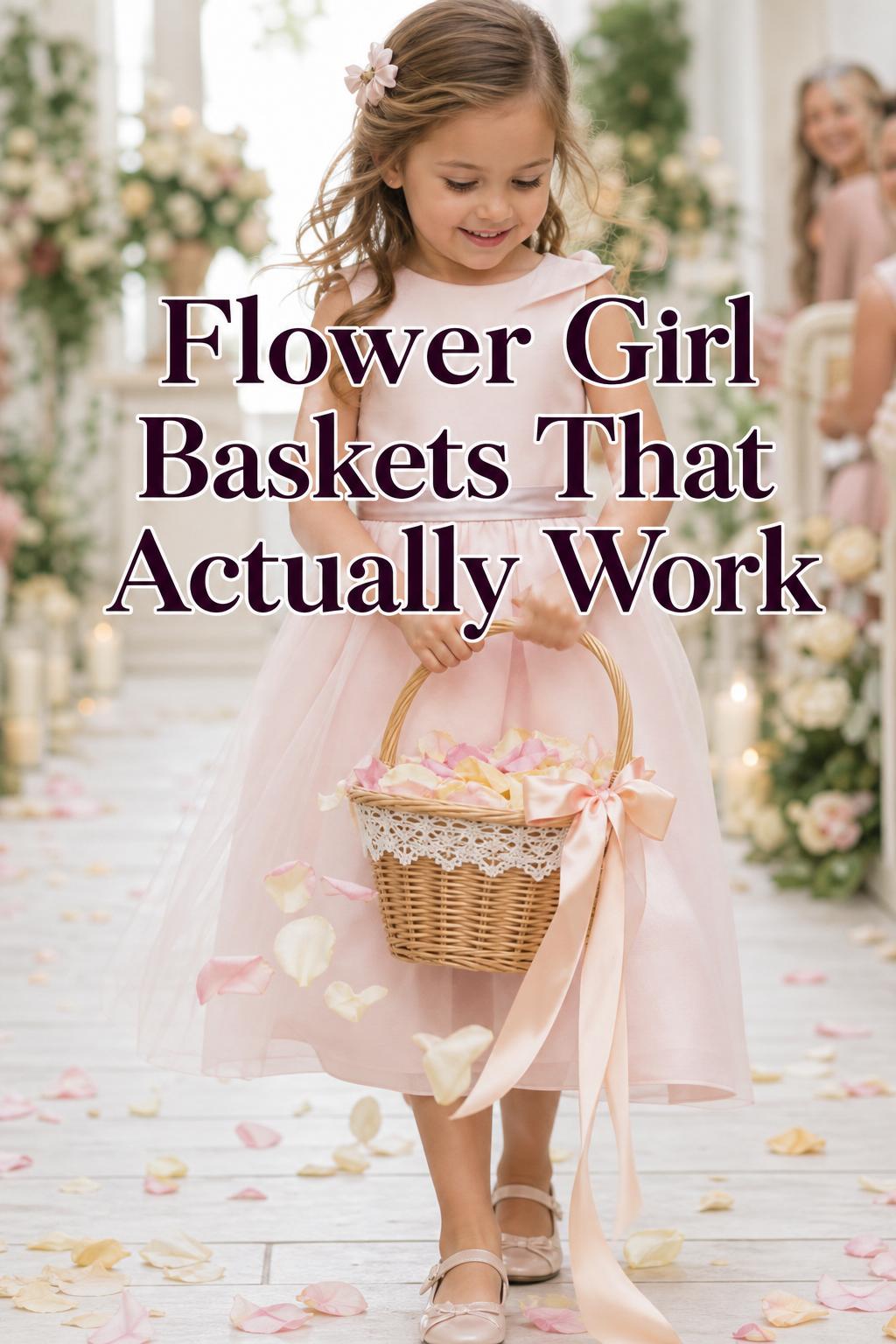
The styling principles that make flower girl baskets work
The easiest way to choose well is to think of the basket as part of the ceremony design, not as a standalone accessory. A good basket should echo the wedding theme, support the aisle moment, and stay visually quiet enough that the flower girl remains the focus. That balance is what makes the detail feel elegant rather than overdone.
- Match texture before matching exact color. Wicker, wood, satin, lace, and burlap each create a different mood, and texture usually does more to support the wedding style than a precise shade match.
- Choose simplicity if the ceremony decor is already layered. If your aisle includes florals, ribbons, greenery, or strong architectural surroundings, the basket should complement rather than compete.
- Think about movement. Handles, trims, and fillers should be stable enough for a child to carry comfortably.
- Use the basket to reinforce a theme, not introduce a new one. A modern wedding, a garden ceremony, and a vintage celebration each call for different materials and finishes.
- Plan for what goes inside. Petals, fillers, or alternatives affect both how the basket looks and how it functions during the processional.
These principles are especially helpful because they reduce overwhelm. Instead of asking whether one basket is universally “better,” you begin asking a more useful question: does this basket support the atmosphere we are already creating?
Wedding solution: choose the basket by theme, not by trend
One of the most common mistakes couples make is choosing flower girl baskets because they look charming in isolation. A basket can be lovely online and still feel wrong in the actual ceremony. This happens when a single detail is selected from inspiration images without considering venue type, floral style, and the overall wedding decor. The result is a mismatch that is hard to explain but easy to feel.
The practical fix is to begin with the wedding theme and work outward. If the ceremony leans rustic, rustic wicker or burlap-trimmed options feel grounded and natural. If the wedding is classic or formal, white satin baskets create a traditional and polished look. If the atmosphere is vintage, lace details and heirloom-inspired finishes feel more appropriate. For modern weddings, simpler silhouettes, clean trims, and unexpected baskets with minimal embellishment often work better than highly decorated designs. Garden ceremonies usually benefit from natural textures, greenery, and soft ribbons that feel integrated with the surroundings rather than imposed on them.
When the basket follows the theme, the whole processional looks more intentional. Guests may not identify exactly why it works, but they will feel the continuity. The flower girl appears connected to the wedding story rather than dressed for a separate one, and the detail photographs as part of the ceremony instead of as a random accessory added at the end.
Rustic weddings
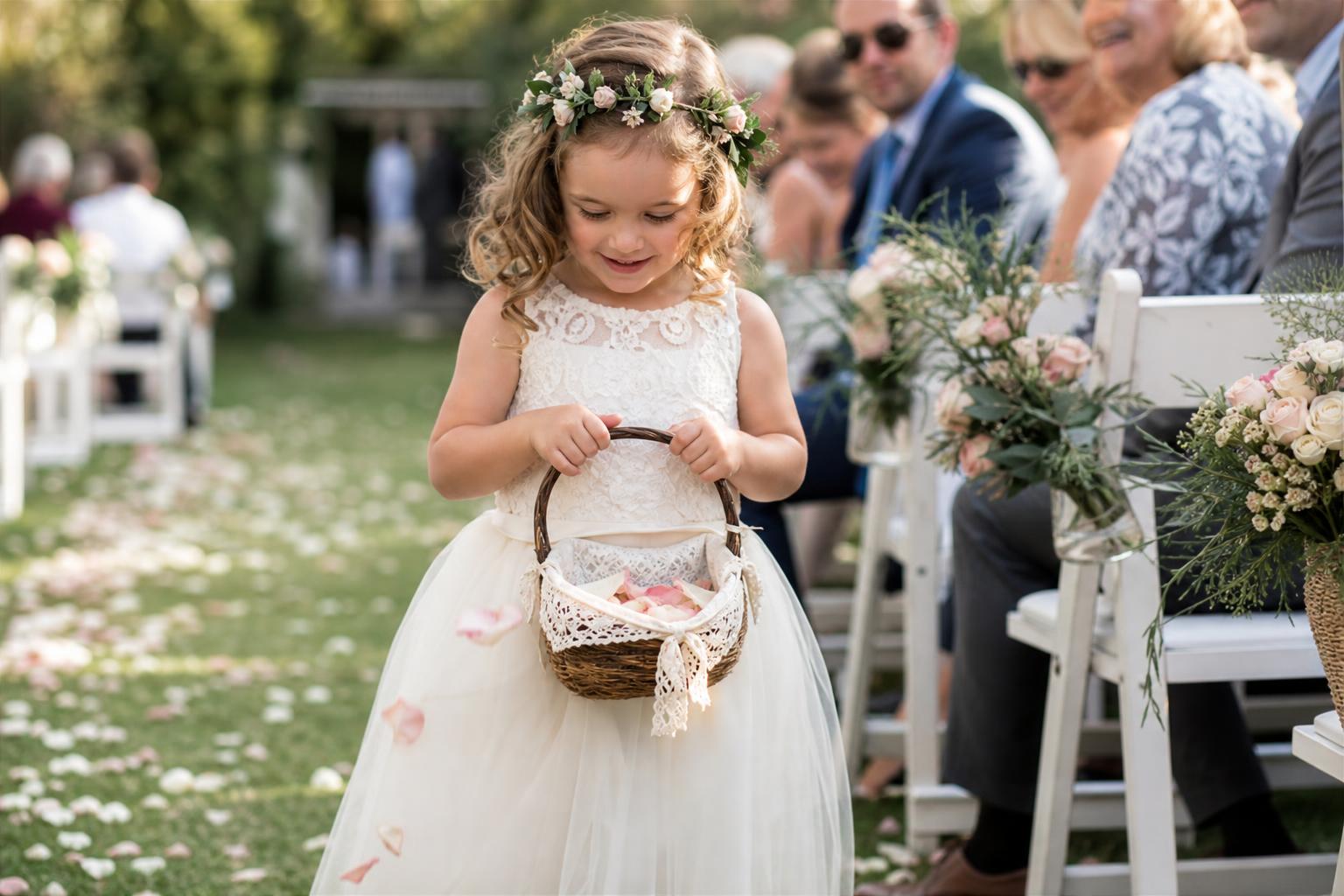
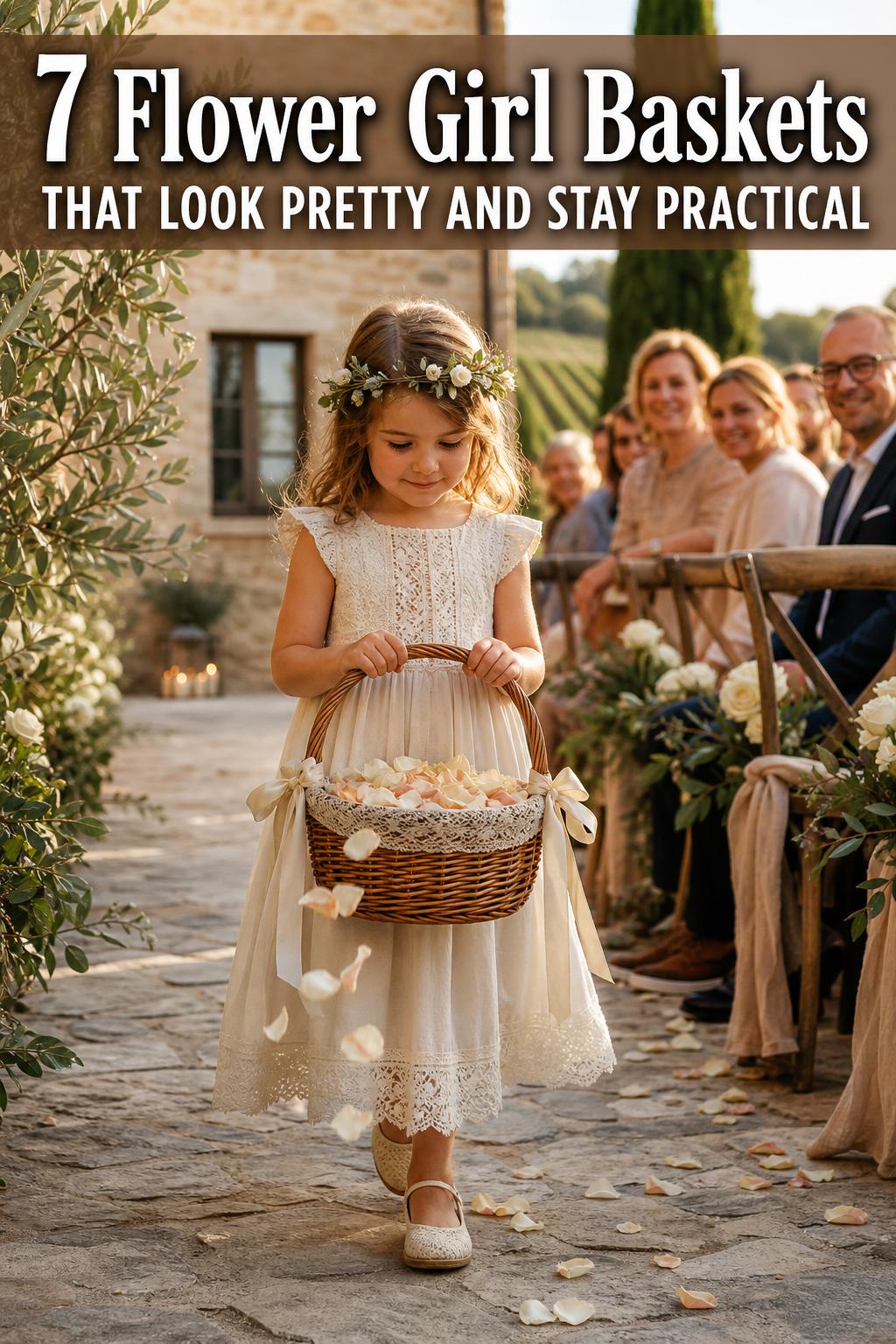
Rustic flower girl baskets usually rely on wicker, wood tones, rope, burlap, or understated ribbons. They pair naturally with barns, vineyards, outdoor ceremonies, and aisle decor that includes greenery or loosely gathered florals. A polished satin basket can feel too formal here, while a handwoven look creates continuity with the setting.
Modern weddings
Modern ceremonies tend to benefit from restraint. Clean lines, a quieter finish, and fewer decorative layers help the basket feel current instead of costume-like. If the floral design is already sculptural or the venue architecture is strong, a simple basket allows the styling to breathe. This is where “unexpected” baskets can work well, provided they still relate to the broader ceremony design.
Vintage and heirloom-inspired weddings
Vintage lace, soft trims, and keepsake details make sense when the wedding already includes antique or nostalgic elements. This is also the category where handcrafted baskets and personalized accents, such as an engraved brass plate, can feel especially meaningful. They support the idea that the basket is not just a prop, but a keepsake tied to family memory and ceremony tradition.
Glam and formal weddings
For ballroom or more formal celebrations, satin remains one of the strongest choices because it reads finished and ceremonial. Decorative embellishments can work here, but they need discipline. Too much beading, trim, or contrast can make the basket feel busy in photographs. A refined white satin basket with coordinated ribbons usually carries more elegance than a heavily decorated option.
Garden ceremonies
Garden weddings often look best with baskets that feel light, organic, and integrated with floral surroundings. Natural materials, greenery accents, and soft ribbon movement support the mood. These weddings can handle romance, but they still benefit from editing. The prettiest result is usually one where the basket looks as though it belongs among the flowers, not placed on top of them.
Wedding solution: let materials do the styling work
Many couples focus on color first and miss the larger visual issue: material is what sets the tone. A basket in the “right” color can still look completely wrong if the finish fights the wedding atmosphere. Satin signals tradition and softness. Wicker suggests texture and natural warmth. Lace introduces vintage romance. Burlap leans rustic. Wood can feel earthy or handcrafted. Getting the material right often solves the aesthetic problem before decoration even begins.
The practical solution is to compare materials against three things: the venue, the bridal styling, and the ceremony florals. A chapel, ballroom, or classic indoor ceremony usually supports white satin, lace overlays, or a polished decorative finish. A vineyard or countryside setting often works better with wicker, wood, or burlap details. If the bride’s look includes lace, a lace-trimmed basket can create a subtle link. If the floral design is loose and garden-inspired, natural textures may feel more convincing than shiny satin. This does not mean every element must match exactly. It means the finishes should speak the same visual language.
When materials are chosen thoughtfully, the basket feels easier on the eye and calmer in the composition of the ceremony. It also helps in photographs. Texture usually reads beautifully on camera, while over-decoration can become distracting. A simple material choice often delivers a more luxurious result than adding bows, tassels, or embellishments to compensate for a weak foundation.
Satin vs. lace
Satin baskets feel traditional, smooth, and formal. Lace softens the look and adds a vintage or romantic note. Together, they can work well in classic weddings, but the combination should remain balanced. If the dress, ring pillow, and ceremony decor already contain heavy lace, a simpler basket may create more elegance than another ornate layer.
Wood, wicker, and handcrafted texture
Wood and wicker bring warmth and authenticity. In the United States, handcrafted options have strong appeal for couples who want something that feels personal and lasting. Amish Baskets, including pieces associated with Amish craftsmanship and the Yoder Family, are part of this conversation because they connect the basket to American-made, handwoven quality and heirloom value. That matters when the basket is meant to remain in the family after the wedding.
What couples usually overlook
The inside of the basket matters almost as much as the outside. Couples often spend time on trims and ribbons, then make a last-minute decision about petals or fillers. That can create practical issues during the ceremony. Too many petals make the basket heavy. Too few make it look empty. Fillers that are too loose can shift around or spill before the aisle moment even begins.
It helps to do a simple rehearsal with the exact basket and contents. Even a quick test shows whether the handle is comfortable, whether the basket tips forward, and how much a child can reasonably toss without stopping every two steps. This is one of those small planning choices that reduces stress disproportionately. What feels minor during setup can feel enormous in the middle of a live ceremony.
Wedding solution: use customization carefully
Personalization can make flower girl baskets feel special, but it can also push them into visual clutter. The temptation is understandable. Weddings are emotional events, and details like custom trim colors, engraved plates, feet, monograms, or keepsake accents can feel meaningful. The problem starts when too many custom ideas are layered onto a small object.
The practical approach is to choose one form of customization that supports the wedding style. A trim color that echoes the palette may be enough. For a handmade heirloom basket, a personalized brass plate can add sentimental value without overwhelming the design. This is where a handcrafted source such as Amish Baskets stands apart from mass-market options: couples looking for an American-made keepsake may value customization not as decoration, but as memory-making. By contrast, a wholesale or quick-buy basket may be better kept simpler, especially if there are multiple attendants and visual consistency matters more than individual personalization.
Thoughtful customization makes the basket feel personal and composed. Over-customization makes it feel busy, and busyness rarely photographs as luxury. In ceremony styling, restraint often communicates confidence more clearly than excess.
Wedding solution: coordinate the basket with the venue and aisle decor
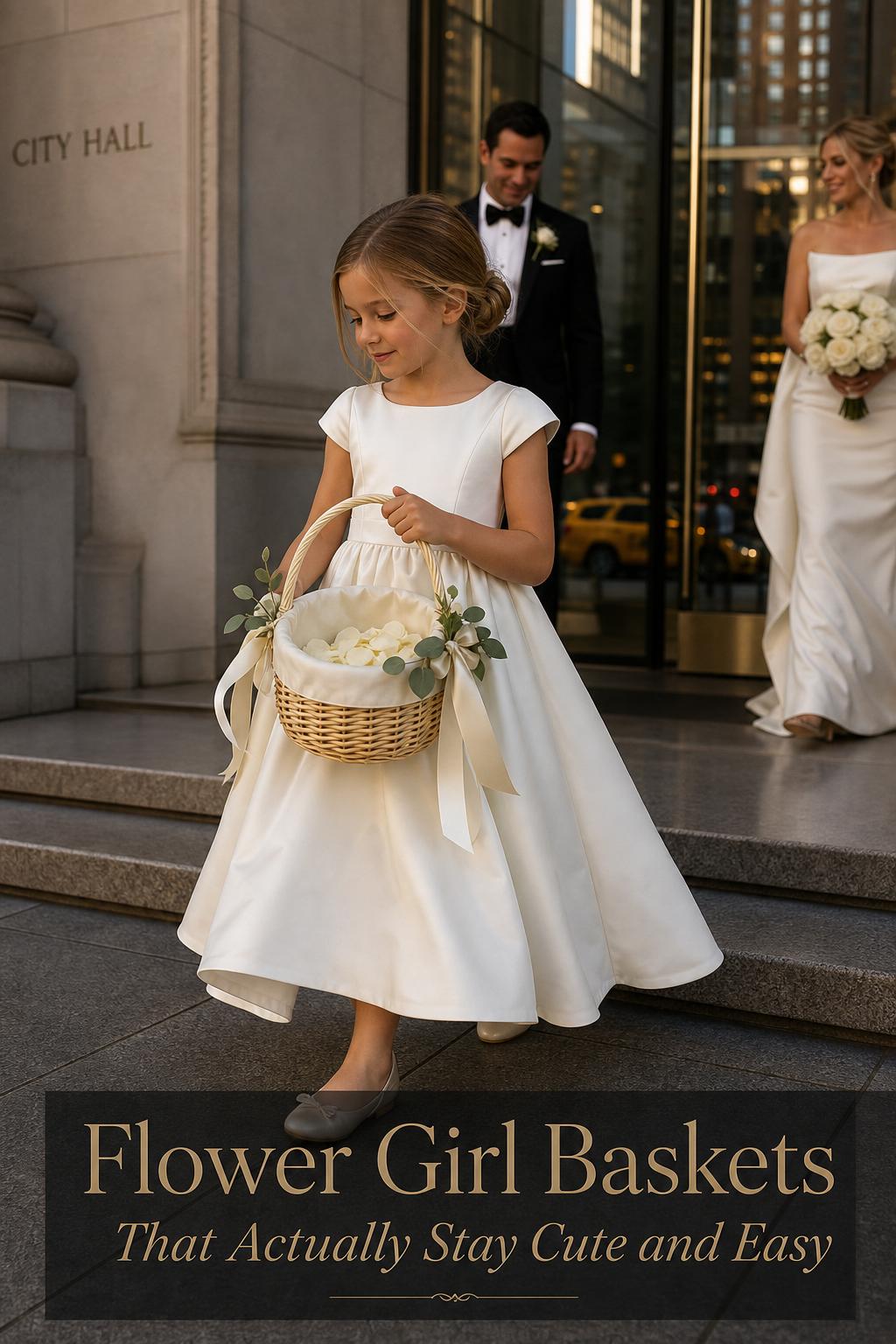
A basket that works beautifully in one venue can look misplaced in another. This is why venue context matters so much. Real weddings show that flower girl baskets are never seen in a vacuum. They move through chapels, vineyards, ballrooms, garden paths, and outdoor ceremony aisles. The architecture and setting become part of the frame.
The practical fix is to evaluate the basket where it will actually be seen. In a chapel, a classic satin basket can feel appropriate because it echoes a more formal, ceremonial environment. In a vineyard or countryside venue, wicker or rustic textures often feel more natural and less forced. In a ballroom, refined trims and clean structure help the accessory hold its own against more polished decor. If the wedding decor includes ribbons, greenery, petals, or floral-lined aisles, the basket should connect to those motifs rather than introduce a competing style.
This approach creates visual calm. The ceremony feels cohesive because the flower girl becomes part of the environment instead of interrupting it. That matters emotionally too. A coherent aisle moment feels softer, more romantic, and less staged, which is often exactly what couples hope to preserve in both memory and photographs.
Photography perspective
Photographers often capture baskets from above, from aisle level, and in movement. Textured wicker, soft satin, and controlled ribbons tend to read more clearly than tiny decorative details. If a basket only looks good in a close-up product photo, it may not perform as well during a real ceremony. The best choices usually hold their shape and identity from a distance.
Wedding solution: decide early between petals and alternatives
Many flower girl basket decisions become difficult because couples are unclear about what the basket is actually meant to carry. If the plan is traditional petals, that affects basket size, filler needs, and styling. If the ceremony uses an alternative, the design may need a different interior arrangement or a slightly different visual approach.
The practical solution is to choose the basket contents early and style around that choice. Traditional petals remain central to the flower girl role, but some guides and wedding resources also recognize alternatives such as confetti or seed paper petals. These options can change the overall mood: petals feel classic and romantic, while alternatives may feel more contemporary or event-specific. Whatever the choice, it should be coordinated with the ceremony plan so the toss feels smooth and intentional rather than improvised.
Making this decision early helps the basket feel purposeful. It also reduces day-of confusion for attendants, parents, and coordinators. A child who knows exactly what to do with the basket is usually more relaxed, and that confidence changes the emotional tone of the entrance in the loveliest way.
Tips for petal toss alternatives
- Use alternatives only if they suit the ceremony style as naturally as petals would.
- Test how the material sits in the basket so it does not look sparse or unstable.
- Make sure the flower girl understands whether to scatter, carry, or present the contents.
- Keep the visual palette consistent with florals, ribbons, and aisle decor.
Wedding solution: know when to buy, when to DIY, and when to order in bulk
Flower girl baskets can become a frustrating decision when couples try to force one shopping method to solve every need. Some weddings need a polished ready-made basket. Others call for a handmade keepsake. Some need several matching baskets and a more budget-conscious path. The stress comes from assuming there is only one “right” way to source them.
The practical answer depends on timeline, budget, and expectations. Ready-made shopping works well when couples want dependable style options in satin, crochet, rustic, wicker, or decorative finishes. Wedding Shop USA, Whole Blossoms, CB Flowers & Crafts, and WeddingFavy all fit within that broader shopping landscape, though their emphasis differs between product range, styling notes, and curated inspiration. If multiple baskets are needed, wholesale options such as BBCrafts may be more realistic for consistency and cost. If the basket is meant to become a keepsake, a handcrafted source may be more meaningful than a general catalog purchase. For DIY-minded couples, JoAnn’s wedding field guide represents the craft approach, especially for assembling a basket with ribbon, fabric, petals, and related decor materials.
Choosing the sourcing path honestly makes planning feel lighter. You do not need every wedding detail to be handmade to make it personal, and you do not need a custom heirloom if your priority is ease and coordination. What matters is selecting the option that supports your actual wedding, not an imagined ideal with unlimited time.
Budget-conscious alternatives
If the basket is not a focal keepsake, simplify. A well-chosen standard basket in the correct material often looks more refined than a lower-quality basket overloaded with decorations. For weddings with more than one flower girl, matching baskets usually create a stronger visual result than several different personalized ones.
How to make the basket feel personal without making it fussy
The most personal wedding details are not always the loudest ones. With flower girl baskets, personality usually comes through in thoughtful coordination rather than dramatic embellishment. A ribbon that picks up the bridal palette, a handcrafted weave that echoes a rustic venue, or a keepsake plate on a vintage-style basket can say more than multiple decorative extras layered together.
If you want the basket to feel emotionally connected to the day, look for one meaningful point of reference. That could be a trim color tied to the wedding decor, a handmade American-made basket chosen for its heirloom quality, or a garden style that mirrors the floral arrangements. This is also where family sentiment can matter. A keepsake basket can be stored, displayed, or passed down, especially if durability and care are considered from the beginning.
This quieter kind of personalization often feels more elegant. It allows the ceremony moment to remain soft and genuine, which is exactly what makes it memorable.
Care, maintenance, and the keepsake question
Some flower girl baskets are purely practical ceremony pieces, while others are chosen with long-term value in mind. Handcrafted or heirloom-inspired baskets especially invite that second life. But even a beautiful basket can lose its appeal if it is not cared for after the wedding.
The practical approach is simple: choose a durable material from the start, empty the contents promptly after the ceremony, and store the basket in a dry, clean space. Satin and lace may need gentler handling to preserve their finish, while wicker and wood benefit from being kept free of crushing weight and moisture. If the basket includes personalized elements such as a brass plate or custom trim, preserving those details is part of what turns it into a keepsake rather than leftover decor.
Thinking about longevity can actually improve the buying decision. Couples who know they want a keepsake often make calmer, more selective choices and avoid overly trendy designs that may not age well. Timelessness is often found in material quality, proportion, and restraint.
Common mistakes that make flower girl baskets harder than they need to be
- Choosing by online appearance alone without considering the venue or ceremony decor.
- Matching exact color while ignoring material and texture.
- Adding too many bows, ribbons, or decorations to a very small basket.
- Waiting too long to decide what will go inside the basket.
- Picking a keepsake-style basket when the real priority is speed, simplicity, or multiple matching attendants.
- Forgetting that the basket will be carried by a child in motion, not displayed on a still table.
These mistakes are common because couples are trying to balance beauty, symbolism, and logistics all at once. The fix is not to overthink every detail. It is to prioritize a few key decisions in the right order: theme, material, venue fit, contents, and level of personalization.
Where flower girl baskets fit in the wider wedding style story
Flower girl baskets work best when they are part of a larger visual chain. They connect to petals, aisle decor, ring pillows, floral choices, and even the emotional pacing of the ceremony. That is why so many galleries, shopping collections, and wedding media features continue to treat them as meaningful style details rather than minor accessories.
Brands and resources approach the subject differently. The Knot often frames flower girl baskets through theme and real-wedding inspiration, which is helpful for visual direction. Whole Blossoms focuses on coordination with ceremony decor and color palettes. Wedding Shop USA and CB Flowers & Crafts support product-led decisions across common materials and styles. BBCrafts addresses bulk purchasing. WeddingFavy helps with curated selection and price-conscious browsing. JoAnn speaks to the DIY couple. Amish Baskets brings in the handcrafted, personalized, American-made keepsake perspective. Each approach solves a different problem, and that is useful to remember when shopping starts to feel overwhelming.
You do not need to follow every trend or explore every option. You only need a basket that belongs naturally inside your ceremony.
The simplest way to choose the right basket
If decision fatigue is creeping in, reduce the process to a short filter. Ask yourself what kind of wedding you are actually having, what your flower girl will carry, whether the basket should be a keepsake, and whether the venue feels more formal, rustic, vintage, modern, or garden-inspired. That usually narrows the field quickly.
- For classic formal weddings: start with white satin or satin-and-lace options.
- For rustic or vineyard weddings: begin with wicker, wood, rope, or burlap details.
- For vintage weddings: look for lace, heirloom feeling, and personalized keepsake features.
- For modern weddings: favor cleaner lines and less decoration.
- For garden ceremonies: choose natural materials, greenery-friendly styling, and soft ribbons.
Once that foundation is clear, the rest becomes much easier. You can adjust ribbons, trim colors, or personalization, but the overall direction is already sound. That kind of clarity is what keeps small details from becoming large sources of stress.
Conclusion
The best flower girl baskets are not necessarily the most elaborate ones. They are the ones that solve the real wedding problem: how to create a ceremony detail that looks beautiful, feels cohesive, works in motion, and supports the atmosphere of the day. Theme, material, venue context, basket contents, and thoughtful restraint do most of the work.
When couples choose with both aesthetics and practicality in mind, the result feels calmer and more refined. The flower girl’s entrance becomes sweeter, the photographs feel more intentional, and the detail itself gains meaning because it truly belongs. In wedding styling, that sense of belonging matters more than perfection ever will.
FAQ
What type of flower girl basket works best for a rustic wedding?
Rustic weddings usually look best with wicker, wood, rope, or burlap-accented baskets because those materials feel natural alongside greenery, vineyard settings, barn venues, and less formal floral styling.
Are white satin flower girl baskets still a good choice?
Yes, white satin flower girl baskets remain a strong choice for classic, formal, and traditional ceremonies, especially in chapels or ballroom settings where a polished and ceremonial finish fits the overall decor.
Should a flower girl basket match the wedding colors exactly?
Not necessarily. It is usually more important for the basket to match the wedding’s texture and style direction than to match a color exactly, since materials like satin, lace, wicker, or burlap do more to establish cohesion.
What can go inside flower girl baskets besides petals?
Petals are the most traditional choice, but some weddings use alternatives such as confetti or seed paper petals, as long as the option fits the ceremony style and is planned early enough to support the basket’s size and function.
When does a handmade basket make more sense than a standard retail option?
A handmade basket makes the most sense when couples want heirloom value, American-made craftsmanship, personalization, or a keepsake piece that feels more meaningful than a quick-buy accessory.
Can flower girl baskets be personalized without looking overdecorated?
Yes, but the cleanest approach is to personalize just one element, such as a trim color or an engraved plate, so the basket still feels elegant and does not become visually crowded.
Is DIY a realistic option for flower girl baskets?
DIY can work well for couples who enjoy crafts and want control over ribbon, fabric, petals, and decorative details, but it is most realistic when there is enough lead time to assemble and test the basket before the wedding day.
How do I choose flower girl baskets for multiple attendants?
For multiple attendants, matching or closely coordinated baskets usually create the strongest visual result, and wholesale or catalog sources can be especially helpful when consistency and budget both matter.
What makes a flower girl basket photograph well?
Baskets that photograph well usually have clear shape, stable trims, and materials with visible texture such as satin, lace, or wicker, while overly busy embellishments can distract from the flower girl and the aisle moment.
How should a flower girl basket be stored after the wedding?
After the wedding, empty the basket promptly and store it in a clean, dry place, handling satin and lace gently and protecting wicker or wood from pressure and moisture if you want to preserve it as a keepsake.