Wedding Photo Collage Ideas for a Modern Love Story
Some wedding memories live best in a single frame, while others ask for something richer. A wedding photo collage brings together the quiet anticipation before the ceremony, the warmth of family, the beauty of the venue, and the joy of the first dance into one story-filled piece you can display, share, and revisit for years. Whether you are imagining a clean wedding photo grid, a romantic storyboard, or a print-ready keepsake for your home, the most meaningful collages do more than collect pictures. They preserve the feeling of the day.
Across today’s most visible wedding collage inspiration, a clear pattern emerges: couples are looking for both beauty and guidance. They want wedding collage ideas that feel personal, practical steps for creating them, and display solutions that work in real homes, albums, and digital spaces. Brands such as BeFunky, FotoJet, Mixtiles, NexFoto, MergeImages, The Wedding Showcase, Pik, Pixabay, and Zazzle each approach the topic from a slightly different angle, from templates and editing tools to wall displays and print considerations. Taken together, they point to one truth: the best wedding photo collage is one that balances storytelling, thoughtful design, and the way you actually want to enjoy your images after the wedding day ends.
Why a wedding collage feels so meaningful
A wedding unfolds in layers. There is the ceremony, of course, but also the glances during the first look, the laughter between family members, the changing light at the venue, and the small visual details that define your celebration. A collage makes room for all of that. Instead of asking one image to carry the full emotional weight of the day, it lets a collection of moments work together.
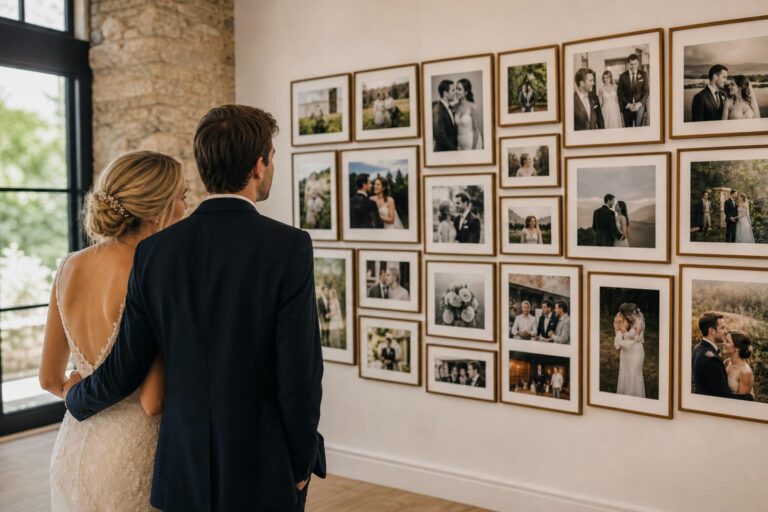
This is one reason the idea of a memory wall appears so naturally in wedding planning. A wedding photo collage can become a visual summary of the day, but it can also become part of your everyday life. Framed on a wall, arranged as photo tiles, or shared digitally, it keeps the wedding story present in a way that feels intimate rather than distant.
Turn wedding inspiration into a plan you can actually follow.
Zarellea brings your guest list, budget, vendors, and day-of details into one shared space — so no beautiful idea gets lost in the shuffle.
For some couples, the collage is decorative. For others, it is deeply narrative. A minimalist pair may prefer a structured grid with clean spacing and soft color consistency, while a more sentimental couple may be drawn to a mixed-media scrapbook style with text overlays, dates, and layered imagery. Neither approach is more correct. The right choice depends on how you want the story to feel when someone looks at it.
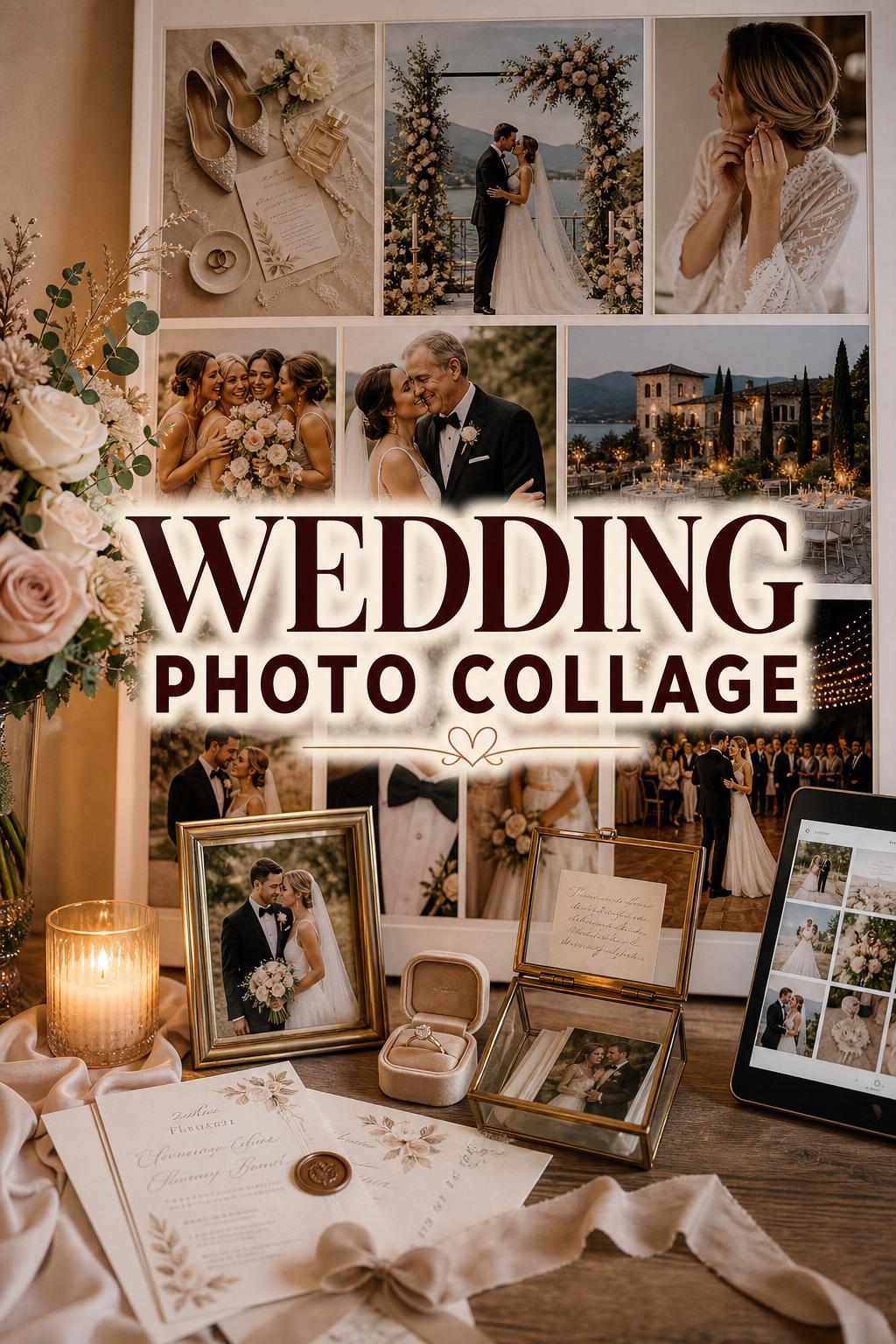
The most beautiful wedding collage styles to consider
The strongest wedding collage ideas usually begin with format. Before editing, printing, or adding names and dates, it helps to decide what structure suits your images and your wedding atmosphere. Some layouts feel polished and modern, while others feel romantic and memory-driven.
Grid layouts for a clean, classic story
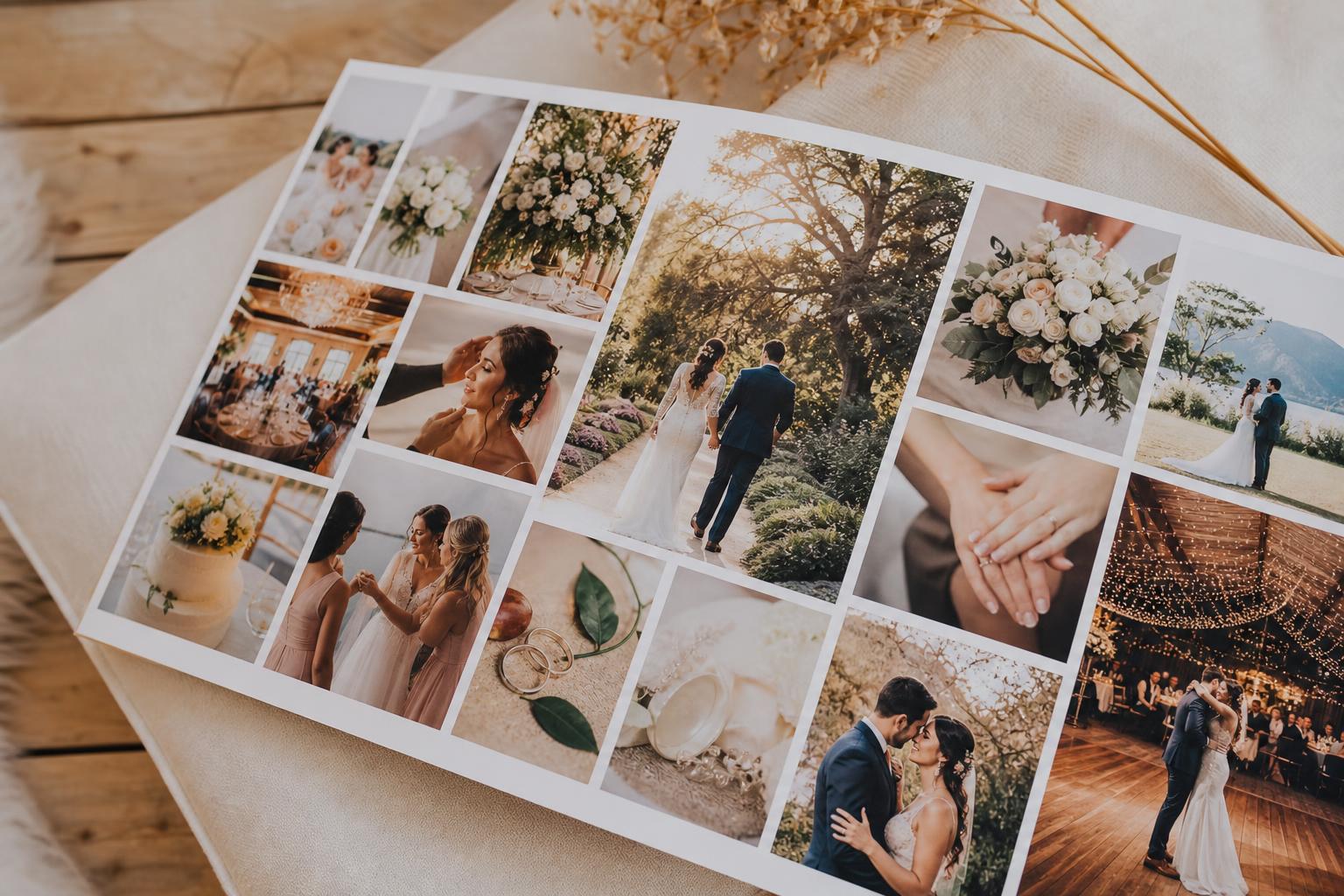
A grid wedding collage is one of the easiest formats to live with visually. It feels balanced, scalable, and timeless. If your wedding photos include a mix of portraits, detail shots, and wider venue scenes, a grid helps everything feel orderly. This style works especially well for couples who love a modern home aesthetic or want a collage that will not compete with the rest of their decor.
Grid layouts are also forgiving when you are choosing from many strong images. Rather than forcing one dominant focal point, they let several moments share attention. This makes them ideal for wedding photo wall ideas, gallery displays, and template-based creation in tools such as BeFunky Collage Maker or FotoJet.
Timeline storyboards for day-in-order emotion
A timeline wedding collage moves through the day in sequence. It may begin with getting ready, continue through the ceremony and vows, and end with the reception or first dance. This layout is especially meaningful when your goal is storytelling rather than simple display. It brings a sense of movement to the design and helps viewers experience the celebration almost like turning pages in an album.
NexFoto’s storytelling angle and BeFunky’s storyboard inspiration both reflect how powerful this format can be. It works beautifully when your photo collection includes distinct chapters of the day and when you want to preserve the emotional rhythm rather than only the highlights.
Mixed-media scrapbook collages for texture and personality
A mixed-media scrapbook approach feels more layered and expressive. It often includes varied photo sizes, decorative spacing, stylized poster elements, or text details such as couple names, the wedding date, or the location. This style suits couples who want a wedding collage that feels handmade in spirit, even if it is created digitally.
This format can be especially lovely for a romantic, vintage, or boho wedding atmosphere because it allows for softness and visual depth. It is less restrained than a grid, which is part of its appeal. At the same time, it requires more care. Too many competing elements can make the final design feel cluttered, so restraint still matters.
Custom shapes and text overlays for a more personal finish
Custom shapes and text overlays turn a collage from a photo arrangement into a personal keepsake. A simple addition such as the couple’s names, wedding date, or venue location can anchor the design and give context to the imagery. This is where many digital tools become especially useful, since products like BeFunky’s Graphic Designer and template systems can help place text with more precision.
The key is to use text as support, not distraction. A collage should still be led by the images. Text works best when it enhances the mood and confirms the story already visible in the photos.
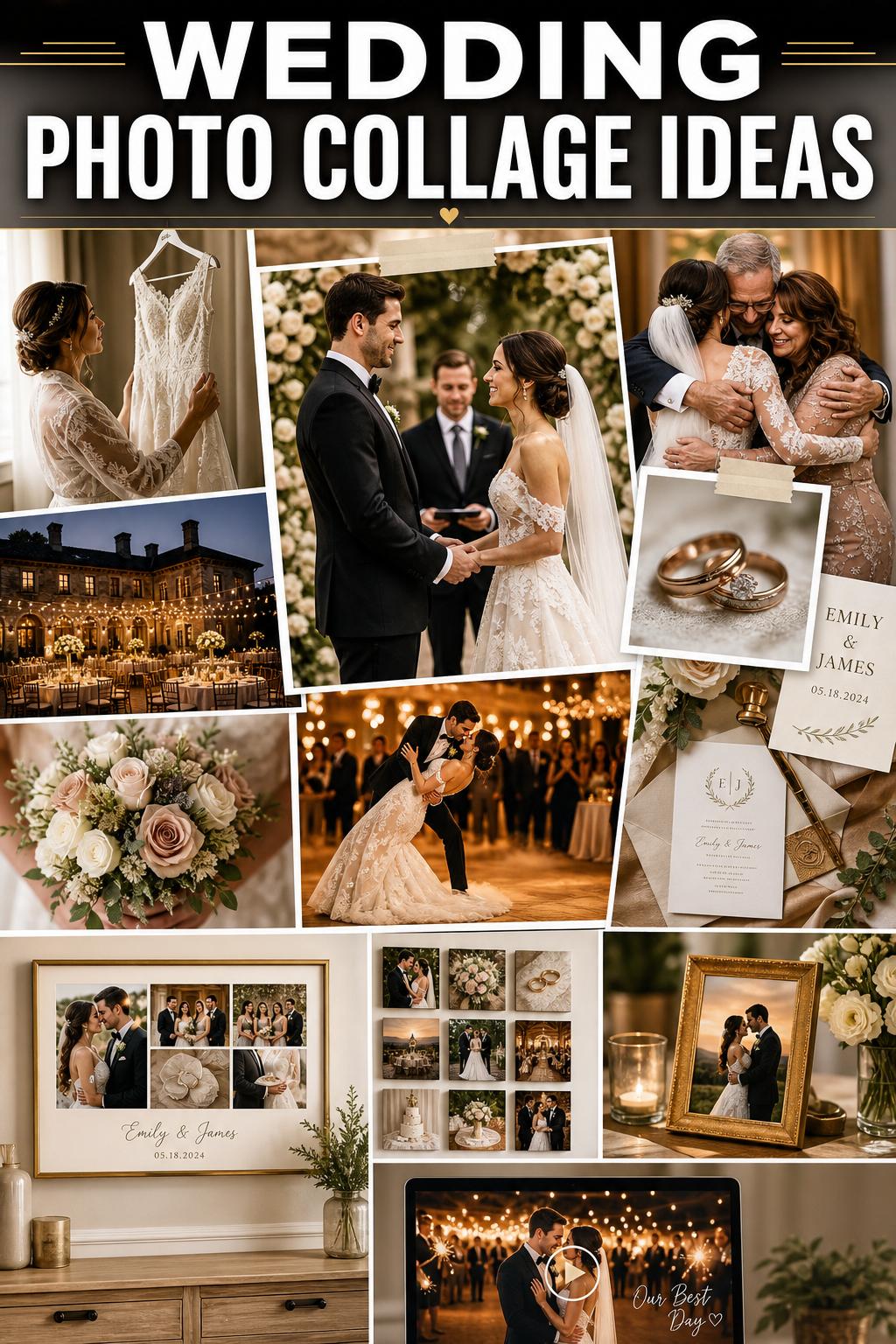
How to create a wedding photo collage that actually tells your story
Creating a wedding photo collage can feel surprisingly emotional. You are not just sorting files. You are deciding which moments define the day. A practical process helps, but so does remembering that the final piece should feel cohesive, not exhaustive. You do not need every good image. You need the right images in the right relationship to each other.
Start by gathering photos with clear roles
When you first review your wedding gallery, separate the images by purpose rather than by time alone. Some photos are emotional anchors, such as the ceremony, vows, first look, or first dance. Some are atmosphere builders, such as venue views, floral details, tables, and attire. Others provide warmth and context, including family portraits and candid guest moments.
- Choose focal-point images of the couple.
- Add supporting images of family, guests, or key interactions.
- Include venue or setting photos to ground the story in place.
- Keep a few detail shots for texture and balance.
This simple sorting method makes layout decisions easier. If every image is trying to be the star, the collage can feel crowded. When each photo has a role, the final result feels intentional.
Choose a layout that matches the emotion of the day
The layout should reflect the personality of the wedding. A formal, modern celebration often looks strongest in a grid or symmetrical template. A softer, more nostalgic celebration may come alive in a timeline storyboard or mixed-media layout. If you are unsure, review your images and notice what dominates: elegant portraits, emotional progression, or whimsical detail shots. Let that answer guide the format.
Template-based tools such as FotoJet and BeFunky can shorten the decision process because they offer ready-made structures. That convenience is helpful, especially if you want a polished result without building every element from scratch. The trade-off is that a template can feel less individual if you rely on it too heavily. Personalization through image choice, spacing, and text is what makes the collage feel like yours.
Adjust size, color, and spacing before adding details
Before you add names, dates, or decorative touches, refine the visual foundation. Consistent color treatment matters because wedding galleries often include different lighting conditions, from daylight preparation shots to dim reception images. Gentle editing can help the collage feel unified. BeFunky’s editing tools, including features such as Portrait Enhancer and Upscale, are positioned around this need for image polish and quality improvement.
Spacing matters just as much as color. Tight spacing can create a dramatic, poster-like effect, while more open spacing feels airy and gallery-inspired. Think about where the collage will live. A wedding memory wall in a bright room may benefit from cleaner spacing. A digital share or stylized poster may carry slightly bolder visual density.
Add personal details with care
The most effective personal details are often the simplest. Couple names, a wedding date, and the location can be enough. These small additions make the piece more archival and more emotionally rooted. If the collage already contains many visual elements, keep text minimal. If the design is intentionally sparse, a short line of text can make it feel finished.
A helpful test is to step back and ask whether the text supports the photos or competes with them. If your eye lands on the words before the people and moments, the balance may need adjusting.
Decide early between print and digital use
A collage designed for a frame is not always designed well for a phone screen, and a collage built for digital sharing may not translate elegantly into a large print. If your end goal is a wall display, think in terms of print-ready wedding collage sizes, framing proportions, and image clarity from the beginning. If your goal is social sharing or a digital frame, readability and visual simplicity often matter more than fine print detail.
Pik’s print-focused guidance and BeFunky’s export-oriented workflow both point toward this practical truth: the intended destination of the collage should shape its design from the start, not as an afterthought.
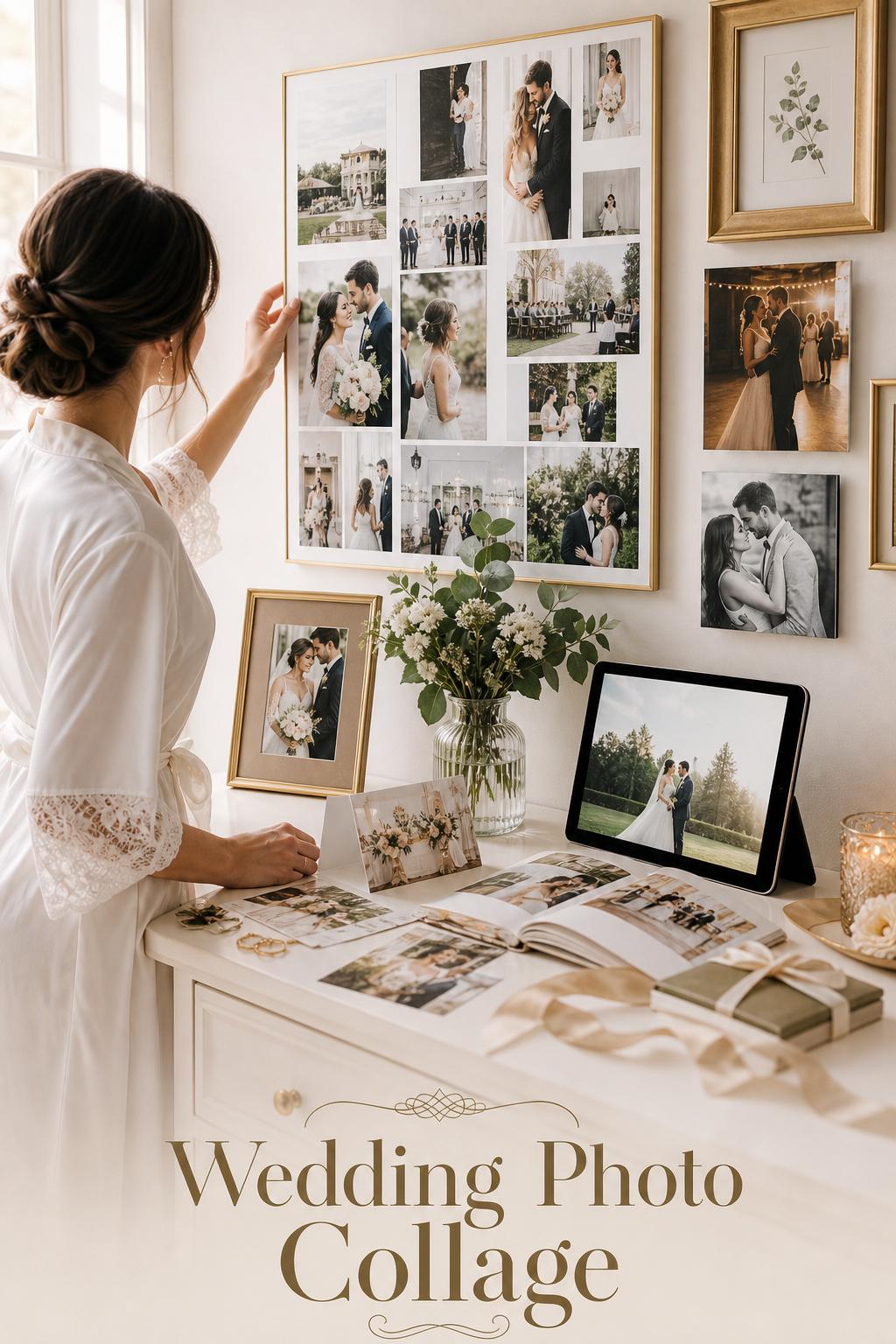
Story-first choices: people, places, and moments
The most memorable collages feel grounded because they include the right mix of people, places, and events. This is where a wedding photo collage becomes more than pretty design. It becomes a visual narrative.
Let people lead the composition
The couple should usually anchor the collage, but that does not mean every image must be a portrait. Sometimes a candid exchange says more than a posed frame. Family members and close guests can also add emotional depth, particularly if your wedding day was shaped by meaningful relationships. A collage that includes both intimacy and celebration often feels more complete.
If you are creating a display for your home rather than a wedding reception installation, ask yourself which people you want to see most often. That practical question can help narrow the selection in a way that feels honest and livable.
Use the venue and setting to give the story a sense of place
Venues matter because they place the memory somewhere specific. Whether your celebration was in a city setting, a destination location, or a classic wedding venue, including one or two setting images gives the collage context. A location detail can also tie beautifully to text overlays if you choose to include the wedding location beneath names or the date.
This sense of place is especially useful in a timeline storyboard or custom poster format. It transforms the collage from a series of images into a recollection of a day in a particular atmosphere.
Highlight moments that feel unmistakably like your day
Almost every wedding gallery contains obvious highlights, but a strong collage often includes one or two less expected moments as well. The first look, vows, ceremony, and first dance are natural anchors. Around them, detail shots and candid interactions make the narrative feel lived-in. This is the logic behind story-driven wedding collage design: not every photo needs equal importance, but each chosen image should deepen the overall feeling.
Where wedding collages work beautifully in real life
Some collages are created to be admired immediately after the wedding, while others are built for long-term display. Thinking about where the collage will exist helps you choose style, size, and finish with more confidence.
Gallery walls and photo tiles for everyday visibility
If you want the collage to become part of your home, gallery walls and photo tiles are especially appealing. Mixtiles brings this display-focused approach into the conversation by connecting wedding imagery with easy wall arrangements and tile-style presentation. A wedding photo wall can feel relaxed and modern, especially if the collage is designed with clean lines or segmented into a coordinated arrangement.
This works particularly well when a single large collage feels too dense for your space. Breaking the story into a group of visual units can make the display feel lighter and more architectural.
Framed prints and stylized posters for a more formal finish
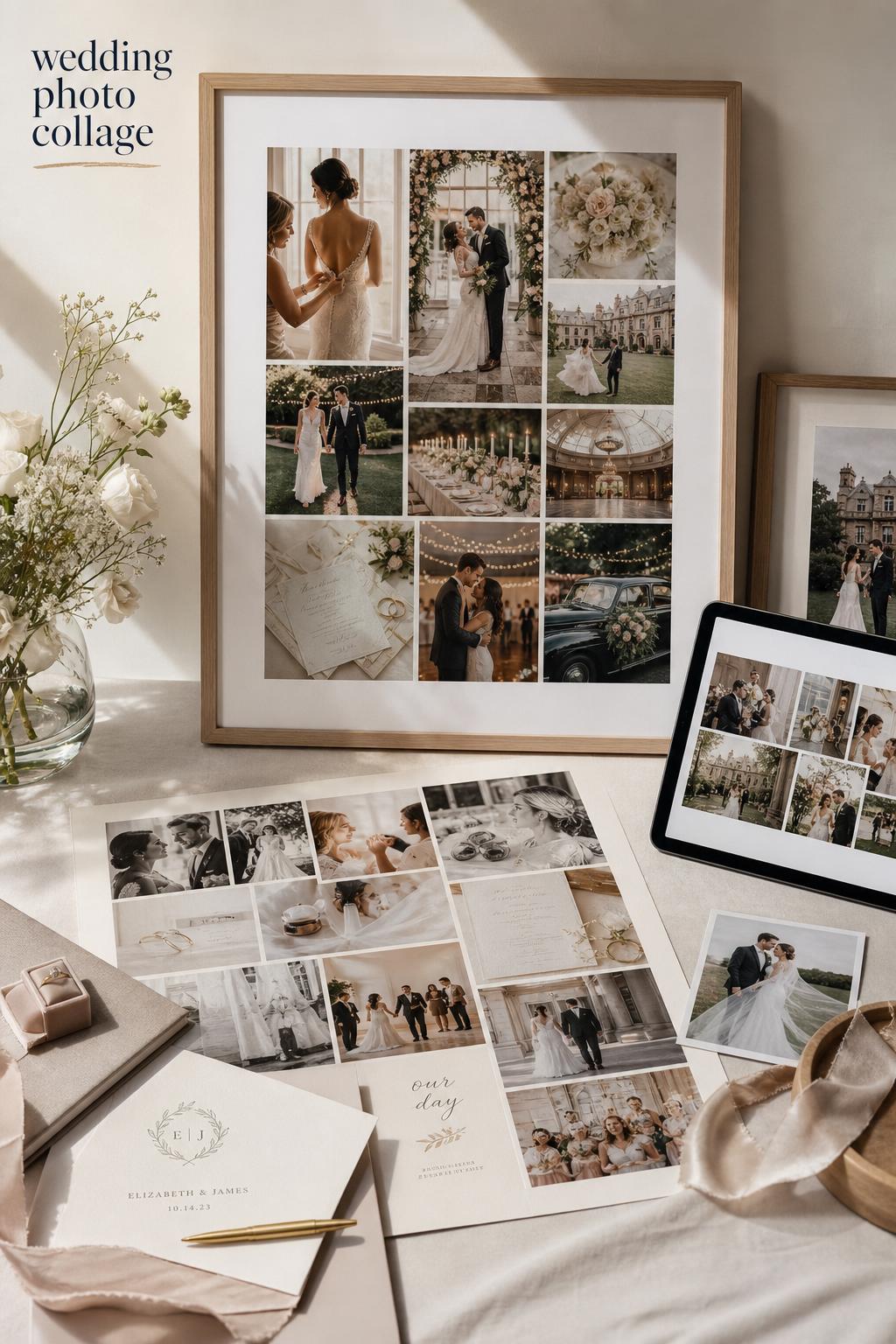
A framed wedding collage carries a different mood. It feels more curated, more finished, and often more giftable. BeFunky’s mention of saving for printing and using services such as Zazzle speaks to this practical pathway: once the design is complete, a framed print can turn the collage into an artwork rather than simply a memory sheet.
This format suits couples who want one statement piece rather than a spread of smaller displays. It also pairs naturally with text overlays, as the composition often behaves more like a poster or wall print.
Digital sharing that still feels thoughtful
Not every wedding collage needs to be physical. Digital sharing remains important, whether that means posting a simplified version online, sending it to family, or using it in a digital frame. The challenge with digital formats is clarity. Tiny details, intricate layering, or too much text can disappear on smaller screens.
For digital use, simpler layouts often win. A wedding photo grid or a streamlined storyboard tends to read more clearly than an elaborate mixed-media piece. If you want both outcomes, consider creating a print version and a lighter digital version rather than forcing one file to serve every purpose.
Tools, templates, and when each approach makes sense
Different brands shape the wedding collage process in different ways. Some are strongest for editing and layout creation, while others focus on printing, wall display, or visual inspiration. The right choice depends on where you are in the process and how much creative control you want.
- BeFunky is especially useful for hands-on creation, layout choice, editing, and export for print or digital sharing.
- FotoJet leans into wedding collage templates and a guided editor experience.
- Mixtiles connects collage thinking with physical wall display ideas and photo tiles.
- NexFoto emphasizes storytelling and sequencing in collage design.
- MergeImages and The Wedding Showcase offer idea-driven inspiration and thematic approaches.
- Pik focuses more directly on wedding photo collage prints, print sizes, costs, and framing considerations.
- Pixabay functions more as a visual reference source than a tutorial.
- Zazzle appears as a printing option tied to the export stage.
There is no single perfect tool for every couple. A bride planning a minimalist apartment display may gravitate toward a clean BeFunky or FotoJet template and then print the final design. A couple dreaming of a wedding memory wall may think first about Mixtiles and display patterning. Someone who values narrative over layout speed may respond more strongly to the storytelling mindset seen in NexFoto’s framing of the process.
A few thoughtful design decisions that make a big difference
It is often the smaller choices that separate a collage that feels polished from one that feels busy. These decisions are not dramatic, but they shape how comfortably the final piece lives in your space and in your memory.
Readability and contrast deserve more attention than most couples expect
If you include names, dates, or location text, make sure the words remain easy to read against the imagery. Contrast matters. A romantic font may feel lovely in theory but become difficult to read when layered over textured photography. Strong collage design is not only about beauty. It is also about legibility and clarity, especially if the collage will be printed or viewed from a distance.
This becomes even more important when a collage is part of home decor. A piece that reads beautifully up close but disappears across the room may not deliver the impact you imagined.
Color consistency can be more important than matching every photo style
Wedding galleries often include shifts in lighting, editing, and mood. Preparation images can be airy, ceremony images balanced, and reception photos darker and warmer. A collage does not require every image to look identical, but it does benefit from a shared color feeling. Gentle editing support, such as image enhancement or quality correction, can help the overall composition feel more intentional.
Think of color consistency as emotional consistency. The images do not need to match perfectly, but they should feel like they belong to the same story.
Not every good photo belongs in the final collage
This is often the hardest decision. Couples naturally want to include many favorites, especially after receiving a full gallery. But the strongest wedding photo collage usually edits with purpose. If two images say nearly the same thing, choose the one with clearer emotion or stronger composition. Leave room for the story to breathe.
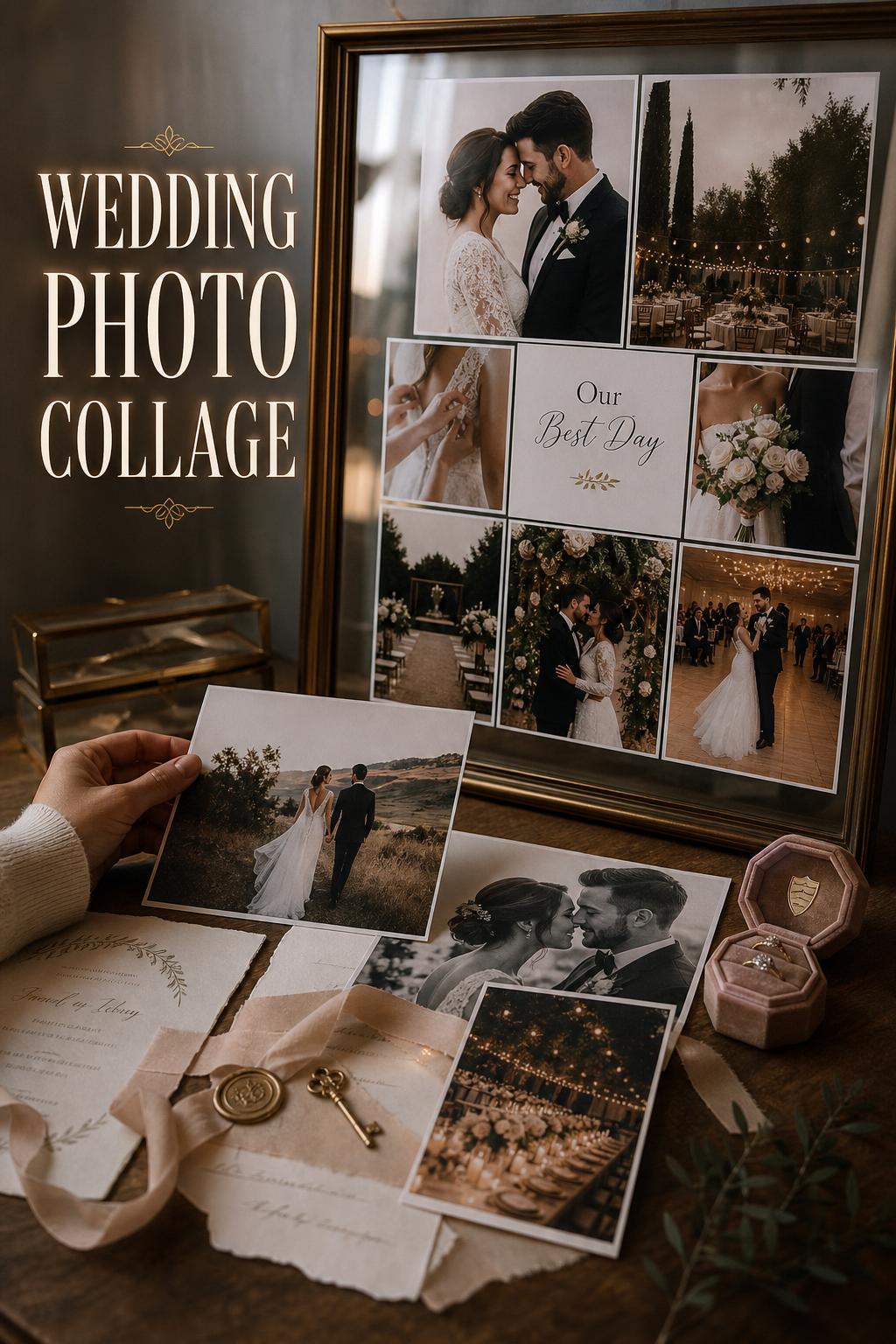
Tips for making your wedding collage feel elevated, not crowded
Even a romantic, detail-rich collage should still feel composed. If you want the final result to look refined rather than overfilled, these practical habits help.
- Limit the number of text elements so the photos remain the emotional focus.
- Use one dominant style, such as grid, storyboard, or mixed-media, instead of combining too many visual systems.
- Include at least one image of the venue or setting to give the collage a sense of place.
- Keep a balance between close-up portraits and wider atmosphere shots.
- Design for the final destination, whether that is a frame, poster, wall display, or digital share.
- Review the collage from a distance before printing to see whether faces, spacing, and text still read clearly.
A useful real-life approach is to create a draft, step away for a day, and return with fresh eyes. Wedding imagery carries emotion, and that can make it harder to edit objectively. Distance helps you notice what the design actually needs.
Common mistakes that can weaken an otherwise beautiful collage
Most collage problems are not about lack of creativity. They come from trying to make one piece do too much. A few recurring issues are worth watching for before you finalize the design.
One common mistake is choosing a layout before reviewing the nature of the photos. A dramatic timeline collage built from mostly similar portraits may feel forced, while a tight grid made from highly emotional sequence-driven images may flatten the story. Let the image set lead the structure.
Another issue is overdecorating. Wedding imagery already contains dress texture, florals, venue design, and emotional expression. When too many graphic elements are added, the collage can lose elegance. Mixed-media styles work best when they are curated, not overloaded.
A final mistake is neglecting the use case. Couples sometimes design a detailed digital collage and later realize it does not scale well for a print, or they prepare a large print layout that looks cluttered on a phone. Planning for output early avoids disappointment later.
Print, framing, and display choices that shape the final result
Once the design is complete, the presentation stage becomes just as important as the layout itself. Printing and framing decisions affect the mood, durability, and visual presence of the collage. This is where practical thinking quietly supports romance.
Print formats should match the style of the collage
A clean wedding photo grid often suits a framed print with crisp edges and strong structure. A stylized poster collage can feel especially at home in a larger print format, where names and dates become part of the artwork. A mixed-media design may look best when given enough scale for its layers to remain visible. Pik’s focus on print sizes and framing considerations highlights how closely design and output are connected.
Wall displays need to work with the room, not only the wedding
Home decor coordination matters. A collage may be beautiful on screen and still feel too heavy for a quiet room if the colors are dark or the composition is dense. Likewise, a very soft collage can disappear in a large open space. Mixtiles-inspired wall display thinking can be useful here because it frames the collage as part of a living environment rather than a standalone project.
Consider room lighting, surrounding color palette, and how close viewers will usually stand. These small realities help the display feel intentional in daily life.
Inspiration for couples who want something beyond the standard frame
Some of the most appealing wedding collage ideas move beyond a simple rectangular print. The strongest alternatives still stay rooted in the same fundamentals of storytelling, layout clarity, and emotional flow.
A wedding memory wall can be created from multiple coordinated collage pieces rather than one large design. This approach gives flexibility and allows different chapters of the day to breathe. A couple could also create a main framed collage for the home and a simpler digital variation for sharing. BeFunky’s “beyond the frame” perspective opens the door to these broader uses, reminding couples that one collage can inspire several formats.
For those drawn to inspiration-first planning, sites like MergeImages and The Wedding Showcase reflect the value of thematic direction. Even without relying on a heavily branded tool path, they show how color schemes, layout motifs, and decor-minded thinking can guide a collage toward a more personal finish.
How to choose the right direction for your wedding style
If your wedding vision is romantic and classic, lean toward a grid or softly structured storyboard with elegant spacing and minimal text. If your celebration felt more playful or handmade, a mixed-media scrapbook style may suit the mood better. If your home decor is modern, a cleaner wedding photo grid may continue that aesthetic naturally. If your goal is emotional storytelling above all else, a timeline layout usually feels the most expressive.
Think of the collage as an extension of the wedding itself. The same instincts that guided your choices around atmosphere, venue, and visual tone can guide this decision too. The most successful collages do not feel separate from the wedding. They feel like its final chapter.
FAQ
How do I create a wedding photo collage without making it look cluttered?
Start by choosing one clear layout style, such as a grid, timeline, or mixed-media design, and then limit your selection to photos that each serve a purpose in the story. Keep text minimal, maintain consistent spacing, and edit with the final display format in mind so the collage feels cohesive rather than crowded.
What is the best layout for a wedding photo collage?
The best layout depends on your goal. A grid works well for a clean, classic look, a timeline storyboard is ideal for showing the flow of the day, and a mixed-media scrapbook style suits couples who want a more layered and personal design. The right choice is the one that matches both your photo collection and the mood of your wedding.
Should I design my wedding collage for print or digital sharing first?
Choose the primary use first because print and digital formats often need different design decisions. A print-focused collage usually requires stronger attention to size, spacing, and image clarity, while a digital version benefits from simpler layouts that remain readable on smaller screens.
Which tools can help me make a wedding photo collage?
BeFunky and FotoJet are useful for templates, editing, and layout creation, while Mixtiles is closely connected to wall display ideas. NexFoto emphasizes storytelling, Pik focuses on print guidance, and Zazzle appears as a print option. The best tool depends on whether you need design help, display inspiration, or printing support.
What photos should I include in a wedding collage?
A balanced wedding collage usually includes a mix of couple portraits, emotional moments such as the ceremony or first dance, one or two venue or location images, and a few supporting detail or candid shots. This combination helps the collage feel both personal and complete.
Can I add names, dates, and location details to my wedding collage?
Yes, and those details often make the collage feel more personal and archival. Names, the wedding date, and the location work best when they are used sparingly and placed in a way that supports the images rather than competing with them.
Are wedding photo wall ideas different from standard collage prints?
They can be. A standard collage print is often designed as one complete piece, while wedding photo wall ideas may involve multiple coordinated elements, photo tiles, or gallery-style arrangements. The difference is less about the images and more about how the story is displayed in the space.
What should I check before ordering wedding photo collage prints?
Review image clarity, spacing, text readability, and the intended print size before you order. It is also important to confirm that the layout still looks balanced from a distance, especially if the collage will be framed or displayed on a wall.
Can a wedding collage work as home decor after the wedding?
Absolutely. Many couples create a wedding memory wall, framed print, or photo tile display specifically for the home. The key is choosing a layout, color treatment, and scale that fit the room as naturally as they fit the emotion of the wedding day.