
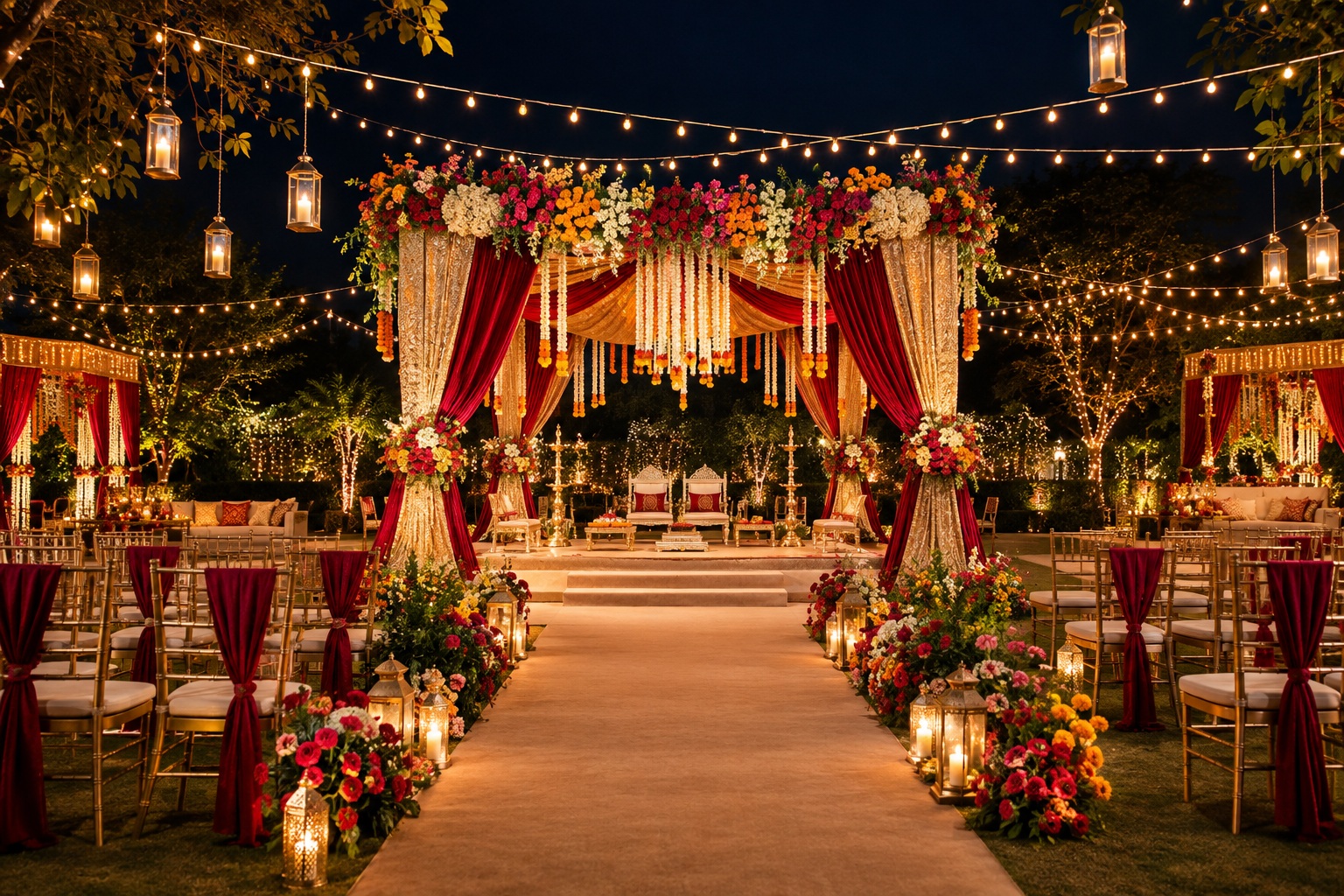
Indian Wedding Decor at Night: Lighting, Stages and Guest Comfort
Indian wedding decor at night needs enough light for the people and activities in each space. Begin with the event schedule, then mark arrival, dining, performance and photo areas. Choose textiles, flowers and motifs with your family and ceremony team so the design reflects your celebration.
Define Your Key Moments: Entry, Center Stage, and Photo Spots
Nighttime events feel more immersive when décor is organized around moments. Instead of scattering effort everywhere, design a few high-impact zones that guests naturally encounter: arrival/entry, the main ceremony or stage, and at least one dedicated photo backdrop. This approach also helps with budget control because the most visible areas carry the strongest design.
Design a memorable entrance that reads clearly at night
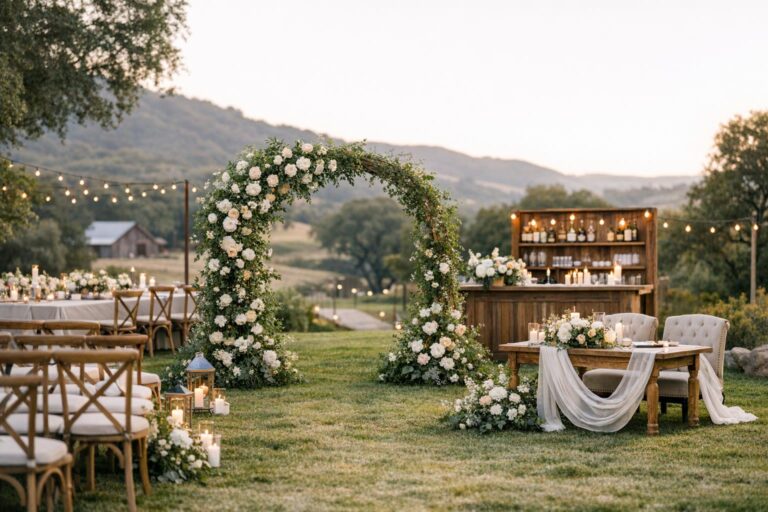
The entrance sets expectations. At night, the goal is a clear path plus an immediate “wow” visual. Consider combining bright, welcoming lighting with a structured frame (arch, canopy-like drape, or layered backdrop) so it photographs well and guides guests inside.
Create one main focal point and protect it from visual clutter
Whether it’s a mandap area, a stage for the couple, or a reception head table, give one feature the clearest hierarchy. Avoid placing competing backdrops nearby. The more you concentrate detail here, the more luxurious the entire event will feel; especially in night photography where the eye is drawn to what’s lit.

Turn wedding inspiration into a plan you can actually follow.
Zarellea brings your guest list, budget, vendors, and day-of details into one shared space — so no beautiful idea gets lost in the shuffle.
Plan photo backdrops with lighting built in
At night, a photo area isn’t complete unless it has reliable lighting that flatters faces. A beautiful backdrop that’s too dim won’t deliver. Build the lighting into the design so guests can use it effortlessly throughout the event.
Choose colors for the evening setting
Color behaves differently at night. Deep shades can look almost black without enough light, while metallic accents can pop beautifully. For Indian night wedding decor, aim for a palette that stays vivid under warm lighting and remains consistent across fabrics, florals, and tabletop details.
Use metallics and texture to add richness in low light
Use texture where guests can see it, such as a woven runner or an embroidered panel. Choose motifs for their meaning to your event rather than assuming one look represents Indian weddings.
Test your palette under event lighting
Before you commit, view fabric swatches, florals, and tabletop samples under warm evening lighting. If you can’t, at least review how similar tones photograph at night. This helps prevent surprises like a color reading too dark, too neon, or too muted once the sun goes down.
Draping, Backdrops, and Canopies That Shine After Dark
Draping is one of the most effective ways to create atmosphere at night. It frames light, softens harsh venue lines, and gives you an instant “event space” feel even in a plain room. For Indian night celebrations, draping also connects to the sense of ceremony and grandeur that many couples want.
Use layered backdrops to add depth in photos
A flat backdrop can look one-dimensional at night. Layering; through multiple panels, varying opacity, or structured elements; adds depth and makes lighting more dynamic. This is especially important behind the couple’s main area and in photo zones.
Balance drama with comfort and airflow
Night events can still feel warm depending on the season and crowd density. If you’re using heavy fabrics or canopy installations, consider airflow and guest comfort. A beautiful setup should still allow guests to move easily and feel at ease.
Keep pathways and exits visually clear
When draping is used to define spaces, make sure entrances, exits, and walking routes remain obvious. Nighttime makes confusing layouts feel more stressful. A good rule is to use décor to guide movement rather than create visual barriers.
Table Styling for Night: Centerpieces, Candles, and Place Settings
Table décor at night should do two jobs: look elevated from a distance and still feel inviting up close. Because guests spend time dining and talking, tables become a major part of the experience. Indian-inspired table styling often benefits from warm glow elements paired with layered textures.
Choose centerpieces that look good from across the room
Judge the table with lighting on and a complete setting in place. A compact centerpiece can work if it is visible; height is not necessary simply because an event is at night.
Use warm, flattering light at guest level
Guest-level glow makes the whole space feel welcoming. It also helps photos at tables look better without relying on harsh flash. The key is consistent warmth; avoid mixing drastically different light colors in the same area, which can make the room feel visually chaotic.
- Combine soft light sources with reflective accents for a richer effect
- Keep lighting stable so tables don’t look uneven in photos
- Ensure servers can see clearly without overpowering the mood
Build the table look from one “hero” element
Instead of trying to make every detail elaborate, pick one hero element; like a striking runner, a glowing centerpiece style, or standout napkins; and let the rest support it. Night styling looks more luxurious when it feels intentional and not overloaded.
Light the people using the ceremony or stage area
Plan the main area around its use. A ceremony may need space for an officiant and family as well as the couple; a performance needs a different arrangement. Check the layout with the people leading each part.
Create a clear frame around the couple
Framing can come from draping, layered panels, floral structure, or a defined stage edge. At night, a strong frame helps the eye locate the couple immediately and gives photographers a consistent backdrop that doesn’t disappear into darkness.
Keep the background clean for better photos
A busy background can look cluttered in low light. Keep distracting elements away from the central frame; such as venue signage, service doors, or mismatched décor from other areas. If they can’t be moved, mask them with intentional draping or a backdrop that blends into your palette.
Prioritize faces over props
Ask the photographer and lighting supplier to test faces against the proposed backdrop. More brightness is not always better. Check glare and shadows, and confirm the setup serves the event as well as photographs.
Practical Considerations for U.S. Venues at Night
U.S. venues vary widely; ballrooms, outdoor spaces, private estates, restaurants, or event halls; and nighttime décor needs to work within rules and logistics. The most common issues are power access, installation timing, and restrictions on hanging items or open flames. A successful plan respects the venue’s requirements while still delivering an Indian-inspired visual impact.
Plan power, cables, and control points early
Even the most beautiful night décor can be undermined by visible cables or uneven lighting. Think through where power is located, how cables will be concealed, and who controls the lighting during key moments. If lights need to shift between ceremony and reception beats, ensure someone is assigned to coordinate those transitions.
Allow extra setup time for nighttime installations
Night décor often includes more lighting, more testing, and more adjustment than daytime setups. Build in time for a lighting check with the full room layout in place, so you can catch dark zones and glare issues before guests arrive.
Walk the guest route after dark
Do a walk-through at the same time of day your event will happen. Walk from parking to entry, through the main spaces, and to restrooms. This reveals where you need additional lighting, clearer signage, or layout changes to keep the experience smooth.
Budget-Smart Moves That Still Look Luxurious at Night
Night events can look premium without putting detail everywhere. The trick is to invest in the areas that guests notice most and that photos feature repeatedly. Concentrating design into fewer, stronger features often reads more expensive than spreading the same budget thinly across the entire venue.
Put your biggest investment into the couple’s focal area
If you have to choose, prioritize the stage or ceremony focal point. This area is the visual anchor and will appear in a large portion of your photos and videos. A strong, well-lit focal area elevates everything around it.
Repeat a few signature elements for cohesion
Repetition makes design feel intentional. Choose a few signature elements; like a consistent lighting warmth, a recurring fabric, or a repeated pattern; and echo them across zones. This creates a “complete” look without requiring every space to be heavily decorated.
- Use a consistent glow style across the venue
- Repeat one standout color or metallic accent
- Carry the same backdrop style into smaller photo areas
Don’t waste money on details guests can’t see
If lighting is low in a particular corner, small intricate details may not register. Instead of adding complexity where it won’t be visible, redirect those resources to lighting, larger-scale textures, or clearer focal elements that read strongly after dark.
A Simple Planning Process You Can Follow
Night wedding décor can feel overwhelming because there are many moving parts. A step-by-step process keeps decisions organized and ensures you don’t end up with beautiful pieces that don’t work together once installed in a dark environment.
- Step 1: Identify your main moments (entry, couple focal area, dining, dance, photo)
- Step 2: Decide your glow style and lighting warmth
- Step 3: Choose a palette that holds up at night
- Step 4: Select two to four signature décor elements to repeat across zones
- Step 5: Draft a simple floor plan showing guest flow and lighting priorities
- Step 6: Schedule a night-time walk-through or lighting check
- Step 7: Assign responsibility for lighting changes during key moments
Use one decision to simplify many others
When you lock in one core decision; like a consistent warm glow and a specific metallic accent; you reduce the number of choices for everything else. This makes it easier to select fabrics, backdrops, and table details that look like they belong together.
Separate ritual and decorative light
For decorative glow, battery candles can be useful where permitted. The U.S. Fire Administration recommends considering flameless candles. If a ceremony requires a sacred flame, discuss its requirements with the officiant and venue rather than treating it as an interchangeable decor item.
For related planning decisions, see our guide to planning an outdoor ceremony and weather alternative.
FAQ
How does Indian wedding decor change after dark?
At night, lighting becomes the primary design element because it determines what guests can see and what photographs capture, so décor choices need to prioritize glow, visibility, and clear focal points more than they typically would in daylight.
How do I choose the best lighting approach for an Indian wedding at night?
Start by choosing one consistent “glow” style and lighting warmth, then layer ambient, accent, and functional lighting so key moments like the entrance and couple’s focal area are emphasized while guests still have comfortable visibility.
What are the most important decor areas to focus on for a night event?
Prioritize the entrance, the couple’s main focal area (stage or ceremony space), and at least one dedicated photo spot with built-in lighting, then expand to dining and lounge zones once those anchors are strong.
How can I make sure my night wedding decor looks good in photos?
Test light on the people using the area rather than aiming for maximum brightness. Check faces against the backdrop while retaining comfortable visibility for movement and dining.
How do I keep the venue from feeling dark or empty at night?
Use zoning to create intentional “destinations” and repeat a few signature elements across spaces, while filling visibility gaps with functional lighting along walkways and high-traffic areas so the room feels complete and welcoming.
What’s a budget-smart way to get a luxurious look for Indian night wedding decor?
Concentrate spending on the couple’s focal area and lighting, then repeat a small set of signature elements across zones, because strong highlights read more luxurious at night than evenly distributing small details everywhere.
Should I plan a venue walk-through at night?
Yes, walking the guest route after dark helps you spot where you need more light, clearer pathways, or better placement of key décor moments, and it reduces surprises that only appear once the sun is down.
What’s the biggest mistake people make with night decor?
The most common mistake is treating lighting as an afterthought, which can leave focal areas under-lit, photo spots unusable, and the overall décor less impactful than it would be with a planned lighting hierarchy.


One Comment