Save the Date Outfit Ideas That Work as a Pair
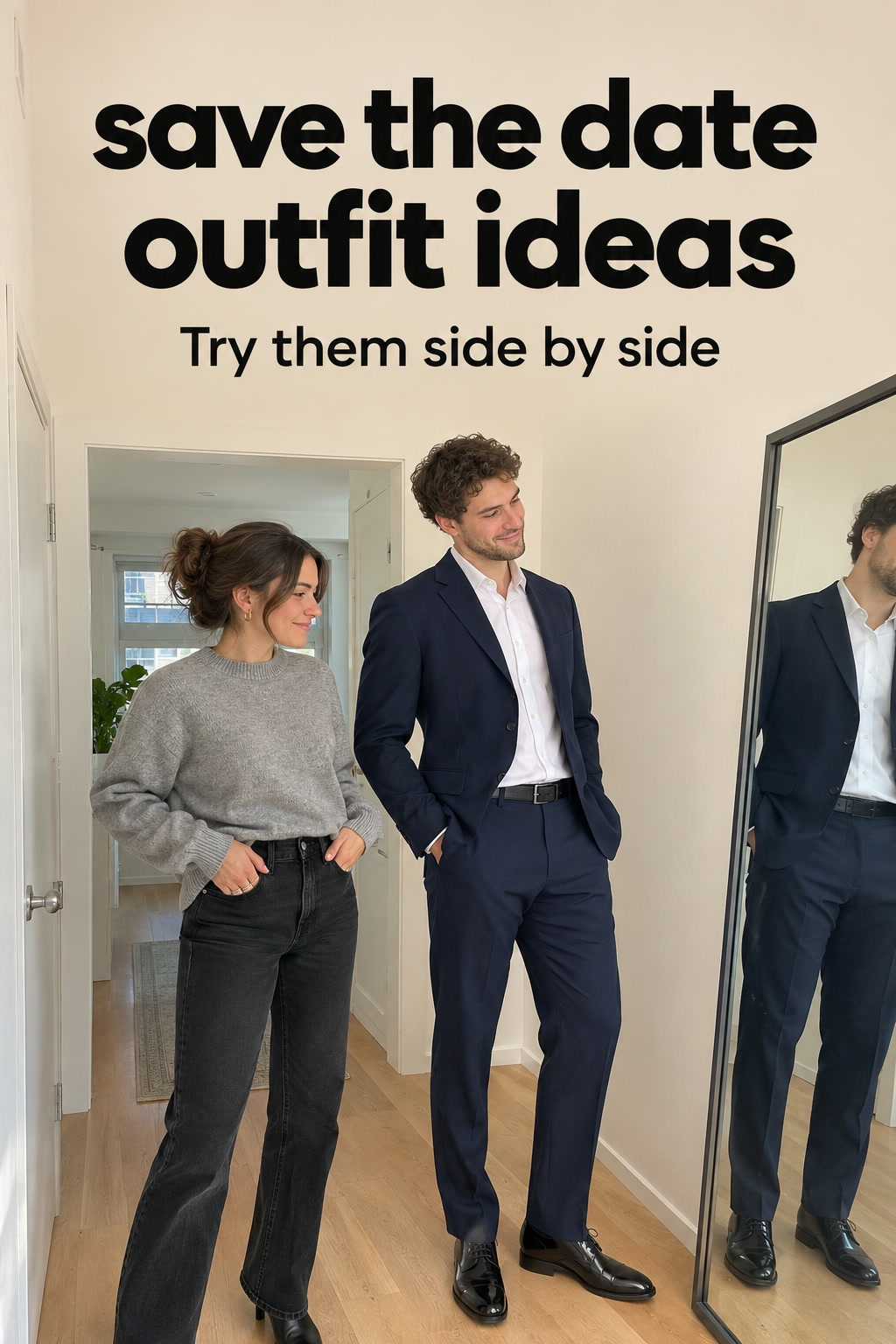
In the hallway before the engagement session, one person is in a navy suit and polished shoes. The other is in black jeans and a gray sweater. They agreed on dark colors. In the mirror, one looks ready for a wedding and the other looks ready for a drink after work. Since they both like what they’re wearing, I’d try changing one piece.
Start with the piece one of you already wants to wear. If the suit is the part that feels right, try a more tailored piece with the sweater. If the jeans feel closer to the evening you both have in mind, keep them on and try the suit trousers with a softer jacket. These save the date outfit ideas start with clothes you can pull out of the closet.
The moment the outfits meet
You could take two dark outfits to the same place and still get a portrait that looks as though each person was headed somewhere different. In the hallway, the differences are easiest to see at the edges. A crisp lapel ends in a deliberately sharp line. A crewneck with a soft shoulder rolls toward the arm. A glossy lace-up catches light near a faded jean hem. That shoe and jean hem can catch your eye before you take in either outfit as a whole.
Start in a room where you can see both people from shoes to shoulders. Try on the complete outfits. Put the phone away for a minute and describe each one in plain language. “I would wear this to a nice dinner” gives your partner a reference. “I would wear this to a friend’s ceremony” gives you something you can act on. If the descriptions seem far apart, ask which piece made each of you pick that occasion. You may both point to the same pair of shoes. You may find out the jeans are fine and the shirt underneath the sweater is the part that feels unfinished.
Turn wedding inspiration into a plan you can actually follow.
Zarellea brings your guest list, budget, vendors, and day-of details into one shared space — so no beautiful idea gets lost in the shuffle.
If your partner always wears patterned trousers, see what happens when you keep them and change an accessory. A visible gym sock, new belt with a shiny buckle, or fine office shirt under a heavy jacket can change the impression of everything above or below it. Pick up the one item you’re considering and hold it next to the other person’s outfit. Would both of you choose it for the same evening?
Choose a level of dress you both recognize
Let a favorite garment set the pace
If one person is excited about a jacket, patterned shirt, or well-cut pair of trousers, work from that. For the partner in the knit who wants the pairing to read closer to the suit, I’d borrow a straight trouser with a clean front and keep the sweater. A crease is optional. The clearer line from waist to shoe may do enough on its own. If both people prefer the everyday look, the suit wearer could try a textured jacket with their existing shirt and trousers, or leave the jacket at home and put on a familiar knit.
Think of the target as a particular evening you can both picture. A dinner at a friend’s place leaves more room for denim than a formal restaurant with a coat check. The photograph can sit between those two examples if that is where your clothes feel right. One of you can wear a loose silhouette for that evening while the other keeps a pressed crease.
Read the shoes and cuffs as a pair
Look at both pairs of shoes before deciding whether to change the jackets. An almond-toe penny loafer with a plain upper makes a different impression beside tailored trousers than a multicolored running shoe. If the sneaker is staying for comfort, look for its sole color or matte finish somewhere in the other outfit. Borrow a loafer only if its wearer can walk and stand in it comfortably. If they’re shifting their weight to get comfortable during the try-on, keep their original shoes.
Cuffs can add or remove a little polish. Compare a pale shirt cuff coming out of a coat sleeve with a long sleeve that pools at the wrist. A slightly shorter sleeve may make a loose shirt look deliberate. Take care with alterations on borrowed clothes. Fold a shirt cuff once on each side and check how it sits when you let your arms fall. If the fold looks bulky or comes undone, use a shirt with the right sleeve length or wear it with the sleeves down.
Four pairings with one deliberate change
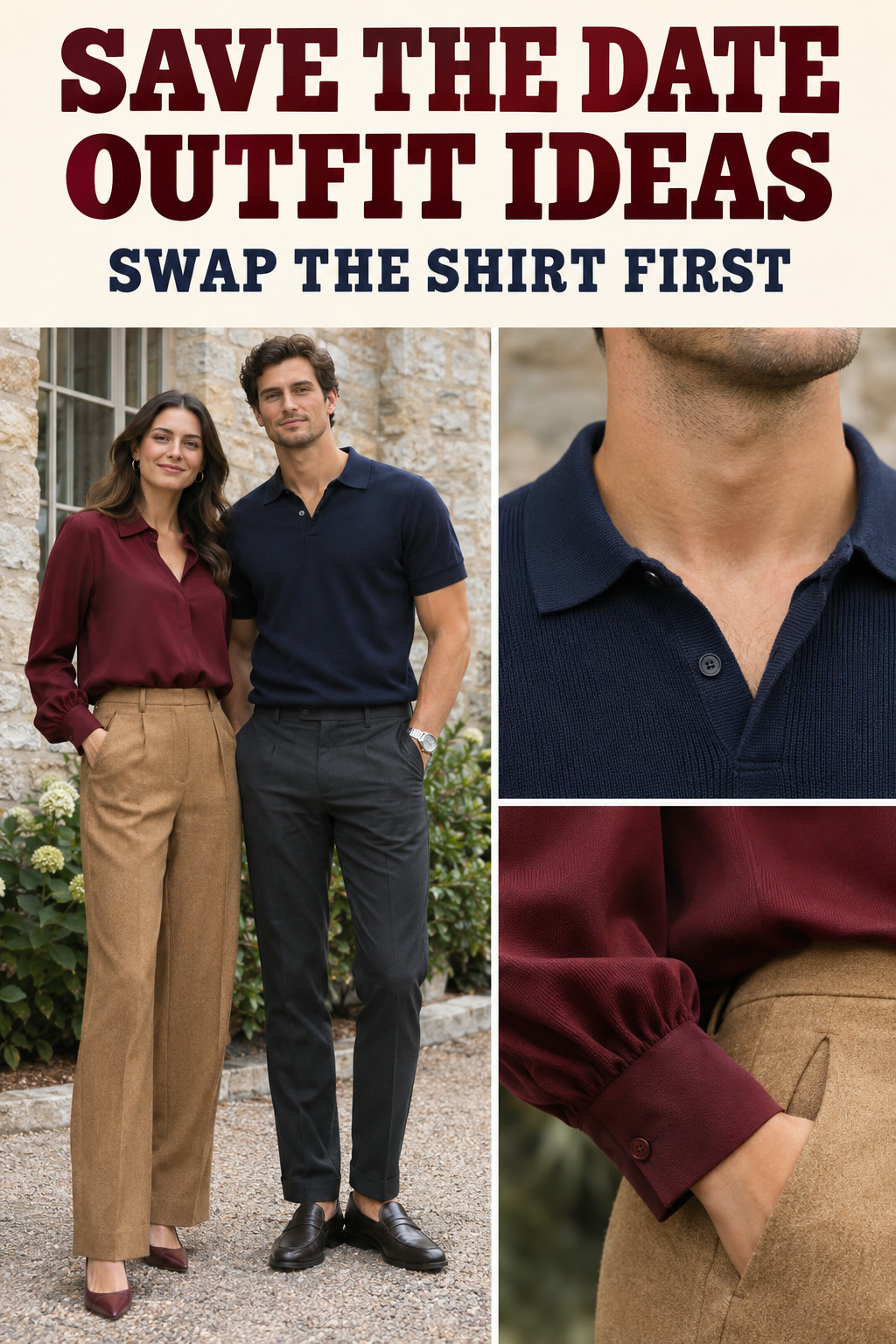
Keep the trousers and trade the T-shirt for a knit polo
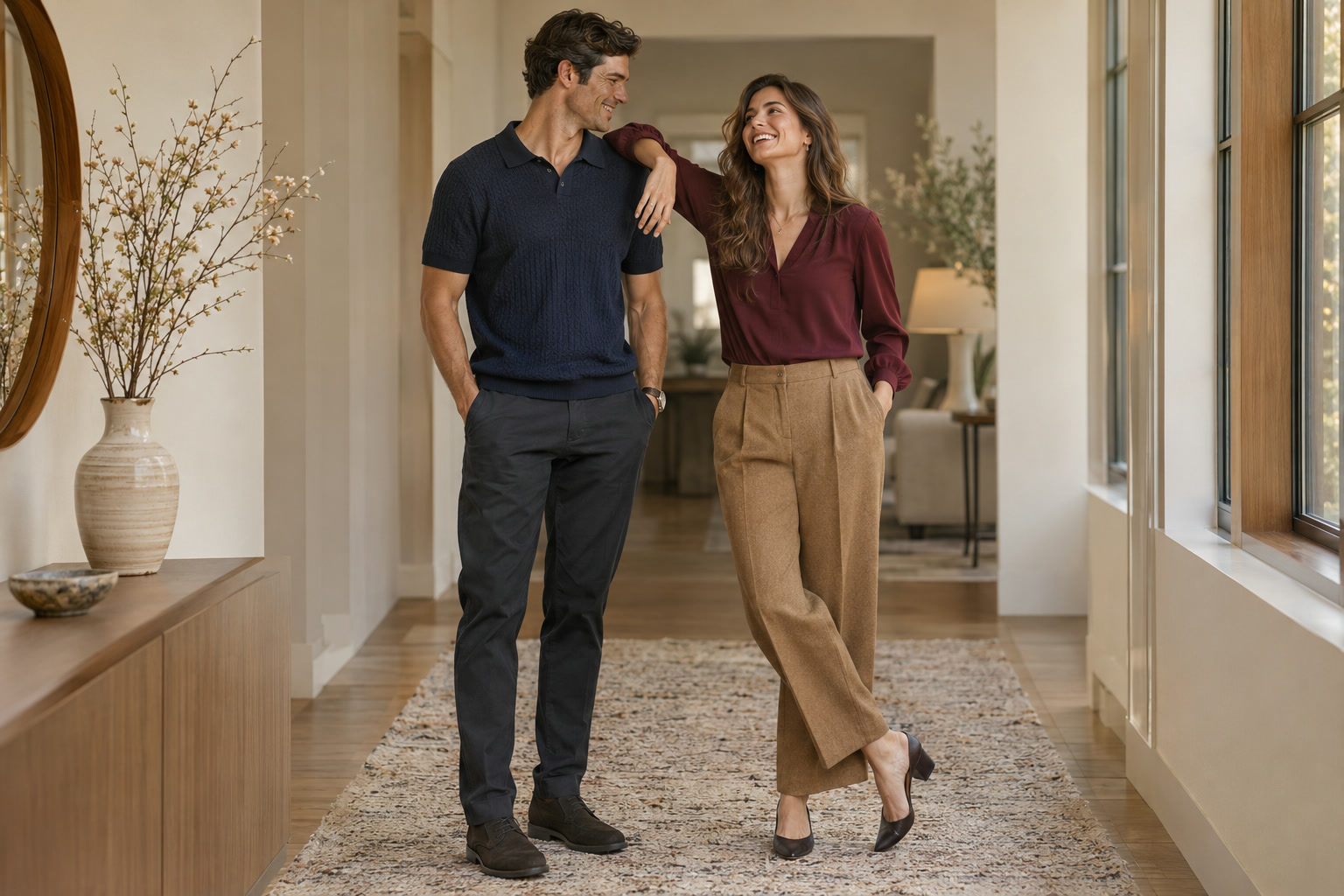
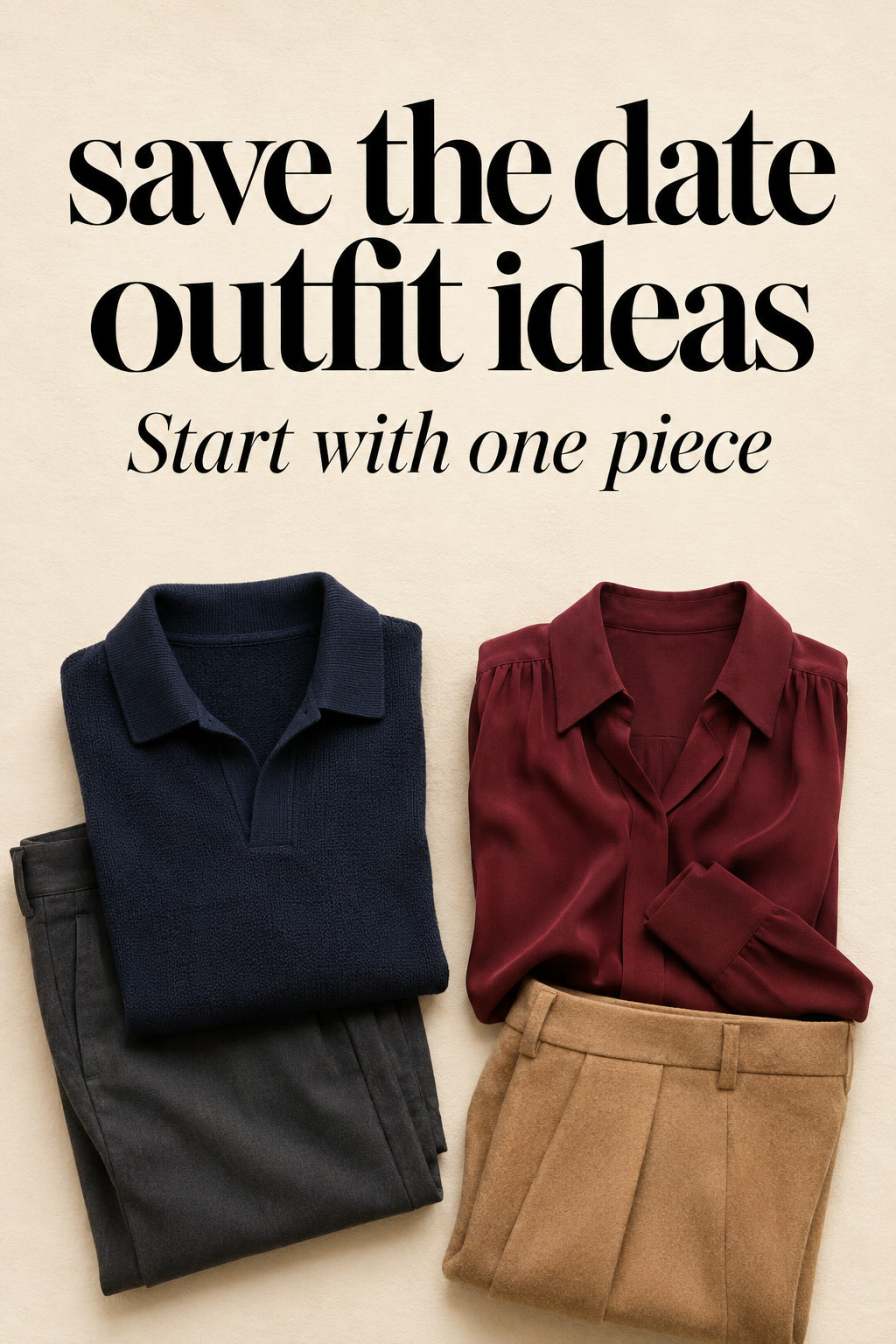
One person likes a camel wool trouser and a burgundy blouse. The other has picked charcoal chinos, a crewneck T-shirt, and simple dark sneakers. The chinos are close to the dress level of the trousers. Try a navy knit polo in place of the T-shirt. The small collar will be visible even when the couple stands shoulder to shoulder. Pick a solid knit if the blouse has a tie or unusual buttons you want to see. The two shirts can both be dark because the trousers give them different amounts of light below the waist.
Keep the first pair of shoes on while you make this change. The sneakers may feel perfectly at home once there’s a little structure at the neck. Check that the polo’s collar lies where you want it without having to fasten the shirt to the top. If it pulls when you cross your arms, try a roomier knit. A fine crewneck with a neatly finished neck can handle the same job for someone who dislikes collars. You can keep your usual coat if the knit collar still shows.
Soften one piece of a suit
Imagine a crisp charcoal suit beside a partner in a moss blouse and relaxed cream separates. Both want the portrait to feel like an evening out. The suit wearer can keep their trousers, clean shoes and plain shirt. Try an unstructured navy blazer with patch pockets instead of the matching charcoal jacket. That gives the suit wearer some shape and lets the softer cream trousers beside them make sense. Put both jackets on hangers and see which one you would reach for on that evening if nobody were taking pictures.
Pay attention to the part of the jacket that touches the shirt. A shorter lapel or a softer shoulder gives you more of the shirt at the center of the portrait. If the navy looks almost identical to the charcoal trousers in your hallway, step closer to a window and see if you can tell the fabrics apart. If they still look like an off-matched suit to you, use a visibly different jacket such as a brown or olive one. An open jacket over a shirt without a tie is a way to keep the original suit intact if you don’t have an easy substitute.
Give dark denim a quieter shoe
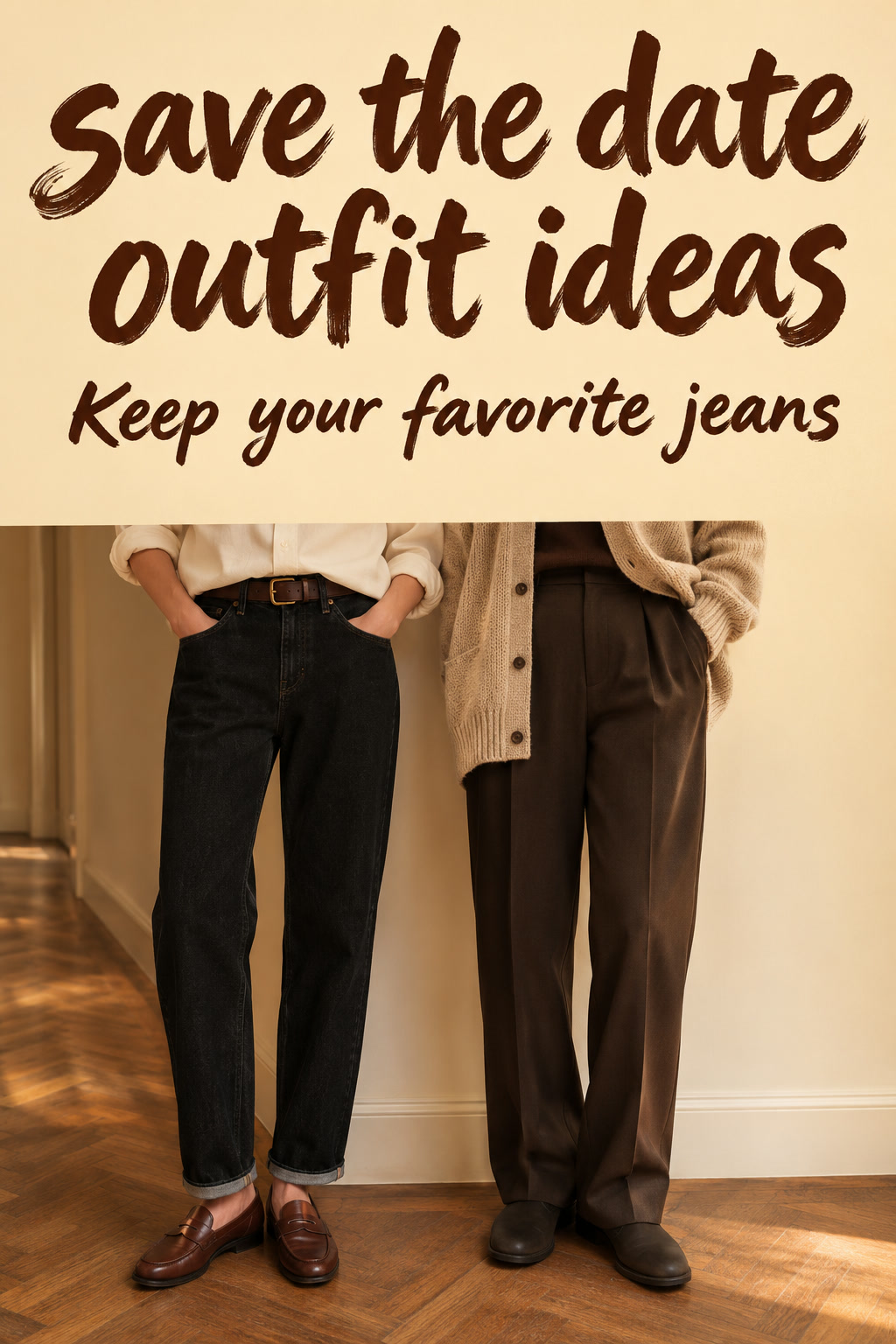
One person has chosen an oatmeal cardigan, chocolate trousers and a plain white shirt. The other wears an indigo denim jacket and black straight jeans. Everything is simple, but the bright running shoes on the denim side are pulling your eye below both outfits. If the wearer is comfortable switching, try a brown penny loafer with the same jeans. It picks up the brown in the other person’s trousers without turning the denim into a formal trouser. A soft lace-up in a similarly quiet color would work if that is the shoe you already own.
Put the shoes on with the socks you expect to wear and check the jeans from the side. If the hem catches over the heel or stacks on top of the loafer, see how it hangs with one narrow cuff. Keep the original sneaker if it is the pair that lets you stand easily throughout the session. Then look upward for a small change that can bring the denim into the same picture, such as wearing a plain knit under the jacket in place of a graphic T-shirt.
Leave the meaningful textile alone
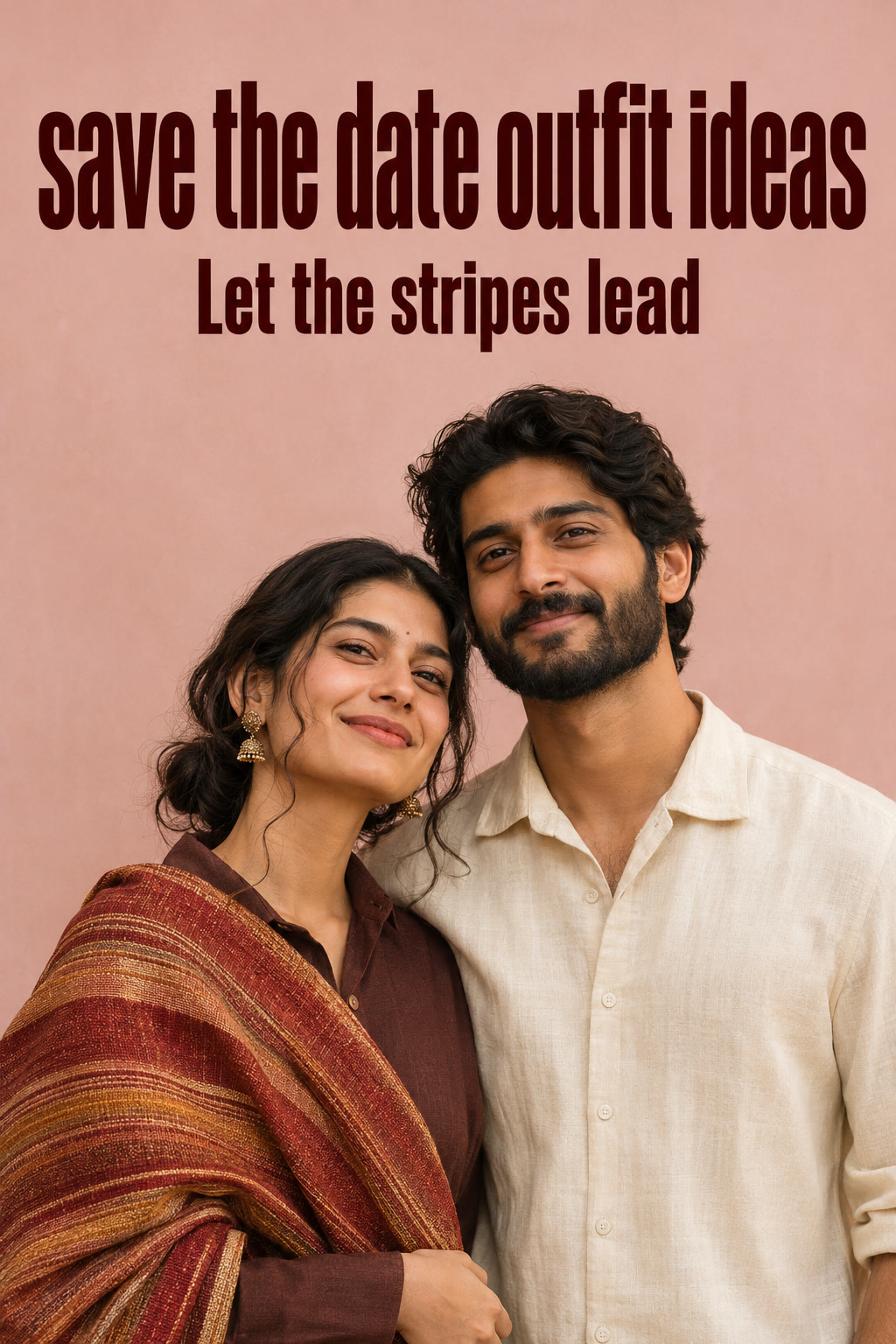
Suppose one partner brings a handwoven family shawl with brick-red and gold stripes. The other planned to wear a checked shirt under a dark brown coat. The shawl can stay where its wearer wants it. I’d try a solid ecru button-down in place of the checked shirt and let the lighter front of the shirt give the stripes some room. If you both want distinct patterns, look for a quieter one with more ground showing between its marks. Stand near each other and decide whose eye you want the patterns to draw first.
A borrowed textile deserves the same consideration as it would at any other gathering. Ask its owner how they would like it worn or secured, and check where a bag strap or a jacket might rub against it. Keep any part of the outfit that has personal or cultural meaning visible where the wearer prefers it. If the contrasting outfit includes their usual jewelry or an everyday jacket, you can simply remove a decorative accessory you added for the shoot. The person in the shawl should still recognize what the other person is wearing.
Pieces to try with clothes you already own
Give chinos a little more structure
Keep the jeans and quiet the shoes
Give a striped shawl some room
Add a soft layer next to denim
Keep the pairing when the plan changes
Put on the coats you would actually take to the session and see what stays visible. If the navy knit collar is the shared point of polish, a large scarf could hide it in every picture. You can wear a coat that leaves part of the collar exposed, or let a second piece like the shoes carry the sense of occasion. Pick the coat you’d really use outside. Spending the whole session trying to keep a coat off because it clashes with the outfit puts more pressure on a minor wardrobe choice.
Ask the photographer one practical question if you’re counting on a specific garment. Will you be wearing outer layers for most of the planned portraits? If the answer is yes, bring the coats into the try-on early and let their colors sit beside each other. A dark jacket and a lighter coat are enough separation on their own. You can leave the more interesting clothes underneath and decide on the day if there is an appropriate sheltered spot for a few minutes without a coat.
If a shoe change falls through, look elsewhere for the brown tone or plain front you wanted to echo. A belt in a similar shade may work for a person who already likes belts. Otherwise borrow the relationship between matte and shine, or use a clean trouser hem over the shoes they’re actually going to wear. Try the original base with the change. If you add three new items at once, you’ll have a harder time deciding what helped.
Editor’s take
I would borrow one piece before buying a coordinated outfit for either person. Ask which of your two looks already feels like the evening you want to remember, then give the other person a choice between two things they own. I’d keep a deliberate difference when a piece carries family or personal meaning. In that case, take the least meaningful distraction out of the pairing and see whether you still notice a dressiness gap. If I were standing in that hallway with the suit and the jeans, I’d put a soft jacket in the suit wearer’s hand first and see if both people wanted to leave the house that way.
Sources and methodology
The original WeddingWire discussion about what to wear for save the date pictures captures a reader weighing jeans, a skirt, a dress, and shoes. The Sew Mama Sew outfit guide looks at the two people in the same frame and compares their level of dress. The recommendations are editorial judgments based on those discussions and examples. The pairings are hypothetical.
FAQ
What if my partner wants to dress up more than I do?
Find the single garment each of you would be most disappointed to take off. Then decide how far apart the remaining pieces have to be. If your partner keeps tailored trousers and you keep a favorite pair of jeans, try a polo or plain sweater with the denim to connect the looks without making either of you change trousers.
Do our shoes have to look equally formal?
They should look plausible for the same outing. When one person needs a sneaker or a particular supportive shoe, keep it and consider a similarly quiet shoe, an unstructured jacket, or a gentler fabric finish for the other outfit. The shoes are one clue to the level of dress, and the rest of the clothes can supply the others.
Can we wear two different patterns in a save the date photo?
Start with patterns from clothes you already wear. Try a difference in scale so your eye has somewhere to go first. If a large print already draws your eye from across a room, put a finer pattern beside it and see whether you can still distinguish the two people easily.
What if we want one look in a suit and one in jeans?
Choose whether you want a noticeable difference. If you do, give the two outfits one easy point in common, such as shoes with a similar finish. To narrow the gap, try the suit trousers with a separate jacket, or bring a knit polo and quieter shoes to the denim side.
How many pieces should I bring as a backup?
Bring the one piece that solves the likely problem. If the short list is about formality, a second shirt may be enough. If you expect to spend time outside, the useful backup might be a coat that works with the clothes already on your body. Make sure you know which piece it replaces.
Is a new outfit worth buying for the pictures?
Try the pairing with a substitute you already own and notice what you still want to improve. A new piece makes the most sense if it fills an actual gap and you can see yourself wearing it on another occasion. Check it with both outfits before the day you want to use it.