Dream Wedding Dresses to Try Beyond the Mood Board
You saved a wedding dress with a pointed waist, then a clean halter with a scarf, then a skirt wide enough to fill a staircase. A week later they are all still on your phone. Each picture made a case for a different dress. Put them side by side, and it gets harder to explain what you’d like to try. I would begin with the part your eye returns to after you stop looking at the whole photograph. That gives a stylist something specific to look for, even when you don’t know the name of the cut.
Look through your dream wedding dresses for things you can ask to try. You might notice a long, uninterrupted line in one photo and a soft length of fabric moving near the face in another. Work out what each picture contributes, and you can keep the reason you loved it while giving yourself room to try a different gown. The aim is to leave your first appointment with a better idea of what to compare the next time, even if you buy nothing that day.
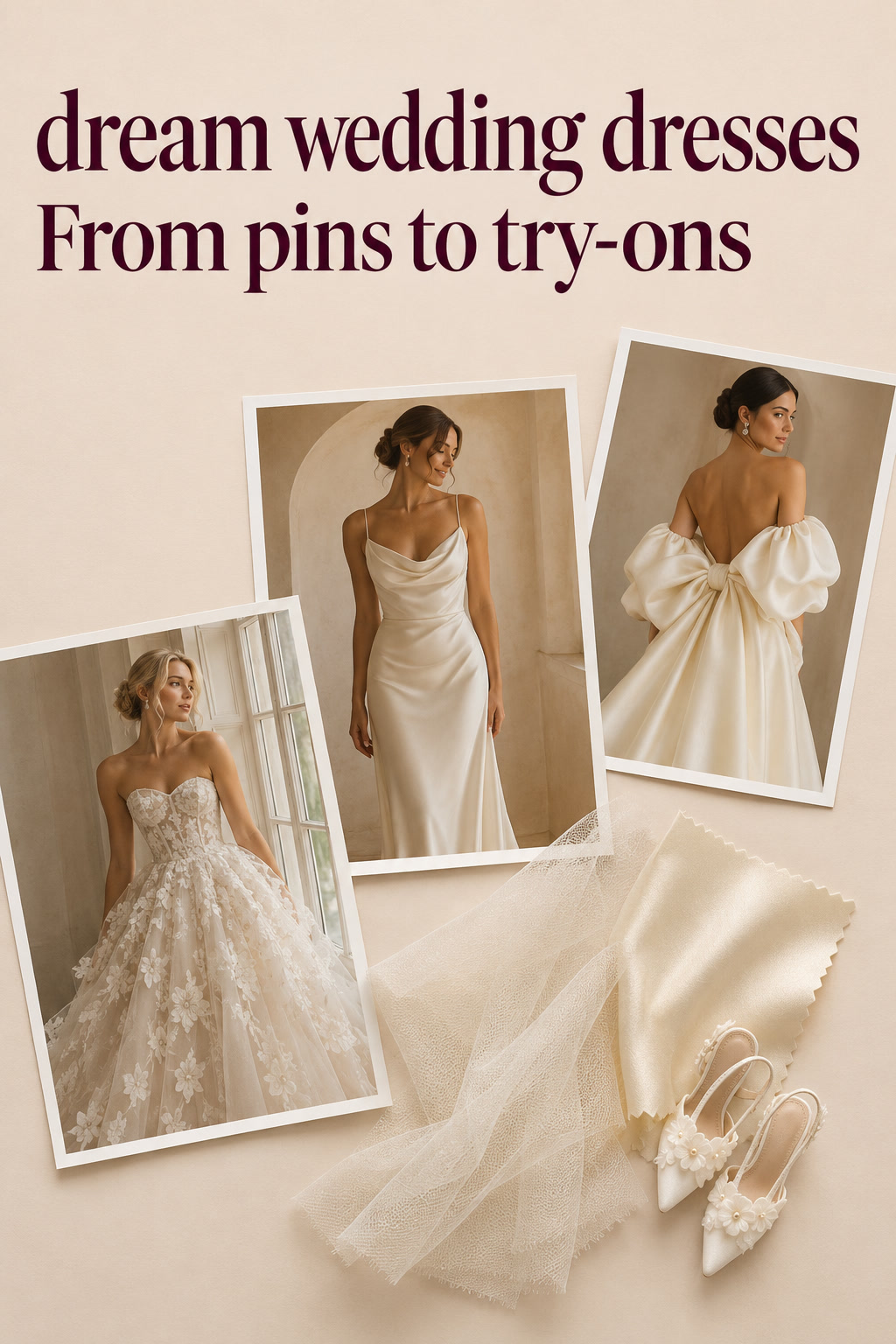
What the new bridal shapes offer
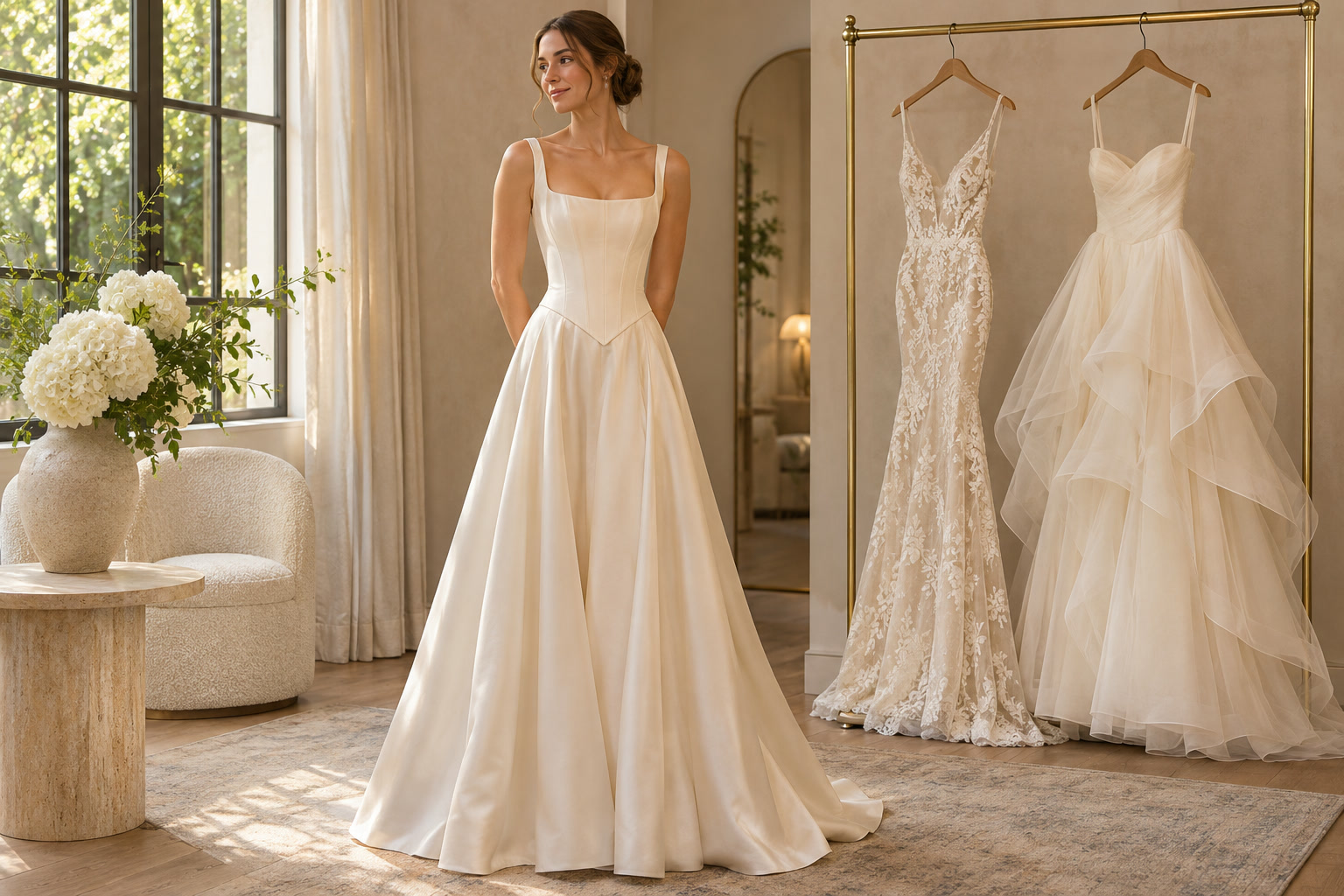
On the David’s Bridal wedding dress collection, a matte satin halter with a scarf shares space with drop-waist lace and sculpted satin or tulle skirts. Those examples give you different ways to direct the eye. A scarf draws attention to the shoulder and leaves a length of fabric that can move on its own. A drop waist carries the fitted part of a gown farther down before the skirt opens. A sculpted skirt does its work in outline, so you can see the idea clearly even in a picture taken across a room. Use those effects to pick a few shapes for your shortlist. Ask the salon what it has on the rail before you go.
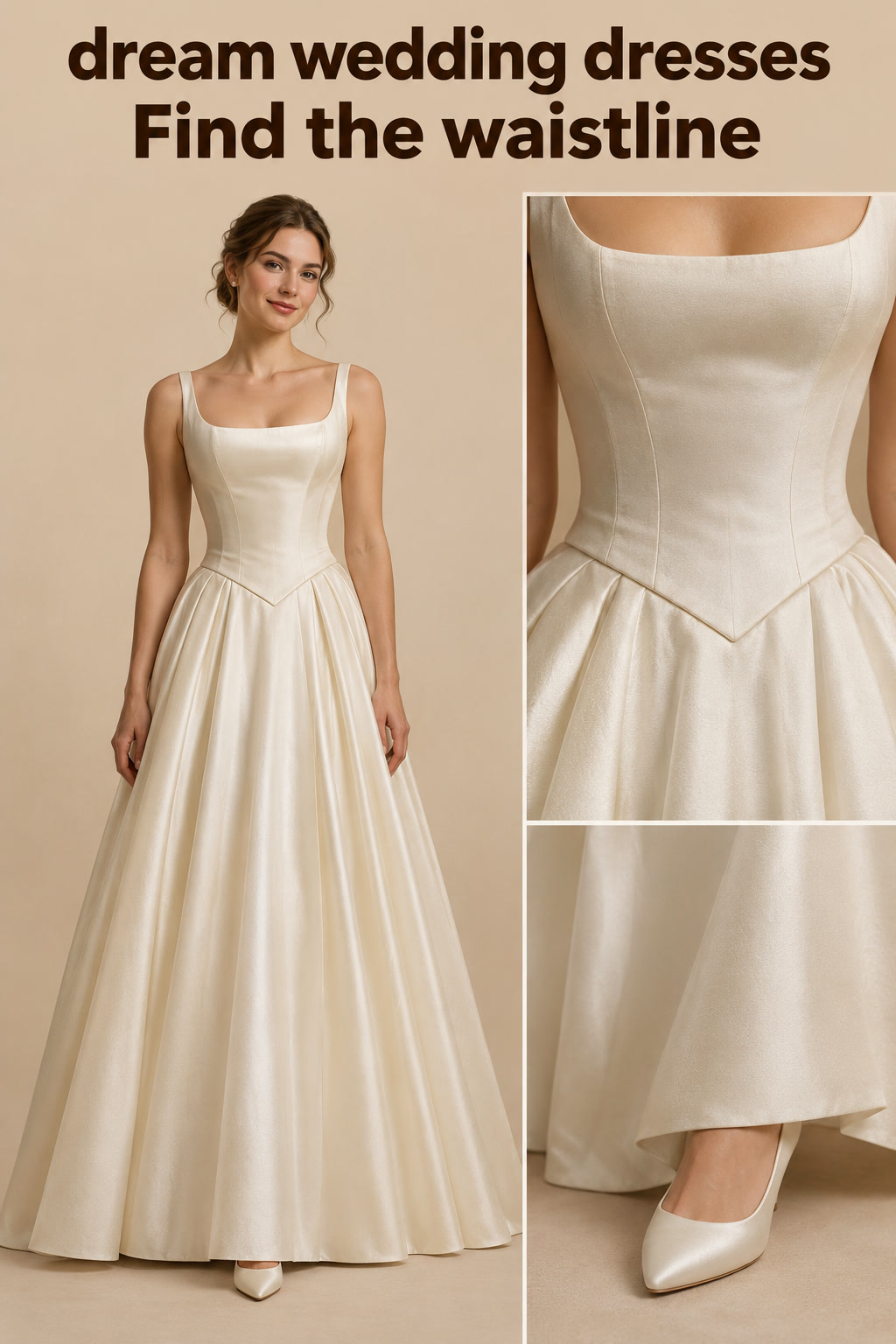
A point at the waist and a low waist do different jobs
A basque waist can dip to a point at the front. You might like how that seam runs toward the center even when the sides sit close to your natural waist. With a dropped waist, you might be responding to the longer fitted area and the place where the skirt starts to widen. If you like the first effect, ask to see a pointed seam with a skirt that opens comfortably around your hips. If you like the second, try a smooth bodice that extends lower before the fabric changes direction. Use the seam as your reference in the mirror. Ask for a side view if the retailer’s label leaves the seam placement unclear.
Turn wedding inspiration into a plan you can actually follow.
Zarellea brings your guest list, budget, vendors, and day-of details into one shared space — so no beautiful idea gets lost in the shuffle.
A little movement can do as much as a full skirt
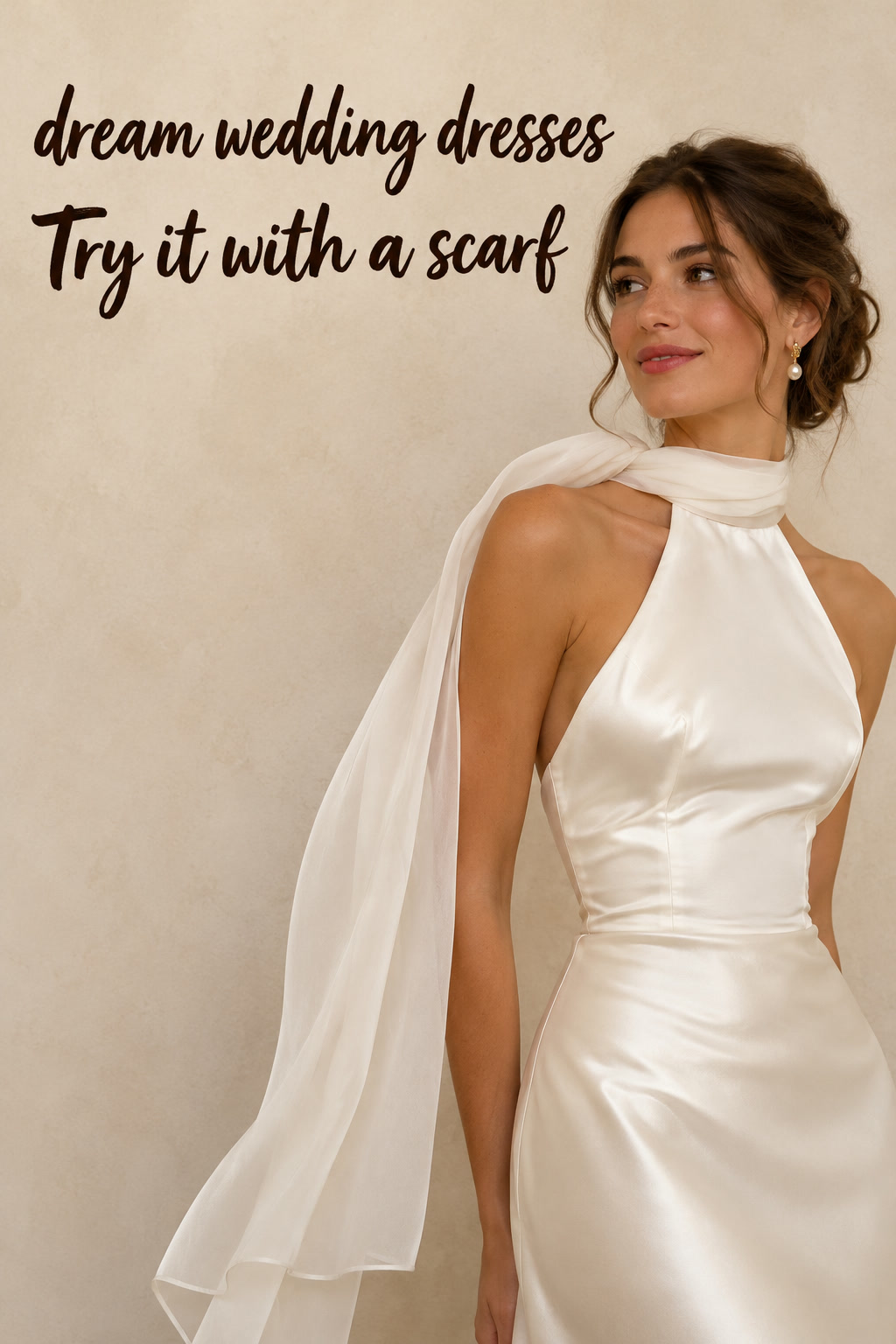
If you saved a photograph for the fabric trailing over one shoulder, an airy skirt may be beside the point. Try a restrained gown with a scarf first and see whether the movement you wanted is already there. Ask to look at it standing still, too. If the scarf is styled to fall down your back, check where it lands when you turn to greet someone. You may prefer it for the ceremony and want to set it down for dinner. Confirm whether it comes away easily or is built into the neckline before counting on that option. If you keep looking at the hem, watch the skirt move with the accessories off.
Find what your saved dresses have in common
Pull up the three images you would be most disappointed to lose. For each, write a single observation about the dress in words you would use out loud. “The skirt starts below her hips” is clearer in a salon than “a dreamy vintage vibe.” “I like how the front looks plain and the back has all the detail” gives a stylist somewhere to start. Write down where you looked first. Then look at each image again with your hand over the face, bouquet, and most of the background. If the detail still holds your attention, it belongs in the note. If what you miss is the sweep of the staircase or the color of the bouquet, file the picture with your venue or floral ideas.
Keep the picture that makes you change your mind
Say you saved two long, close-fitting gowns but keep returning to one tea-length skirt. Look at the three pictures together before you discard the odd one. Maybe the common thread is a clean neckline and an open shoulder, and you have been describing your taste by length because length was the easiest difference to name. Bring one long picture and the short one. A stylist can then bring you a short dress with that neckline or a long dress with a lighter feel. That short dress gives the stylist a reason to pull something you might otherwise walk past.
Separate the dress from the way it was photographed
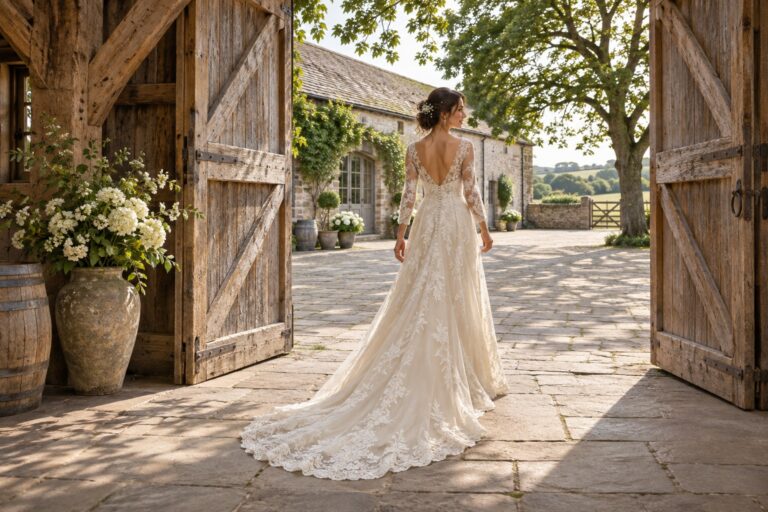
A gown with fabric fanned out on the floor can look much wider from the back than it does while the person is walking. Save a front and side view of the same dress if you can find them. A clip showing a turn is especially useful for a hem or scarf. If only one image survives, write down the detail you can actually see and mark the rest as questions. You can ask whether the skirt has several layers, for instance, without assuming that the train in the picture is attached. If you know the designer and style number, save those alongside the picture so a salon has a chance of identifying the gown.
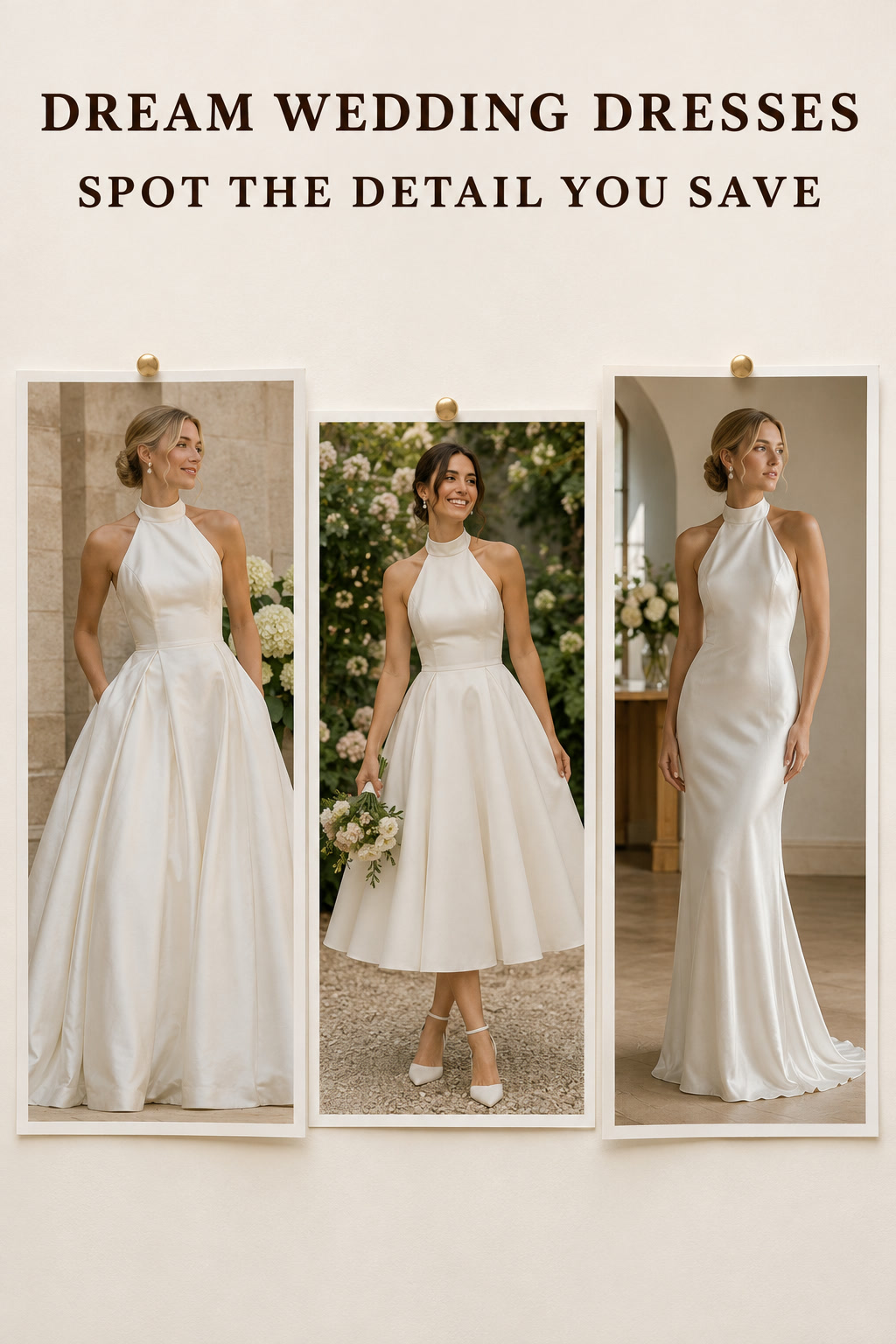
Translate the details into dresses you can try
Once you’ve stepped in and out of several ivory gowns, two similar waist seams can be hard to tell apart from memory. I would put one near match and one deliberate variation on the rail early, while you can still remember what you asked for. Ask the stylist to change one feature at a time. If a different skirt makes the neckline you saved easier to see, write down which combination you liked while both dresses are still in front of you.
If you keep saving the long line of a dropped waist
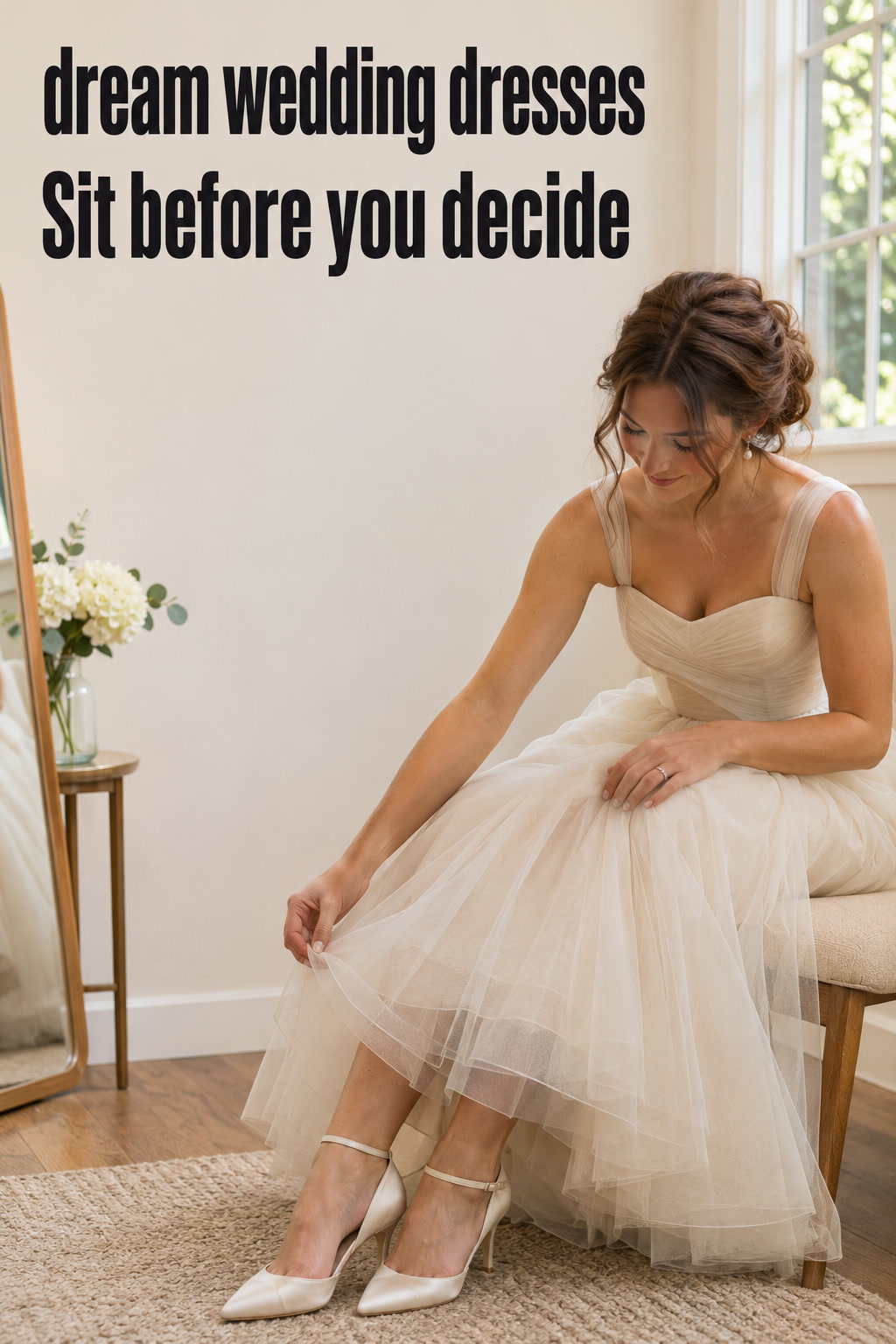
Try the seam height that made you save the photo, then ask for a dress that gives you a similar front view with more room around the upper skirt. Sit in both. You may discover that you like a low-looking seam but want the skirt to release earlier at the sides. If the second gown is easier to sit in and you still get the line you liked, note its style number and ask which seams determine that fit. If a particular version catches at the hips when you stand up, show the stylist where it catches before deciding whether the size or the cut is the issue.
If you want the look of a skirt that takes up space
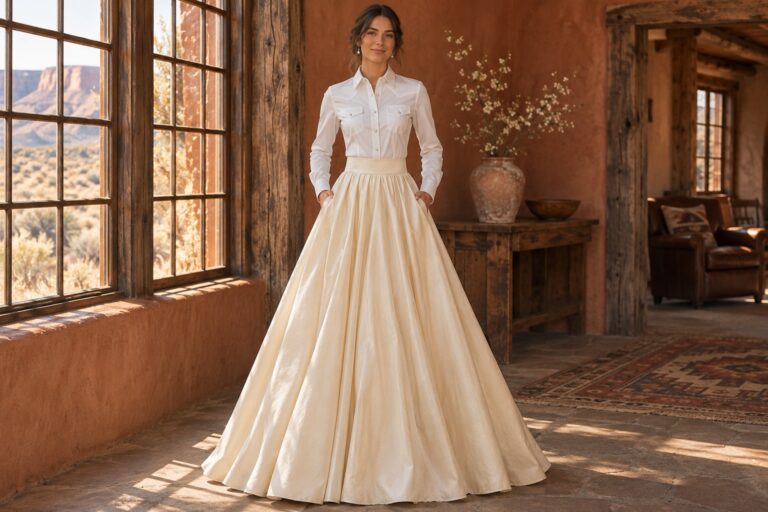
Try a full skirt with a clearly defined edge, then one that opens more gradually. Ask which layers are part of the dress and which belong to a separate underskirt. If the stylist adds an underskirt to one option at the fitting, ask to see what the gown does on its own before you compare it with the other. Stand in a doorway if the salon permits it and notice how far the skirt extends on each side. Then back toward a chair. A narrow dinner layout might favor the second gown even when the first one makes the portrait you had in mind. If you have ample room and love the first from both front and side, the extra volume has a reason to stay.
If the neckline is the part you remember
Hold the neckline constant while changing one detail around it. For a halter you saved with a long scarf, try a similar halter with the neck bare and then with the scarf in place. Turn your head in both directions. A neck detail that looks delicate in a fixed portrait can feel busy if it brushes your jaw each time you move. Check where your hair will sit and ask a companion to tell you where their eye goes. If you would wear an heirloom necklace, take it with you or find a picture of it on your neck. The stylist can see whether the chain falls above the neckline, meets it, or disappears beneath it.
If the dress is about a hem you can see
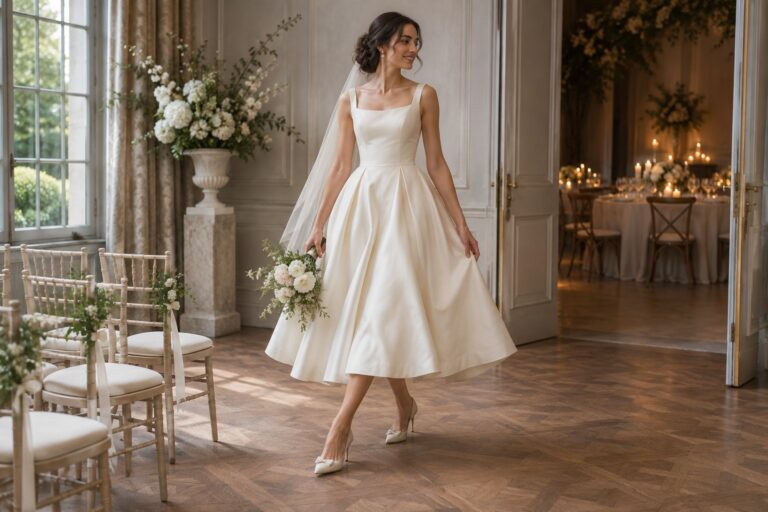
Bring a full-length image that shows exactly where the hem ends. Try a short and a longer option with the same shoe height. A tea-length skirt that looks airy in a standing photo may reveal more of your legs than you expected when you sit. That can be the effect you want. A longer option can give you a similar glimpse of a shoe if the hem lifts gently as you walk. With either, turn from the mirror and walk toward it again. Pay attention to the view from the front before somebody gathers the fabric or arranges it for another picture.
Decide which shopping route can answer the question
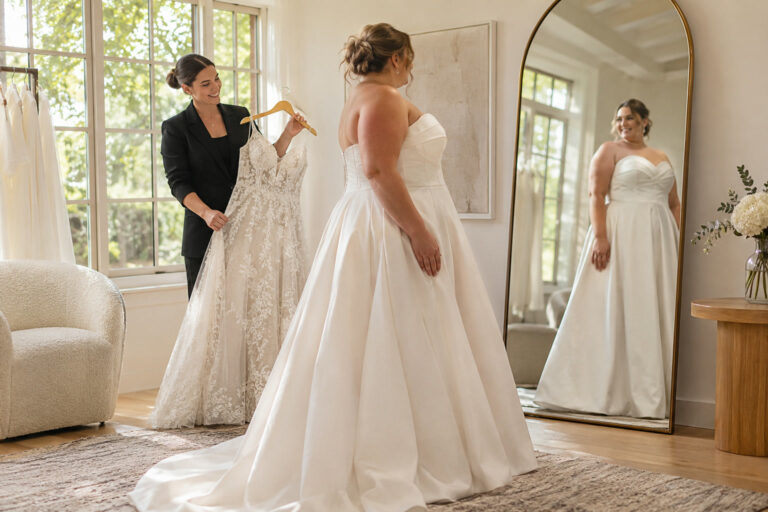
A salon appointment helps when you are choosing between two shapes that look similar on your screen. Send the two references in advance and ask whether the shop has examples you can actually try. For online shopping, request garment measurements in the parts of the dress that do the visual work, plus a side and back view. If you are commissioning something, bring an image of the detail you want and a second picture that shows what you want the dress to do around it. A pointed seam above an easy skirt communicates more when it has two examples. If you cannot try an online candidate in time, check whether the return window and your alteration appointment give you enough room to make a decision.
Bridal details to compare at a fitting
Check where the skirt ends
Compare layers and movement
Try a removable scarf
Check the extra width
Keep an idea only after it works in motion
Pick one movement from your actual wedding day that could change your choice. It could be settling into the back of a car, reaching across a table, stepping onto a platform, or holding a partner close. Tell the stylist before the fitting. Where space permits, try the closest version you can manage in the showroom. Use the same movement in both shortlisted dresses. If you can step up in one skirt and have to hold the other in both hands, ask what would change after hemming. Think about whether you need a free hand for a rail or a bouquet.
Ask what the sample is doing for you
Ask where the stylist clipped the sample and whether those clips are holding the neckline in a position that the ordered dress will keep. Find out which observations the stylist expects to change after fitting and which come from the construction itself. If you can feel the seam that bothers you, point to it. Request an estimate for that specific change and ask who can confirm it. For a sample sale, ask for recent closeups of the hem, closure, and the part you would need altered before you agree to take it. Your Dream Bridal’s sample sale is one example of a shop that states its condition varies and its sales are final. Check the terms for the dress you are considering and get the answer in writing.
Use a few views you can compare later
If the shop allows pictures, use a straight-on shot with the same framing for both dresses, plus one side view. A short video of walking away and turning back can supplement the stills. Give the person taking them a place to stand so you do not keep changing the angle. Then put the phone down and go back to the mirror. Look at the place where you hoped the dress would draw attention. Note any part you keep changing with your hands. If you are still raising the straps or repositioning a scarf after several minutes, ask how you would deal with it without a stylist nearby.
Leave with the numbers that affect the decision
Write down the style number, ordering size, what is included, the next available fitting date, and the amount the shop can quote for known work. If a separate piece made you love the try-on, find out whether you can order it on the same schedule. When you are weighing several gowns across different stores, capture what each one does beautifully and what you would still need to confirm. You can use those notes to book a second appointment around the question you still have. A fitting-room note might read “keeps the waist point I like, opens at the hip when seated, check scarf delivery.”
Editor’s take
I would book the first appointment with one feature I love and one ordinary movement the gown has to let me do. I’d pick the dress that keeps its shape through that movement and still gives me the detail I came in for. The exception is a detail that matters for a specific part of the ceremony and can genuinely come away afterward. Before saving another dress, put two of your existing images side by side and circle the part you want a stylist to reproduce. These recommendations come from a review of designer collections and bridal shopping pages. The try-on comparisons are suggestions for your fitting.
Sources and methodology
The design examples come from current bridal listings. The sample-sale policy applies to the named shop. Ask your seller or salon for measurements, delivery terms, and an alteration estimate for the specific gown.
FAQ
How many dream wedding dresses should I bring as pictures?
Three gives you room for a close match, a variation, and an image you are curious about. Put one note beside each explaining what drew you in. You can keep the rest of the folder on your phone, ready to show if the stylist needs a second view or asks what you mean by a low waist.
What if my dream wedding dress has no designer name?
Search for a visible feature you can describe, such as a front waist seam that dips to a point and a skirt that begins gradually below it. If the search stalls, bring the picture anyway. A stylist can use the visible shape to find a useful fitting comparison without identifying the original.
Should I commission a dress or adapt one from a salon?
Start with a salon dress when you can already try the shape you want and your changes concern an available detail such as a scarf or a sleeve. Explore a commission when the details depend on each other, such as a particular seam placement and skirt opening that you cannot find together. Ask the maker how you will see and approve the proportions as the dress develops.
How can I tell if a gown will work for my venue?
Picture the tightest or most awkward space where you’ll be wearing the dress. If that is a stairway to the ceremony, practice lifting the skirt and taking a step with the shoes you plan to wear, where the salon allows it. If it is dinner seating, sit, stand, and turn as if you were leaving your chair. Compare what you need to do in each dress.
How do I keep a dream dress within budget?
Ask for the amount you would pay for the dress as tried on, then identify the quoted alterations or accessories separately. Keep enough room for the changes that make it wearable. When something exceeds the limit, look for the one feature you would most miss. Try a simpler gown that preserves it before stretching the budget for the whole picture.
What if the dress I like most in pictures feels wrong at the fitting?
Name what felt wrong while it is fresh. If it is where the waist ends, try moving that line while keeping the same skirt fullness. If the dress felt busy around your face, remove a detachable piece and look again. If you feel the same pinch or tug the second time, hand the reference back to the stylist and ask what else gives you that shape.