Black Wedding Dresses: What Is Under the Lace?
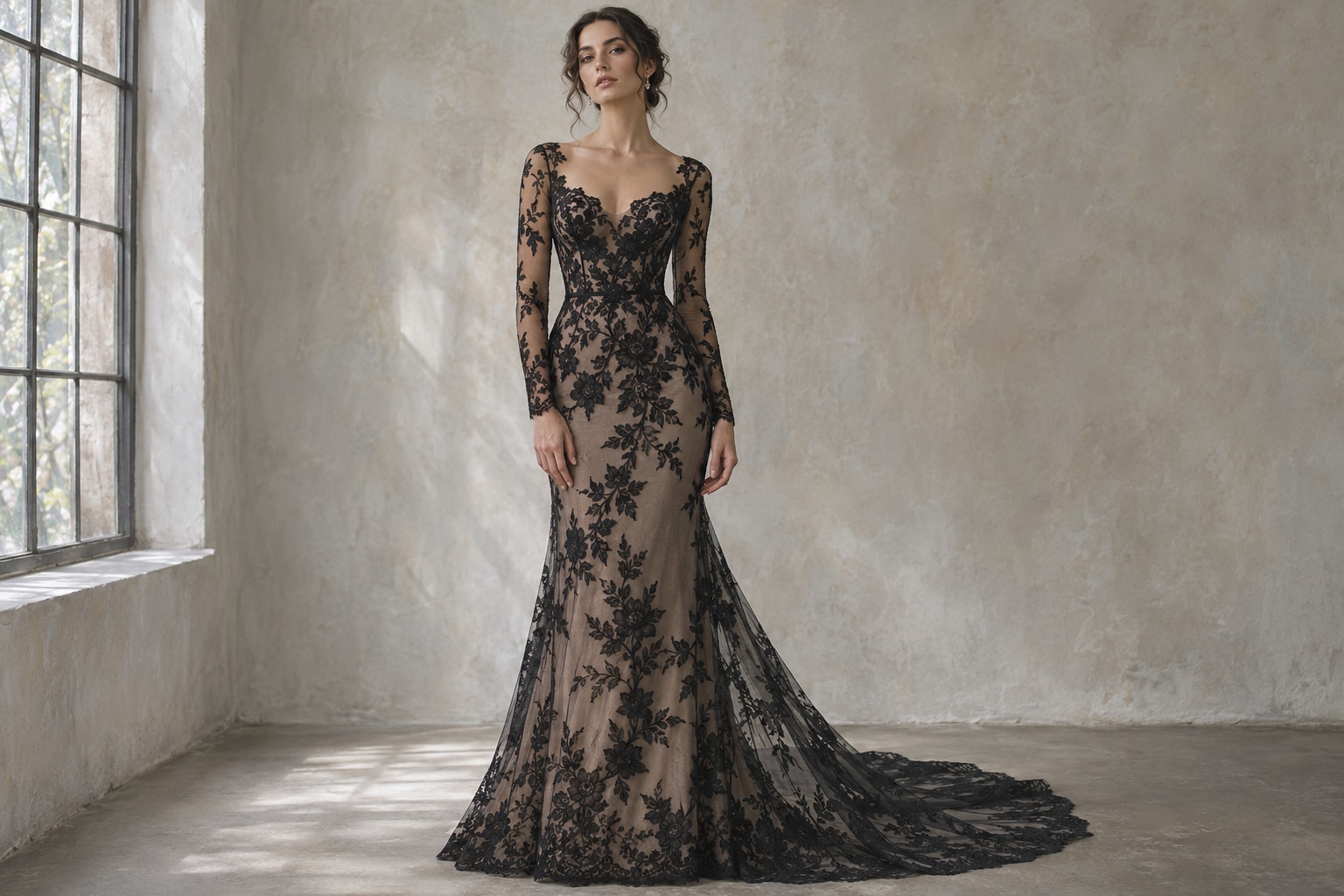
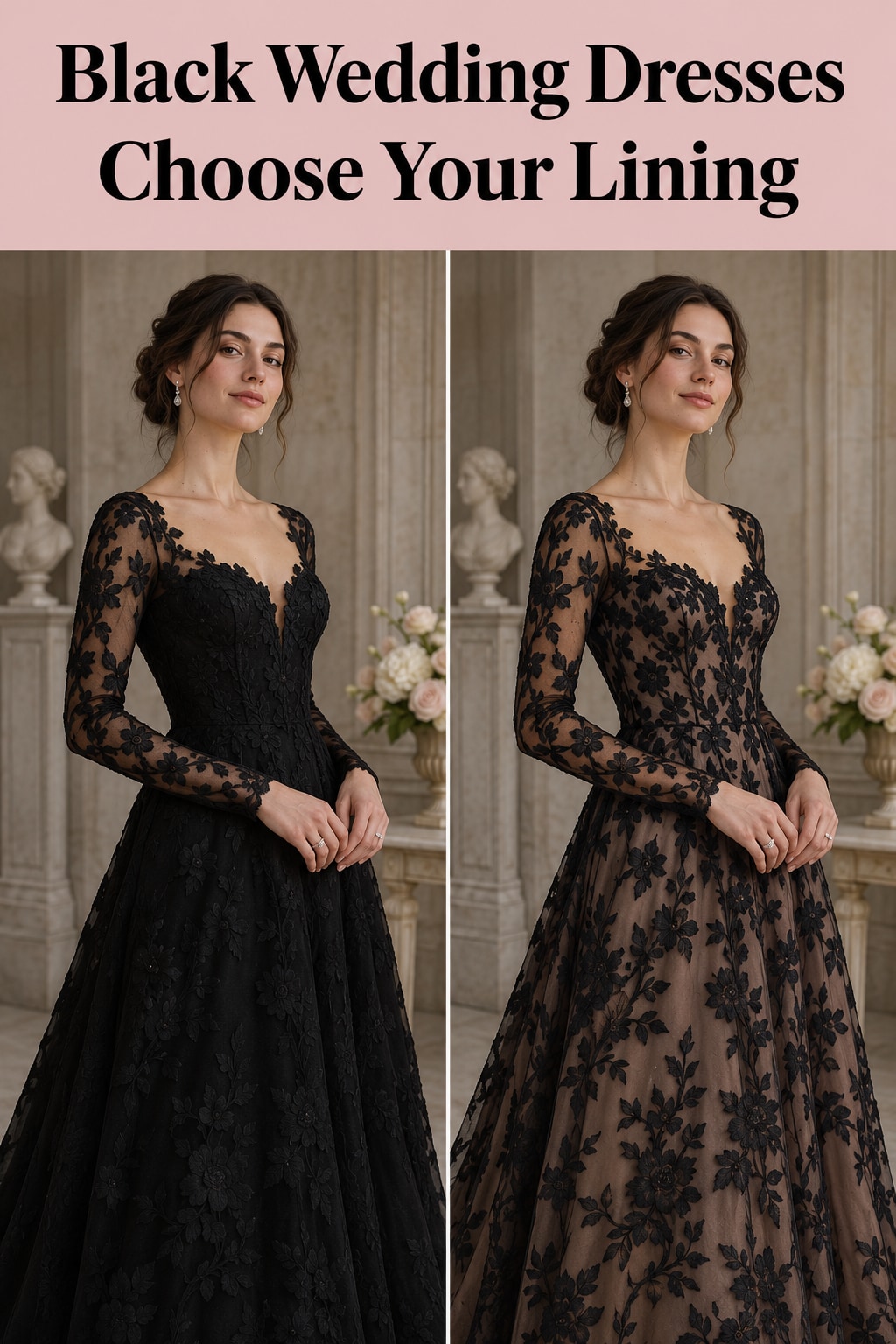
The photos show black lace across the skirt, the color selector just says “Black,” and the close-up has a warm glow under the flowers. Is that the lining, bare skin, or the light in the studio? If you’re comparing black wedding dresses, I’d find out what’s behind the lace before putting down a deposit. It may be the part of the dress you like best.
Start by picking the one place where you most care what shows through. It could be the lace at your waist or the edge of the skirt where the layers separate. Ask to see that area with the actual lining and mesh behind it. Once you know which version makes the detail look the way you want, ask for it by name on the order.
Find which part of the dress is black
Identify the outer layer, the lining, and the mesh
On a gown in opaque fabric, the outer cloth gives you most of the color you see. On a lace or tulle gown, part of the color you see can come from fabric behind it. Look at the open space between motifs. If the openings look warm while the thread is black, ask whether you’re looking at a separate lining. A sheer panel might look similar in the same photo while using different material underneath or having no lining at all.
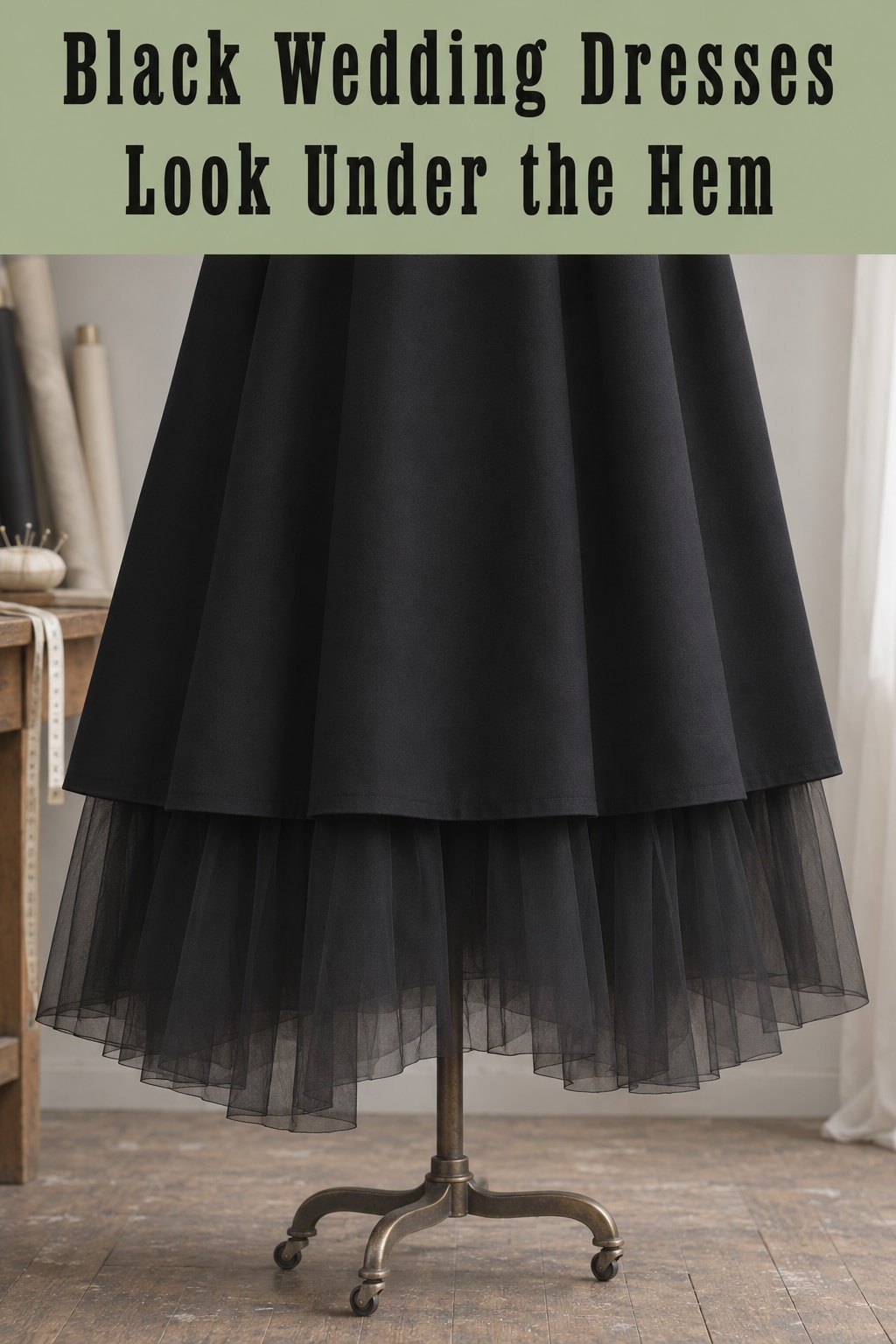
At an appointment, ask the stylist to turn back a section of the hem, if the construction allows it. Compare the inside with the outside beside a window or other neutral light. Then look at the bodice and lower skirt separately. A dress can have an opaque skirt, a lined front bodice, and a sheer back. Ask for a back view as well as a bodice close-up so you can see where the solid fabric ends.
Turn wedding inspiration into a plan you can actually follow.
Zarellea brings your guest list, budget, vendors, and day-of details into one shared space — so no beautiful idea gets lost in the shuffle.
Decide what you want to see between the motifs
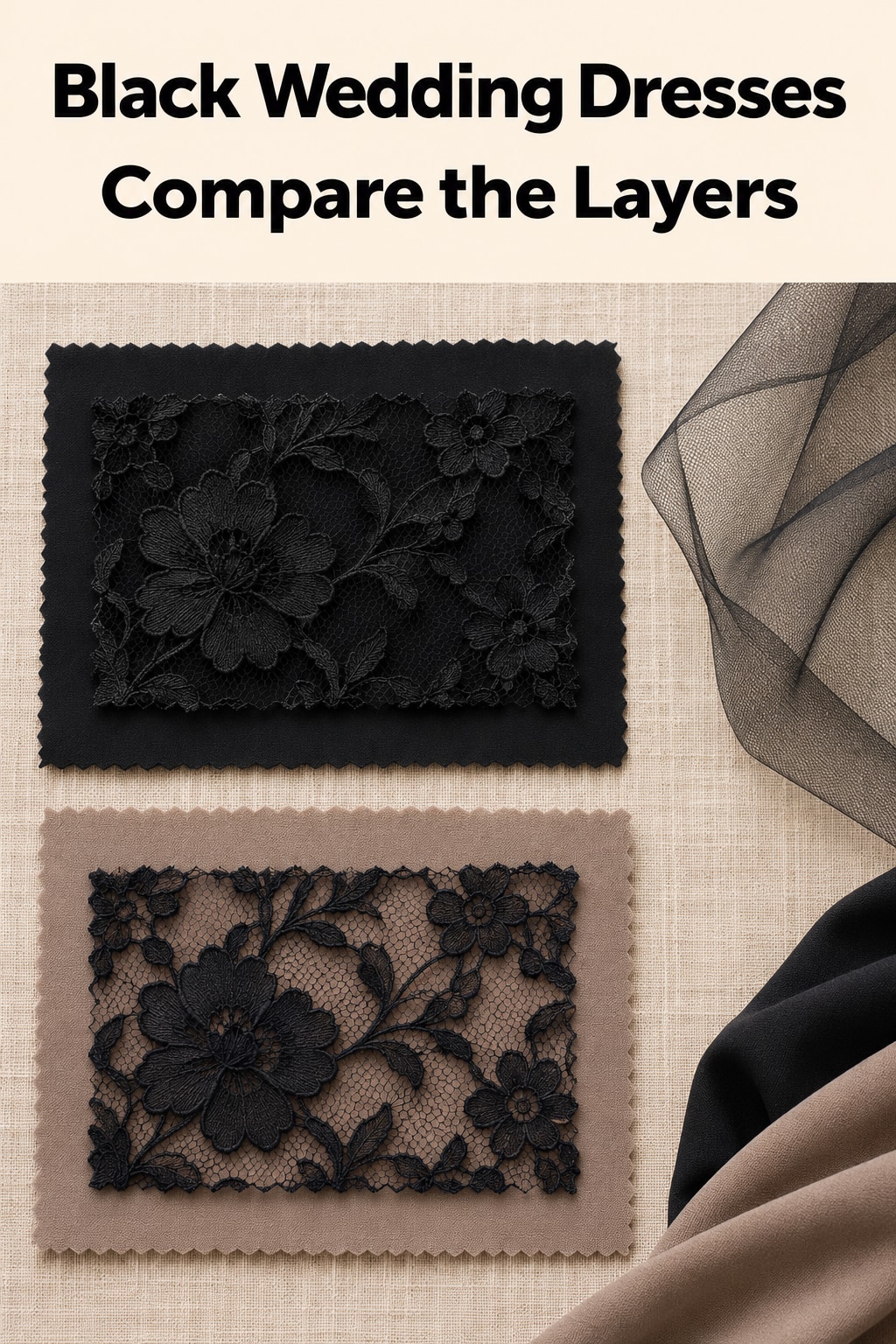
Do you want to see a black outline from the end of the aisle, or do you want flowers to stand out on the fabric itself? Put a scrap of black cloth and a warm taupe cloth behind the same piece of black lace, in turn, and step back. Look for the distance at which you stop seeing the individual flowers. If the warmer ground gives you more contrast than you like, ask for a darker ground and compare again.
Make the decision for the skirt and the bodice separately. You may want the flower pattern clearly visible near your face and a more continuous dark color below the waist. Pay attention to where those two effects meet. If you can see a horizontal line halfway down the bodice, ask whether it is the end of a lining panel or a seam in the lace. Decide whether you would be happy seeing that line in a seated portrait before discussing a change.
Treat illusion mesh as its own color choice
If the neckline has a clear-looking insert, ask what color the maker uses there. Even when the lace and lining have a named color combination, the insert may have its own shade. The archived Zander Lane dress listing illustrates the terminology. Its photographs are labeled Black over Nude, with Natural Illusion specified separately. Ask what color the designer uses for your mesh and which panels it goes into.
If the salon has a mesh sample, hold it against the skin next to where the panel sits. If it goes across your chest, judge it there as well as on the inside of your wrist. See whether you notice the edge. If you prefer the panel to read as black fabric, ask which options the designer actually makes and whether a dark panel would change the look of the seam.
Fix the mismatch before you place an order
If the photo and the dropdown tell you different things
Send the seller a screenshot that shows the picture you mean and circle one small area. Ask what the outer fabric and the fabric immediately underneath are called on that exact version. For a two-tone gown, ask whether the color underneath continues through both the bodice and the skirt. If the seller replies with a single color word, request the photo of the matching variant or a close-up where you can see the layers separately.
When you like the effect in the picture and want it reproduced, use the maker’s exact wording for the order after the seller explains it. A message can be as simple as “Can you confirm black lace over the warm lining in the attached photo, with the same mesh at the front neckline?” If the answer lists an alternative, ask what portion of the outfit would change. You can then judge that specific change while you still have the option to choose another gown.
If you tried on a sample in a different color
Ask the salon which parts of the sample match the color you would order. Amanda’s Bridal & Tux lists some gowns with ivory samples and a black order option. The sample can help you assess a neckline or skirt shape. I’d ask for photos or layered swatches in the intended combination before relying on what the sample shows about color.
Try to get an outside and inside view of the same area. Use a full-length view to see how much of the dress reads dark. A side view of the hem or a close-up at the top of the zipper can show where a colored lining ends. If the shop can send only one close-up, make it the spot that first caught your eye. Ask about the corresponding skirt or bodice panel separately if it’s important to your decision.
If the dress is almost right and needs an underlayer
When a nearly sheer black skirt has enough room underneath, a separate black full slip may be an option. Try it on with the dress before you decide. Look for the slip’s neckline and hem in the mirror, especially if the gown has a side opening or low back. If the slip’s edge draws a stronger line than the fabric you wanted to show, look for a different cut or ask an alterations specialist to pin in an alternative.
If the dress has its own built-in lining, show the garment to the alterations specialist before ordering an extra layer. Ask where a change would need to begin, whether it will cross a seam you can see, and what fabric the specialist would use. It’s easier to compare options when they can pin a small piece behind the actual lace. For a made-to-order gown, ask the seller about the proposed configuration before assuming a fitter can reproduce it later.
Three listings and the questions they leave open
“Black crepe gown” with a sheer flounce
Imagine an opaque black crepe gown with a soft black flounce at the bottom. You want the dress to read as black from top to bottom, with a soft edge where the skirt swings. Ask where the lining stops relative to the seam above the flounce. If it ends well above that seam, you may see a band of lighter color around the whole skirt. A narrow border might be what you want, while a wider one may break the continuous line you liked in the photograph.
Use the darkest option you are considering as a reference when you look at the back of the skirt. Look at it hanging normally, then hold the edge away from your legs to see what changes as the layers separate. If you’re considering an opaque black column gown for a similar overall color without the soft edge, compare the two at the same distance.
“Black lace” over warm taupe
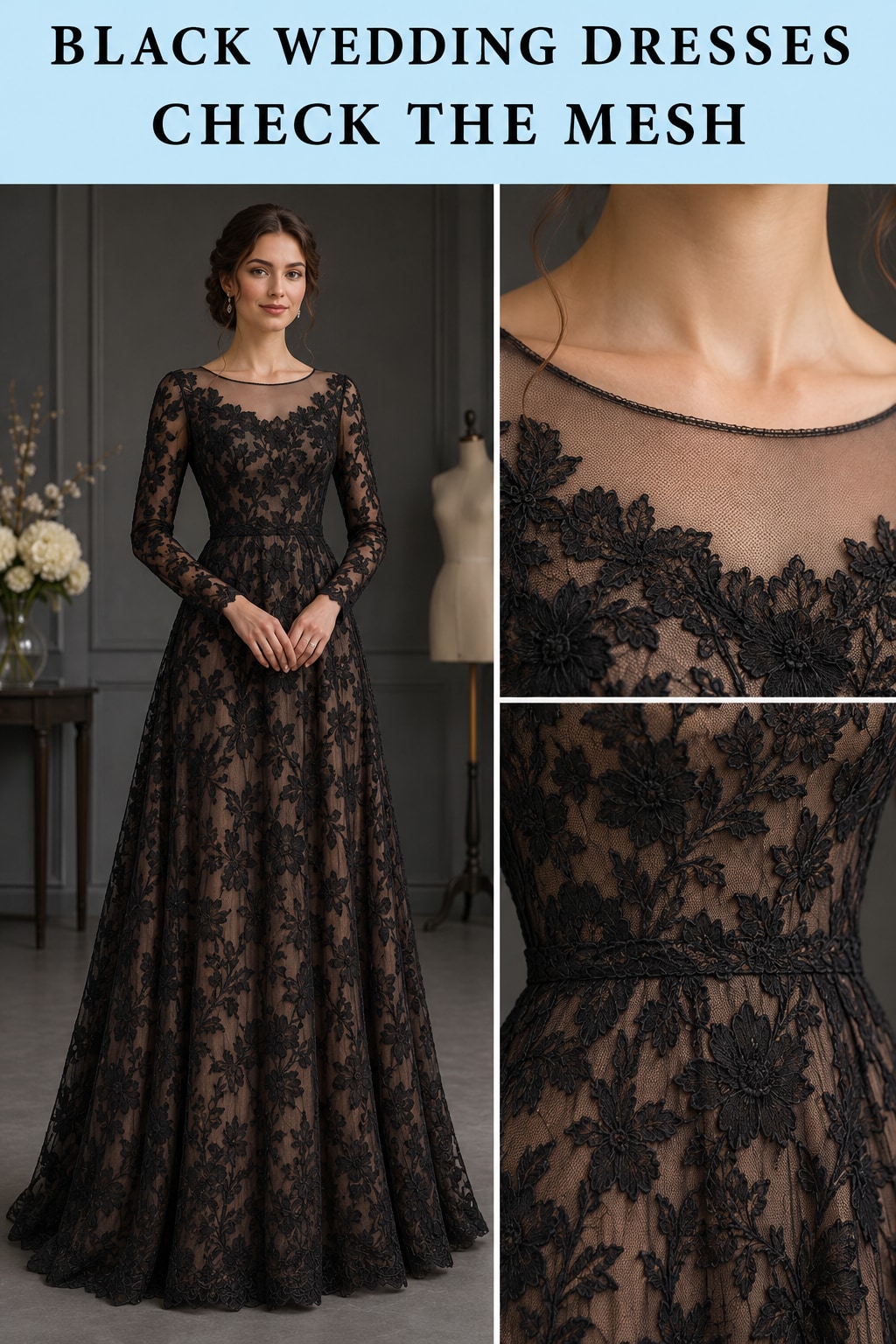
In this photo, the sharply defined lace pattern runs all the way down the front against what looks like warm taupe. Ask whether the fabric beneath the lace is the same on the front and back, then check the illusion at the neckline separately. A dress can list a single lining color without showing which parts of the back or side are actually lined.
If a lighter break around the side is what bothers you, cover just that area briefly from behind with an available darker swatch. Look again at the neighboring lace to see whether your eye now goes to the edge of the swatch. You might prefer a continuous darker panel. If you like the original contrast from the front and don’t mind the different side panel, ask the salon to leave that exact construction in the order description.
Black outside with a burgundy lining
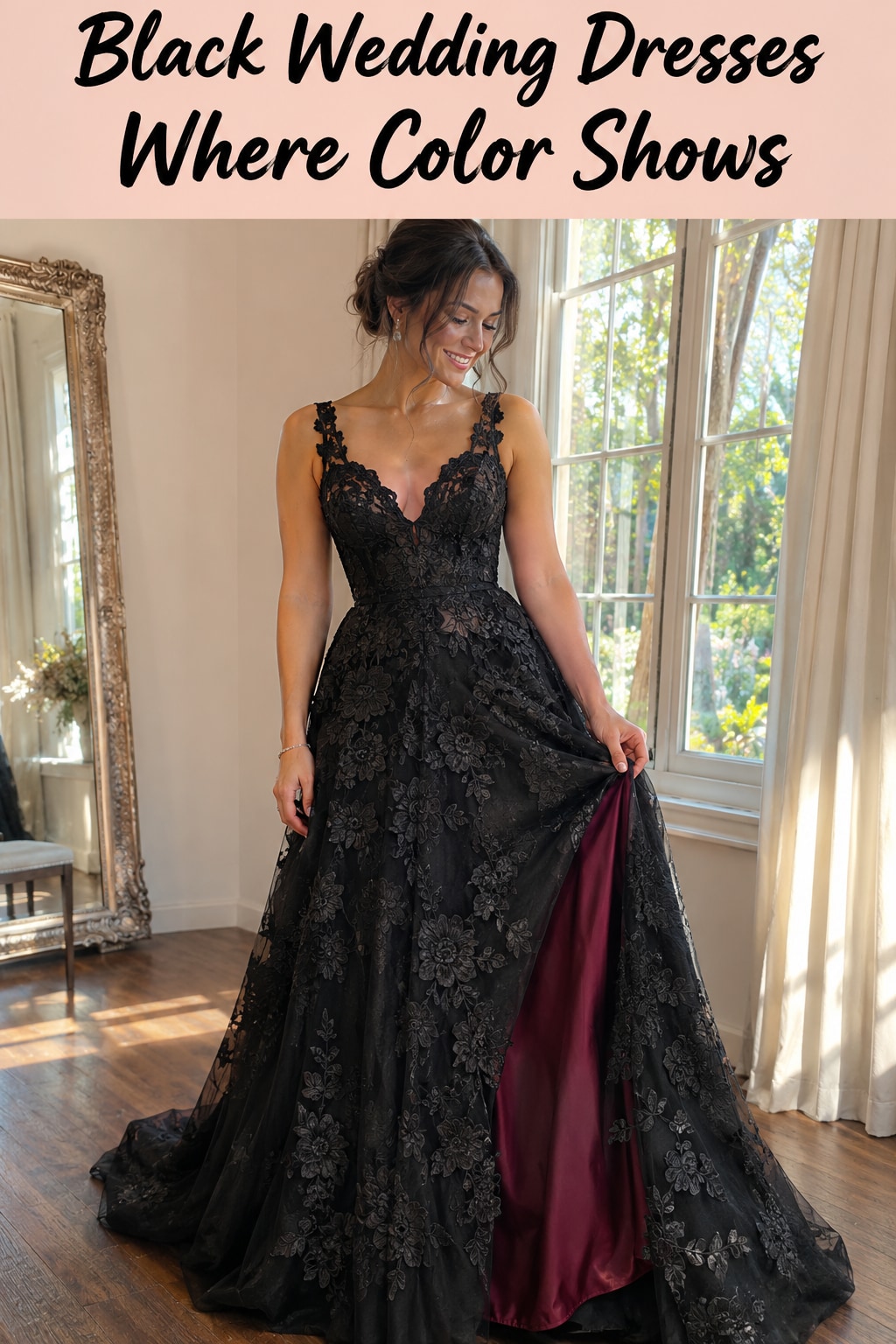
Imagine black lace over burgundy with the red visible mainly in the opening of a wrap-style skirt. Let the dress hang closed for the first look. If you want the color to appear only when you move, ask to see what the lining looks like through the main skirt as well as across the opening. A thin outer layer can show more burgundy than the front-facing photograph suggests. If the burgundy is visible across both the skirt and the cuffs, ask yourself whether you still want it limited to the opening.
If you’re considering a black lace gown with a separate burgundy slip instead, try both together and inspect the shoulder straps, neckline, and opening. A slip that works under a closed front may show at the back. If what’s important is a narrow flash of color under the skirt opening, a fitter can tell you whether an internal facing or a local panel can give you the effect on your dress.
Gowns and layers to compare
Compare the front and back
Check how the mesh reads
Compare opaque and airy fabric
Check the slip’s edges
Make the fastest checks at a fitting
Look first at the part you circled in the listing. If it is sheer, put the intended lining or slip behind it. With the fabric in place, move to the distance you expect people to see it from. You might be able to see a lining edge when you’re close to the mirror and lose it from a few steps back. Take one picture from each spot on the same phone, without a filter, so you can compare the look with your original reference later. Ask the shop’s permission before taking photos.
When the choices are hard to tell apart, hold the outside and inside fabrics together in the same shot. Make sure the section is wide enough to show one full lace motif. A small patch of lining behind the center of a flower can miss the difference around its edges. If you get an assembled sample, put the order name on a piece of paper next to it in the photo. When you revisit the photo, you’ll know which combination it shows.
Before putting down the deposit, ask for a line on the paperwork for the shell, the lining and any important mesh. Put the placement beside an intentional contrast, such as “burgundy lining visible inside the skirt opening.” If the salon has approved a separate change, ask what happens to the original panel and whether the change is made by the designer or during alterations. Keep the quote and the corresponding photo together. If a later invoice is shorter, you still have the explanation you agreed on.
Editor’s take
I’d make the first appointment about one area of the dress. If the black lace near your waist is the part you keep returning to, see it with both a dark lining and the contrasting ground you liked in the listing. A dress whose lower half looks almost solid black may be exactly right if the lace detail belongs near your face. If a sample is only available in ivory, use it to decide whether you like the cut and get written confirmation of the black version before ordering. My first message to the salon would include the reference photo with one area circled and a short question about what is behind it. The recommendation comes from designers’ colorway descriptions and salons’ published sample notes.
Sources and methodology
The designer example documents separate names for the layers, and the salon example shows how a shop can list sample and order colors separately. The three gown scenarios are hypothetical.
FAQ
Does “black over nude” mean the whole dress is sheer?
The phrase describes a combination of colors. Ask which parts have the lighter fabric underneath and where the dress uses unlined mesh or lace. Request front and back views of the same variant to see how the lining is placed.
Is the illusion panel always the same color as the lining?
It can have its own shade and might be listed separately. Ask for the names of the skirt lining and the neckline mesh. If the mesh edge is important to you, compare it against the area where you will wear it.
Can I make a black lace dress darker with a black slip?
Possibly, if the cut of the dress leaves room for the slip and the fabric underneath is visible through the lace. Check the neckline, back, and hem with the actual garments together. If the original lining already blocks the color of the slip, ask about a fabric change with your fitter.
What if the salon only has the gown in ivory?
Try the ivory sample for the silhouette and ask to see photographs or fabric from the black version. Get the shell, lining and relevant panels listed on your order so the color choice is clear.
How can I keep a colored lining subtle?
Choose where you want to see it, then ask to look at the dress at rest and with the opening or hem lifted just enough to show the layers. If the color comes through the whole skirt, try a darker or more opaque outer layer if the maker offers one.
Can I shop for an all-black dress online?
Yes. Start with a gown whose photos and color options tell the same story. For lace and mesh, ask what sits underneath in any area you want to appear solid. Keep the seller’s answer with the order confirmation.