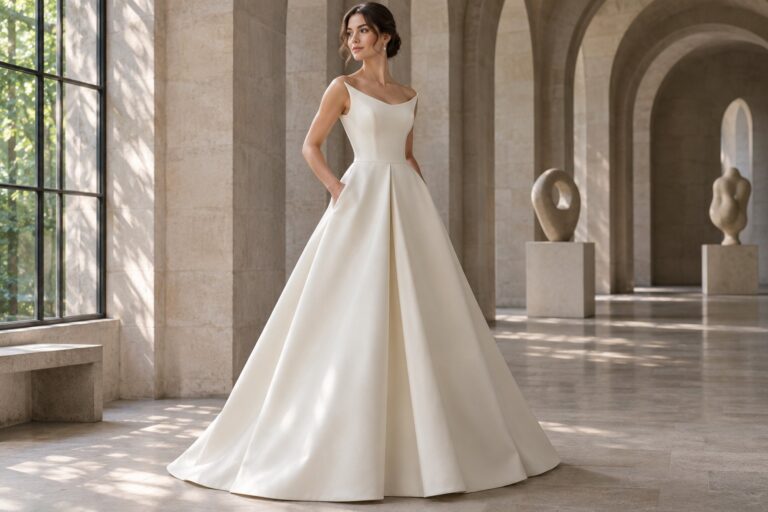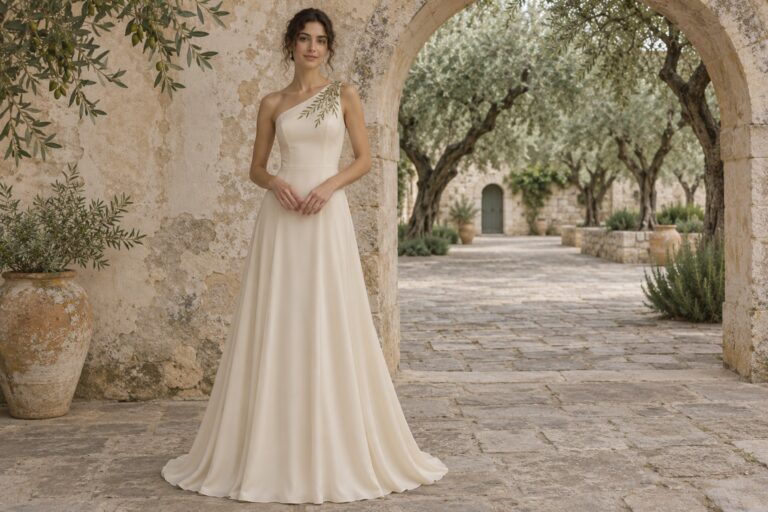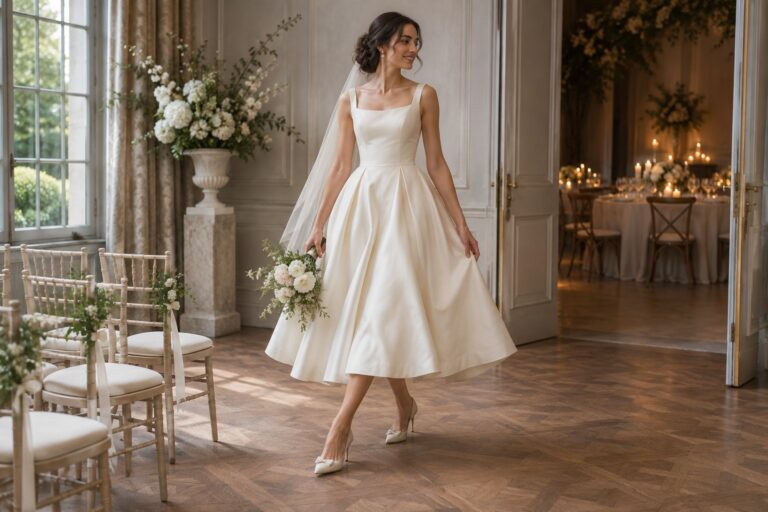
Minimalist Wedding Dresses: What to Check Inside
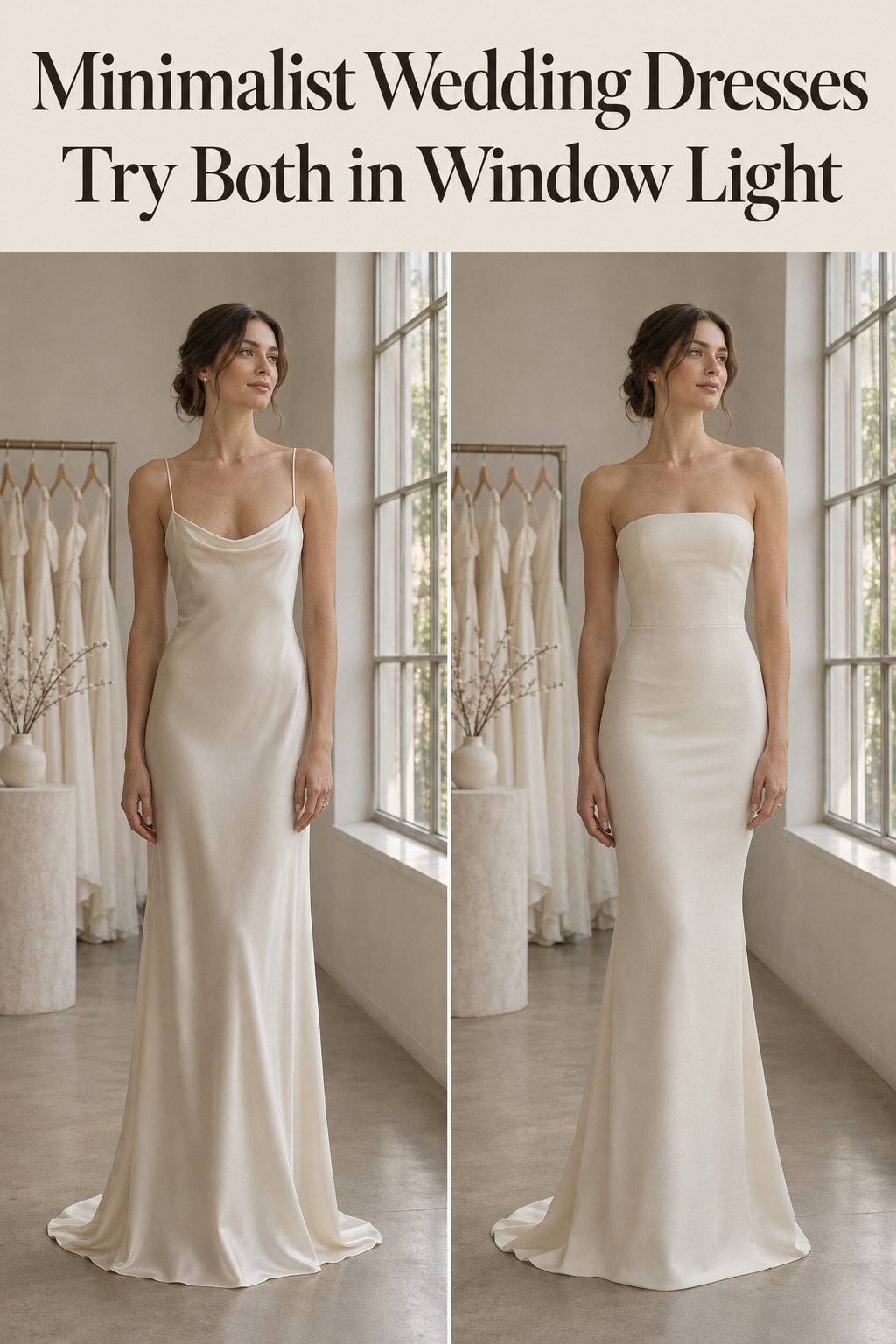
Two minimalist wedding dresses look almost identical on hangers. Then you try them by a window. On one, you can see the outline of a pocket through the skirt. On the other, the pocket disappears. The bodices can feel different, too. The dress with the back you love might leave little room for the bra you want to wear.
I’d use the fitting to choose the construction that gives you the coverage and support you want. Ask to see the inside while the stylist has both dresses out. A lining may end well above the hem, and a built-in cup may sit lower than the cup in your usual bra. Those are differences you can look for again once the dress is on.
What changes when the dress has fewer details
Name the thing you are seeing
If a dress has a smooth, plain front, you can see a crease or a line under the fabric from farther away than you might expect. That line could be a color showing through, a raised edge pressing against the fabric or a wrinkle caused by the fit. Before you change what you’re wearing underneath, take a closer look.
Look for two areas of the same skirt that read as different shades. Perhaps you see the top of your briefs through the skirt in window light. Changing to a shade closer to your skin tone gives you a useful comparison. If the color disappears and you still see a narrow ridge at the leg opening, look at how thick the edge is or where it sits against the outer fabric.
Turn wedding inspiration into a plan you can actually follow.
Zarellea brings your guest list, budget, vendors, and day-of details into one shared space — so no beautiful idea gets lost in the shuffle.
A diagonal wrinkle near a hip may be telling you something about the fit. See whether it moves when you shift your weight or goes away when the stylist adjusts the clips. Describe the wrinkle before asking about another layer of shapewear. If the sample is smaller or larger than the size you would order, ask what you can meaningfully assess. The sample may let you compare two surfaces without showing how either gown will fit at your waist.
Give both gowns the same light
Ask whether you can look at each dress in even light and then near a window, with the stylist’s permission. Start with your face toward the window, then turn so the same light falls from behind. Stand in the same place for both gowns. If the venue has a bright window behind the ceremony, the view from the aisle is the one I would pay close attention to. Have your companion look from where a guest or photographer might stand.
If the salon allows photos, have someone take both from the same spot. If the phone brightens one frame or blows out the window, compare the garments in person before making a call. Also check the panel that concerns you from the side. A shadow along a side seam in angled light may look very different from a color boundary visible through the whole skirt.
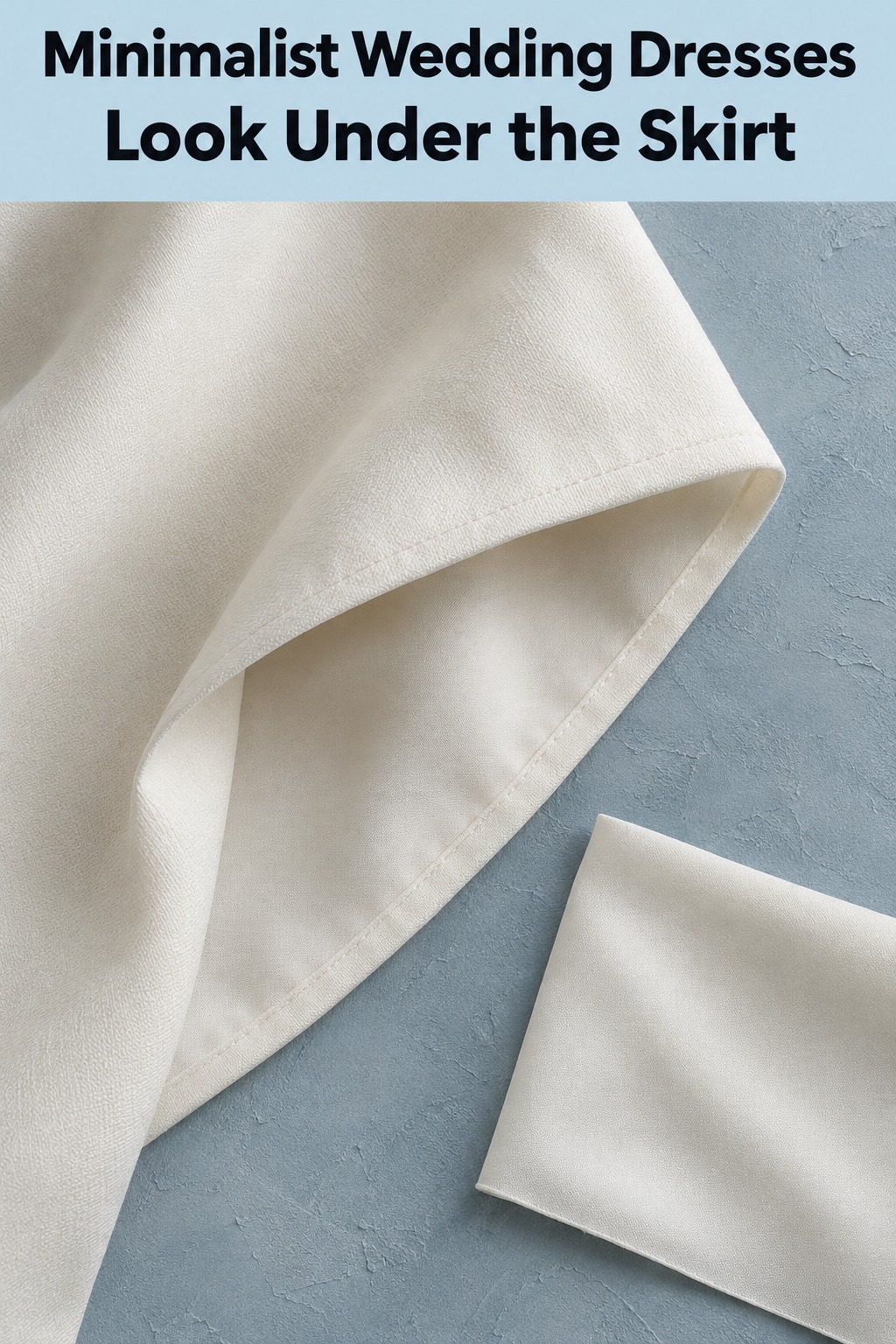
Compare lining, support, and the way the fabric falls
A free-hanging lining versus a lining that follows the body
Lift the dress enough to see whether the lining hangs separately from the outer skirt and where it ends. On a light slip, a loose inner skirt may give you room to move without putting an extra edge at the thigh. It can also shift. Take a few steps, stop and look at whether the layers settle together at the hips. If the lining is shorter, examine the boundary at the front and back with light behind you. It may read as an intentional panel or as a band you would prefer to hide.
On a close-cut gown, ask how the lining works with the outer fabric. The Maggie Sottero simple bridal collection includes a straight-neck crepe gown with a stretch jersey lining. Ask what both layers are made of, then sit down and stand up. Give the outer skirt a moment to settle before smoothing it with your hands. If your comparison gown falls differently, see whether you prefer the additional room in the cut or the way the two layers move together.
A self-supporting bodice versus room for a bra
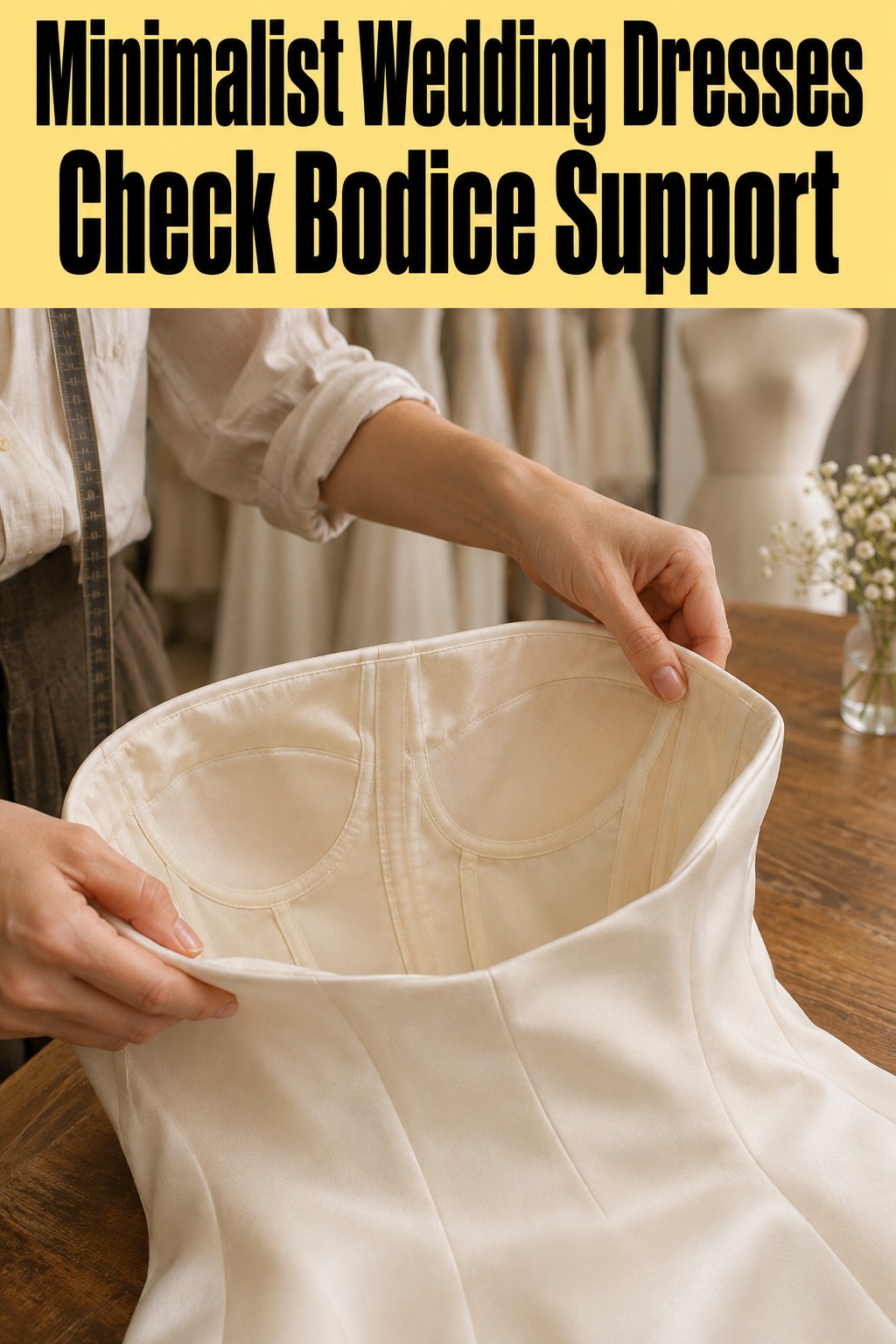
Ask the stylist to show you the cups, closures and any internal support on the sample. Try the dress in the configuration you would use at the wedding. Take a full breath and reach forward as you would for a hug. If the sample is clipped, support at the ribs or bust may change once the gown can close on your body. Ask if you can try a sample closer to your size before deciding that the built-in structure is enough.
A closed back may give you room for a strapless bra. If you want one, check the height of the band against the dress back when you move your arms. Look from the front, too. A bra cup can sit high enough that you see a line even when the strapless neckline covers it. Compare the dress with and without the bra if both are realistic options for you. Kleinfeld’s undergarment guide describes sewn-in cups as an option for plunging or sheer styles. If you need more support, ask what the fitter can build into that specific bodice and which options you can try before you order.
Smooth fabric with and without internal hardware
On a dress with a very plain back, check where the zipper ends and whether there is a ridge at that point. Let the stylist close it all the way when the sample fits. Look from shoulder height and again from farther away. This can help you tell the difference between a fastening that is simply visible and a place where the fabric is under tension. If the stylist needs to clip the lower back, reserve judgment about the zipper until you see it closed correctly.
If both finalists have pockets, compare them empty. Then put one hand in each pocket and take it out, with the salon’s permission. Check where the bag of the pocket settles and whether its edge comes into view against the outer skirt. Even an empty pocket can leave an outline on a light skirt. If you plan to use the pocket only to hold a tissue, ask whether a different placement or a smaller pocket could preserve that use.
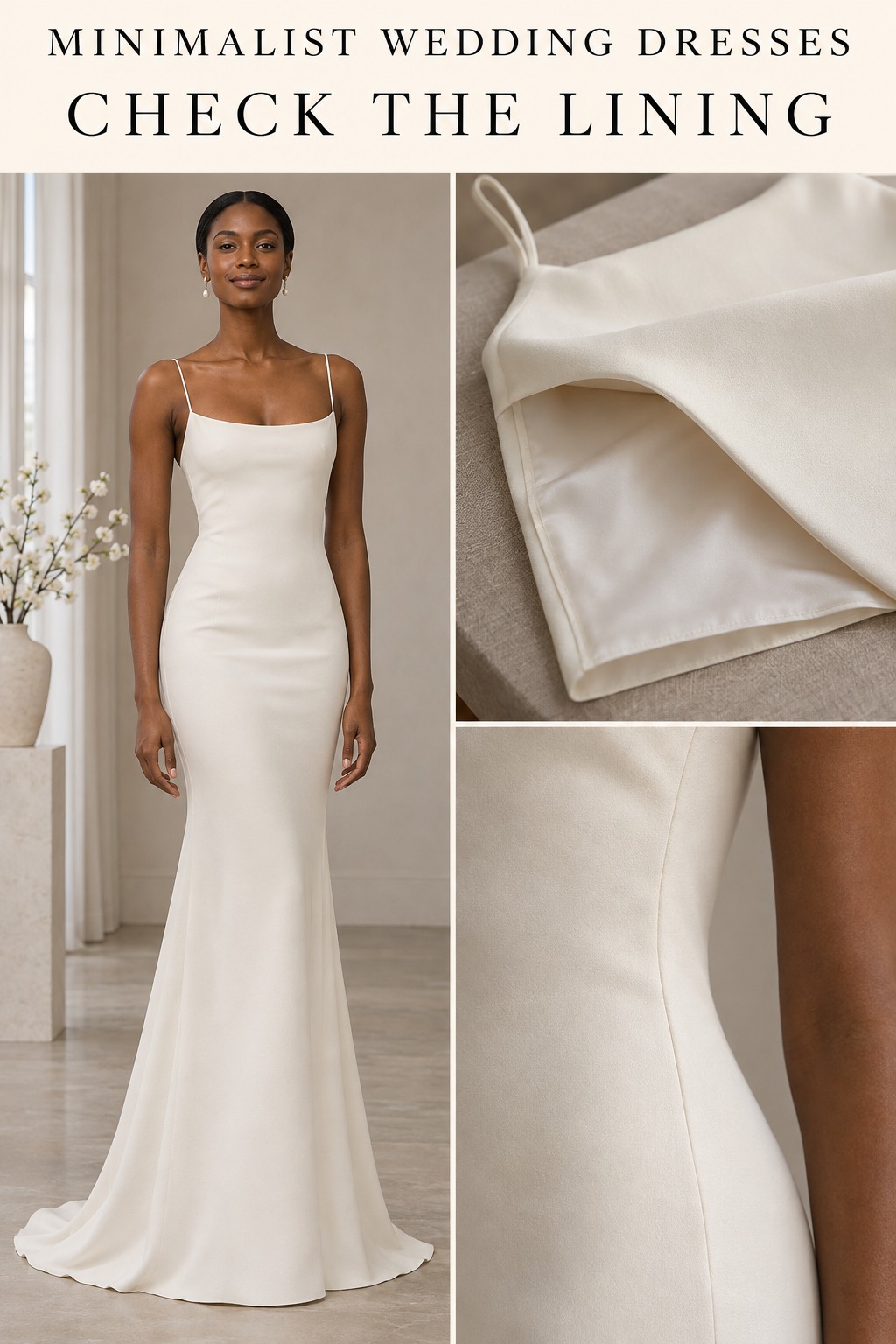
Choose the construction for the situation
A low-back slip for a short ceremony
A low-back slip can make sense when the low opening is the feature you want to keep. Try it with the support you can really wear beneath it. Look at the lowest point of the back while standing, then reach forward and check again. If your preferred bra is visible, ask the salon to show you how the neckline looks with the gown’s own cups. A dress with a back that is a little higher belongs on the shortlist if you want to keep your usual support.
At skirt level, look at the slip with seamless briefs in a shade close to your skin tone. Check the leg openings from the side, where they may sit against the fabric differently than they do at the center front. If the issue is the coverage of the entire skirt, ask to compare the dress with a lightweight half slip. The extra layer should let the skirt fall the way you like. Observe where the half slip ends and whether the waistband draws a line before you plan to wear one.
A lined gown for a ceremony in front of a window
For a gown you expect to see against strong daylight, start by comparing the same general shape in two constructions. Suppose both dresses have fitted bodices and straight skirts. One has a full lining and the other has a shorter lining that ends around mid-thigh. Turn your back to the light and ask your companion to look for the line between the sections. Decide how much of it you would be happy to see in a photograph.
With the fuller lining, check how the fabric feels behind the knees and whether both layers move freely as you sit. Inspect the front at the point where the lining meets the bodice. A dress can give you even skirt coverage and still show a seam at the waist. I would accept a small seam that you see only close up if the dress feels good and the whole skirt looks consistent from the aisle. If the line is the first thing you see from across the room, ask to compare another construction before paying for alterations.
A structured skirt if you want real pockets
A structured skirt is worth trying if you want a clean outline and a place to carry a private note or a small tissue. Look at where the pocket opening sits across the side seam and use the pocket while the stylist is watching. Try finding the opening without looking down or pulling the skirt toward you.
If the opening is exactly where your hand falls, check the skirt after you take your hand back out. Ask the stylist to look at the pocket facing from inside. On a favorite dress with an awkward pocket, get a price for changing it before committing. I would pay to preserve a pocket I plan to use throughout dinner, assuming the alteration can leave the side seam clean. For a single note you can hand off after the vows, choose the skirt you like most and let someone hold it for you.
Pieces to try at your fitting
Try the pocket before ordering
Compare the leg opening
Check where an extra layer ends
Check the band against the dress
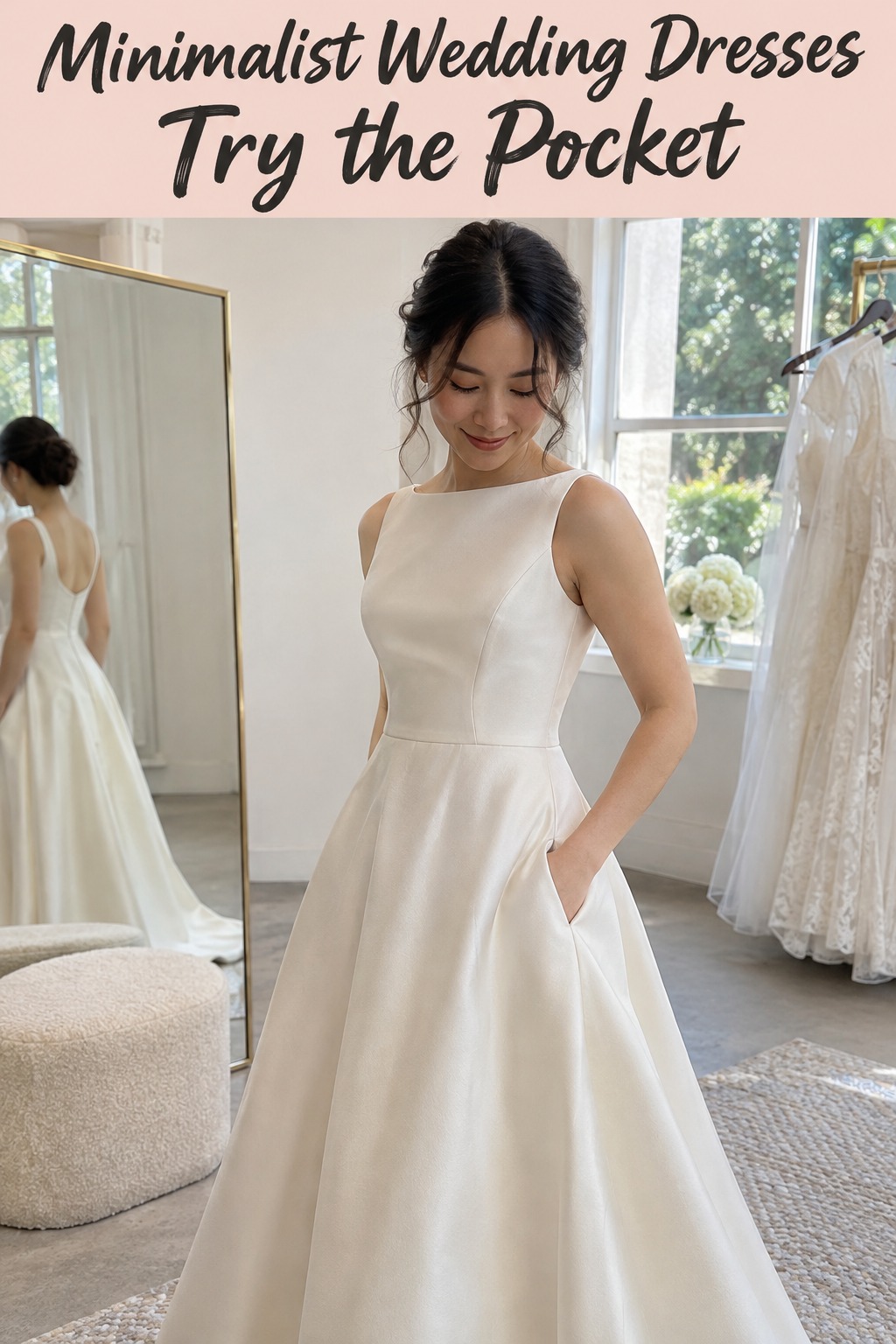
Know which changes to ask for before ordering
Bring the fitter one observable problem at a time
Try saying, “I can see where this lining ends when I turn away from the window.” Ask whether the salon can show you a full-length lining or pin an example in place for comparison without changing the sample. If they suggest installing another layer, find out where it will attach and ask whether it changes the hang of the skirt. See if they can demonstrate it with a scrap or on another dress. It may be easier to choose a model that already has the coverage you want if a large part of the lining would need to be replaced.
For support, describe the motion that causes trouble. “I can feel the bodice slipping when I reach forward.” Ask whether the issue is the sample size, how the bodice closes or the support available in that design. If a lightly structured gown needs more work than you expected, try the structured dress again while the details are fresh in your mind. Compare the feel at the ribs and the neckline while seated, as well as the appearance in the full-length mirror.
Make the final comparison with the intended layers
If you have decided on a separate bra, briefs or half slip, bring those pieces to the appointment at which the fitter assesses the gown. Take the earlier photo if you have it and ask for a repeat view in comparable light. If the waist seam still shows close up, step back and decide whether it’s still subtle enough for you.
If you are comparing online options, ask the seller where the lining starts and ends, what supports the bodice and what size the model is wearing in the photographs. A photograph of the inside can answer the first two questions quickly. Find out whether you can try the dress and return it if the coverage is different from what you need. For a special order, I would make the decision after seeing a construction sample or after receiving clear written answers about the lining and return terms.
Editor’s take
I would choose whichever dress gives you the coverage and support you want with layers you will be happy to wear all day. I’d make an exception for a low back or sheer panel that I’d miss if I chose the other dress. Those details are worth another fitting when the salon can show you what support or coverage is possible. Ask the salon to show you what the finished bodice or lining would look like before ordering. I drew these comparisons from designer specifications and salon guidance. At your next appointment, ask to try two dresses with a similar outline and a different lining or bodice construction. Bring the briefs you would wear and ask to move both gowns into the same window light.
Sources and methodology
Designer collections and salon fitting guidance informed the construction examples. The fitting comparisons are suggested ways to evaluate individual gowns. Each worked situation is hypothetical and the appropriate alteration depends on the garment and the fitter’s assessment.
FAQ
Does a minimalist wedding dress need a full lining?
It depends on the fabric and the kind of coverage you want. Look inside to see where the existing lining ends. Ask to check the dress in the light you expect at the ceremony, especially if you will stand in front of a window. If you like some transparency, decide exactly where you want to see it.
Is crepe or satin better for hiding underwear lines?
Try both with your intended underwear. Outside finish is only one part of the comparison. Fit, lining and where an underwear edge meets the skirt all affect what you see. A lining that follows the dress smoothly may be more useful than choosing by fabric name.
What color underwear should I take to a fitting?
Bring a pair of smooth briefs in a shade close to your skin tone. Check the shade and edges in the dress, and use the light test if a bright ceremony backdrop is part of the plan. If an edge stays visible, try a different cut or see whether the stylist can show you a more suitable lining.
Can a tailor add cups to a low-back dress?
Ask about the individual bodice. Sewn-in cups may add coverage or change the way the front sits. Tell the fitter if you need additional support and ask how much the remaining back and sides can provide. Try a comparable construction before committing to a change you cannot preview.
How do I tell if a line in a photo comes from the lining?
Find out whether the line follows an internal edge you can locate by looking inside the gown. Then change the direction you face and compare it in person and in another photo. Bring the image to your fitting if it shows a clear boundary you can point to.
Can I keep pockets on a smooth wedding dress?
Check how the pocket bags sit empty and with the small item you intend to carry. A visible outline can come from the opening, the bag or a change in the way the skirt falls. Ask whether a smaller pocket or a different position is possible on that particular dress.