Simple Wedding Dresses With Sculptural Lines
From across a fitting room, a fold at the neckline draws your eye somewhere different from a crisp pleat in the skirt. Both can belong to a very simple wedding dress. I’d start with the part of the dress you want people to notice at that distance. You can decide how much shine or trim it needs after you’ve seen how the cut looks on you.
Current collections of simple wedding dresses put narrow crepe gowns and crisp A-lines in the same category. If you’ve saved pictures of both, look at where the fabric gets its shape. You may like a dress with some softness around the neck. You might be drawn to a skirt with enough body to hold a crease all the way down.
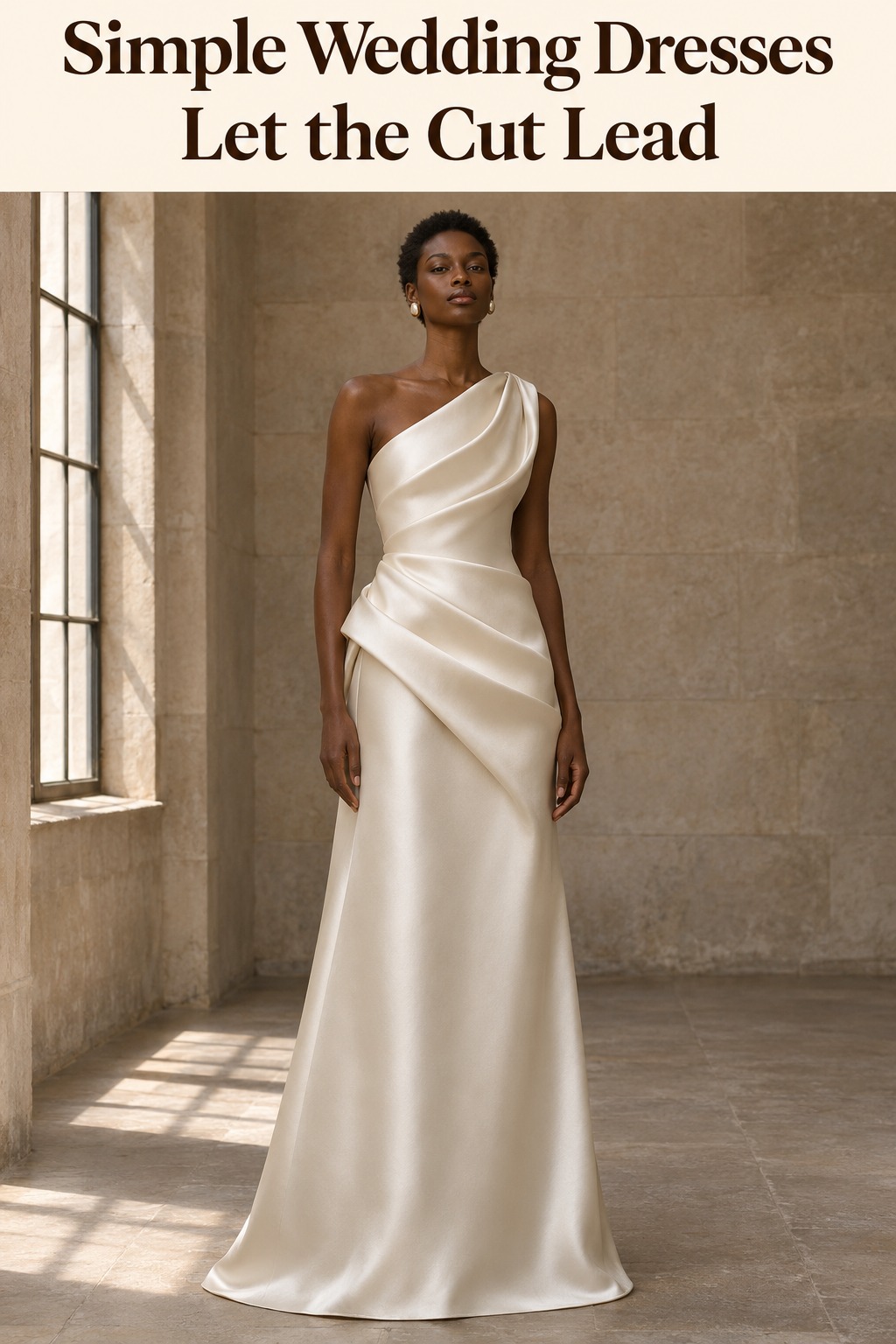
What gives simple wedding dresses their shape now
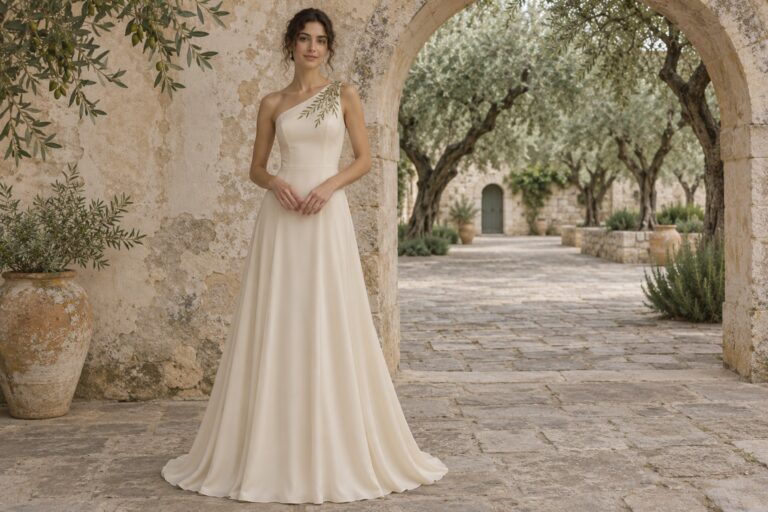
A hanging fold can give a gown a soft edge. A firm seam or pleat gives your eye a line it can follow along the dress. On Danielle Frankel’s Aidan dress, the designer describes a bias-cut silk satin slip with a drape knotted at one strap. Follow that fold past the shoulder and it falls into a train at the back. The fabric gives the dress its shape in both views.
Maggie Sottero’s simple wedding dress edit lists Rebecca Ingram’s Brenda, a crepe sheath with a draped cowl, and Georgina, a Mikado A-line with a pointed cat-eye neckline. Look for photos without a bouquet in front of the bodice. See whether you’re more drawn to the deep curve of the cowl or to the peaks at the top of the A-line.
Turn wedding inspiration into a plan you can actually follow.
Zarellea brings your guest list, budget, vendors, and day-of details into one shared space — so no beautiful idea gets lost in the shuffle.
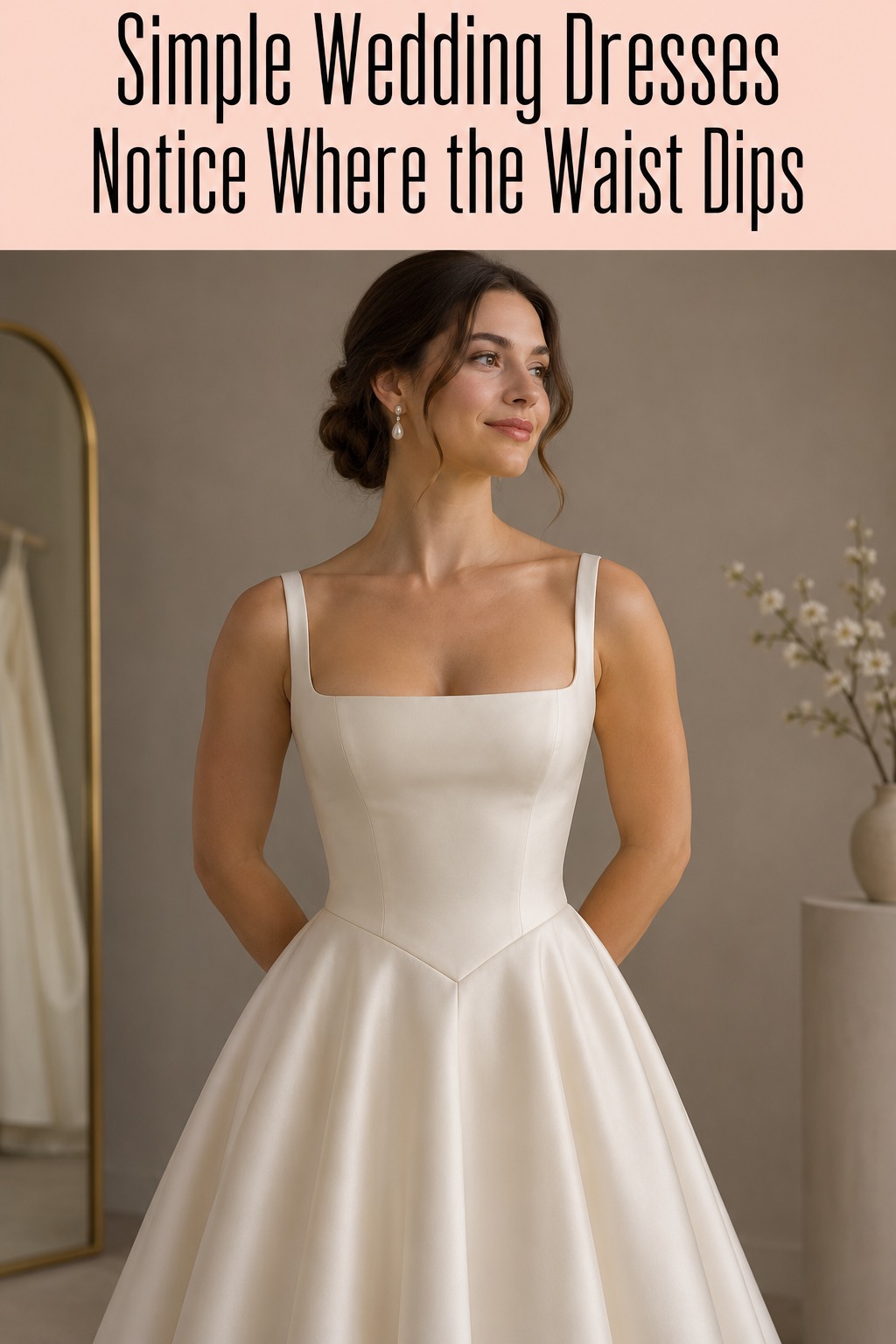
A basque waist gives you another place to look. Its seam dips in the front, changing where the bodice appears to end. In an otherwise smooth gown that seam can be the whole reason you remember the dress. Compare the point with the shoulder line, especially if the gown also has a wide or pointed neckline. If the shoulder line is already strong, see how much attention a long center point draws and whether you’d prefer a shallower dip.
Search by the part of the dress that caught your attention. Look at the neck and waist as separate filters, and use terms such as “cowl,” “one shoulder,” or “cat-eye” where the store offers them. A collection labeled simple may include lace or beading on some dresses. Open the complete front and back gallery so you can decide how much of the detail you would see after the initial impression of the gown.
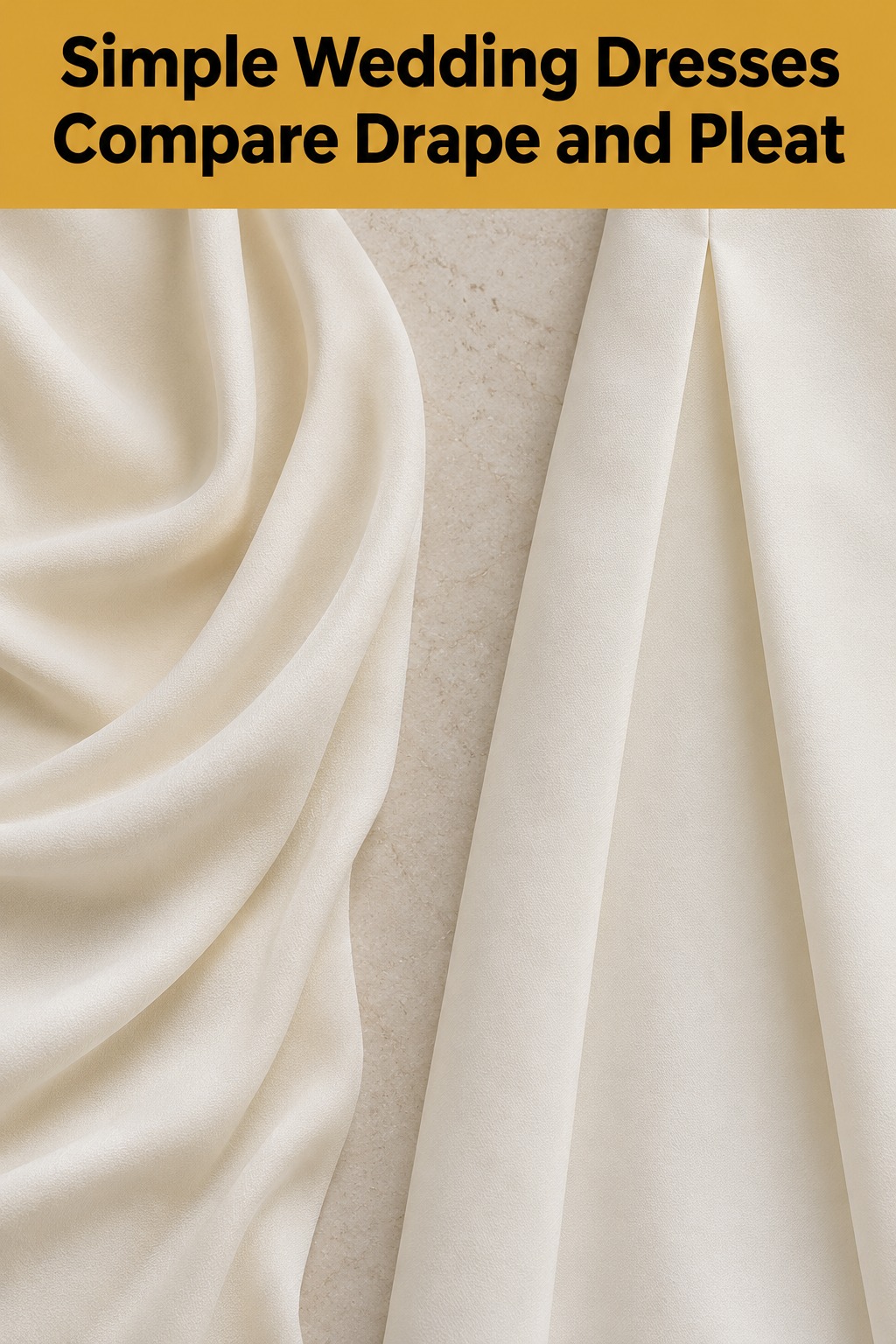
Why the placement of one detail matters
Start with the front at a distance
Take a few steps back from the rack or ask your companion at the fitting to stand back while you face them. At arm’s length you can see the stitchwork at the top of a strap. From a few paces away you’ll see the line it makes across the shoulder, or the space it leaves open at the neck. A fold that feels too busy when you can see every crease might look gentle from across the room.
If a cowl goes across the chest, follow the bottom curve with your eye and see where it comes to rest. Look at its relationship to the waist seam. A high, shallow curve can put more space between the two. A deep fold that comes close to the waist may make the top read as a single draped area. I’d choose the depth I like with the dress on my body, since a dress hanging flat in a shop photo has very little to tell me about where the low point will land.
Follow the detail around the side
A diagonal seam or fold often leads to a specific place at the side. Turn far enough to see where it ends. Sometimes fabric gathers into the side seam. Sometimes the sweep runs into a separate panel at the back. The profile will look different depending on where the fold ends. With a one-shoulder gown, walk around the mirror or take a photo of each side to see how the dress carries that line through.
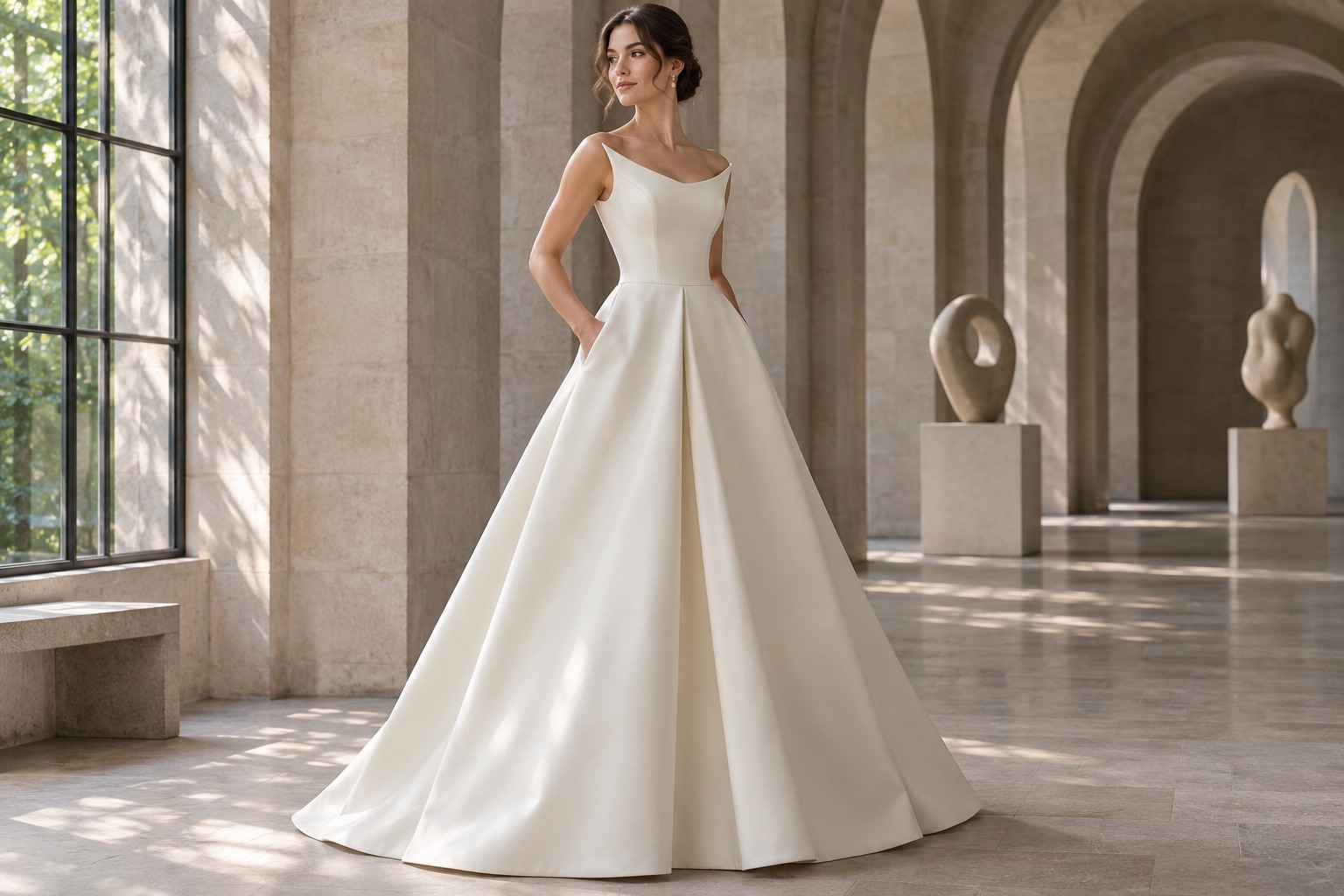
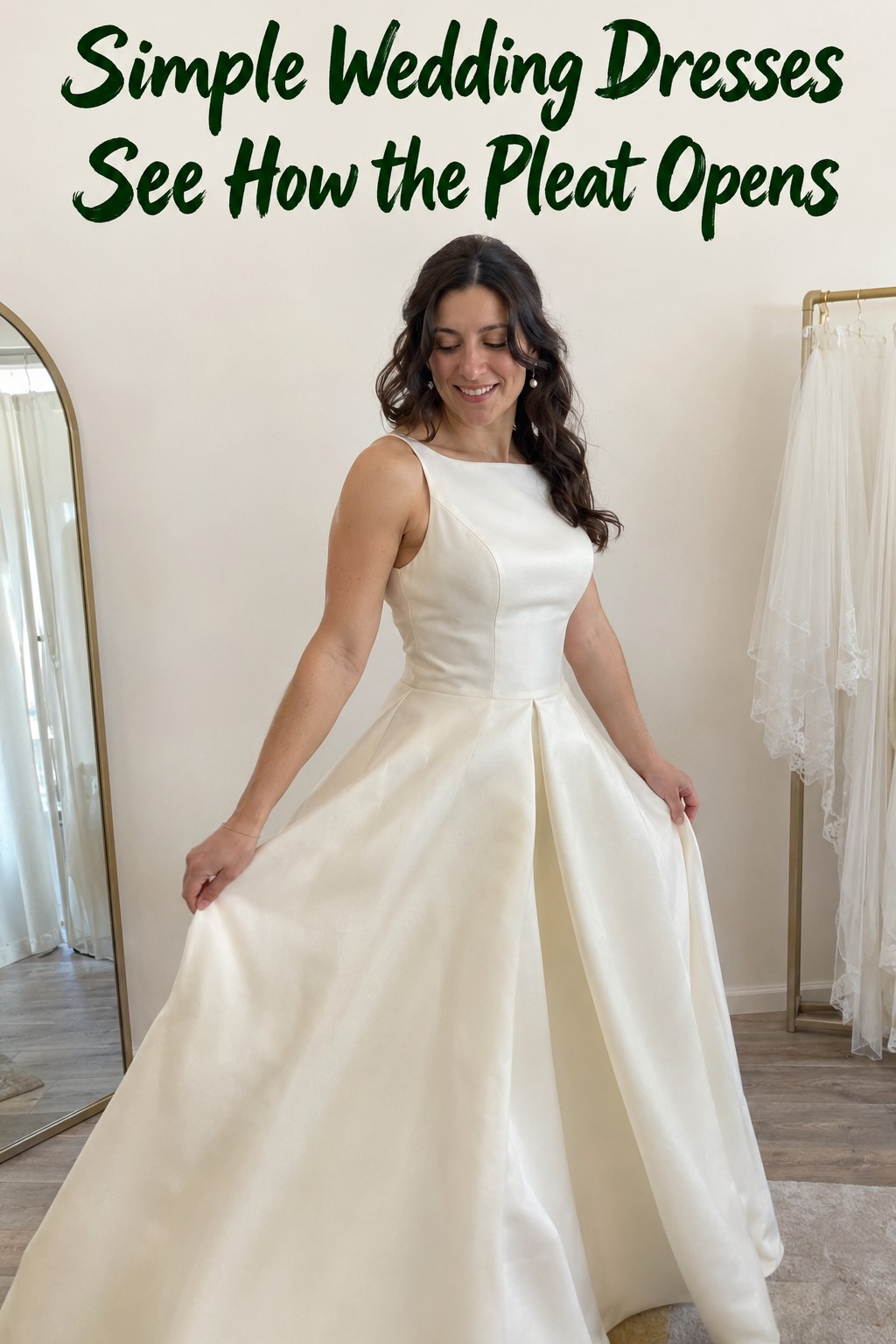
On a skirt with a broad pleat, look for the spot where the folded cloth opens out. Some folds are directed toward the center, some away from it. Put your hands at your sides so the fabric hangs freely, and let a small turn show where the fold opens. You may prefer one long plane across the front and the fullness just beside it. If the pleat looks right in the sample, ask which part the fitter will need to shorten or reshape to hem the skirt at your height.
Look at the surface as well as the outline
A smooth matte surface can make a seam or a cutout easy to trace. A lustrous surface often draws your eye to whichever fold faces the light. Ask the salon for two satin samples if you like the finish. A light, swaying satin and one heavy enough to keep a broad fold can look rather different under the same light.
If you can get to a salon, take photos of both gowns from the same height and distance. Compare where each neckline sits relative to the waist. If the two designs catch your attention in different ways, write down what you like about each while the difference is still clear. “Waist seam shows from the side” is an easier preference to use on your next visit than “looks classic.”
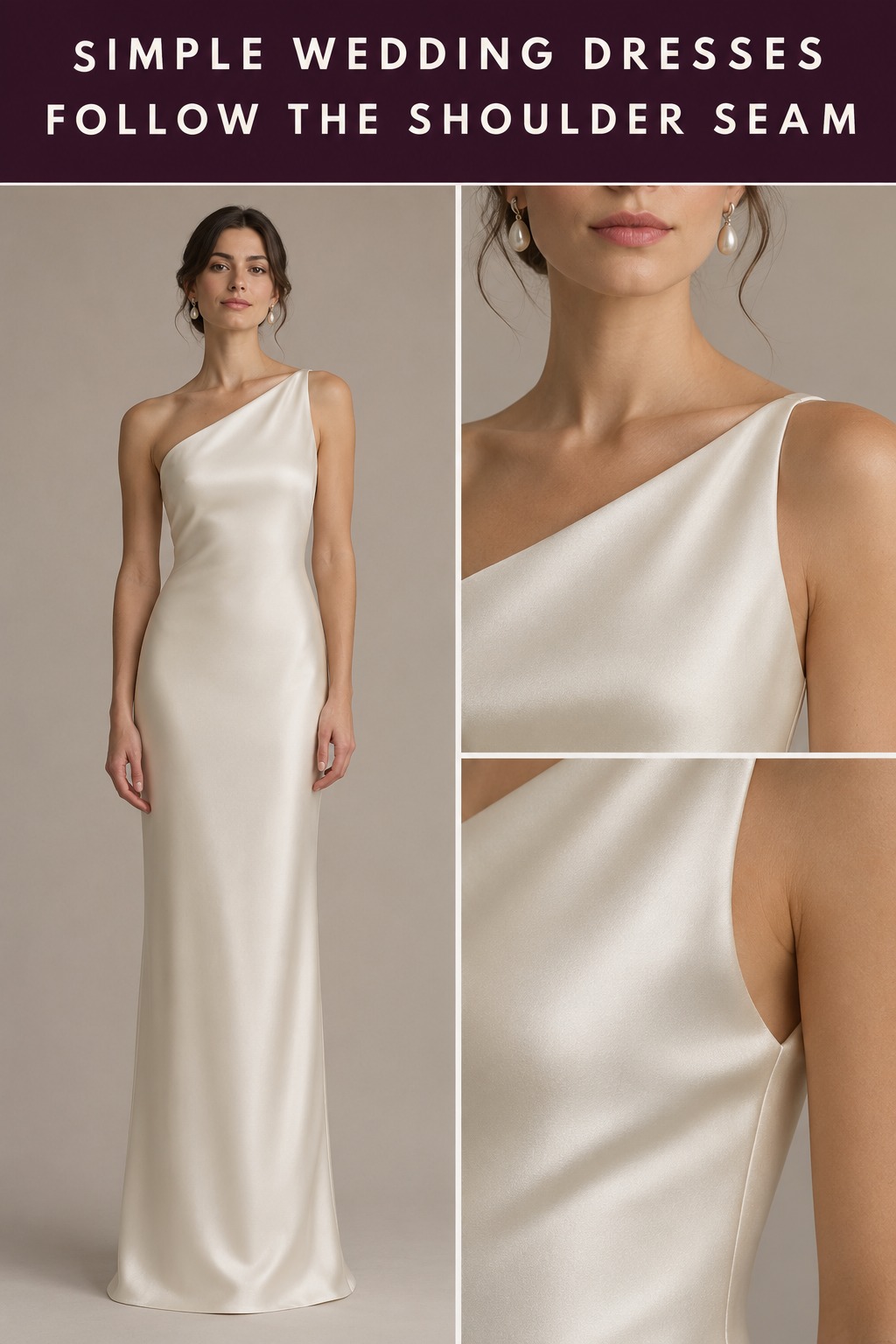
How to wear the look in three different cuts
A softly draped crepe sheath
I’d look at a shallow cowl first if you like a slim gown and want something softer near the face. Choose a sample that lets the fold settle on its own. As you sit, see whether the bottom of the fold opens farther than you’re comfortable with. The position you most care about may be seated, especially if you expect your ceremony or dinner to include a lot of time at a table. Ask to see the front with your arms at rest as well as with a hand raised to accept a glass.
The crepe can pick up the edge of an underlayer. Try a smooth slip you already wear before buying one for the fitting. Its straps and edges should work with the neckline and any slit. When the gown already has a smooth lining, try it in the shop with the undergarments you plan to wear. Small creases sometimes come from a layer that has bunched near the waist. It’s worth checking that before you ask to take in a seam.
A one-shoulder satin column
I’d start with an uninterrupted skirt if you want people to notice the diagonal at the shoulder first. From the other side, check where the dress meets the arm and whether the neckline feels even as you shift your weight. Follow the diagonal with your eyes to see where it ends toward the back.
If the edge lifts briefly and returns to a place you like when you relax your shoulder, that may be fine. If you’re constantly pressing it into place, ask the fitter about the support sewn into the bodice. Fashion tape can be useful for a small edge on a gown that already sits comfortably, if the salon approves it for the fabric. A neckline that needs constant adjustment deserves a fitting decision first. Try any tape in advance on a hidden area with the fitter’s permission.
An A-line with a wide front pleat
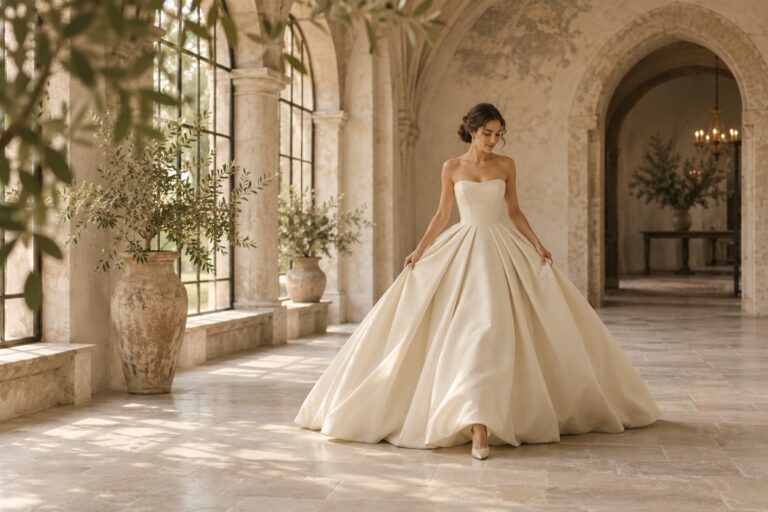
On a plain Mikado A-line, a broad fold starting at the waist can give the skirt room to open out and make the bodice look more fitted. Pay attention to how the fold sits where the bodice connects to the skirt. If you want the dress to read simply from the front, see whether the skirt can keep that clear opening while your hands are in any pockets. A useful pocket loses some appeal if you need to empty it for the dress to hang naturally, so compare the two views during the fitting.
Show the salon the pleat when you ask how to transport the gown. Find out where they’d put the fold in the bag and how they’d hang the gown inside it. If you need a garment bag for the wedding dress, check how much room the skirt has while the bag is closed. Ask for a padded hanger if the gown can be supported at the shoulders, and use the sewn-in hanging loops when the salon instructs you to. A wide hanger is useful only if it suits the cut and the bridal shop’s directions.
For the gown and the fitting
Try a clean satin line
Test a small neckline edge
Check room inside the bag
Hang an approved shoulder-supported gown
Which details are worth keeping
When you’re down to two options, ask the fitter to show you where the waist falls on each sample and where it would sit after an adjustment. A clipped sample can look flatter across the back or more sharply fitted at the waist than the finished dress. If you’re trying on with clips, ask which folds come from the sample and which belong to the design. This is especially helpful when you like how the fabric rises from one side seam.
I would give the fitter one consistent description of what I want left visible. For a dipped waist, that might be the full center point beneath a clean bodice. On a cowl, I’d ask whether the present depth will stay near the same after the straps are adjusted. Let the fitter decide how feasible the request is. If the neckline will change with the fit, ask to see the planned position pinned while you stand in a relaxed posture.
Bring an heirloom necklace to the next fitting if you plan to wear it. Set it at the height where it will sit on the day and see if it lies flat when it reaches the neckline. You may love how it overlaps the edge. If you feel like moving the piece each time you look at the photograph, try a neckline with enough room for it from the start.
When shopping online, look for a side view in even light. Ask for a close photo of any point or fold you need to see more clearly. Ask whether the listing photos represent the same size or sample and whether the skirt was pinned for a product picture. A video showing a slow turn is especially useful for a broad pleat. Confirm the shop’s return and alteration terms before you pay, and check the support and storage instructions with the seller. The first time you hang the finished gown should be somewhere you can give the fabric space.
Editor’s take
I’d ask for two gowns in the same general silhouette at the first appointment, one with a clear seam or crisp fold and another with softer draping in the same area. If you’re drawn to a narrow dress, that might mean a shaped one-shoulder column and a cowl sheath. Take one front photo and one side photo of each at the same distance, then look at the part you remembered after walking away from the mirror. I’d favor the gown with the detail you still like when you see the entire dress. A family piece you plan to wear is a good reason to make an exception. I drew these recommendations from published bridal collections. At the fitting, give the cloth time to settle on your own body before you take the comparison photos.
Sources and methodology
The named garment details come from the designers’ descriptions. The fitting examples apply those ideas to gowns you might try.
FAQ
Can a simple wedding dress be formal enough for an evening ceremony?
Yes. Consider what formality looks like in your venue. A gown with a strongly defined waist and a sweeping skirt can feel formal with very little trim. A narrow satin column can also work if its length and neckline feel right for the room.
Can a simple wedding dress still have lace?
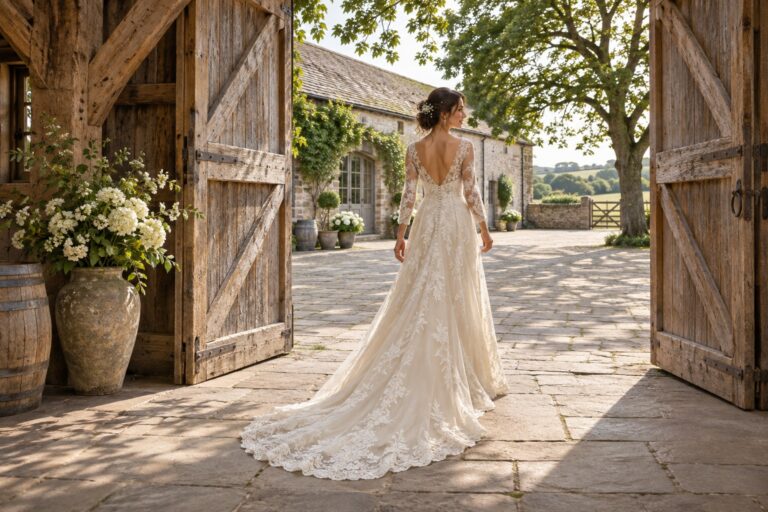
Yes. Try lace in the area you most want to notice. A strip along a cuff or an inset at the back can work when the front of the dress has one clear line. Look at full-length photos to see how visible the lace is before deciding you need more of it.
Should I try Mikado or satin for a structured skirt?
Try the actual gowns. For a firm, broad fold, an example made from Mikado is worth putting next to a more fluid satin. Ask how each skirt is built, since the cut and what supports the fabric will affect the appearance as well as the material.
How do I know if an angled or draped neckline fits?
See where the edge sits as you settle into your natural posture. Try sitting and moving the arm next to the strap. Show the fitter any spots you have to reset with your hand and ask what alterations would change those points.
What is a basque waist on a wedding dress?
The front waist seam dips below the surrounding waistline, often into a visible point. Look at where that point sits on your torso and how the fabric leaves it at the front and sides. A shallow curve and a deep point can feel different even if both dresses use the same label.
What photos should I request before buying a simple wedding dress online?
Ask for clear front and back photos, a side view, and a close-up of the detail you care about. For a cowl, ask how the fabric drapes without someone holding it in place. For a pleat, see if the shop can show the skirt standing and then turning.