Muslim Wedding Dresses That Stay Covered in Motion
A product photo can make the scarf on a wedding gown look as if it fits neatly into the collar. At a fitting, the join can open every time you look over your shoulder. The same uncertainty comes up with long lace sleeves. Unless you can see the inside of the cuff, you may have no idea where the opaque lining ends. When comparing Muslim wedding dresses, I’d make those checks before spending time on a train or a veil.
Give the longer fitting to the outfit that already gives you most of the coverage you want while you move. It could be a gown with full lining or a dress and a separate cloak. A gown you already love may be worth altering if you can point to one place that needs work. If you’re planning a nikah at a mosque, ask your venue contact about clothing expectations for your ceremony and photographs. Bring the expectations you intend to follow to the fitting, along with the scarf or head covering you actually want to wear.
Find where the coverage changes
Write down what you want covered
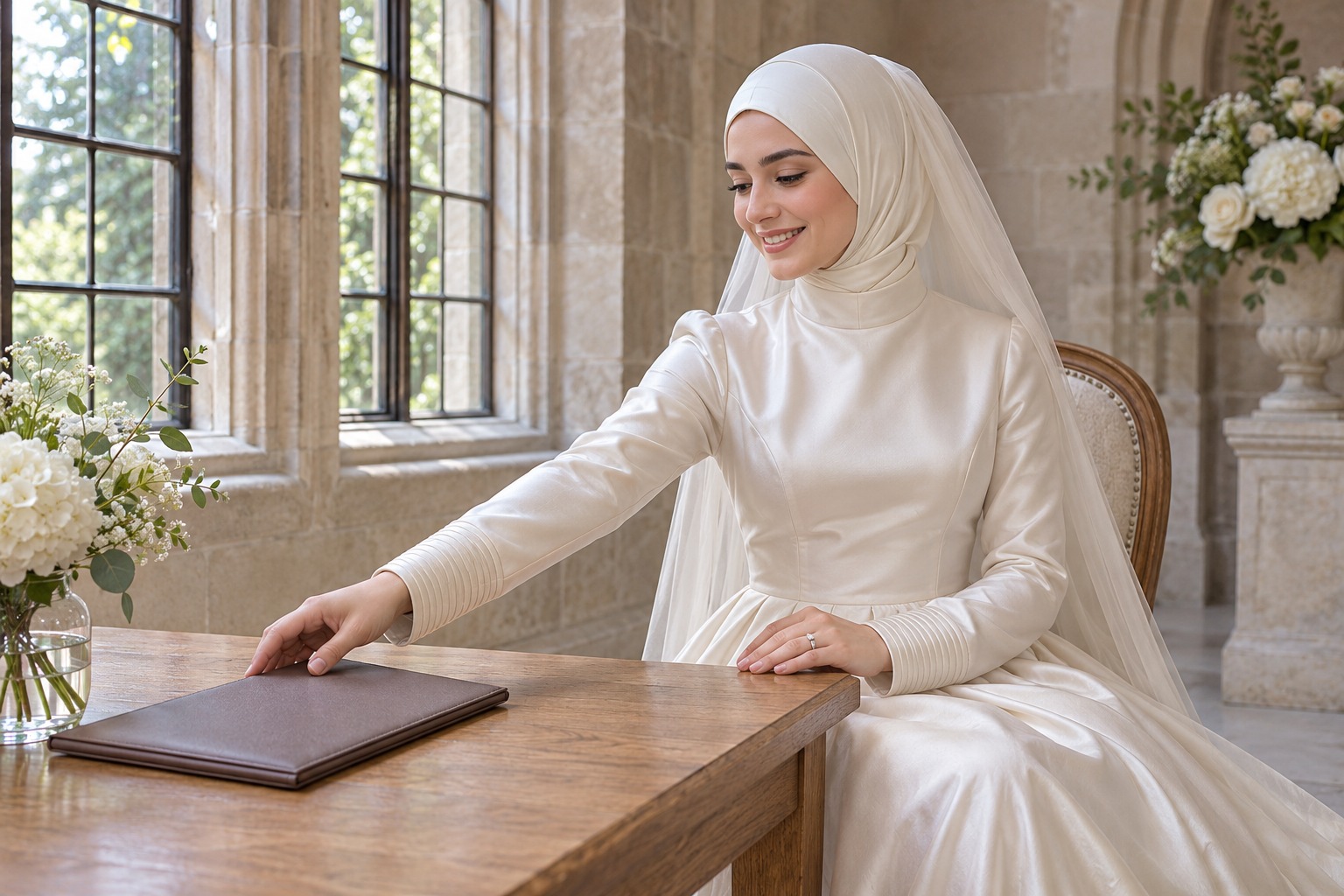
Picture yourself at the signing table with one arm forward, in a side-on family photo, and seated for a conversation. Which parts of the outfit need to stay covered in each position? You might want the neck covered all around, lining down to the wrists and a closed back. Another bride may want an opaque bodice and a loose sleeve for a ceremony where she plans to wear her hair uncovered. If the venue asks for neck coverage, you can still tell the fitter whether you would prefer a soft scarf over the collar or a dress that closes higher.
Make the list specific enough for a fitter to act on. “Opaque lace sleeves through the wrist” tells the salon to check the lining inside the cuff. “Scarf overlaps the collar at the nape when I turn my head” is a request the fitter can see happening in front of the mirror. Circle anything that would make you rule out a dress so the fitter knows where to begin.
Turn wedding inspiration into a plan you can actually follow.
Zarellea brings your guest list, budget, vendors, and day-of details into one shared space — so no beautiful idea gets lost in the shuffle.
Find the first layer that moves
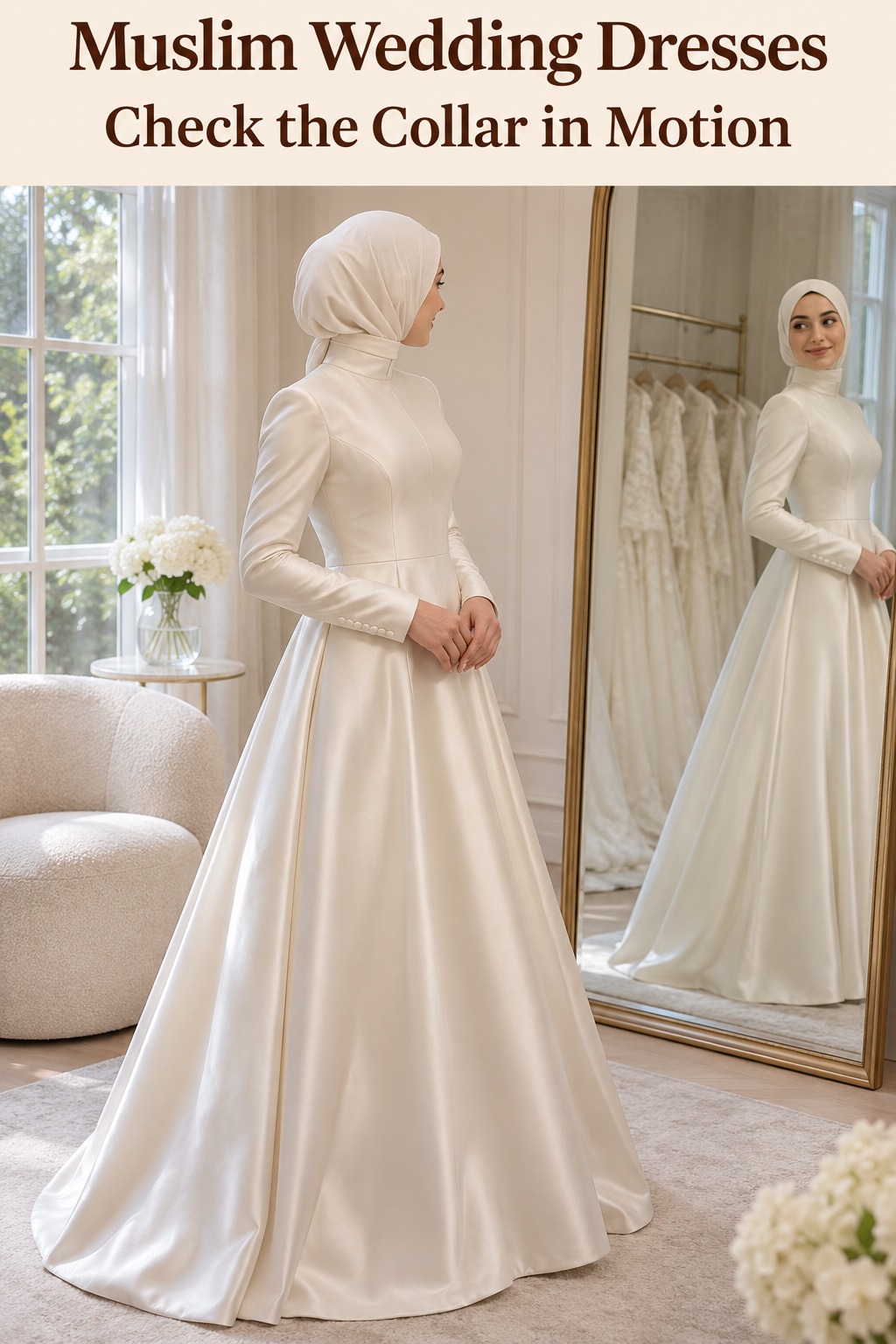
Start with the mirror and have someone hold a phone at seated eye level. Stand with both arms down, look to either side, then reach forward as if the signing book is slightly beyond you. Sit back and bring your arms up to greet someone. Go slowly enough to see what shifts first. If the scarf stays put while a gap opens below it, look at the neckline. If the neckline stays in place while the scarf rides up, try arranging the scarf differently before paying to change the dress.
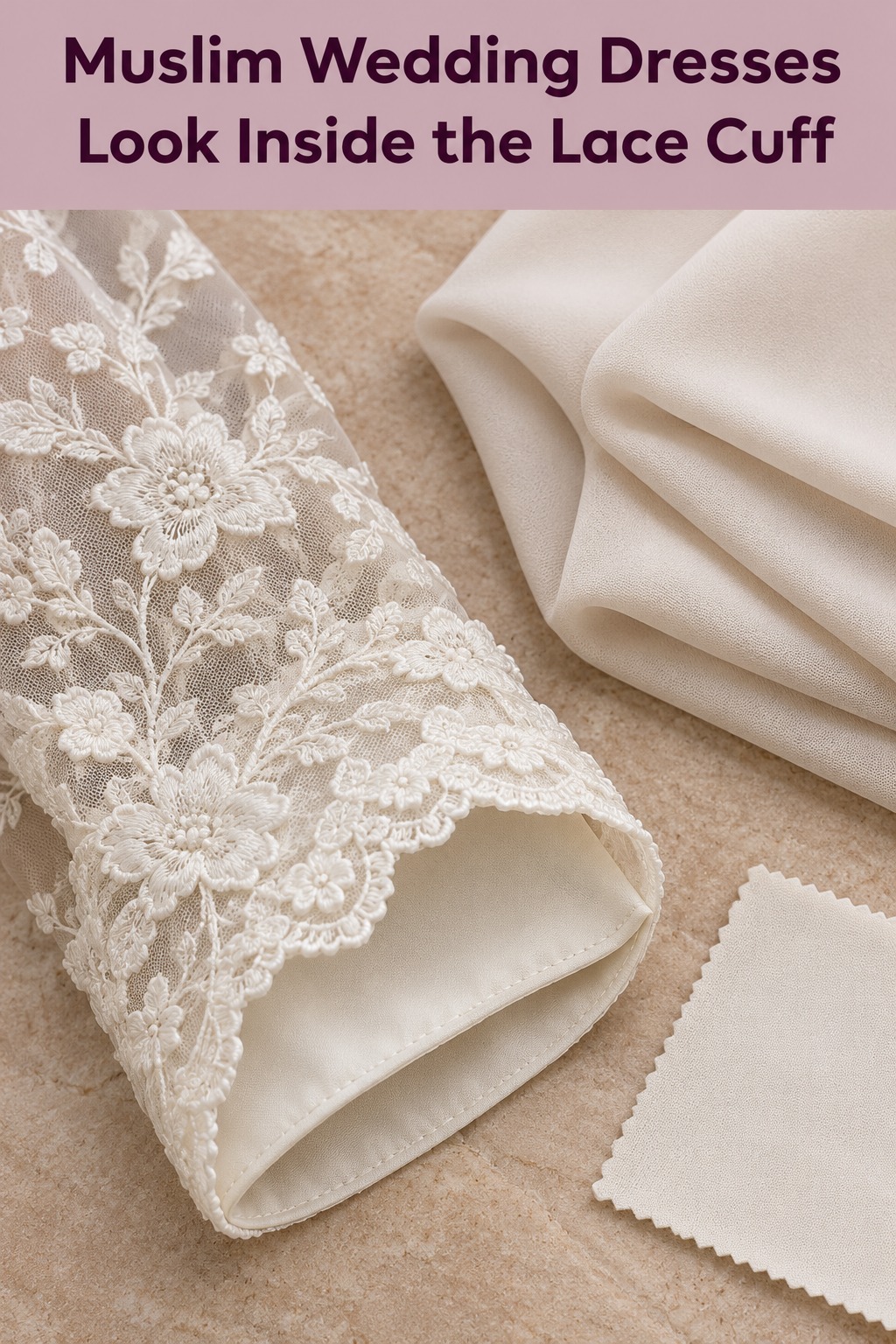
Check at the wrist as well. Compare the sleeve with your arm straight and with your elbow bent. If the lace remains at your wrist while the opaque lining slides farther up, the sleeve itself may already be long enough. Ask the fitter to check whether it is the lining edge riding up or the sleeve twisting around your arm. If the trouble is hard to catch in the mirror, ask your friend to film the cuff as you bend your elbow.
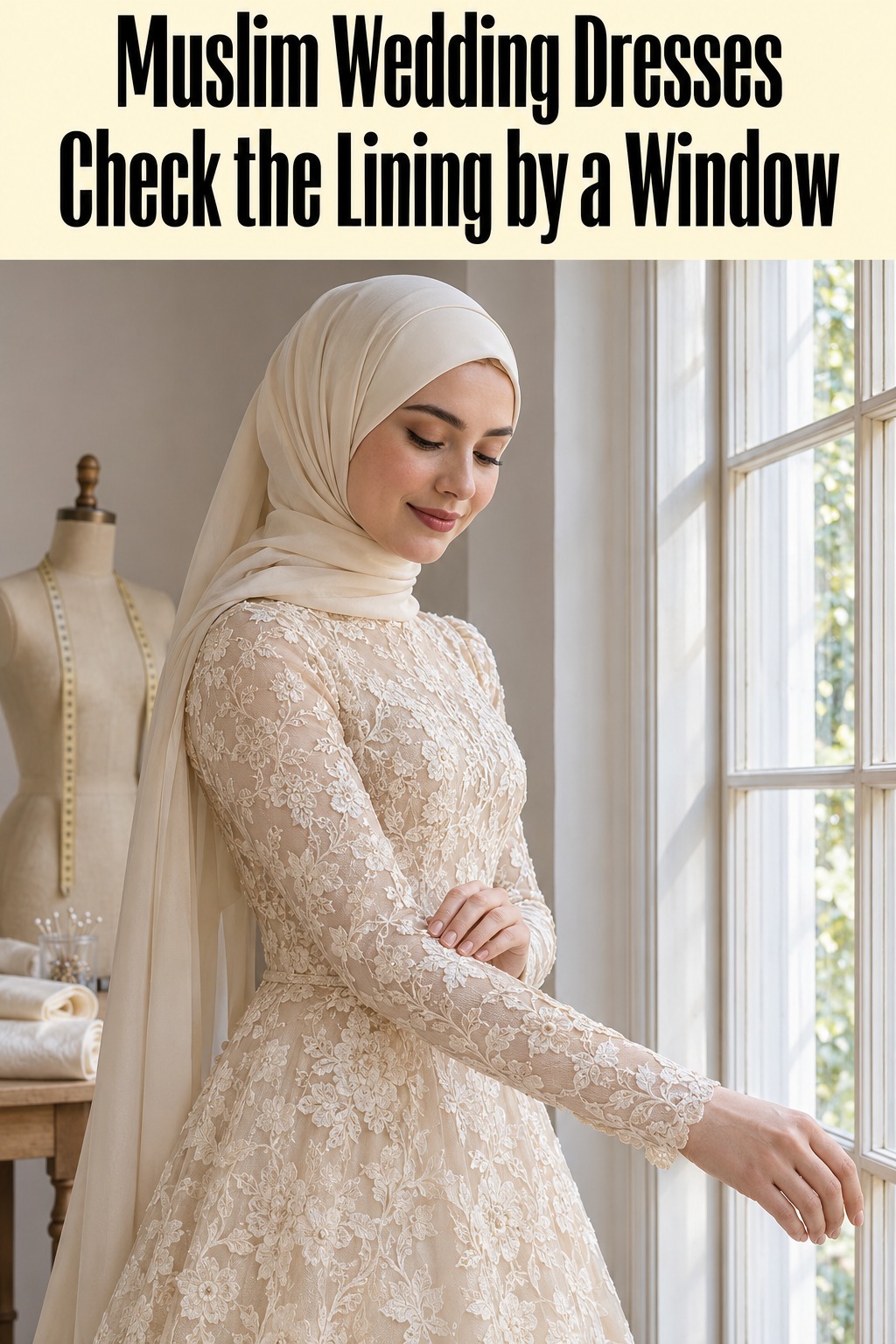
At a window, turn around so your friend can check the back in the same light as the front. Ask the fitter about taking a flash photo too, especially if you plan to wear light lace over a light lining. Inspect the yoke, the seams alongside the zipper, and the sleeves separately. A skirt lining tells you little about an illusion panel at the upper back. Halal Bridal’s collection notes spell out how one specialist designs its collars, cuffs and lined panels. Use those part names when you ask the seller what it means by full coverage.
Choose a fix for the part that moves
If the scarf slips when you turn
Bring the scarf and the undercap you already like. Tie or arrange them as you would at home, then let the end of the scarf fall where you intend it to sit. Check the nape with a second mirror. An unfamiliar salon wrap may sit high at the back, and a heavily pinned sample may hide the gap you’re trying to find. Give yourself enough time to wear the combination for several minutes. Notice whether the edge catches on a shoulder when you turn to speak to someone.
If the edge slides, try moving the fastening to a spot where it can hold the scarf without pulling on your collar. Start with accessories you know. A soft undercap gives the scarf a base if you like wearing one. If a smooth hijab magnet is already part of your routine, check its grip through the same folds you’ll wear with the dress. Look for a lump where the scarf crosses the collar before you decide the fabric needs another clip.
If a seam or lining is responsible
When a sleeve feels fine and only a narrow strip near the wrist shows through, bring the dress to a bridal alterations specialist and ask about extending or replacing the lining. Ask them to pin and show you where the new seam would land. Extra lining needs to sit comfortably beneath the lace when you bend your elbow. If you’re considering an opaque panel across a small sheer area, view the pinned fabric from a few feet away. A panel edge that appears as a distinct rectangle in a photo might be more visible than you want.
A detachable bridal topper can make sense when it creates a clear shape you like and you can take it off with help. Test its underarm seam over the dress and check where it fastens at the back. If your favorite gown needs several panel changes and additional sleeve room, I’d spend the next appointment trying an already lined gown. Try it through the same reach and turn before getting a price for the alterations. If you already own the dress and love its shape, a second fitting may give you time to see what a tailor can do with its existing seams.
Compare three outfits at a fitting
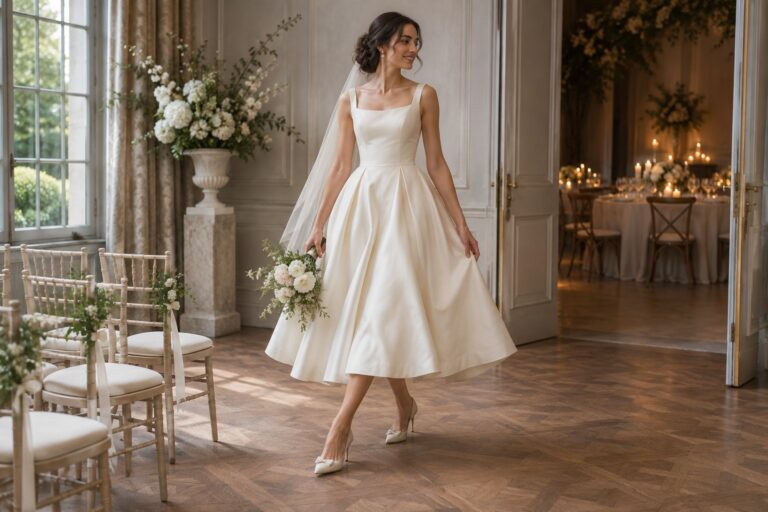
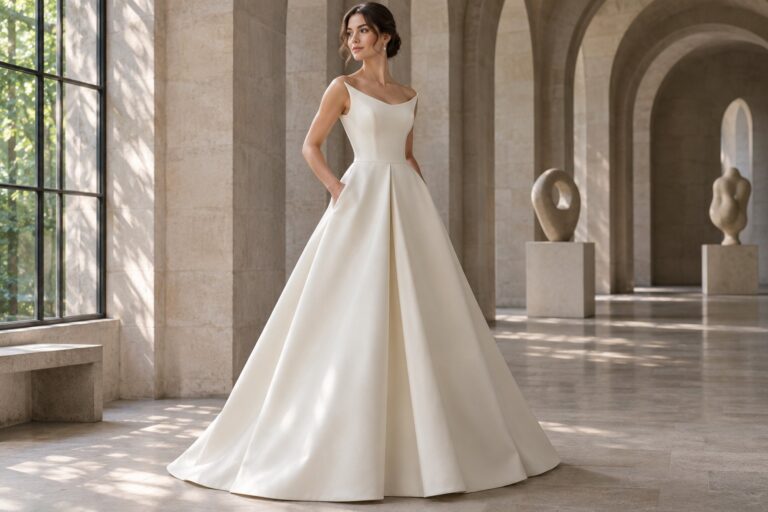
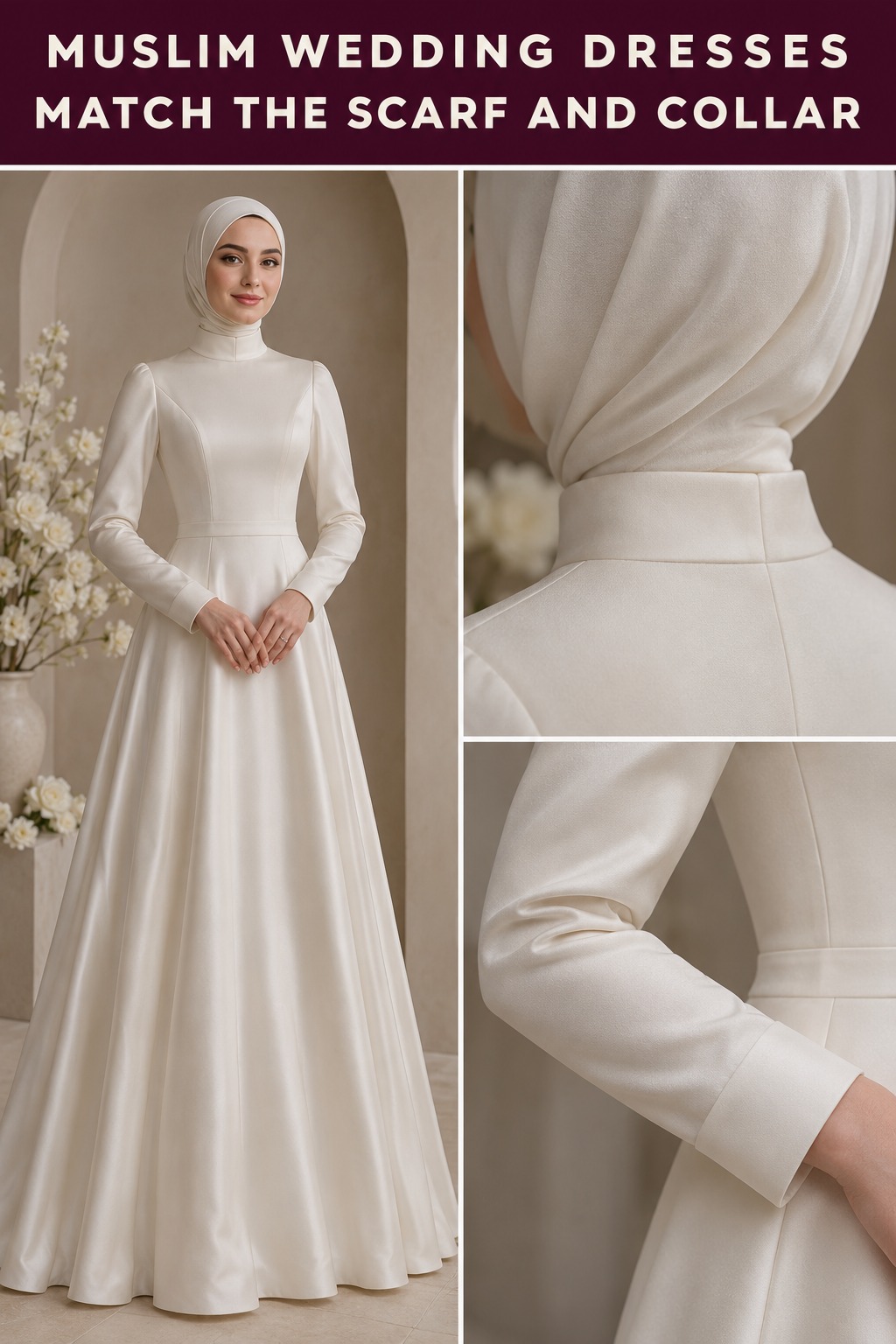
An ivory satin A-line with a close collar
For a civil ceremony with a signing table, try an ivory satin A-line with a low stand collar and a matte chiffon hijab. It’s easy to spot the join between those two fabrics as you look down. Choose a cuff you can bend your hand in. Bring the right scarf shade to the salon and compare it beside the bodice in the same light. Two fabrics both sold as ivory can look different next to each other. Pick a pairing that looks deliberate to you, then check whether the scarf keeps its overlap when you look down at the table.
If the scarf bunches under your chin when you sit, try draping the tail over one shoulder before raising the collar. The shoulder drape needs room to move away from your face, so check it with your arms forward. Have a friend photograph the side away from the drape. For this gown I’d leave enough room to lower my chin without trapping the scarf in the collar.
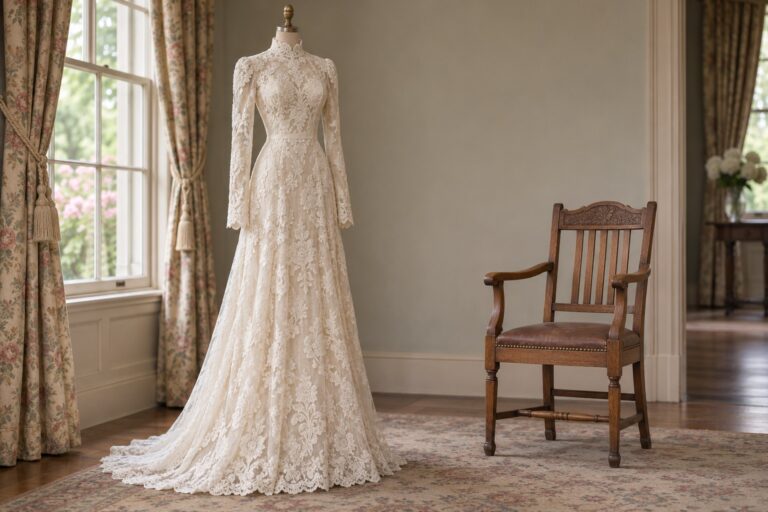
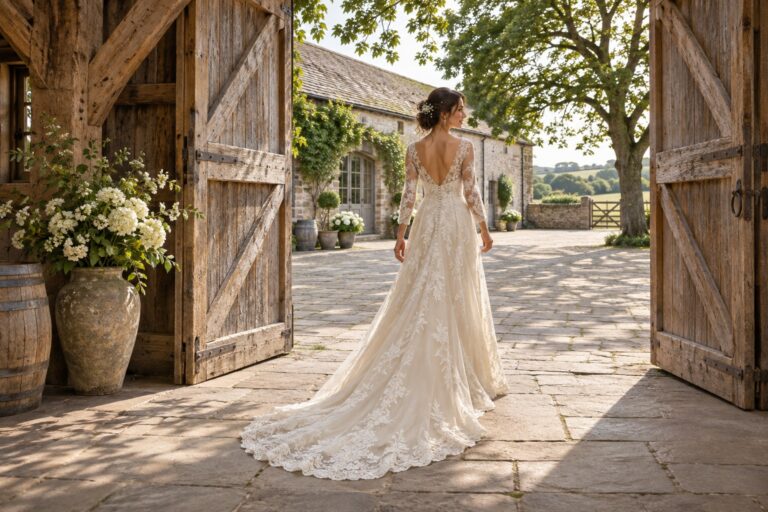
A lace gown with lined sleeves
Try a plain scarf with a soft edge around the face if you want the floral lace bodice to draw the eye. Look closely at the upper sleeve and the back, since the same lace motif can appear over lining in one area and sheer mesh in another. Match any new lining to the effect you like under the skirt or bodice. If you want the lace motif to remain visible, ask to see a small sample with two possible colors beneath it in daylight.
You can coordinate the scarf with a bridal veil if you want both. Ask the fitter to put the veil on only after the scarf and gown have passed your movement checks. Turn again once the veil is in place and note whether its comb or attachment moves the scarf. If one piece shifts every time you turn, a separate attachment point may help if the person styling the head covering can demonstrate it at the fitting. Fatma Sevildi Couture’s collection includes gowns photographed with mantilla-style veils and detachable capes. Use photos like those as a starting point and ask exactly which pieces the quote covers.
A bridal abaya with an outer cloak
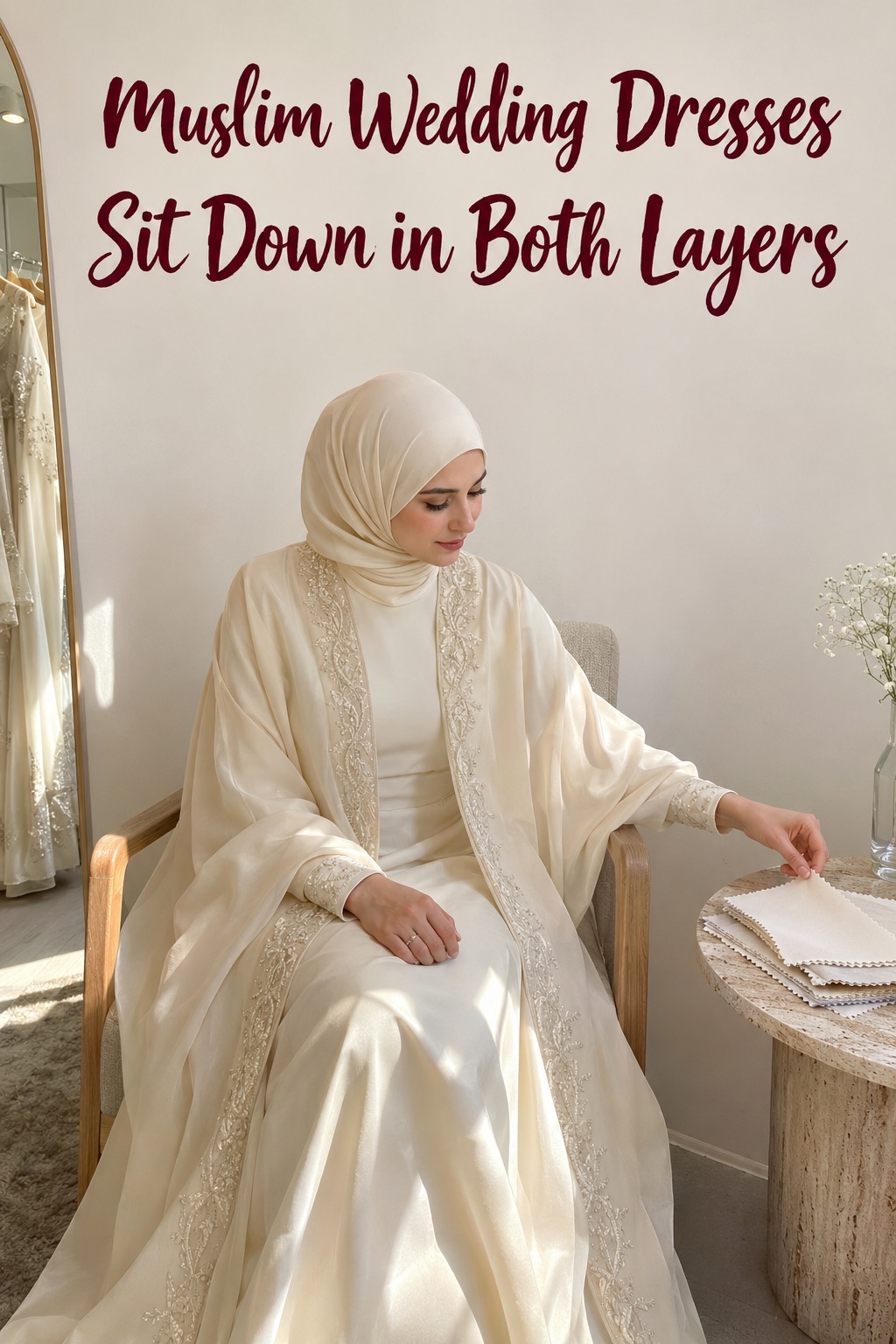
A loose bridal abaya and a separate embroidered cloak are worth trying if you prefer a less structured waist. Choose the underdress first and check every area you still want covered when the cloak swings open. If you chose the cloak for its embroidered front edge, let it hang free at the fitting. See how much of the embroidery you can see with your hands at your sides.
Take a few steps, turn, and sit in a chair with arms if your venue uses them. See how the fabric at your forearm behaves when you reach for something beside the chair. A long outer sleeve can sit beautifully in a full-length photograph and still hang over your fingers at the wrong moment. Keep both pieces on during the test. If the inside cuff stays put but the outer edge drags, an adjustment to the cloak may solve the problem without changing the underdress. Photograph the two pieces separately if you want to show a tailor which layer is responsible.
Get the details in writing before you order
For a gown you can’t try on first, ask the seller for front and back photos of the same style and lining you’ve selected, preferably in the color you’re ordering. Ask for a shot of the inside of the sleeve with one cuff turned up. Where two pieces overlap, request a short clip of the model turning their head or bending their arm if the seller can supply one. The phrase “opaque sleeve all the way to the finished cuff” gives the seller something specific to show you.
Find out if the measurements on the chart describe your body or the finished garment. A bridal fitter can help you measure if the seller provides a form. Before you send anything, clarify whether they want the finished length measured from the shoulder or the waist and how to report your shoe height. If the sleeve is lined, ask for the finished upper-arm width and compare it with a garment you already move easily in. Describe the room you need to reach and sit.
Ask who handles any adjustment after delivery and what you can do if the agreed lining or accessory is missing. Have the seller confirm whether the scarf, veil, cape and underdress shown with your choice are included. Save those answers along with the specific order and timing. If your timeline leaves space for one local fitting, work out in advance which changes your fitter is willing to take on. If the seller can’t show me the collar or tell me whether the back is lined, I’d choose a dress I can inspect in person when the fitting schedule is tight.
Take a fabric sample or the confirmed gown color to the accessory appointment. Consider rounded scarf fasteners if the edge slid out of place. A thin undercap or a plain chiffon hijab makes sense if it addresses a problem you saw at the fitting. If you use a flexible measuring tape to compare the finished sleeve with a dress you own, lay both garments the same way and take the measurements at the same level. A note on your phone about which seam moves can keep you from buying a scarf to address a sleeve problem.
Bring what you need to the fitting
Try a light chiffon drape
Try the scarf over an undercap
Secure the folds at the trial
Measure a garment you own
Editor’s take
I’d book the first fitting around the movement that matters most to you. If the signing photos matter, wear your usual scarf, bring a chair close to the mirror, and reach as far as you will across the table. Give the first few minutes to the join at the collar and what happens at the cuffs. A gown that already does those things comfortably earns a longer look. If an outfit you love has one clear fault and a fitter can show you a plausible correction, consider it before starting the search again. My recommendations come from published collections and bridal shopping accounts. I’d use the results of your fitting and any venue requirements to make the decision.
Sources and methodology
Published bridal collections supplied the construction examples, including collars, sleeve linings and detachable layers. Public bridal shopping discussions helped identify questions that the listings leave open. The outfits describe possible fittings you can try.
FAQ
Do Muslim wedding dresses all come with a hijab?
Some sellers include a coordinating scarf or offer a veil as part of a set. Ask for the list of pieces included with the exact dress and variant you’re ordering. If the photo shows both a headscarf and a sheer overlay, ask about each one by name. You may prefer the scarf you already know how to style.
How high should a wedding dress neckline be with a hijab?
Choose a neckline that lets the scarf overlap as much as you want it to while leaving room to turn and look down. For some wraps, the scarf covers the join on a lower collar. Try your planned scarf and undercap with the dress and confirm any clothing expectations for your venue.
Can you line sheer wedding dress sleeves after buying the gown?
Ask a bridal alterations specialist to look at the seam and cuff before you buy if you can. The answer depends on room inside the sleeve, the seams they can access, and the effect you want under the lace. Have the fitter pin a sample in place and check the elbow bend.
How can I check whether a pale hijab is sheer?
Drape the actual scarf the way you intend to wear it, including your undercap if you use one. Ask a friend to look from the side and the back in front of a window. If you plan to have flash photography, take a quick phone photo and look at the single-layer sections by the nape and near the sides of your face.
Is a bridal abaya a practical option for a wedding?
A bridal abaya can suit a bride who wants a loose shape through the waist. If it’s sold with a cloak, check what happens when the cloak opens as you sit or reach. Wear the shoes you plan to use so you can judge the length and test stairs if your venue has them.
What should I ask about a made-to-measure Muslim wedding dress?
Ask for the measurement form and the list of pieces included with your order. Have the seller identify where the lining ends. Confirm the expected delivery and who handles a local fit adjustment. If the seller describes the back as closed, ask whether the fabric under the lace is opaque in the exact version you want.