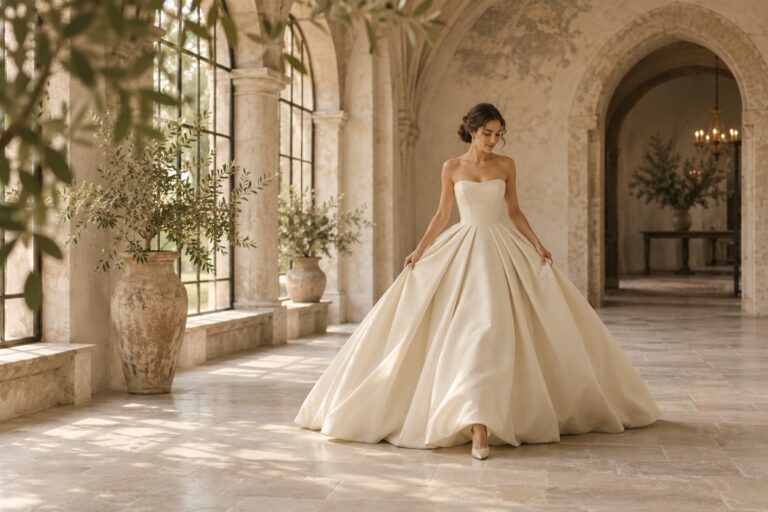
Pretty Wedding Dresses for the Ceremony and Reception
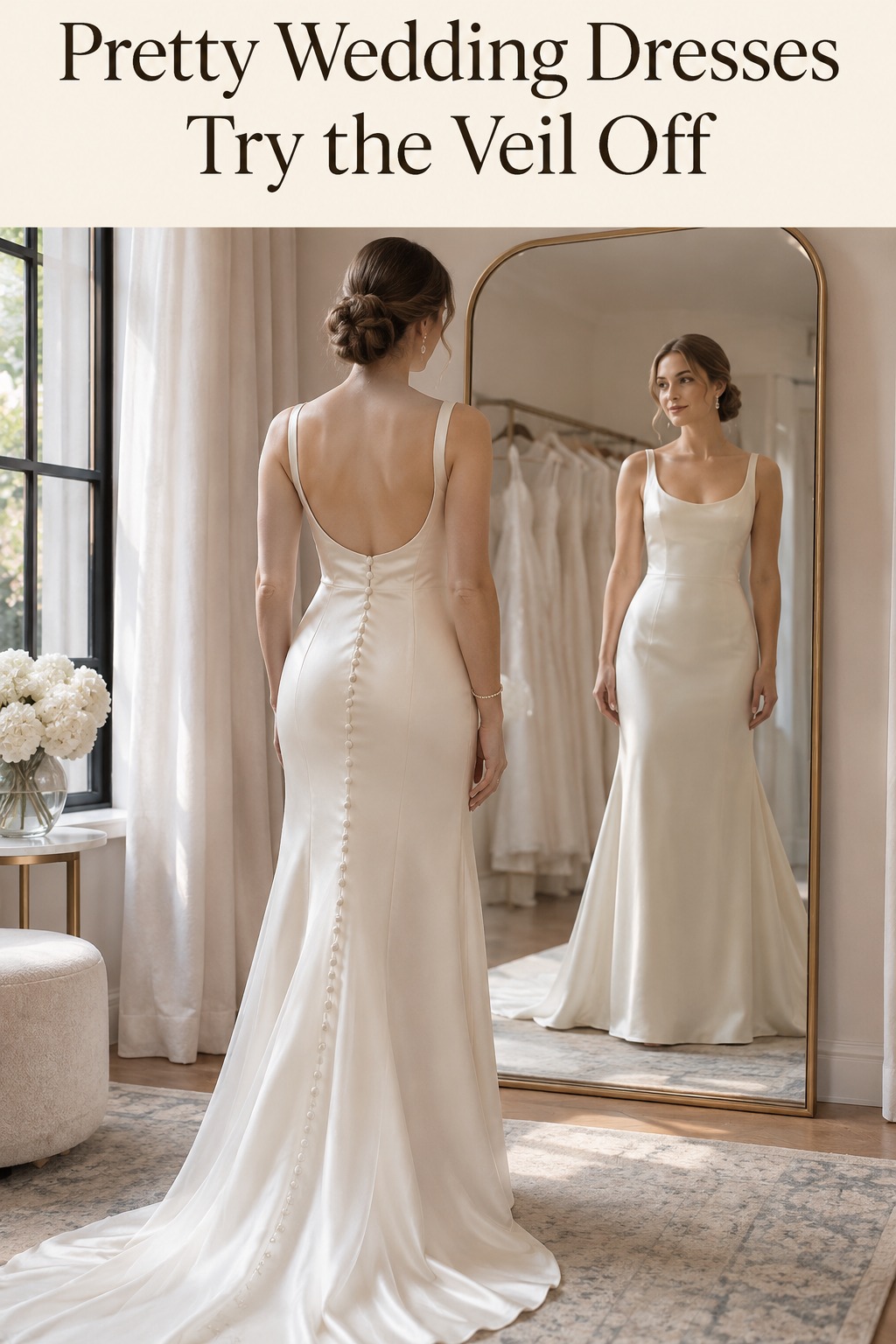
If you’ve saved a dozen pretty wedding dresses, picture yourself in each one halfway through your wedding. The veil is off. Someone has handed you a drink. You can see the dress in a full-length mirror again, and you still have dinner and a dance ahead of you. Would you be happy with what you’re wearing?
I’d choose the gown I like in that moment and work back to the ceremony. A pretty dress can be expressive on its own, even if it has only a softly folded neckline or a panel of lace. Try a veil for the vows and see if a ribbon bow gives the dress something different at dinner. You may prefer the dress with the same earrings and nothing more. A small set built around one gown gives you those choices without packing a second outfit.
Build the look from three pieces
A dress with a detail you want to keep
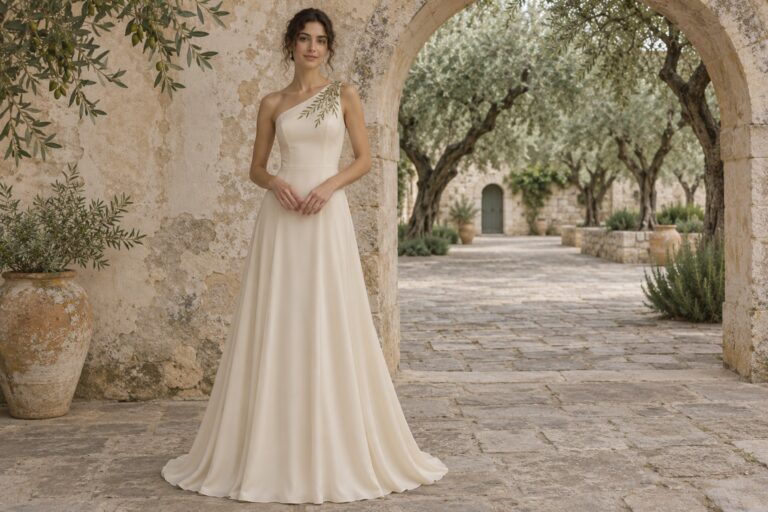
Make the dress your first piece. Look for one feature you would recognize again without a veil, bouquet or styled backdrop. It might be a line of buttons on an otherwise plain back, a shoulder fold that looks especially good in profile, or a row of scallops you can see as the skirt moves. If you like a clean dress, the shape of the neckline or where the waist sits can count as the feature. You can describe it to a stylist in one sentence and try another dress that does the same thing differently.
The Grace Loves Lace bridal collection gives you several ways to describe a starting point, including strapless, long-sleeved and low-backed gowns and options in lace, satin and crepe. In a salon, I’d take a plain full-length photo of each finalist before anyone adds accessories. If the feature you thought you loved disappears in the photograph, see if it shows in the way you move or in a closer view. It may be something you enjoy for yourself, even when it sits quietly in a group picture.
Turn wedding inspiration into a plan you can actually follow.
Zarellea brings your guest list, budget, vendors, and day-of details into one shared space — so no beautiful idea gets lost in the shuffle.
A ceremony piece you can take off easily
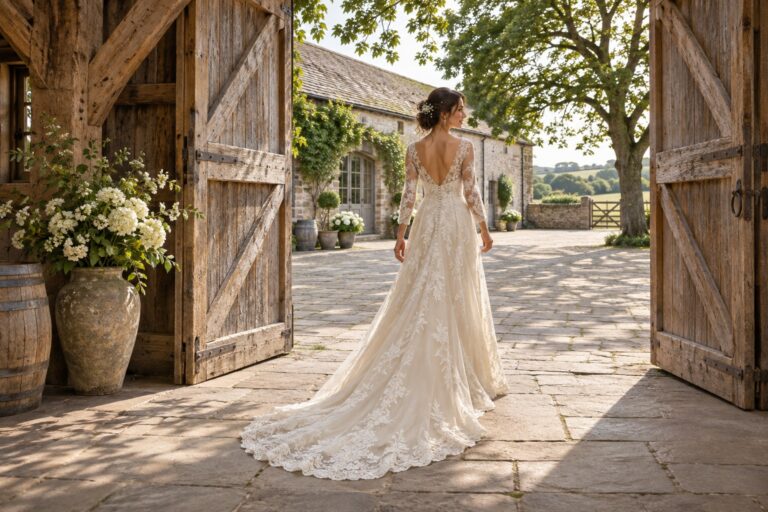
A plain cut-edge veil can soften a sharp satin neckline without asking you to carry two busy patterns near your face. On a dress with a patterned back, try it from behind before deciding on the length. Look at where its edge lands on the dress, including where the comb sits and where the fabric ends. If the veil ends at a line of buttons you especially like, have the stylist try a higher or lower position before you order a different length.
Some gowns have their own removable ceremony piece. In its bridal collection, Allure describes a structured A1504 gown with detachable off-the-shoulder straps and pearl accents on the bodice. That is one example of how the shape near the face can change without swapping the whole gown. Ask the salon to show the fastening open and closed. Try the dress in both states. You want to know how the bodice looks and feels when the piece comes off, especially if you are considering taking it off before the first dance.
A small detail that works all day
Small pearl studs are one option for an anchor. You can put them on while getting ready and let them stay through both looks. The exact ones I’d try depend on what the gown already has. If it has noticeable pearl straps, I’d pick studs with a similar tone and see whether they read as part of the dress. If it has a folded neckline with nothing on the surface, I’d try them at the same time as the veil to make sure I like the overall line from ear to shoulder.
An anchor can also be shoes you want to wear all day or a hair shape that holds its own once the veil is off. Wear the same shoes or hair shape in both fitting photos so you can see what each switch actually changes. You might find that putting your hair up gives the shoulders the clear space you originally tried to get with a different neckline.
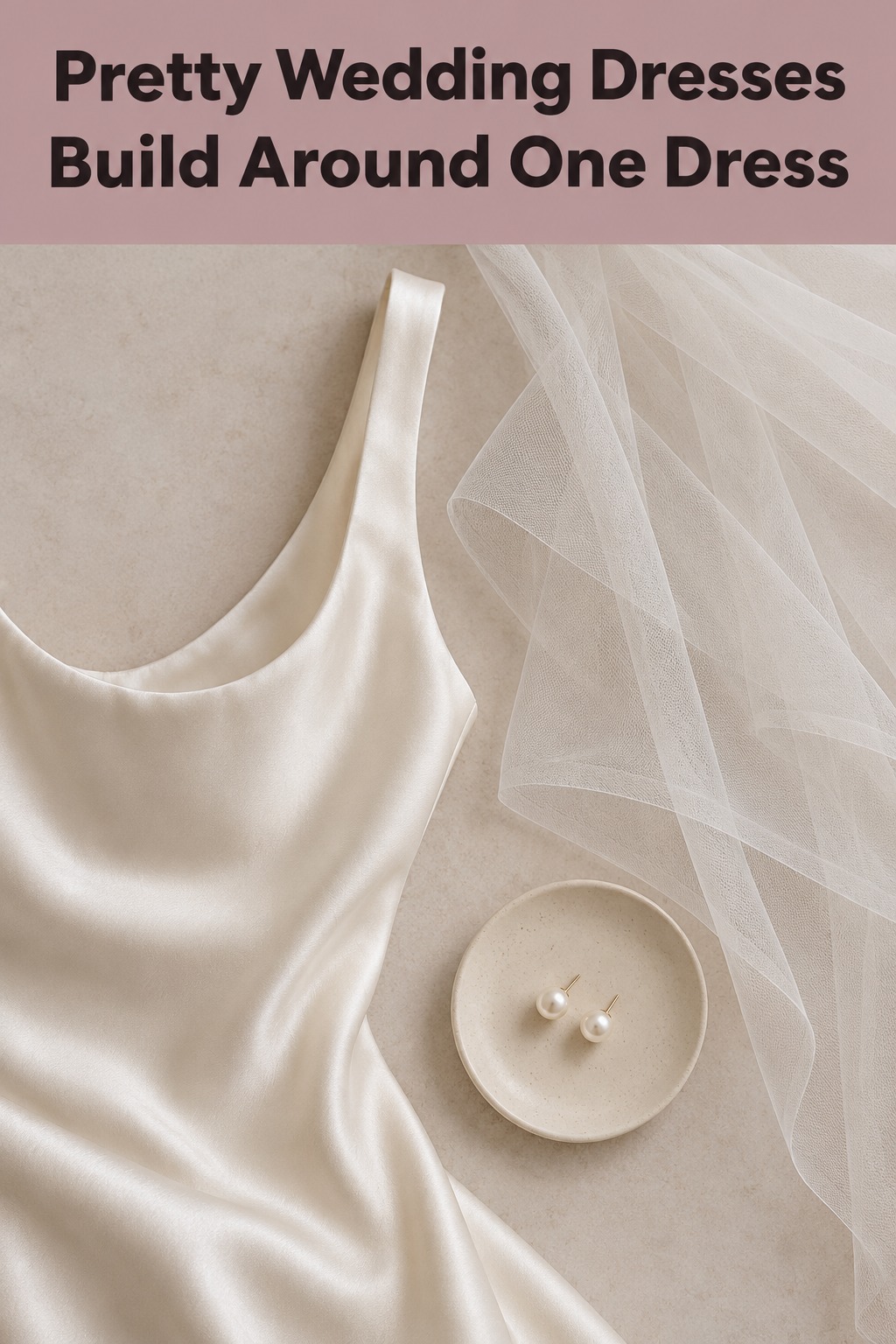
Combine the pieces for three bridal looks
The scoop-neck satin gown with a soft exchange at the back
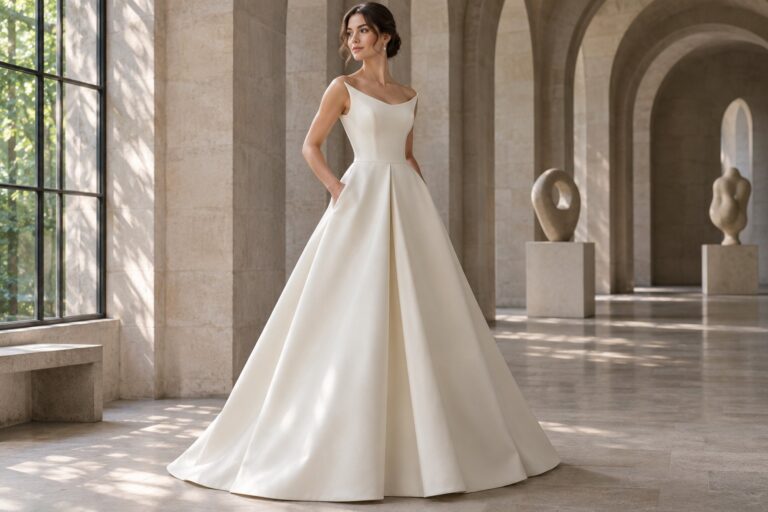
Picture a scoop-neck satin dress with a smooth front and buttons trailing down the back. Add a single-tier veil for the ceremony and wear simple studs in both parts of the day. For dinner, take off the veil and try a small ivory ribbon hair bow at the base of a low bun. Match its scale to the buttons. A modest bow lets the button line remain visible, while a large one may pull the eye up toward the hair. If you like the larger shape, I’d consider it when the back of the gown is very plain.
At the hair trial, have the person doing your hair place the veil and clip the bow in the same general area so you can see the difference. The bow needs a place to grip once the veil comb is gone. If the veil sits high and the bow sits low, ask for a photo of each spot. Give the pictures to whoever will help remove the veil and place the bow.
The lace gown that needs very little added to it
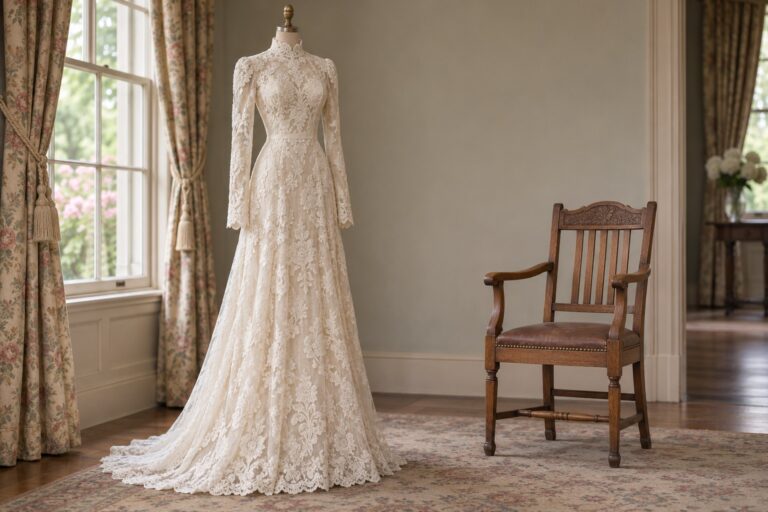
For a lace dress with a scalloped neck and a delicate sleeve, I’d try one ceremony piece that leaves the edge of the lace visible. Put on a plain veil first, then turn sideways and see whether it makes the sleeve pattern more difficult to see. If that pattern is the part you like, set the veil further back or wear the gown with only the studs. Have someone photograph both arrangements from the side before you move your hair.
For the reception, a small ivory satin clutch gives you somewhere to put lipstick and a room key. The clean surface can sit against the lace without adding another pattern. I would check that those things fit before I bought one. Try holding it as you would at a table or for portraits. If you’ll have a place to leave your things, you can simply leave the bag there and keep the lace and earrings as the finished look.
The shorter gown that reads bridal all day
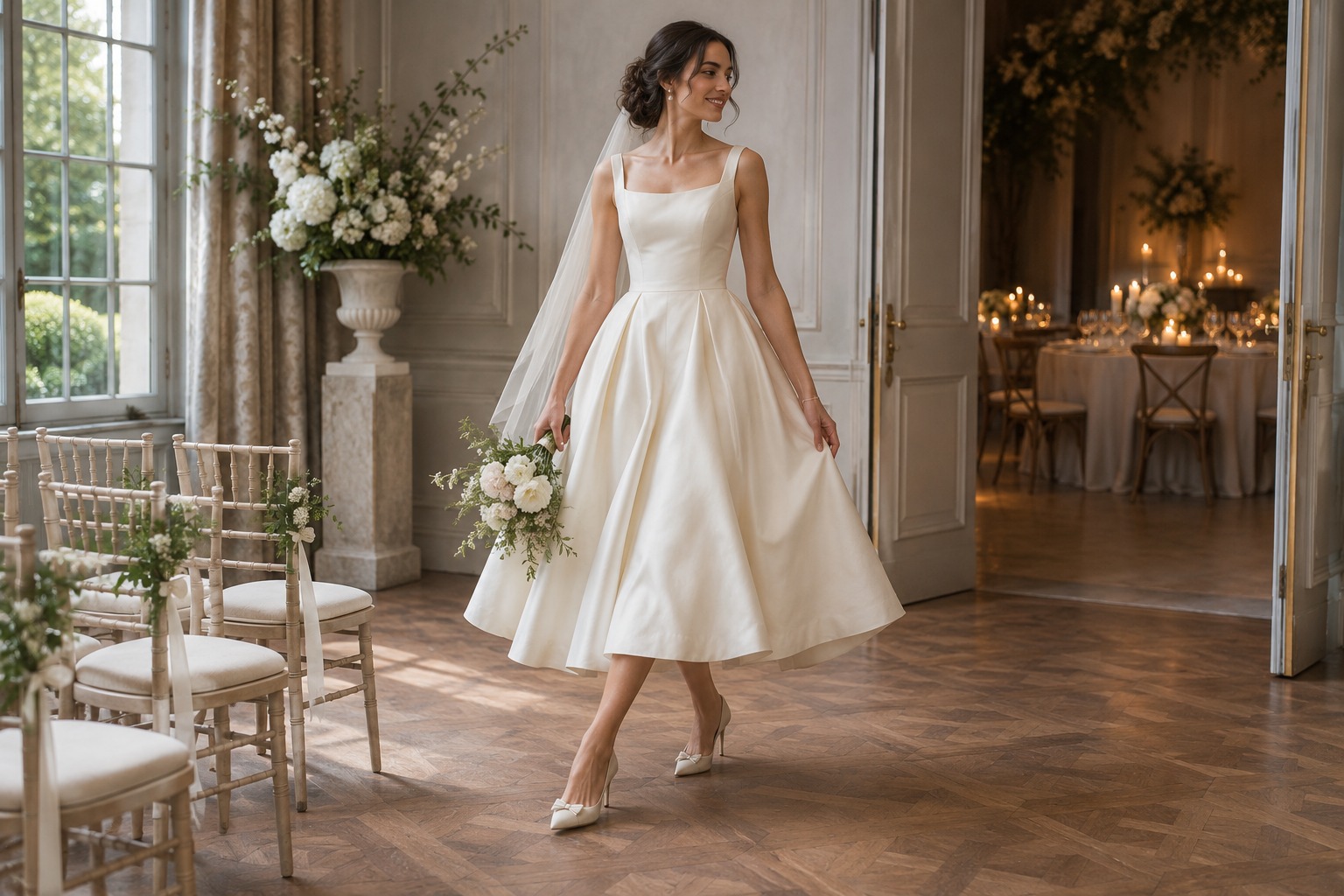
A tea-length dress with a curved neckline and a crisp skirt can work with the same ceremony-to-reception idea. Try the gown in the shoes you expect to wear and let the space between the hem and the shoe stay visible. A single-tier veil can add a longer line from behind or stay close to the shoulders if you prefer a short version. With a defined skirt, I’d choose where the veil ends by looking at the side view. The edge of the veil can make a new horizontal line. Sometimes that makes the outfit feel busier than you intended.
If the main reason you chose the dress was the way its hem moves, you can take off the veil and leave the rest of the look intact. Try twirling once in the salon or walk briskly if the shop allows it. If you like the dress more when it is in motion, save a short clip next to the still photo so you can remember why. If you already like the look with the veil off, give the shoes a chance to show when you move.
Pieces for one dress and two looks
Try the gown with one sheer layer
Trade the veil for a soft ribbon
Wear the same pearl studs with both looks
Keep the bow and lipstick together
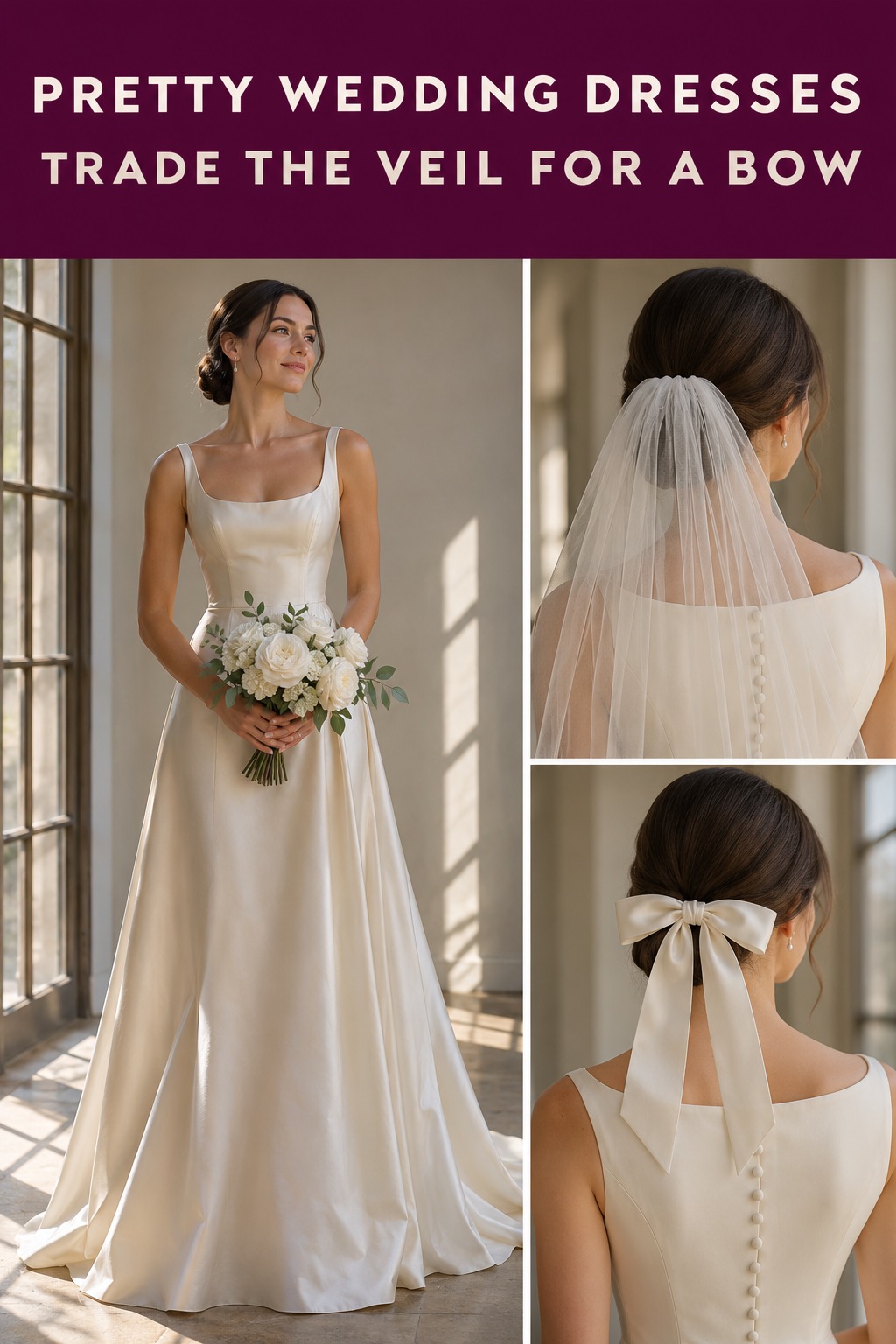
Spend on the parts that stay with you
Put the fit ahead of the extras
Set your budget for the complete dress before choosing accessories. Ask what work the shop expects at the neckline, hem or sleeve, and how much of that work will be quoted after the dress arrives. If the shoulders need attention, try the dress once with the two styling options you are considering. A collar or clip can give you a false sense of how the bodice will sit if it happens to pull the fabric back into place. You should be able to stand and turn in the base gown in the way you expect to wear it.
An heirloom or something you already own can finish the look. Bring the exact object to a fitting and take a picture of the part you would have to change to make it work. If the item is a favorite pair of earrings, you might decide to wear them and keep the new purchase to a veil. I’d compare the pieces on the body before I swapped an object with a personal meaning for a closer match in color. A little difference can be lovely when it’s where you can actually see it.
Give each extra a job and a place
I would buy a second hair accessory only if I can name the moment it goes into the outfit. If it’s for dinner, identify who can help and where you can do the switch. Put the bow in the small bag you’ll take into the reception room, or give it to whoever is doing the switch. If each piece can stay out of the way of the other, put both pictures on your phone and show the person helping how it should look.
Think about the veil after you’re done wearing it. Ask the salon how to fold or hang the one you’re considering and use the storage they recommend for that textile. Give your helper a place to put it in the changing room. If you wear a small bag at the reception, decide when you’ll collect it and where it will wait while you dance. If the plan has you carrying both pieces during the first dance, I’d skip the swap or leave the bag at the table.
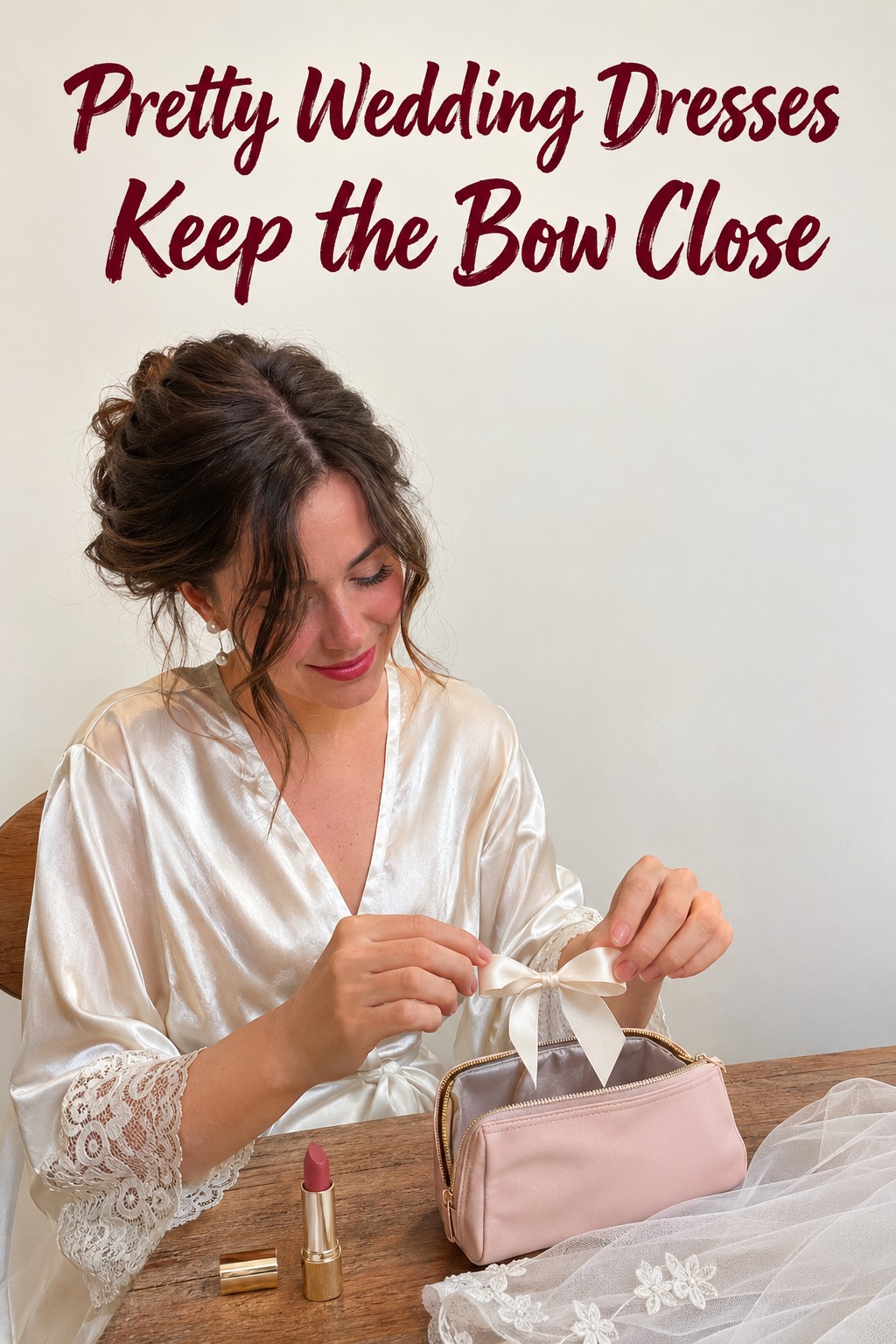
Adapt the same dress as the day changes
Plan for a warm or breezy walk outdoors
Try the ceremony look with a practice walk somewhere the venue allows. Find out how the veil behaves in an open section, especially if it is longer than the gown or you have to cross a terrace before the ceremony. Ask the hair stylist if removal after the ceremony is possible without disturbing the style. At a venue with a breezy path, I might save a longer veil for a sheltered portrait and wear an already finished dress for the walk.
Use roughly the same shoe height throughout the day unless a fitter has confirmed the hem works in both pairs. Bring both pairs to the fitting if you want to trade a heel for a flat. Ask the fitter to check the dress as you walk in each pair. If the gown is already short, you can decide based on how the shoe feels and what you want visible from the front. Do a few steps outside if the shop permits, or ask it to help you compare using a suitable surface indoors.
Let the evening light change what you notice
A satin dress that looks quiet outdoors may have more visible folds next to a warm lamp at dinner. Lace that was obvious in a window can sit much closer to the base color indoors. If you have the opportunity, look at the complete outfit with warm indoor lighting at the last fitting. Take one photo from the length of a dinner table and another with the neckline and earrings in the frame. Look at whether the part you wanted to keep visible actually shows after the ceremony layers come off.
Ask the venue how the dinner room usually feels at the time you plan to arrive, especially if you want to keep the layer on indoors. Try the dress without the outside layer and again with it on. If a coat covers the neckline during a walk from the car, your earrings or ribbon can be the visible part of the outfit until you reach the room. Keep the one change that makes a difference in the place where you’ll be.
Editor’s take
I’d choose the dress I would happily put back on after the veil came off. That makes the rest of the outfit easier to decide, especially when one built-in feature, such as a neat row of covered buttons or a lace edge at the shoulder, already carries some of the interest. I would budget for the fit and keep something familiar, perhaps a pair of earrings, before buying a second set of accessories. The exception is a ceremony piece you have always wanted to wear or need for the setting. Give that piece a specific place in the day. At your next fitting, take a photo without the extra layer and look at it before you ask for anything new.
Sources and methodology
The linked bridal collections give examples of necklines, fabric, and removable straps. The outfits and fitting exercises are editorial suggestions based on that research.
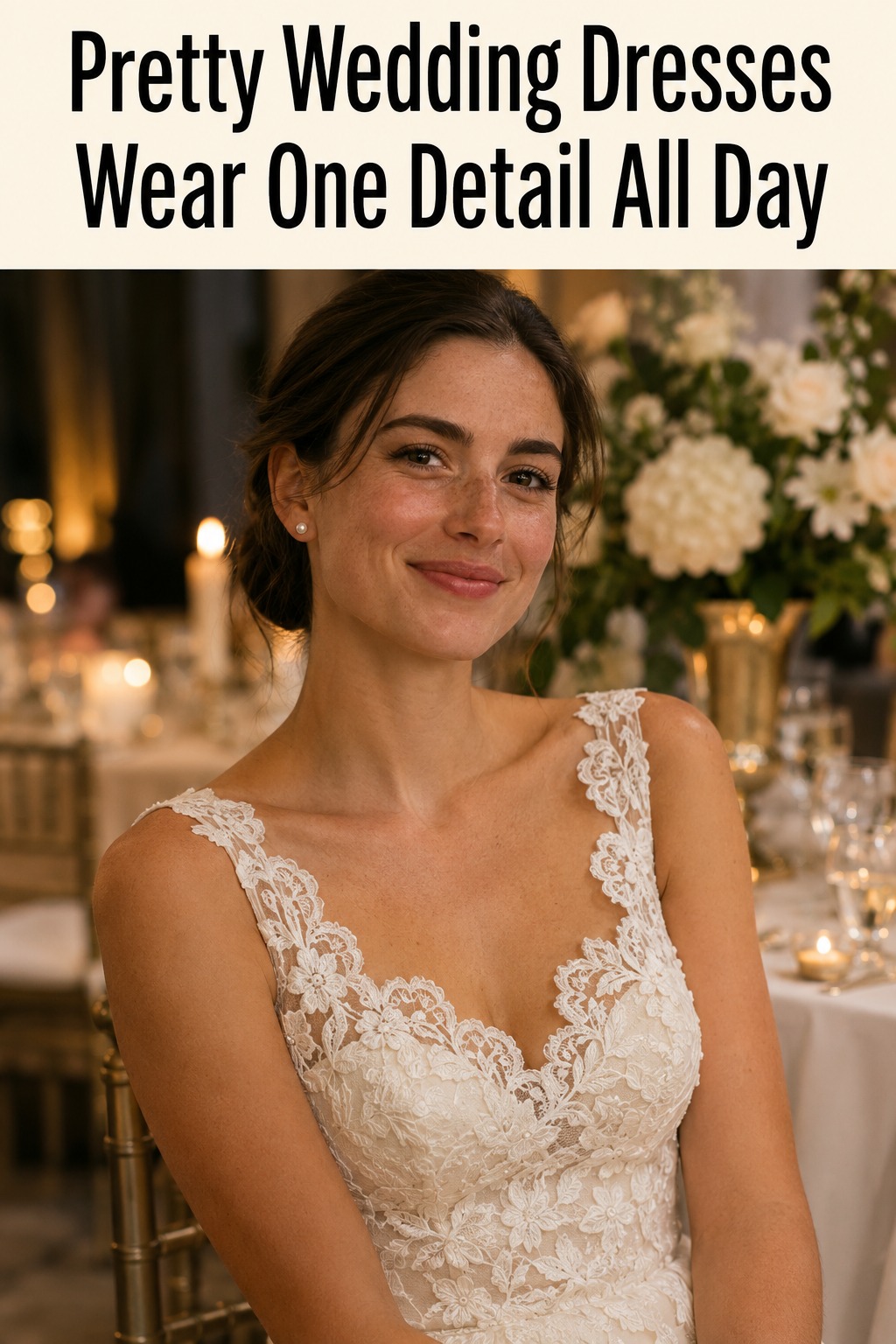
FAQ
How do I choose between two pretty wedding dresses?
Compare them in the shoes you plan to wear without the extra styling. Take a front and side photo in each and write down the first thing you like about the dress. Choose which of those features you want with you for the whole day. Ask about any fitting change on which your decision depends.
Do I need a different dress for my reception?
One dress can work if you like it with the ceremony accessories removed and can move comfortably during the reception. Try the base gown on its own before ordering it. If you have a second outfit you would enjoy, give yourself a place and time to change.
What veil goes with an embellished dress?
Start with a plain style and see which parts of the dress remain visible under it. Position the comb where you plan to wear it and check the edge against the sleeves or back. If you would like a decorated veil, compare it in the same place with the gown so you can see where the patterns meet.
Can I wear a hair bow after a veil comes off?
Ask the stylist to place the bow during a hair trial and check how it grips once you remove the veil. A small ribbon clip can work when there is a clear place to attach it. Have whoever is helping rehearse the change or save the reference photo where they can find it.
What should I buy first after the wedding dress?
Start with anything the fitter needs to set the hem or bodice, such as the shoes you’ll wear or the undergarments you’ve chosen. Try jewelry or a veil you already have before ordering a replacement. Buy an extra accessory when you know what it adds to a specific look.
Do the accessories have to match the dress color exactly?
Try them beside the dress and look at where each one sits. Two ivory shades can read differently when they touch, particularly near the neckline. A piece in the hair can be farther from the fabric and may look right even when the two colors differ.