Funny Save the Date Ideas: Build One Good Joke
An inspiration folder can leave you with a photo strip you like and a pet illustration you also want. Putting both on the card means organizing pictures and artwork before you have settled on the joke. That is a lot of work for an announcement whose premise is still undecided.
I would decide on one bit of humor first. For funny save the date ideas, my priority is a joke you both enjoy beside wedding information that is easy to find. A short line may be enough. If it needs a photograph or a drawing, you can develop that part once you know what you want it to say.
Keep a small set of announcement building blocks
Begin with a plain draft that contains no joke. Greenvelope’s wording guide identifies names, the date, the city or destination, and an invitation-to-follow line as the basic information. Put your confirmed details together first. You can move that block through several designs without rewriting the wedding every time you change the headline.
For a working layout, use placeholders until the details are settled: your names, your wedding date, your city and state, and a line explaining that an invitation will follow. Keep those placeholders visibly unfinished during design. Before sending, replace them and check every occurrence, including any text tucked into a photograph. A funny card still needs to announce a particular wedding.
Turn wedding inspiration into a plan you can actually follow.
Zarellea brings your guest list, budget, vendors, and day-of details into one shared space — so no beautiful idea gets lost in the shuffle.
Pick one small observation
Look for something you can explain without telling a long story. Perhaps you both rearrange the refrigerator magnets or have strong opinions about which mug belongs to whom. If a shared habit makes you smile, write down the observation in ordinary language before trying to make it a headline. Use a habit that is actually yours; the examples here are imagined starting points.
Ask whether you both enjoy being part of the joke. Leave out an argument one person still finds upsetting. I would favor a tiny domestic disagreement you can now laugh about together. If nothing comes to mind, an unnecessarily official approval stamp gives you an absurd design device without requiring a personal story.
Give the visual cue a limited job
A drawing of two mugs can support a line about sharing cupboard space. It does not also need a cartoon kitchen, a timeline of your relationship, and speech bubbles. Sketch the smallest object that makes the premise understandable. You can add detail later if the card feels unfinished, but first see whether the simpler drawing already says enough.
The same choice applies to photographs. If the humor comes from your expressions, use a background that leaves those expressions visible. If the humor is entirely verbal, you may prefer no photograph. A portrait is optional in this system, which is useful when one person dislikes posing or you do not have a picture you both want to distribute.
Keep the information independent
Move the names and date together when you try a different layout. That gives you a reusable information block beneath whichever joke you choose. On a mock document, for example, an amusing label can sit at the top while the wedding date appears plainly below. Someone who misses the joke can still find the day.
Combine the pieces into four funny save the date ideas
Try one of these imagined combinations on a rough page before choosing stationery. Each gives the humorous line and its visual cue a different share of the space. The proposed copy is for you to adapt; none describes a real couple or an actual wedding.
The overqualified approval stamp
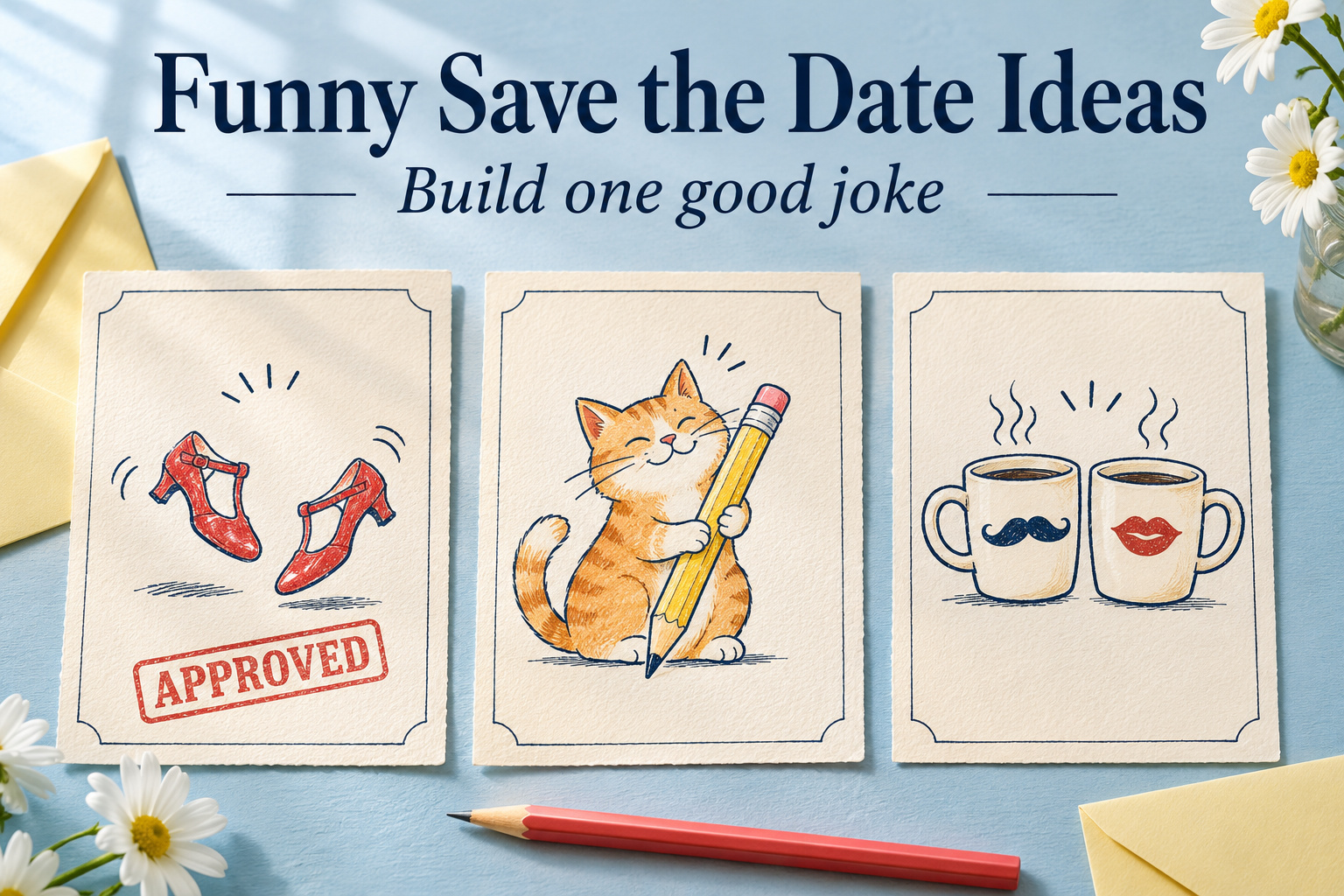
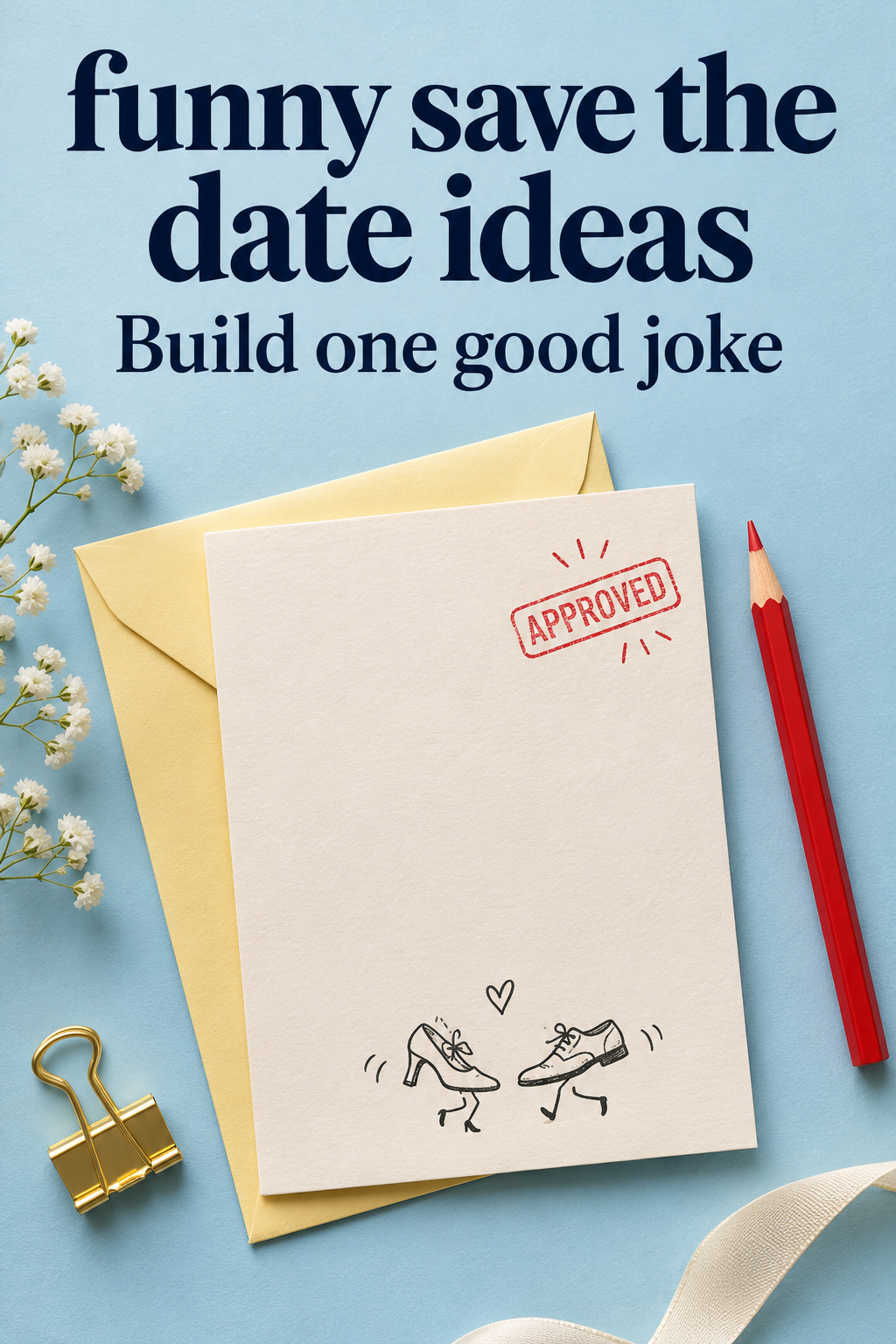
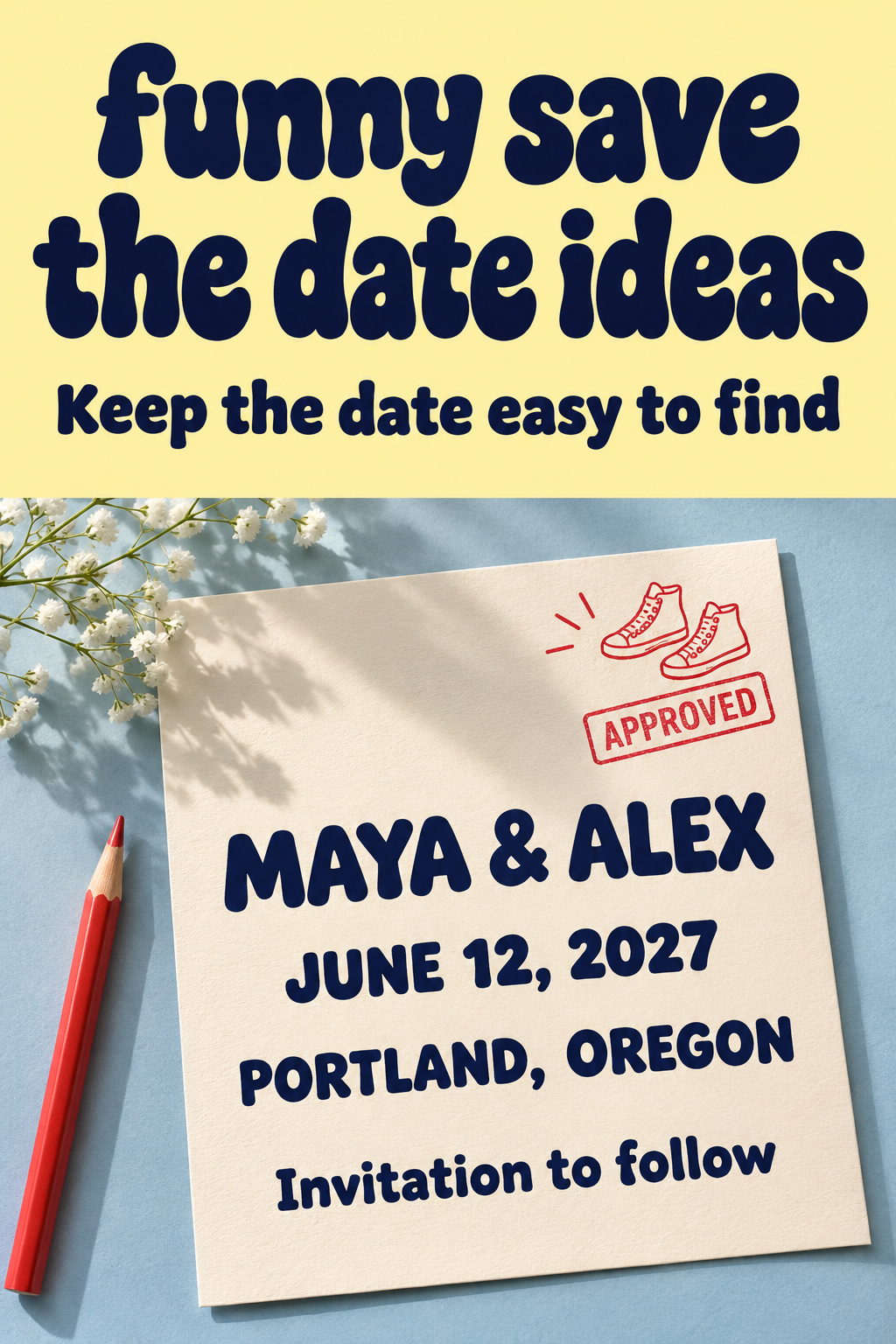
Use a very serious-looking box around a deliberately modest statement: “Our dance moves remain under review.” Under it, add a small stamp reading “Wedding approved.” Below that, place the straightforward announcement and your details. The joke comes from giving ordinary wedding excitement the paperwork treatment. It does not need a fake government seal or anything resembling an official notice.
For the visual cue, draw a tiny pair of dancing shoes beside the stamp. Leave the factual text outside the stamped area so the playful document has a clear ending. If you dislike dancing, replace that premise with a harmless shared interest. “Our playlist negotiations continue” could work if choosing music is something you actually joke about together.
I would stop at one absurdly serious label. A page full of comic forms gives the reader several jokes to work through and leaves less room for the announcement. A plain envelope can let the card provide the surprise. Check the first visible words so someone opening it can still recognize its wedding purpose.
The pet-appointed editor
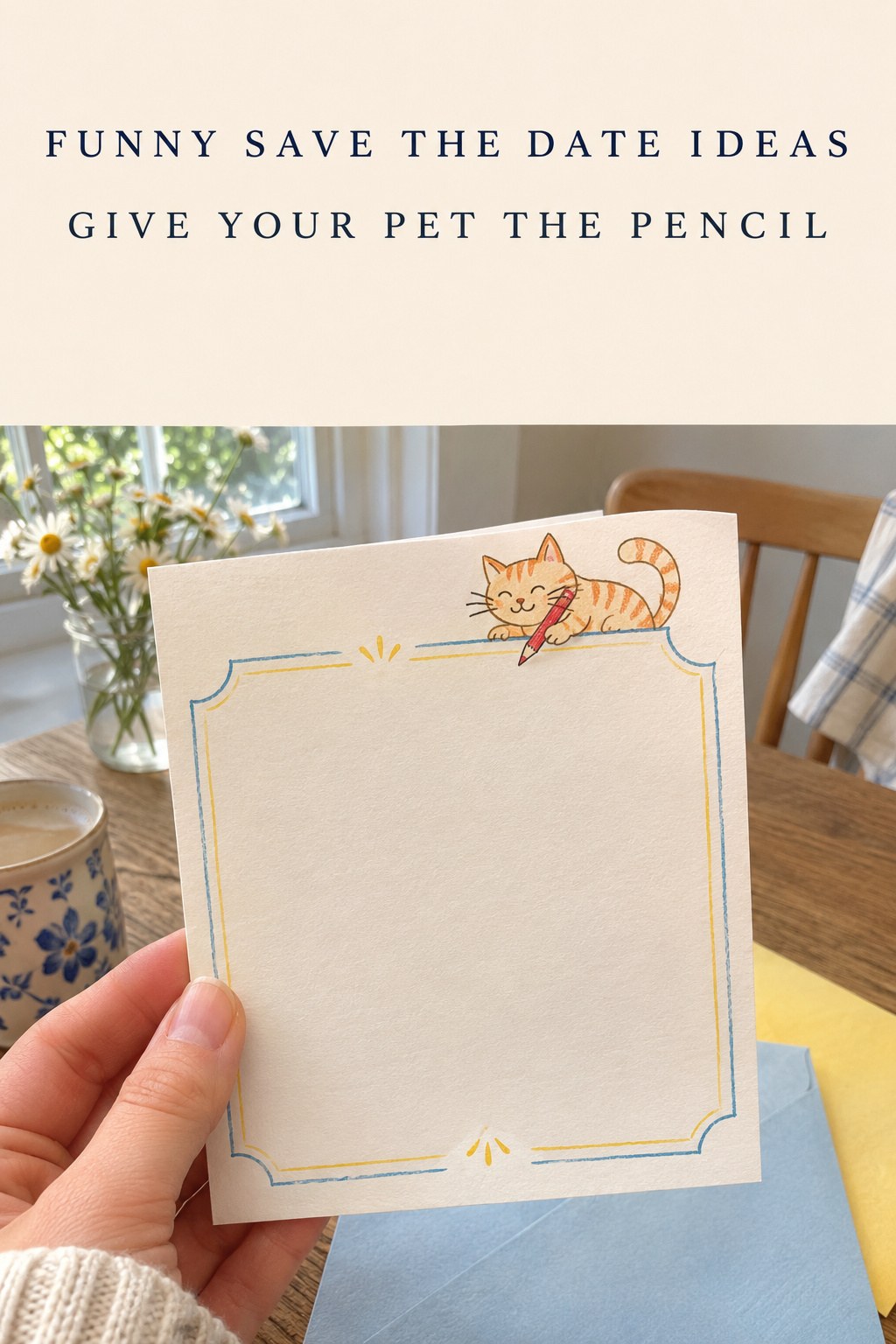
Imagine a small drawing of a cat sitting on the edge of a paper announcement. A short caption reads, “The cat has requested a larger announcement.” Your wedding details occupy the generous space below. The imagined editorial interference supplies the humor; the cat does not have to appear in costume or perform a trick for a photograph.
Adapt the animal only if a pet belongs in your own story. You could write, “Our dog has delegated the paperwork,” beside a relaxed dog illustration. Present that as playful fictional narration. Avoid wording that accidentally suggests the animal will attend the ceremony unless you have actually made that arrangement and want guests to know.
A pet drawing gives you something personal to show when you would prefer no portrait. Choose a recognizable detail you care about, perhaps an ear shape or a familiar sleeping pose. There is no need for a costume. If you have no pet, one of the other combinations will give you a premise you can actually use.
The two-expression photo strip
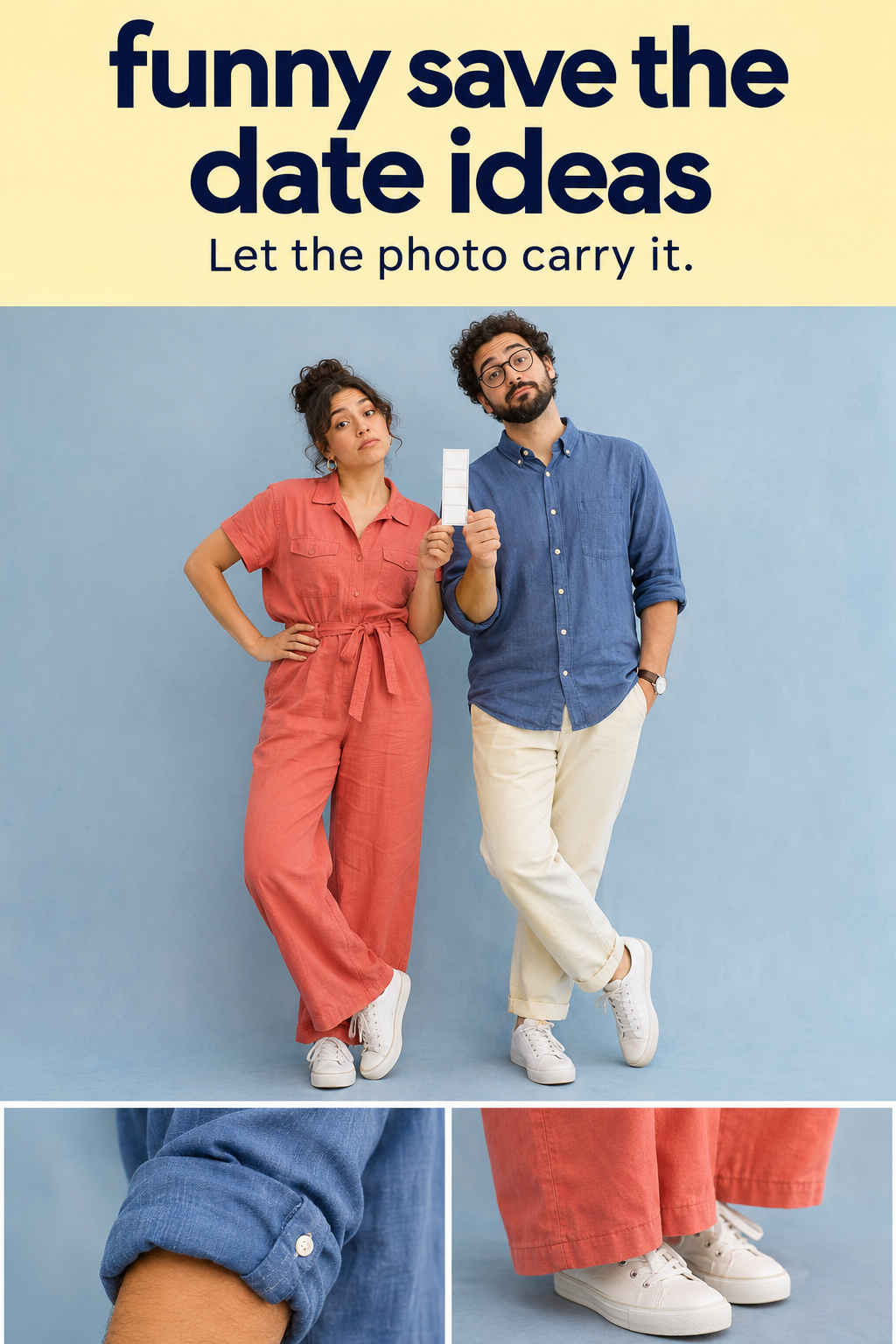
Pair one deliberately solemn portrait with a second picture in which the pose has fallen apart. A possible headline is, “Our serious announcement lasted one photo.” Then put the wedding information underneath. The contrast between the two expressions carries the joke, so the written line can stay brief. Both pictures should be ones you are happy to share.
You can try this at home against a plain wall. Wear clothes that feel like your ordinary selves, or dress up if that contrast is part of the idea. Coral clothing against a blue shirt is one possible color combination, not a required outfit formula. Leave room around the people so you can try the images beside each other or in a narrow strip.
Review the pair together before building a finished design. A photograph that looks funny to one person may feel unflattering to the other. If you cannot agree on the second frame, use a single expression and a different caption, or move to a no-photo idea. The announcement should not require anyone to surrender a picture they dislike.
The household merger
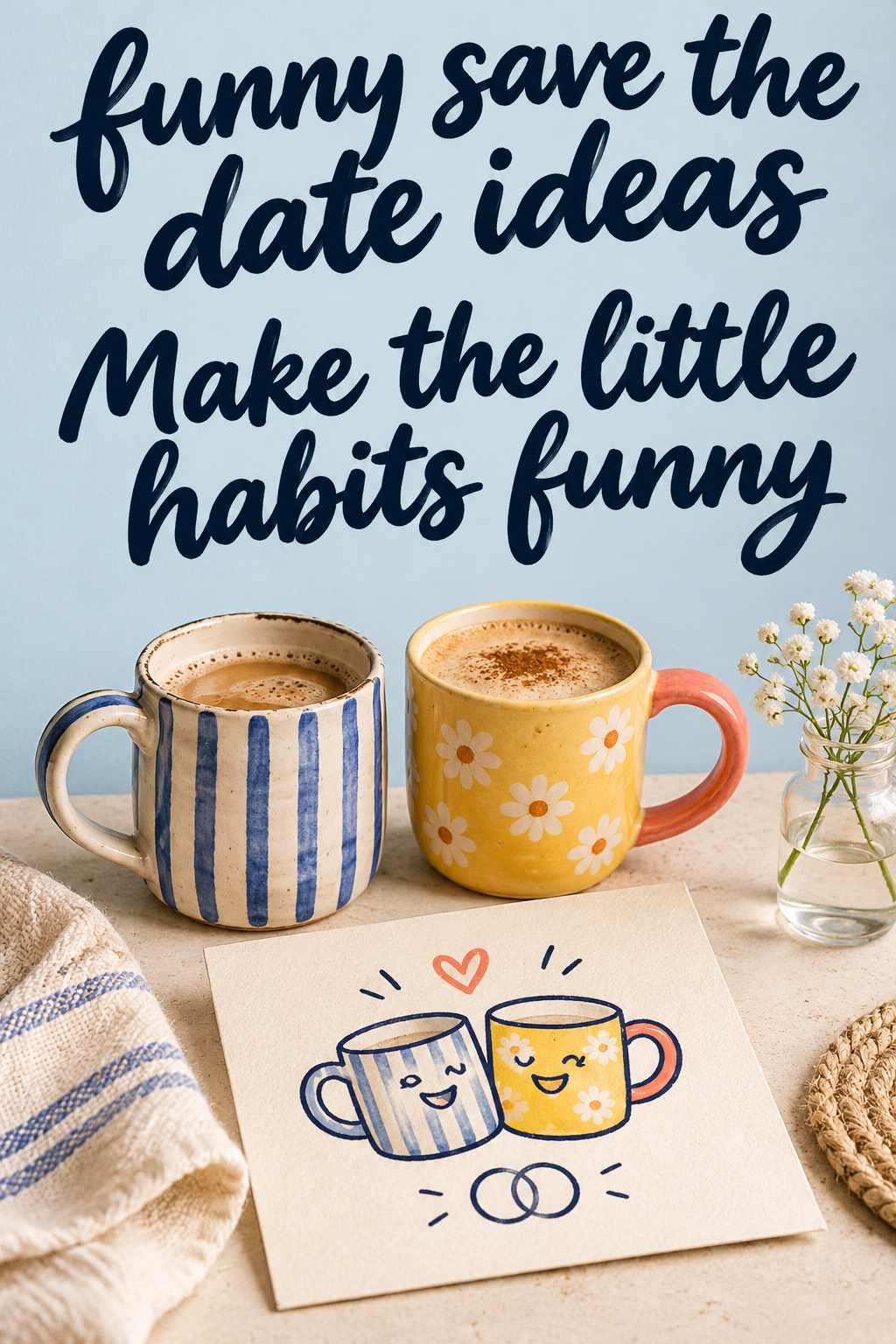
Start with a pair of simple mug drawings and the line, “Two people. One ongoing mug ownership dispute.” Follow it with “We’re getting married” and the factual block. The mildly bureaucratic idea of joining a household gives the copy a little structure without making marriage sound like a punishment. Use the premise only if it feels affectionate to both of you.
For a gentler version, try, “We have agreed on a date. The mugs are next.” A small drawing of two different cups supports the sentence. You could substitute bookshelves or another harmless shared habit, but keep the object specific. Broad jokes about one partner being difficult tend to lose the warmth that makes the domestic version appealing.
Try the mug sentence on its own, then add the drawing. If the cups crowd the names, move them to a corner or take them out. The wording still explains the premise, and you may prefer the dry delivery of a mostly blank card.
Put your effort into the part that carries the joke
Before paying for a finished design, cover part of your rough draft and see what stops working. The photo strip needs both expressions. The household version needs its sentence. Put your effort into that part first, then decide what decoration you still want around it.
When the sentence is doing most of the work
Write several versions in a plain document and read them aloud. Remove introductions that explain why the joke is funny. Replace a vague word with the actual object you mean. “Our household negotiations continue” becomes more personal when it names the mugs, provided the mugs are relevant to you. Keep the line that sounds like something you might say.
An editable template can be useful once you know how much space that sentence needs. Check that you can change the wording you care about and see the design with your real names before committing. Avoid selecting a layout solely because the sample joke is good. If your own sentence does not fit, the template may solve someone else’s announcement more neatly than yours.
When you want an illustration
Send the proposed words with your illustration brief. Describe the object or animal you want and show where the wedding facts will go. If the joke needs two mugs to look different, explain how. That gives the artist a specific task; a request for a generally funny style leaves the relationship between words and drawing unresolved.
Ask what the proposed work includes before ordering, including revisions and the finished files you will receive. Those details depend on the particular designer or seller. I would settle the headline before asking someone to perfect a drawing around it; changing the premise afterward can mean changing the artwork too. Keep any purchased design within its stated terms of use.
When your expressions are the premise
Try a rough photo pair before planning a larger shoot. The test tells you whether you both like performing this particular idea. Check the images at the size they will appear on the announcement. If the funny expression becomes too small to read comfortably, change the crop or simplify the composition before arranging more photographs.
If you work with a photographer, explain the intended pairing and the space needed for text. Agree on which kinds of expressions or poses each person is comfortable trying. You can keep the styling ordinary. Matching clothes, props, and a special location each add another decision, and none is necessary unless it contributes something you want in the picture.
Adapt the same announcement for its audience and season
A private joke can remain personal without asking every recipient to know its history. Keep the recognizable object or situation and remove the explanation that belongs to your relationship alone. Someone who has never visited your kitchen can still understand two people joking about their mugs. They do not need the full account of how the dispute began.
Give unfamiliar readers enough context
If the headline uses a nickname, consider whether people on both sides of the family will recognize it. Your plain name block can do that work even if the humorous line stays informal. Ask a willing reader who does not know the backstory to explain what they think the card announces. Listen for uncertainty about the occasion as well as the joke.
When a premise needs a paragraph of explanation, simplify it or save it for a smaller audience. I would keep the same factual block for friends and relatives, even if you soften a headline. If you do make different designs, compare their information side by side before sending either one.
Change seasonal details only when they help
A winter version of the mug idea might use the cups you actually enjoy at that time of year. A summer version could leave the same line beside a lighter drawing. Neither needs a weather promise or a new joke about the season. Keep the association loose if the wedding setting and the pictured object have little to do with each other.
An internet reference may be exactly what you want as a record of this moment. Before making it the whole premise, read the wedding statement as if you had never seen the reference. If the occasion is unclear, add enough context to explain it or give the reference a smaller place on the card.
Edit the joke without disturbing the wedding facts
Read the headline for tone, then cover it and read the wedding details alone. Look at the whole card afterward. You may notice a date pushed into a decorative corner, or a follow-up line that sounds like another joke. Give each of those problems its own revision before approving the layout.
Remove accidental event promises
Consider the draft line, “Our dance moves need supervision. Drinks are on us.” The first sentence supplies a playful premise. The second introduces a claim about the celebration. If you have not confirmed that arrangement, remove it. A joke about yourselves gives you more room than a promise about what guests will receive.
Likewise, a playful ticket or poster should not invent a start time to complete its design. Leave unconfirmed schedule information out. You can use a decorative label such as “Wedding announcement” where a mock ticket would otherwise demand a time. Treat anything a guest might use to make plans as actual information, even when it appears inside a visual gag.
Check the person behind the punch line
Read each line from both partners’ perspectives. Ask who is being described as reluctant, incompetent, or difficult. If one person becomes the permanent target, change the premise to something shared or use an absurd object instead. You can be funny without relying on the idea that one partner has been trapped into marriage.
Take the same care with photographs involving anyone else. Ask whether they are comfortable appearing in the announcement and with the proposed caption. A childhood picture or a family snapshot can include people who never expected that use. If getting agreement becomes complicated, a new photograph of just the two of you or an original drawing may be the simpler choice.
Make the final version easy to read
Review a print sample or the actual file you intend to send. Read it without zooming in to rescue small lettering. Check names and the full date against your confirmed plans, then inspect the location and follow-up wording. If a background makes those details difficult to see, move the facts to a plain area instead of adding more visual effects.
Keep one approved copy as your reference while making any later changes. A last-minute headline revision should not quietly alter the date or remove a name. If you replace a photo, review the crop and text together again. Finish when you both like the joke and can find the information comfortably, even if another attractive idea is still sitting in your inspiration folder.
Editor’s take: choose the joke you both enjoy
I would choose the smallest premise you both want to send to the whole guest list. A modest observation about shared life gives you room to be specific without turning the announcement into a performance. The photo strip is worth trying if you enjoy making faces together; otherwise, a dry line and a small drawing can carry the idea. These are editorial recommendations based on the research behind this guide, rather than first-hand wedding or product testing. My reservation is the private joke that needs constant explanation or leaves one partner uncomfortable. Start by writing one sentence together, then place your confirmed wedding details beneath it before choosing a finished design.
Sources and methodology
The research included US Google results, stationery category pages, editorial galleries, and a discussion about avoiding conventional romantic photographs. Paperlust’s funny save-the-date guide provided context on wording and visual formats. The combinations and proposed copy here are original editorial examples. Generated illustrations show imagined designs and people, not customer submissions or documented weddings. Product prices, popularity claims, and promises of guest reactions are not the basis for these recommendations.
FAQ
Can a funny save the date work without a photo?
Yes. Try a short original headline with a simple drawing or a deliberately serious stamp. Put your wedding announcement and factual details below. I would choose this route when neither of you wants a portrait or when the sentence already carries the joke. A photograph should contribute something you want, rather than fill a presumed requirement.
How do we make an inside joke understandable?
Keep the part another person can recognize, such as a shared household habit, and remove the private backstory. Ask someone unfamiliar with it what they understand from the card. If the premise still needs a lengthy explanation, choose a simpler version for the announcement and keep the full story for another setting.
What if we have different senses of humor?
Choose the mildest premise you both enjoy and give either person room to reject wording or a photograph. You might prefer a dry visual detail over an overt punch line. If one person feels embarrassed by the proposed card, revise it before spending time on a finished design. Agreement about the actual announcement matters more than preserving a particular joke.
Can the wording joke about an open bar or food?
Only include a statement about reception arrangements if it accurately describes your confirmed plans. Otherwise, move the humor toward your own expressions or a harmless shared habit. Check those words as carefully as the date: a guest could reasonably use a food or drinks line to understand what you are offering.
Should our funny card ask for an RSVP?
For an ordinary early announcement, I would keep the request focused on saving the date and explain that the invitation will follow. Leave response instructions for the communication that actually requests a reply. A joke about compulsory attendance can muddy that distinction, so use wording that lets guests understand what you need from them now.
How much funny wording is enough?
Start with one short headline and read it beside your details. If the picture already contains the joke, try removing the caption entirely before adding another line. Keep additional wording only when it helps someone understand the premise. There is no need to fill every empty area with another punch line.