Guest Book Ideas for Wedding Guests Will Actually Use
A guest book can be ready on the table and still come home mostly blank. Guests may not notice it, may be unsure what to write, or may think they need to wait until the room is quiet. If the format asks for too much effort, even a lovely keepsake can feel like another task at a busy reception.
The most useful guest book ideas for wedding celebrations start with a simple question: what kind of message do you hope to keep, and what would make it easy for your guests to leave it? A short handwritten wish, a memory card, a postcard to open later, a voice message, and a signed object each ask guests to participate in a different way. None is automatically best for every group.
This guide helps you diagnose the reason a guest book might be skipped, pick a format that fits your guests, and set up a clear, low-pressure station. The goal is a keepsake you actually want to revisit, filled with messages people had room and time to leave.
Why a wedding guest book can stay blank
Before choosing a new guest book, find the friction you want to remove. A beautiful object cannot solve every participation problem. If guests do not see it, a new cover will not help. If they are not sure what to write, a bigger book may only leave more empty pages. Think through how people will encounter the activity during the event.
Turn wedding inspiration into a plan you can actually follow.
Zarellea brings your guest list, budget, vendors, and day-of details into one shared space — so no beautiful idea gets lost in the shuffle.
The station is easy to miss
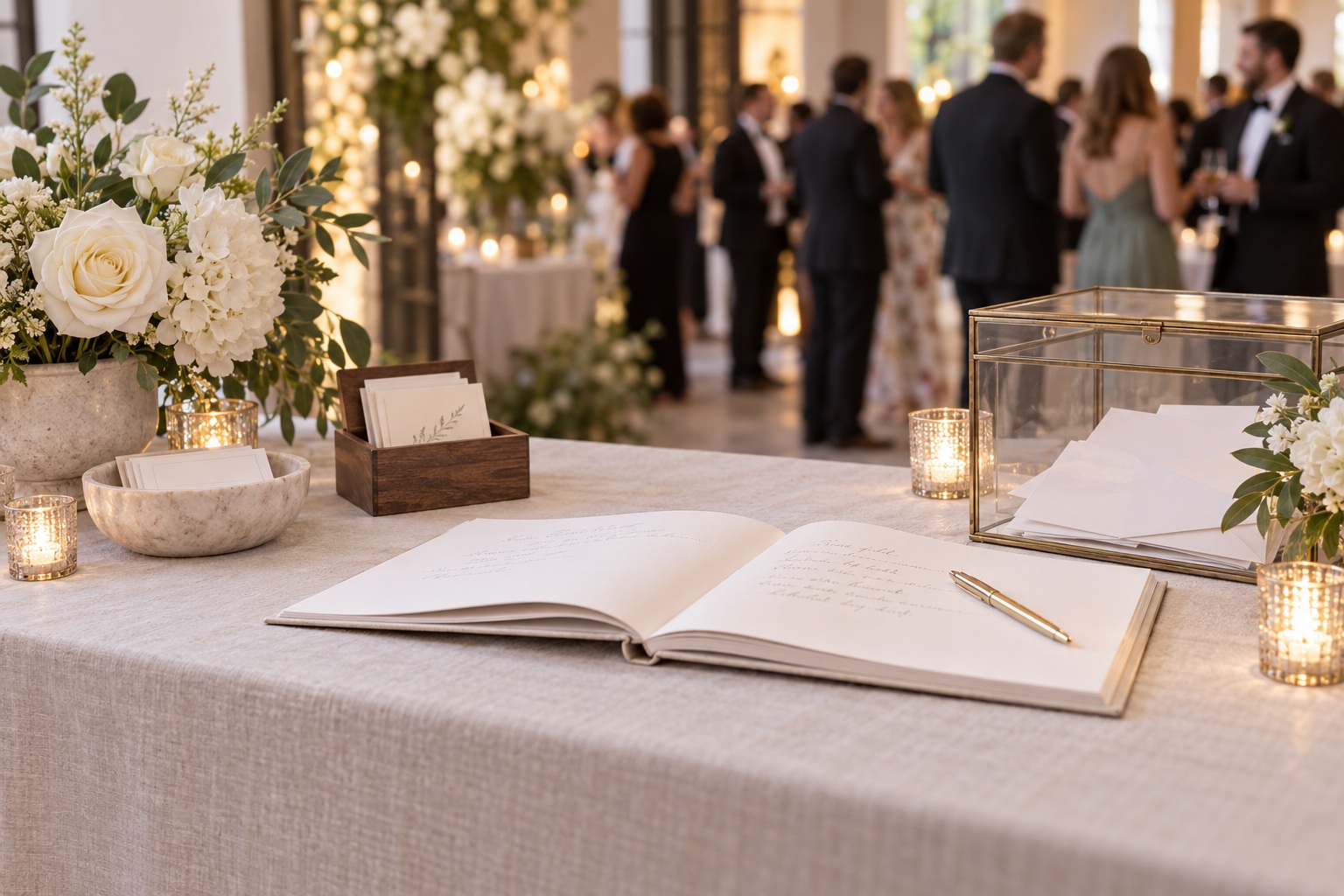
A guest book placed behind a doorway, at the far end of a room, or among several decorative items can disappear from view. Guests arrive with different priorities: finding their seat, greeting family, putting down a coat, or locating a drink. Put the book where people naturally pause, such as near the welcome table or place cards, with enough room to approach it without blocking the way.
Visibility does not require a large sign or a decorated corner. A small label with direct wording, such as “Please leave us a note,” can do more than a clever phrase guests have to interpret. The book should be open to a usable page, with the writing tool beside it. If guests have to ask where to begin, the setup is asking them to solve a problem before they can participate.
A blank page makes the first line feel difficult
Some guests know exactly what they want to say. Others worry that a short “Congratulations” sounds too ordinary or that a personal story will take too long to write. A blank page gives no clue about the kind of note you would enjoy. One gentle prompt can reduce the pressure: “Share a favorite memory,” “What should we do on our first anniversary?” or “Leave a wish for our life together.”
Keep the prompt open enough for different relationships. A longtime friend may have a story, while a colleague may prefer to offer a warm wish. Avoid asking for a long essay, private advice, or something that could embarrass a guest in front of others. If you want more than one kind of response, offer two short choices rather than a questionnaire.
The activity does not fit the reception pace
A guest who is carrying a drink, wearing formal clothing, or moving between rooms may not want to stand and write a long message. A compact card they can complete in a moment may suit a lively event better than a large bound book. A quiet nook may help someone record an audio message, while a prompt on a dinner table can work when guests will be seated for a while.
Think about the actual amount of effort each format asks from a guest. Does it require reading several instructions, handling a phone, finding a dry surface, or waiting for another person to finish? If the idea needs a demonstration, a special tool, or several steps, simplify it or choose a different format. The best guest book is one the guest can understand and complete without needing a coordinator to explain it.
There is no clear place or tool to finish the message
Loose cards need a tray, box, or envelope so they do not slide away. A book needs a pen that writes on its paper. A signed object needs a suitable marker and a safe spot to dry. Audio messages need a working device and a clear way to start and stop a recording. If the last step is unclear, guests may leave a card beside the book or walk away before saving their message.
Write down the whole sequence from a guest’s point of view: notice it, understand it, contribute, and put the item where it belongs. If any step relies on guessing, add a small sign or make the setup more obvious. That simple walk-through is a better test than admiring the station before guests arrive.
Match guest book ideas for a wedding to the message you want
Once you know what is making participation hard, choose the keepsake by the kind of contribution you want. These ideas avoid the photo-book design and album-styling question. They focus on what guests can leave and how you may use those messages later.
A prompt-led book for short, handwritten notes
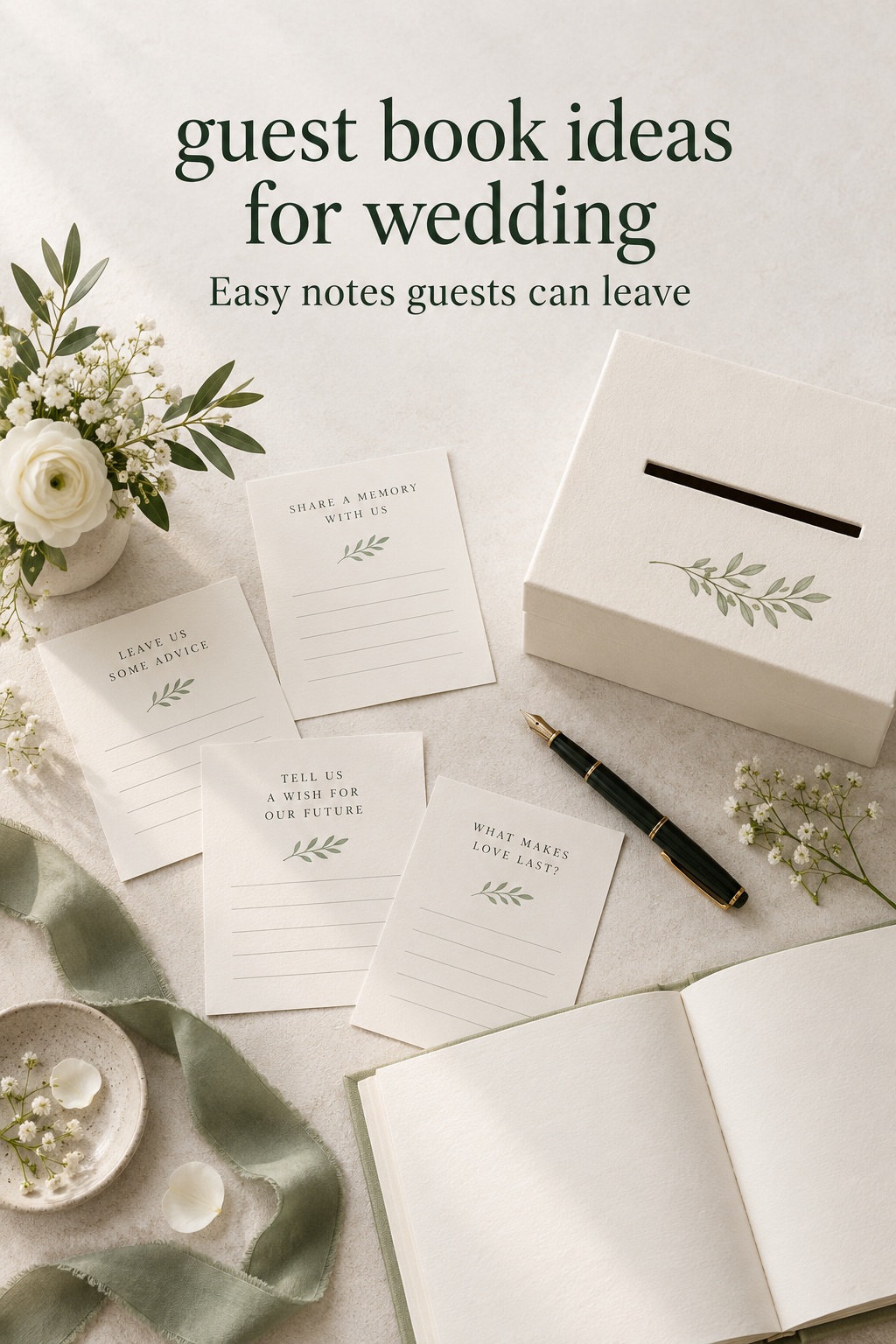
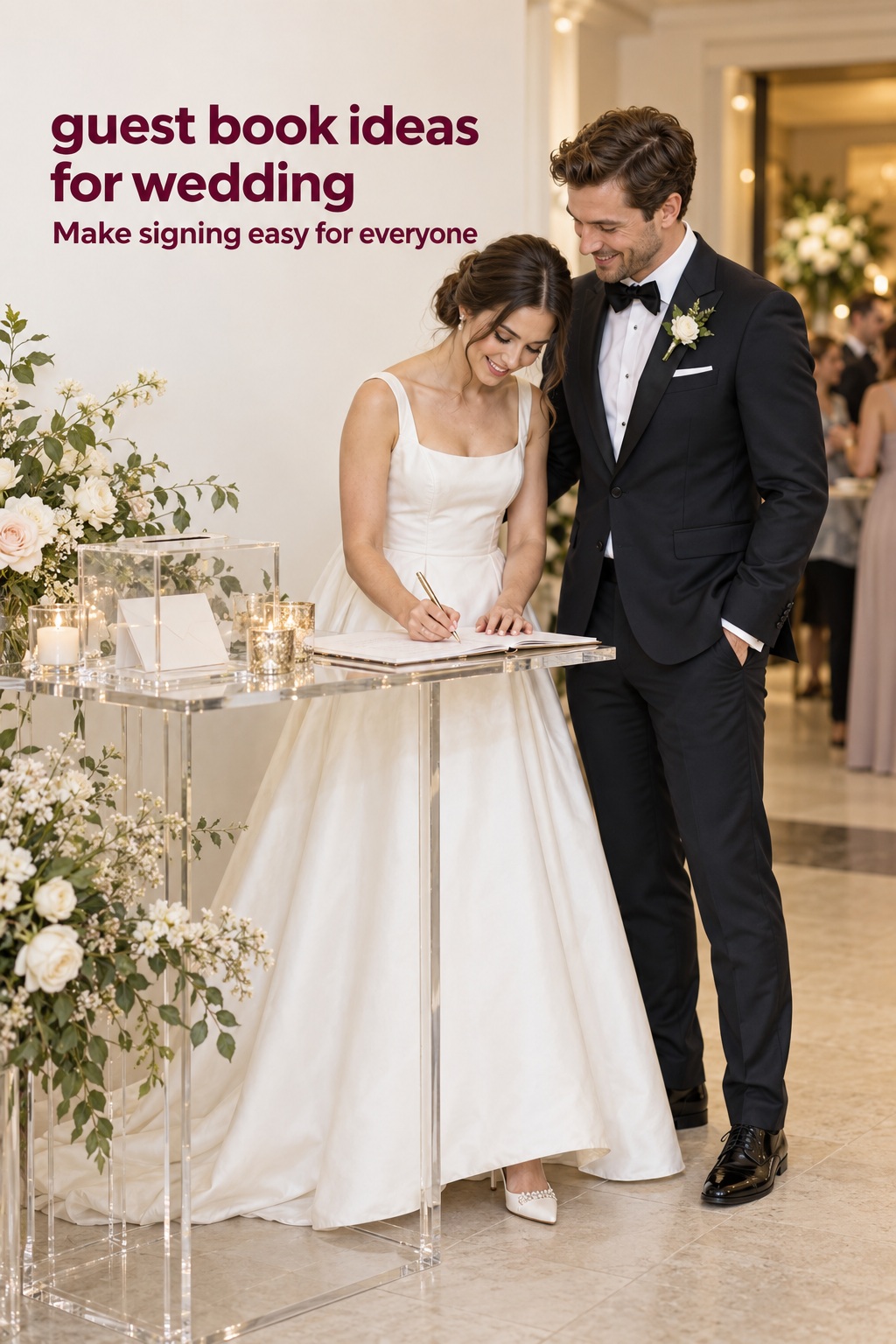
Keep a traditional book if you like the feeling of turning pages and reading messages together later. Make it less intimidating by printing one short prompt at the top of each page or placing a card beside it with two options. Ask for a favorite memory, a wish for the future, or a simple piece of advice. Guests can answer the question that feels natural to them.
Leave room for people to write at different lengths. If every entry is squeezed into a narrow line, a guest with a longer thought has to choose between shrinking their handwriting and taking space from someone else. Open a few pages and check whether the book lies comfortably flat. Put one or two pens beside it and avoid a pen that smudges or skips on the paper you selected.
This format fits couples who want a quiet keepsake they can browse at home. It also feels familiar to guests who prefer writing to speaking or using a device. A short note in the invitation or on the day-of sign can clarify that a sentence is enough. No one has to write something profound for their message to matter.
Memory or advice cards for guests who prefer a quick task
Separate cards can make the task feel smaller than a blank book. Set out a limited choice of prompts: “A moment we remember,” “A wish for the couple,” or “A date-night idea.” Guests take one card, write a response, and place it in a box or envelope. You can read them one at a time later, sort them by prompt, or add them to a keepsake binder after the reception.
Cards work especially well when guests will be standing or when you want to avoid a queue around one open book. Choose a card size that leaves enough writing room but is not awkward to hold. Make the collection box wide enough for the cards, label it clearly, and assign someone to check that completed notes end up inside. Use sturdy card stock if guests will write while standing, but ask the station supplier or planner what will hold up in your setting.
Keep prompts warm and neutral. “Give us your best relationship advice” may delight some friends but leave others unsure what is appropriate. A choice between a memory and a wish welcomes different guest relationships. Zola’s guide to getting guests to sign a guest book also points to brief prompts, visibility and a trusted helper as ways to make participation easier. Adapt those ideas to your event rather than turning the table into an assignment.
Postcards for messages you open over time
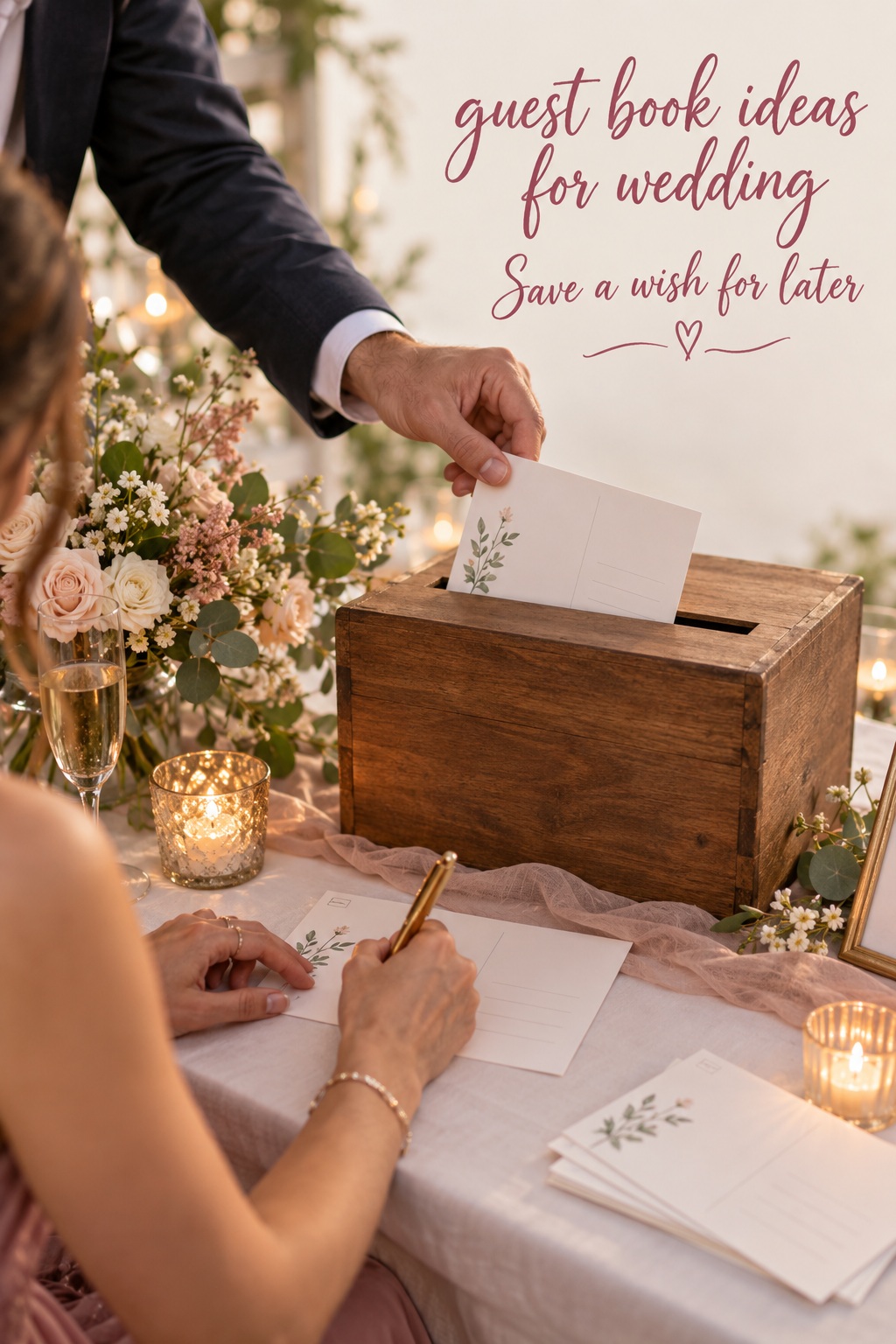
Postcards let guests leave a note on a small, individual surface. You can choose blank cards, cards from places that matter to you, or a simple set with space for the guest’s name and message. After the wedding, keep them in a box or open one on a chosen anniversary. If you want to receive them later, plan the mailing step in advance: decide who will hold the cards, when they will send them, and whether postage is ready.
This is a thoughtful option for couples who like the idea of messages arriving after the busy day. It can also create a natural prompt: guests might write one wish for your first year or a suggestion for a future outing. A postcard does not need to travel through the mail to work, though. A card box at the reception can hold them safely until you are ready to read them.
Think about the setting before choosing loose cards. An outdoor ceremony may need a stable table, weights, or a card holder so papers do not scatter. At a small venue, a compact box may take less space than a full station. The format should fit the room, not require the room to be rearranged around it.
An audio guest book for spoken stories and voices
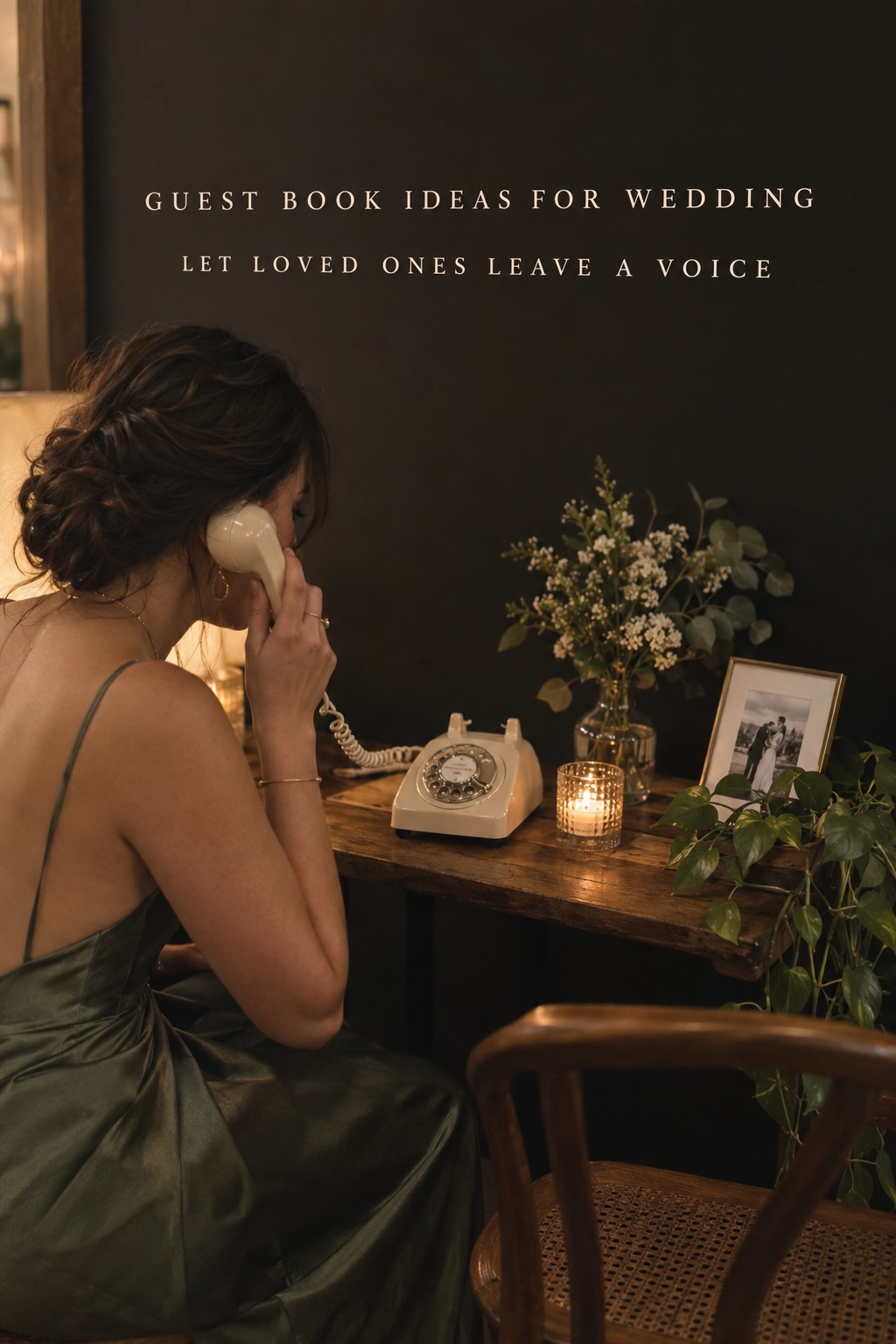
An audio guest book gives guests a chance to leave a spoken message by picking up a phone or using a recording device. It may appeal to people who enjoy telling stories but do not want to write, and it can capture tone and laughter that a written note cannot. The Associated Press has reported on couples using vintage-style phones and prompt cards, with some setups placed in a quieter nook so guests do not feel rushed.
Give guests a private-feeling spot without hiding the phone. A small sign can explain the steps: lift the handset, listen for the cue, leave a short message, and return it to the cradle. Test the recording and playback before the event, confirm how files will be stored and delivered, and decide who can access them. Some guests may not wish to record their voice, so keep a written option available if you want everyone to have a way to contribute.
A prompt can help without scripting the message. Try “Tell us a favorite story about one of us” or “What do you hope we remember about today?” Guests should be free to say a quick hello instead. If the event is loud, ask the vendor or venue whether the nook can be placed away from speakers and high-traffic areas. Do not assume a phone booth is private or that every device records correctly until you have tested the actual setup.
A signed object only if you will use or display it
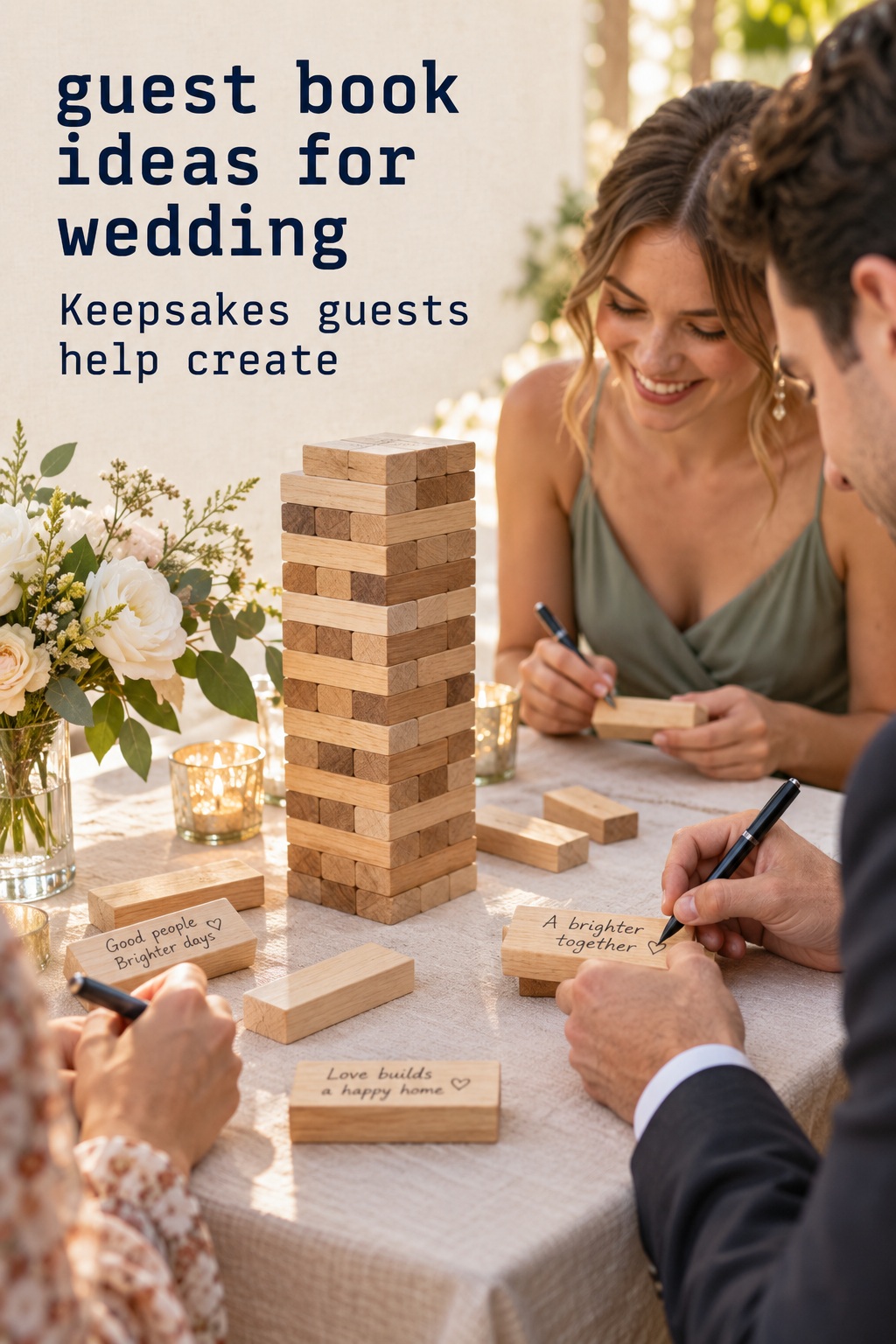
A piece of art, a wooden game, a serving item, or another meaningful object can become a keepsake guests help create. The key question is what you will do with it afterward. If you would not display the item, play with it, or use it, the novelty may not be enough to justify its place in your home. Pick an object connected to an existing interest or a real part of your routine.
Make sure the surface accepts the writing tool and that the words will remain legible. Ask the maker or supplier which pens are suitable, and test them on a spare piece of the same material. Set the object on a firm surface, provide enough space for guests to sign without bumping hands, and let the ink dry before moving it. If the item will be handled or used, confirm how to protect the writing afterward.
Signed objects are not a fit for every guest list. Some people may hesitate to write on a keepsake if the purpose is unclear or if there is little space left. A small sample signature or a short sign can show where to write. Leave an alternative card or book nearby for someone who would rather leave a longer message.
Set up the station so every guest knows what to do
Once you have chosen the format, remove steps. A guest book station should be easy to spot, easy to understand and easy to leave. The setup matters as much as the keepsake itself, especially when the reception has several transitions and guests are moving between rooms.
Put it on a natural route and leave room to pause
Choose a place guests pass at an unhurried moment, such as the welcome area, the edge of cocktail hour, or a quiet corner near the reception space. Avoid putting the station in a narrow doorway, beside the busiest part of the bar, or where a line would block other guests. If the activity needs a chair, table or audio nook, check the footprint with the venue before the day.
Consider a second short signing window if many guests arrive at once. A helper can point people toward the station during the first part of the reception, then step back once guests know it is there. The helper’s job is to make the option visible, not to monitor who has signed. A friendly reminder is enough; guests should not feel that participation is being counted.
Write one clear instruction and one useful prompt
Use plain wording that explains the action. “Leave a favorite memory on a card and place it in the box” is easier to follow than a phrase that only describes the mood. Put the prompt where guests will see it before they pick up a pen. If the book has a different format, make the steps just as specific.
Keep the instruction brief enough to read while standing. Two lines are usually easier to scan than a paragraph. If you include several prompts, number them or print each on its own card. The purpose is to help someone begin, not to create a mini activity sheet they need to complete.
Prepare the supplies and name one steward
Place working pens, blank cards, and a collection box together. Check that the book opens, the container is stable, and the audio device is charged and tested. Provide a spare writing tool and extra cards in a nearby drawer or with the planner. Ask one trusted person or the venue contact to check the station once during the reception, replenish supplies if needed, and move completed cards to a secure place.
For a format guests sign directly, make one small sample available if the writing surface or marker is unfamiliar. It can prevent a guest from testing a permanent marker in a prominent spot. Do not prefill the book with staged messages that could confuse guests about which pages are available. A real example on a separate card is enough.
Offer a low-tech fallback when the main idea uses a device
If your main guest book is audio-based or digital, decide what happens if the equipment does not work or someone does not want to use it. A small paper card or a traditional book can be a simple backup. Keep the backup visible enough to find, but let guests choose only one option if that is all you need. You do not have to collect the same message in two formats.
Before the reception, test the device using the instructions guests will see. Check that the file saves, that playback works, and that the recipient knows where the recordings will be stored. If a QR code or web link is part of your chosen activity, test it on a phone that is not already signed into your account and print a short backup direction in case the venue connection is unreliable. Technology is an option, not a requirement for leaving a message.
Fix the common guest book problems before the reception ends
A quiet station early in the evening does not mean the idea has failed. Guests arrive and settle at different times. Ask your helper to check for the specific problem rather than urging everyone to participate. A small adjustment can make the activity easier without turning it into an announcement that interrupts the celebration.
If guests walk past it, make the purpose more visible
Move the sign to the edge guests approach, open the book to an unused page, or place the cards and box together. A family member or member of the wedding party can mention the activity when greeting guests. If it sits behind another display, move one decorative item rather than adding more signs. The aim is a clear visual cue and an obvious next step.
If guests hesitate, reduce the writing task
Replace a broad question with one simple prompt. Let people write a short wish instead of a long memory. If the book is not practical while standing, offer cards that can be completed at a seat and placed in a box later. A person who does not know what to say should be able to leave a few warm words and move on.
If a line forms, create more than one place to contribute
For cards, place a few pens at separate spots and use one collection box. If guests are signing a large object, ask them to take turns rather than crowding around it. You can also ask the planner to move the signing moment to a less busy period. Avoid adding more elaborate instructions while a queue is forming; the fastest fix is usually a second writing surface or a shorter prompt.
If supplies fail, switch to the backup and protect what is written
Keep spare pens and cards with the person responsible for the station. If the audio phone stops saving messages, use the written backup and make a note to check the device before inviting guests to try again. Move completed cards or loose pages to a safe spot so they are not misplaced during cleanup. If ink needs time to dry, let the venue know where the signed item can sit undisturbed.
After the wedding, gather every part of the keepsake: book, cards, envelopes, memory box, and audio files. Store paper messages flat and dry, and back up audio recordings in a place you can find again. Decide on a simple way to revisit them, such as reading cards together after the honeymoon or listening to a few messages on an anniversary. The follow-through is part of what makes the format worth choosing.
Most of all, keep the activity optional. Some guests will leave a message, some will sign their name, and some will simply celebrate with you. The right format makes it easier for people who want to contribute; it does not turn a keepsake into a test of affection.
FAQ
What are the best guest book ideas for a wedding?
The best choice depends on what you want to keep and how your guests prefer to participate. A prompt-led book suits written notes, cards or postcards suit short messages, an audio guest book captures spoken greetings, and a signed object can work when you will use or display it afterward.
How do we get more guests to sign the wedding guest book?
Make it easy to notice, provide one clear prompt, leave a working pen or tool beside it, and ask a trusted person to point it out once. Guests should understand that a short message is welcome. Keep the invitation friendly and participation optional.
What should we write on a wedding guest book sign?
Use a direct invitation and one brief instruction, such as “Please leave a favorite memory or a wish for our future, then place your card in the box.” Plain wording tells guests what to do and gives them an easy first idea.
Is an audio guest book a good idea for a wedding?
An audio guest book can suit guests who prefer speaking to writing and couples who want to hear voices and stories later. Provide a quiet-feeling location, a simple instruction, a tested recorder, and a written option for guests who do not want to record a message.
What can we use instead of a traditional wedding guest book?
Consider memory or advice cards, postcards, an audio phone, a wish jar, or a functional object guests can sign. Choose based on what you will actually revisit, play, display or use. You can also skip a guest book if none of the formats feels right for you.
Where should the wedding guest book be placed?
Place it on a natural guest route, such as near the reception welcome area or escort cards, with enough room to pause. Keep it out of narrow doorways and busy service lines. If it needs a quieter location, use a clear sign to show where it is.
How many pages should a wedding guest book have?
Allow room for the number of guests and the type of message you are inviting. Longer prompts need more space than a signature. Leave generous writing room and avoid planning only for a single line per person if you hope to collect short notes.
What if some guests do not want to leave a message?
Let them pass without pressure. A guest book is a keepsake option, not a required part of attending the wedding. A welcoming prompt and a few formats make participation easier for people who want to contribute, while leaving everyone else free to enjoy the celebration.