Bridesmaid Updo Hairstyles: 3 Trends to Make Your Own
Bridesmaid updo hairstyles are moving in more than one direction in 2026. Some look soft, airy, and almost undone; others are sleek, sculpted, and deliberately polished. That might sound like a contradiction, but it gives you more room to choose a look that fits your taste. The useful question is not which trend wins. It is which details make an updo feel current while still looking like you in photographs years from now.
This trend analysis looks at three style directions: romantic softness, intentional sculpting, and clean, sleek control. For each, it separates the lasting idea from the short-lived styling cue, then offers ways to translate the look to different hair textures, dress shapes, and levels of formality. Trends are signals, not rules. You can borrow a silhouette, a part, or an accessory without asking your hair to become someone else’s.
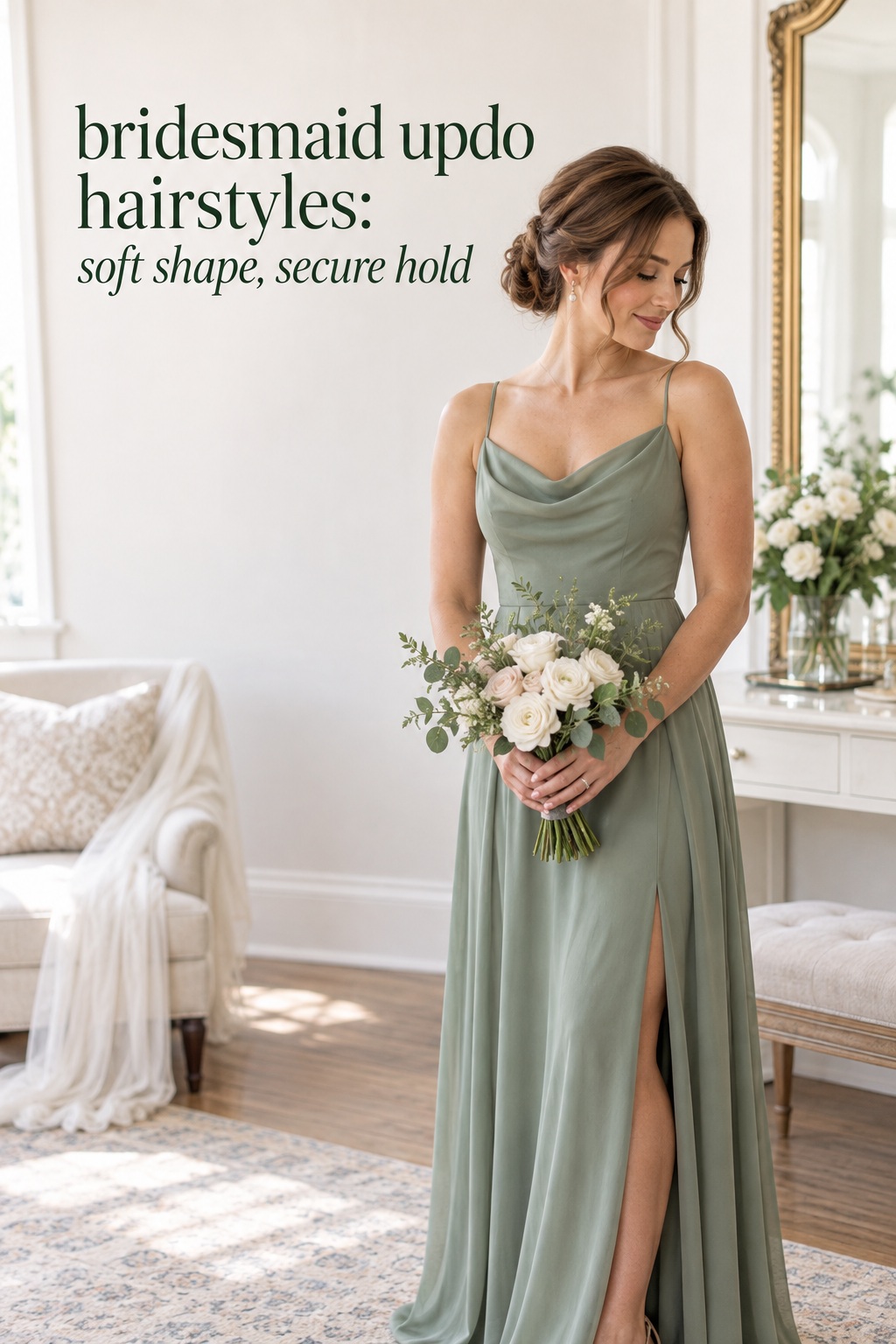
What is changing in bridesmaid updo hairstyles
For several seasons, wedding hair inspiration often leaned heavily on either a very polished finish or an intentionally messy bun. Current expert coverage points toward a broader middle ground. Some stylists are describing more fluid texture and soft movement, while others predict cleaner lines, defined shapes, and sculptural placement. On the same mood board, a romantic low bun can sit beside a precise French twist or an artful knot with clear geometry.
That overlap makes sense because “soft” and “structured” are not opposites in a hairstyle. An updo can have a secure, carefully built base with a few gently curved pieces around the face. It can be sleek at the hairline and dimensional at the bun. It can also preserve a natural curl pattern while arranging the hair into a defined silhouette. The trend shift is less about choosing messy or perfect and more about deciding where the shape should feel controlled and where it can move.
Turn wedding inspiration into a plan you can actually follow.
Zarellea brings your guest list, budget, vendors, and day-of details into one shared space — so no beautiful idea gets lost in the shuffle.
A useful 2026 reference is the direction described in Who What Wear’s expert wedding-hair trend report, which includes both softer movement and more deliberate construction. It covers bridal styles broadly, so bridesmaids can use it as a signal rather than a prescription. The trend is not a single look that every member of a wedding party should copy. It is a wider permission to choose between airy romance, considered shape, or a mix that suits the wearer.
At the same time, a trend report is not a survey of every bride, stylist, or wedding. It describes what experts expect to see, often drawing on runway, celebrity, and client references. Treat it as an editorial lens. If your wedding is in a different season, region, or cultural setting, the local style vocabulary and practical needs may matter more than a forecast made for a broad audience. Your personal comfort remains a valid part of the picture.
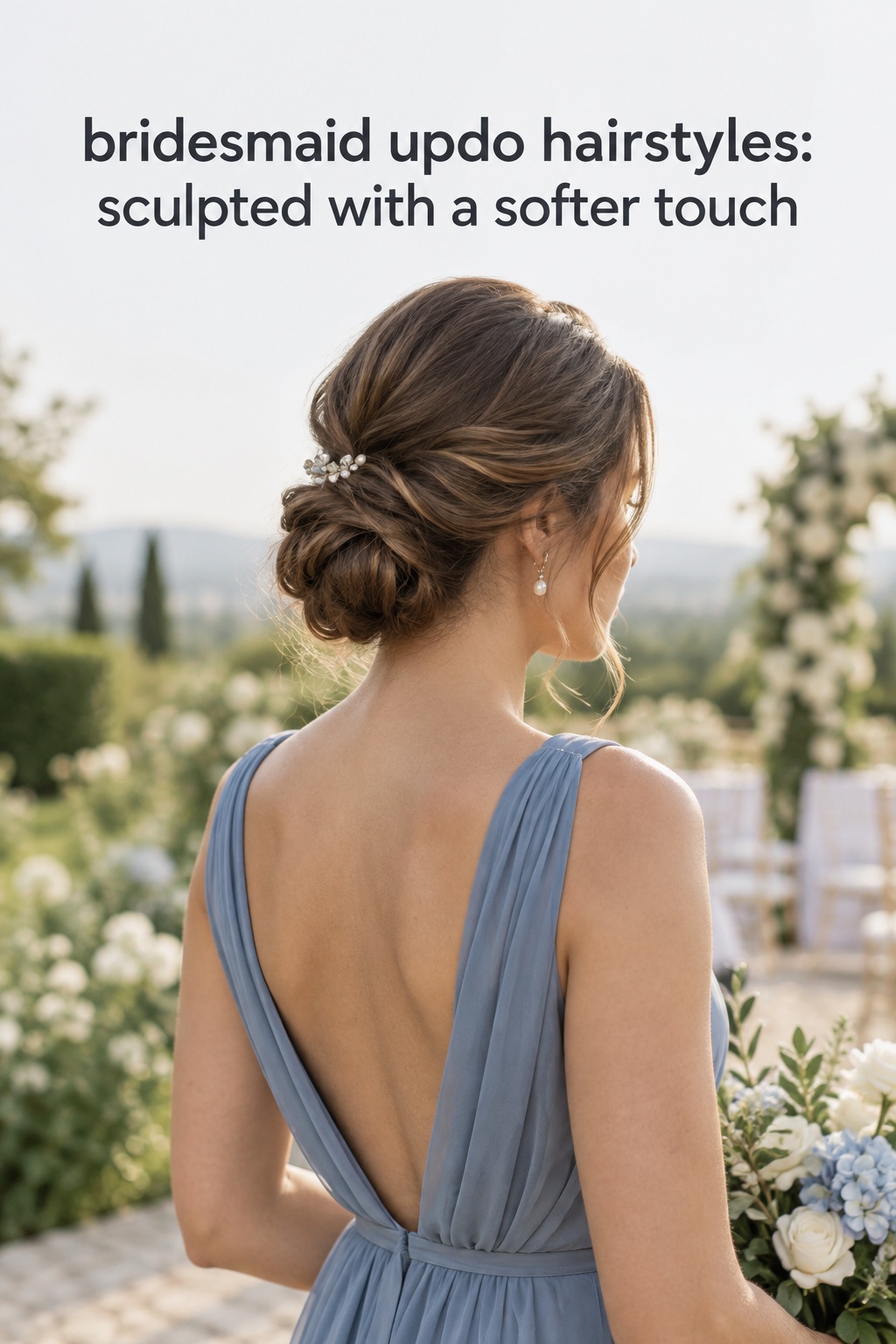
Why the shifts matter for a bridesmaid
The most visible change in updos is not necessarily the bun itself. It is the finish around it: a cleaner part, a more intentional tendril, a braid that follows the head instead of appearing as an afterthought, or a surface that has texture without looking accidentally unfinished. These small decisions affect whether a style reads formal, relaxed, vintage-inspired, modern, or intentionally dramatic. They also let a familiar low bun feel distinct from the version you have seen at many weddings.
For a bridesmaid, that focus on detail can make the choice easier. You do not have to commit to a complicated hairstyle to participate in a trend. If you like a timeless chignon, try a side part, a softly curved face-framing strand, or a subtle accessory to give it a current point of view. If you prefer something sculptural, one defined twist can make the shape feel considered without adding several competing details.
The wedding party also includes people with different lengths, densities, curl patterns, and relationships to their hair. A single reference does not have to translate into an identical shape on every person. Stylists interviewed by Who What Wear on bridesmaid hairstyles emphasize a shared visual direction with room for hair texture and length. That idea works especially well with current trends: the shared cue might be a low placement, a clear silhouette, or one accessory family, while each updo uses a different technique.
There is also a difference between a look that is currently visible online and one you actually want to wear. Slicked-back buns, for example, became part of a recent conversation about wedding-party rules, taste, and cultural context. In its discussion of the bun debate, Allure notes the history and meaning sleek updos can have for women of color and for textured hair. The practical point is simple: do not treat a style as belonging to one trend cycle or one wedding aesthetic. The person wearing it should have a voice in the choice.
Trend one: romantic softness with a secure base
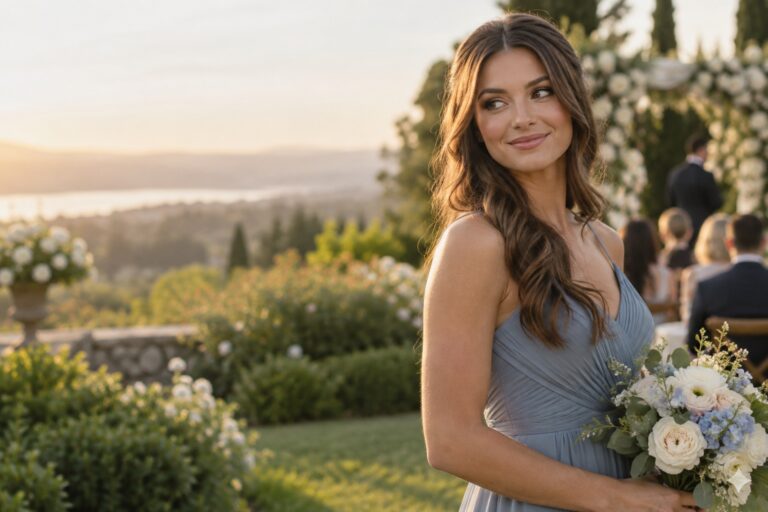
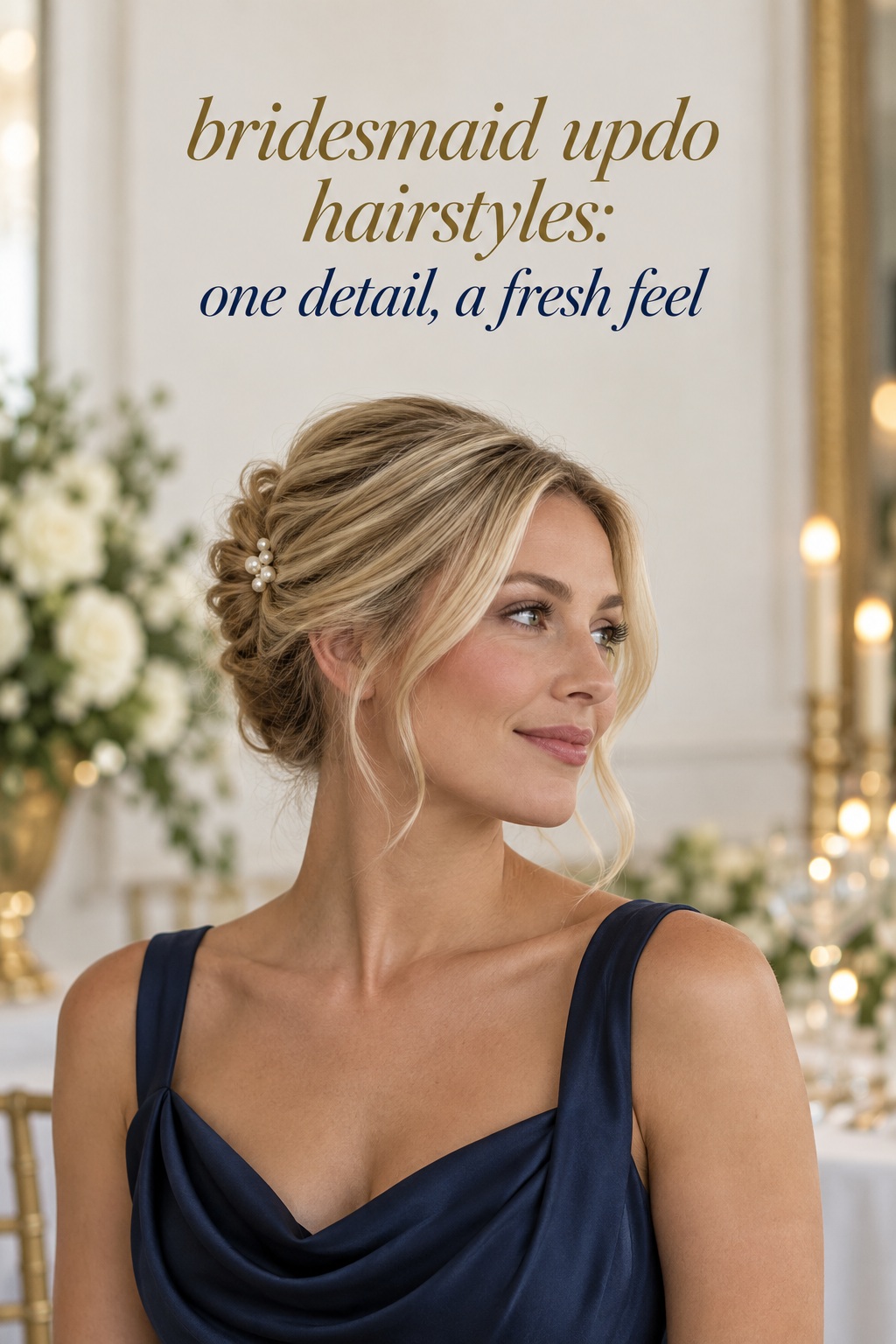
The soft romantic updo remains popular because it gives a formal hairstyle movement. Think of a low bun with a gentle curve at the nape, a loose twist that shows texture, or a braid that melts into a tucked shape. The surface may look light, but the underlying construction should still be secure. A style can feel effortless without relying on pins that are barely holding or loose pieces that become uncomfortable halfway through the reception.
To make this direction look current, pay attention to where the softness sits. A few well-placed tendrils can frame the face, while the rest of the hair remains tidy. A soft wave through the bun can add depth without pulling the whole hairstyle apart. The result is more deliberate than an all-over fuzzy finish. Ask the stylist to show the front and side view, because one or two details that look delicate in person can become hard to distinguish in wide group photographs.
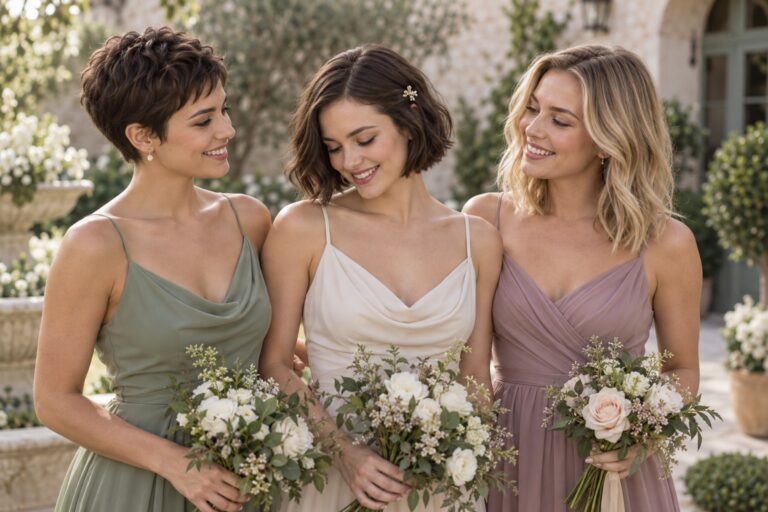
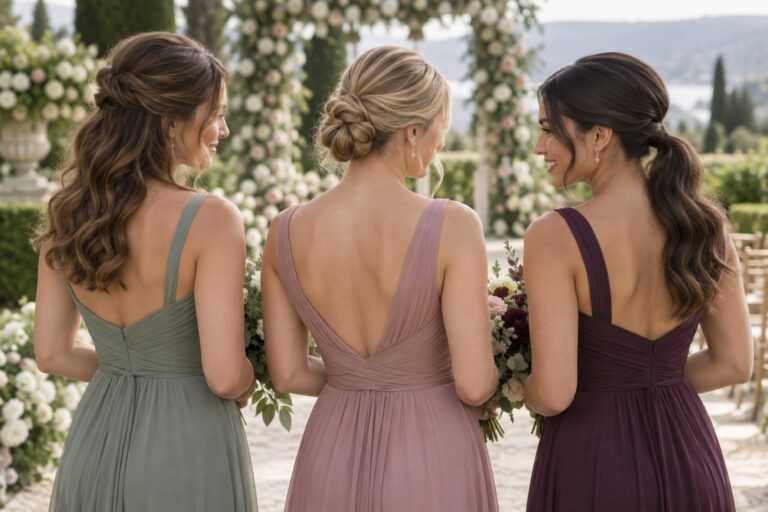
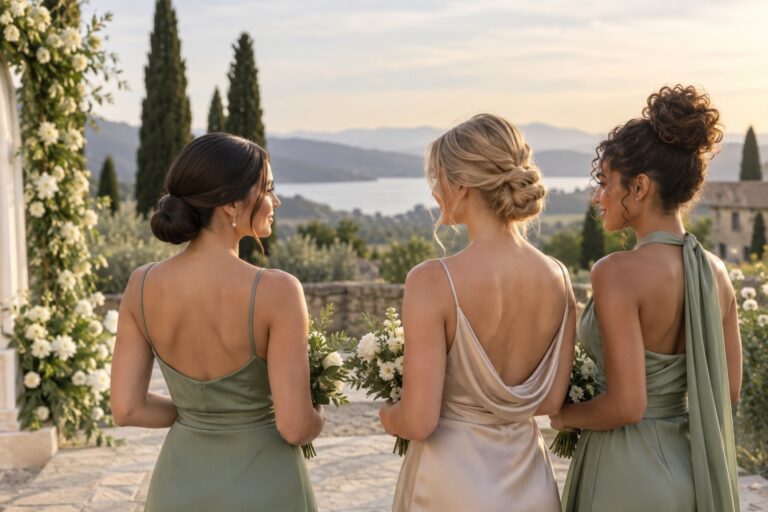
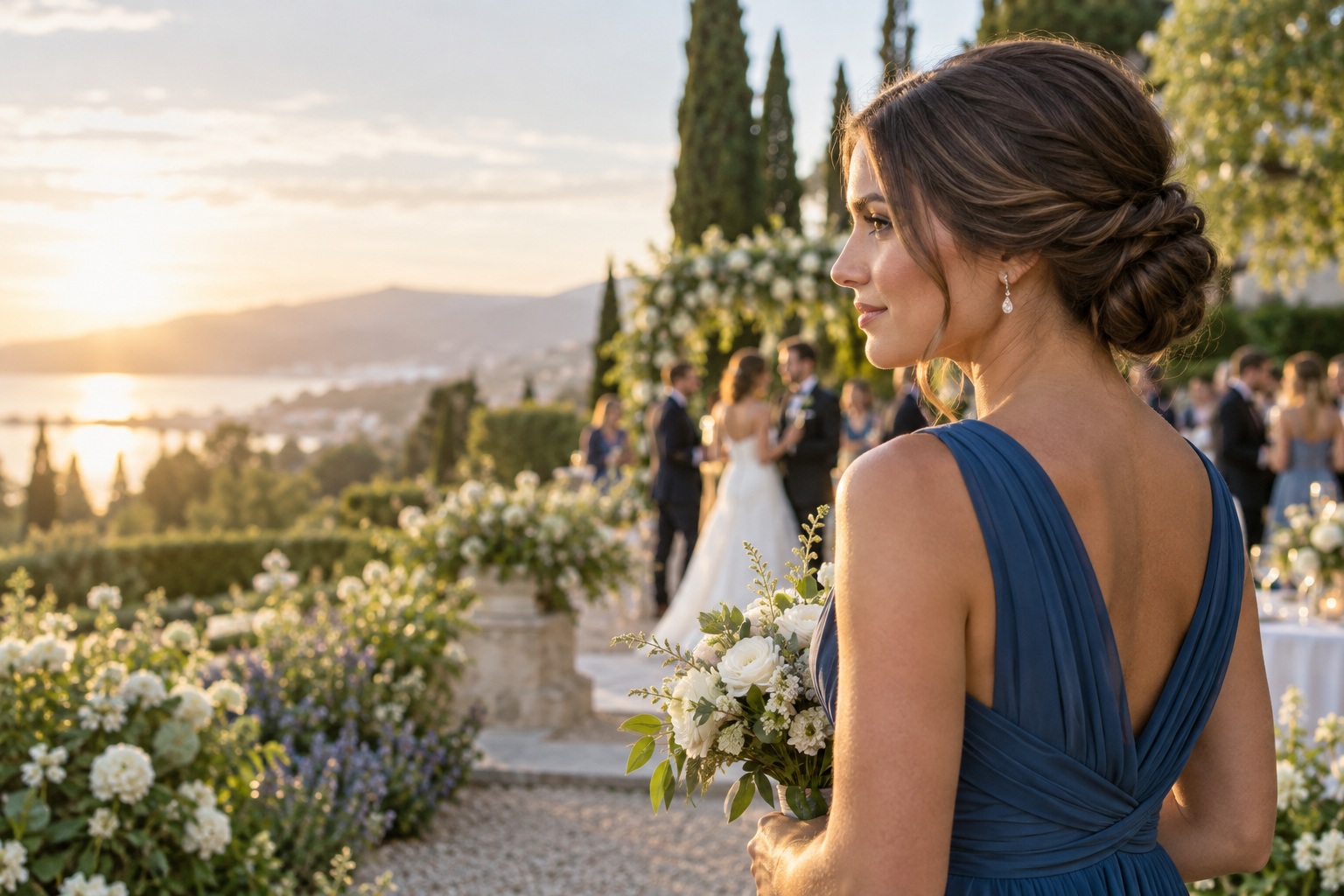
A romantic low bun pairs naturally with an open-back dress, a draped neckline, or delicate earrings because it leaves space around the shoulders. A side bun can feel more relaxed and add asymmetry. If you are wearing a high neckline, a clean low shape may prevent the dress and hair from crowding one another. The trend direction is adaptable: the same general softness can appear in a low chignon, a braided roll, or a tucked-under bob, depending on length.
This look suits bridesmaids who want polish without a rigid finish, but its loose details need to fit the wearer’s habits. If you usually tuck your hair behind your ears, long tendrils may end up being touched all day. If your hair is short or layered, ask which pieces can stay out without repeatedly slipping. A trial lets you check whether the soft front feels like you and whether the bun holds when you turn, hug, sit, and dance.
Trend two: sculptural shapes and intentional detail
The more sculptural direction makes the updo feel designed from every angle. A French twist can have a clean vertical line. A braided bun can use the braid itself as a visible pattern. A double twist or rounded knot can create shape at the crown or nape. Instead of piling on decoration, this trend relies on placement, proportion, and a clear silhouette. It often looks striking in photos because the hairstyle has a readable outline even from a distance.
You can interpret a sculptural updo at different levels. A smooth bun with one defined twist is a restrained version. A more expressive version might use a visible braid, a rolled section, or a contrasting direction in the hair. The important thing is to choose one focal construction. When every section has a different detail, the shape can become difficult to read, especially when paired with a detailed dress or statement jewelry.
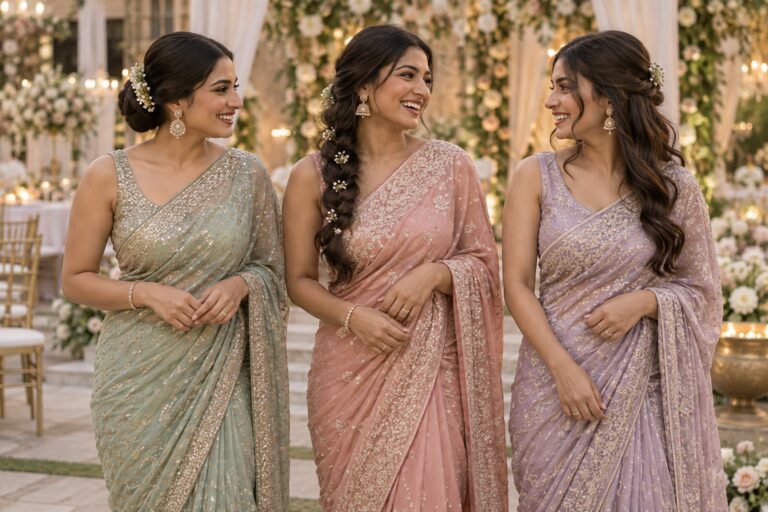
A sculptural look often benefits from an accessory that follows the form instead of interrupting it. A slim comb can sit along the curve of a twist. A small cluster of pins can emphasize one side of a bun. A ribbon can trace the direction of a braid. For a minimalist outfit, a more visible accessory may add character. For a beaded or embroidered bodice, a quieter piece can preserve balance. Look at the full outfit before selecting a hair ornament, not only a close-up of the hairstyle.
Sculptural does not have to mean tightly pulled or uncomfortable. The shape can be built with a soft foundation, and the stylist can leave enough movement at the hairline to avoid a severe finish. If you are concerned about tension, describe where tightness bothers you and ask how the style will be anchored. The final photo matters, but so does being able to smile, turn your head, and keep the updo in place without a headache.
Trend three: sleek polish with a personal point of view
A sleek bun or chignon remains a strong option for formal weddings. In a low position, it can feel classic and understated. Higher on the head, it becomes more graphic and draws attention to the face and shoulders. A centered part gives a balanced, modern line, while a side part can add softness. Shine can enhance the finish, but the hair should not look wet unless that is the effect you genuinely want.
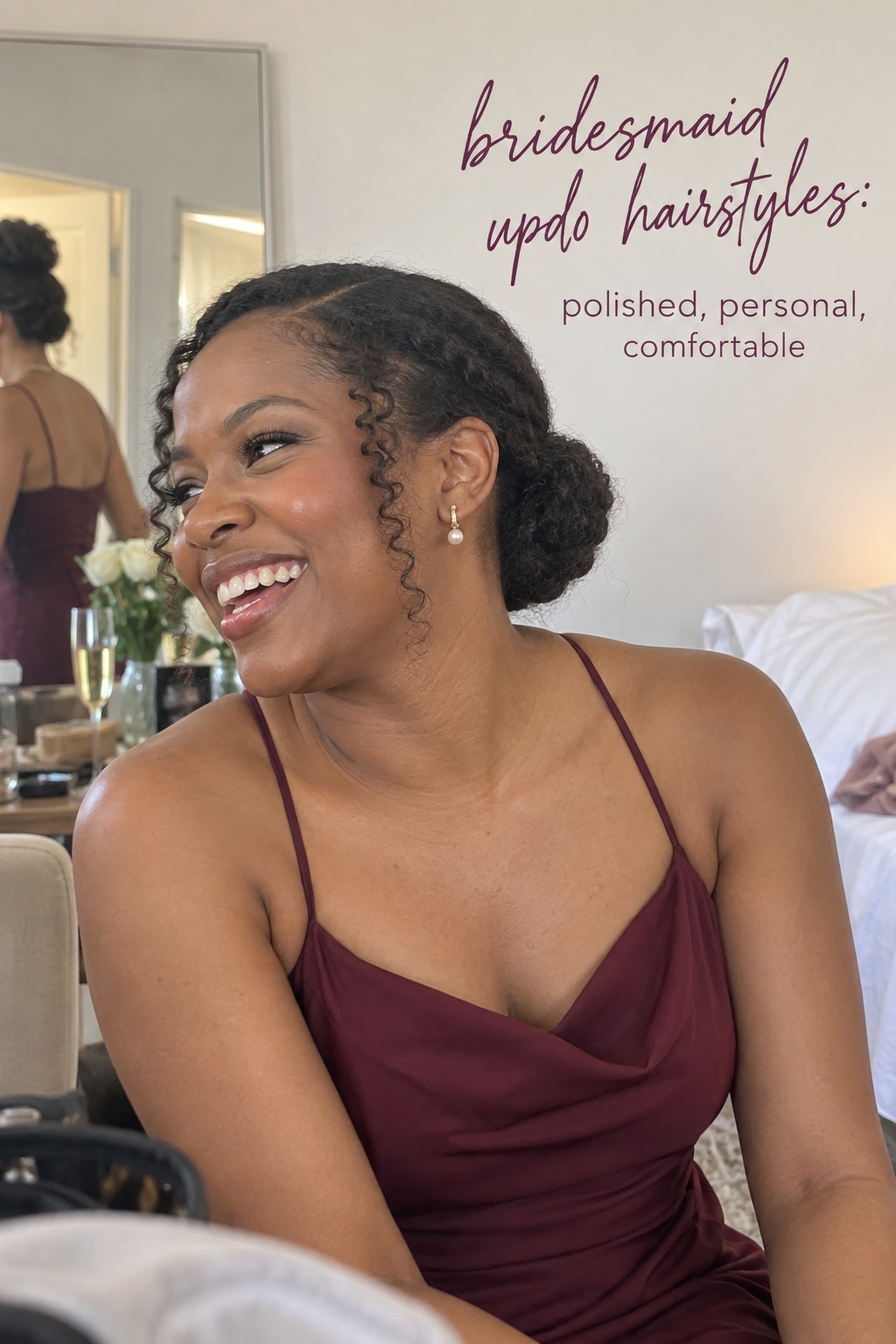
The current conversation around sleek updos sometimes makes the look sound like a universal “clean girl” trend. That framing misses the fact that sleek buns have long histories across cultures and can be a protective or practical style for textured hair. A polished finish is not a new invention, and it does not have to be presented as a novelty. If a sleek updo is part of your regular styling language, it can be an especially authentic choice for a wedding. If you never wear your hair pulled tightly back, you do not need to adopt it because it appears in a trend article.
A modern sleek updo can include one personal detail: a part that matches how you normally wear your hair, an accessory with family meaning, a softly curved hairline, or a bun position that works with your earrings. A little intentional asymmetry can make the look feel less uniform. Ask for a reference that resembles your texture and density. A photo of a very straight, fine-haired model may not show how the same bun behaves on coily, thick, or layered hair.
If you want a sleek look, discuss the preparation method as well as the final shape. The stylist may work with your natural texture, stretch it, smooth it, braid it, or use another approach. Those are not interchangeable steps for every head of hair. Share any heat preferences, protective-style needs, or scalp sensitivities before the trial. A successful sleek finish should not require you to ignore the health, comfort, or care routines that matter to you.
The details that make any direction feel current
Face-framing pieces are being treated more deliberately. Instead of pulling out strands at random after the bun is finished, the stylist can shape a curve that connects to your part, fringe, or cheekbone. Some people prefer a clear hairline with no tendrils. Both choices can look polished. Decide whether the detail is part of the style or a feature you would rather leave out, then test it with your earrings and neckline.
Accessories are also shifting from generic decoration toward more expressive accents. A pearl pin, a metallic comb, a bow, a ribbon, or a small floral piece can tell a different story depending on scale and placement. A single piece may feel more intentional than several competing clips. If your group wants a common note, matching accessories can create cohesion across different updos, but each person should still be able to choose a placement that works with their hair.
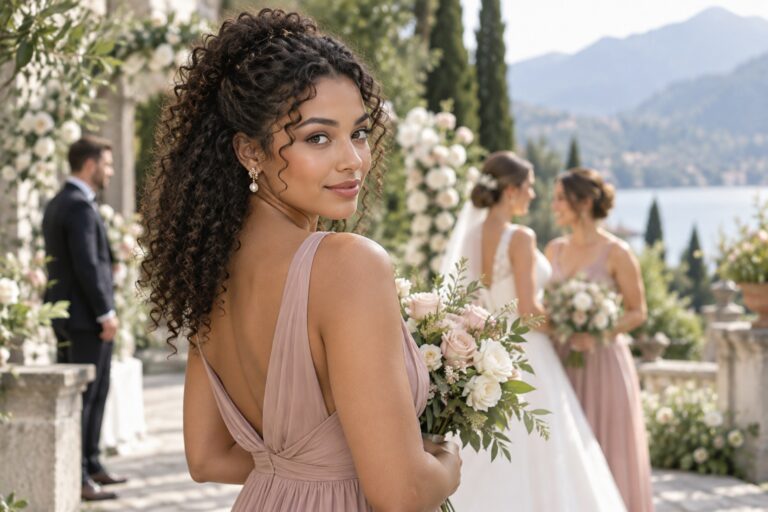
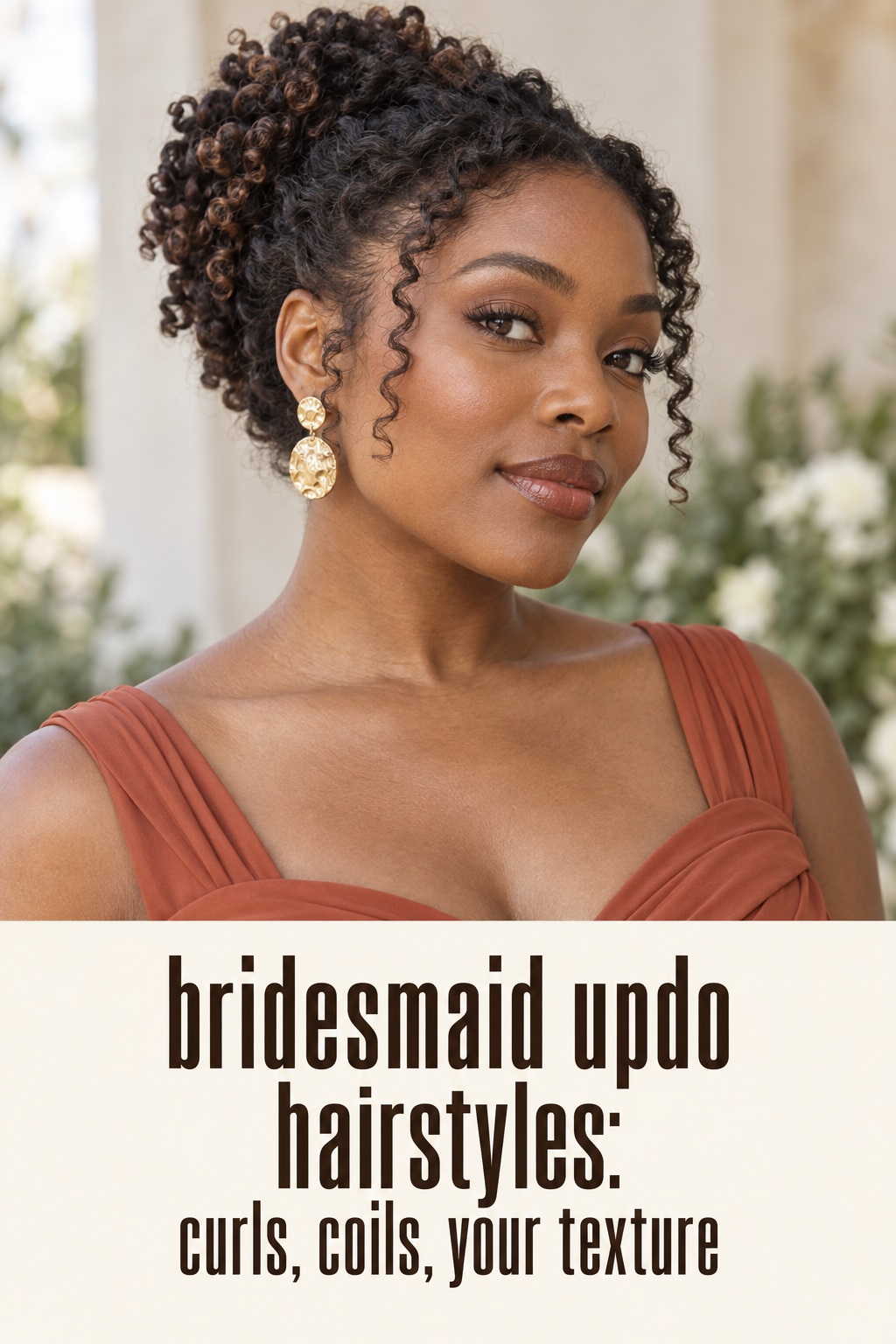
Texture is a design decision, not a correction. Natural curls, coils, waves, braids, locs, and straight textures can each create a different kind of updo. The stylist can work with the pattern or change its appearance, depending on the wearer’s preference and the intended design. Forcing every texture toward the same smooth reference can erase the characteristic that gives the updo its shape. Ask to see examples from stylists who work with hair like yours.
Hair ornaments and veils need to be considered with the construction itself. A comb may need a stable anchor. A veil can sit above or below a low bun, depending on how the hair is shaped and how you want to remove it later. If you will wear a veil for only part of the event, ask the stylist to plan both views. If there is a cultural or family accessory, mention it early so the updo can be built around the item rather than adjusted at the last minute.
What is likely to last beyond a trend cycle
A hairstyle has a longer life in your photographs when it is connected to a personal preference or a meaningful detail. A low bun chosen because you love a clean neckline is more durable as a choice than a low bun selected only because a social post called it the look of the season. A visible braid that reflects your everyday style can feel personal years later. A sculptural knot can be timeless when its shape balances your face and outfit rather than copying a reference in every detail.
The most lasting qualities are proportion, comfort, and a finish that suits the person wearing it. Trends often change the emphasis: more or less shine, a softer or sharper part, bigger or smaller accessories. The foundation of a good updo remains the same. It should be stable enough for the event, work with the outfit, and leave you feeling recognizable. That gives you space to add a current detail without letting the whole look depend on a fleeting label.
When comparing inspiration images, try to identify the underlying shape separately from the styling finish. Ask: Is the bun low or high? Is the volume at the crown, nape, or sides? Is the braid structural or decorative? Is the front smooth, waved, or left natural? Once you can name the form, you can choose a trend detail that fits your own hair and remove another that does not. This makes your reference board much more useful than a page of saved pictures with no notes.
A balanced reference board can show a front view, a side view, and a back view, even if those images come from different examples. Add a short note on what each image contributes, such as “low placement,” “defined curl texture,” or “one gold pin.” This tells the stylist what you like without asking for an exact copy. It also makes it easier to explain what you do not want, such as a tight hairline, too much height, or multiple face-framing pieces.
Translate a trend into a bridesmaid look
Start with the wedding’s level of formality, but do not let theme words do all the work. “Garden,” “classic,” or “modern” can describe many different visual directions. Look at the fabric, neckline, jewelry, venue, and planned photographs. A sculptural bun might complement a minimalist dress, while a softer braided updo can connect with embroidered fabric. A sleek chignon may suit a formal city venue, but it can also be adapted to a relaxed wedding through a gentle side part or natural texture.
Then choose one trend signal, not a full checklist. If the idea is romantic softness, you might borrow a curved tendril or a loose woven bun. If the idea is sculptural shape, choose one defined twist or a clean French roll. If the idea is sleek polish, select a bun position or part that feels comfortable on you. Keeping one main signal gives the hairstyle a point of view and leaves room for your hair’s own qualities to show.
If the couple requests a shared updo direction, ask whether the common element can be placement, accessory, or finish rather than an identical construction. A low bun can be a chignon on one person, a tucked braid on another, and a curl-preserving updo on a third. The group can still look coordinated in photographs because the overall height and polish align. Matching does not require the same technique on different hair.
Bring the stylist a dress photo and discuss the back as carefully as the front. A high bun may show earrings and shoulders, while a low chignon may complement a low back or scarf-like neckline. If your dress has a bow, cape, collar, or intricate straps, test how those details sit with the hair. The question is not whether the hairstyle follows a rule. It is whether the composition looks intentional from the angles that matter to you.
A trial is where trend meets real hair
A trial is especially valuable when you want a trend detail that depends on your natural texture or a precise shape. Wear a top with a similar neckline and bring the accessory or veil. Take front, profile, and back photos in natural light. Check the style after sitting, moving your arms, and turning your head. Look for pressure at the hairline, a pin that catches, or a detail that disappears from the side. These checks show whether the trend works on your hair, not only on a model.
Ask what the style needs to stay in place. A secure bun should not feel like it is pulling at one small area. The stylist can distribute pins and anchors through the shape, and you can ask for adjustments if you feel pressure. If the look includes loose tendrils, decide whether you want them to stay in a set curve or move more freely. If a veil is part of the plan, practice adding and removing it without dismantling the updo.
A trend reference may have been styled under professional lighting, with extensions, or with a different hair preparation method. It is fine to ask what would be required to get close to the image. You can then choose the parts that matter and skip the rest. For example, you might keep the silhouette but use your natural curl pattern, or borrow the accessory placement while choosing a softer bun. Knowing the trade-offs early helps you arrive at a result that feels intentional instead of like a failed copy.
FAQ
What are the bridesmaid updo hairstyles trending in 2026?
Current expert coverage points to both softer, more fluid buns and cleaner, more sculptural shapes. Sleek chignons, defined twists, deliberate face-framing pieces, and expressive accessories are also appearing. The trends are broad signals rather than a required uniform look.
Are messy buns still in style for bridesmaids?
Yes, but the finish is becoming more intentional. A relaxed bun can still look current when its silhouette is considered and the loose texture is controlled where needed. It does not have to be perfectly smooth or deliberately messy from root to end.
Is a sleek bun appropriate for a bridesmaid?
A sleek bun can suit many weddings, especially when the wearer likes the look and the styling works with their hair and outfit. Consider the wedding’s formality, the person’s comfort, and any cultural significance of the style instead of treating it as a universal trend.
How can a bridal party coordinate different updos?
Choose one shared visual cue, such as low placement, a similar accessory, or a comparable level of polish. Let the bun or braid technique vary to suit each person’s length, density, and texture.
What is the difference between a chignon and a low bun?
A chignon is generally a low, gathered hairstyle at the nape, while “low bun” is a broader description of the placement. A chignon can be smooth, braided, twisted, or textured, so the terms may overlap in everyday salon conversations.
Can short hair be put into an updo?
Often, yes. A stylist may use a tucked shape, pinned twists, a small bun, or an accessory to create an updo-like silhouette. Bring a photo of your actual length and ask what can be secured comfortably without relying on excessive pins or extensions.
Should bridesmaid updos match the dress neckline?
The hairstyle can complement the neckline by showing, balancing, or echoing its details. A low bun may work with a dramatic back, while a higher shape can leave more room around the shoulders. Try the hair with a dress photo or a similar neckline before deciding.
How do I make an updo feel more personal?
Choose a part, texture, accessory, or silhouette that reflects how you like to wear your hair. One meaningful detail can make a familiar bun feel individual without overcomplicating the style.
Final thought
The strongest bridesmaid updo hairstyles do not depend on guessing the one trend everyone will choose. In 2026, soft romance and deliberate sculpting are both part of the conversation. Decide which shape feels like you, borrow one current detail, and ask your stylist to build it around your hair, dress, and comfort. That is how a trend becomes a personal wedding look.