Short Hair Bridesmaid Hairstyles for Every Cut
The stylist has three reference photos open on a phone. One shows a romantic low bun, another a braid tucked behind the ear, and the third a smooth waved bob. Across the chair sits a bridesmaid with a cropped pixie. She likes the first photo, but the shape depends on hair gathered at the nape, where she has almost none. Nothing is wrong with her haircut. The reference simply belongs to a different length.
This is the useful starting point for short hair bridesmaid hairstyles: choose a finish that can be built from the hair you have, then make it feel special with placement, texture, and one considered detail. Short hair can look polished, soft, sculptural, or relaxed. The choice is not between wearing it exactly as usual and pretending it is long enough for a bun. A stylist can adapt the idea behind a photo to a pixie, bob, or lob, as long as the plan respects the cut.
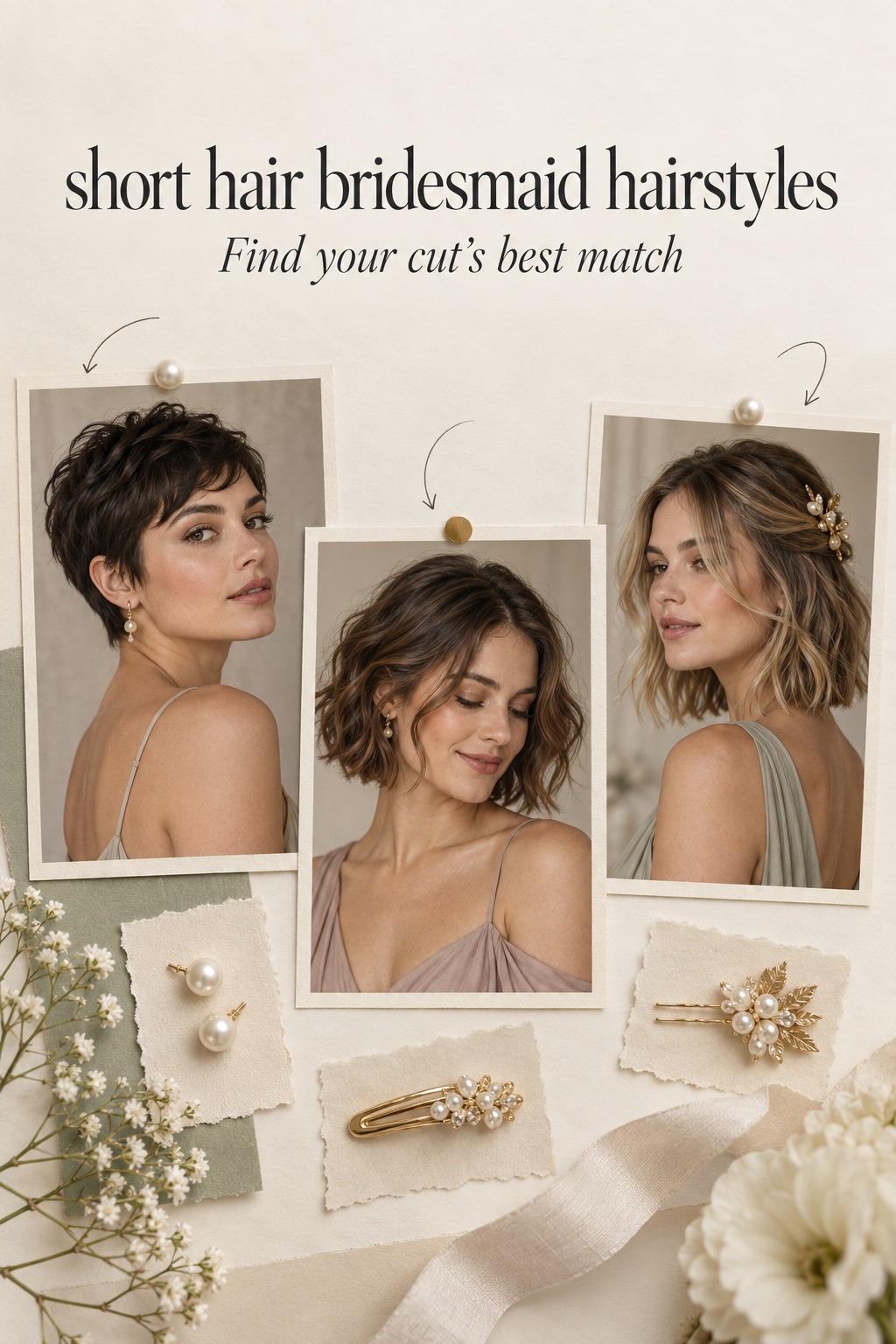
The reference photo is a conversation starter
A saved image is valuable because it shows a mood. It might tell the stylist that you like a soft side part, a clean outline, movement around the face, or a small decorative pin. It is less useful when treated as an exact blueprint. A picture rarely tells you how long the hair was, what supports the shape, or whether a section is clipped out of view. Before the appointment, look at the photo for its ingredients rather than its final silhouette.
Try describing the image in three short phrases. For example: “smooth sides, soft wave, pearl detail” is easier to adapt than “make my hair look exactly like this.” A pixie might use a side sweep and a pearl pin to capture the same feeling. A bob could keep the wave and add a tucked section. A lob may have enough length for a small twist at the back. The idea travels even when the original arrangement does not.
Turn wedding inspiration into a plan you can actually follow.
Zarellea brings your guest list, budget, vendors, and day-of details into one shared space — so no beautiful idea gets lost in the shuffle.
It also helps to bring a photograph of your current hair from the front, side, and back. A stylist can see the nape, the way the layers fall, and where the shortest sections sit. If your appointment is part of a group booking, say which bridesmaid you are and how much styling time is available. That keeps the conversation focused on your own cut instead of on a shared reference chosen for someone else.
Short hair is not a single category. A crop with a tapered nape has different options from a chin-length bob, and a shoulder-grazing lob has more length to gather than either. The Knot’s short-hair updo examples include slicked-back finishes, pinned curls, and leaving the front section out when the rest cannot be pulled into a bun. A stylist-led short-hair guide from Margot + Lace also shows how waves, curls, pins, and flowers can change the mood of a short cut. These are useful references for possibilities, not promises that every look will work on every head.
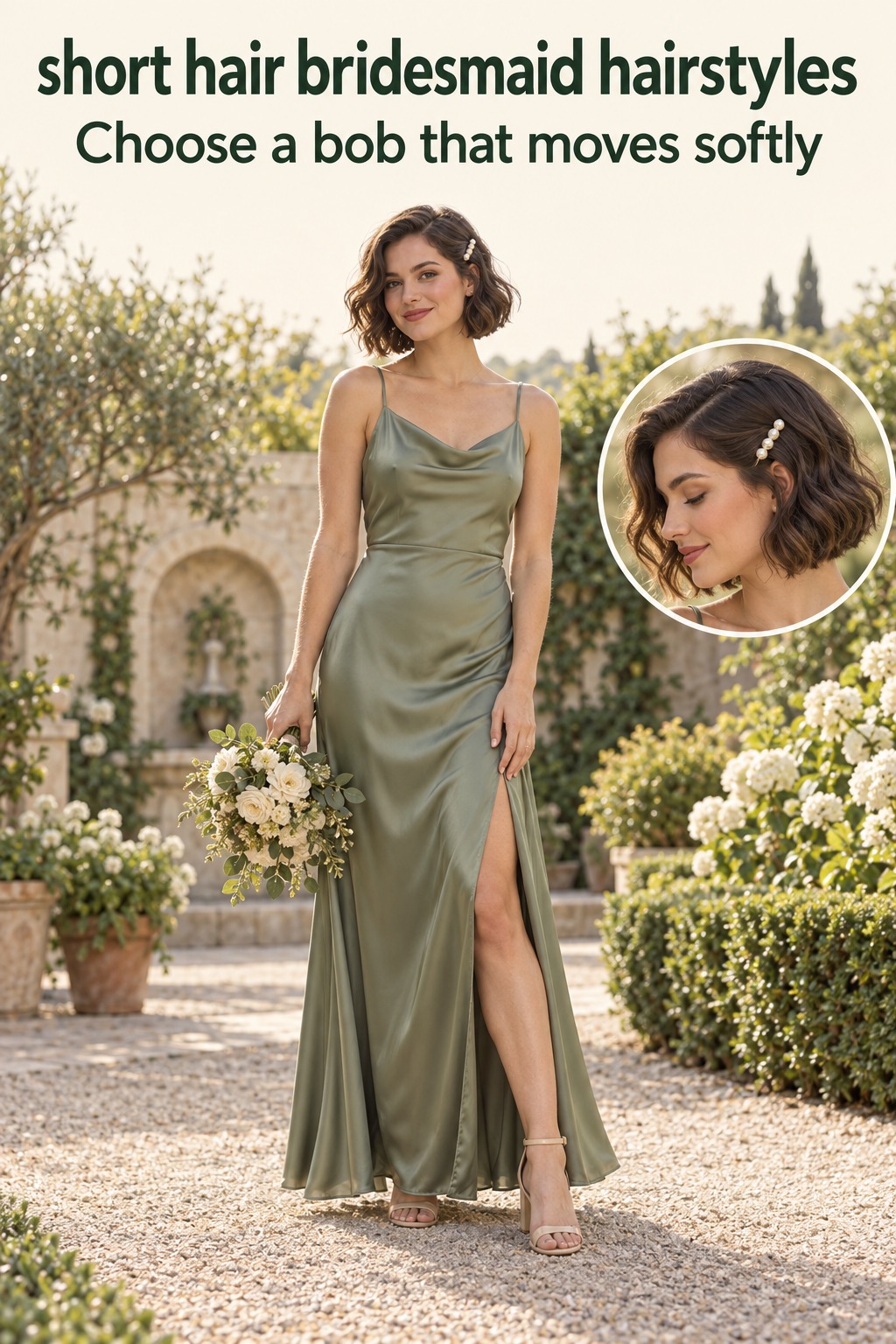
Start with length, texture, and the places hair can anchor
Before choosing a style family, notice where your hair reaches when it falls naturally. Does it cover the ears, sit at the jaw, or brush the shoulders? Can the front pieces reach behind the ears? Does the nape have enough length to meet another section? These small observations tell you what can be gathered securely. You do not need to measure your hair or decide the style alone. The goal is to help your stylist understand the starting point.
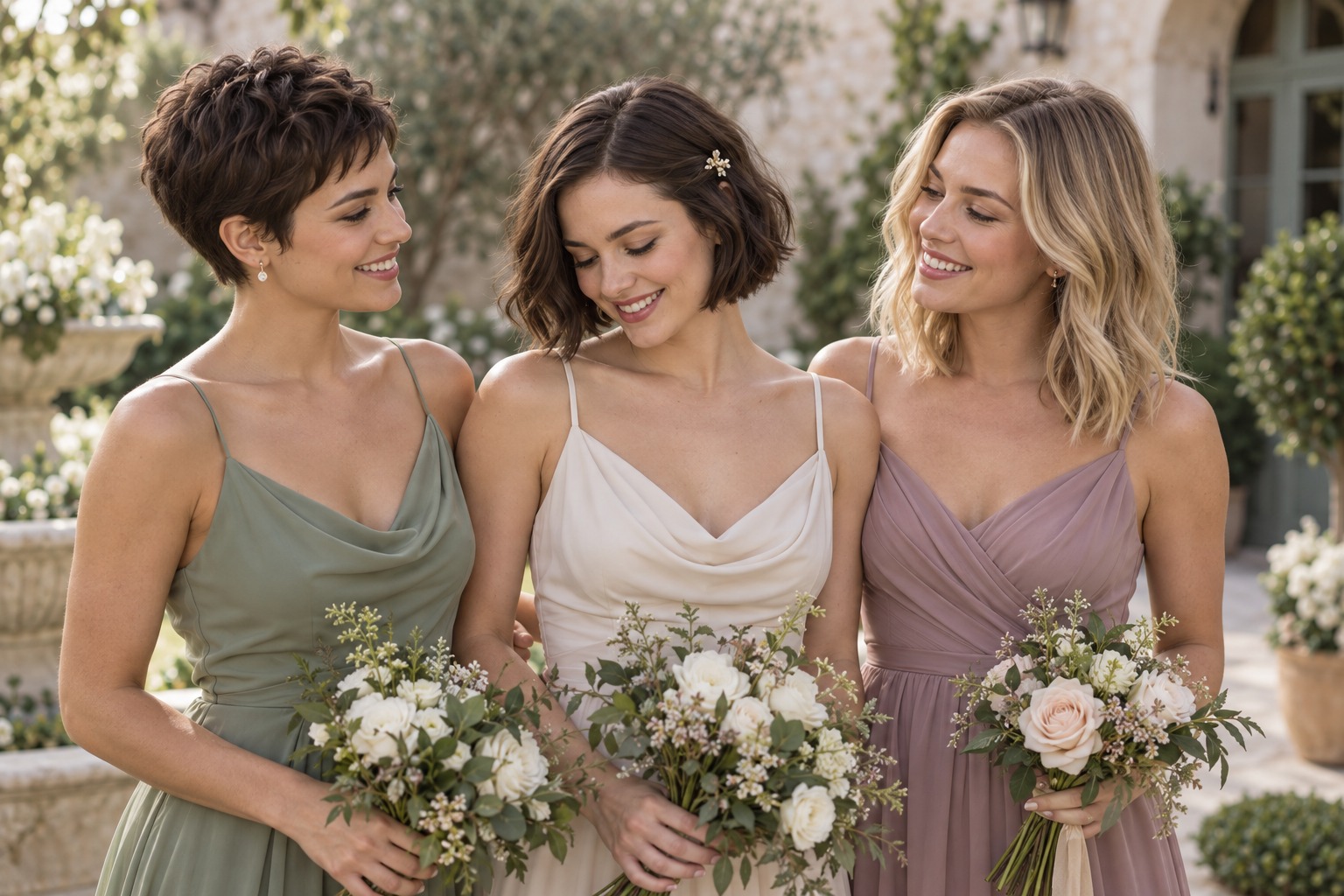
A pixie or crop often has its strongest styling choices at the front, crown, or sides. A deep side part, a brushed-back finish, a defined wave, or one accent pin can create a clear shape without pretending the hair forms a bun. If the sides are very short, ask whether a small clip can sit comfortably and stay in place. The answer depends on the cut and the accessory, so a quick trial is more useful than assuming a large comb will hold.
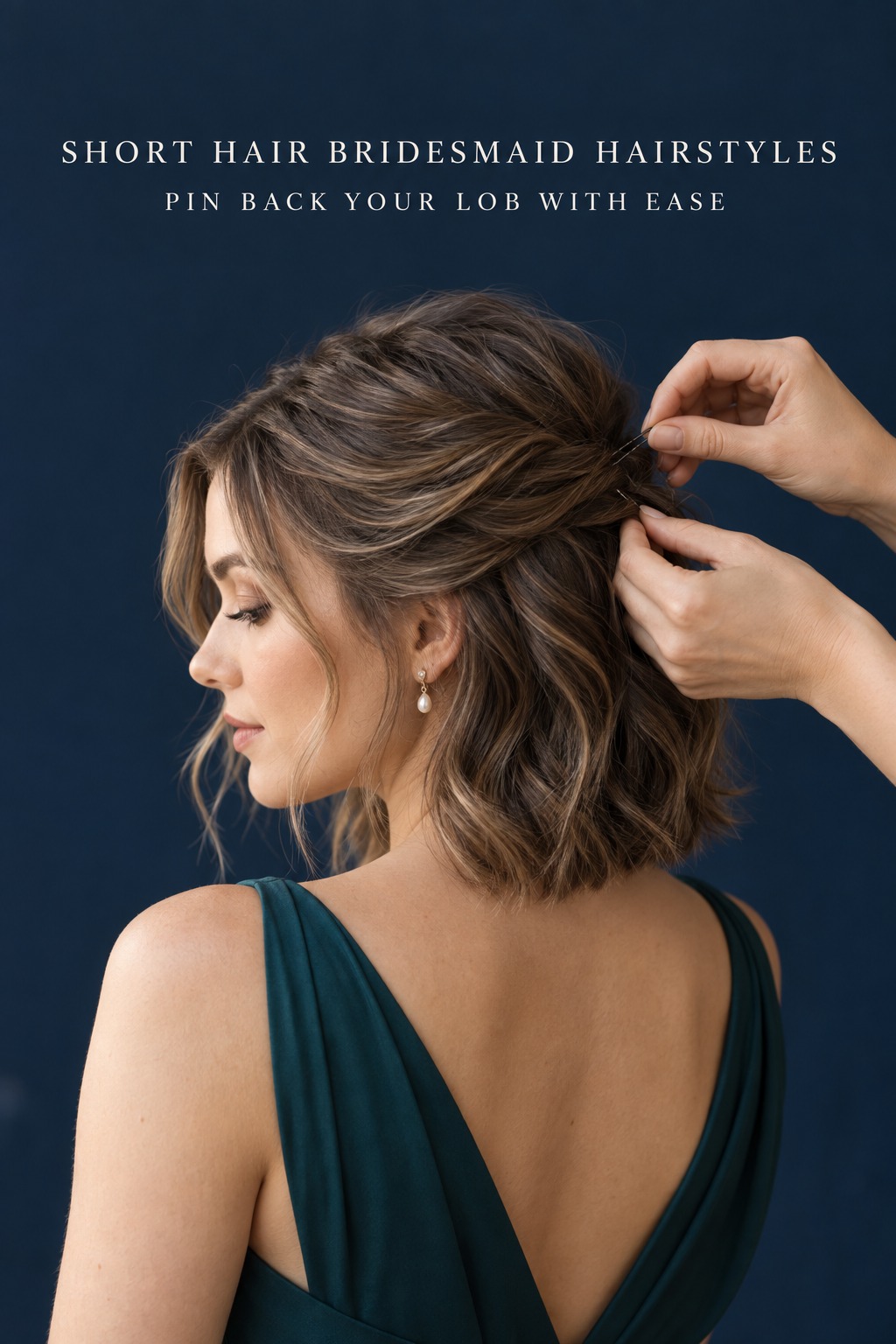
A chin-length bob gives you a little more to work with, though it may still be too short for a conventional low updo. A tucked-under wave can look finished while keeping the bob’s outline visible. A twist or braid across the front can draw hair away from the face, with pins hidden where the sections meet. If a reference shows a knot at the back, ask whether a small pinned fold could suggest the same gathered feeling without requiring every end to reach the nape.
A lob that grazes the shoulders may allow a small half-up twist, a compact pinned shape, or a low gathered finish, depending on layers and texture. Hair that reaches the shoulders in front may still be shorter at the back. Bring a side view to the trial, and ask the stylist to show you what happens when you turn your head. That view can reveal loose ends or pins that are hidden in a front-facing inspiration photo.
Texture matters alongside length. Straight hair can make a clean part or smooth silhouette easy to see. Waves can add movement around a bob. Curls and coils bring their own shape and can be defined, gathered, or accented without being brushed into a different texture. Fine hair, dense hair, layers, and a fringe all change how sections meet. Instead of asking whether your texture is “right” for a look, ask what version of the look will let your texture remain recognizable.
Consider comfort before adding more pins or product. Tell the stylist if clips press behind your ears, if you dislike tight tension, or if you prefer hair away from your face. Ask to feel the accessory before it is secured and to check it from the side. A beautiful finish should still let you smile, hug, and look over your shoulder without constantly monitoring it.
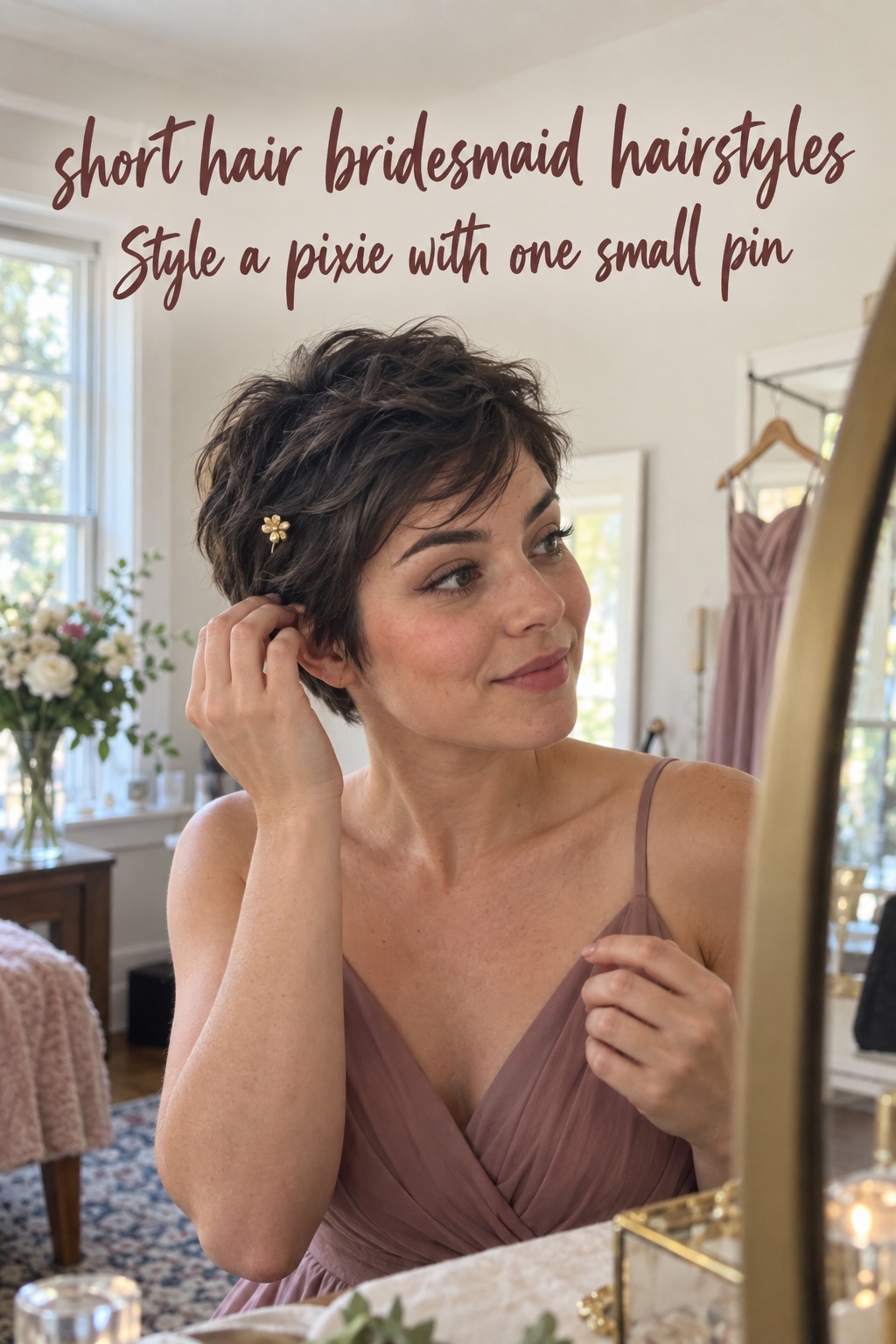
Short hair bridesmaid hairstyles by the cut you have
For a pixie or crop, shape the outline. A side-swept fringe can soften a clean crop, while a more polished part can make the look feel formal. Ask for definition where you want the eye to land: a curved front, a lifted crown, or a sleek side. One small barrette, pearl pin, or floral accent can mark the occasion. Keep the scale modest enough that the accessory sits securely and leaves your face visible. If your hair is too short to tuck behind the ear, the stylist can place a small detail above the temple instead.
For a bob, decide whether the shape should move or stay smooth. Soft waves create a little motion and can make a bob feel romantic without hiding its length. A smooth finish emphasizes the cut and pairs well with a sharp part or a single clip. If you like a half-up look, gather only the sections that reach comfortably. A small twist or braid across the crown can give the impression of hair pulled back while the rest stays down. Ask for a back view before deciding whether the pin placement looks intentional.
For a lob, try a partial gather before committing to an updo. A shoulder-skimming cut may hold a small low twist, a pinned roll, or a half-up shape. The shorter the layers at the nape, the more likely some ends will need discreet pins. A stylist can show whether those pins disappear into the texture or whether a down style will look cleaner. If the dress has an open back, a partial gather may reveal more of it while preserving visible length around the face.
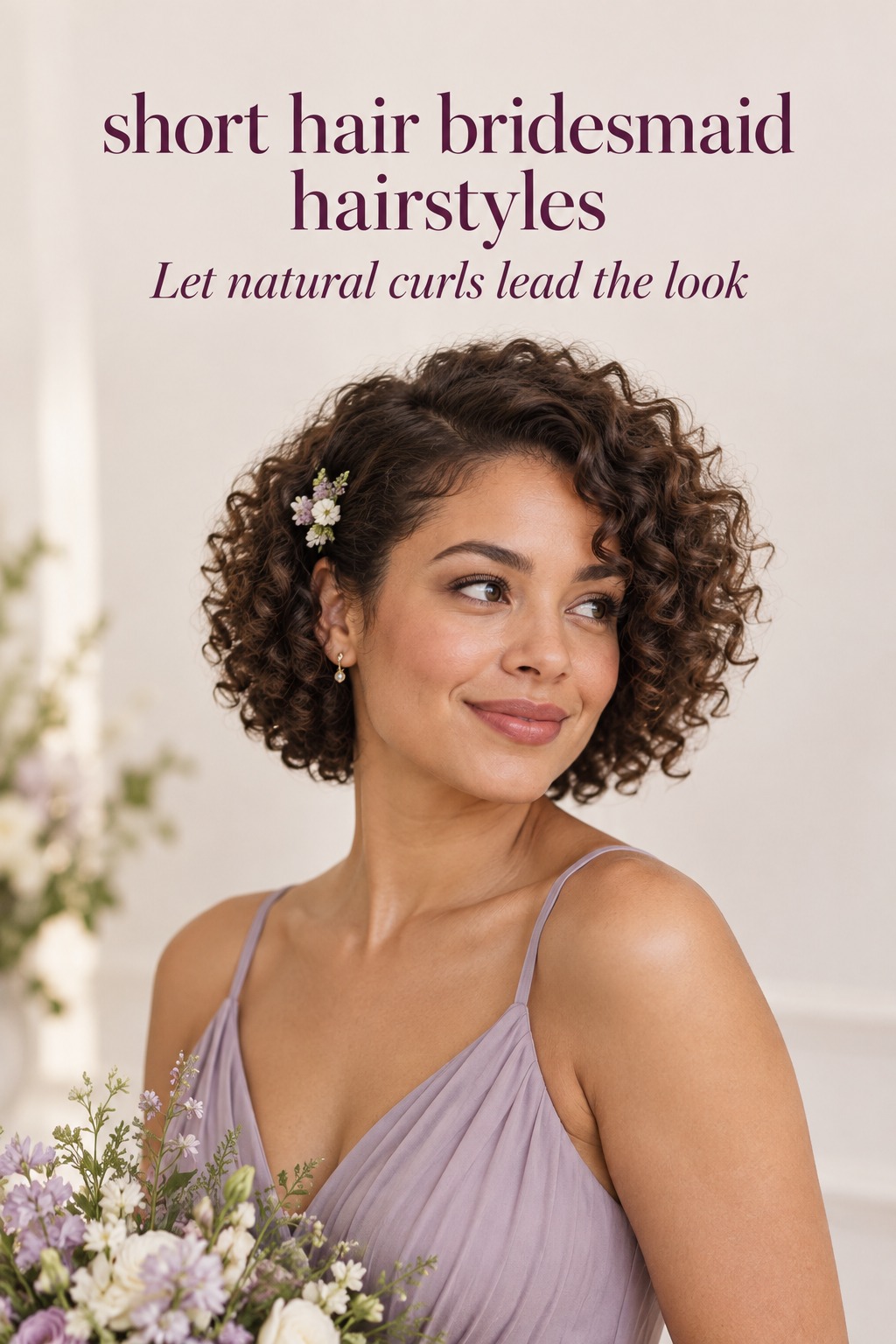
For natural curls or coils, choose the silhouette before the accessory. You might wear the texture open with one side pinned, define the front and let the rest keep its volume, or gather a section where the length allows. Talk through how you prefer your curls or coils to be prepared and shaped. Bring the products or routine details that help the stylist understand your usual finish. A pearl pin, comb, or small flower can be added where the hair already has a stable shape, rather than used to force it into one.
For fine or layered short hair, ask for a secure detail with a light footprint. A narrow braid, a twist, or a pin-back can read clearly without needing a large gathered base. If a clip slides, ask whether the section can be anchored with hidden pins first. For layers that fall loose, a soft wave or deliberate piece near the face may look more finished than trying to smooth every end into place. The best option depends on your hair, so use the trial to see what remains comfortable after you move around.
A true updo is only one route. A pinned-back illusion keeps most of the hair down but gathers the sides or crown. An open style leaves the cut visible and uses shape, shine, or a small accent to feel occasion-ready. Each choice can work for a bridesmaid. The right one is the version that fits your available length, your dress, and the amount of control you want.
Make the short style feel connected to the whole look
Once you know what your cut can do, look at the dress. A high neckline or shoulder detail may be easier to see when one side is tucked or pinned. An open back may invite a partial gather, though leaving the hair down is still an option if that feels more like you. With a simple dress, texture or a small accessory can add a point of interest. With an embellished neckline, a clean shape may give the clothing room to show.
Think about earrings and hair adornment together. If you plan to wear large earrings, a small clip near the opposite side may be enough. If the dress includes beading or floral detail, choose a hair accessory that echoes one element rather than repeating every detail. A narrow ribbon, a single flower, a pearl barrette, or no accessory at all can each work. The scale should suit the cut: a tiny pixie may be overwhelmed by a large comb, while a longer bob may carry it more easily.
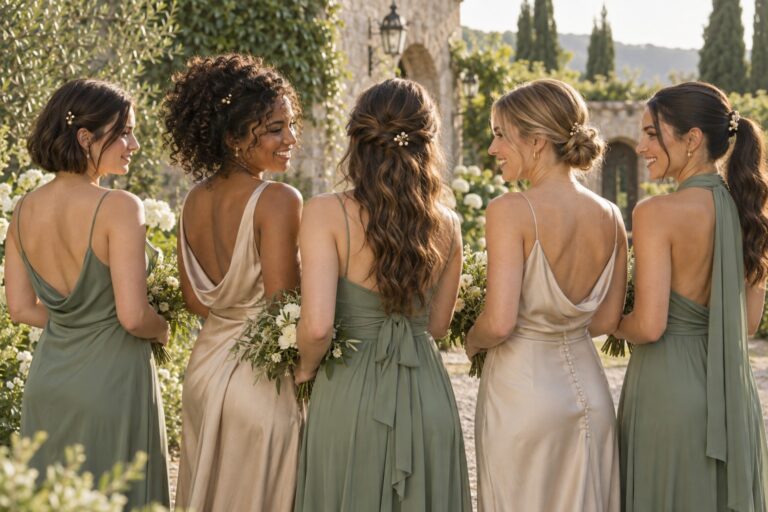
Coordination with the other bridesmaids does not require identical hair. If the group wants a shared look, agree on one flexible cue such as a side part, soft finish, or matching small accessory. Then let each person adapt it. On one bridesmaid, the cue may be a waved bob with a pin; on another, a swept pixie; on someone else, a low twist. The wedding party can look considered without asking one person to wear a shape that does not suit her cut.
For the appointment, make a short stylist brief. Include the current length and texture, the shape you like in your reference, the dress detail you want to show, what feels uncomfortable, and one backup idea. You might write: “Chin-length bob, soft wave, keep the front off my face, show the open neckline, no tight clips; if the twist slips, use a side pin-back.” This gives the stylist a useful direction and a decision path if the first version needs adjustment.
Try to see the look from more than one angle. Take a front photo, turn to each side, and check the back. Notice whether the accessory catches the light, whether pins are visible, and whether the ends sit as expected. Move your head, smile, and try the neckline of the dress if you can. The point is not to inspect every strand. It is to confirm that the overall shape feels like something you can wear through the day.
Keep a backup that preserves the same mood but asks less of the hair. A pinned side can replace a small braid. A waved bob can replace a gathered twist. A sleek pixie can replace a sculpted updo. If the planned shape does not stay comfortable during the trial, changing the construction does not mean losing the idea. It means keeping the parts you liked and choosing a form that works.
Short hair can be a clear styling choice in its own right. The cut’s edge, the way it frames the face, and the space it leaves around a neckline all contribute to the finished look. You do not need to hide that shape under extensions or force every reference into an updo. Start with the hair in front of you, identify what you want to emphasize, and let the final detail do just enough.
FAQ
What are the best short hair bridesmaid hairstyles?
Good options include a polished pixie, soft waves on a bob, a side pin-back, a small braid or twist, and a partial gather on a lob. The best choice depends on your length, texture, comfort, and dress. Bring a reference for the mood you want and ask a stylist to adapt the shape to your cut.
Can short hair be put up for a wedding?
Some short cuts can be pinned into a compact gathered shape, while others are better suited to a partial updo or a pinned-back illusion. A pixie may not have enough length to form a bun. A stylist can check the nape and layers during a trial and suggest a realistic alternative if a full updo will not hold comfortably.
What can a bridesmaid with a pixie cut wear?
A pixie can be styled with a side part, swept fringe, defined texture, a smooth finish, or a small pin near the temple. Choose the outline you like first, then decide whether an accessory adds anything. If a clip feels heavy or will not sit securely, the shape itself can still look polished without one.
How do you make a short bob look formal?
Use a deliberate part, a smooth or softly waved finish, and one detail such as a small barrette or tucked section. A bob can also be pinned partially back to reveal the face or dress neckline. The finish does not need to be complicated; clear shape and tidy placement often make the cut feel occasion-ready.
Should bridesmaids with short hair wear extensions?
Extensions are optional. Many short styles work with the hair’s existing length, including waves, pixie shapes, side pin-backs, and partial gathers. If you want a particular style that depends on added length, discuss the cost, comfort, attachment, and appearance with a stylist before the wedding. You can also choose a shorter adaptation that keeps the same mood.
Which accessories work with short bridesmaid hair?
Small barrettes, pearl pins, narrow combs, and single floral details can suit short hair when they have a secure place to sit. Match the scale to the haircut and consider your earrings and dress embellishment. Try the accessory during a styling appointment so you can see whether it stays comfortable and visible from the side.
How should I explain my hairstyle to a wedding stylist?
Bring photos of your current hair from the front, side, and back, along with one or two inspiration images. Describe the detail you like, your actual length and texture, the dress feature you want to show, and anything that feels uncomfortable. Ask for a backup shape that preserves the mood if the first option needs more length than you have.