Bridal French Manicure Ideas That Photograph Beautifully
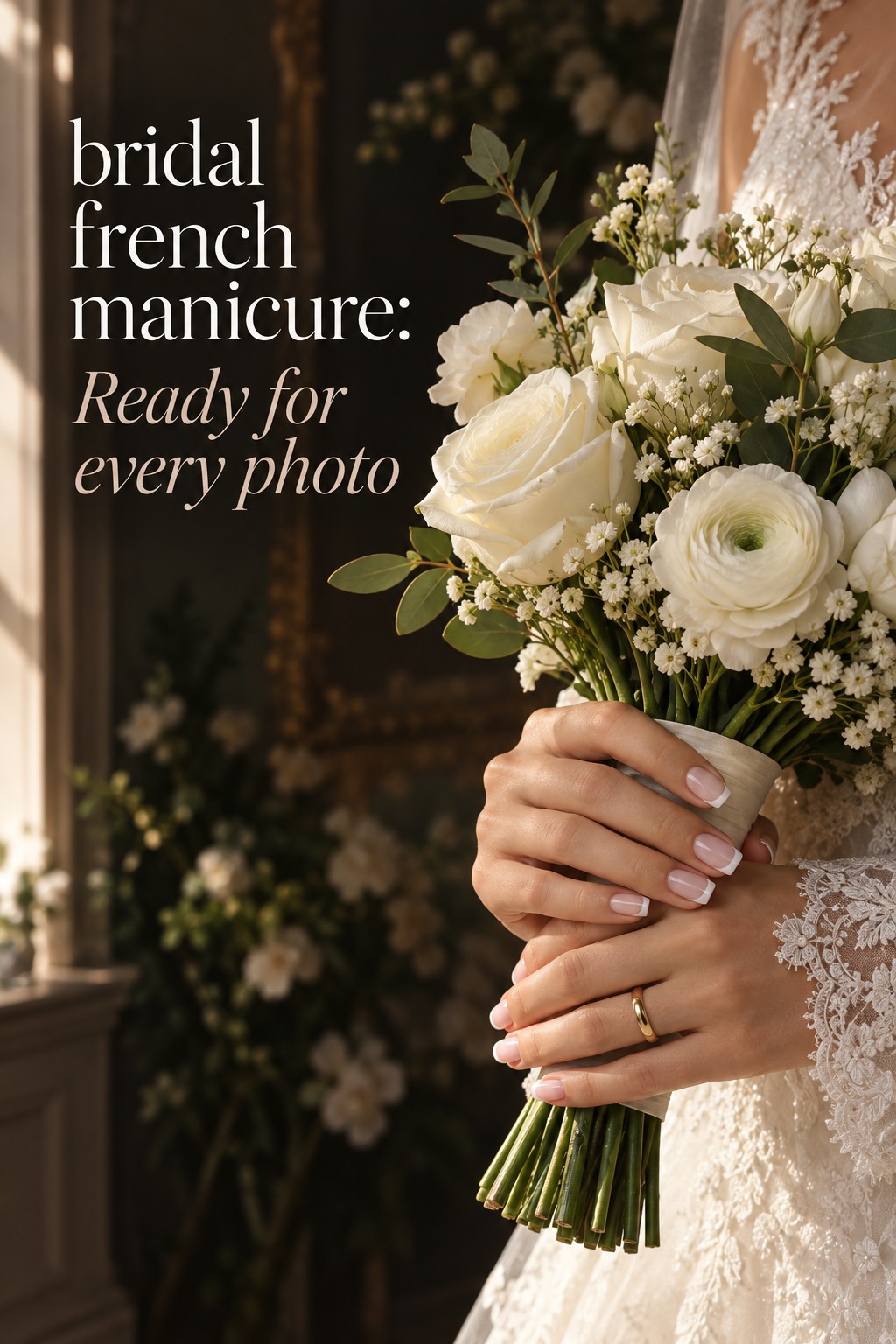
A bridal French manicure can be classic, modern, barely there, softly shiny, or unexpectedly personal. The white tip is only the starting point. What makes the manicure feel right for a wedding is the relationship between the tip and the base, the shape of the nail, the texture of the dress, the sparkle of the jewelry, and the way the design will look when your hands hold a bouquet or show a ring.
The most useful way to choose is to stop saving images by name and start saving them by decision. Notice the tip width, the base color, the finish, the amount of detail, and the length. Then take those observations to your nail technician. Current bridal nail coverage shows that individualized French designs, chrome finishes, and softly sheer bases are all part of the conversation, but a trend only helps when it suits your hands and your wedding-day plans. Vogue’s bridal nail ideas and Who What Wear’s bridal nail guide both point toward the same useful idea: the manicure should finish the look, not distract from it.
What is changing in the bridal French manicure
The classic French manicure is not disappearing. It is becoming more adjustable. Instead of treating a French as one fixed combination of pink, white, and a rounded smile line, brides are choosing a version that responds to their own style. A micro tip can look clean on a short nail. A milky base can soften a bright white edge. A glazed finish can add light without introducing a busy pattern. A pearl or tiny crystal can create a focal point without turning every nail into an accessory.
The tip is a proportion, not a rule
Think of the white or colored tip as a percentage of the visible nail rather than a standard stripe. A very slim tip leaves more of the base visible and feels understated. A medium tip reads as unmistakably French and often works well for close-up photos. A deeper tip has a graphic effect, but it can shorten the visual impression of a small nail if the base is very pale and the line is too straight.
Turn wedding inspiration into a plan you can actually follow.
Zarellea brings your guest list, budget, vendors, and day-of details into one shared space — so no beautiful idea gets lost in the shuffle.
Ask your technician to show you the planned width on one nail before the whole set is finished. This small check can prevent the most common disappointment: a manicure that looked delicate in a saved photo but feels heavy on your own hands. Your nail bed, free edge, and chosen shape change the balance.
The base can make the same tip look completely different
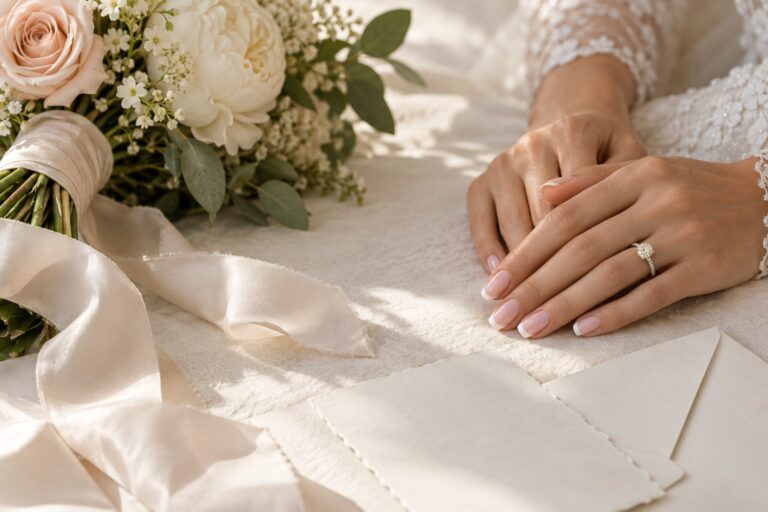
A pink-beige base gives a traditional French a warm, familiar feeling. A sheer milky base feels softer and more editorial. A translucent peach or rosy nude can bring warmth to the hands without hiding natural detail. A cooler beige may coordinate better with silver jewelry, while a warm cream can sit comfortably beside ivory lace, champagne satin, or gold metal.
Do not choose the base from a phone screen alone. Screens, salon lighting, and the color of your skin can shift the impression. Ask to see two or three swatches against your hand and, if possible, beside a small fabric sample or a photo of your dress. The best base is not necessarily the palest one. It is the one that lets the tip look intentional and keeps your hands looking like your hands.
Detail works best when it has a job
Bridal details can echo something already present in the day. A pearl can connect with pearl buttons or earrings. A fine chrome sheen can echo a metallic shoe or a silver hairpiece. A small floral mark can reference the bouquet, but it does not need to copy every flower. A lace-like line can work with a textured gown when it remains light enough to preserve the shape of the French tip.
Choose one main detail and one supporting finish. When pearls, glitter, chrome, bows, florals, and crystals all appear at once, the eye loses the quiet polish that makes a French manicure feel bridal. Simplicity is not a lack of imagination. It is a way to make the important detail visible.
Match the manicure to your nail length and shape
The most beautiful reference image can still be the wrong template for your hands. Nail length and shape change the amount of space available for the tip, and they affect how comfortable the manicure feels during the ceremony, portraits, dinner, and dancing. Choose a silhouette you can actually wear for the entire day, then adapt the French details to it.
Short and natural nails
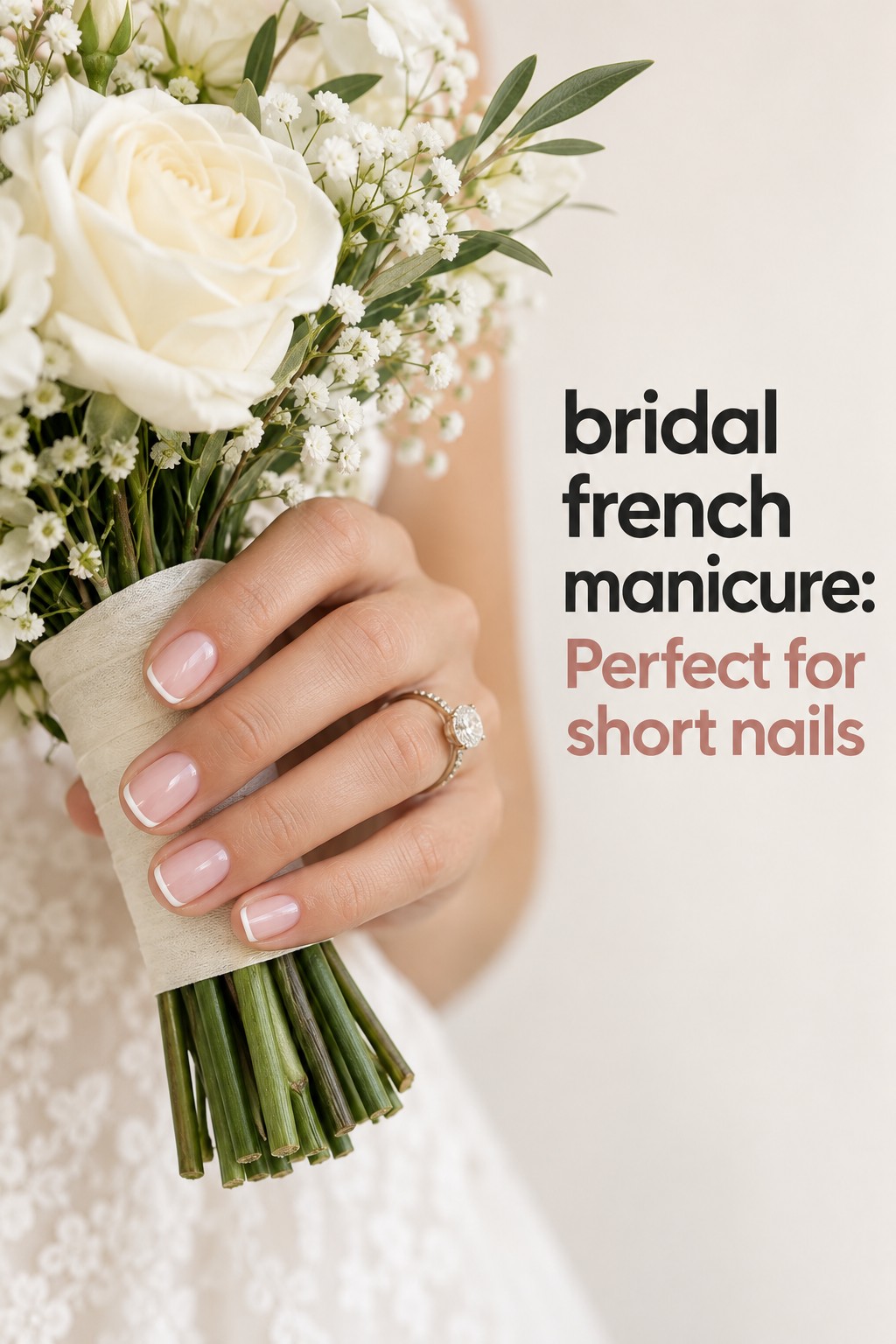
Short nails can look especially elegant with a micro French, a soft oval edge, or a thin tip that follows the natural curve. Keep the base sheer enough to create continuity from cuticle to free edge. A dense white stripe may take up too much visual space, while a fine line can make the nail look neat and deliberate.
If you usually keep your nails short, do not feel pressured to add dramatic length for the wedding. Your hands will be busy. You may be holding flowers, fastening jewelry, lifting a veil, or touching many fabrics. A short manicure can look polished, photograph clearly, and feel like an elevated version of your everyday style.
Almond and oval shapes
Almond and oval shapes give the French smile line a naturally curved frame. They can carry a classic medium tip, a soft ombré transition, or a narrow micro French. If you want the result to feel modern, ask for a slightly thinner line and a base that remains translucent. If you want more traditional bridal polish, choose a clearer white with a balanced curve across every nail.
Bring attention to symmetry during the consultation. The tips do not need to be mathematically identical, but their visual weight should feel consistent. Ask how the design will be adjusted for nails that grow at different angles or have different widths. A good reference image shows the mood. Your technician still needs to build the actual lines for your hands.
Square and squoval nails
A square or squoval nail gives a French manicure a crisp, graphic quality. This shape can suit a structured gown, a clean city venue, or modern jewelry. Use a tip that respects the corners instead of rounding the entire design into a different silhouette. A fine line keeps the look light, while a stronger tip creates a classic contrast.
Check the corners for comfort before the wedding day. If you are not used to a longer square nail, everyday tasks may feel different. Test zippers, phone use, dress closures, and the way you hold a bouquet. A manicure that looks beautiful but makes you tense your fingers will not feel like the right choice.
Long extensions
Long extensions create room for deeper tips, layered finishes, sculptural details, and more noticeable shape. They also create more responsibility. Decide early whether you actually like the length and whether it fits your work, travel, dress fastenings, and daily routine. A wedding is not the best day to discover that a new length catches on your veil or makes it hard to handle small buttons.
If extensions are new to you, schedule a trial well before the final appointment. Wear the length long enough to learn what needs adjusting. You can shorten the design, soften the corners, or reduce the tip before the wedding. The trial is not only for color. It is a test of the entire shape.
Choose the finish that supports the whole wedding look
Once the shape and proportions are clear, choose the finish. This is where a bridal French manicure can become quietly personal. The goal is to make the hands look finished in every setting, from natural daylight to warm reception lighting and close-up ring photographs.
Classic glossy French
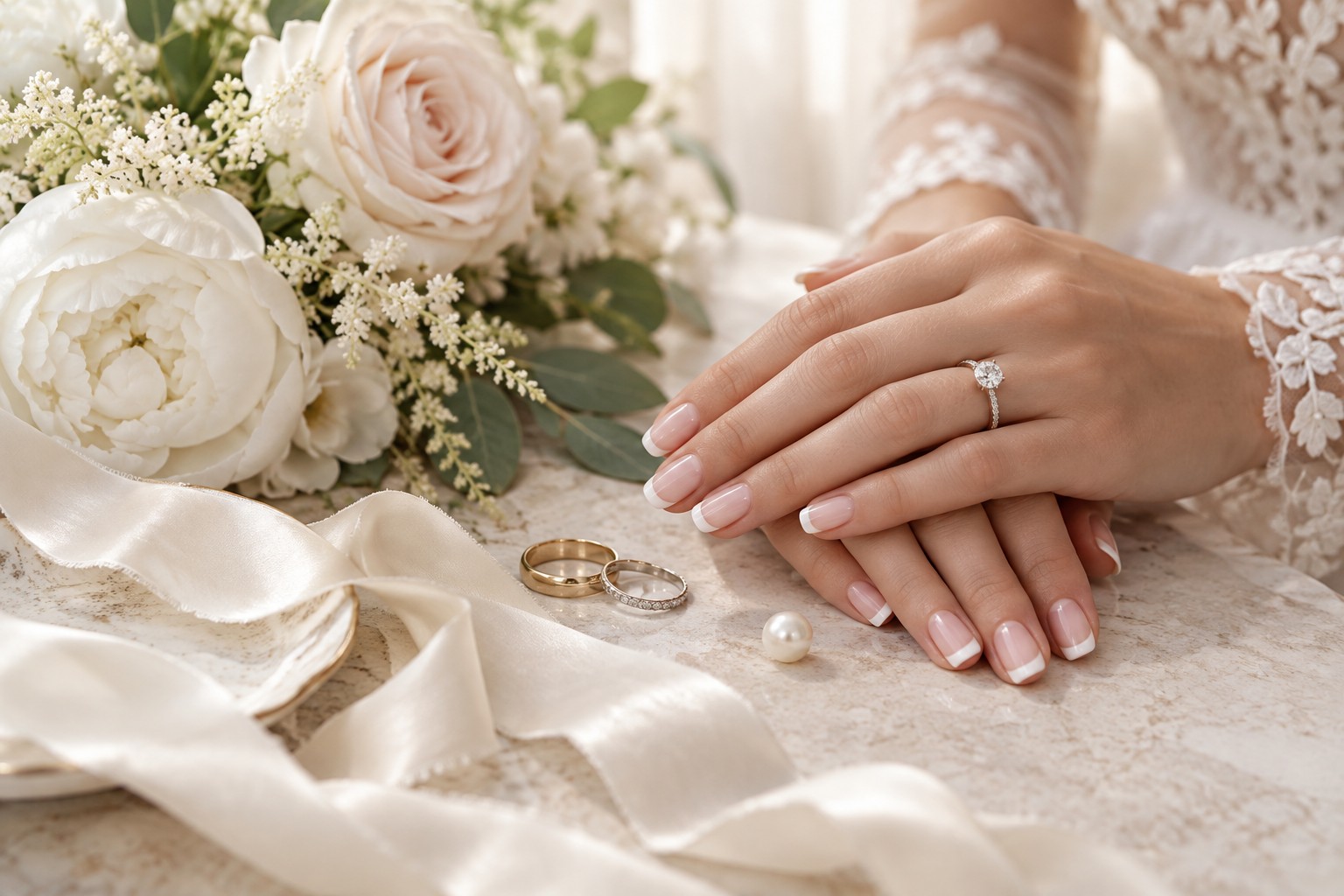
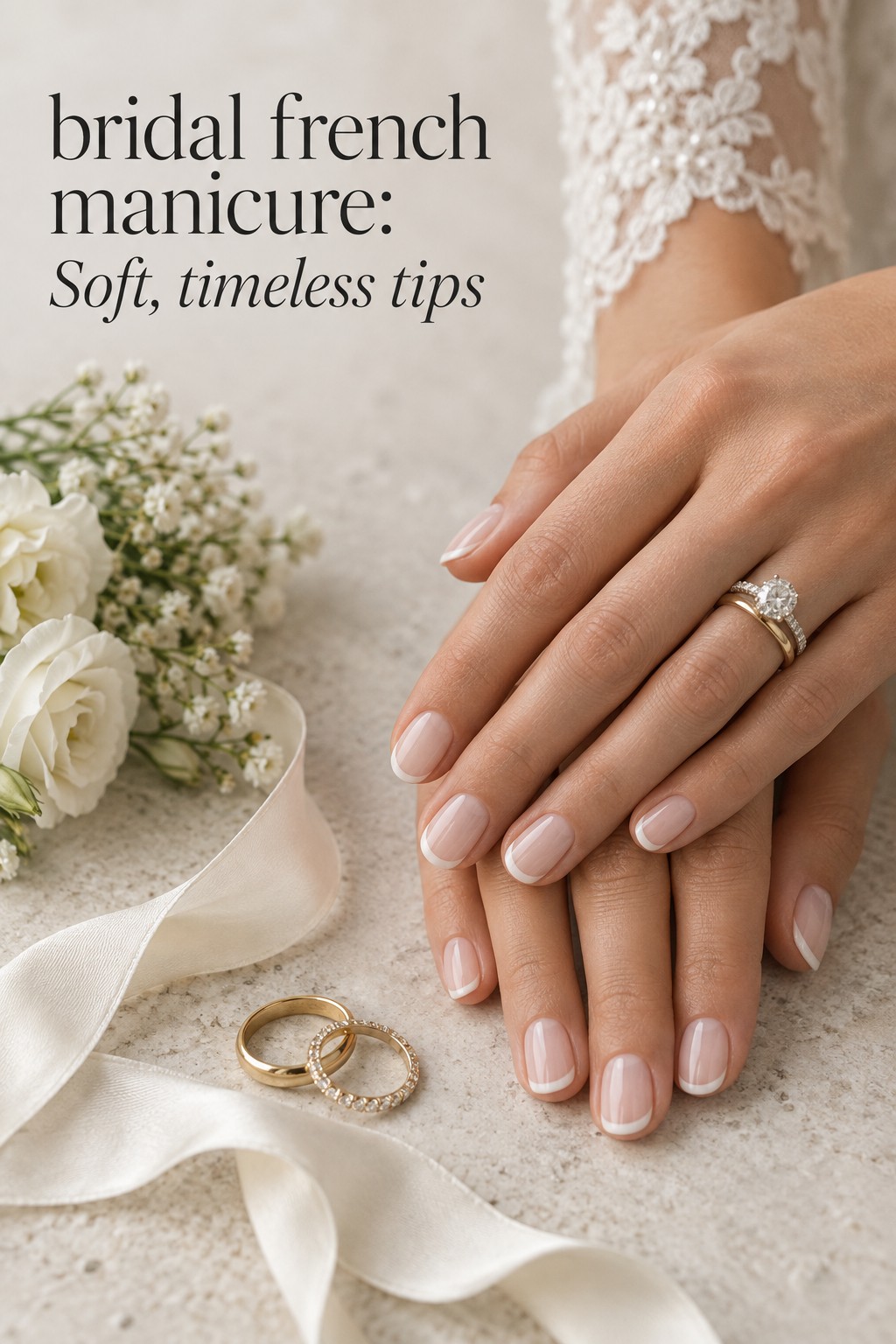
A glossy white-tip French is the easiest choice to understand and the easiest to explain at the salon. It works when you want the manicure to feel timeless and clearly bridal. Keep the base close to your natural coloring, decide whether you prefer a bright or softened white, and check that the smile line follows your chosen shape.
Milky and ombré French
A milky or ombré French blends the base and tip so there is less visual contrast. It suits a bride who wants polish without a strong graphic edge. This finish can be particularly useful when the dress is detailed or the jewelry is bold because the nails contribute light and softness instead of another hard line.
Ask the technician how translucent the base will be and whether the tip will remain visible in low light. An ombré effect that looks perfect under a bright salon lamp may become almost invisible in evening photographs. The answer is not always to make it stronger. Sometimes a slightly warmer base or a clearer edge gives the camera enough information.
Chrome and glazed finishes
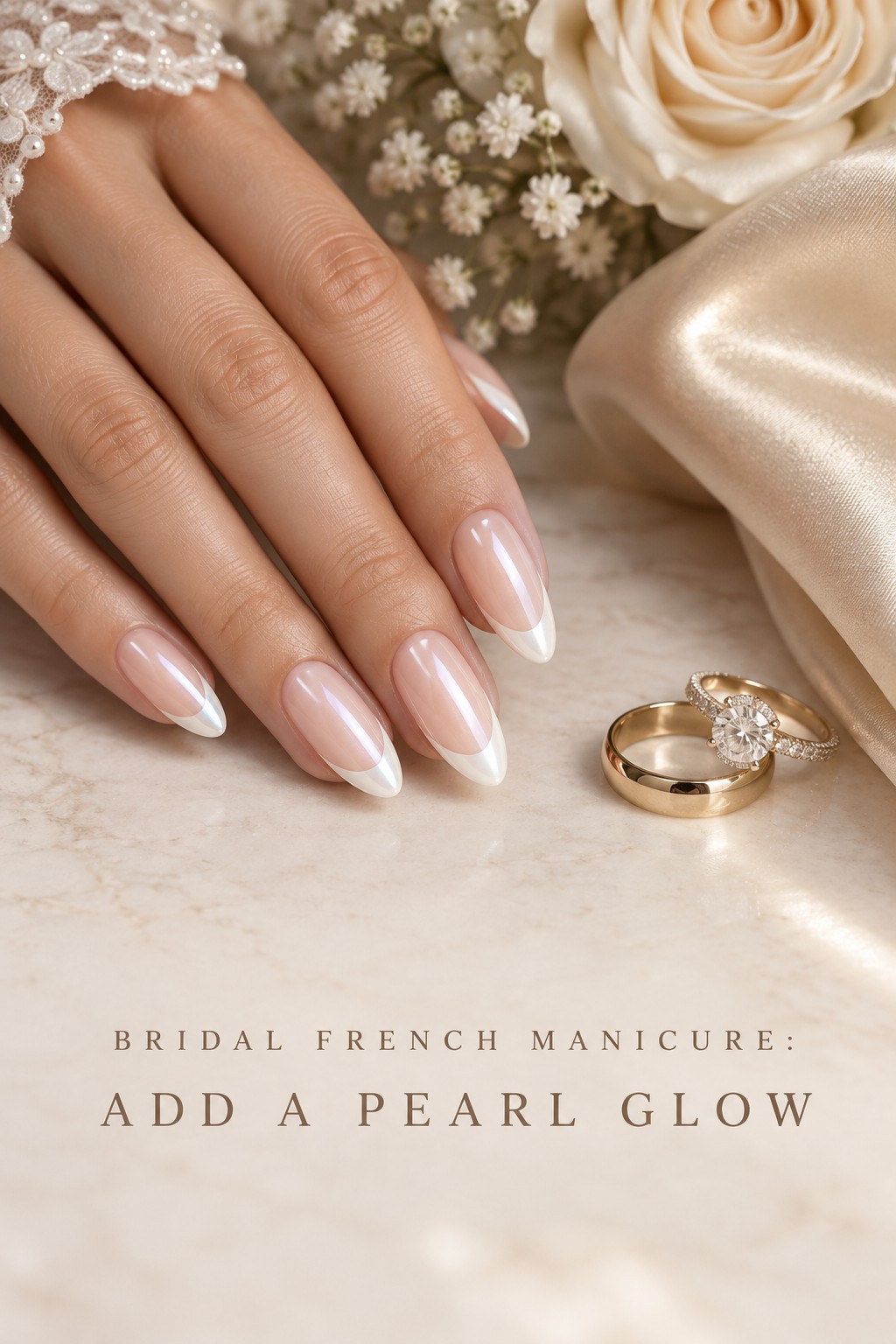
Chrome can be a subtle veil of reflection or a more obvious metallic effect. A pearl glaze over a French tip can make the nails glow when your hands move, while a silver or gold chrome tip creates a stronger fashion direction. Use the finish to repeat the metal you already wear, not to introduce a competing color family.
Ask for a test nail because chrome products can change the appearance of the base and the tip. View it beside your rings and in both daylight and indoor light. If the reflective effect is doing all the talking, reduce it to an accent nail or choose a finer powder application.
Pearls, crystals, and small art
One pearl on each ring finger, a tiny crystal near the cuticle, or a very fine bow can make a familiar French feel personal. Place the detail where it will not interfere with rings or snag on the bouquet. If you want an embellished accent nail, decide whether it is meant to be seen in portraits or simply enjoyed by you.
Texture matters. Raised details may look beautiful but can catch on lace, tulle, hair, or clothing. Flat painted detail is often easier to wear. If your dress already has heavy beadwork, a simple glossy French may create the most elegant balance. If your gown is clean and minimal, a small pearl or chrome accent can add a considered point of interest.
Make the manicure last from trial to final photographs
A strong bridal French manicure plan includes more than a saved design. It includes a trial, a service decision, a timing decision, and a care plan. Your hands will appear in many small moments, so reliability matters as much as the finish.
Book a real design trial
Use the trial to test the shape, length, base shade, tip width, finish, and any embellishment. Wear the nails through ordinary tasks and take photographs with the type of bouquet or rings you expect to use. Look at the manicure from a distance as well as in a close-up. A design can be beautiful in macro detail and too busy when your hands are part of a full portrait.
Write down what you liked and what you would change. Save the technician’s product names or shade notes if the salon can provide them. If a different technician will do the wedding appointment, bring the trial photos and the written details rather than relying on memory.
Choose the service based on your routine
Gel, regular polish, extensions, and other salon services each create a different planning conversation. Ask your technician how the service fits your nail condition, desired length, removal plan, and travel schedule. Avoid making a last-minute service change on the wedding morning. Your final appointment should be a familiar version of a tested plan.
If your nails are fragile, uncomfortable, or changing in a way that concerns you, ask a qualified professional for advice. Do not use the wedding timeline to push through pain or irritation. A shorter, comfortable manicure is always a better foundation for photographs than a longer design you cannot wear confidently.
Time the final appointment thoughtfully
Many brides prefer the final manicure close enough to the wedding that the finish looks fresh, but not so close that there is no room to fix a problem. Your exact timing depends on the service, your schedule, and how quickly your nails grow or your polish wears. Ask the salon what they recommend, then leave a practical buffer before travel, rehearsal events, and the ceremony.
Bring any ring, invitation, fabric sample, or accessory that helps the technician see the full palette. Wear a layer that will not brush against wet nails on the way home. Keep the first evening gentle and follow the salon’s care instructions rather than experimenting with a new product.
Give the salon a precise brief
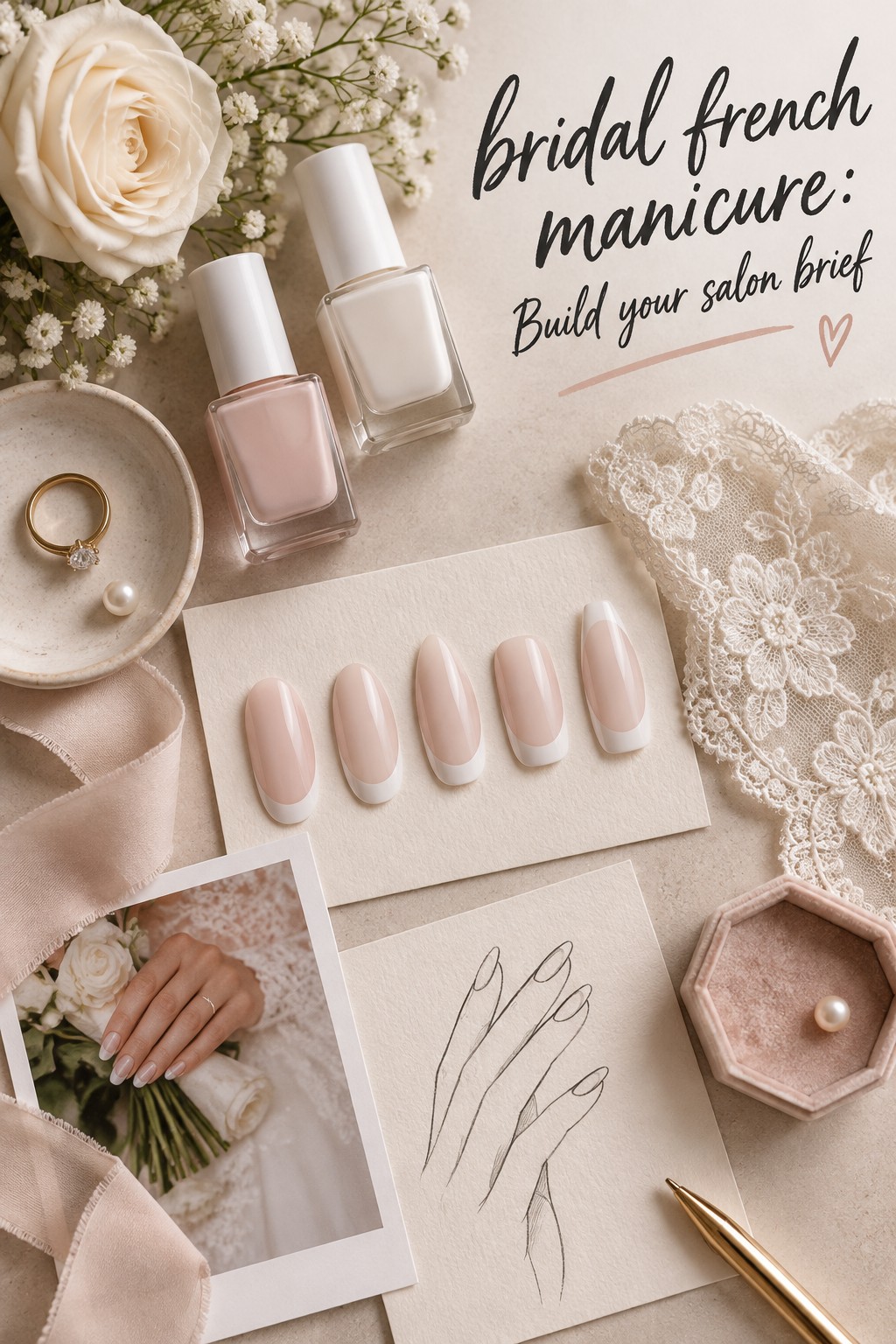
Instead of saying “I want bridal French,” describe the design in five parts: shape, length, base, tip, and finish. For example: “Short squoval nails, sheer rosy base, thin soft-white tips following the natural curve, glossy topcoat, and one tiny pearl on each ring finger.” Then show one or two reference images that match the proportions you want.
- Say whether you want the tip barely visible, classic, or graphic.
- Name the metal you wear most often if you want chrome or shimmer.
- Show the dress texture so the nail art does not compete with it.
- Explain whether you need to type, travel, work, or handle tiny closures.
- Point out any nail that needs a different adjustment for balance.
A final bridal French manicure checklist
Before you confirm the final design, review the manicure as part of the entire wedding look. This last check keeps a beautiful idea from becoming a stressful detail.
- Does the nail shape feel like you, or only like the reference image?
- Can you wear the chosen length comfortably during a full wedding day?
- Does the base work with your dress, skin tone, rings, and bouquet?
- Is the tip proportion clear in daylight, indoor light, and photographs?
- Does the finish repeat a metal or texture already in the outfit?
- Are embellishments flat, secure, and unlikely to catch on fabric?
- Have you tested the exact shape and service before the final appointment?
- Do you know what to do if one nail chips, lifts, or feels uncomfortable?
The strongest bridal French manicure is not the one with the most decoration. It is the one that makes your hands look polished in the moments you already know will matter: holding the bouquet, exchanging rings, lifting a glass, touching your partner’s arm, and looking down at your hands after the ceremony. Choose the proportion, finish, and length that let you stay present. The manicure should support the memory, not become another thing to manage.
FAQ
What is the most timeless bridal French manicure?
A sheer pink, rosy nude, or milky base with a balanced soft-white tip is the most timeless direction. Keep the shape comfortable and the tip proportionate to the nail rather than copying a fixed width. A glossy finish photographs clearly and works with many dress and jewelry styles.
Can a bridal French manicure work on short nails?
Yes. A micro French, soft oval edge, or very thin tip can make short nails look polished without requiring extensions. Keep the base smooth and slightly translucent, and ask the technician to adjust the tip width to your visible nail rather than using a standard stripe.
Should bridal French tips be bright white?
Not necessarily. Bright white creates a crisp, traditional contrast, while soft white, cream, or a translucent glazed tip can look gentler. Choose the tip shade beside your dress, jewelry, and base color. The right white is the one that looks deliberate rather than disconnected.
When should I have my bridal French manicure trial?
Schedule the trial early enough to test the length, shape, service, and comfort before the final appointment. Wear the design through normal tasks and photograph it with your rings or a similar bouquet. This gives you time to shorten the nails, soften the finish, or simplify the details.
Is chrome too trendy for bridal nails?
Chrome can feel bridal when it is used as a controlled sheen that supports the rings, shoes, or other metallic details. A pearl glaze or a light chrome veil is subtler than a fully mirrored finish. Test it in different lighting and reduce it to an accent if the reflection competes with the rest of the look.
How do I explain my bridal French manicure to a nail technician?
Describe the shape, length, base color, tip color and width, finish, and any accents. Bring one or two reference images that show the proportions you like, plus a dress or jewelry photo when useful. A sentence such as “short squoval nails with a sheer rosy base, thin soft-white tips, and a glossy finish” is far clearer than the phrase “classic bridal French.”