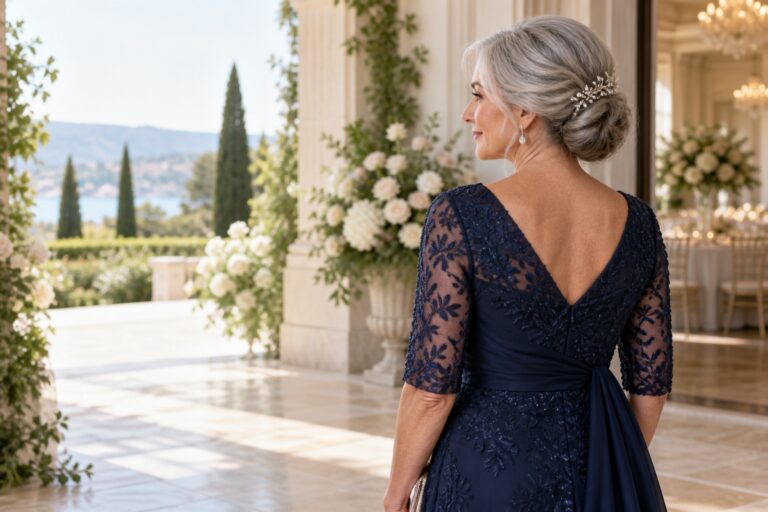
Lace Wedding Guest Dress: A Complete Styling Guide
A lace wedding guest dress can look romantic, polished, modern, or beautifully understated. The difference is rarely the lace alone. It comes from the color, lining, silhouette, scale of the pattern, and the way you finish the outfit. A navy lace midi with simple metallic sandals sends a different message from a white lace gown with a train, even though both rely on the same fabric idea.
The easiest way to choose well is to build a small lace-dress capsule instead of searching for one magical dress. Start with the invitation, choose the right level of coverage and formality, then use shoes, layers, and jewelry to make the dress feel appropriate to the venue. The result should feel special enough for photographs while still letting the couple remain the visual focus.
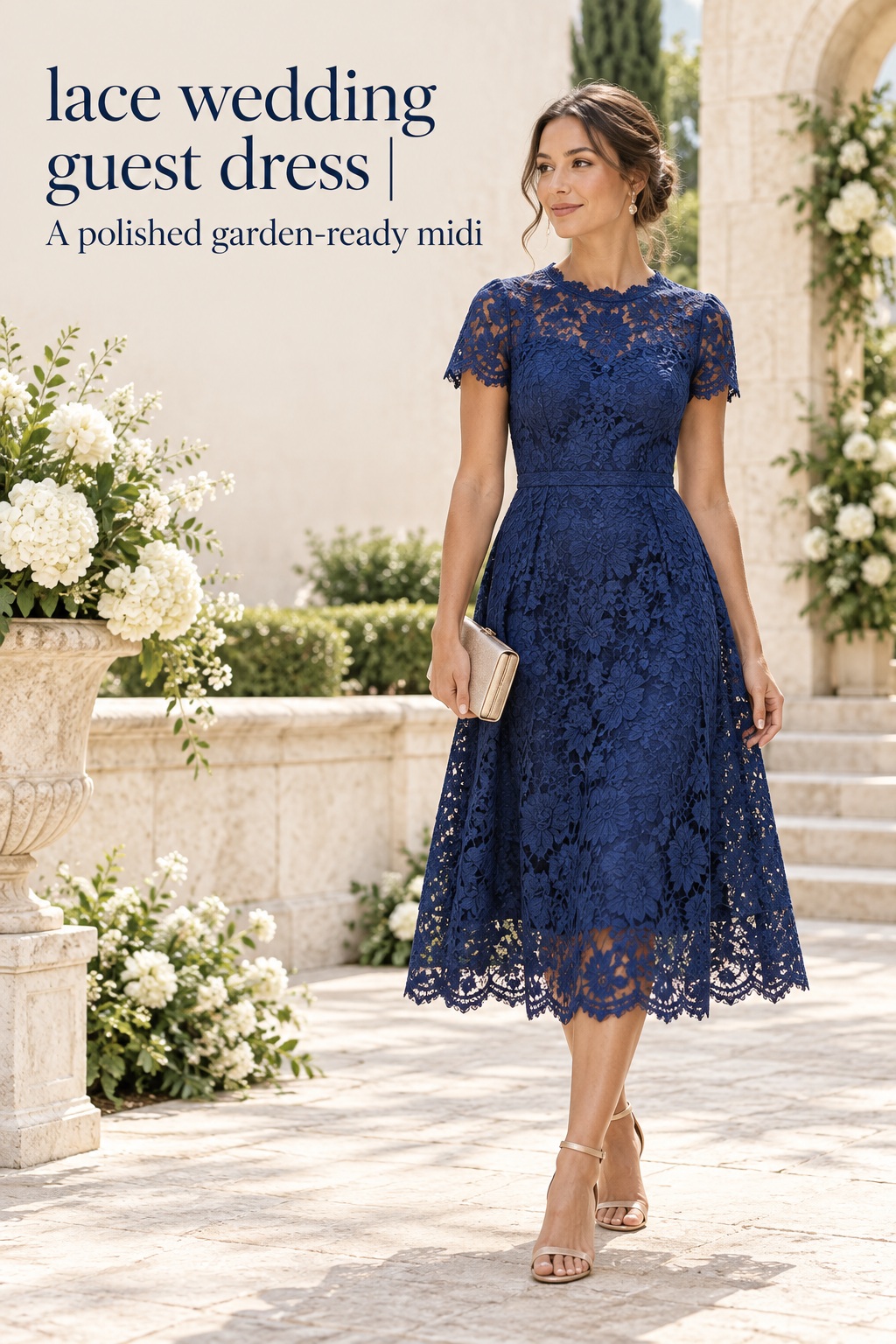
What makes a lace wedding guest dress work
Lace works for wedding guests because it brings detail without requiring sequins or a dramatic shape. It can soften a tailored dress, add dimension to a simple sheath, or turn an uncomplicated midi into an occasion outfit. Retail collections from Macy’s and Nordstrom show how many forms this category includes, from lace trim and embroidered panels to full overlays and formal gowns.
Color is your first boundary
For most weddings, begin with color before you fall in love with the pattern. Deep blue, sage, berry, teal, plum, rose, terracotta, and chocolate can all make lace feel distinct from bridalwear. Pale blue can be especially useful for a daytime event because it feels light without looking like an ivory dress. An editorial example from Woman&Home highlights a pale blue lace midi as a fresh alternative to florals.

Turn wedding inspiration into a plan you can actually follow.
Zarellea brings your guest list, budget, vendors, and day-of details into one shared space — so no beautiful idea gets lost in the shuffle.
White, ivory, cream, and very pale champagne need more care. A colorful lining may make a lace overlay clearly guest-appropriate, while white lace over a white slip can read bridal in photographs. If the dress looks like something a bride might wear for a civil ceremony, engagement portrait, or rehearsal dinner, choose another color or add a strong non-bridal element. A dark shoe, tailored jacket, or colored bag cannot always change an otherwise bridal-looking white lace gown.
Lace scale changes the mood
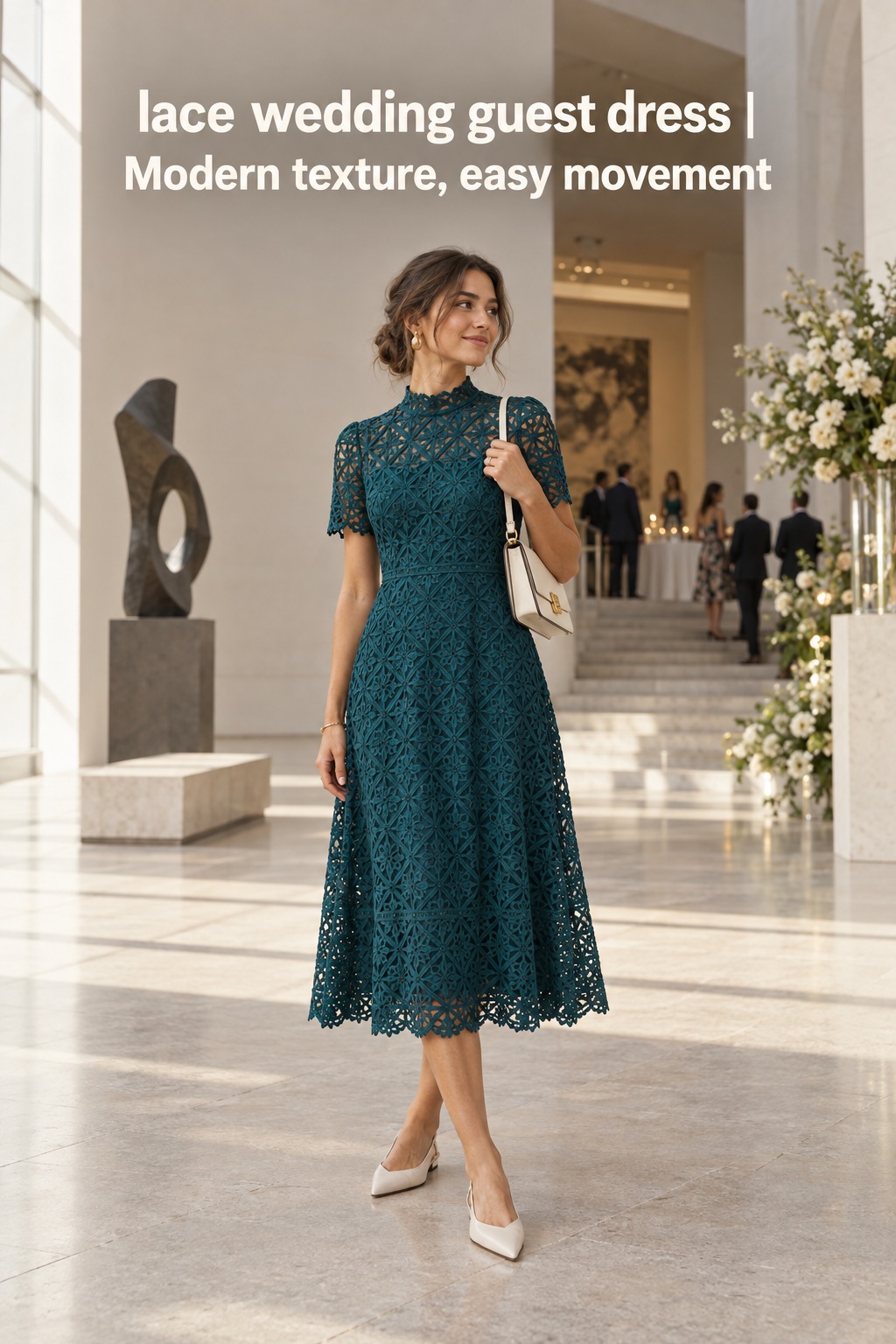
Small floral lace often feels classic and easy to dress up. Large botanical motifs feel more contemporary and can become the main visual feature. Geometric lace looks clean with a simple bag and sharp shoe. Corded or raised lace brings more texture and works well for evening, cooler weather, or a formal venue. Lace trim is subtler and can make a satin slip or crepe dress feel finished without turning the outfit overtly romantic.
Use the scale of the lace to balance your accessories. A busy floral pattern needs breathing room, so choose one metal, a clean shoe, and a bag without extra embellishment. A simple geometric pattern can carry a sculptural earring or a stronger bracelet. The goal is not to match every detail. It is to keep the outfit readable from a distance.
Lining decides whether the dress feels polished
Look at the dress in daylight and move in it before you decide. The lining should cover the areas you expect it to cover while leaving the lace pattern visible. A nude lining can create a delicate effect, but it may look nearly white under strong light. A lining that matches the lace color usually looks more intentional. If you can see a bra edge, shapewear line, or unexpected skin panel, check the dress from the front, back, and side.
- Check opacity near windows and under direct phone flash.
- Sit down to see whether the lining rides up or twists.
- Raise your arms to test sleeves, armholes, and the waist.
- Walk several steps to see whether the hem catches on your shoes.
- Confirm that the closure lies flat and does not pull the lace.
Build a small lace-dress capsule
A capsule makes shopping calmer because every dress has a job. You do not need five versions of the same romantic midi. Choose pieces that cover different invitations and let accessories do the updating. A useful four-piece system is a daytime midi, a cocktail shape, a formal long dress, and a lace-detail option for when a full lace overlay feels too much.
The daytime lace midi
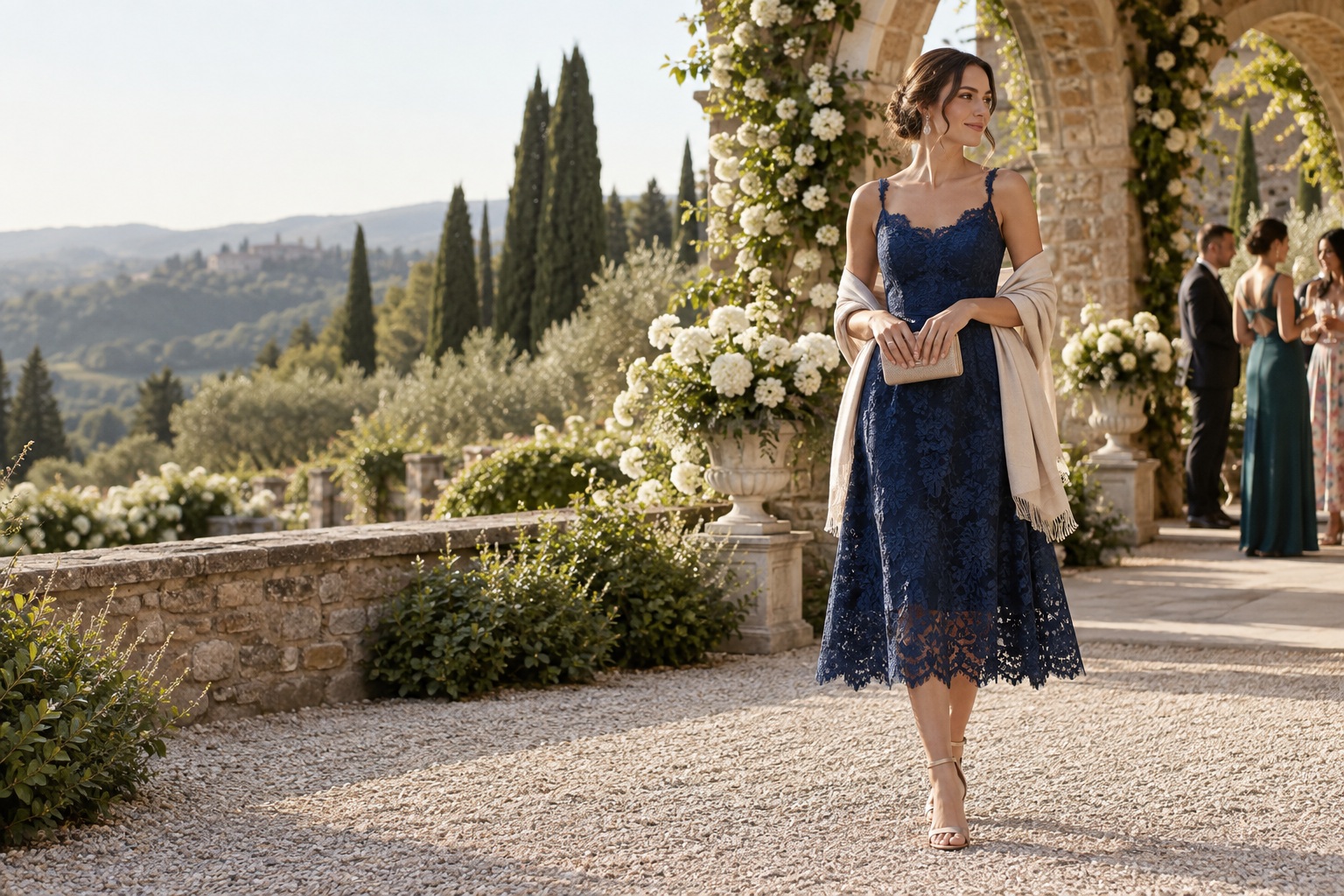
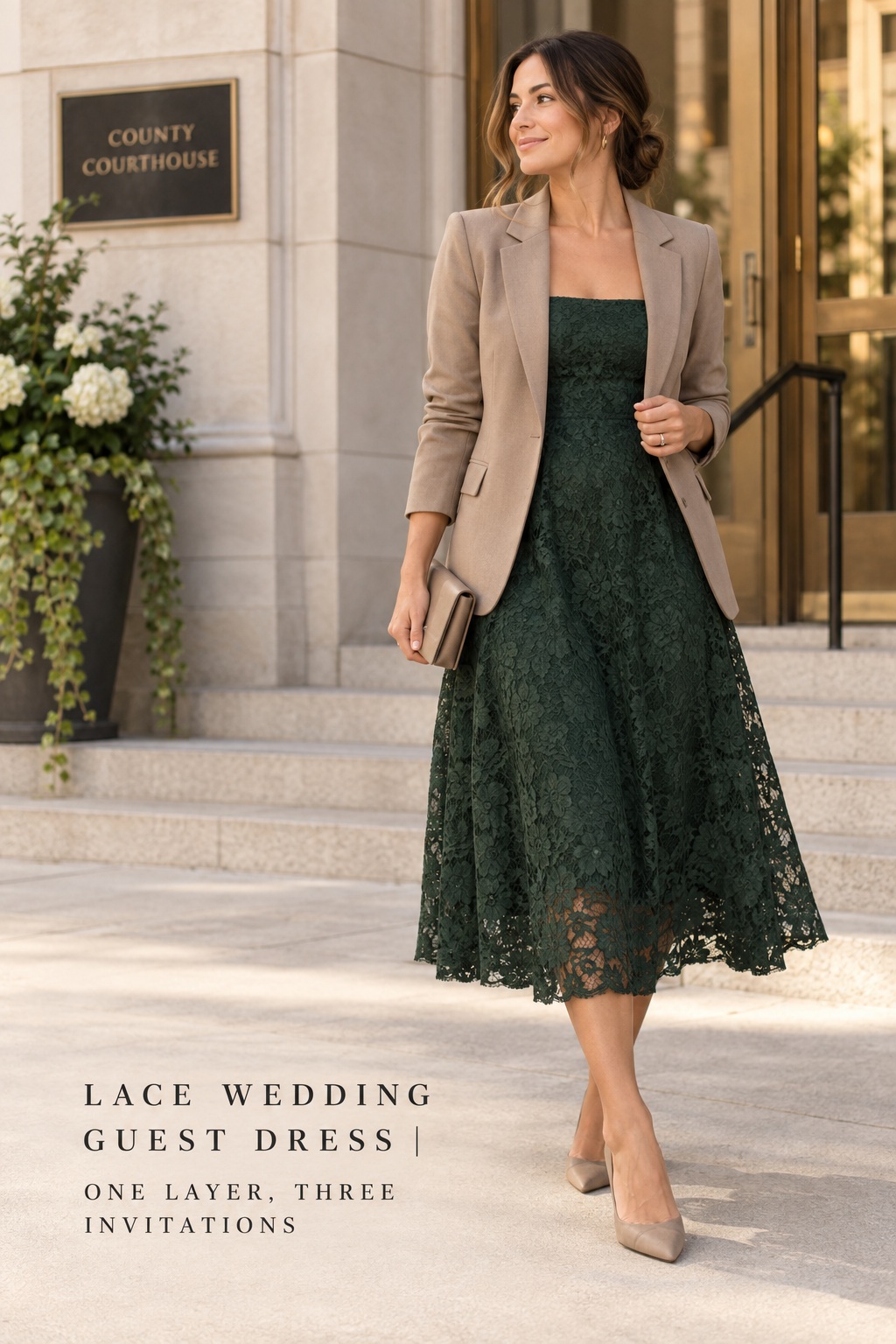
Choose a knee-skimming or midi silhouette in a color with enough contrast from white. A blue, green, rose, or muted print works particularly well for a garden, vineyard, courthouse, or daytime hotel wedding. Look for breathable lace, a defined but not restrictive waist, and a hem that will not drag through grass. Pair it with a small block heel, low sandal, or elegant flat, then add a compact bag and a light jacket if the ceremony is outdoors.
The cocktail lace dress
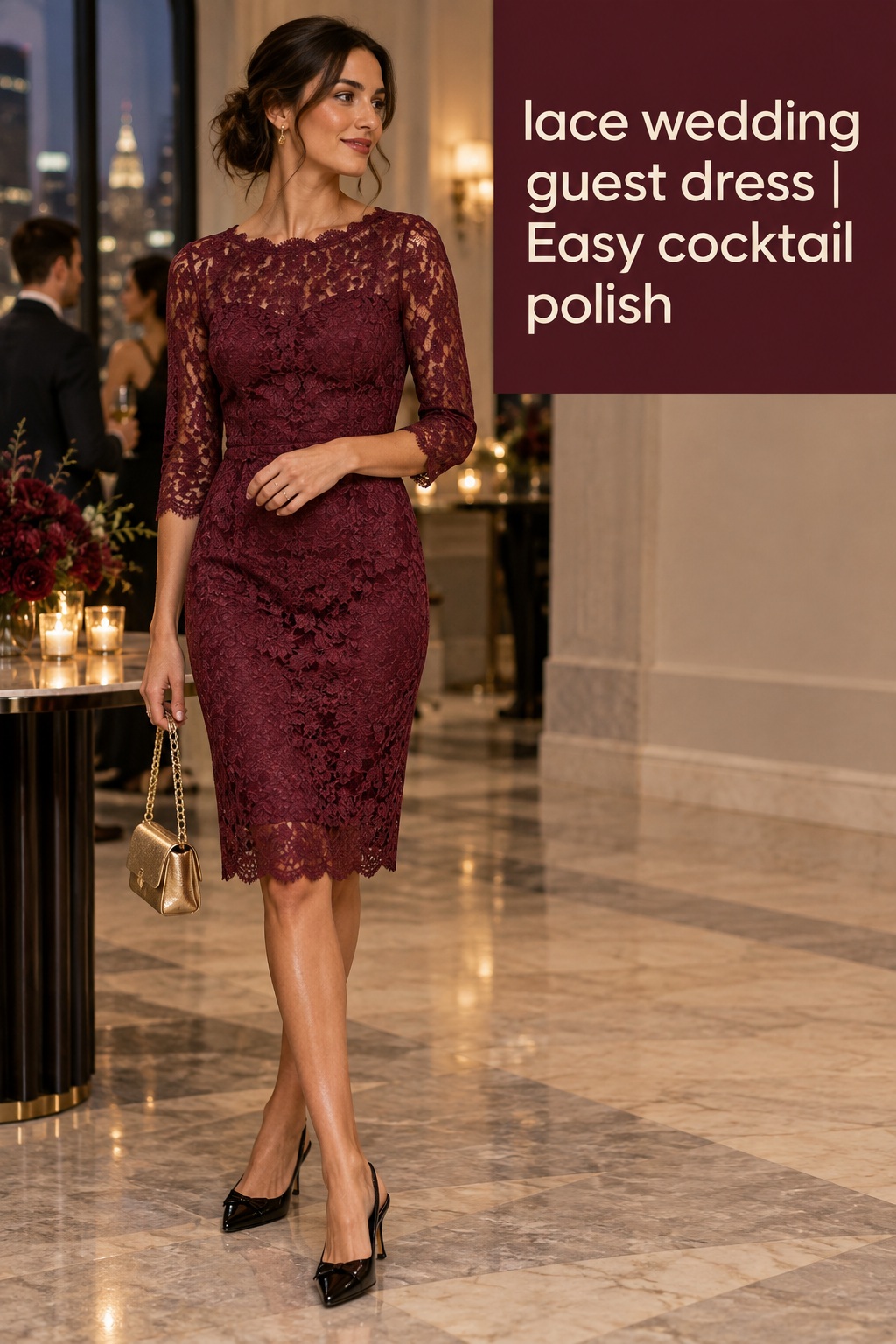
A cocktail version can be shorter, sharper, or more sculptural than a daytime midi. Try a fitted sheath with lace sleeves, a square-neck fit-and-flare, or a clean dress with a lace bodice and opaque skirt. Keep the accessories controlled so the texture remains the focus. Pointed pumps make the outfit crisp, while metallic sandals make it lighter for a warm-weather reception.
The formal lace gown
Formal lace does not have to mean a mermaid silhouette or heavy sparkle. A long A-line, column, or softly draped gown can look elegant when the color and neckline are clear. For black tie, choose a substantial lining, a secure neckline, and a hem that works with your heel height. A dark jewel tone, deep neutral, or saturated rose usually creates enough distance from bridalwear. If the invitation says formal rather than black tie, a refined midi may work, but confirm the venue and timing before choosing the shorter option.
The lace-detail dress
Lace trim, sleeves, a panel at the neckline, or a lace back can be the most versatile choice in your wardrobe. It gives you the occasion texture without asking you to style an entire lace surface. A satin dress with lace at the hem can move from a summer ceremony to a dinner reception. A crepe dress with lace sleeves can offer coverage and polish. This is a useful route when you love lace but prefer a cleaner silhouette.
Style combinations for every invitation
The invitation gives you the outfit’s starting point. Treat the dress code, time of day, venue, and weather as four filters. When they point in different directions, let the most formal instruction win, then use fabric weight and accessories to make the result comfortable.
For a daytime or garden wedding
Choose a colored lace midi, a floral lace overlay, or a dress with modest lace trim. Add woven or metallic accessories, a stable heel, and a light layer that can handle a breeze. Avoid a train, very dark velvet, or a fully beaded finish unless the invitation specifically calls for formal attire. For grass or uneven paths, a block heel or polished flat is more practical than a narrow stiletto.
For cocktail attire
Cocktail is a good setting for a shorter lace dress, but keep the finish occasion-ready. Choose a hem around the knee or below, a refined neckline, and one intentional accessory. A berry lace sheath with black slingbacks and a small gold bag feels confident. A navy fit-and-flare with silver earrings and a satin clutch feels lighter. If the dress is short, balance it with more coverage at the neckline or shoulders.
For formal or black-tie attire
Make lace look formal through length, structure, and finish. A long dress in emerald, sapphire, plum, or black can take a dressier earring and a compact evening bag. Keep the shoes simple enough to disappear under the hem. If the lace is already ornate, skip a necklace and use earrings instead. If the gown is clean and column-shaped, a bracelet or a sculptural clutch can add interest without creating competition.
For a city or courthouse wedding
Try a lace sheath, a tailored midi, or a lace-panel dress under a blazer. A clean jacket gives a romantic fabric a modern frame and can be removed for dinner. Pointed flats, kitten heels, or a low slingback make the outfit urban and comfortable. Choose a small top-handle bag or shoulder bag that leaves your hands free for greetings and photographs.
For a destination or coastal wedding
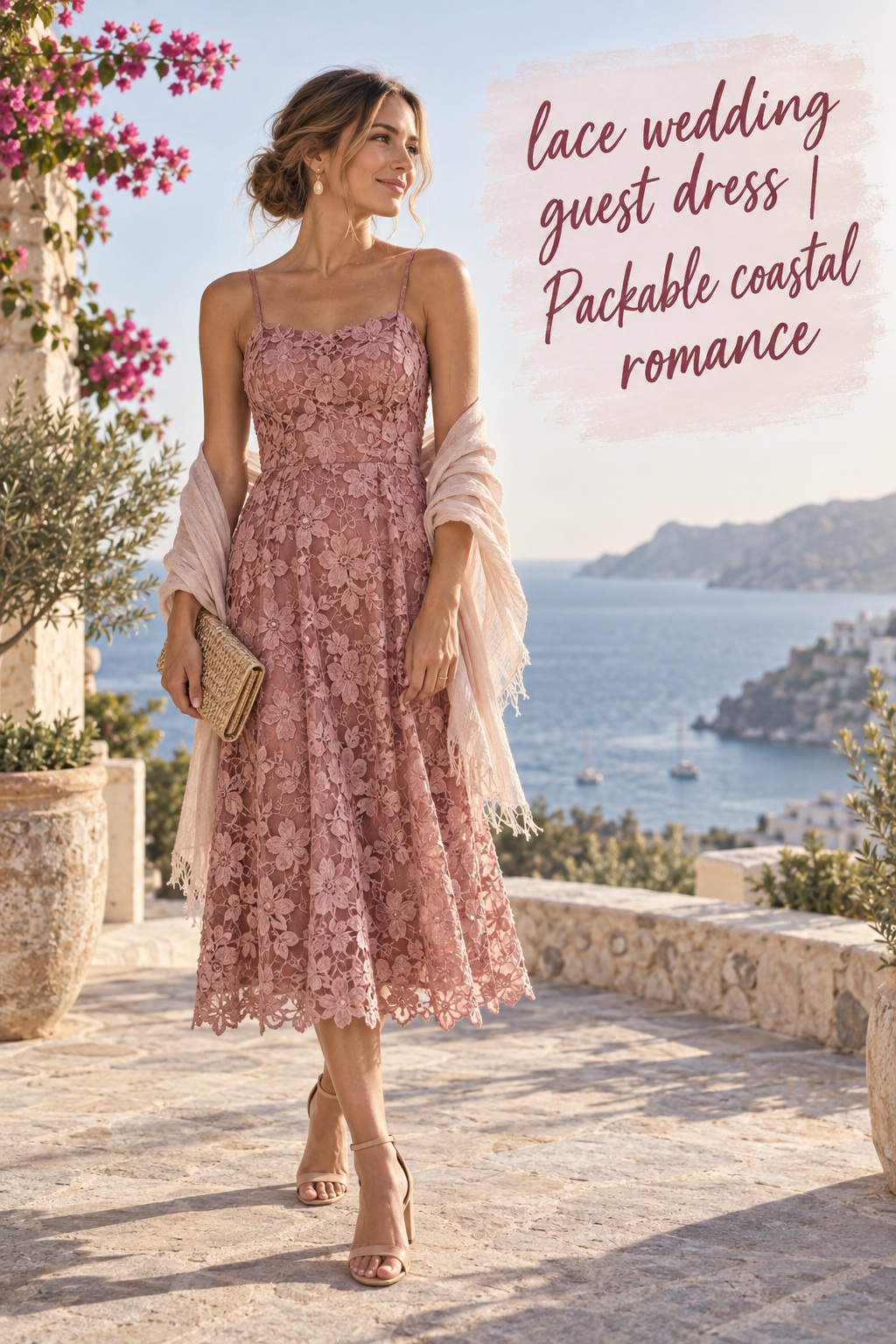
Lightweight lace, cotton lace, or lace trim works better than a stiff embellished overlay when you are traveling. A coral, blue, green, or warm pink dress can echo the surroundings without turning into a costume. Add flat metallic sandals or a low wedge, a raffia or woven clutch, and jewelry that will not feel precious in humidity. Pack the dress in a garment bag and test how easily the fabric steams or recovers from folding before you travel.
Adapt lace through the seasons
The same lace dress can work across the calendar when you change the supporting pieces. Think in terms of fabric weight, sleeve coverage, and the temperature between ceremony and reception. A seasonal update should still look like one outfit, not a pile of emergency layers.
Spring
Spring suits fresh color and lighter layers. Try a blue, lilac, soft green, or rose lace dress with a cropped jacket, low heel, and a small bag. If the weather is uncertain, choose sleeves or bring a fine-gauge wrap that will not snag the pattern. A floral lace dress does not need a floral shoe. Keep one element clean, such as a smooth leather pump or simple metallic sandal.
Summer
Prioritize breathability and movement. Cotton-blend lace, an unlined lace sleeve, or a lace-trim slip can feel lighter than a fully lined heavy overlay. Choose sandals with a secure strap, a bag that does not stick to the dress, and jewelry that can handle heat. Check the dress in direct sun because sheer panels and pale linings can look different outdoors.
Fall
Fall is ideal for richer lace colors and more substantial accessories. Choose burgundy, rust, teal, forest, navy, or chocolate, then add a tailored coat, closed-toe pump, or elegant boot that does not catch the hem. Velvet accessories can work with lace, but use one velvet element at a time. If the dress is pale, a dark jacket can give it a more grounded evening feel.
Winter
For a cold-weather wedding, look for long sleeves, a lined bodice, velvet-lace texture, or a lace skirt with a warmer top layer. A satin shoe and compact clutch keep the look formal indoors, while a wool coat or tailored cape handles the journey. Avoid letting a bulky cardigan cover the lace shape. If you need warmth, choose one deliberate layer with a clear shoulder line.
Fit, comfort, and mistakes to avoid
Lace reveals poor fit quickly because the pattern can pull, buckle, or shift when the dress is too tight. Try the dress with the undergarments and shoes you expect to wear. Sit, walk, reach, dance, and take a photograph from several angles. If the lace catches on jewelry, rough nails, or the closure, solve that before the event rather than hoping you will not notice it.
Choose the right support
Some lace dresses work with a standard bra, while others require a low-back, strapless, or sewn-in option. Do not buy the dress before you understand the support plan. A visible bra strap can change the intended line, but an uncomfortable adhesive solution can make you self-conscious all day. Test the complete combination for at least an hour and check the neckline after moving.
Avoid the most common visual mistakes
- White lace with a white lining: choose color or a clearly non-bridal design unless the couple has requested otherwise.
- Too many romantic details: lace, pearls, floral shoes, a bow, and a veil-like hair accessory can make the outfit costume-like.
- Ignoring the venue: a long hem and narrow heel are difficult on grass, gravel, or a beach.
- Overlooking transparency: test the dress in daylight, flash, and seated positions.
- Buying for one photograph: you need to eat, sit, greet people, and dance comfortably.
- Forgetting the layer: a dress that only works at one temperature creates stress between locations.
When in doubt, make one element decisively guest-like. A saturated color, a tailored blazer, a practical shoe, or a simple modern bag can keep a romantic lace dress from feeling too close to bridalwear. You do not need to remove everything that makes the dress beautiful. You only need enough contrast to make the occasion clear.
Sources and methodology
This guide was developed from a US-focused review of lace wedding guest dress category pages at Macy’s, Nordstrom, Nordstrom Rack, Revolve, Azazie, Bloomingdale’s, and John Lewis, plus editorial examples from Woman&Home and Who What Wear. The sources were used to map recurring silhouettes, colors, lengths, lace treatments, and dress-code language. Community discussion was used only to identify the practical concern around white lace looking bridal. Product availability and prices change, so the article focuses on styling decisions rather than specific listings.
FAQ
Can I wear a lace wedding guest dress to any wedding?
Yes, if the color, length, coverage, and finish suit the invitation. Choose a lighter colored midi for daytime, a refined cocktail shape for an evening reception, or a substantial long dress for formal attire. Avoid a white or ivory lace design that looks strongly bridal unless the couple has specifically said it is welcome.
Is white lace inappropriate for a wedding guest?
White lace is risky because a white lining and bridal-style silhouette can look like weddingwear in photographs. If you want a pale look, choose a clearly colored lining, a print, a tailored shape, or a lace detail rather than a full white overlay. When the result still resembles a bridal dress, choose another color.
What color lace dress is best for a wedding guest?
The best color is one that complements the dress code and creates clear distance from bridal white. Navy, cobalt, emerald, teal, berry, plum, rose, sage, and chocolate are versatile choices. Consider the season and venue, then check the color in daylight so it does not look unexpectedly pale or transparent.
How do I style a lace dress for a garden wedding?
Wear a colored lace midi or lace-detail dress with a stable block heel, low sandal, or polished flat. Add a small bag and a light jacket or wrap if the ceremony is outside. Keep the jewelry edited and test the hem and shoes on grass or uneven paths before the wedding.
What shoes go with a lace wedding guest dress?
Choose shoes according to the venue and the formality. Metallic sandals, low slingbacks, block heels, pointed pumps, and elegant flats can all work. A simple shoe usually balances ornate lace, while a sculptural shoe can finish a cleaner geometric pattern. Prioritize a secure fit because lace dresses are often worn for several hours.
Can I wear a lace wedding guest dress in winter?
Yes. Choose long sleeves, a lined bodice, a heavier lace texture, or a lace dress that works with a tailored coat or cape. Closed-toe pumps, velvet accessories, and a compact evening bag can make the outfit feel seasonal. Keep the warm layer intentional so it does not hide the shape of the dress.
How can I make lace look modern instead of overly romantic?
Pair the dress with one clean, tailored or architectural element. A blazer, sharp clutch, pointed shoe, simple metal earring, or modern neckline can give lace a clearer contemporary frame. Avoid stacking every romantic accessory at once, and let the lace remain the single decorative focus.