Rustic Winter Wedding Ideas That Feel Warm and Personal
A rustic winter wedding works best when it feels gathered rather than themed. Imagine a barn or lodge with honest wood, soft candlelight, evergreen branches, wool textures, and a meal that makes guests want to linger. The look can be elegant, homespun, modern, or wonderfully simple, but it should always feel connected to the season and to the place where you are celebrating.
This guide will help you make the big choices in the right order. You will find a practical design formula for your palette and materials, ideas for the ceremony and reception, ways to dress the couple and wedding party, seasonal menu and favor suggestions, and a final review that catches the problems that make winter weddings feel uncomfortable or visually cluttered.
Why a rustic winter wedding works so well
Rustic design has a natural relationship with winter because both are built around texture and atmosphere. Wood, stone, wool, leather, dried stems, and aged metal bring visual weight to a season that can otherwise feel bare. Candlelight adds a second layer of warmth after the sun goes down, while evergreen and berries provide color without competing with the landscape.
The style is also flexible. A working barn can stay casual with family-style food, mismatched vessels, and handmade signage. The same venue can feel elevated with linen napkins, artisan ceramics, tonal florals, and carefully edited lighting. A mountain lodge, historic inn, greenhouse, winery, or private home can work too. Rustic is an aesthetic language, not a requirement to get married in a barn.

Turn wedding inspiration into a plan you can actually follow.
Zarellea brings your guest list, budget, vendors, and day-of details into one shared space — so no beautiful idea gets lost in the shuffle.
Winter gives you a strong design point of view before you buy a single decoration. Shorter days make lighting meaningful. Cold weather makes hospitality visible. Seasonal ingredients create an easy menu direction. Guests understand a blanket basket, a hot cider welcome, or a candlelit lounge immediately because each detail answers a real need.
The most successful celebrations balance rough and refined surfaces. Pair unfinished wood with pressed stationery. Put a loose, garden-style bouquet beside a tailored suit. Use a simple table runner with one beautiful ceramic centerpiece instead of covering every inch of the table. This contrast keeps the result personal and prevents rustic from becoming a collection of predictable props.
Core principles for a cohesive rustic winter wedding
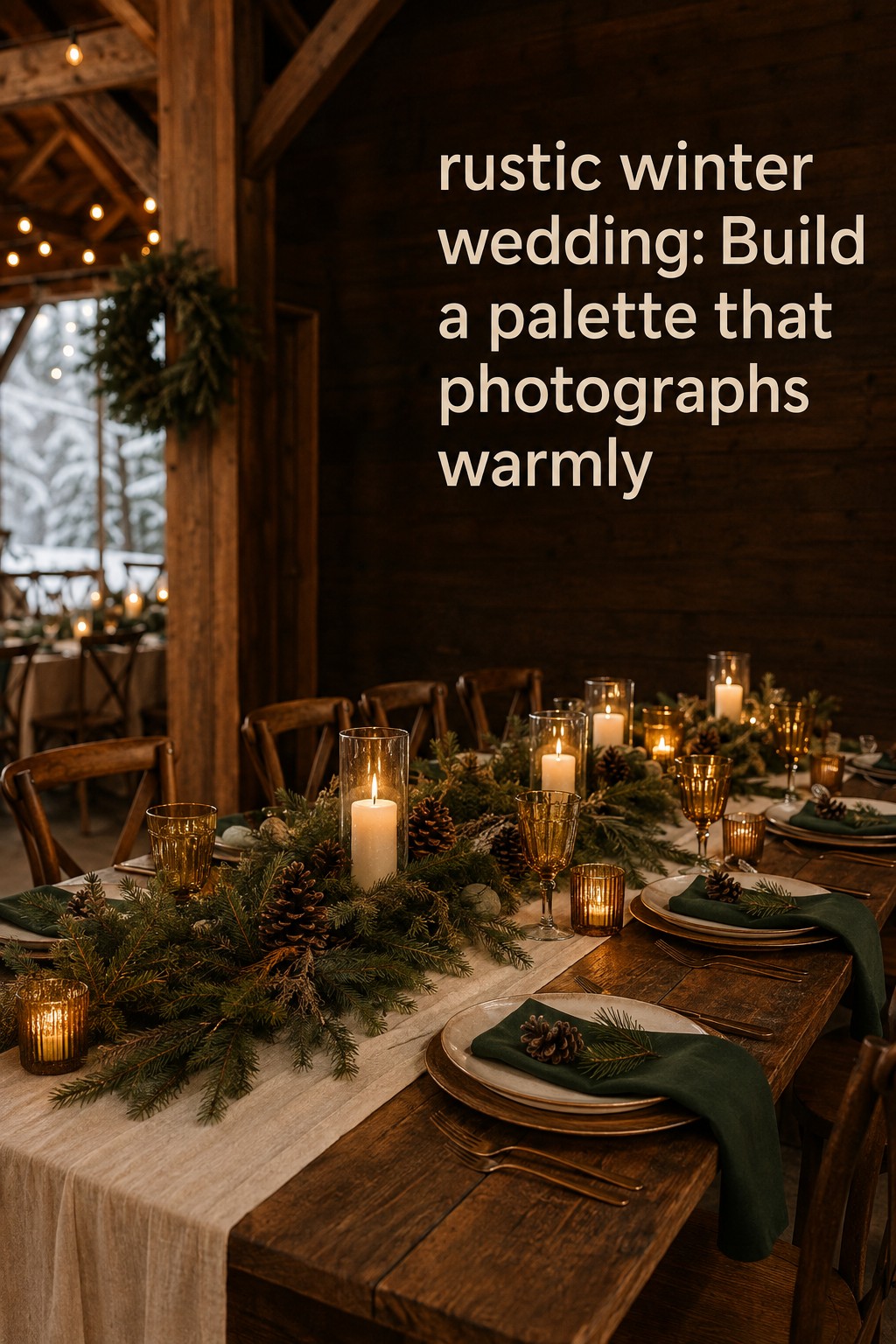
Start with a palette that can move through the entire day. Warm white, cream, forest green, and medium wood make a versatile foundation. Add one deeper accent, such as oxblood, cranberry, rust, navy, or espresso. If you prefer a lighter mood, use dusty blue, sage, and soft gray. Keep metallics limited to one finish, such as antique brass or muted copper, so the natural materials remain the focus.
Next, choose three repeating materials. Wood, linen, and greenery are an easy combination. You could also use stone, velvet, and dried flowers, or rattan, wool, and matte ceramic. Repeating materials makes separate areas feel related. For example, the same wood tone might appear on the welcome sign, table numbers, and dessert display. The same ribbon might finish the bouquet, invitations, and favor tags.
Let the venue do some of the decorating. Exposed beams, a stone fireplace, a wooded view, or an old plank wall already carries visual interest. Instead of hiding those features, frame them with restrained additions. A greenery garland can underline a mantel. A few lanterns can define a path. A simple ceremony arch can echo the shape and color of the surrounding trees.
Design comfort as part of the aesthetic. Place baskets of blankets near an outdoor ceremony, but choose colors that belong to the palette. Offer warm drinks in a station styled with wood trays and handwritten menus. Use rugs, upholstered chairs, and throws to make a lounge feel inviting. Even coat check, shoe protection, and clear directions from parking to the entrance can be presented beautifully with the right signage.
- Use one foundation palette and one accent instead of several competing color stories.
- Repeat two or three natural materials across stationery, florals, tables, and signage.
- Keep the strongest visual details in areas guests naturally notice, such as the ceremony backdrop, bar, and head table.
- Choose lighting for the actual winter sunset, not only for the ceremony start time.
- Make every outdoor moment short, optional, or immediately followed by a warm indoor experience.
Finally, edit before you add. Rustic style can quickly become crowded with signs, crates, wood slices, lanterns, blankets, antlers, pinecones, and mason jars. Choose the pieces that serve the story of your day and remove the rest. A few generous arrangements look more intentional than many small objects competing for attention.
Step-by-step rustic winter wedding ideas
Choose a venue that supports warmth and movement
Before falling in love with a venue’s photos, ask how it operates in winter. Confirm that guest areas are heated, restrooms are easy to reach, parking is usable after snow or rain, and there is a covered route between ceremony and reception. Ask where coats, boots, strollers, and mobility equipment can go. If you want an outdoor ceremony, identify the heated backup space and decide how quickly the room can be reset.
A barn or lodge is especially effective when its architecture is allowed to lead. Use the existing beams, windows, fireplace, or landscape as your visual anchor. In a plain venue, create rustic character with a wood welcome sign, warm uplighting, natural linen, and a few large arrangements rather than trying to imitate a barn with scattered decorative objects.
Build a ceremony that feels intimate
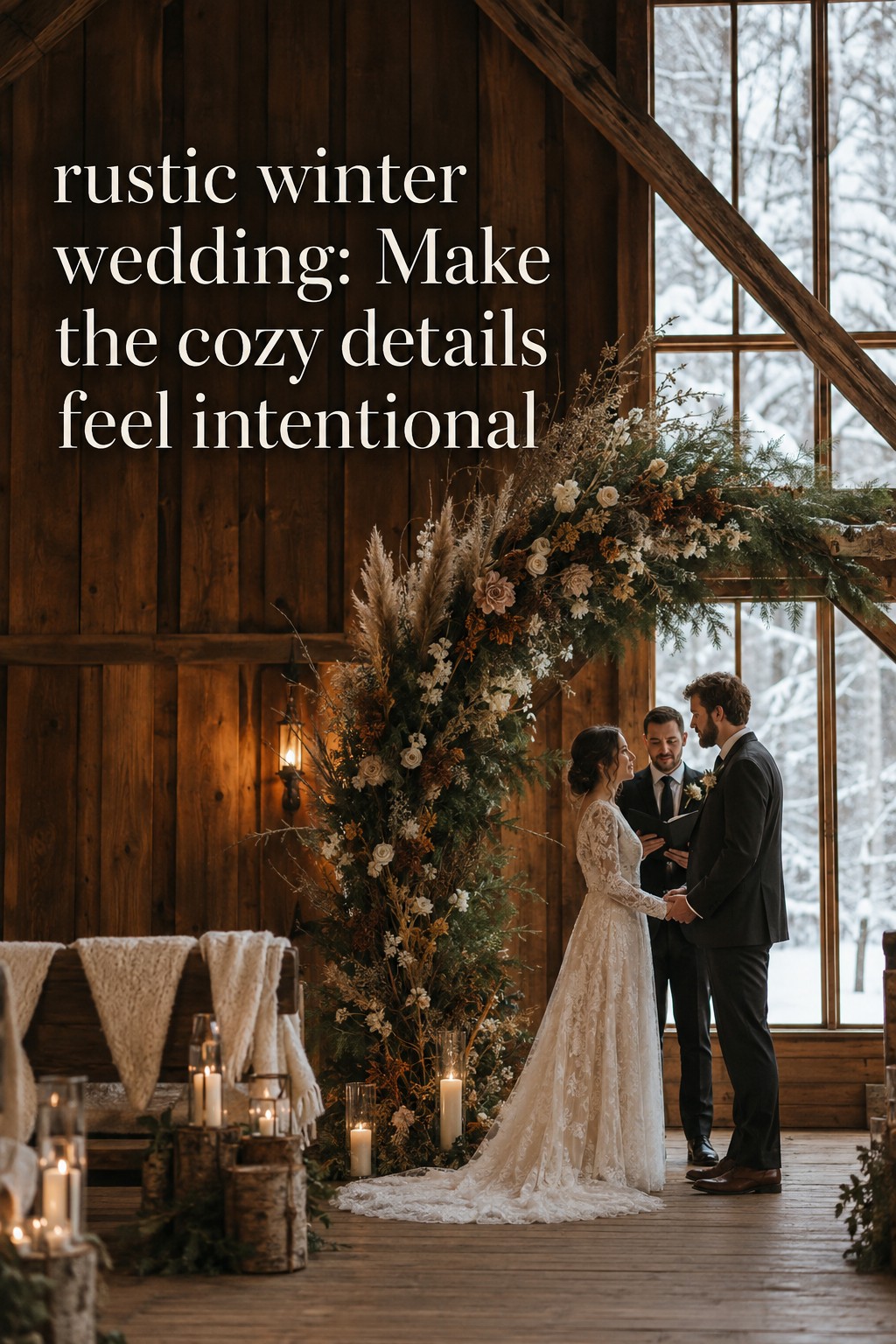
Frame the ceremony with asymmetrical greenery, bare branches, dried grasses, or seasonal flowers. A grounded arrangement at the base of the altar can be repurposed near the sweetheart table later. If there is a fireplace, mantel, or window with a view, use it as the backdrop and keep the floral design low enough that guests can see the couple.
For an outdoor ceremony, keep the experience concise and communicate the plan clearly. Provide blankets on benches, warm beverages after the vows, and a clear indoor gathering point. A small basket of hand warmers can be useful, but do not rely on favors to solve a cold venue. Ask the officiant to keep the ceremony moving and give guests an easy way to opt out of the outdoor portion.
Layer the reception with light and texture
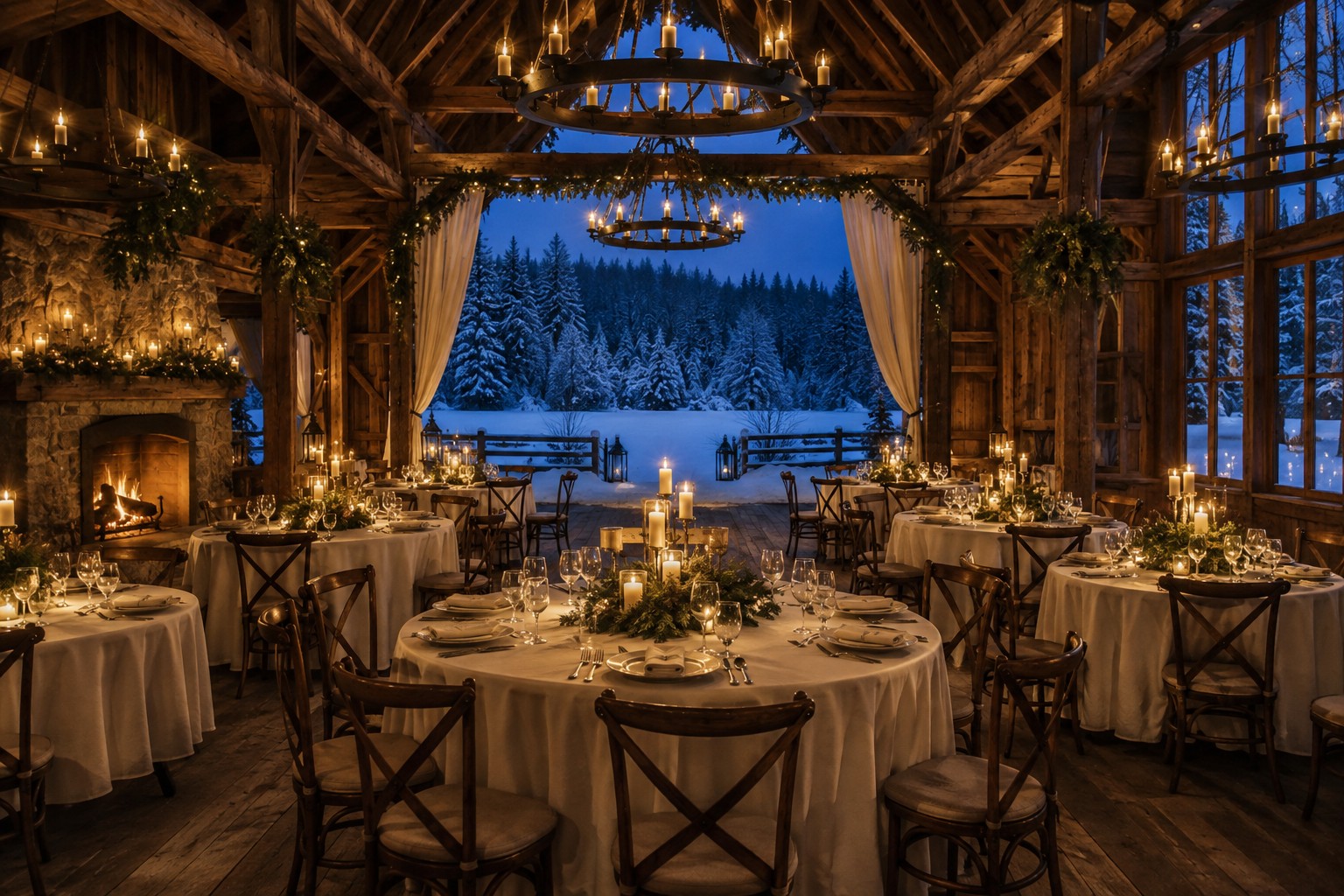
Begin with the tables. Long farm tables encourage conversation and make a family-style meal feel natural. For round tables, use low arrangements that leave room for plates and conversation. Mix taper candles with small votives for height variation, but check venue rules and keep flames away from sleeves, greenery, and hanging fabrics.
Use linen as the soft counterpoint to wood. A warm white tablecloth can make a dark barn feel brighter, while a rust, sage, or deep green napkin adds the seasonal note. Matte black flatware, amber glassware, or antique brass details can make the setting feel refined without losing its relaxed character. Place a sprig of rosemary, cedar, or dried foliage at each setting if it is safe and approved by the caterer.
Give guests one or two places to gather away from the dance floor. A lounge with vintage chairs, a wool rug, and a small side table creates a natural pause. A bar or cocoa station can be a design feature, especially when it uses a reclaimed cart, wood shelving, ceramic mugs, and a concise menu. Keep the route between food, restrooms, tables, and the dance floor obvious, since beautiful styling should never create a navigation problem.
Dress for the setting without losing polish
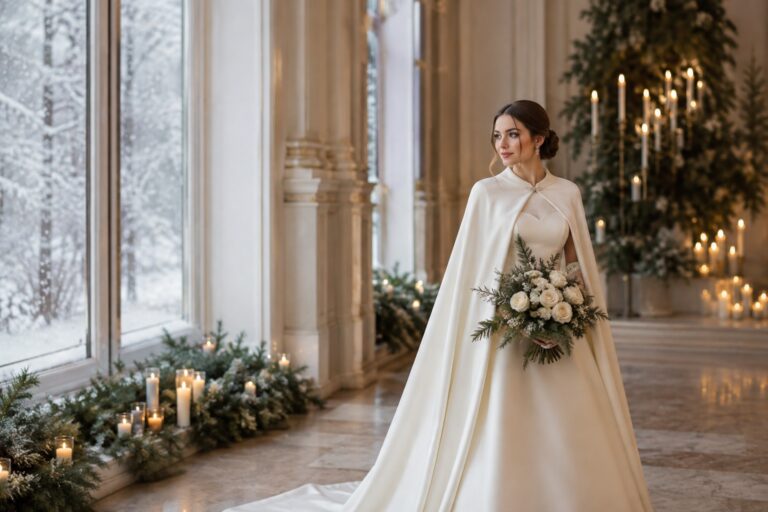
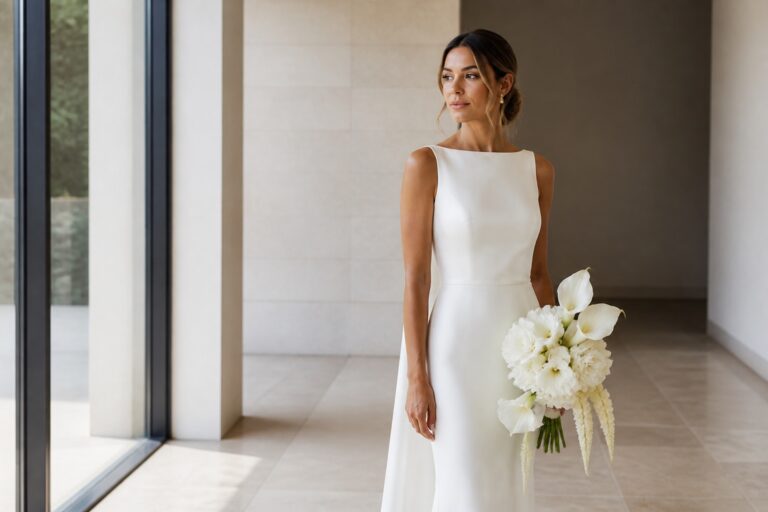
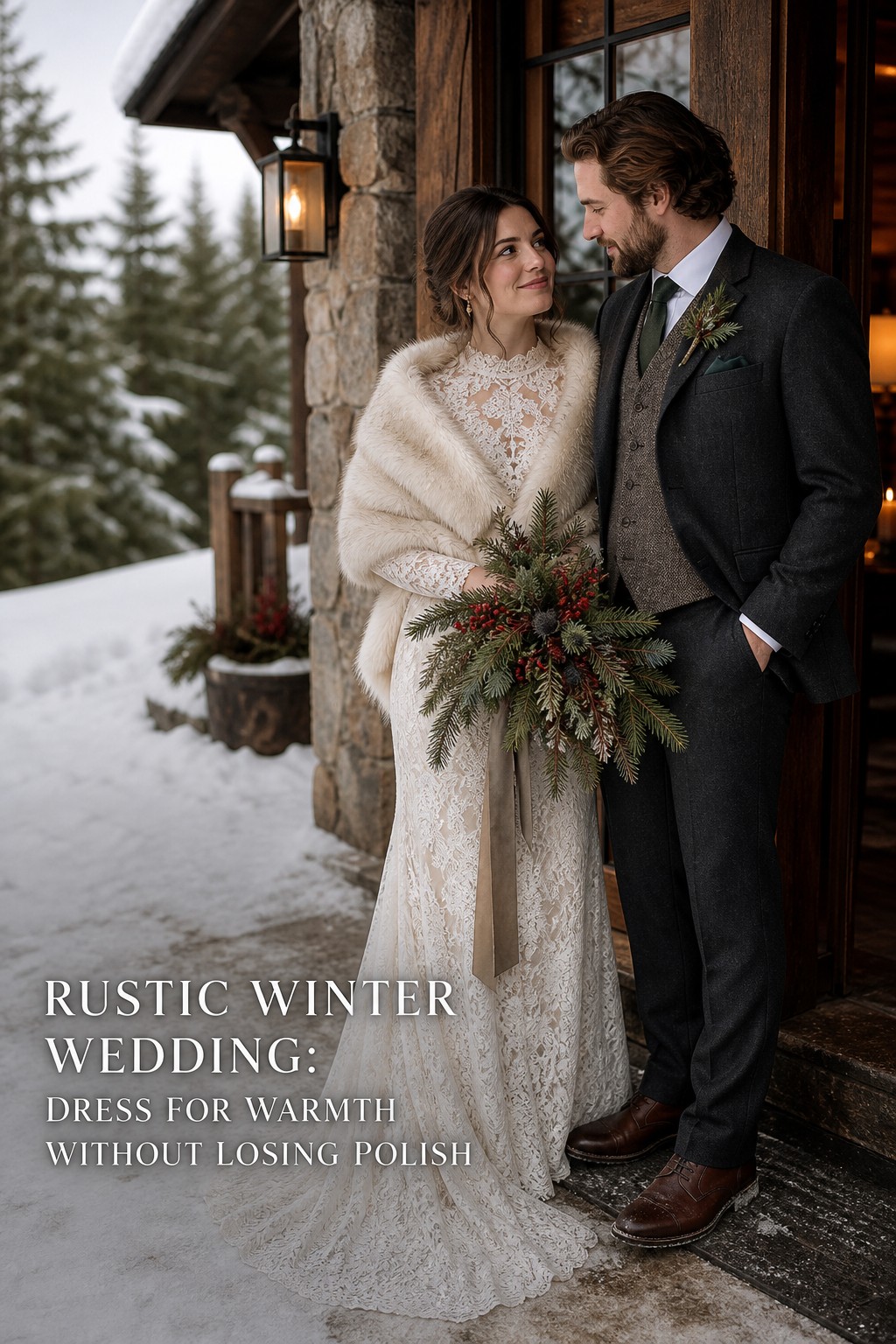
A rustic winter bridal look can include long sleeves, lace, textured crepe, velvet shoes, or a faux fur wrap. Choose outerwear that works in photographs and can be removed comfortably indoors. A warm ivory dress can be softened with a cape, shawl, or simple knit layer, while a sleek gown can take on a rustic mood through a loose bouquet and natural accessories.
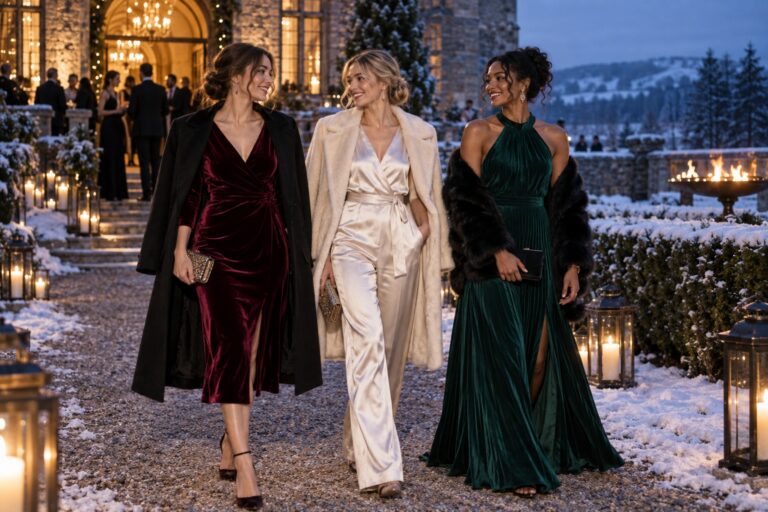
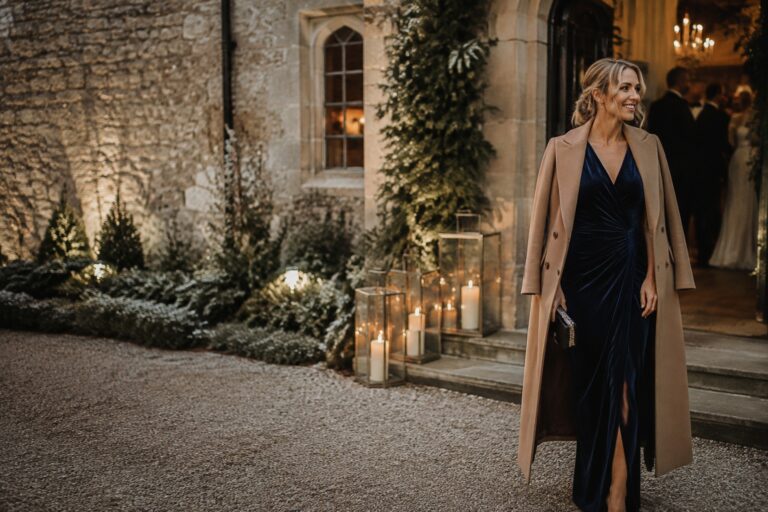
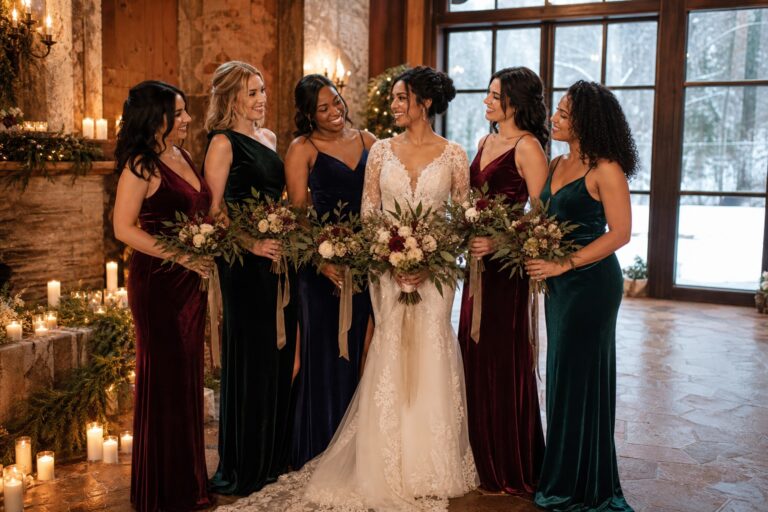
For a partner’s attire, wool, tweed, corduroy, or a deep seasonal suit color can connect the look to the venue. Forest green, tobacco, burgundy, charcoal, and navy are useful alternatives to traditional black. Finish with a boutonniere that is small and textural, such as rosemary, cedar, a berry, or a single dried element. Wedding party clothing does not need to match perfectly. Coordinated shades with similar fabric weight often look more natural.
Choose flowers that look gathered, not overworked
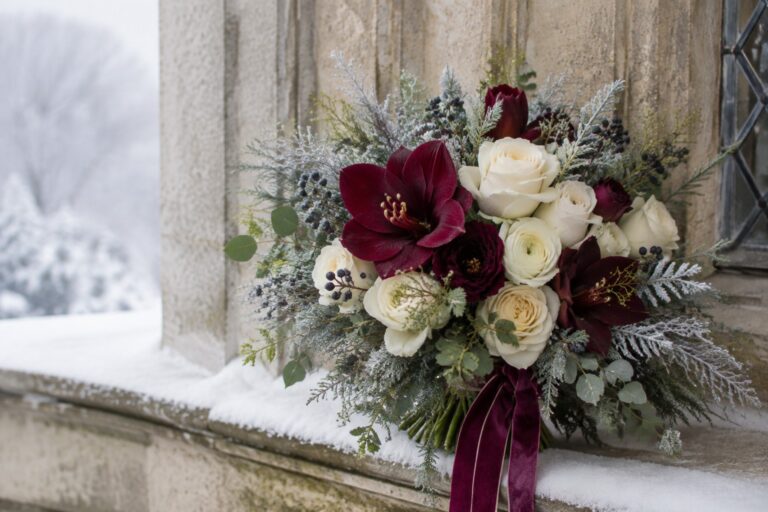
Ask your florist which flowers and foliage are reliable in your region and wedding month. Evergreen, cedar, pine, seeded eucalyptus, berries, dried grasses, hellebore, anemone, ranunculus, garden roses, and seasonal branches can all support a winter story, depending on availability. The goal is not to use every winter ingredient. Pick a few shapes and textures that will photograph well together.
Request a loose silhouette with visible movement. A bouquet that mixes ivory flowers, greenery, and one darker accent will feel rustic without looking casual by accident. For centerpieces, use a combination of one focal arrangement, smaller bud vases, and candlelight. Dried elements are useful for texture, but balance them with fresh material so the table still feels alive.
Make the menu part of the welcome
Winter is a good season for food that feels generous. Consider soup or cider during cocktail hour, family-style sides, roasted vegetables, braised meat, pot pies, baked pasta, or a hearty vegetarian main. A local ingredient can make the menu personal without forcing a literal theme. Ask the caterer how hot food will stay hot and where guests will queue, especially if the reception space has a drafty corner.
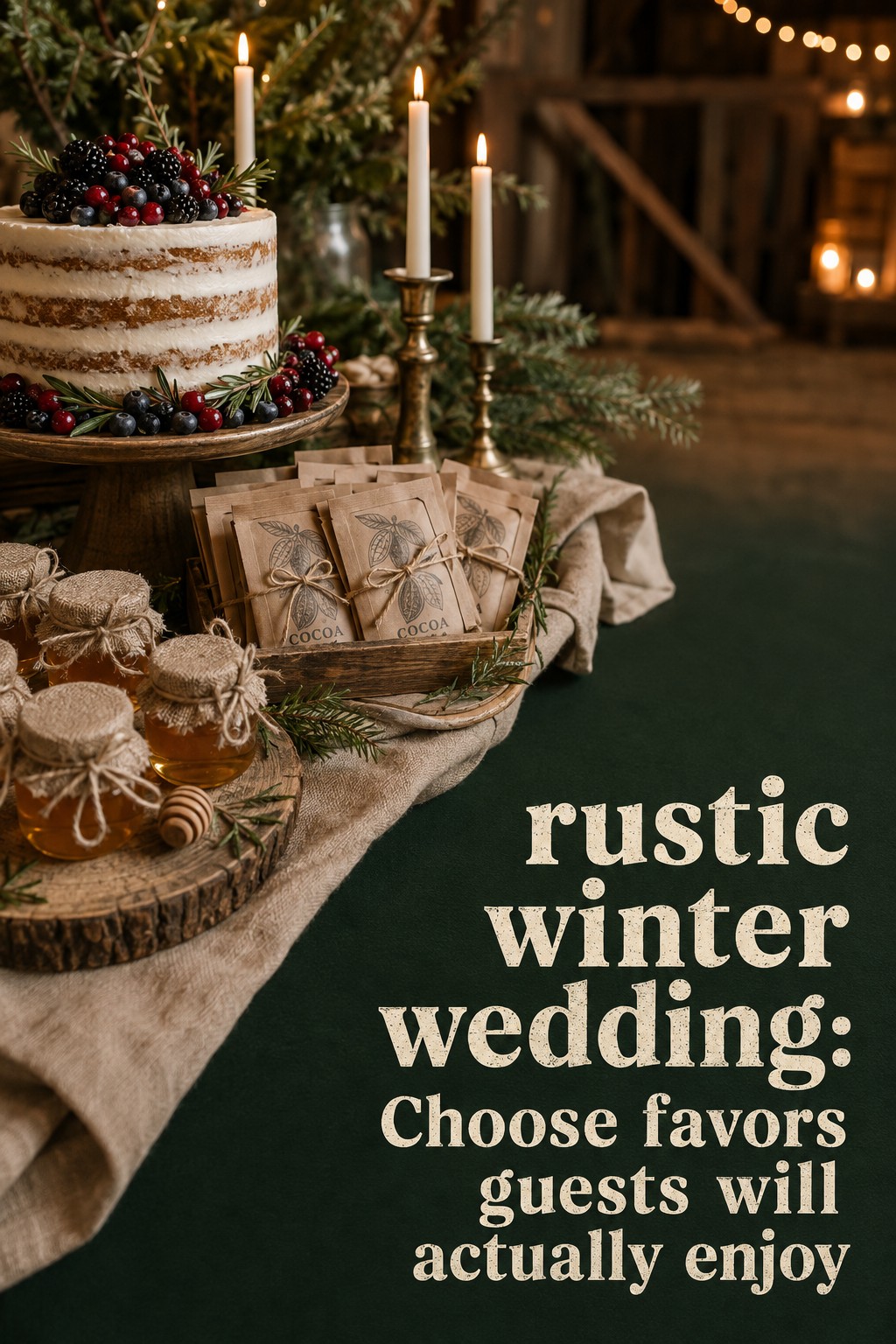
Offer a warm drink with and without alcohol. Hot chocolate, spiced apple cider, coffee, tea, and mulled wine can be served in the same styled station with clear labels. For dessert, a simple cake with berries or greenery can sit beside pies, gingerbread, cookies, or a small dessert bar. The presentation matters more than abundance. Use one strong display surface and keep serving tools easy to find.
Add favors guests can use or enjoy
Good rustic winter wedding favors are practical, edible, or easy to take home. Small cocoa kits, local honey, jam, tea, coffee, maple syrup, or a cookie wrapped in paper can work beautifully. If you choose a plant or seed favor, consider whether traveling guests can take it home and whether it suits their climate. A favor that doubles as a place card can reduce clutter and make the table feel more considered.
Use a simple tag with your names and date, but avoid printing a long message on every item. A short note at the welcome table can explain why you chose a local product or family recipe. Personal meaning gives a modest favor more weight than expensive packaging.

Mistakes to avoid when planning a rustic winter wedding
The first mistake is confusing rustic with a fixed prop list. Mason jars, burlap, chalkboards, antlers, crates, and wood slices can be useful, but none is required. If every surface has a sign or a container, the wedding can look like a styled display rather than a celebration. Choose details that reflect your venue, family, location, or shared interests.
The second mistake is underestimating the cold. Guests remember whether they could hear the ceremony, walk safely, find the restroom, and sit comfortably. Build a weather plan into the budget. Ask about heaters, entry mats, snow removal, coat storage, backup power, and vendor access. Share realistic clothing guidance on the wedding website and invitation details.
The third mistake is choosing colors that become too dark at night. Burgundy, forest green, brown, and black can be beautiful, but they need light surfaces and reflective accents to stay readable in photographs. Add cream stationery, warm white linens, glass candleholders, lighter florals, or gentle uplighting. Test the room after sunset if possible.
The fourth mistake is using too many tiny decorations. Small objects disappear in a large barn and create setup work. Spend the same money on fewer, larger moments: a generous ceremony arrangement, a well-lit bar, a comfortable lounge, or a beautiful head table. A clear visual hierarchy will make both the room and your photographs feel calmer.
The fifth mistake is asking DIY details to carry the whole design. Handmade elements are meaningful when they are finished, repeatable, and easy to install. Create a labeled packing list, assign setup ownership, and reserve time for weather changes. Leave complex floral conditioning, electrical work, candle safety, and large structural installations to experienced vendors.
- Do not book an unheated venue without a written comfort and backup plan.
- Do not choose a palette only from a daytime inspiration photo.
- Do not place candles or greenery where sleeves, coats, or guests can catch them.
- Do not make every rustic detail literal. Texture and hospitality are enough.
- Do not let a beautiful ceremony plan depend on perfect weather.
Use a final walk-through to check the guest experience in order: arrival, coat drop, ceremony, drinks, dinner, restrooms, dancing, and departure. If the path feels warm, clear, and intentional, the design is doing its job.
FAQ
What colors work best for a rustic winter wedding?
Warm white, cream, forest green, wood tones, sage, dusty blue, cranberry, rust, burgundy, navy, and charcoal all work well. Choose a light foundation, one or two natural neutrals, and one deeper accent so the room stays warm rather than heavy.
How do you make a winter barn wedding comfortable?
Confirm reliable heating, use rugs and entry mats, provide coat storage, keep outdoor moments brief, and offer blankets or warm drinks when appropriate. Share clothing guidance in advance and create a heated indoor backup for any outdoor ceremony.
What flowers are good for a rustic winter wedding?
Evergreen, cedar, berries, dried grasses, seasonal branches, hellebore, anemone, ranunculus, garden roses, and seeded eucalyptus can support the look. Availability depends on your location and date, so ask your florist to recommend reliable seasonal substitutes.
What should guests eat at a rustic winter wedding?
Serve food that feels warm and generous, such as soup, roasted vegetables, braised meat, baked pasta, pot pies, or a substantial vegetarian main. Add hot cider, cocoa, coffee, or tea, and include seasonal desserts like pie, gingerbread, cookies, or berry-topped cake.
How can a rustic winter wedding look elegant?
Use restraint and invest in a few high-impact details. Pair natural materials with linen, tailored stationery, artisan ceramics, refined attire, and deliberate lighting. Let the venue provide character, then repeat a small set of textures instead of filling the room with rustic props.
What are useful rustic winter wedding favors?
Edible or useful favors are usually the safest choice. Try cocoa, tea, coffee, honey, jam, maple syrup, local treats, or a cookie. Add a short personal tag and consider combining the favor with a place card to keep the tables uncluttered.
Can a rustic winter wedding work without a barn?
Yes. A lodge, historic inn, greenhouse, winery, restaurant, private home, or modern event space can feel rustic with natural textures, warm lighting, seasonal foliage, and a relaxed hospitality plan. The atmosphere matters more than the building label.