Winter Ball Dresses: A Complete Choice Checklist
A winter ball asks for more than a beautiful dress. You need an outfit that fits the event, looks intentional in evening light, survives a cold walk from the car, and still lets you sit, move, and dance. The best winter ball dresses make those practical choices feel like part of the glamour.
Use this checklist to choose with confidence. Start with the dress code and venue, then narrow the field by silhouette, fabric, color, coverage, fit, and budget. The goal is not to copy one trend. It is to build a complete look that feels polished from the first photograph to the last song.
Preparation: Set the Rules Before You Shop
Shopping becomes much easier when you define the constraints before you fall in love with a gown. A winter ball can mean a school winter formal, a charity gala, a holiday ball, a military ball, or a formal celebration with black-tie expectations. Those events may all inspire the search term winter ball dresses, but they do not all require the same amount of drama.
Read the invitation as a styling brief
Look for words such as formal, black tie, black-tie optional, festive formal, or floor length. Formal usually supports a long gown, a refined midi, or an elegant cocktail dress depending on the venue. Black tie makes a floor-length gown the safest choice. Festive formal gives you more permission to use sequins, metallic fabric, rich color, or a dramatic sleeve. If the invitation is vague, ask the host what guests are likely to wear.
Turn wedding inspiration into a plan you can actually follow.
Zarellea brings your guest list, budget, vendors, and day-of details into one shared space — so no beautiful idea gets lost in the shuffle.
- Black tie: choose a floor-length gown, refined jewelry, and formal shoes.
- Formal: choose a long gown or elevated midi with a finished evening styling plan.
- Festive formal: add sparkle, velvet, satin, jewel tones, or a statement detail.
- School winter formal: prioritize age-appropriate movement, secure construction, and a dress you can dance in.
Map the venue and the temperature
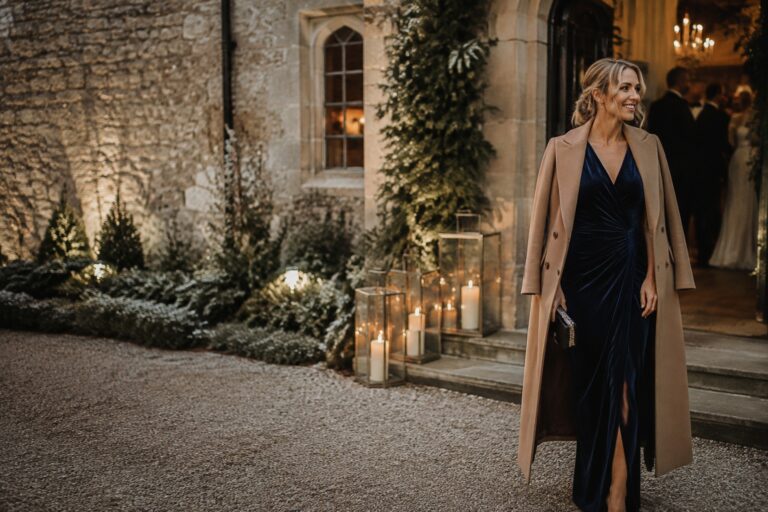
Write down every part of the evening: travel, coat check, outdoor photos, receiving line, dinner, dancing, and the trip home. A heated ballroom may make a strapless satin gown comfortable indoors, while a historic venue with a long outdoor entrance may favor long sleeves or a cape. You do not need a heavy dress just because it is winter, but you do need a coverage plan.
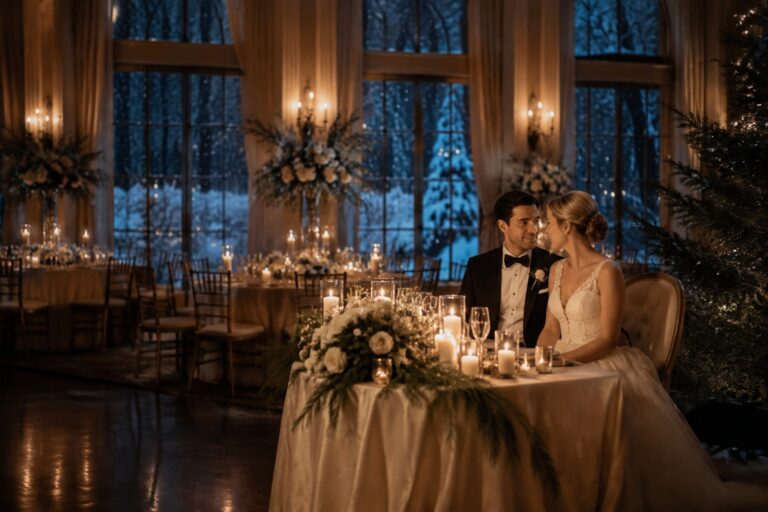
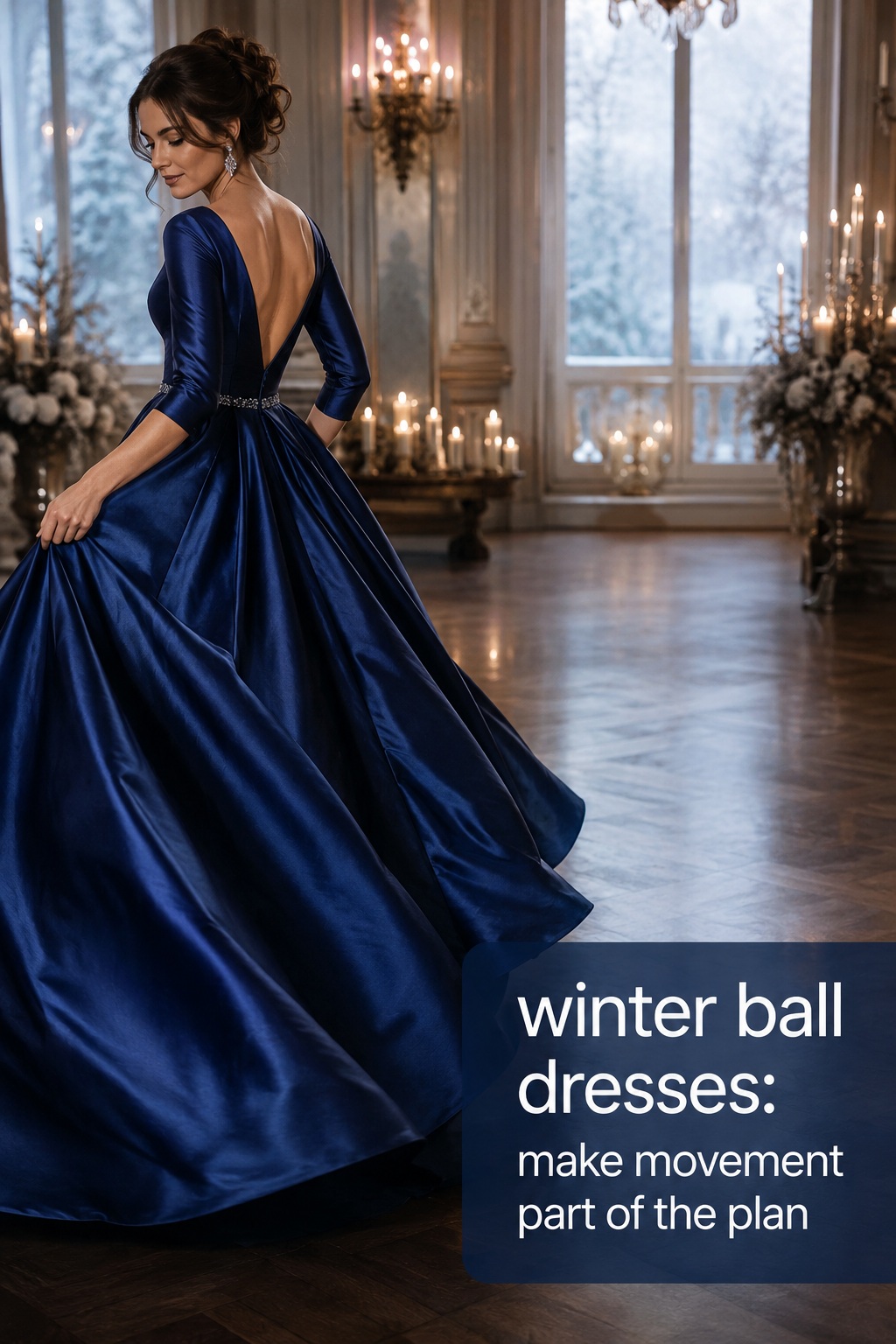
Check the floor before choosing a very full skirt. A ball gown with generous volume is wonderful in a spacious ballroom, but it can become difficult on narrow stairs or crowded dance floors. If the venue has a smaller room, consider an A-line, fit-and-flare, or controlled tulle skirt that gives movement without taking over the space.
Set a complete outfit budget
The dress is only one line in the budget. Leave room for alterations, undergarments, hosiery, shoes, a wrap or coat, jewelry, a clutch, and cleaning. A less expensive dress that needs extensive restructuring may cost more than a better-fitting gown. Write down your comfortable total before browsing so the final look does not become a stressful collection of last-minute purchases.
- Dress and shipping or rush fees
- Hemming, bust support, strap, or waist alterations
- Closed-toe shoes with a stable heel and usable grip
- A wrap, cape, coat, or stole that works with the neckline
- Jewelry, clutch, hosiery, and garment care
Decision Checklist: Choose the Dress Itself
Once the event is clear, compare dresses in the same order every time. This prevents a striking color or beautiful photograph from distracting you from the details that determine whether the gown will actually work.
1. Pick the silhouette by movement first
A classic ball gown has a fitted or structured bodice and a full skirt. It creates the strongest fairytale effect and suits a spacious, highly formal venue. An A-line gown gives a similar sense of occasion with less volume, making it easier to walk, sit, and move through a crowded room. A fit-and-flare or mermaid silhouette follows the body through the hips and opens near the hem, so it looks sleek but requires a test walk and a careful look at the kick pleat or train.
A column or sheath gown is the cleanest choice for a modern, minimalist mood. It can look exceptionally elegant in satin, crepe, or velvet, especially when the neckline or back provides the focal point. An empire waist can feel romantic and comfortable, while a basque waist adds a current couture note without needing an oversized skirt. Choose the silhouette that supports your evening, not just the silhouette that looks dramatic on a model.
- Choose a full ball gown for maximum drama and a roomy venue.
- Choose A-line for reliable movement, proportion, and comfort.
- Choose fit-and-flare or mermaid when you want a defined shape and can test mobility.
- Choose column or sheath for a modern look and easier outerwear.
- Choose empire or basque waist when you want a distinct waist placement or a fashion-forward shape.
2. Use fabric to create winter atmosphere
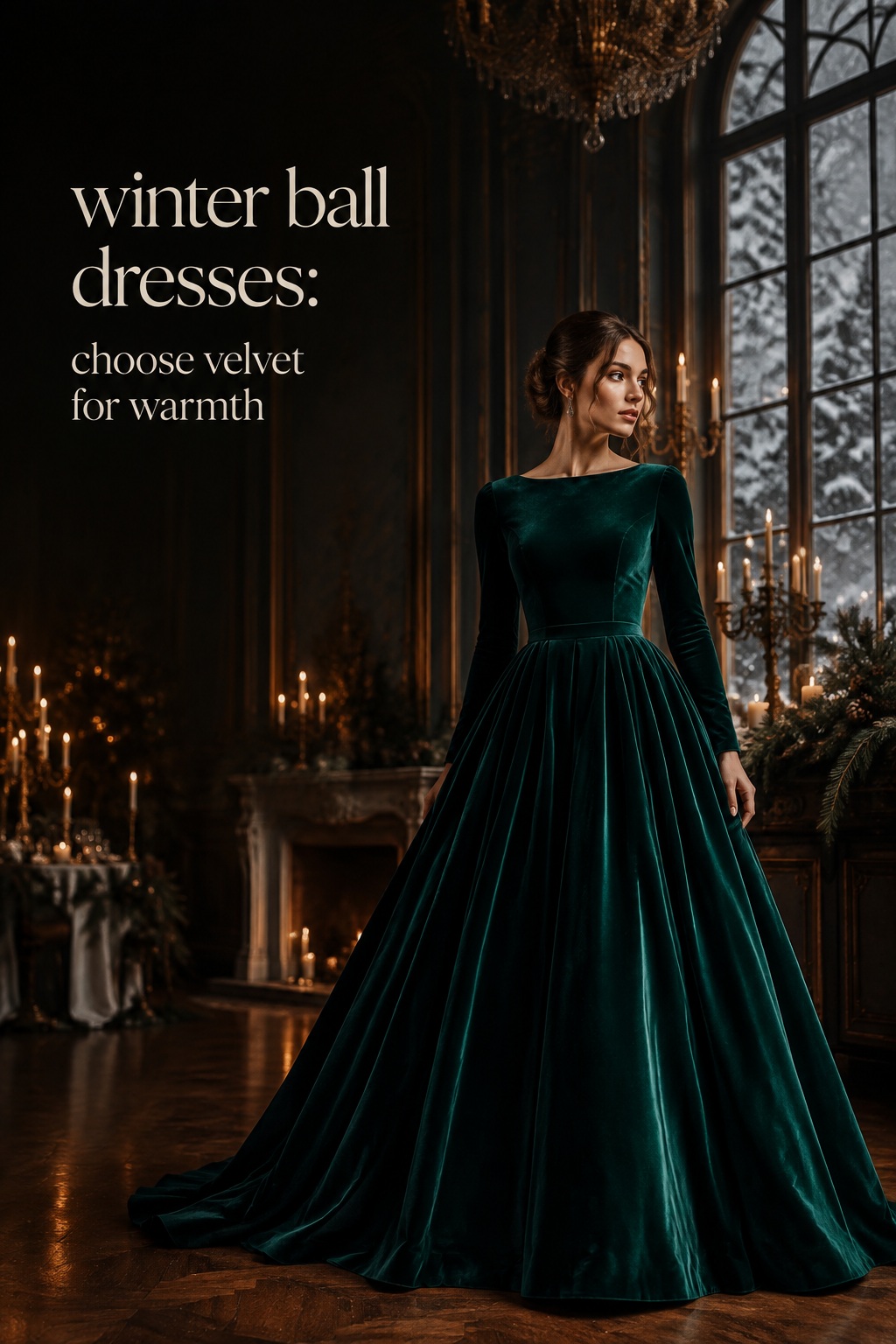
Velvet is the most naturally winter-forward option. Its surface absorbs and reflects light in a rich way, and a little stretch can make it comfortable for a long evening. Satin gives a smoother, brighter finish and works beautifully with simple lines, draping, or a structured skirt. Stretch satin offers more ease, but inspect it under bright light because thin versions can show every seam and crease.
Taffeta and brocade hold shape and support a fuller skirt. Heavy crepe has a quiet, polished finish that is excellent for a column gown, a long sleeve, or a sophisticated cape. Sequins and beadwork bring immediate evening energy, but they add weight and can catch on wraps, chairs, or other dresses. If you choose embellishment, check the inside finish and wear the garment long enough to make sure the surface does not irritate your skin.
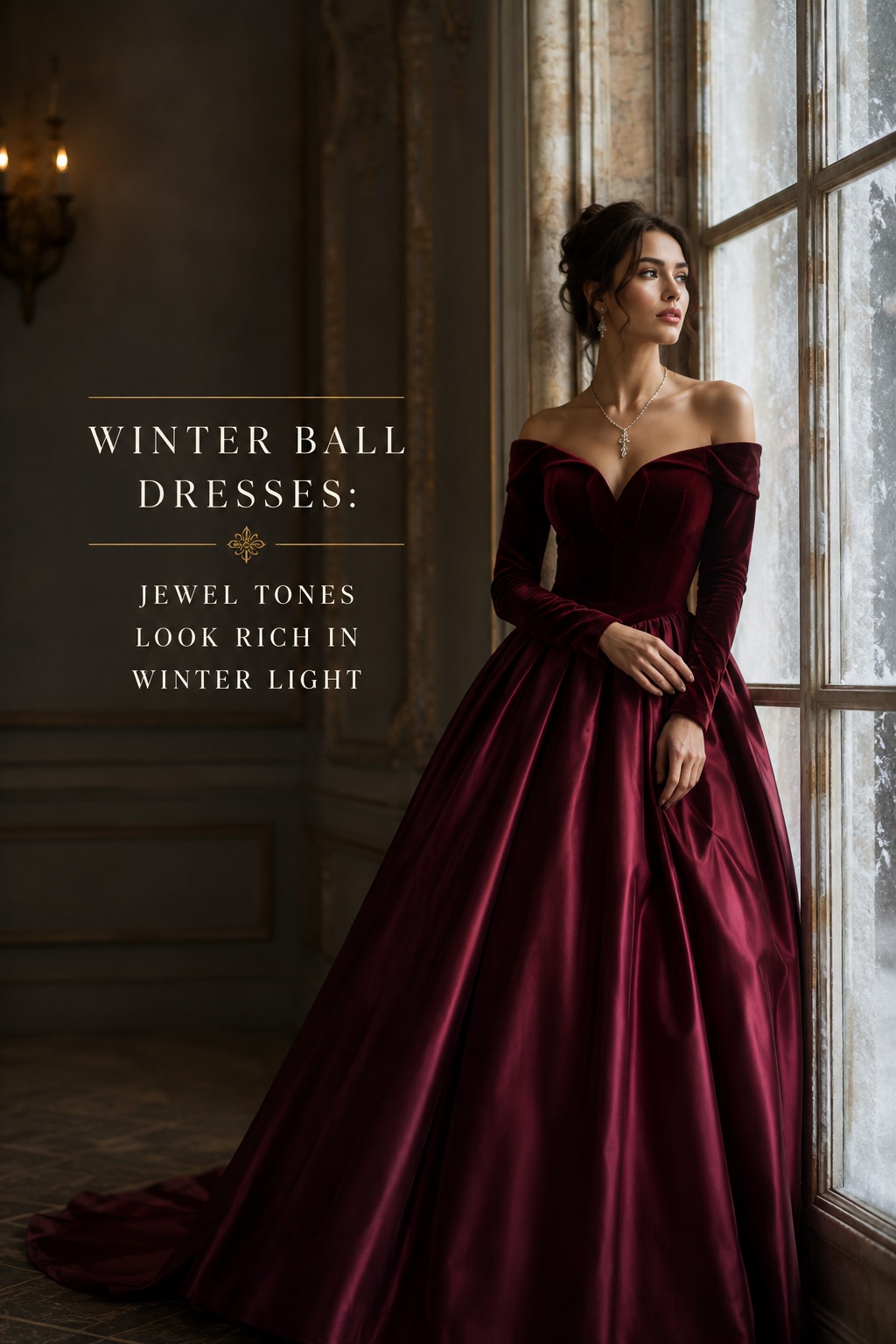
- Velvet: warm-looking, textured, and ideal for jewel tones or long sleeves.
- Satin: glossy and formal, with a clean drape that photographs well.
- Taffeta: structured and crisp, especially effective for a ball-gown skirt.
- Heavy crepe: smooth, comfortable, and refined for minimalist or professional events.
- Sequins and beads: festive and eye-catching, but check weight, comfort, and snag risk.
3. Build a winter color strategy
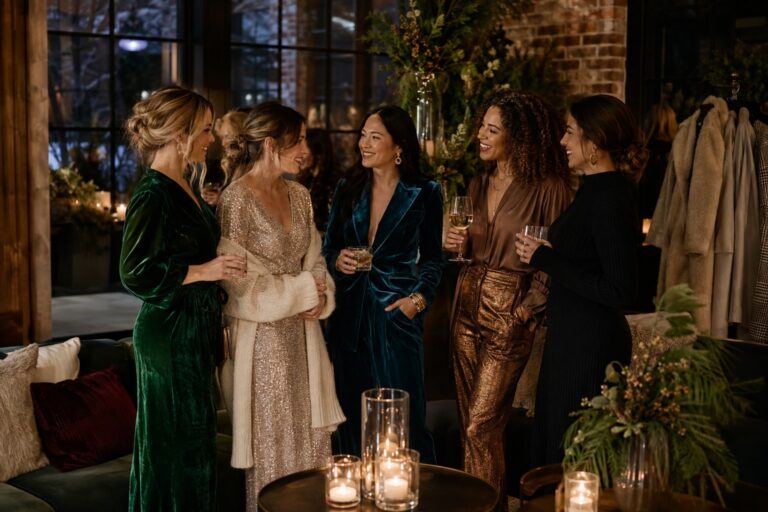
Deep jewel tones remain dependable because they look rich under indoor lighting and complement winter backgrounds. Emerald, burgundy, sapphire, plum, and deep teal can feel seasonal without looking like a costume. Navy is a particularly flexible choice because it works with silver, gold, pearls, black, and metallic shoes. Black gives you the most freedom with accessories and the best chance of rewearing the gown.
Metallic champagne, silver, pewter, and soft gold can be beautiful for a holiday ball or New Year celebration. Treat the metallic finish as the main accessory. Keep the jewelry simpler and choose shoes that support the same temperature, such as silver with icy tones or gold with champagne and warm burgundy. Pale colors can work in winter too, especially when the material has weight and texture. Look for icy blue, dusty rose, mauve, or champagne rather than a thin, summery pastel.
4. Choose coverage that matches the whole night
Long sleeves are a useful design feature, not a requirement. Velvet sleeves, lace sleeves, sheer embellished sleeves, and fitted satin sleeves can all make a gown feel more finished. Three-quarter sleeves leave room for a bracelet and can be comfortable in a warm ballroom. A high neckline gives coverage, while a V-neck or open shoulder can keep a fuller skirt from feeling visually heavy.
A sleeveless or strapless gown is still a valid winter choice when you plan a wrap, bolero, cape, or tailored coat from the start. Try the outer layer with the dress before buying it. The shoulder line should sit cleanly, the wrap should not crush the skirt, and the coat should open without catching on beadwork. A cover-up that is only practical but looks casual will weaken the formal effect in photographs.
5. Check fit, support, and proportion
Do not judge fit by the size printed on the label. Compare your measurements with the brand chart and pay special attention to bust, natural waist, hip, hollow-to-hem, and shoulder-to-waist length. A dress that fits the largest measurement can often be altered smaller, while a dress that is too short or too tight in a structured area is harder to rescue.
Petite shoppers should inspect the waist placement, bodice length, and skirt volume. A petite ball gown can work beautifully, but too much unstructured fabric may hide your proportions. Look for a defined waist, a controlled skirt, a monochromatic color story, or a neckline that creates vertical space. Tall shoppers should check the hollow-to-hem measurement and whether the straps, waist, and sleeve placement land where they should.
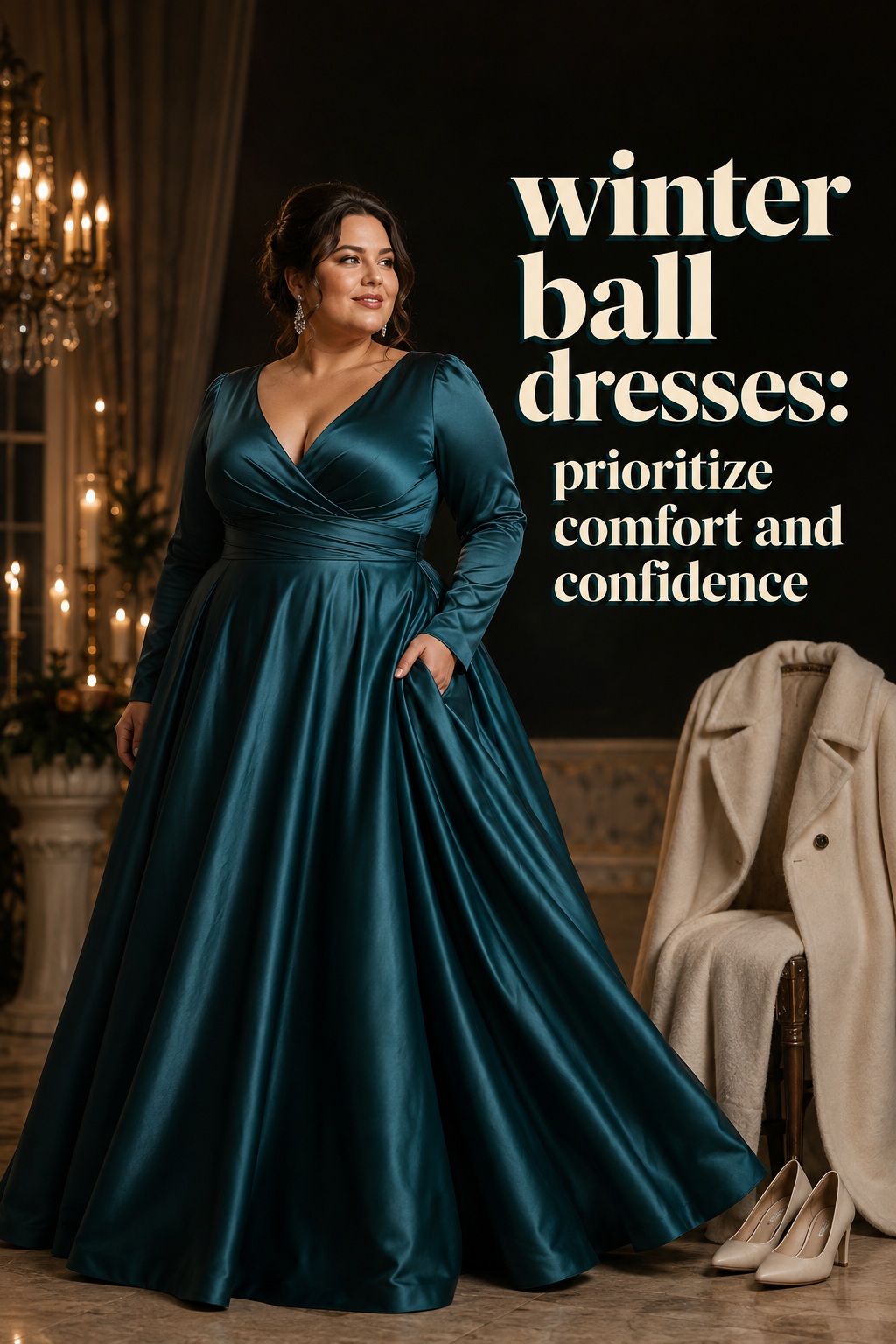
Plus-size shoppers deserve the same range of formal choices, including velvet, satin, full skirts, sleek columns, capes, and embellishment. Look for supportive construction, lining, a stable closure, and enough ease to sit comfortably. A well-placed seam, wrap detail, or A-line skirt can be more important than a generic rule about body shape. The best fit is the one that lets you breathe, move, and feel like yourself.
Worked Examples: Four Winter Ball Dress Formulas
A formula gives you a starting point without forcing you into a uniform look. Use these examples to see how fabric, color, coverage, and accessories work as a system.
The velvet jewel-tone ball gown
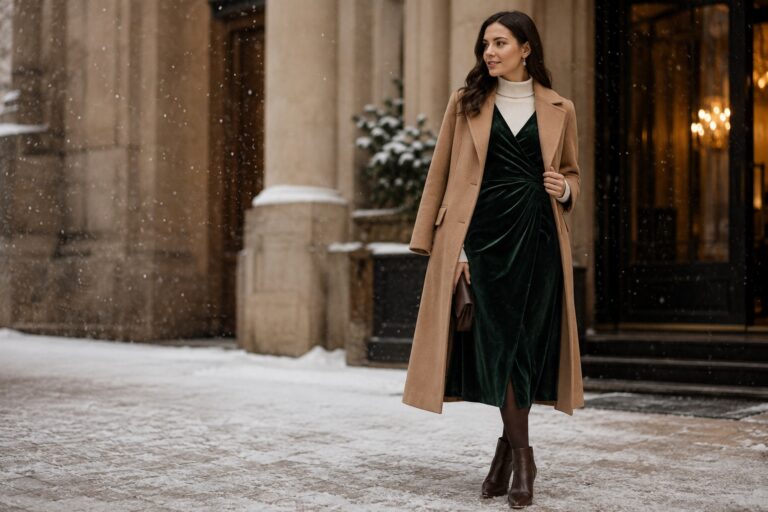
Choose an emerald, burgundy, navy, or plum velvet gown with an A-line or full skirt. Long sleeves or a square neckline make the look feel complete, while a simple bodice keeps the texture from becoming overwhelming. Add gold or antique-gold jewelry, a compact clutch, and closed-toe heels. If the skirt is very full, keep the wrap short and smooth so it does not compete with the volume.
The minimalist satin column
Choose a navy, black, silver, or deep teal satin column gown with one strong detail, such as a cowl neck, an asymmetric shoulder, a low back, or controlled draping. Add a tailored wool coat or a sleek cape for arrival, then use one sculptural earring or a slim bracelet rather than a full stack of jewelry. This formula is easy to rewear because the accessories can change the mood.
The embellished cape look
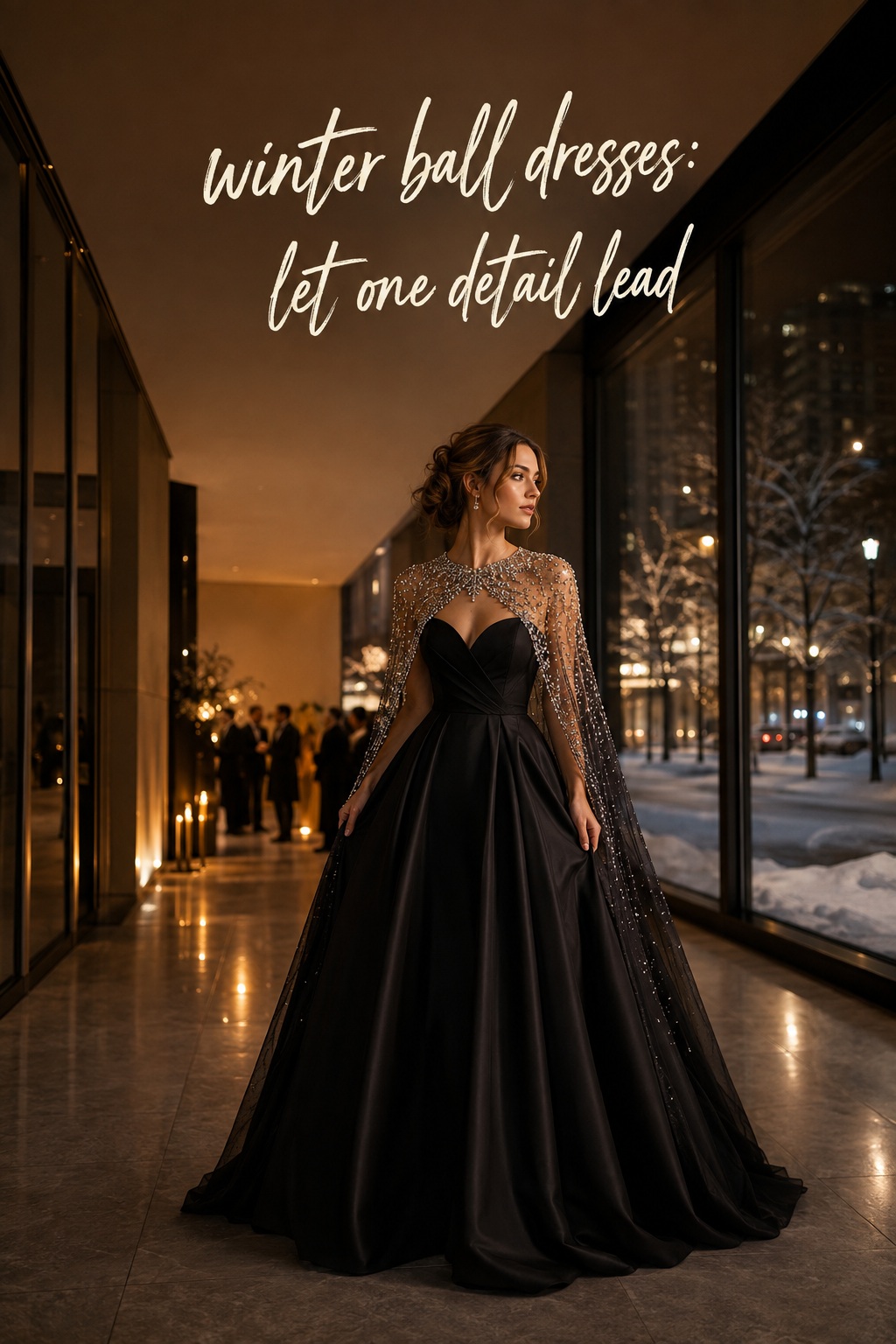
Start with a simple crepe or satin gown and let a crystal, beaded, or satin cape provide the drama. This is especially useful when you want coverage without a conventional sleeve. Keep the neckline of the dress compatible with the cape, and check how the clasp sits when you move your arms. Choose understated shoes and a small clutch so the cape remains the focal point.
The structured taffeta or brocade gown
For a grand ballroom, choose a taffeta or brocade gown with a defined waist and a controlled full skirt. The fabric supplies shape, so the jewelry can stay classic: earrings, a bracelet, and perhaps a delicate hair detail. Deep red, sapphire, forest green, chocolate, or black can make the texture feel current. Test the skirt on stairs and in a chair before committing to the look.
- For an outdoor photo plan, add thermal hosiery, a warm layer, and shoes with traction.
- For a crowded dance floor, test turns, seated comfort, and the length of the train.
- For a school event, choose secure straps, a reliable closure, and a hem you can manage.
- For a gala, coordinate the formality of the coat, clutch, and jewelry with the gown.
- For repeat wear, choose a neutral dark or jewel tone and change the accessories next time.
Final Review: Alterations, Accessories, and Care
The final review is where a pretty dress becomes a reliable outfit. Schedule alterations early, especially during the busy November through January season. Aim to have the dress in hand at least six weeks before the event when possible. That gives you time for an initial fitting, a hem check with the actual shoes, and a final fitting after any changes.
Try on the complete outfit
Wear the undergarments, shapewear, hosiery, shoes, jewelry, and outer layer you plan to use. Sit for ten minutes, walk up and down stairs, raise your arms, and practice a slow turn. Check whether the neckline moves, whether the straps stay in place, whether the hem catches under your heel, and whether the closure feels secure. A dress can look perfect in a still photograph and fail during ordinary movement.
Closed-toe pumps are the safest winter default, but an elegant ankle boot can work with a less traditional gown or an outdoor venue. Prioritize stability over an extreme heel. Put grip on smooth soles and carry a small comfort kit with fashion tape, blister protection, a needle and thread, and a stain-removal pen suited to the fabric. Keep the kit with a trusted person rather than inside a tiny clutch.
Keep accessories disciplined
Use the one-focal-point rule. If the dress has heavy beading, choose restrained jewelry. If the gown is minimal, let the earrings, cape, clutch, or shoes add interest. Match the metal temperature without making every item identical. Pearls soften a jewel-tone velvet gown, silver sharpens icy blue or gunmetal, and gold warms burgundy, emerald, champagne, and plum.
Store the gown correctly
Read the care label before the event. Velvet may need professional cleaning and careful hanging to avoid crushed pile. Satin should stay away from rough surfaces and be stored on a padded hanger. Beaded or sequined dresses need space so their surface does not snag other garments. Use a breathable garment bag, keep the dress away from direct heat, and transport it in a way that protects the hem from wet sidewalks.
A successful winter ball outfit is a small system: a dress suited to the code, a fabric that looks right in the season, layers that solve the weather, shoes that let you move, and tailoring that respects your body. When those pieces agree, you can enjoy the evening instead of adjusting your outfit all night.
FAQ
What are the best fabrics for winter ball dresses?
Velvet, satin, taffeta, brocade, and heavy crepe are strong choices for winter ball dresses. Velvet provides rich texture, satin adds shine, taffeta and brocade support structure, and heavy crepe gives smooth drape. Choose the fabric based on the dress code, venue temperature, desired silhouette, and how much movement you need.
Do winter ball dresses have to be long?
No, but a floor-length gown is the safest choice for black tie or a very formal ball. A formal indoor event may also allow an elegant midi or refined cocktail dress. Use the invitation, venue, and expected guest attire as your guide. If you choose a shorter dress, make the winter styling intentional with opaque hosiery, polished shoes, and a formal fabric.
What colors work best for a winter ball?
Emerald, burgundy, navy, sapphire, plum, deep teal, black, silver, and champagne all work well. Jewel tones and dark neutrals feel naturally seasonal, while metallics add a festive finish. A pale shade can also work when it has a substantial fabric and an evening-appropriate texture.
How can I stay warm in a formal gown?
Choose long sleeves, a higher neckline, velvet, a lined skirt, thermal hosiery, or an elegant base layer when the design allows it. Add a tailored wool coat, cape, faux-fur stole, or substantial wrap for travel and outdoor photographs. Try every layer with the gown before the event so the fit and proportions remain comfortable.
How early should I buy a winter ball dress?
Start shopping two to three months ahead, and begin earlier for a November through January event, custom sizing, international shipping, or a popular sale season. Aim to have the dress several weeks before the ball so you can complete alterations and test the full outfit. Do not leave the hem and shoes until the last week.
What should I wear over a winter ball gown?
A tailored wool coat, satin or velvet wrap, faux-fur stole, bolero, or formal cape can work. Match the level of formality to the gown and consider the neckline, sleeve volume, and embellishment. The best outer layer keeps you warm on arrival and looks polished in photographs without hiding the most important detail of the dress.
How do I choose a winter ball gown for a petite or plus-size figure?
Start with measurements and construction rather than a fixed body-shape rule. Petite shoppers should check waist placement, skirt volume, and hollow-to-hem length. Plus-size shoppers should check support, lining, closure quality, and comfortable ease. Every body can wear a ball gown, A-line, column, velvet, satin, or embellishment when the proportions and tailoring are right.